
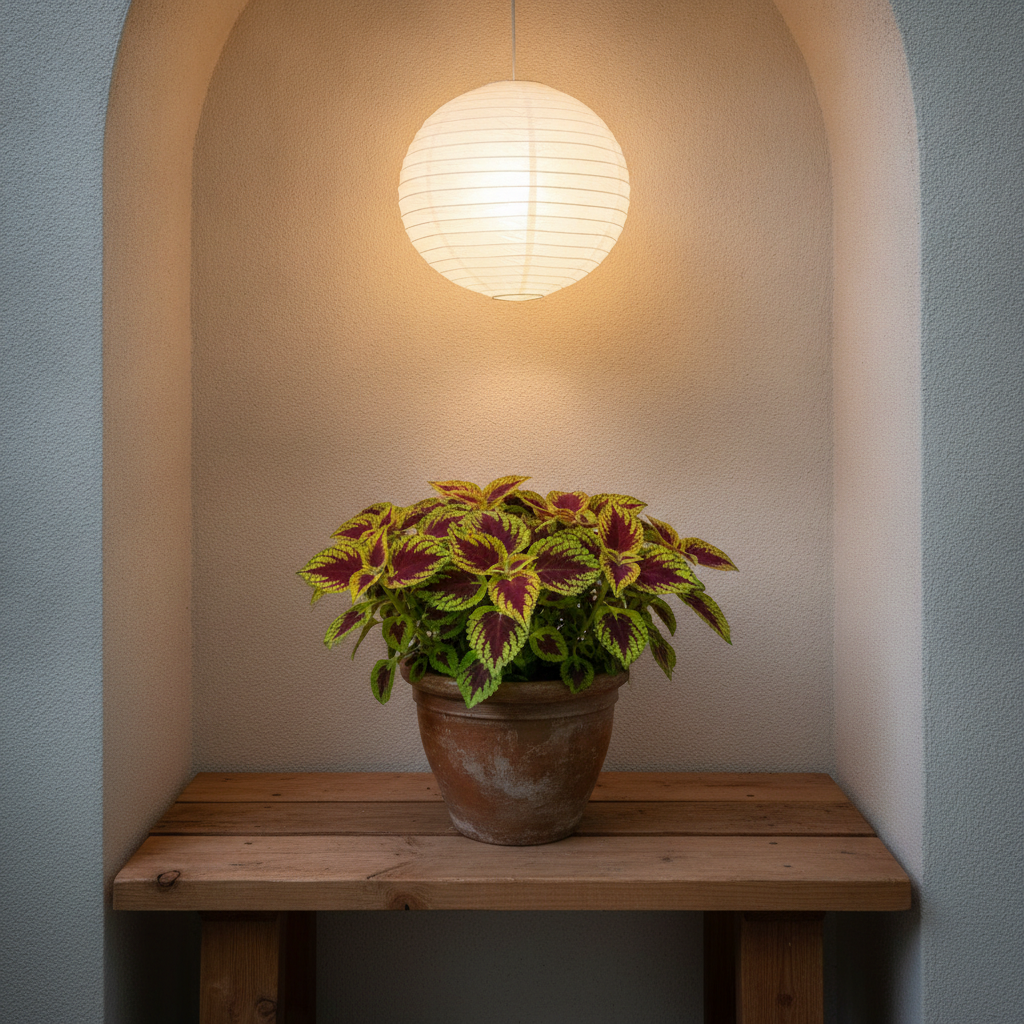
Few houseplants earn their keep on foliage alone the way the Wizard Coleus does. A compact, densely branching strain of Coleus scutellarioides, the Wizard series was bred to deliver the electric leaf colour of old-fashioned bedding coleus in a tidy, uniform plant that needs almost no pinching to stay bushy. Its velvety, scallop-edged leaves come stitched together from improbable colour combinations, deep maroon centres rimmed in acid green, rose-pink blades veined in cream, chartreuse foliage splashed with burgundy, so that a windowsill of them reads more like a paint chart than a shelf of plants. This guide covers everything needed to keep that colour vivid indoors, from the light levels that make or break the pigments to the watering rhythm this thirsty member of the mint family quietly demands.

Quick Reference
| Botanical name | Coleus scutellarioides (Wizard series) |
| Common names | Wizard Coleus, Wizard Mix Coleus, painted nettle |
| Family | Lamiaceae (the mint family) |
| Light | Bright, indirect light; some direct morning sun deepens colour |
| Water | Keep evenly moist; do not let the pot dry out fully |
| Soil | Rich, moisture-retentive, free-draining potting mix |
| Temperature | 18 to 24 degrees C (64 to 75 degrees F); frost-tender |
| Humidity | Moderate to high, above 50 per cent preferred |
| Feeding | Light balanced feed every 2 to 4 weeks in growth |
| Height | Typically 25 to 35 cm (10 to 14 in) indoors |
| Propagation | Stem cuttings in water or moist medium; very easy |
| Toxicity | Mildly toxic to cats, dogs and people if eaten |
Why Grow the Wizard Coleus as a Houseplant
Coleus has been a greenhouse and bedding favourite since Victorian plant hunters first brought it to Europe from Southeast Asia in the nineteenth century, where it was traded, hybridised and collected with the same fervour later reserved for orchids. The species Coleus scutellarioides has travelled under a confusing string of botanical names, including Solenostemon scutellarioides and Plectranthus scutellarioides, but it remains the same square-stemmed, aromatic member of the mint family that gardeners have grown for generations. The Wizard series is a modern seed strain selected for a specific set of habits that suit indoor life unusually well.
What sets Wizard apart from older coleus is its self-branching, dwarf habit. Traditional coleus varieties grow tall and open and need regular pinching to stop them turning into leggy, single-stemmed towers. Wizard plants branch freely on their own, staying naturally mounded and full at around 25 to 35 centimetres (10 to 14 inches), which is precisely the scale that works on a windowsill, a plant shelf or a desk. They also colour up young, so even a small plant already carries its full pattern rather than waiting to mature. For anyone who wants the drama of variegated foliage without the fuss of a temperamental calathea, the Wizard Coleus offers a great deal of visual return for very little technical demand.
The trade-off is that coleus is fast-living. Grown outdoors it is usually treated as an annual, cut down by the first frost, and even as a houseplant it tends to grow leggy and tired after a year or so. The saving grace is how absurdly easy it is to propagate, which means a single plant can be kept going indefinitely as a rolling series of cuttings. In practical terms you are not so much keeping one Wizard Coleus alive for a decade as keeping a bloodline of them going, always refreshing the collection with young, vividly coloured replacements.
Pro Tip — Think in generations: Rather than nursing an ageing, leggy plant back to health, take a few cuttings every few months. A coleus grown from a fresh cutting will always be denser and more brightly coloured than an old plant fighting to hold its shape.
Light
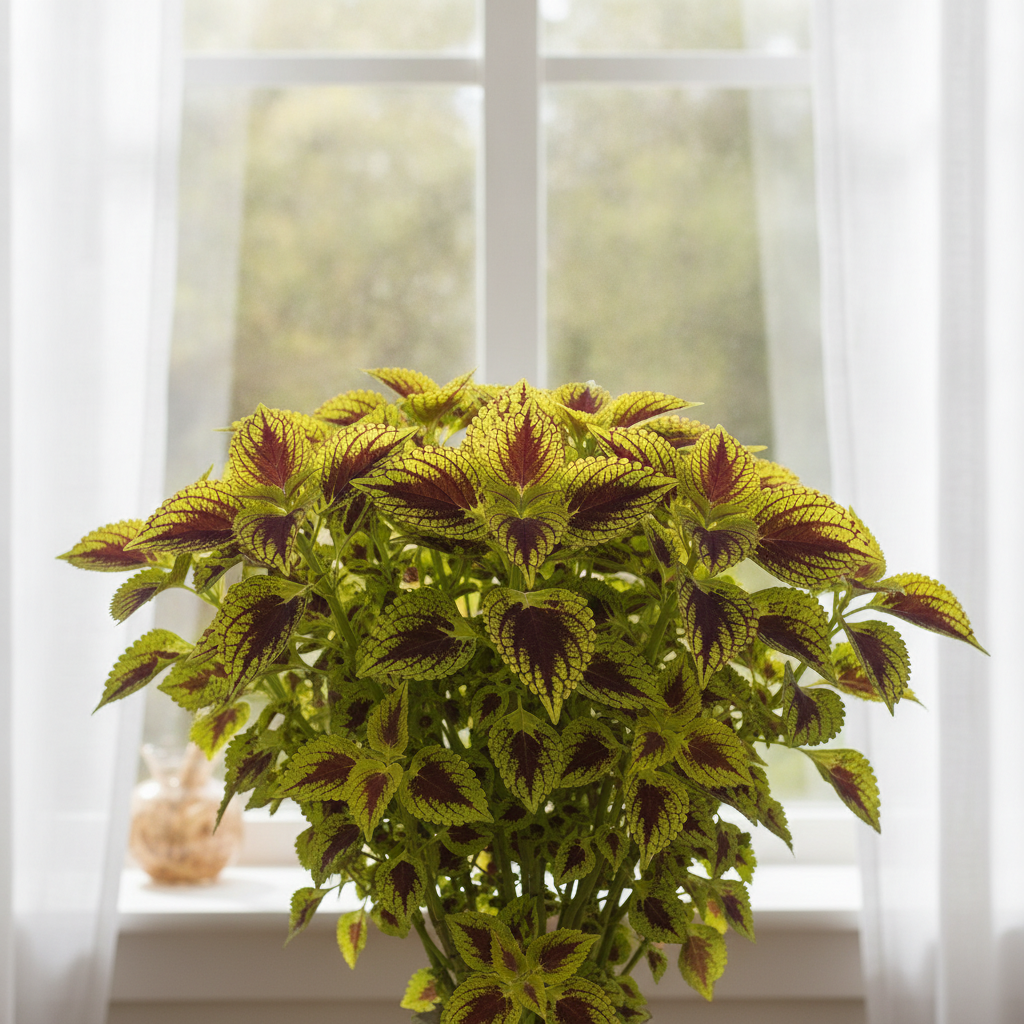
Light is the single most important factor in growing a good-looking Wizard Coleus, because the plant’s colour is directly powered by it. The reds, maroons and pinks come from anthocyanin pigments, and these develop most strongly in bright conditions. A coleus grown in a dim corner will not die quickly, but it will slowly betray the neglect: the vivid centres fade towards muddy green, the leaves grow larger and thinner as the plant stretches for the window, and the tidy mounded habit loosens into something sparse and reaching. Insufficient light is the most common reason an indoor coleus disappoints.
To thrive rather than merely survive, place the plant in the brightest spot you can offer short of scorching midday sun. An east-facing windowsill that catches a few hours of gentle morning light is close to ideal, as is a position just back from a bright south or west window where sheer curtains soften the harshest rays. Modern coleus strains, including Wizard, are noticeably more sun-tolerant than older varieties and many will take direct sun happily once acclimatised, but a plant moved abruptly from a shop shelf into blazing afternoon light can develop bleached or crisped patches. Introduce stronger light gradually over a week or two. If natural light is limited, coleus responds very well to a full-spectrum LED grow light positioned 20 to 30 centimetres above the canopy for around twelve hours a day, which will hold the colour through even a dark winter.
Pro Tip — Read the leaves: If the newest leaves are coming through greener and larger than the old ones, the plant is telling you it wants more light. If the colour is intense but the leaf edges look bleached or papery, ease it back from direct sun.
Watering
Where many popular houseplants punish overwatering, the Wizard Coleus flips the usual advice: it is a genuinely thirsty plant that prefers its soil to stay evenly moist. Those broad, soft leaves lose water quickly, and a coleus that dries out fully will wilt dramatically, its whole canopy collapsing into a limp, defeated heap within hours. The good news is that it is remarkably forgiving of this: give a wilted plant a thorough drink and it will usually stand back up within an hour or two, apparently none the worse. Repeated wilting does take a cumulative toll, though, causing leaf-edge browning and premature leaf drop, so the aim is to avoid letting it reach that point in the first place.
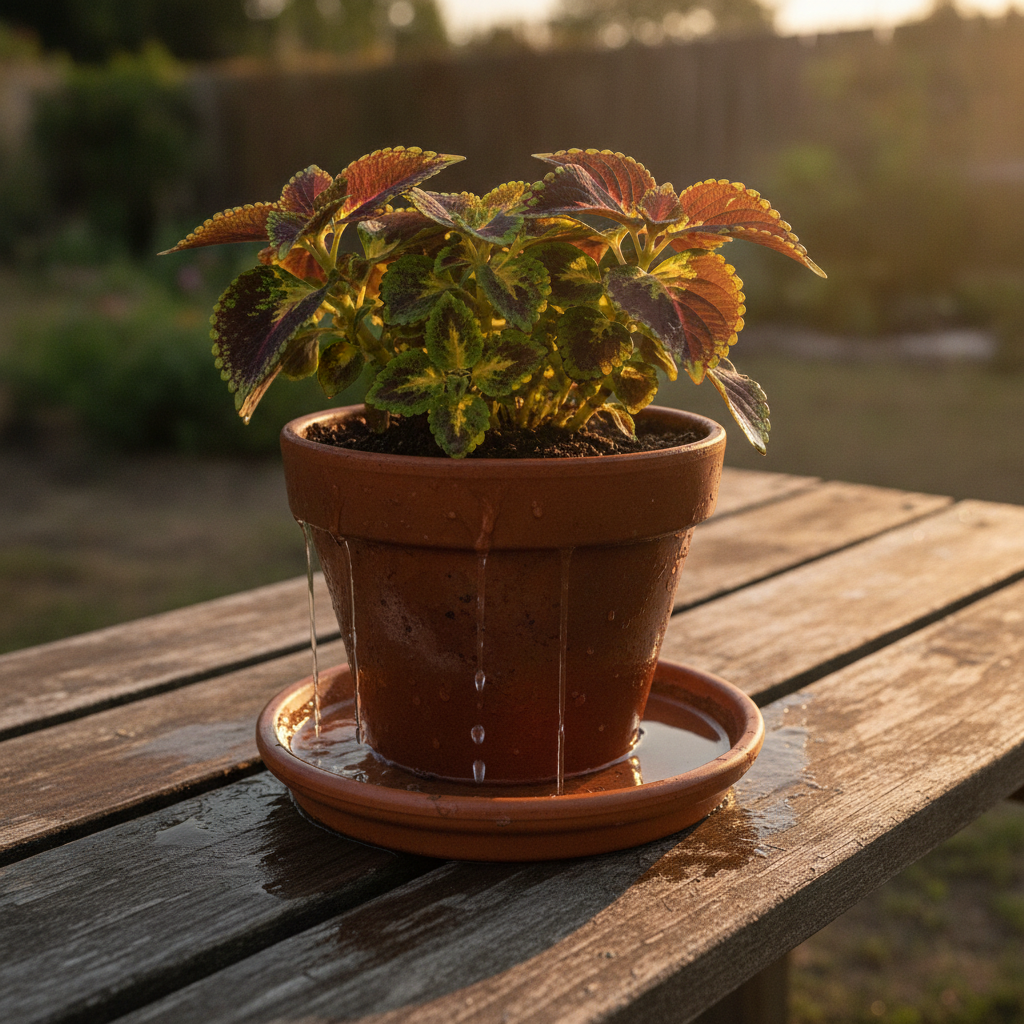
The practical rhythm is to water when the top one to two centimetres of the mix feels barely dry to the touch, keeping the root zone consistently damp but never waterlogged. In a bright, warm spot during active growth this can mean watering every two to three days, particularly if the plant is in a small pot that dries out fast. Water thoroughly each time until it runs freely from the drainage holes, then empty the saucer so the roots are never left standing in water. That last point matters: consistently moist is the goal, permanently soggy is not, because coleus roots will rot in airless, saturated soil just like any other plant. In winter, when growth slows and light is weaker, the plant uses far less water, so let the surface dry a little more between drinks and scale back accordingly.
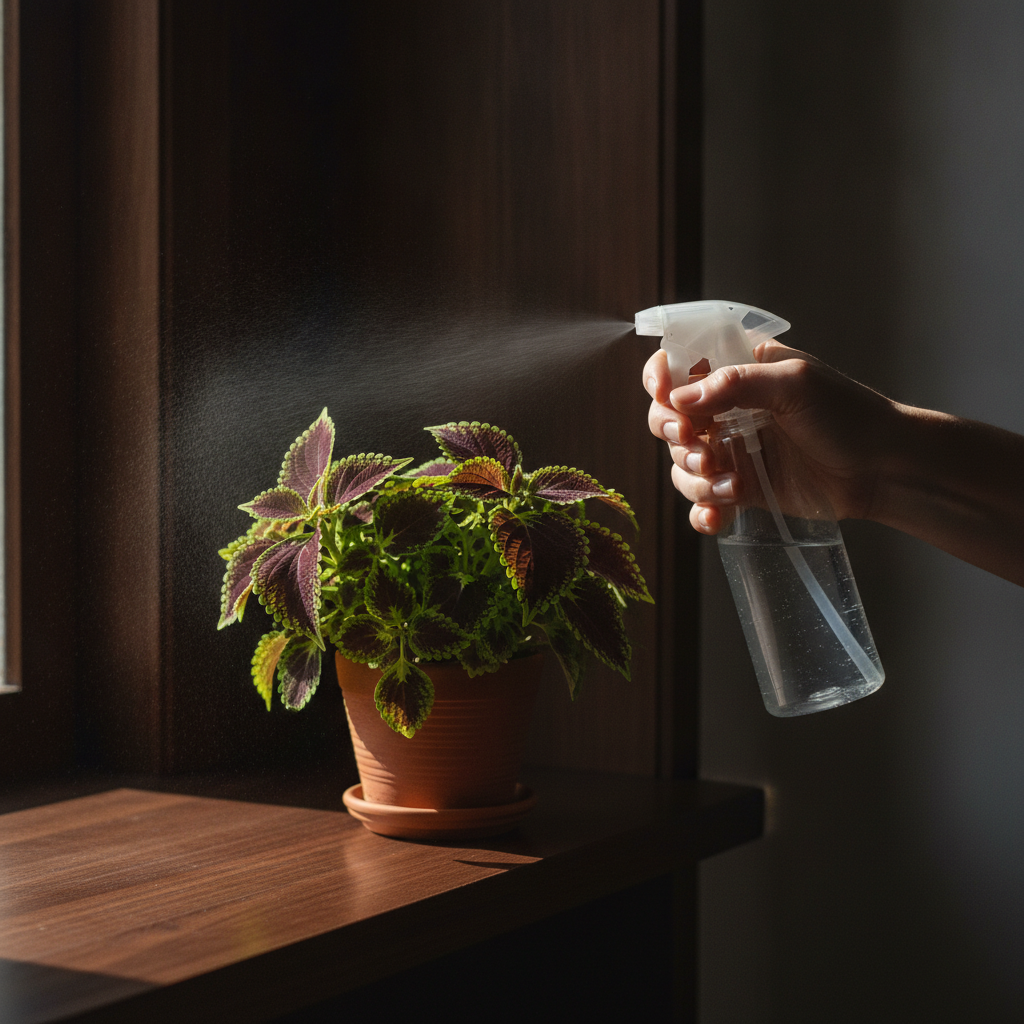
Coleus also appreciates humidity above 50 per cent, a reflection of its warm, moist tropical origins. In a dry centrally heated room the leaf edges may brown and crisp even when the soil is kept moist. Grouping plants together, standing the pot on a tray of damp pebbles, or running a small humidifier nearby all help. Misting offers only fleeting relief and, done heavily on the soft foliage in still air, can encourage fungal spotting, so it is better to raise the ambient humidity than to rely on the spray bottle.
Warning — Do not treat it like a succulent: The single fastest way to lose a coleus indoors is to water it on the “let it dry out completely” schedule that suits cacti and snake plants. This plant wants to stay evenly moist and will wilt hard, then decline, if repeatedly left bone dry.
Soil and Potting
The ideal growing medium for a Wizard Coleus balances two things that can seem contradictory: it needs to hold moisture, because the plant likes to stay damp, yet it must also drain freely so the roots never sit in stagnant water. A good general-purpose peat-free houseplant compost forms an excellent base. To improve structure and drainage, mix in a couple of handfuls of perlite, which keeps the blend open and airy without letting it dry out too fast. A little added organic matter such as worm castings or well-rotted compost feeds the fast, hungry growth that coleus is known for.
Always plant into a pot with drainage holes. A decorative cover pot is fine, but water should be able to escape the inner container, and any that collects underneath should be tipped away. Coleus grows quickly and is not fussy about being slightly root-bound, but a plant that has filled its pot will dry out alarmingly fast and may need daily watering in summer, which is usually the signal that it is time to move up a size. Repotting into a container just two to three centimetres wider gives the roots room without drowning them in excess damp soil.
Because the plant is often refreshed from cuttings every year or so, many growers never repot a coleus at all in the traditional sense. Instead they simply pot up rooted cuttings into fresh mix each spring, which resets both the soil and the plant’s vigour in a single step. If you are keeping an established plant going, top-dressing with a fresh layer of compost each spring and repotting every year keeps the medium from becoming compacted and depleted.
Fertilising
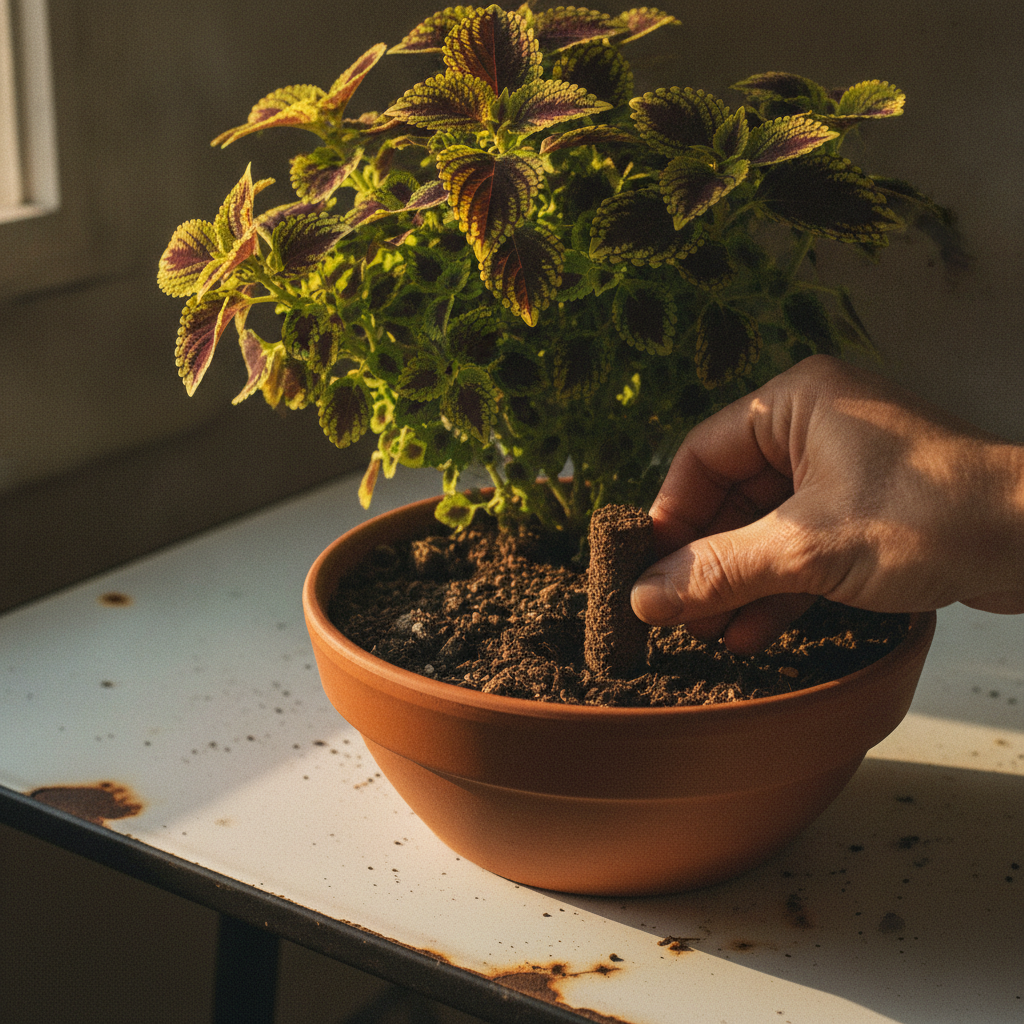
As a fast-growing foliage plant, the Wizard Coleus responds well to regular but restrained feeding through its active growing season, roughly from spring to early autumn. A balanced liquid houseplant fertiliser diluted to half the recommended strength and applied every two to four weeks suits it well, keeping the leaves large and richly coloured without pushing weak, sappy growth. Because coleus is grown entirely for its foliage rather than flowers, a nitrogen-forward feed is perfectly appropriate, though any general balanced formula will serve.
There is a subtle balance to strike with nutrients and colour. Very heavy nitrogen feeding produces lush, oversized leaves but can dilute the intensity of the variegation, nudging the plant towards plainer green. Feeding at a moderate rate, combined with plenty of light, gives the best of both, vigorous growth that still holds its bold pattern. As with watering, ease right off in winter. A coleus growing slowly in low light needs little or no feed, and fertilising a resting plant simply causes mineral salts to build up in the soil, which can scorch the roots and brown the leaf tips.
Pro Tip — Flush occasionally: If you feed regularly, once every couple of months water the pot heavily until plenty runs from the drainage holes. This flushes out accumulated fertiliser salts and helps prevent the brown, crispy leaf edges that can develop with steady feeding.
Propagation
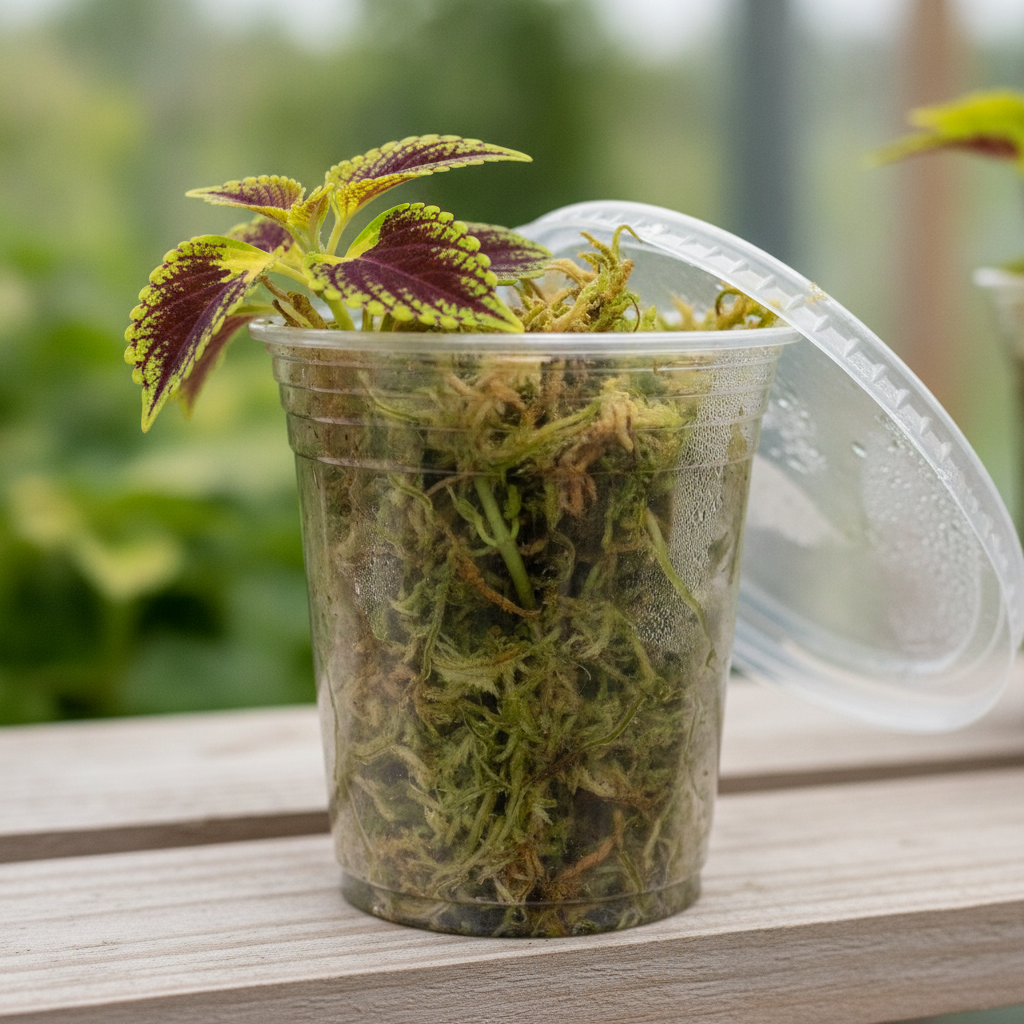
If any houseplant could be called foolproof to propagate, coleus is a strong candidate. Stem cuttings root with almost comic ease, often within a week or two, and the process is the key to keeping a Wizard Coleus looking its best year after year. Because seed-grown Wizard plants can vary slightly from one another, taking cuttings is also the only way to reproduce a particular colour form exactly, since a cutting is a genetic clone of its parent. Spring and summer, when the plant is growing strongly, are the easiest times to propagate, but a warm, bright spot indoors makes it possible at almost any point in the year.
To take a cutting, follow these steps:
- Choose a healthy, non-flowering shoot and cut a section about 8 to 12 centimetres (3 to 5 inches) long just below a leaf node, using clean, sharp scissors or a knife.
- Strip the leaves from the lower third of the cutting, leaving a bare length of stem with at least one or two exposed nodes, since roots emerge from these points.
- Place the cutting in a glass of clean water on a bright windowsill, or insert it into moist, free-draining potting mix or damp sphagnum moss. Rooting hormone is not necessary but does no harm.
- Keep the cutting warm and out of harsh direct sun. If rooting in water, change it every few days to keep it fresh; if in a medium, keep it lightly moist and consider a loose clear cover to raise humidity.
- Once white roots reach two to three centimetres long, usually within one to three weeks, pot water-rooted cuttings into moist compost and keep them damp while they establish.
Wizard Coleus is a seed strain, and it can also be grown from seed sown warm in spring, though the resulting plants will be a mixed bag of the series’ colours rather than copies of any single parent. For most indoor growers, cuttings are quicker, more reliable and let you multiply a favourite colour at will. It is worth pinching off any flower spikes that appear, as flowering diverts the plant’s energy away from foliage and can trigger a general decline once it sets seed. Removing the small blue flower stalks as they form keeps the plant leafier and longer-lived.
Pests and Problems

The soft, sappy leaves that make coleus so appealing to us also make it appealing to sap-sucking insects. Indoors the most common troublemakers are mealybugs, which appear as small white cottony blobs tucked into leaf axils and stem joints; whitefly, tiny white insects that flutter up in a cloud when the plant is disturbed; and aphids, which cluster on the tender new growth at the shoot tips. Spider mites can also take hold in hot, dry conditions, revealing themselves through fine speckling on the leaves and delicate webbing between stems. Regular, close inspection, especially of the undersides of leaves, is the best defence, since a small infestation caught early is far easier to clear than an established one.
For light infestations, wiping the affected areas with a cotton bud dipped in diluted isopropyl alcohol deals with mealybugs directly, while a firm rinse under a tap or shower knocks back aphids and mites. For more persistent problems, a spray of insecticidal soap or neem oil applied to all leaf surfaces, including the undersides, and repeated every week or so will usually bring things under control. Because coleus grows and roots so easily, a badly infested plant is often not worth saving: it can be simpler and cleaner to take a few healthy, pest-free cuttings from the top growth, root them fresh, and discard the parent along with its problems.
Beyond pests, most coleus complaints trace back to light, water or temperature. Faded, greening colour points to too little light. Sudden wilting means the plant has been allowed to dry out, while yellowing lower leaves and a sour-smelling pot suggest the opposite problem of waterlogged roots. Leggy, sparse growth with long gaps between leaves is a sign of low light, and can be corrected by moving the plant brighter and pinching the shoot tips to encourage branching. Crispy brown leaf edges usually indicate dry air, underwatering or a build-up of fertiliser salts. Coleus is also decidedly frost-tender and hates cold: sustained temperatures below about 10 degrees C (50 degrees F) cause blackened, collapsing leaves, so keep it away from cold draughts, unheated porches and winter windowsills that turn icy at night.
Warning — Mildly toxic: Coleus contains aromatic essential oils and diterpenes that make it mildly toxic to cats, dogs and people if eaten, potentially causing vomiting, diarrhoea or drooling, and the sap can irritate sensitive skin. Keep it out of reach of pets and children who like to nibble, and consider wearing gloves if you handle it a great deal.
Varieties and Cultivars
The Wizard series is sold both as a mix and as named single colours, all sharing the same compact, self-branching, early-colouring habit that makes the strain so easy to grow. Because they are near-identical in their care needs and differ only in leaf colour, they can be combined in a single pot or grouping for a patchwork of contrasting tones, or grown individually where one particular colour is wanted. Two of the most widely grown members of the series show just how much range sits within a single strain.
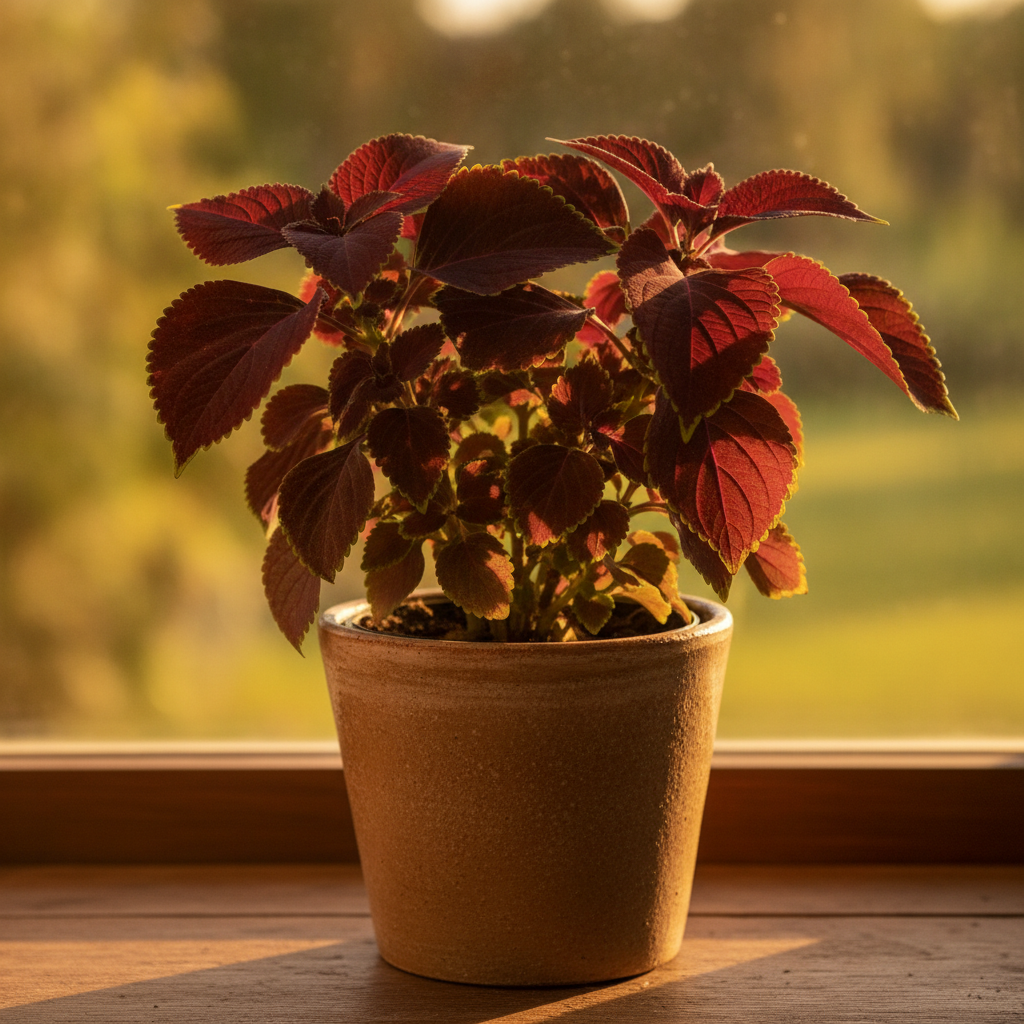
Wizard Velvet Red is the boldest of the group, carrying deep, velvety burgundy-red leaves finished with a thin, bright green scalloped edge. The near-black richness of the centre gives it a dramatic, almost tropical presence, and the colour holds especially well in strong light. It is a striking choice on its own and an excellent dark foil when paired with paler, brighter forms.
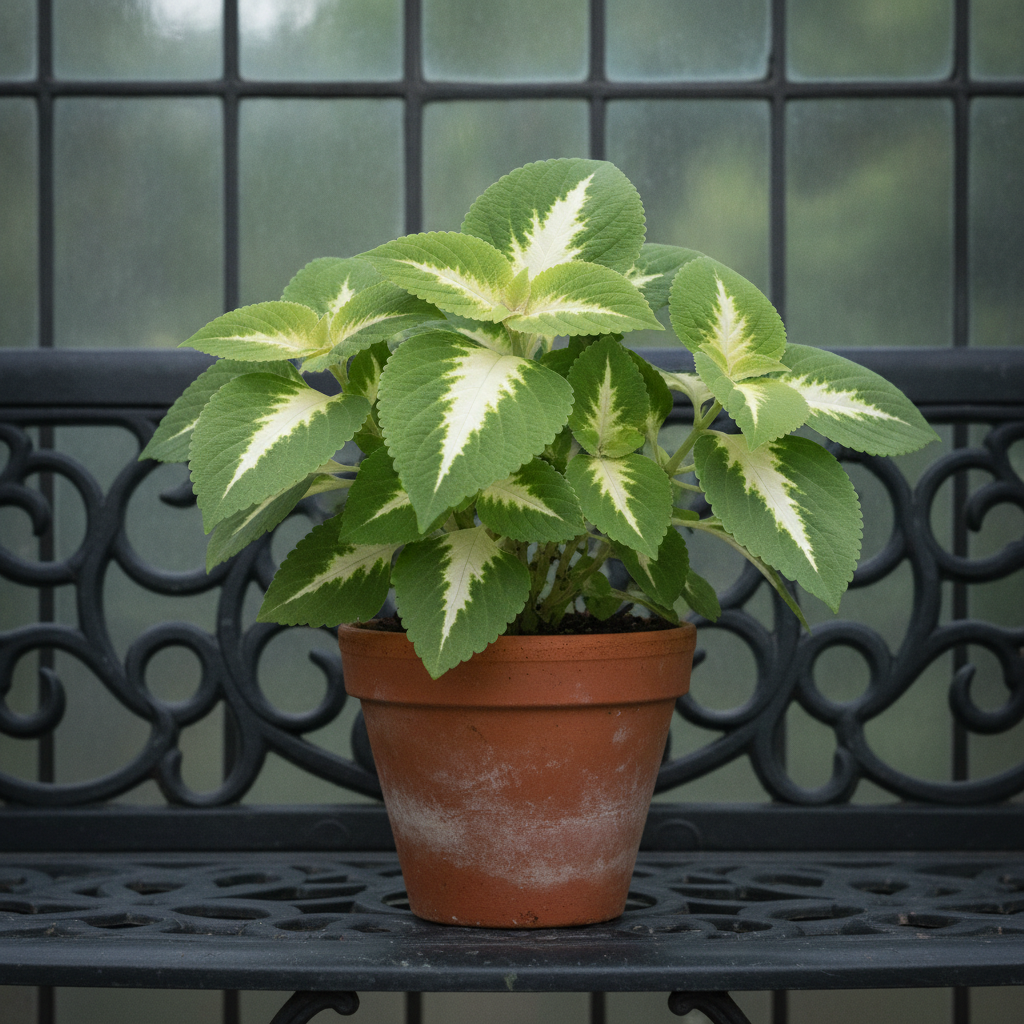
Wizard Jade takes the softer, cooler end of the range, with pale jade-green leaves lit by a creamy-white central blaze and a subtle pink flush towards the base. It reads as fresh and calm where Velvet Red reads as intense, and its lighter tones brighten shadier positions and lift a mixed planting. Grown together, the two make an ideal demonstration of the series’ versatility.
Other colours in the series include Wizard Rose, with rose-pink centres framed in green; Wizard Golden, a luminous chartreuse; Wizard Sunset, in warm coral and rose tones; and Wizard Coral Sunrise, blending pink, cream and green. Beyond the Wizard strain, the wider world of coleus offers hundreds of named cultivars in the Kong, Premium Sun, Main Street and ColorBlaze ranges among others, but the Wizard series remains one of the most reliable and readily available choices for indoor growing thanks to its compact size and effortless branching.
Frequently Asked Questions
Why is my Wizard Coleus losing its colour and turning green?
Fading, greening foliage is almost always a sign of insufficient light. The red and pink pigments in coleus leaves develop in response to bright conditions, so a plant in a dim spot gradually reverts towards plain green and grows larger, thinner leaves. Move it to your brightest window, or add a grow light, and new growth should come through with its full colour restored. Excessive nitrogen feeding can also dull the variegation, so feed moderately rather than heavily.
My coleus keeps wilting even though I water it. What is wrong?
Coleus wilts fast when the soil dries out, and in a warm, bright spot or a small pot it can need watering every two to three days. If it wilts, recovers when watered, then wilts again quickly, the pot is simply drying out faster than your watering schedule allows, so water more often or move it up a pot size. If, however, the plant wilts while the soil is still wet, that points to root rot from waterlogging, which needs the opposite response of less water and better drainage.
Should I let my Wizard Coleus flower?
Generally no. Coleus is grown for its foliage, and the small spikes of blue flowers it produces are unremarkable. More importantly, flowering diverts energy away from leaf growth and can push the plant into decline once it sets seed. Pinching off the flower stalks as soon as they appear keeps the plant fuller, more colourful and longer-lived. The Wizard series is somewhat later to flower than older types, but it will still bloom eventually if left unchecked.
Is the Wizard Coleus safe around pets?
It is best treated as mildly toxic. Coleus contains essential oils and diterpene compounds that can cause vomiting, diarrhoea, drooling and loss of appetite in cats and dogs if eaten, and the sap may irritate sensitive human skin. It is not among the most dangerous houseplants, but it is not pet-safe either, so keep it out of reach of animals and children inclined to chew on leaves.
How long will a Wizard Coleus live indoors?
Although coleus is technically a tender perennial, individual plants tend to grow leggy and tired after a year or so indoors. Rather than trying to keep one plant going indefinitely, most growers simply take fresh cuttings every year, which root within weeks and produce dense, brightly coloured young plants. Managed this way, your coleus can effectively live forever as a rolling succession of cuttings, always looking its best.
How do I keep my coleus bushy instead of leggy?
The Wizard series branches well on its own, but you can encourage an even fuller shape by pinching out the growing tips of the main shoots while the plant is young. Removing the tip prompts the plant to branch from the nodes below, doubling the number of stems. Combined with plenty of light, which prevents the stretching that causes legginess in the first place, occasional pinching keeps a Wizard Coleus dense and mounded. The tips you remove are, conveniently, perfect cuttings for propagation.






