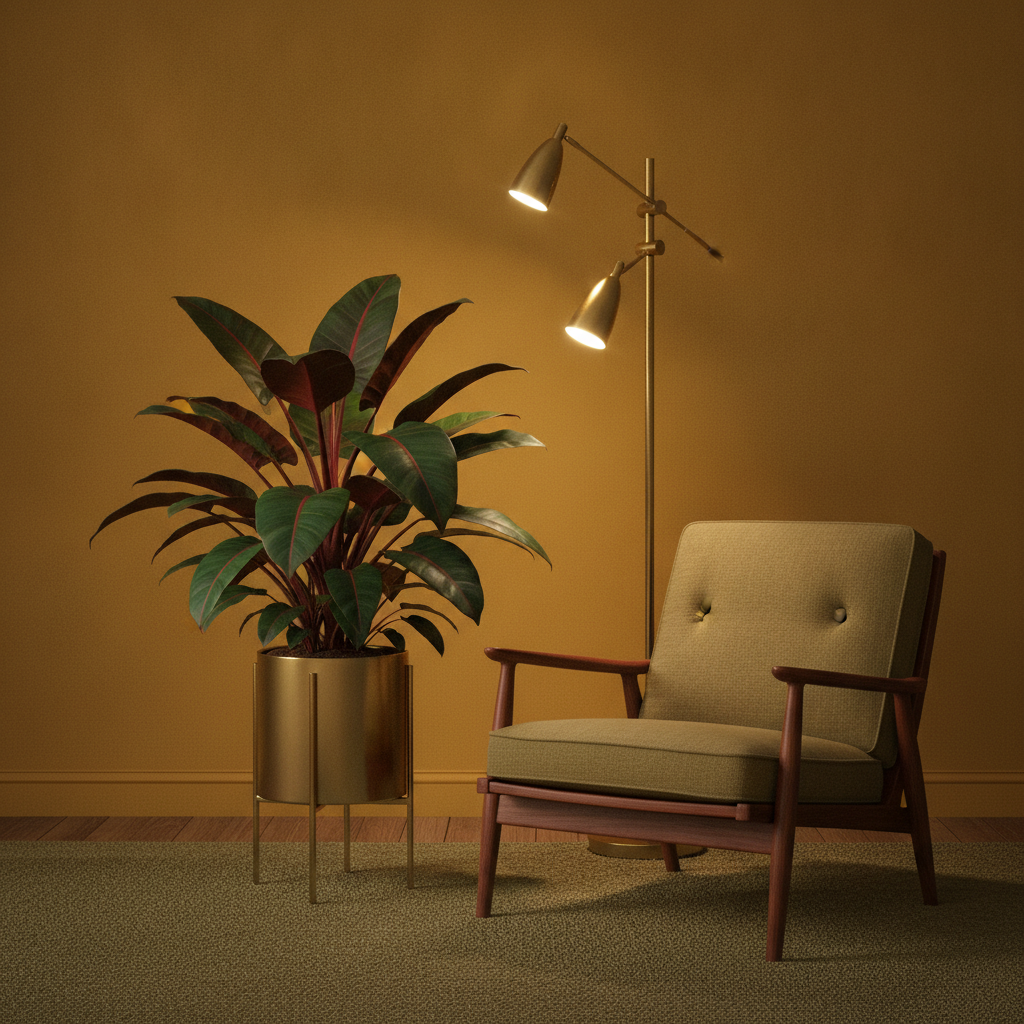
Few hybrid aroids announce themselves as boldly as the Imperial Red Philodendron. Each new leaf pushes out a deep, lacquered wine-red, slowly maturing through burgundy and bronze before settling into a glossy, almost black-green that anchors the whole plant. Botanically it is a cultivar of Philodendron erubescens, a species whose name literally means “blushing”, and the Imperial Red lives up to it. Unlike the trailing heartleaf philodendrons most people meet first, this is a self-heading plant: it grows as a compact, upright rosette rather than a climbing vine, which makes it read more like a sculptural floor or table specimen than a hanging trailer.
The good news for nervous growers is that the Imperial Red is genuinely forgiving. It tolerates a wide band of indoor conditions, shrugs off the occasional missed watering, and rarely demands the high humidity that makes some aroids miserable in a normal living room. The difference between a plant that merely survives and one that truly thrives, though, comes down to a handful of details: getting the light bright enough to keep that red colour coming, watering on the soil’s terms rather than a fixed schedule, and potting into a mix that drains fast. This guide walks through every one of those decisions in depth.
Table of Contents
- Quick Reference
- Why the Imperial Red Philodendron Makes a Great Houseplant
- Light Requirements
- Watering
- Soil and Potting
- Fertilising
- Propagation
- Pests and Problems
- Varieties and Related Cultivars
- Frequently Asked Questions
Quick Reference
The table below summarises the conditions an Imperial Red Philodendron prefers. Treat these as the targets you are aiming for rather than rigid rules, and read the sections that follow for the reasoning behind each one.
| Common names | Imperial Red Philodendron, Red Imperial, Blushing Philodendron |
| Botanical name | Philodendron erubescens ‘Imperial Red’ |
| Family | Araceae (the aroids) |
| Origin | Cultivated hybrid; the parent species is native to the tropical Americas |
| Light | Bright, indirect light; tolerates medium light |
| Water | When the top 2 to 5 cm (1 to 2 in) of soil is dry |
| Soil | Chunky, fast-draining aroid mix, slightly acidic |
| Temperature | 18 to 27 degrees C (65 to 81 degrees F) |
| Humidity | Average to high; 50 percent or more is ideal |
| Fertiliser | Balanced liquid feed, monthly in spring and summer |
| Mature size | Around 60 to 90 cm (2 to 3 ft) tall and wide indoors |
| Toxicity | Toxic to people and pets if chewed or swallowed |
| Propagation | Division of basal offsets; stem cuttings |
| Difficulty | Easy to moderate |
Why the Imperial Red Philodendron Makes a Great Houseplant
The Imperial Red occupies a sweet spot that few houseplants manage. It is dramatic enough to carry a room on its own, yet undemanding enough to suit a first-time aroid grower. The colour is the obvious draw. New leaves emerge tightly furled and flushed a saturated red, then gradually deepen and green over a couple of weeks, so a healthy plant always carries several colours at once: the bright red of the newest growth, the bronze and burgundy of the mid-aged leaves, and the dark, mirror-like green of the mature canopy. That shifting palette gives the plant a sense of constant, quiet activity.
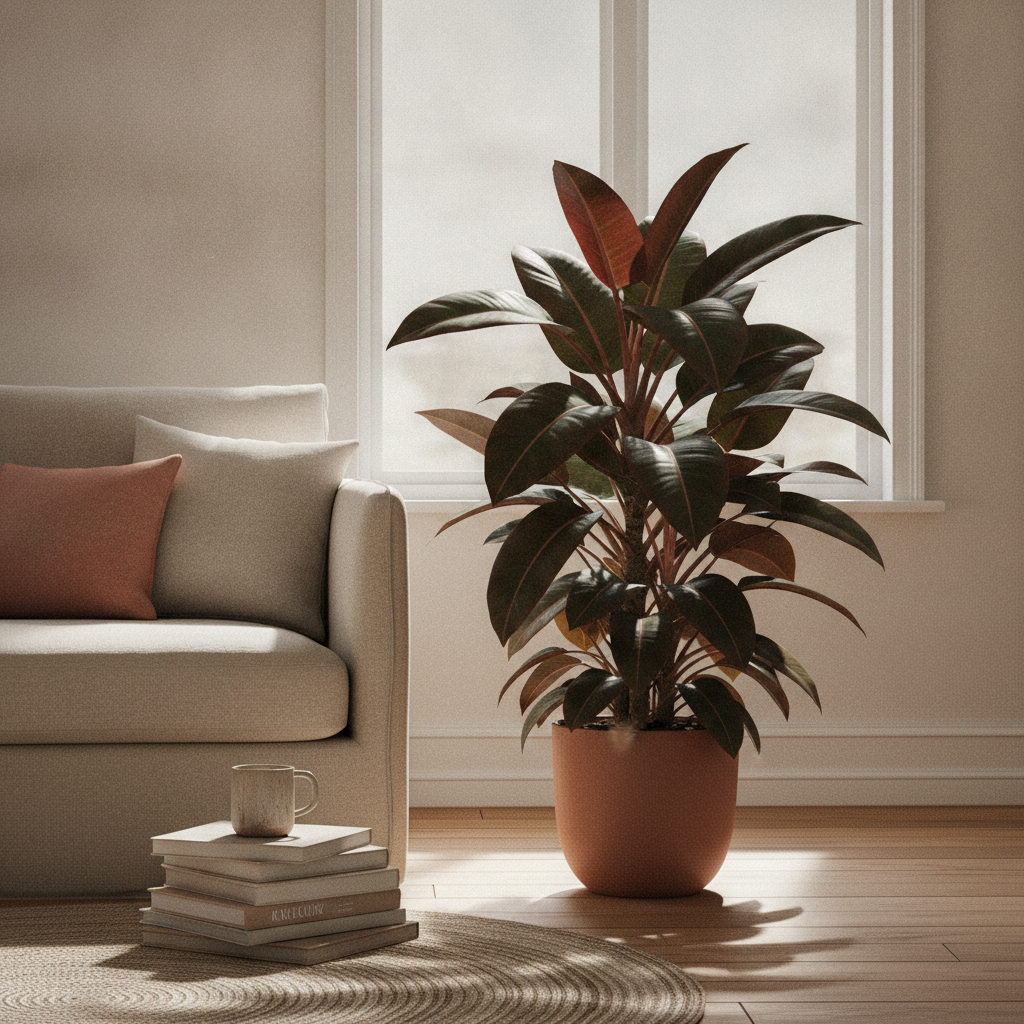
Its self-heading growth is the second reason it earns a place in so many homes. Rather than sprawling along a moss pole or trailing from a shelf, the Imperial Red builds a dense rosette of leaves radiating from a short central crown. The result is a plant that stays compact and structural, holds its shape without staking, and keeps a clean profile in a corner, on a plant stand, or as a centrepiece on a wide table. It is the kind of plant that looks deliberate and styled even when you have done very little to it.
There is also a practical case. As an aroid bred for interiors, the Imperial Red is comfortable in the moderate light and steady warmth of an ordinary living room, and it is naturally efficient at filtering some common indoor air compounds, as many large-leaved philodendrons are. It grows steadily without becoming unruly, it rarely outgrows its welcome in a hurry, and it recovers gracefully from the small lapses in care that every plant owner is guilty of from time to time. The one genuine caution is toxicity: like all philodendrons, every part of the plant contains calcium oxalate crystals, so it should be kept out of reach of pets and small children who might be tempted to chew the glossy leaves.
Light Requirements
Light is the single biggest lever you have over the Imperial Red, because it controls both growth and colour. In the wild, the parent species grows on the forest floor and lower trunks, receiving bright but dappled light filtered through the canopy above. Indoors, the closest match is bright, indirect light: a position near a window where the plant is bathed in plenty of brightness but not struck by long hours of direct, unfiltered sun.
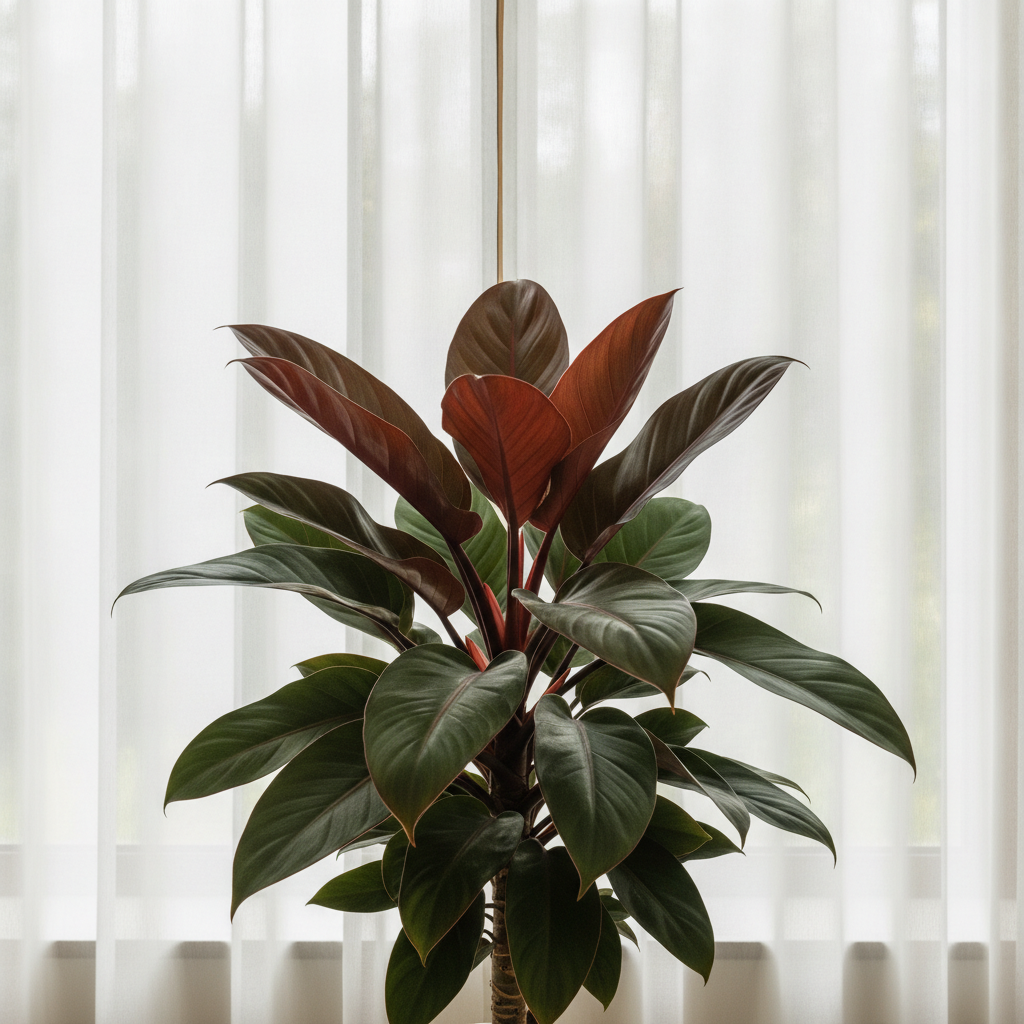
An east-facing window is often ideal, offering gentle morning sun followed by bright ambient light for the rest of the day. A south or west window works well too, provided you set the plant back a metre or so from the glass, or soften the strongest afternoon rays with a sheer curtain. The crucial point about light and this particular cultivar is colour: the red and burgundy tones are far more intense in bright conditions. Move an Imperial Red into a dim corner and it will not die, but the new leaves will emerge a muddier, greener red, the plant will stretch towards the nearest light source, and the gaps between leaves will widen, giving it a loose, leggy look instead of a tight rosette.
The opposite problem, too much direct sun, shows up as pale, bleached patches or crisp brown scorch marks on the leaf surface, usually on the leaves most exposed to the window. If you see this, pull the plant back from the glass. A useful habit is to rotate the pot a quarter turn every week or two so that every side of the rosette receives a fair share of light; this keeps the plant growing evenly rather than leaning hard in one direction.
Pro Tip – Reading the new leaves: The colour of the newest leaf is your light meter. Vivid, saturated red on fresh growth means the light is right. Increasingly green, dull new leaves with longer stems between them are the plant telling you it wants to be closer to the window.
Watering
More Imperial Reds are harmed by watering than by anything else, and almost always by too much rather than too little. The roots are thick and fleshy and they need air as much as they need moisture. Sitting in constantly wet soil starves them of oxygen and invites root rot, which is far harder to reverse than the temporary wilting of a thirsty plant. The guiding principle is simple: water thoroughly, then let the soil dry out partway before watering again.
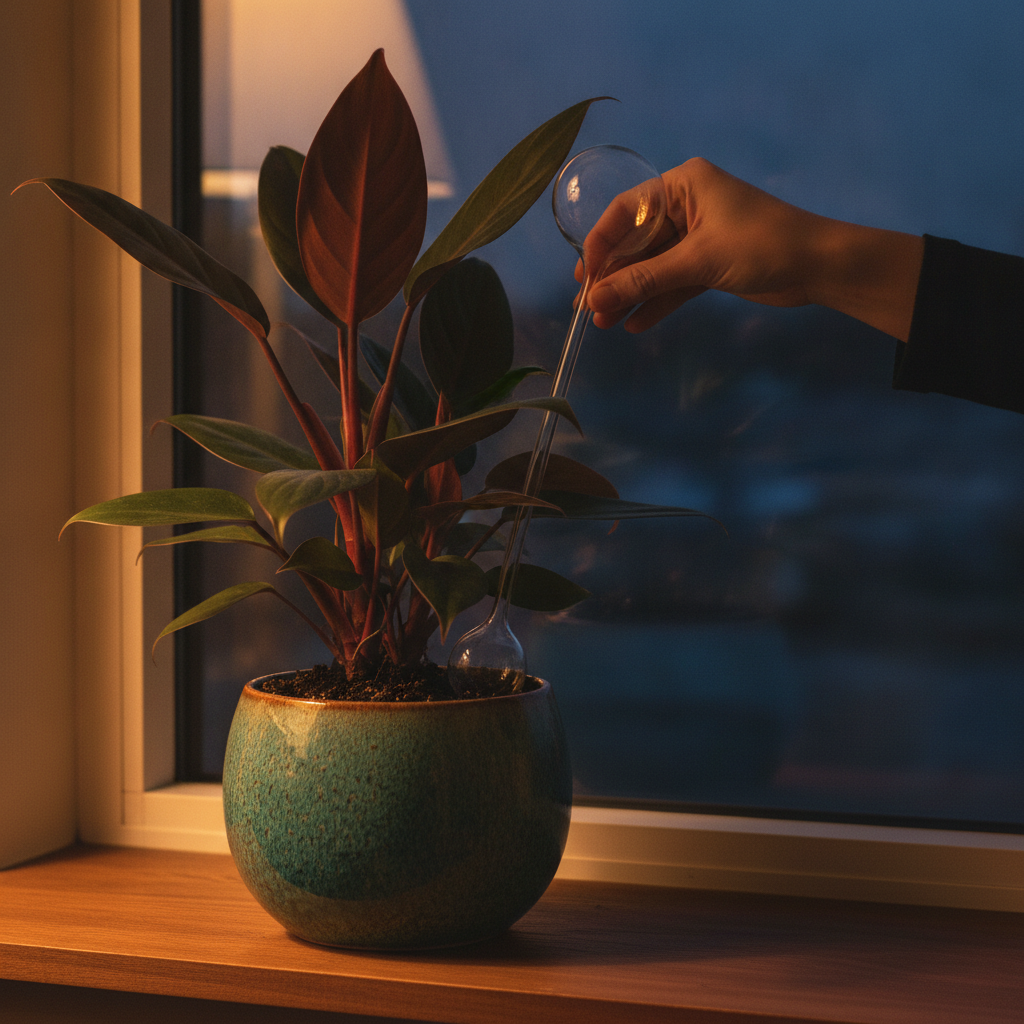
In practice, check the top of the soil with a finger before every watering. When the top 2 to 5 cm (1 to 2 in) feels dry, it is time. When you do water, do it properly: pour slowly and evenly until water runs freely from the drainage holes, which ensures the entire root ball is moistened and flushes out any built-up mineral salts. Let the pot drain completely and never leave it standing in a saucer of water. In a warm, bright spring or summer this rhythm often works out to roughly once a week, but resist the urge to water by the calendar. The same plant in the cool, low light of winter may only need water every two to three weeks, because it is growing slowly and using far less.
The plant gives clear signals when the balance is off. Yellowing lower leaves, especially several at once accompanied by soft, mushy stems or a sour smell from the soil, point to overwatering and possible rot. Brown, crispy leaf edges and a general droop that perks up quickly after a drink point the other way, to underwatering or very dry air. Drooping is worth watching closely, because both extremes can cause it; check whether the soil is bone dry or sodden before deciding which problem you are looking at. Room-temperature water is kindest, and if your tap water is heavily chlorinated or very hard, letting it stand overnight or using filtered or rain water will keep the leaf tips cleaner over time.
Soil and Potting
If watering is where most people go wrong, the soil is what makes watering forgiving or unforgiving in the first place. The Imperial Red wants a mix that holds some moisture but drains quickly and stays airy, mimicking the loose, leaf-litter-rich ground of its native habitat. A plain bag of dense potting compost on its own holds far too much water around those fleshy roots and is the most common hidden cause of slow decline.
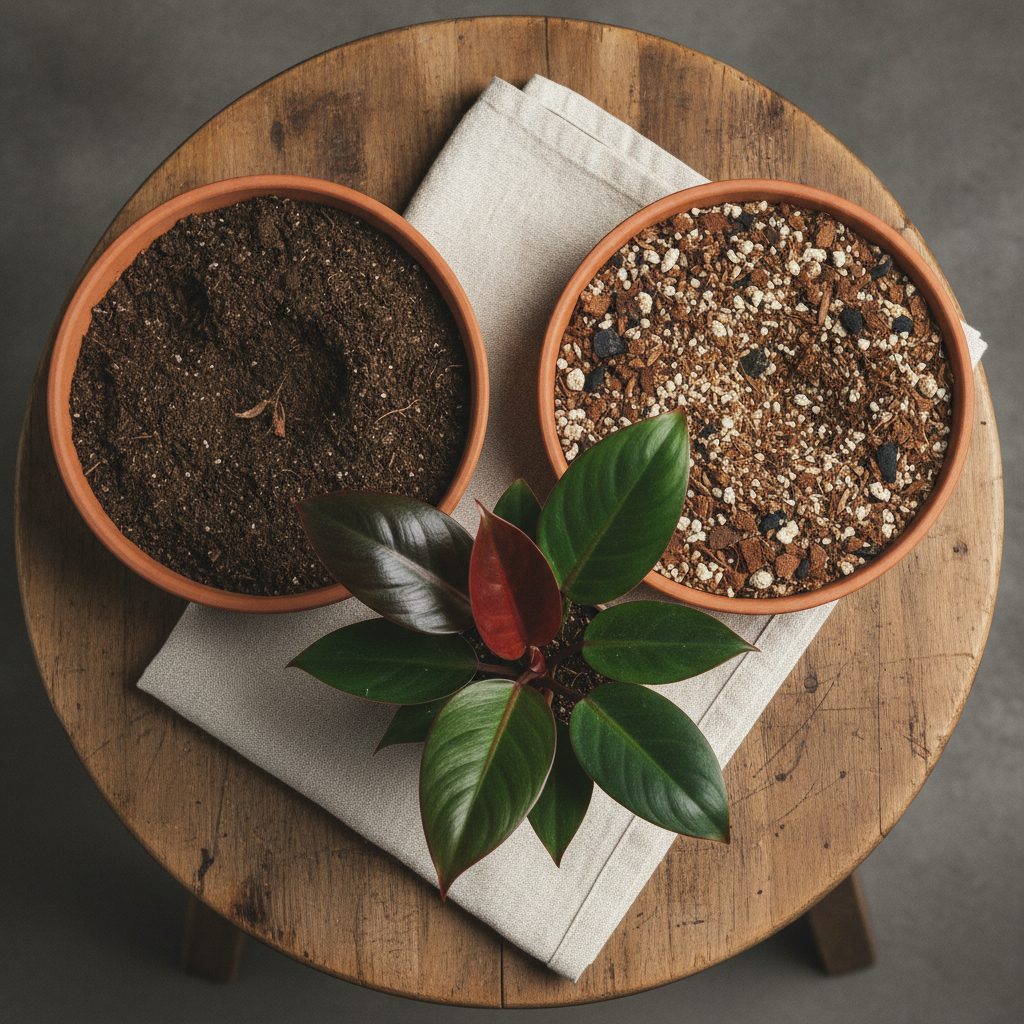
A reliable recipe is roughly equal parts good quality houseplant compost, orchid bark, and perlite, with a couple of handfuls of coco coir or worm castings added for moisture retention and gentle nutrition. The bark and perlite create air pockets and channels for water to escape, while the compost and coir hold just enough moisture between waterings. The aim is a slightly acidic mix, in the region of pH 5.5 to 6.5, which most peat-free or bark-based aroid blends fall into naturally. If you would rather buy than mix, a bagged aroid or monstera mix is a perfectly good shortcut.
Always pot into a container with drainage holes. A decorative pot with no drainage can be used as an outer cover, but the plant itself should live in a draining nursery pot that you lift out to water. Choose a pot only one size larger than the current root ball when you do repot, because an oversized pot holds a large volume of slow-drying soil that works against you. The Imperial Red is not in a hurry and is quite happy being a little snug, so repotting every two to three years, ideally in spring, is usually enough. Signs it is ready include roots circling the bottom or creeping out of the drainage holes, water rushing straight through without wetting the soil, or growth that has clearly stalled. When repotting, gently tease apart any tightly circling roots and settle the plant at the same depth it sat before, never burying the central crown.
Pro Tip – The squeeze test: Good aroid mix, moistened and squeezed in your hand, should clump briefly and then crumble apart when you open your fingers. If it stays in a tight, muddy ball, add more bark and perlite before you pot.
Fertilising
The Imperial Red is a moderate but steady feeder during its growing season. Because those colourful new leaves take real energy to produce, a little regular feeding through spring and summer noticeably improves both the size of new leaves and the intensity of their colour. The key word, as with most houseplants, is restraint: it is far easier to recover a slightly underfed plant than one whose roots have been burned by excess fertiliser.
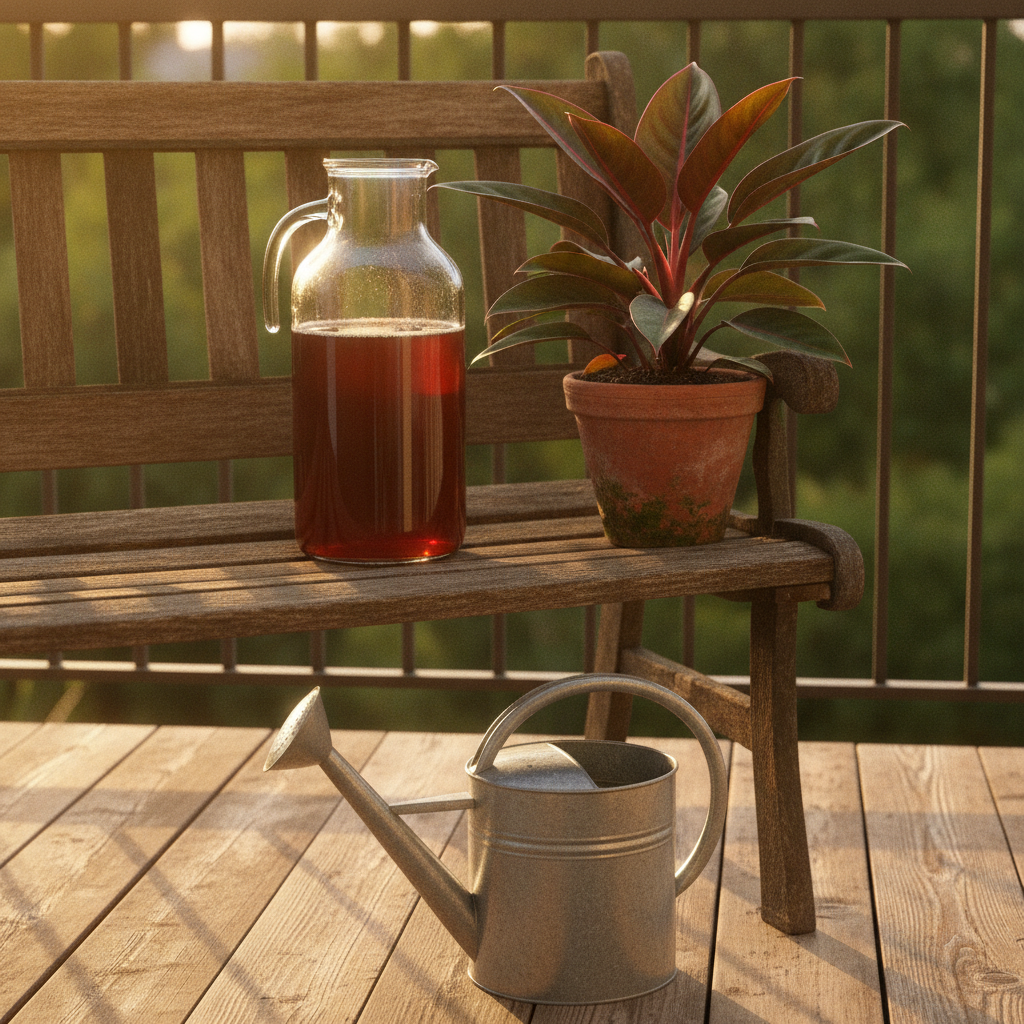
A balanced liquid houseplant fertiliser, diluted to roughly half the strength stated on the bottle and applied about once a month from spring through to early autumn, suits it well. Apply it to already-moist soil rather than bone-dry roots, which helps the nutrients spread evenly and avoids any risk of scorching. An alternative is a slow-release granular feed worked lightly into the soil surface in spring, which then releases gently over several months and removes the need to remember a monthly schedule. As the days shorten and growth naturally slows through late autumn and winter, stop feeding altogether. Fertilising a plant that is not actively growing simply leaves unused salts to accumulate in the soil.
Watch for the signs of overfeeding, which include a white crust of mineral salts on the soil surface or pot rim, and brown, scorched leaf tips and margins. If you see them, flush the pot thoroughly with plain water two or three times to leach out the excess, and ease back on the feeding. Pale, uniformly yellowing new growth during the growing season, by contrast, can indicate the plant is hungry or short of a particular nutrient, in which case a regular dilute feed usually restores a healthy green over a few weeks.
Propagation
Propagating a self-heading philodendron is a little different from rooting a cutting off a trailing pothos or heartleaf. Because the Imperial Red grows from a central crown rather than a long climbing stem with nodes spaced along it, the most reliable method is division: separating the offsets, or pups, that the plant produces around its base as it matures.
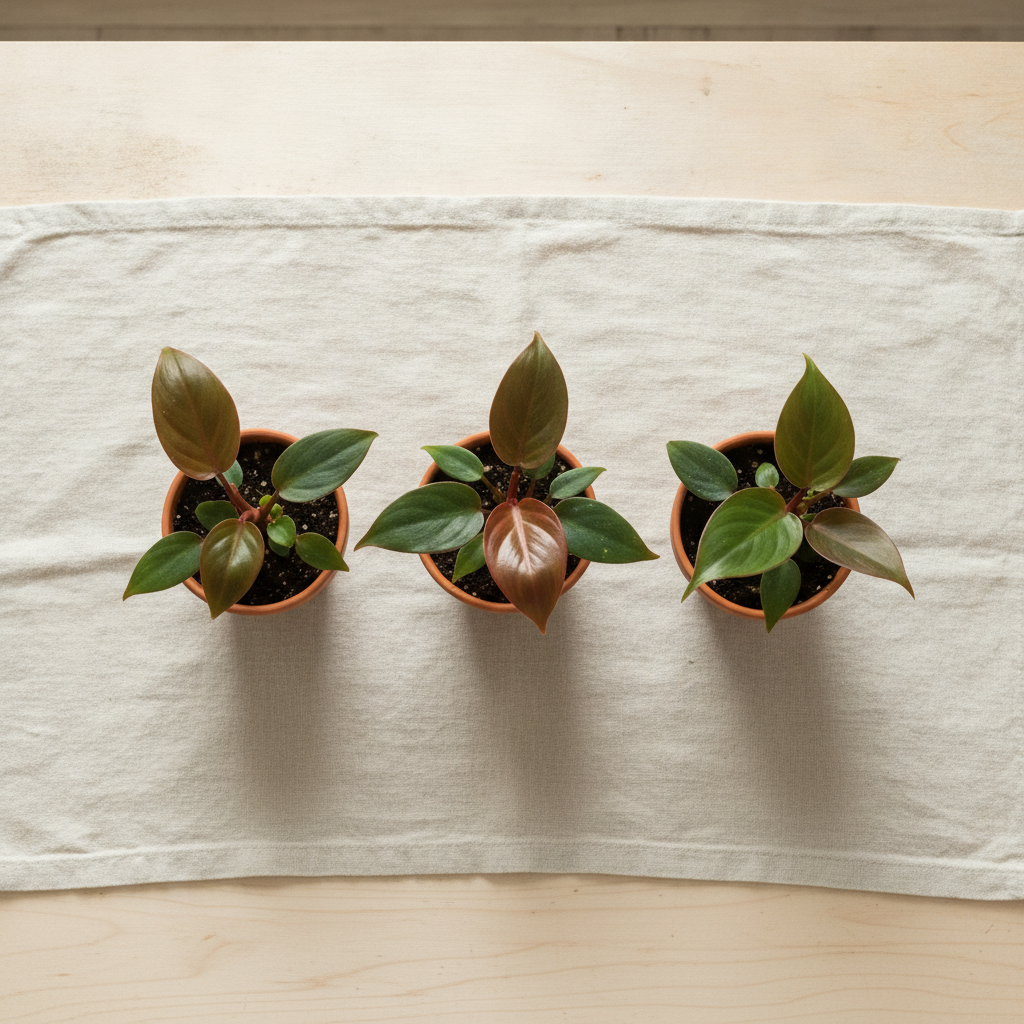
The easiest time to divide is when you are already repotting in spring, because the plant is out of its pot and the root system is exposed. Look for a pup growing from the base that has at least one or two of its own leaves and, ideally, some roots of its own attached. To separate it, follow the steps below.
- Slide the whole plant out of its pot and gently brush or rinse away enough soil to see where the offset joins the main root mass.
- Using clean, sharp secateurs or a knife, cut or tease the pup away from the parent, keeping as many of its own roots intact as you can.
- Pot the division into a small container of the same chunky aroid mix, setting it at the depth it grew before and firming the soil gently around the roots.
- Water it in lightly and place it somewhere warm with bright, indirect light, out of direct sun.
- Keep the soil just barely moist for the first few weeks while the division settles, then return to normal watering once you see new growth.
If a plant has grown a visible length of stem with leaf nodes, a stem cutting is also possible: cut a section that includes at least one node, let the cut surface callous over for an hour or two, and root it in fresh aroid mix or in water before potting up. Whatever the method, new roots and shoots establish fastest in the warmth and longer days of spring and summer, so time your propagation for the growing season rather than the depths of winter.
Warning – Sap and skin: The sap contains calcium oxalate crystals that can irritate skin and eyes. Wear gloves when cutting, keep the sap away from your face, and wash your hands and tools afterwards.
Pests and Problems
A healthy, well-positioned Imperial Red is not especially prone to pests, but like any houseplant it can pick up the usual sap-feeding insects, particularly when air is dry or when a new plant brings them in. Catching an infestation early, while it is still confined to a leaf or two, makes all the difference, so it pays to glance over the leaves, including their undersides and the crevices where leaves meet the stem, whenever you water.
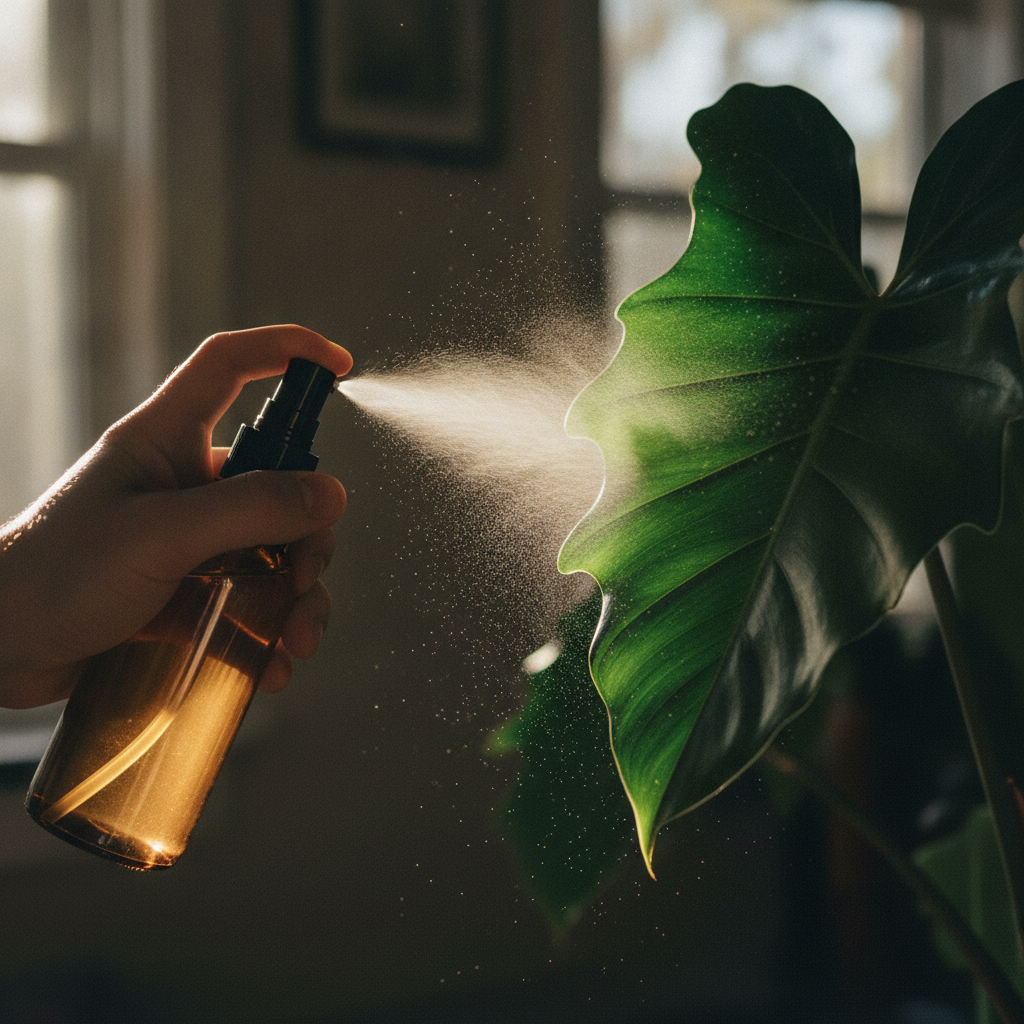
The most common visitors are spider mites, which thrive in dry air and leave fine webbing and a stippled, dusty look on the leaves; mealybugs, which appear as small white cottony tufts tucked into leaf joints; scale, which look like flat brown discs stuck to stems and leaf undersides; and fungus gnats, the small black flies that hover around soil that stays too wet. For most of these, the response is the same and escalating: wipe the leaves with a damp cloth, dab individual mealybugs or scale with a cotton bud dipped in diluted isopropyl alcohol, and treat the whole plant with a horticultural soap or neem oil spray, repeating every week or so until the problem clears. Fungus gnats are best addressed by letting the soil dry out more between waterings, since their larvae depend on constantly moist soil; yellow sticky traps help knock down the adults.
Most of the day-to-day complaints with this plant, though, are not pests at all but reactions to care, and the table below maps the most common symptoms to their usual causes and fixes.
| Symptom | Likely cause | What to do |
| Yellowing lower leaves, soft stems | Overwatering, poor drainage | Let the soil dry further, check for rot, improve the mix |
| Brown, crispy leaf edges | Dry air, underwatering, salt build-up | Raise humidity, water more consistently, flush the soil |
| Dull, greenish new leaves, leggy growth | Too little light | Move closer to a bright window |
| Pale or scorched patches | Too much direct sun | Pull back from the glass or diffuse the light |
| Drooping despite moist soil | Root rot or cold stress | Inspect roots, warm the position, reduce watering |
| Fine webbing, stippled leaves | Spider mites | Raise humidity, rinse and treat with neem or soap |
Two environmental factors round out the picture. The Imperial Red is comfortable in normal room temperatures of 18 to 27 degrees C (65 to 81 degrees F) and dislikes sudden chills, so keep it away from draughty doors, cold windowpanes in winter, and the direct blast of heating or air-conditioning vents, all of which can cause leaf drop or browning. It tolerates average household humidity but is happier above 50 percent; in a dry home, grouping it with other plants, standing it on a tray of damp pebbles, or running a small humidifier nearby will keep the leaf edges clean and the new growth unfurling smoothly.
Varieties and Related Cultivars
The Imperial Red belongs to a family of self-heading Philodendron erubescens hybrids that were bred specifically for compact, colourful indoor growth. If you enjoy the Imperial Red’s tidy rosette habit, its close relatives offer the same easy care with a different palette, and they make natural companions on a shelf or in a grouped display.
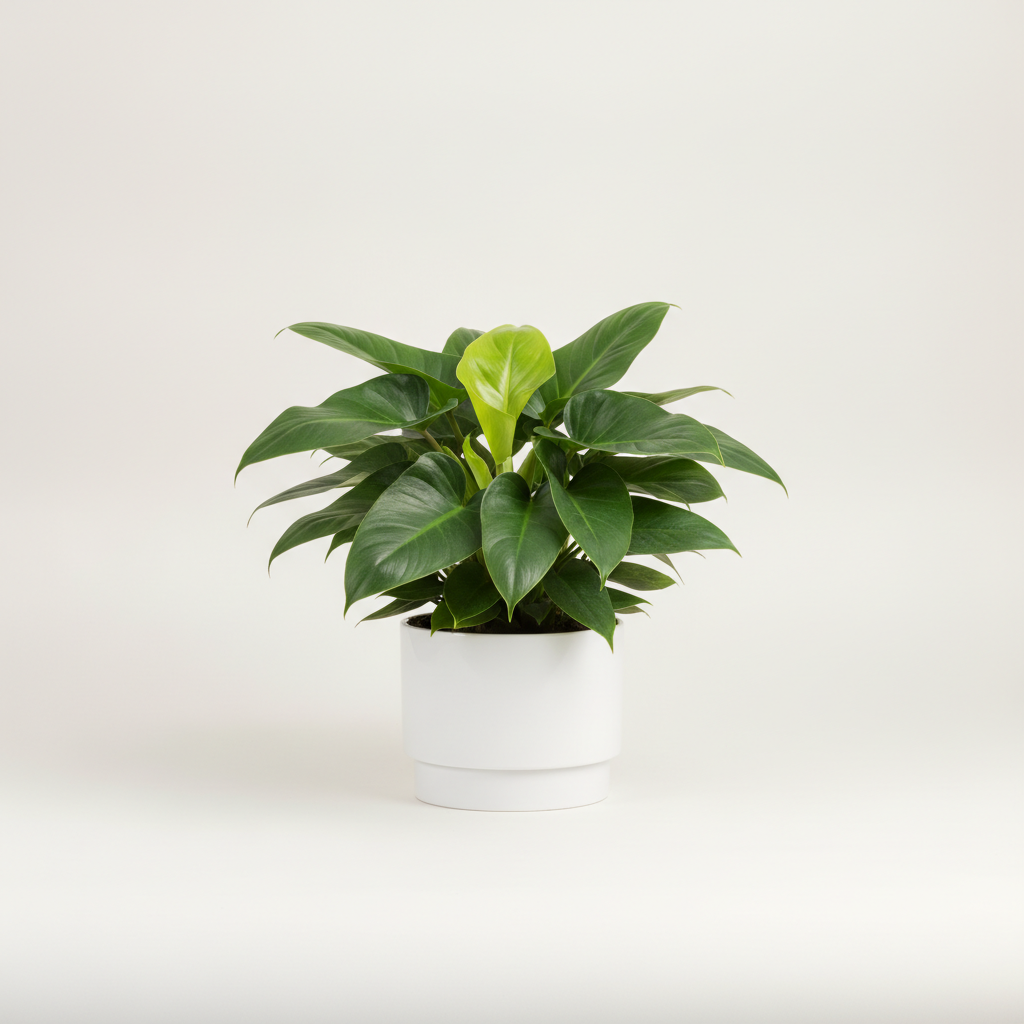
Imperial Green is the Imperial Red’s green-leaved counterpart and care twin. It forms the same broad, glossy, self-heading rosette, but the leaves are a deep emerald from the start, with new growth flushing a fresh lime-green rather than red. It is an excellent choice where you want the sculptural shape and bombproof temperament without the red colouring, and the two look striking side by side.
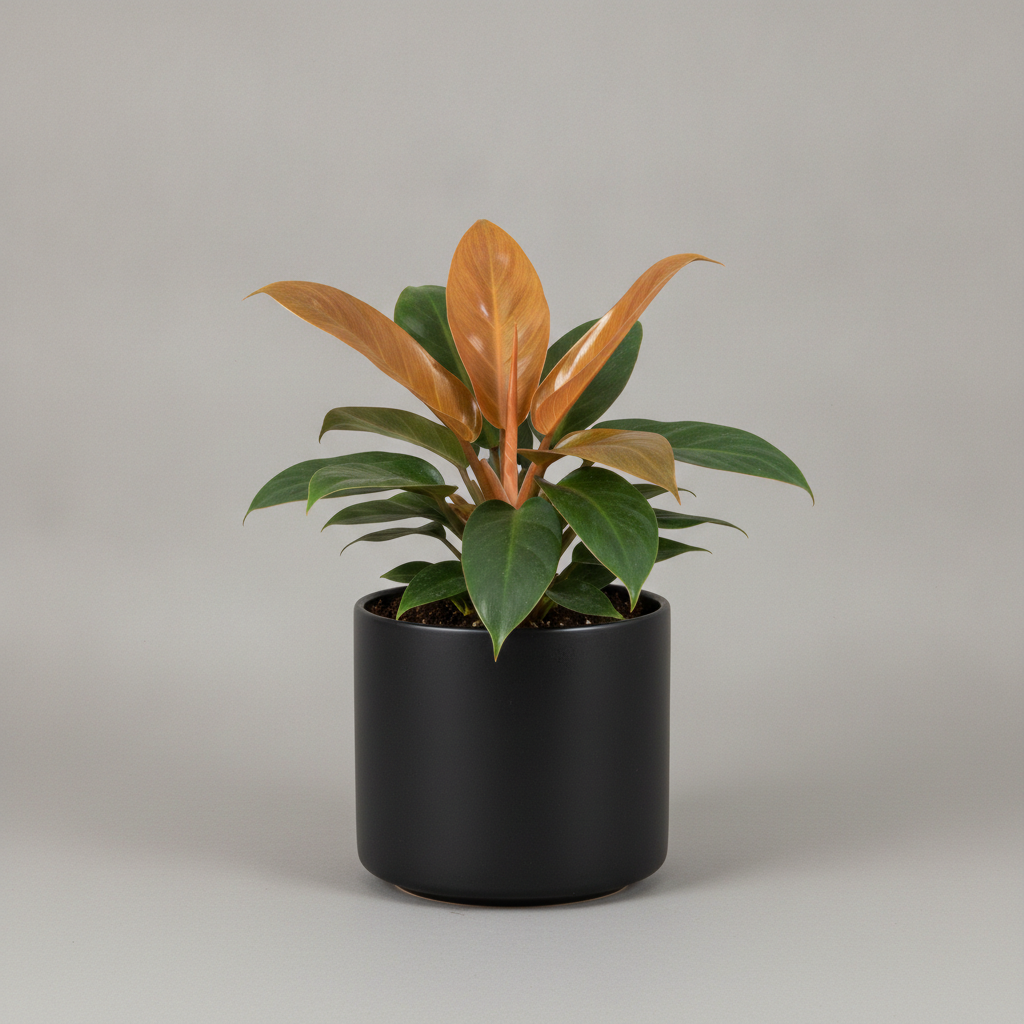
Prince of Orange takes the colour-shifting trick even further. Its new leaves unfurl a bright, coppery orange, then age through amber and yellow before maturing to green, so the plant glows with warm tones at its centre. It shares the Imperial Red’s self-heading habit and the same care needs, and rewards bright light with especially vivid new growth.
Beyond these two, the wider erubescens group includes the deep wine-toned ‘Rojo Congo’, the cream-and-pink variegated ‘Pink Princess’, and several other named hybrids. All share the blushing parentage and most of the same care, so the guidance in this article transfers neatly across the group. Collecting two or three of them is an easy way to build a coordinated, low-effort display with real colour variety.
Frequently Asked Questions
Why are my Imperial Red’s new leaves coming out green instead of red?
This is almost always a light issue. The red and burgundy pigments develop most strongly in bright conditions, so a plant in a dim spot will push out duller, greener new leaves. Move it closer to a bright window, out of direct midday sun, and the colour on subsequent leaves should deepen noticeably.
Is the Imperial Red Philodendron toxic to cats and dogs?
Yes. Like all philodendrons, it contains insoluble calcium oxalate crystals that are toxic to cats, dogs, and people if chewed or swallowed, causing mouth irritation, drooling, and digestive upset. Keep it out of reach of curious pets and small children, and wash your hands after handling cut stems.
How often should I water it?
Water when the top 2 to 5 cm (1 to 2 in) of soil has dried out, rather than on a fixed schedule. In bright, warm months this is often about once a week; in cooler, darker months it may stretch to every two or three weeks. Always let excess water drain away fully and never leave the pot sitting in water.
Does it need a moss pole?
No. Unlike climbing philodendrons, the Imperial Red is self-heading and grows as an upright rosette, so it supports itself without a pole or stake. Just give it enough room for its leaves to spread and rotate the pot occasionally so it grows evenly.
Why are the lower leaves turning yellow?
An occasional yellow lower leaf on an otherwise healthy plant is normal ageing. Several leaves yellowing at once, especially with soft stems or soggy soil, usually means overwatering. Let the soil dry further, check that the pot drains freely, and inspect the roots for rot if the problem continues.
How big does it get indoors?
Indoors, an Imperial Red typically reaches around 60 to 90 cm (2 to 3 ft) tall and roughly as wide, forming a substantial but manageable mound. Its mature leaves can each span 30 cm (12 in) or more, which is what gives an established plant such a bold, leafy presence.