
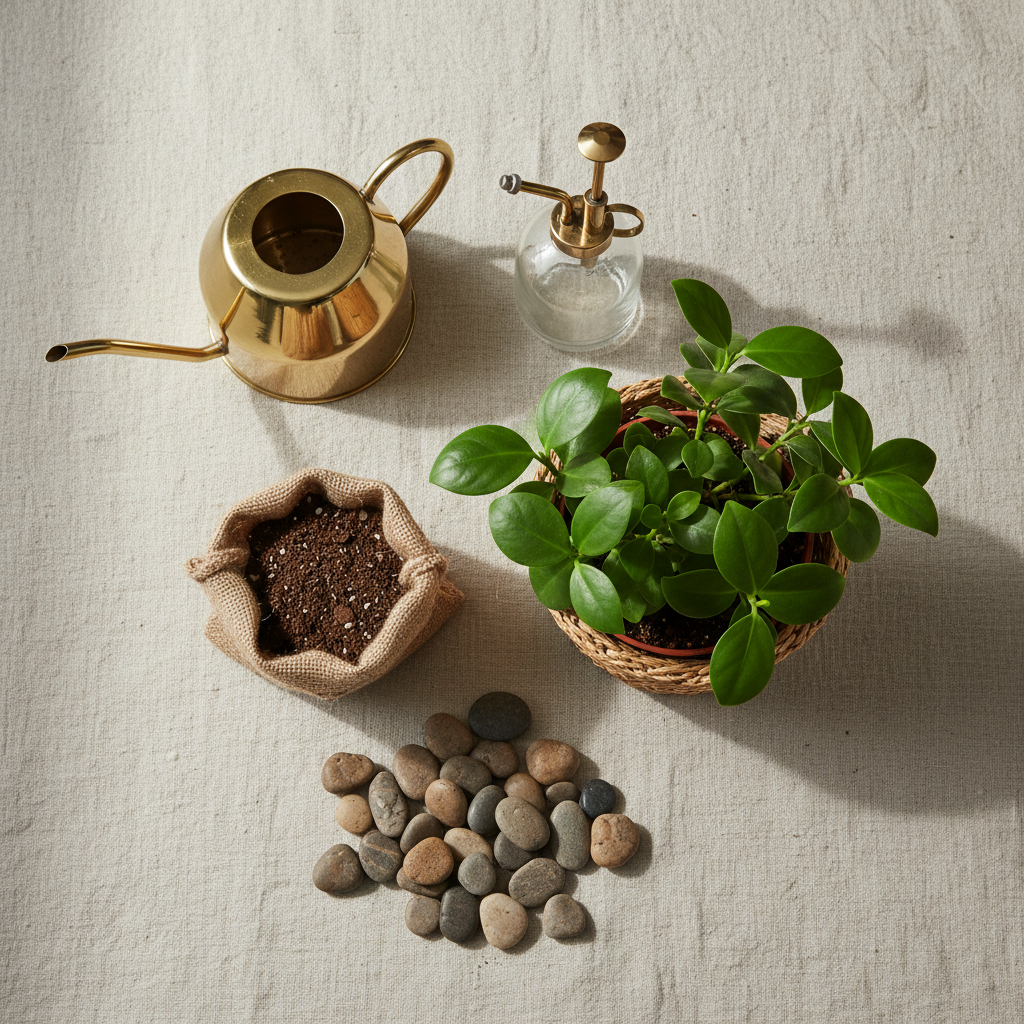
- Myth 1: Water Every Plant Once a Week
- Myth 2: Rocks at the Bottom Improve Drainage
- Myth 3: Misting Solves Low Humidity
- Myth 4: More Fertiliser Means More Growth
- Myth 5: Direct Sun Is Always Best
- Myth 6: A Bigger Pot Helps a Struggling Plant
- Myth 7: Leaf Shine Products and Oils Are Always Good
- Quick Myth Correction Table
- Frequently Asked Questions
Houseplant advice spreads quickly because everyone wants a simple trick. Unfortunately, plants are not always improved by tricks. Some myths survive because they sound tidy, cheap or clever, even when they create soggy roots, scorched leaves or a false sense of security.
Good plant care is rarely dramatic. It is usually matching light, water, drainage and temperature to the plant. That may not sound as exciting as “put this kitchen ingredient on your leaves,” but the plant will cope with the disappointment.
Myth 1: Water Every Plant Once a Week
A weekly watering schedule is easy to remember, but plants do not use water according to your calendar. Water use changes with pot size, light, temperature, season, plant size and potting mix. University of Minnesota Extension notes that plants in lower light grow more slowly and use less water, so overwatering should be avoided by feeling the soil.[2]
A better rule is to check the potting mix and learn what each plant prefers. Some plants like to dry significantly between waterings. Others prefer evenly moist conditions. A strict weekly routine treats a cactus and a fern as if they signed the same contract.
Myth 2: Rocks at the Bottom Improve Drainage
Putting rocks or pebbles at the bottom of a pot or terrarium is often recommended, but it does not magically create drainage if water cannot leave the container. Penn State Extension notes that rock or pebble layers are no longer thought to improve drainage in terrariums.[7] Oregon State University Extension warns that a bottom layer of stones can allow water to pool and cause root rot in terrariums.[8]
The better solution is a pot with drainage holes, appropriate potting mix and careful watering. If using a decorative cachepot, keep the plant in an inner pot with drainage and empty excess water.
Myth 3: Misting Solves Low Humidity
Misting can make plant care feel productive, and it can rinse dust from leaves, but it is not a reliable way to raise humidity long-term. University of Illinois Extension explains that misting only increases humidity for a short period, often minutes, and would need to be repeated every few minutes to be effective.[3]
For humidity-loving plants, use better strategies: group plants, use a humidifier, choose naturally humid rooms with enough light, or place pots above water on pebble trays without letting them sit in water.[3]
Pro Tip — If You Enjoy Misting, Fine: Just do not count it as your humidity plan. It is a spa moment, not a climate system.
Myth 4: More Fertiliser Means More Growth
Fertiliser supports growth only when the plant has enough light, healthy roots and active growth conditions. Overfertilising can damage roots and create salt buildup. In terrariums, Iowa State University Extension recommends avoiding fertiliser because it encourages growth and earlier crowding.[5]
Houseplants generally need less fertiliser when growth slows, such as after being moved indoors or during low-light seasons. University of Illinois Extension notes that plants brought indoors often slow their growth and need less water and fertiliser.[3]
Myth 5: Direct Sun Is Always Best
Light is essential, but more is not always better. University of Minnesota Extension notes that too much light can scorch and bleach leaves.[2] University of Minnesota also warns that houseplants moved outdoors into direct sunlight too quickly can burn, including succulents.[4]
Some plants love direct sun. Others evolved as understory plants and prefer filtered or indirect light. “Bright” and “hot direct sun through glass” are not the same thing.
Myth 6: A Bigger Pot Helps a Struggling Plant
A bigger pot can help when a plant is truly root-bound and actively growing. But moving a weak plant into a much larger pot often creates a wet zone of unused soil around the roots. That soil dries slowly and can worsen root stress.
If a plant is declining, diagnose light, watering, drainage, pests and roots before potting up. Bigger is not always kinder. Sometimes it is just a larger swamp with decorative sides.
Myth 7: Leaf Shine Products and Oils Are Always Good
Leaves need to exchange gases and receive light. Heavy oils, homemade shines or sticky products can attract dust and interfere with leaf surfaces. Cleaning leaves gently with water and a soft cloth is usually enough for most foliage plants. Clemson Cooperative Extension notes that cleaning leaves improves plant appearance, supports healthy growth and helps control insects.[9]
Quick Myth Correction Table
| Myth | Better practice |
|---|---|
| Water every Saturday | Check soil moisture and plant needs. |
| Add rocks for drainage | Use drainage holes and suitable potting mix. |
| Mist daily for humidity | Use a humidifier, grouping or pebble tray. |
| Fertilise a sick plant | Diagnose stress first; fertilise only during healthy growth. |
| Put every plant in sun | Match light to the species and acclimate changes. |
| Repot whenever sad | Check roots and care conditions first. |
| Polish leaves with kitchen oils | Clean gently with water and a soft cloth. |
Frequently Asked Questions
| Question | Answer |
|---|---|
| Are all plant hacks bad? | No, but they should solve a real problem and not replace basic care. |
| Why do myths spread so easily? | They are simple, memorable and often based on one person’s experience rather than plant needs. |
| What is the safest general advice? | Match light, water and potting conditions to the plant, then observe how it responds. |
| Should I follow advice from social media? | Treat it as a starting point, not a rule. Cross-check with reputable horticultural sources. |
References
- [2] University of Minnesota Extension — Lighting for indoor plants and starting seeds
- [3] University of Illinois Extension — Tips for moving houseplants indoors and overwinter care
- [4] University of Minnesota Extension — Moving Houseplants Outdoors
- [5] Iowa State University Extension — How to Create and Care for a Terrarium
- [7] Penn State Extension — Creating a Closed Terrarium
- [8] Oregon State University Extension — Tiny gardens, big impact: how to make and care for a terrarium
- [9] Clemson Cooperative Extension — Indoor Plants: Cleaning, Fertilizing, Containers & Light Requirements



