
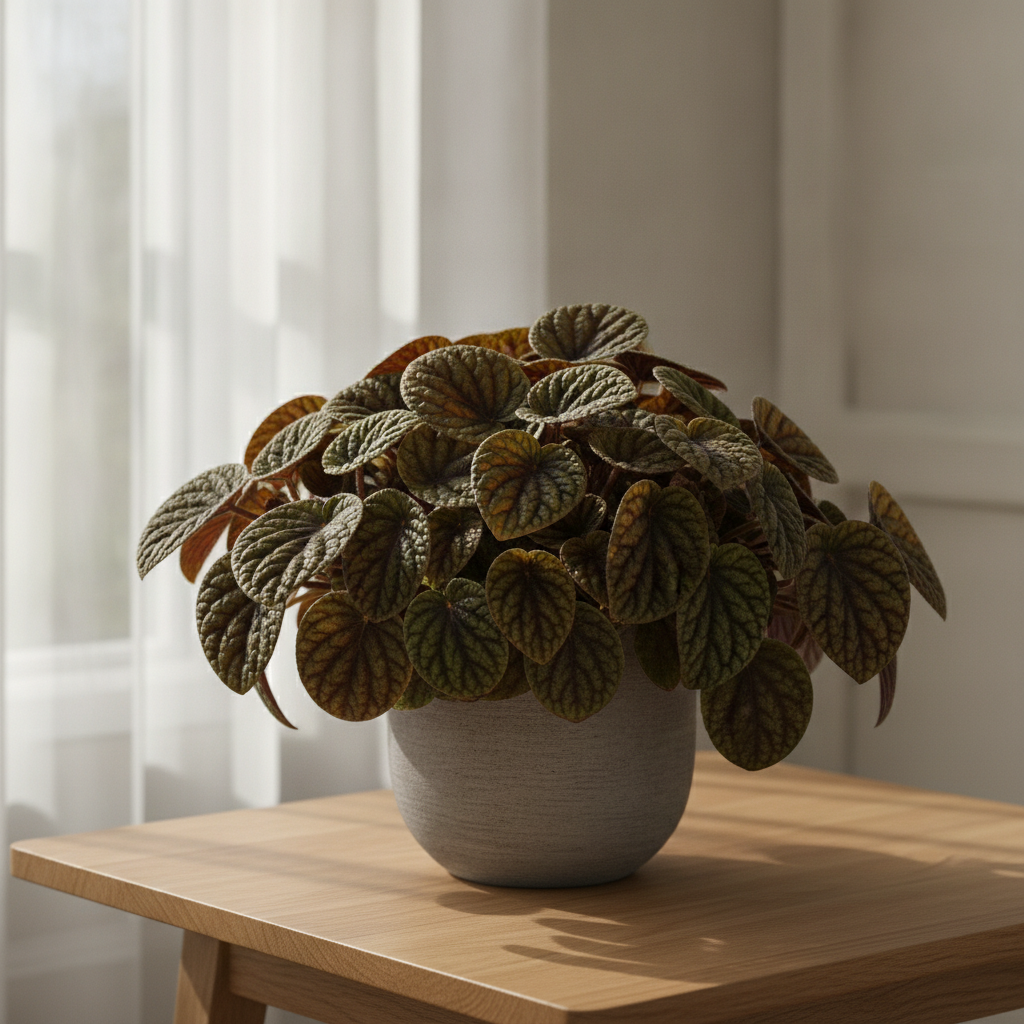
Few small houseplants carry as much drama in their foliage as the Dark Mystery Pilea. A cultivar of Pilea involucrata, it takes the deeply textured, quilted leaves of the classic friendship plant and steeps them in bronze, chocolate and oxblood tones, with a network of sunken veins that catch the light like hammered metal. Turn a leaf over and the underside glows a coppery purple. It stays compact, roots from a cutting in a jam jar, and asks only for warmth, moisture and a bright spot out of direct sun. For anyone who finds the average green houseplant a little too polite, this is a plant with a mood.
This guide covers everything you need to keep a Dark Mystery Pilea not just alive but genuinely thriving, from reading its light and water needs to propagating it into a windowsill full of gifts for friends. It is a rewarding plant once you understand its tropical origins, and forgiving enough that early mistakes rarely prove fatal.
Quick Reference
- Why grow a Dark Mystery Pilea
- Light
- Watering
- Soil and potting
- Fertilising
- Propagation
- Pests and problems
- Varieties and relatives
- Frequently asked questions
| Botanical name | Pilea involucrata ‘Dark Mystery’ |
| Common names | Dark Mystery Pilea, friendship plant, velvet pilea |
| Family | Urticaceae (nettle family) |
| Origin | Tropical Central and South America |
| Mature size | 15 to 30 cm (6 to 12 in) tall, spreading wider |
| Light | Bright indirect light; no direct midday sun |
| Water | Keep evenly moist; let the top 1 to 2 cm dry |
| Humidity | High, 60 per cent and above preferred |
| Temperature | 18 to 27 degrees C (65 to 81 degrees F) |
| Soil | Light, airy, well-draining, slightly acidic |
| Toxicity | Non-toxic to cats, dogs and humans |
| Difficulty | Easy to moderate |
Why Grow a Dark Mystery Pilea as a Houseplant
The appeal of this plant starts and ends with its leaves. Where most foliage plants offer a flat, glossy surface, the Dark Mystery Pilea gives you deep quilting: the tissue between the veins puffs upward while the veins themselves press down into shadowed channels, so every leaf reads as a small piece of relief sculpture. The base colour shifts with the light, from a bronzed olive in shade to a smoky chocolate near a bright window, and the reddish undersides add a second layer of colour whenever the foliage catches a draught or you look up at a hanging pot.
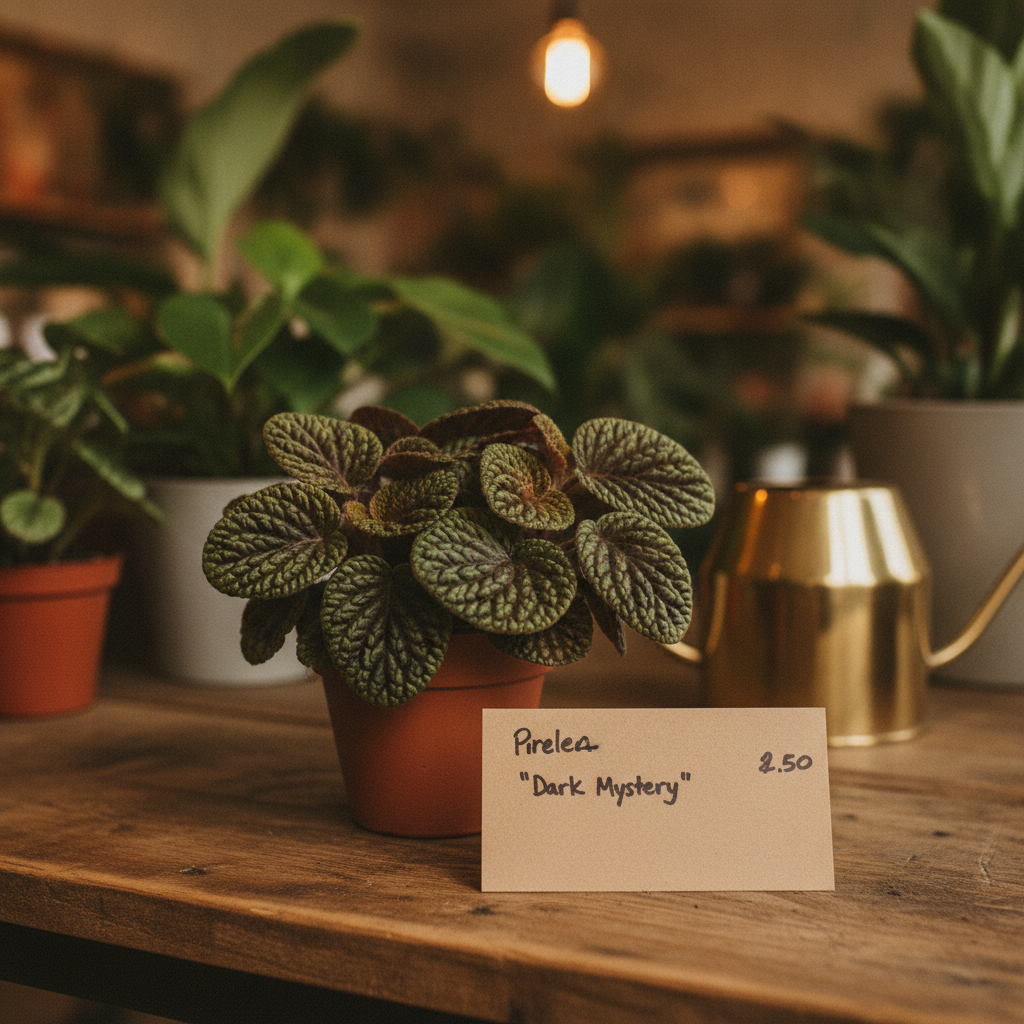
Practicality is the second reason to grow one. This is a small plant, rarely topping 30 cm, so it earns a place on a crowded shelf, in a terrarium, or tucked among taller plants where it fills the lower storey with texture. It roots so readily from cuttings that the whole Pilea involucrata group earned the nickname friendship plant, a nod to the tradition of pinching off a piece to pass along. And unlike many of the dramatic tropicals it resembles, it is non-toxic to cats, dogs and people, so it suits households with curious pets or small children.
The trade-off is that the Dark Mystery Pilea has opinions. It comes from the humid understorey of Central and South American forests, and it will tell you, quickly and visibly, when the air is too dry or the soil has swung to an extreme. The distinction between merely surviving and truly thriving is sharper here than with a pothos or a snake plant. Survive it will, in most warm rooms, holding onto its lower leaves and limping along. Thrive it does only when you match the humidity, warmth and steady moisture of its native climate, at which point it rewards you with dense, deeply coloured growth and a readiness to spread.
Light
Bright, indirect light is the sweet spot for a Dark Mystery Pilea. In the wild it grows on the forest floor and along shaded banks, under a canopy that filters the fierce tropical sun into a soft, dappled glow. Recreating that indoors means a position near a window that receives plenty of daylight but little or no direct sun on the leaves. An east-facing sill that catches gentle morning light, or a spot a metre or so back from a bright south or west window, both work well.
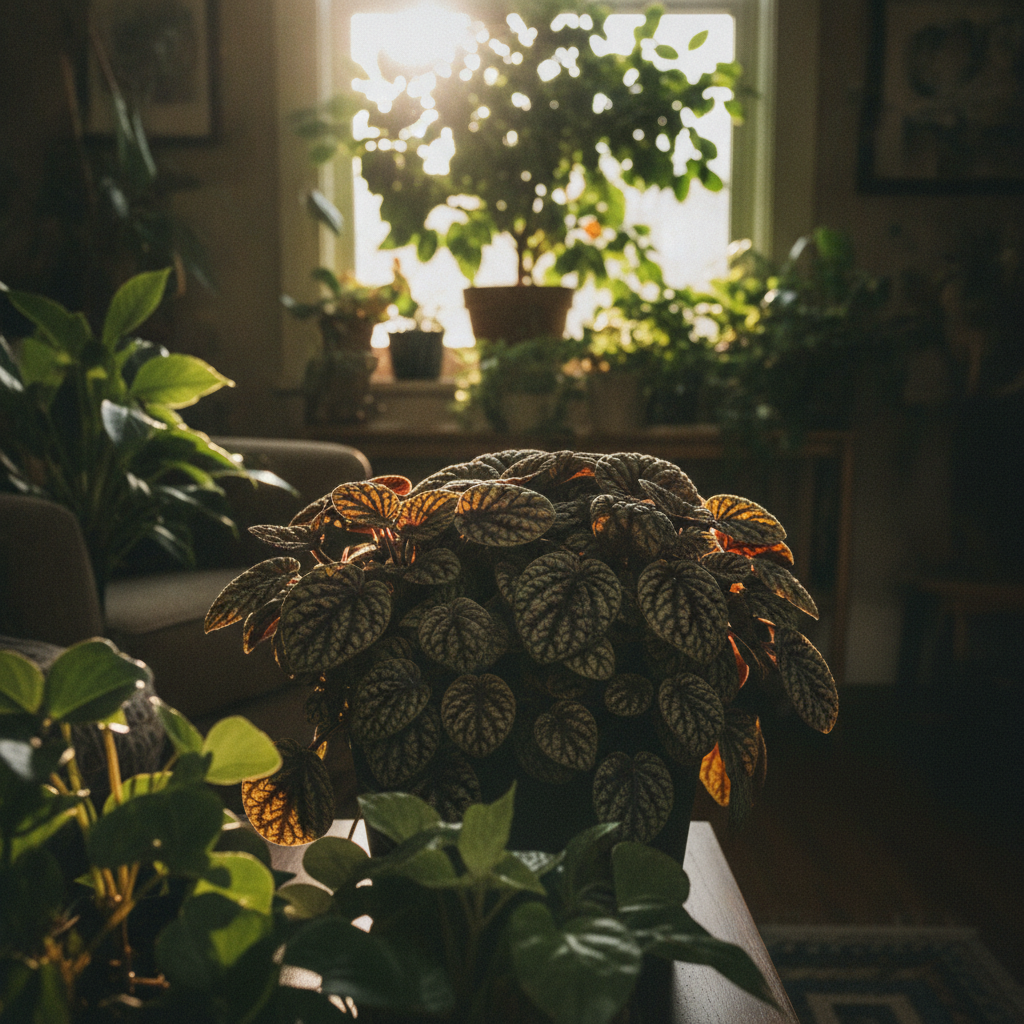
The colour of the foliage is a useful gauge. In good light the dark tones deepen and the contrast between raised tissue and sunken vein grows more pronounced. In light that is too low the plant stretches, the gaps between leaves lengthen, and new growth comes in smaller and paler as the plant reaches for the window. This legginess is the most common complaint with the species, and it is almost always a light problem rather than anything more sinister.
Direct sun is the opposite danger. The thin, textured leaves scorch easily, developing bleached or crisp brown patches where the midday sun strikes them through glass. If the only bright spot you have is a sunny sill, filter it with a sheer curtain or set the plant just outside the direct beam. In genuinely dim rooms a full-spectrum grow light for ten to twelve hours a day keeps growth compact and well coloured, and the plant responds well to supplementary lighting through dark winter months.
Pro Tip — Rotate for even growth: Give the pot a quarter turn each time you water. Because this pilea leans hard toward its light source, regular rotation keeps the mound symmetrical and stops one side going bare.
Watering
Watering is where the Dark Mystery Pilea asks for the most attention, because it dislikes both extremes. The goal is soil that stays consistently, lightly moist, never waterlogged and never bone dry. In practice that usually means watering when the top 1 to 2 cm of the mix has dried but the layers below still feel cool and damp. Push a finger into the soil before reaching for the watering can; the plant will drink more in warm, bright weeks and far less in the short, cool days of winter.
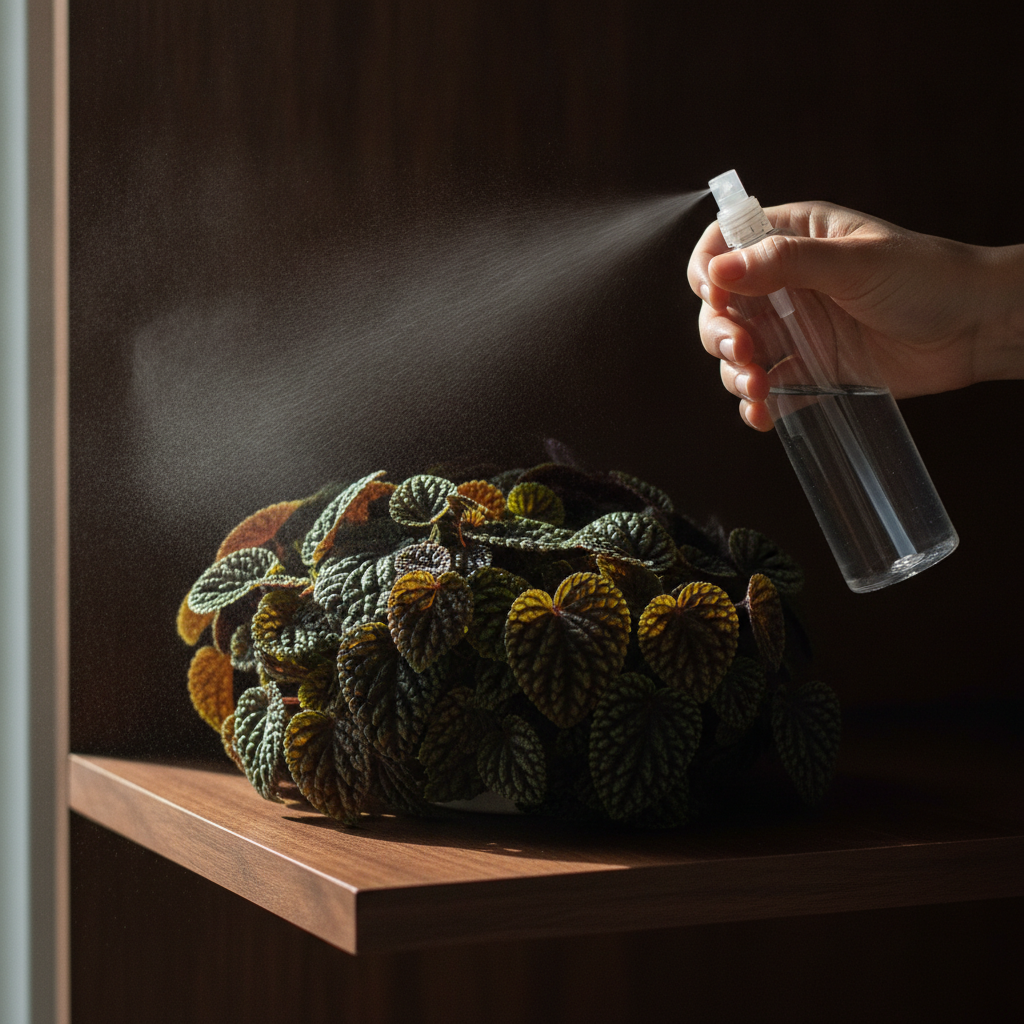
When you do water, water thoroughly. Let it run through the pot until it drains from the base, which wets the whole root ball and flushes out any build-up of salts, then empty the saucer so the roots are never left standing in water. The soft, shallow roots of this pilea rot quickly in cold, stagnant water, and root rot is the single most likely way to lose the plant. If the leaves go limp and the stems turn dark and mushy at the base, overwatering is almost always the cause.
Underwatering shows itself differently. The leaves wilt and the whole mound droops, but the stems stay firm and the soil is dry to the touch. A good soak usually revives it within a few hours, though repeated drought will cost you the lower leaves and leave a bare-stemmed plant. Because the leaves are thin, the Dark Mystery Pilea also appreciates humidity in the air as much as moisture in the soil. Room-temperature water is kindest; cold water straight from the tap can shock the roots and mark the foliage.
Warning — Watch the crown: Avoid letting water pool in the dense centre of the plant, especially in cool conditions. Trapped moisture among the crowded stems invites fungal rot. Water the soil, not the foliage, and let the leaves dry quickly after any misting.
Soil and Potting
The Dark Mystery Pilea wants a potting mix that holds moisture without ever becoming heavy or soggy. A light, airy, slightly acidic blend suits it best. A reliable recipe is roughly two parts good-quality peat-free or coir-based houseplant compost to one part perlite, with a handful of fine orchid bark stirred through to open up the structure. The coir holds the steady moisture the plant likes, while the perlite and bark keep air around the roots and let excess water drain away freely.
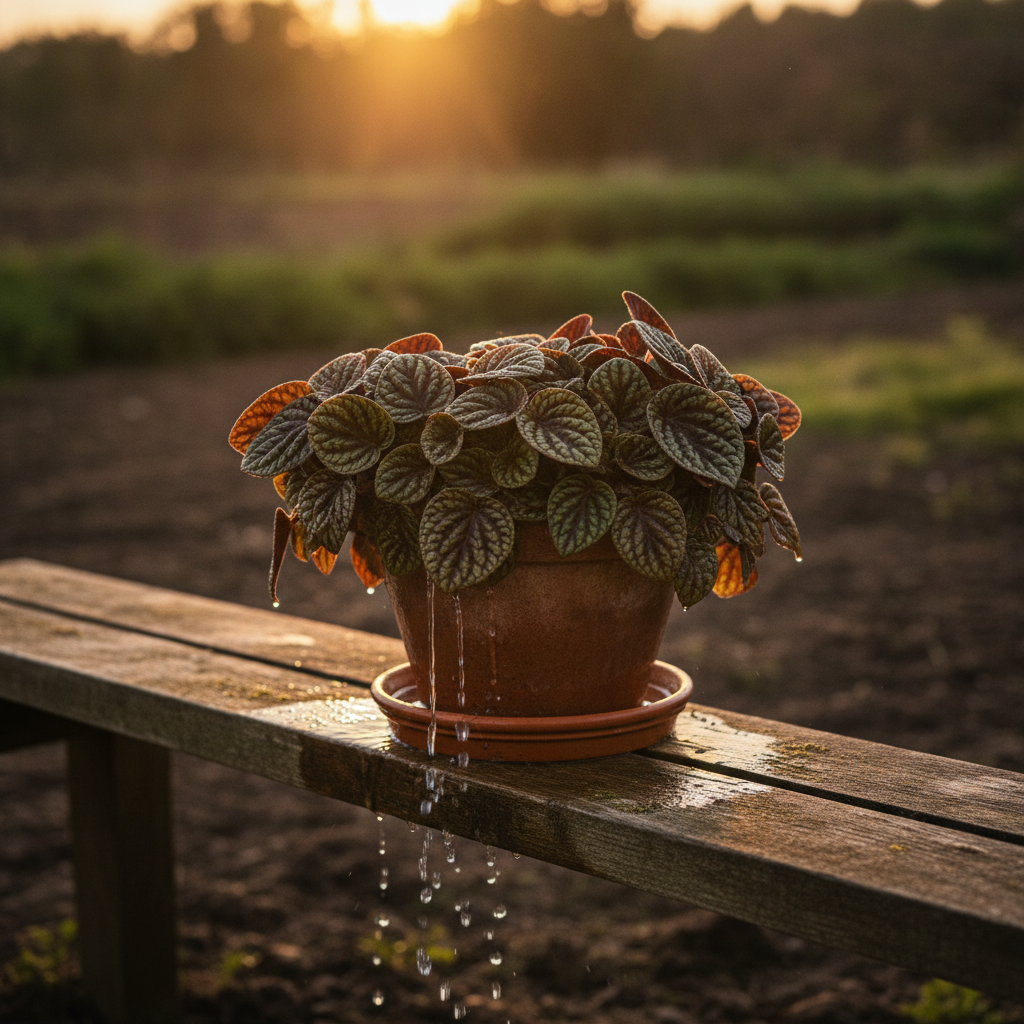
Drainage at the pot level matters as much as the mix. Always use a container with drainage holes; the shallow roots will not forgive being trapped in wet soil at the bottom of a sealed pot. Because the plant stays small and its root system is modest, it is content in a relatively snug pot, and there is no need to over-pot into a large container in the hope of faster growth. A pot that is too big holds a reservoir of wet soil the small roots cannot use, and that standing moisture invites rot.
Repot every one to two years, ideally in spring as growth picks up, moving up just one pot size or simply refreshing the mix in the same container. This is also the moment to tidy the plant. The Dark Mystery Pilea naturally grows leggy with age, shedding lower leaves and lengthening its stems, so repotting is a good opportunity to prune it back, take cuttings from the trimmings, and replant a fuller, more compact specimen. Terracotta helps if you tend to overwater, as it wicks moisture from the soil, though it also dries out faster and demands more frequent watering.
Fertilising
The Dark Mystery Pilea is not a heavy feeder, but a little regular nourishment through the growing season keeps its colour rich and its growth dense. From spring through early autumn, feed with a balanced liquid houseplant fertiliser diluted to half the recommended strength, roughly once a month. Applying feed at half strength to already-moist soil protects the fine roots from the fertiliser burn that concentrated solutions can cause on a small, sensitive plant like this one.
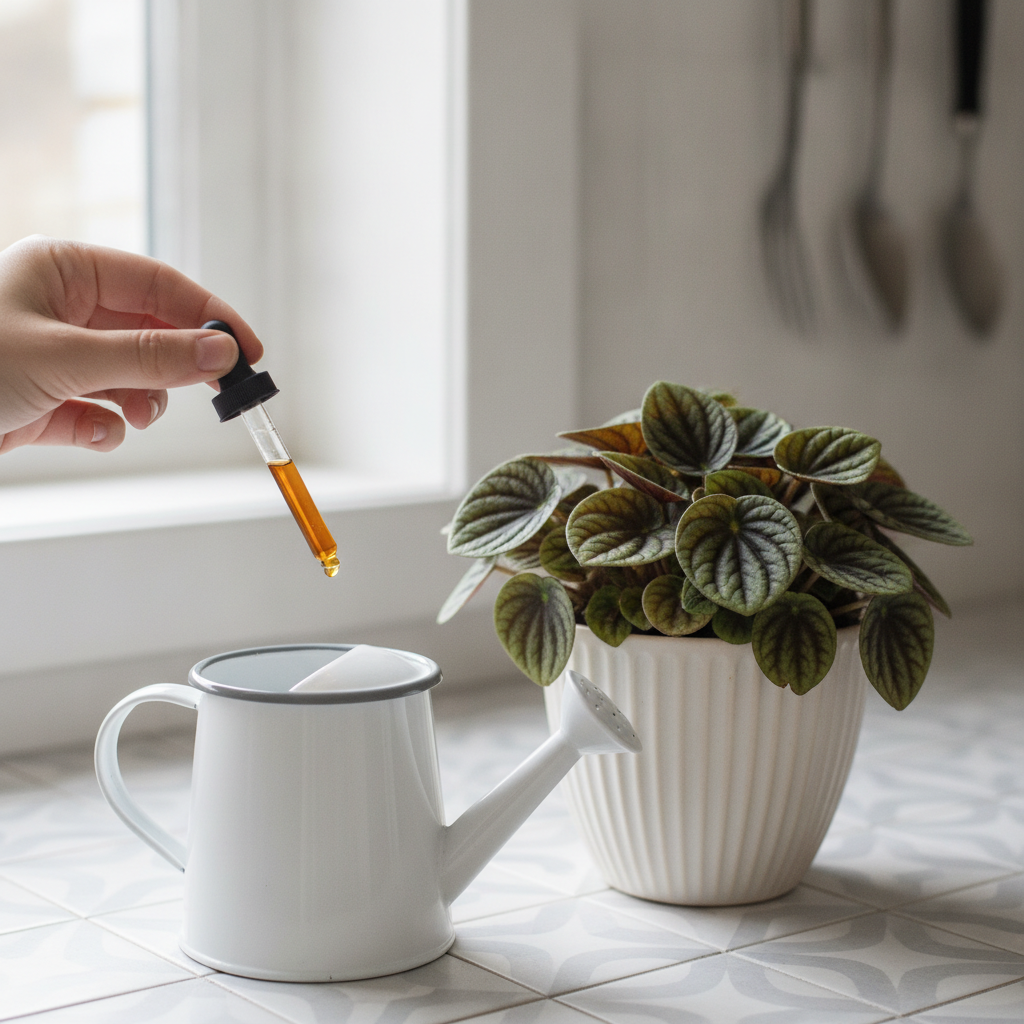
Stop or greatly reduce feeding in late autumn and winter. As light levels fall the plant slows down and takes up very little, so any surplus fertiliser simply accumulates in the soil as mineral salts. Those salts can scorch root tips and show up as brown, crispy leaf edges. If you notice a white crust forming on the soil surface or around the pot rim, flush the pot thoroughly with plain water to wash the excess through, and hold off feeding until spring.
More is not better with this plant. Overfeeding tends to produce weak, oversized growth that flops and loses the tight, quilted character that makes the foliage attractive. A steady, modest routine through the active months gives far better results than heavy feeding, and many growers find that fresh potting mix each year supplies much of what the plant needs anyway.
Propagation
Propagation is where the friendship plant lives up to its name. The Dark Mystery Pilea roots so willingly from stem cuttings that sharing it is almost effortless, and taking cuttings serves a double purpose: it multiplies your collection and rejuvenates a plant that has grown leggy. Spring and summer, when the plant is actively growing, give the fastest and most reliable results.
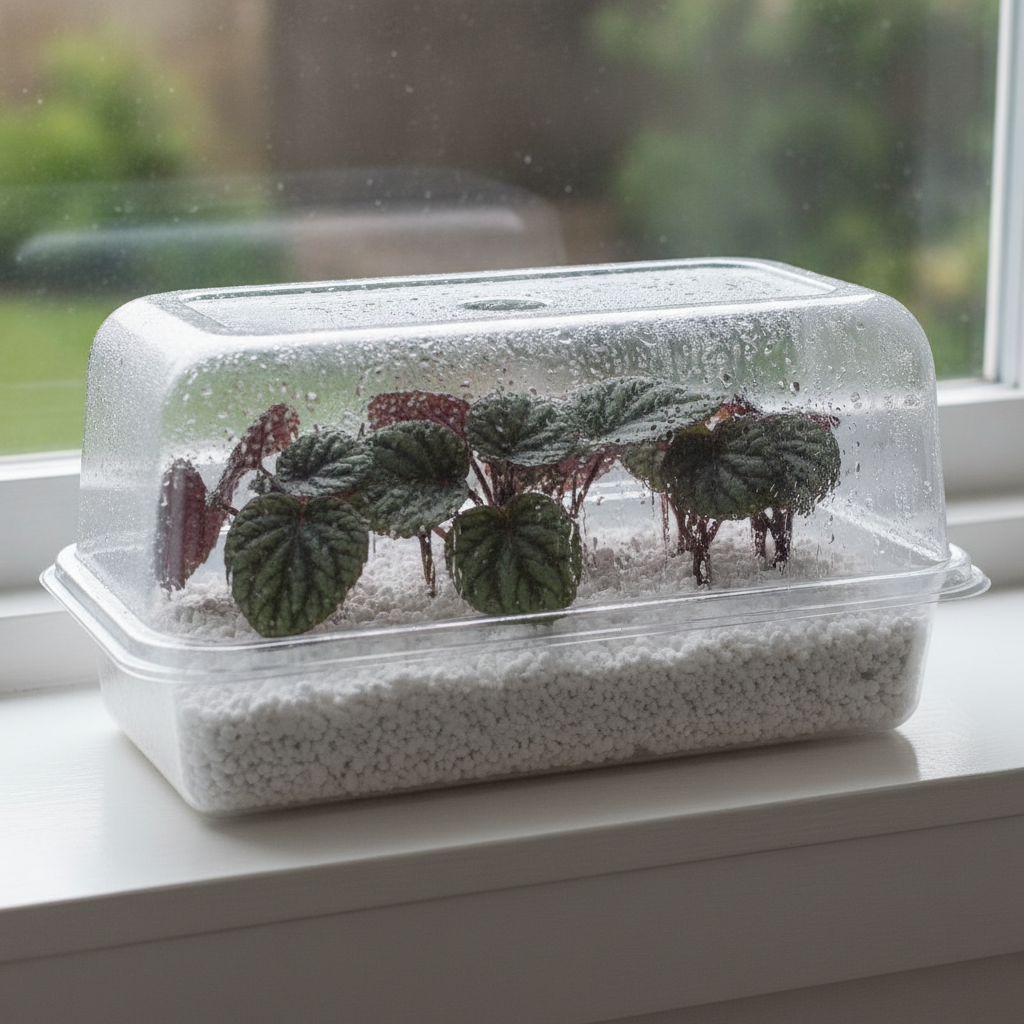
To take a cutting, follow these steps:
- Choose a healthy stem tip with two or three pairs of leaves and use clean, sharp scissors to cut just below a node, the small joint where leaves emerge.
- Remove the lowest pair of leaves so the bare node will sit in your rooting medium; roots form most readily from these nodes.
- Insert the cutting into a small container of water, into damp sphagnum moss, or directly into a tray of moist perlite or light potting mix.
- Keep the cutting warm and in bright indirect light, and cover it with a clear humidity dome, a propagator lid or a loosely tented plastic bag to hold humidity high.
- Wait for roots to develop over two to three weeks, refreshing the water every few days if you are rooting in water.
- Once roots reach two to three centimetres, pot the cutting into your usual mix and treat it as a young plant, keeping it a little more sheltered until it establishes.
Plant several cuttings together in one pot for a fuller look from the outset. A mature clump can also be divided at repotting time: gently tease the root ball into two or three sections, each with its own stems and roots, and pot them separately. Whichever method you use, high humidity around the cuttings is the key variable, which is why a covered propagator or a simple bag over the pot makes such a difference to success rates.
Pests and Problems
A healthy, well-watered Dark Mystery Pilea is reasonably resistant to pests, but the warm, humid conditions it loves also suit several common houseplant invaders. Spider mites are the most frequent problem, particularly when the surrounding air is dry; they leave fine stippling on the leaves and delicate webbing in the leaf axils. Fungus gnats appear when the soil is kept too wet, their larvae feeding on organic matter and fine roots. Aphids and mealybugs turn up occasionally, clustering on soft new growth and in the crowded centre of the plant.
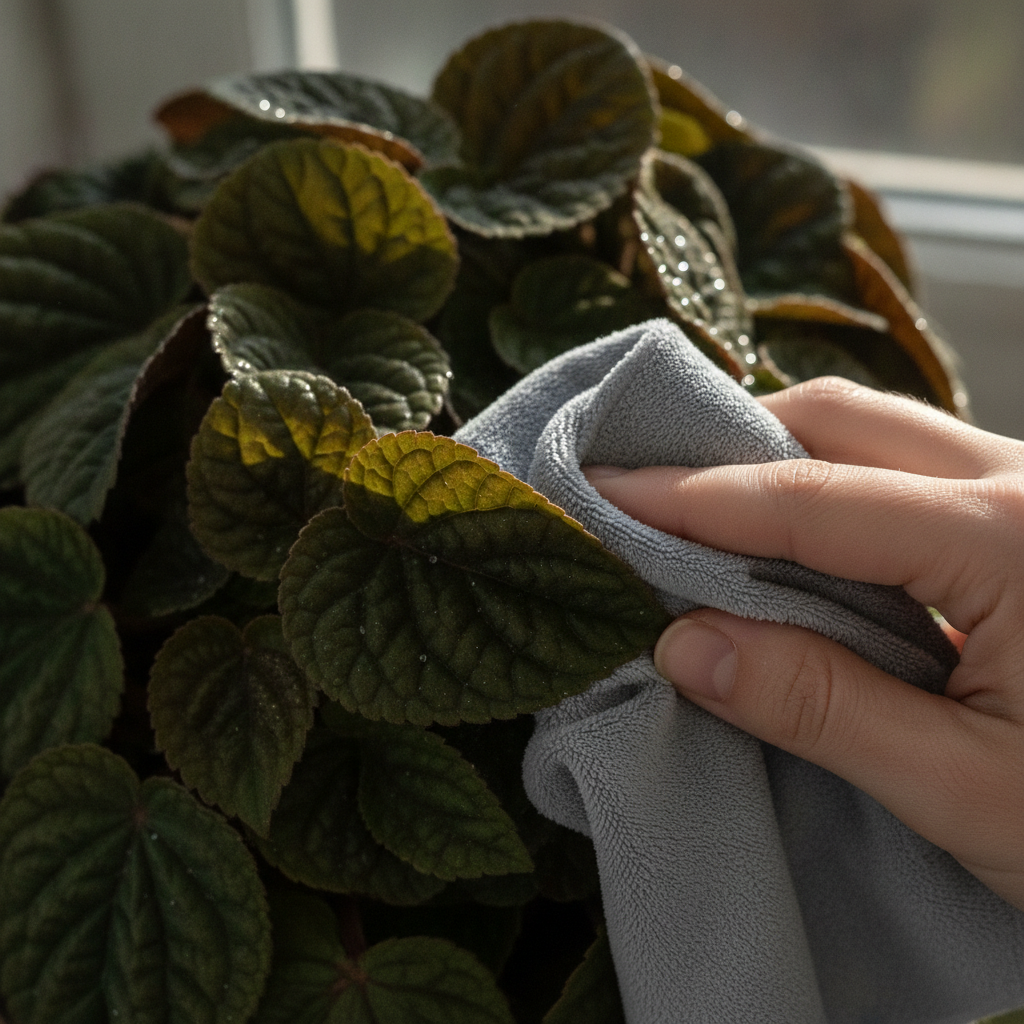
Early detection is your best defence. Look over the plant, including the undersides of the leaves, every week or two, and isolate any new arrival from the rest of your collection until you are sure it is clean. If you do find pests, wipe the foliage with a damp cloth, rinse the plant under a gentle stream of tepid water, and treat with insecticidal soap or a diluted neem oil solution, repeating every week or so until the infestation clears. For fungus gnats, letting the top of the soil dry out more between waterings and setting yellow sticky traps usually breaks the breeding cycle.
Most of the day-to-day troubles with this plant, though, are cultural rather than pest-driven. Crispy brown leaf edges point to air that is too dry or a build-up of fertiliser salts. Yellowing lower leaves and a mushy base signal overwatering, while a limp plant in dry soil means the opposite. Leggy, stretched growth with widening gaps between leaves is a plea for more light. Reading these signals and adjusting one variable at a time will resolve nearly every problem before it becomes serious.
| Symptom | Likely cause | Remedy |
| Crispy brown leaf edges | Low humidity or salt build-up | Raise humidity; flush the soil with plain water |
| Yellow lower leaves, mushy stems | Overwatering, cold wet soil | Let the mix dry more; check drainage |
| Whole plant wilting, soil dry | Underwatering | Soak thoroughly and let excess drain |
| Leggy, stretched growth | Not enough light | Move to brighter indirect light; pinch back |
| Fine stippling and webbing | Spider mites | Rinse, raise humidity, treat with neem or soap |
Varieties and Relatives
The Dark Mystery Pilea belongs to the wider Pilea involucrata group, a cluster of small, quilt-leaved friendship plants that share the same easygoing nature and love of humidity. If you enjoy this cultivar, its close relatives make natural companions, each offering a different take on the same deeply textured leaf.
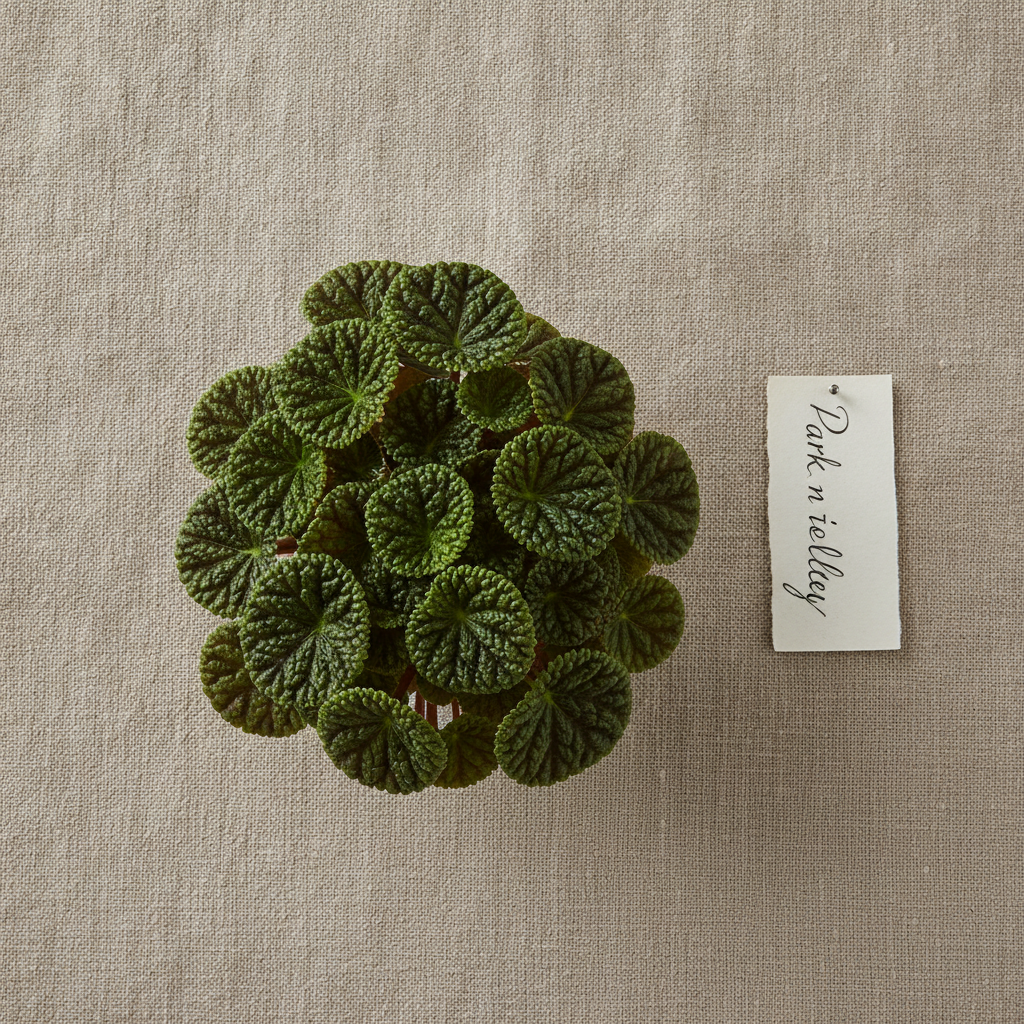
Moon Valley (Pilea involucrata ‘Moon Valley’) is the best-known member of the group. Its apple-green leaves carry the same deep quilting as Dark Mystery but in a far brighter register, with dark bronze veins pressed into vivid chartreuse tissue and finely serrated edges. It shares identical care and makes a lively contrast when grown alongside the darker cultivar.
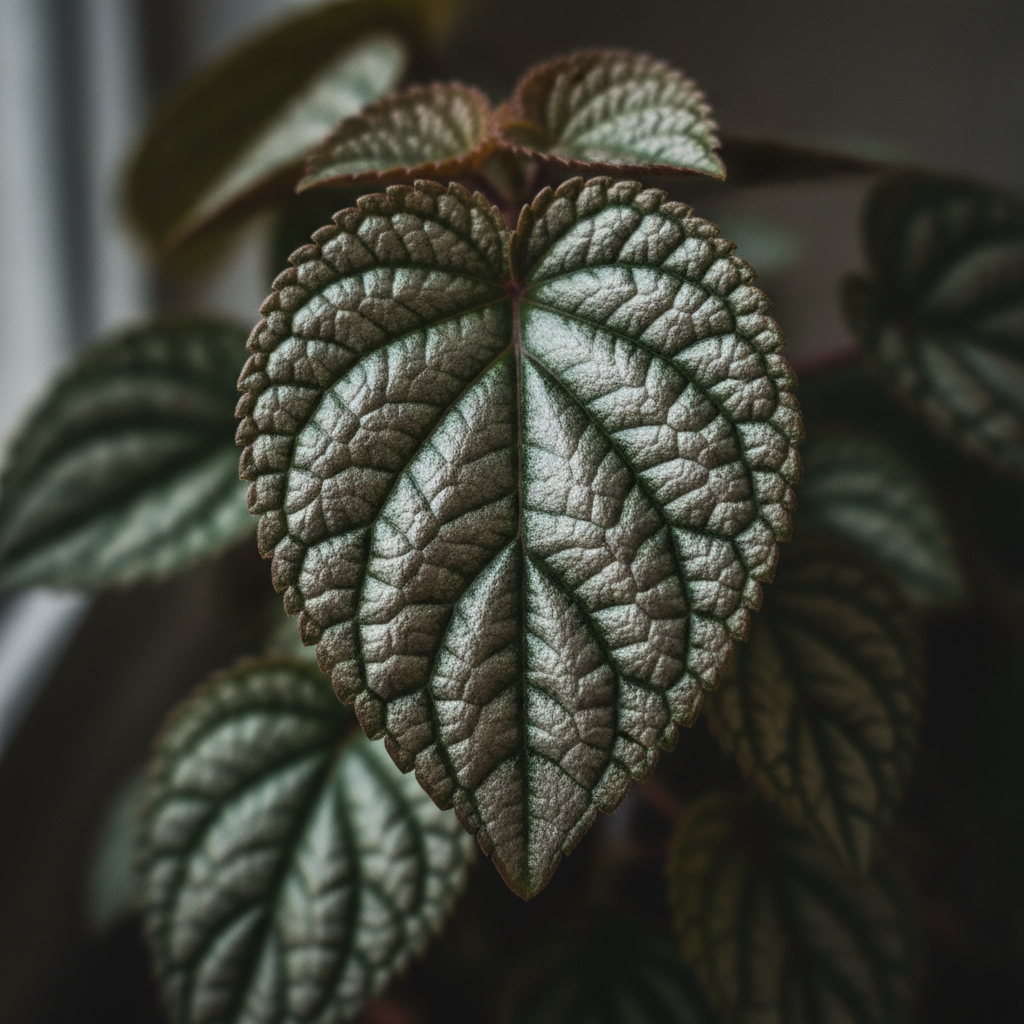
Norfolk (Pilea ‘Norfolk’) leans metallic, with silvery-bronze quilted leaves that shimmer under the light and glow pinkish-purple on their undersides. Sometimes sold as the aluminium or silver friendship plant, it wants the same warmth and humidity as Dark Mystery and rounds out a collection with its reflective, almost pewter finish.
Beyond these two, the genus Pilea holds many other houseplant favourites that look quite different but grow just as easily, from the coin-leaved Chinese money plant (Pilea peperomioides) to the tiny-leaved artillery plant and the trailing creeping charlie. Collecting across the genus gives you a wide range of forms while relying on much the same care.
Frequently Asked Questions
Is the Dark Mystery Pilea safe for pets?
Yes. Like other members of the Pilea involucrata group, it is considered non-toxic to cats, dogs and humans, which makes it a reassuring choice for homes with pets or young children. It is still sensible to discourage nibbling, as any plant material can cause mild stomach upset if eaten in quantity.
Why is my Dark Mystery Pilea getting leggy?
Legginess, with lengthening stems and widening gaps between leaves, is almost always caused by insufficient light. Move the plant to a brighter spot with plenty of indirect light and pinch back the longest stems to encourage bushier growth. The pieces you remove root easily as cuttings, so nothing is wasted.
How do I keep the humidity high enough?
This is a humidity-loving plant that prefers levels of 60 per cent and above. Grouping it with other plants, standing the pot on a tray of damp pebbles, or running a small humidifier nearby all help. Growing it in a terrarium or an enclosed glass cabinet is the surest way to give it the consistently moist air it craves, and it excels in such conditions.
How often should I water it?
There is no fixed schedule; water when the top 1 to 2 cm of soil has dried but the layers beneath are still lightly moist. In warm, bright months that may be every few days, while in winter it can stretch to once a week or less. Always check the soil with your finger before watering rather than relying on the calendar.
Why are the leaf edges turning brown and crispy?
Crispy brown edges usually mean the air is too dry, though a build-up of fertiliser salts in the soil can cause the same look. Raise the humidity around the plant, and if you have been feeding regularly, flush the pot with plain water to wash out any accumulated salts and ease off on fertiliser until spring.
Does it flower?
It can. Indoors the Dark Mystery Pilea occasionally produces small, inconspicuous pinkish or greenish flower clusters, but they are insignificant next to the foliage and most growers keep the plant purely for its leaves. Removing spent flowers keeps the plant tidy and directs its energy back into growth.






