
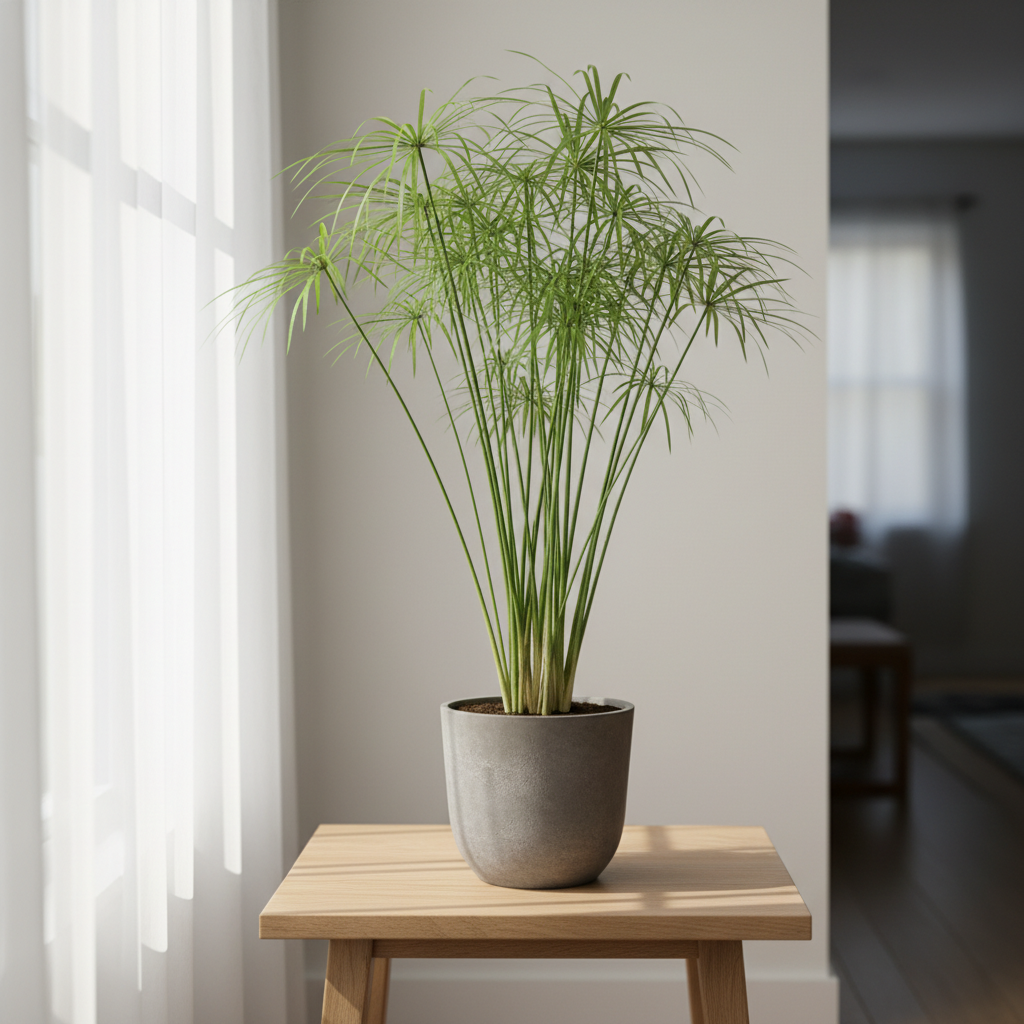
Few houseplants wear their personality quite as openly as the umbrella papyrus. Each slender stem shoots straight upward and then bursts into a radiating crown of narrow bracts, so that a mature clump reads like a small thicket of green umbrellas caught mid-twirl. It is a plant built for movement and verticality, and it brings a marsh-edge wildness indoors that almost nothing else in the houseplant world can match. Cyperus alternifolius is a sedge rather than a true grass or palm, and understanding that single fact unlocks almost everything about how to grow it well.
The reason the umbrella papyrus confounds so many new growers is that it breaks the cardinal rule drummed into every houseplant owner: never let your plant sit in water. For most species that advice is sound, because waterlogged roots suffocate and rot. The umbrella papyrus is the rare exception. In its native habitat it grows with its feet permanently submerged at the margins of streams and ponds, and indoors it not only tolerates but actively craves standing water. Once you stop fighting that instinct, this becomes one of the most forgiving and fast-growing plants you can keep.
This guide walks through everything that separates a papyrus that merely survives, limping along with browning tips and yellowing stems, from one that truly thrives, throwing up fresh culms taller than the last and forming a dense, fountaining clump. Use the contents below to jump to whatever you need.
- Quick reference
- Why the umbrella papyrus makes such a rewarding houseplant
- Light
- Watering
- Soil and potting
- Fertilising
- Propagation
- Pests and problems
- Varieties to know
- Frequently asked questions
Quick Reference
The table below distils the essentials into an at-a-glance summary. Treat it as a reminder rather than a substitute for the detail that follows, because the single most important variable, water, deserves far more nuance than any one cell can hold.
| Common names | Umbrella papyrus, umbrella sedge, umbrella palm, umbrella plant |
| Botanical name | Cyperus alternifolius (often listed as Cyperus involucratus) |
| Family | Cyperaceae (the sedge family) |
| Native range | Madagascar and nearby Indian Ocean islands |
| Light | Bright indirect light to full sun |
| Water | Keep constantly wet; will happily stand in water |
| Humidity | High; thrives in moist air |
| Temperature | 18 to 24 degrees C (64 to 75 degrees F); minimum 10 degrees C (50 degrees F) |
| Soil | Heavy, water-retentive, slightly acidic |
| Fertiliser | Balanced feed, monthly through the growing season |
| Mature size indoors | 0.6 to 1.5 metres (2 to 5 feet) tall |
| Propagation | Division, or rooting an umbrella crown upside down in water |
| Toxicity | Generally considered non-toxic; mild irritant if chewed |
| Difficulty | Easy, provided it never dries out |
Why the Umbrella Papyrus Makes Such a Rewarding Houseplant
The umbrella papyrus belongs to the genus Cyperus, a sprawling group of sedges that includes the famous Egyptian paper reed, Cyperus papyrus, from which the ancient world made its writing surfaces. The umbrella papyrus is the smaller, far more biddable cousin of that giant, and it is the one that fits comfortably on a windowsill or beside a bath rather than dominating a pond. Despite the common name “umbrella palm,” it is not a palm at all and shares none of a palm’s drought tolerance. It is a grass-like wetland perennial, and every quirk of its care traces back to that wetland origin.
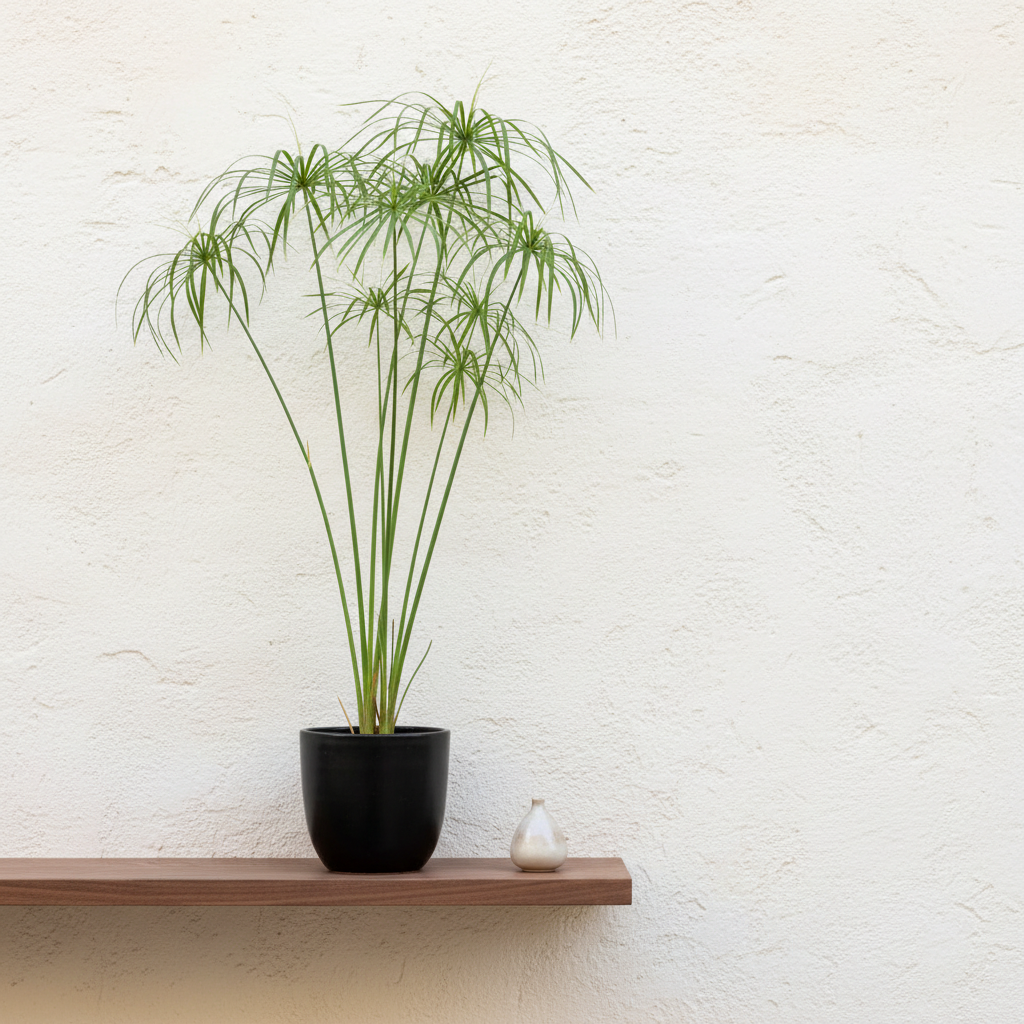
Architecturally, the plant is unlike anything else commonly grown indoors. Each stem, properly called a culm, is triangular in cross-section, a hallmark of sedges, and rises bare and unbranched until it reaches its full height. At the top, a ring of narrow bracts radiates outward in a near-perfect circle, giving the plant its umbrella-spoke silhouette. From the centre of that whorl, in good conditions, sprout small greenish-brown flower clusters that mature into tiny seeds. The overall effect is light and airy, casting delicate shadows and softening hard corners in a way that broad-leaved foliage plants cannot.
Practically, the umbrella papyrus solves a problem that plagues many plant lovers: chronic overwatering. If you are the kind of grower who cannot resist topping up the watering can, this is the plant that turns that habit into a virtue. It is also exceptionally fast. Given warmth, light and water, a small division can fill out into a substantial clump within a single season, sending up new culms in a steady procession. That vigour makes it satisfying to grow and easy to propagate, but it also means the plant rewards attention and punishes neglect quickly, since the one thing it cannot forgive is drying out.
Pro Tip – Embrace the Wet: If you have killed an umbrella papyrus before, it was almost certainly from drought rather than from too much water. Standing the pot in a saucer that you keep permanently filled removes the single most common cause of failure and frees you from daily vigilance.
One word of caution before we go further. The same vigour that makes the umbrella papyrus a delight indoors makes it a menace outdoors in mild climates. In frost-free regions it can escape cultivation, seed into waterways and form dense colonies that crowd out native wetland plants. It is listed as invasive in parts of the southern United States, Australia and elsewhere. Keeping it as a contained houseplant is entirely responsible, but never plant it directly into a natural pond or stream, and dispose of trimmings and divisions in the household waste rather than in compost destined for wild areas.
Light
In the wild the umbrella papyrus grows in open, sunny wetlands with little overhead canopy, so it is genuinely a sun-loving plant, more so than most foliage houseplants. Indoors it does best in bright light, including several hours of direct sun, and it will tolerate a full south-facing window provided the soil never dries out. The combination of strong light and constant moisture is exactly what it evolved for, and a plant given both will grow dense, deep green and upright.

That said, the plant is more adaptable than its origins suggest. It will survive in bright indirect light, and even in a moderately shaded spot, but the difference between surviving and thriving is written plainly in its posture. In strong light the culms stand erect and the umbrella whorls are full and tightly spaced. In low light the stems elongate and weaken, leaning toward the nearest window and sometimes flopping under their own weight, while new growth comes through thin and pale. If your plant is sprawling, the most likely cause is too little light rather than anything you have done wrong with water or feeding.
An east or west window is often the sweet spot indoors, offering several hours of gentler direct sun without the relentless intensity of midday southern exposure that can occasionally scorch the fine bracts if the plant has been acclimatised to shade. If you want to move a shade-grown specimen into brighter conditions, do it gradually over a week or two so the foliage can adjust. Outdoors in summer, the umbrella papyrus revels in full sun, and a spell on a sheltered patio or balcony will often trigger a burst of vigorous new culms, as long as you keep the saucer topped up so it never bakes dry.
Rotating the pot a quarter turn each time you tend it helps the clump grow evenly rather than listing toward the light. Because the plant grows quickly and reaches for brightness so eagerly, an unrotated specimen can become noticeably one-sided within a few weeks.
Watering
Watering is where the umbrella papyrus diverges most sharply from ordinary houseplant advice, and it is the single factor that determines success or failure. This plant cannot be overwatered in any conventional sense. It is a marginal aquatic, which means it grows naturally at the boundary between land and open water, with its crown above the surface and its roots in saturated mud or standing water. Your goal indoors is to recreate that permanently sodden environment rather than to let the soil cycle between wet and dry.
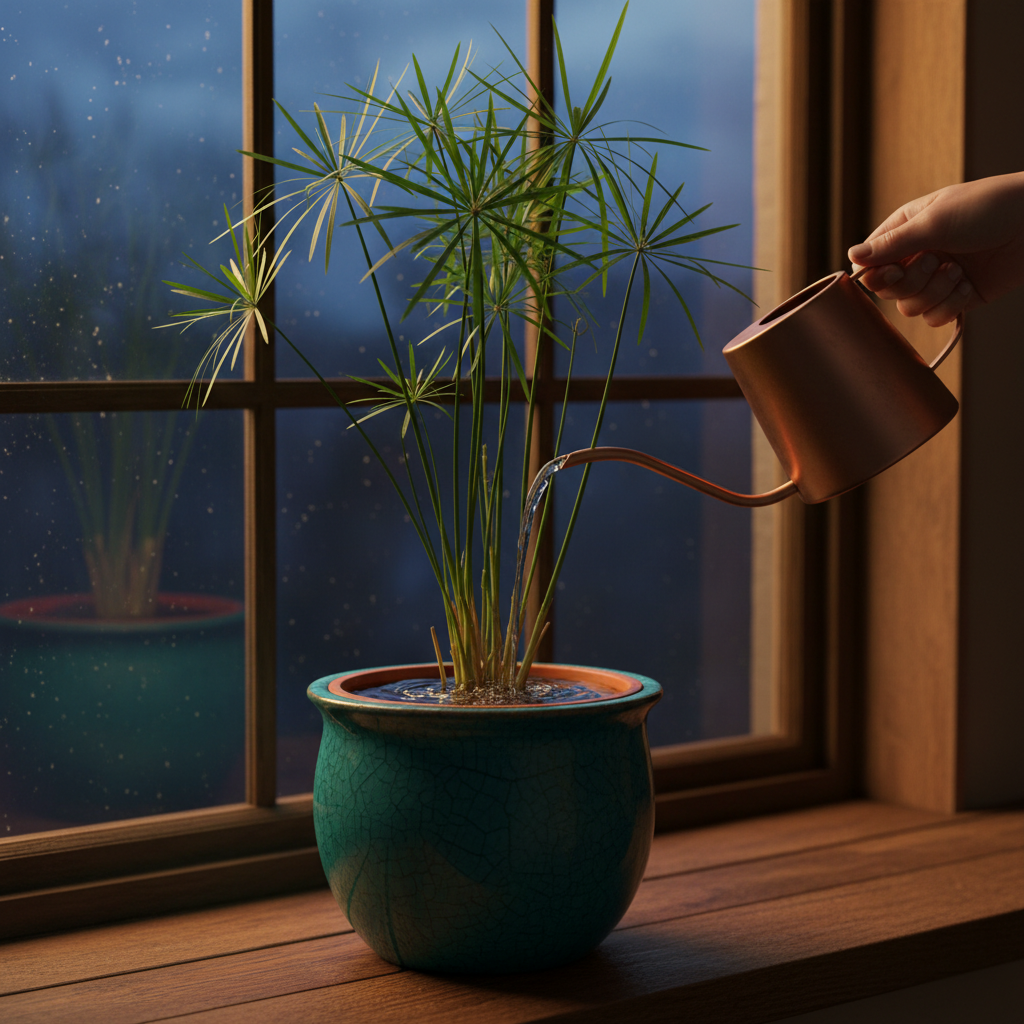
The simplest and most reliable method is to stand the pot in a deep saucer, tray or decorative cachepot and keep two to five centimetres (one to two inches) of water in it at all times. The soil wicks moisture upward continuously, the roots stay saturated, and you need only check the reservoir every few days and top it up. Unlike almost every other houseplant, there is no need to let anything dry out between waterings, and doing so is actively harmful. A papyrus that dries to the point of wilting will brown at the tips and may lose whole culms, and a severe dry-out can kill it outright.
Because the plant transpires heavily through all those bracts, a healthy specimen in active growth drinks a remarkable amount, and on a warm windowsill the reservoir can empty surprisingly fast. During hot summer weeks you may find yourself refilling every day or two. In the dim, cool depths of winter, growth slows and the plant uses far less, so the reservoir lasts longer, but you should still never let it run completely dry. There is no true dormancy that calls for withholding water in the way many tropical plants demand.
Water quality is worth a thought. The umbrella papyrus is reasonably tolerant of tap water, but like many wetland plants it can be sensitive to a heavy build-up of salts and minerals over time, which show up as crispy brown bract tips. If your water is very hard or heavily softened, or if you notice persistent tip browning despite ample moisture, switch to rainwater or filtered water and flush the pot thoroughly under the tap every month or so to wash accumulated salts out of the soil. Refresh the standing water occasionally too, rather than simply topping up the same stagnant reservoir indefinitely, to keep it from going foul and to discourage fungus gnats and mosquito larvae.
Warning – The One Way to Drown It: While the roots love standing water, the crown and stem bases should not be fully submerged for long periods. Keep the water level in the saucer below the rim of the pot so the surface of the soil stays at or just above the waterline. Permanently flooding the crown itself can cause the base of the culms to rot.
Soil and Potting
Everything you have learned about light, airy, free-draining houseplant mixes can be set aside for the umbrella papyrus. This plant wants the opposite: a heavy, dense, moisture-retentive medium that holds water rather than shedding it. The chunky aroid mixes full of bark and perlite that suit a monstera or philodendron would drain far too freely here and make it harder to keep the root zone saturated.
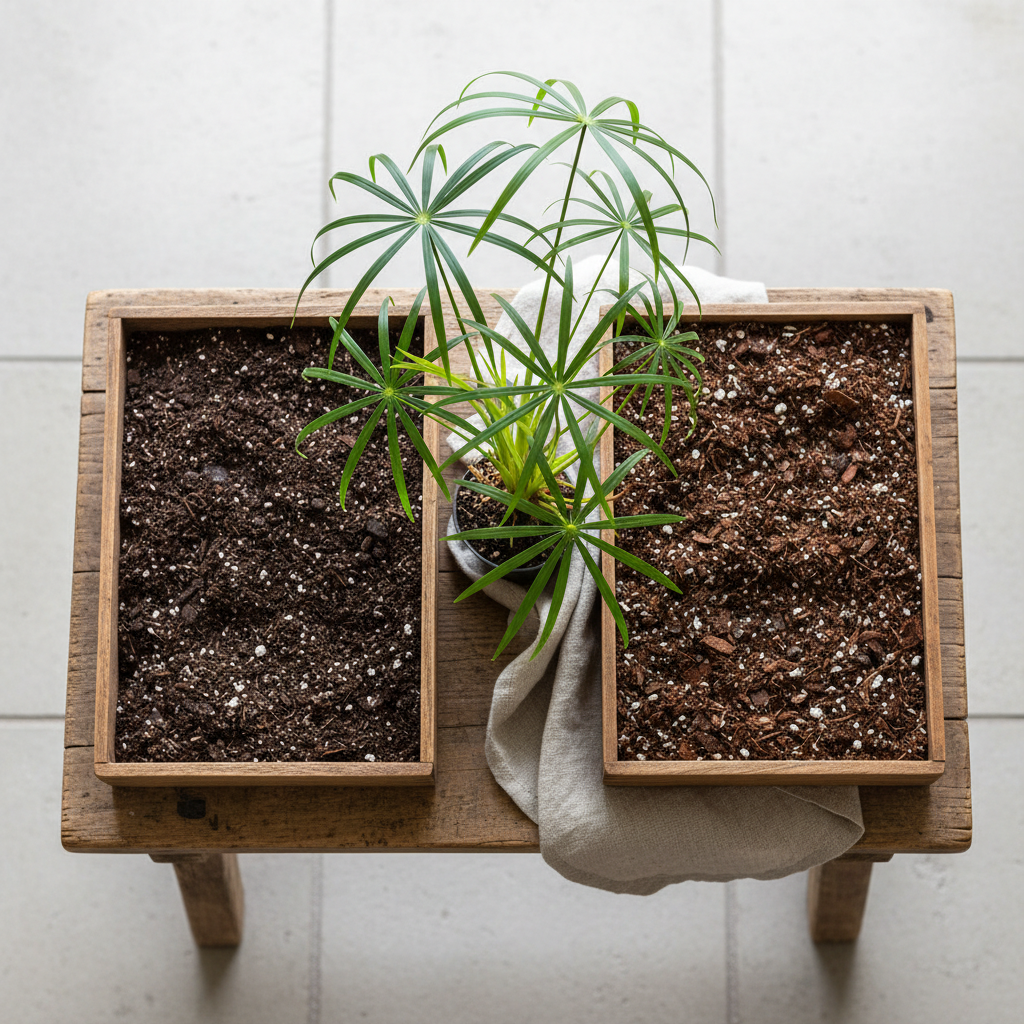
A good base is a standard peat-free multipurpose compost or a loam-based potting soil, which you can enrich with extra organic matter to boost its water-holding capacity. Many growers add garden soil, composted bark or even a little aquatic planting compost to the mix to make it heavier still. A slightly acidic to neutral pH suits it well, which most general composts already provide. The aim is a medium that stays wet and slightly heavy, closer to the silty margins of a pond than to the open, fluffy texture prized for tropical aroids.
Pot choice matters too, and here again the usual advice is inverted. Terracotta, beloved for its breathability and its tendency to wick moisture away from roots, works against you with a plant that wants to stay wet. A glazed ceramic or plastic pot holds moisture far more effectively. A drainage hole is still useful so that you control the water level from the saucer rather than trapping stagnant water inside the pot, but the priority is moisture retention rather than rapid drainage.
The umbrella papyrus grows fast and roots vigorously, so it tends to fill its pot quickly and will often need repotting every year, sometimes more. Spring is the natural time to do it, just as growth accelerates. You will know it is due when roots circle thickly at the base, emerge from the drainage hole, or begin to push the whole root ball up out of the pot. Repotting is also the ideal moment to divide an overgrown clump, which we cover below. Move up just one pot size at a time, settle the plant at the same depth it was growing before, firm the heavy mix gently around the roots, and water it in thoroughly before returning it to its reservoir.
Fertilising
A fast-growing plant is a hungry plant, and the umbrella papyrus is no exception. During the active growing months of spring and summer it puts on a great deal of new growth, and regular feeding keeps that growth lush and deep green rather than thin and yellowing. A balanced liquid houseplant fertiliser diluted to the recommended strength and applied roughly once a month through the growing season suits it well. Some growers feed at half strength more frequently, every two weeks, which the plant also responds to happily.
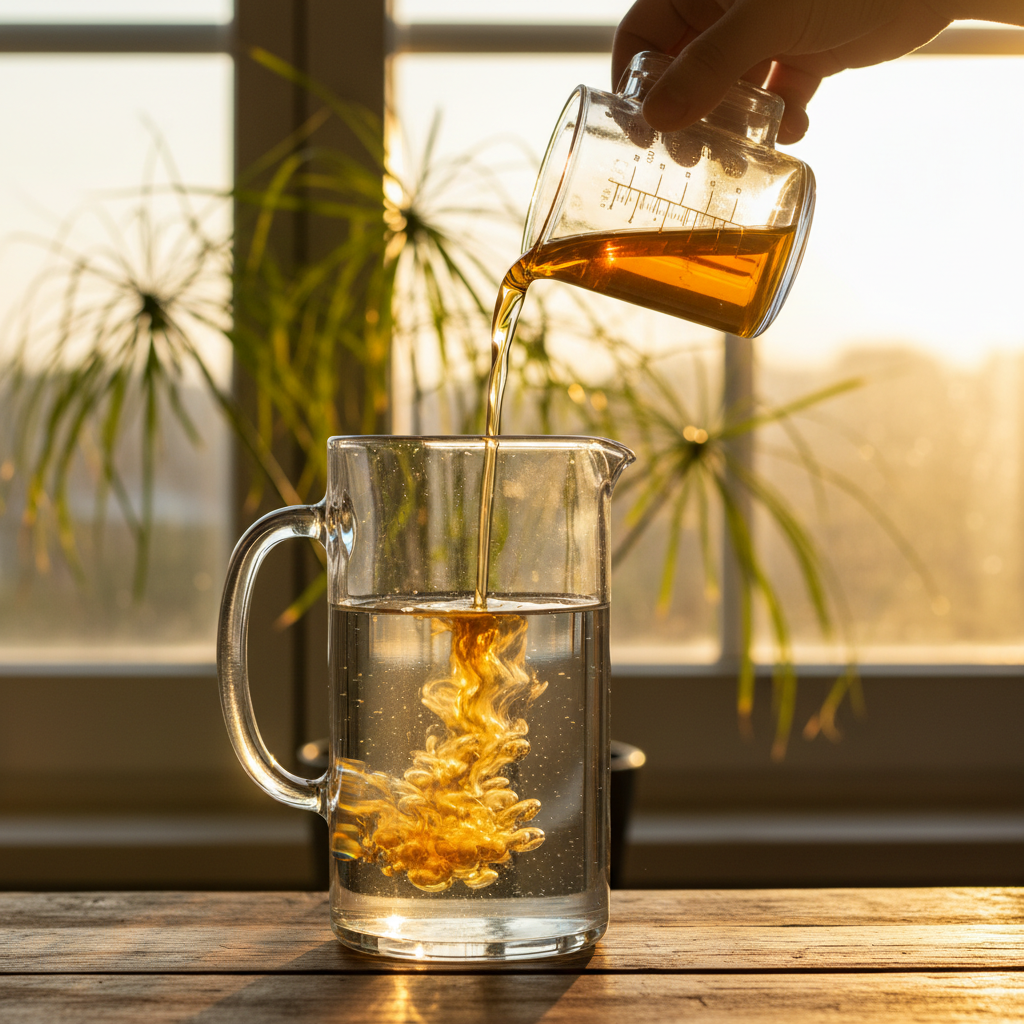
Because the plant usually sits in standing water, take care with how you feed. The cleanest approach is to remove the pot from its reservoir, water and feed it from the top so the diluted fertiliser flows through the soil, let it drain for a few minutes, and then return it to a freshly filled saucer. Tipping concentrated feed straight into the standing water is less ideal, since it can encourage algae to bloom in the reservoir and may let salts concentrate around the roots. Whatever method you use, err on the side of dilution. The umbrella papyrus is vigorous enough that it rarely needs heavy feeding, and over-fertilising tends to show up as brown, scorched bract tips, the same symptom you get from salt build-up in the water.
As light levels fall and growth slows in autumn and winter, taper off and then stop feeding altogether until spring. A plant that is barely growing cannot use the nutrients, and unused fertiliser simply accumulates as salts in the soil and water. Resume in early spring when you see fresh culms beginning to rise, which is the plant’s own signal that it is ready to be fed again.
Pro Tip – Read the Tips: Brown, crispy tips on the bracts have three usual causes: the plant dried out, salts have built up from hard water or over-feeding, or the air is too dry. Rule them out in that order. Trim damaged tips at an angle with clean scissors to restore a tidy look while you correct the underlying cause.
Propagation
One of the great pleasures of the umbrella papyrus is how readily it multiplies. There are two reliable methods, one conventional and one delightfully strange, and both are easy enough that you will quickly have more plants than you know what to do with.
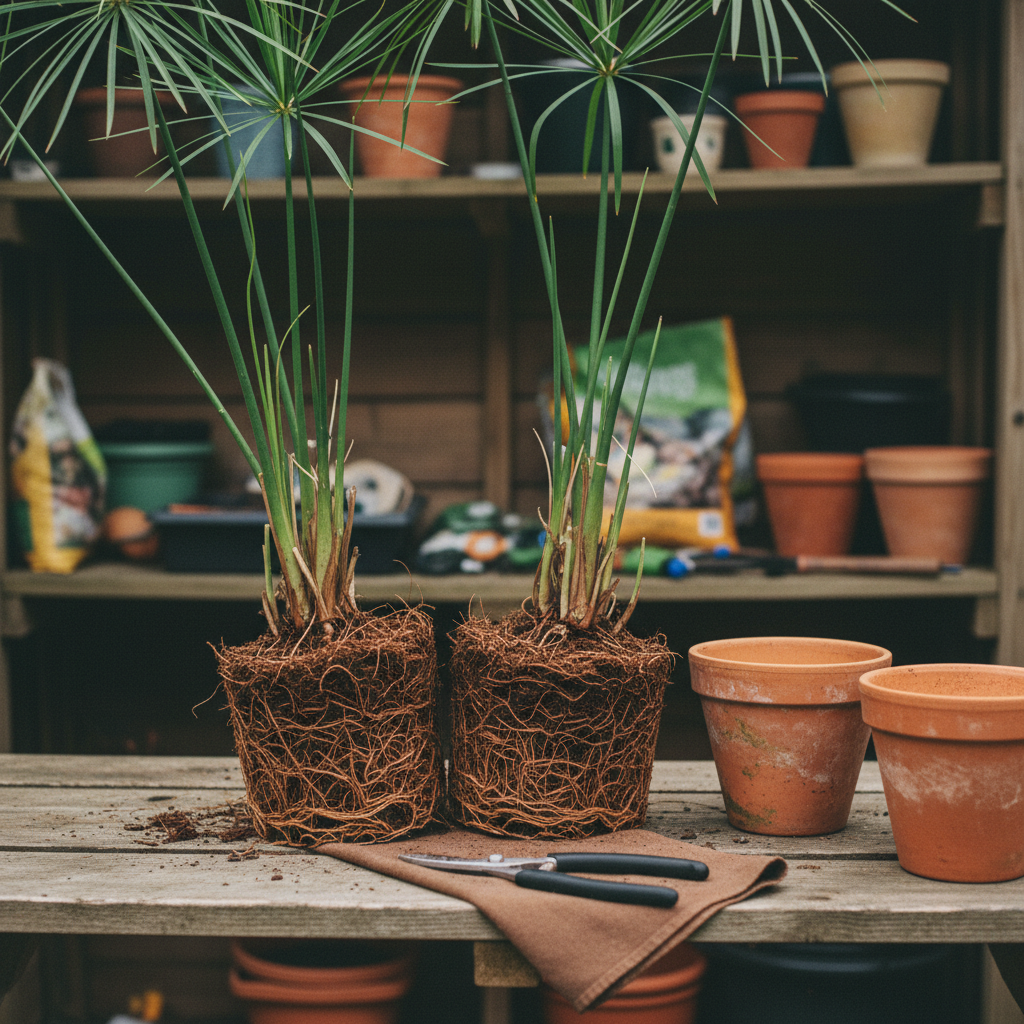
The most dependable method is division, best done in spring when you are repotting anyway. The clump grows from a spreading mass of roots and rhizomes, and a mature plant can be split into several smaller plants with little fuss. To divide it cleanly, follow these steps.
- Slide the whole plant out of its pot and shake or rinse away enough of the heavy soil that you can see the root mass clearly.
- Identify natural sections of the clump, each carrying a fan of healthy culms above and its own portion of roots below.
- Separate the sections by easing them apart with your fingers, or cut through the dense root mass with a clean, sharp knife where it will not pull apart by hand.
- Pot each division into its own container of heavy, moisture-retentive mix at the same depth it was growing before.
- Water in well and stand each new pot in a filled saucer immediately, since divisions establish fastest when kept thoroughly wet.
The second method is the one that makes the umbrella papyrus a favourite for curious growers. The plant can be propagated from its umbrella crown alone, rooted upside down in water. Cut a healthy stem a few centimetres below the whorl of bracts, trim the bracts back by roughly half to reduce water loss, and float or suspend the crown upside down so that the centre of the umbrella sits in or just above the surface of a bowl of water. Within a few weeks, new roots and tiny plantlets emerge from the centre of the inverted whorl. Once those plantlets have a decent tuft of roots, you can pot them up into wet soil to grow on. It feels like a trick, but it works precisely because that central point is where the plant naturally produces its flowering growth and is primed to generate new shoots.
The plant can also be grown from seed, which it sets freely in good conditions, though division and crown cuttings are so quick and reliable that seed is rarely worth the wait for the home grower. Whichever route you take, keep new plants warm, brightly lit and permanently wet, and they will establish with remarkable speed.
Pests and Problems
The umbrella papyrus is robust and not especially prone to pests, but a few troublemakers can appear, and most of the problems people encounter are environmental rather than biological. Knowing the difference saves a great deal of needless worry and wasted pesticide.
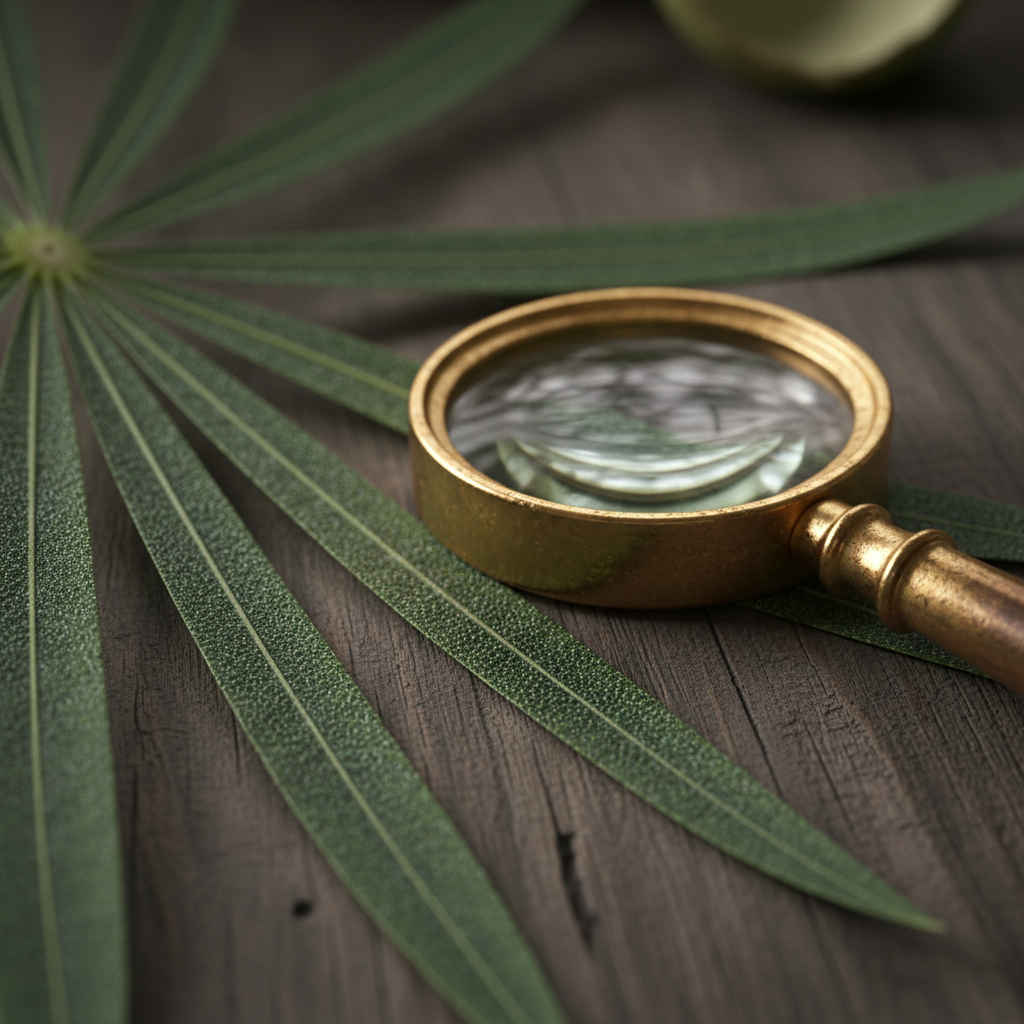
Spider mites are the pest most worth watching for, and they are telling, because they thrive in dry conditions. A papyrus that is being kept too dry, in air that is too arid, is exactly the stressed plant they target. You will spot them as fine stippling on the bracts and, in bad cases, delicate webbing between them. The presence of spider mites is therefore a double signal: treat the mites, but also correct the dryness that invited them. Rinsing the foliage under a strong spray of water knocks back the population, and raising humidity and keeping the plant properly wet makes the environment far less hospitable to them. For stubborn infestations, an insecticidal soap or horticultural oil applied to all surfaces of the bracts works well.
Aphids may cluster on tender new growth and the developing flower heads, and mealybugs occasionally tuck themselves into the joints where bracts meet the stem. Both are easily managed by wiping them off, rinsing the plant, or treating with insecticidal soap. Because the umbrella papyrus sits in standing water, it is also a classic host for fungus gnats, whose larvae live in the wet soil, and for mosquitoes, which may lay eggs in the reservoir. Neither harms the plant, but both are a nuisance. Refreshing the standing water regularly rather than letting it stagnate, and allowing the very surface of the soil to be less sodden than the depths, discourages them. A biological control such as Bacillus thuringiensis added to the water deals with mosquito and gnat larvae without harming the plant.
Far more common than any pest are the cultural complaints. Browning tips, as discussed, point to drought, salt build-up or dry air. Yellowing or browning of entire culms is partly natural, since individual stems have a finite lifespan and the oldest will steadily age and die back while new ones rise to replace them; simply cut spent culms off at the base. A general yellowing of new growth more often signals too little light or, occasionally, a need for feeding. Floppy, leaning, elongated stems are the classic sign of insufficient light. Almost none of these problems stem from too much water, which is the reassuring inverse of nearly every other houseplant you will grow.
On toxicity, the umbrella papyrus is generally regarded as non-toxic and does not appear on the major lists of plants dangerous to cats and dogs. As with any plant, a pet that chews on the bracts may suffer mild stomach upset, and the fibrous stems are not meant to be eaten, so it is sensible to discourage nibbling. But you do not need to treat this plant as a serious hazard in a home with animals or children.
Varieties to Know
The species itself is the plant most often sold, but a couple of selected forms are worth seeking out, particularly if space is tight or you want a little more visual interest. Both are grown exactly like the standard plant.
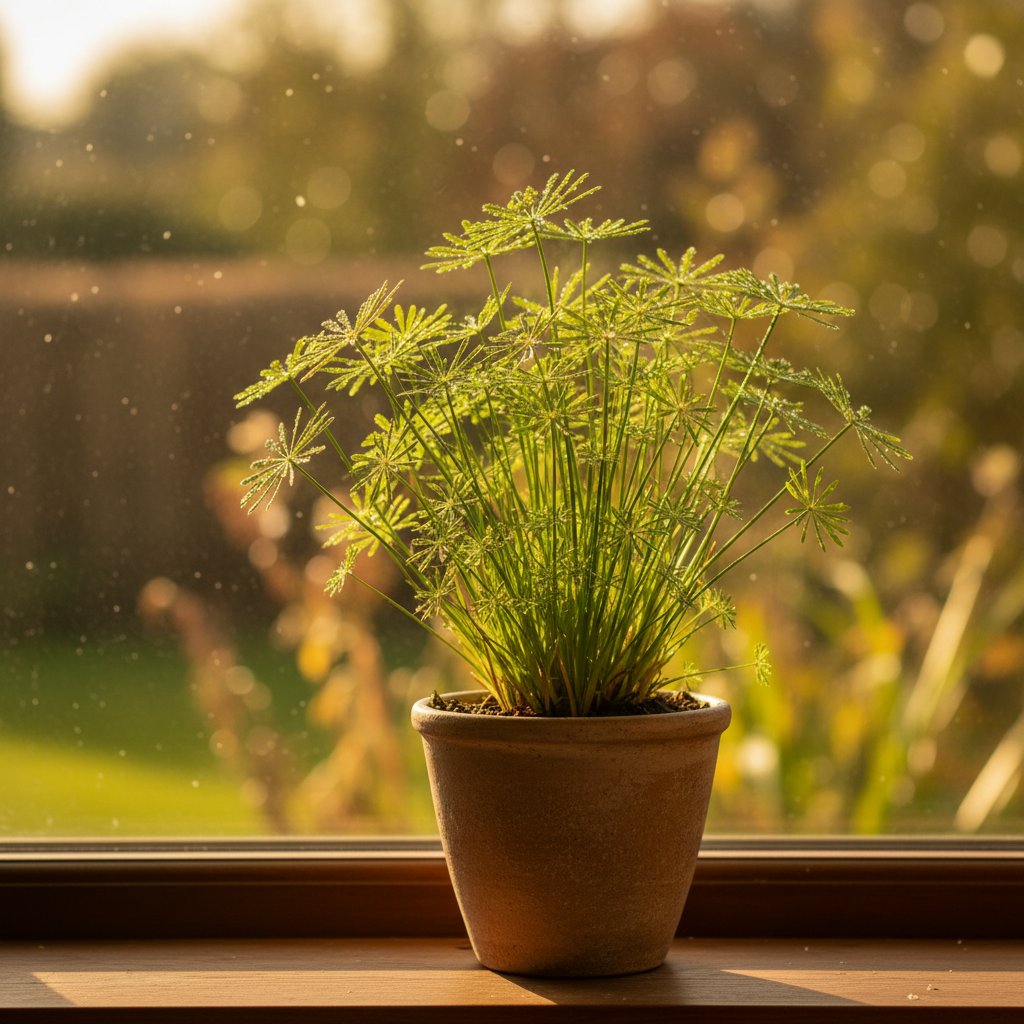
‘Gracilis’
The dwarf umbrella sedge is a compact, finer-textured selection that stays considerably shorter than the species, typically well under a metre, with slimmer stems and smaller, more delicate umbrella whorls. It is the ideal choice for a windowsill, a small bathroom or a tabletop where the full-sized plant would quickly overwhelm the space, and it brings the same airy, architectural character at a more manageable scale.
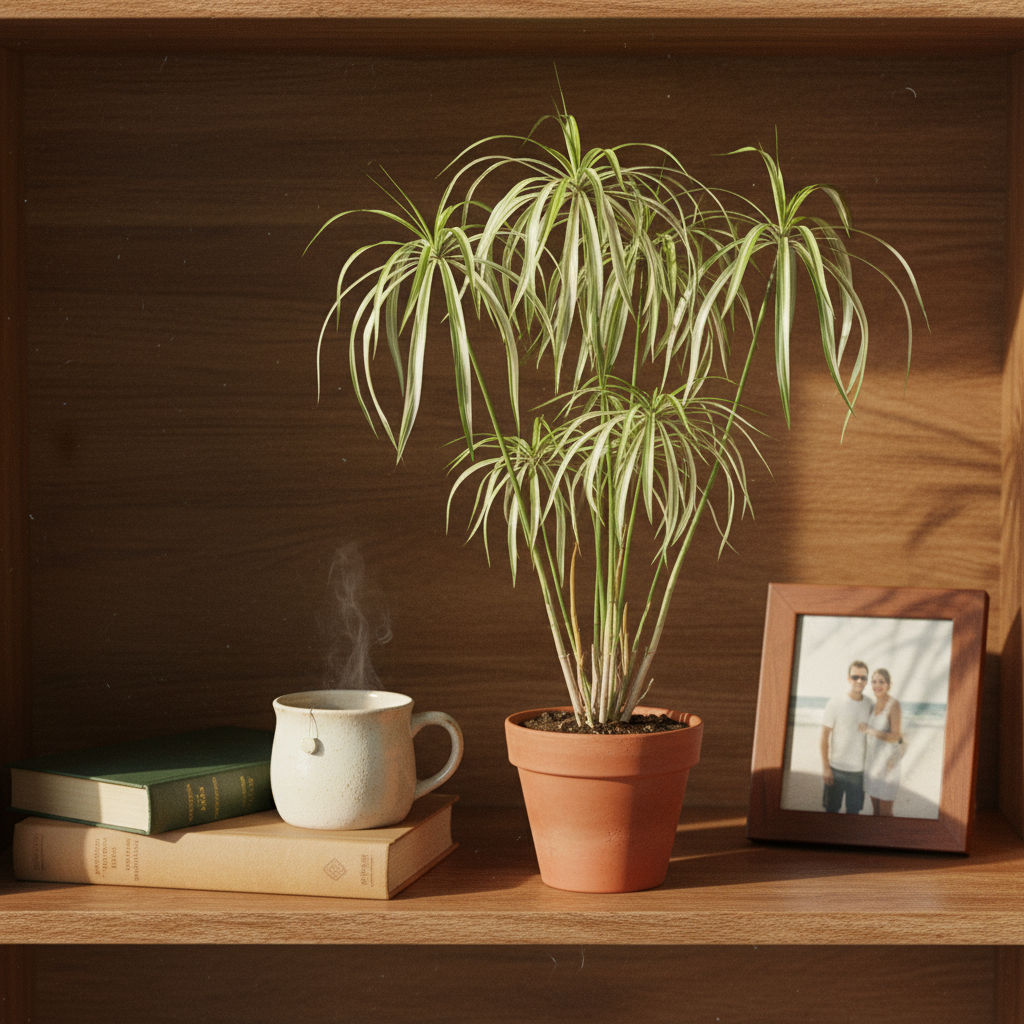
‘Variegatus’
The variegated umbrella papyrus carries irregular streaks and stripes of creamy white through its stems and bracts, sometimes producing whole culms that are nearly pure white. It is a striking, luminous plant, though the variegation can be unstable, and you may need to remove any all-green stems that appear if you want to keep the pale markings dominant. It grows a little less vigorously than the plain green species but is otherwise identical in its needs.
It is worth a brief word on names. The plant is sold almost universally as Cyperus alternifolius, but botanists frequently treat the true umbrella plant as Cyperus involucratus, with C. alternifolius applied, strictly speaking, to a related species. For the home grower the distinction makes no practical difference, since the plants are grown identically and the trade uses the names more or less interchangeably. If you see either name on a label, you are looking at the same easy, water-loving sedge.
Frequently Asked Questions
Can the umbrella papyrus really sit in water all the time?
Yes, and it should. This is a marginal aquatic that grows naturally at the edges of streams and ponds with its roots permanently saturated. Standing the pot in a saucer kept filled with a couple of centimetres of water is the easiest and most reliable way to grow it. Just keep the water level below the rim of the pot so the crown of the plant itself is not constantly submerged.
Why are the tips of my umbrella papyrus turning brown?
Brown, crispy tips almost always trace to one of three things: the plant dried out at some point, salts have built up from hard tap water or over-fertilising, or the surrounding air is too dry. Keep it constantly wet, switch to rainwater or filtered water and flush the pot monthly if your water is hard, and raise the humidity around it. Trim the damaged tips at an angle to tidy the plant while the new growth comes through clean.
How big does it get indoors?
The standard species typically reaches 0.6 to 1.5 metres (2 to 5 feet) tall as a houseplant, forming an ever-widening clump of stems. If that is too large for your space, look for the dwarf form ‘Gracilis’, which stays well under a metre and suits a windowsill or tabletop.
Is the umbrella papyrus safe around pets?
It is generally considered non-toxic and does not appear on the main lists of plants hazardous to cats and dogs. A pet that chews the bracts might get a mild stomach upset, so it is sensible to discourage nibbling, but it is not a plant you need to keep strictly out of reach for safety reasons.
My plant is flopping over. What went wrong?
Leaning, elongated, weak stems are the classic symptom of too little light. The umbrella papyrus is a sun lover, and in dim conditions the culms stretch and lose their rigidity. Move it to a brighter spot with some direct sun, rotate the pot regularly so it grows evenly, and new growth should come through sturdier and more upright.
Can I grow it from a cutting?
Yes, and the method is wonderfully unusual. Cut a stem just below the umbrella crown, trim the bracts back by about half, and float the crown upside down in a bowl of water so the centre of the whorl sits at the surface. New roots and small plantlets sprout from the middle of the inverted umbrella within a few weeks, and once they have rooted you can pot them up. Division of an established clump is the other easy route and is best done in spring.
Does it need high humidity?
It appreciates it. As a wetland plant it is happiest in moist air, and very dry indoor conditions, particularly near radiators in winter, can contribute to brown tips and make spider mites more likely. It will cope with average household humidity if kept properly wet at the roots, but a humid spot such as a bright bathroom suits it especially well.
How often should I repot?
Because it grows so fast, expect to repot most years, usually in spring. Move up one pot size when roots fill the container or push out of the drainage hole, and take the opportunity to divide the clump at the same time if it has outgrown its space. Use a heavy, moisture-retentive mix rather than an airy, free-draining one.






