
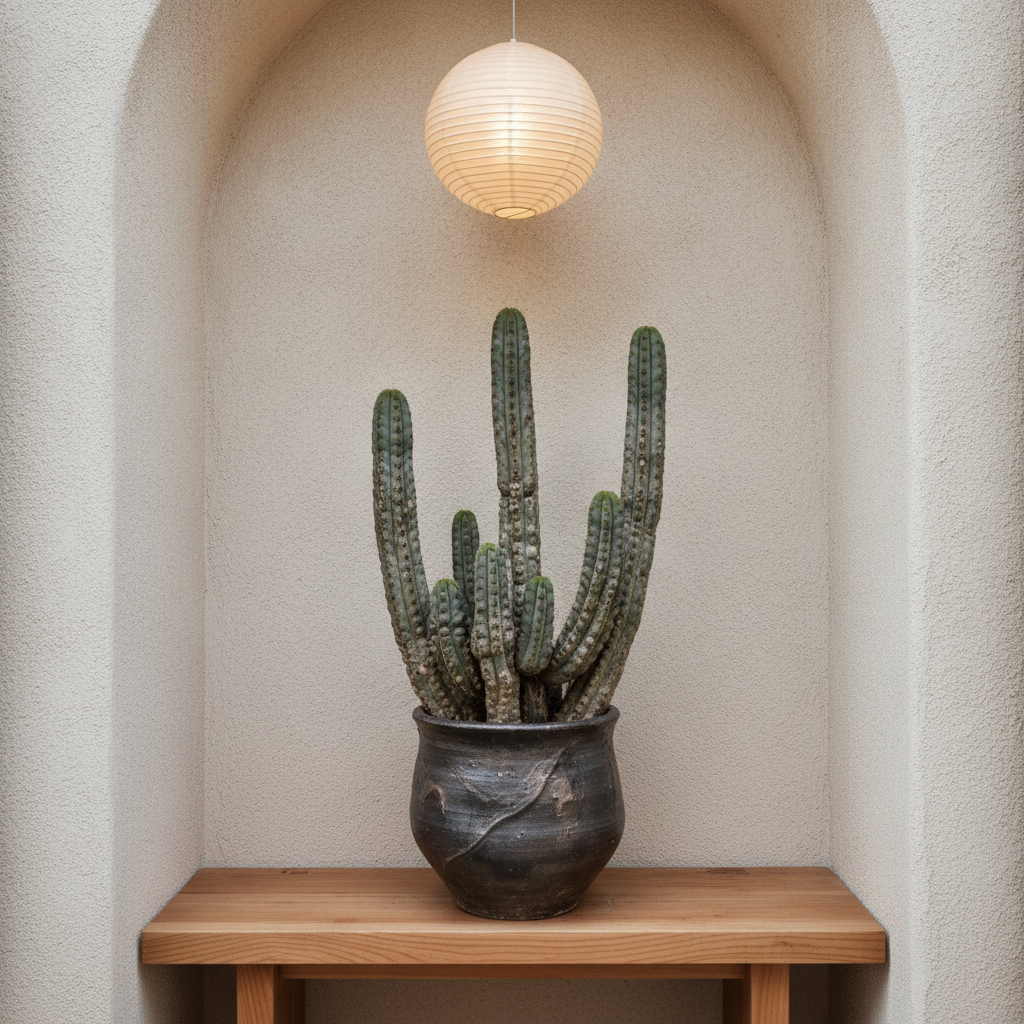
Few houseplants look quite as deliberately sculpted as the totem pole cactus. Its tall, pale grey-green columns rise in soft, irregular knobs and folds that resemble stacked carved figures or slow-dripping candle wax, and because the cultivated form carries no spines, it invites a closer look in a way that most desert cacti politely discourage. Botanically it is Lophocereus schottii, a columnar cactus from the Sonoran Desert of Arizona, mainland Mexico and the Baja California peninsula, and the smooth knobbly plant sold in shops is almost always the mutant form known as ‘Monstrose’. The wild species, by contrast, is a ribbed, bristly giant nicknamed the senita or whisker cactus.
As a houseplant the totem pole has an enviable reputation: it is slow, forgiving and almost impossible to kill through neglect, yet it punishes fuss and overwatering quickly. That gap between surviving and thriving is the theme of this guide. Keeping one alive asks very little, but coaxing those columns to fatten, hold their cool colour and put on visible height year after year takes a clear understanding of light, water and soil. What follows covers everything from the quick essentials to propagation, pests and the varieties worth seeking out.
Contents
- Quick Reference
- Why the Totem Pole Cactus Makes a Sculptural Houseplant
- Light Requirements
- Watering & Humidity
- Soil, Potting & Repotting
- Fertilising
- Propagation
- Pests & Diseases
- Popular Varieties
- Frequently Asked Questions
Quick Reference: Totem Pole Cactus at a Glance
| Light | Bright, direct light. At least 4 to 6 hours of sun a day; a south or west window indoors. |
| Watering | Soak thoroughly, then let the soil dry out completely. Roughly every 2 to 3 weeks in summer, monthly or less in winter. |
| Temperature | 18 to 30 degrees Celsius (64 to 86 degrees Fahrenheit). Protect from anything below 5 degrees Celsius (41 degrees Fahrenheit). |
| Humidity | Low. Average dry household air is ideal; high humidity is a risk. |
| Fertiliser | Light. A diluted low-nitrogen cactus feed two or three times across spring and summer only. |
| Toxicity | Not considered toxic to cats, dogs or people. The wild spiny form poses a physical hazard; the Monstrose form does not. |
Why the Totem Pole Cactus Makes a Sculptural Houseplant
The appeal of Lophocereus schottii ‘Monstrose’ is almost entirely architectural. Where most cacti are geometric and predictable, the totem pole grows as a single soft column covered in random bumps, ridges and shallow folds, no two of which repeat. The surface is a dusty blue-green that reads as a neutral in almost any interior, and because the cultivated form is spineless and smooth, it can sit in a hallway, on a desk or beside a sofa without the menace that keeps a barrel cactus at arm’s length. It is, in effect, living sculpture that happens to need watering a handful of times a year.

Beyond looks, the plant earns its place through sheer resilience. It evolved in one of the hottest, driest deserts in North America, so it tolerates the warm, dry, low-humidity air of a centrally heated home far better than the tropical foliage plants it usually shares a shelf with. It stores water in its thick stem, asks for almost no feeding, and grows so slowly that it rarely outgrows its spot or needs frequent repotting. For anyone who travels, forgets to water, or simply wants a large green presence that does not demand attention, few plants are more obliging. The trade-off is patience: a totem pole may add only a few centimetres of height a year, so it rewards the long game rather than the quick transformation.
Important — Toxicity: The totem pole cactus is not listed as toxic to cats, dogs or humans, so an accidental nibble is unlikely to cause poisoning. The cultivated Monstrose form is spineless and therefore safe to handle, but the wild senita form bears stiff bristles near its tips that can injure curious pets or children. As with any plant, discourage chewing, since fibrous plant tissue can still cause stomach upset.
Light Requirements
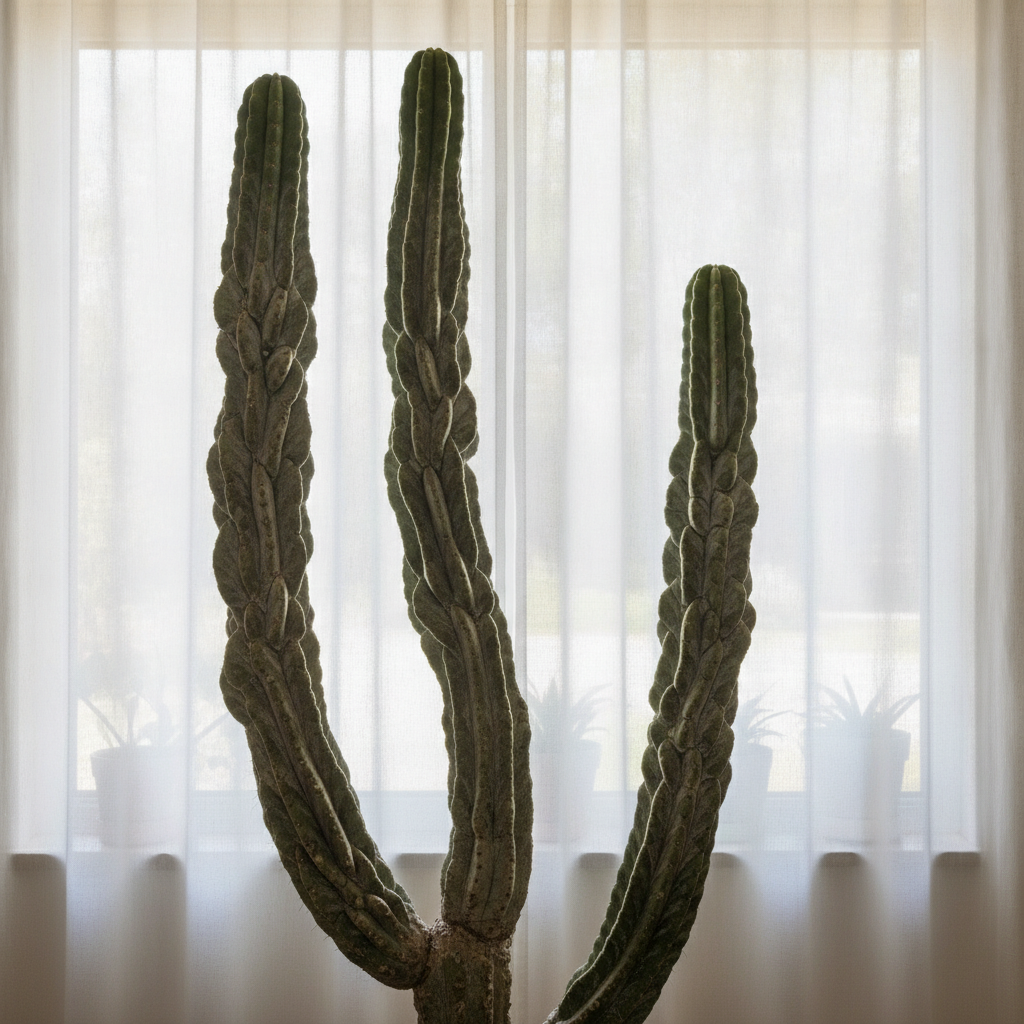
Light is the single factor that separates a totem pole cactus that merely persists from one that grows. This is a full-sun desert plant, and indoors it wants the brightest position you can offer. In its native range it grows in open desert exposed to fierce sun for most of the day, so a windowsill that feels bright to you is often dim by its standards. Insufficient light is the most common reason a healthy-looking plant simply stops growing, stretches thin or pales over months.
The ideal indoor spot is directly in front of a large south-facing window where the plant receives several hours of unobstructed direct sun each day. A west-facing window with strong afternoon light is a close second. East light will keep a plant alive but slow, and a north window is rarely enough on its own. If the only bright spot is outdoors in summer, the plant will appreciate a holiday on a sunny patio once temperatures are reliably warm, provided it is acclimatised gradually.
Light Levels Explained
It helps to think of indoor light in tiers, because the totem pole sits firmly at the brightest end of the scale. The table below translates common descriptions into approximate light levels and the result you can expect from each.
| Light Category | Approx. Level | Typical Location | Outcome |
|---|---|---|---|
| Direct sun | 20,000 lux and above | On a south or west windowsill | Ideal: steady growth, firm columns, good colour |
| Bright indirect | 10,000 to 20,000 lux | Just back from a sunny window | Acceptable: slow but healthy |
| Medium | 5,000 to 10,000 lux | An east window or bright room interior | Survives, growth stalls, risk of etiolation |
| Low | 1,000 to 5,000 lux | A north window or several metres from glass | Decline over months, stretching and paling |
| Very low | Under 1,000 lux | Interior wall, windowless room | Unsuitable: gradual collapse |
Window Orientation and Placement
South-facing window: The best choice in the northern hemisphere. Place the plant on or right beside the sill so it catches the full arc of midday sun. This is the one orientation that reliably supports active growth indoors.
West-facing window: A strong second option thanks to intense afternoon sun. Watch that the glass does not overheat the plant on the hottest summer days, though the totem pole tolerates heat far better than most.
East-facing window: Gentle morning sun keeps a plant alive and reasonably firm, but expect very little growth. Acceptable as a holding position rather than a long-term home.
North-facing window: Generally too dim. A totem pole here will gradually stretch, soften and pale. If north light is all you have, supplement it with a grow light.
Pro Tip — Rotate for Even Growth: Because the plant grows towards light, a totem pole left untouched will lean noticeably over a season. Give the pot a quarter turn every week or two so the column rises straight rather than curving towards the glass.
How Light Affects Form and Colour
In good light the columns stay compact, firm and a healthy dusty blue-green, with the knobbly texture well defined. In poor light the plant etiolates: it produces thin, weak, abnormally smooth growth at the tip as it strains towards the nearest window, and this stretched section never thickens back to match the rest of the column. Pale, washed-out colour and a soft, almost spongy feel are further signs that light is too low. Etiolated growth cannot be reversed, so the answer is always to improve the light going forward rather than to wait for the plant to recover on its own.
Warning — Sudden Sun Exposure: Even a sun-loving cactus can scorch if moved abruptly from a dim spot into fierce direct sun. Sunscald shows as bleached, tan or corky patches that are permanent. Always acclimatise a plant over one to two weeks, increasing exposure gradually, especially before moving it outdoors for summer.
Artificial Lighting
Totem pole cacti respond well to supplementary lighting in homes that lack a strong natural source. A full-spectrum LED grow light positioned 20 to 40 centimetres (8 to 16 inches) above the plant for 10 to 12 hours a day can substitute for, or top up, weak window light. Because the plant demands such high intensity, a single low-wattage bulb is rarely enough on its own; choose a dedicated grow light rated for high-light plants rather than a general houseplant lamp.
Seasonal Adjustments
Light changes dramatically with the seasons, and the totem pole’s care should follow. From spring to early autumn the plant is in active growth and wants maximum sun. Through the short, dim days of winter it naturally rests, so reduced light is not a problem provided you also cut back watering to match. Many growers deliberately give the plant a cool, bright, dry winter rest, which keeps it compact and, in mature specimens, encourages flowering. Move plants away from the coldest single-glazed windows on frosty nights, since the leaf-free column offers no buffer against a chilly draught.
Watering & Humidity
If light is what makes a totem pole grow, water is what most often kills it. This is a plant adapted to long droughts broken by occasional heavy rain, and it stores enough moisture in its thick stem to coast through weeks of dryness without complaint. The mistake almost every new owner makes is treating it like a leafy houseplant and watering on a fixed weekly schedule. Done that way, the roots sit in damp soil they cannot use, and rot sets in from below long before any sign appears at the surface.
When to Water
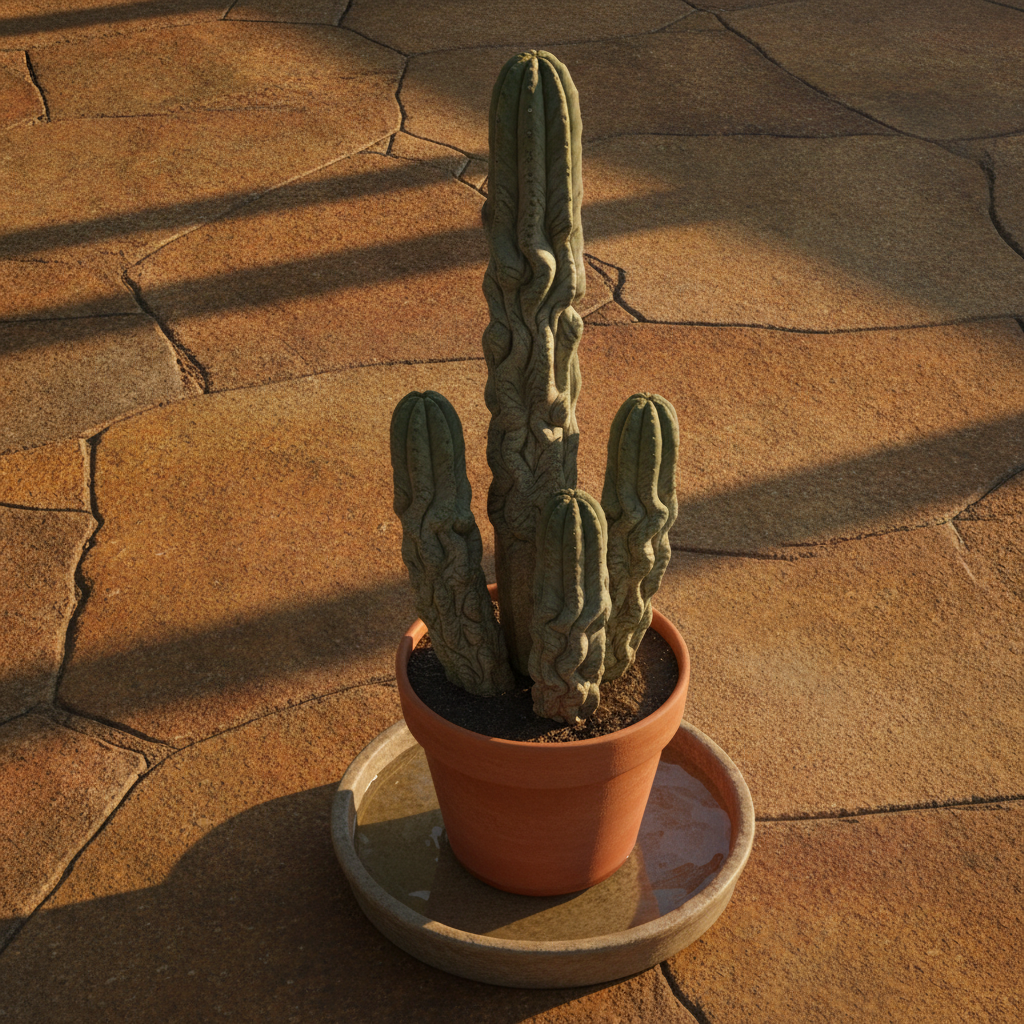
The only reliable rule is to water when the soil is completely dry, not on a calendar. Push a finger or a wooden skewer to the bottom of the pot; if it comes out dry and the pot feels light, it is time. In the warmth of spring and summer this might mean watering every two to three weeks, while in the cool of winter it can stretch to once a month or less. The exact interval depends on pot size, light, temperature and how gritty your mix is, so learn to read the plant and the soil rather than counting days.
When you do water, do it properly. The desert pattern is feast and famine: a thorough soak followed by a long dry spell mimics the rare desert downpour far better than frequent light sips, which only ever dampen the top layer and encourage shallow, weak roots. Always err on the side of too dry, because a thirsty totem pole recovers within hours of a drink, whereas a waterlogged one may already be rotting beyond saving by the time you notice.
Pro Tip — The Winter Dry Rest: From late autumn to early spring, cut watering right back to a token amount or stop almost entirely if the plant is kept cool. This dry winter rest hardens the growth, keeps the column firm and is the single most important trigger for flowering in mature plants.
How to Water Correctly
- Check that the soil is dry all the way to the bottom of the pot before doing anything.
- Water at the soil surface, avoiding the body of the column, until water runs freely from the drainage holes.
- Alternatively, stand the pot in a tray of water for 15 to 20 minutes and let the mix draw moisture up from below, then remove it.
- Let the pot drain completely and never leave it standing in a saucer of water.
- Empty any collected run-off so the roots are not left sitting in moisture.
- Wait until the mix is bone dry again before the next watering, however long that takes.
Signs of Overwatering vs. Underwatering
| Symptom | Overwatering | Underwatering |
|---|---|---|
| Colour | Yellowing, browning or blackening, often at the base first | Pale, dull or slightly greyer than usual |
| Texture | Soft, mushy, translucent or weeping | Wrinkled, shrunken, slightly puckered |
| Stem base | Brown or black, soft and sometimes smelly | Firm but a little shrivelled |
| Soil | Stays wet for days, may smell sour | Bone dry, pulling away from the pot |
| Recovery | Often fatal once rot reaches the core | Plumps up within a day or two of watering |
Warning — Root Rot: Root and stem rot is the leading cause of death in totem pole cacti. If the base turns soft, brown or black, act at once: cut well above the affected tissue into clean green flesh with a sterilised blade, let the cutting callus for a week or more, and re-root it in dry gritty mix. Once rot reaches the centre of the column, the plant cannot be saved.
Humidity Requirements
Unlike the tropical foliage plants that crave moist air, the totem pole cactus prefers it dry. The ordinary low humidity of a heated home, often 30 to 40 percent, suits it perfectly, and it has no need of misting, pebble trays or humidifiers.
In fact, high humidity works against this plant. Stagnant, damp air around the column raises the risk of fungal blemishes and rot, particularly in a cool room or a crowded plant shelf with little airflow. If you grow it in a bathroom or a humid conservatory, make sure the air moves freely and the soil still dries out fully between waterings.
Good air circulation matters more than any humidity adjustment. A gently moving, dry atmosphere keeps the surface of the column healthy and discourages the soft, sappy growth that pests and fungi exploit.
Water Quality
Totem pole cacti are not especially fussy about water, and ordinary tap water is generally fine. Where tap water is very hard, the dissolved minerals can leave pale crusty deposits on the soil and pot over time and slowly raise salt levels at the roots. If you notice build-up, flush the pot thoroughly now and then, or switch to rainwater or filtered water. Tepid water is kinder than cold straight from the tap, especially in winter.
Soil, Potting & Repotting
Soil for a totem pole cactus has one overriding job: to drain almost instantly and never stay soggy. In the wild the plant roots in coarse, rocky, mineral-rich desert ground where water vanishes within minutes of rain. Recreate that and most watering mistakes become survivable; ignore it and even careful watering can drown the roots. A dense, peat-heavy houseplant compost holds far too much moisture and is the wrong choice on its own.
Ideal Soil Composition
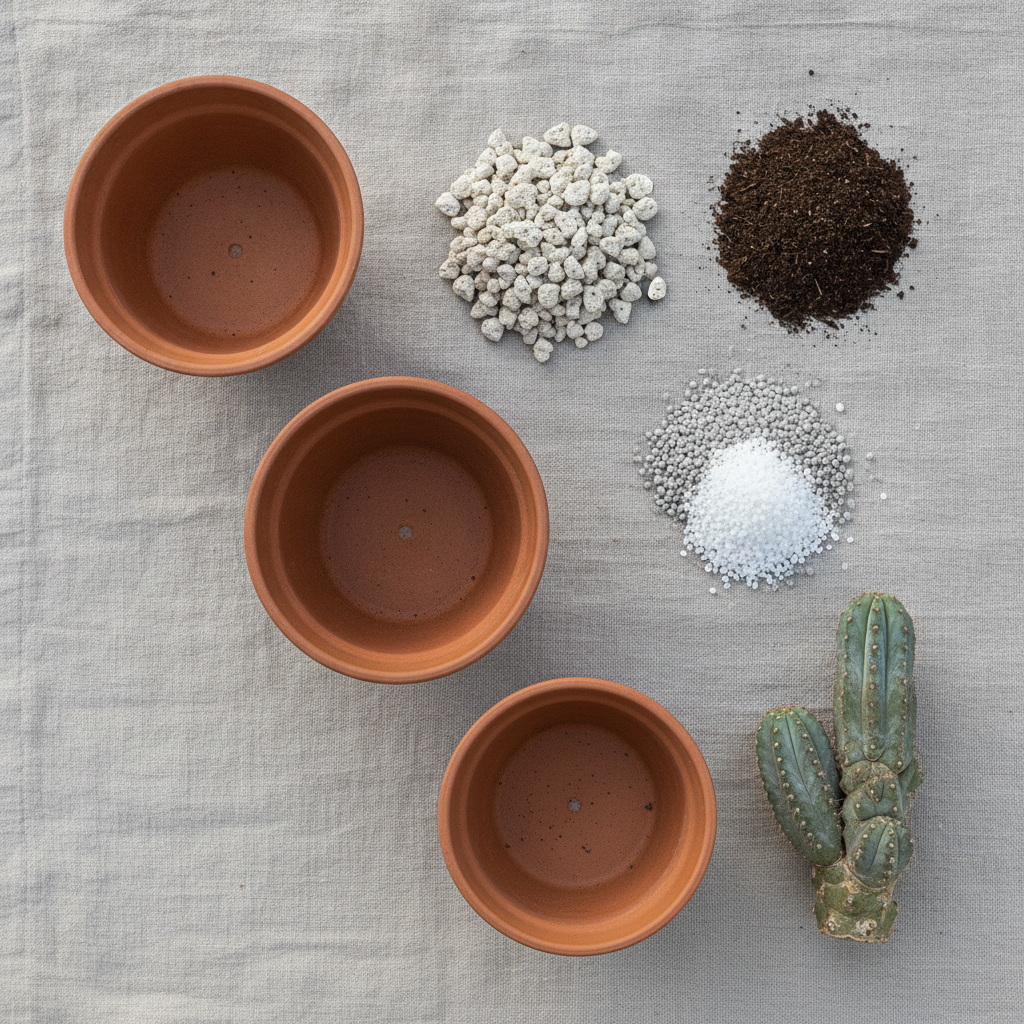
Aim for a mix that is roughly half mineral grit and half open organic matter, far grittier than a standard bagged cactus compost, most of which still hold too much water for a desert column. The mineral fraction provides the fast drainage and air pockets the roots need, while a modest amount of organic material holds just enough moisture and nutrients between soakings.
| Component | Proportion | Function |
|---|---|---|
| Pumice or coarse grit | 30 to 40 percent | Creates fast drainage and lasting air pockets |
| Perlite | 10 to 20 percent | Lightens the mix and prevents compaction |
| Cactus or potting compost | 40 to 50 percent | Holds light moisture and nutrients |
| Coarse horticultural sand | Optional, up to 10 percent | Adds weight and further sharpens drainage |
The plant favours a neutral to slightly alkaline soil, broadly in the pH range of 6.0 to 7.5, which most cactus mixes naturally provide. There is no need to test or adjust pH for an ordinary houseplant; a sensible gritty blend will sit comfortably within range.
Pro Tip — Quick Mix Recipe: For a reliable blend, combine two parts bagged cactus compost with one part pumice and one part perlite, plus a handful of coarse grit. It should feel gritty and loose in the hand and water should pour straight through it.
Choosing the Right Pot
The right container does as much for a totem pole’s health as the soil inside it. Because the plant is tall and top-heavy yet shallow-rooted, both stability and drainage matter.
Drainage holes are non-negotiable. Never plant a totem pole in a pot without holes. Even the grittiest mix will hold fatal amounts of water if it has nowhere to drain, and a decorative cachepot should only ever be used as an outer cover with the plant lifted out to water.
Pot material: Terracotta is ideal because its porous walls wick moisture from the soil and dry it faster, which suits a plant that hates wet feet. Its weight also helps anchor a tall column. Glazed ceramic and plastic both work but hold moisture longer, so water even more sparingly if you use them.
Pot size: Choose a pot only slightly larger than the root ball. An oversized pot holds a reservoir of damp soil the small root system cannot use, which invites rot. A snug pot that dries quickly is far safer, and a heavier base helps keep a top-heavy specimen upright.
When to Repot
Totem pole cacti grow slowly and are happy to stay slightly snug, so they rarely need repotting more than once every three or four years. Signs that the time has come include roots emerging from the drainage holes, soil that has broken down and no longer drains freely, or a plant that has become unstable in its pot. The best moment is early spring, just as growth resumes, and always when the soil is dry rather than freshly watered.
How to Repot: Step-by-Step
- Let the soil dry out fully and stop watering several days beforehand so the root ball is easy to handle.
- Protect your hands; even the spineless Monstrose form is easier to move when wrapped in a folded towel or strip of foam, and the spiny senita form requires thick gloves.
- Ease the plant out by tipping the pot and supporting the column rather than pulling on it.
- Gently tease away the old soil and inspect the roots, trimming any that are black, mushy or clearly dead with a sterilised blade.
- Settle the plant into fresh dry gritty mix at the same depth it sat before, never deeper, and firm the soil lightly around the base.
- Add a top layer of grit or gravel to keep the vulnerable base dry and the plant stable.
- Wait a week to ten days before watering so any disturbed or trimmed roots can callus and heal.
Warning — Transplant Shock: Watering immediately after repotting is a common way to trigger rot, because damaged roots draw in moisture they cannot yet process. Always give a freshly repotted totem pole a dry rest of at least a week before its first drink.
Fertilising
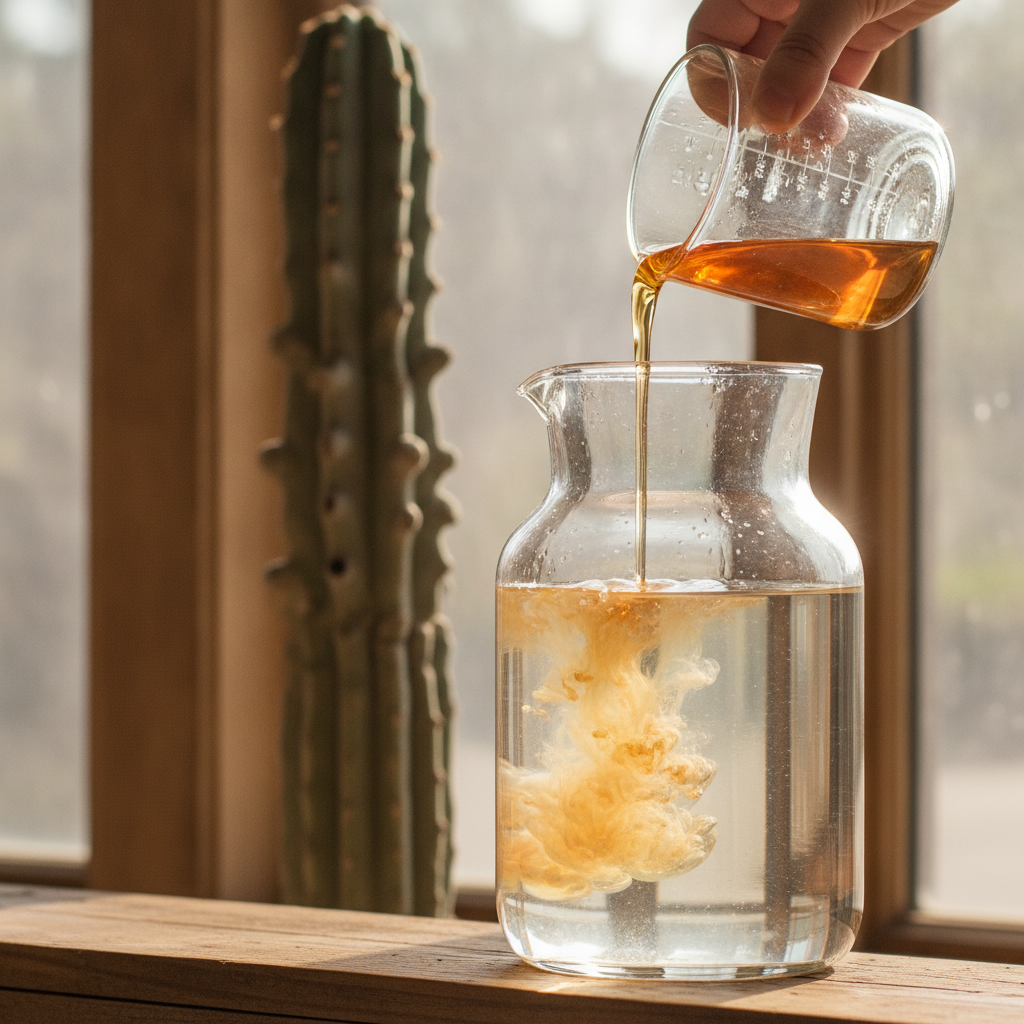
Totem pole cacti are slow, frugal feeders that evolved in poor desert soils, so they need only a fraction of the nutrients a leafy houseplant consumes. A light hand is essential here. Far more totem poles are harmed by overfeeding, which forces soft, weak, rot-prone growth, than are ever held back by a lean diet.
Feeding is only worthwhile during the active growing season, from spring to late summer. Through autumn and winter the plant is resting and cannot use the nutrients, so any fertiliser applied then simply accumulates in the soil as harmful salts.
Understanding Plant Nutrients
Fertiliser labels carry three numbers, the N-P-K ratio, showing the proportion of nitrogen, phosphorus and potassium. For cacti a low-nitrogen formula is best, because too much nitrogen drives lush, soft tissue at the expense of the firm, slow growth that keeps a column healthy. A specialist cactus feed, typically lower in nitrogen and higher in potassium, is ideal.
| Nutrient | Symbol | Primary Function | Deficiency Symptoms |
|---|---|---|---|
| Nitrogen | N | Drives green growth and overall vigour | Pale colour, very slow growth (rare in cacti) |
| Phosphorus | P | Supports roots and flowering | Weak roots, poor flowering |
| Potassium | K | Builds firm tissue and stress tolerance | Soft growth, lower drought resilience |
| Calcium | Ca | Strengthens cell walls | Distorted new growth |
| Magnesium | Mg | Central to chlorophyll | Yellowing on older tissue |
| Iron | Fe | Aids chlorophyll production | Pale or yellow new growth |
Types of Fertiliser
Liquid fertilisers: The easiest and most controllable option for a cactus. Diluted in water and applied during a normal watering, a liquid cactus feed gives you precise control over strength and timing, which suits a plant that wants very little.
Slow-release granular: A small amount of slow-release feed worked into the soil in spring can supply a gentle trickle of nutrients across the season. Use sparingly, as it is easy to overdose a plant with such modest needs.
Organic fertilisers: Mild organic options such as diluted worm-casting tea release nutrients slowly and gently, making them hard to overdo. They are a safe choice for growers who prefer to avoid synthetic feeds.
Feeding Schedule
For most totem pole cacti, feeding two or three times across the whole of spring and summer is plenty. Use a cactus fertiliser diluted to half the recommended strength, apply it only to already-moist soil, and never feed a dry, thirsty or stressed plant. Stop entirely from early autumn through winter while the plant rests.
Pro Tip — Less Is More: When in doubt, underfeed. A totem pole that is fed lightly stays firm, compact and resilient, while one that is fed generously puts on soft, pale, stretched growth that is far more vulnerable to rot and pests.
How to Fertilise
- Water the plant lightly first, or feed on the day of a normal watering, so the roots are never exposed to fertiliser in dry soil.
- Dilute a cactus feed to half the strength stated on the label.
- Apply the solution to the soil at the base, keeping it off the body of the column.
- Let any excess drain away freely and discard the run-off.
- Repeat only two or three times across the spring and summer, then stop for the rest of the year.
Warning — Salt Build-Up: Over-fertilising leaves a crust of mineral salts on the soil and pot and can scorch the roots, showing as browned tips or stalled growth. If you see white deposits, flush the pot with plenty of plain water to wash the salts through, and ease off feeding.
Propagation
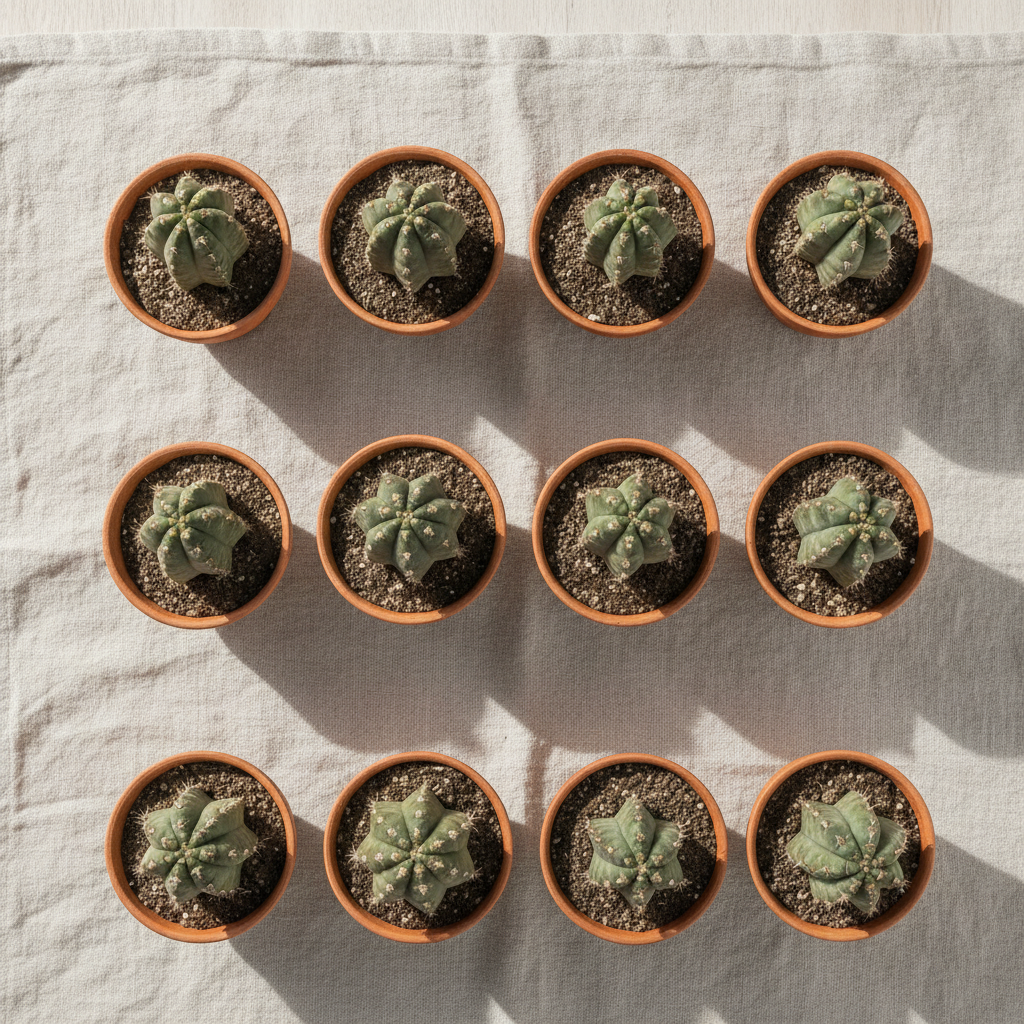
Propagating a totem pole cactus is refreshingly simple, because the plant readily regrows from a cut section of stem. Unlike many houseplants raised from leaf or node cuttings, a columnar cactus is multiplied by taking a length of the column itself, letting the wound seal, and rooting it in dry gritty mix. The whole process trades on the plant’s desert resilience: a severed segment can sit unharmed for days before it ever touches soil.
The best time to propagate is late spring or early summer, when warmth and light help cuttings root quickly. It is also the natural moment to deal with a plant that has grown too tall or developed rot, since the healthy upper portion can be saved and re-rooted as a brand new specimen.
Understanding the Callus
The single most important concept in cactus propagation is the callus. When you cut a stem, the exposed wet flesh is an open door to rot and infection. Left in dry air for several days, the cut surface dries and hardens into a protective callus, and only then is the cutting safe to root. Skipping this step and planting a fresh, wet cut straight into soil is the commonest reason cactus cuttings fail. Patience at this stage is everything.
Stem Cuttings: Step-by-Step
Taking a stem cutting is the primary and most reliable way to propagate a totem pole. It works for routine multiplication and for rescuing the top of a plant whose base has begun to rot.
- Sterilise a sharp knife with isopropyl alcohol to avoid introducing infection.
- Cut a section of healthy column 8 to 15 centimetres (3 to 6 inches) long, making one clean straight cut.
- Note which end was the bottom; the cutting must be planted the same way up that it grew.
- Set the cutting aside in a warm, dry, shaded spot for one to two weeks until the cut end forms a firm, dry callus.
- Insert the callused end about 2 to 3 centimetres (1 inch) into dry gritty cactus mix, just deep enough to stand upright, staking it if needed.
- Wait about a week, then begin watering very sparingly to encourage roots without rotting the base.
- Test for rooting after a few weeks with a gentle tug; resistance means roots have formed and normal sparse watering can begin.
Pro Tip — Mind the Orientation: A cactus cutting planted upside down will not root. Mark the lower end as soon as you cut it, since once the callus forms it can be hard to tell which way the segment originally grew.
Offsets and Branches: Step-by-Step
Mature totem poles, and especially older clumping plants, sometimes produce side branches or basal offsets that can be removed and grown on. This method gives you a cutting that may already have a small head start towards rooting.
- Identify a firm, healthy branch or offset growing from the main column or base.
- Sever it cleanly at the join with a sterilised blade, taking as little of the parent as possible.
- Allow the cut surface to callus for one to two weeks in a dry, shaded spot.
- Pot the callused offset into dry gritty mix, supporting it upright until it anchors.
- Withhold water for a week, then water sparingly and keep the offset warm and bright while roots establish.
Troubleshooting Propagation
| Problem | Likely Cause | Solution |
|---|---|---|
| Cutting turns soft and brown | Planted before callusing or watered too soon | Recut into healthy tissue, callus longer, keep drier |
| No roots after many weeks | Too cold, too dark, or kept bone dry too long | Provide warmth and bright light, water very lightly |
| Cutting shrivels badly | Slow to root and losing stored moisture | Mist the soil lightly; most recover once rooted |
| Cutting will not stand up | Planted too shallow for its height | Stake it or seat it slightly deeper in the mix |
Pests & Diseases
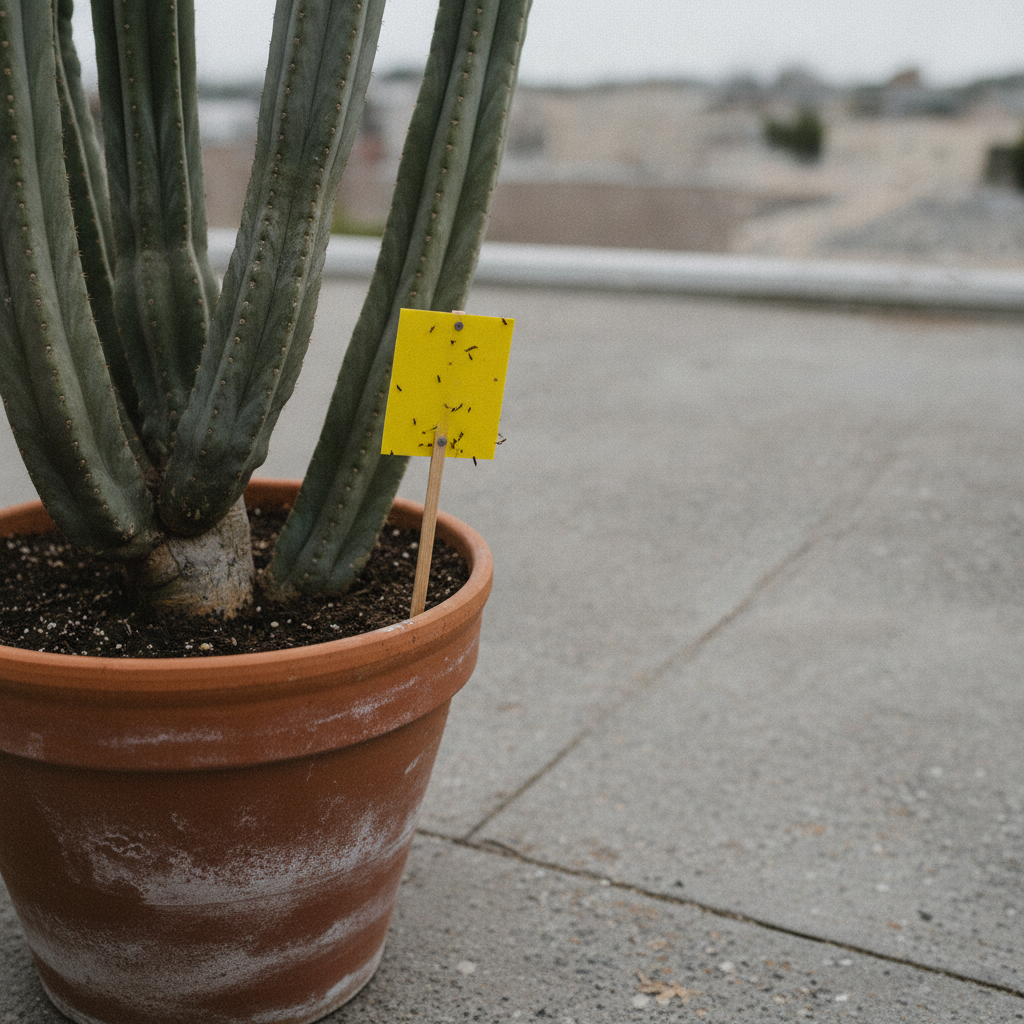
A healthy totem pole cactus is remarkably trouble-free, and most problems trace back to a single cause: too much moisture. The diseases that threaten it are almost all rooted in overwatering, while the handful of pests that bother it tend to take hold only when a plant is already stressed, weak or growing in stagnant air.
Prevention is far easier than cure. Bright light, a gritty fast-draining mix, careful watering and good airflow keep the plant firm and resistant, and a quick inspection whenever you water will catch the rare invader long before it becomes an infestation.
Common Pests
Mealybugs (Pseudococcidae)
The most frequent pest of indoor cacti, mealybugs appear as small, fluffy white tufts tucked into folds and crevices on the column, where they suck sap and slowly weaken the plant. On the knobbly totem pole they like to hide in the shadowed dips between bumps.
Treatment: Dab each cluster with a cotton bud soaked in isopropyl alcohol, then treat the whole plant with a horticultural soap or neem solution. Repeat weekly until no new tufts appear, and isolate the plant while you do.
Spider Mites (Tetranychus urticae)
These tiny mites thrive in hot, dry conditions and can attack a stressed cactus, leaving fine pale stippling and faint webbing on the surface. They are most likely on a plant kept too warm with poor airflow.
Treatment: Wipe the column down, improve air circulation, and apply a miticide or repeated neem oil treatments. Catching them early, before webbing spreads, makes control much easier.
Scale Insects (Diaspididae)
Scale show up as small, hard, brown or tan bumps stuck fast to the stem, often mistaken for part of the plant. Like mealybugs they feed on sap and can sap a plant’s vigour over time.
Treatment: Scrape them off gently with a fingernail or an alcohol-soaked cotton bud, then follow up with horticultural oil or soap to catch any crawlers you missed.
Common Diseases
Root and Stem Rot (Fusarium and Phytophthora spp.)
By far the most serious threat, rot results from soil that stays too wet for too long. It usually begins out of sight at the roots or base and shows as soft, brown or black, sometimes weeping tissue, often with an unpleasant smell as it advances up the column.
Treatment: Act fast. Cut well above the rot into clean, firm, green flesh with a sterilised blade, let the healthy cutting callus for a week or more, and re-root it in dry gritty mix. Discard the rotten base and its soil. Prevention through careful watering is the only real cure.
Fungal Spots (various fungi)
Damp, stagnant air can leave brown or corky blemishes on the surface of the column. These are usually cosmetic rather than fatal, but they indicate conditions that are too humid and still.
Treatment: Improve airflow, reduce watering and move the plant somewhere brighter and drier. Severely affected patches can be cut out with a sterilised blade if necessary.
Pest and Disease Summary
| Pest / Disease | Identification | Treatment |
|---|---|---|
| Mealybugs | White fluffy tufts in crevices | Alcohol dab, then neem or soap, repeat weekly |
| Spider mites | Fine stippling and faint webbing | Improve airflow, apply miticide or neem |
| Scale | Hard brown bumps on the stem | Scrape off, follow with horticultural oil |
| Root and stem rot | Soft brown or black tissue, bad smell | Cut into healthy flesh, callus, re-root |
| Fungal spots | Brown or corky surface blemishes | Improve airflow, reduce moisture |
Prevention Strategies
Almost every pest and disease that troubles a totem pole can be headed off by getting the basics right. Bright light and a gritty, fast-draining mix keep the plant firm and resilient, while disciplined watering, always letting the soil dry out fully, removes the damp conditions that rot and fungus need.
Good airflow is the other pillar of prevention. Moving air keeps the surface of the column dry and discourages both fungal blemishes and sap-sucking pests. Inspect the plant whenever you water, paying attention to the crevices between bumps, and isolate any new arrival for a couple of weeks before letting it join the rest of your collection.
Pro Tip — Spot-Treat Early: A single cotton bud dipped in isopropyl alcohol, used the moment you notice the first white mealybug tuft, will often end the problem before it starts. Catching pests at one or two individuals is far easier than fighting an established colony.
Popular Varieties
The name “totem pole cactus” almost always refers to the monstrose mutant form of Lophocereus schottii, the smooth, knobbly column sold as a houseplant. The wild species and a couple of related selections round out the small group of plants you are likely to encounter under this and similar names.
Understanding the difference matters when shopping, because the spineless Monstrose and the spiny wild senita look quite distinct and suit different settings. The table and profiles below cover the forms worth knowing.
| Variety | Appearance | Light Needs | Growth Rate | Availability |
|---|---|---|---|---|
| ‘Monstrose’ (totem pole) | Smooth, spineless, knobbly grey-green columns | Full sun | Very slow | Common |
| Wild senita (species form) | Ribbed grey-blue columns with bristly tips | Full sun | Slow | Occasional |
| ‘Monstrose Mini’ | Compact, tightly bumpy dwarf form | Full sun | Very slow | Less common |
| Crested forms (f. cristata) | Fan-shaped, fused, wavy crests | Bright light | Slow | Rare, collector |
Featured Varieties
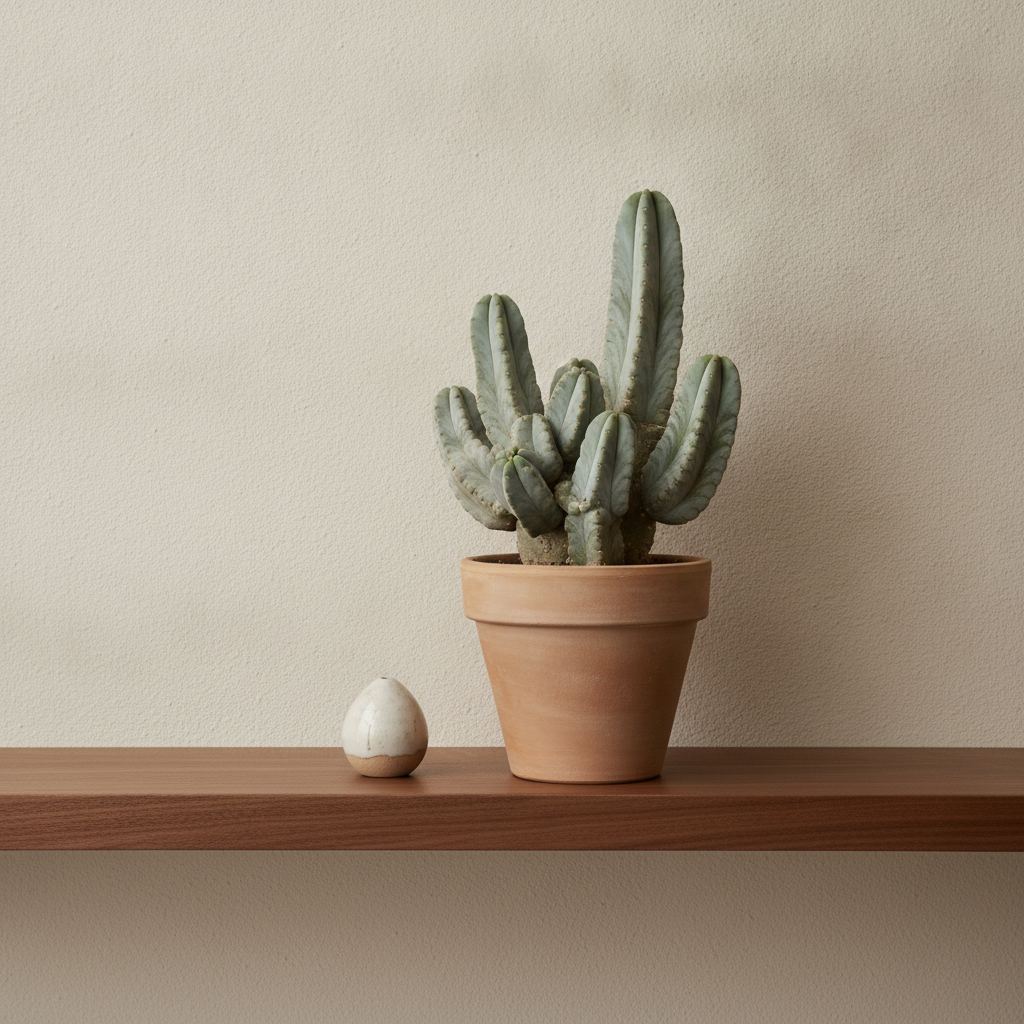
‘Monstrose’ (Totem Pole)
The classic houseplant form, with smooth, spineless columns covered in irregular knobs and wavy folds like melting carved wax. Slow, sculptural and easy to handle, it is the plant most people mean by “totem pole cactus”.
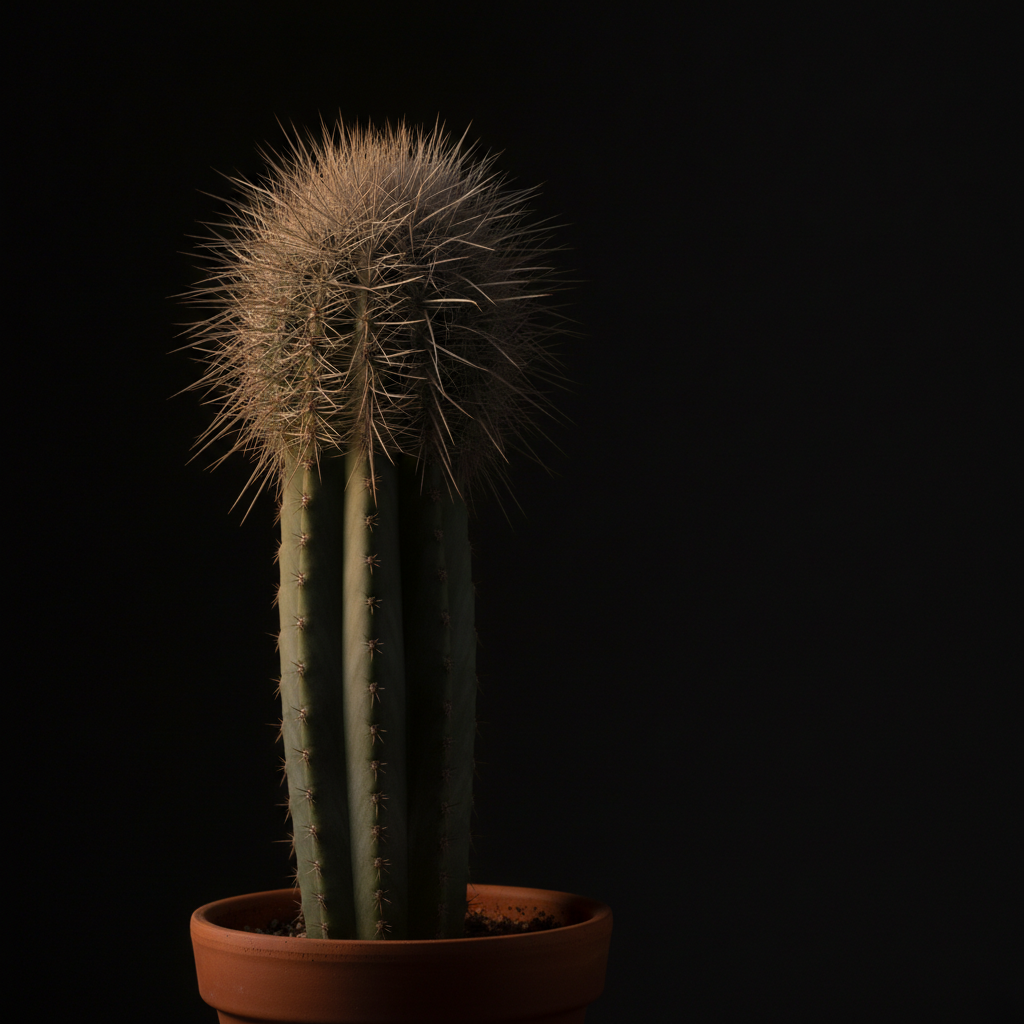
Wild Senita (Species Form)
The natural form of the species, with tall, ribbed, grey-blue columns topped by a crown of long, bristly grey spines that give the senita its “whisker cactus” nickname. Statuesque but prickly, it suits collectors after the authentic desert look.
Variety Profiles in Detail
‘Monstrose’ (Lophocereus schottii f. monstrosus)
This is a stable mutation in which the plant loses its ribs, spines and orderly geometry, instead growing as a soft, lumpy, blue-green column. Because it carries no spines it is safe to position anywhere and pleasant to handle, and its slow, irregular growth means each plant becomes a unique piece of living sculpture. It is the form to look for if the appeal of the totem pole is its smooth, carved look.
Wild Senita (Lophocereus schottii, species form)
The true species is a substantial multi-stemmed desert cactus that can reach several metres in habitat, with ribbed columns and tufts of long grey bristles near the growing tips. It produces small night-opening pink flowers when mature. Far less common as a houseplant than the Monstrose, it appeals to growers who want the genuine senita rather than the smooth mutant, and it needs the same bright, dry, fast-draining culture.
Crested Forms (Lophocereus schottii f. cristata)
Occasionally the growing point fuses and spreads into a flattened, wavy fan rather than a single column, producing a crested or “brain” cactus prized by collectors. These rare forms are slow and sometimes grafted, and they make eye-catching specimens, though they command higher prices and can be harder to find.
Choosing the Right Variety for Your Space
For most homes the spineless Monstrose is the obvious pick: it is safe around people and pets, easy to handle and the most widely sold. If you have abundant sun and want a more authentic desert silhouette, the wild senita delivers the classic ribbed-and-bristled look at the cost of handling care. Crested forms are best left to enthusiasts with the right conditions and a tolerance for slow, fussier growth. Whichever you choose, the care is essentially identical, so the decision comes down to appearance and where the plant will live.
Frequently Asked Questions
Why is my totem pole cactus not growing?
The most likely reason is insufficient light, since this is a full-sun plant that stalls in anything less than bright direct sun. It is also worth remembering that the species is naturally very slow, adding only a few centimetres a year even in ideal conditions, so a little patience is part of growing one. Move it to your sunniest window or add a grow light, and make sure it is feeding lightly through the growing season.
How often should I water a totem pole cactus?
Water only when the soil is completely dry, which in practice means roughly every two to three weeks in summer and as little as once a month or less in winter. There is no fixed schedule; the interval depends on light, warmth and pot size, so always check that the mix is bone dry before watering again.
Why is my cactus turning soft or mushy at the base?
Soft, brown or black tissue at the base is almost always root or stem rot caused by overwatering or poor drainage. Act quickly by cutting the column well above the affected area into clean green flesh, letting the cutting callus for a week or more, and re-rooting it in dry gritty mix. The rotten base cannot be saved.
Is the totem pole cactus safe for pets?
It is not listed as toxic to cats or dogs, and the cultivated Monstrose form is spineless, so it poses little physical hazard. The wild senita form does carry stiff bristles that could injure a curious pet, so keep that form out of reach. As with any plant, discourage chewing to avoid mild stomach upset.
Why does my totem pole cactus look thin or stretched at the top?
Thin, smooth, pale growth at the tip is etiolation, the plant straining towards inadequate light. The stretched section will not thicken back up, so the fix is to improve the light immediately. If the elongated portion bothers you, it can be cut off and rooted as a cutting once conditions are brighter.
Can I grow a totem pole cactus outdoors?
Yes, in hot, dry, frost-free climates it makes an excellent outdoor plant in full sun. In cooler regions it must come indoors before temperatures drop near freezing, as it cannot tolerate frost. Many growers in temperate climates summer it outside on a sunny patio and bring it back in for the colder months.
Does the totem pole cactus flower?
Mature plants can produce small, pink, night-opening flowers, though flowering is uncommon on indoor specimens and tends to occur only on large, well-established plants. A bright spot and a cool, dry winter rest improve the odds, but most people grow the totem pole for its sculptural form rather than its blooms.
How big does a totem pole cactus get indoors?
Indoors, and given its very slow growth, a totem pole will typically reach one to two metres (3 to 6 feet) over many years, far short of the larger sizes the wild species reaches in the desert. Its leisurely pace means it stays a manageable houseplant for a long time and rarely needs urgent repotting.
What soil is best for a totem pole cactus?
A very gritty, fast-draining mix is essential. Combine a cactus or potting compost with pumice and perlite, and a little coarse grit, so that roughly half the volume is mineral material. The mix should feel loose and let water pour straight through, since standing moisture is the plant’s chief enemy.
Why is my totem pole cactus leaning over?
Leaning usually means the plant is bending towards its light source, so rotating the pot a quarter turn every week or two will keep the column upright. A lean can also signal a top-heavy plant in too light a pot or a weakened, rotting base, so check that the base is firm and the container heavy enough to keep it stable.






