
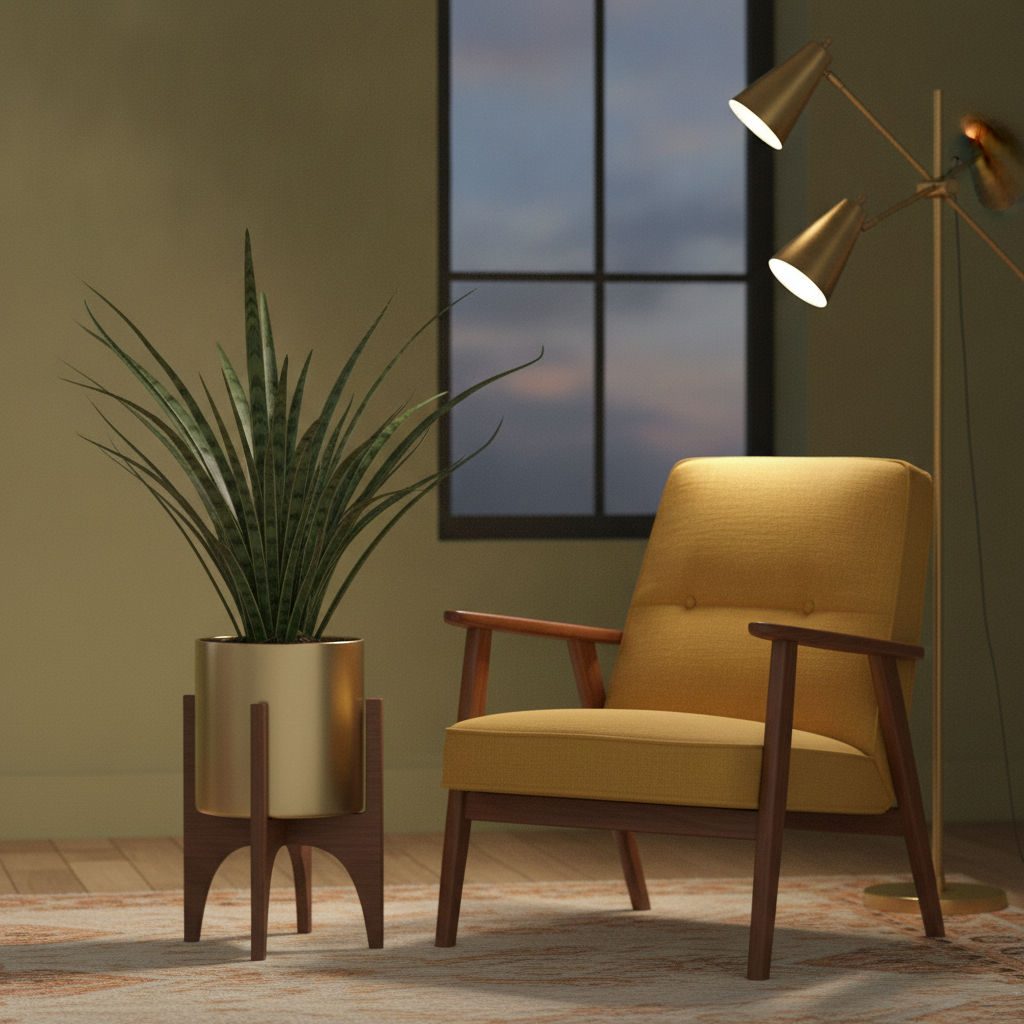
The Fernwood snake plant trades the broad upright blades of its cousins for something softer and more architectural: a fountain of slim, cylindrical leaves that arch outward like a spray of dark green quills. Sold almost everywhere as Dracaena parva ‘Fernwood’ or ‘Fernwood Mikado’, it is a hybrid that keeps all the near-indestructible resilience the snake plant family is famous for while offering a lighter, more graceful silhouette that suits a shelf, a plant stand or a bright corner equally well. If you have killed houseplants before, this is one of the safest places to start again.
In This Guide
- Quick reference
- Why the Fernwood makes a great houseplant
- Light
- Watering
- Soil and potting
- Fertilising
- Propagation
- Pests and problems
- Varieties
- Frequently asked questions
Quick Reference
| Botanical name | Dracaena parva ‘Fernwood’ (formerly Sansevieria ‘Fernwood’) |
| Common names | Fernwood snake plant, Fernwood Mikado, Mikado plant |
| Light | Bright indirect light preferred; tolerates low light and some direct sun |
| Water | Only when soil is fully dry, roughly every 2 to 3 weeks in growth, monthly in winter |
| Humidity | Average household humidity is fine; no misting needed |
| Temperature | 18 to 27 degrees C (64 to 81 degrees F); keep above 10 degrees C (50 degrees F) |
| Soil | Gritty, free-draining cactus or succulent mix |
| Fertiliser | Dilute feed once or twice across spring and summer only |
| Mature size | 60 to 90 cm tall (24 to 36 in), spreading with age |
| Toxicity | Mildly toxic to cats, dogs and humans if eaten |
| Difficulty | Very easy; ideal for beginners |
Why the Fernwood Makes a Great Houseplant
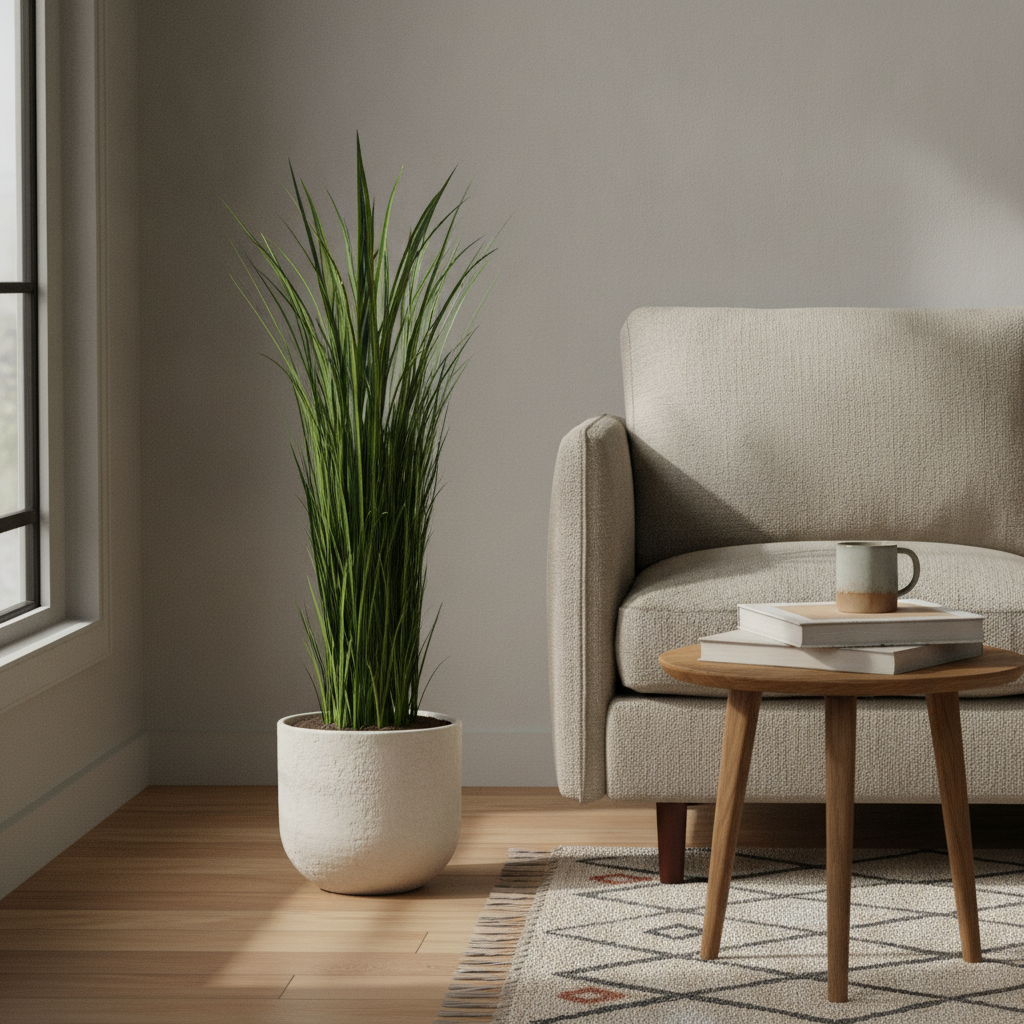
Most people meet the snake plant family through the tall, sword-shaped blades of Dracaena trifasciata, the plant once universally known as mother-in-law’s tongue. The Fernwood is a different creature entirely. It is a hybrid, thought to descend from Dracaena parva and related species, and its leaves are slender and near-cylindrical rather than flat, tapering to fine points and arching outward from a central crown. The overall effect reads more like ornamental grass or a small fountain than the rigid, columnar look of a classic snake plant. This makes it unusually versatile: it holds its shape on a bookshelf, drapes elegantly from a plant stand, and gives height to a grouping without dominating it.
What has not changed is the toughness. Like the rest of the snake plants, the Fernwood is a succulent that stores water in its thick leaves and rhizomes, which means it forgives forgetfulness in a way few houseplants do. It uses a water-saving form of photosynthesis called CAM, opening its pores at night rather than during the heat of the day, so it loses very little moisture and can coast through weeks of neglect. It copes with low light, dry air and irregular watering, and it asks for almost nothing in the way of feeding. The single most useful thing to understand about this plant is that the line between surviving and thriving is drawn almost entirely by how often you water it. Get that one habit right, restrained rather than generous, and the rest of its care is close to effortless.
It earns its keep in other ways too. The Fernwood was among the plants featured in NASA’s clean-air research on the wider snake plant group, and while a single pot will not transform the air in a room, the plant does quietly release oxygen through the night, which is part of why snake plants are such popular choices for bedrooms. Add a mature size that tops out around knee to hip height and a growth habit that spreads slowly rather than sprawling, and you have a plant that stays where you put it and looks composed for years.
Light
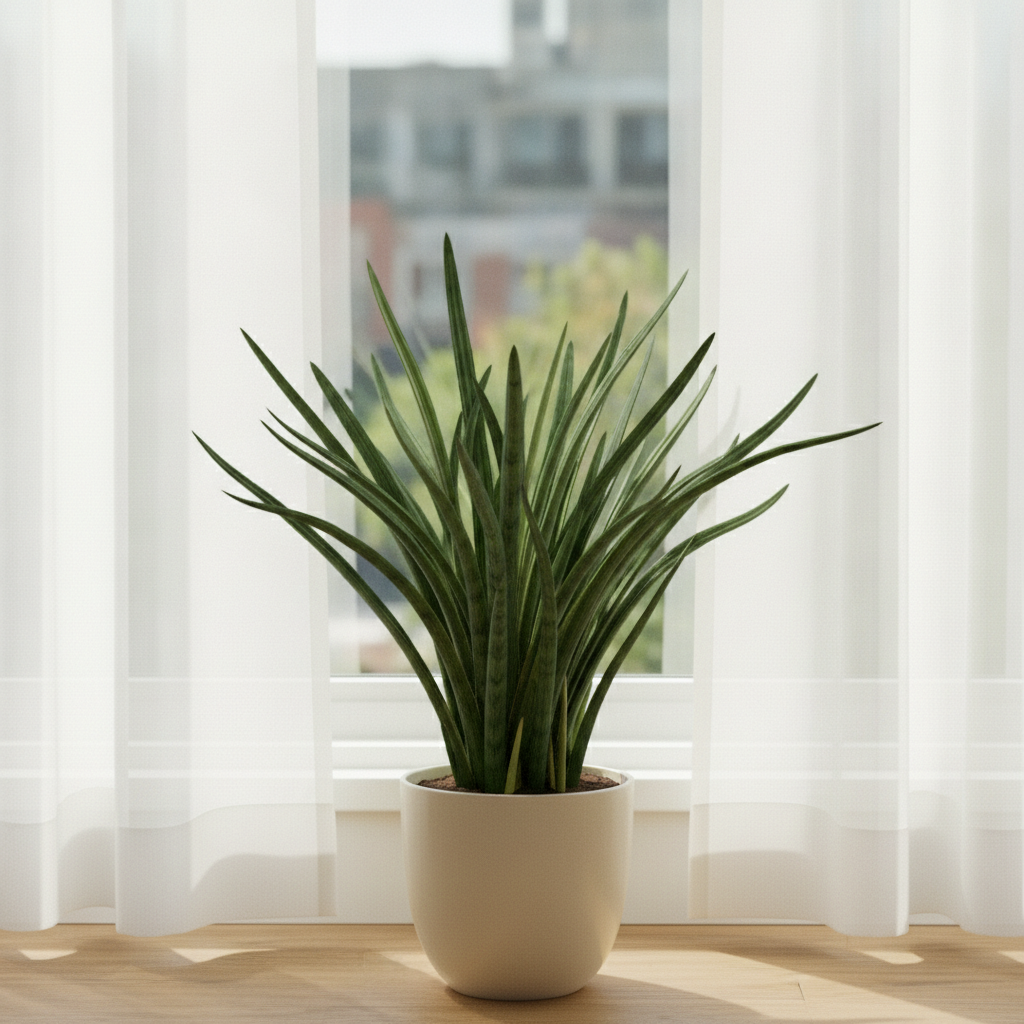
Reputation would have you believe the snake plant is a low-light plant, and the Fernwood will indeed survive in a dim corner far from any window. Survival and vigour are not the same thing, though. In genuinely low light the plant slows almost to a standstill, puts out little new growth, and its leaves may lean toward whatever weak light source it can find. To see it look its best, with tight, upright-then-arching leaves and rich colour, give it bright indirect light for most of the day. An east-facing windowsill, or a spot a metre or so back from a brighter south or west window, suits it perfectly.
The Fernwood tolerates some direct sun better than many houseplants, and a couple of hours of gentle morning sun will do it good. What it dislikes is prolonged, intense midday sun through glass, which can scorch the slim leaves and leave pale, bleached patches that never recover. If you are moving a plant from a shaded spot into a much brighter one, do it gradually over a week or two so it can adjust, rather than shocking it with a sudden change. A plant that has been growing in low light and is suddenly placed in full sun will burn.
Pro Tip – Even growth: The Fernwood grows toward its light source, so give the pot a quarter turn every couple of weeks. This keeps the crown symmetrical and stops the plant leaning permanently to one side.
Watering
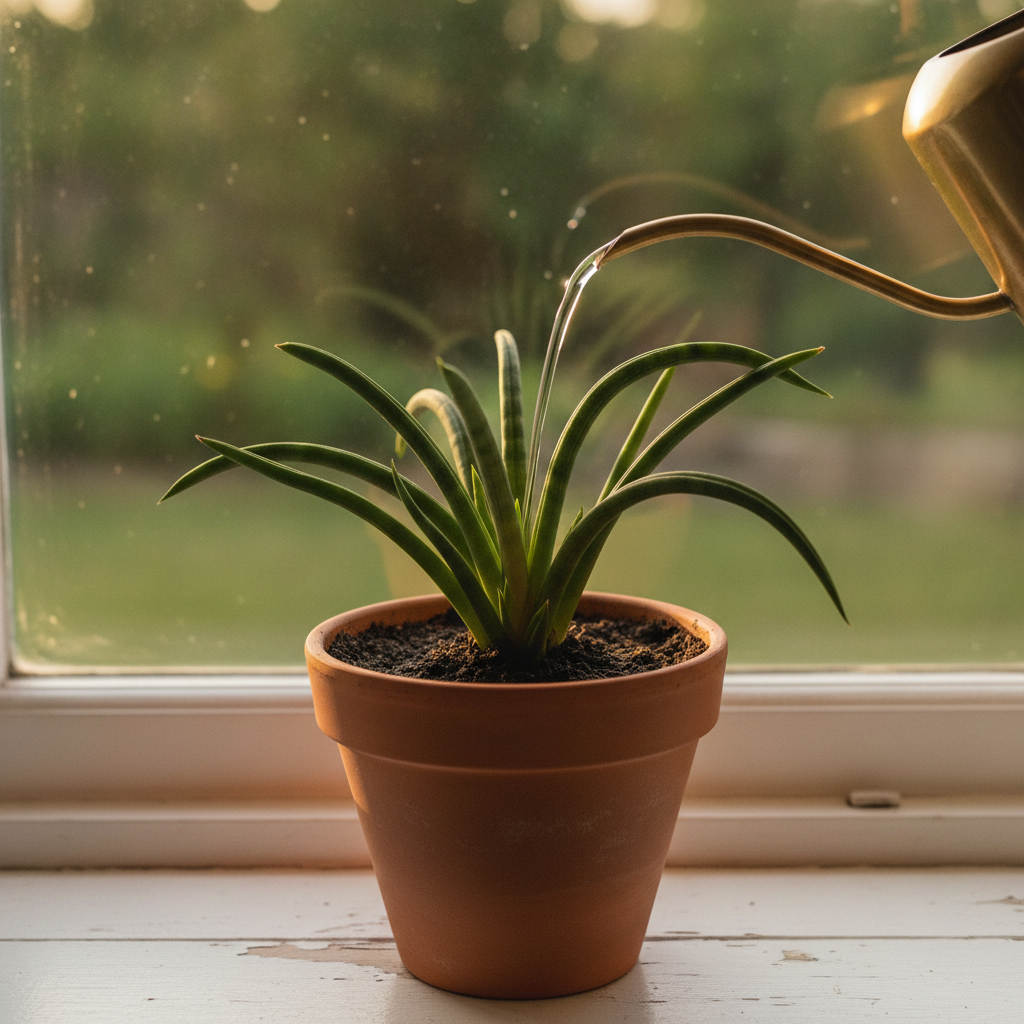
Watering is where nearly every Fernwood problem begins and ends. This is a succulent, and it is built to endure drought, not standing moisture. The reliable rule is to let the soil dry out completely before you water again, and then to water thoroughly so that moisture runs from the drainage holes at the base of the pot. In a bright, warm spot during spring and summer this usually means watering roughly every two to three weeks, but the calendar is less trustworthy than your finger. Push a finger deep into the soil, or lift the pot to feel its weight; if there is any dampness or any real heft, wait. Only when the mix is dry all the way through should you water.
In autumn and winter the plant’s growth slows dramatically and its water needs fall away with it. Stretch waterings out to once a month or even less, especially in a cool room. Overwatering in winter, when the soil stays wet for long periods, is the most common way these plants are lost. The leaves store enough water to carry the plant through a long dry spell, so when you are in doubt, waiting is almost always the safer choice than watering. Always tip away any water that collects in the saucer or cover pot rather than letting the roots sit in it.
The warning signs of trouble are worth learning to read, because they point in opposite directions. Leaves that turn soft, yellow, mushy or that flop over at the base almost always mean too much water and the beginnings of root rot. Leaves that wrinkle, curl inward or develop dry brown tips are the plant telling you it is thirsty, or that the air is very dry. With a plant this drought-hardy, erring on the dry side is the correct instinct.
Warning – Rot risk: A Fernwood in a pot without drainage holes is at serious risk. If your decorative pot has no drainage, keep the plant in a plastic nursery pot inside it and remove that inner pot to water, letting it drain fully before returning it.
Soil and Potting
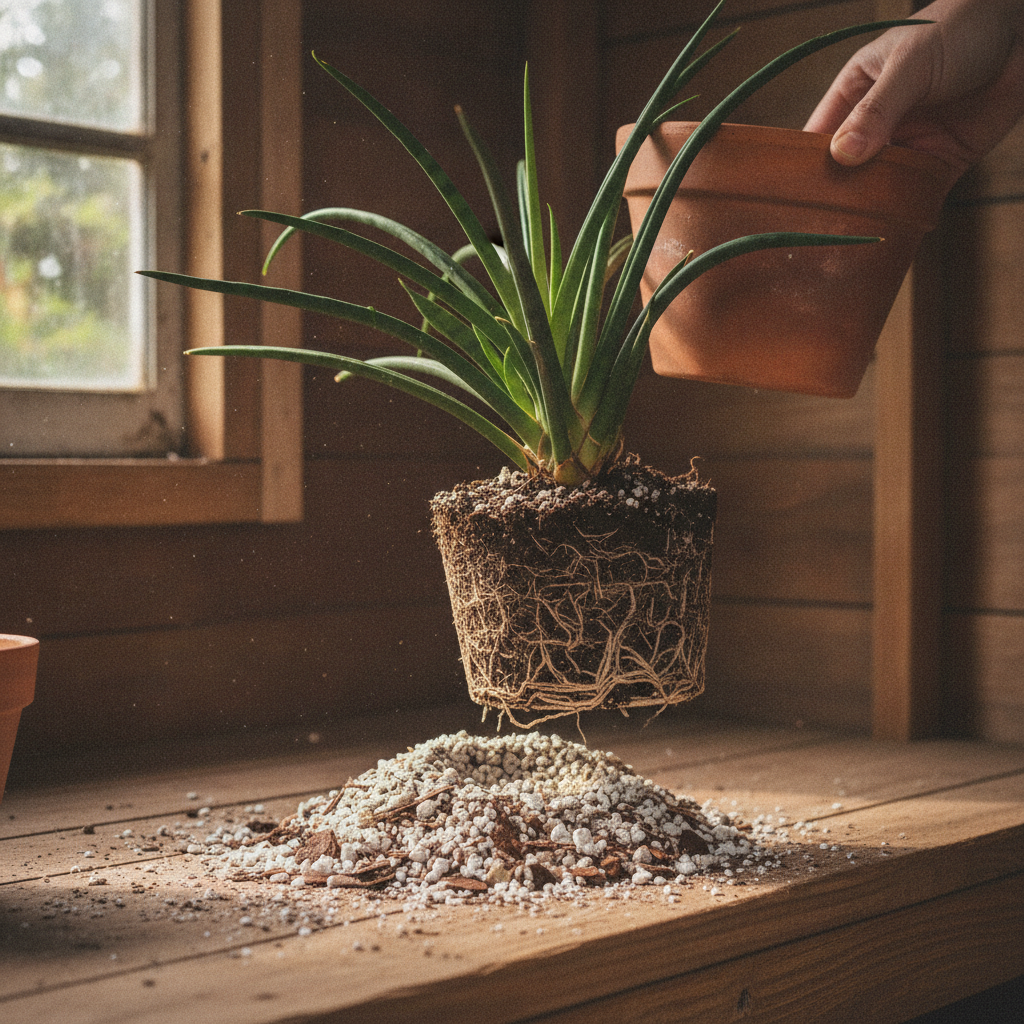
Everything about the Fernwood’s soil comes back to drainage. A dense, moisture-retentive potting compost holds water around the rhizomes far too long and invites rot, so the goal is an open, gritty mix that drains quickly and lets air reach the roots. The simplest option is a bagged cactus and succulent compost, which is formulated for exactly this. If you prefer to mix your own, a good starting point is roughly two parts standard houseplant compost to one part coarse sand, grit or perlite, adjusting toward more grit if your home runs cool or you tend to water heavily.
The pot matters as much as the mix. A drainage hole is not optional, and a terracotta pot has the added advantage of being porous, wicking excess moisture out of the soil and drying it faster than glazed ceramic or plastic. Choose a container only slightly larger than the root ball. Snake plants are quite happy being a little crowded, and a pot that is too large holds a reservoir of wet soil the roots cannot use, which again raises the risk of rot.
The Fernwood is a slow grower and does not need frequent repotting. Every two to three years is usually enough, or whenever you see roots pushing out of the drainage holes or the plant straining against the sides of its pot. Spring is the best time to do it, at the start of the growing season. When you repot, take the chance to check the roots and rhizomes, cut away anything soft or blackened with a clean blade, and move the plant up just one pot size. These plants actually flower more readily when slightly root-bound, so there is no rush to give it more room.
Fertilising
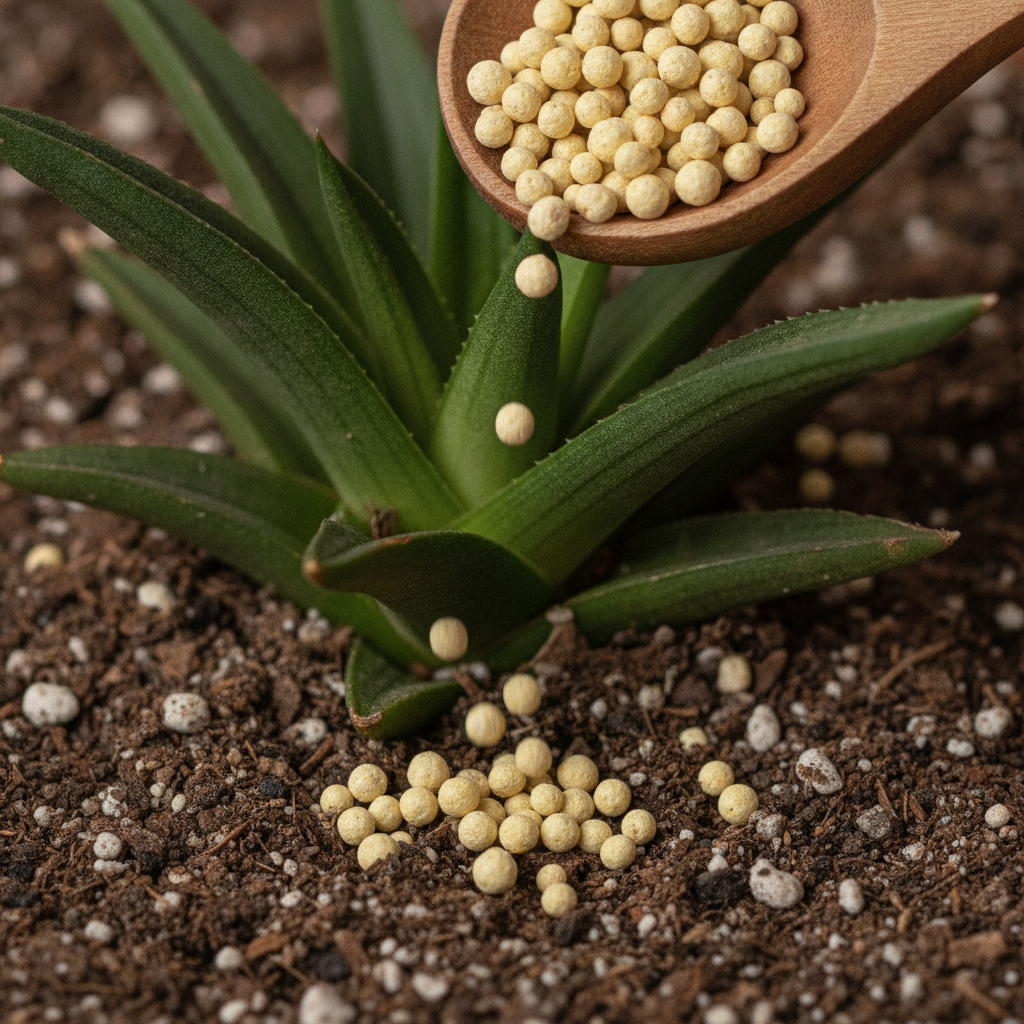
The Fernwood is a light feeder, and this is one of the few plants where the honest advice is that you can more or less forget about fertiliser and it will still do fine. In the wild its relatives grow in poor, thin soils, so heavy feeding is unnatural and unhelpful. During the growing season, from spring through summer, you can give it a dilute liquid feed once or twice, using a balanced houseplant fertiliser or a cactus and succulent feed at half the strength recommended on the label. That modest amount is plenty to support its slow, steady growth.
Do not feed at all in autumn and winter, when the plant is resting and cannot use the nutrients. Feeding a dormant plant simply leaves unused mineral salts to accumulate in the soil, which can scorch the roots and brown the leaf tips. Over-fertilising is a far more common mistake with snake plants than under-fertilising, so if you are ever unsure whether to feed, the right answer is almost always to skip it. Always apply feed to soil that is already slightly moist rather than bone dry, to avoid concentrating it against the roots.
Propagation
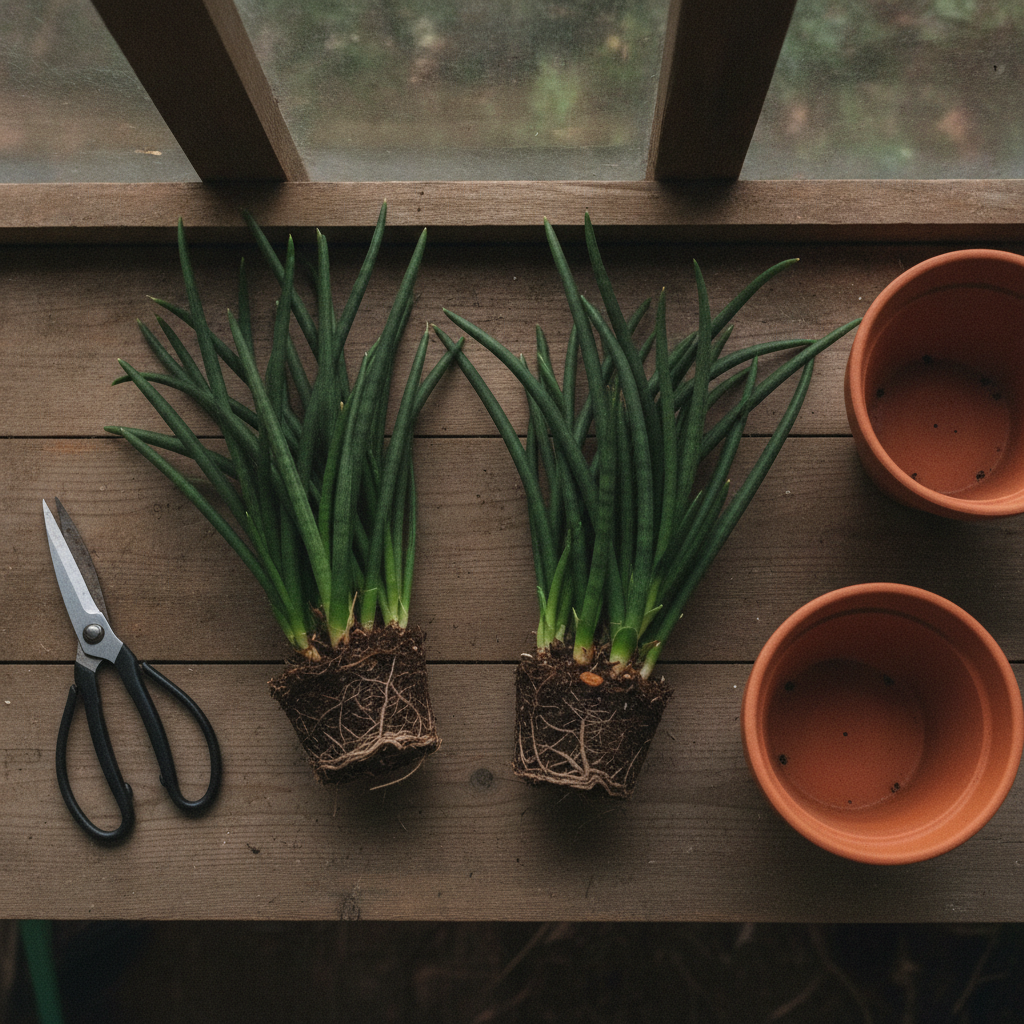
Because the Fernwood is a hybrid, propagation deserves a word of explanation. It can be increased, but division is by far the most dependable method and the one worth relying on. As the plant matures it produces offsets, small pups that emerge from the rhizome around the base of the parent, and separating these gives you complete, ready-formed new plants that keep the parent’s exact character. Leaf cuttings are possible in theory but they are slow, unreliable, and with a hybrid like this the results can be disappointing, so division is the sensible choice.
To divide, do it in spring when the plant is entering active growth. Slide the whole plant out of its pot and brush away enough soil to see where the rhizomes and root clusters naturally separate into distinct crowns. Follow the steps below.
- Ease the plant from its pot and gently loosen the soil around the roots so you can see the individual crowns and the rhizomes connecting them.
- Choose a section that has at least one healthy leaf cluster and a good portion of roots attached, then separate it, teasing the roots apart by hand or cutting cleanly through the rhizome with a sterilised knife.
- Let the cut surfaces air-dry for a few hours to a day, allowing them to callus over, which reduces the chance of rot when replanted.
- Pot each division into its own small container of dry, gritty cactus mix, firming it in just enough to hold the plant upright.
- Wait about a week before watering lightly for the first time, then resume normal restrained watering; the divisions will establish over the following weeks.
Pro Tip – Let the wound heal: The single biggest cause of failed snake plant divisions is watering a fresh cut too soon. Give the callus time to form first and your success rate climbs dramatically.
Pests and Problems

The Fernwood is remarkably resistant to pests, and the great majority of problems you will ever have with it are self-inflicted through watering rather than caused by insects. The overwhelming threat is root rot, brought on by soil that stays wet for too long. It shows itself first at the base of the plant, where leaves turn soft, yellow and mushy and pull away easily. If you catch it, act quickly: unpot the plant, cut away every soft or blackened root and rhizome with a sterilised blade, let the healthy tissue dry, and repot into fresh dry mix. A badly rotted plant may not be saveable, which is why prevention through careful watering matters so much.
When insect pests do appear they are usually mealybugs or spider mites, and both tend to arrive on a new plant or spread from a neighbour. Mealybugs look like small tufts of white cotton wool tucked into the crevices where leaves meet, and can be dealt with by dabbing each one with a cotton bud dipped in diluted isopropyl alcohol. Spider mites are tiny and easier to spot by the fine webbing they leave between leaves, and they thrive in hot, dry conditions; wiping the leaves down and raising humidity a little discourages them. For a wider infestation of either, an insecticidal soap or a neem oil spray, applied every week or two until the pests are gone, brings things back under control. Whenever you bring home a new plant, keep it apart from your others for a couple of weeks so any hitchhikers do not spread.
A few cosmetic complaints round out the list. Brown, crispy leaf tips usually point to underwatering or a build-up of fertiliser salts, and a good flush of the soil with plain water helps. Pale or bleached patches are sun scorch from too much direct light. Leaves that lean or grow leggy and stretched are reaching for light and want a brighter position. None of these is serious, and all are easily corrected once you read them correctly.
Varieties
Fernwood itself is a named hybrid rather than a species, and it is most often sold under one of two closely related forms. Both share the same slim, cylindrical, arching leaves and the same easy care; the differences are a matter of posture and density.
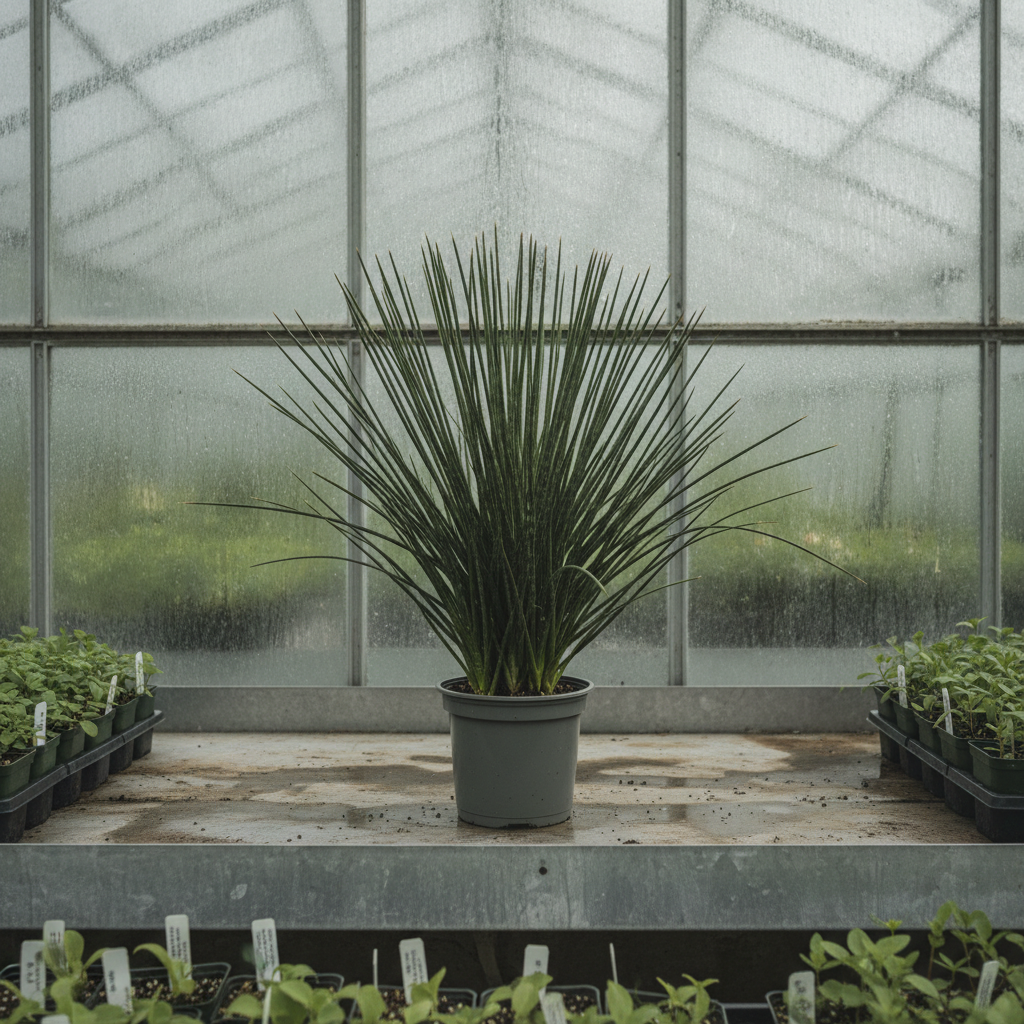
Fernwood Mikado. The most widely sold form, and for many people simply what “Fernwood” means. Its very thin, stiff, tapering leaves radiate out from the base like a spray of dark green quills, giving a light, airy, almost grass-like fountain. It is the go-to choice for a modern, architectural look on a shelf or side table.
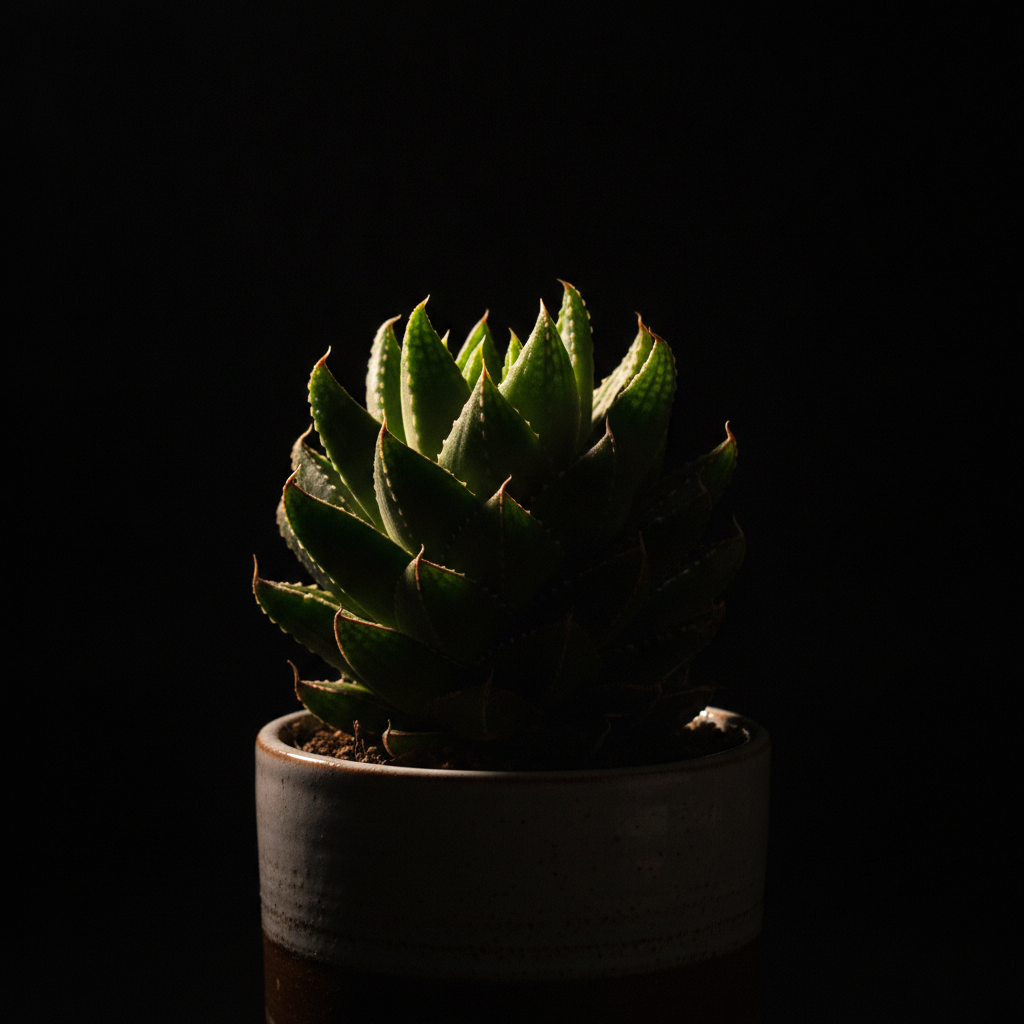
Fernwood Punk. A shorter, denser selection with chunkier, more channelled leaves that form a compact, spiky rosette. It stays lower and fuller than the Mikado, reads as a little more sculptural and less feathery, and suits a smaller pot or a tabletop where a tidy, self-contained shape is wanted.
Frequently Asked Questions
How often should I water a Fernwood snake plant?
Only when the soil has dried out completely, which is usually about every two to three weeks in spring and summer and once a month or less in winter. Rather than following a fixed schedule, check the soil with your finger or lift the pot to judge its weight, and water only when the mix is dry all the way through. When in doubt, wait, because this plant tolerates drought far better than soggy roots.
Is the Fernwood snake plant toxic to cats and dogs?
Yes, mildly. Like other snake plants it contains saponins, which can cause drooling, vomiting and diarrhoea if a cat or dog chews the leaves. It is not usually dangerous in small amounts, but it is best kept out of reach of pets and children who might be tempted to nibble it.
Why are my Fernwood’s leaves wrinkling or curling?
Wrinkled, curling or inward-folding leaves are the plant’s thirst signal, telling you the stored water in the leaves is running low. Give it a thorough watering and it should plump back up within a day or two. If the soil was already moist, however, the cause is more likely root rot preventing the plant from taking up water, in which case you should check the roots.
Can a Fernwood snake plant live in low light?
It will survive in low light, which is part of its appeal for difficult corners, but it will grow very slowly and may look thin and lean toward the light. For fuller, sturdier growth and the best leaf colour, give it bright indirect light. Think of low light as tolerated rather than preferred.
How big does a Fernwood snake plant get?
Indoors it typically reaches about 60 to 90 cm (24 to 36 in) tall, with the arching leaves spreading outward as the clump matures. It is a slow grower, so it holds a manageable size for a long time and spreads by producing offsets around the base rather than shooting up quickly.
Does the Fernwood really clean the air?
Snake plants featured in NASA’s clean-air research and can absorb small amounts of certain airborne compounds, and they release oxygen at night as part of their water-saving photosynthesis. In a real room the effect of a single plant is modest, so treat it as a pleasant bonus rather than a genuine air purifier. It is still a fine, low-maintenance choice for a bedroom.






