
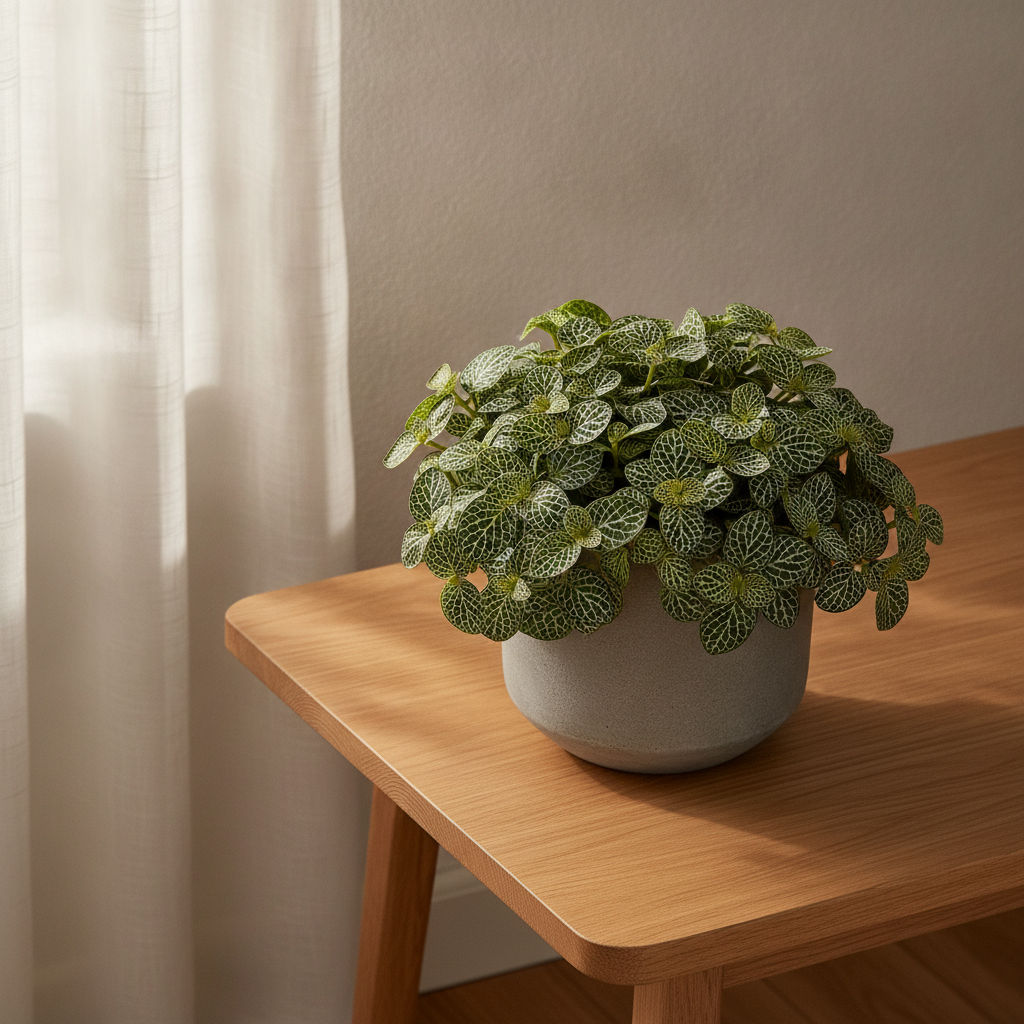
Few houseplants communicate their needs as theatrically as the silver nerve plant. When its shallow roots run dry, the whole plant collapses in a dramatic, wilted heap, only to spring back to full turgidity within an hour or two of watering. This flair for the dramatic has earned Fittonia argyroneura the affectionate reputation of the houseplant world’s fainting diva, but behind the theatrics is a compact, endlessly rewarding foliage plant. Its small, oval leaves are a deep olive to emerald green, netted with a dense web of bright silvery-white veins that seem to glow in soft light. Native to the humid, shaded understorey of the Peruvian rainforest, it belongs to the Acanthaceae family and rarely climbs above 10 to 15 centimetres (4 to 6 inches) tall, preferring instead to creep and spread into a low, mounding carpet.
The silver nerve plant carries a reputation for being fussy, and it is true that it will not tolerate neglect the way a snake plant or ZZ plant might. Yet almost every complaint about this plant traces back to two fixable issues: air that is too dry and soil that swings between bone dry and waterlogged. Get humidity and consistent moisture right, and the difference between a plant that merely survives and one that truly thrives becomes obvious. A thriving specimen produces near-constant new growth, holds its leaves flat and firm, and keeps its silver veining crisp and high-contrast. This guide covers everything from light and watering to soil, feeding, propagation, pests, and the most striking varieties, so you can keep yours firmly in the thriving column.
Contents
- Quick Reference
- Why the Silver Nerve Plant Makes a Rewarding Houseplant
- Light Requirements
- Watering & Humidity
- Soil, Potting & Repotting
- Fertilising
- Propagation
- Pests & Diseases
- Popular Varieties
- Frequently Asked Questions
Quick Reference: Silver Nerve Plant at a Glance
| Light | Bright, indirect light; tolerates medium light. No direct sun. |
| Watering | Keep soil lightly and evenly moist; never let it dry out fully or sit soggy. |
| Temperature | 18 to 26 degrees Celsius (65 to 79 degrees Fahrenheit). Avoid below 15 degrees Celsius (59 degrees Fahrenheit). |
| Humidity | High, 60 per cent or more. Thrives in terrariums. |
| Fertiliser | Balanced liquid feed at half strength, every 4 weeks in spring and summer. |
| Toxicity | Non-toxic to cats, dogs, and humans. |
Why the Silver Nerve Plant Makes a Rewarding Houseplant
The silver nerve plant earns its place on windowsills and shelves through sheer visual density. Where many foliage plants rely on size or dramatic leaf shape, this one packs its appeal into a small footprint: every leaf is a miniature mosaic of green tissue and pale veining, and a well-grown plant becomes a low cushion of silver-lit foliage that reads beautifully at close range. Because it stays small, it suits the spaces larger plants cannot fill, such as bathroom shelves, desk corners, terrariums, bottle gardens, and the front row of a grouped plant display where its detail can be appreciated.
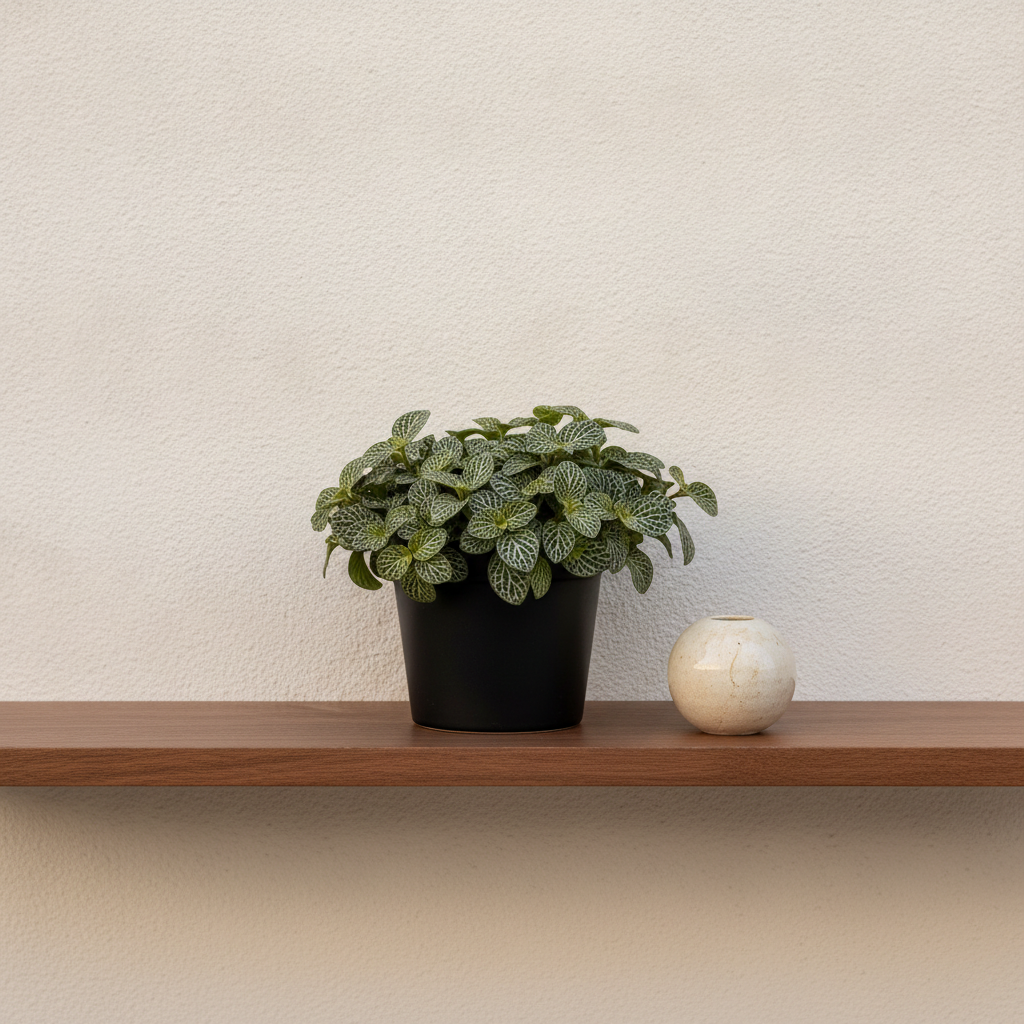
There is also a practical charm to its honesty. The silver nerve plant tells you exactly when it is unhappy, wilting the moment its soil dries too far and perking up again once watered. For a beginner learning to read a plant’s cues, this instant feedback loop is genuinely useful, even if it looks alarming the first time it happens. Add to this the fact that the plant is entirely non-toxic, and it becomes a sensible choice for homes with curious cats, dogs, or small children. It flowers only rarely indoors, producing insignificant spikes of tiny white to cream blooms that most growers simply pinch off to keep the plant’s energy directed into foliage.
Important — Toxicity: The silver nerve plant is listed as non-toxic to cats and dogs by the ASPCA, and it poses no poisoning risk to humans. It is one of the safer choices for a pet-friendly or child-friendly home, though as with any plant, discouraging nibbling avoids digestive upset and protects the foliage.
Light Requirements
In its native Peruvian rainforest, the silver nerve plant grows across the forest floor beneath a dense canopy, receiving only the soft, filtered light that reaches the understorey. This origin shapes everything about its light preferences indoors. It wants brightness without harshness: plenty of ambient light to fuel steady growth and keep the silver veining vivid, but never the direct beams that would scorch its thin, delicate leaves.
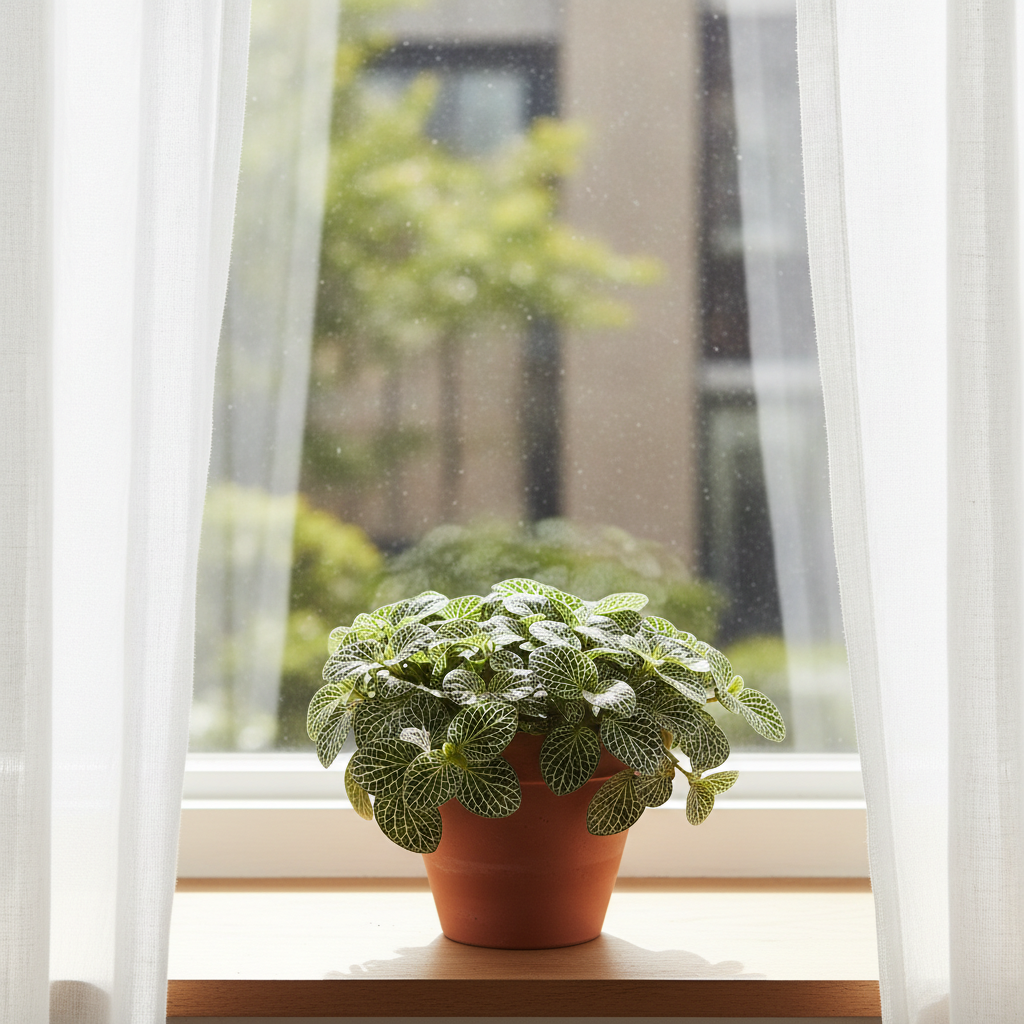
The ideal position is a spot with bright, indirect light for most of the day, such as a metre or two back from a bright window, or directly beside a window screened with a sheer curtain. In this light the plant grows compact and full, and the contrast between green tissue and pale veins stays at its sharpest. It will also cope with medium light, making it one of the better small foliage plants for rooms that do not get strong sun, though growth slows and the plant stretches slightly in dimmer conditions.
Light Levels Explained
Understanding how the silver nerve plant responds across the full range of indoor light helps you choose the right spot and diagnose problems quickly. The table below sets out the practical outcome at each level.
| Light Category | Approx. Level | Typical Location | Outcome |
|---|---|---|---|
| Direct sun | 20,000 lux and above | On an unscreened south or west sill | Leaves scorch, bleach, and crisp at the edges. Avoid. |
| Bright indirect | 10,000 to 20,000 lux | Near a bright window with a sheer curtain | Ideal. Compact growth, vivid veining, steady new leaves. |
| Medium | 5,000 to 10,000 lux | A metre or two into a bright room | Good. Slightly slower growth, still healthy foliage. |
| Low | 1,000 to 5,000 lux | A north room or interior corner | Tolerated short term. Leggy, stretched, muted colour. |
| Very low | Below 1,000 lux | Far from any window | Decline over weeks. Leaf drop and weak stems. |
Window Orientation and Placement
South-facing window: The brightest option in the northern hemisphere, and usable only if the plant is set back from the glass or the light is diffused with a sheer curtain or blind. Placed directly on a south sill in summer, the leaves will scorch within days.
East-facing window: Often the sweet spot. Gentle morning sun followed by bright indirect light for the rest of the day suits the plant perfectly, and the early rays are rarely strong enough to burn.
West-facing window: Workable, but the intense late-afternoon sun can be harsh in summer. Set the plant back a little or filter the light, and it will do well.
North-facing window: Provides soft, even light with no risk of scorching. The silver nerve plant tolerates this position, though growth is slower and you may see slight stretching. A good choice in summer, and worth supplementing with a grow light in the darker months.
Pro Tip — Rotate for Even Growth: Because this plant grows toward its light source, give the pot a quarter turn each time you water. Over a few weeks this keeps the mound symmetrical and stops the plant leaning permanently toward the window.
How Light Affects Leaf Colour and Veining
The silvery veining that gives this plant its name is at its most dramatic in bright, indirect light. In these conditions the green tissue develops fully and the pale veins stand out in high contrast. In light that is too low, the plant stretches toward the window, the gaps between leaves lengthen, and the overall colour flattens and dulls. Conversely, too much direct sun bleaches the green and can leave the leaves looking washed out and papery. The vividness of the veining is, in effect, a live readout of whether the light level is correct.
Warning — Direct Sunlight: The thin leaves of the silver nerve plant have very little defence against direct sun. Even a couple of hours of unfiltered midday light through glass can leave permanent bleached or crisped patches that will not recover. When moving a plant to a brighter spot, always increase the light gradually.
Artificial Lighting
The silver nerve plant responds very well to artificial light, which is part of why it thrives in enclosed terrariums lit by LED. A standard full-spectrum LED grow light positioned 30 to 45 centimetres (12 to 18 inches) above the plant, running for 10 to 12 hours a day, will comfortably meet its needs and keep growth compact through winter. Because the plant is small, even a modest desk grow lamp is usually enough. This makes it an excellent candidate for offices and rooms with little natural daylight, provided the humidity issue is also addressed.
Seasonal Adjustments
As daylight weakens through autumn and winter, move the plant closer to its window to compensate, or introduce supplementary lighting. A position that was ideal in June may leave the plant straining for light by December. In spring, reverse the process gradually, easing the plant back from the glass as the sun strengthens so that the increasing intensity does not catch the leaves off guard. Watch the new growth: compact, well-coloured leaves mean the light is right, while long gaps between pale, small leaves signal it is time to move nearer the light.
Watering & Humidity
Watering is where the silver nerve plant makes or breaks its reputation. It has fine, shallow roots and thin leaves that hold almost no water reserve, so it neither tolerates drought nor forgives waterlogging. The goal is consistency: soil that stays lightly and evenly moist at all times, never dust dry and never sodden. Master this single balance and most of the plant’s supposed difficulty disappears.
When to Water
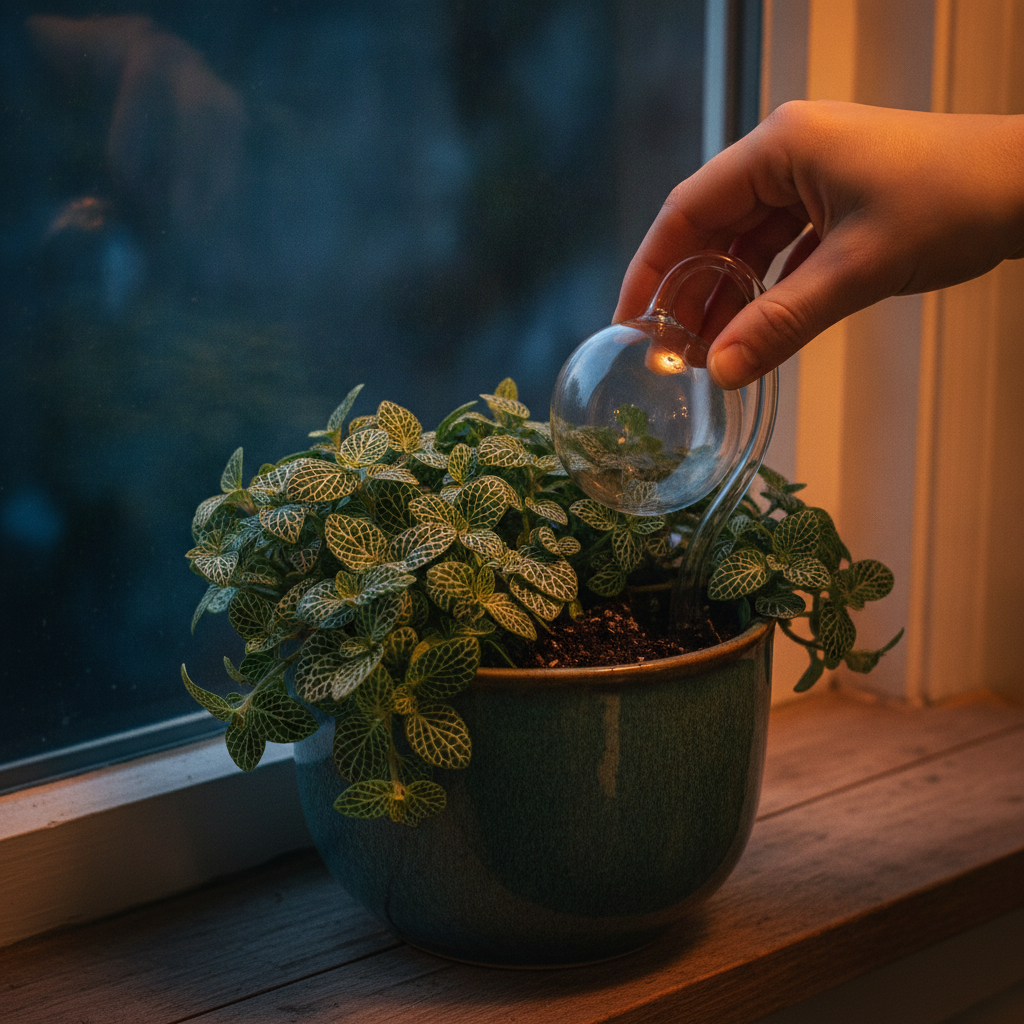
Check the plant every couple of days by touching the soil surface. When the very top of the soil, roughly the first centimetre, begins to feel dry, it is time to water. Unlike succulents and many other houseplants, you should not wait for the soil to dry out deeply. If you leave it too long, the plant will faint dramatically, and while it usually recovers, each collapse stresses the plant and repeated episodes gradually weaken it.
Watering frequency varies with the season and conditions. In the warmth and brighter light of spring and summer, an actively growing plant may need water every two to four days. In winter, with slower growth and cooler temperatures, this may stretch to once a week or less. Always let the plant and the soil guide you rather than watering to a fixed calendar, since a pot near a radiator dries far faster than one in a cool room.
Pro Tip — Do Not Rely on the Faint: It is tempting to treat the plant’s dramatic wilting as a convenient watering reminder, but it is a stress signal, not a schedule. Aim to water before it collapses. If yours faints regularly, it is drying out too far between drinks and needs either more frequent watering or a more moisture-retentive mix.
How to Water Correctly
- Use room-temperature water. Cold water can shock the roots of this warmth-loving plant.
- Water the soil directly, pouring evenly across the surface until it is thoroughly moistened and water begins to drain from the base.
- Let the excess drain away completely. The soil should be moist, not swampy, and the pot must never stand in a full saucer.
- Tip away any water that collects in the saucer or outer pot within a few minutes.
- If the plant has fainted, water it thoroughly and give it an hour or two. In most cases it will fully re-inflate, and you can trim any leaves that fail to recover.
Signs of Overwatering vs. Underwatering
| Symptom | Overwatering | Underwatering |
|---|---|---|
| Leaf colour | Yellowing, often on lower leaves | Browning, crisping edges |
| Leaf texture | Soft, limp, sometimes translucent | Thin, papery, curling |
| Overall posture | Persistent droop even in moist soil | Sudden dramatic collapse, recovers after watering |
| Soil | Stays wet for days, may smell sour | Pulls away from the pot sides, dust dry |
| Roots | Brown, mushy, foul-smelling | Dry, brittle, pale |
Warning — Root Rot: The most common way to kill a silver nerve plant is to keep it standing in water in a misguided attempt to keep it moist. Constant sogginess suffocates the fine roots and invites rot. If leaves go limp and yellow while the soil is wet and smells sour, unpot the plant, cut away any brown mushy roots, and repot into fresh, barely damp mix.
Humidity Requirements
If watering is the first pillar of silver nerve plant care, humidity is the second, and the two are closely linked. As a rainforest floor dweller, this plant is adapted to air that is consistently humid, ideally 60 per cent relative humidity or higher. The dry air of centrally heated or air-conditioned homes, which often sits at 30 to 40 per cent, is the root cause of the crispy leaf edges and constant browning that frustrate many owners.
The clearest symptoms of insufficient humidity are brown, crisp leaf tips and edges, leaves that shrivel despite adequate watering, and a general failure to hold new growth. Because the plant loses moisture through its thin leaves faster than dry air allows the roots to replace it, low humidity effectively causes drought stress even when the soil is moist.
Raising humidity is the single most transformative thing you can do for a struggling silver nerve plant. Grouping it with other plants creates a more humid microclimate, and standing the pot on a tray of damp pebbles helps locally. More reliable still is a small room humidifier, which is worth the investment if you grow several humidity-loving plants. The most foolproof approach of all is to grow the plant in a terrarium, bottle garden, or covered glass container, where the enclosed air stays permanently humid and the fainting problem all but vanishes. Misting offers only a brief, minor lift and can encourage fungal spots on the leaves, so treat it as a supplement rather than a solution.
Water Quality
The silver nerve plant is moderately sensitive to the minerals, chlorine, and fluoride found in some tap water, which can accumulate in the soil and contribute to leaf-tip browning. If your tap water is very hard or heavily treated, using filtered water, collected rainwater, or tap water left to stand overnight can reduce the problem. This is not essential for every grower, but if you are doing everything else right and still battling brown tips, water quality is worth ruling out.
Soil, Potting & Repotting
The right soil for a silver nerve plant threads a careful needle: it must hold moisture well enough to keep the roots evenly damp, yet drain freely enough that water never pools around them. A mix that is too dense stays wet and rots the roots, while one that is too sharp and gritty dries out faster than the plant can cope with. Getting this balance right removes much of the day-to-day anxiety of watering.
Ideal Soil Composition
A good base is a quality peat-free houseplant compost, which retains moisture, opened up with lighter materials to keep it airy. The aim is a mix that feels like a wrung-out sponge, damp and springy rather than heavy and claggy. The components below combine to achieve exactly that.
| Component | Proportion | Function |
|---|---|---|
| Peat-free houseplant compost or coco coir | 50 per cent | Holds moisture and provides the main body of the mix |
| Perlite | 25 per cent | Creates air pockets and improves drainage |
| Fine orchid bark or coco chips | 15 per cent | Adds structure and stops the mix compacting |
| Worm castings or leaf mould | 10 per cent | Supplies gentle, slow-release nutrients and beneficial microbes |
The silver nerve plant prefers a slightly acidic to neutral soil, in the range of pH 5.5 to 6.5, which most standard houseplant composts already provide. There is no need to test or adjust pH under normal circumstances; simply avoid alkaline additives such as garden lime.
Pro Tip — Quick Mix Recipe: For a fast, reliable blend, combine two handfuls of peat-free houseplant compost with one handful of perlite and a small handful of fine orchid bark. This holds moisture beautifully while still letting excess water escape, which is exactly what this plant wants.
Choosing the Right Pot
Because the silver nerve plant has a shallow, spreading root system rather than a deep one, wide and shallow pots suit it far better than tall, narrow ones. A pot that is too deep holds a large volume of soil that stays wet at the bottom, precisely the conditions that cause rot.
Drainage holes are non-negotiable. Whatever pot you choose, it must have drainage holes. Without them, water collects invisibly at the base and the fine roots sit in a reservoir that quickly turns anaerobic. If you love a decorative pot with no hole, use it as an outer cover pot and keep the plant in a plain plastic nursery pot inside, lifting it out to water.
Pot material: Plastic and glazed ceramic both hold moisture well and are ideal for a plant that likes even dampness. Unglazed terracotta wicks moisture out of the soil rapidly, which works against you here, so if you use terracotta, expect to water more often.
Pot size: Keep the plant in a snug pot and step up only one size at a time. A container just a couple of centimetres wider than the root ball is plenty. Oversized pots hold too much unused wet soil and slow the plant down.
When to Repot
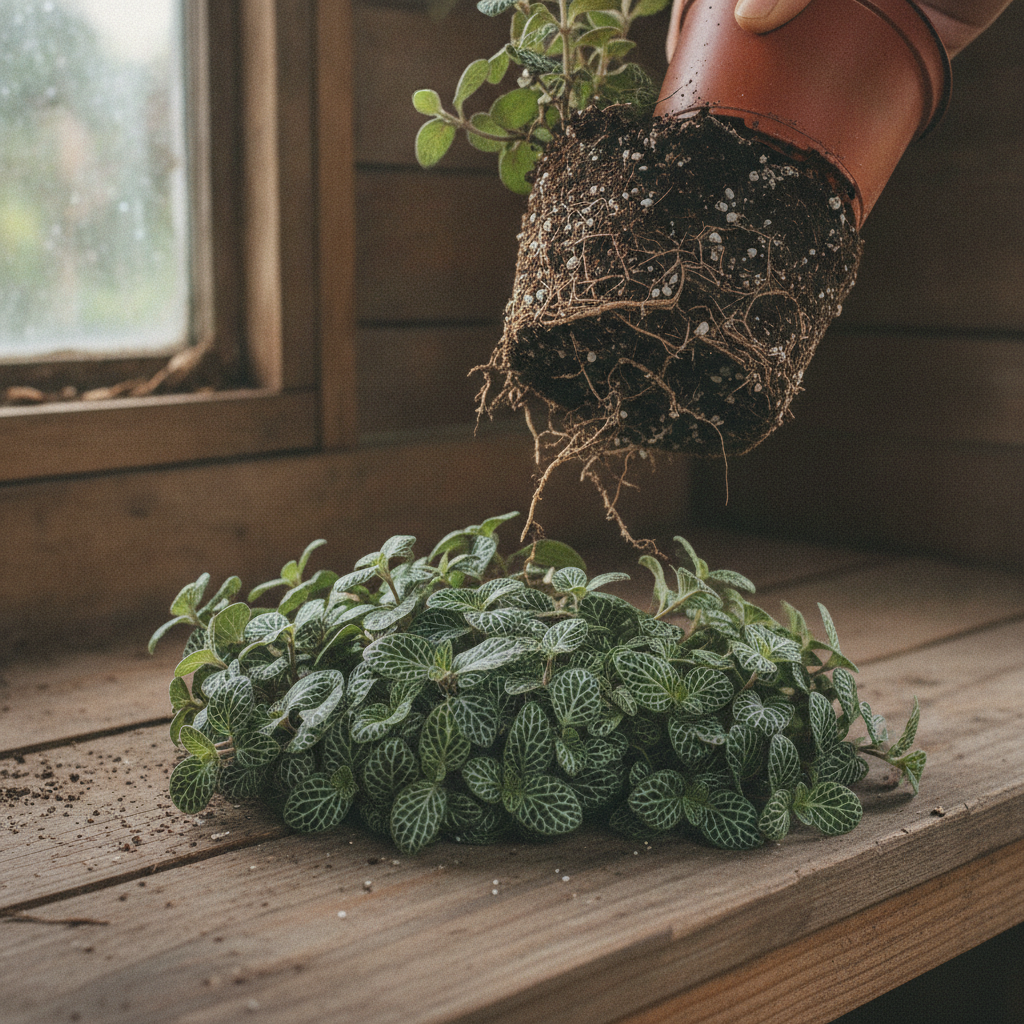
Silver nerve plants are not aggressive growers and generally need repotting only every one to two years, usually in spring as growth resumes. Signs that it is time include roots emerging from the drainage holes, soil that dries out much faster than it used to, or a plant that has clearly outgrown its container and become crowded. Repotting is also the ideal moment to refresh tired, compacted soil even if the plant has not fully filled its pot, since fresh mix restores both aeration and gentle fertility.
How to Repot: Step-by-Step
- Water the plant a day before repotting so it is well hydrated and less prone to fainting during the move.
- Gently ease the plant out of its pot, supporting the low mound of foliage with one hand.
- Tease away some of the old soil from around the roots and inspect them, trimming any that are brown, soft, or rotten.
- Add a layer of fresh mix to the base of the new pot, then position the plant at the same depth it was growing before.
- Fill in around the root ball with fresh mix, firming gently so there are no large air gaps but without compacting it hard.
- Water thoroughly to settle the soil, then place the plant somewhere with bright, indirect light and high humidity while it re-establishes.
Warning — Transplant Shock: Expect a freshly repotted silver nerve plant to sulk or even faint for a few days as its fine roots recover. Resist the urge to fertilise immediately or move it into brighter light. Keep it warm, humid, and evenly moist, and it will settle within a week or two.
Fertilising
The silver nerve plant is a light feeder, but because it is in near-constant growth when conditions are good, a modest, regular supply of nutrients keeps its foliage dense and richly coloured. The key word is modest: this is a small plant with delicate roots, and it is far easier to harm it with too much fertiliser than too little.
During the active growing season of spring and summer, feeding supports the steady production of new leaves and helps the plant recover quickly from any pruning or propagation. In autumn and winter, when growth naturally slows, feeding should be reduced or paused entirely so that unused fertiliser salts do not build up in the soil.
Understanding Plant Nutrients
Most houseplant fertilisers are labelled with an N-P-K ratio, representing the proportions of nitrogen, phosphorus, and potassium, the three nutrients plants use in the largest quantities. For a foliage plant like the silver nerve plant, a balanced ratio or one slightly higher in nitrogen supports lush leaf growth. Secondary nutrients and trace elements round out a plant’s diet and prevent the specific deficiencies described below.
| Nutrient | Symbol | Primary Function | Deficiency Symptoms |
|---|---|---|---|
| Nitrogen | N | Drives leaf and stem growth and rich green colour | Pale, yellowing older leaves and stalled growth |
| Phosphorus | P | Supports roots and overall energy transfer | Weak roots, dull foliage, slow establishment |
| Potassium | K | Regulates water balance and general vigour | Browning leaf edges and weak stems |
| Calcium | Ca | Builds strong cell walls and new growth | Distorted, stunted new leaves |
| Magnesium | Mg | Central to chlorophyll and photosynthesis | Yellowing between the veins of older leaves |
| Iron | Fe | Enables chlorophyll production in new growth | Yellowing between the veins of the youngest leaves |
Types of Fertiliser
Liquid fertilisers: The easiest and most controllable option for this plant. Diluted into the watering can, a balanced liquid feed delivers nutrients evenly and lets you dial the strength down, which is exactly what a sensitive plant like this needs.
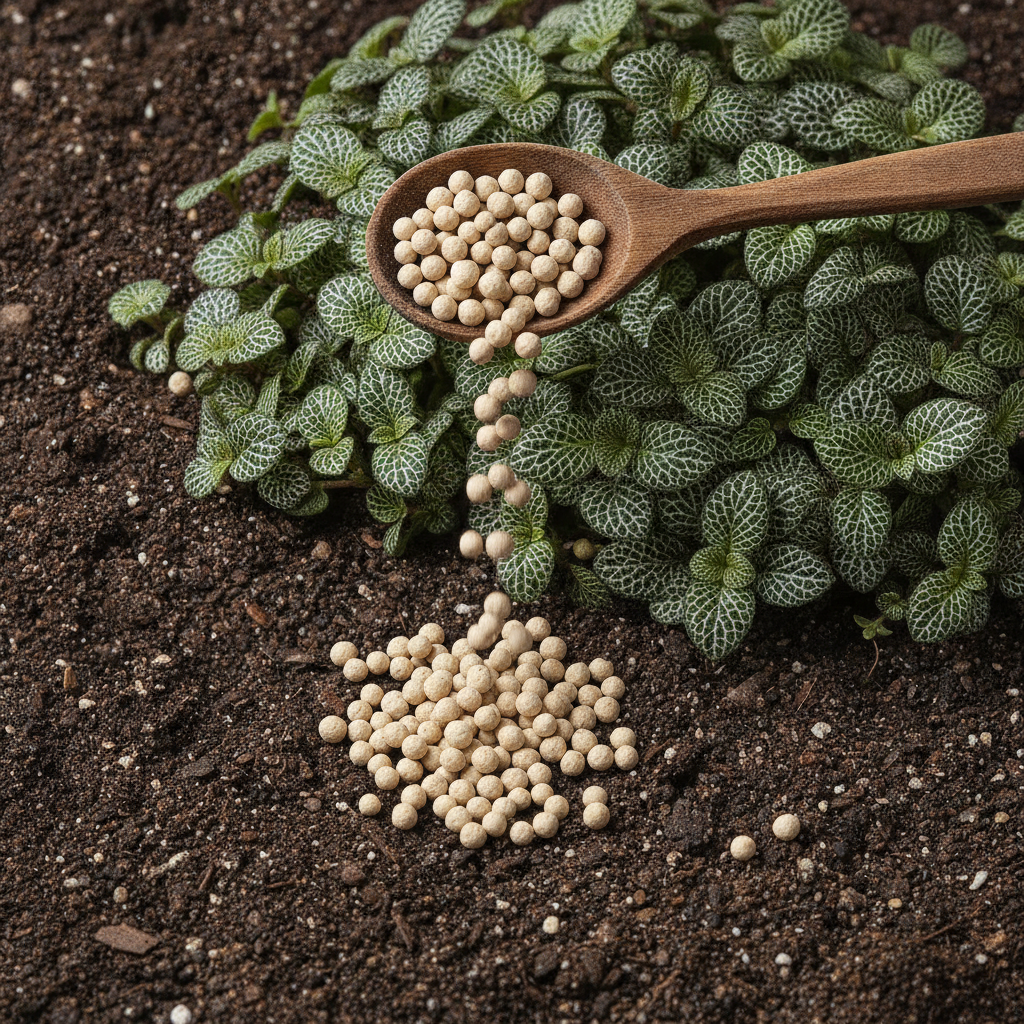
Slow-release granular: Prills mixed into the soil or scattered on the surface release nutrients gradually over months. Convenient, but harder to control precisely, so use them sparingly and at the low end of the recommended dose for a small plant.
Organic fertilisers: Worm castings worked into the mix or a diluted organic feed provide gentle, forgiving nutrition alongside beneficial soil life. Their mildness makes over-feeding far less likely, which suits the silver nerve plant well.
Feeding Schedule
Through spring and summer, feed with a balanced liquid fertiliser diluted to half the recommended strength, roughly once every four weeks. This light, regular rhythm matches the plant’s steady appetite without overwhelming its roots. As growth slows in autumn, cut back to once every six to eight weeks, and in the depths of winter stop feeding altogether until the days lengthen and new growth resumes.
Pro Tip — Half Strength, Always: When in doubt, feed weaker rather than stronger. The delicate roots of the silver nerve plant are quick to burn, and a plant that is slightly under-fed is trivially easy to correct, whereas fertiliser burn takes weeks to grow out.
How to Fertilise
- Water the plant lightly first, or feed onto already-moist soil, never onto dry roots.
- Dilute a balanced liquid fertiliser to half the strength stated on the label.
- Apply the diluted feed evenly across the soil until it is moistened through.
- Let any excess drain away, and empty the saucer so no fertiliser-laden water sits at the base.
Warning — Salt Build-Up: Over time, fertiliser salts can accumulate in the soil and show up as a white crust on the surface or pot rim, along with browning leaf edges. Every few months, flush the pot by running water through it several times to leach out the excess, letting it drain fully each time.
Propagation
The silver nerve plant is genuinely easy to propagate, and doing so serves two purposes at once. It multiplies your collection for free, and it is the perfect way to rejuvenate an older plant that has grown leggy or bare in the middle. Because the plant roots so readily from stem cuttings, a single healthy specimen can quickly become several full, bushy pots.
The best time to propagate is spring or early summer, when the plant is in active growth and cuttings root fastest. That said, with warmth and humidity you can take cuttings successfully at almost any time of year, which is one of the reasons this plant is such a satisfying one to share.
Understanding Nodes
Successful propagation depends on the node, the point on a stem where leaves emerge and where new roots will form. A cutting must include at least one or two nodes to root. On a silver nerve plant, the nodes are the small joints along each creeping stem, and taking a cutting just below a node ensures you have the root-forming tissue you need. Cuttings that lack a node will not produce roots no matter how long they sit in water.
Stem Cuttings in Water: Step-by-Step
Water propagation is the most beginner-friendly method because it lets you watch the roots develop, which makes it easy to know when a cutting is ready to pot.
- Choose a healthy stem and cut a tip section 5 to 8 centimetres (2 to 3 inches) long, making the cut just below a node with clean scissors.
- Remove the lowest pair of leaves so that the bottom node or two will sit below the waterline bare.
- Place the cutting in a small glass of room-temperature water, keeping the remaining leaves above the surface.
- Set the glass in bright, indirect light and refresh the water every few days to keep it clean and oxygenated.
- Within two to three weeks small white roots should appear. Once they reach a couple of centimetres long, pot the cutting up into moist mix.
Pro Tip — Pot a Full Cluster: Silver nerve plants look best when full and dense, so root several cuttings at once and plant them together in a single pot. A cluster of three to five cuttings makes an instantly lush plant rather than a sparse single stem.
Stem Cuttings in Soil: Step-by-Step
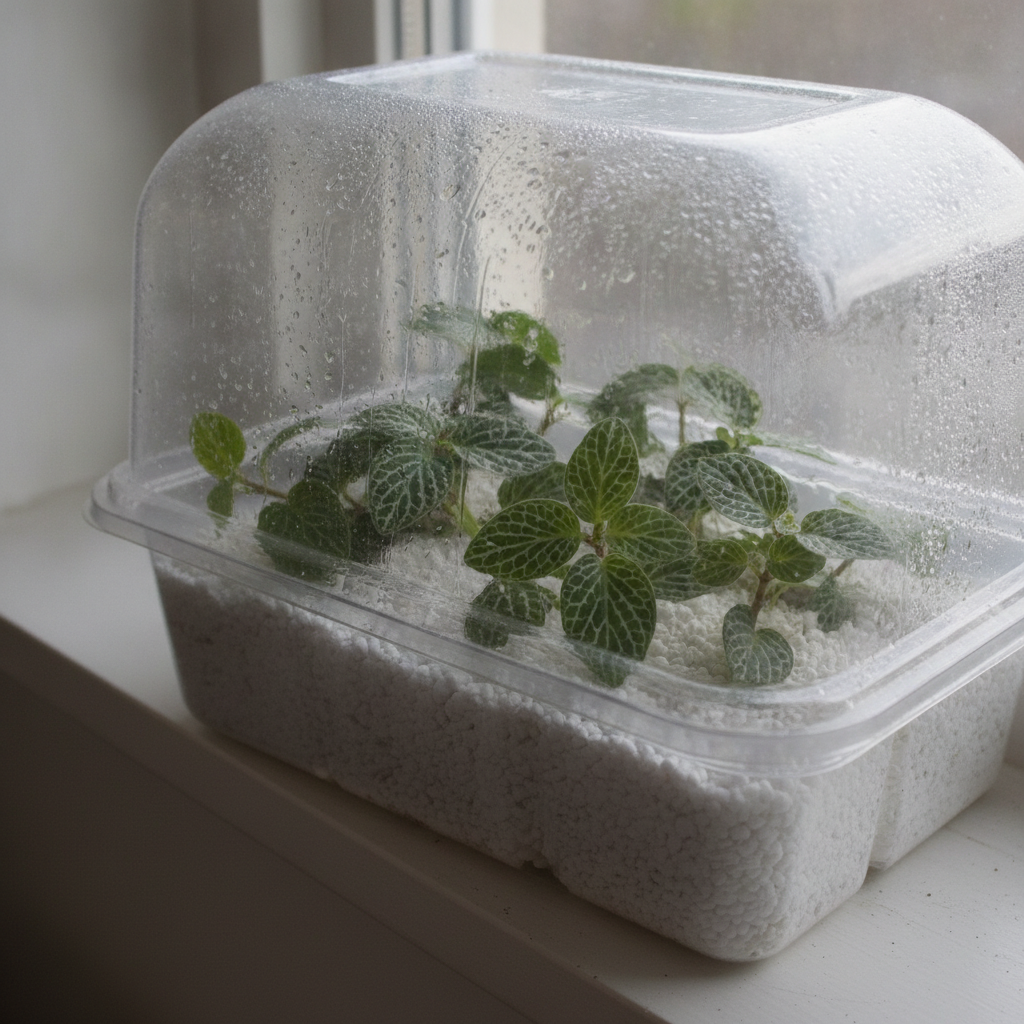
Rooting directly in soil skips the transplant step and often produces sturdier roots, though you cannot see progress along the way. A humidity dome greatly improves the success rate.
- Take cuttings as above, each with one or two nodes, and remove the lowest leaves.
- Dip the cut end in rooting hormone if you have it, though it is not essential for this easy-rooting plant.
- Insert the cuttings into a tray or pot of moist, free-draining mix or damp perlite so that at least one node is buried.
- Cover with a clear humidity dome, a propagator lid, or a loose plastic bag to trap moisture around the cuttings.
- Keep the medium lightly moist and warm in bright, indirect light. Roots typically form within three to four weeks, at which point new growth signals success and the dome can gradually be removed.
Troubleshooting Propagation
| Problem | Likely Cause | Solution |
|---|---|---|
| Cutting rots in water | Water not refreshed, or no node submerged | Change water every few days and ensure a bare node sits below the surface |
| No roots after a month | Cutting lacks a node, or conditions too cold | Re-cut below a node and move somewhere warmer and brighter |
| Cutting wilts and shrivels | Humidity too low for the rootless cutting | Enclose in a humidity dome or bag to reduce moisture loss |
| Roots form but plant fails after potting | Water roots shocked by dry soil | Pot into moist mix and keep humid and evenly damp for the first weeks |
Pests & Diseases
A healthy, well-cared-for silver nerve plant is reasonably resistant to pests, but the very conditions it loves, warmth and high humidity, can also favour certain insects, and its constant need for moisture makes it vulnerable to fungal problems if the balance tips too wet. Most trouble is avoidable, and catching it early makes it easy to treat.
The single best defence is regular observation. Because this is a small plant you tend to view up close, you are well placed to spot the first signs of an infestation before it takes hold. Check the undersides of leaves and the leaf axils whenever you water, and quarantine any new plant for a couple of weeks before letting it join the rest of your collection.
Common Pests
Fungus Gnats (Bradysia species)
Small black flies that hover around the soil are the most common nuisance on this plant, drawn by the constantly moist compost it requires. The adults are harmless, but their larvae feed on roots and organic matter in the soil. They thrive precisely because the silver nerve plant likes its soil damp.
Treatment: Let the very top layer of soil dry slightly between waterings to disrupt the larvae, and use yellow sticky traps to catch the adults. A layer of fine grit or a biological control such as beneficial nematodes will break the breeding cycle for a persistent infestation.
Mealybugs (Pseudococcidae)
These appear as small, white, cottony tufts tucked into leaf axils and along stems. They pierce the plant to feed on its sap, weakening it and leaving behind sticky honeydew that can turn mouldy. Their fluffy coating makes them easy to recognise but also protects them from casual sprays.
Treatment: Dab each insect directly with a cotton bud dipped in diluted rubbing alcohol, then treat the whole plant with insecticidal soap or neem oil. Repeat every week until no new bugs appear, checking the hidden crevices carefully.
Spider Mites (Tetranychus urticae)
Spider mites are a symptom of air that is too dry, the same conditions that cause crispy leaves. They are tiny and hard to see, but the fine webbing they spin between leaves and stems, together with a stippled, speckled fading of the foliage, gives them away. On a humidity-loving plant like this, their presence is usually a sign the surrounding air has become far too arid.
Treatment: Rinse the plant under a gentle shower to dislodge the mites, then treat with neem oil or insecticidal soap. Crucially, raise the humidity, since the higher moisture that this plant wants also makes conditions inhospitable to spider mites.
Common Diseases
Root Rot (Pythium and Phytophthora)
By far the most serious threat to a silver nerve plant, root rot sets in when the soil stays waterlogged and the fine roots suffocate and decay. Symptoms include yellowing, limp leaves that do not recover on watering, a persistent droop, and a sour smell from wet soil. Because owners often respond to a fainting plant by watering more, this disease can take hold as an unintended consequence of trying to help.
Treatment: Remove the plant from its pot, wash the roots, and cut away every brown, mushy section back to firm, pale tissue. Repot into fresh, barely damp mix in a clean pot with good drainage, and take healthy stem cuttings as insurance in case the parent does not pull through.
Powdery Mildew (Erysiphe species)
This shows up as a dusty white coating on the leaf surfaces, most often when high humidity combines with poor air circulation and water lingering on the foliage. While the plant loves humid air, stagnant humid air with no movement is what invites fungal growth.
Treatment: Remove affected leaves, improve airflow around the plant, and avoid wetting the foliage when watering. A fungicidal spray or a diluted solution of potassium bicarbonate can clear a stubborn case.
Pest and Disease Summary
| Pest / Disease | Identification | Treatment |
|---|---|---|
| Fungus gnats | Small black flies around moist soil | Dry the top layer, sticky traps, nematodes |
| Mealybugs | White cottony tufts in leaf axils | Alcohol dab, then neem oil or insecticidal soap |
| Spider mites | Fine webbing and stippled, fading leaves | Rinse, neem oil, and raise humidity |
| Root rot | Limp yellow leaves, sour wet soil | Trim rotten roots, repot dry, take cuttings |
| Powdery mildew | Dusty white coating on leaves | Remove leaves, improve airflow, fungicide |
Prevention Strategies
The best pest and disease prevention for a silver nerve plant is simply good, balanced care. A plant kept in bright indirect light, evenly moist but well-drained soil, and humid but gently circulating air is far more resilient than a stressed one. Most infestations gain their foothold on plants already weakened by dryness, waterlogging, or poor light.
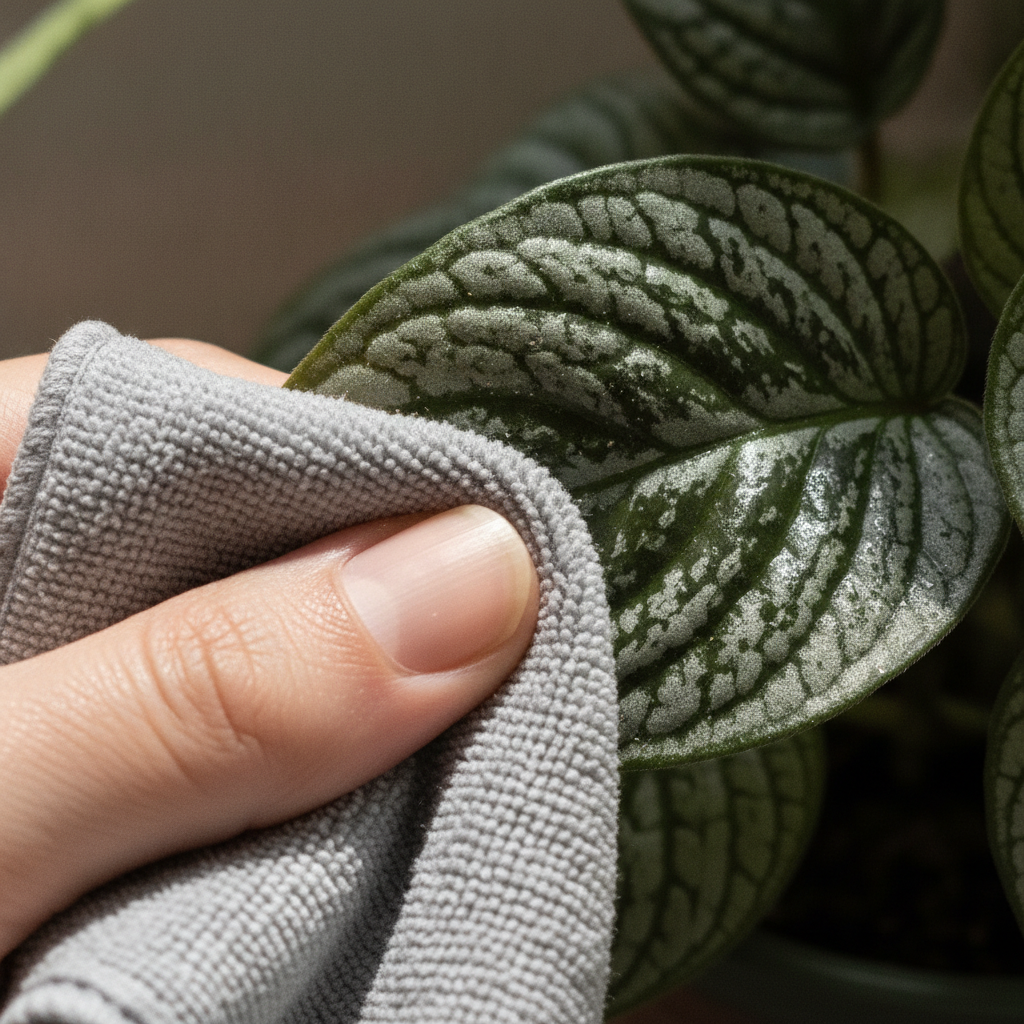
Practical habits make a real difference: inspect the plant closely each time you water, wipe the leaves occasionally to remove dust and dislodge early pests, ensure there is a little air movement around the foliage, and quarantine every new arrival before introducing it to your other plants. These small routines catch problems while they are still trivial to solve.
Pro Tip — Balance Humidity and Airflow: The silver nerve plant needs high humidity but also gentle air movement. Aim for both at once by using a humidifier in a room that is not completely sealed, or by opening a terrarium briefly each day. Humid, still air breeds fungus; humid, moving air keeps the plant thriving.
Popular Varieties
The silver nerve plant is the silver-veined form of Fittonia, but the wider group offers a remarkable range of vein colours and leaf sizes, from crisp white through hot pink to deep red. All share the same care requirements, so you can mix and match them freely in a single display or terrarium for a tapestry of contrasting veining.
Many of these are sold under the botanical name Fittonia albivenis, with the silver-veined types placed in the Argyroneura Group and the coloured-vein types in the Verschaffeltii Group. Names vary between growers, so it is often easiest to choose by appearance rather than label.
| Variety | Leaf Appearance | Light Needs | Growth Rate | Availability |
|---|---|---|---|---|
| Silver Nerve (Argyroneura) | Olive-green with bright silvery-white veins | Bright indirect | Moderate | Common |
| White Anne | Larger green leaves, bold broad white veining | Bright indirect | Moderate | Common |
| Red Anne | Deep green with vivid rose-red veins | Bright indirect | Moderate | Common |
| Pink Angel | Small leaves netted with soft pink veins | Bright indirect | Moderate | Common |
| Frankie | Pink flush across the leaf with darker margins | Bright indirect | Moderate | Occasional |
| Mini White (Nana) | Dwarf form, tiny silver-veined leaves | Bright indirect | Slow | Occasional |
| Black Star | Dark leaves with striking deep red to purple veins | Bright indirect | Moderate | Occasional |
Featured Varieties
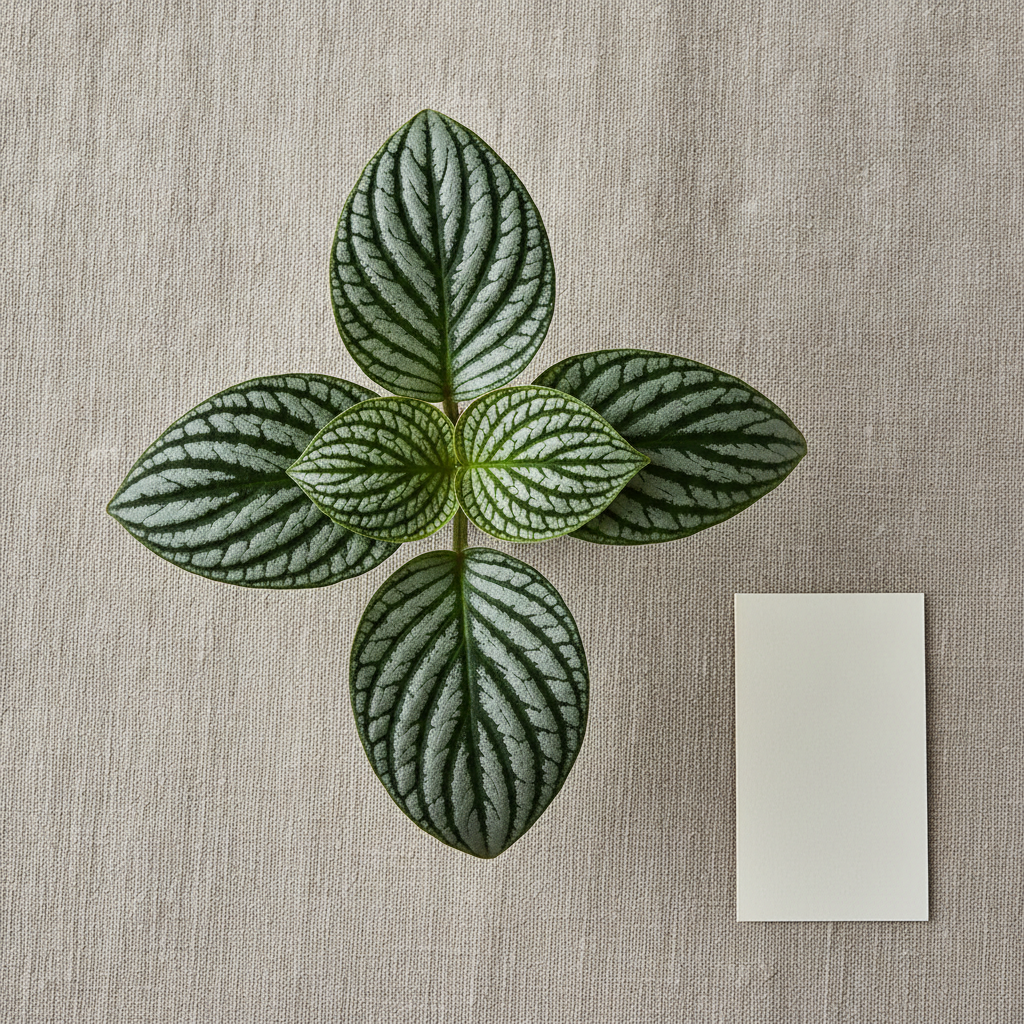
White Anne
A larger-leaved silver form with bold, broad white veining that stands out from across a room. Its slightly bigger leaves make it one of the easier Fittonia to grow and a natural companion to the classic silver nerve plant.
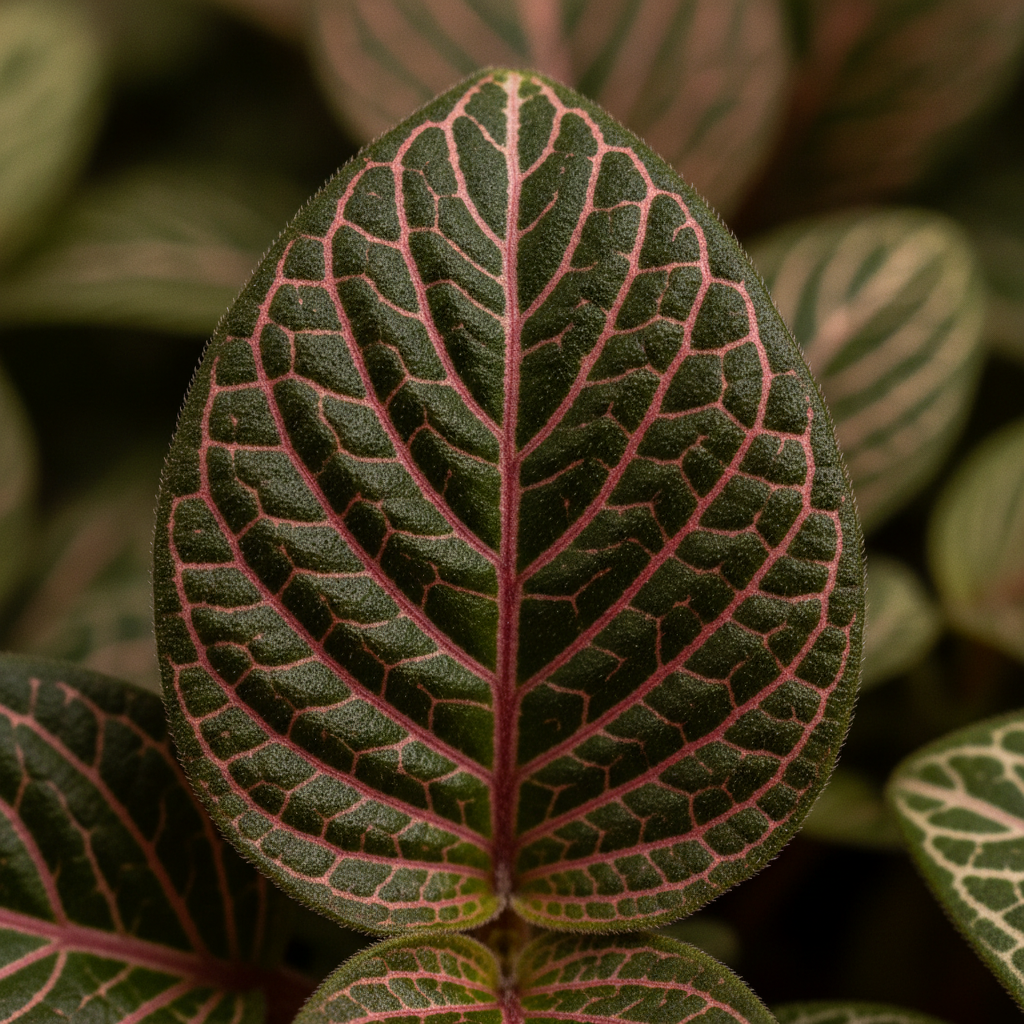
Red Anne
The fiery counterpart to the silver forms, with deep green leaves netted in vivid rose-red to pink. Grouped beside a silver-veined plant, the colour contrast is striking, and it shares exactly the same care needs.
Variety Profiles in Detail
Silver Nerve Plant (Fittonia argyroneura)
The original and most widely grown form, prized for the luminous silvery-white netting over deep olive-green leaves. Its name derives from the Greek for silver veins, and it remains the benchmark against which the coloured varieties are judged. Compact and even, it is the ideal choice for a classic, cool-toned display.
Pink Angel (Fittonia albivenis Verschaffeltii Group)
A softer, warmer alternative with small leaves laced in gentle pink veining. It brings a pastel note to mixed plantings and terrariums, and its finer foliage adds textural variety alongside the bolder silver and red forms.
Mini White / Nana (Fittonia albivenis ‘Nana’)
A dwarf, small-leaved form that is especially popular for terrariums and bottle gardens, where its diminutive scale suits miniature landscapes. It grows more slowly than the standard plant and stays neatly compact, rarely outgrowing its container.
Choosing the Right Variety for Your Space
Because every Fittonia shares the same care requirements, choosing between them comes down to look and scale rather than difficulty. For a cool, calm palette, the silver-veined forms such as the classic silver nerve plant and White Anne are unbeatable. For warmth and drama, the red and pink varieties add vivid contrast. If you are planting a small terrarium or bottle garden, seek out the dwarf Mini White, while for an open shelf or grouped display, the larger-leaved White Anne reads best from a distance. Whichever you choose, the reward is the same: dense, intricately veined foliage that repays attentive watering and humidity with near-constant growth.
Frequently Asked Questions
Why does my silver nerve plant keep collapsing?
Dramatic wilting is almost always a sign that the soil has dried out too far. This plant has shallow roots and thin leaves with no water reserve, so it faints the moment it runs short. Water it thoroughly and it will usually re-inflate within an hour or two. If it faints often, water more frequently or switch to a more moisture-retentive mix, and check that the air is not too dry.
Why are the leaf tips turning brown and crispy?
Brown, crisp edges are the classic symptom of humidity that is too low. In dry indoor air the leaves lose moisture faster than the roots can replace it, even when the soil is damp. Raise the humidity with a humidifier, a pebble tray, or by growing the plant in a terrarium, and the new growth should emerge clean. Mineral build-up from hard tap water can also contribute, so consider filtered or rainwater if the problem persists.
Is the silver nerve plant safe for cats and dogs?
Yes. Fittonia argyroneura is listed as non-toxic to both cats and dogs by the ASPCA and is harmless to humans too. It is one of the safer choices for a pet-friendly home, though it is still sensible to discourage pets from nibbling, both to avoid minor stomach upset and to protect the delicate foliage.
How often should I water my silver nerve plant?
There is no fixed schedule, because it depends on light, warmth, and season. Instead, keep the soil lightly and evenly moist, watering when the top centimetre begins to feel dry. In practice this often means every two to four days in spring and summer, and roughly weekly in winter. Never let the soil dry out completely, and never let the pot stand in water.
Can I grow a silver nerve plant in a terrarium?
Absolutely, and it is arguably the ideal way to grow one. The permanently humid, enclosed air of a terrarium or bottle garden solves the plant’s biggest challenge at a stroke, keeping the leaves plump and the fainting problem at bay. Its small size and love of high humidity make it a terrarium classic, especially the dwarf Mini White form.
Why is my silver nerve plant leggy and losing its colour?
Legginess, with long gaps between smaller, paler leaves, is a sign of insufficient light. Move the plant to a brighter spot with plenty of indirect light, though not direct sun, and the new growth will come in more compact and vividly veined. You can pinch back the stretched stems to encourage bushier regrowth, and use the trimmings as cuttings.
Should I let my silver nerve plant flower?
The flowers are small, insignificant spikes of tiny white to cream blooms that add little to the plant’s appearance. Most growers pinch them off as they appear so the plant channels its energy into producing the foliage it is grown for. There is no harm in leaving them, but removing them keeps the plant fuller and more vigorous.
How do I make my silver nerve plant bushier?
Regular pinching is the secret to a full, dense plant. Nipping off the growing tips encourages the stems to branch, and the plant responds quickly with new side shoots. Combine this with bright indirect light and even moisture, and consider potting several rooted cuttings together in one container for an instantly lush result.






