
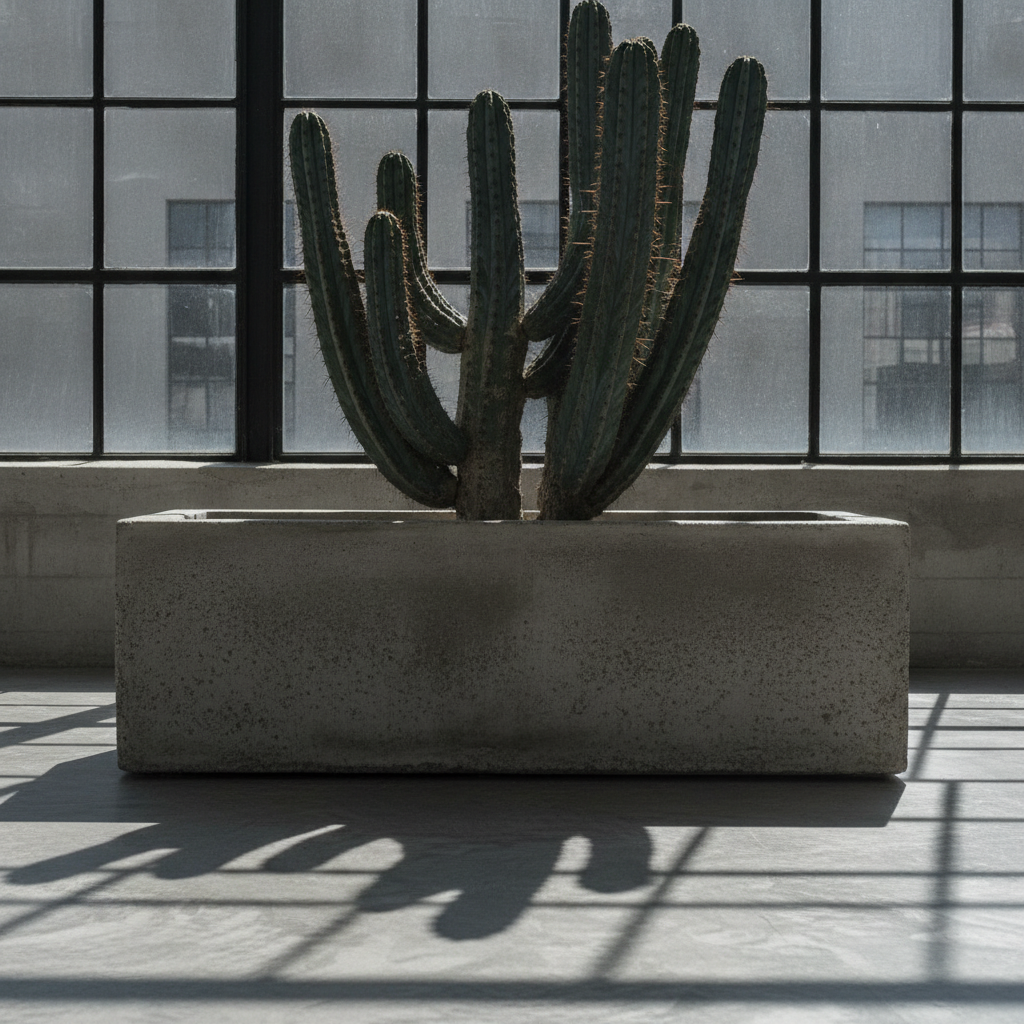
Few houseplants make a statement quite like the Peruvian apple cactus. Where most cacti stay squat and slow, Cereus repandus grows upward with architectural ambition, sending blue-green ribbed columns toward the ceiling at a pace that genuinely surprises people who expect cacti to sit still for a decade. It is the plant equivalent of a structural beam dressed in waxy, glaucous skin, and it asks for almost nothing in return for its drama: a bright spot, a gritty pot and a grower disciplined enough to leave the watering can alone.
The name is a small geographical fiction. Despite being called the Peruvian apple cactus, Cereus repandus is not native to Peru at all but to the dry coastal regions of northern South America, including Venezuela, Colombia and the Caribbean ABC islands of Aruba, Bonaire and Curacao. The “apple” refers to its edible fruit, a glossy red to violet pitaya that splits to reveal sweet white flesh. In its homeland the plant doubles as a living fence, which is why it also answers to the name hedge cactus. Brought indoors, that same toughness translates into one of the most forgiving large cacti you can grow.
In this guide
- Quick reference
- Why grow a Peruvian apple cactus
- Light
- Watering
- Soil and potting
- Fertilising
- Propagation
- Pests and problems
- Varieties
- Frequently asked questions
Quick reference
The table below distils everything a Peruvian apple cactus needs into a single glance. Treat it as the shape of the plant’s preferences rather than a set of rigid rules, because a cactus on a hot south windowsill behaves very differently from one in a cooler room, and your watering rhythm should follow the plant and the season rather than the calendar.
| Botanical name | Cereus repandus (syn. Cereus peruvianus) |
| Common names | Peruvian apple cactus, hedge cactus, giant club cactus, cadushi |
| Light | Bright direct sun, at least 4 to 6 hours daily; the brightest window you have |
| Water | Soak only when the soil is bone dry; roughly every 2 to 3 weeks in summer, monthly or less in winter |
| Soil | Very free-draining gritty cactus mix, ideally 50 percent mineral grit |
| Temperature | 18 to 30 degrees C (64 to 86 degrees F); tolerates brief dips to around -4 degrees C (25 degrees F) |
| Humidity | Low; ordinary dry room air is ideal |
| Feeding | Diluted low-nitrogen cactus feed once a month in spring and summer only |
| Growth rate | Fast for a cactus, up to 30 to 60 cm (12 to 24 in) per year in good conditions |
| Mature size indoors | 1.5 to 3 m (5 to 10 ft) tall in a pot; far larger in the ground |
| Toxicity | Not considered toxic to cats, dogs or humans, though the spines cause injury |
Why grow a Peruvian apple cactus
The case for Cereus repandus rests on a rare combination of presence and ease. As a houseplant it delivers the vertical sculptural quality of a tree without any of a tree’s thirst or mess, and it does so while tolerating the kind of erratic care that would kill a fussier specimen. For anyone who has watched a fern crisp on a radiator or a calathea sulk over tap water, the steadiness of a healthy column cactus is a genuine relief.

Visually, the plant earns its keep. The stems carry a soft glaucous bloom that shifts from sea-green to a chalky blue depending on the light, and the deep vertical ribs throw clean shadows that change through the day. Mature plants branch into candelabra shapes, and in time, given enough light and root room, they produce enormous nocturnal flowers up to 15 cm (6 in) across that open for a single night and fill the air with a faint perfume. Those blooms can mature into the edible fruit that gives the plant its name, though fruiting indoors is uncommon and depends on age, light and hand pollination.
The survive-versus-thrive distinction matters here. A Peruvian apple cactus will survive in a moderately lit room with sporadic water, holding its shape for years without complaint. To make it thrive, with fat new growth, deep colour and the possibility of flowering, you need to supply real sunlight, a sharply draining medium and a proper seasonal rest. Everything that follows is aimed at moving your plant from the first category into the second.
Light
Light is the single factor that decides whether a Peruvian apple cactus flourishes or merely persists. This is a full-sun desert plant, and indoors it wants the brightest position you can offer, which in most homes means directly in front of an unobstructed south-facing window. East and west windows can work if the plant receives several hours of genuine direct sun, but a north window alone will leave it starved.
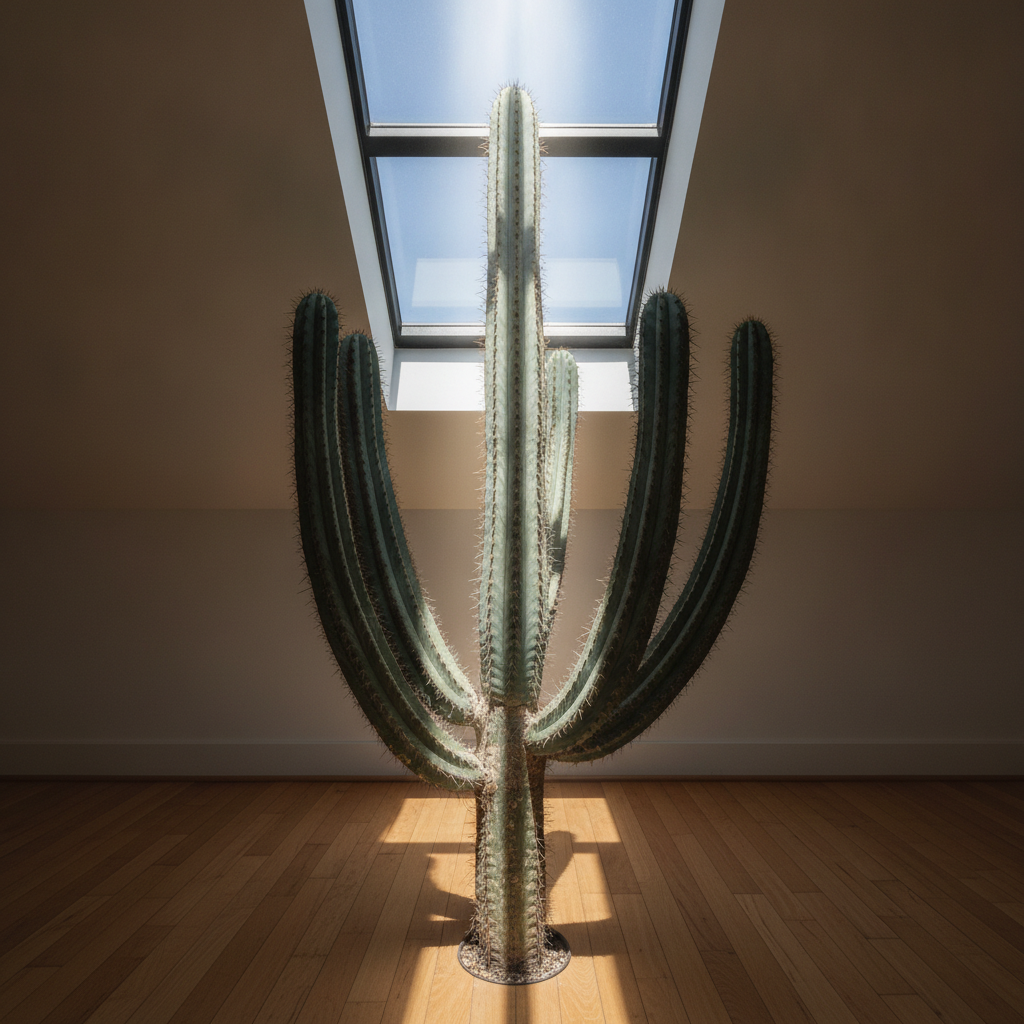
Insufficient light shows itself first in the new growth. A starved cactus etiolates, producing a narrow, pale, stretched section at the growing tip that is markedly thinner than the established column below. This weak growth never thickens back up, so the damage is permanent and the plant grows increasingly top-heavy and unstable. If you see etiolation beginning, move the plant to a brighter spot promptly rather than waiting for it to correct itself, because it will not.
That said, a cactus that has spent the winter in dim indoor light cannot be thrown straight into fierce summer sun without consequences. The waxy skin can scorch, leaving permanent pale or brown patches, particularly on the side that suddenly faces the glass. Acclimatise gradually over a week or two when increasing light, and rotate the pot a quarter turn every week or so to keep growth even and the column straight. If you grow under artificial light, a strong full-spectrum LED positioned close overhead for twelve to fourteen hours a day can substitute for a weak window, especially through the darkest months.
Pro Tip — Summer holiday outdoors: In warm weather a Peruvian apple cactus relishes a spell outside, where the light is far stronger than anything indoors. Move it out only after the last frost, place it first in light shade for several days to harden off, then graduate it into full sun. Bring it back indoors before night temperatures fall toward 5 degrees C (41 degrees F) in autumn.
Watering
If light is what makes the plant thrive, watering is what most often kills it. The Peruvian apple cactus stores water in its thick stems and is built to endure long droughts, so the failure mode for indoor growers is almost never thirst and almost always excess. The guiding principle is simple: water thoroughly, then wait until the soil is completely dry before watering again, and when in doubt, wait longer.
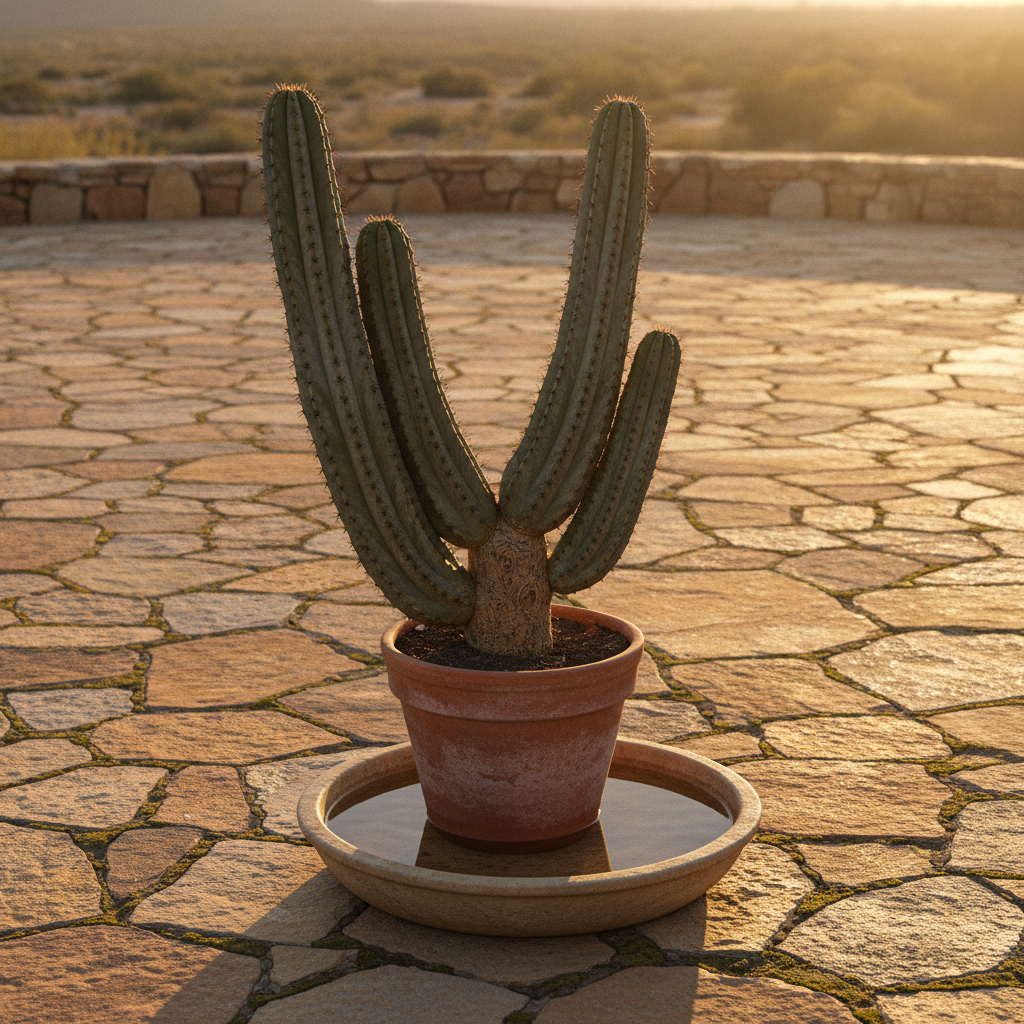
When you do water, do it properly. Drench the soil until water runs freely from the drainage holes, which ensures the entire rootball is moistened and helps flush accumulated mineral salts. Then empty any saucer immediately, because a pot left standing in water is the surest route to root rot. Through the active growing season of spring and summer this might mean a deep soak every two to three weeks, but the exact interval depends entirely on your light, temperature, pot size and soil, so test before you pour. Push a finger or a wooden skewer several centimetres into the mix; if it comes out with any cool dampness or clinging soil, leave it.
Winter changes everything. As light fades and growth stops, the plant enters a genuine dormancy, and its water needs collapse accordingly. From late autumn through to early spring, reduce watering to roughly once a month or even less, just enough to keep the stems from shrivelling. A cool, dry winter rest is not merely tolerated but beneficial, as it firms up the plant and is widely believed to encourage flowering in mature specimens. Overwatering in winter, when the cold soil stays wet for days, is the classic way to lose an otherwise healthy cactus.
Warning — Reading the stems: A cactus that is genuinely thirsty will look subtly deflated, its ribs drawing closer together and the skin losing tautness. Soft, yellowing, mushy or blackened tissue, especially near the base, signals the opposite problem of rot from overwatering. The two look nothing alike once you learn them, and confusing thirst for rot and adding more water is a common fatal mistake.
Soil and potting
Drainage is the whole game with this plant. In the wild, Cereus repandus roots into sandy, rocky ground where water vanishes within minutes of rain, and the indoor grower’s job is to recreate that fast-draining harshness in a pot. Ordinary houseplant compost holds far too much moisture and will suffocate the roots, so a dedicated gritty mix is not optional but essential.
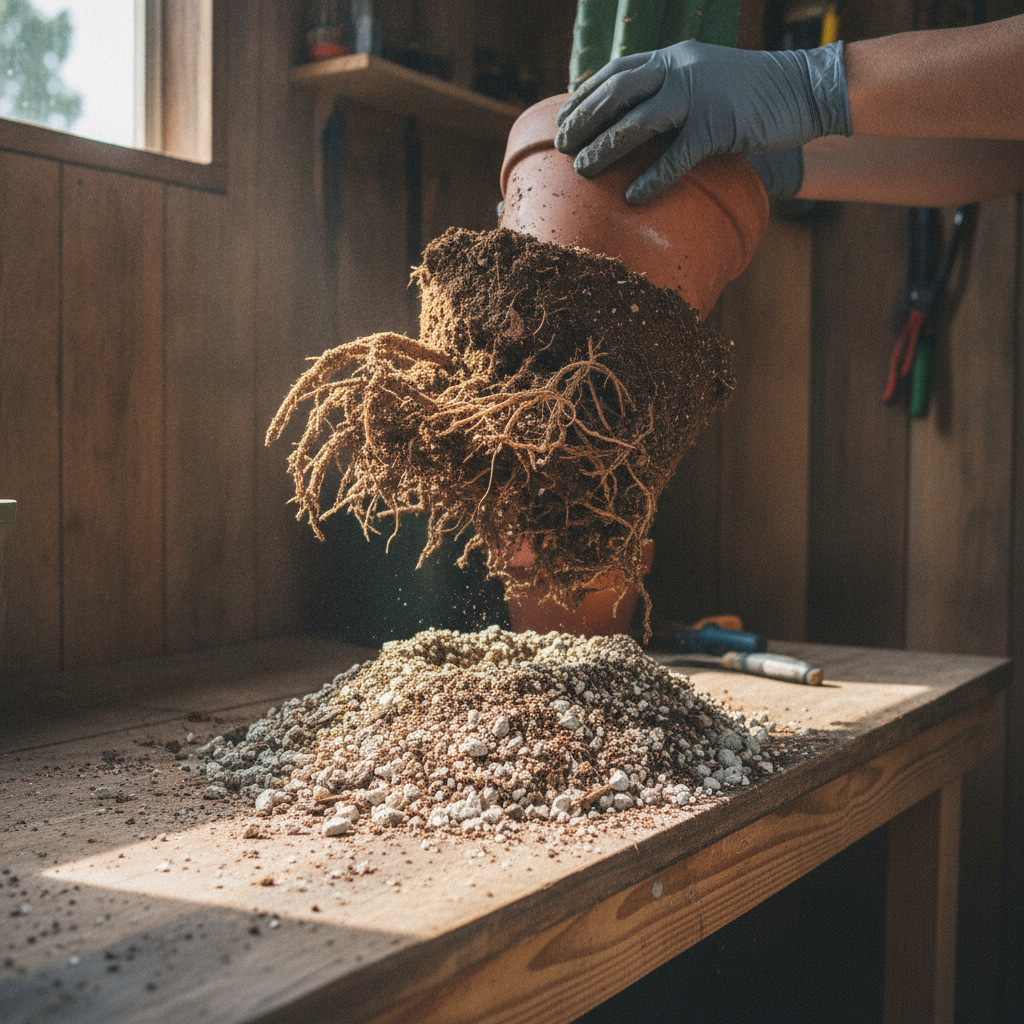
A reliable recipe is roughly half mineral grit to half organic matter. Start with a bagged cactus and succulent compost, then bulk it out with an equal volume of coarse material such as pumice, perlite, horticultural grit or coarse sand. The aim is a medium that water flows through almost instantly and that contains plenty of air pockets, so the roots can breathe and never sit in stagnant wet. If you can squeeze a handful and it holds its shape like garden soil, it needs more grit.
The pot matters as much as the mix. Choose a container with generous drainage holes, and favour unglazed terracotta over plastic or glazed ceramic, because the porous clay wicks moisture from the soil and breathes, lowering the risk of rot. Terracotta also adds welcome weight, which counts for a great deal once a top-heavy column starts to grow tall and threatens to topple. A deep, heavy pot keeps a mature plant stable.
Repot only every two to three years, or when roots emerge from the drainage holes and the plant becomes unstable in its pot. Move up just one pot size at a time, since an oversized container holds a reservoir of unused wet soil around the roots. The best time is spring, at the start of the growing season. Always repot into dry soil, handle the spiny column with folded newspaper, a thick towel or carpet offcut wrapped around it, and crucially, wait at least a week before watering so any roots damaged during the move can callus rather than rot.
Fertilising
A Peruvian apple cactus is a light feeder, but because it grows quickly for a cactus, a little nourishment in the growing season genuinely supports stronger, fatter columns. The trick is to feed sparingly and only when the plant is actively growing, never during its winter rest, when fertiliser simply accumulates as unused salt in the soil.
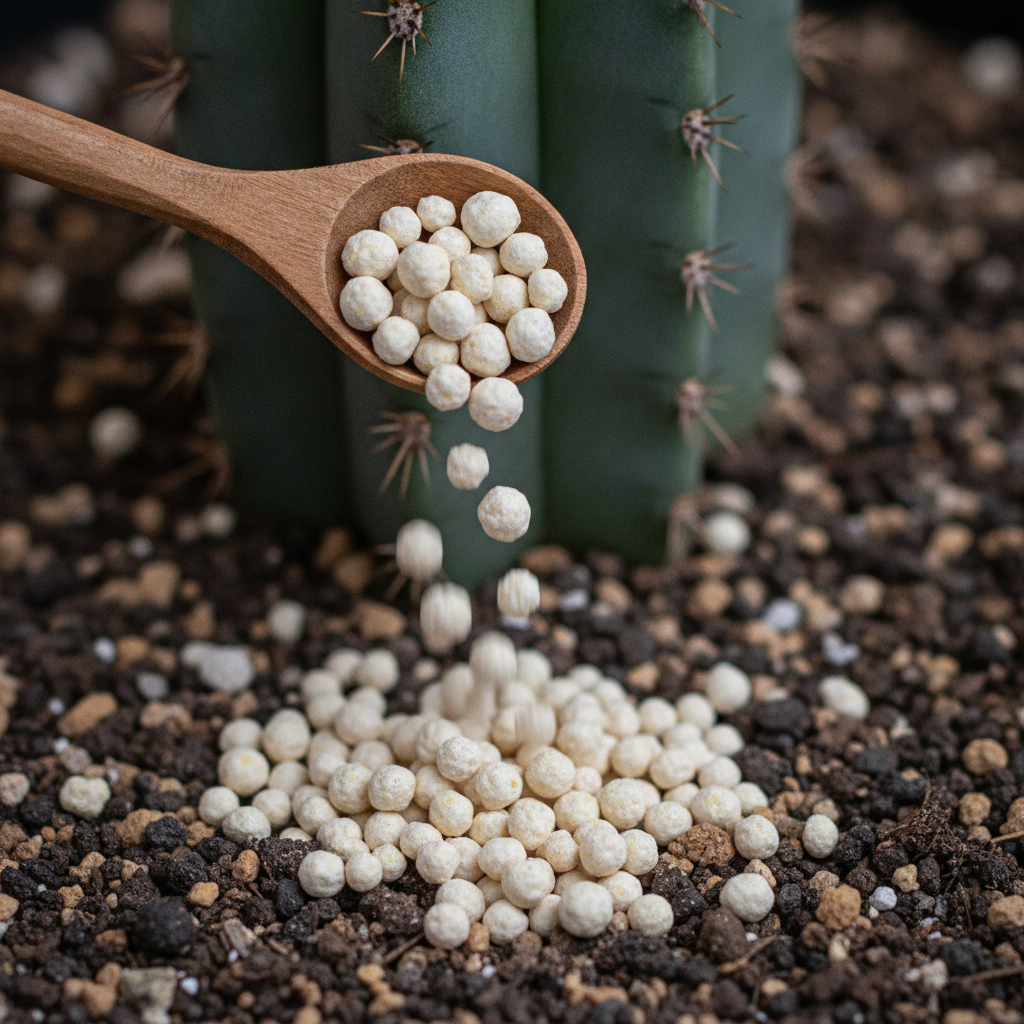
Use a fertiliser formulated for cacti and succulents, which is low in nitrogen, since too much nitrogen drives soft, weak, over-fast growth that is prone to rot and looks unnaturally lush. A balanced or low-nitrogen feed with a higher proportion of potassium and phosphorus encourages firm growth and supports flowering. Dilute liquid feed to half the recommended strength and apply it once a month from spring through to late summer, always onto already-moist soil rather than a bone-dry rootball, to avoid scorching the roots.
Less is reliably more. An unfed cactus grows slowly but stays healthy, whereas an overfed one can split its skin, develop weak etiolated sections or accumulate a crust of mineral salts on the soil surface and pot rim. If you see that white crust building up, flush the pot thoroughly with plain water and ease off the feeding. For most growers, a monthly half-strength feed across the warm months is the entire fertilising regime this plant ever needs.
Propagation
Propagating a Peruvian apple cactus is remarkably easy and is most often done from stem cuttings, which root readily and quickly become substantial plants. Seed is also possible but slow, taking years to produce anything of size, so cuttings are the practical route for the home grower. The single most important principle is patience: a freshly cut surface must be allowed to dry and callus before it ever touches soil, because planting a wet cut straight into damp mix invites rot.
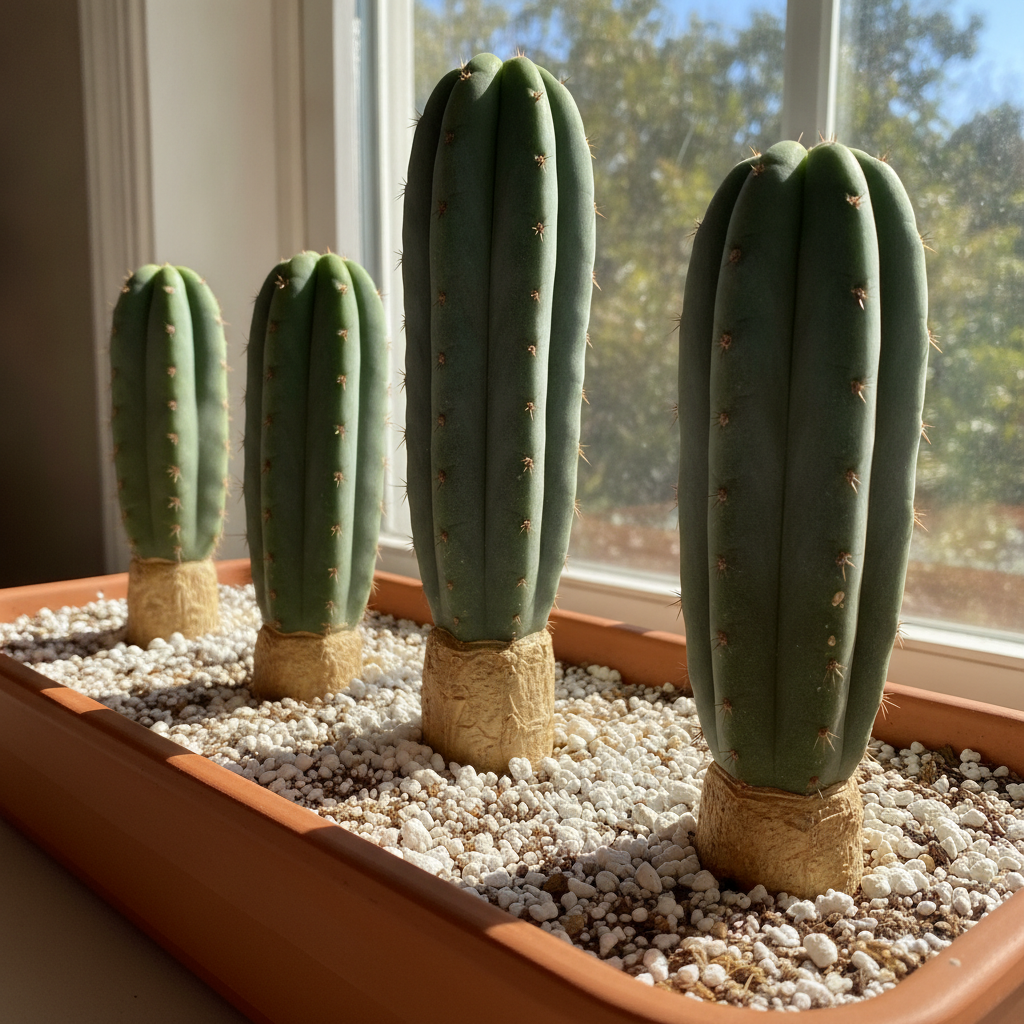
The method is straightforward, and spring or early summer gives the fastest results.
- Using a clean, sharp knife, cut a section of healthy stem at least 10 to 20 cm (4 to 8 in) long. Wrap the column in newspaper or thick cloth first to protect your hands from the spines.
- Note which end was the top, since the cutting must be replanted the same way up. Set the cutting aside in a warm, dry, shaded place for one to three weeks until the cut end forms a firm, dry callus over the whole surface.
- Once fully callused, stand the cutting upright with the callused end just resting on, or barely pushed into, a tray or pot of dry gritty cactus mix.
- Wait around a week, then begin watering very lightly and infrequently. Roots usually form within a few weeks; a gentle tug that meets resistance tells you the cutting has anchored.
- Once well rooted and showing new growth at the tip, treat the young plant exactly as a mature one, with bright light and careful watering.
Established plants may also produce offsets or branches lower down that can be removed and rooted by the same callus-and-plant method. Whichever you use, resist the urge to water early; the most common propagation failure by far is a cutting that rots from below because it was kept too wet before it had a chance to root.
Pests and problems
Healthy and grown in good light, the Peruvian apple cactus is largely untroubled by pests, and the great majority of problems owners encounter are cultural rather than biological, stemming from too much water or too little light. Still, a handful of sap-sucking insects do find their way onto indoor cacti, and catching them early keeps them from becoming an infestation.
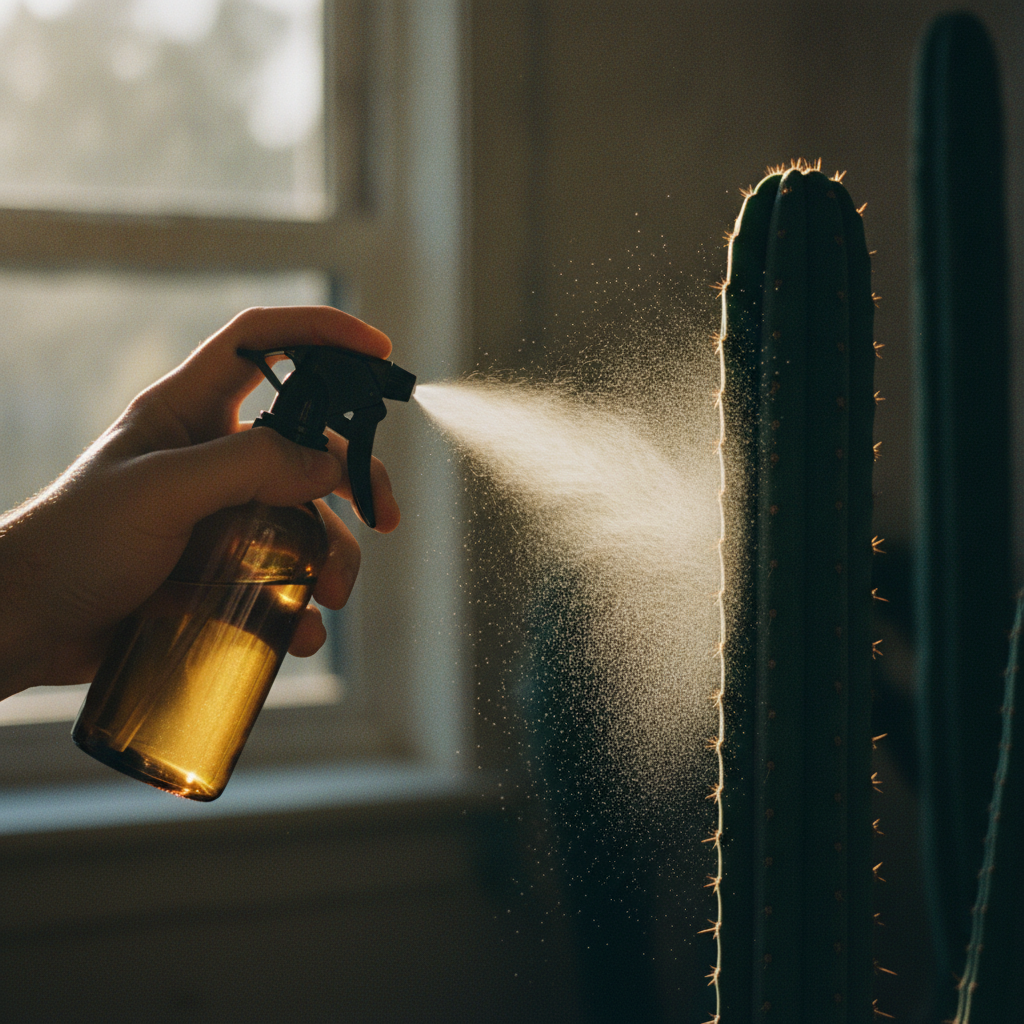
Mealybugs are the most frequent offender, appearing as small cottony white tufts tucked into the ribs and around the areoles where the spines emerge. Spider mites can also strike, particularly in hot, dry conditions, leaving fine webbing and a stippled, bronzed look on the stem surface. Scale insects, which look like tiny brown limpets stuck fast to the skin, turn up occasionally too. For light infestations, dab the insects directly with a cotton bud dipped in isopropyl alcohol; for anything more widespread, treat the whole plant with a neem oil solution or an insecticidal soap, repeating every week or two until no live pests remain.
The most serious threat, however, comes from the soil. Root and stem rot caused by overwatering is the leading killer of this species, and it announces itself as soft, discoloured, mushy tissue, often starting at the base and creeping upward as a brown or black sodden patch. Caught early, you can sometimes save the plant by cutting well above the rot into clean green tissue, letting that cutting callus, and rerooting it as described above, effectively starting over with the healthy top. The original rotted base is rarely worth saving. Prevention is far easier than cure: a gritty mix, a pot that drains freely and a firm habit of letting the soil dry out completely will keep rot away almost entirely.
Pro Tip — Corky brown patches: Older plants sometimes develop rough, tan, bark-like patches near the base. This is corking, a normal sign of maturity as the stem lignifies for support, not a disease. Unlike rot it is dry, hard and firm to the touch, and needs no treatment at all.
Varieties
Beyond the standard columnar species, Cereus repandus is prized for two striking mutant forms that collectors seek out. Both are grown for their unusual stems rather than any difference in care, and both are treated exactly like the ordinary plant, with the same demands for sun, sharp drainage and restrained watering.
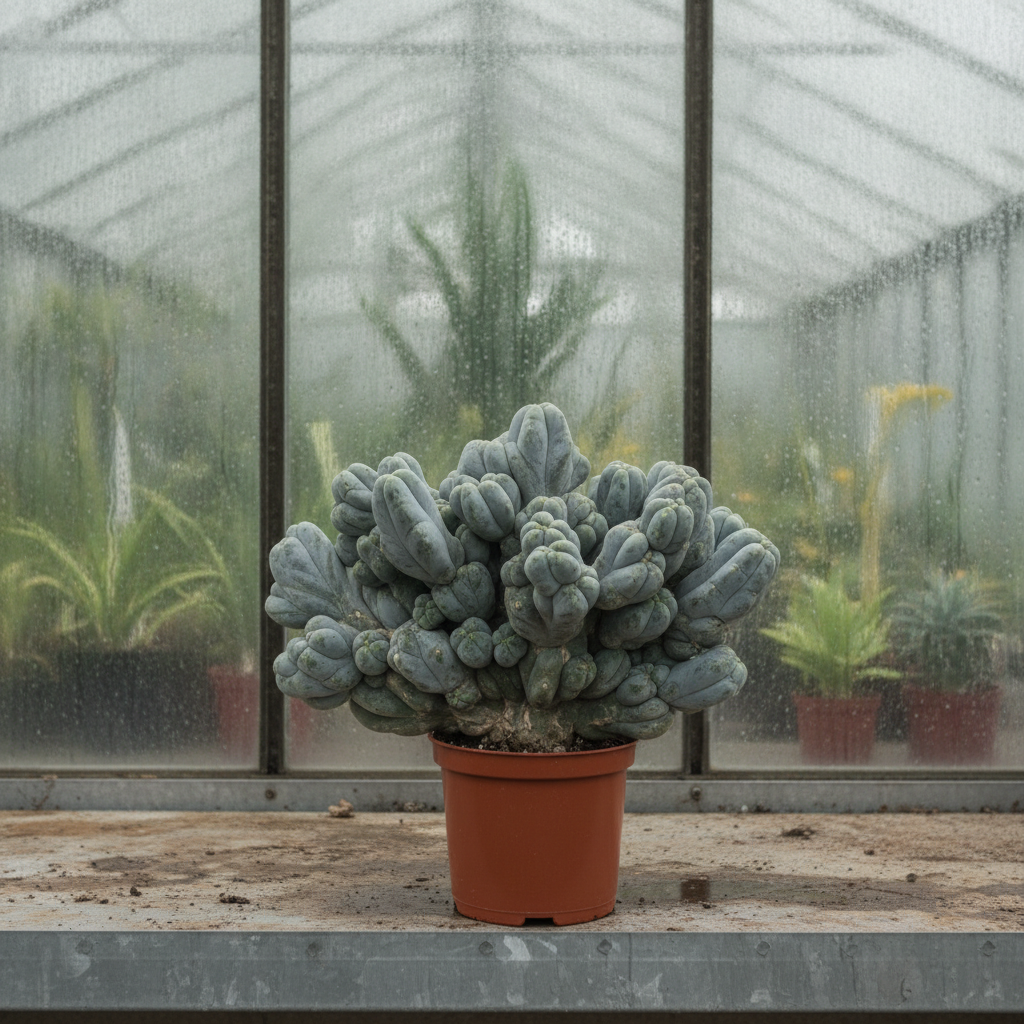
‘Monstrose’ (Cereus repandus f. monstrosus) abandons the orderly column entirely, growing instead in a chaotic, lumpy mass of irregular blue-grey knobs and fused stems with no regular ribbing. Each plant is unique, and the slow, sculptural pile-up of growth makes it a living abstract sculpture much loved by collectors.
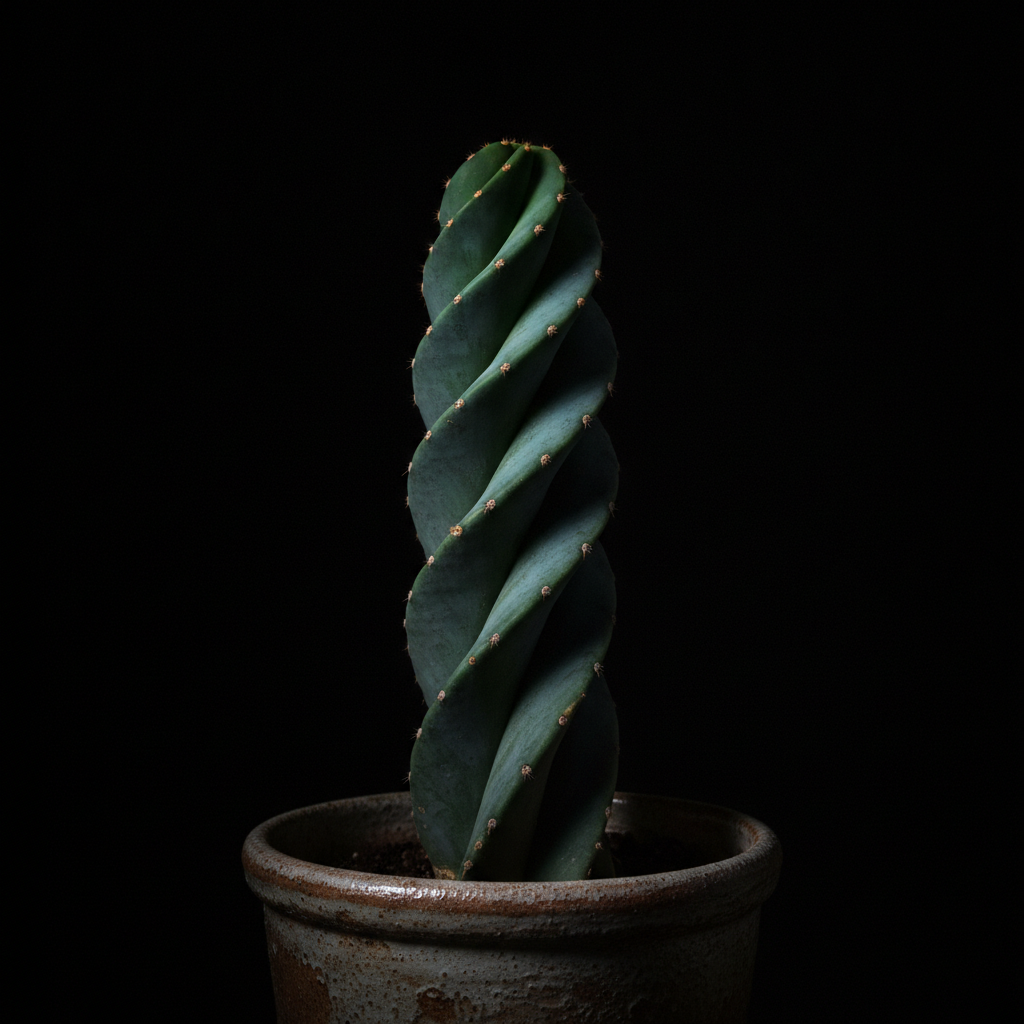
‘Spiralis’ keeps the upright columnar habit of the species but twists its ribs into a slow, elegant corkscrew that winds around the entire length of the stem. The spiral catches light beautifully and gives the plant a sense of motion, making it one of the most ornamental forms of any column cactus.
Frequently asked questions
How fast does a Peruvian apple cactus grow?
Quickly, by cactus standards. In good light with a proper growing season it can add 30 to 60 cm (12 to 24 in) of height a year, which is why it is so popular as a fast way to create a tall, dramatic indoor plant. Growth slows markedly in low light or during the winter rest.
Is the fruit really edible?
Yes. The plant produces a red to violet fruit, sometimes sold as Peruvian apple or pitaya, with sweet white flesh dotted with small edible seeds, similar in spirit to dragon fruit. Fruiting indoors is uncommon, however, as it requires a mature, well-lit plant and usually hand pollination of the night-blooming flowers.
Is the Peruvian apple cactus toxic to pets?
It is not considered chemically toxic to cats, dogs or people. The real hazard is mechanical: the sharp spines can cause painful injury, so position the plant where curious pets and children will not blunder into it.
Why is my cactus growing thin and pale at the top?
That narrow, washed-out new growth is etiolation, and it means the plant is not getting enough light. The thin section will not thicken again, so move the cactus to your brightest window or add a grow light promptly. The established column below stays as it is, but future growth will firm up once light improves.
Can it survive outdoors or in winter cold?
In mild climates, roughly USDA zone 9 and warmer, it can live outdoors year-round and will reach tree-like proportions. It tolerates brief dips to around -4 degrees C (25 degrees F) when bone dry, but prolonged frost or cold wet soil will damage or kill it, so in cooler regions grow it in a pot and bring it indoors for winter.
My tall cactus keeps toppling over. What can I do?
Top-heaviness is the price of fast vertical growth. Plant it in a deep, heavy terracotta pot for ballast, repot into fresh gritty mix if the roots have outgrown the container, and check that the column itself is firm rather than weakened by etiolation. A genuinely tall specimen can also be staked discreetly until its root system catches up.






