
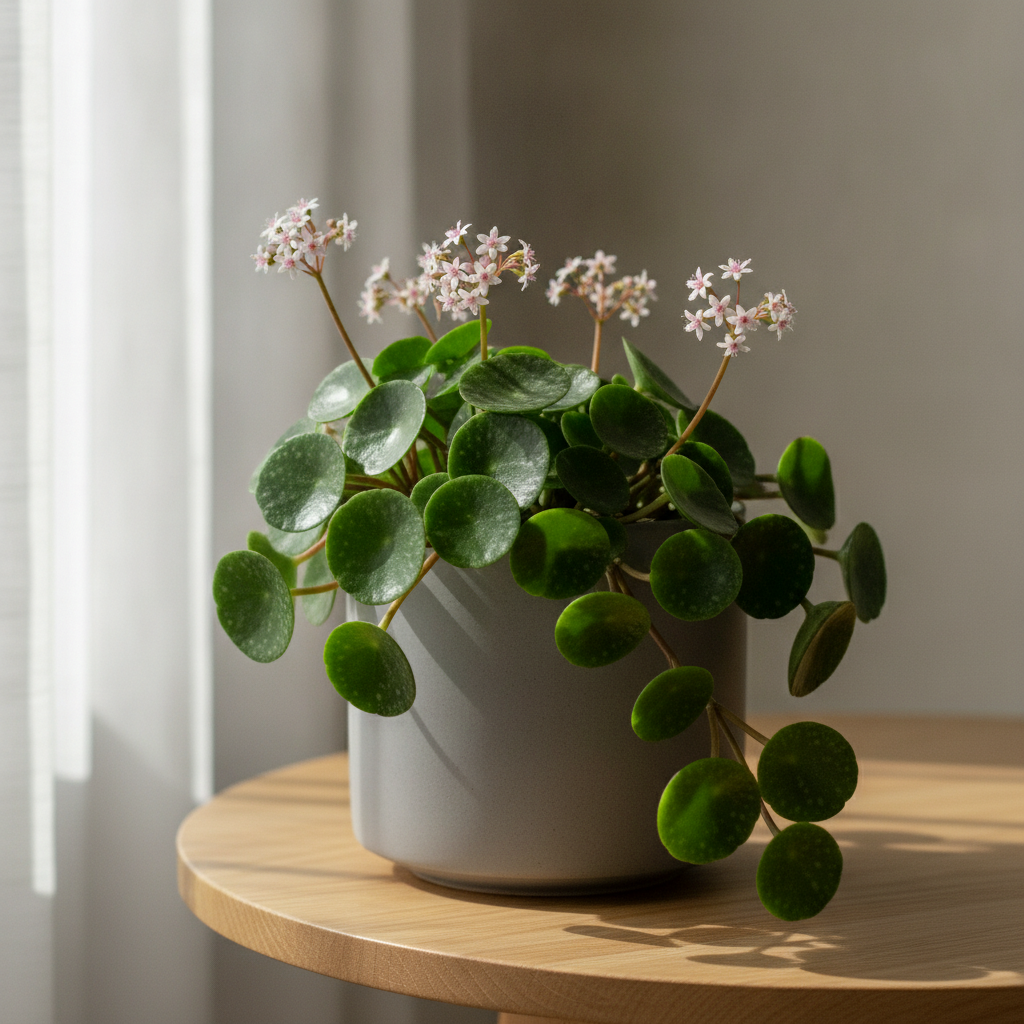
Most succulents demand a sun-baked windowsill and punish you the moment the light dips, but the fairy crassula (Crassula multicava) quietly breaks that rule. This low, spreading South African native is one of the few fleshy-leaved plants that will not only survive but genuinely thrive in the shadier corners of a home, throwing out airy clouds of tiny star-shaped flowers in late winter when little else is in bloom. It is forgiving enough for a first-time plant owner and generous enough that a single specimen will, within a season or two, hand you a dozen ready-rooted babies whether you asked for them or not.
Quick Reference
| Common names | Fairy crassula, London pride, Cape Province pride, pitted crassula |
| Botanical name | Crassula multicava |
| Family | Crassulaceae |
| Origin | Eastern Cape and KwaZulu-Natal, South Africa |
| Light | Bright indirect light to partial shade; tolerates lower light than most succulents |
| Water | Soak when the soil is dry; roughly every 10 to 14 days in growth, far less in winter |
| Soil | Free-draining gritty succulent or cactus mix |
| Temperature | 18 to 24 °C (64 to 75 °F); protect from frost below 2 °C (36 °F) |
| Humidity | Average household humidity; no misting needed |
| Feeding | Weak balanced feed once or twice through spring and summer |
| Growth habit | Spreading, mat-forming groundcover, 15 to 30 cm (6 to 12 in) tall |
| Propagation | Leaf cuttings, stem cuttings, plantlets, division; exceptionally easy |
| Toxicity | Generally considered low toxicity, but data is limited; keep away from nibbling pets |
| Difficulty | Very easy, well suited to beginners |
In This Guide
- Why the Fairy Crassula Makes Such a Good Houseplant
- Light
- Watering
- Soil and Potting
- Fertilising
- Propagation
- Pests and Problems
- Varieties
- Frequently Asked Questions
Why the Fairy Crassula Makes Such a Good Houseplant
The fairy crassula earns its place on a windowsill by being almost impossible to disappoint. It belongs to the same genus as the familiar jade plant, Crassula ovata, but where jade grows into an upright shrub of thick coin-shaped leaves, Crassula multicava stays low and spreads sideways, weaving a loose mat of rounded, flat, glossy leaves along reddish trailing stems. Look closely at a leaf and you will see the feature that gives the plant its botanical name: the surface is peppered with tiny pale pits, sunken pores that scatter across the green like a dusting of freckles. Multicava means “many hollows”, and once you have noticed them you cannot un-see them.
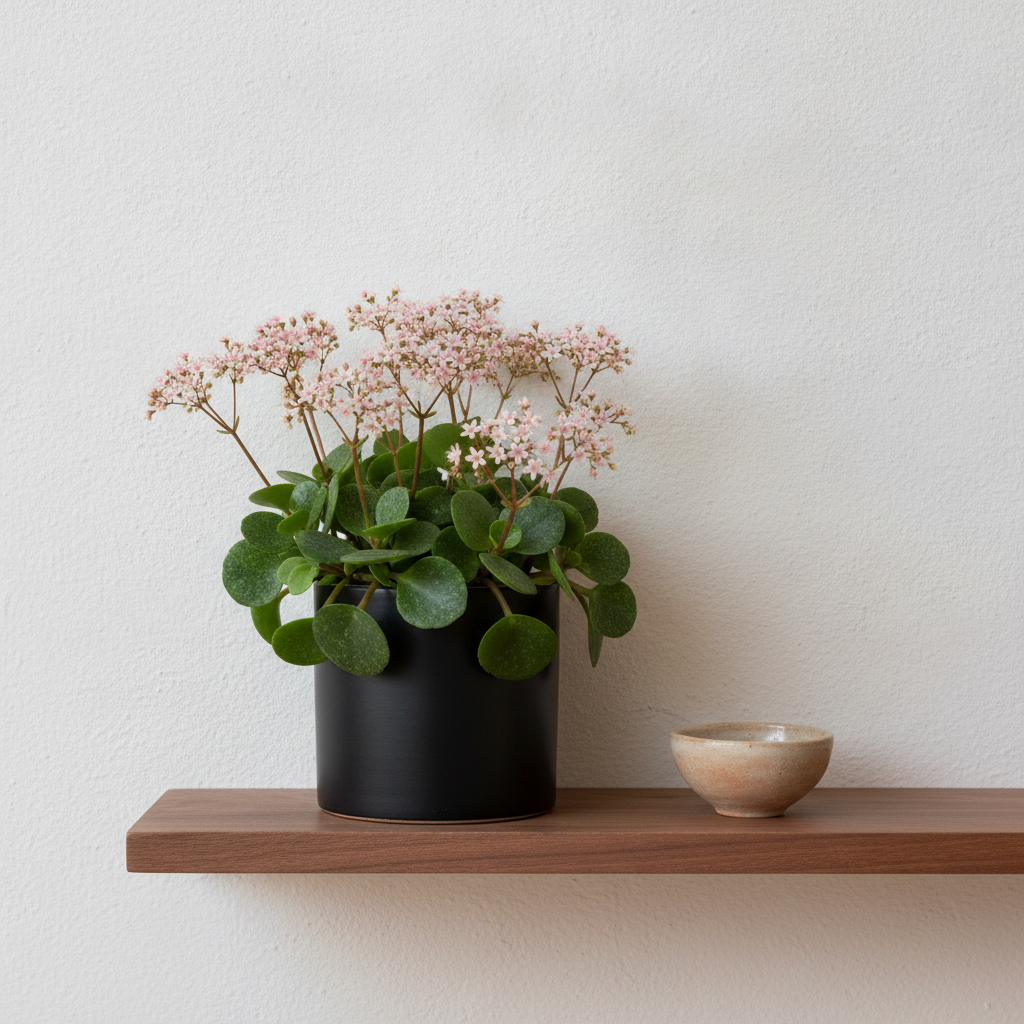
What sets this plant apart from the rest of the succulent shelf is its tolerance of shade. In its native South Africa it grows as an understorey groundcover, threading between rocks and under the canopy of larger shrubs in the coastal forests of the Eastern Cape and KwaZulu-Natal. That heritage means it is genuinely comfortable in the kind of gentle, filtered light that would leave an echeveria stretched and pale, which is why it turns up so often as a reliable performer in north-facing rooms and on desks set back from the glass. It is sometimes sold as London pride or Cape Province pride, names that hint at its old reputation as an easy, cheerful garden plant.
The flowers are the seasonal reward. From late winter into spring the plant lifts slender stalks well above the foliage and opens a haze of tiny, four to five petalled stars in soft pink and white, so many and so fine that a well-grown plant seems to float under a pink mist. After flowering, the plant often forms small plantlets in place of some blooms, miniature versions of itself that drop, root and colonise any bare soil nearby. This is wonderful indoors, where you can pot the babies up at leisure, and worth knowing about outdoors, where in frost-free climates such as coastal California and parts of Australia the plant has naturalised so enthusiastically that it is treated as a weed.
The honest distinction with any easy plant is between surviving and thriving. A fairy crassula will survive a surprising amount of neglect: forgotten watering, a dim corner, a cramped pot. To make it thrive, and to coax out that spring flush of flowers, you give it a little more, bright light without harsh midday sun, a thorough soak followed by a proper dry-out, and a lean, gritty soil that never stays soggy. None of it is demanding. The rest of this guide walks through each of those elements in turn.
Light
Light is where the fairy crassula quietly outperforms its relatives. Give it bright, indirect light and it will be at its best, compact, glossy and primed to flower, but it will also hold together in conditions that most succulents cannot abide. An east-facing windowsill that catches gentle morning sun is close to ideal, as is a position a little back from a bright south or west window where sheer curtains soften the strongest rays. In these spots the leaves stay full and the stems short, and in strong light the foliage and stem tips often blush a warm bronze or red, a sign of a happy, slightly stressed plant rather than a struggling one.
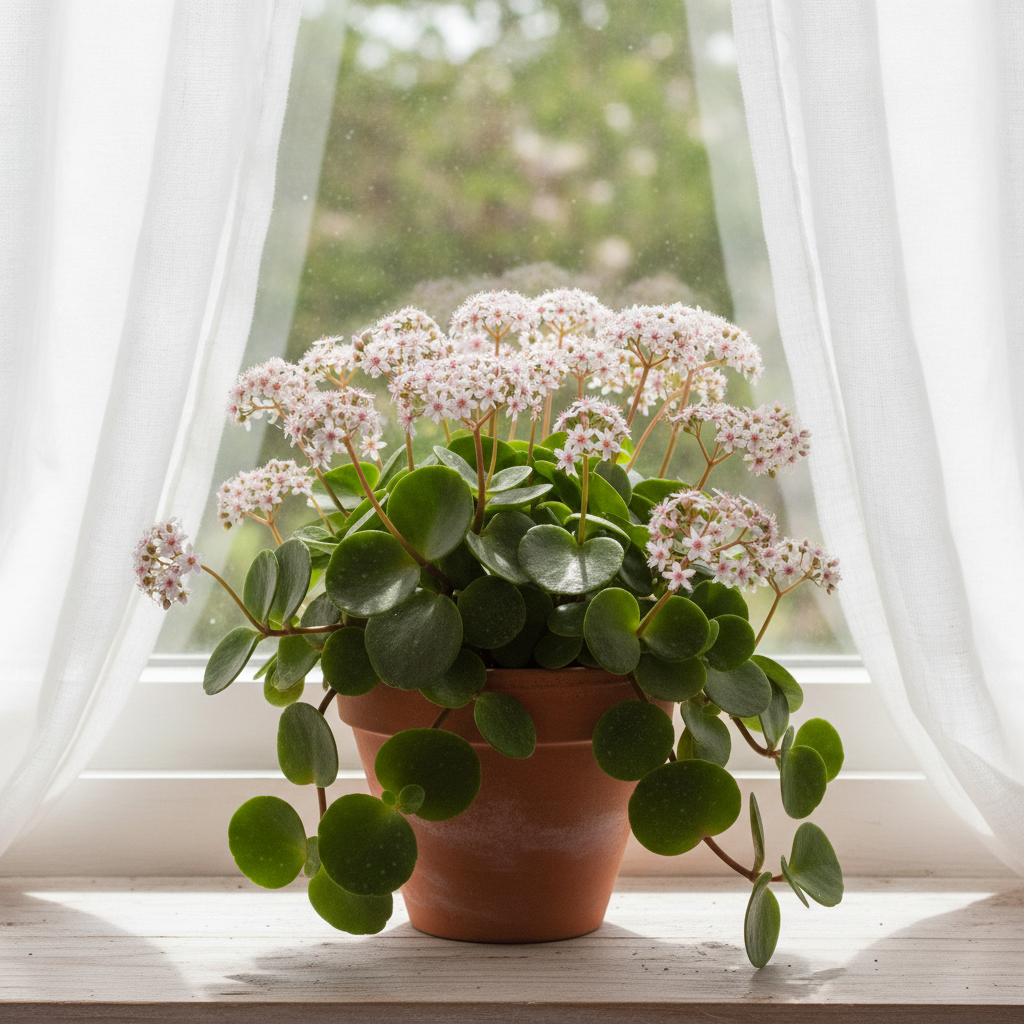
The plant’s real party trick is shade tolerance. It will grow steadily in a north-facing room or several steps back from a window, which is a rare quality among the Crassulaceae. What it cannot do is flower well or stay tight in deep gloom. In genuinely low light the stems stretch and the gaps between leaves widen as the plant reaches for the window, a process called etiolation, and the whole plant takes on a loose, sparse look. If you notice this happening, the plant is not sick, it is simply telling you it wants more light. Move it somewhere brighter and new growth will come in denser and shorter, though the stretched sections will not shrink back.
At the other extreme, avoid unfiltered, intense summer sun through glass, particularly if the plant has been living somewhere dim. Succulent leaves scorch, and the damage shows as dry, bleached or brown patches that never recover. Any move towards stronger light should be made gradually over a week or two, shifting the plant a little closer to the window each day so it can adjust its pigments and toughen up. A plant grown hard in good light will take far more sun than one that has been coddled in shade.
Pro Tip — Reading the colour: Deep green, flat leaves mean the plant is in comfortable light. A warm red or bronze flush on the leaf edges and stems means it is getting strong light and is likely to flower well. Pale, widely spaced leaves on long bare stems mean it wants more light. Let the plant’s colour and spacing guide where you put it.
Because the plant grows towards its light source, giving the pot a quarter turn every week or two keeps growth even and stops the mat leaning all in one direction. If you use a grow light through a dark winter, a modest full-spectrum LED positioned 30 to 40 cm (12 to 16 in) above the plant for ten to twelve hours a day is more than enough for this undemanding species.
Watering
Watering a fairy crassula well comes down to a single principle: soak thoroughly, then let it dry out almost completely before you water again. Like all succulents it stores moisture in its fleshy leaves, so it is built to ride out drought and far more likely to die from too much water than too little. The fine, thin leaves of this species do lose water a touch faster than the plump leaves of a jade, so it appreciates slightly more frequent watering than the thickest succulents, but the rhythm of drench and dry stays the same.
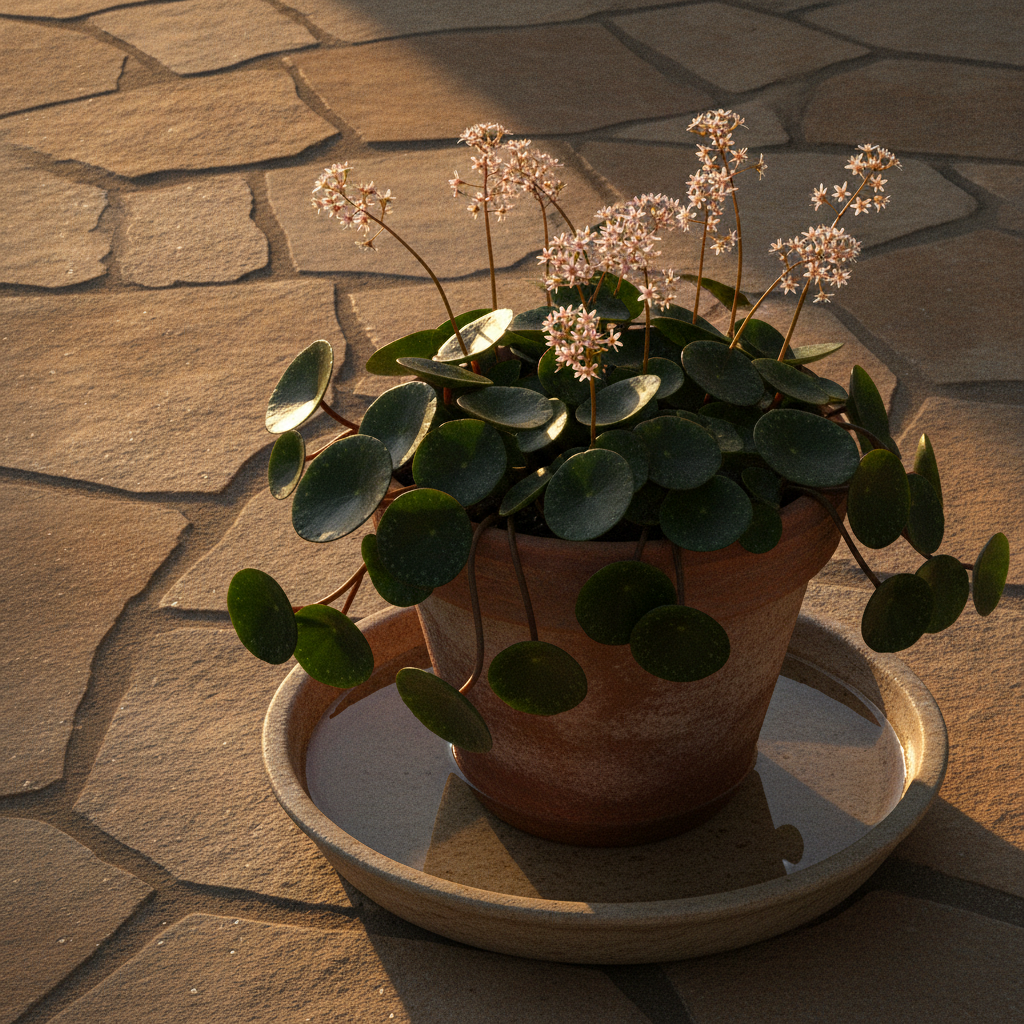
When you do water, water properly. Add water until it runs freely from the drainage holes, which wets the entire root ball and flushes out any accumulated salts, then tip away whatever collects in the saucer. Standing the pot briefly in a shallow dish of water and letting the mix wick moisture up from below works just as well and keeps the leaves dry, which some growers prefer. Either way, the goal is a full soak followed by free drainage, never a permanent puddle at the base of the pot.
How often that works out to depends entirely on your conditions rather than the calendar. In the warmth and brighter light of spring and summer, an actively growing plant in a small pot might want water every week to fortnight. Through the cooler, darker months, when growth slows right down, it may go three or four weeks between drinks. Rather than watering on a fixed schedule, check the soil: push a finger a few centimetres in, and if it is dry, water; if it is still cool and damp, wait. The leaves are a second gauge, plump and firm when the plant is well hydrated, slightly soft or wrinkled when it is genuinely thirsty. A little softness is your cue to water, and the leaves will fill out again within a day.
Warning — Overwatering is the real danger: Yellowing, translucent or mushy leaves and blackening at the base of the stems are the classic signs of a plant sitting in soil that stays too wet. If you see them, stop watering at once, let the mix dry fully, and if the base feels soft, unpot the plant and check the roots for rot. When in doubt, wait another few days; this plant forgives a missed watering far more readily than a soggy one.
Water quality is rarely an issue for this tough plant, and ordinary tap water is fine. If your water is very hard and you see white mineral crusting on the soil or pot over time, an occasional watering with collected rainwater or filtered water keeps things tidy. Aim to water in the morning so any moisture on the foliage dries through the day, and always err on the side of underwatering when you are unsure.
Soil and Potting
Everything about watering hinges on the soil beneath it, and for a fairy crassula the soil must drain fast. A standard peat-based houseplant compost holds far too much moisture around the roots and is the quickest route to rot. Reach instead for a proprietary cactus and succulent mix, or make your own by cutting ordinary potting compost with plenty of grit: roughly two parts compost to one part coarse horticultural sand or fine gravel, and one part perlite or pumice, gives an open, gritty medium that water rushes through while still holding enough to sustain the plant between drinks.

The pot matters as much as its contents. Whatever you choose must have drainage holes, with no exceptions, because a decorative pot without them will drown the plant sooner or later. Terracotta is a natural fit here: the unglazed clay breathes and wicks moisture out of the soil, buying you a margin of error if you are prone to overwatering. Because the fairy crassula is a spreading, shallow-rooted plant rather than a deep one, a wide, shallow bowl suits it far better than a tall, narrow pot, giving the stems room to run and root as they go.
This is not a plant in a hurry to be repotted. It is quite content a little crowded, and repotting every two to three years is plenty, done in spring as growth resumes. Move it up only one pot size at a time, since a pot that is too large holds a reservoir of wet soil the roots cannot use, and that lingering moisture invites rot. When you do repot, tease away as much of the old spent mix as you can, settle the plant into fresh gritty medium at the same depth it sat before, and then, importantly, wait. Hold off watering a freshly repotted succulent for several days to a week so any roots nicked in the process can callus over, which greatly reduces the risk of rot taking hold.
Pro Tip — Top-dress with grit: A thin layer of coarse grit or fine gravel over the soil surface keeps the base of the stems dry, discourages fungus gnats, and shows off the plant’s spreading form. It also stops soil splashing up onto the leaves when you water.
Fertilising
The fairy crassula is a lean feeder that grows perfectly well on very little, so restraint is the guiding rule. In the wild it colonises poor, rocky ground, and it carries that thrift into a pot. A light feeding through the growing season is a helpful nudge rather than a necessity, and far more plants are harmed by overfeeding than by going hungry. Too much fertiliser pushes soft, weak, overstretched growth and can burn the roots, leaving brown leaf tips as a warning.
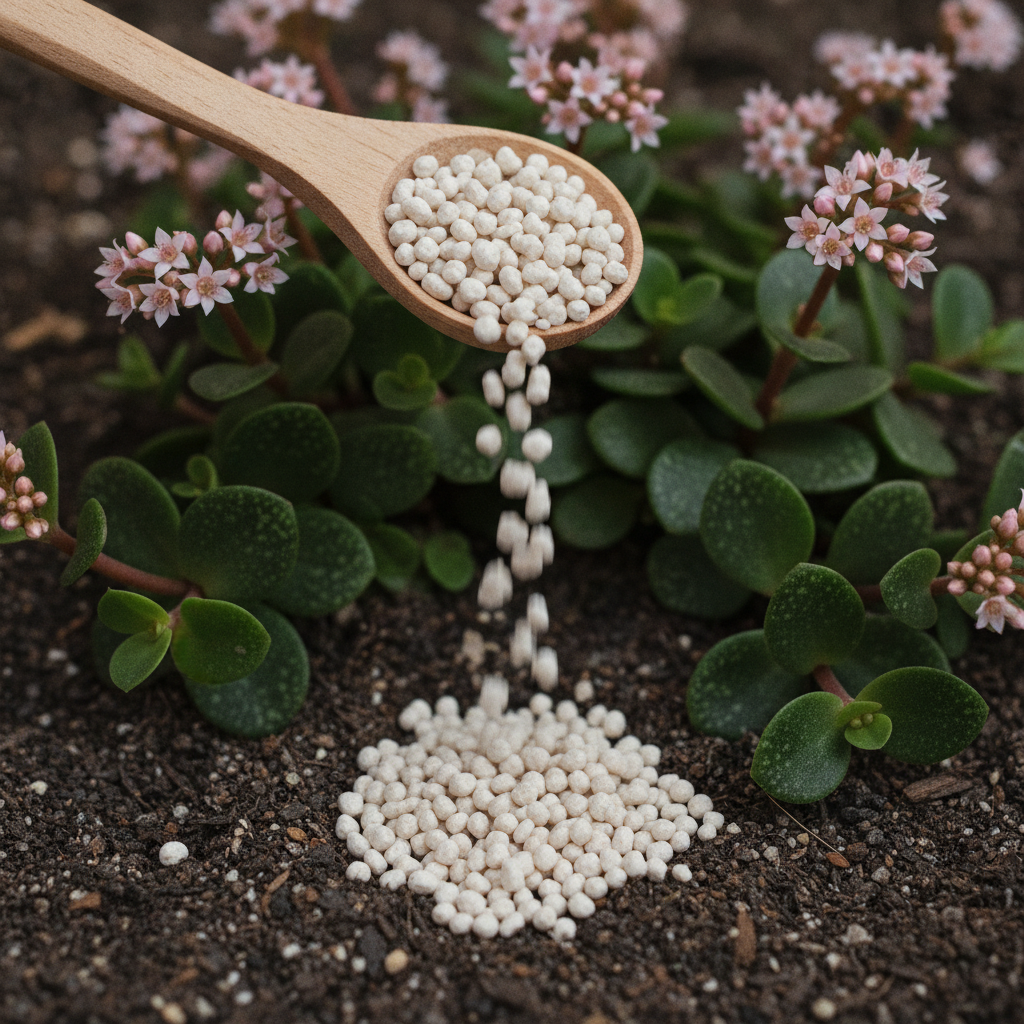
In practice, feed only during the active growing months of spring and summer, and only once or twice across that whole stretch. A balanced liquid houseplant feed diluted to half or even a quarter of the strength on the label is ideal, as is a fertiliser sold specifically for cacti and succulents, which is formulated lower in nitrogen to suit their modest appetite. Always apply feed to already-moist soil rather than dry, because fertiliser drawn straight into dry roots is far more likely to scorch them. A scatter of slow-release prills worked into the surface in spring is an even gentler alternative that releases a trickle of nutrients over several months.
Stop feeding entirely through autumn and winter. As light levels fall the plant slows down and is not using nutrients, so anything you add simply accumulates as unused salts in the soil, which can build to harmful levels. If you ever suspect a salt build-up, shown by a white crust on the soil or pot and browning leaf margins, flush the pot through with plenty of plain water a few times to leach the excess away, then hold off feeding until the next growing season.
Propagation
If there is one thing the fairy crassula does effortlessly, it is multiply. This is one of the easiest of all houseplants to propagate, so much so that it often does the job for you, dropping plantlets and rooting stems wherever they touch soil. You have several methods to choose from, and all of them work with very high success rates. The best time to take cuttings is spring or summer, when warmth and light drive quick rooting, though this obliging plant will often oblige out of season too.
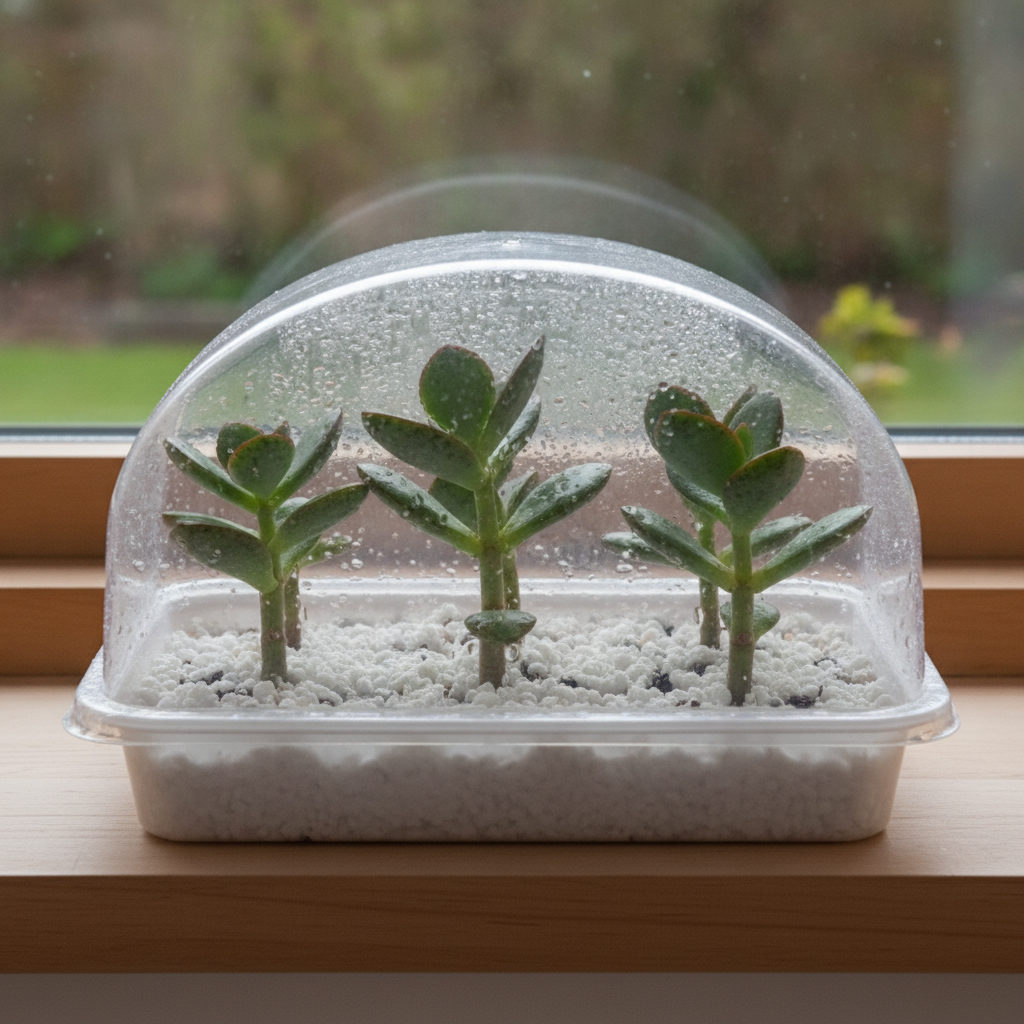
Stem cuttings are the most reliable route. Snip a healthy length of stem a few centimetres long, ideally with two or three leaves attached, and set it aside in a dry, shaded spot for a day or two so the cut end forms a callus, a dry seal that protects against rot. Then follow these steps:
- Fill a small pot with the same gritty, free-draining mix you use for the parent plant and firm it lightly.
- Push the callused end of the cutting a centimetre or two into the surface, deep enough to stand upright, and settle any lower leaves just above the soil line.
- Place the pot in bright, indirect light and keep it warm. Leave the mix dry for the first few days, then begin misting or watering very lightly every few days to encourage roots without soaking the cutting.
- After two to three weeks, give the cutting a gentle tug. Resistance means roots have formed, at which point you can shift to your normal soak-and-dry watering.
Leaf cuttings work almost as well and let you turn a single stem into many plants. Remove a whole, healthy leaf by gently twisting it off so it comes away clean at the stem, let it callus for a day, then lay it on top of the same gritty mix and mist occasionally. Within a few weeks tiny roots and a miniature rosette appear at the base of the leaf, and the original leaf slowly shrivels as it feeds the new plant. Be patient and resist the urge to bury or overwater the leaf, which is the only common way this method fails.
The two easiest methods of all need almost no effort. Because the plant naturally produces plantlets after flowering, you can simply lift these little ready-made offsets, which frequently already carry a wisp of root, and press them into fresh soil where they establish within days. And because the spreading stems root as they travel, an established plant can be divided: unpot it, separate a rooted section of the mat with a clean cut, and pot it up as a complete new plant that barely notices the move. However you go about it, the fairy crassula rewards you generously, which makes it a lovely plant to share.
Pests and Problems
A healthy fairy crassula is a robust plant that shrugs off most trouble, and the overwhelming majority of problems it does run into trace back to watering rather than to any pest. Still, a few insects find succulents appealing, and knowing the early signs lets you deal with them before they take hold. A quick weekly glance while you check the soil is the single best defence, since a small infestation caught early is trivial to clear.
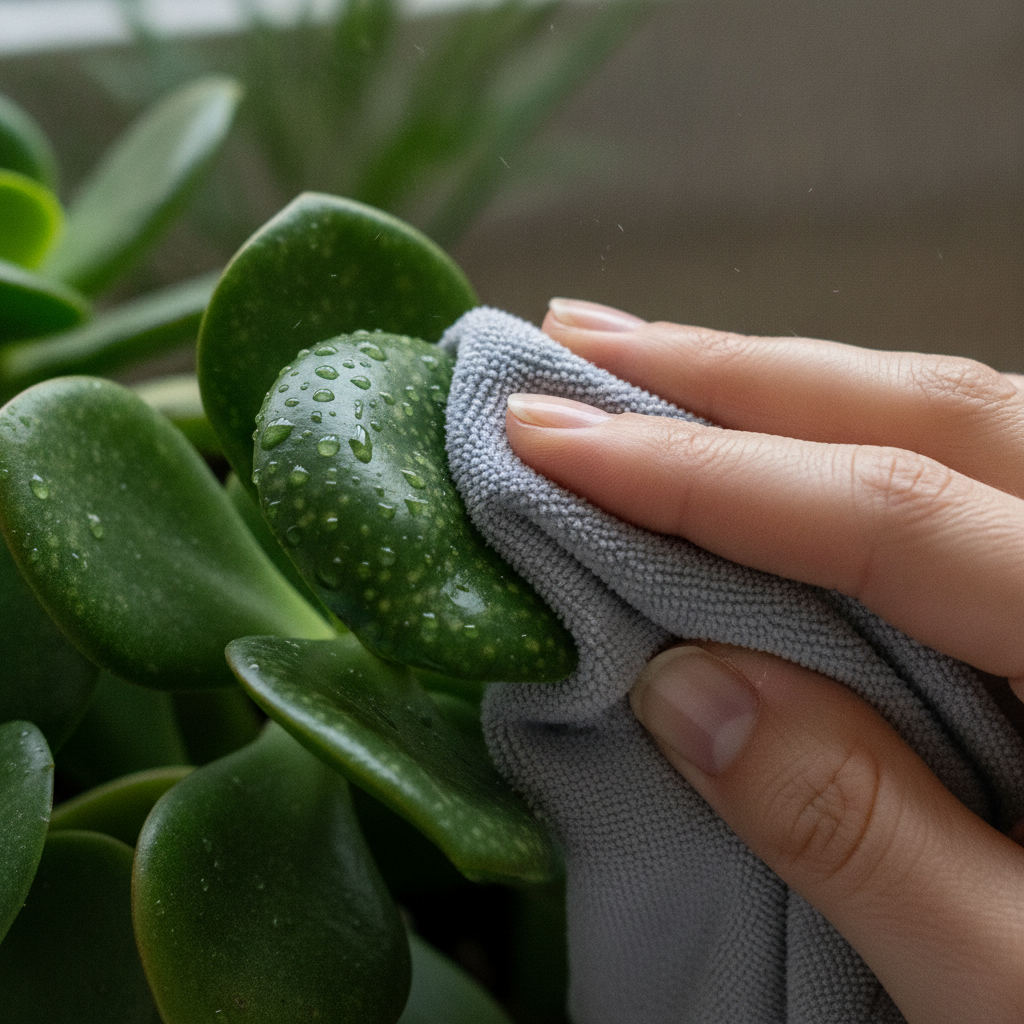
Mealybugs are the pest you are most likely to meet. They appear as small, soft, white cottony blobs tucked into leaf joints and along the stems, where they suck sap and slowly weaken the plant. Dab each one with a cotton bud dipped in ordinary rubbing alcohol, which kills it on contact, and check back every few days, as they hide well and stragglers reappear. For a heavier outbreak, a spray of insecticidal soap or diluted neem oil, repeated weekly until clear, brings them under control. Root mealybugs, their below-ground cousins, are harder to spot and show up as a general failure to thrive; if you unpot a struggling plant and see white waxy deposits among the roots, wash the roots clean and repot into fresh mix.
Two other pests turn up occasionally. Spider mites, encouraged by hot, dry air, are tiny enough to escape notice until you see fine webbing between the leaves and a stippled, dusty look to the foliage; rinsing the plant and treating with neem oil clears them, and better air movement discourages a return. Fungus gnats, small dark flies drifting up from the soil, are a symptom rather than a cause, a sign the surface is staying too wet. Let the soil dry out more between waterings, add a grit top-dressing, and they soon vanish.
By far the most common complaint, though, has nothing to do with insects. Soft, yellowing, translucent leaves and a stem that darkens and turns mushy at the base are the signature of overwatering and the root rot that follows it. If you catch it early, let the plant dry out completely and cut back hard on watering. If the rot has already softened the stem base, act decisively: cut well above the damaged tissue into clean, firm, healthy growth, let the cutting callus, and re-root it as described above, effectively saving the plant by starting it over. At the opposite end, deeply wrinkled, shrivelled leaves point to a plant that has finally been underwatered too long, which a good soak puts right within a day. Dry brown or bleached patches on leaves facing the window are sunburn from too much direct sun, so move the plant back from the glass. Read together, these signs almost always come back to the balance of light and water, and getting that balance right is the whole secret to a thriving fairy crassula.
Varieties
Crassula multicava is not a plant with a long roster of cultivars, but a couple of forms are worth seeking out, and each brings something a little different to the same easy-going nature. The straight species, with its flat glossy green leaves and pink spring flowers, remains the most widely grown and the most forgiving, but the two below add colour and abundance for growers who want a touch more.
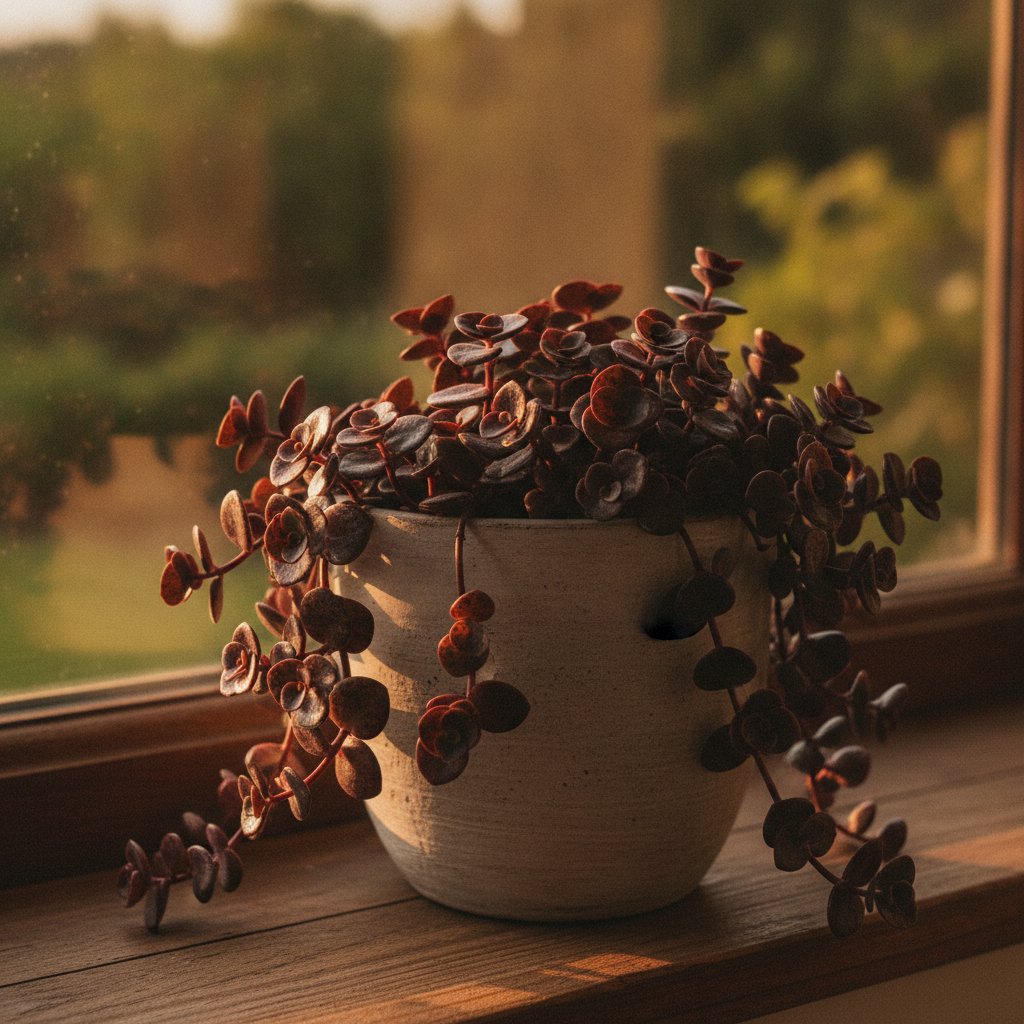
‘Purple Dragon’
The showiest form, prized for foliage that deepens to a rich burgundy-purple in bright light, the freckled pits standing out darker still against the plum-coloured leaves. Grown in shade it reverts towards green, so give ‘Purple Dragon’ the brightest indirect light you can to hold its colour. In every other respect it is as tough and as easy as the species, spreading and flowering just the same.
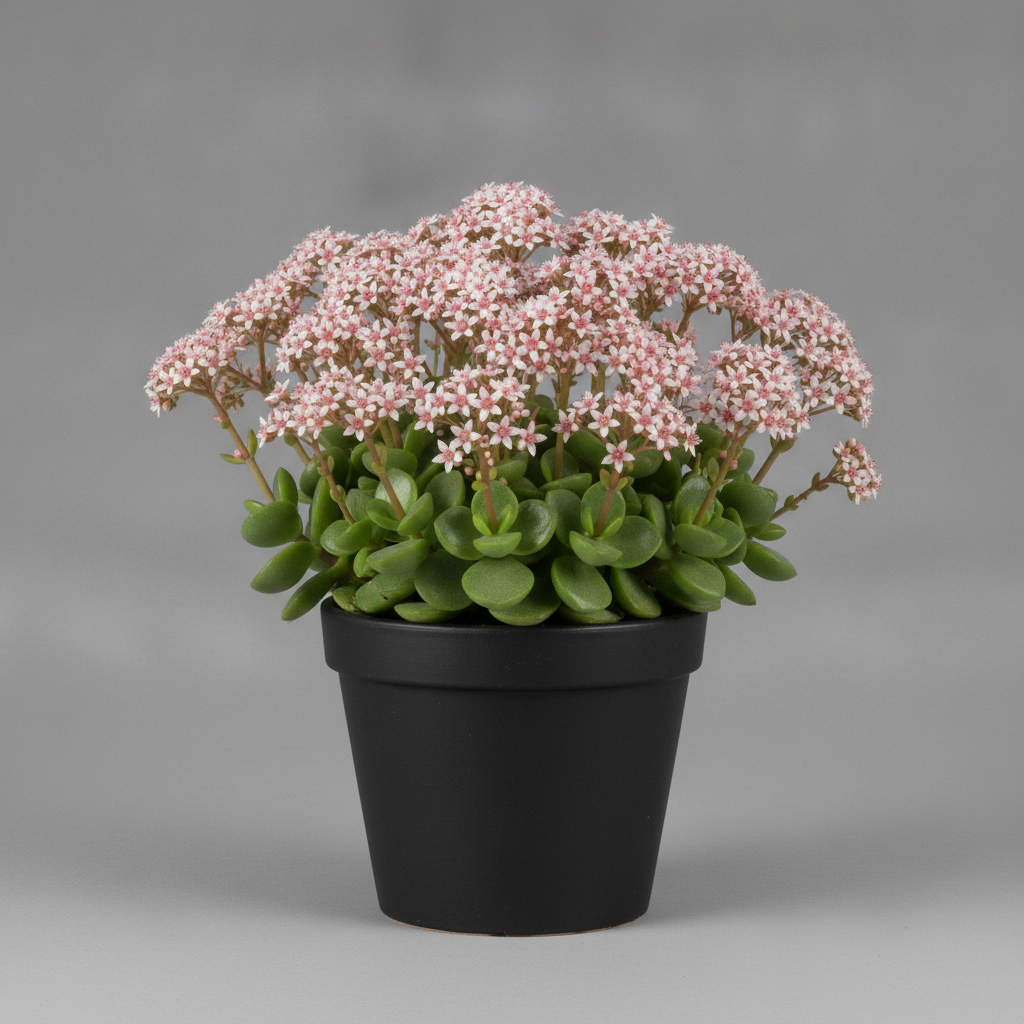
subsp. floribunda
A naturally occurring subspecies grown for its flowers, as the name suggests. Its bright green leaves sit beneath even more generous, longer-lasting sprays of the tiny pink-and-white stars, making it the pick for anyone who grows the plant chiefly for that spring bloom. Care is identical to the species, and the extra flowering does not come at the cost of any additional fuss.
Frequently Asked Questions
Is the fairy crassula toxic to cats and dogs?
Reliable toxicity data for Crassula multicava specifically is limited, and it is often listed as low toxicity or non-toxic. That said, its close relative the jade plant is considered toxic to cats and dogs, so the sensible course is caution: keep the plant out of reach of pets and children who might nibble it, and contact a vet if an animal eats a significant amount and shows signs of upset.
Why is my fairy crassula getting leggy and sparse?
Long, bare stems with widely spaced leaves are a sign of too little light, a stretching called etiolation. The plant is reaching for a brighter source. Move it to a spot with more bright, indirect light and new growth will come in tighter and fuller. You can trim back the stretched stems, and the cuttings will root easily to make new, compact plants.
When and why does it flower?
Fairy crassula flowers mainly from late winter into spring, lifting airy sprays of tiny pink-and-white stars above the foliage. Bright light through the year and the natural cooling and shorter days of winter both encourage a good display, so a plant kept in decent light and allowed to experience a cooler, drier winter rest tends to bloom most freely.
My leaves are turning soft and yellow, what is wrong?
Soft, yellow, translucent leaves almost always mean overwatering. The plant is holding more water than it can use and the roots may be starting to rot. Let the soil dry out fully, cut back sharply on watering, and check that the pot drains freely. If the stem base has gone soft and mushy, take a healthy cutting from above the damage and re-root it to save the plant.
How often should I actually water it?
There is no fixed schedule, because it depends on your light, warmth and pot. As a rough guide, expect to water every week to fortnight in spring and summer and every three to four weeks in winter, but always check first: water only when the top few centimetres of soil are dry and the leaves feel slightly soft. When in doubt, wait a few more days, since this plant tolerates drought far better than soggy roots.
Can I grow it outdoors?
Yes, in a frost-free climate it makes an excellent, drought-tolerant groundcover for shade, roughly USDA zone 9b and warmer. It cannot take frost, so where winters dip below freezing it is best grown in a pot that can be moved indoors or under cover for the cold months. Bear in mind that it spreads vigorously, and in mild regions such as coastal California and parts of Australia it has naturalised to the point of being considered invasive, so plant it where you do not mind it running.






