
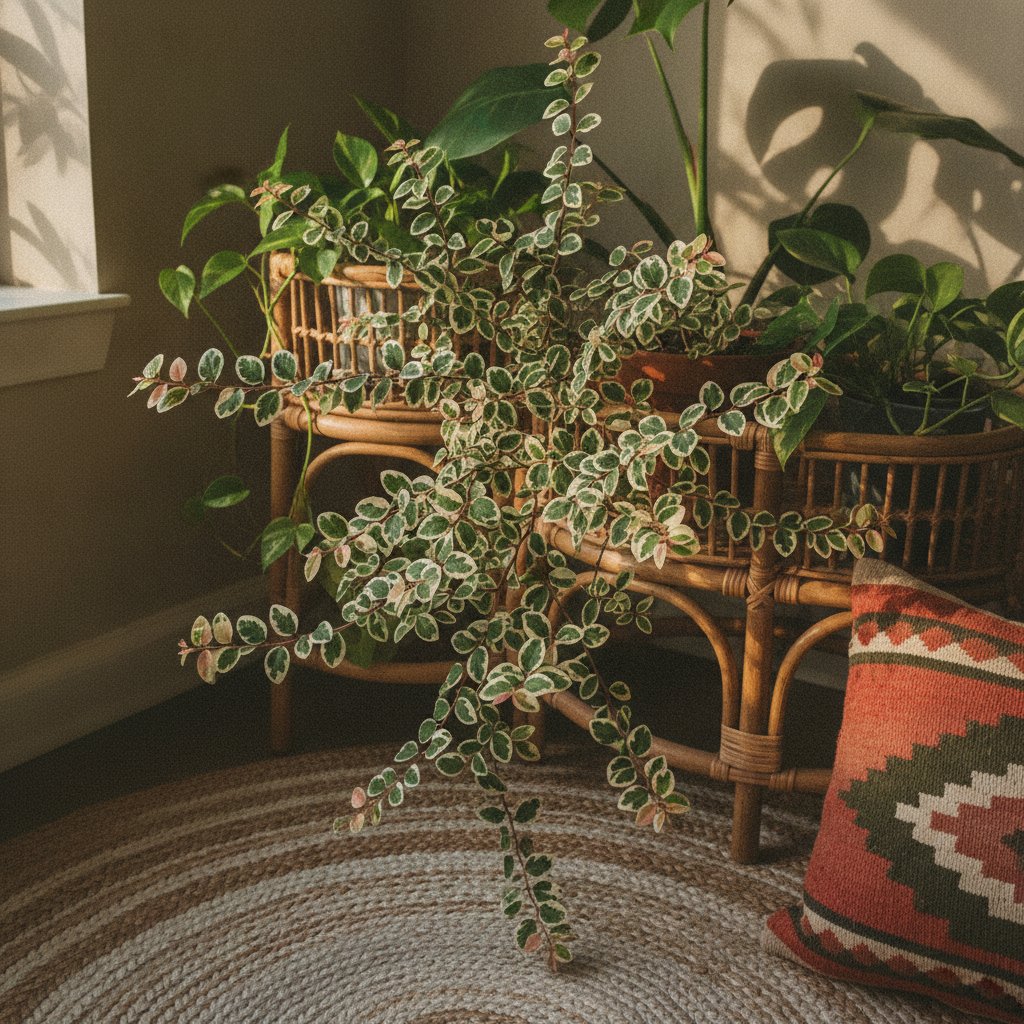
Few foliage plants carry their name quite as literally as the snowbush. Seen from across a room, a well-grown Breynia disticha looks as though someone has flicked a loaded paintbrush across its canopy, dusting the small oval leaves with flecks of white and pink until the whole shrub seems to shimmer. It is a plant that trades entirely on its foliage, and the difference between a snowbush that merely survives on a shadowed shelf and one that positively glows in a bright window comes down to a handful of conditions that this guide sets out to explain in full.
Native to the Pacific islands around New Caledonia and Vanuatu, the snowbush belongs to the family Phyllanthaceae and is grown across the warm tropics as a hedge and ornamental shrub. Indoors it becomes a compact, airy houseplant prized for the way its slender, zigzagging stems hold their two-ranked leaves in flat, herringbone sprays. Understanding where it comes from is the key to keeping it happy, because almost every quirk of its behaviour, from its thirst to its sulking at the first cold draught, traces directly back to its humid, frost-free island home.
Quick Reference
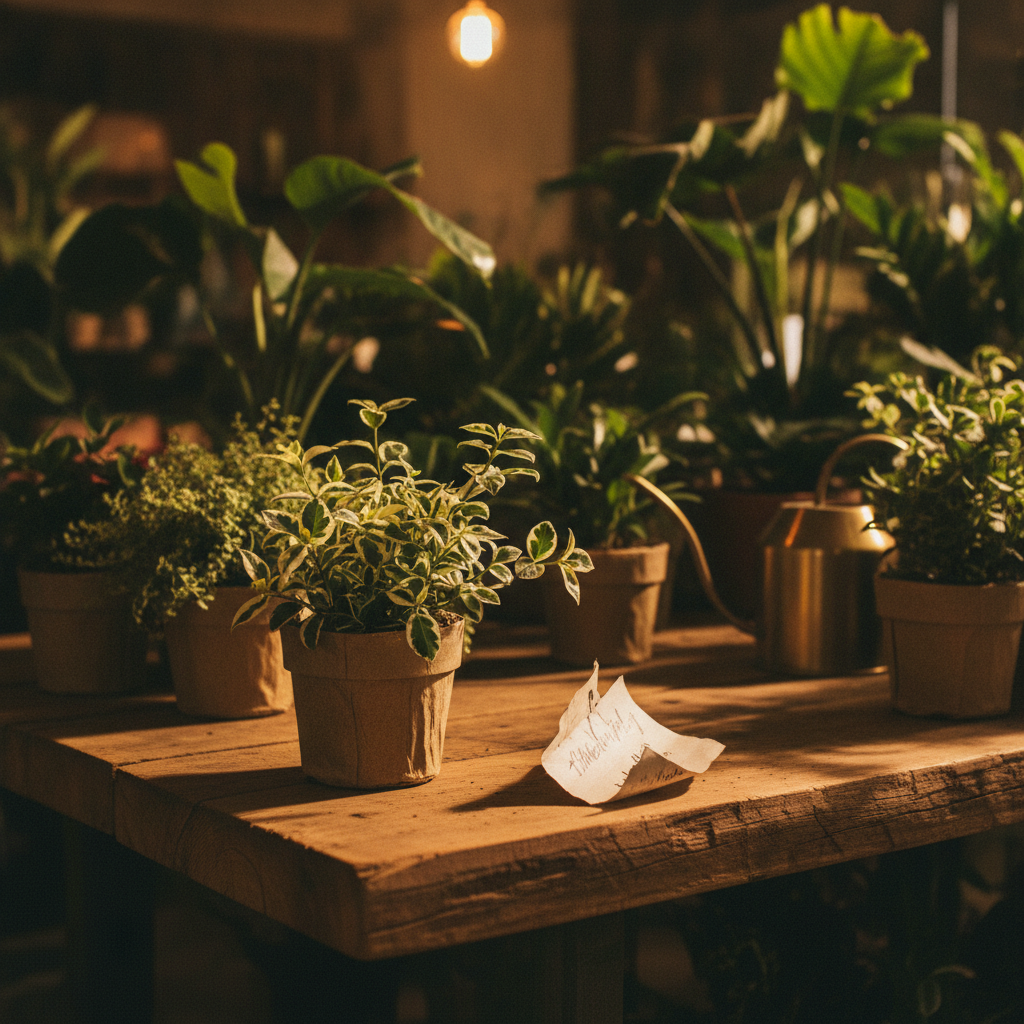
The table below distils the essentials for anyone who wants the headline figures before reading further. Each point is expanded in its own section, but these are the numbers worth committing to memory.
| Common names | Snowbush, Hawaiian snow bush, sweet pea bush, foliage flower |
| Botanical name | Breynia disticha (syn. Breynia nivosa) |
| Family | Phyllanthaceae |
| Origin | Pacific islands, New Caledonia and Vanuatu |
| Mature size indoors | 0.6 to 1.5 metres (2 to 5 feet) tall |
| Light | Bright indirect light with a little gentle direct sun |
| Watering | Keep evenly moist, never bone dry |
| Humidity | High, above 50 per cent preferred |
| Temperature | 18 to 27 degrees Celsius (64 to 81 Fahrenheit) |
| Soil | Rich, moisture-retentive yet free-draining mix |
| Feeding | Balanced feed monthly through spring and summer |
| Propagation | Semi-ripe stem cuttings, or air layering |
| Toxicity | Best treated as mildly toxic, keep from pets and children |
| Difficulty | Intermediate, thanks to its thirst and humidity needs |
Why Grow the Snowbush as a Houseplant
The case for the snowbush rests almost entirely on its foliage, which is unusual among variegated houseplants for combining three colours in a single leaf. Fresh growth emerges flushed with soft rose-pink, matures to a mottled patchwork of green and cream, and holds that variegation across the whole plant rather than in a few showcase leaves. Because the colour is spread so evenly and the individual leaves are small, the effect reads as texture and shimmer rather than bold blocks of contrast, which makes the snowbush an easy plant to place beside larger, plainer greenery without clashing.
Structurally it is just as appealing. The botanical epithet disticha refers to the way the leaves are arranged in two opposite ranks along the stems, and the branches themselves grow in a slightly flattened, zigzag fashion that gives mature plants a delicate, layered silhouette. In its native range the snowbush is planted as a low informal hedge, so indoors it responds well to pruning and can be kept as a rounded tabletop specimen or allowed to develop into a small, shrubby floor plant. This willingness to be shaped, combined with a naturally bushy habit, means it fills out attractively rather than growing leggy the way many variegated plants do.
It is worth being honest about the trade-off. The snowbush is not a plant for the forgetful waterer or the person who wants something that shrugs off a dry, centrally heated room. It demands steadier moisture and higher humidity than a pothos or a snake plant, and it will drop leaves to tell you when it is unhappy. In return it offers a colour and delicacy that few easier plants can match. For a grower ready to meet those conditions, it is one of the most rewarding foliage shrubs available.
Pro Tip – Buy in spring: Snowbush settles into a new home far more readily during the warm, bright months. A plant bought and repotted in spring or early summer has the light and warmth it needs to root out and recover, whereas one that changes hands in the depths of winter often sulks and sheds until conditions improve.
Light
Light is the single biggest lever you have over how colourful a snowbush becomes. In its island habitat it grows in open, sunny positions, and that heritage shows in the way its variegation responds to brightness. Given generous light, the plant produces abundant pink new growth and holds crisp white and cream markings across mature leaves. Starved of light, it does not die quickly, but it slides towards a duller, greener appearance as the plant sacrifices its costly pale tissue in favour of the chlorophyll it needs to feed itself.
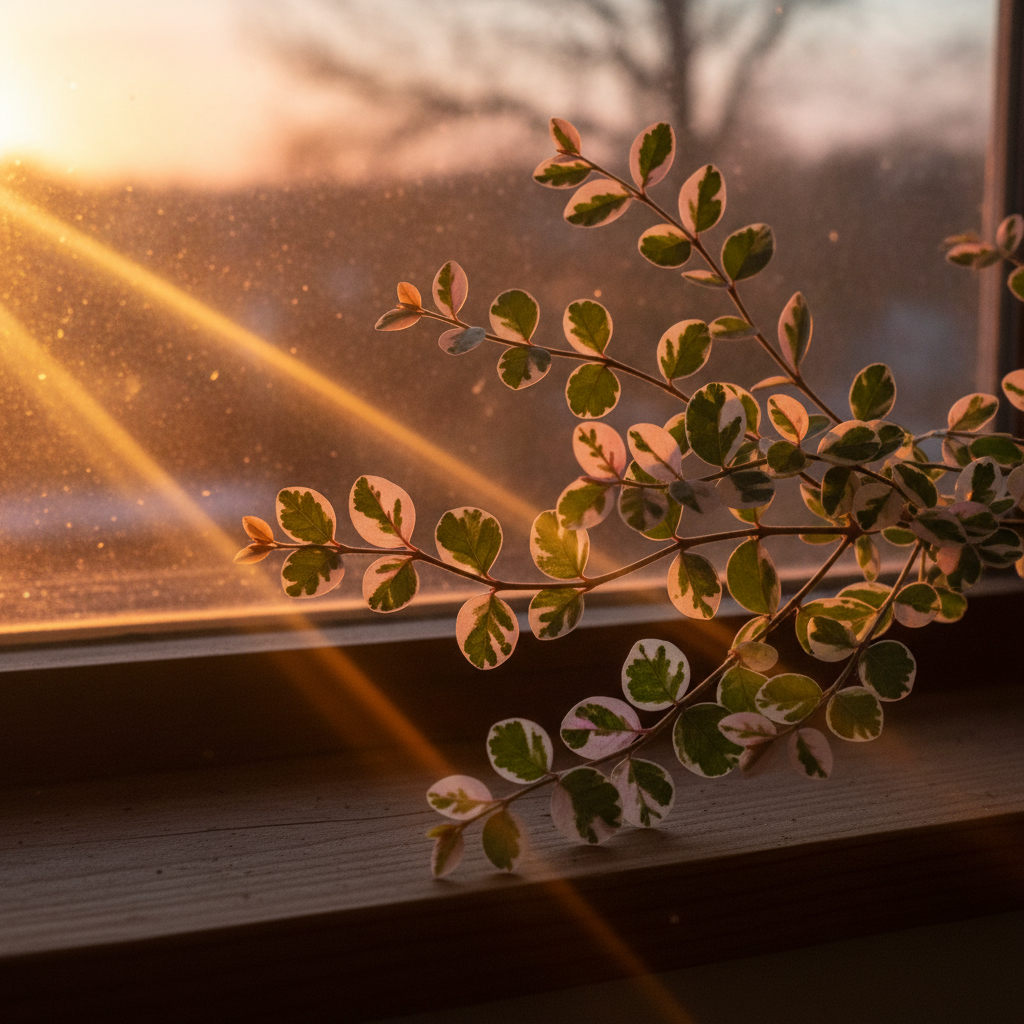
The ideal indoor position is bright indirect light with a few hours of soft, direct sun. An east-facing window that catches the gentle first light of the morning suits it perfectly, as does a spot a little back from a south or west window where sheer curtains filter the harshest midday rays. The plant can tolerate more direct sun than many variegated houseplants, but leaves that have grown in low light will scorch if moved abruptly into strong afternoon sun, so any increase in exposure should be made gradually over a week or two.
Watch the plant itself for guidance. Vivid pink new leaves and tight, bushy growth signal that the light is right. Long gaps between leaves, stems that lean hard towards the window, and new growth that emerges plain green all point to insufficient light. In a genuinely dim room, or through the short days of a northern winter, a full-spectrum LED grow light for a few hours each day will keep the variegation from fading and stop the plant stretching. Rotating the pot a quarter turn each week encourages even, balanced growth rather than a lopsided plant that has grown towards a single light source.
Watering
If light governs colour, water governs whether the plant keeps its leaves at all. The snowbush is markedly less forgiving of drought than most popular houseplants, and its most common failure by far is the sudden leaf drop that follows a rootball drying out completely. Coming from a humid, high-rainfall environment, it expects soil that stays lightly and consistently moist, and it treats a bone-dry pot as a signal to shed foliage and conserve itself.
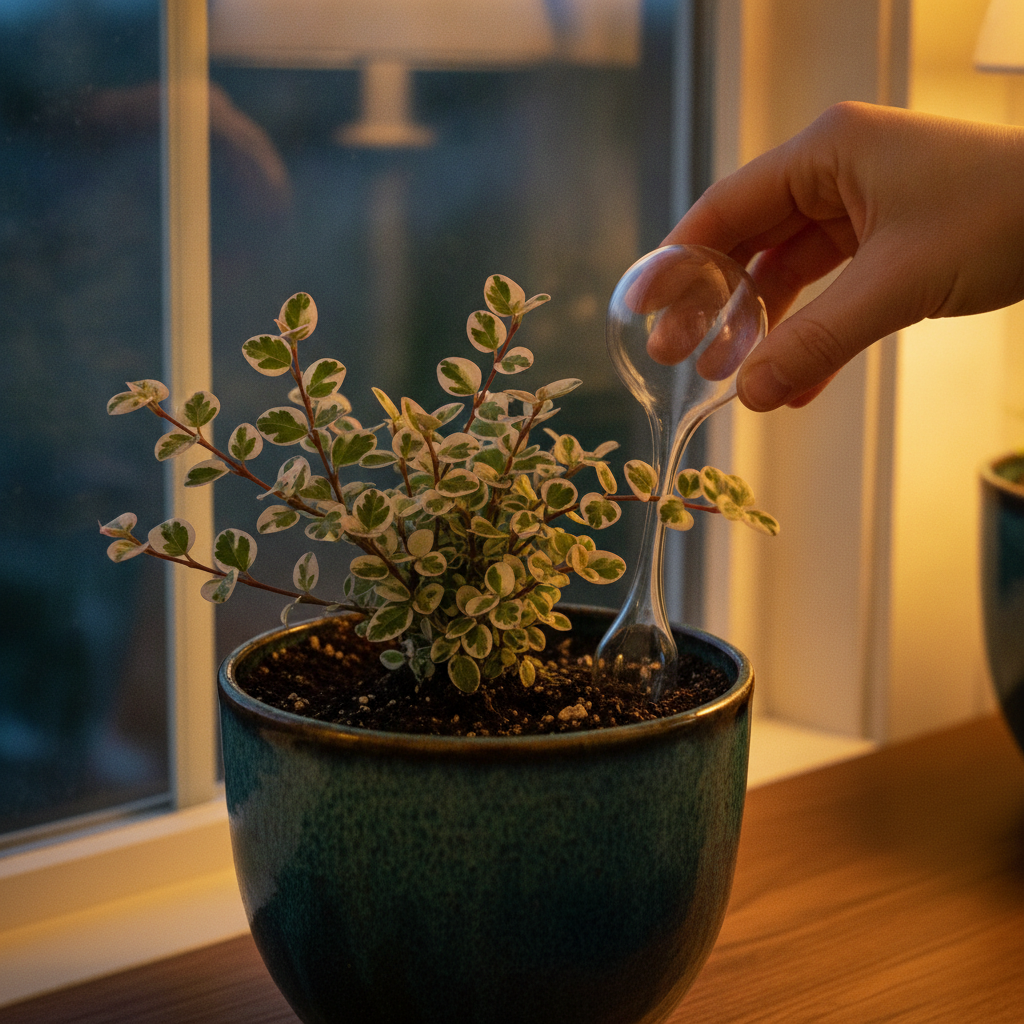
The practical target is to keep the top of the compost just moist to the touch, watering thoroughly as soon as the surface begins to feel dry rather than waiting for the pot to lighten dramatically or the leaves to wilt. When you water, do so generously until it runs freely from the drainage holes, then let the excess drain away completely. This flushes the whole rootball and prevents the mineral build-up that surface splashes leave behind. The plant likes moisture but it does not like to sit in a saucer of standing water, which suffocates the roots and invites rot, so tip away anything that collects underneath after ten minutes or so.
Frequency will vary with the season. Through the warm, bright months a snowbush in active growth may need watering two or three times a week, especially if it is potbound and thirsty. In winter, when growth slows and the compost dries more slowly, ease back and let the surface dry a little further between waterings, though never to the point of complete drought. Room-temperature water is kinder than cold straight from the tap, and if your water is very hard, the plant will appreciate rainwater or filtered water, which spares its pale variegated tissue from the leaf-tip browning that dissolved minerals can cause.
Warning – The dramatic sulk: A snowbush that dries out fully can shed a startling number of leaves within a day or two. Do not assume the plant is dead. Trim any truly crisp stem tips, resume steady watering, and in most cases fresh growth returns from the bare stems within a few weeks once the rootball is rehydrated.
Humidity works hand in hand with watering here. The snowbush is a genuine humidity lover, happiest above 50 per cent, and dry indoor air compounds the stress of erratic watering by pulling moisture from the thin leaves faster than the roots can replace it. Grouping it with other plants, standing the pot on a wide tray of damp pebbles, or running a small humidifier nearby all help, and are far more effective over time than occasional misting, which raises humidity only for a few fleeting minutes.
Soil
The soil challenge with a snowbush is to satisfy two apparently opposing needs at once. The plant wants moisture held around its roots for longer than a fast cactus mix would allow, yet it will not tolerate the airless, waterlogged conditions that a heavy, dense compost creates. The answer is a rich but open mix that behaves like a wrung-out sponge, holding water while still letting air move through the root zone.
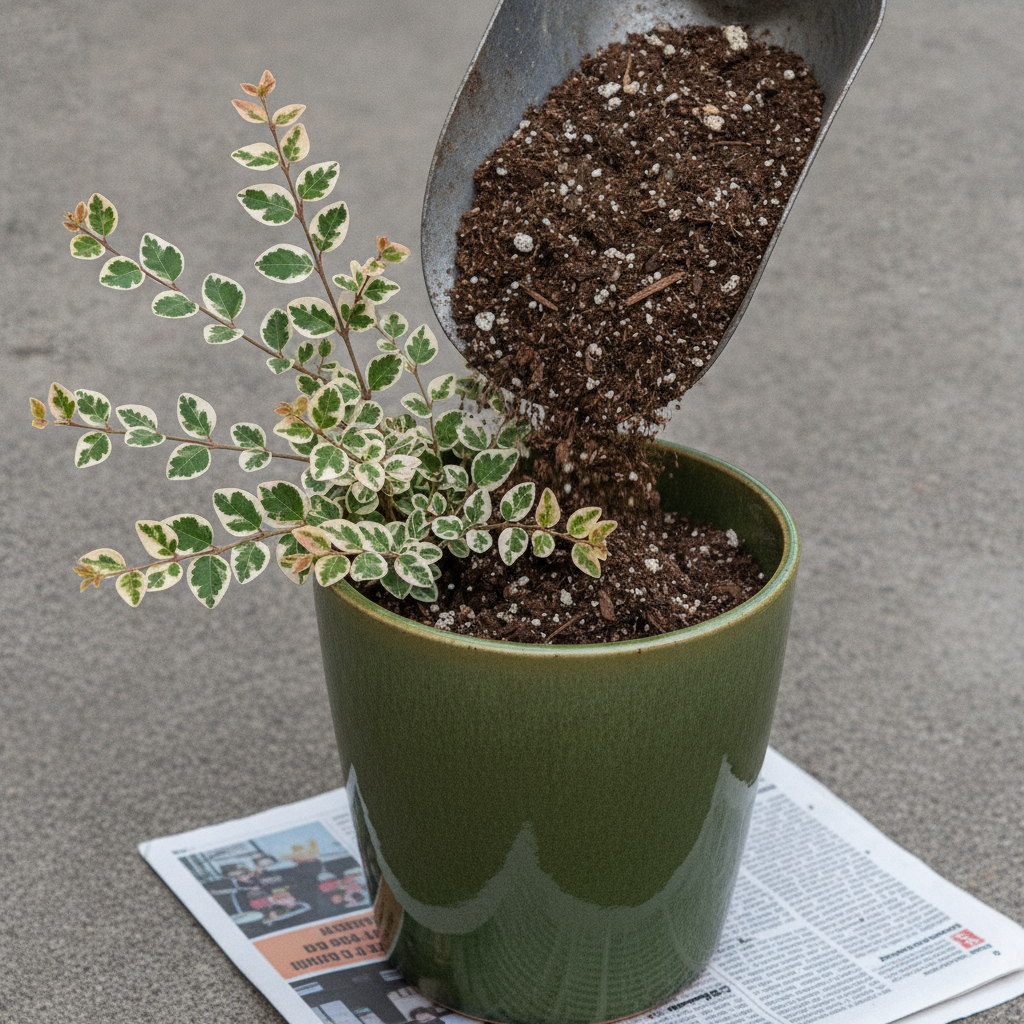
A reliable recipe starts with a good quality peat-free houseplant compost as the base, which supplies the moisture retention and nutrients the plant draws on heavily. To that, add roughly one third by volume of material that opens the structure and improves drainage: perlite, fine orchid bark, or a mix of both work well. A handful of worm castings or well-rotted compost enriches the blend further and helps sustain the vigorous growth the snowbush puts on when it is happy. The finished mix should feel light and crumbly, drain freely when watered, yet still hold a comfortable dampness afterwards.
Repot in spring, ideally every year or two, or whenever roots begin to circle the base and emerge from the drainage holes. Snowbush grows quickly in good conditions and a plant left too long in a tired, root-filled pot dries out far too fast to keep evenly moist, which feeds straight back into the leaf-drop problem. Move it up just one pot size at a time, since an oversized pot holds a reservoir of wet soil around the roots that dries slowly and raises the risk of rot. Always choose a pot with drainage holes; a snowbush in a sealed decorative cachepot with no escape for excess water is a plant heading for trouble.
Pro Tip – Refresh the top layer: In years when you do not fully repot, scrape away the top few centimetres of old compost each spring and replace it with fresh mix and a little worm casting. This renews surface nutrients and improves water penetration without disturbing the established roots.
Fertilising
A snowbush in full growth is a hungry plant, and because it produces so much foliage across a season it responds visibly to regular, balanced feeding. Well-fed plants push out larger leaves with brighter pink new growth and fill out more densely, while an underfed specimen grows slowly, pales overall, and looks thin and reluctant even when light and water are correct.
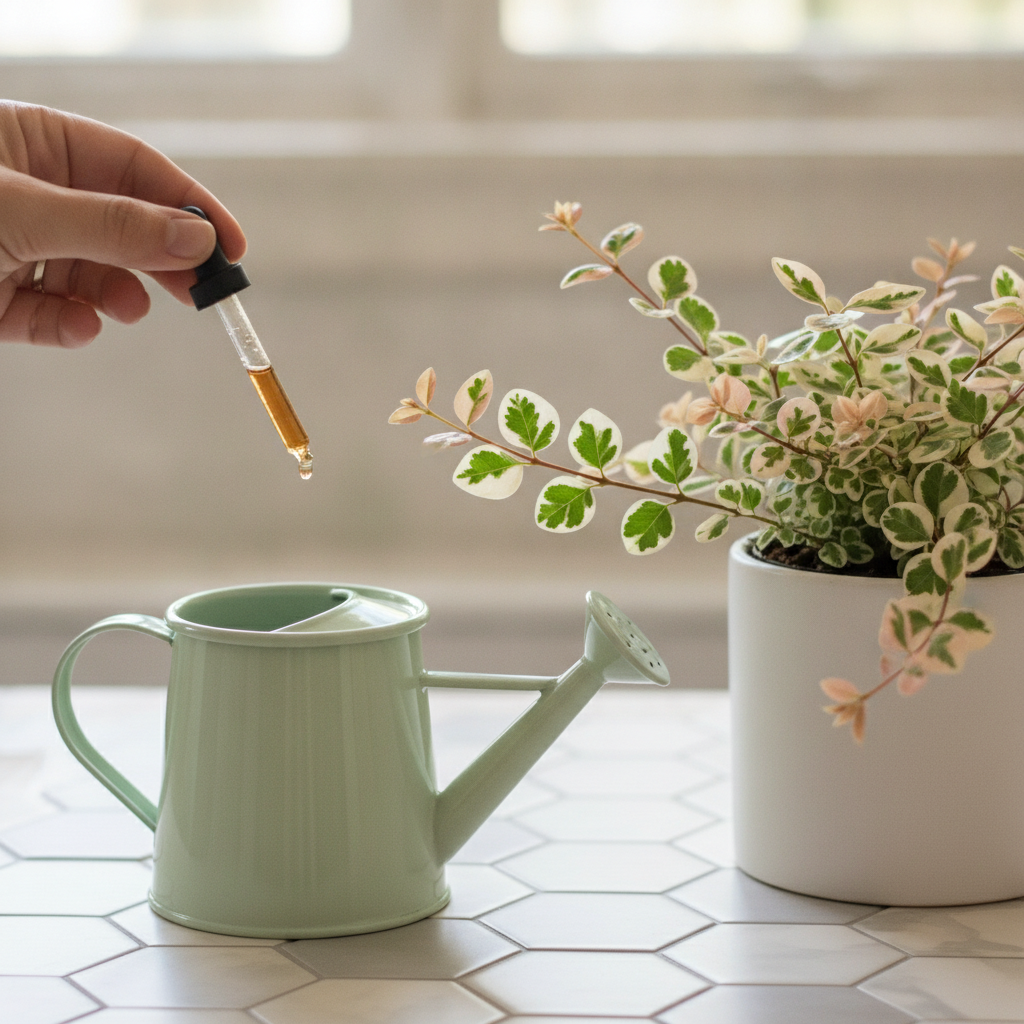
Through the active growing season, from spring into early autumn, feed roughly once a month with a balanced liquid houseplant fertiliser diluted to the strength recommended on the label, or feed more often at half strength if you prefer a gentler, steadier supply. A balanced formula, where the three main nutrient numbers are broadly similar, suits a foliage plant like this better than a bloom-boosting feed heavy in phosphorus. Always apply fertiliser to compost that is already damp, never to a dry rootball, because feeding into dry soil concentrates the salts around the roots and can scorch them.
Ease right off in the darker months. As light fades and growth naturally slows, the plant cannot use much fertiliser, and continuing to feed simply leaves unused mineral salts to accumulate in the soil. Through late autumn and winter, either stop feeding altogether or cut back to a very dilute feed every six weeks or so. If you ever see a white crust forming on the soil surface or the pot rim, that is a sign of salt build-up; flush the pot thoroughly with plain water several times to leach the excess away, and reconsider your feeding strength.
Propagation
Happily for anyone who wants more of this plant, or who ends up with prunings after a tidy-up, the snowbush propagates readily from stem cuttings. It does not root from single leaves the way some succulents do, so propagation always works with a length of stem carrying several leaves and, crucially, one or more growth nodes where roots will form.
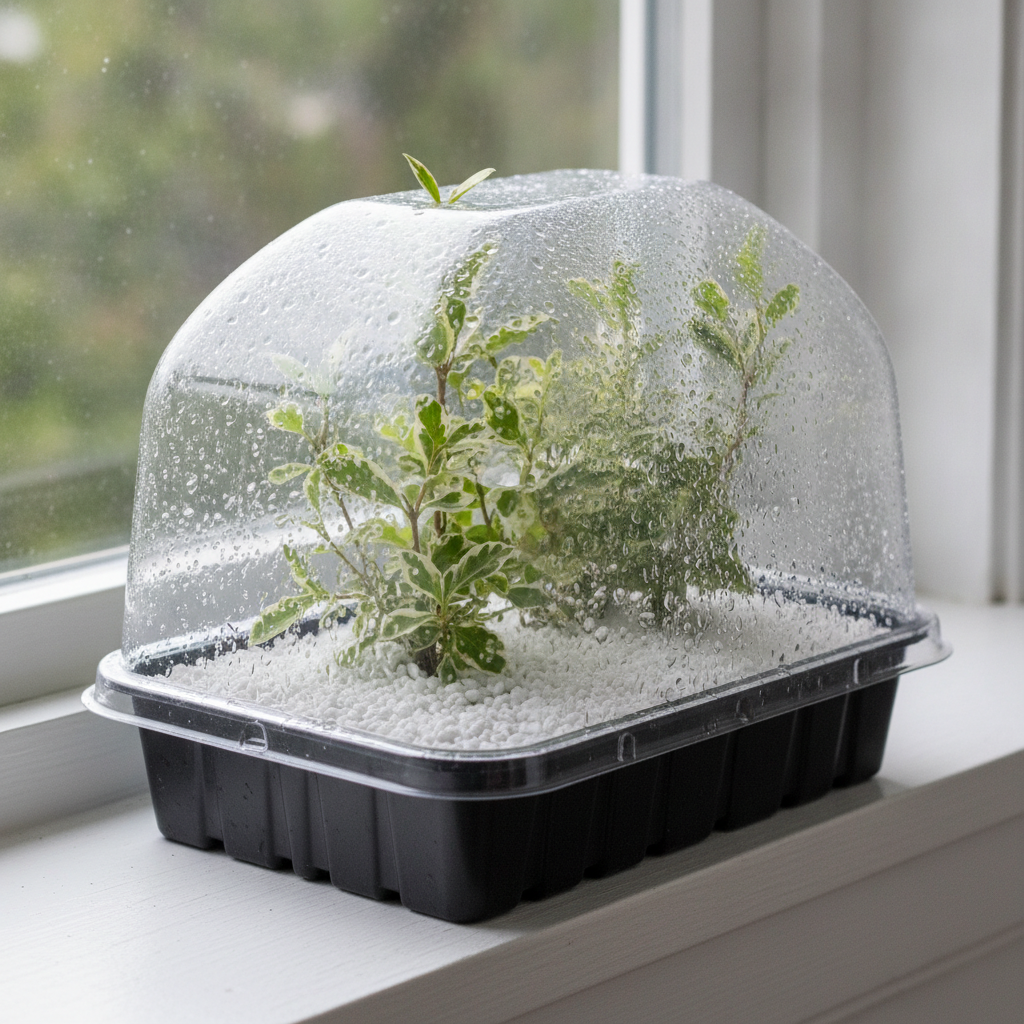
The most reliable method uses semi-ripe cuttings taken in late spring or summer, when the plant is growing strongly. Choose healthy stems that are neither soft and green nor fully woody, and follow these steps:
- Cut a length of stem around 8 to 12 centimetres (3 to 5 inches) long, just below a node, using clean, sharp scissors or secateurs.
- Strip the leaves from the lower third of the cutting so that at least one bare node can be buried in the rooting medium.
- Dip the cut end in rooting hormone if you have it. This is optional but improves the strike rate on semi-ripe wood.
- Insert the cutting into a moistened, free-draining medium such as damp perlite, a perlite and compost blend, or fine bark, firming it gently so it stands upright.
- Cover with a clear plastic bag or humidity dome to trap moisture, and place somewhere warm and bright but out of harsh direct sun.
- Keep the medium lightly moist and air the cover briefly every few days to refresh the air and discourage mould.
Warmth is the deciding factor. At a steady 21 to 25 degrees Celsius (70 to 77 Fahrenheit) roots usually form within three to six weeks, and you will know they have taken hold when the cutting resists a very gentle tug and begins to push new growth. At that point, gradually open the cover over several days to acclimatise the young plant to normal room humidity before potting it on into standard snowbush mix. Taking several cuttings at once is wise, since it hedges against the odd failure and lets you pot up a fuller, bushier plant by grouping two or three rooted cuttings together.
For larger, established plants, air layering offers an alternative that yields a sizeable new plant in one step. Wound a section of stem, wrap it in damp sphagnum moss enclosed in clear film, and wait for roots to develop within the moss before cutting the rooted section free. It is slower and more fiddly than cuttings but useful for rejuvenating a plant that has grown bare and leggy at the base.
Pests and Problems
The snowbush is not especially pest-prone, but the same conditions that keep it thriving, warmth and steady humidity, are also agreeable to several common houseplant pests. Regular inspection is the best defence, and the plant’s small leaves make it easy to run a cloth over the foliage while checking for the first signs of trouble.
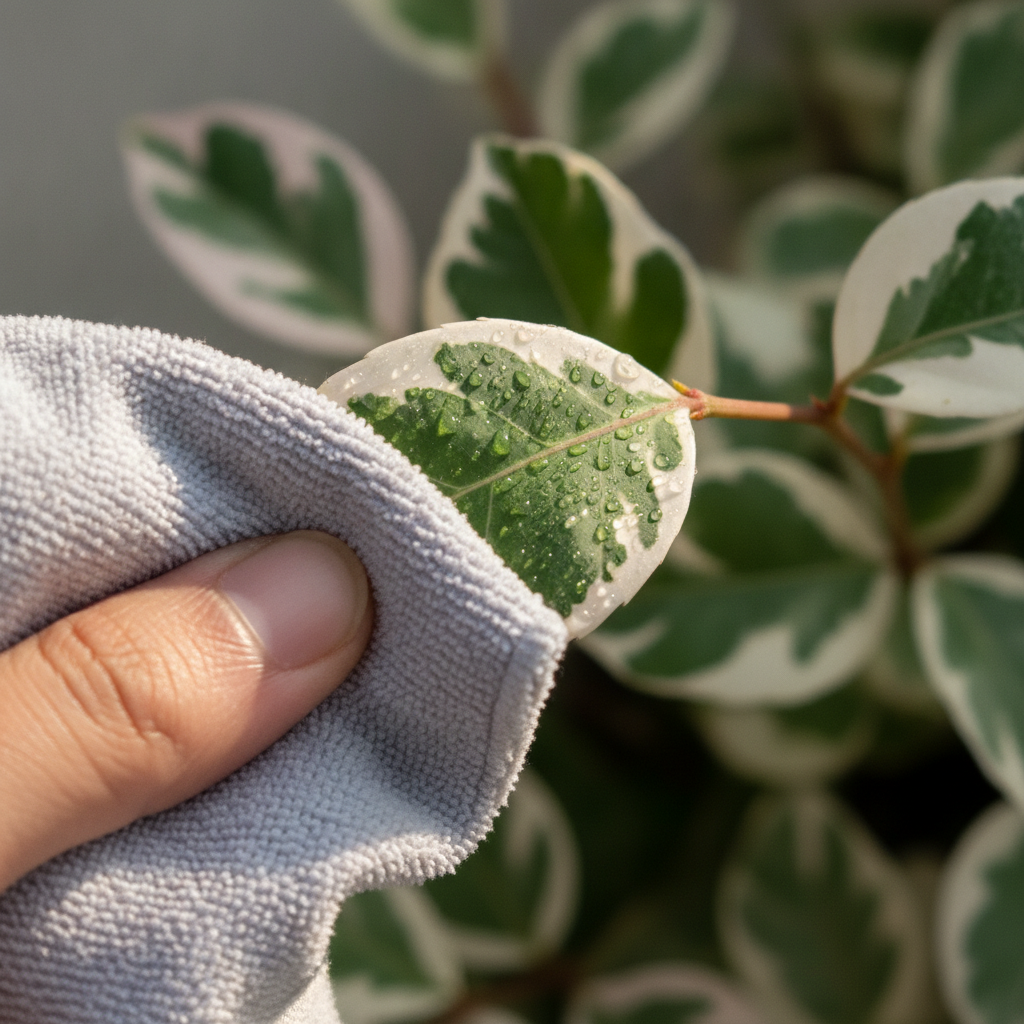
Spider mites are the pest to watch most closely, since they flourish in the warm, dry air of a heated room and can build up unseen on the undersides of the leaves. Fine pale stippling on the foliage and delicate webbing in the leaf axils are the giveaways. Because the snowbush wants high humidity anyway, keeping the air moist is both good culture and effective mite prevention. Mealybugs, appearing as small white cottony tufts where leaves meet stems, and whitefly, which rise in a cloud when the plant is disturbed, are the other likely visitors, along with the occasional aphid clustering on soft new growth.
Treatment follows the same pattern for all of them. Isolate an affected plant so pests cannot spread to neighbours, wipe or wash off what you can, and treat with insecticidal soap or a neem oil solution, covering the undersides of the leaves thoroughly and repeating every week or so until the problem clears. Sticky yellow traps help monitor and reduce flying pests. Catching an infestation early, while it is confined to a few leaves, makes all the difference, because a pest population left to build on a densely leaved shrub is far harder to clear.
Most snowbush troubles, though, are cultural rather than the work of pests. Sudden leaf drop almost always means the rootball dried out or the plant caught a cold draught, both of which it protests dramatically. Leaves fading towards plain green point to too little light, while brown, crisp leaf edges usually signal air that is too dry, water that is too hard, or a build-up of fertiliser salts. Yellowing lower leaves accompanied by soggy soil warn of overwatering and the beginnings of root rot. Reading these signals and adjusting one condition at a time will resolve nearly every issue the plant presents.
Warning – Mind the cold: The snowbush has no tolerance for frost and dislikes temperatures much below 10 degrees Celsius (50 Fahrenheit). Keep it away from cold windowpanes in winter, unheated porches, and the draught of an often-opened door, any of which can trigger a rapid loss of leaves.
Varieties
Most snowbush plants sold as houseplants are selections of the same species, chosen for the intensity and colour of their variegation. The two most widely grown are the pink-splashed Roseo-Picta and the cooler green and white Nivosa, and between them they cover the range of looks the species offers.
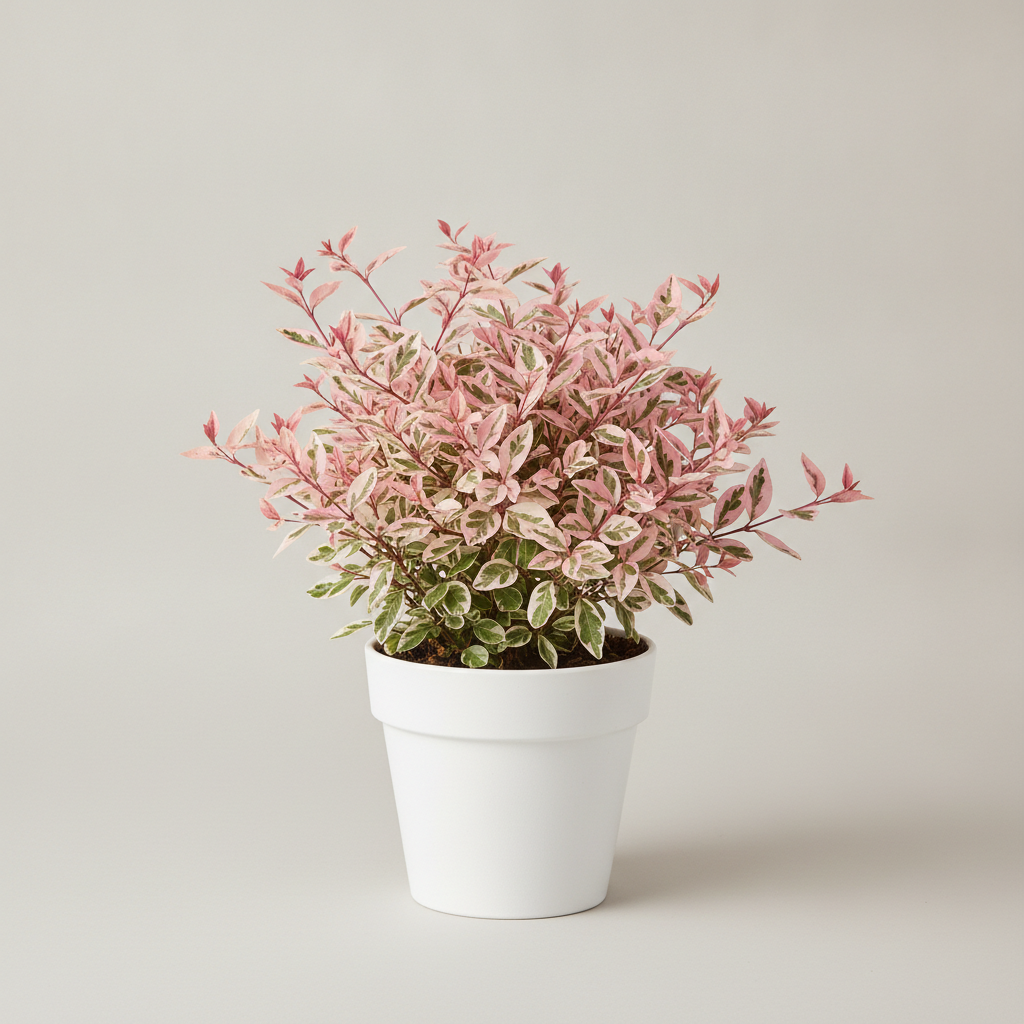
Roseo-Picta (Pink Snowbush). The most sought-after form, with leaves heavily splashed and marbled in pink and cream, especially vivid on the new growth that unfurls a strong rose colour on pink-red stems. It needs the brightest light of any snowbush to keep that pink saturation, fading towards white and green in dimmer positions. Grown well, it is one of the most colourful small foliage shrubs you can keep indoors.
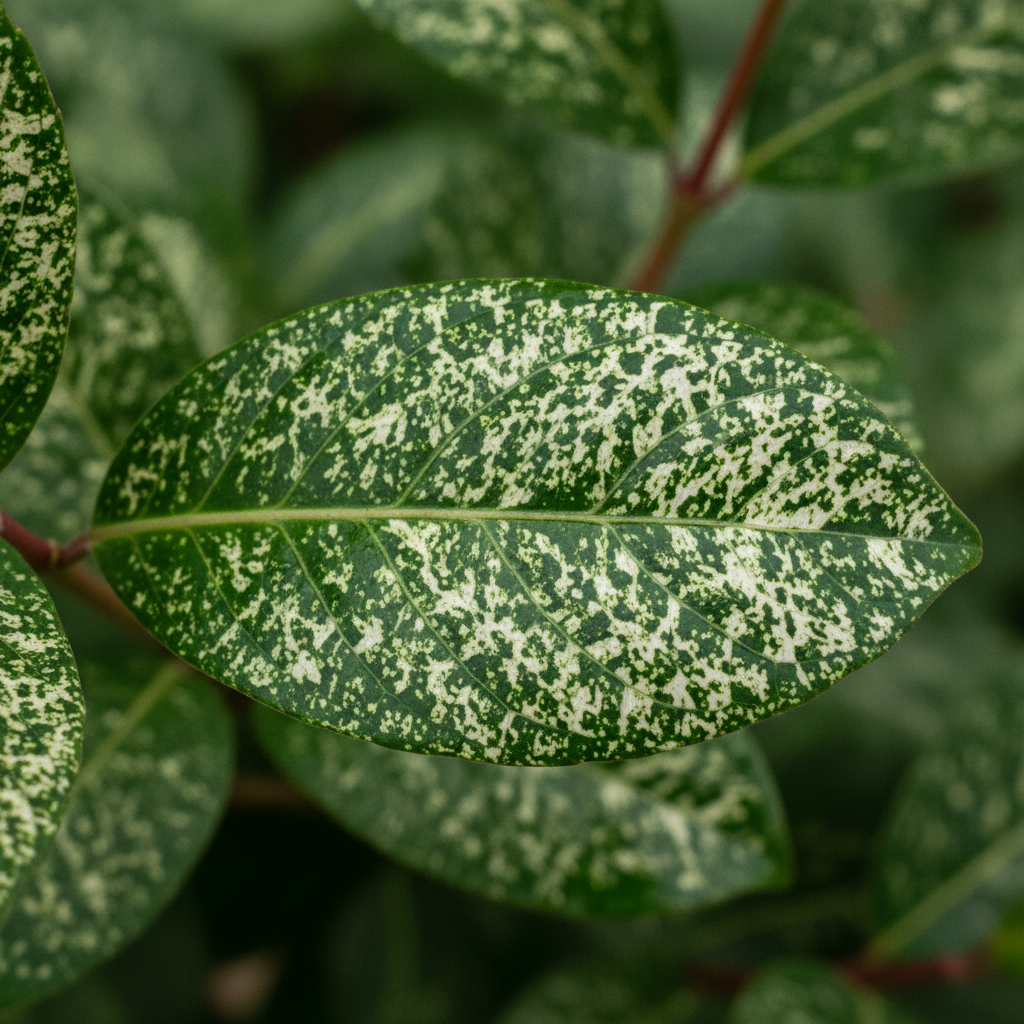
Nivosa (Green and White Snowbush). The classic snow-flecked form, its green oval leaves finely dusted and mottled with white and pale cream on slender reddish stems. The overall effect is cooler and more restrained than Roseo-Picta, reading as a soft frosting across the canopy rather than bold pink. It is a touch more tolerant of slightly lower light, since it carries less costly pink pigment, and makes an elegant, calmer companion to bolder plants.
You may also encounter darker selections marketed under names such as Atropurpurea, which carry deeper bronze and purple tones through the foliage. Whatever the named form, the care is identical across the board, so choose on looks alone and give your chosen plant the brightest position you can to keep its particular colouring at its best.
Frequently Asked Questions
Why is my snowbush dropping leaves so suddenly?
Sudden leaf drop is the snowbush’s trademark reaction to stress, and the usual causes are a rootball that dried out completely or exposure to cold or draughts. Check the soil first: if it is bone dry, water thoroughly and steadily from now on and new leaves will usually return within a few weeks. If watering has been consistent, look for a cold windowpane, a draughty doorway, or a recent drop in room temperature, and move the plant somewhere warmer and more sheltered.
Is the snowbush safe around cats, dogs and children?
The snowbush is best treated with caution. While it is not among the most notoriously toxic houseplants, its milky sap can irritate skin and it is sensible to assume the foliage could cause stomach upset if eaten. Keep it out of reach of pets and young children, and wash your hands after pruning. If any part is ingested and you are concerned, contact a vet or medical professional for advice.
How do I keep the pink colour bright?
Light is the key. The pink and cream variegation, and especially the rosy new growth of Roseo-Picta, depends on bright conditions. Give the plant the brightest indirect spot you can, with a little gentle direct sun, and the colour will stay strong. In a dim room the plant gradually reverts towards plain green, so if yours is fading, more light is almost always the answer, supplemented by a grow light through dark winters if needed.
How big does a snowbush get indoors?
Indoors a snowbush typically reaches between 0.6 and 1.5 metres (2 to 5 feet) tall, depending on the pot size and how you prune it. In its tropical native range it can grow into a shrub of 2 to 3 metres, but in a container and with regular pruning it is easily kept as a compact tabletop or small floor plant. Pinching out the growing tips encourages it to branch and stay bushy rather than tall and open.
Can I grow my snowbush outdoors?
Only in a frost-free climate. The snowbush thrives outdoors year round in warm tropical and subtropical regions, where it is often used as a colourful hedge. In cooler climates it can spend the warm summer months outside in a sheltered, partly sunny spot, but it must be brought back indoors well before temperatures fall towards 10 degrees Celsius (50 Fahrenheit), as it will not survive frost or a prolonged cold spell.
Why are the leaf edges turning brown and crisp?
Crisp brown edges point to the air being too dry, water that is too hard, or a build-up of fertiliser salts in the soil, and often a combination of these. Raise the humidity around the plant with a pebble tray or humidifier, switch to rainwater or filtered water if your tap water is hard, and flush the pot with plain water occasionally to leach away accumulated salts. Keeping moisture and humidity steady prevents most edge browning.
The snowbush asks for a little more attention than the toughest houseplants, but its requirements are neither mysterious nor onerous once you understand them: bright light for colour, steady moisture and humidity for healthy foliage, warmth all year round, and shelter from cold and draughts. Meet those conditions and you will be rewarded with one of the most delicately beautiful foliage shrubs in cultivation, its canopy forever looking as though a light, colourful snow has just settled across it.






