
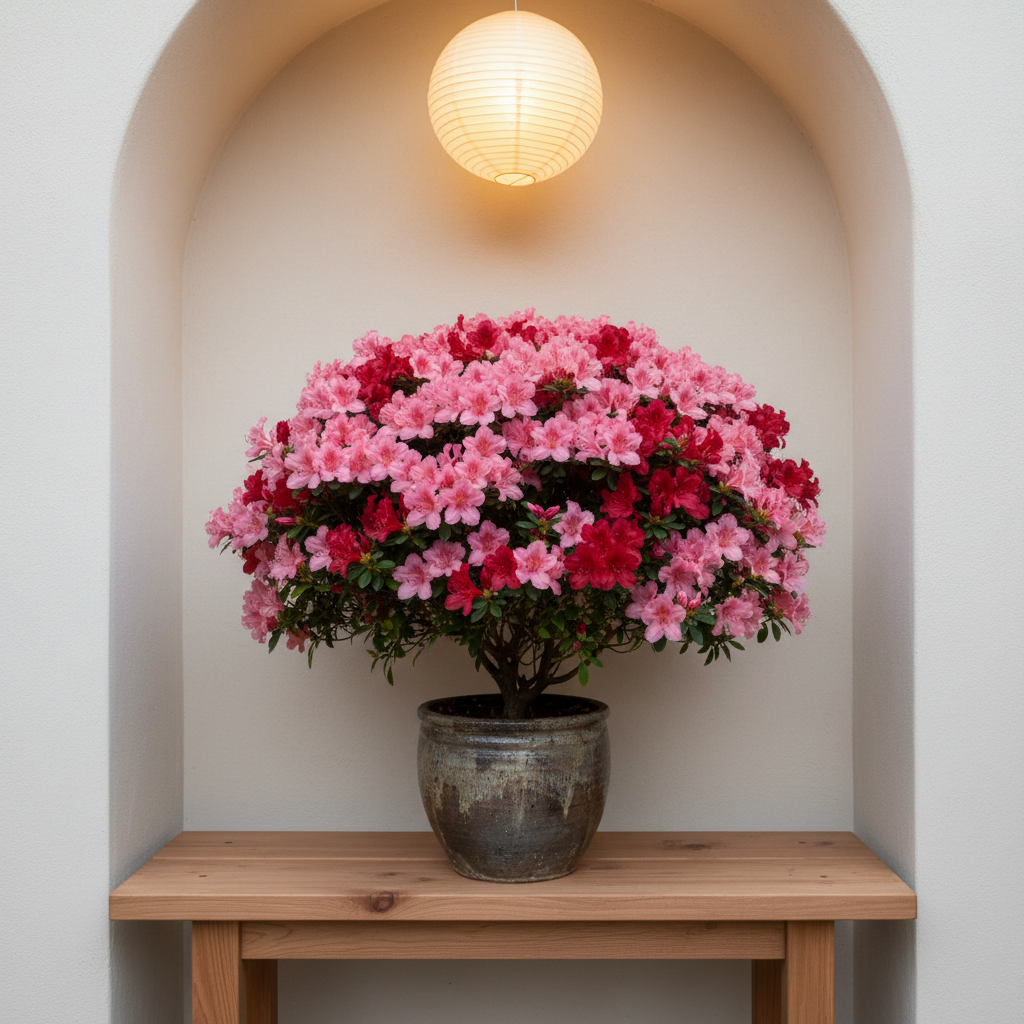
Few houseplants arrive in such a state of full theatrical bloom as the florist’s azalea. Bought in midwinter smothered in ruffled flowers, the compact shrub known botanically as Rhododendron simsii can look almost artificial in its abundance, and that very generosity is what trips up most new owners. The azalea is not a difficult plant so much as a particular one, with firm opinions about temperature, water and soil acidity that differ sharply from the easygoing tropicals most people keep. Understand those preferences and a single plant can flower for six to eight weeks indoors and return year after year; ignore them and it will drop its buds and crisp within a fortnight.
Quick Reference
The table below distils the essentials. Use it as a fast orientation, then read the sections that follow for the reasoning behind each figure, because with azaleas the reasoning matters more than the numbers.
| Common name | Azalea, florist’s azalea, Indian azalea |
| Botanical name | Rhododendron simsii (syn. Azalea indica) |
| Light | Bright, indirect light; a little gentle morning sun is welcome |
| Water | Keep the rootball evenly moist at all times; never let it dry out |
| Soil | Acidic, ericaceous, free-draining mix (pH 4.5 to 5.5) |
| Temperature | 10 to 16 degrees C (50 to 61 degrees F) in bloom; cool is essential |
| Humidity | Moderate to high, 50 per cent or above |
| Feeding | Acid-loving plant fertiliser, fortnightly after flowering through summer |
| Toxicity | Toxic to cats, dogs and people if eaten; contains grayanotoxins |
| Mature size indoors | 30 to 60 cm (12 to 24 in) tall and wide |
| Difficulty | Moderate; forgiving of nothing except neglect of its temperature |
Why Grow the Azalea as a Houseplant
The azaleas sold as flowering pot plants are not the hardy garden shrubs of spring borders but tender evergreen forms of Rhododendron simsii, a species native to the woodlands and stream banks of southern and eastern China. There it grows as an understorey shrub in the dappled shade of taller trees, its roots in cool, perpetually moist, acidic leaf litter. Almost everything the plant demands indoors can be traced back to that origin, and it explains why a florist’s azalea behaves so differently from a pothos or a peace lily that wants nothing more than warmth and the occasional drink.
What the azalea offers in return is colour at a time of year when little else will flower on a windowsill. The blooms come in a painterly range of pinks, reds, corals, whites and bicolours, single or double, ruffled or smooth, and a single well-grown plant can carry dozens of them at once. Because the flower buds are set the previous summer and held dormant through autumn, a healthy plant brought into a cool, bright room will open them in succession over many weeks rather than all at once. This is a plant bought for a spectacle, but with the right aftercare the spectacle need not be a single performance.
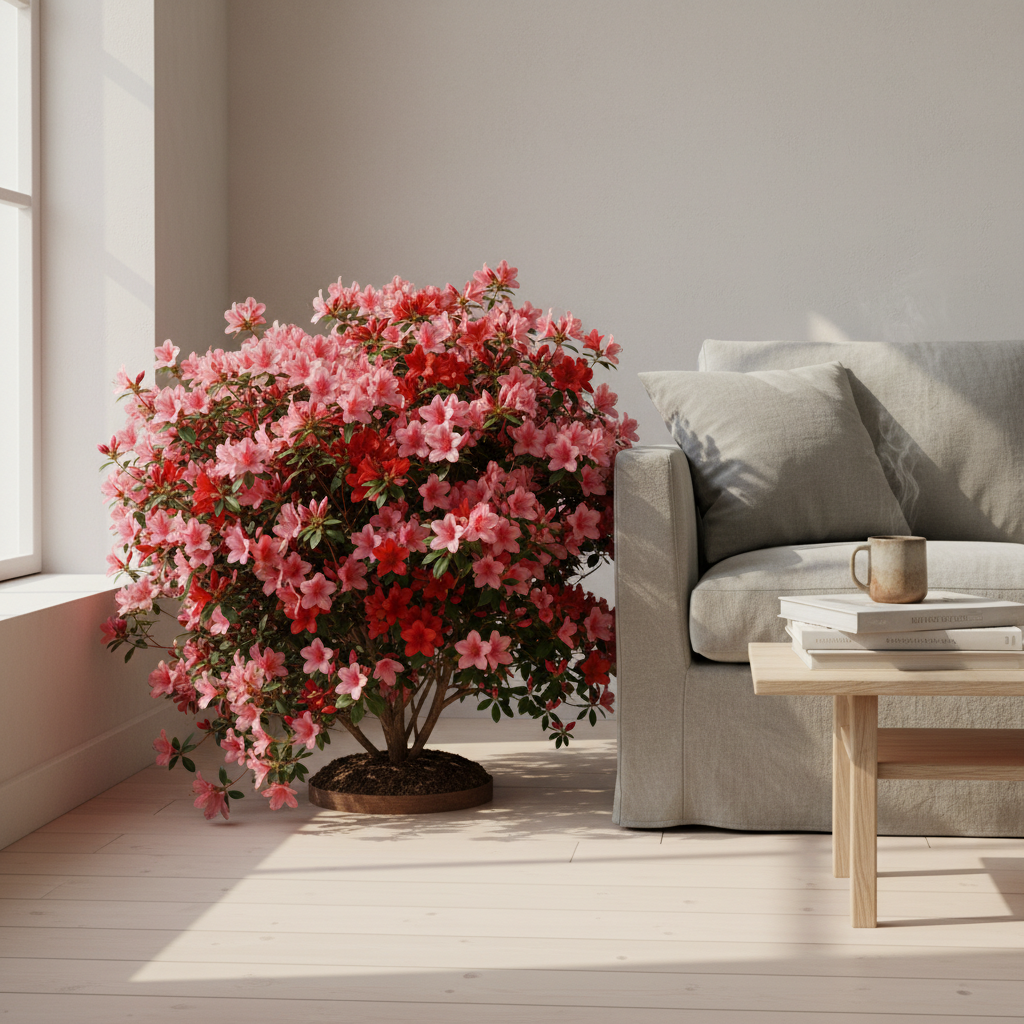
It is worth being honest about the plant’s reputation. Many azaleas are treated as disposable, bought in flower and discarded once they fade, and this is a shame rather than a necessity. The plant is perfectly capable of living for years and of being moved outdoors to a shady spot for the summer, where it builds the strength to flower again. The difference between the throwaway plant and the long-lived one is almost entirely down to whether its owner understands that this is a cool-climate woodlander wearing the costume of a houseplant.
Pro Tip — Buy in bud, not in full bloom: Choose a plant showing plenty of fat, coloured buds with only a few flowers fully open. It will settle into your home and then perform for weeks, rather than peaking in the shop and fading on your table.
Light
As a woodland understorey plant, the azalea is adapted to bright but filtered light rather than the full, unbroken sun that a desert succulent craves. Indoors this translates to a position near a window that receives plenty of daylight but where the midday sun is softened by distance, a sheer curtain, or the foliage of other plants. An east-facing window, with its gentle morning sun, suits the plant especially well, as does a bright spot a metre or so back from a south-facing window where the strongest rays fall short.
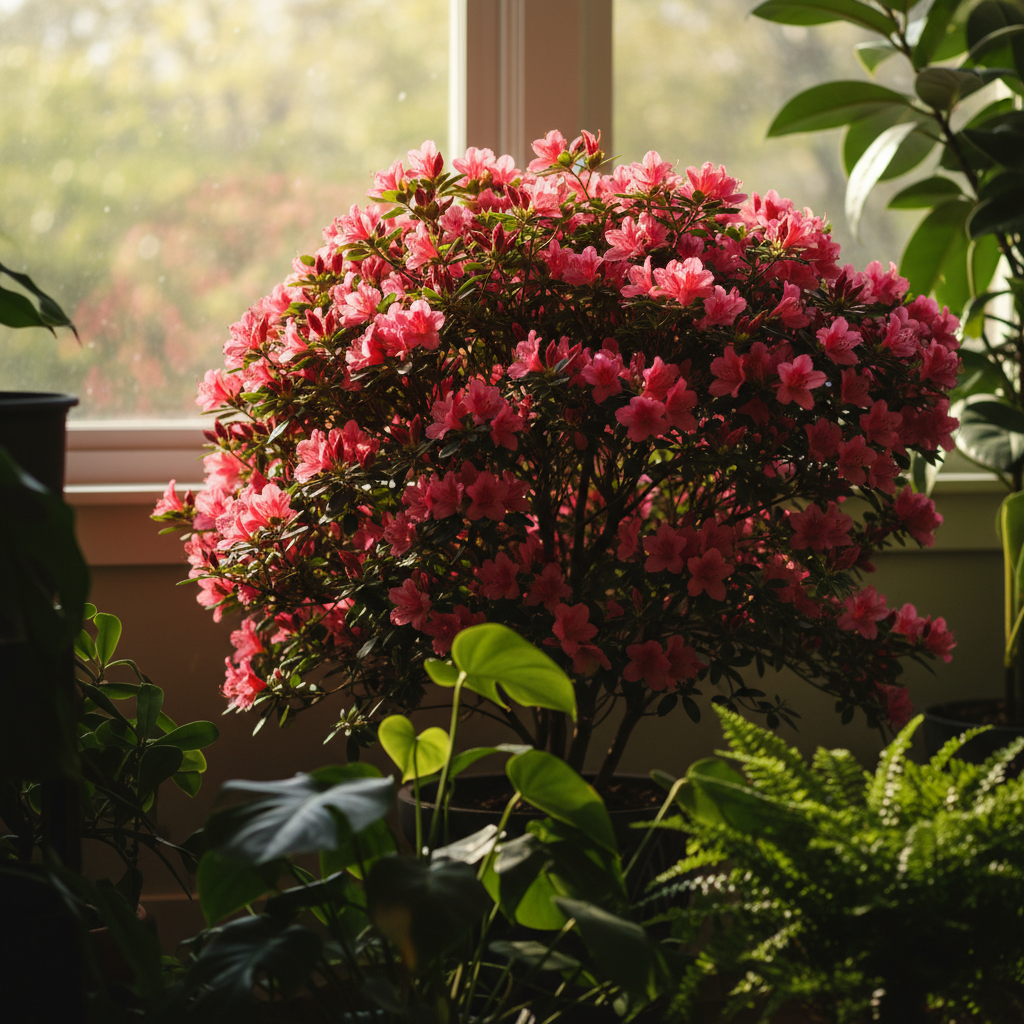
The line between surviving and thriving sits at the level of light intensity. An azalea in too dim a corner will not die quickly, but it will stretch, flower poorly and fail to set buds for the following year, slowly declining into a leggy disappointment. One in harsh, direct summer sun behind glass will scorch, its leaves bleaching and its flowers wilting within hours as the rootball overheats and dries. The sweet spot is generous, indirect brightness, the kind of light in which you could comfortably read without a lamp but where you would not want to sit in the beam yourself for long.
When the plant spends summer outdoors, as the next section recommends, place it in dappled or light shade beneath a tree or on a north or east-facing aspect. Direct outdoor sun on a container-grown azalea is far harsher than anything it will meet indoors and will both scorch the foliage and dry the pot at a punishing rate. Turn the plant a quarter every week or two so that growth and bud-set remain even all the way around rather than leaning toward the light.
Watering
If there is a single skill that decides whether your azalea lives or dies, it is watering, and the rule is unusually strict for a houseplant: the rootball must never be allowed to dry out, nor be left standing in water. Azaleas have fine, shallow, fibrous root systems packed tightly into a dense peaty rootball, and that mass of fine roots dries from the inside with alarming speed. Once it has gone dry it also becomes water-repellent, so that water poured on top runs straight down the sides and out of the drainage holes while the core stays bone dry. A wilting, bud-dropping azalea is, nine times out of ten, a thirsty one.
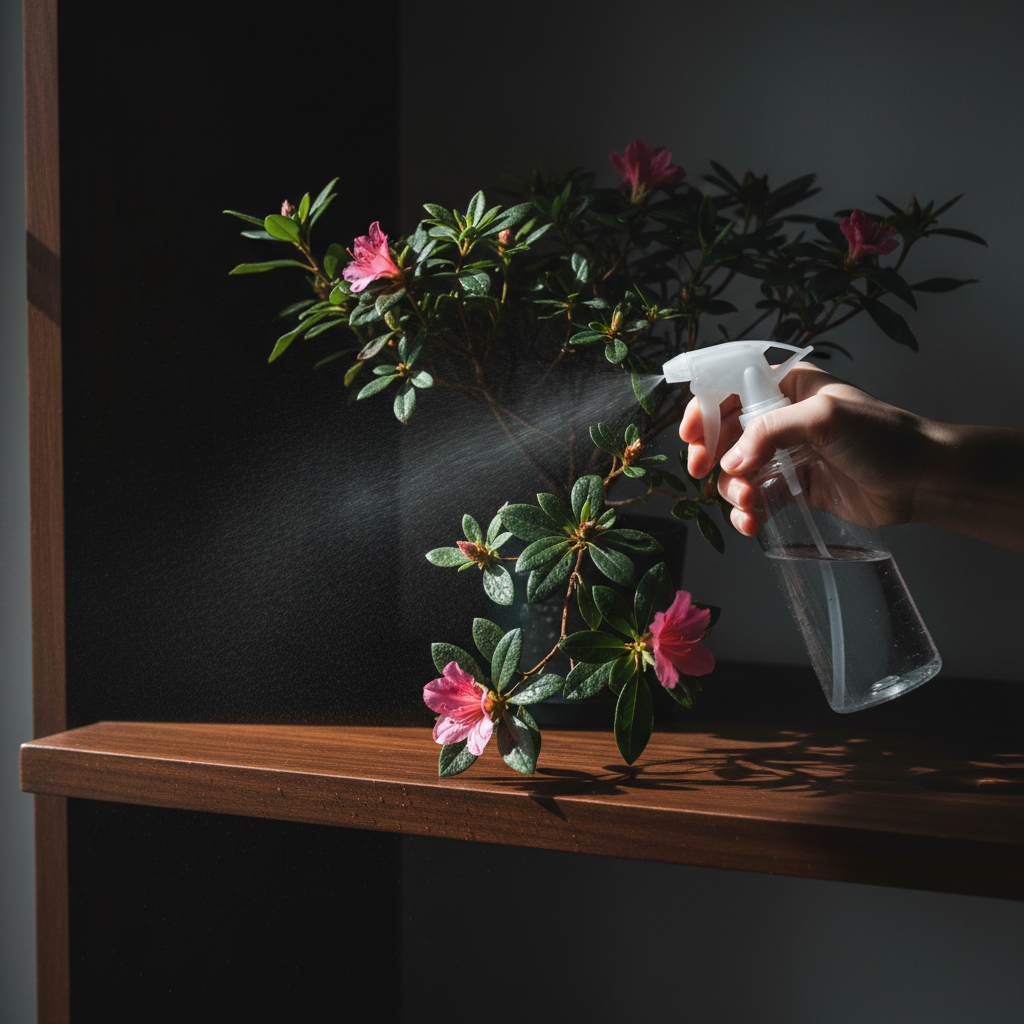
Check the plant daily while it is in flower by lifting the pot or pressing a finger into the surface. When the top of the compost feels barely moist rather than wet, it is time to water, and in a centrally heated room in bloom this may well be every day or two. Water thoroughly so that the whole rootball is wetted and surplus drains away freely, then empty the saucer after a few minutes. If the rootball has been allowed to dry and water is no longer soaking in, stand the whole pot in a bowl or sink of water for twenty to thirty minutes until the surface glistens and the pot feels heavy again, then let it drain. This bottom-soaking is the only reliable way to rehydrate a rootball that has gone hydrophobic.
Water quality matters more for azaleas than for almost any other common houseplant. As an acid-loving species it resents the calcium and magnesium carbonates dissolved in hard tap water, which gradually raise the pH around the roots and lock up the iron the plant needs, causing the leaves to yellow between green veins. Where your tap water is hard, use rainwater, cooled boiled water or filtered water in preference. Lukewarm water is kinder than cold straight from the tap, which can shock the roots of a plant that likes its conditions cool but steady.
Warning — Never let it dry out: Unlike most houseplants, an azalea does not bounce back gracefully from drought. A single thorough drying often triggers a cascade of bud and leaf drop that no amount of subsequent care will reverse for that season. When in doubt, check it daily.
Soil
The azalea’s demand for acidity is non-negotiable and is the reason it must never be potted into ordinary multipurpose compost, which is typically too alkaline and too quick to compact. The plant needs an ericaceous (acid) growing medium with a pH between roughly 4.5 and 5.5, the same range preferred by its relatives the rhododendrons, camellias and blueberries. At a higher pH the roots simply cannot take up iron and other micronutrients, and the plant slides into the yellowing, weakening decline of lime-induced chlorosis no matter how diligently you feed it.
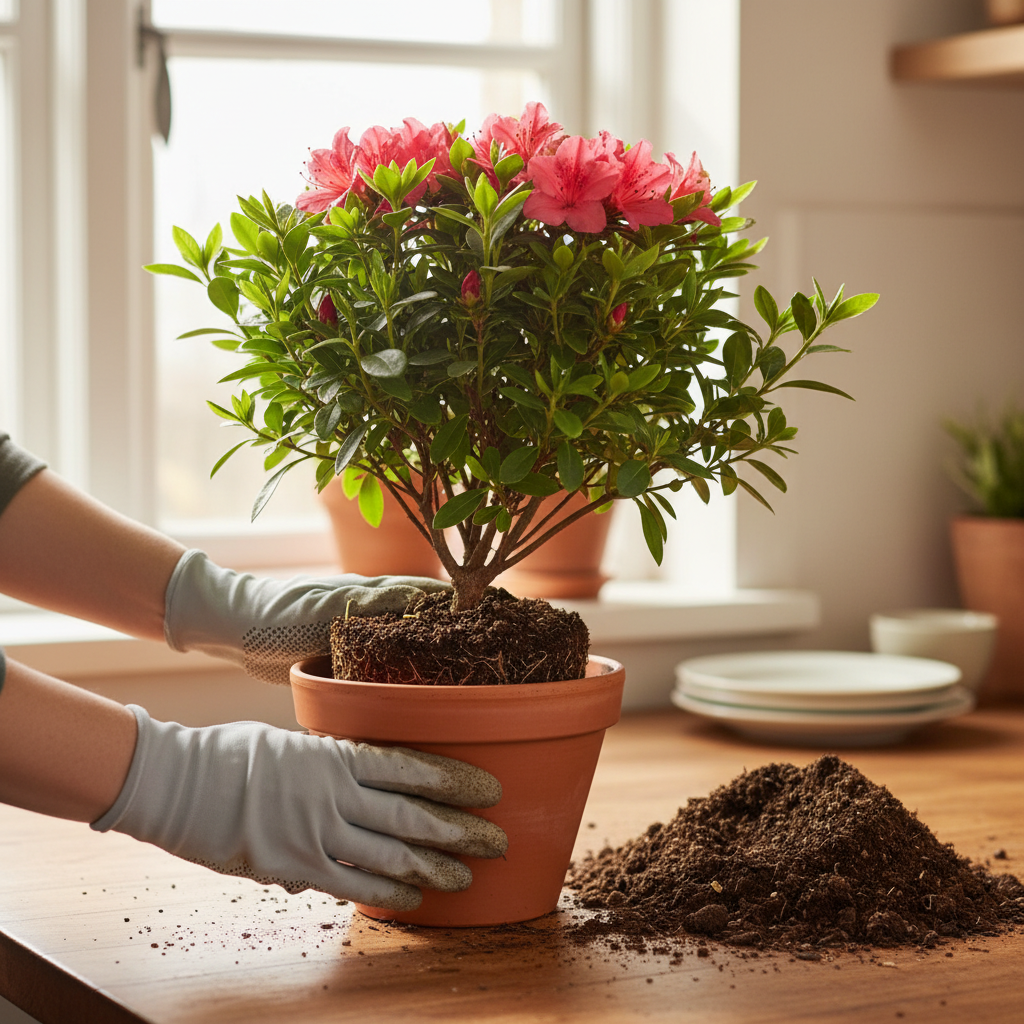
A good mix combines acidity with free drainage and the ability to hold moisture without becoming waterlogged, which sounds contradictory but is exactly what these fibrous roots want. A reliable blend is roughly equal parts ericaceous compost and a fine, acidic conifer or pine bark, with a generous handful of perlite added to keep the structure open. Some growers add leaf mould or fine composted bark to mimic the woodland floor. Avoid anything containing added lime, mushroom compost, or hard tap water during mixing, all of which nudge the pH the wrong way.
Azaleas dislike root disturbance and flower best when slightly pot-bound, so repot only every two or three years, and ideally in late spring once flowering has finished. Move the plant up by a single pot size at most, choosing a container only a little wider than the rootball, and tease the outer roots gently free if they have begun to circle. Set the plant at the same depth it grew before, never burying the crown, and firm the fresh acidic mix gently around the sides before watering it in thoroughly to settle the compost around the roots.
Fertilising
Feeding an azalea is a matter of timing and chemistry rather than quantity. While the plant is in flower it needs little or no feed, as the buds were formed and provisioned the previous season. The important feeding window opens once flowering has finished and the plant begins to push out fresh growth, usually in late spring, and continues through summer while the next year’s buds are being formed. This is the period that determines whether your azalea flowers again at all.
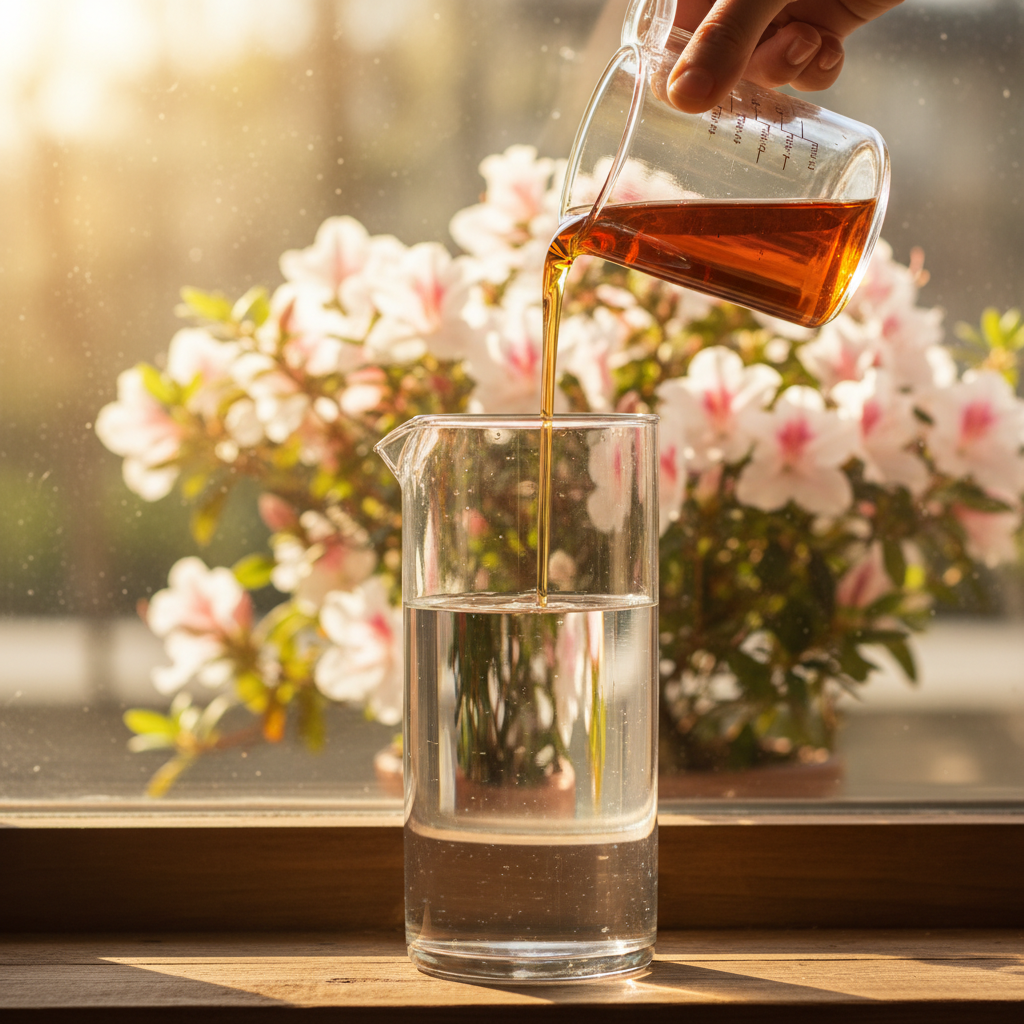
Use a fertiliser formulated for ericaceous or acid-loving plants, the type sold for rhododendrons and camellias, which both supplies nutrients and helps maintain the low pH at the roots. A general-purpose feed not only lacks the right balance but can, over time, alkalise the compost. Dilute it to the strength recommended on the label, or slightly weaker, and apply it roughly every two weeks to moist compost; feeding a dry rootball risks scorching the fine roots. Stop feeding by late summer or early autumn so the plant can harden its growth before the cool, dim months ahead.
If the leaves yellow between green veins despite correct feeding, the cause is almost always pH rather than a shortage of fertiliser, so the answer is to switch to rainwater and an ericaceous feed rather than to feed harder. A specific dose of sequestered iron or a chelated iron tonic formulated for acid-loving plants can green up a chlorotic azalea quite quickly while you correct the underlying water and soil acidity.
Pro Tip — Feed for next year, not this one: The flowers you enjoy in winter were set the previous summer. Consistent fortnightly feeding from late spring to late summer is the single best thing you can do to guarantee a repeat performance.
Propagation
Azaleas are propagated from cuttings or by air layering rather than by division or leaf cuttings, and both methods call for patience, as these woody shrubs root slowly. The most dependable route for a home grower is semi-ripe cuttings taken in summer, when the current year’s growth has begun to firm at the base but is still flexible toward the tip. Take cuttings around 8 to 10 cm (3 to 4 in) long, strip the lower leaves, dip the cut end in rooting hormone formulated for woody plants, and insert them into a free-draining, acidic mix of ericaceous compost and perlite.
Cuttings need warmth at the base, high humidity around the foliage and bright but indirect light. A covered propagator or a clear bag held off the leaves maintains the humid microclimate they require, and a heated propagation mat speeds things along considerably. Even so, expect rooting to take anywhere from six weeks to several months, so resist the urge to tug at the cuttings. New growth at the tip is the signal that roots have formed and the covering can gradually be removed to acclimatise the young plant.
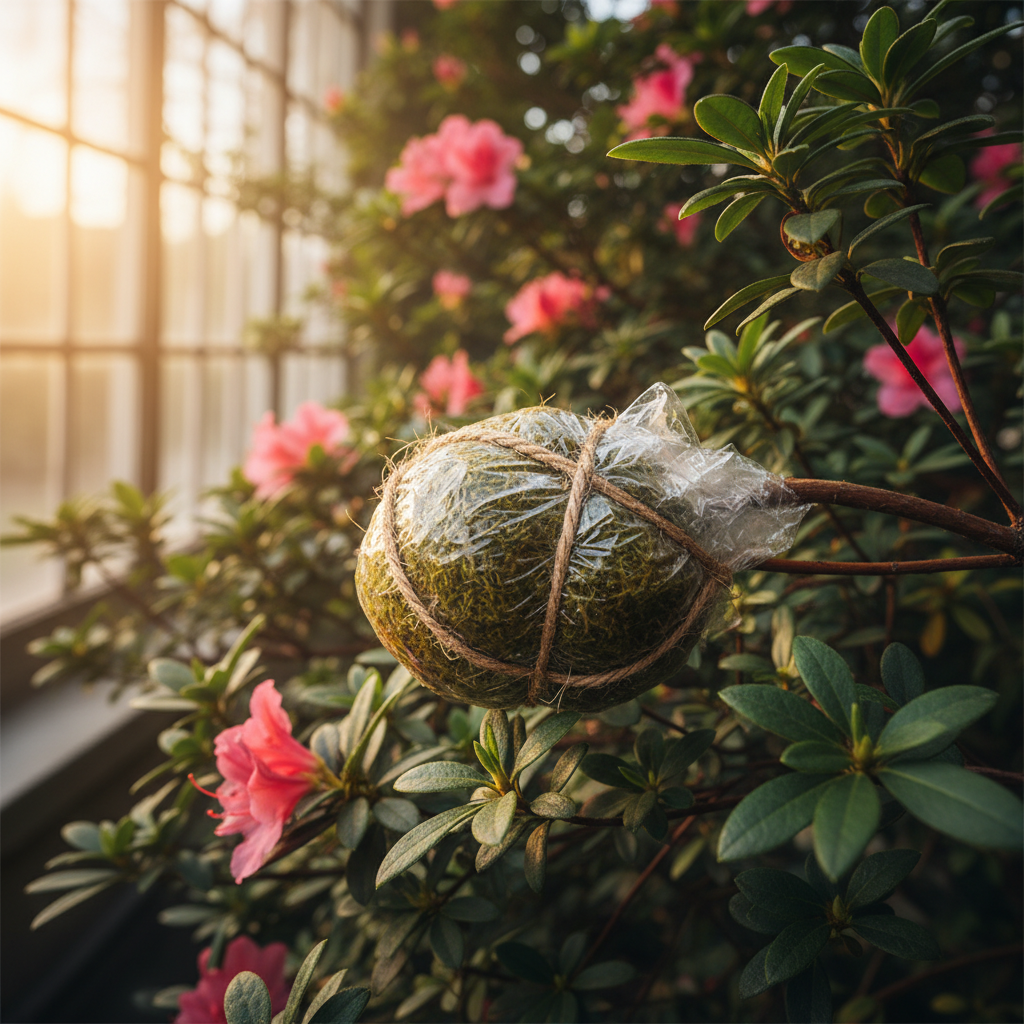
Air layering offers a slower but very reliable alternative, particularly for an older plant with a suitable woody stem. The method is simple in principle: wound a section of stem just below a node, dust it with rooting hormone, wrap it snugly in a ball of damp sphagnum moss, and enclose that in clear film tied at both ends to keep the moss moist. Roots form within the moss over a season, after which the rooted section can be cut from the parent and potted up on its own. Whichever method you choose, the steps below outline the cutting route most growers start with.
- In mid to late summer, take 8 to 10 cm semi-ripe cuttings from healthy, non-flowering shoots, cutting just below a leaf node.
- Strip the leaves from the lower half and pinch out any soft tip, leaving a few leaves at the top.
- Dip the base in hormone rooting powder or gel intended for woody cuttings.
- Insert into pots of moist ericaceous compost mixed with perlite, firming gently around each cutting.
- Cover with a propagator lid or clear bag, keep at gentle bottom heat in bright indirect light, and mist if the foliage dries.
- Keep the medium evenly moist and wait; once new growth appears, ventilate gradually, then pot on the rooted young plants.
Pests and Problems
Most azalea troubles indoors are cultural rather than the work of pests, and the symptoms point clearly back to water, warmth or pH once you know what to look for. Wilting and sudden bud drop almost always mean the rootball has dried out, or that the room is simply too warm and dry; both are corrected by cooler conditions and more attentive watering. Yellowing between green veins signals lime-induced chlorosis from hard water or alkaline compost, while wholesale yellowing and leaf drop can follow either waterlogging or, more commonly, drought. Brown, crisp leaf edges indicate dry air or scorched roots.

When pests do appear, the usual suspects are sap-suckers that thrive in the warm, dry indoor air the azalea itself dislikes. Two-spotted spider mites are the most serious, stippling the leaves with fine pale dots and spinning faint webbing in the leaf axils when conditions are hot and dry; raising humidity and rinsing the foliage discourages them, and a miticide or repeated insecticidal soap treats an established infestation. Look out too for the azalea-specific lace bug, which mottles the upper leaf surface silvery while leaving dark, varnish-like spots beneath, and for soft scale and whitefly on plants summered outdoors.
The table below pairs the most common symptoms with their likely cause and the corrective action, so you can diagnose at a glance before reaching for any treatment.
| Symptom | Likely cause | Action |
| Sudden bud and leaf drop | Rootball dried out, or room too warm | Soak the rootball, move somewhere cooler and brighter |
| Yellowing between green veins | Hard water or alkaline soil (chlorosis) | Switch to rainwater, use ericaceous feed, apply chelated iron |
| Wilting despite moist surface | Hydrophobic, dry core or root rot from waterlogging | Bottom-soak if dry; improve drainage if soggy |
| Fine pale stippling and webbing | Spider mites in warm, dry air | Raise humidity, rinse foliage, treat with insecticidal soap or miticide |
| Silvery mottled upper leaves, dark spots beneath | Azalea lace bug | Treat undersides with insecticidal soap or a suitable systemic |
| Crisp brown leaf edges | Dry air or scorched, overheated roots | Increase humidity, move out of direct sun and heat |
Warning — Toxic to pets and people: All parts of the azalea contain grayanotoxins and are poisonous if eaten, posing a real risk to cats, dogs and curious children. Keep the plant well out of reach and wash your hands after handling cuttings.
Varieties
The florist’s azaleas sold as houseplants are cultivated forms of Rhododendron simsii, bred over many generations for compact growth and an extravagant, long-lasting display. They are usually sold simply by flower colour rather than by name, but a number of named cultivars and colour strains recur in the trade, and two of the most familiar are shown below. When choosing, look past the colour alone to the number of unopened buds, which is the truest measure of how long the plant will perform for you.
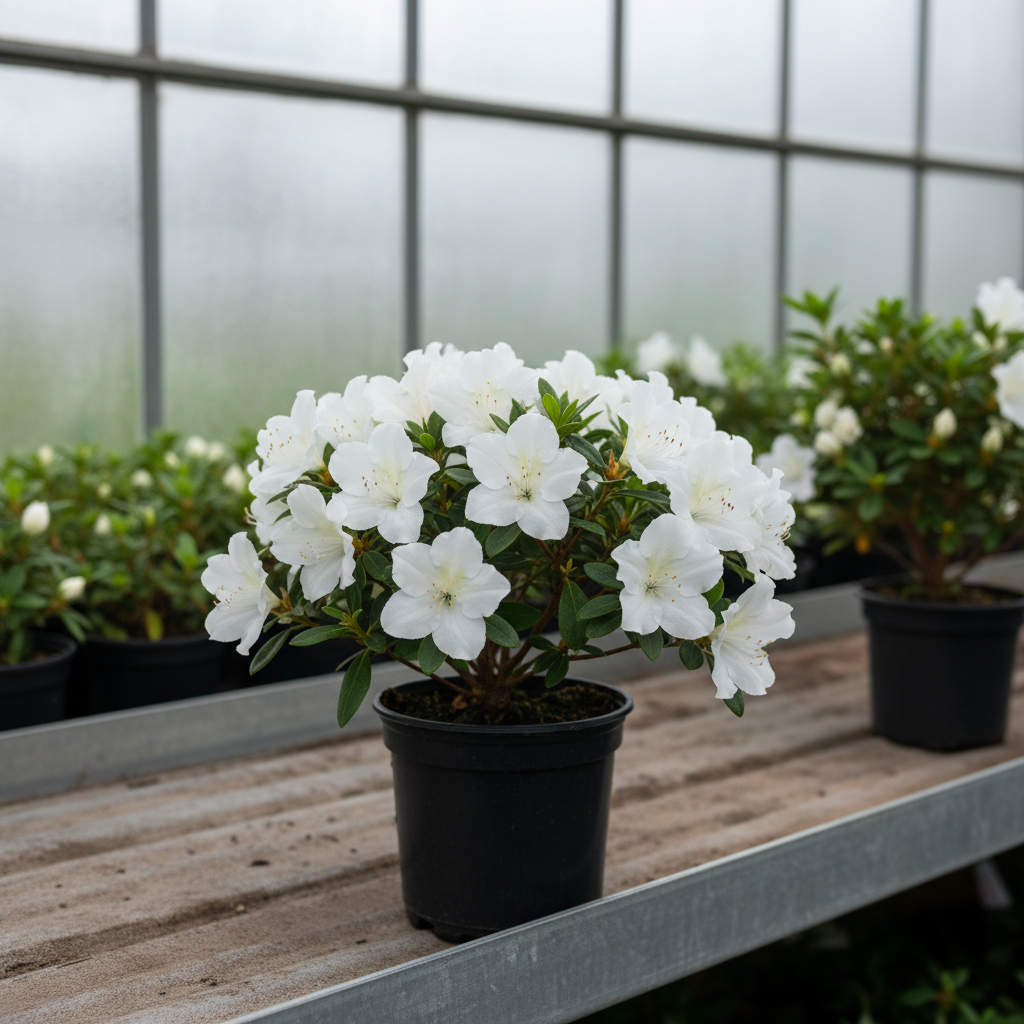
‘Alaska’ carries pure white, frilled semi-double blooms, often with a faint chartreuse flush in the throat, against compact glossy foliage. The clean colouring makes it a favourite for cool, bright interiors where it reads as elegant rather than showy, and like all florist’s azaleas it flowers most generously when kept on the cold side.
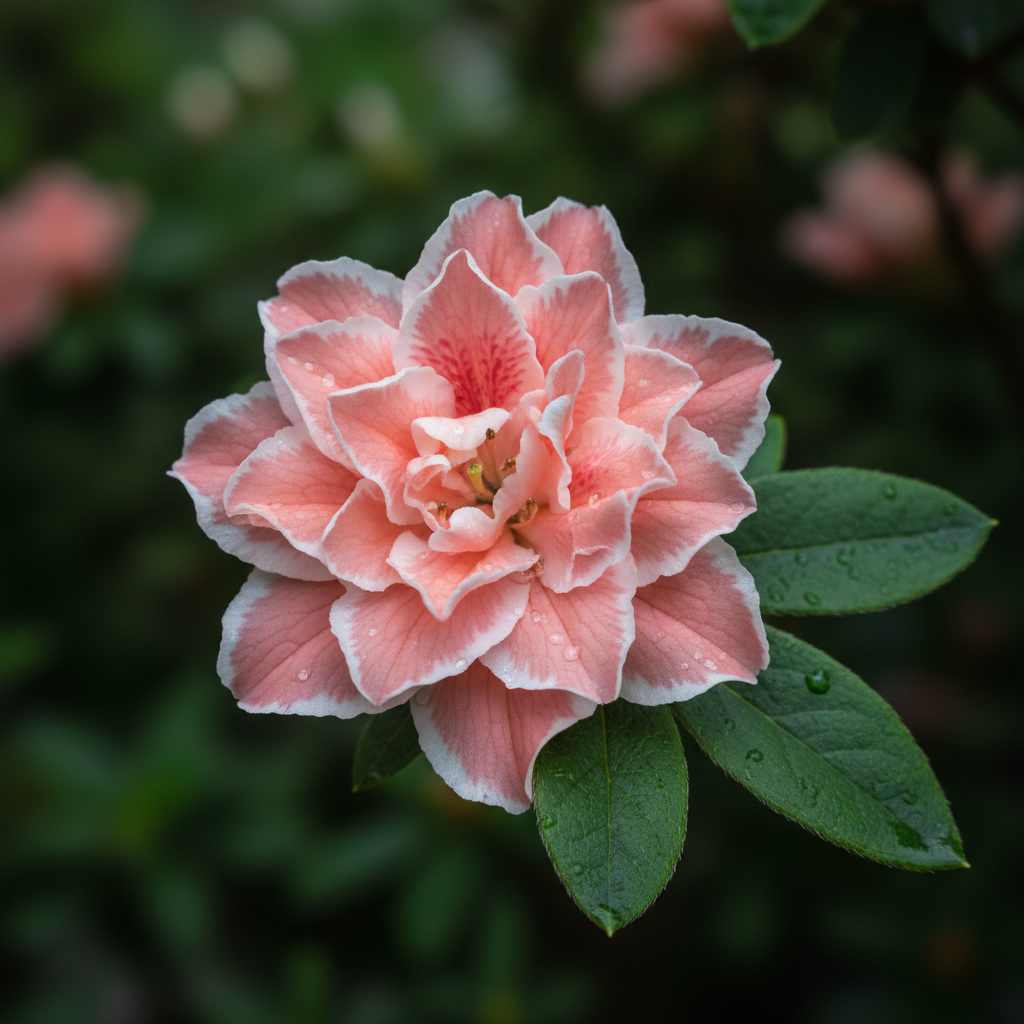
‘Inga’ bears fully double, ruffled blooms of soft salmon-pink edged with a crisp white picotee margin, a combination that gives each flower a hand-painted look. It is a vigorous, free-flowering strain that holds its colour well and makes a striking centrepiece where a plainer white would recede.
Beyond these, you will meet warm reds such as the classic scarlet strains, soft salmons, clear pinks and many bicolours, in both single and fully double forms. Some are sold as part of named series bred for a particular flowering season, while many are offered without a cultivar name at all. Whatever the label, the cultural needs are identical across the species: cool, bright, acidic and never dry.
Frequently Asked Questions
Why is my azalea dropping its buds and leaves?
The two most common causes are a rootball that has been allowed to dry out and a room that is simply too warm. Azaleas are cool-climate plants, and the warm, dry air of a centrally heated living room makes them shed buds quickly. Move the plant to the coolest bright spot you have, keep the compost evenly moist, and raise the humidity around it.
Can I keep my azalea after it has finished flowering?
Yes. Once the flowers fade, remove the spent blooms, keep the plant cool and well watered, and feed it with an ericaceous fertiliser from late spring. After the risk of frost has passed it can spend the summer outdoors in dappled shade, where it will set buds for the following winter. Bring it back inside before the first frosts to a cool, bright room.
Why are the leaves turning yellow?
Yellowing between green veins is usually lime-induced chlorosis, caused by hard water or alkaline compost locking up iron. Water with rainwater or filtered water, use an acid-loving plant feed, and apply chelated iron if the problem is severe. Uniform yellowing with leaf drop more often points to drought or, less commonly, waterlogging at the roots.
What temperature does an azalea need?
Cool is essential. Aim for 10 to 16 degrees C (50 to 61 degrees F) while the plant is in flower, and avoid placing it near radiators, fireplaces or hot, draughty spots. A cool room not only keeps the foliage healthy but greatly extends the length of the flowering display.
Is the azalea safe around cats and dogs?
No. Azaleas contain grayanotoxins and are toxic to cats, dogs and other pets, as well as to people, if any part is eaten. Even small amounts can cause serious illness, so keep the plant well out of reach of animals and children and wash your hands after pruning or taking cuttings.
How often should I water my azalea?
There is no fixed schedule; check the plant daily and water whenever the surface of the compost is only just moist rather than wet. In a warm room in full bloom this can mean watering every day or two. The golden rule is that the rootball must never dry out completely, nor sit in standing water.






