
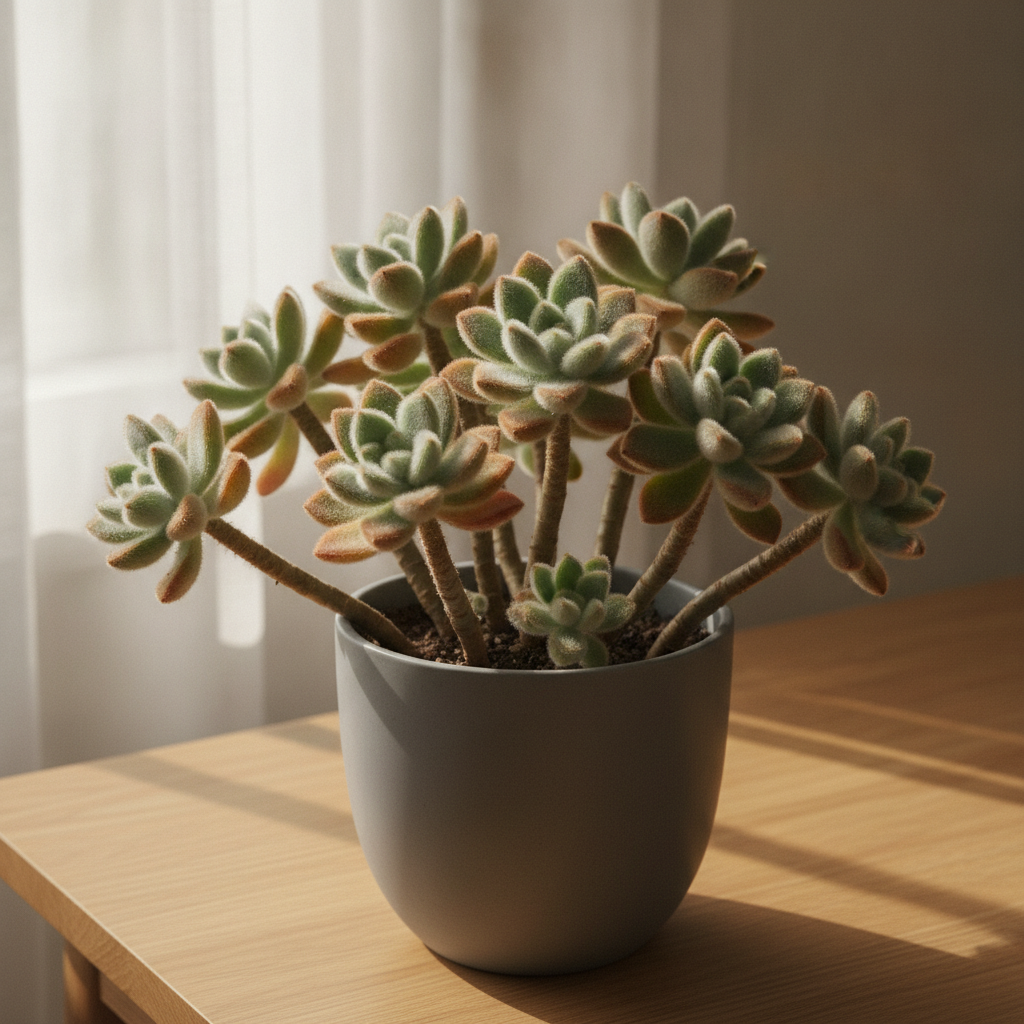
Run a fingertip across the leaf of a woolly rose and it feels like suede. This is Echeveria pulvinata, a small branching succulent from the dry hills of Oaxaca in southern Mexico, and the fine coat of silver hairs that gives it that velvety texture is the whole point of the plant. Sold under names such as plush plant, woolly rose and ruby blush, it belongs to the Crassulaceae family and has become a windowsill favourite for one simple reason: it looks like nothing else on the shelf. Each rosette sits on a slowly lengthening woody stem, and in strong light the leaf edges blush a warm orange-red that deepens toward crimson, so a well-grown plant reads as silver, green and fire all at once.
The woolly rose has a reputation for being easy, and it earns most of that reputation. It asks for very little water, tolerates neglect, and stays a manageable size for years. The catch is that the same hairs that make it beautiful also make it fussy about how you water and where you put it, because trapped moisture and dim corners are the two fastest ways to ruin one. This guide covers the full picture, from the light levels that keep it compact and colourful to the soak-and-dry rhythm that keeps its roots alive, so you can move past merely keeping a woolly rose ticking over and actually grow one that thrives.
Contents
- Quick Reference
- Why Woolly Rose Makes a Rewarding Houseplant
- Light Requirements
- Watering & Humidity
- Soil, Potting & Repotting
- Fertilising
- Propagation
- Pests & Diseases
- Popular Varieties
- Frequently Asked Questions
Quick Reference: Woolly Rose at a Glance
| Light | Very bright light with several hours of direct sun; a south or west window indoors |
| Watering | Soak-and-dry; water only when the soil is fully dry, roughly every 10 to 14 days in summer and monthly in winter |
| Temperature | 18 to 27 °C (65 to 81 °F); keep above 5 °C (41 °F) |
| Humidity | Low; average dry room air is ideal, high humidity encourages rot |
| Fertiliser | Dilute succulent feed once a month in spring and summer only |
| Toxicity | Non-toxic and considered safe around cats, dogs and children |
Why Woolly Rose Makes a Rewarding Houseplant
Most people meet the woolly rose as a small offset in a plastic pot and underestimate it. Given time and light, that single rosette branches into a low, shrubby cluster of stems, each crowned with its own furry rosette, until the whole plant takes on the character of a miniature tree. It rarely exceeds 30 centimetres (12 inches) tall, which makes it a natural fit for a bright windowsill, a shelf or a sunny desk where a larger succulent would feel overbearing. The dense white hairs, called trichomes, are an adaptation to fierce Mexican sun: they scatter harsh light and slow water loss from the leaf surface, and on your windowsill they read as a soft silvery sheen that catches the light beautifully.

Beyond looks, the woolly rose is forgiving in the ways that matter to a busy owner. It stores water in its plump leaves, so it shrugs off a missed watering far better than it tolerates an over-attentive one, and it flowers readily, sending up arching stems of yellow-to-orange bell-shaped blooms in late winter and spring that hummingbirds and pollinators love when it is grown outdoors. It is also one of the safer succulents to keep in a home with pets: unlike many popular houseplants, echeverias are not known to be toxic to cats or dogs, so a curious nibble is unlikely to cause more than a mild upset. That combination of striking texture, compact habit, easy propagation and pet safety is what keeps it on the shortlist of beginner-friendly succulents worth owning.
Important — Toxicity: The woolly rose is generally regarded as non-toxic to cats, dogs and humans, which sets it apart from many houseplants. Even so, no plant is meant to be eaten, and ingestion of fibrous or hairy foliage can cause mild stomach upset in pets, so it is still sensible to keep it out of reach of determined chewers.
Light Requirements
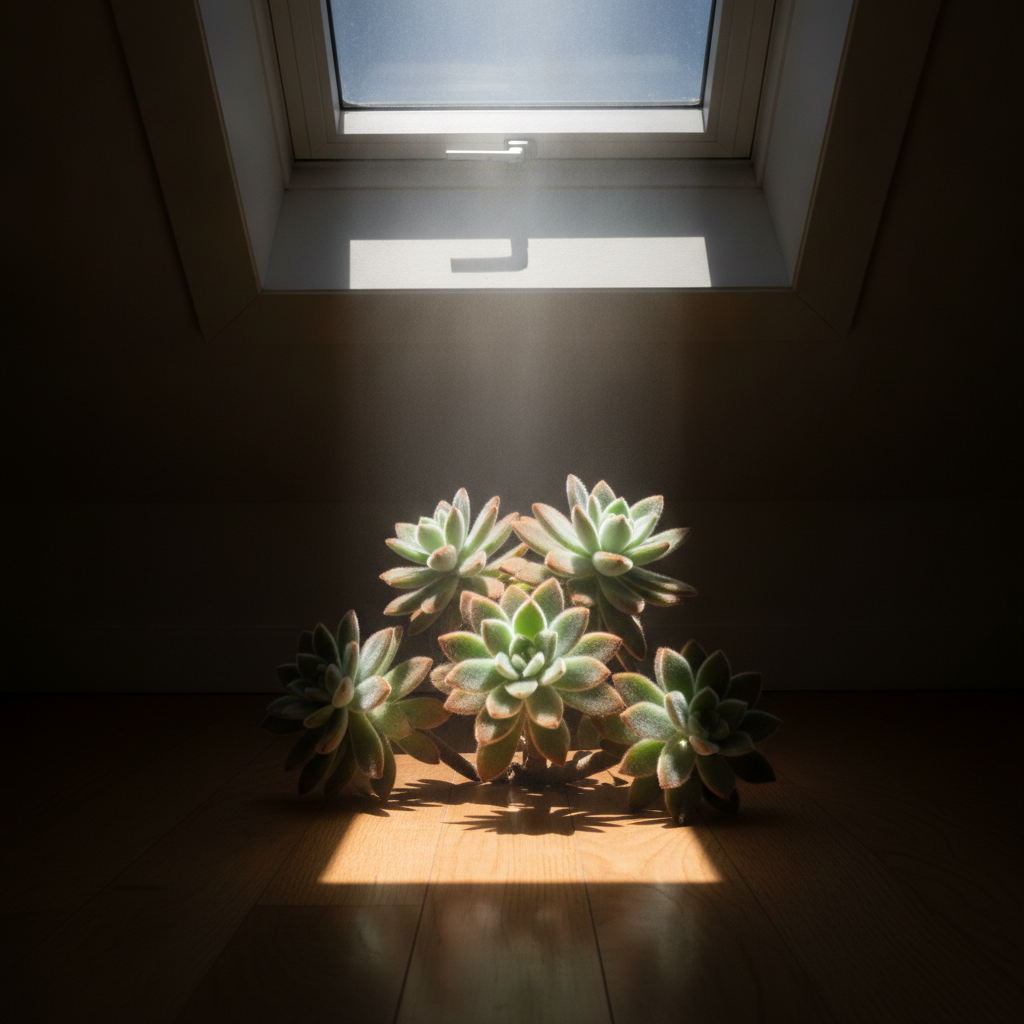
Light is the single factor that decides whether your woolly rose is a tight, silvery, red-tipped jewel or a pale, stretched disappointment. This is a full-sun plant in the wild, growing on exposed rocky slopes, and it carries that appetite for brightness indoors. Give it the most light you can find. Several hours of direct sun each day, ideally from a south or west-facing window, keep the rosettes compact, the hairs dense and the leaf margins flushed with colour.
When light is insufficient the plant tells you quickly. Stems elongate and the gaps between leaves widen in a process called etiolation, the rosettes loosen and flatten as they reach toward the window, and the warm red edges fade back to plain green. Etiolated growth does not reverse, so the stretched section stays stretched even after you move the plant; the fix is to provide better light going forward and, if the plant has become leggy, to behead and re-root the healthy rosette.
Light Levels Explained
Indoor light drops off far more sharply than our eyes suggest, and a spot that looks bright to you can be dim to a sun-loving succulent. The table below gives a rough guide to how the woolly rose responds across the range of light levels found in a typical home, measured in lux for those who like to check with a meter or a phone app.
| Light Category | Approx. Level | Typical Location | Outcome |
|---|---|---|---|
| Direct sun | Over 50,000 lux | On a south or west windowsill | Ideal; compact rosettes, dense hairs, strong red tips |
| Bright indirect | 10,000 to 25,000 lux | Just back from a sunny window | Good; healthy but colour and compactness slightly reduced |
| Medium | 2,000 to 10,000 lux | A few metres from a bright window | Marginal; slow stretching begins, colour fades |
| Low | 500 to 2,000 lux | Interior wall, north room | Poor; rapid etiolation and weak growth |
| Very low | Under 500 lux | Hallway, windowless corner | Unviable; plant declines over weeks |
Window Orientation and Placement
South-facing window: The best position in most homes. A south window delivers the long hours of direct sun the woolly rose craves and produces the tightest, most colourful growth. In the height of summer, watch that the leaves do not overheat behind glass on the hottest afternoons.
West-facing window: An excellent second choice, offering strong afternoon sun. The plant colours up well here, though the intense late-day light in midsummer can occasionally be a touch harsh for a recently moved plant.
East-facing window: Workable but on the low side. Gentle morning sun keeps the plant alive and reasonably healthy, but you will likely see some stretching and paler colour over time compared with a sunnier aspect.
North-facing window: Not enough light on its own. A north window rarely supplies the intensity a woolly rose needs, and plants kept here almost always etiolate. If north is your only option, plan to supplement with a grow light.
Pro Tip — Acclimatise Before Full Sun: A plant grown in a shop under fluorescent light can scorch if moved straight into blazing direct sun. Introduce it gradually over one to two weeks, adding an hour or so of direct light each day, so the hairs and leaf surface can adjust without burning.
How Light Affects Leaf Colour
The red-to-orange blush on the leaf tips is not fixed; it is a stress response the plant produces in bright light and cooler temperatures, driven by protective pigments that build up when sunshine is strong. Grow a woolly rose in generous light and you are rewarded with vivid margins that can spread across much of each leaf. Move the same plant somewhere dim and the pigments break down, the colour drains away and you are left with plain green rosettes. If colour is what you love about the plant, treat light as the lever that controls it.
Warning — Direct Sunlight: While the woolly rose loves sun, a plant that has been in low light can sunburn if thrust into it suddenly. Scorch shows as pale, dry, tan or brown patches that do not recover. Always harden a plant off gradually, and give extra care to specimens recently bought or moved from a shaded spot.
Artificial Lighting
Where natural light falls short, a full-spectrum LED grow light closes the gap. Succulents need bright, close light to stay compact, so position the fixture 15 to 30 centimetres (6 to 12 inches) above the plant and run it for 10 to 12 hours a day on a timer. A grow light is often the difference between a healthy woolly rose and a stretched one in a north-facing home or through the dark months of winter, and it lets you keep colour and form even when the sun goes missing for weeks.
Seasonal Adjustments
Light intensity swings hugely between summer and winter, and the woolly rose responds to both. In the low-sun months, move the plant to your brightest window and accept that growth will slow to a near halt; this is normal winter rest, not decline. As the days lengthen in spring, ramp light back up gradually, and if the plant summered indoors you can move it outside to a sheltered, sunny spot once nights stay reliably above about 10 °C (50 °F), again acclimatising it slowly to the stronger outdoor light.
Watering & Humidity
If light is what makes a woolly rose beautiful, watering is what keeps it alive, and it is where most plants are lost. This is a desert succulent built to survive long dry spells by drawing on the water stored in its leaves, so it is adapted to drought, not to constant moisture. Overwatering, not underwatering, is the usual cause of death. The hairy leaves add a second complication: those trichomes trap water against the surface, and droplets that sit in the fuzz can cause spotting, rot and fungal problems, so how you deliver water matters as much as how often.
When to Water
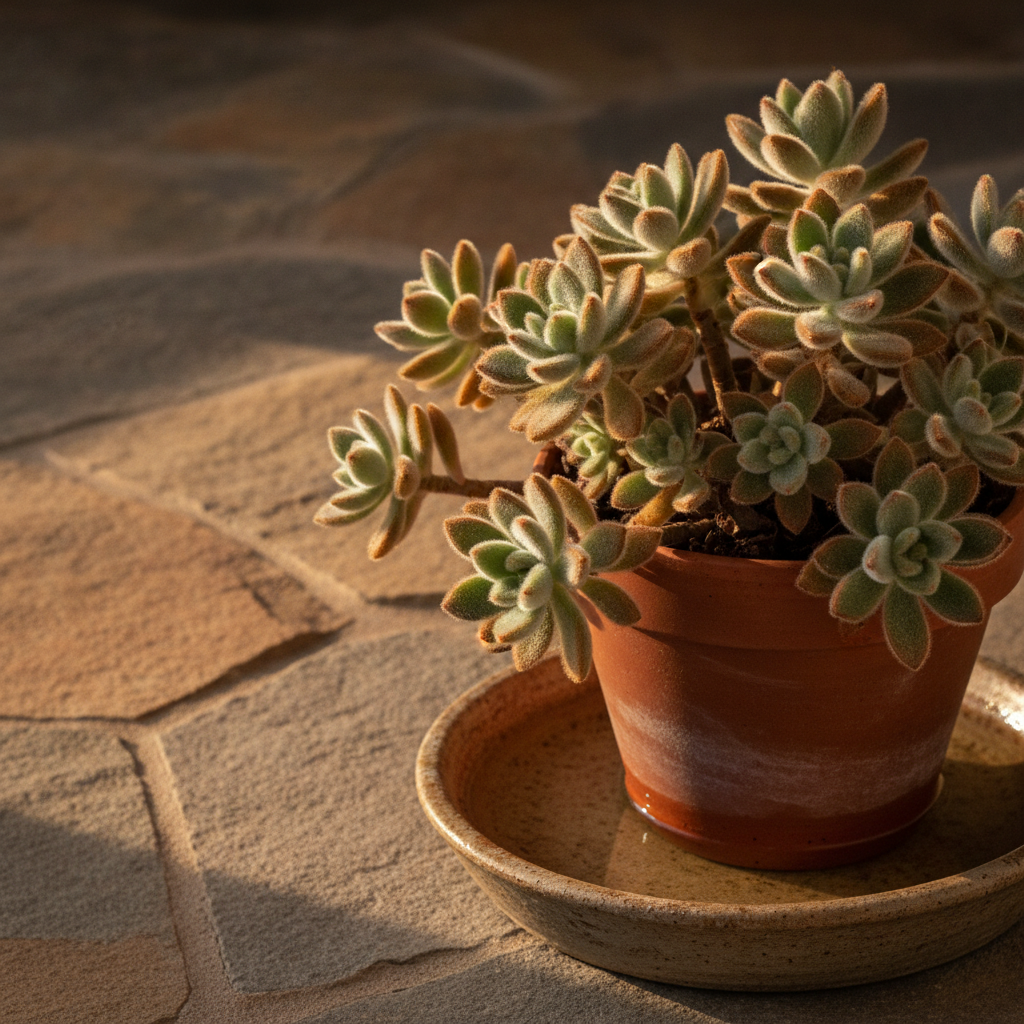
The rule is simple: water only when the soil has dried out completely, then water thoroughly, then wait until it is bone dry again. This is the soak-and-dry method, and it mimics the natural rhythm of desert rainfall. In practice that means checking the soil rather than the calendar. Push a finger or a wooden skewer to the bottom of the pot; if it comes out with any moisture or cool dampness, wait longer.
How long that takes depends on light, warmth, pot size and season. Through the warm growing months a woolly rose in a small pot on a sunny sill might need water every 10 to 14 days, while in winter, when growth stops, the interval can stretch to once a month or even less. The plainest signal comes from the plant itself: firm, plump leaves mean it is well hydrated, while leaves that begin to look soft, thin or slightly wrinkled are telling you it is genuinely thirsty. When in doubt, wait a few more days, because this plant recovers from drought far more easily than from sodden roots.
Pro Tip — Keep the Fuzz Dry: Bottom-watering suits the woolly rose perfectly. Stand the pot in a shallow dish of water for 10 to 20 minutes and let the mix wick moisture up from below, then drain. The roots drink their fill while the hairy leaves stay completely dry, sidestepping the spotting and rot that overhead watering can cause.
How to Water Correctly
- Confirm the soil is fully dry from top to bottom before you begin.
- Water the soil directly, not the leaves; a narrow-spouted can lets you aim between the rosettes, or better still bottom-water in a tray.
- If watering from the top, apply water slowly until it runs freely from the drainage holes, wetting the entire root ball.
- Let the pot drain completely and tip away any water left standing in the saucer.
- If a droplet lodges in the leaf hairs, dislodge it with a gentle puff of air or a soft brush so it does not sit and cause a mark.
- Wait until the mix is completely dry again before the next watering, checking rather than assuming.
Signs of Overwatering vs. Underwatering
| Symptom | Overwatering | Underwatering |
|---|---|---|
| Leaf colour | Yellowing, translucent or blackening leaves | Dulling green, tips may brown and crisp |
| Leaf texture | Soft, mushy, squishy to the touch | Thin, wrinkled, deflated but still firm |
| Soil | Stays damp for many days, may smell sour | Bone dry throughout, pulls from the pot edge |
| Roots | Brown, black, slimy and foul-smelling | Dry and intact, pale and healthy |
| Stem base | Soft, brown or black rot creeping upward | Firm, occasionally slightly shrunken |
Warning — Root Rot: A mushy, blackening stem base is the hallmark of root rot and it moves fast. At the first sign, unpot the plant, cut away all soft brown tissue with a clean blade until only firm growth remains, let the cut surfaces callus for a few days, and re-root the healthy top as a cutting in dry, gritty mix. A woolly rose caught early can be saved this way; left in wet soil it will not recover.
Humidity Requirements
Here the woolly rose breaks from the tropical-houseplant script entirely. It wants dry air. The average centrally heated or air-conditioned room, which leaves so many jungle plants gasping, is exactly what this succulent evolved for. Ambient humidity of around 30 to 50 percent is perfect, and you never need to mist it.
Persistently high humidity is a genuine risk rather than a nicety. Damp, still air keeps the leaf hairs from drying and creates the moist conditions that fungal rots and pests enjoy, so a woolly rose kept in a humid bathroom or a crowded, poorly ventilated terrarium tends to spot, soften and decline. If your home is naturally humid, focus on good airflow and generous spacing between plants rather than any attempt to raise moisture further.
Because the plant likes it dry, the practical advice is the opposite of most houseplant care: do not group it tightly with humidity-loving foliage plants, do not run a humidifier near it, and give it a spot with a little air movement. A gentle breeze from an open window or a fan on the far side of the room helps the leaves stay dry and the surface healthy.
Water Quality
The woolly rose is not especially fussy about water quality, and most tap water is fine. That said, hard water high in minerals can leave chalky deposits on the soil and, if it splashes the leaves, faint white marks on the hairs. If your water is very hard, using filtered water, cooled boiled water or collected rainwater keeps things tidy, and because you water infrequently, a jug of rainwater goes a long way with a plant like this.
Soil, Potting & Repotting
Get the soil right and half the battle of growing a woolly rose is already won, because the correct mix does the job of protecting the roots from the excess water that kills this plant. The single guiding principle is drainage. The mix must let water rush through and dry quickly, never holding it around the roots, which is the reverse of the moisture-retentive composts sold for leafy houseplants.
Ideal Soil Composition
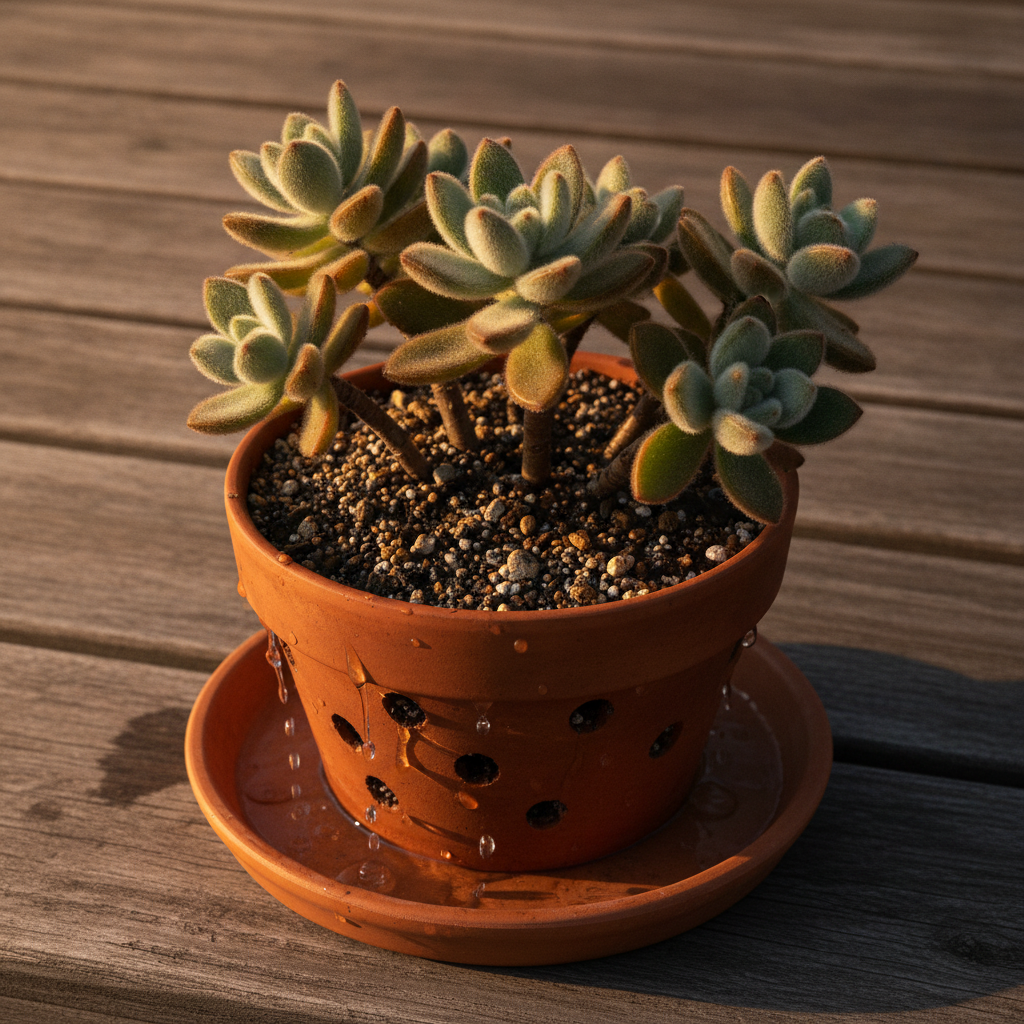
A good woolly rose mix is roughly half gritty mineral material and half a light organic base. You can buy a bag labelled for cacti and succulents and improve it by cutting it with extra grit, or blend your own from the components below. The aim is an open, chunky texture full of air pockets that never turns to mud.
| Component | Proportion | Function |
|---|---|---|
| Cactus and succulent compost | Half | Light organic base holding a little moisture and nutrients |
| Pumice or perlite | One quarter | Creates air pockets and speeds drainage |
| Coarse grit or sharp sand | One quarter | Adds weight, structure and fast run-through |
The woolly rose prefers a slightly acidic to neutral soil, around pH 6.0 to 6.5, which most commercial succulent mixes fall comfortably within, so there is rarely any need to adjust it. Far more important than chasing an exact pH is making sure the physical structure stays open and gritty rather than dense and water-holding.
Pro Tip — Quick Mix Recipe: For a reliable blend, combine two parts cactus compost, one part pumice or perlite and one part coarse horticultural grit. If water does not run straight through when you test-water the empty mix, add more grit until it does.
Choosing the Right Pot
The pot is part of the drainage system, not just a container, and the right one makes the soak-and-dry rhythm far easier to manage. For a plant this size, a small, shallow pot is better than a deep one, because a large volume of mix stays wet longer and raises the risk of rot around the roots.
Drainage holes are non-negotiable. Never plant a woolly rose in a pot without a drainage hole. Whatever moisture the mix cannot shed has to escape somewhere, and without a hole it pools at the bottom and rots the roots. A decorative cachepot is fine only as an outer sleeve around a nursery pot that you lift out to water.
Pot material: Unglazed terracotta is the ideal choice. Its porous walls breathe and pull moisture out of the soil, helping it dry faster between waterings and forgiving the occasional heavy hand. Plastic and glazed ceramic both work but hold moisture longer, so you must water even more cautiously if you use them.
Pot size: Choose a pot only slightly larger than the root ball, leaving a centimetre or two of space around the edges. Woolly roses are content a little snug, and an oversized pot holds a reservoir of damp soil the small root system cannot use up before rot sets in.
When to Repot
The woolly rose is slow-growing and happiest left undisturbed, so repot only every two or three years, or when clear signs call for it: roots creeping out of the drainage holes, the plant looking top-heavy in its pot, or old soil that has broken down and no longer drains freely. The best time is early in the growing season, in spring, when the plant can recover quickly. Always repot into dry mix and wait several days before the first watering to let any disturbed roots heal.
How to Repot: Step-by-Step
- Water sparingly a few days ahead so the root ball is dry and holds together but is not brittle.
- Ease the plant out by squeezing the pot and supporting the base of the stems; avoid pulling on the rosettes.
- Gently crumble away the old spent soil and inspect the roots, trimming any that are brown, black or mushy with a clean blade.
- Set the plant in a pot only slightly larger, part-filled with fresh dry gritty mix, at the same depth it grew before.
- Fill around the roots with more dry mix, tapping the pot to settle it, and firm it lightly without compacting.
- Leave the plant dry in bright but not scorching light for five to seven days, then resume normal soak-and-dry watering.
Warning — Transplant Shock: Watering immediately after repotting is the classic mistake. Freshly disturbed and cut roots are open wounds, and wet soil against them invites rot. Always repot into dry mix and hold off water for at least five days so the roots can callus and settle first.
Fertilising
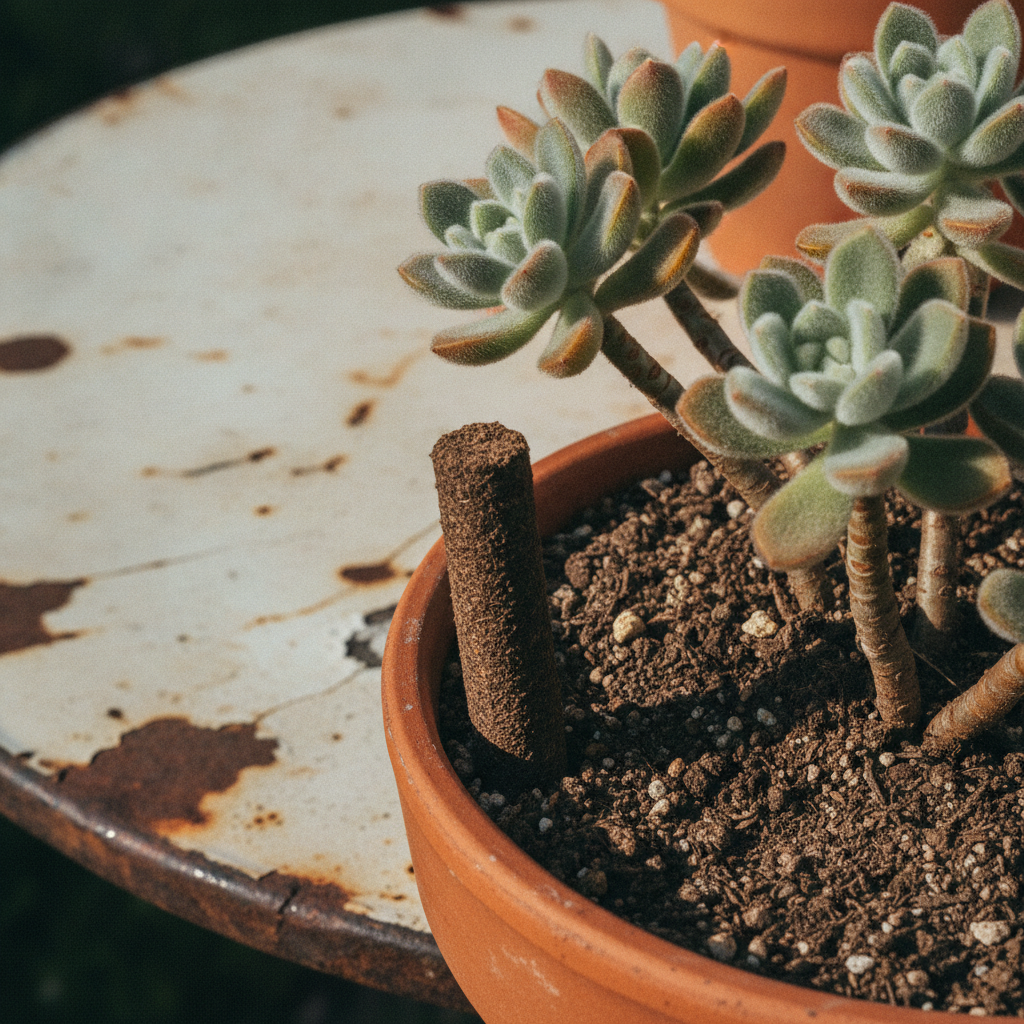
The woolly rose is a light feeder that evolved in poor, rocky ground, so it needs very little supplementary feeding to do well. Think of fertiliser as an occasional boost during the active growing season rather than a routine, because in this plant the danger lies in feeding too much, not too little.
Overfeeding pushes soft, sappy growth that stretches, loses the compact form and colour that make the plant attractive, and is far more prone to pests and rot. A modest amount of the right feed at the right time of year is all it asks; the rest of the time, the small store of nutrients in a good succulent mix is plenty.
Understanding Plant Nutrients
Fertilisers are described by their ratio of the three main nutrients, nitrogen, phosphorus and potassium, shown on the label as the N-P-K numbers. For a succulent like the woolly rose a balanced or slightly low-nitrogen formula is best, because too much nitrogen drives leggy, water-soft growth. The table below summarises what each nutrient does and how a shortage shows up.
| Nutrient | Symbol | Primary Function | Deficiency Symptoms |
|---|---|---|---|
| Nitrogen | N | Leaf and stem growth | Pale, slow, stunted growth |
| Phosphorus | P | Root development and flowering | Weak roots, poor blooming |
| Potassium | K | Overall vigour and stress resistance | Yellow leaf edges, weak stems |
| Calcium | Ca | Cell wall structure | Distorted new growth |
| Magnesium | Mg | Core of the chlorophyll molecule | Yellowing between leaf veins |
| Iron | Fe | Chlorophyll production | Pale, yellowing young leaves |
Types of Fertiliser
Liquid fertilisers: The easiest option for succulents. A liquid feed formulated for cacti and succulents, or a balanced houseplant feed diluted to half or quarter strength, is mixed into the watering can and applied to already-moist soil. Liquids give you precise control over dose and timing, which suits a plant that wants only occasional, gentle feeding.
Slow-release granular: Small coated prills scratched into the soil surface release nutrients gradually over months. They are convenient and low-effort, but they offer less control, and it is easy to overdose a small succulent, so use them at a light rate if at all.
Organic fertilisers: Gentle options such as diluted worm-casting tea feed the plant slowly and are hard to burn it with. They release nutrients mildly and improve the tiny amount of biology in the mix, making them a forgiving choice for anyone nervous about overfeeding.
Feeding Schedule
Feed only during the active growing season, spring through summer, and stop entirely in autumn and winter when the plant is resting. Once a month at half strength is ample. A single feed as growth resumes in spring and one or two more across the summer will keep a woolly rose in good health without pushing it into soft, overgrown growth.
Pro Tip — Less Is More: When it comes to feeding a woolly rose, err firmly on the side of too little. A plant that is underfed simply grows a bit more slowly; a plant that is overfed stretches, softens and becomes a magnet for pests. Half the recommended strength, half as often, is the safe rule.
How to Fertilise
- Feed only in spring and summer, never in the dormant autumn and winter months.
- Dilute a succulent or balanced fertiliser to half strength or less before applying.
- Water lightly with plain water first if the soil is bone dry, so the feed never hits parched roots directly.
- Apply the diluted feed to the soil, keeping it off the hairy leaves, and let any excess drain away.
- Flush the pot with plain water every couple of months to wash out accumulated mineral salts.
Warning — Salt Build-Up: Fertiliser salts accumulate in the soil over time and can scorch roots, showing as a white crust on the mix or pot and as brown, crisping leaf tips. Every couple of months, water thoroughly with plain water until it flushes freely from the drainage holes to rinse those salts away.
Propagation
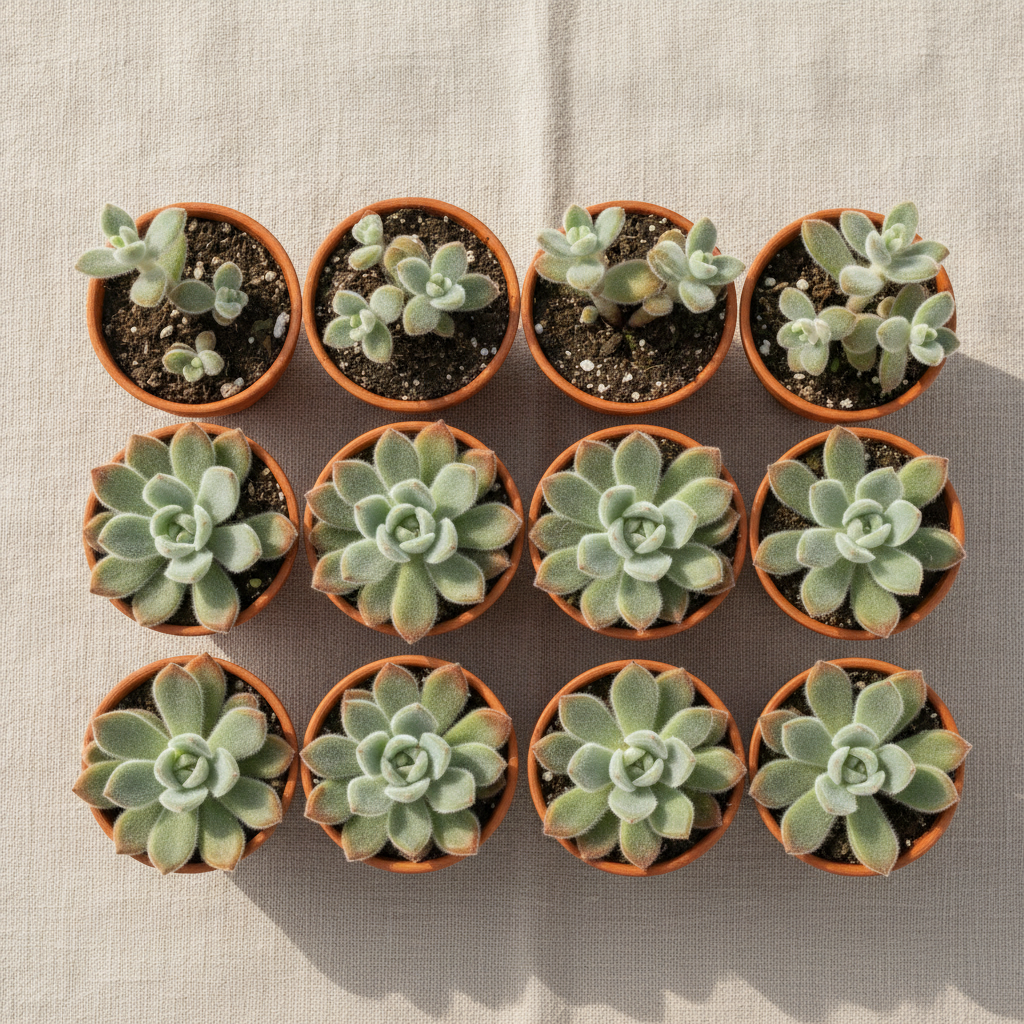
Few plants are as satisfying to multiply as the woolly rose, and a single specimen can quickly become a whole tray of them. Because it branches naturally and offsets freely, you always have material to work with, and the whole process costs nothing but a little patience.
The two most reliable routes are stem cuttings and offsets, both of which take advantage of the plant’s shrubby, branching habit. Leaf cuttings are possible too but are less dependable with this species than with smooth-leaved echeverias, since the hairy leaves are prone to rotting before they root. Spring and early summer, when the plant is in active growth, are the best times to propagate.
Understanding Callusing
The key to succulent propagation is callusing: allowing the cut surface to dry and seal over before it touches soil. A fresh wound placed straight into damp mix is an open door to rot, but a cutting left in the air for a few days forms a dry, protective callus over the cut, and only then is it ready to grow roots. Skipping this single step is the most common reason cuttings fail, so build the drying wait into your routine and let the plant tell you when the surface is firm and dry to the touch.
Stem Cuttings: Step-by-Step
Stem cuttings are the most reliable method for a woolly rose and double as a way to rejuvenate a leggy, stretched plant. You simply behead a rosette on a length of stem and root it as a new plant.
- Using a clean, sharp knife, cut a healthy rosette with 3 to 5 centimetres of stem attached.
- Strip the lowest few leaves from the stem to leave a bare section for planting.
- Set the cutting aside in a dry, shaded, airy spot for three to seven days until the cut end calluses over.
- Insert the callused stem into dry, gritty succulent mix so the rosette sits just above the surface.
- Wait about a week, then begin watering lightly every few days to encourage roots without soaking the mix.
- Once the cutting resists a gentle tug, roots have formed; shift to normal soak-and-dry watering.
Pro Tip — Behead to Rejuvenate: If your woolly rose has stretched in low light, do not despair. Cut off the healthy top rosette and root it as a stem cutting for a fresh, compact plant, and the bare stump left behind will often sprout several new offsets from its base, giving you even more plants.
Offsets: Step-by-Step
A mature woolly rose produces offsets, small clone plants that emerge from the base and lower stems. These can be separated once they are a reasonable size and have started to form their own roots.
- Wait until an offset is at least a couple of centimetres across and ideally showing some roots of its own.
- Gently twist or cut the offset away from the parent, keeping any roots it has already made intact.
- If the offset had to be cut, let it callus for a few days; if it came away with roots, it can be potted sooner.
- Pot it into a small container of dry, gritty mix, settling any roots into the surface.
- Keep it in bright, indirect light and water lightly once established, then treat it as a normal plant.
Troubleshooting Propagation
| Problem | Likely Cause | Solution |
|---|---|---|
| Cutting rots before rooting | Planted before callusing, or soil kept too wet | Callus cuttings first and keep the mix barely moist |
| Cutting shrivels away | Too dry for too long with no roots to drink | Mist the soil surface lightly and be patient |
| No roots after many weeks | Too cold or too little light | Move somewhere warmer and brighter to prompt rooting |
| Leaf cuttings fail | Hairy leaves rot easily; unreliable for this species | Use stem cuttings or offsets instead |
Pests & Diseases
A healthy woolly rose grown in bright light and lean, dry conditions is a tough target for pests, and most problems trace back to a growing environment that is too damp, too dim or too crowded. Prevention is far easier than cure, but it pays to know the handful of troublemakers that do occasionally show up.
The dense leaf hairs complicate treatment, because pests can hide down in the fuzz and among the tight rosettes where sprays struggle to reach and where trapped moisture lingers. That makes early detection and a careful, targeted approach especially important with this plant.

Common Pests
Mealybugs (Pseudococcus species)
The number one enemy of the woolly rose. Mealybugs are small, soft, sap-sucking insects coated in a white waxy fluff, and that fluff is the problem: it camouflages them perfectly against the plant’s own silvery hairs, so an infestation can grow unnoticed in the leaf axils and rosette centres. They weaken the plant and leave sticky honeydew behind.
Treatment: Dab each visible bug with a cotton bud dipped in isopropyl alcohol, which dissolves their protective wax on contact. For wider infestations, treat with a systemic insecticide or repeated applications of an alcohol solution, checking the hidden crevices carefully, and isolate the plant until it is clear.
Aphids (Aphidoidea)
Aphids are more likely to target the tender flower stalks than the tough leaves, clustering on the soft new growth to suck sap. They are small green, black or pink insects that multiply quickly and, like mealybugs, secrete sticky honeydew that can lead to sooty mould.
Treatment: Knock them back with a firm spray of water aimed at the soil-free flower stems, or treat with insecticidal soap. Removing an affected flower stalk entirely is often the cleanest fix, since the leaves themselves are rarely the target.
Fungus Gnats (Sciaridae)
Small dark flies drifting around the pot are fungus gnats, and their presence is a warning sign in its own right. The larvae live in and feed on damp organic matter in the soil, so gnats almost always mean the mix is being kept too wet for a succulent’s good.
Treatment: Let the soil dry out fully, which kills off the larvae, and correct the overwatering that invited them. Yellow sticky traps catch the adults, and a top layer of grit or sand denies them the moist surface they need to breed.
Common Diseases
Root and Stem Rot (Fusarium and Pythium species)
By far the most serious threat to a woolly rose, and almost always caused by overwatering or poor drainage. Fungal and water-mould organisms invade waterlogged roots and creep up the stem, turning tissue soft, brown and black. Leaves yellow and drop, and the base of the plant collapses.
Treatment: Act at once. Unpot the plant, cut away every trace of soft, discoloured tissue with a sterile blade, and salvage the healthy top by callusing and re-rooting it as a cutting. Discard the rotten material and old soil, and correct the watering and drainage that caused it.
Leaf Spot and Botrytis (Botrytis cinerea)
The hairy leaves are prone to spotting and grey mould when water sits on them or when the plant is kept in humid, stagnant air. Brown or grey blotches appear on the leaves, sometimes with a fuzzy mould, especially where droplets have lodged in the trichomes.
Treatment: Remove affected leaves, improve air circulation and stop wetting the foliage by switching to bottom-watering. Reducing humidity and spacing the plant away from others usually halts the spread without the need for a fungicide.
Pest and Disease Summary
| Pest / Disease | Identification | Treatment |
|---|---|---|
| Mealybugs | White waxy fluff in axils and rosette centres | Isopropyl alcohol on a cotton bud; systemic insecticide |
| Aphids | Clusters on flower stalks and new growth | Water spray or insecticidal soap; remove flower stem |
| Fungus gnats | Small flies around a too-wet pot | Dry out the soil; sticky traps; grit top layer |
| Root and stem rot | Soft, brown-black mushy base and stems | Cut away rot, re-root the healthy top, fix watering |
| Leaf spot and mould | Brown or grey blotches, fuzzy mould on leaves | Remove leaves, improve airflow, bottom-water only |
Prevention Strategies
Nearly every problem a woolly rose faces is prevented by the same short list of habits: water only when the soil is fully dry, keep the foliage dry by watering from below, give the plant strong light and good air movement, and use a gritty mix in a pot that drains freely. A plant grown lean and bright is naturally resilient, and most pests and diseases simply cannot get a foothold on it.
Inspect new plants before bringing them near your collection, and quarantine anything you are unsure of, since mealybugs in particular often arrive hidden on a new purchase. A quick weekly glance into the rosette centres and leaf axils, ideally with a magnifier, catches trouble while it is still a handful of insects rather than an infestation.
Pro Tip — Alcohol Is Your Friend: Keep a small bottle of isopropyl alcohol and a bag of cotton buds beside your succulents. At the first white speck of a mealybug, a dab of alcohol kills it instantly and dries away without harming the plant, letting you deal with pests one by one before they ever become a problem.
Popular Varieties
Although Echeveria pulvinata is grown as a species in its own right, plant breeders and collectors have selected a handful of named forms that play up its best features, chiefly the intensity of the leaf hairs and the depth of the red leaf margins. All share the same care needs, so choosing between them is purely a matter of the look you prefer.
The species itself is widely sold and endlessly rewarding, but the two most sought-after cultivars, ‘Ruby’ and ‘Frosty’, pull the plant in opposite directions: one toward fiery colour, the other toward pure silver. The table and profiles below cover the forms you are most likely to encounter.
| Variety | Leaf Appearance | Light Needs | Growth Rate | Availability |
|---|---|---|---|---|
| Species type | Green, hairy, red-tipped in sun | Very bright | Slow | Common |
| ‘Ruby’ | Olive-green with vivid red margins | Very bright | Slow | Common |
| ‘Frosty’ | Dense silvery-white hairs, frosted look | Very bright | Slow | Fairly common |
| ‘Ruby Blush’ | Strong red-flushed hairy leaves | Very bright | Slow | Occasional |
| ‘Devotion’ | Compact rosettes, warm-toned edges | Very bright | Slow | Less common |
| Green form | Plain green, minimal red even in sun | Bright | Slow | Occasional |
Featured Varieties
‘Ruby’
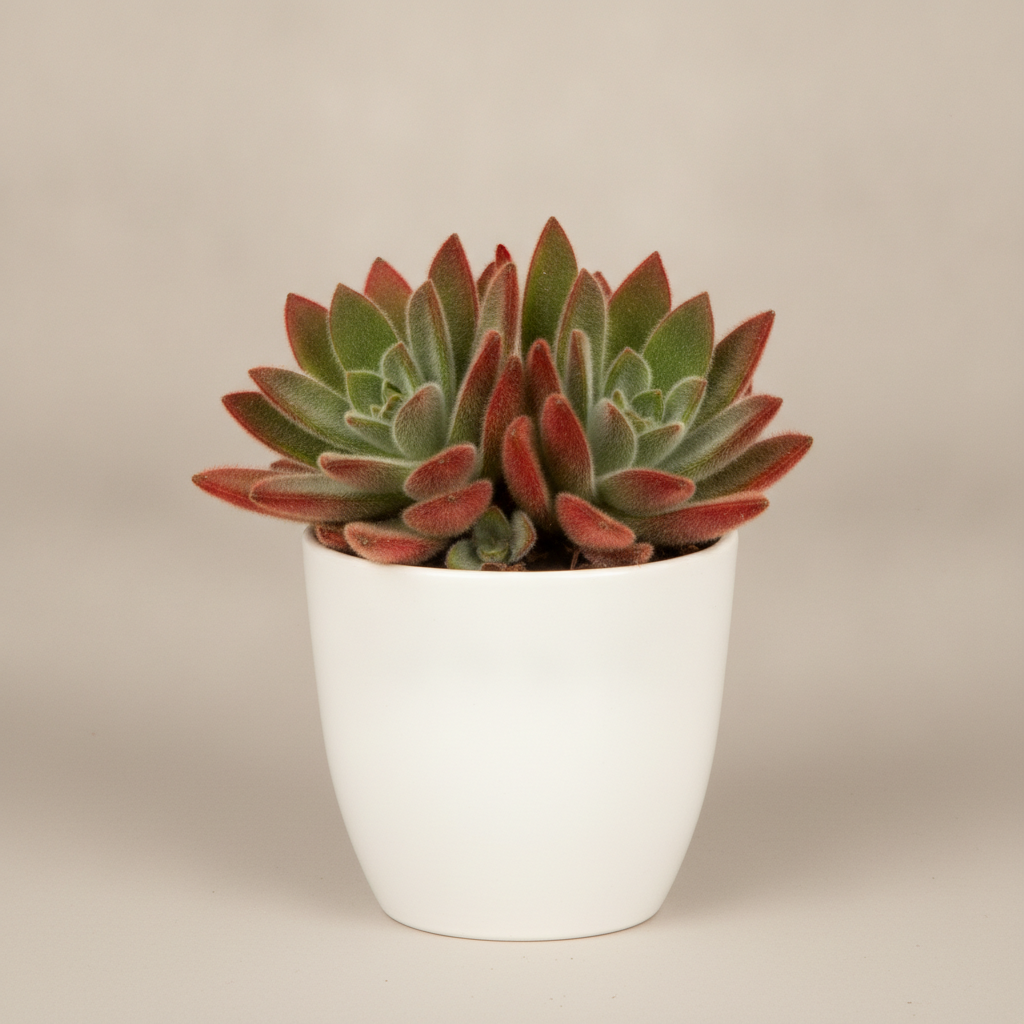
The fiery form, prized for hairy olive-green leaves rimmed with vivid red that deepens to crimson in strong light. The more sun it gets, the more the colour spreads across each leaf, making it the go-to choice for anyone who wants drama on the windowsill.
‘Frosty’
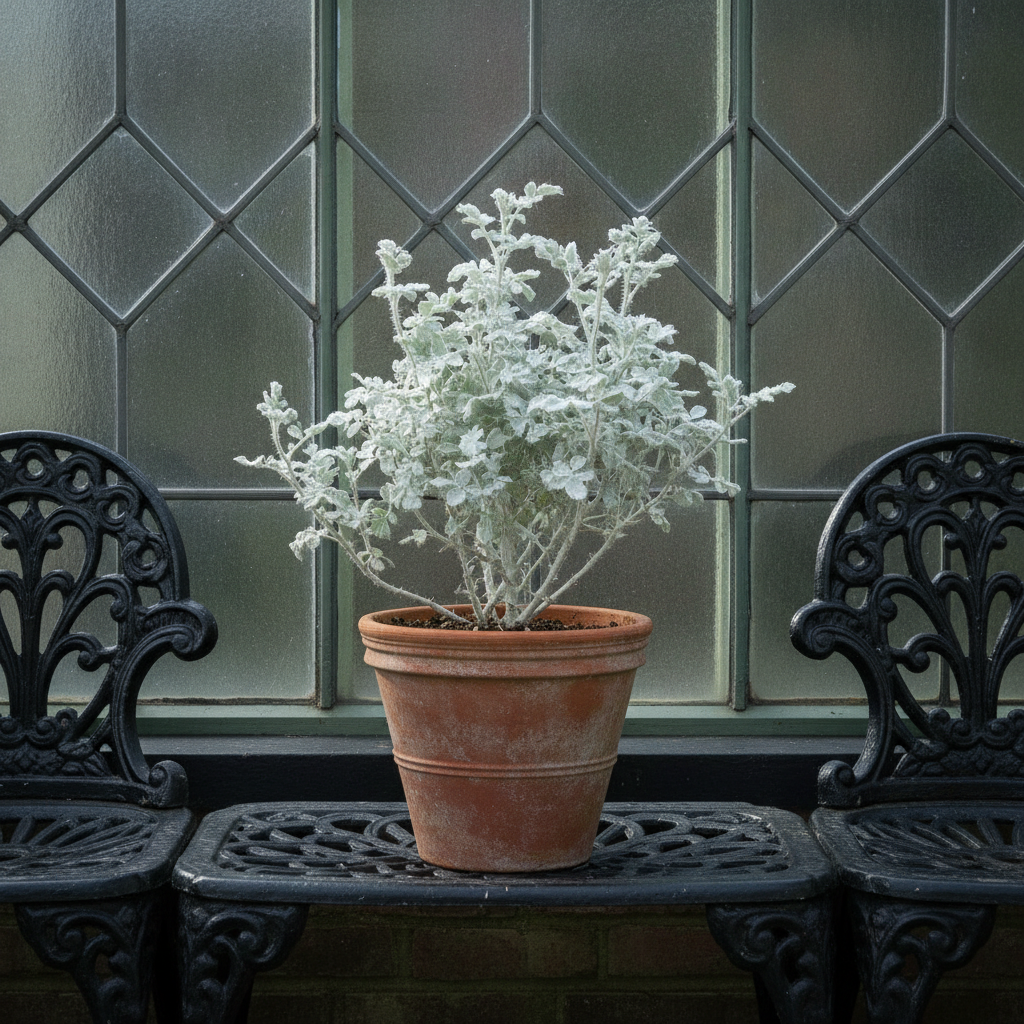
The silver form, coated in exceptionally dense white hairs that give the whole plant a pale, frosted, almost ghostly appearance. It leans into the plush-plant texture rather than the colour, and its cool silvery tone makes a striking contrast to greener succulents.
Variety Profiles in Detail
‘Ruby’ (Echeveria pulvinata ‘Ruby’)
Sometimes sold as ‘Ruby Blush’, this is the most popular named form and the one most people picture when they think of the woolly rose at its best. Its selling point is contrast: silvery hairs over green leaves, capped with bold red margins that intensify as light and cool nights build up the plant’s protective pigments. Grow it in your sunniest spot to bring the colour out fully.
‘Frosty’ (Echeveria pulvinata ‘Frosty’)
‘Frosty’ pushes the trichomes to their extreme, wrapping every leaf in such dense white hair that the plant looks dusted with snow. It shows far less red than ‘Ruby’, trading colour for a soft, uniform silver that reads beautifully against terracotta or dark foliage. The heavy coat makes dry, careful watering even more important, as the thick fuzz holds moisture readily.
Species Type (Echeveria pulvinata)
The unselected species remains a wonderful plant and is often the most vigorous and affordable option. It carries green, hairy rosettes that flush red at the tips in good light and branches enthusiastically into a shrubby form, delivering the essential woolly-rose character without the premium of a named cultivar.
Choosing the Right Variety for Your Space
Since every form needs the same bright light and lean watering, base your choice on the effect you want and the light you can offer. If you have a blazing south window and love colour, ‘Ruby’ will reward you with the strongest reds. If you are drawn to texture and a cool silver palette, ‘Frosty’ is the standout. And if you simply want a robust, easygoing plant to start with, the species itself is hard to beat. Whichever you choose, remember that the real determinant of how good it looks is not the label but the light you give it.
Frequently Asked Questions
Why is my woolly rose stretching and losing its shape?
Stretching, or etiolation, is almost always a sign of too little light. The plant lengthens its stem and spaces its leaves out as it reaches toward the nearest window. Move it to your brightest spot or add a grow light, and if it has already become leggy, behead the healthy rosette and re-root it as a compact new plant.
How often should I water a woolly rose?
There is no fixed schedule; water only when the soil is completely dry, then soak it thoroughly. In practice that is often every 10 to 14 days in summer and as little as once a month in winter, but always check the soil rather than counting days. When unsure, wait longer, because this plant handles drought far better than wet roots.
Can I get the leaves wet when I water?
It is best not to. The fine hairs trap water against the leaf, and lingering droplets can cause spotting and rot. Water the soil directly with a narrow-spouted can, or bottom-water by standing the pot in a dish, so the fuzzy foliage stays dry. If a drop does land on a leaf, blow or brush it off.
Is the woolly rose safe for cats and dogs?
Yes, echeverias including the woolly rose are generally considered non-toxic to cats and dogs, which makes them among the safer succulents for a pet household. As with any plant, a determined nibble could still cause a mild stomach upset, so it is wise to keep it out of easy reach, but there is no serious poisoning risk.
Why are the leaf tips turning red?
Red leaf tips are a good sign, not a problem. The colour is a natural response to bright light and cooler temperatures, produced by protective pigments the plant makes when it gets plenty of sun. A woolly rose showing strong red edges is a happy, well-lit plant; if the colour fades to plain green, it simply wants more light.
Why are the lower leaves shrivelling and dropping?
Some loss of the oldest, lowest leaves is normal as the plant grows and the rosette rises on its stem. If many leaves shrivel at once, though, check your watering: thin, wrinkled leaves usually mean the plant is too dry and needs a soak, while soft, translucent, yellowing leaves point to overwatering that needs correcting quickly.
Does the woolly rose flower indoors?
It can. A mature, well-lit plant sends up arching stems of yellow-to-orange bell-shaped flowers, usually in late winter and spring. Strong light is the main trigger, so plants on a bright sill are the most likely to bloom. The flowers last several weeks, after which you can cut the spent stalk away.
How big does a woolly rose get?
It stays small, which is part of its appeal. Grown indoors it typically reaches around 15 to 30 centimetres (6 to 12 inches) tall, branching slowly into a low, shrubby cluster of rosettes over several years. Its modest size and slow growth make it well suited to windowsills, shelves and small pots.
My woolly rose has gone soft and mushy at the base. What happened?
A soft, brown or black base is root or stem rot, caused by overwatering or poor drainage. It is serious but not always fatal. Unpot the plant, cut away all the mushy tissue with a clean blade until only firm growth remains, let the healthy top callus for a few days, and re-root it as a cutting in dry, gritty mix while correcting the watering habits that caused it.
Why does my woolly rose have white fluff that is not its hairs?
Check closely, because cottony white fluff in the leaf axils and rosette centres is very likely mealybugs rather than the plant’s own trichomes. They hide well against the silvery hairs. Dab any you find with a cotton bud dipped in isopropyl alcohol, inspect regularly, and isolate the plant until you are sure it is clear.






