
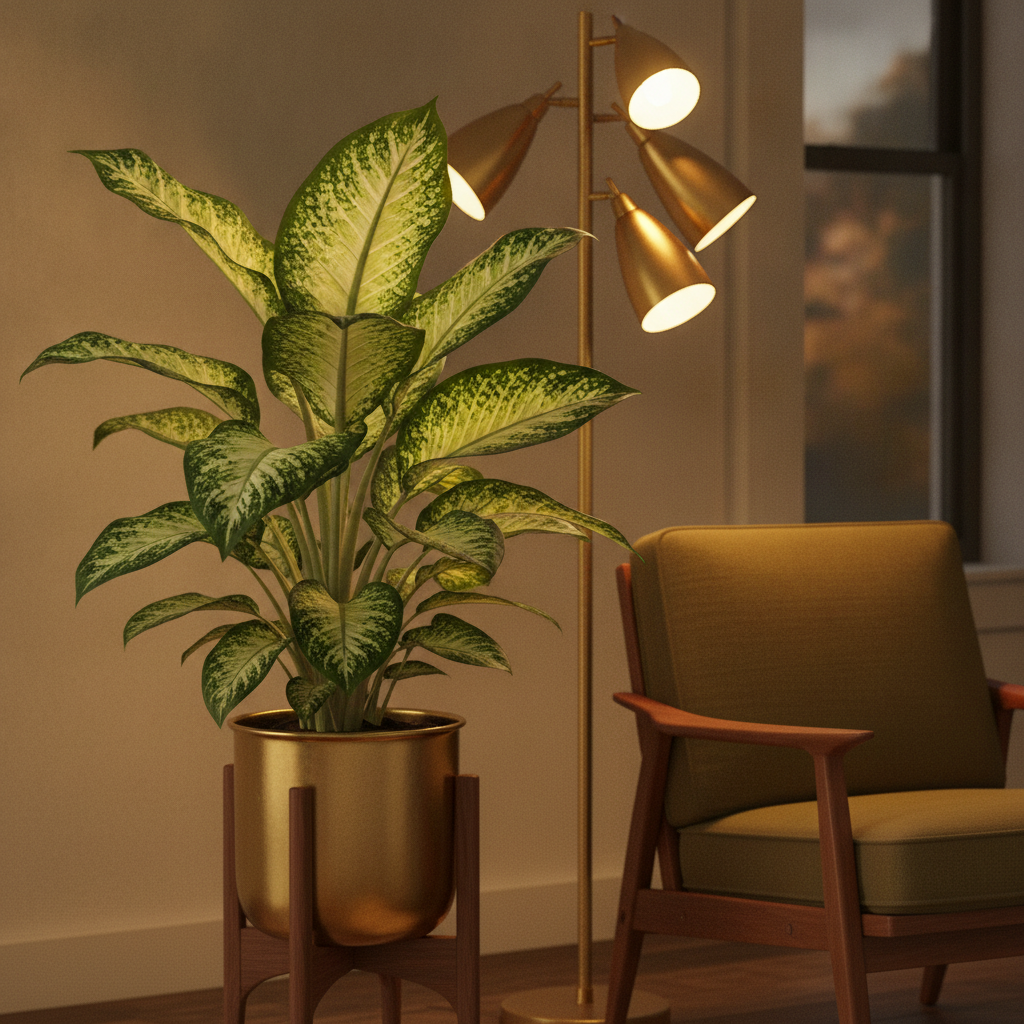
Few foliage plants announce themselves quite as boldly as the Tropic Snow dieffenbachia (Dieffenbachia amoena). Where many dumb canes stay modest and shrubby, this cultivar throws out enormous paddle-shaped leaves splashed with so much creamy-white and pale-yellow variegation that the green almost seems to be the accent colour rather than the base. A well-grown specimen can stand well over a metre and a half tall on thick cane-like stems, turning a corner of a room into something close to a tropical understorey. For all that drama, it is surprisingly forgiving, and understanding the difference between merely keeping it alive and helping it truly thrive is what this guide is about.
- Quick Reference
- Why Tropic Snow Is Such a Rewarding Houseplant
- Light
- Watering
- Soil and Repotting
- Fertilising
- Propagation
- Common Pests and Problems
- Varieties to Know
- Frequently Asked Questions
Quick Reference
| Botanical name | Dieffenbachia amoena ‘Tropic Snow’ |
| Common names | Tropic Snow dumb cane, giant dumb cane, leopard lily |
| Light | Bright, indirect light; tolerates medium light |
| Water | When the top 2 to 5 cm (1 to 2 in) of soil is dry |
| Soil | Rich, loose, free-draining mix based on coir or peat with perlite |
| Temperature | 18 to 27 degrees C (64 to 81 degrees F) |
| Humidity | Moderate to high, ideally above 50 per cent |
| Feeding | Balanced liquid feed monthly in spring and summer |
| Mature size | Up to 1.5 to 1.8 m (5 to 6 ft) tall indoors |
| Toxicity | Toxic to people and pets if chewed; sap is a skin irritant |
Why Tropic Snow Is Such a Rewarding Houseplant
The genus Dieffenbachia comes from the warm, humid forests of tropical Central and South America, where these plants grow on the shaded floor beneath a dense canopy. That heritage explains almost everything about how they behave indoors: they are adapted to filtered light, steady warmth, and consistently moist air, and they have evolved large leaves to capture whatever light filters down to them. ‘Tropic Snow’ is a selected form of Dieffenbachia amoena, one of the larger species in the genus, and it has been prized for decades precisely because it combines that big, architectural habit with unusually generous variegation.
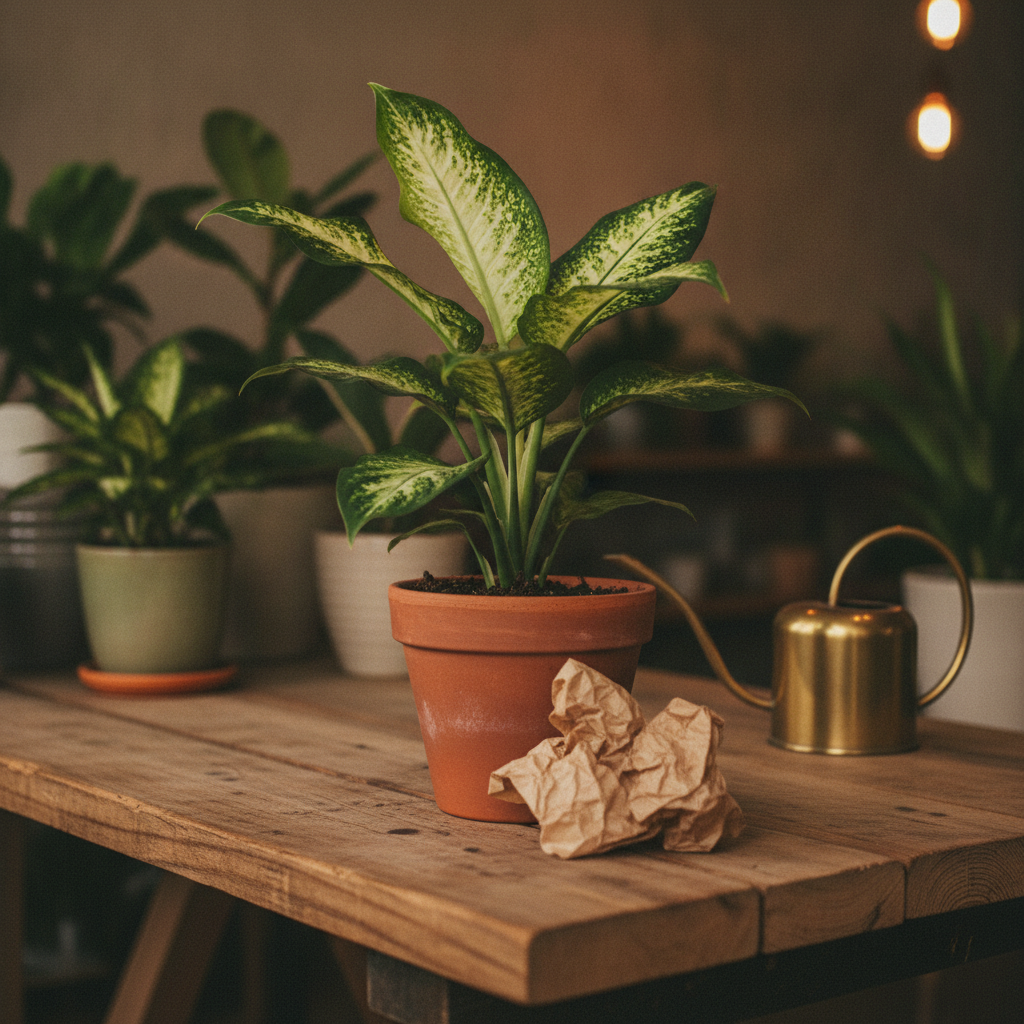
What makes the plant so satisfying to live with is how quickly it rewards good care. In a warm, bright spot it grows visibly through spring and summer, unfurling a new leaf every few weeks, each one broader and more heavily marked than the last. Because the stems thicken into sturdy canes over time, an older plant develops a genuine trunk-like presence rather than flopping the way many fast-growing foliage plants do. It also happens to be one of the more effective houseplants at coping with the ordinary indoor conditions of centrally heated rooms, provided you keep it out of cold draughts. The name dumb cane, incidentally, refers to the temporary loss of speech that can follow chewing the stem, a reminder that this is a plant to admire rather than handle carelessly, a point covered in full below.
Light
Light is the single factor that most clearly separates a surviving Tropic Snow from a thriving one, largely because of its variegation. The creamy and pale-yellow zones of each leaf contain little or no chlorophyll, which means they contribute nothing to feeding the plant. A heavily variegated leaf therefore has to work harder in the small green areas that remain, and the plant compensates by seeking out as much light as it can. Give it a bright position out of direct sun and it will hold its markings crisply and keep its internodes short and compact. Push it into a dim corner and it responds in two unwelcome ways: the new leaves emerge greener and less variegated as the plant tries to claw back photosynthetic capacity, and the stems stretch and lean toward the nearest window, becoming leggy and top-heavy.
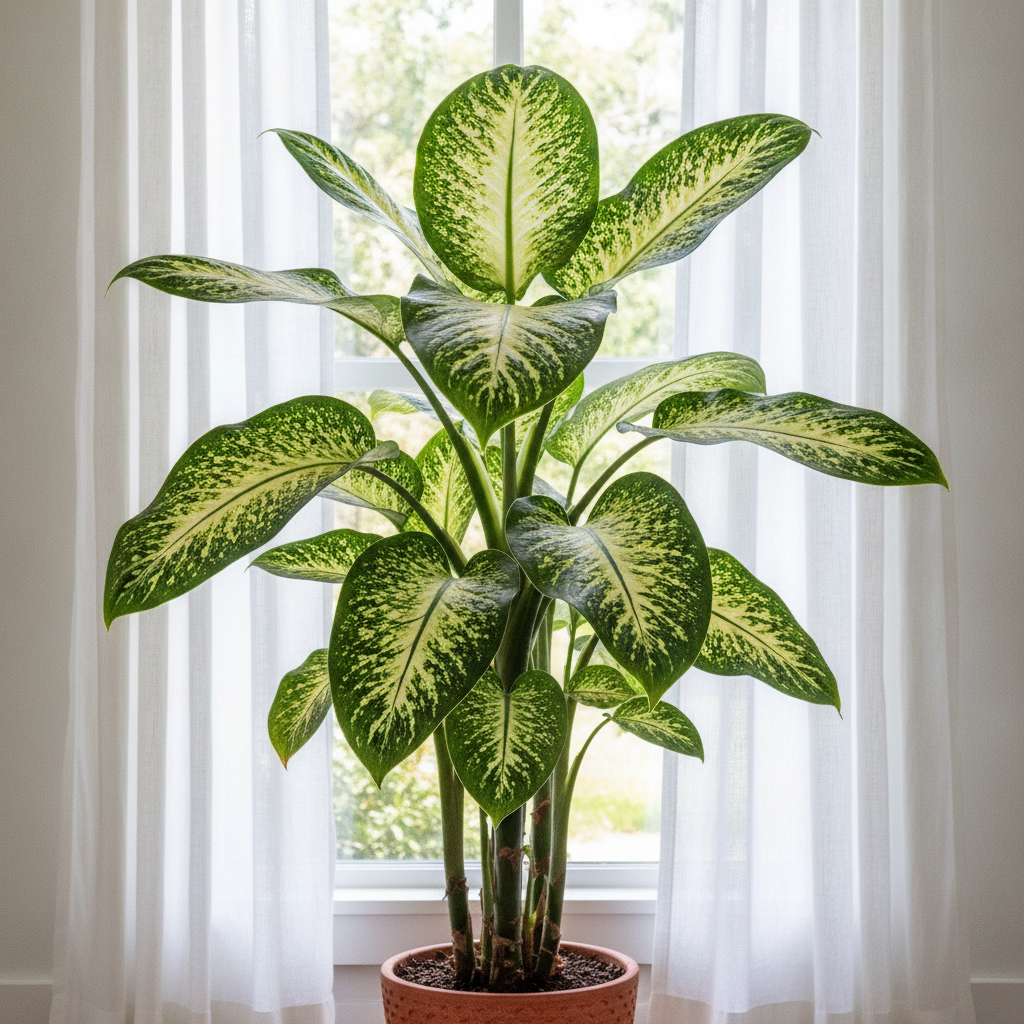
The ideal is bright, indirect light of the kind you find a metre or so back from an east or west window, or directly in front of a north window, or behind a sheer curtain on a south-facing sill. Direct midday sun is the one thing to avoid, because the pale variegated tissue has no pigment to protect it and scorches quickly, leaving bleached, papery patches that never recover. If your only bright spot receives a few hours of direct sun, diffuse it with a voile curtain and the plant will be perfectly happy. Rotating the pot a quarter turn each week keeps growth even and stops the plant leaning permanently in one direction.
Pro Tip — Reading the leaves: If new growth is noticeably greener and smaller than older leaves, your Tropic Snow is telling you it wants more light. Move it closer to a window before the habit becomes leggy, and the next few leaves will usually recover their markings.
Watering
Watering a Tropic Snow well is a matter of rhythm rather than routine. The plant likes its soil to be kept lightly and evenly moist through the growing season, but it will not tolerate sitting in saturated compost, and the fastest way to lose one is to water on a fixed schedule regardless of how wet the pot already is. The reliable method is to feel the soil: when the top 2 to 5 cm (1 to 2 in) has dried out, water thoroughly until it runs freely from the drainage holes, then empty the saucer so the roots are never standing in water. In a warm, bright room in summer this might mean watering once or twice a week; in the low light and cool temperatures of winter the same plant might need water only every ten to fourteen days.
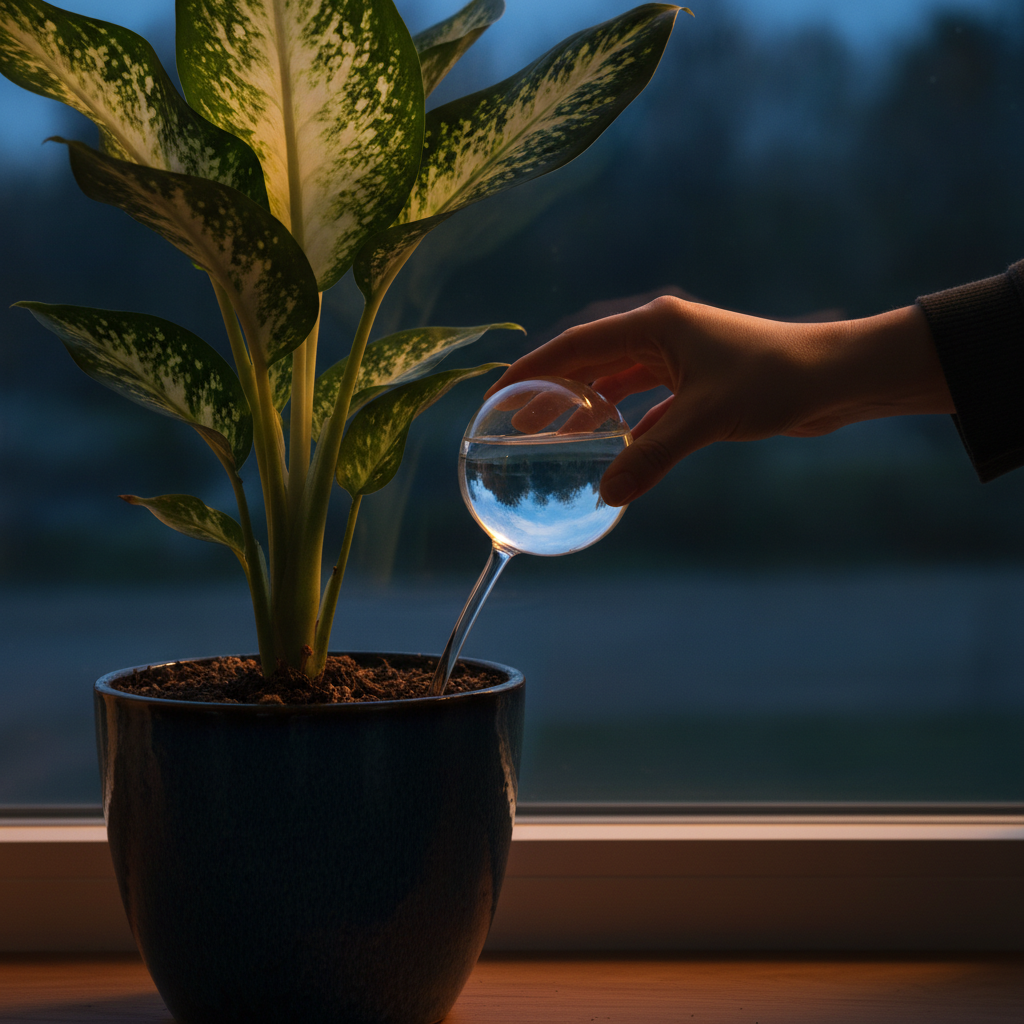
Dieffenbachias are among the houseplants most sensitive to the minerals and additives in tap water. Fluoride and chlorine in particular tend to accumulate in the leaf margins, showing up as brown, scorched tips and edges even when everything else about your care is correct. If your water is heavily treated, letting it stand overnight helps chlorine dissipate, and using filtered water or collected rainwater eliminates the problem almost entirely. Room-temperature water is best, since cold water straight from the tap can shock the tropical roots. Humidity matters too: this is a forest-floor plant that prefers the air above 50 per cent relative humidity, and while it copes with ordinary room conditions, grouping it with other plants or running a small humidifier nearby will visibly improve the size and finish of its leaves.
Warning — Overwatering: Soft, yellowing lower leaves and a sour smell from the soil are the classic signs of root rot from overwatering. If you notice them, stop watering, check the roots, and cut away any that are brown and mushy before repotting into fresh, free-draining mix.
Soil and Repotting
The right growing medium supports everything else in this plant’s care, because it governs how much water the roots hold and how much air reaches them. Tropic Snow wants a mix that stays moist but drains freely, never turning to a dense, waterlogged block. A good recipe starts with a peat-free base of coir or a quality houseplant compost, lightened with a generous handful of perlite for aeration and, if you have it, a little orchid bark or fine composted bark to keep the structure open. The aim is a substrate that feels spongy and springs back rather than compacting into mud, which lets the roots breathe and keeps rot at bay.
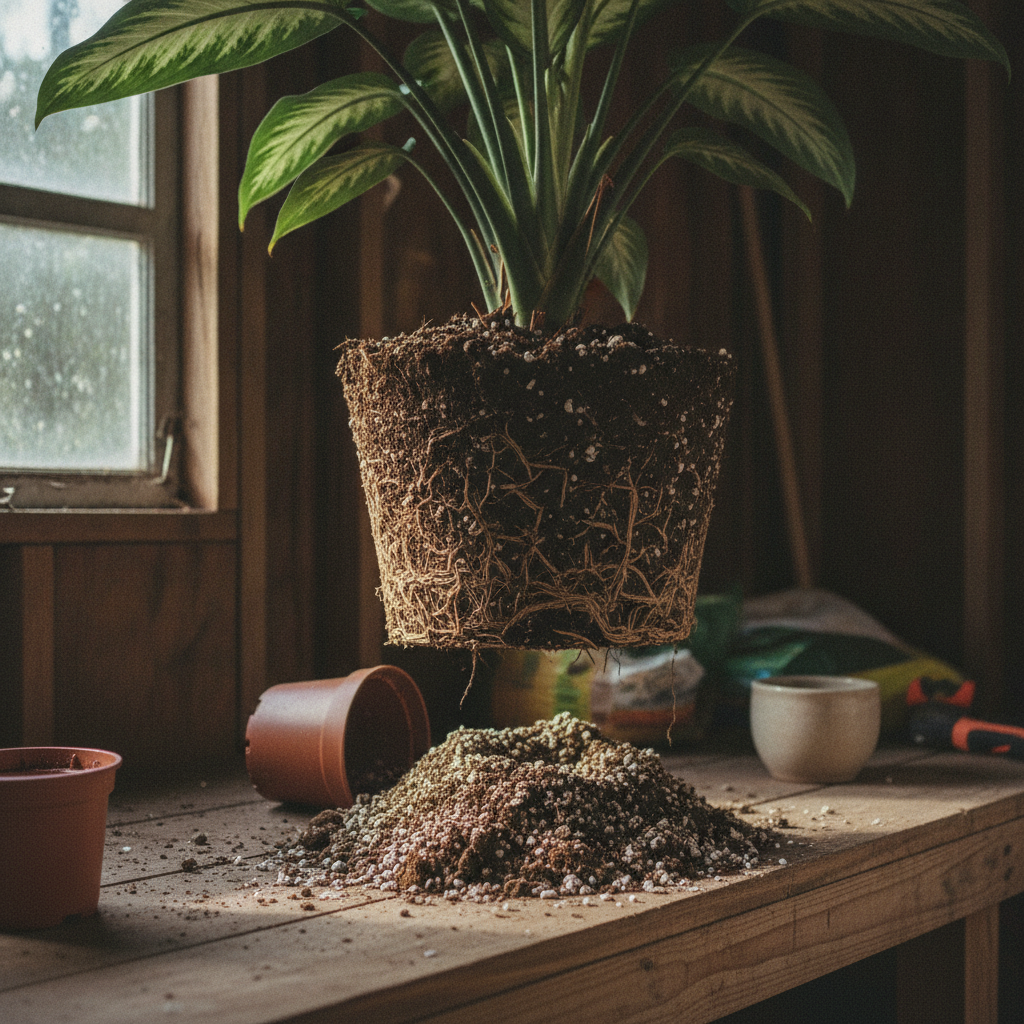
A healthy, well-fed Tropic Snow grows quickly and will usually need moving up a pot size every one to two years, ideally in spring as the growing season begins. Choose a container only one size larger than the current one, because an oversized pot holds more damp soil than the roots can use and invites rot. A pot that is far too heavy on top can also become unstable as the plant gains height, so a heavier terracotta or glazed pot gives useful ballast for a tall specimen. Always use a pot with drainage holes. When you repot, handle the plant carefully and wear gloves, since disturbing the roots and stems releases the irritant sap, and tease away the old, spent compost from the outer roots before settling the plant into fresh mix at the same depth it grew before.
Fertilising
Because Tropic Snow puts on so much leaf in a season, it is a moderately hungry plant during active growth, and regular feeding pays off directly in leaf size and colour. Through spring and summer, a balanced liquid houseplant fertiliser applied roughly once a month, or at half strength with every second or third watering, keeps the plant supplied without overwhelming it. A feed with a slightly higher nitrogen content suits a foliage plant like this, since nitrogen drives the lush green and variegated growth you are keeping it for. Always apply feed to already-moist soil rather than a bone-dry root ball, as fertiliser salts can burn dry roots.
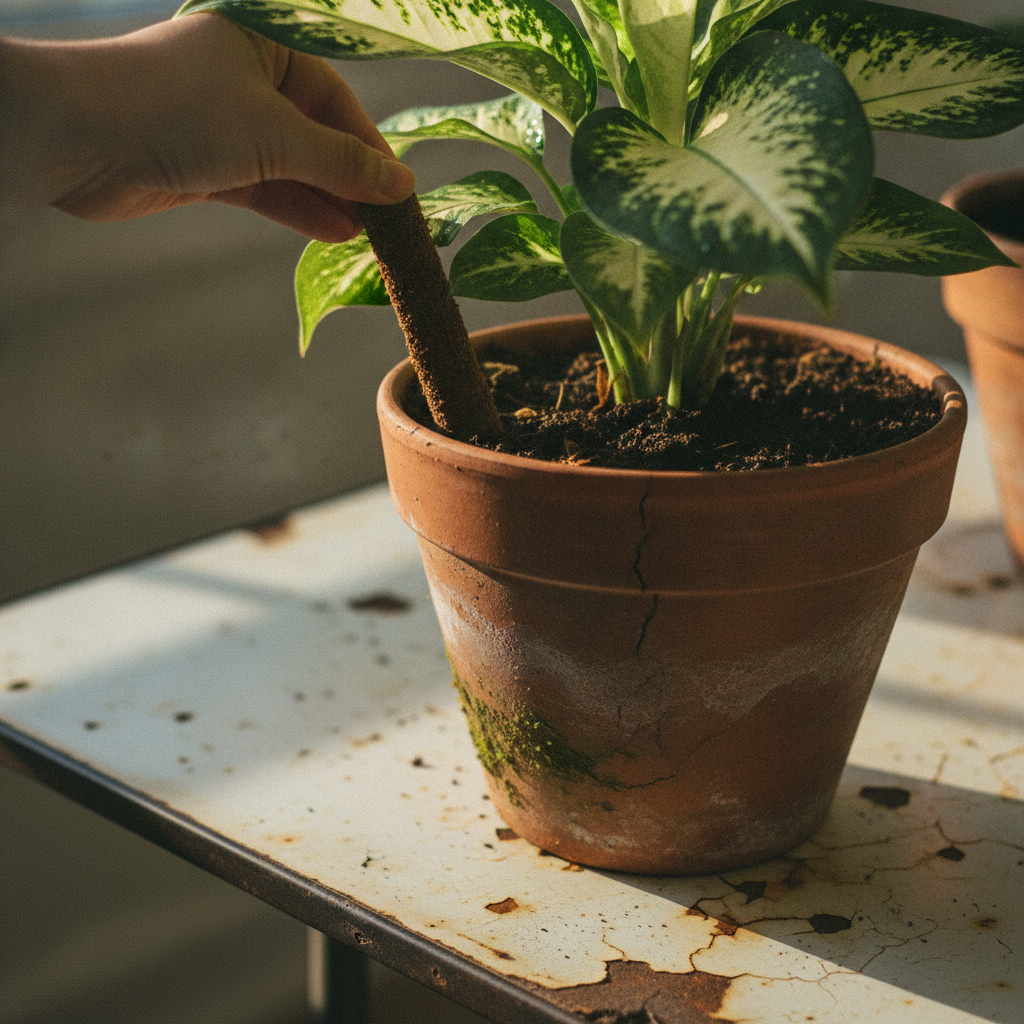
As light levels fall in autumn and the plant slows down, taper the feeding off and stop entirely through the depths of winter, resuming only when you see fresh growth appear in spring. Feeding a dormant plant simply leaves unused salts to build up in the compost, and those salts are one of the common causes of the brown leaf tips discussed earlier. If you suspect a build-up, flushing the pot thoroughly with plain water two or three times, letting it drain fully between each, will leach the excess minerals out and give the roots a clean slate.
Propagation
Propagating a Tropic Snow is not only easy but often necessary, because a tall old plant tends to shed its lower leaves and become bare and leggy at the base over the years. Cutting it back and rooting the pieces rejuvenates the plant and gives you new ones for free. Unlike some foliage plants, dumb canes cannot be grown from a single leaf; instead you propagate them from stem sections, tip cuttings, or by dividing an established clump. The most productive method uses sections of the thick cane, each of which carries dormant buds that will sprout into new shoots.
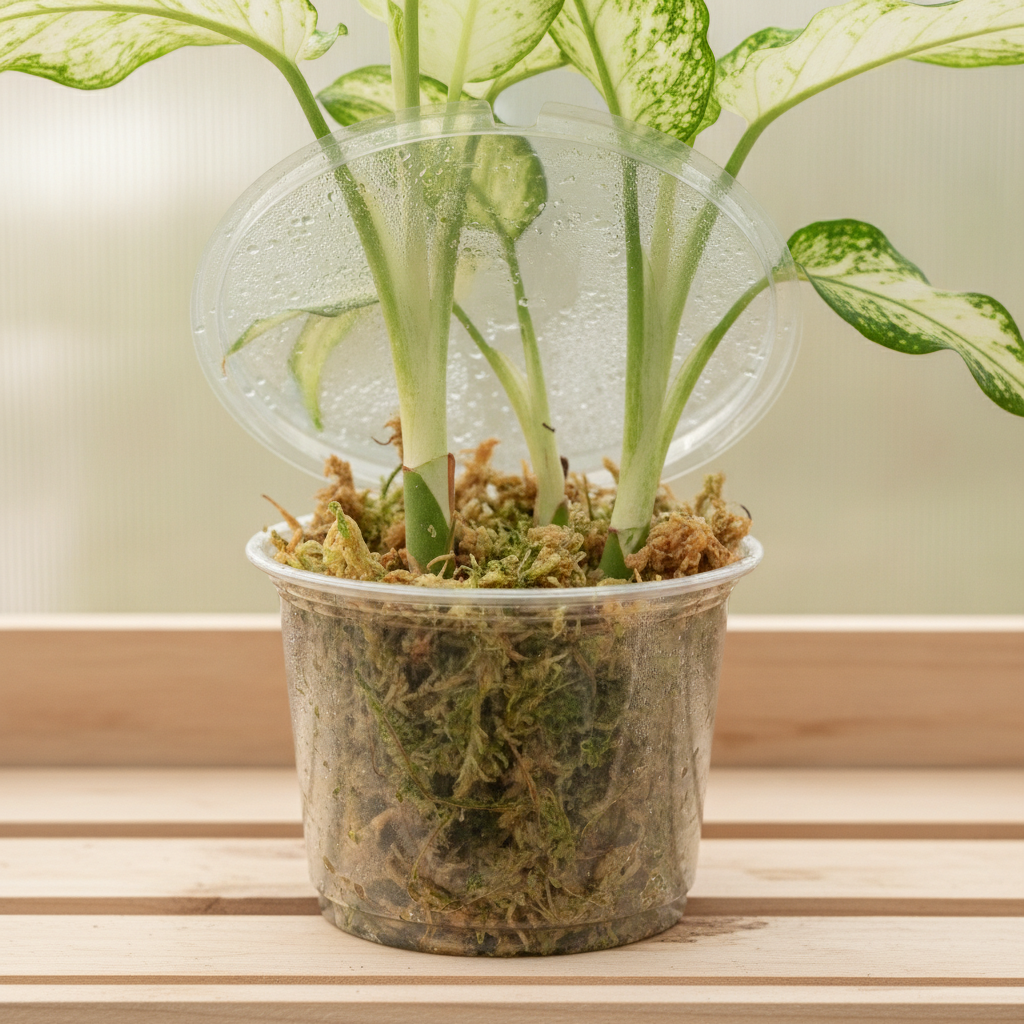
To propagate from cane cuttings, work in spring or early summer and wear gloves throughout, since every cut releases the irritant sap.
- Using a clean, sharp knife, cut the main stem into sections about 5 to 8 cm (2 to 3 in) long, making sure each piece contains at least one node, the slightly raised band where a leaf or bud was once attached.
- Let the cut sections rest in a dry, shaded spot for a day or two so the wounds callus over, which greatly reduces the risk of rot once they are in moisture.
- Lay each section horizontally on damp sphagnum moss or a tray of moist perlite, pressing it in so about half is buried, with the node facing sideways or up.
- Cover the container to hold humidity, keep it warm at around 21 to 24 degrees C (70 to 75 degrees F), and place it in bright, indirect light.
- Keep the medium lightly moist but never soggy, airing the container briefly every few days, and within four to eight weeks you should see roots and a new shoot emerge from the node.
- Once each new shoot has a small root system and a leaf or two of its own, pot it up into the standard free-draining mix and treat it as a young plant.
Division is even simpler where a plant has produced multiple stems from the base: at repotting time, ease the plant from its pot, separate a clump of stems with their own roots attached, and pot it up independently. Tip cuttings, taken as the leafy top 10 to 15 cm (4 to 6 in) of a stem, will also root in the same moss or perlite set-up and have the advantage of giving you an attractive, already-leafy plant more quickly.
Common Pests and Problems
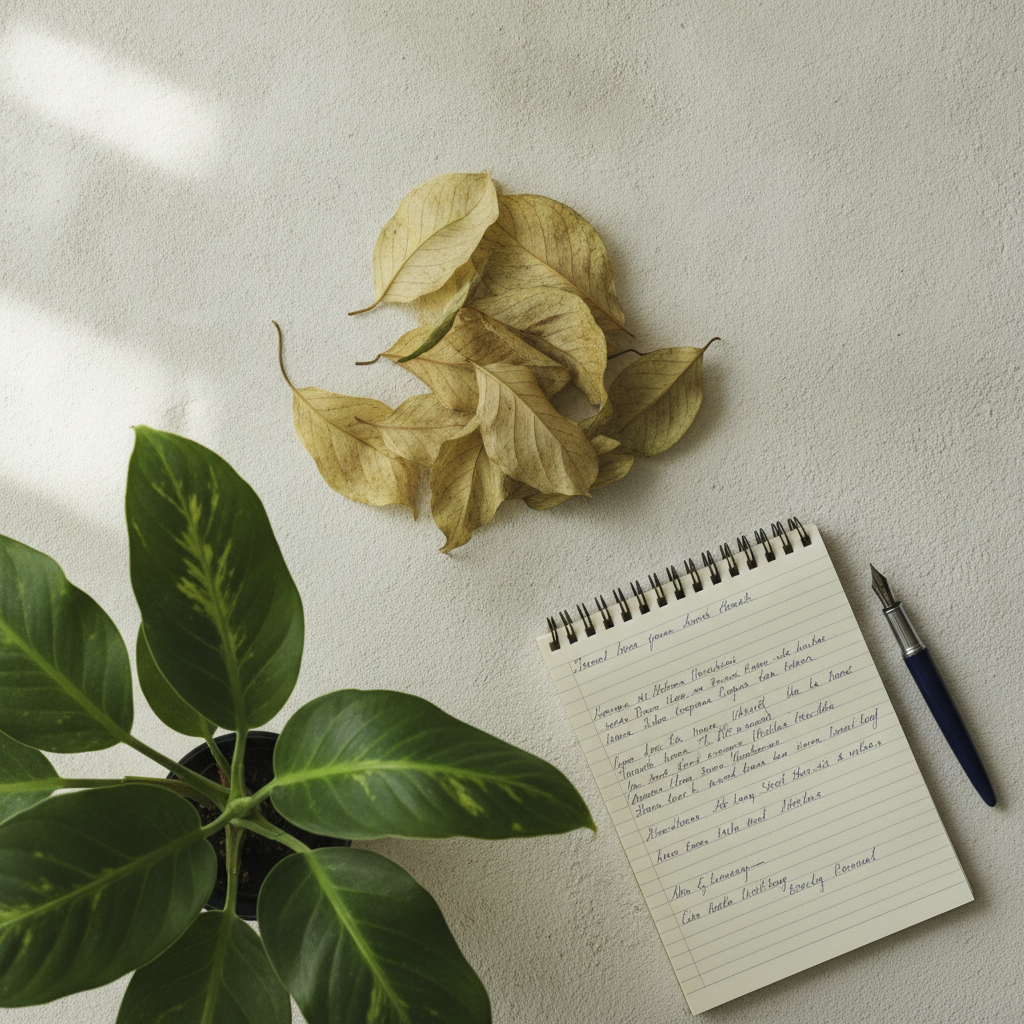
A vigorous, well-watered Tropic Snow is fairly resistant to pests, and most trouble comes instead from cultural conditions, above all watering and air quality. When pests do appear, they are usually the familiar indoor culprits, and catching them early makes them far easier to clear. The wide leaf surfaces make it easy to inspect both sides during watering, which is the habit most likely to keep an infestation from taking hold.
| Symptom | Likely cause | What to do |
|---|---|---|
| Fine webbing and pale stippling on leaves | Spider mites, usually in dry air | Raise humidity, wipe leaves, and treat with insecticidal soap or neem oil |
| White cottony tufts in leaf joints | Mealybugs | Dab with a cotton bud dipped in isopropyl alcohol and repeat weekly |
| Sticky residue and clusters of small insects | Aphids or scale | Rinse off, then treat with insecticidal soap until clear |
| Yellowing lower leaves, soft base | Overwatering or root rot | Let soil dry, check roots, repot into fresh free-draining mix |
| Brown, crispy leaf tips and edges | Low humidity, fluoride or salt build-up | Use filtered water, raise humidity, flush the pot to leach salts |
| Leggy, sparse growth reaching for light | Insufficient light | Move to a brighter spot and consider cutting back to reshape |
One problem unique to this plant deserves its own mention. All parts of a dieffenbachia contain microscopic needle-like crystals of calcium oxalate, and the sap is genuinely irritating. If it is chewed, it can cause intense burning and swelling of the mouth and throat, and in severe cases temporary difficulty speaking, which is the origin of the name dumb cane. It is toxic to cats, dogs and children, and the sap can irritate skin and eyes on contact. This does not make it a plant to avoid, but it does mean placing it out of reach of pets and small children, washing your hands after handling it, and wearing gloves whenever you prune or repot. Treated with that ordinary respect, it is a completely safe and rewarding houseplant to live alongside.
Varieties to Know
Tropic Snow belongs to a large and varied family of dumb canes, and once you appreciate its bold variegation it is worth knowing a few of the cultivars alongside it. They share the same easy care, differing mainly in the pattern and proportion of cream to green and in their eventual size, so you can build a collection with a consistent look but plenty of individual character.
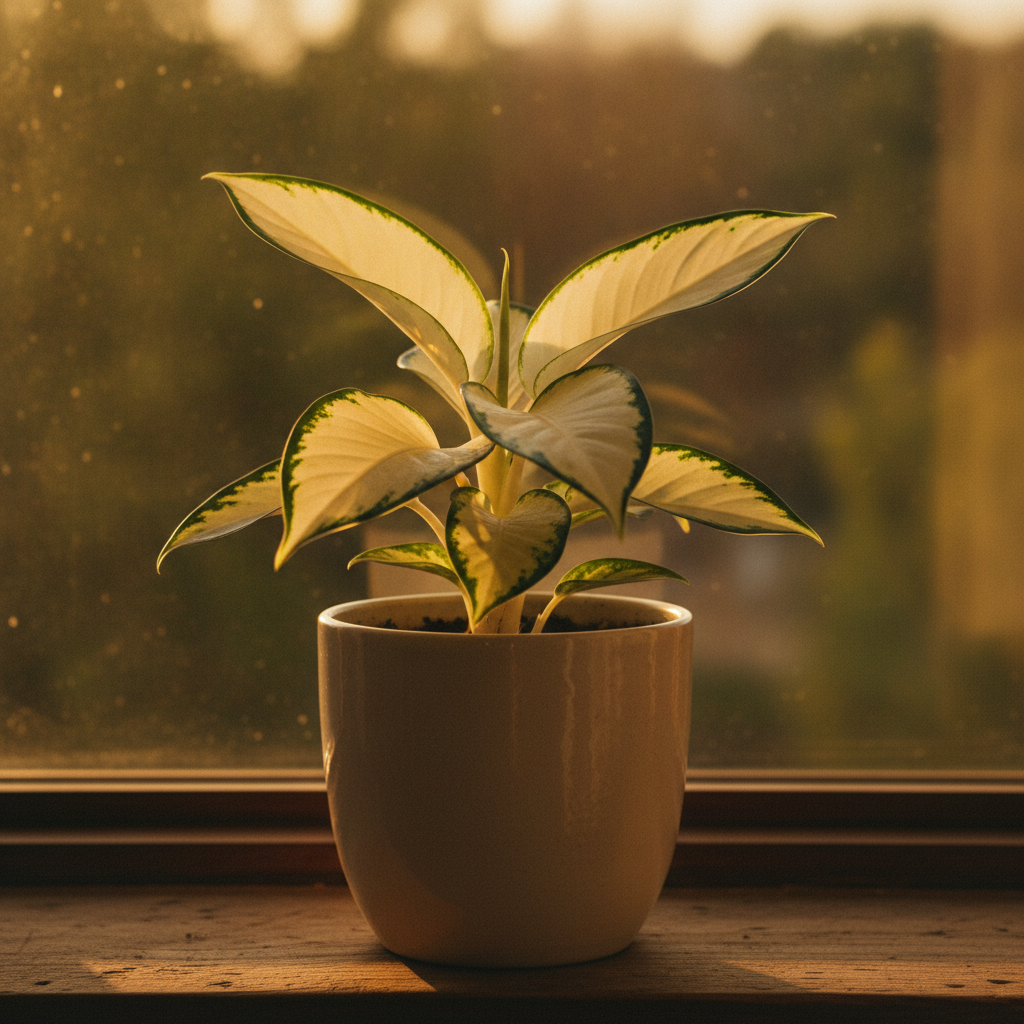
‘Camille’ is the compact counterpoint to Tropic Snow’s scale. It stays smaller and bushier, ideal for a shelf or desk, and its broad leaves are almost entirely creamy-ivory in the centre with only a thin deep-green margin. That heavy variegation makes it especially sensitive to low light, so it rewards a bright position even more than its larger cousin.
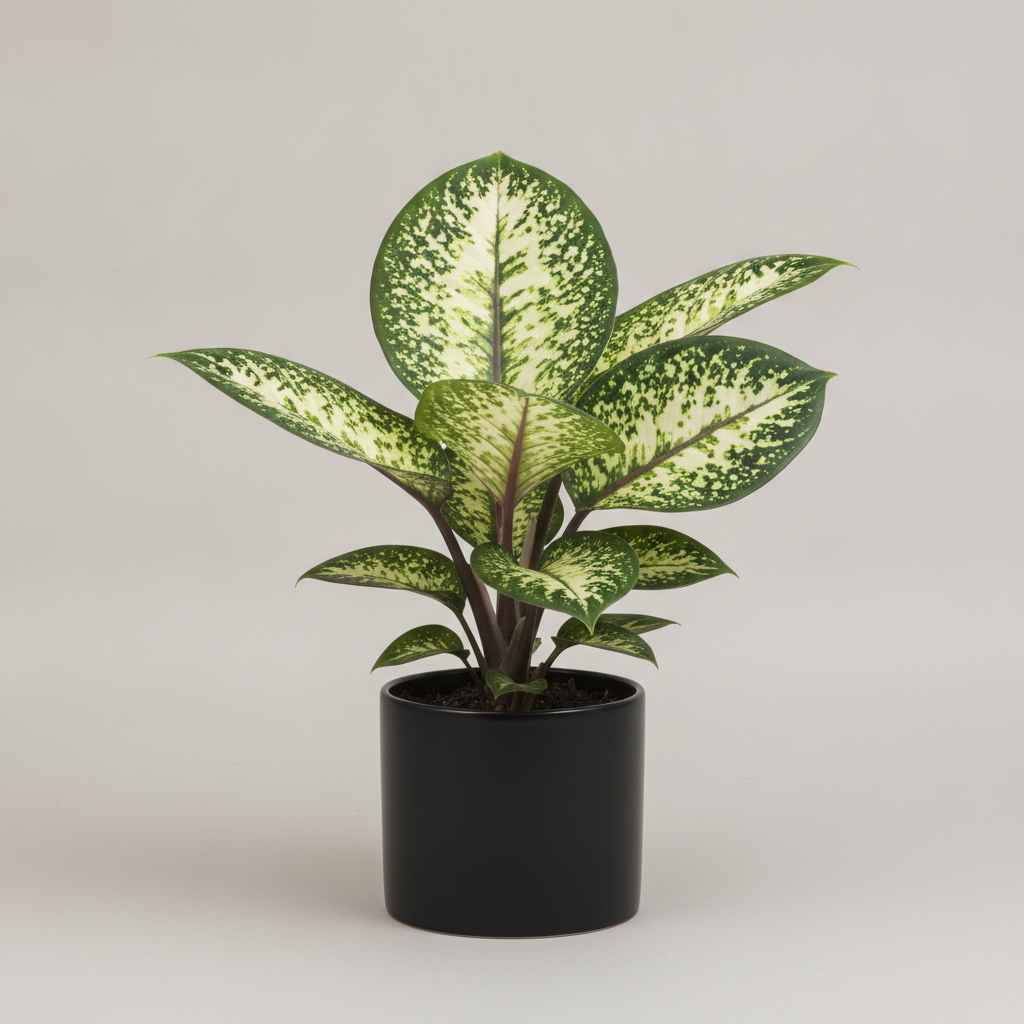
‘Reflector’ takes a completely different approach to pattern. Instead of a pale centre, its dark green leaves are dappled all over with a mosaic of lime and cream flecks, often with a subtle violet tint to the midrib. The overall effect is dramatic and almost camouflage-like, and because more of the leaf is green it copes a little better with medium light than the palest cultivars.
Frequently Asked Questions
Why are the tips of my Tropic Snow’s leaves turning brown?
Brown, crispy leaf tips almost always point to one of three things: air that is too dry, a build-up of fluoride and mineral salts from tap water, or fertiliser salts accumulating in the compost. Switching to filtered water or rainwater, raising the humidity around the plant, and flushing the pot with plain water every few months will usually put a stop to it. Existing brown tips will not turn green again, but new leaves should emerge clean.
Is the Tropic Snow dieffenbachia safe around pets and children?
No, it is toxic if chewed or swallowed. The sap contains calcium oxalate crystals that cause burning and swelling of the mouth and throat, which is where the name dumb cane comes from, and it can irritate skin and eyes on contact. Keep it out of reach of cats, dogs and small children, and wear gloves when pruning or repotting. It is perfectly safe to own as long as nobody eats it.
My plant has become tall and bare at the bottom. Can I fix it?
Yes, and it is very common with older plants. You can cut the main stem back hard, even to within 15 cm (6 in) of the soil, and the plant will usually sprout new shoots from the remaining cane. Better still, use the piece you removed for propagation, so one leggy plant becomes a rejuvenated base plus one or more new plants. Spring is the best time to do this.
How fast does a Tropic Snow grow and how big will it get?
In warm, bright conditions with regular feeding it is a fast grower, producing new leaves throughout spring and summer, and it can eventually reach 1.5 to 1.8 m (5 to 6 ft) tall indoors on thick cane-like stems. Growth slows or stops over winter, which is entirely normal. If you want to keep it more compact, prune it back periodically and it will branch and stay bushier.
Why is my new growth greener than the older leaves?
This is the plant reverting toward green in response to too little light. Because the pale variegated areas cannot photosynthesise, a dieffenbachia in a dim spot produces greener leaves to survive. Move it to a brighter position out of direct sun and subsequent leaves should regain more of their creamy markings.






