
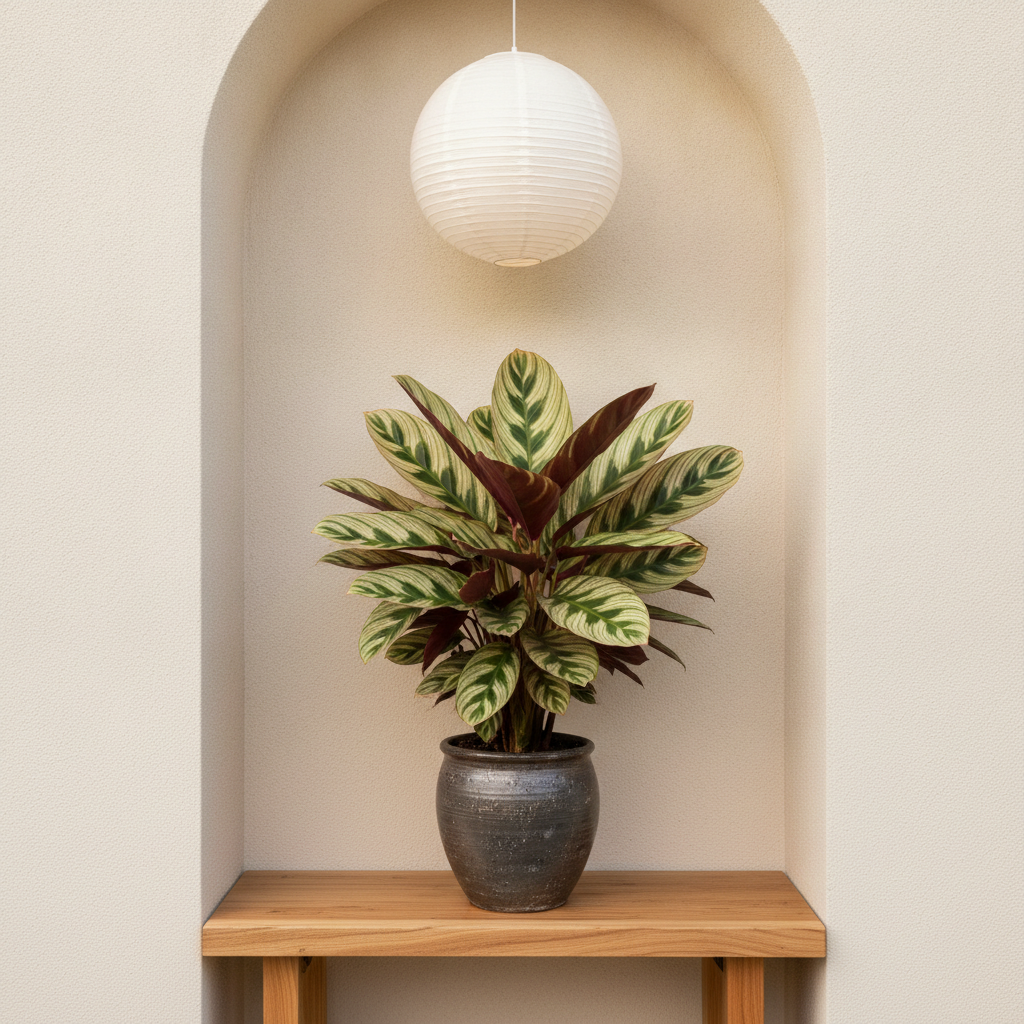
Few houseplants announce themselves as loudly as the Tricolor Stromanthe. Turn one leaf over and the show begins: the upper surface is a painterly wash of cream, mint and deep green, streaked here and there with candy pink, while the underside glows a saturated magenta-burgundy that seems almost backlit. Known botanically as Stromanthe sanguinea and sold most often under the cultivar name ‘Triostar’, this member of the prayer plant family carries all the drama of a tropical understorey plant and, unfortunately, most of its demands too. It is a plant that rewards attention and quietly punishes neglect, which is precisely why understanding the gap between merely surviving and genuinely thriving matters so much here.
This guide walks through everything needed to keep a Tricolor Stromanthe not just alive but colouring up and unfurling new leaves: how much light it wants without scorching, why the water in your tap may be quietly browning the leaf edges, the airy soil it needs, and the humidity that separates a lush specimen from a crisp, curling disappointment. Use the contents below to jump to whichever section you need.
- Quick Reference
- Why Grow a Tricolor Stromanthe
- Light
- Watering
- Soil and Potting
- Fertilising
- Propagation
- Pests and Problems
- Varieties
- Frequently Asked Questions

Quick Reference
The table below summarises the core requirements at a glance. Every point is expanded in the sections that follow, but if you only remember three things, make them these: bright indirect light, consistently moist soil watered with low-mineral water, and humidity kept as high as you can reasonably manage.
| Common names | Tricolor Stromanthe, Stromanthe Triostar, Magenta Triostar, Tricolour Ginger |
| Botanical name | Stromanthe sanguinea (often listed as Stromanthe thalia ‘Triostar’) |
| Family | Marantaceae (the prayer plant family) |
| Native range | Atlantic coastal rainforest of eastern Brazil |
| Light | Bright, indirect light; no direct midday sun |
| Water | Keep evenly moist; use rain, distilled or filtered water |
| Humidity | High, ideally 60 per cent or above |
| Temperature | 18 to 27 degrees Celsius (65 to 80 degrees Fahrenheit) |
| Soil | Light, airy, well-draining, slightly acidic mix |
| Fertiliser | Balanced liquid feed, diluted, monthly in spring and summer |
| Mature size | 60 to 90 centimetres (24 to 36 inches) tall and wide indoors |
| Toxicity | Non-toxic to cats, dogs and humans |
| Difficulty | Intermediate to advanced |
Why Grow a Tricolor Stromanthe
The obvious answer is the foliage. No amount of description quite prepares you for the way a Tricolor Stromanthe catches light, the cream sections almost luminous against the darker green, the pink brushstrokes scattered as though flicked from a loaded paintbrush, and beneath it all the vivid magenta reverse that flashes every time the leaves move. And they do move. Like all members of the Marantaceae, this plant is nyctinastic, meaning it raises and lowers its leaves on a daily rhythm driven by a small hinge-like joint called the pulvinus at the base of each leaf. In the evening the foliage folds upward, revealing all that magenta undersurface at once, a nightly display that gives the whole prayer plant family its name and makes the Stromanthe feel less like an ornament and more like a living, responsive thing on the shelf.
Beyond spectacle, there is a genuinely practical reason to choose this plant over some of its equally showy relatives: it is entirely non-toxic. Households with cats, dogs or curious toddlers can grow a Tricolor Stromanthe without the low-level anxiety that comes with a philodendron or a dieffenbachia. It will not poison a pet that decides to sample a leaf, though the plant would certainly prefer to be left intact. It is also a naturally clumping grower rather than a climber or a trailer, forming a tidy upright rosette that broadens over time as new shoots push up from the rhizome, so it holds its shape well in a pot without staking or training.
The honest counterweight is that this is not a beginner’s plant. It comes from the humid, shaded floor of the Brazilian coastal rainforest, and it has never entirely forgiven the average centrally heated living room for being drier and brighter than that. Crisp brown leaf edges, curling, and faded variegation are all common complaints, and nearly all of them trace back to humidity, water quality or light. None of these is difficult to fix once understood, which is what the rest of this guide is for. Think of the Tricolor Stromanthe as a plant that tells you very clearly when it is unhappy, and one that becomes genuinely easy to keep once its few firm preferences are met.
Light
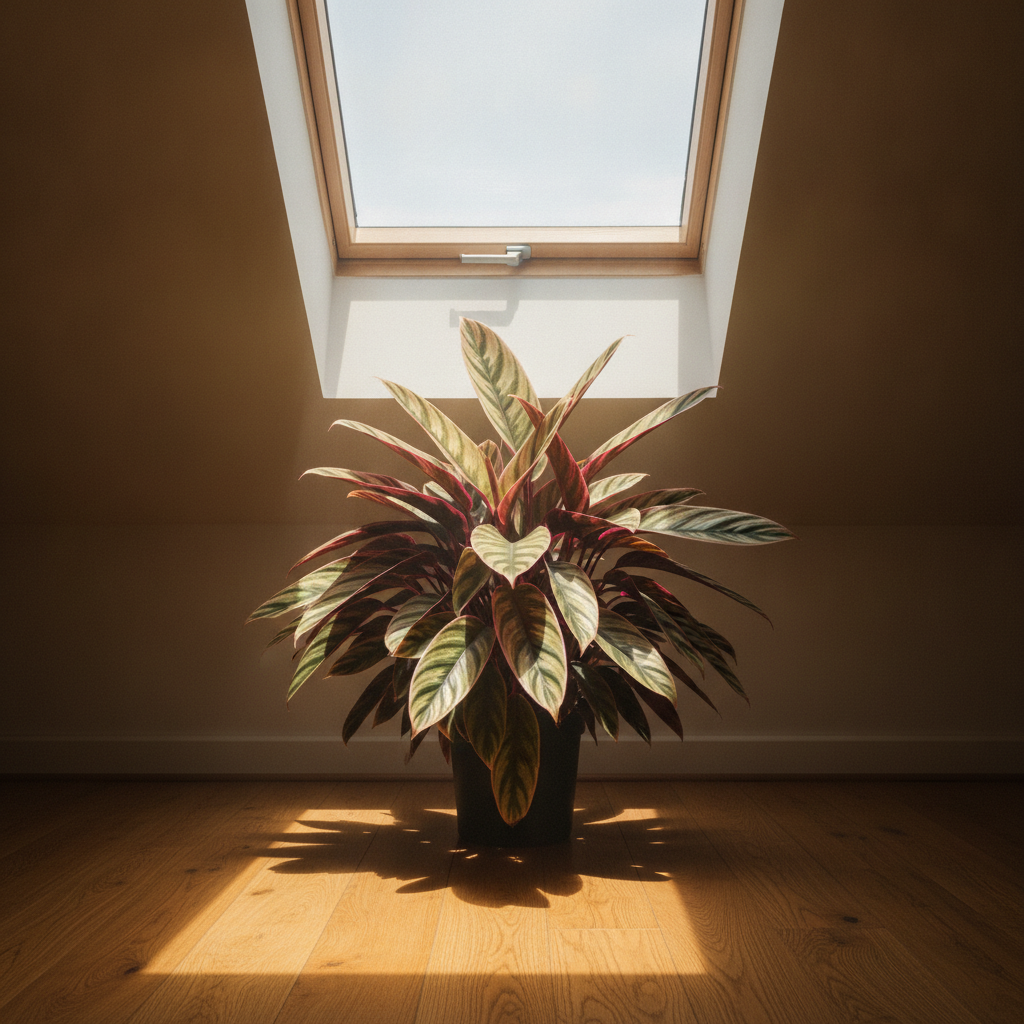
Light is the single lever that most affects how good a Tricolor Stromanthe looks. In its native habitat the plant grows beneath a rainforest canopy, receiving abundant but filtered light that reaches it in dappled, shifting patches rather than as direct beams. Recreating that indoors means bright, indirect light: a position near a window where the plant sits in plenty of ambient brightness but never in the path of the sun’s direct rays for more than an hour or so, and ideally not at all during the harsh middle of the day.
An east-facing window is close to ideal, offering gentle morning sun that the plant tolerates well before the light softens for the rest of the day. A north-facing window works in summer and in brighter rooms, though it may be a little dim through winter. South and west windows can be excellent provided the plant is set back a metre or two from the glass, or the light is filtered through a sheer curtain, so that the intensity is broken up before it reaches the foliage. The variegation itself offers a useful clue: the cream and white sections of each leaf contain little or no chlorophyll and cannot photosynthesise, so a variegated Stromanthe actually needs more light than a plain green one to keep the whole plant fed. Too little light and you will see the new leaves emerge greener and less strongly marked, the plant’s quiet way of clawing back photosynthetic surface at the expense of colour.
The failure mode in the other direction is scorching. Direct summer sun striking those pale, pigment-poor leaf sections will bleach and then crisp them within a day or two, leaving pale tan patches that never recover. If you see this, move the plant back or add a diffusing curtain. A plant that survives in low light will hang on for a long time, growing slowly and losing vibrancy; a plant that thrives sits in steady, bright, filtered light and pushes out one boldly marked leaf after another. If your home simply lacks a bright enough spot, a full-spectrum LED grow light running for ten to twelve hours a day is a reliable substitute and keeps colour strong through the darkest months.
Pro Tip – Even Colour: The Tricolor Stromanthe grows toward its light source and will lean noticeably over a few weeks. Give the pot a quarter turn each time you water so every side receives its share, keeping the rosette symmetrical and the variegation even all the way around.
Watering
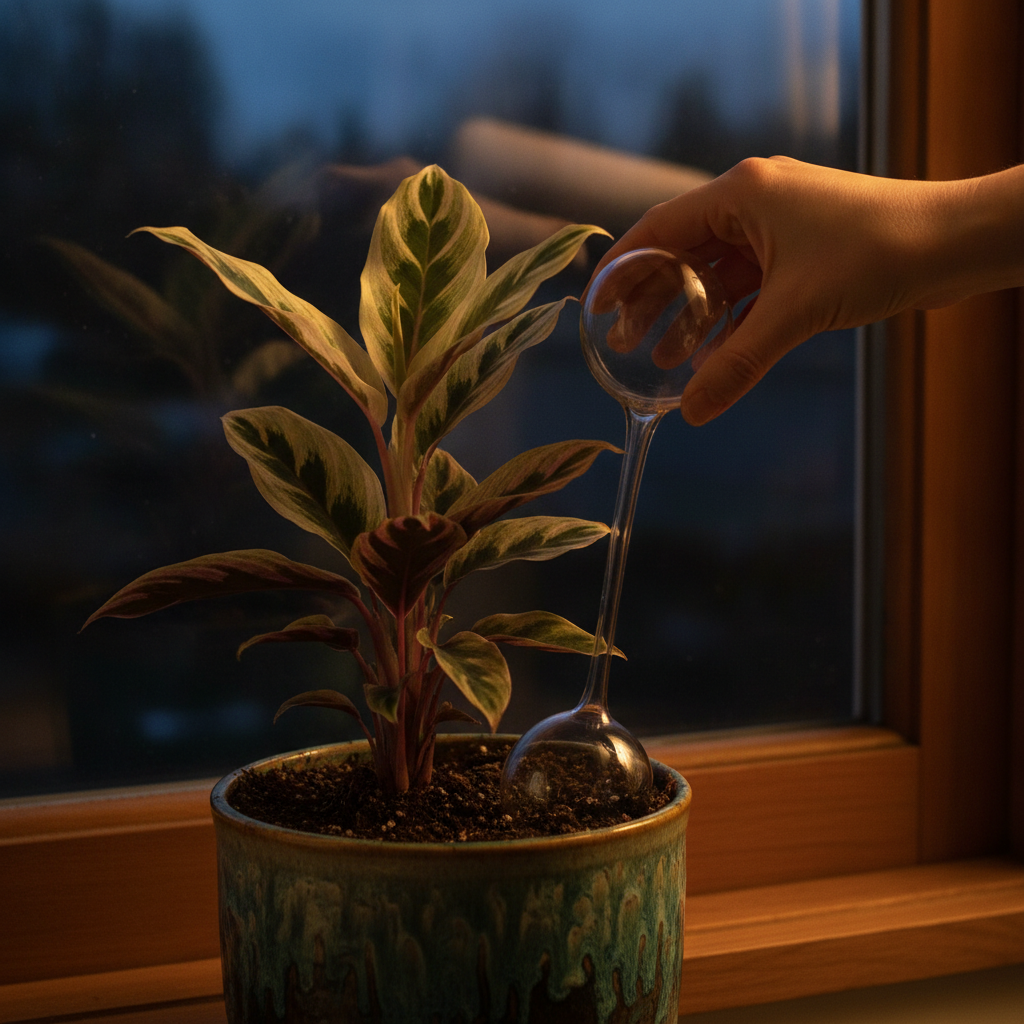
Watering is where most Tricolor Stromanthe troubles begin, and it has two separate strands: how much and how often, and the quality of the water itself. Take the timing first. This plant likes its soil kept consistently and lightly moist, never bone dry and never waterlogged. In practice that usually means watering when the top two to three centimetres (about an inch) of the mix have dried, which through the growing season might be every four to seven days depending on your warmth and light, and rather less often in winter. Push a finger into the soil rather than watering on a fixed schedule; the plant’s needs shift with the season and the room.
When you do water, water thoroughly. Take the plant to a sink, pour water through the mix until it runs freely from the drainage holes, and let it drain completely before returning it to its spot. This flushes the soil, ensures the whole root ball is moistened rather than just the surface, and carries away accumulated mineral salts. Never leave the pot standing in a saucer of water, because the fine roots of a Stromanthe rot quickly in stagnant, airless conditions, and root rot is far harder to reverse than a little underwatering.
The second strand is water quality, and this is the detail that catches many growers out. The Tricolor Stromanthe is genuinely sensitive to the fluoride, chlorine and dissolved mineral salts found in much tap water. Over weeks and months these build up and manifest as brown, crisp leaf tips and margins, often the first symptom a new owner notices and the hardest to explain. Wherever possible, water with rainwater, distilled water, or tap water that has been filtered, or at the very least left to stand uncovered overnight so some of the chlorine can dissipate. If your leaf tips keep browning despite good humidity and careful watering, the water itself is the most likely culprit, and switching to a low-mineral source often stops the problem cold.
Humidity belongs in the same conversation, because a Stromanthe reads dry air and thirsty soil as very similar kinds of stress. This is a plant that wants humidity of sixty per cent or more, well above the level of a typical heated or air-conditioned room. A humidifier running nearby is the most effective and consistent solution. Grouping the plant with others, standing it on a wide tray of damp pebbles, or moving it to a naturally humid room such as a bright bathroom all help too. Misting offers only a brief lift and is no substitute for genuinely moister air. The clearest sign that the ambient air is too dry is the same crisping and curling of leaf edges, so treat browning tips as a prompt to check humidity and water quality together.
Warning – Cold Water Shock: Water a Tricolor Stromanthe with tepid, room-temperature water. Cold water straight from the tap chills the tropical roots and can cause sudden leaf droop and stress. Letting your watering can stand in the room for a few hours before use both warms the water and lets chlorine disperse, solving two problems at once.
Soil and Potting
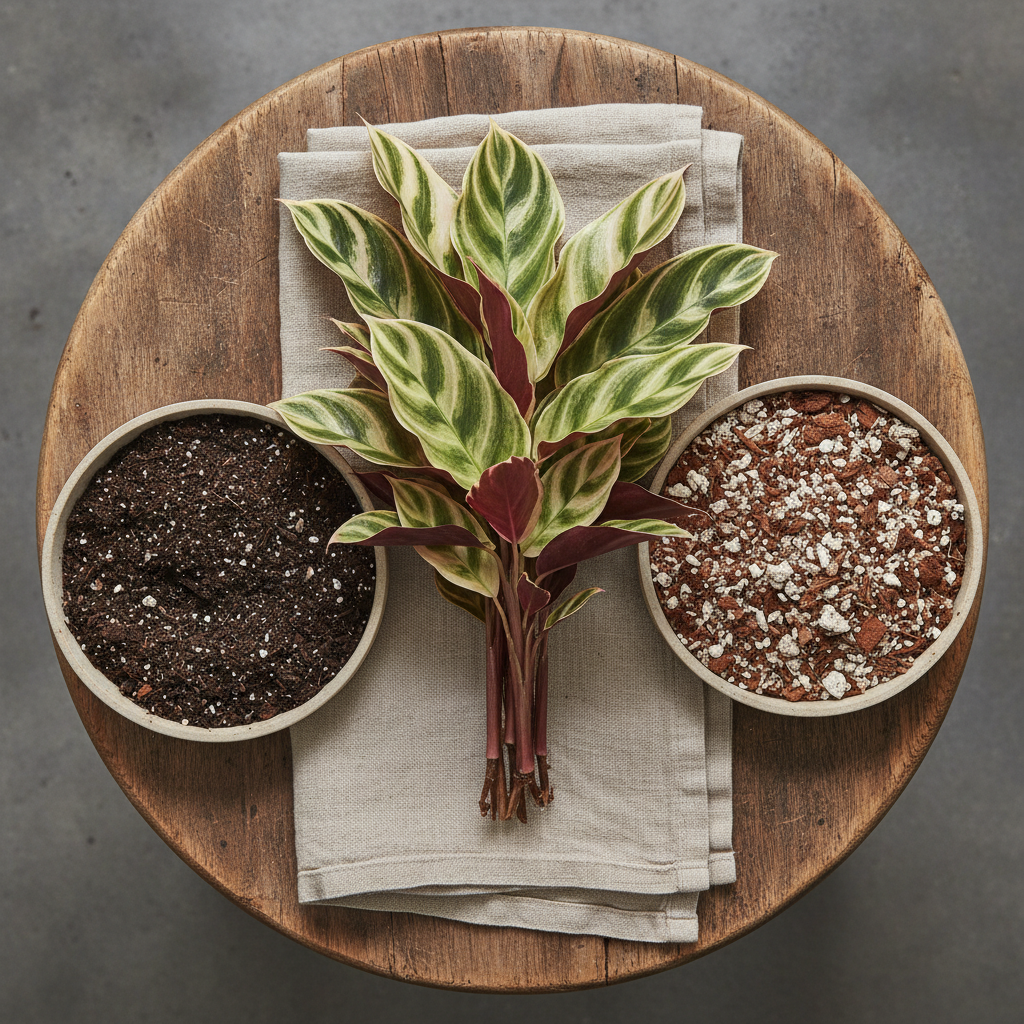
The ideal soil for a Tricolor Stromanthe resolves an apparent contradiction: it must hold moisture, because the plant hates to dry out, yet it must also drain freely and stay airy, because the roots rot in dense, waterlogged conditions. The answer is an open, humus-rich mix rather than either a heavy garden soil or a fast, gritty cactus blend. A reliable recipe is roughly two parts general-purpose houseplant compost or peat-free potting mix, one part orchid bark or fine coco chips to create air pockets and structure, and one part perlite to guarantee drainage. Many growers add a handful of coco coir to improve moisture retention without compaction. The plant prefers slightly acidic conditions, and the peat or coir base naturally provides this.
Whatever mix you choose, the pot must have drainage holes. A decorative cover pot without them is fine as an outer sleeve, but the plant itself should sit in a container that lets water escape, and you should tip away any water that collects in the sleeve after watering. Terracotta breathes and dries faster, which suits growers who tend to overwater, while plastic and glazed ceramic hold moisture longer and suit the Stromanthe’s preference for consistency; choose according to your own watering habits rather than any rule.
Repot roughly every one to two years, in spring as growth resumes, moving up just one pot size at a time. A Tricolor Stromanthe grown too large a pot sits in a mass of wet, unused soil that invites rot, so resist the urge to over-pot. Signs that repotting is due include roots emerging from the drainage holes, water running straight through without wetting the mix, or the plant drying out noticeably faster than it used to. Repotting is also the natural moment to divide a crowded clump, which is covered in the propagation section below. Handle the roots gently, settle the plant at the same depth it grew before, firm the fresh mix lightly around the root ball, and water it in with your usual low-mineral water.
Fertilising
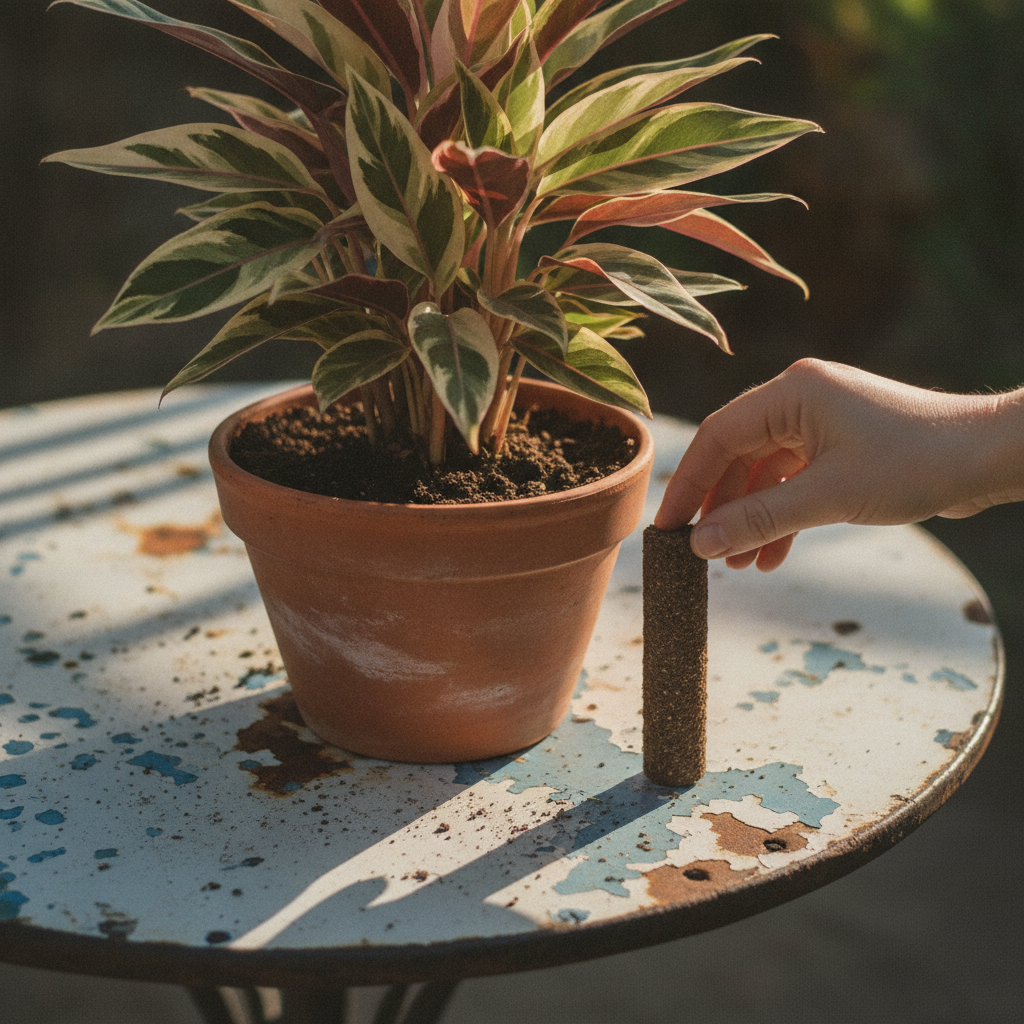
The Tricolor Stromanthe is a light feeder, and the most common fertilising mistake is generosity. Through the active growing season of spring and summer, a balanced liquid houseplant fertiliser diluted to half the strength recommended on the label, applied roughly once a month, is ample. This modest rhythm supplies the nitrogen and trace elements the plant needs to keep pushing out well-coloured new leaves without overwhelming its salt-sensitive roots. Always apply feed to soil that is already damp rather than to a dry root ball, since fertiliser salts drawn into dry roots can scorch them.
In autumn and winter, when growth naturally slows and light levels drop, stop feeding altogether. The plant is not using nutrients at that time, and anything you add simply accumulates in the soil as excess mineral salt. This is the same salt sensitivity that governs watering, and it explains why Stromanthes are so prone to brown leaf tips: the fluoride and salts from hard tap water and the residue from over-enthusiastic feeding both concentrate at the leaf margins where the plant transpires. If you suspect salt build-up, flush the pot thoroughly with several changes of low-mineral water, letting it drain fully each time, which leaches the accumulated salts out through the drainage holes.
There is no need for anything exotic. A standard balanced feed, or one slightly higher in nitrogen to support leafy growth, does the job perfectly well; this is a foliage plant grown for its leaves rather than for flowers, so bloom-boosting formulas are unnecessary. Whether you prefer a liquid feed added to the watering can, a slow-release stick pushed into the soil, or a top-dressing of worm castings in spring is a matter of convenience. The principle stays the same across all of them: feed lightly, feed only during active growth, and err on the side of too little rather than too much.
Propagation
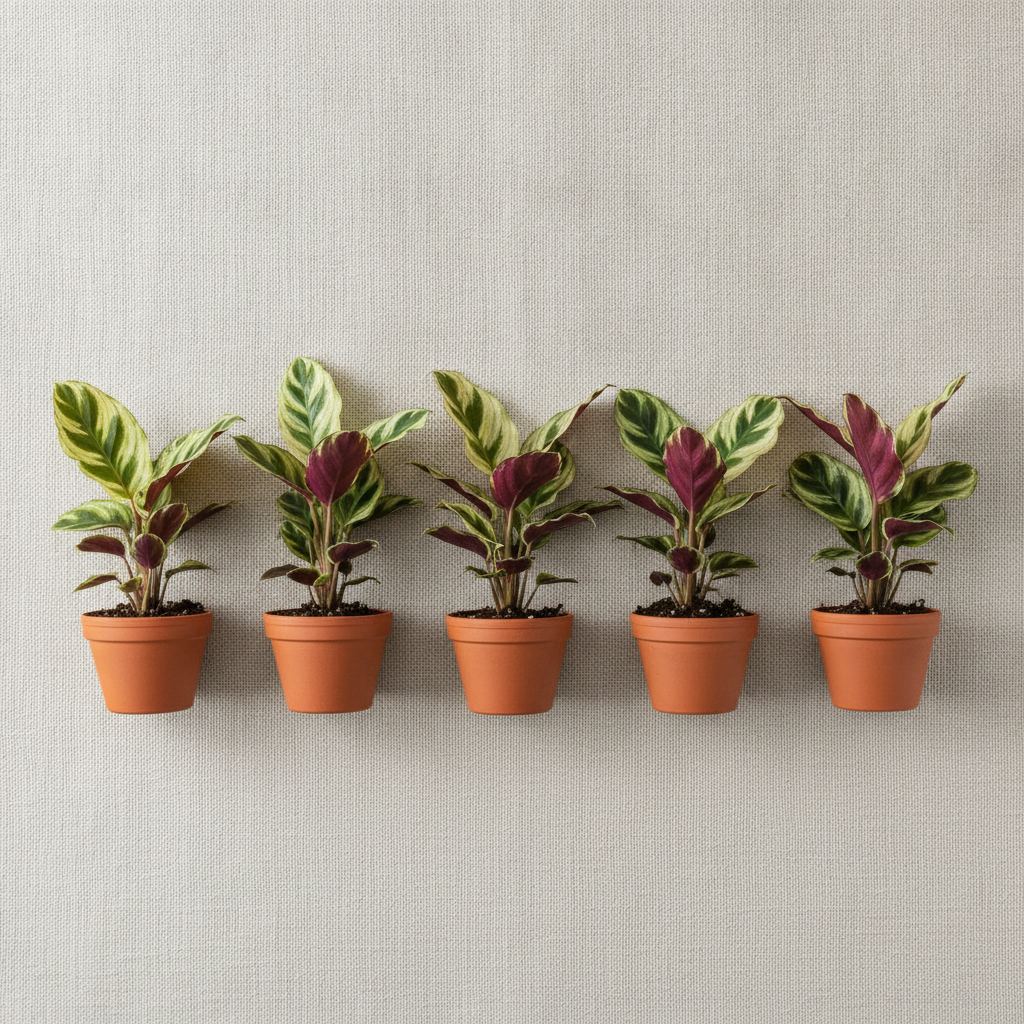
Unlike the pothos and philodendrons that root from a snipped stem in a jar of water, the Tricolor Stromanthe cannot be propagated from cuttings. It grows from a spreading underground rhizome and produces new shoots as clumps, so the only reliable method is division: physically separating an established plant into two or more smaller plants, each with its own roots and growing points. This is best done in spring, ideally at the same time as a scheduled repotting, when the plant has the whole growing season ahead to recover and settle in.
The process is straightforward but the plant dislikes root disturbance, so work gently and expect a short sulk afterward as it re-establishes. Some drooping and even a lost leaf or two in the first fortnight is normal and not cause for alarm.
- Water the plant a day beforehand so the root ball is moist and pliable, which reduces stress and makes the roots easier to tease apart.
- Slide the plant out of its pot and gently brush or shake away enough soil to see the root system and the natural clumps of shoots rising from the rhizome.
- Identify where the plant divides naturally into separate crowns. Each division needs a healthy section of rhizome, its own roots, and at least a few leaves to sustain itself.
- Separate the sections by teasing the roots apart with your fingers where possible, using a clean, sharp knife only where the rhizome must be cut. Sterilise the blade first to avoid introducing disease.
- Pot each division into its own container of fresh, airy mix, at the same depth it grew before, and firm the soil lightly around the roots.
- Water in with tepid, low-mineral water and place the new plants somewhere warm, bright and out of direct sun.
- Keep humidity high and the soil evenly moist while the divisions recover. A loose clear cover or a spot near a humidifier for the first couple of weeks eases the transition.
Give the new plants a few weeks of extra care and stable conditions and they will soon resume growth, each becoming a full plant in its own right. Because division simply separates existing tissue, every new plant is genetically identical to the parent and keeps the same tricolour variegation, so there is no risk of the offspring reverting to plain green.
Pests and Problems
The pest that plagues Tricolor Stromanthes above all others is the spider mite, and the reason is the same dry air the plant already struggles with. These tiny arachnids thrive in warm, low-humidity conditions, exactly what an unhappy Stromanthe is often sitting in, and they colonise the undersides of the leaves where they pierce the tissue and feed. The early signs are subtle: a fine pale stippling or speckling on the upper leaf surface, a slightly dusty or dull look to the foliage, and in worse cases delicate webbing strung between the stems and leaf axils. Because the plant’s core need for high humidity is also the strongest deterrent against spider mites, good general care doubles as pest prevention.
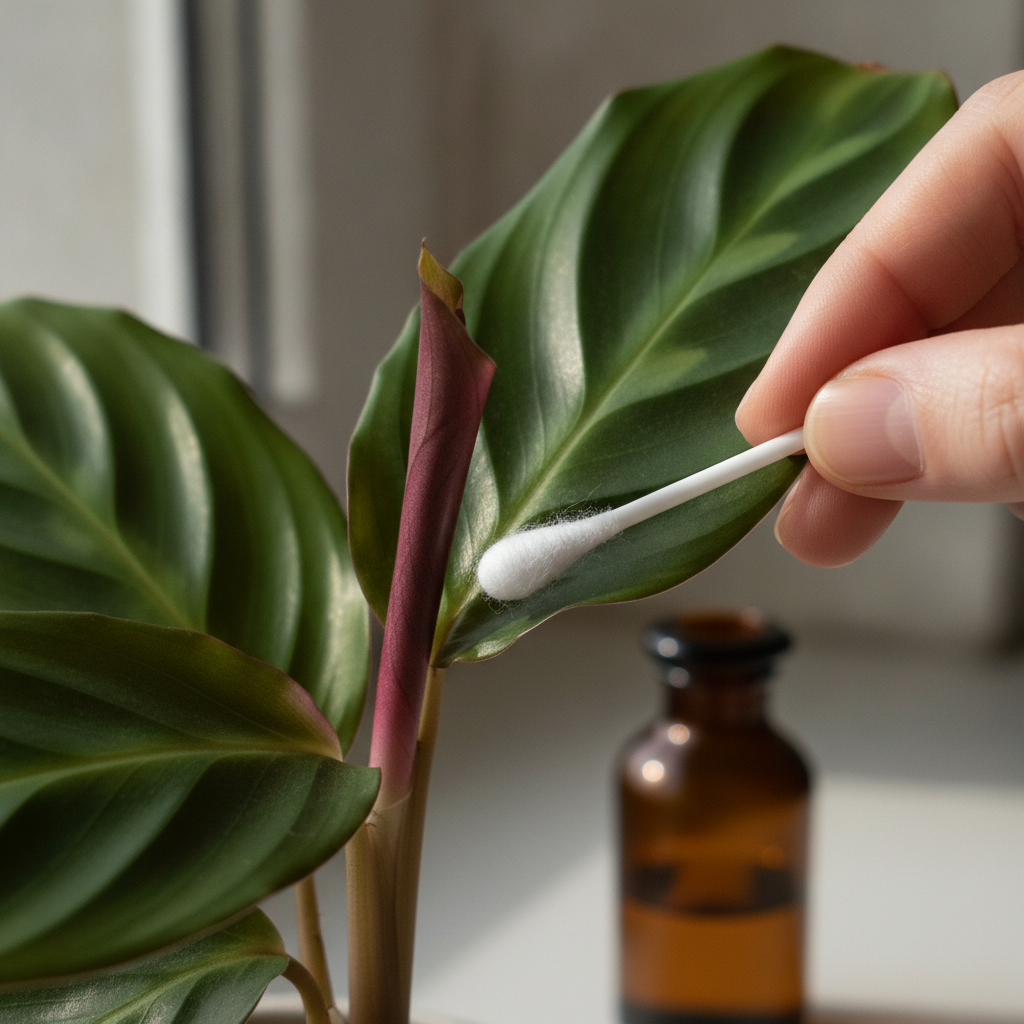
Less commonly you may encounter mealybugs, which appear as small white cottony tufts tucked into leaf joints, or scale insects showing up as flat brown bumps along the stems and leaf undersides. Whatever the pest, the response is the same: isolate the affected plant from your others straight away to stop the spread, then treat. Wipe the leaves, dab individual mealybugs or scale with a cotton bud dipped in diluted isopropyl alcohol, and treat the whole plant with an insecticidal soap or a neem oil solution, repeating every week or so until no live pests remain. A firm shower of tepid water over the foliage, paying particular attention to the undersides, physically knocks back mite populations between treatments.
Most of the day-to-day complaints with this plant, though, are not pests at all but responses to conditions, and reading them correctly saves a great deal of worry. The table below links the most common symptoms to their usual causes.
| Symptom | Likely cause and remedy |
| Brown, crisp leaf tips and edges | Low humidity, mineral-heavy tap water, or salt build-up. Raise humidity, switch to filtered or rainwater, and flush the soil. |
| Curling or rolling leaves | Thirst or dry air. Check the soil is evenly moist and increase humidity around the plant. |
| Yellowing lower leaves | Usually overwatering or poor drainage. Let the top of the mix dry a little more and confirm the pot drains freely. |
| Fading, greener new leaves | Insufficient light. Move to a brighter, indirect position or add a grow light. |
| Pale, bleached patches | Sun scorch on the variegated sections. Move out of direct sun or add a diffusing curtain. |
| Leaves not folding at night | Often a light-cycle disruption from artificial evening light, or general stress. Review the plant’s overall conditions. |
Almost every entry in that list points back to the same handful of fundamentals: humidity, water quality, drainage and light. Get those four right and the Tricolor Stromanthe has remarkably few genuine problems.
Varieties
The plant sold as Tricolor Stromanthe is itself a named cultivar, and the genus Stromanthe is relatively small in cultivation, so the choice comes down to a few closely related selections. The two most widely grown are shown below.
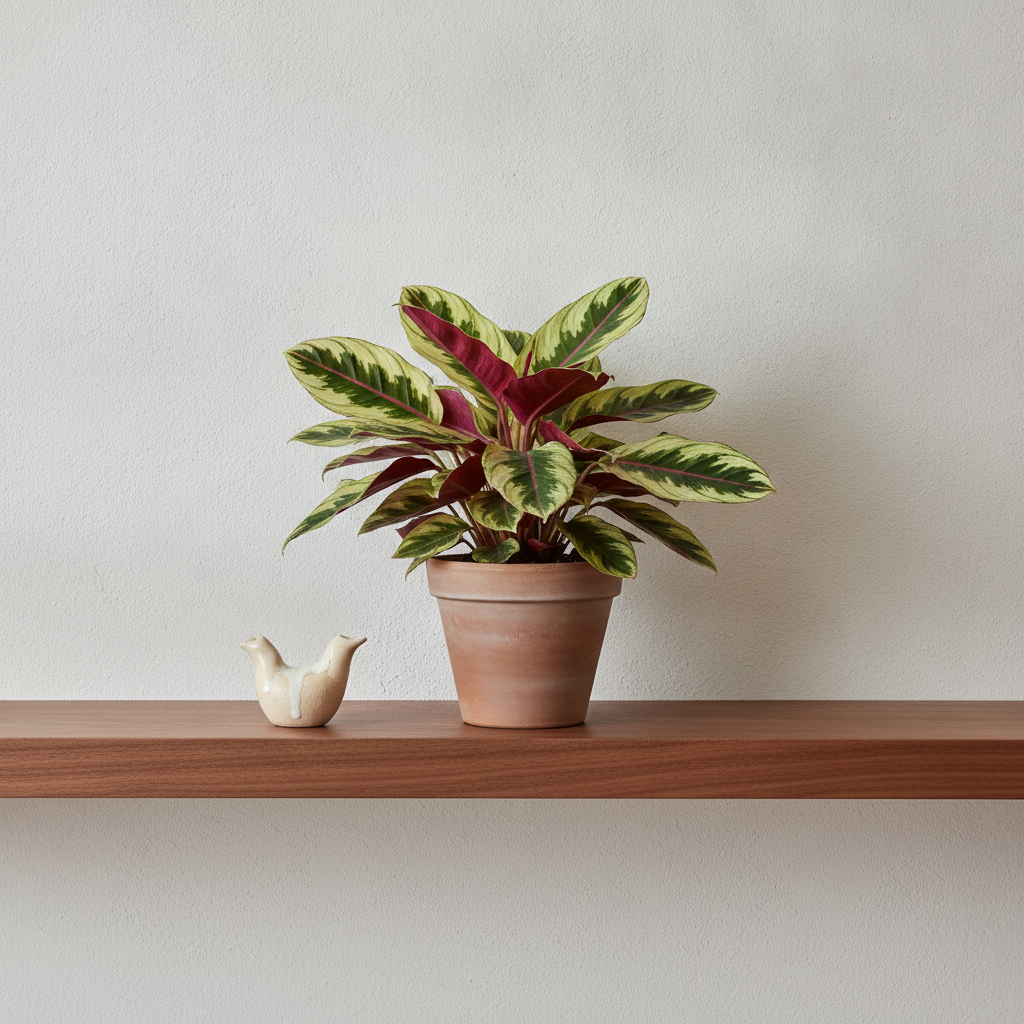
Stromanthe sanguinea ‘Triostar’
The definitive Tricolor Stromanthe and the plant most people mean by the name. ‘Triostar’ carries bold, irregular variegation in cream, mint and deep green across the upper leaf, streaked with pink, and flushed a vivid magenta-burgundy on the reverse. It is grown entirely for this foliage and delivers the fullest, most dramatic colour of any selection, which is exactly why it also demands the steadiest humidity and water quality to look its best.
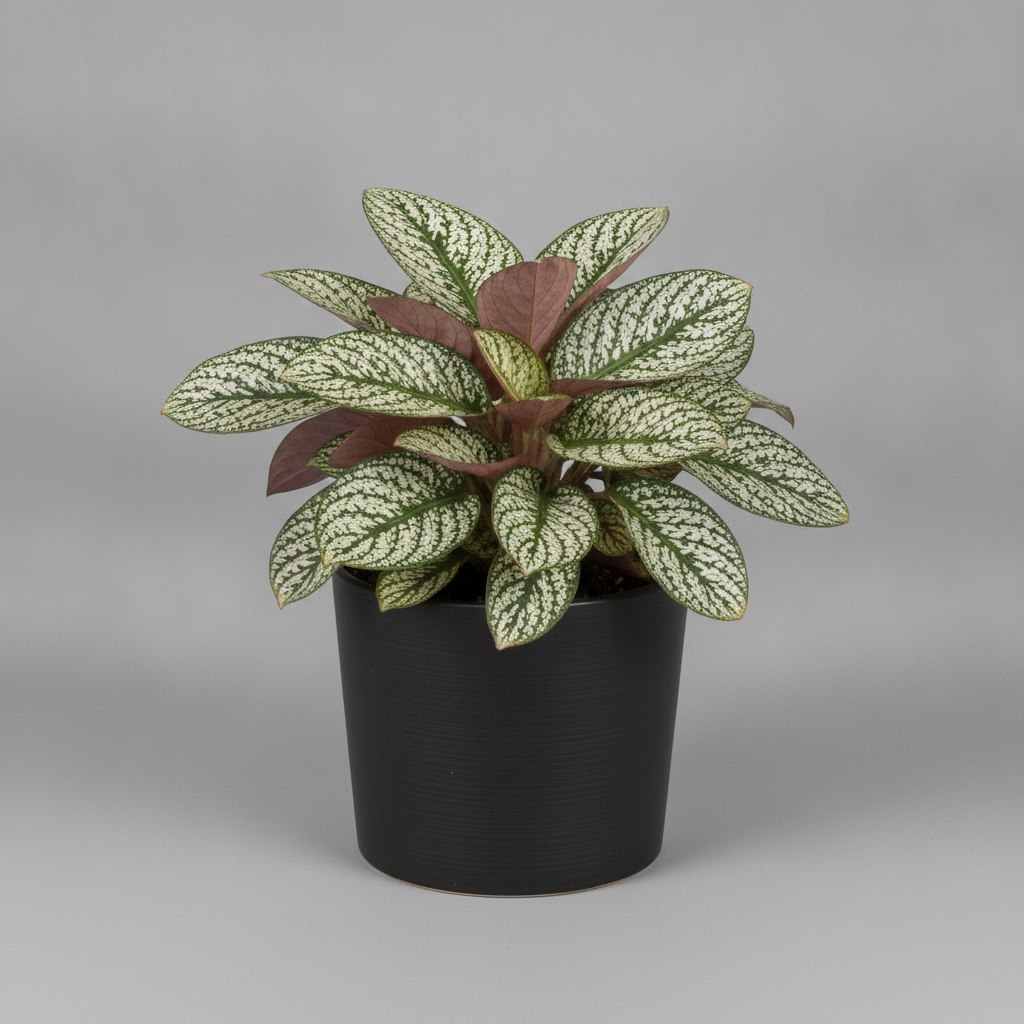
Stromanthe ‘Magic Star’
A more compact selection whose leaves are densely freckled and speckled with fine white and pale-green mottling over a green base, giving a scattered, starry effect rather than the broad brushstrokes of ‘Triostar’. The undersides still carry the family’s dusky pink flush. Its smaller stature suits growers with less space, and the finer variegation reads as slightly more restrained while keeping the same care requirements as its bolder sibling.
The plain species, Stromanthe sanguinea in its unvariegated form, is occasionally offered too, with glossy dark green upper leaves and the same striking blood-red undersides that give the species its name. It is markedly easier to grow than the variegated cultivars, since every part of the leaf can photosynthesise, and it is worth considering for anyone who loves the plant’s habit and that flash of red beneath but would rather skip the fussiness that comes with cream-and-pink variegation.
Frequently Asked Questions
Why are the leaf tips on my Tricolor Stromanthe turning brown?
Brown, crisp tips are the plant’s most common complaint and almost always come down to one of three things: air that is too dry, water that is too high in minerals, or a build-up of fertiliser salts in the soil. Raise the humidity around the plant to sixty per cent or more, switch to rainwater, distilled or filtered water, and flush the pot occasionally with several changes of low-mineral water to leach out accumulated salts. Working through those three usually stops new tips from browning, though the existing damage will not heal.
Is the Tricolor Stromanthe safe for cats and dogs?
Yes. Like other members of the prayer plant family, Stromanthe sanguinea is non-toxic to cats, dogs and humans, so it is a genuinely pet-safe choice. A pet that chews on it may still get a mild stomach upset simply from eating plant material, and the plant will not thank you for the damage, but there is no toxic risk.
Why does my plant fold its leaves up in the evening?
This nightly folding is called nyctinasty and is completely normal, indeed a sign of a healthy, responsive plant. A small hinge-like joint at the base of each leaf, the pulvinus, moves the leaves upward at dusk and lowers them again in the morning, revealing all that magenta underside overnight. It is the behaviour that earns the whole family the name prayer plant. If the leaves stop moving, it usually signals stress or a disrupted light cycle from artificial evening lighting rather than anything to celebrate.
How do I propagate a Tricolor Stromanthe?
Only by division, never from cuttings. Because the plant grows from a spreading rhizome and cannot root from a snipped stem, you propagate it by separating an established clump into smaller sections, each with its own roots and shoots, ideally in spring when repotting. Every division stays true to the parent and keeps the same variegation.
Why are the new leaves less colourful than the old ones?
Fading, greener new growth is the classic sign of too little light. Because the pale variegated sections cannot photosynthesise, a plant short on light compensates by producing leaves with more green, chlorophyll-bearing tissue. Move it to a brighter spot with plenty of indirect light, or add a grow light, and subsequent leaves should return to their full tricolour marking.
How big does a Tricolor Stromanthe get indoors?
Indoors it typically reaches sixty to ninety centimetres (roughly two to three feet) in both height and spread, forming an upright, gradually broadening clump. In its native rainforest it can grow taller still, but container life and indoor conditions keep it to a manageable tabletop or floor size that fits comfortably in most rooms.






