
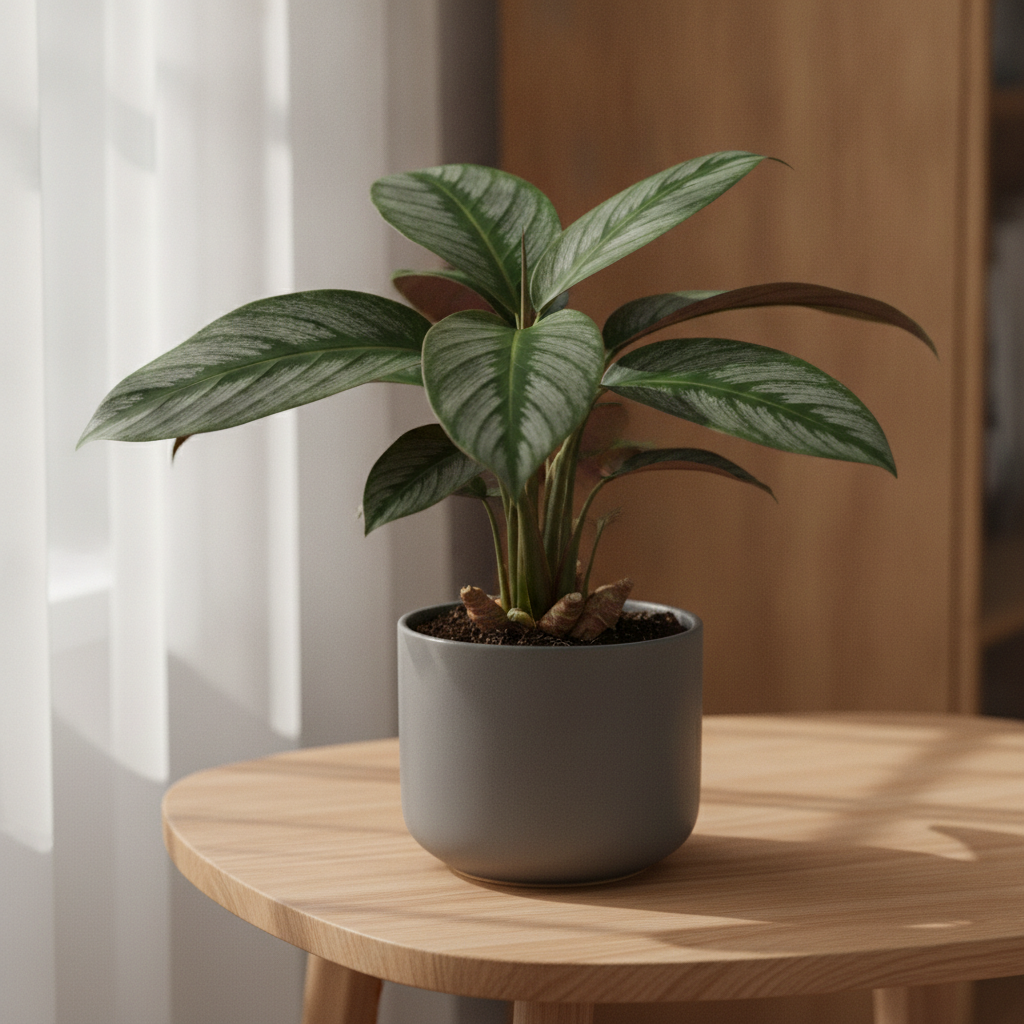
Few houseplants stage a comeback quite like the resurrection lily ginger. Grown from a cluster of dormant tubers, Kaempferia rotunda spends part of the year as bare soil in a pot, then sends up its fragrant, orchid-like flowers directly from the ground in spring before a single leaf appears. That apparent rising from the dead gives the plant its common name, and it shares the title with a handful of other aliases, including peacock ginger, round-rooted galangal, and tropical crocus. A member of the ginger family, Zingiberaceae, it is native across South and Southeast Asia, from India and Myanmar through Thailand, southern China, and the Malay Peninsula, where it grows in the dappled shade of forest floors and has a long history in traditional medicine and cooking.
What keeps it firmly in the collector’s cabinet, though, is the foliage that follows the flowers. Each broad, lance-shaped leaf is painted deep green above with silvery feathering along the veins and flushed a rich maroon-purple beneath, held low and slightly upright in a neat clump. The resurrection lily ginger has a reputation as an easy plant, and that reputation is fair, but it comes with one crucial caveat that trips up newcomers: this is a deciduous, seasonally dormant plant, and treating it like an evergreen tropical will drown it. This guide covers everything from light and water to soil, feeding, propagation, and pests, with a particular focus on the difference between merely keeping the tubers alive and coaxing them into a full, flowering, well-marked display each year.
Contents
- Quick Reference
- Why Resurrection Lily Ginger Makes a Rewarding Houseplant
- Light Requirements
- Watering & Humidity
- Soil, Potting & Repotting
- Fertilising
- Propagation
- Pests & Diseases
- Popular Varieties
- Frequently Asked Questions
Quick Reference: Resurrection Lily Ginger at a Glance
| Light | Bright indirect light to partial shade; no harsh midday sun |
| Watering | Keep evenly moist in growth; withhold almost entirely during winter dormancy |
| Temperature | 18 to 29 degrees C (64 to 84 degrees F) in growth; keep tubers above 12 degrees C (54 degrees F) when dormant |
| Humidity | Moderate to high, 50 percent and above preferred |
| Fertiliser | Balanced liquid feed every two to four weeks during the growing season only |
| Toxicity | Generally regarded as non-toxic; the rhizome is used in traditional cuisine and medicine, but ornamental plants should not be eaten |
Why Resurrection Lily Ginger Makes a Rewarding Houseplant
The appeal of Kaempferia rotunda is twofold, and the plant delivers each part of the show at a different time of year. In late winter to early spring, before the foliage returns, short flower stems push straight out of the soil. Each bloom is white with a violet to purple lip and a slender, spidery form, sweetly scented, and the flowers open in succession over a couple of weeks so a single clump keeps producing. Because they emerge from what looks like an empty pot, they carry an element of surprise that keeps this plant popular with growers who enjoy a seasonal event rather than a static green fixture.

The second act is the foliage. Once the flowers fade, the broad leaves unfurl and lie flatter as they mature, showing off their silver-grey banding and purple undersides. The plant stays compact, usually reaching 20 to 40 centimetres (8 to 16 inches) tall, which makes it well suited to tabletops, low shelves, and terrarium-adjacent setups where a shade-tolerant patterned plant is wanted. It is also genuinely forgiving during its active phase, asking only for warmth, moisture, and shelter from direct sun. The one thing it will not tolerate is being kept wet and warm through the winter, when its natural rhythm calls for a dry rest.
Important — Toxicity: The resurrection lily ginger is not listed among the common toxic houseplants, and its rhizome is used as a spice and folk remedy in parts of Asia. Even so, ornamental specimens may have been treated with pesticides or fertilisers, so they should never be eaten, and curious pets should be discouraged from digging up and chewing the tubers.
Light Requirements
In its native range the resurrection lily ginger grows on the forest floor, where the tree canopy filters the sun into a soft, shifting dapple. Recreating that indoors means giving it bright but indirect light, or gentle partial shade, for the whole of its growing season. This is a plant that reads harsh, unfiltered sun as a threat rather than a treat, and its silver-marked leaves scorch far more readily than a tougher tropical would.
The sweet spot is a position a metre or two back from a bright window, or right up against a window that faces away from the strongest sun of the day. In that kind of light the leaves develop their fullest silver patterning and deepest purple reverse, and the clump stays dense rather than stretching. Too little light and the plant survives but sulks, producing fewer, paler, more widely spaced leaves and often skipping its flowering display altogether.

Light Levels Explained
Houseplant light is easier to judge once it is broken into rough categories. The table below maps common indoor light levels onto the outcomes you can expect from a resurrection lily ginger, so you can match the plant to a spot in your home.
| Light Category | Approx. Level | Typical Location | Outcome |
|---|---|---|---|
| Direct sun | Over 50,000 lux | On a south-facing sill, unshaded | Leaves scorch and bleach; avoid |
| Bright indirect | 10,000 to 25,000 lux | Near an east window or set back from a bright one | Best growth, strong markings, reliable flowering |
| Medium | 5,000 to 10,000 lux | Middle of a well-lit room | Good foliage, flowering may be reduced |
| Low | 1,000 to 5,000 lux | Far corner, north-facing room | Survives but stretches; muted colour |
| Very low | Under 1,000 lux | Interior hallway, few windows | Slow decline; not recommended |
Window Orientation and Placement
South-facing window: The brightest exposure in the northern hemisphere, and generally too intense for this plant if it sits on the sill. Use it only if you diffuse the light with a sheer curtain or pull the plant back a couple of metres into the room.
East-facing window: Often the ideal choice. Gentle morning sun followed by bright, indirect light for the rest of the day suits the resurrection lily ginger perfectly and rarely causes scorch.
West-facing window: Workable, but the strong afternoon sun can be harsh in summer. Set the plant back from the glass or filter the light during the hottest months.
North-facing window: Provides soft, even light with no risk of scorch. It can be enough during the brighter half of the year, though flowering and colour may be weaker than at an east window.
Pro Tip — Rotate for Even Growth: Give the pot a quarter turn each week so every side receives similar light. The low, spreading leaves lean noticeably towards the brightest source, and regular rotation keeps the clump symmetrical.
How Light Affects Leaf Colour
The silver feathering and purple undersides that make this plant collectable are both light-dependent. In bright indirect light the contrast between the dark green and the silver bands sharpens, and the maroon reverse deepens. In dim conditions the leaf produces more chlorophyll to compensate, which floods the surface with plain green and washes out the pattern. If your plant has lost its markings, insufficient light is the first thing to check, well before you reach for fertiliser.
Warning — Direct Sunlight: A few hours of unfiltered midday sun can bleach and crisp these leaves within days. Damage shows as pale, papery patches that never recover, so move a scorched plant to gentler light immediately rather than waiting to see if it settles.
Artificial Lighting
The resurrection lily ginger responds well to supplementary lighting, which is useful in darker homes or through the dim months when it is in active growth. A full-spectrum LED grow-light positioned 30 to 45 centimetres (12 to 18 inches) above the foliage for 10 to 12 hours a day comfortably replaces a bright window. Because the plant is naturally low-growing, a single panel or bulb usually covers the whole clump without the need for elaborate rigs.
Seasonal Adjustments
Light needs track the plant’s own calendar. During the growing season, from spring through early autumn, give it the brightest indirect light you can. As the leaves yellow and die back into dormancy, the plant no longer needs light at all, and the dormant pot of tubers can be moved somewhere out of the way. When new flower shoots appear in late winter, return it to a bright position to fuel the coming season of growth.
Watering & Humidity
Watering is where the resurrection lily ginger diverges most sharply from the average houseplant, because its needs swing dramatically between two seasons. Through the growing months it is thirsty and wants consistent moisture, while through dormancy it wants to be kept almost bone dry. Getting this rhythm right is the single most important factor in keeping the tubers healthy year after year.
When to Water
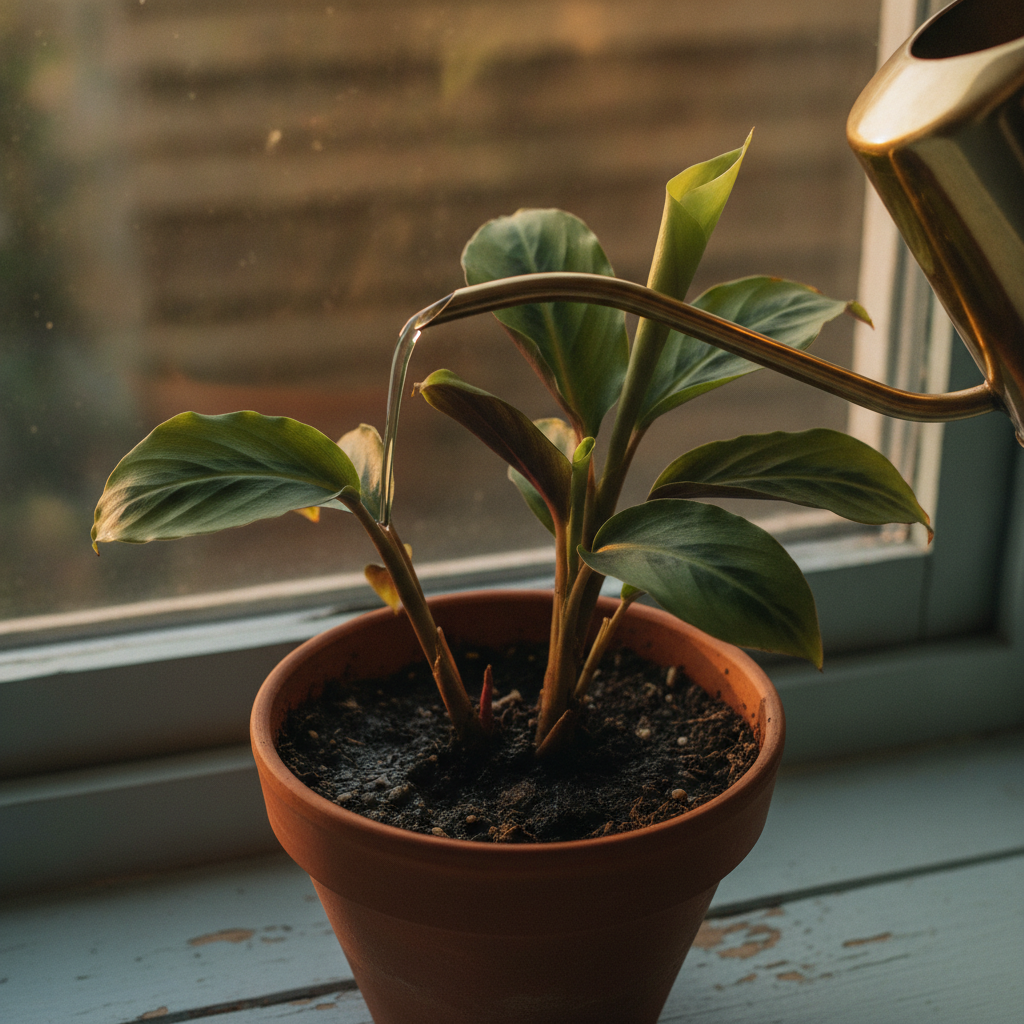
In the growing season, water when the top two to three centimetres (about one inch) of the mix have dried. In practice this often means watering once or twice a week, depending on warmth, light, and pot size. The goal is soil that stays evenly moist but never waterlogged, since the fleshy tubers rot quickly if they sit in standing water.
As autumn arrives and the leaves begin to yellow, taper the watering off gradually rather than stopping all at once. Once the foliage has fully died back, withhold water almost completely for the dormant period, giving no more than the occasional light splash every few weeks to stop the tubers shrivelling entirely. Resume normal watering only when new shoots emerge in late winter or spring.
Pro Tip — Follow the Leaves, Not the Calendar: Let the plant tell you when to change the watering regime. Start reducing water when leaves begin to yellow of their own accord, and start again when shoots appear, rather than forcing a fixed date, since the exact timing shifts with your home’s conditions.
How to Water Correctly
- Check the top few centimetres of soil with a finger; water only once it has begun to dry during the growing season.
- Water at the soil surface, pouring evenly around the pot rather than onto the crown of the emerging shoots.
- Continue until water runs freely from the drainage holes, ensuring the whole root zone is moistened.
- Let the pot drain fully for several minutes, then tip away anything collected in the saucer.
- Never leave the pot standing in water, as prolonged wetness around the tubers is the fastest route to rot.
Signs of Overwatering vs. Underwatering
| Symptom | Overwatering | Underwatering |
|---|---|---|
| Leaf colour | Yellowing across whole leaves, often lower ones first | Dull, greyish green with browning margins |
| Leaf texture | Soft, limp, sometimes translucent | Crisp, papery, curling at the edges |
| Soil | Stays wet for days, may smell sour | Pulls away from the pot sides, bone dry |
| Tubers | Soft, brown, mushy when unpotted | Firm but shrunken and wrinkled |
| Overall vigour | Sudden collapse, base of shoots blackening | Slow wilting that perks up after watering |
Warning — Root Rot: Because the tubers store water, they are especially prone to rotting if kept wet, above all during dormancy. If you unpot the plant and find soft, brown, foul-smelling tubers, cut away every affected part with a clean blade, dust the wounds, and repot the firm survivors into barely moist fresh mix.
Humidity Requirements
As a forest-floor tropical, the resurrection lily ginger appreciates moisture in the air and grows best where humidity sits at 50 percent or above. In a humid room the leaves stay supple and their margins remain clean, and growth is noticeably lusher than in dry conditions.
Low humidity tends to show first at the leaf edges, which turn brown and crisp, and on the newest leaves, which may emerge smaller or slightly deformed. Homes with central heating in winter can become very dry, though this coincides with the plant’s dormancy, so the issue mostly matters during the active growing months.
Raising humidity is straightforward. Grouping plants together, standing the pot on a tray of damp pebbles, or running a small humidifier nearby all help. A bright bathroom or kitchen, where everyday activities add moisture to the air, can be an excellent home for this plant during its growing season.
Water Quality
The resurrection lily ginger is not especially fussy about water, but like many patterned tropicals it can show sensitivity to the fluoride and chlorine in some tap supplies, occasionally as brown leaf tips. If your tap water is heavily treated or very hard, using filtered, distilled, or collected rainwater at room temperature will keep the foliage at its cleanest. Cold water straight from the tap can shock the roots, so let it stand and warm up before use.
Soil, Potting & Repotting
The right growing medium for a resurrection lily ginger balances two competing demands: it must hold enough moisture to keep the plant growing steadily through summer, yet drain freely enough that the tubers are never sitting in water. A rich but open, well-aerated mix strikes that balance and is the foundation of a healthy, flowering plant.
Ideal Soil Composition
A good base is a quality peat-free houseplant compost enriched with organic matter and opened up with drainage material. The organic fraction feeds the plant and holds moisture, while perlite, bark, or coarse grit creates the air pockets that keep the tubers healthy. The table below shows a reliable starting recipe that you can adjust to your conditions.
| Component | Proportion | Function |
|---|---|---|
| Peat-free houseplant compost | 50 percent | Holds moisture and supplies base nutrients |
| Perlite or pumice | 25 percent | Opens the mix and improves drainage and aeration |
| Fine orchid bark or coco chips | 15 percent | Adds structure and prevents compaction around the tubers |
| Worm castings or leaf mould | 10 percent | Provides slow, gentle nutrition and beneficial microbes |
The resurrection lily ginger prefers a soil that is slightly acidic to neutral, roughly pH 6.0 to 7.0, which most peat-free houseplant composts fall within naturally. There is rarely any need to adjust pH deliberately, and using a good general mix with plenty of organic matter keeps the plant in the comfortable range.
Pro Tip — Quick Mix Recipe: For a fast, forgiving blend, combine two parts of a good peat-free houseplant compost with one part perlite and half a part fine bark. It drains well, holds enough moisture for the growing season, and suits the plant without any specialist ingredients.
Choosing the Right Pot
Because the plant grows from spreading tubers rather than a deep taproot, a wide, shallow pot suits it better than a tall, narrow one. A pot that gives the tubers room to multiply sideways will reward you with a fuller clump and more flowers over time.
Drainage holes are non-negotiable. Whatever pot you choose, it must have generous drainage. A decorative cover pot with no holes is fine as an outer shell, provided you lift the inner pot out to water and never let liquid pool in the base.
Pot material: Terracotta is a safe choice because its porous walls wick away excess moisture, which is helpful for a tuber that dislikes staying wet. Glazed ceramic and plastic hold water longer, so if you use them, lean towards a grittier mix and water a touch more cautiously.
Pot size: Choose a container only a little larger than the current cluster of tubers. An oversized pot holds a reservoir of wet soil that the modest root system cannot use, and that lingering moisture invites rot.
When to Repot
The ideal moment to repot is at the very end of dormancy, just as new growth is about to begin in late winter or early spring. At that point the tubers can be handled with minimal disruption, and the fresh mix is in place to support the surge of new leaves. Most plants need repotting every one to two years, or whenever the tubers have filled the pot and are pushing at the sides. Repotting at dormancy also gives you a natural chance to inspect the tubers, discard any that have softened, and divide a crowded clump.
How to Repot: Step-by-Step
- Repot at the end of dormancy, before or just as new shoots appear, so the plant recovers quickly.
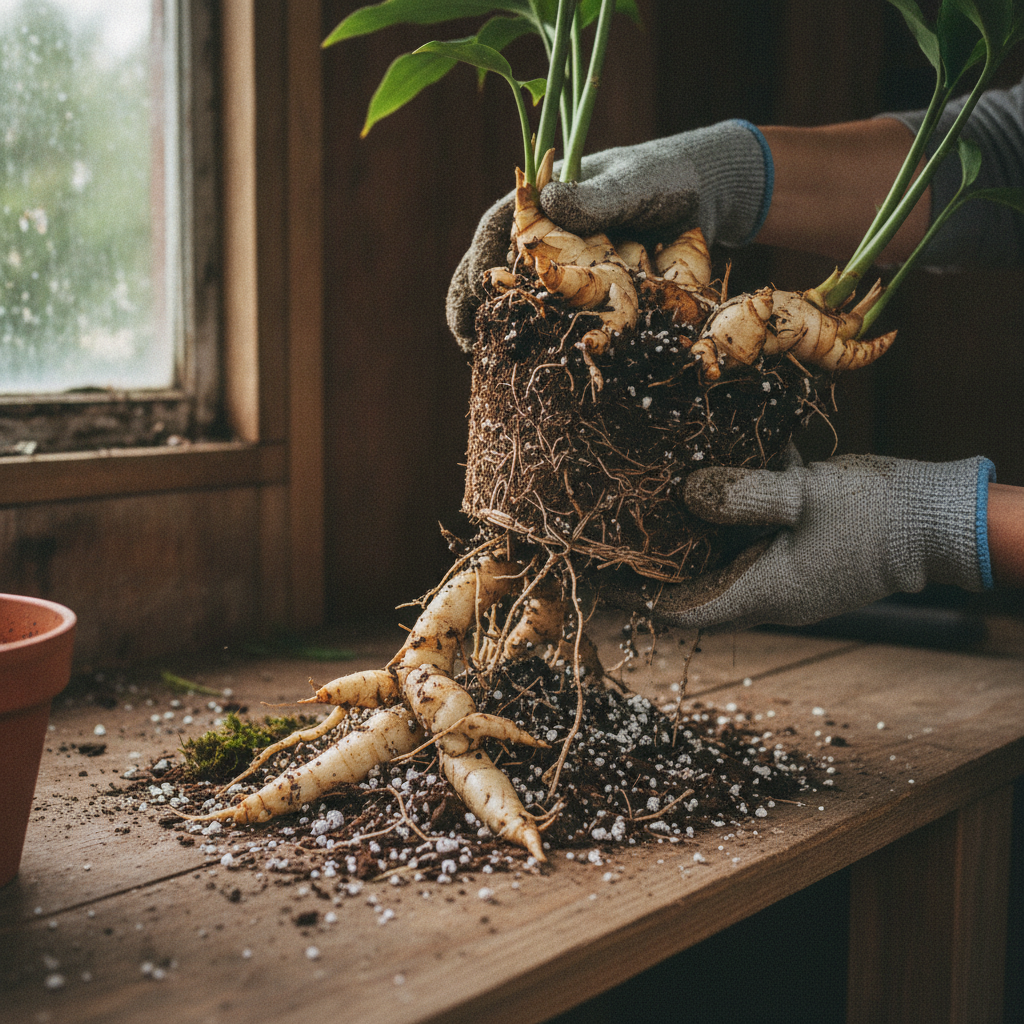
- Gently tip the pot and ease out the cluster of tubers, brushing away the old, spent soil.
- Inspect each tuber, cutting away any that are soft, brown, or mushy with a clean, sharp blade.
- Choose a wide pot only slightly larger than the cluster, and add a layer of fresh, well-draining mix.
- Set the tubers so their tops sit two to three centimetres (about one inch) below the surface, growing points facing up, then fill around them.
- Firm the mix gently to remove large air gaps without compacting it, then water lightly to settle everything.
- Place the pot in bright indirect light and resume normal watering as growth gets under way.
Warning — Transplant Shock: Repotting a plant in full leaf can check its growth and cause temporary wilting. Whenever possible, confine repotting to the dormant or just-emerging phase, and keep a freshly repotted plant slightly on the dry side until you see clear signs of new root activity.
Fertilising
A resurrection lily ginger packs a full season of growth, flowering, and tuber development into a few active months, so it appreciates regular feeding while it is in leaf. Well-fed plants build up bigger, healthier tubers, which in turn drive a stronger display the following year, making fertiliser an investment in future seasons as much as the current one.
The golden rule is to feed only during active growth. Fertilising a dormant plant does nothing but leave unused salts building up in the soil around vulnerable tubers, so the feeding schedule should begin as the leaves develop and stop as they die back.
Understanding Plant Nutrients
Fertiliser labels list three headline numbers, the NPK ratio, standing for nitrogen, phosphorus, and potassium. A balanced ratio suits this plant well, supporting leafy growth, flowering, and tuber development in roughly equal measure. The wider cast of nutrients also matters, and the table below outlines the main players and how a shortage of each tends to show.
| Nutrient | Symbol | Primary Function | Deficiency Symptoms |
|---|---|---|---|
| Nitrogen | N | Leaf and stem growth, green colour | Pale, yellowing older leaves; slow growth |
| Phosphorus | P | Root and tuber development, flowering | Poor flowering; dull, sometimes purplish leaves |
| Potassium | K | Overall vigour and water regulation | Browning leaf edges; weak stems |
| Calcium | Ca | Cell wall strength, new growth | Distorted or stunted emerging leaves |
| Magnesium | Mg | Core of the chlorophyll molecule | Yellowing between the veins of older leaves |
| Iron | Fe | Chlorophyll production in new growth | Yellowing between veins of the youngest leaves |
Types of Fertiliser
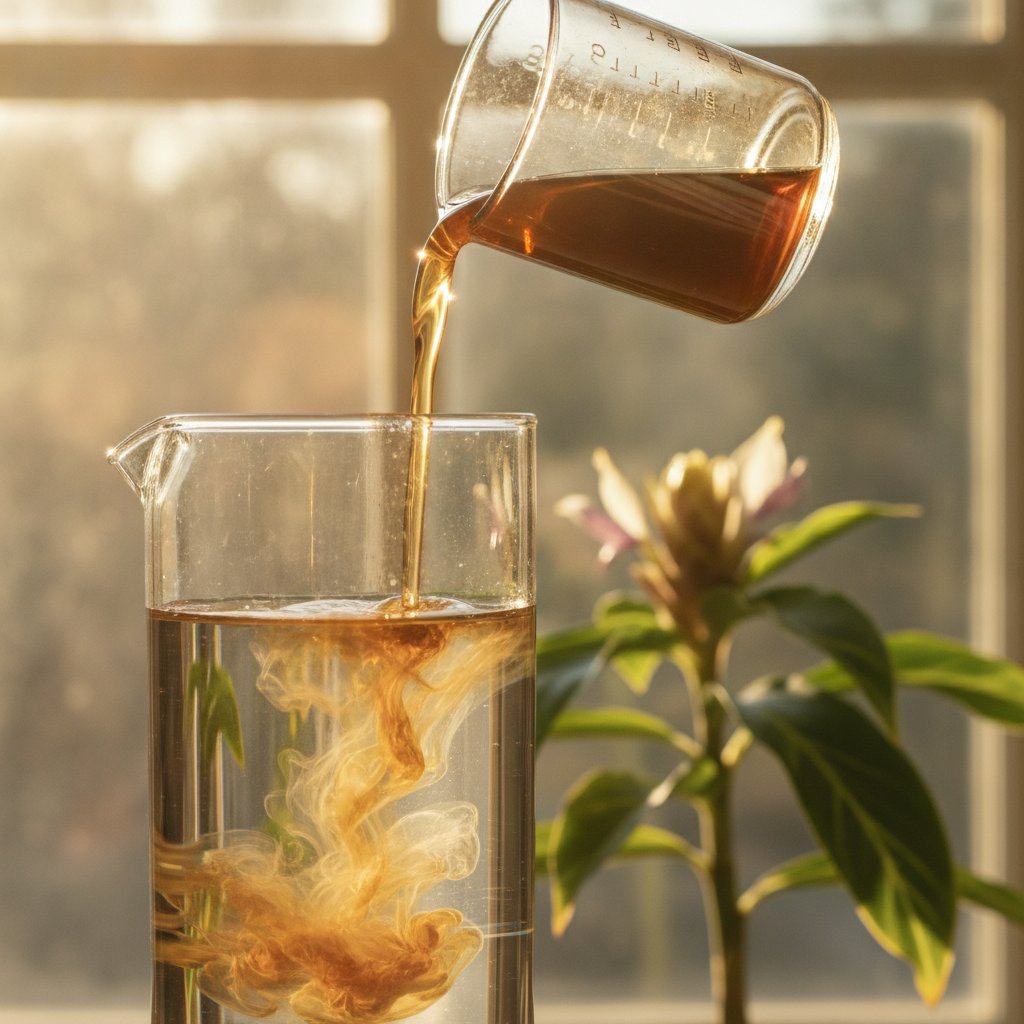
Liquid fertilisers: The easiest option for this plant. A balanced liquid houseplant feed, diluted and applied with normal watering, gives you fine control over how much and how often, which suits a plant whose needs shut off entirely in winter.
Slow-release granular: Convenient, but harder to switch off. If you use slow-release pellets, apply them only at the start of the growing season so their supply is largely spent by the time dormancy arrives.
Organic fertilisers: Worm castings, diluted seaweed, and similar gentle organic feeds work well and are hard to overdose. They release nutrients slowly and improve the soil’s biology, which the resurrection lily ginger enjoys as a forest-floor plant.
Feeding Schedule
Feed every two to four weeks with a balanced liquid fertiliser diluted to half the label strength, from the moment the leaves are established until they begin to yellow in autumn. Then stop completely for the whole dormant period. This on-off pattern mirrors the plant’s natural cycle and prevents the fertiliser salt build-up that troubles tubers left in fed soil over winter.
Pro Tip — Feed at Half Strength: Diluting to half the recommended dose and feeding a little more often is safer than occasional full-strength doses. It supplies steady nutrition without the risk of scorching the fleshy roots, which are more sensitive to concentrated feed than fibrous-rooted plants.
How to Fertilise
- Confirm the plant is in active growth, with established leaves; never feed a dormant plant.
- Dilute a balanced liquid fertiliser to half the label strength in your watering can.
- Water with plain water first if the soil is very dry, to protect the roots from concentrated feed.
- Apply the diluted feed evenly across the soil until it drains from the bottom, then discard the runoff.
- Flush the pot with plain water every month or two to wash away any accumulated salts.
Warning — Salt Build-Up: A white crust on the soil or pot rim, or browning leaf tips despite good watering, points to fertiliser salts accumulating in the mix. Flush the pot thoroughly with plain water, and be especially careful not to leave fed soil around the tubers through dormancy.
Propagation
Propagating a resurrection lily ginger is refreshingly simple, because the plant does most of the work itself. As it grows, the underground tubers multiply into a spreading cluster, and every healthy division with a growing point can become a new plant. This is a plant you divide rather than take cuttings from, which makes it very beginner-friendly.
The best time to propagate coincides with the best time to repot: the end of dormancy, just as the plant is about to wake up. Dividing then means the tubers are already primed to send up new shoots, and each division establishes quickly in fresh soil.
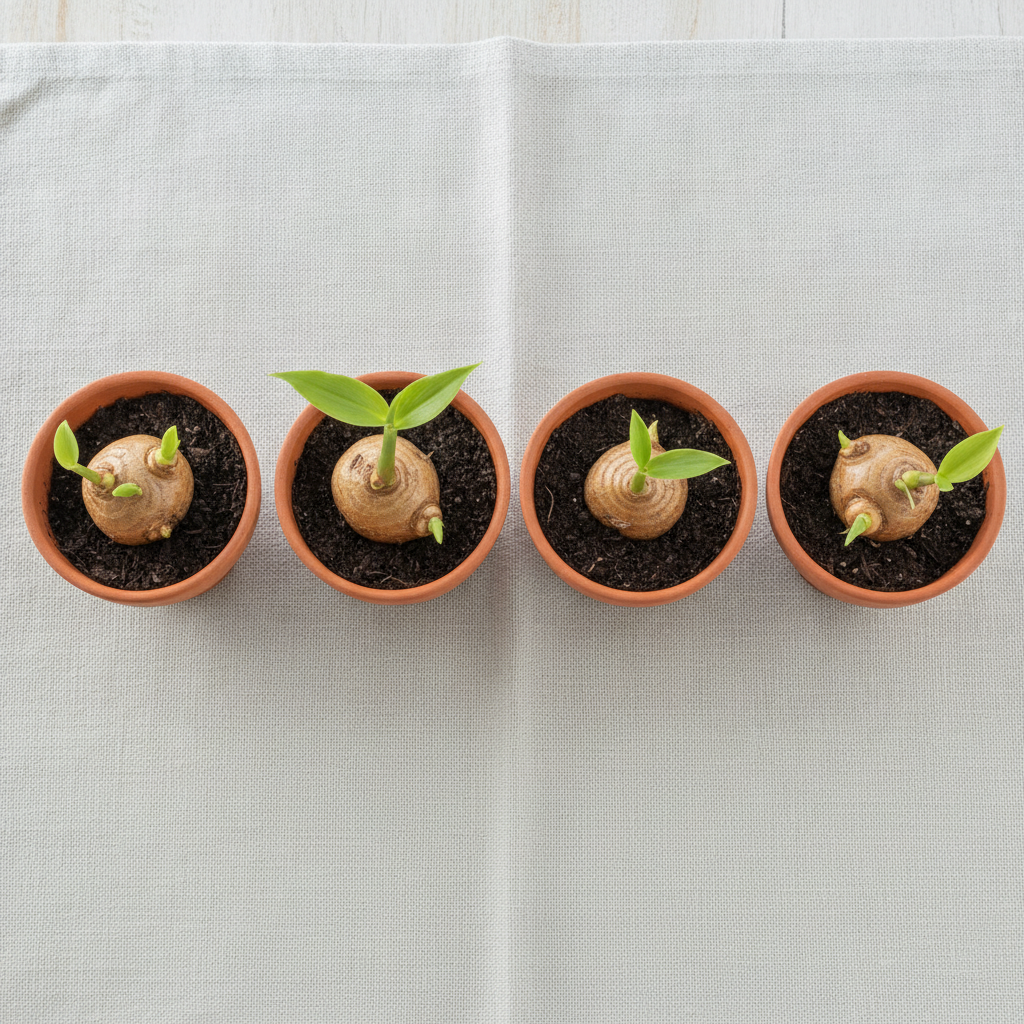
Understanding the Tubers
The rounded, fleshy underground structures are storage tubers, and it is from these that both roots and shoots arise. Each carries one or more growing points, the small nodes that will produce the next flush of leaves and flowers. Successful division comes down to ensuring every piece you separate has at least one firm tuber and a visible or dormant growing point, so it has both the stored energy and the bud to get going.
Division at Repotting: Step-by-Step
Division is the primary and most reliable method, and it doubles neatly as part of routine repotting. Work at the end of dormancy for the fastest results.
- Unpot the dormant or just-waking clump and gently brush away the old soil to expose the cluster of tubers.
- Study the cluster to find natural divisions, looking for firm tubers each bearing at least one growing point.
- Separate the sections by hand where possible, or cut cleanly with a sterilised blade through the connecting tissue.
- Let any cut surfaces dry for an hour or two, and optionally dust them with cinnamon or sulphur to guard against rot.
- Pot each division into a small pot of fresh, well-draining mix, setting the tubers a couple of centimetres below the surface.
- Water lightly, then keep warm and only just moist until new shoots appear and active growth confirms success.
Pro Tip — Do Not Overwater New Divisions: Freshly separated tubers have few active roots and are highly prone to rot if kept wet. Keep the mix barely moist, not soggy, until you see fresh shoots, at which point you can water more generously.
Growing On Detached Tubers: Step-by-Step
If you find loose or single tubers, perhaps knocked free during repotting, they can be grown on individually rather than discarded. This is useful for bulking up a collection or sharing with other growers.
- Select firm, plump tubers, ideally with a visible growing point or eye.
- Half-bury each tuber in a small pot of just-moist, gritty mix, growing point uppermost.
- Place somewhere warm, ideally 20 to 25 degrees C (68 to 77 degrees F), in bright indirect light.
- Keep the mix barely damp and be patient, as dormant tubers can take several weeks to sprout.
- Once shoots and roots are established, begin normal watering and feeding for the growing season.
Troubleshooting Propagation
| Problem | Likely Cause | Solution |
|---|---|---|
| Divisions rot before sprouting | Mix kept too wet, or cut surfaces not dried | Use a grittier mix, water sparingly, and let cuts callus first |
| No shoots after many weeks | Too cold, or the tuber lacked a growing point | Provide steady warmth and check that each piece has a viable eye |
| Tuber shrivels and softens | Stored too dry or too warm before potting | Pot promptly into just-moist mix; do not let tubers dehydrate |
| Weak, spindly first leaves | Insufficient light after sprouting | Move to brighter indirect light once growth begins |
Pests & Diseases
The resurrection lily ginger is relatively untroubled by pests compared with many houseplants, and a healthy plant in good conditions rarely suffers serious infestations. Most problems arrive either on newly acquired plants or when the growing environment is stressed, so a little vigilance and good hygiene go a long way.
The greater risk for this plant is disease rooted in overwatering, since the moisture-storing tubers rot readily when kept too wet. That makes correct watering the most important form of pest and disease prevention you can practise.
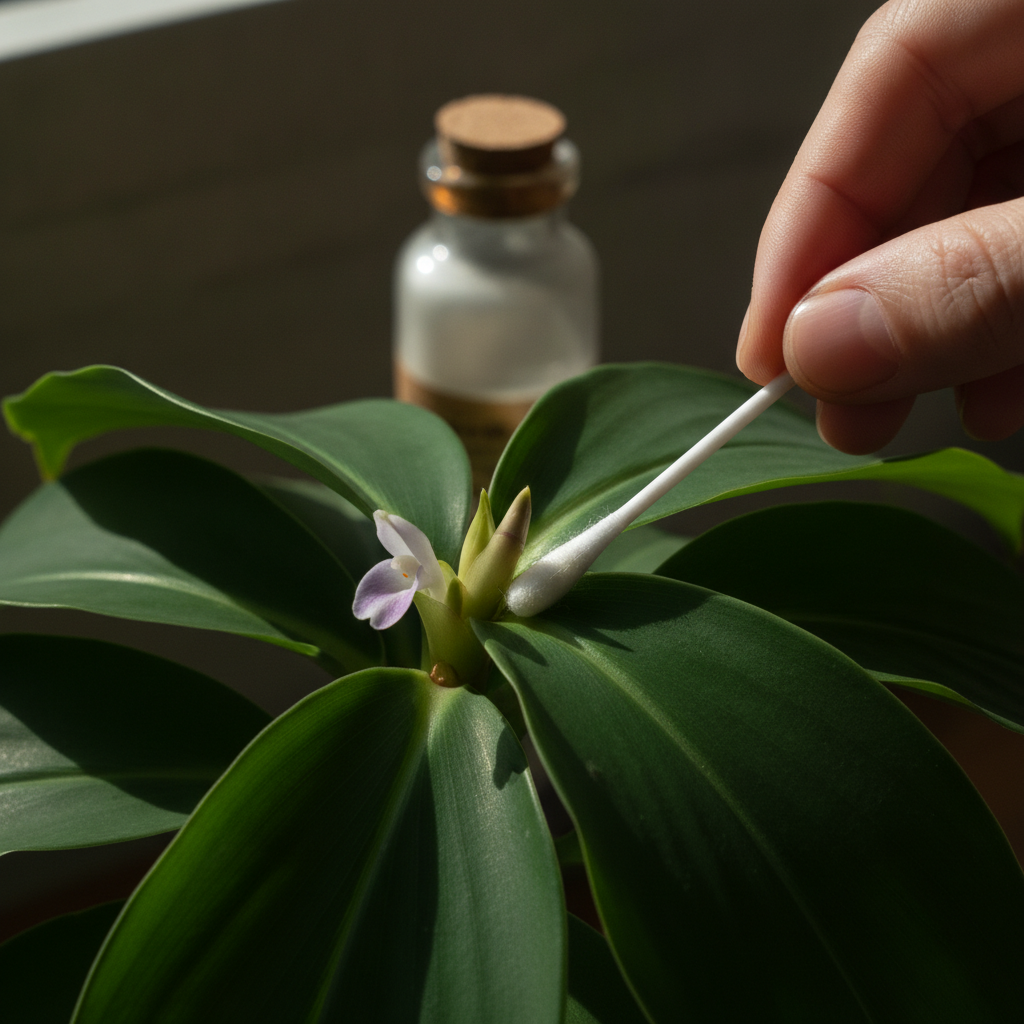
Common Pests
Spider Mites (Tetranychus urticae)
These tiny sap-suckers thrive in warm, dry air and show up as fine stippling on the leaves, sometimes with delicate webbing between them. Because they multiply fast, early detection matters; the fine pattern of pale dots is often visible before the mites themselves.
Treatment: Raise humidity, rinse the foliage, and treat with insecticidal soap or a neem oil solution, repeating every few days until the mites are gone. Isolate the plant while you work through the treatment.
Mealybugs (Pseudococcus species)
Mealybugs appear as small, white, cottony tufts tucked into leaf axils and along stems. They feed on plant sap and excrete sticky honeydew, which can lead to sooty mould, and a heavy infestation weakens the plant noticeably.
Treatment: Dab each insect directly with a cotton bud dipped in dilute isopropyl alcohol, then follow up with insecticidal soap or neem oil across the whole plant to catch any you missed.
Scale Insects (Coccus species)
Scale shows as small, brown, immobile bumps along the stems and leaf undersides, protected by a waxy shell that shrugs off many sprays. Like mealybugs, they suck sap and produce honeydew, and they are easy to overlook until numbers build.
Treatment: Scrape or wipe off the scales with an alcohol-dipped cloth, then treat with horticultural oil to smother any young crawlers, repeating over several weeks.
Common Diseases
Tuber and Root Rot (Pythium and Fusarium species)
The most serious threat to this plant, rot sets in when tubers sit in cold, waterlogged soil, above all during dormancy. Affected tubers turn soft, brown, and foul-smelling, and shoots may collapse at the base or fail to emerge in spring.
Treatment: Unpot the plant, cut away every rotten tuber with a sterile blade, dust the wounds, and repot the firm survivors into fresh, barely moist, well-draining mix. Prevention through careful watering is far more reliable than any cure.
Leaf Spot (various fungal pathogens)
Fungal leaf spot appears as brown or yellow-ringed blotches on the foliage, usually where leaves stay wet for long periods or air movement is poor. It is unsightly but rarely fatal, and it tends to spread in stagnant, overly humid conditions.
Treatment: Remove affected leaves, improve airflow, and avoid wetting the foliage when watering. A copper-based or general fungicide can help in stubborn cases.
Pest and Disease Summary
| Pest / Disease | Identification | Treatment |
|---|---|---|
| Spider mites | Fine stippling and webbing; dry conditions | Raise humidity; insecticidal soap or neem, repeated |
| Mealybugs | White cottony tufts in axils | Alcohol spot-treatment then neem or soap |
| Scale | Brown immobile bumps on stems and leaves | Scrape off; horticultural oil over several weeks |
| Tuber and root rot | Soft, brown, smelly tubers; collapsing shoots | Cut out rot; repot into dry, airy mix; fix watering |
| Leaf spot | Brown or ringed blotches on leaves | Remove leaves; improve airflow; fungicide if needed |
Prevention Strategies
Prevention starts at the door. Inspect every new plant carefully and keep it apart from your collection for a couple of weeks so any hidden pests reveal themselves before they can spread. Wiping the leaves occasionally, keeping the growing area tidy, and giving the plant enough space for air to move around it all reduce the conditions pests and fungi favour.
Above all, water correctly. The overwhelming majority of serious problems with a resurrection lily ginger trace back to soil kept too wet, especially during dormancy, so a disciplined watering routine is the best insurance you can offer this plant.
Pro Tip — Treat Early and Gently: Small pest colonies are far easier to clear than established ones. Check the leaf undersides and axils each time you water, and deal with the first few insects with a dab of dilute alcohol before reaching for stronger treatments.
Popular Varieties
While the wild species is a handsome plant in its own right, growers prize Kaempferia rotunda partly for the range of foliage forms that have been selected and named. The differences lie mostly in leaf size, the intensity of the silver patterning, and the depth of the purple reverse, so choosing a variety is largely a question of the look you want.
Availability varies, since these are collector’s plants rather than supermarket staples, and named selections turn up mainly through specialist nurseries and plant swaps. The table below compares some of the forms you are most likely to encounter.
| Variety | Leaf Appearance | Light Needs | Growth Rate | Availability |
|---|---|---|---|---|
| Species (wild type) | Green with silver feathering, maroon reverse | Bright indirect | Moderate | Common |
| ‘Grande’ | Larger, broader leaves with bold silver banding | Bright indirect | Vigorous | Occasional |
| ‘Raven’ | Near-black foliage with bright silver marbling | Bright indirect | Moderate | Uncommon |
| ‘Silver Diamonds’ | Heavy pewter-silver overlay across the leaf | Bright indirect | Moderate | Rare |
Featured Varieties
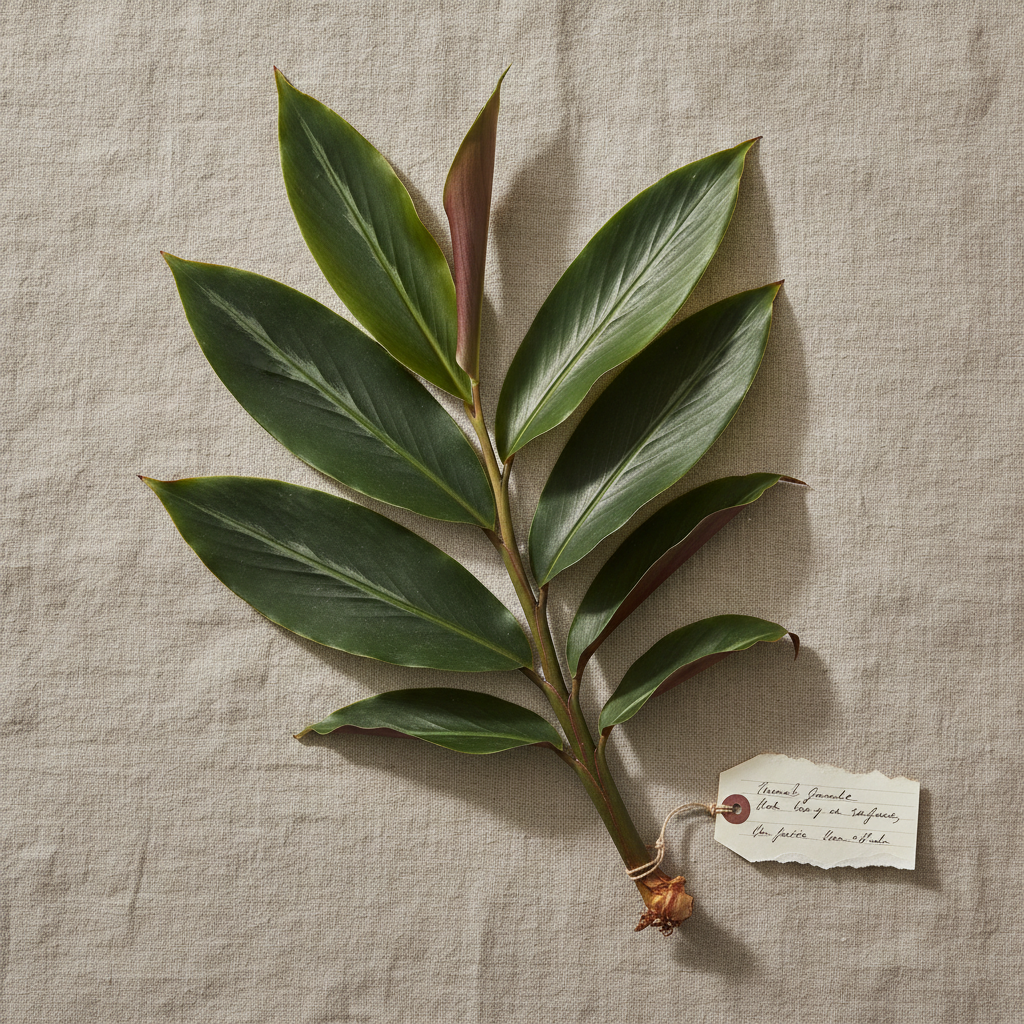
‘Grande’
A robust, large-leaved selection with broad emerald leaves, pronounced silver banding down the midrib, and deep maroon undersides. Its extra size makes it the showiest of the common forms once in full leaf.
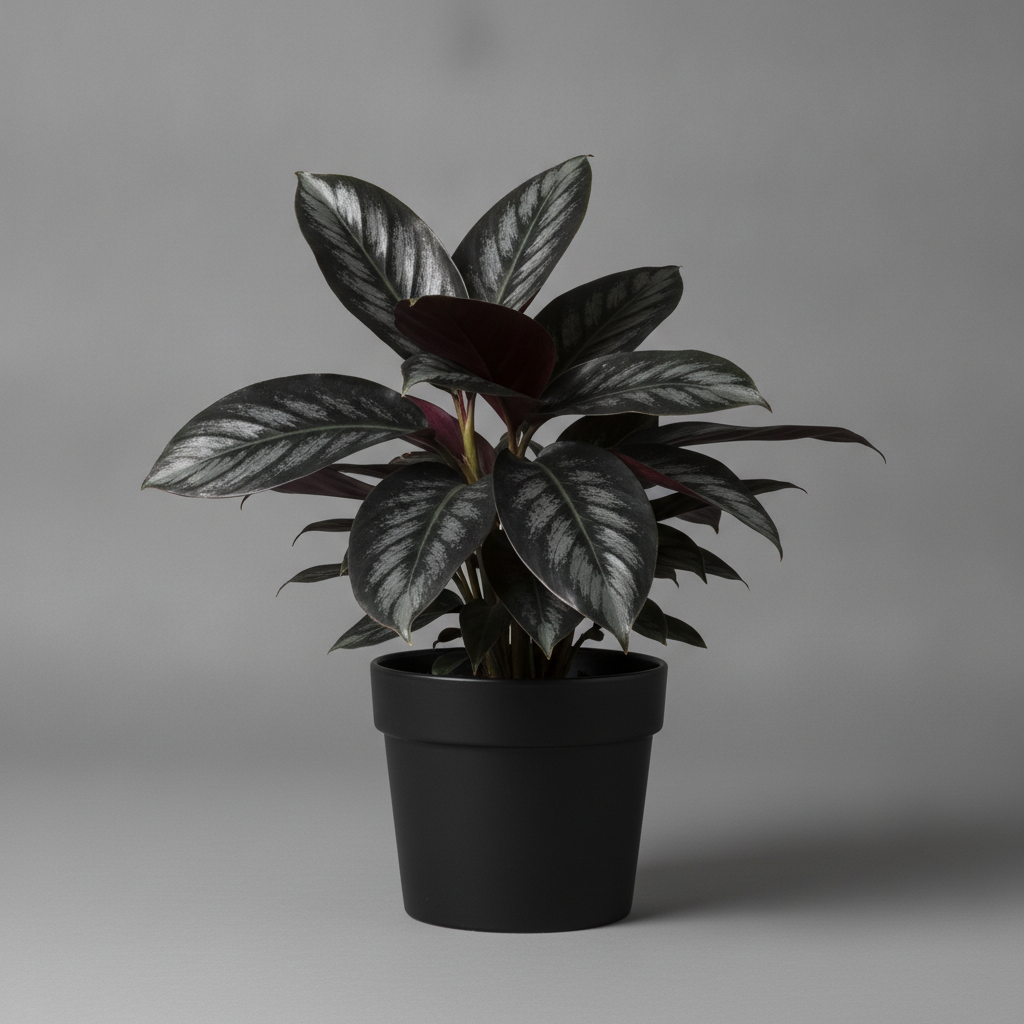
‘Raven’
The most dramatic of the selections, with near-black foliage overlaid with bright pewter-silver marbling and a deep burgundy reverse. It brings a moody, sculptural quality that stands out in any collection.
Variety Profiles in Detail
‘Grande’ (Kaempferia rotunda ‘Grande’)
Selected for size and vigour, ‘Grande’ produces notably larger leaves than the wild type, with a bolder, wider silver band running down each leaf. It fills a pot quickly once established and makes an excellent choice where you want the fullest possible foliage display. Its care is identical to the species, though its larger leaf area means it appreciates slightly more consistent moisture and humidity during active growth.
‘Raven’ (Kaempferia rotunda ‘Raven’)
The darkest of the widely grown forms, ‘Raven’ carries foliage so deep a green-black that it reads as near-black indoors, thrown into sharp relief by silver marbling. That dark pigment means good light is especially important to keep the contrast crisp, since low light both mutes the silver and lightens the base colour. Otherwise it follows the same seasonal rhythm as its relatives, dying back in winter and returning with flowers in spring.
Choosing the Right Variety for Your Space
All the forms share the same easygoing temperament, so the choice comes down to aesthetics and light. If you have a bright, gently lit spot and want maximum drama, the dark ‘Raven’ is hard to beat, provided you can give it enough light to hold its contrast. For a lusher, greener look with generous foliage, ‘Grande’ or the wild species will fill a shaded corner beautifully. Whichever you choose, remember that all of them will vanish for part of the year, so pair them with evergreen companions if you would rather not look at an empty pot through the winter.
Frequently Asked Questions
Why has my resurrection lily ginger lost all its leaves?
If the leaves yellow and die back in autumn, this is completely normal. The plant is deciduous and enters a natural winter dormancy, surviving as underground tubers. Reduce watering to almost nothing, keep the pot warm, and wait for new shoots to appear in late winter or spring. Leaf loss at other times, or with soft, blackening bases, is more likely a sign of overwatering and rot.
Do I need to dig up the tubers over winter?
Grown as a houseplant, there is no need to lift the tubers. Simply leave them in their pot, keep the soil almost dry, and store the container somewhere frost-free and above 12 degrees C (54 degrees F). Lifting is only worthwhile if you are worried about rot in a mix that stays damp, or if you want to divide and inspect the tubers before spring.
When and why does it flower?
Flowering typically happens in late winter to spring, often before the leaves emerge, which is the trait behind the resurrection lily name. The white, purple-lipped, fragrant blooms rise straight from the soil and open in succession. A well-fed, well-rested plant with healthy tubers flowers most reliably, so good care in one season sets up the display for the next.
Is the resurrection lily ginger safe around pets?
It is not among the commonly listed toxic houseplants, and its rhizome is used in traditional Asian cooking and medicine, which suggests low toxicity. Even so, ornamental plants may carry pesticide residues, and any plant can cause an upset stomach if chewed, so it is sensible to keep pets from digging up and eating the tubers. If you have concerns about a specific pet, consult your veterinarian.
Why are the leaves losing their silver markings?
Fading silver patterning is almost always a light problem. In dim conditions the leaf produces extra chlorophyll and floods over its pattern with plain green. Move the plant to brighter indirect light, keeping it out of harsh direct sun, and new leaves should emerge with much stronger markings.
How big does it get?
Indoors, the resurrection lily ginger stays compact, usually reaching 20 to 40 centimetres (8 to 16 inches) tall, spreading slowly outward as the tubers multiply. This modest, low-growing habit makes it a good fit for tabletops, low shelves, and shaded spots where a taller plant would not suit.
My newly divided tubers are not sprouting. What went wrong?
Patience is usually the answer, as dormant tubers can take several weeks to wake up. If nothing happens after a month or more, check that the environment is warm enough, ideally 20 to 25 degrees C (68 to 77 degrees F), that the mix is only just moist rather than wet, and that each division actually carried a growing point. Cold, soggy soil is the most common reason divisions fail.
Can I grow it outdoors?
In frost-free climates, roughly USDA zones 8 to 11, it can be grown outdoors in a shaded, sheltered spot with rich, well-draining soil, dying back naturally in the cooler months. In colder regions it is best kept as a container plant that spends the growing season outside in shade if you wish, then comes indoors, or into a frost-free store, for its winter dormancy.






