
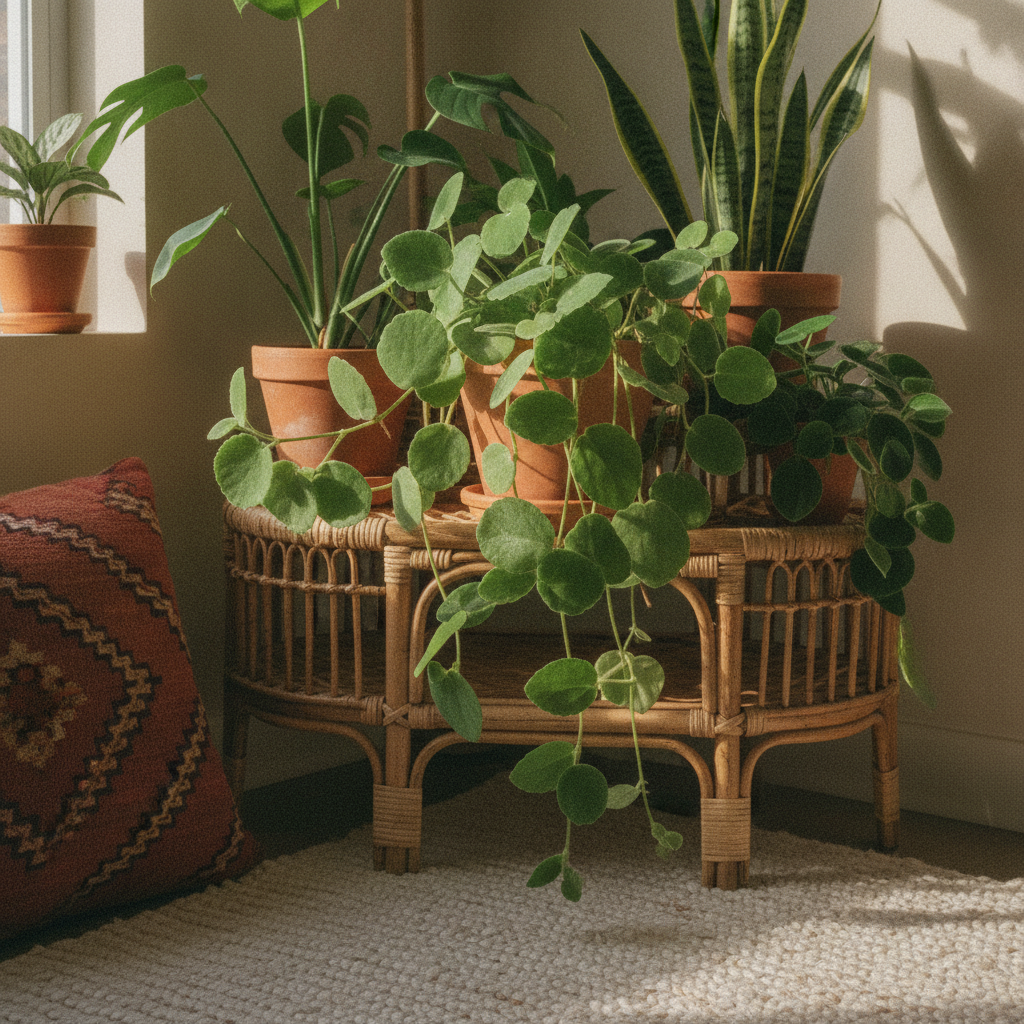
Few houseplants reward a beginner as quickly as the trailing coleus. Snap off a stem, drop it in a glass of water, and within a week you will usually see the first white roots. This is a plant that grows visibly, forgives a missed watering, and drapes soft velvety foliage over the edge of a shelf or basket with almost no encouragement. Known botanically as Plectranthus forsteri and sold under names such as Swedish ivy, prostrate coleus, and “green on green”, it belongs to the mint family and shares that family’s easy vigour. The guide below covers everything from light and watering to propagation and pests, and it draws a clear line throughout between what it takes to keep this plant merely alive and what it takes to help it genuinely thrive.
In This Guide
- Quick Reference
- Why the Trailing Coleus Makes a Great Houseplant
- Light
- Watering
- Soil
- Fertilising
- Propagation
- Pests and Problems
- Varieties
- Frequently Asked Questions
Quick Reference
The table below is a snapshot of the conditions Plectranthus forsteri prefers. Treat these as the comfortable middle of each range rather than hard limits, and read the fuller sections that follow for the reasoning behind each figure.
| Care Factor | Requirement |
| Botanical name | Plectranthus forsteri (syn. Plectranthus coleoides) |
| Common names | Trailing coleus, Swedish ivy, prostrate coleus, green on green |
| Light | Bright, indirect light; tolerates some gentle direct morning sun |
| Water | When the top 2 to 3 cm (1 in) of soil is dry, roughly weekly in growth |
| Soil | Light, free-draining potting mix with added perlite |
| Temperature | 16 to 24 degrees C (61 to 75 degrees F) |
| Humidity | Average room humidity, 40 to 60 percent, is fine |
| Fertiliser | Balanced feed monthly through spring and summer |
| Growth habit | Fast-growing trailer, stems to 60 cm (24 in) or more |
| Propagation | Stem cuttings in water or soil, extremely easy |
| Toxicity | Generally regarded as non-toxic, though best kept out of reach of pets that chew |
| Difficulty | Very easy, an excellent first plant |
Why the Trailing Coleus Makes a Great Houseplant
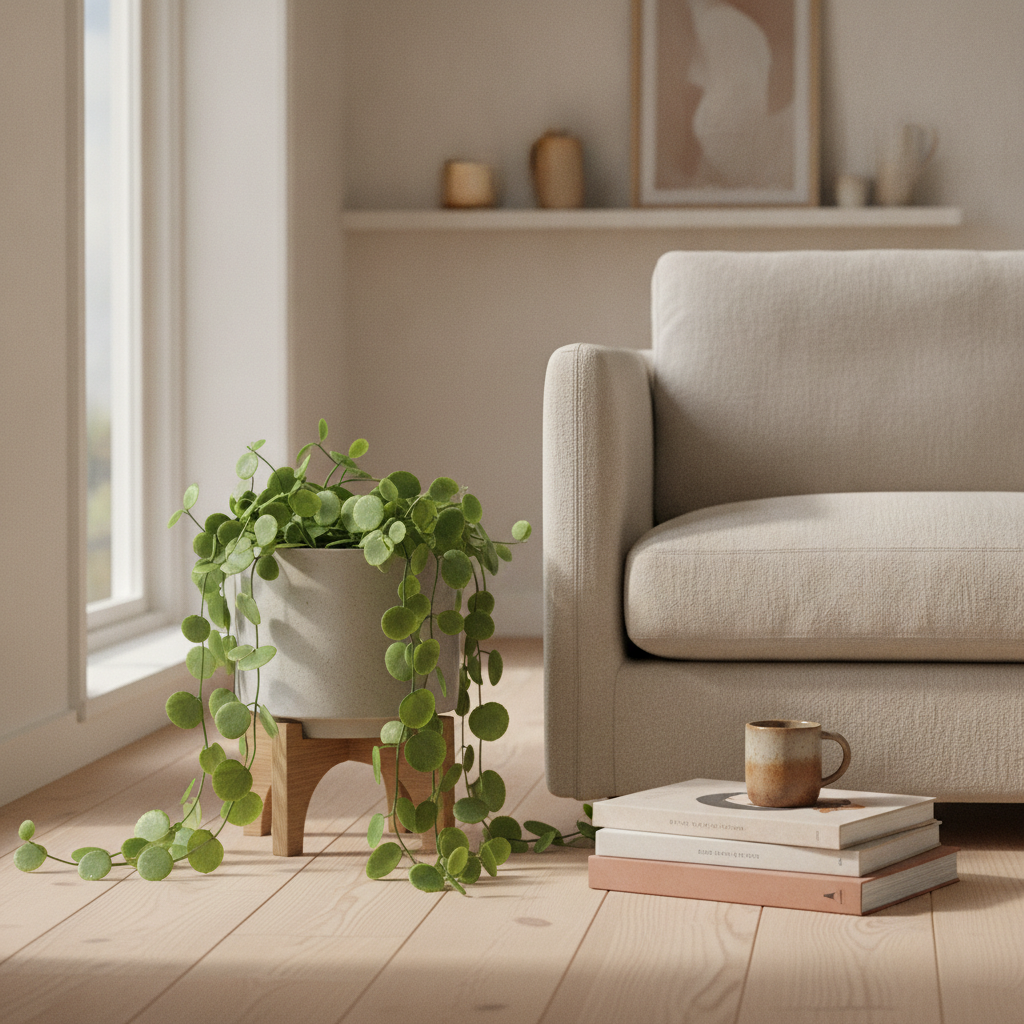
The appeal of Plectranthus forsteri starts with its foliage. Each leaf is soft to the touch, faintly aromatic when brushed, and edged with gentle scallops that catch the light. The most widely grown form carries a broad creamy margin around a green centre, a variegation that stays reliable indoors in a way many variegated plants do not. Set against the plain green species, the two forms give you a ready-made contrast if you like to group plants of a kind.
Beyond looks, this is one of the most genuinely forgiving trailers you can own. It grows fast enough that a small starter cutting becomes a full, tumbling basket within a single season, which makes it satisfying for anyone who wants visible progress rather than a plant that sulks for months before deciding to move. Because it belongs to the mint family, it shares that group’s habit of rooting almost anywhere a node touches moisture, so a plant that gets leggy or damaged is never a loss. You simply take the healthy tips, root them, and start again with a fuller specimen.
It is also an obliging companion in a mixed display. The trailing habit means it fills the awkward lower tier of a plant stand or the front edge of a windowsill grouping, weaving between more upright neighbours without competing for the same vertical space. In a hanging basket it comes into its own, sending curtains of foliage down towards the floor. For a household that wants greenery with minimal fuss, few plants deliver more for less.
Pro Tip – Buy One, Get Many: A single healthy trailing coleus is really a starter kit. Because it roots so readily, one shop-bought plant can be turned into half a dozen within a couple of months, letting you fill several pots or share cuttings with friends at no cost.
Light
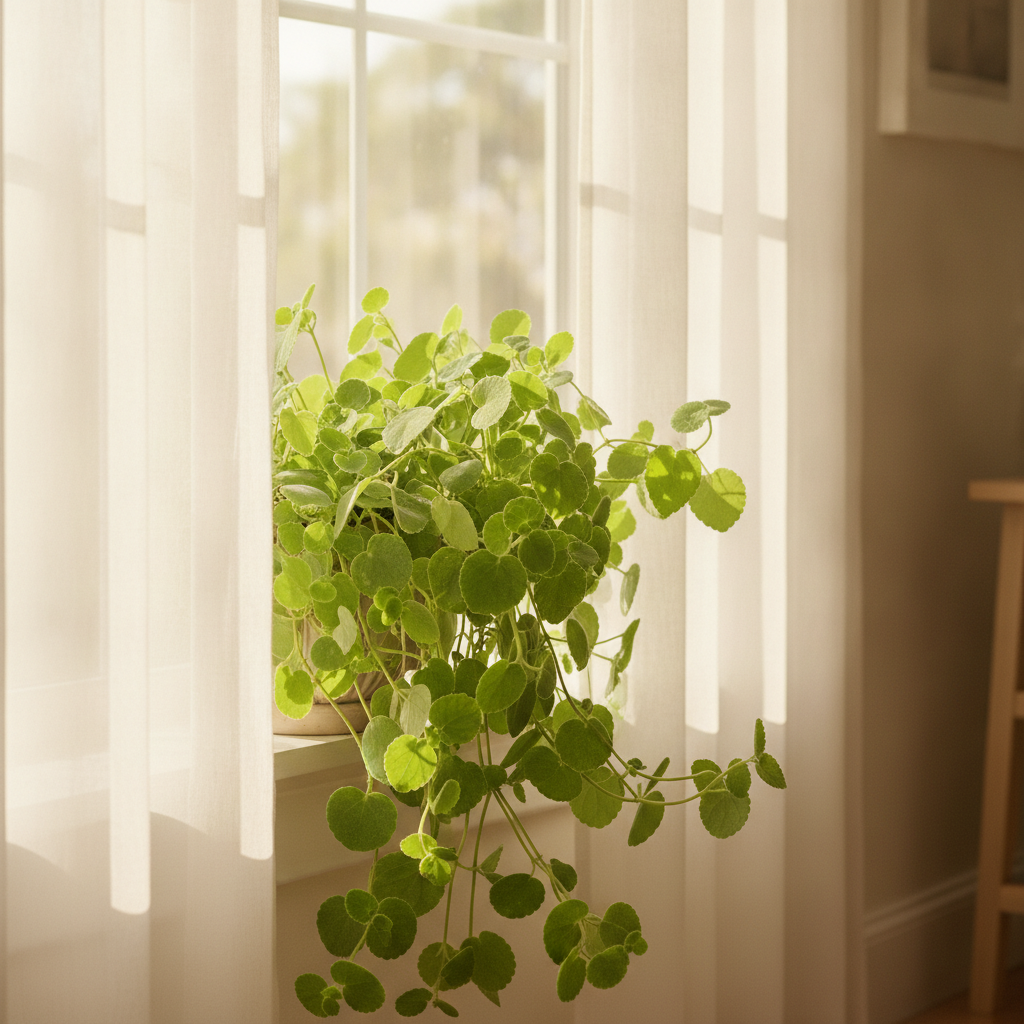
Light is the single factor that most clearly separates a surviving trailing coleus from a thriving one. The plant will hold on in a dim corner, but the result is thin, stretched stems with wide gaps between leaves as it reaches towards whatever brightness it can find. Give it plenty of bright, indirect light instead and the same plant grows dense, bushy, and richly coloured, with the scalloped leaves packed closely along each stem.
An east-facing window is close to ideal, offering gentle morning sun followed by bright ambient light for the rest of the day. A spot near a south or west window works well too, provided the plant sits slightly back from the glass or behind a sheer curtain during the fiercest hours. A little direct morning sun does no harm and can deepen the colour, but prolonged midday sun through glass will scorch the soft leaves, leaving pale bleached patches that do not recover.
The variegated forms deserve a specific mention. That creamy margin contains less chlorophyll than the green centre, so a variegated plant needs a touch more light than a plain green one to photosynthesise enough to sustain itself. In too little light, variegated plants tend to revert, producing leaves with progressively more green and less cream as they try to claw back growing capacity. Keeping the light bright preserves the contrast you bought the plant for in the first place.
Pro Tip – Read the Gaps: The distance between leaves along a stem is your light gauge. Short gaps and a compact shape mean the plant is happy. Long bare stretches of stem with leaves only at the tips are a clear signal to move it somewhere brighter.
Watering
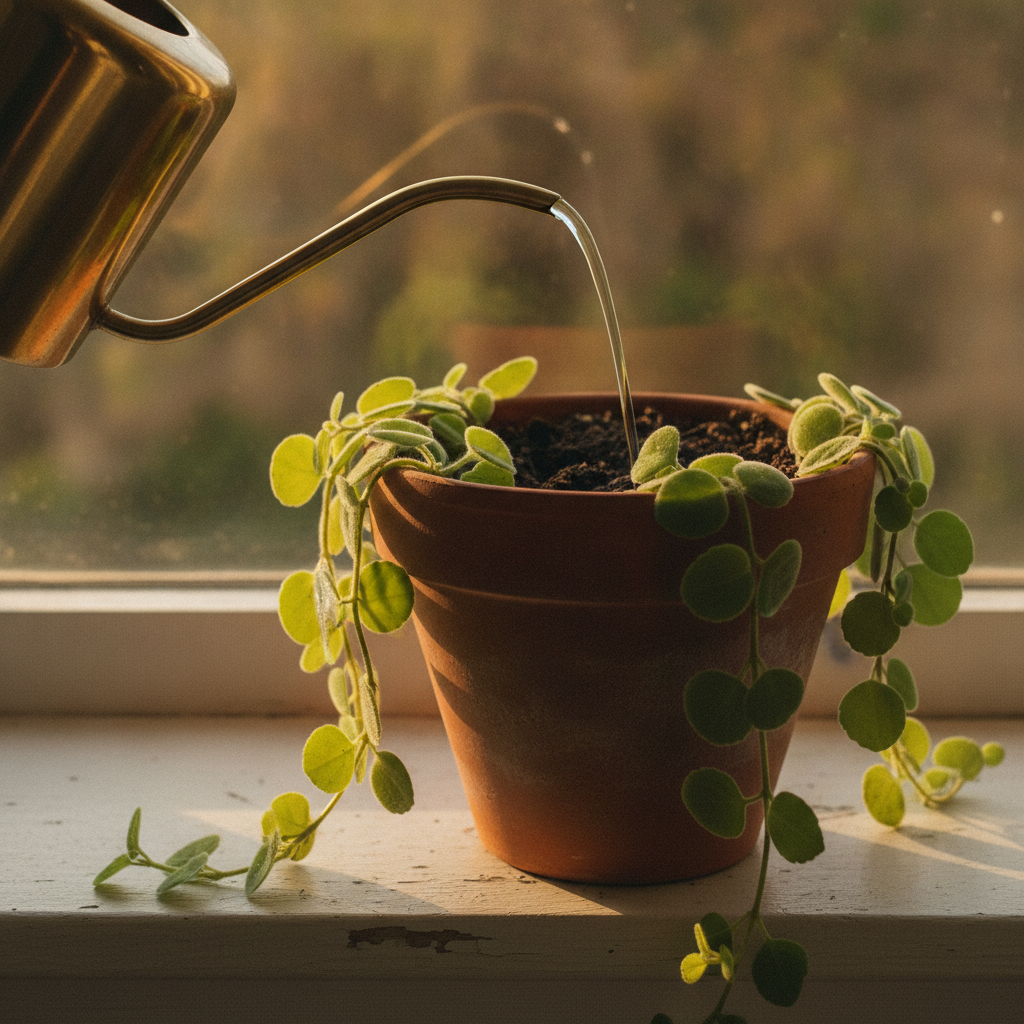
The trailing coleus likes its soil kept lightly moist during active growth, but it strongly dislikes sitting in soggy compost. The reliable approach is to water when the top 2 to 3 cm (about 1 in) of the mix has dried out, then water thoroughly until the excess runs from the drainage holes. In a bright spot through spring and summer this often works out to roughly once a week, though pot size, temperature, and light will shift that rhythm, so it is always better to check the soil with a finger than to water by the calendar.
This plant is helpfully expressive about thirst. When it is genuinely dry, the soft stems and leaves lose their firmness and the whole plant takes on a wilted, deflated look. A thorough watering usually revives it within an hour or two, and while the occasional dramatic wilt will not kill an otherwise healthy specimen, repeated episodes stress the plant and cost you leaves. Aim to water before that point, using the wilt as a backstop rather than a schedule.
Overwatering is the more dangerous mistake because its early signs are quieter. Soft, translucent, yellowing lower leaves and a sour smell from the soil point to roots sitting too wet for too long. In winter, when growth slows and light is weaker, the plant uses far less water, so scale back and let the mix dry a little more deeply between drinks. Consistently lukewarm water and a pot with drainage holes will keep the roots healthy through the year.
Warning – Drainage First: Never let the pot stand in a saucer of water for more than a few minutes after watering. The fine roots of a trailing coleus rot quickly in standing water, and root rot is far harder to reverse than the temporary wilt of an underwatered plant.
Soil
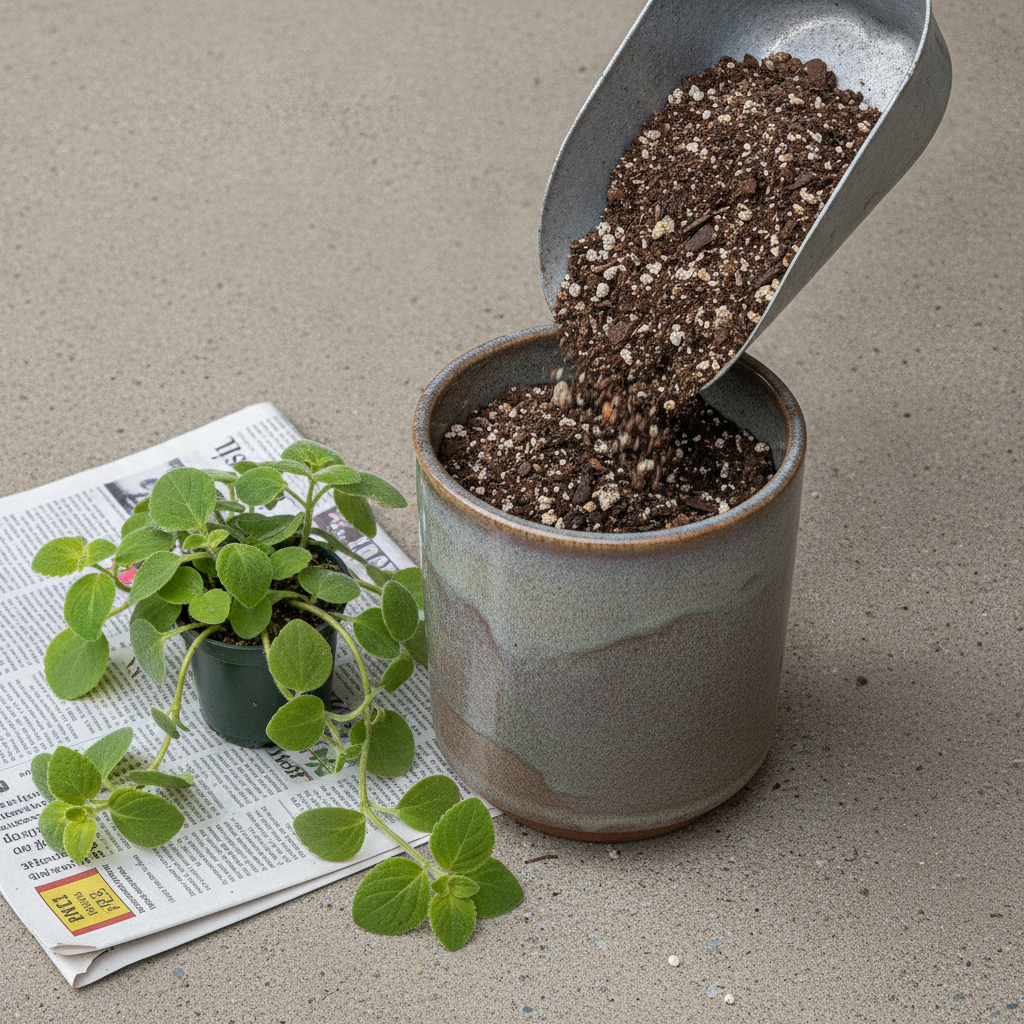
Because the balance between moist and waterlogged matters so much for this plant, the soil you choose does a lot of the work. A good general-purpose houseplant compost forms a fine base, but on its own it can hold more water than the roots would like. Lightening it with a generous handful of perlite, roughly one part perlite to three or four parts compost, opens up the structure, lets excess water drain freely, and keeps air around the roots. That aeration is exactly what prevents the rot that overwatering threatens.
The plant is not fussy about acidity and grows happily in the slightly acidic to neutral range that most bagged potting mixes provide. What it appreciates far more is a mix that stays open and does not compact into a dense block over time. Adding a little coco coir or fine bark alongside the perlite helps the compost retain a springy, crumbly texture through repeated waterings rather than settling into something airless.
Fast growth means a trailing coleus fills its pot quickly, and you can expect to repot roughly once a year, ideally in spring. Move it up just one pot size at a time, since an oversized pot holds a reservoir of wet soil the small root system cannot use, again inviting rot. Many growers find that rather than repotting an old, leggy plant, it is simpler and more rewarding to root a few fresh cuttings and start a full new specimen in fresh mix.
Pro Tip – Pot Material Matters: In a humid room or with a heavy hand at the watering can, a terracotta pot helps by wicking moisture out through its walls. In a dry, warm room, a glazed or plastic pot holds moisture longer and spares you from watering quite so often.
Fertilising
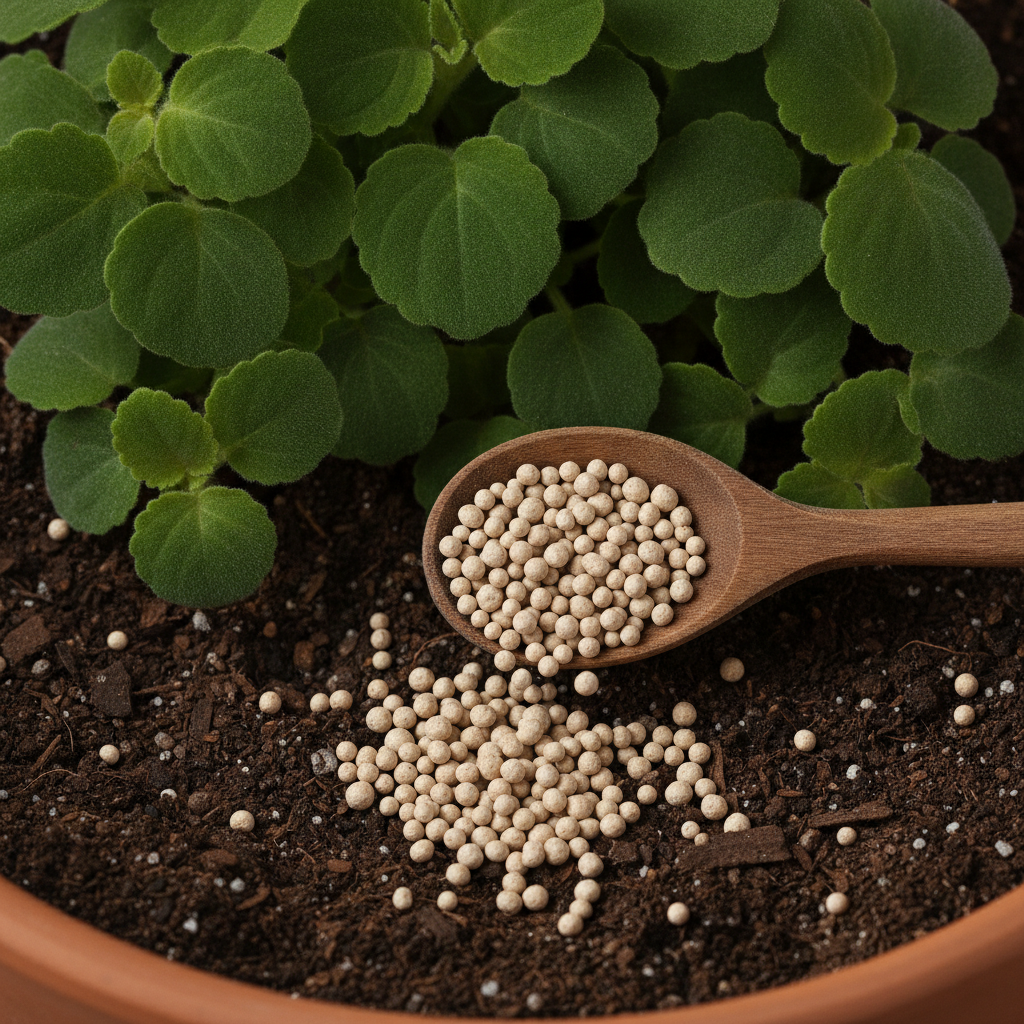
A plant that grows as fast as the trailing coleus has a real appetite during the growing season, and regular feeding is what keeps the new growth lush rather than pale and thin. Through spring and summer, a balanced liquid houseplant fertiliser diluted to half the strength on the label and applied roughly once a month suits it well. If you prefer to feed at every watering, dilute far more heavily, to around a quarter strength, so that nutrients arrive as a steady trickle rather than an occasional flood.
The signs of a hungry plant are easy to read. Growth slows, the newest leaves emerge smaller and paler than they should, and on variegated forms the colour can look washed out. A balanced feed, one with reasonably even nitrogen, phosphorus, and potassium, addresses all of this. Nitrogen in particular drives the leafy growth this plant is grown for, though you want it balanced rather than dominant so the stems stay sturdy.
As autumn arrives and light levels fall, growth naturally slows, and feeding should taper off with it. Continuing to fertilise a plant that is barely growing simply leaves unused mineral salts to build up in the soil, which can scorch the root tips and brown the leaf edges. Stop feeding through late autumn and winter, resume as the days lengthen in spring, and flush the pot occasionally with plain water to wash away any accumulated salts.
Warning – Less Is Safer: With fertiliser, under-dosing is easily fixed but over-dosing does lasting damage. If you are unsure, err on the side of a weaker, more frequent feed. Crusty white deposits on the soil surface or a ring around the pot rim are your cue to flush thoroughly with plain water.
Propagation
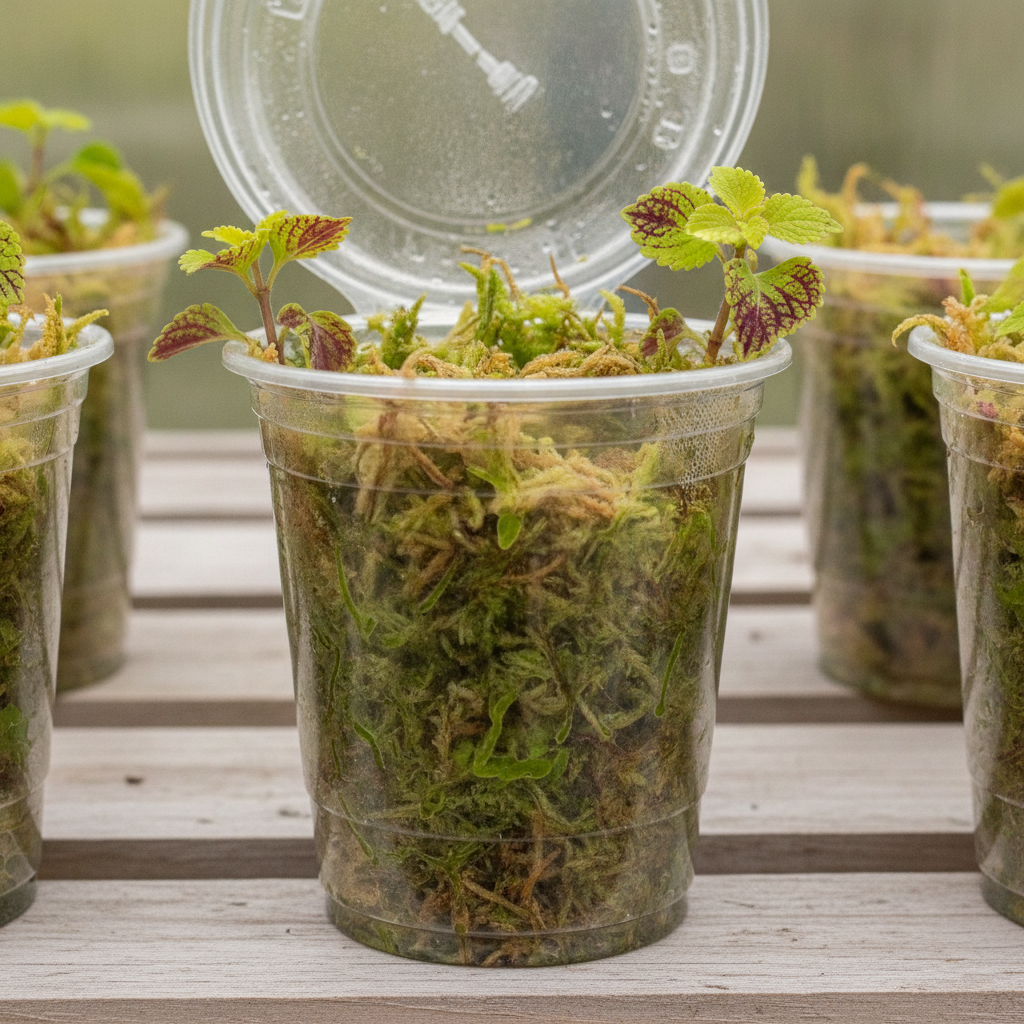
If any single quality has made the trailing coleus a favourite pass-along plant, it is how absurdly easy it is to propagate. Like its mint-family relatives, it roots readily from stem cuttings, and there is really no wrong method. The steps below describe the most common water-rooting approach, but soil and moss work every bit as well.
- Choose a healthy stem and cut a tip about 8 to 12 cm (3 to 5 in) long, snipping just below a node, the small bump where leaves join the stem, using clean scissors.
- Strip the leaves from the lowest one or two nodes so that bare nodes will sit below the water line or soil surface, since roots emerge from these points.
- For water rooting, place the cutting in a small glass of clean water on a bright windowsill out of direct sun, and change the water every few days to keep it fresh.
- Watch for white roots to appear from the submerged nodes, usually within about one to two weeks, and let them reach 2 to 3 cm (around 1 in) before the next step.
- Pot the rooted cutting into a light, free-draining mix, keep it slightly more moist than usual for the first fortnight while it settles, then return to normal care.
To skip the water stage entirely, push several prepared cuttings directly into moist potting mix around the edge of a pot, or nestle them in damp sphagnum moss inside a covered container as shown above. Planting three or four cuttings together in one pot is a shortcut worth knowing, as it gives you a full, bushy plant far sooner than a single cutting would. Spring and summer, when the plant is growing strongly, are the best times to take cuttings, though in a bright, warm home you can succeed at almost any time of year.
Pro Tip – Pinch and Propagate: Regularly pinching out the growing tips keeps the parent plant bushy and full, and every tip you remove is a ready-made cutting. This single habit both improves the shape of your existing plant and supplies an endless stream of new ones.
Pests and Problems
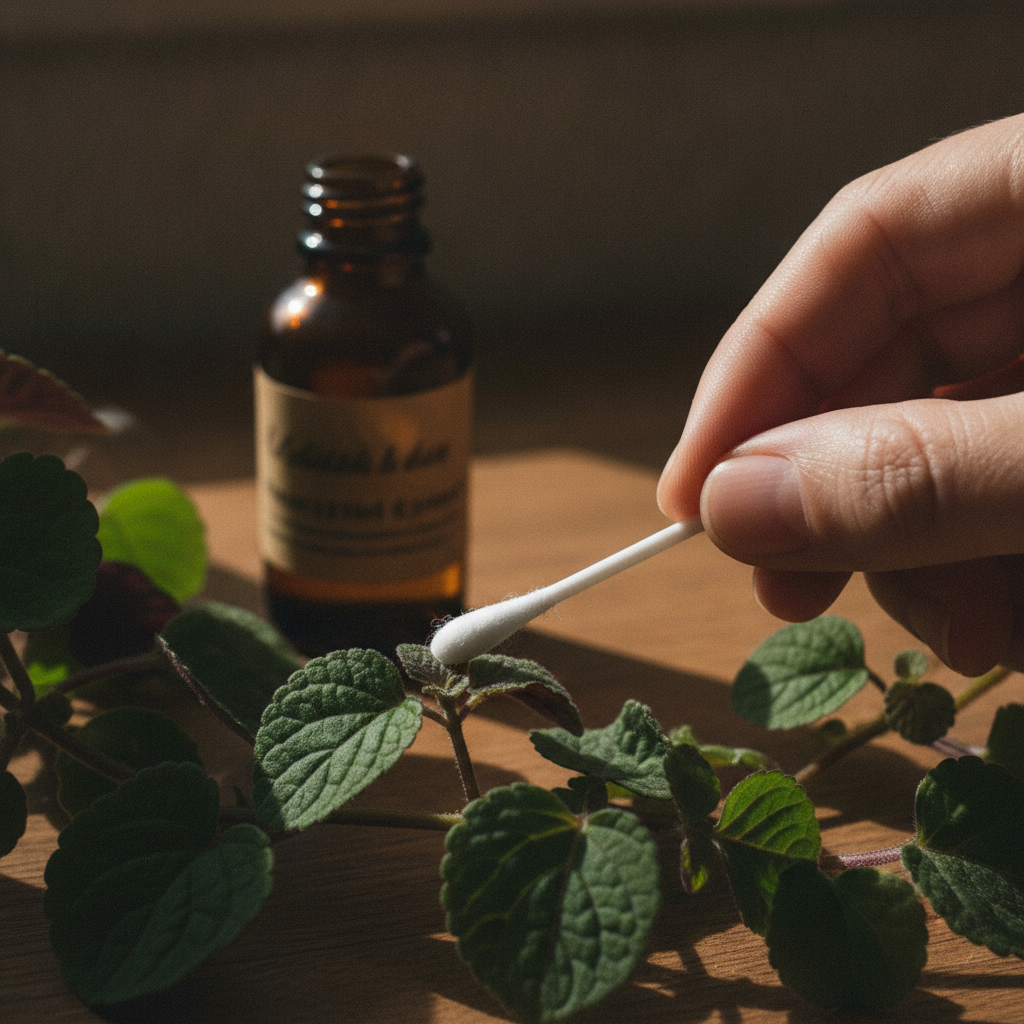
The trailing coleus is not especially troubled by pests, but the same soft, sap-filled leaves that make it pleasant to touch also make it attractive to a few common sap-suckers. Mealybugs are the most likely visitors, appearing as small white cottony tufts tucked into the leaf axils where stem meets leaf. Aphids may cluster on tender new growth, and in hot, dry conditions spider mites can move in, betrayed by fine stippling on the leaves and, in bad cases, faint webbing. Whitefly occasionally appear as tiny flying insects that scatter when the plant is disturbed.
Catching any of these early makes them simple to deal with. For a light mealybug or aphid presence, a cotton bud dipped in a little diluted isopropyl alcohol, dabbed directly onto the pests, clears them quickly. For a wider outbreak, a thorough spray with insecticidal soap or a diluted neem oil solution, repeated every week or so until the problem is gone, does the job. Because this plant propagates so easily, a badly infested specimen is never a crisis, as you can take clean cuttings from unaffected growth and start fresh.
Most other problems trace back to watering and light rather than pests. Yellowing, mushy lower leaves usually mean the soil has been kept too wet, while crisp, browning leaf edges point to under-watering, dry air, or a build-up of fertiliser salts. Long, sparse, reaching stems are the classic signal of insufficient light. The table below gathers the most common symptoms and their usual causes so you can diagnose at a glance.
| Symptom | Likely Cause | What To Do |
| Leggy stems, wide leaf gaps | Too little light | Move to a brighter spot and pinch tips to encourage bushiness |
| Soft, yellow lower leaves | Overwatering | Let soil dry further, check drainage, ease back on watering |
| Sudden overall wilt | Underwatering | Water thoroughly; plant usually recovers within hours |
| Brown, crisp leaf edges | Dry air or salt build-up | Flush soil with plain water, review feeding |
| White cottony tufts in axils | Mealybugs | Dab with diluted alcohol, treat repeatedly |
| Fine stippling, faint webbing | Spider mites | Raise humidity, spray with neem or insecticidal soap |
| Variegation fading to green | Insufficient light | Increase light to preserve the contrast |
Varieties
Although the trailing coleus is a single species, a couple of distinct forms dominate the houseplant trade, and knowing them helps when you are shopping or trying to identify a plant already in your care. The two below are the most widely available, and they pair beautifully in a grouping precisely because they share a habit while differing so clearly in colour.
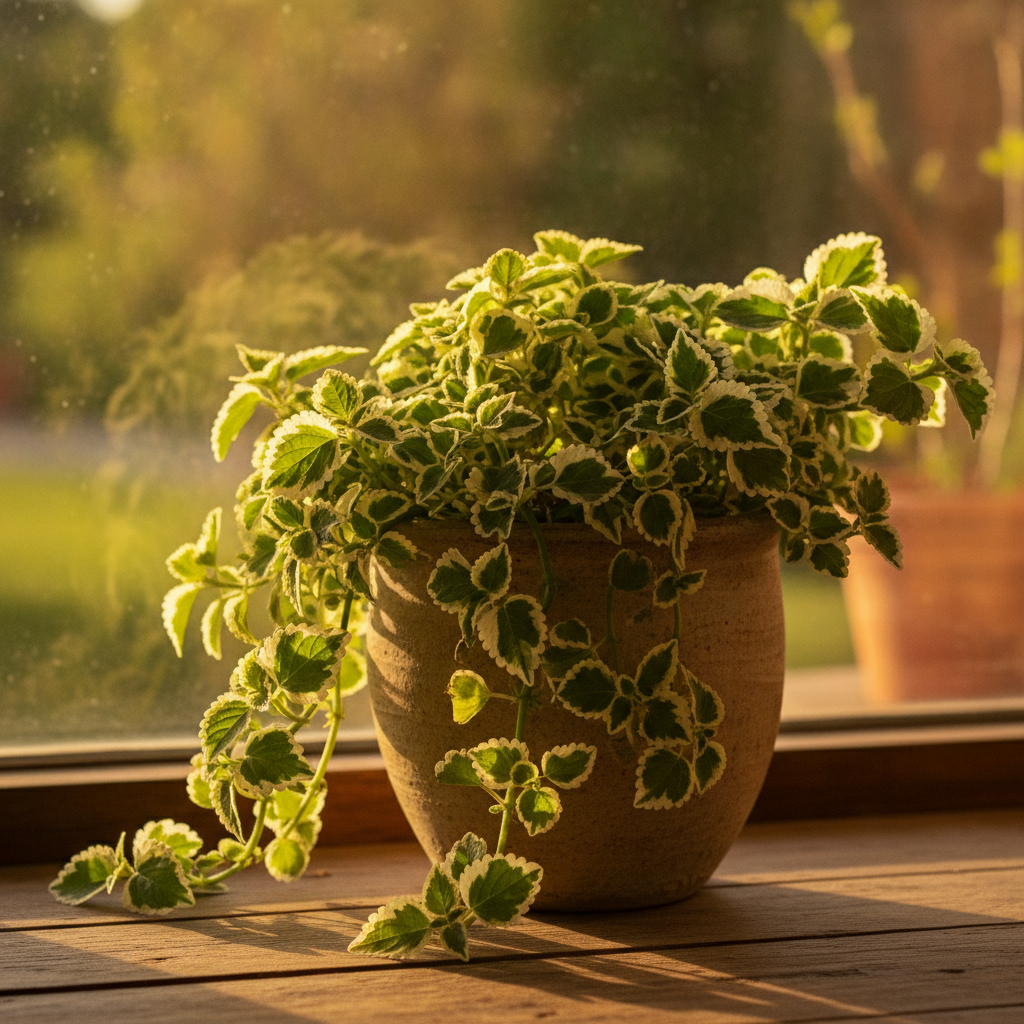
Marginatus
By far the most popular form, Plectranthus forsteri ‘Marginatus’ carries the same soft, scalloped leaves edged with a broad, creamy-white margin around a green centre. The variegation is stable and holds well indoors given good light, making it the version most people picture when they hear “Swedish ivy”. Give it slightly brighter conditions than the plain green form to keep the pale margins crisp and prevent reversion.
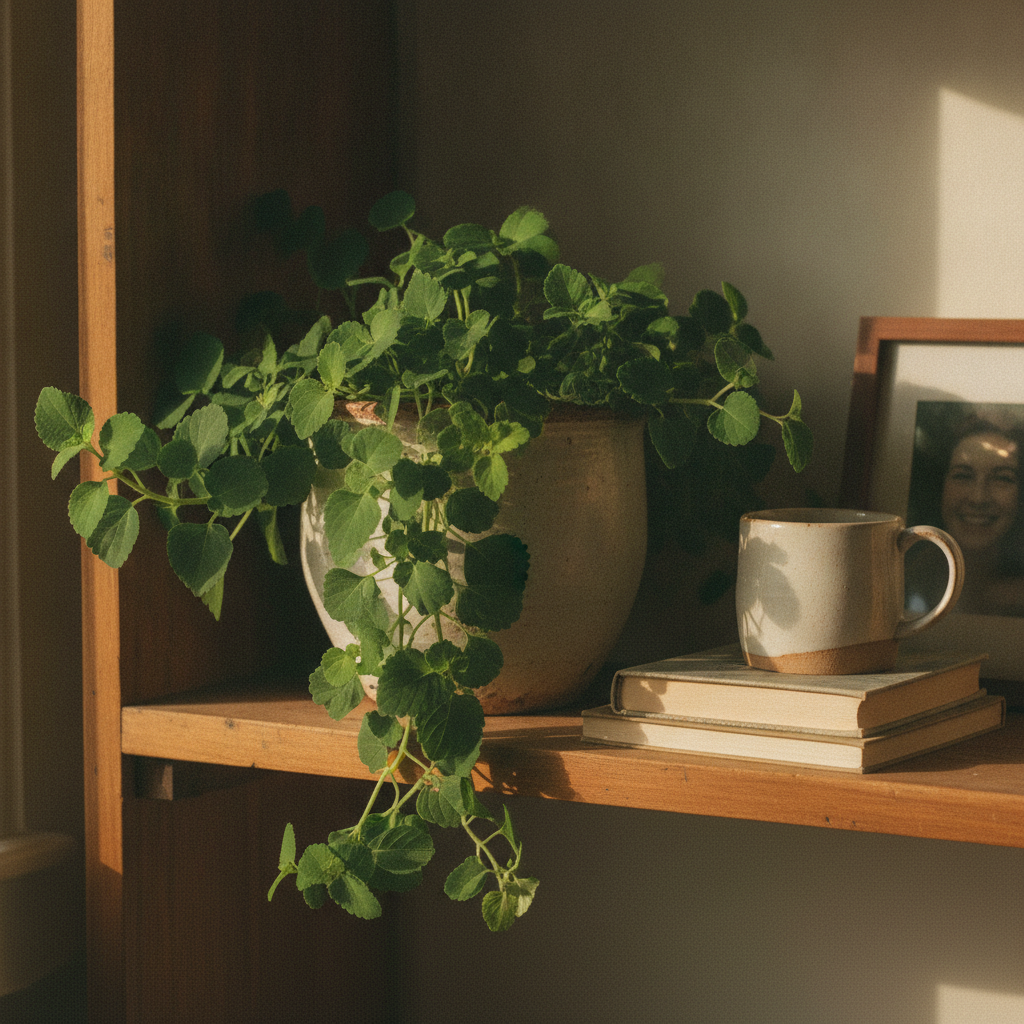
Green on Green
The plain species form, sometimes sold as “green on green”, trades the cream margin for solid, deep-green foliage with a soft velvety surface and pale undersides. It is a touch more tolerant of lower light than the variegated form, since every part of the leaf is working to photosynthesise, and it grows just as fast. Its restrained colour makes it an easy backdrop plant that lets showier neighbours take centre stage.
Frequently Asked Questions
Is the trailing coleus the same as a regular coleus?
No, despite the shared common name. The familiar bedding coleus with its brightly patterned leaves is Coleus scutellarioides, whereas the trailing coleus is Plectranthus forsteri. Both sit in the mint family and both root easily from cuttings, but they are different plants. The trailing coleus is grown for its soft green or cream-edged foliage and its cascading habit rather than for vivid leaf colour.
Why is my trailing coleus getting leggy?
Legginess, meaning long stems with widely spaced leaves, is almost always a light problem. The plant is stretching towards a brighter source. Move it closer to a window, and pinch back the leggy stems to encourage branching. The tips you remove can be rooted to fill out the pot, so nothing is wasted in the process.
Is the trailing coleus toxic to cats and dogs?
Plectranthus forsteri is generally regarded as non-toxic and is not listed among the plants that cause serious poisoning. That said, any plant material can upset the stomach of a pet that eats a large amount, so it is sensible to discourage chewing and to place the plant out of reach of determined nibblers. If you have particular concerns about a specific animal, checking with your vet is always the safest course.
How often should I water it?
Water when the top 2 to 3 cm (about 1 in) of soil has dried, which in a bright spot through the growing season tends to mean roughly once a week. Rather than fixing a schedule, check the soil with a finger, since pot size, warmth, and light all change how fast it dries. Water less often in winter, when growth slows and the plant needs much less.
Can I grow the trailing coleus outdoors?
In warm, frost-free climates it grows happily outdoors in a shaded or partly shaded spot, and it is often used in hanging baskets and as ground cover. It is not frost hardy, however, so in cooler regions it is best treated as a houseplant or moved outside only for the warm months. Bring it back indoors, or take cuttings to overwinter inside, well before the first frost.
Why are the lower leaves turning yellow and mushy?
Soft, yellow lower leaves are the classic sign of overwatering. The roots are sitting too wet, which starves them of air and begins to rot. Let the soil dry out further between waterings, make sure the pot drains freely and never stands in water, and consider adding perlite to lighten the mix. Caught early, the plant usually recovers once its watering routine is corrected.
The trailing coleus asks very little and gives a great deal in return. Bright light, a free-draining pot, water when the surface dries, and a light monthly feed in the growing season are the whole of its needs. Master that simple routine, keep a few cuttings on the go, and you will always have a full, tumbling curtain of soft green foliage to show for it.






