
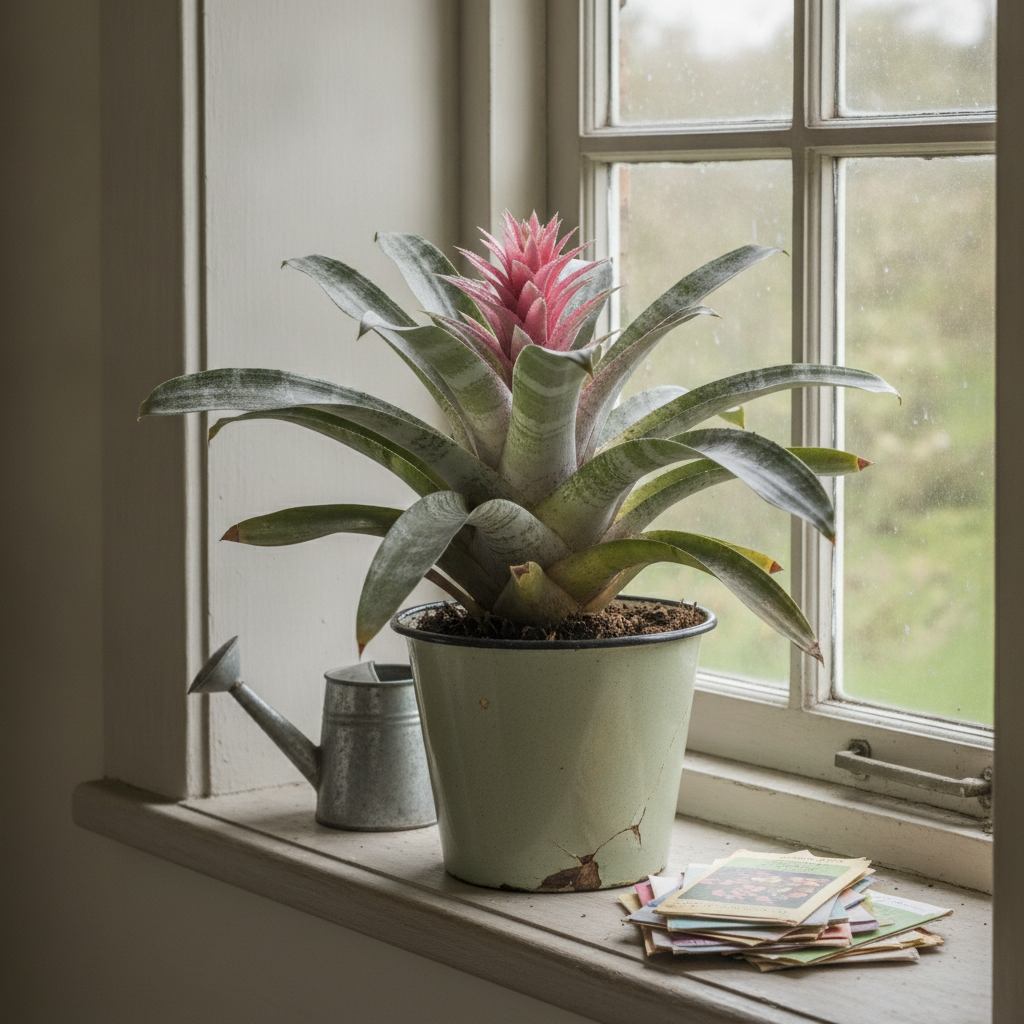
Few houseplants announce themselves as calmly as the silver vase plant. Its broad, arching leaves are dusted with frosted silver bands, and they curl inward to form a watertight central cup, the “urn” that gives the plant its other common name. From the heart of that rosette rises a vivid pink bract shaped like a spiky torch, studded with tiny blue and violet flowers. The silver vase plant, known botanically as Aechmea fasciata and also sold as the urn plant or silver urn plant, is an epiphytic bromeliad native to the humid Atlantic rainforests of south-eastern Brazil, where it grows lodged in the crooks of trees rather than in the ground.
That wild lifestyle explains almost everything about how it behaves indoors. It drinks mostly through its central cup, feeds lightly, and asks for bright but filtered light rather than fierce sun. It also has one of the most forgiving reputations of any flowering houseplant, tolerating a degree of neglect that would kill a fussier bloomer. This guide covers the full picture, from light and watering to soil, feeding, propagation from pups, and pest control, so you can move past merely keeping an Aechmea fasciata alive and instead coax it into the long, colourful display it is capable of.
Contents
- Quick Reference
- Why Silver Vase Aechmea Makes a Striking Houseplant
- Light Requirements
- Watering & Humidity
- Soil, Potting & Repotting
- Fertilising
- Propagation
- Pests & Diseases
- Popular Varieties
- Frequently Asked Questions
Quick Reference: Silver Vase Aechmea at a Glance
| Light | Bright, indirect light. Tolerates a couple of hours of gentle morning sun but scorches in harsh midday rays. |
| Watering | Keep the central cup topped up with 2 to 3 cm of water and refresh it weekly. Let the potting mix dry most of the way between waterings. |
| Temperature | 15 to 27 degrees Celsius (60 to 80 degrees Fahrenheit). Avoid anything below 10 degrees Celsius (50 degrees Fahrenheit). |
| Humidity | Moderate to high, ideally 50 to 60 percent, though it copes with average room humidity. |
| Fertiliser | Light feeder. A quarter to half strength balanced feed once a month in spring and summer only. |
| Toxicity | Non-toxic to cats and dogs. The spiny leaf margins can scratch, so handle with care. |
Why Silver Vase Aechmea Makes a Striking Houseplant
The silver vase plant earns its place on a windowsill for two reasons that rarely come together in one plant: sculptural year-round foliage and a flower display that can hold colour for months rather than days. Even out of bloom, the rosette of grey-green leaves banded with powdery silver is a design object in its own right, catching the light differently as you move around it. The frosting is not a coating you can wipe off but a dense layer of tiny scales called trichomes, which the plant uses to absorb moisture and nutrients from the air and from the water pooled in its cup.
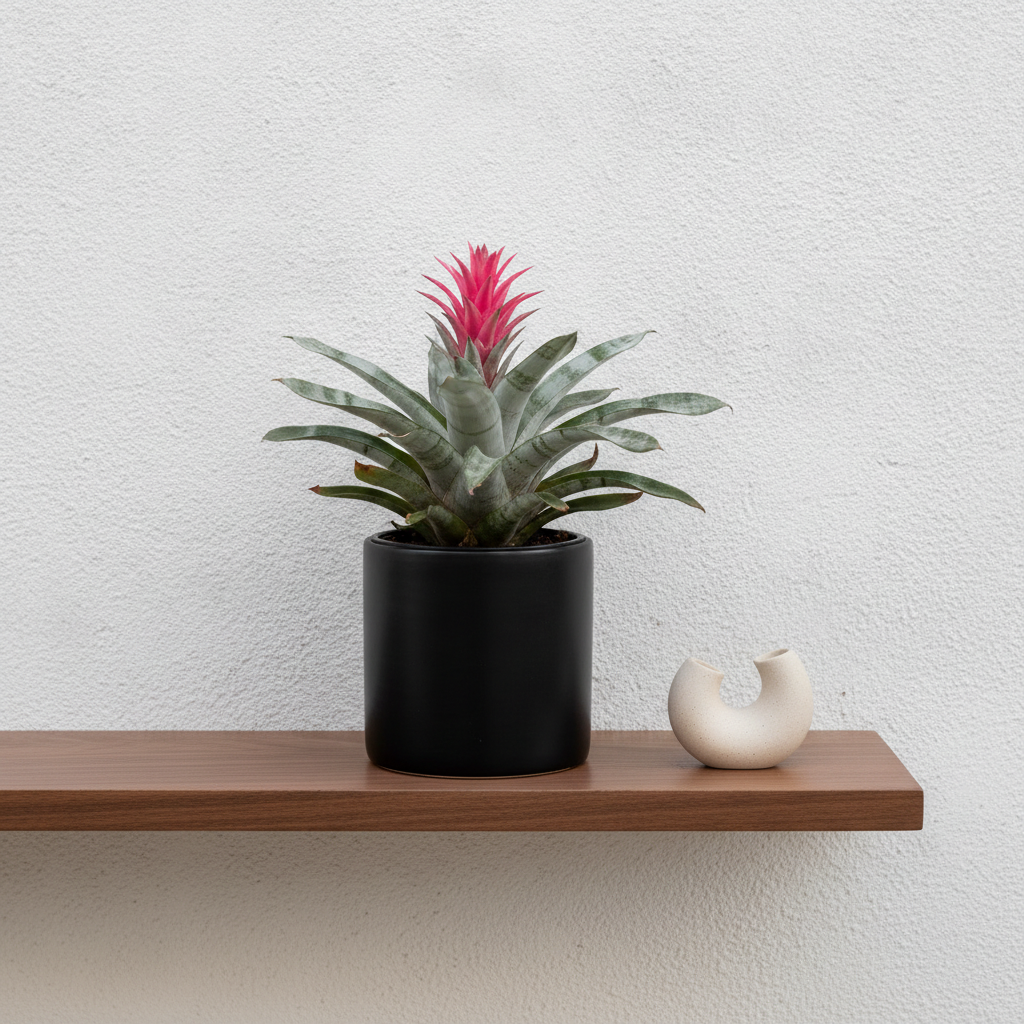
When it does flower, usually in a mature plant three to four years old, the show is worth the wait. A thick stem pushes a bright pink bract up from the centre of the cup, and it stays vivid for anywhere from three to six months. The small true flowers among the bracts are short-lived, but the bract itself is what carries the display. Because the plant is an epiphyte adapted to lean conditions, it also asks very little in return. It stores its own water, feeds sparingly, and shrugs off the occasional missed watering, which makes it a genuinely low-maintenance choice for anyone who wants impact without a demanding routine.
Important — Toxicity: The silver vase plant is listed as non-toxic to cats and dogs, so it is a safe pick for pet households. The main hazard is physical rather than chemical: the leaf margins carry small spines that can scratch skin or curious noses, so site it where it will not be brushed against constantly.
Light Requirements
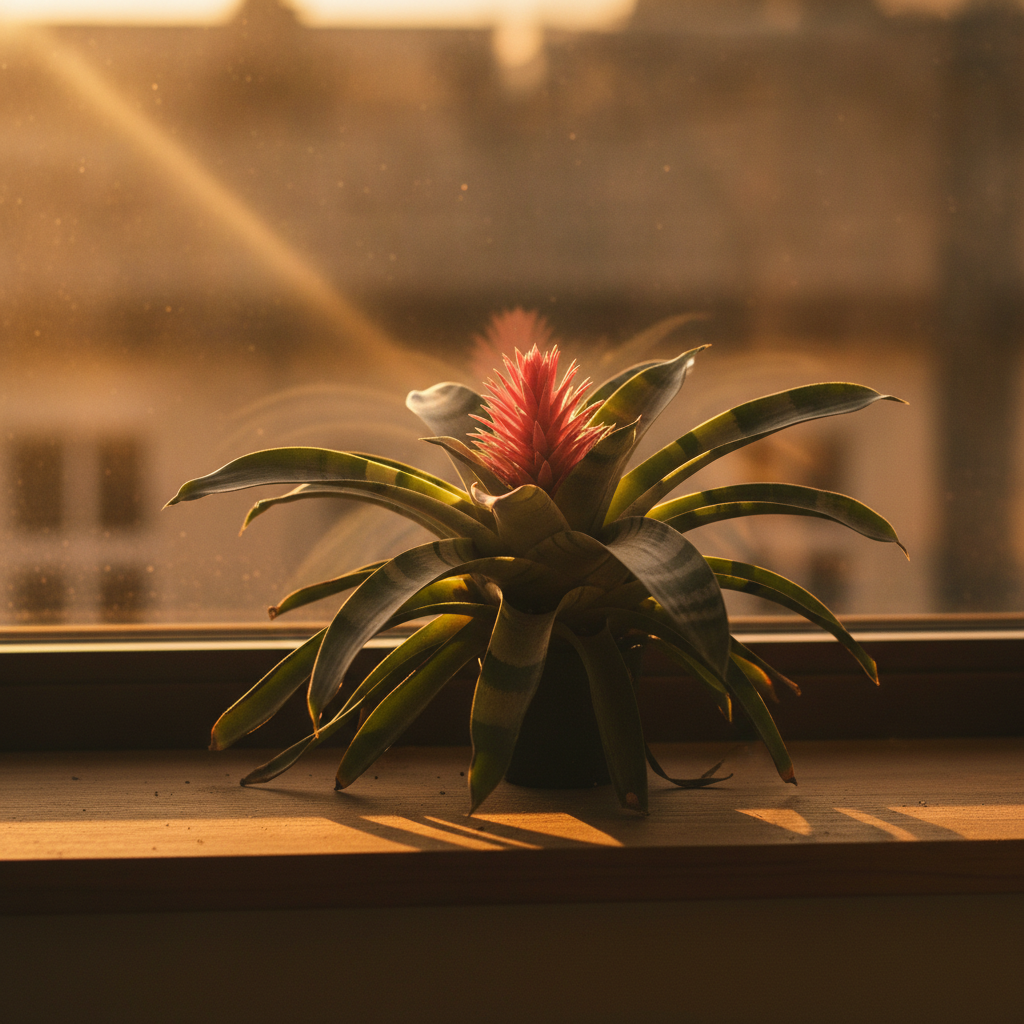
Light is the single biggest lever you have over whether an Aechmea fasciata merely survives or truly thrives, and it matters even more if you hope to see it bloom. In its native forest, the plant sits in the dappled canopy, receiving plenty of brightness but very little direct sun striking the leaves. The indoor goal is to recreate that: generous, bright, indirect light for most of the day.
Given the right exposure, the leaves keep their tight rosette form and strong silver banding, and a mature plant is far more likely to initiate a flower spike. In light that is too low, the rosette loosens, the leaves stretch and flop, the silver frosting fades toward plain green, and blooming becomes unlikely. Too much direct sun swings the other way, bleaching and scorching the foliage.
Light Levels Explained
Understanding how different light intensities translate into everyday spots in your home makes placement far easier. The table below sets out the practical categories and what each one means for a silver vase plant.
| Light Category | Approx. Level | Typical Location | Outcome |
|---|---|---|---|
| Direct sun | Over 50,000 lux | On a south-facing sill in summer | Risk of bleached, scorched leaves |
| Bright indirect | 15,000 to 40,000 lux | Near an east window, or a metre back from a bright window | Ideal: strong banding, best flowering odds |
| Medium | 8,000 to 15,000 lux | A few metres from a bright window | Plant maintains itself but may not bloom |
| Low | 2,000 to 8,000 lux | North-facing room, interior corner | Loosening rosette, fading colour, slow decline |
| Very low | Under 2,000 lux | Windowless spaces, deep interiors | Not sustainable long term |
Window Orientation and Placement
South-facing window: The brightest exposure and workable, but only if you set the plant back from the glass or diffuse the light with a sheer curtain. Direct summer sun on the leaves will scorch them.
East-facing window: Often the sweet spot. Gentle morning sun followed by bright indirect light for the rest of the day suits the plant well and keeps the silver banding sharp.
West-facing window: Also good, though the stronger afternoon sun can be intense in summer, so pull the plant back a little or filter it during the hottest hours.
North-facing window: Usable for maintaining an established plant, but the light is often too weak to trigger or sustain flowering. Expect slower growth and gradually softening colour.
Pro Tip — Rotate for Symmetry: Because the rosette grows toward the light, give the pot a quarter turn every week or two. This keeps the arching leaves even on all sides and stops the plant leaning permanently toward the window.
How Light Affects Colour and Flowering
The silvery banding on the leaves is directly tied to light. In bright, filtered conditions the trichomes stay dense and the frosted bands read as crisp and pale against the green. As light drops, the plant invests less in that protective scaly layer and the leaves green up and lose their metallic sheen. Light also governs bloom: a mature Aechmea fasciata needs a sustained bright position to build the energy reserves that flowering demands, which is why plants kept in dim corners so rarely produce their signature pink bract.
Warning — Direct Sunlight: Pale, washed-out patches or dry brown scorching on the upper leaf surfaces are signs of too much direct sun. Move the plant back from the glass or add a diffusing curtain, and remember that a plant recently moved from a shop or shadier spot needs a week or two to acclimatise before facing brighter light.
Artificial Lighting
If your home lacks a bright enough window, the silver vase plant responds well to supplemental lighting. A full-spectrum LED grow light positioned 30 to 45 cm (12 to 18 inches) above the rosette, run for 10 to 12 hours a day, can maintain healthy foliage and, in a mature plant, support flowering. Artificial light is also a useful way to keep colour strong through the short, dim days of winter.
Seasonal Adjustments
Light shifts through the year, and the plant’s placement should shift with it. In winter, when the sun sits lower and weaker, move the plant closer to the window or nearer a west or south exposure to make up the deficit. In high summer, do the reverse: pull it back from any window where direct sun could reach the leaves during the hottest part of the day.
Watering & Humidity
Watering a silver vase plant is unlike watering almost any other houseplant, because it drinks primarily through its central cup rather than its roots. Getting this right is the key to a healthy, long-lived Aechmea fasciata, and most problems trace back to treating it like an ordinary potted plant and soaking the compost.
When to Water
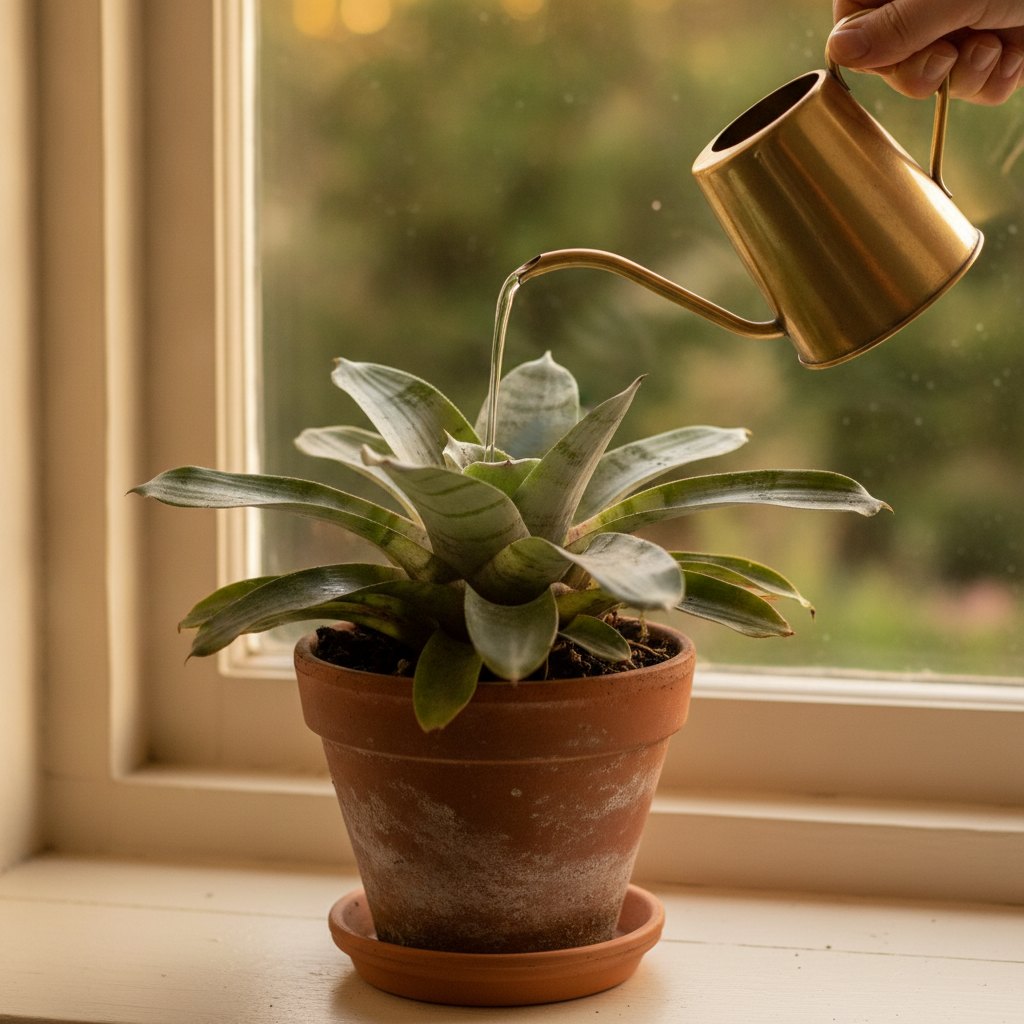
The central cup should hold water at all times during the growing season, filled to a depth of roughly 2 to 3 cm. The roots, by contrast, prefer to run on the dry side. Water the potting mix only when the top few centimetres have dried out, which in a bright indoor spot usually means every one to two weeks. Overwatering the soil while the cup is also full is the fastest route to root and crown rot.
Just as important as topping up the cup is refreshing it. Standing water grows stagnant and can start to smell or breed problems, so tip the old water out weekly and replace it with fresh. Flushing the cup this way also washes out dust, debris, and any mineral or salt build-up that would otherwise accumulate at the base of the rosette.
Pro Tip — Use Soft Water in the Cup: The cup sits in constant contact with the most sensitive part of the plant, so fill it with rainwater, distilled water, or filtered water where you can. Hard tap water leaves mineral spots on the leaves and deposits that collect in the base of the rosette over time.
How to Water Correctly
- Check the central cup. If it holds less than about 2 cm of water, top it up with room-temperature soft water.
- Once a week, tip the cup right out to drain the old water, then refill it with fresh water to keep it from stagnating.
- Feel the potting mix. Only water the soil when the top 3 to 4 cm are dry to the touch.
- When you do water the mix, moisten it evenly and let any excess drain fully from the base of the pot.
- Never leave the pot standing in a saucer of water, as waterlogged roots rot quickly in this species.
- Every month or two, flush the whole plant, cup and soil, with plenty of soft water to clear out any accumulated salts.
Signs of Overwatering vs. Underwatering
| Symptom | Overwatering | Underwatering |
|---|---|---|
| Leaf colour | Yellowing, especially at the base of the rosette | Dull, greyish, slightly faded |
| Leaf texture | Soft, mushy leaf bases | Curling, thin, papery leaf tips |
| Soil | Constantly wet, sour smelling | Bone dry, pulling from the pot edge |
| Roots | Brown, soft, foul smelling | Dry and brittle but intact |
| Crown / cup base | Rot spreading from the centre, leaves pulling loose | Cup empty, base firm but thirsty |
Warning — Root Rot: Because the roots serve mainly to anchor the plant rather than to drink, they are quick to rot if kept wet. If the leaf bases turn soft and the centre of the rosette begins to loosen, act at once: empty the cup, let the soil dry, and repot into fresh, sharply draining mix, trimming away any brown mushy roots.
Humidity Requirements
As a rainforest epiphyte, the silver vase plant appreciates moisture in the air and does best at around 50 to 60 percent relative humidity. That said, it is more tolerant than many tropical plants and will get by in average household humidity, drawing much of what it needs directly from the water in its cup.
Signs that the air is too dry include browning, crisping leaf tips and a general dullness to the foliage. These are more common in winter, when central heating strips moisture from the air, and in rooms with constant airflow from vents or radiators.
Raising humidity is straightforward. Grouping plants together, standing the pot on a tray of damp pebbles, or running a small humidifier nearby all help. A light misting of the foliage now and then is welcome too, though it is no substitute for keeping the central cup filled, which remains the plant’s main source of moisture.
Water Quality
Water quality matters more for this plant than for most, precisely because water sits pooled against its tissue day and night. Hard, chlorinated tap water leaves visible mineral spotting on the silvery leaves and builds up salts in the cup. Rainwater is ideal, distilled or filtered water is a good alternative, and if you must use tap water, let it stand overnight so some of the chlorine dissipates before it goes into the cup.
Soil, Potting & Repotting
Because it is naturally an epiphyte that clings to bark rather than rooting in earth, the silver vase plant wants an open, fast-draining medium that holds very little water. A dense, moisture-retentive potting soil is the wrong choice and will suffocate the roots. Think of the mix as an anchor with good airflow, not as the plant’s main water store.
Ideal Soil Composition
A good bromeliad or orchid mix, or a blend you make yourself, should feel loose and chunky and drain within seconds. The aim is a medium that stays airy and never turns to sludge, with plenty of coarse material to keep pockets of air around the roots.
| Component | Proportion | Function |
|---|---|---|
| Orchid bark | Approx. 40 percent | Provides structure and large air pockets, mimicking bark |
| Perlite or pumice | Approx. 30 percent | Keeps the mix open and sharply draining |
| Coco coir or peat-free compost | Approx. 20 percent | Holds a little moisture and lends light body |
| Coarse sand or fine grit | Approx. 10 percent | Adds weight and further improves drainage |
The silver vase plant prefers a slightly acidic root zone, in the region of pH 5.0 to 6.0, which a bark-based mix naturally provides. There is no need to measure this precisely; simply avoid limey or alkaline composts and steer clear of anything heavy and water-retentive.
Pro Tip — Quick Mix Recipe: If you want a simple, reliable blend, combine two parts orchid bark, one part perlite, and one part coco coir. It drains fast, stays airy, and suits nearly every epiphytic bromeliad, not just Aechmea fasciata.
Choosing the Right Pot
The silver vase plant has a small, shallow root system relative to its top growth, so it does not need a deep or large container. A snug pot that keeps the mix from staying soggy is far better than an oversized one that holds a reservoir of damp compost around the roots.
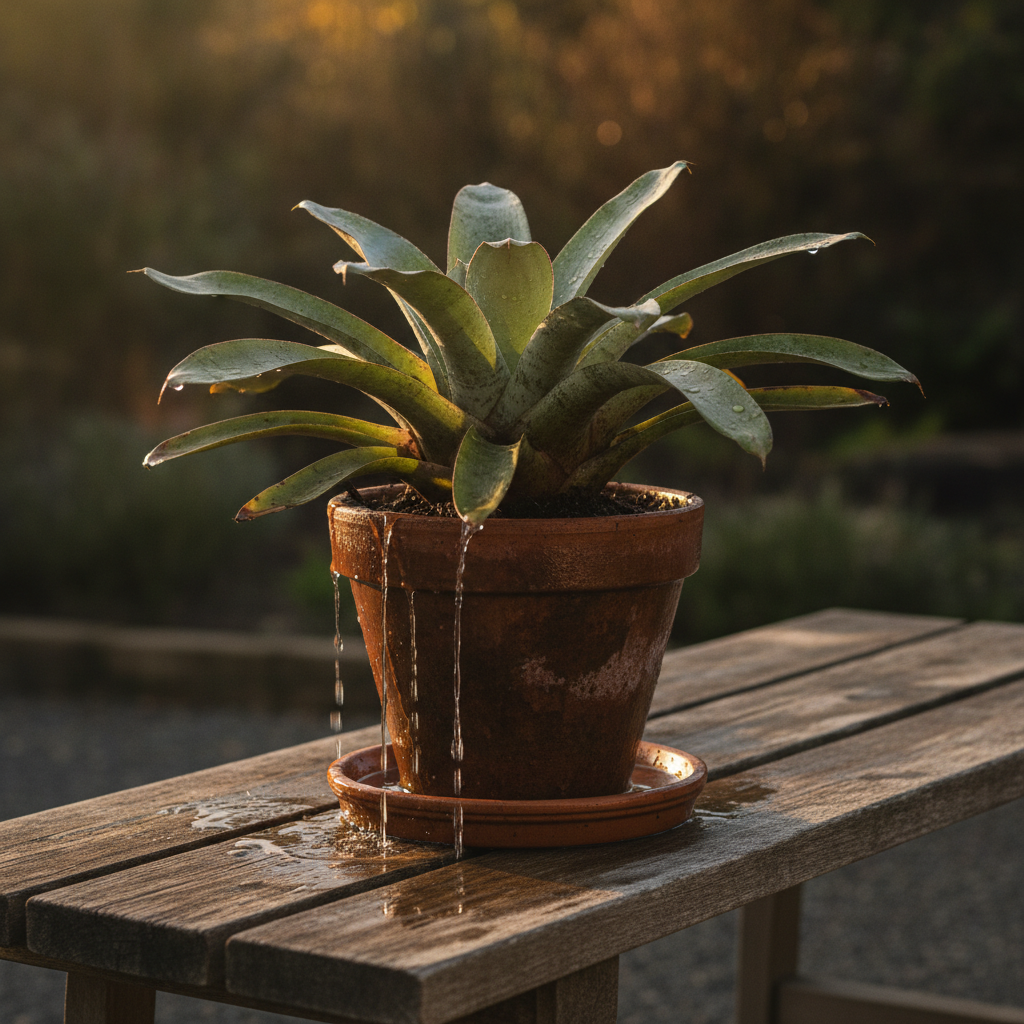
Drainage holes are non-negotiable. Whatever pot you choose must have open drainage at the base. Given how prone the roots are to rot, a decorative pot without holes, or a saucer left full of water, will undo all your careful watering.
Pot material: Terracotta is a strong choice because its porous walls wick away excess moisture and help the mix dry evenly. Its weight also matters, since a large flowering rosette can make the plant top-heavy; a heavier pot keeps it stable and upright.
Pot size: Choose a container only slightly larger than the root ball, typically a 12 to 15 cm (5 to 6 inch) pot for a mature plant. Resist the urge to pot up into something big, as excess mix simply stays wet and invites rot.
When to Repot
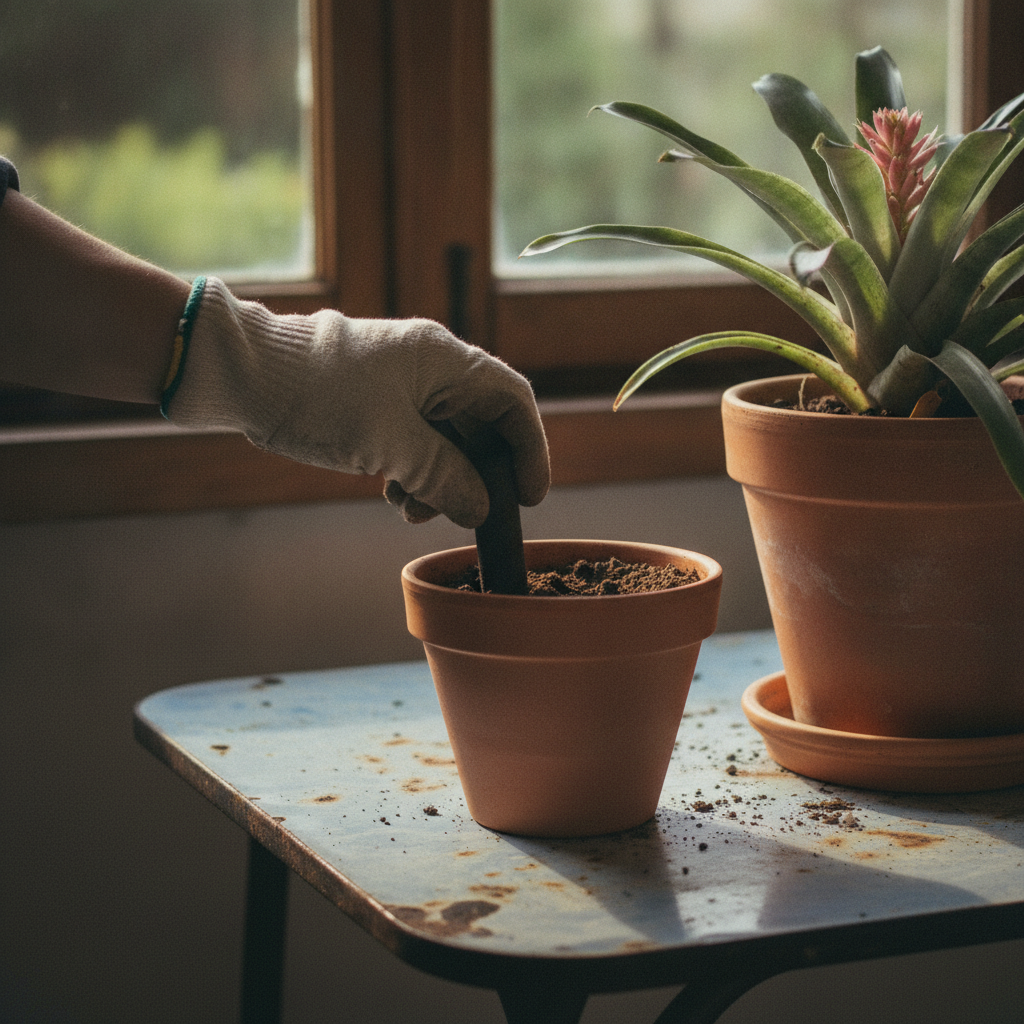
Silver vase plants rarely need repotting and dislike being disturbed, so do it only when necessary, usually every two to three years or when the plant has clearly outgrown its container. In practice, the most common reason to repot is to settle a newly bought plant into better mix or to pot up separated pups. Bear in mind that the mother rosette flowers only once and then slowly declines, so there is little point moving an old, spent plant into a larger home.
How to Repot: Step-by-Step
- Water lightly a day before so the mix holds together and the roots are less brittle.
- Ease the plant out of its pot, supporting the base of the rosette rather than pulling on the leaves.
- Gently tease away the old mix and inspect the roots, trimming any that are brown, soft, or rotten.
- Add a layer of fresh, chunky mix to the base of a clean pot with drainage holes.
- Set the plant so the base of the rosette sits just at the surface, never buried, and fill around it with mix.
- Firm the mix gently to hold the plant steady, keeping it upright and centred.
- Fill the central cup with soft water and hold off on feeding for a few weeks while it settles.
Warning — Transplant Shock: Never bury the base of the rosette when repotting. Planting too deep traps moisture against the crown and causes rot, which is often fatal. The junction where the leaves meet the roots should sit right at soil level, no lower.
Fertilising
The silver vase plant is a genuinely light feeder, adapted to pulling scant nutrients from rainwater and forest debris. It is far easier to harm it by overfeeding than by underfeeding, so a cautious, dilute approach is always the right one.
Excess fertiliser, and especially excess nitrogen, causes the leaves to lose their tidy compact form and their silver banding, and can build damaging salts in the cup. A little feed during the growing season keeps the plant in good health without pushing it into soft, floppy, faded growth.
Understanding Plant Nutrients
Fertiliser labels list three headline numbers, the N-P-K ratio, standing for nitrogen, phosphorus, and potassium. For a bromeliad, a balanced or slightly low-nitrogen feed is ideal, since too much nitrogen works against the plant’s compact, colourful habit. The table below summarises the nutrients that matter and what a shortage looks like.
| Nutrient | Symbol | Primary Function | Deficiency Symptoms |
|---|---|---|---|
| Nitrogen | N | Leaf growth and green colour | Overall pale, weak growth (though excess is the bigger risk here) |
| Phosphorus | P | Roots and flower development | Poor flowering, dull foliage |
| Potassium | K | Overall vigour and stress resistance | Yellowing or browning leaf edges |
| Calcium | Ca | Cell wall structure | Distorted new growth |
| Magnesium | Mg | Core of the chlorophyll molecule | Yellowing between leaf veins |
| Iron | Fe | Chlorophyll production | Pale new leaves with green veins |
Types of Fertiliser
Liquid fertilisers: The easiest option to control, since you can dilute them heavily. A balanced houseplant feed at a quarter to half the recommended strength is perfect for a silver vase plant.
Slow-release granular: Convenient but harder to moderate. If you use it, apply at half the stated rate and scatter it on the soil surface only, never into the cup, where it would concentrate against the tissue.
Organic fertilisers: Gentle options such as dilute worm-casting tea suit the plant’s modest appetite and are hard to overdo, releasing nutrients slowly and mildly.
Feeding Schedule
Feed only during the active growing season, from spring through summer, roughly once a month. Stop entirely in autumn and winter, when the plant is resting and cannot make use of the nutrients. Do not feed a rosette that has finished flowering and is producing pups, as its energy is now going into the offsets rather than into new growth.
Pro Tip — Feed the Soil, Dilute the Cup: Apply diluted feed to the potting mix, or add a very weak solution to the central cup no more than once a month. If you feed through the cup, flush it with fresh water a few days later to prevent salts collecting at the sensitive base of the rosette.
How to Fertilise
- Mix a balanced liquid feed to a quarter or half of the label strength using soft water.
- Water the potting mix first if it is very dry, so the roots are not fed on parched soil.
- Apply the diluted feed to the mix, or add a small amount to the central cup.
- A few days after feeding through the cup, empty and refill it with fresh water to clear any residue.
- Repeat roughly monthly through spring and summer only, then pause for the cooler months.
Warning — Salt Build-Up: Fertiliser salts accumulate quickly in the confined space of the cup and against the roots, showing up as a white crust or as burnt, browning leaf tips. Flush the plant thoroughly with plenty of soft water every month or two to wash these salts away.
Propagation
Propagating a silver vase plant is not just possible, it is the natural way the plant continues. Each rosette blooms only once in its life, and after flowering the mother slowly declines over many months. Before she goes, though, she produces offsets, known as pups, at her base, and these are your next generation of plants.
This means propagation is less an optional experiment and more the ordinary rhythm of keeping the species. A single plant you buy today will, in time, give you two or three pups to grow on, each of which will eventually flower and produce pups of its own.
Understanding Pups and Offsets
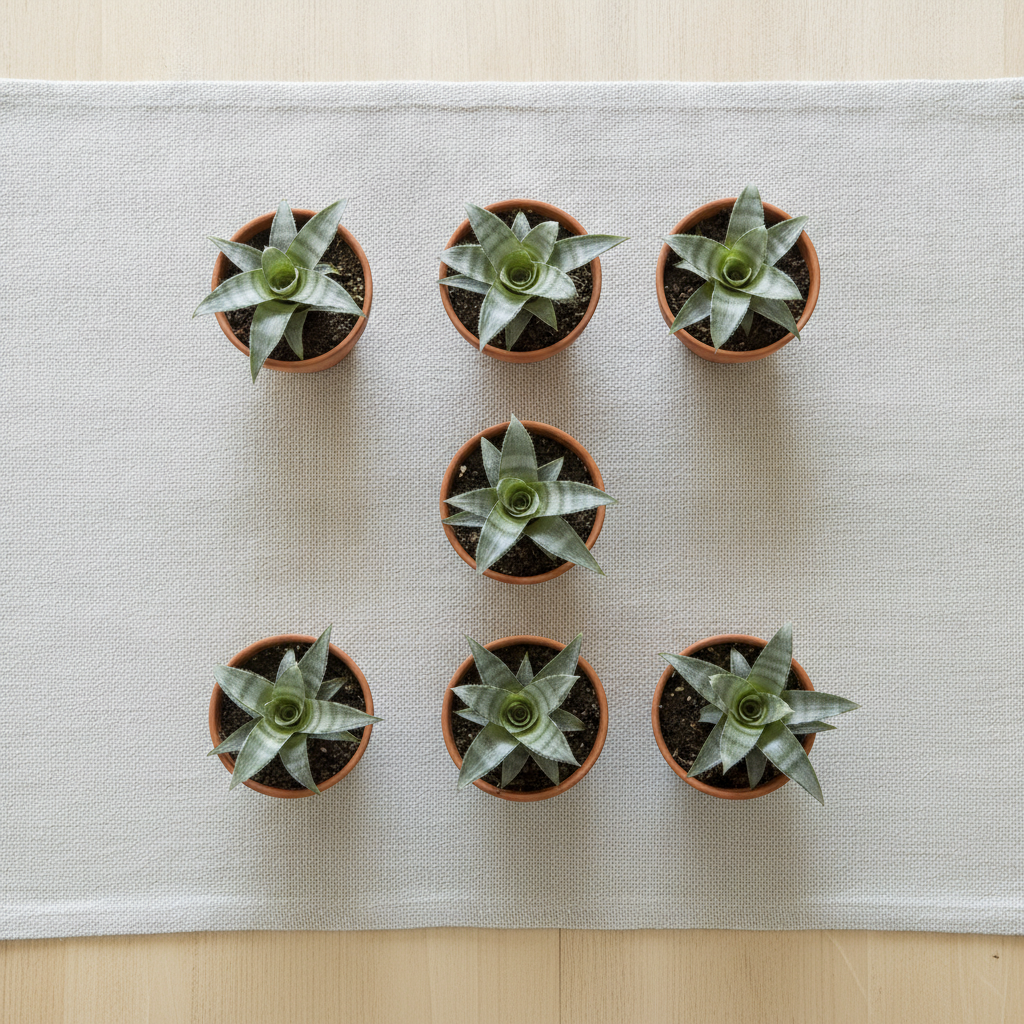
Pups are miniature clones of the parent that emerge from between the lower leaves, usually after the main rosette has flowered. They are attached to the mother by a short stem and draw on her resources until they are large enough to fend for themselves. The single most common propagation mistake is impatience: removing a pup too early, before it has grown its own roots and reached a good size, greatly lowers its chances. Wait until each pup is at least a third to a half the size of the mother before separating it.
Dividing Pups: Step-by-Step
Separating and potting up a well-grown pup is quick and needs only a clean, sharp knife. The best time is when the mother has clearly begun to fade and the pups are around half her height.
- Wait until each pup is at least one-third, ideally one-half, the size of the parent and has started to form its own roots.
- Ease the whole plant out of its pot so you can see where the pup joins the mother.
- With a clean, sharp, sterilised knife, cut the pup away from the parent, taking any roots it has already made.
- Let the cut surface dry and callus for a few hours to reduce the risk of rot.
- Pot the pup into a small container of chunky, free-draining bromeliad mix, setting it just deep enough to stand upright.
- Support a wobbly pup with a small stake if needed, keep the mix barely moist, and add a little water to its forming cup.
Pro Tip — Let the Mother Feed the Pups: There is no rush to separate. If you leave the pups attached until the mother has fully spent herself, they draw on her stored energy and grow faster and stronger. Only remove them once they are well sized and the parent is clearly declining.
Growing Pups On Without Separating: Step-by-Step
If you prefer the least fuss, you can skip the knife entirely and simply let the pups take over the pot as the mother dies back.
- Leave the pups attached and continue normal care as the flowered rosette slowly yellows and declines.
- Once the mother is fully brown and spent, cut her away at the base with clean scissors, leaving the pups undisturbed.
- Allow the strongest pup, or two, to grow on in the same pot, refreshing the top layer of mix if needed.
- Begin filling the central cup of each maturing pup once its rosette is well formed.
- Repot only when the young plants have clearly outgrown the container.
Troubleshooting Propagation
| Problem | Likely Cause | Solution |
|---|---|---|
| Pup rots after separation | Cut surface kept wet, or mix too moist | Let cuts callus and use a drier, chunkier mix |
| Pup fails to root | Removed too small or too early | Wait until pups are half the mother’s size before cutting |
| Pup wilts or leans | No roots yet to support it | Stake it and keep humidity up until roots form |
| No pups appear | Mother has not yet flowered | Be patient; pups follow flowering, which can take years |
Pests & Diseases
The silver vase plant is fairly resistant to pests, but no houseplant is immune, and its cup and dense rosette can shelter a few persistent troublemakers. Most problems are easy to head off with regular inspection and sensible watering.
By far the most serious threats to this species are the rots that come from overwatering, rather than insects. Still, scale and mealybugs turn up often enough to be worth knowing, and both hide in exactly the sheltered spots the rosette provides.
Common Pests
Scale (Coccoidea)
Scale insects appear as small, hard, brown or tan bumps clinging to the leaves, often along the undersides and in the leaf axils. They feed on sap and can slowly weaken the plant, leaving sticky honeydew that in turn encourages sooty mould.
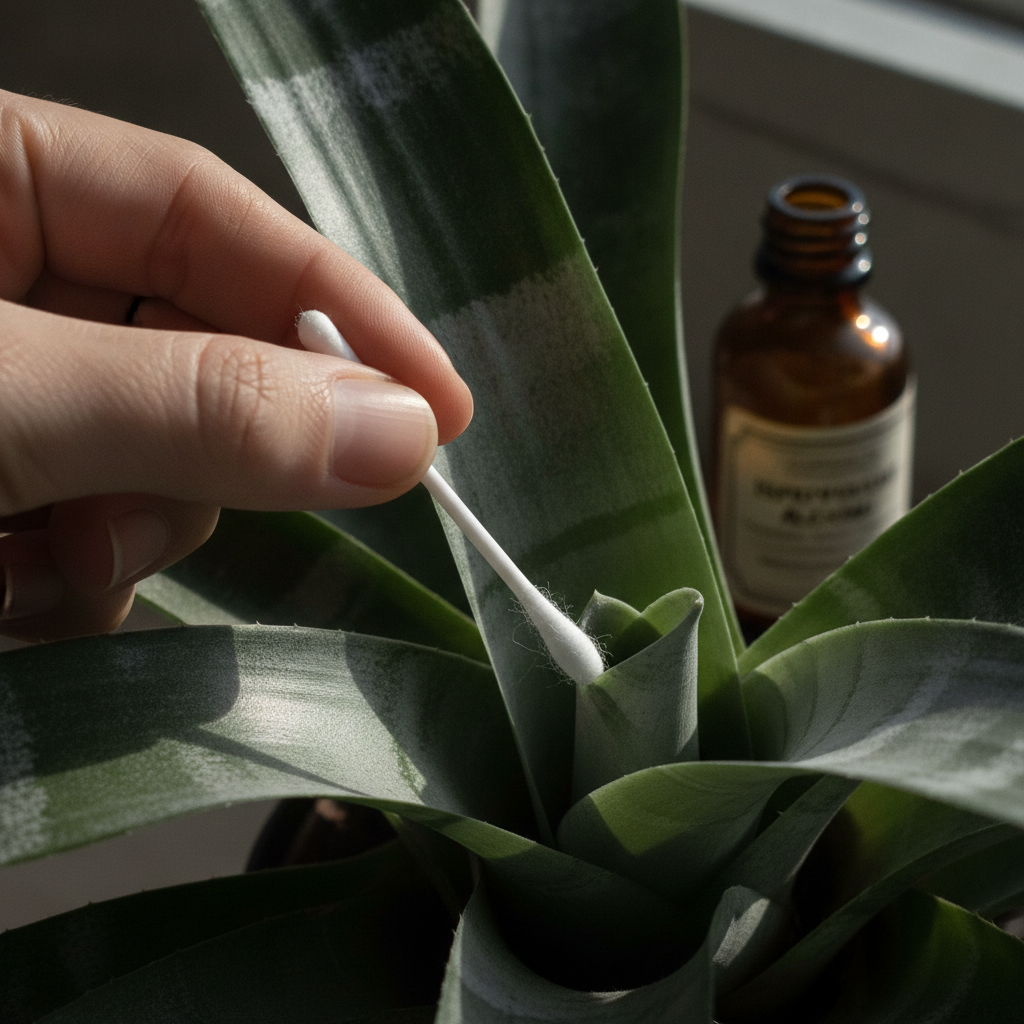
Treatment: Scrape or dab them off with a cotton bud dipped in isopropyl alcohol, then treat the plant with horticultural oil or an insecticidal soap. Check weekly, as scale is stubborn and often needs several rounds.
Mealybugs (Pseudococcidae)
Mealybugs look like little tufts of white cotton wool tucked into the leaf axils and the base of the rosette, the very places the silver vase plant offers most shelter. They too suck sap and secrete sticky honeydew.
Treatment: Touch each one with an alcohol-dipped cotton bud to kill it on contact, then follow up with insecticidal soap or neem oil. Repeat every few days until no new insects appear.
Spider Mites (Tetranychus urticae)
Less common on this plant, spider mites can still take hold in hot, dry air, leaving fine stippling on the leaves and faint webbing between them. They are tiny and easiest to spot by the damage they cause.
Treatment: Rinse the foliage, raise the humidity, and treat with insecticidal soap or neem oil. Better air moisture alone often discourages them.
Common Diseases
Crown and Root Rot (Phytophthora and Pythium)
This is the number one killer of silver vase plants. It sets in when the soil is kept too wet or the base of the rosette stays sodden, causing the crown to turn soft, brown, and foul-smelling as the plant collapses from the centre.
Treatment: Caught early, empty the cup, let the mix dry, and repot into fresh, sharply draining medium, cutting away any rotten tissue. Advanced crown rot is usually fatal, so prevention through careful watering is far more effective than any cure.
Fungal Leaf Spot (Various fungi)
Dark, sometimes yellow-ringed spots on the leaves point to a fungal infection, usually encouraged by water sitting on the foliage in still, humid air with poor circulation.
Treatment: Remove affected leaves, improve airflow around the plant, and avoid wetting the foliage late in the day. A copper-based fungicide can help in stubborn cases.
Pest and Disease Summary
| Pest / Disease | Identification | Treatment |
|---|---|---|
| Scale | Hard brown bumps, sticky honeydew | Alcohol swab, then horticultural oil |
| Mealybugs | White cottony tufts in leaf axils | Alcohol swab, then neem or soap |
| Spider mites | Fine stippling and faint webbing | Rinse, raise humidity, insecticidal soap |
| Crown / root rot | Soft, brown, smelly centre or base | Dry out, repot, remove rot; often fatal |
| Fungal leaf spot | Dark, ringed spots on leaves | Remove leaves, improve airflow, fungicide |
Prevention Strategies
Prevention with this plant is overwhelmingly about water discipline. Keep the potting mix on the dry side, refresh the cup weekly so it never stagnates, and make sure the plant has good air movement around it. These three habits alone prevent the great majority of problems a silver vase plant will ever face.
Beyond that, inspect new plants carefully before bringing them home and quarantine them from your collection for a couple of weeks. Wipe the leaves occasionally to remove dust and to give yourself a chance to spot pests early, while they are still easy to deal with.
Pro Tip — Neem as a Preventative: A monthly wipe or light spray of dilute neem oil during the growing season keeps sap-sucking pests from ever gaining a foothold. Apply it in the evening, out of direct sun, to avoid marking the silvery leaves.
Popular Varieties
Although the plain species Aechmea fasciata is the one most often sold, growers have selected a handful of cultivars that play on leaf colour, banding, and bract shade. All share the same care needs, so you can choose purely on looks.
The differences are mostly in the foliage: some cultivars push the silver banding harder, others flush the leaves with pink or bronze, and a few carry creamy variegation down the length of the leaf. The table gives a quick comparison before we look at two of the best-known in detail.
| Variety | Leaf Appearance | Light Needs | Growth Rate | Availability |
|---|---|---|---|---|
| Species (A. fasciata) | Grey-green with silver cross-banding | Bright indirect | Slow to moderate | Very common |
| ‘Primera’ | Bold silver banding, large rosy-pink bract | Bright indirect | Moderate | Common |
| ‘Morgana’ | Leaves flushed soft pink and silver | Bright indirect | Slow | Occasional |
| ‘Purpurea’ | Darker, purple-bronze tinted leaves | Bright indirect | Slow | Occasional |
| ‘Variegata’ | Silver leaves with creamy lengthwise stripes | Bright indirect | Slow | Uncommon |
| ‘Friederike’ | Compact, strongly frosted rosette | Bright indirect | Slow | Uncommon |
| ‘Silver Star’ | Pronounced silver-white frosting | Bright indirect | Slow | Occasional |
Featured Varieties
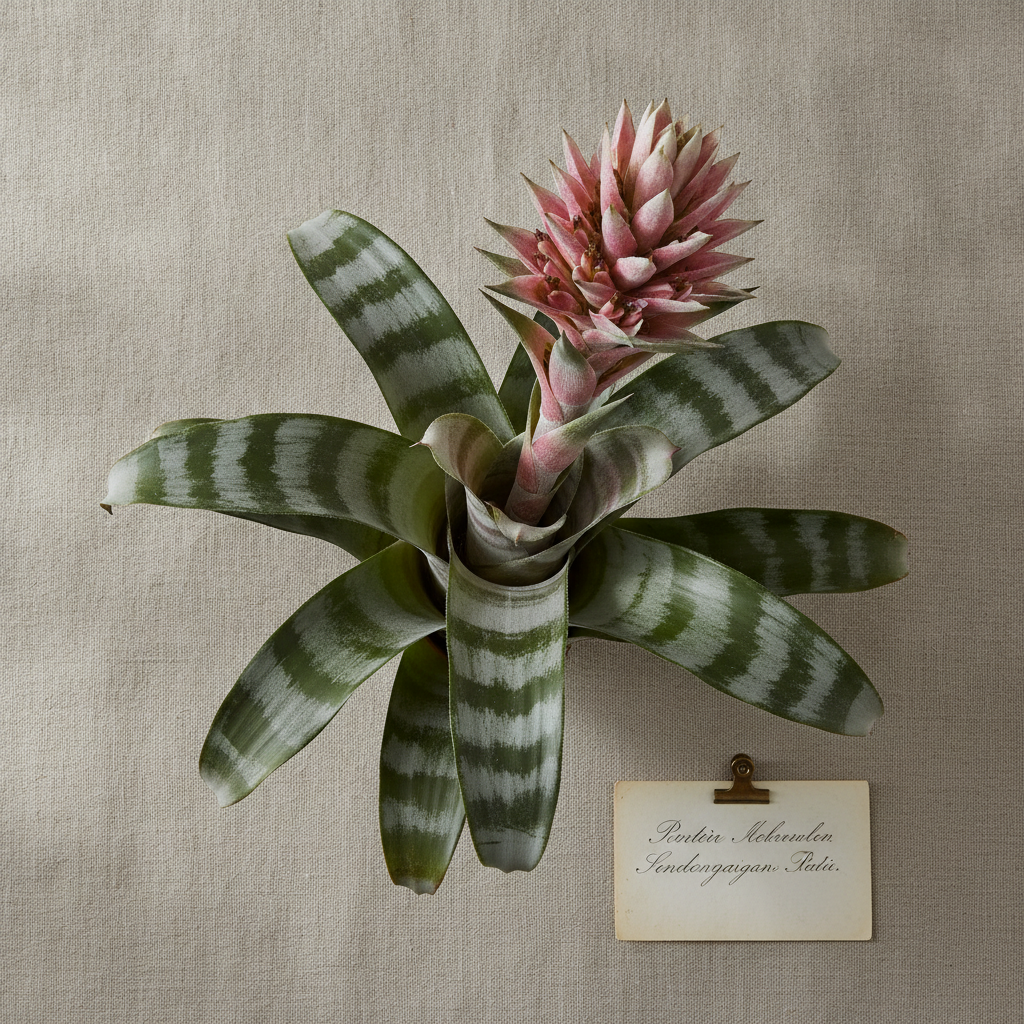
‘Primera’
A robust, commercially popular selection with especially strong silver cross-banding and a large, well-coloured rosy-pink bract. It is vigorous and reliable, and the one you are most likely to meet as a florist’s flowering plant.
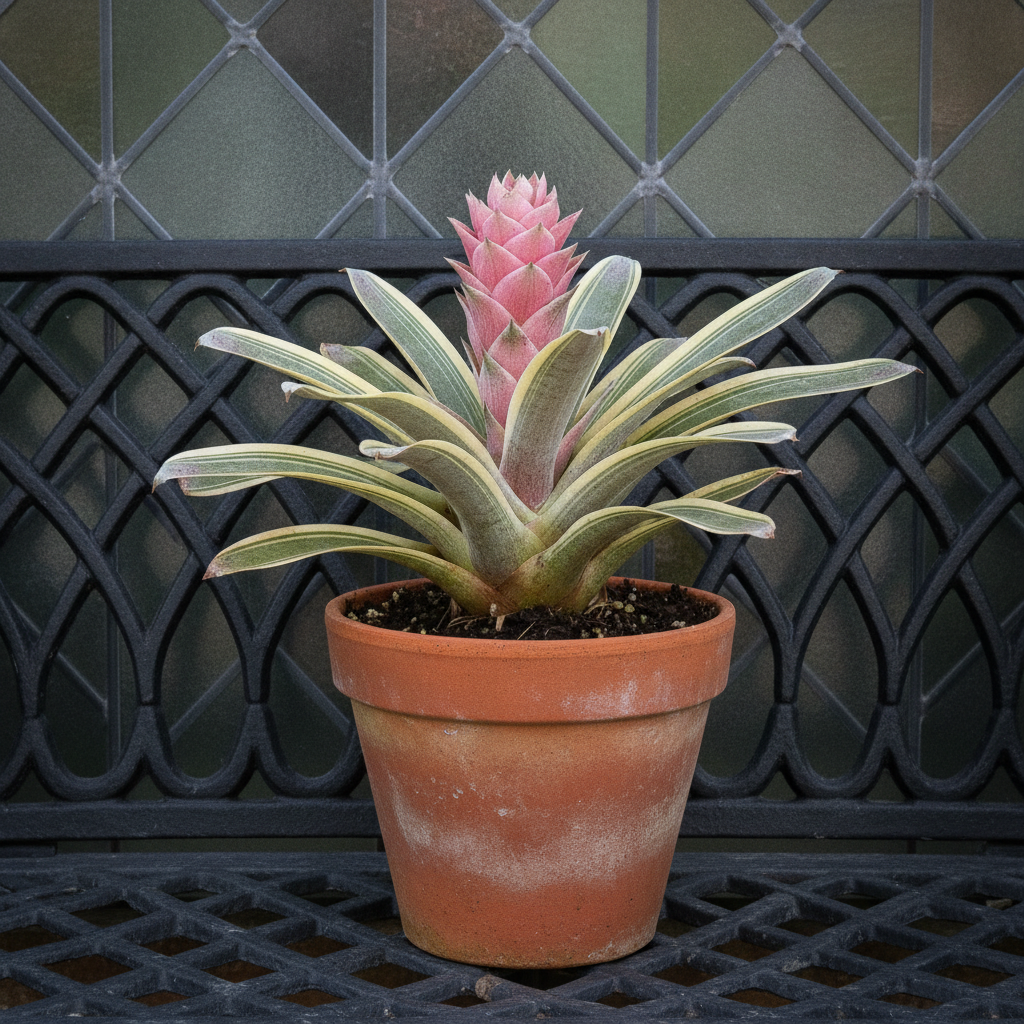
‘Variegata’
A collector’s favourite whose silvery leaves carry creamy-yellow stripes running lengthwise down the blade. The variegation makes it a standout even out of bloom, though it grows a little slower than the plain species.
Variety Profiles in Detail
‘Primera’ (Aechmea fasciata ‘Primera’)
Bred for the pot-plant trade, ‘Primera’ is prized for its dependable flowering and its clean, high-contrast banding. It tends to form a slightly more upright rosette than the wild species, and its pink bract holds colour for months, which is why it dominates the flowering displays in garden centres.
‘Variegata’ (Aechmea fasciata ‘Variegata’)
Also sold as the variegated urn plant, this cultivar trades a little vigour for year-round interest. The creamy stripes are brightest in good light, and because the plant is grown as much for its foliage as its flower, it earns its keep even in the long stretches between blooms.
Choosing the Right Variety for Your Space
If your priority is a big, reliable flower show, ‘Primera’ or the plain species is the safe choice and the easiest to find. If you care more about foliage that holds interest all year, seek out ‘Variegata’ or one of the strongly frosted forms such as ‘Silver Star’. Whichever you pick, the care is identical, so let the look of the leaves and bract guide your decision rather than any difference in difficulty.
Frequently Asked Questions
Should I keep water in the central cup?
Yes. During the growing season the central cup should hold roughly 2 to 3 cm of water at all times, as this is how the plant does most of its drinking. Refresh it weekly with soft water so it does not stagnate, and empty it if the room turns cold for a spell.
Why is my silver vase plant’s flower dying?
This is completely normal. Each rosette flowers only once, and the bract naturally fades after several months. It is not a sign of poor care. Once the flower is spent, the plant turns its energy to producing pups at its base, which become your next plants.
How do I get my Aechmea fasciata to bloom?
The plant must first be mature, usually three to four years old, and grown in consistently bright, indirect light. A well-known trick to trigger a reluctant mature plant is to place it in a clear plastic bag with a ripe apple for a week or two; the ethylene gas the apple gives off encourages the plant to initiate a flower spike.
Is the silver vase plant safe for pets?
Yes, it is listed as non-toxic to both cats and dogs, which makes it a good choice for pet households. The only caution is physical: the leaf edges bear small spines that can scratch, so place it somewhere pets are unlikely to bump into it.
Why are the leaf tips turning brown?
Brown, crispy tips usually mean low humidity, hard water, or a build-up of fertiliser salts. Switch to rainwater or filtered water for the cup, raise the humidity around the plant, and flush the whole plant with soft water every month or two to clear accumulated salts.
My plant is going soft and mushy in the centre. What went wrong?
A soft, discoloured centre is crown rot, almost always caused by the potting mix or the base of the rosette being kept too wet. Empty the cup, let the mix dry out, and repot into fresh, very free-draining medium, cutting away any rotten tissue. Sadly, advanced crown rot is often fatal, so lean on prevention through careful watering.
How big does a silver vase plant get?
Indoors, expect a mature rosette to reach roughly 40 to 60 cm (16 to 24 inches) across and a similar height, with the flower spike adding a little more when in bloom. It is a slow grower, so it stays a manageable size for tabletops and shelves for a long time.
Do I need to mist my silver vase plant?
Misting is helpful but optional. The plant gets most of its moisture from the cup, so misting is a supplement rather than a necessity. It is most worthwhile in dry, heated winter air, where a little extra humidity keeps the leaf tips from browning.
When and how do I remove the pups?
Wait until each pup is at least one-third to one-half the size of the mother and has begun forming its own roots, then cut it away at the base with a clean, sharp knife. Let the cut callus for a few hours, pot the pup into chunky bromeliad mix, and keep the mix barely moist while it establishes.
Why are the leaves losing their silver colour?
Fading silver banding is nearly always a light problem. In dim conditions the plant produces fewer of the scaly trichomes that create the frosted look, so the leaves green up. Move it to a brighter, indirectly lit spot and the banding will strengthen on new growth. Too much nitrogen fertiliser can have the same effect, so keep feeding light.






