
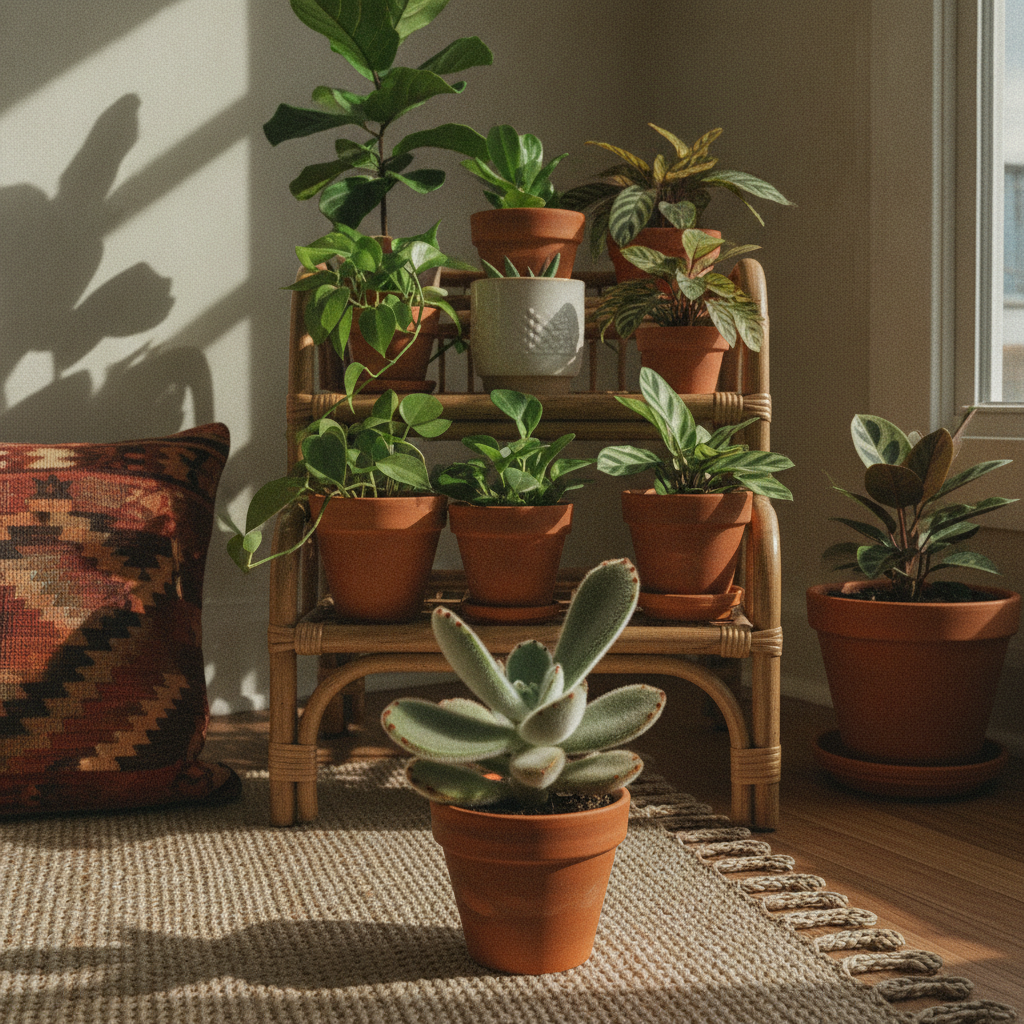
Few succulents provoke as many double-takes as the panda ears succulent (Cotyledon tomentosa), a compact South African shrublet whose chubby, felt-covered leaves end in a neat row of reddish-brown teeth that look uncannily like a tiny bear’s claw. That resemblance has earned it a small pile of affectionate common names, including bear paw, bear’s paw and cat’s claws, and it is the toothed, velvety leaf far more than any flower that makes the plant a windowsill favourite. Native to the rocky, sun-baked slopes of the Western Cape, it belongs to the stonecrop family Crassulaceae, alongside jade plants, echeverias and kalanchoes.
Its reputation sits in a comfortable middle ground: forgiving enough for a confident beginner, yet fussy enough about water and light that careless treatment quickly shows. The gap between a panda ears succulent that merely survives, stretched, pale and shedding its plump leaves at the slightest touch, and one that thrives, dense and silvery with bright claw-tips and the occasional spray of orange bells, comes down to a handful of details. This guide walks through every one of them, from the exact light it needs to keep its colour to the way its fine leaf fuzz changes how you should water it.
Contents
- Quick Reference
- Why Panda Ears Succulent Makes a Characterful Houseplant
- Light Requirements
- Watering & Humidity
- Soil, Potting & Repotting
- Fertilising
- Propagation
- Pests & Diseases
- Popular Varieties
- Frequently Asked Questions
Quick Reference: Panda Ears Succulent at a Glance
| Light | Very bright light with 3 to 5 hours of direct sun; brightest indoor window available |
| Watering | Soak thoroughly, then let the soil dry out completely; roughly every 10 to 14 days in summer, far less in winter |
| Temperature | 18 to 24 °C (65 to 75 °F); protect below 7 °C (45 °F), not frost hardy |
| Humidity | Low; prefers dry air, 30 to 50 per cent relative humidity |
| Fertiliser | Diluted low-nitrogen succulent feed once a month during spring and summer only |
| Toxicity | Toxic to cats, dogs, livestock and humans if eaten; contains cardiac glycosides |
Why Panda Ears Succulent Makes a Characterful Houseplant
The appeal of Cotyledon tomentosa is almost entirely tactile. Each leaf is a plump, ovate cushion no more than a few centimetres long, coated in a dense layer of fine white hairs that give the whole plant a soft, silvery-sage sheen and a texture somewhere between felt and suede. The species name tomentosa comes directly from the Latin for “densely woolly,” and running a fingertip over a healthy leaf is a large part of why people keep it. Crowning each leaf is the feature that named it: a fan of two to ten small teeth that flush a deep rusty red in good light, forming the “claws” of the bear’s paw.
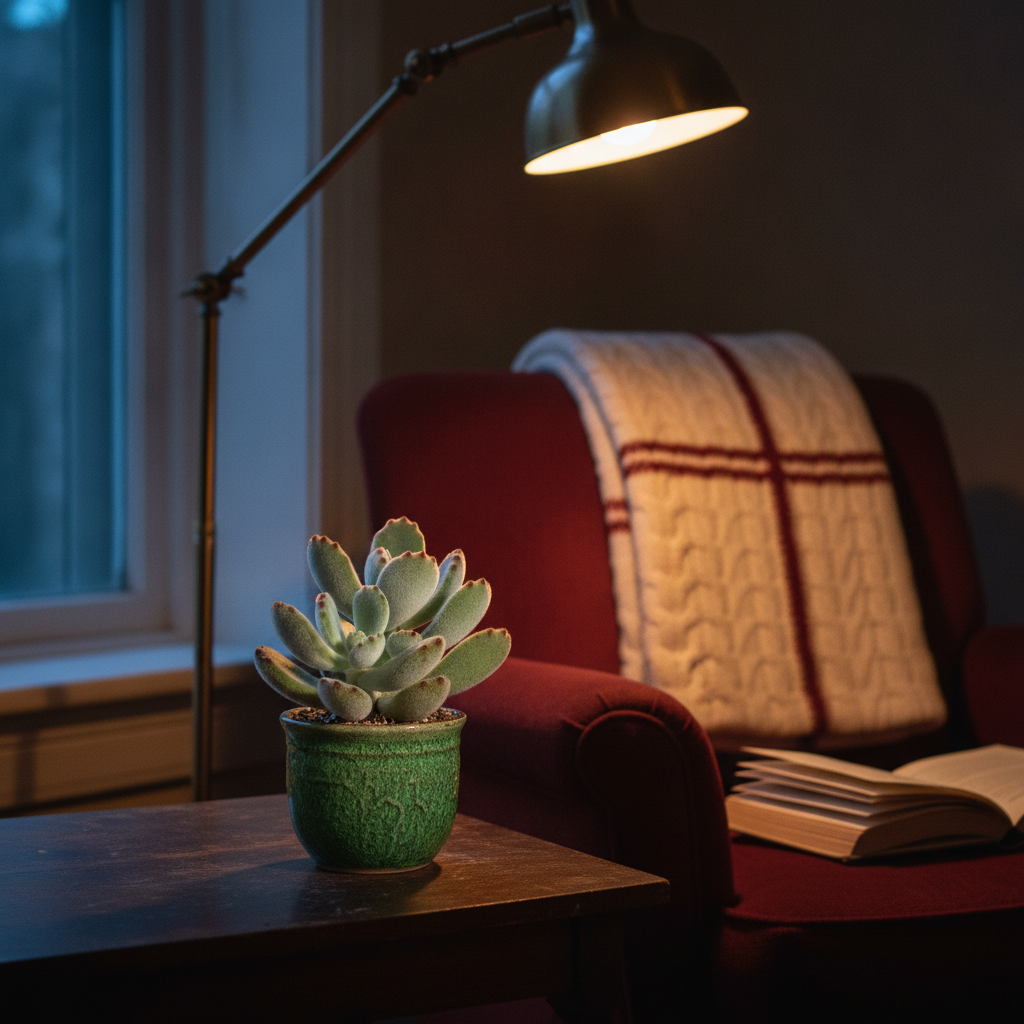
Beyond looks, it earns its keep as a slow, tidy and undemanding plant. Left in a small pot it forms a rounded, branching shrublet rarely taller than 30 centimetres (12 inches) indoors, so it never outgrows a sunny sill, and its succulent leaves store enough water to shrug off the occasional missed watering. Mature, well-lit plants may reward you in late winter or spring with slender stalks of pendant, bell-shaped flowers in orange to red, a bonus that is genuinely uncommon among the fuzzy succulents most people grow. Because it stays small and propagates readily, a single plant can quickly become a windowsill collection or a row of gifts.
Important — Toxicity: Like all Cotyledon species, the panda ears succulent contains cardiac glycosides (bufadienolides) in its leaves and stems that are poisonous to cats, dogs, grazing livestock and people if eaten. Ingestion can cause vomiting, drooling, irregular heartbeat and, in serious cases, more severe cardiac effects. Keep it well out of reach of curious pets and children, and wash your hands after taking cuttings.
Light Requirements
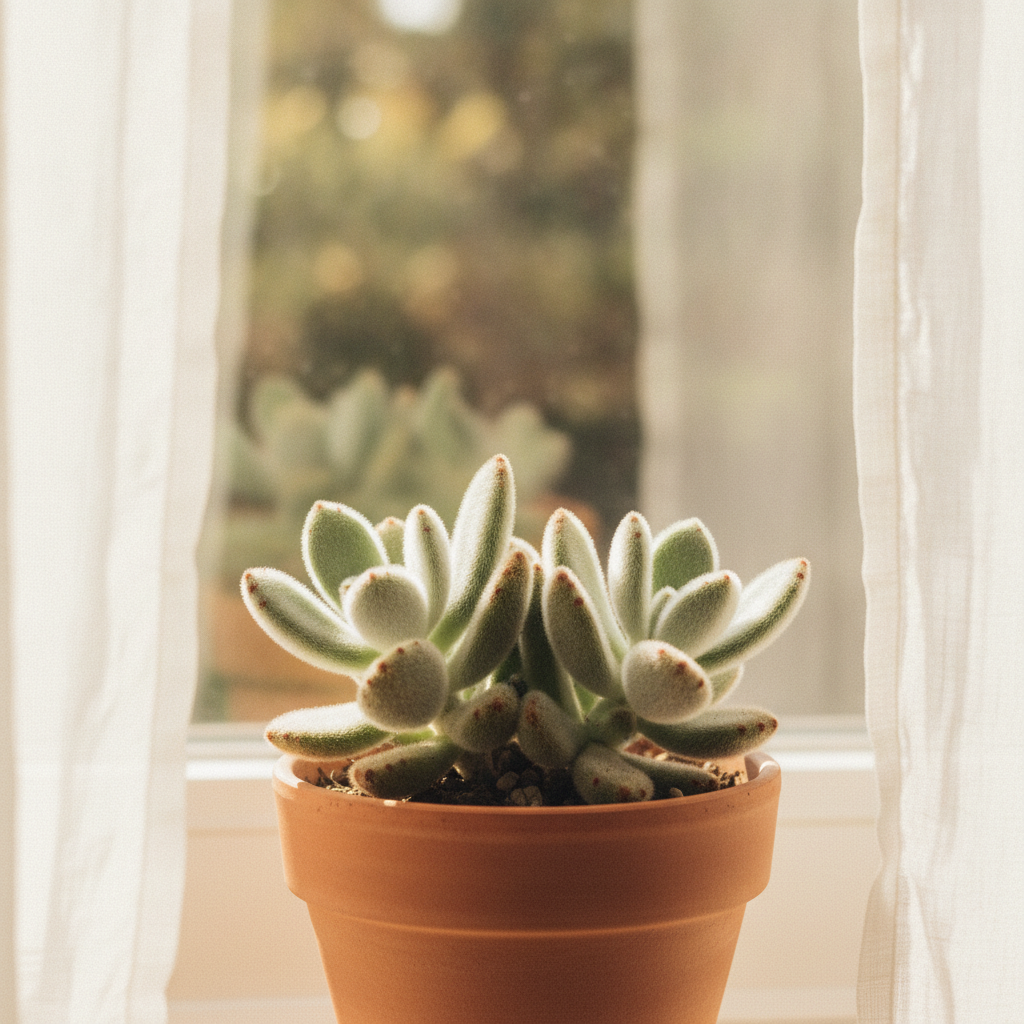
Light is the single biggest lever you have over how a panda ears succulent looks. This is a full-sun plant in the wild, and indoors it wants the brightest position you can offer, ideally with several hours of direct sun falling on the leaves each day. Give it that and it stays squat and densely packed, keeps its silvery fuzz thick and holds the red pigment in its claw-tips. Starve it of light and it does the opposite, stretching toward the window with elongated, widely spaced leaves that snap off easily.
The ideal is bright, direct morning or late-afternoon sun combined with strong ambient light for the rest of the day. A spot within 30 centimetres (12 inches) of a sunny window is far better than a bright-but-shaded corner across the room, because indoor light drops off much faster than our eyes suggest. If your plant was grown in lower light and you are increasing its exposure, do so gradually over a week or two to avoid scorching the tender fuzz.
Light Levels Explained
Understanding how the plant responds to different intensities makes placement straightforward. The table below translates the usual light categories into what you can expect from a panda ears succulent.
| Light Category | Approx. Level | Typical Location | Outcome |
|---|---|---|---|
| Direct sun | 20,000 lux and above | On a south or west sill | Ideal: compact, silvery, red-tipped growth |
| Bright indirect | 10,000 to 20,000 lux | Just back from a sunny window | Acceptable: healthy but slightly looser |
| Medium | 5,000 to 10,000 lux | A few feet from a bright window | Poor: stretching begins, tips fade |
| Low | 1,000 to 5,000 lux | North room or interior wall | Unsuitable: etiolation and leaf drop |
| Very low | Below 1,000 lux | Hallway, far from windows | Decline: the plant slowly starves |
Window Orientation and Placement
South-facing window: In the northern hemisphere this is the best spot indoors, delivering the long hours of direct sun the plant craves. Set it right on the sill. Only in the fiercest midday summer sun behind unshaded glass is there any scorch risk, and even then a sheer curtain solves it.
East-facing window: An excellent choice. Gentle, direct morning sun colours the tips nicely without the intensity that can burn, and the plant is rarely stressed here.
West-facing window: Also very good, offering strong afternoon sun. Watch for heat build-up against the glass on hot days, as the trapped warmth can stress the roots more than the light stresses the leaves.
North-facing window: Generally too dim to keep this plant compact. If it is your only option, plan to supplement with a grow light, or accept that the plant will slowly stretch and pale.
Pro Tip — Rotate for Even Growth: Because the plant leans hard toward its light source, give the pot a quarter turn every time you water. This keeps the little shrub symmetrical instead of one-sided and stops the shaded back from thinning out.
How Light Affects Leaf Colour and Form
The red teeth that give the bear paw its charm are a form of stress pigmentation, produced in response to strong light. In a bright position those claws deepen to a rich rust or maroon, and the whole plant takes on a tight, chunky silhouette. Move it into shade and the reds drain away to plain green while the leaves elongate and space out along the stem. If keeping those coloured tips matters to you, treat bright light as non-negotiable rather than optional.
Warning — Direct Sunlight: A plant grown in low light has soft, unhardened tissue, and moving it abruptly into full summer sun can scorch the fuzz and leave permanent brown blotches. Always acclimatise gradually, adding an hour or two of direct sun every few days rather than making the change overnight.
Artificial Lighting
Panda ears succulents respond very well to grow lights, which is often the simplest fix for a dim home. A full-spectrum LED positioned 15 to 30 centimetres (6 to 12 inches) above the plant for 10 to 12 hours a day will keep growth compact and coloured through a dark winter. Because this species wants high intensity, a dedicated horticultural light works far better than a general room lamp, and pairing it with the best natural window you have gives the strongest results.
Seasonal Adjustments
Light levels swing dramatically through the year, and the plant notices. In summer, unshaded glass can occasionally be too much, so a thin curtain on the hottest afternoons is worthwhile. In winter, the opposite is true: sun is weak and short, so move the plant to your brightest possible window and consider a grow light to prevent the leggy, pale growth that so often appears over the colder months.
Watering & Humidity
Watering is where most panda ears succulents are lost, and the fuzzy leaves add a wrinkle that ordinary succulents do not have. The guiding principle is the classic succulent one, soak thoroughly and then allow the soil to dry out completely before watering again, but the fine hairs that make this plant so appealing also trap moisture and resent water sitting on them. Get both the timing and the technique right and the plant is remarkably tough.
When to Water
Wait until the potting mix is dry all the way through, then water. The most reliable test is to push a finger or a wooden skewer to the bottom of the pot: if it comes out with damp soil clinging to it, wait longer. A well-lit plant in summer might need water every 10 to 14 days, but this is a guide, not a schedule, and the true frequency depends on your pot, mix, warmth and light.
The plant itself gives you clear signals. Firm, plump leaves mean it is fully hydrated and needs nothing. Leaves that feel slightly soft or look faintly wrinkled are the cue to water. This “read the leaves” approach is far safer than watering by the calendar, because a plant in a cool, dim spell in winter may go a month or more between drinks while the same plant in high summer dries out in a week.
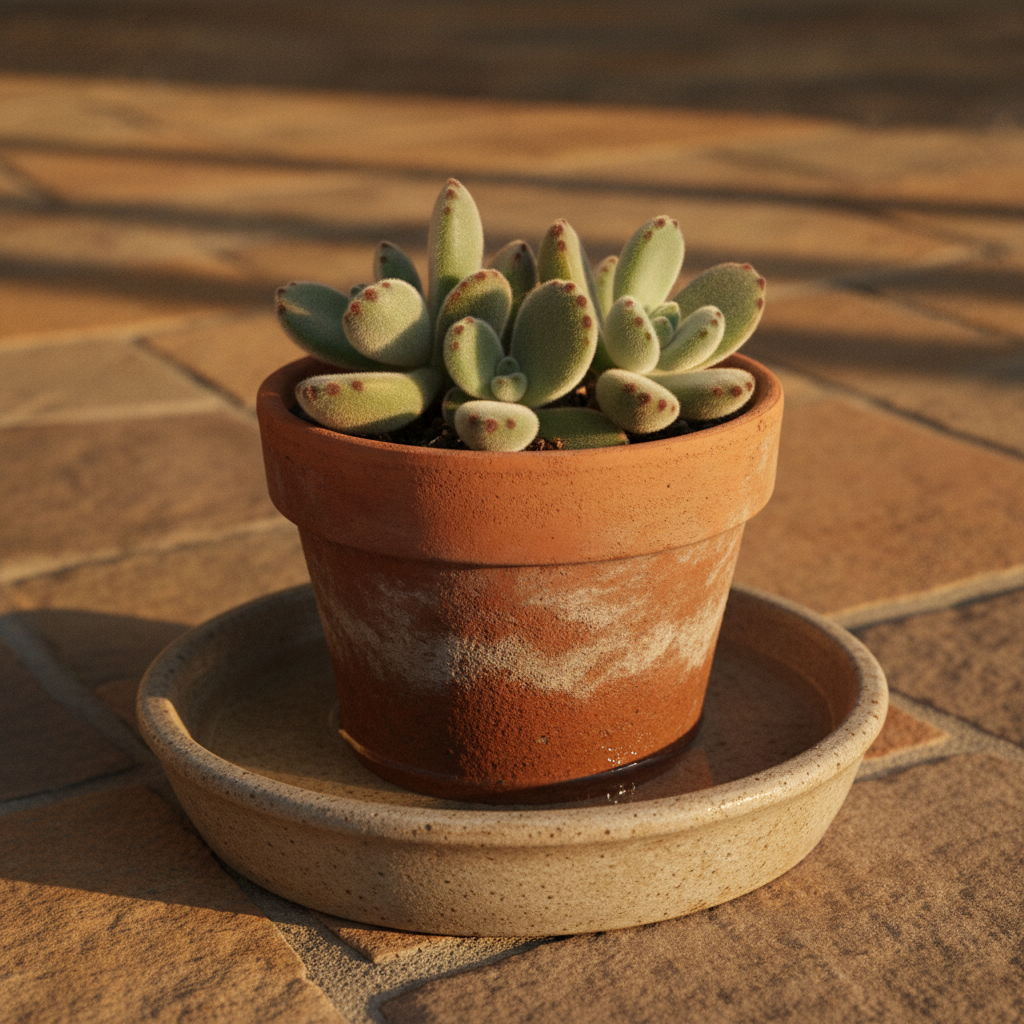
Pro Tip — Keep the Fuzz Dry: Water the soil directly, or stand the pot in a shallow tray of water for 10 to 15 minutes to drink from below, and avoid splashing the leaves. Water pooling in the felt-like hairs can cause spotting and, in still air, rot. Bottom watering is the cleanest method for this species.
How to Water Correctly
- Confirm the soil is dry to the bottom of the pot before you begin.
- Either water the soil surface slowly, keeping the stream off the leaves, or stand the pot in 2 to 3 centimetres of water to wick up from the drainage holes.
- If top watering, continue until water runs freely from the base, wetting the entire root zone.
- Let the pot drain completely and never leave it standing in a saucer of water.
- Empty any excess from the outer cachepot or tray within half an hour.
- Wait until the mix is fully dry again before the next watering.
Signs of Overwatering vs. Underwatering
| Symptom | Overwatering | Underwatering |
|---|---|---|
| Leaf colour | Yellowing, translucent or blackening leaves | Dulling and slight loss of green |
| Leaf texture | Soft, mushy, squishy to the touch | Thin, wrinkled, deflated but still firm |
| Leaf drop | Plump leaves fall at the lightest touch | Oldest lower leaves shrivel and dry up |
| Soil | Stays wet for many days, may smell sour | Bone dry, pulling away from the pot sides |
| Stem base | Brown, soft or black rot at soil line | Firm but the plant looks generally tired |
Warning — Root Rot: Overwatering is the number one killer of this plant. Once the roots and stem base turn soft and brown, the damage is often irreversible. If you catch it early, unpot immediately, cut away all mushy tissue, let the plant callus for a day or two, and replant in fresh dry gritty mix. Otherwise, take healthy cuttings from the top and start again.
Humidity Requirements
This is one of the rare houseplants that actively prefers dry air. Coming from an arid, rocky habitat, the panda ears succulent is perfectly content in the 30 to 50 per cent relative humidity found in most homes, and it has no need for misting, pebble trays or humidifiers. In fact, high humidity works against it.
The signs of humidity trouble are almost always signs of too much moisture, not too little. Persistent damp air combined with poor airflow encourages fungal spotting on the fuzzy leaves and raises the risk of rot at the base. If your bathroom or kitchen runs humid, this is not the plant for those rooms.
Rather than raising humidity, focus on the opposite: good ventilation. A gently moving airflow helps the leaves and soil surface dry quickly after watering and keeps fungal problems at bay. An open window in mild weather or a nearby fan on warm, still days does far more good than any humidity aid.
Water Quality
Panda ears succulents are not especially fussy about water type, and ordinary tap water is usually fine. If your supply is very hard, you may see faint mineral crusting on the soil surface or pot rim over time, which is cosmetic rather than harmful. Where tap water is heavily treated, letting it stand overnight or using collected rainwater is a small refinement the plant will quietly appreciate. Room-temperature water is always kinder to the roots than very cold water straight from the tap.
Soil, Potting & Repotting
Everything about watering this plant safely depends on the soil beneath it. A panda ears succulent planted in dense, moisture-holding potting compost is set up to fail no matter how careful you are, while the same plant in a fast-draining gritty mix is genuinely hard to kill. Drainage is not a detail here, it is the foundation.
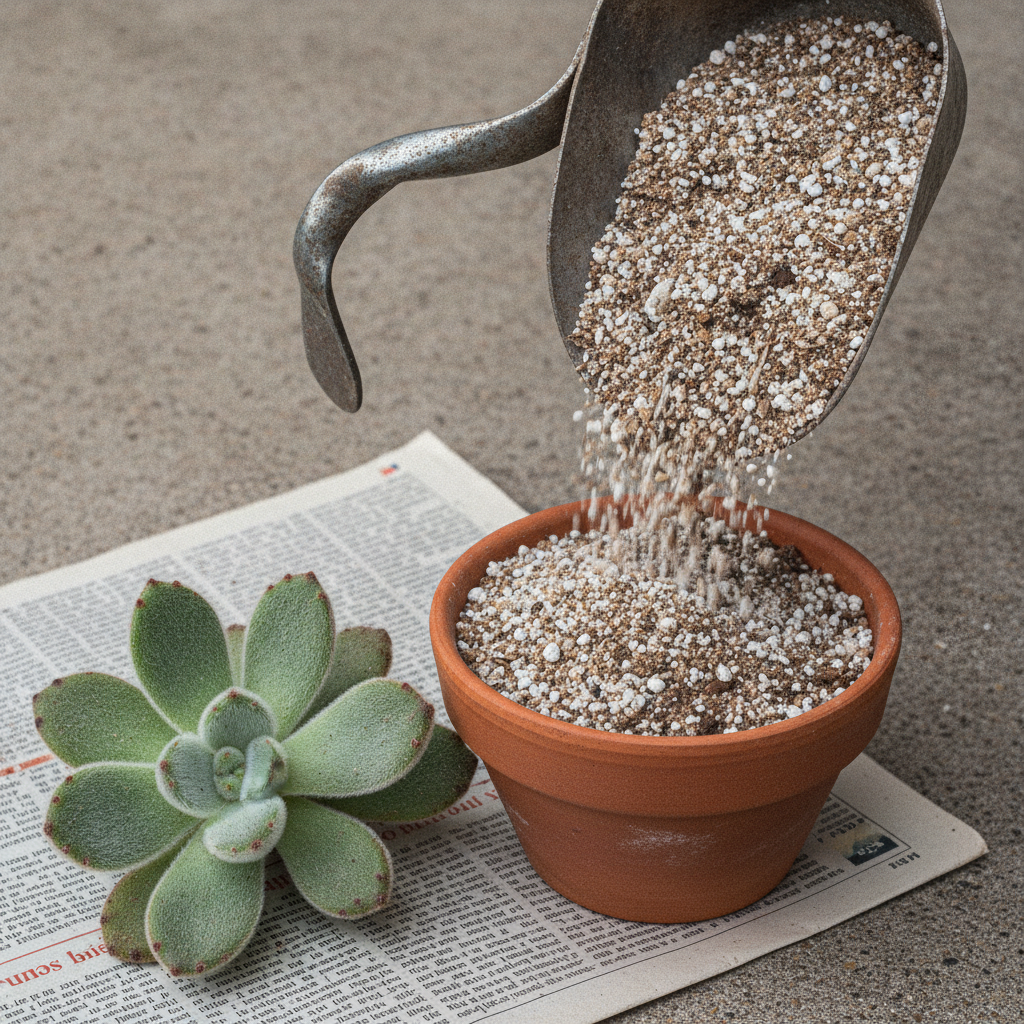
Ideal Soil Composition
Aim for a mix that is sharp, open and low in organic matter, one that holds a little moisture briefly and then lets the rest run straight through. A good starting point is a proprietary cactus and succulent compost cut with extra mineral grit so that at least half the volume is inorganic. The goal is a medium that never stays soggy and dries out within a few days of watering.
| Component | Proportion | Function |
|---|---|---|
| Cactus or succulent compost | 50 per cent | Base structure and light nutrition |
| Pumice or perlite | 30 per cent | Aeration and fast drainage |
| Coarse sand or fine grit | 20 per cent | Sharp drainage and weight for stability |
In terms of chemistry, the plant is easy-going and thrives across a slightly acidic to neutral range of about pH 6.0 to 7.0, which most commercial succulent mixes already provide. There is no need to test or adjust pH for a plant grown in a good gritty medium.
Pro Tip — Quick Mix Recipe: For a reliable blend, combine two handfuls of cactus compost with one handful of pumice and one handful of coarse horticultural grit. If you can crush a moist ball of it in your fist and it falls apart rather than holding together, the drainage is about right.
Choosing the Right Pot
Pot choice has an outsized effect on a plant this sensitive to excess moisture. The right container works with your gritty mix to keep the roots on the dry side of comfortable.
Drainage holes are non-negotiable. Never plant a panda ears succulent in a pot without a drainage hole. Without an exit for excess water, even the grittiest mix becomes a reservoir and root rot is only a matter of time. If you love a decorative cachepot, keep the plant in a plain nursery pot and slip it inside.
Pot material: Unglazed terracotta is ideal, because the porous clay wicks moisture out of the soil and helps it dry evenly, buying you a margin of error on watering. Glazed ceramic and plastic both hold moisture longer, so if you use them, lean even harder on the grittiness of your mix and water more cautiously.
Pot size: Choose a snug pot only slightly larger than the root ball. An oversized pot holds a large volume of damp soil the small root system cannot use, which stays wet and invites rot. This is a plant that genuinely prefers to be a little cramped.
When to Repot
Panda ears succulents are slow growers with modest roots and need repotting only every two to three years, or when you see roots emerging from the drainage holes and the plant clearly filling its pot. Spring, at the start of active growth, is the best time. It is also wise to refresh the mix at this interval even if the pot size does not change, since old succulent compost breaks down, compacts and holds more water than it should.
How to Repot: Step-by-Step
- Water lightly a couple of days beforehand so the root ball holds together, then let it drain.
- Ease the plant out by tipping the pot and supporting the base of the stems, handling the brittle leaves as little as possible.
- Gently tease away the old soil and inspect the roots, trimming any that are black, mushy or dead with clean scissors.
- Choose a pot only one size up with a drainage hole, and add a layer of fresh gritty mix.
- Position the plant at the same depth it sat before and fill around the roots with mix, firming lightly.
- Leave the plant dry and unwatered for five to seven days so any damaged roots can heal.
- Resume normal watering, and keep the freshly potted plant out of harsh midday sun for a week.
Warning — Transplant Shock: Watering immediately after repotting is a common mistake. Freshly cut or disturbed roots are an open door for rot when they sit in damp soil. The dry rest period of a few days lets those wounds callus over first, which dramatically lowers the risk of losing the plant.
Fertilising
The panda ears succulent is a light feeder that evolved on lean, mineral soils, so its fertiliser needs are modest and easy to overdo. A little feeding during the growing season supports steady growth and good leaf colour, but this is a plant that suffers far more from too much fertiliser than from too little.
Think of feeding as a gentle top-up rather than a regular meal. In poor soil the plant would grow slowly and stay tough and compact, and that is exactly the look most growers want. Over-fed plants, by contrast, become soft, leggy and more prone to pests and rot.
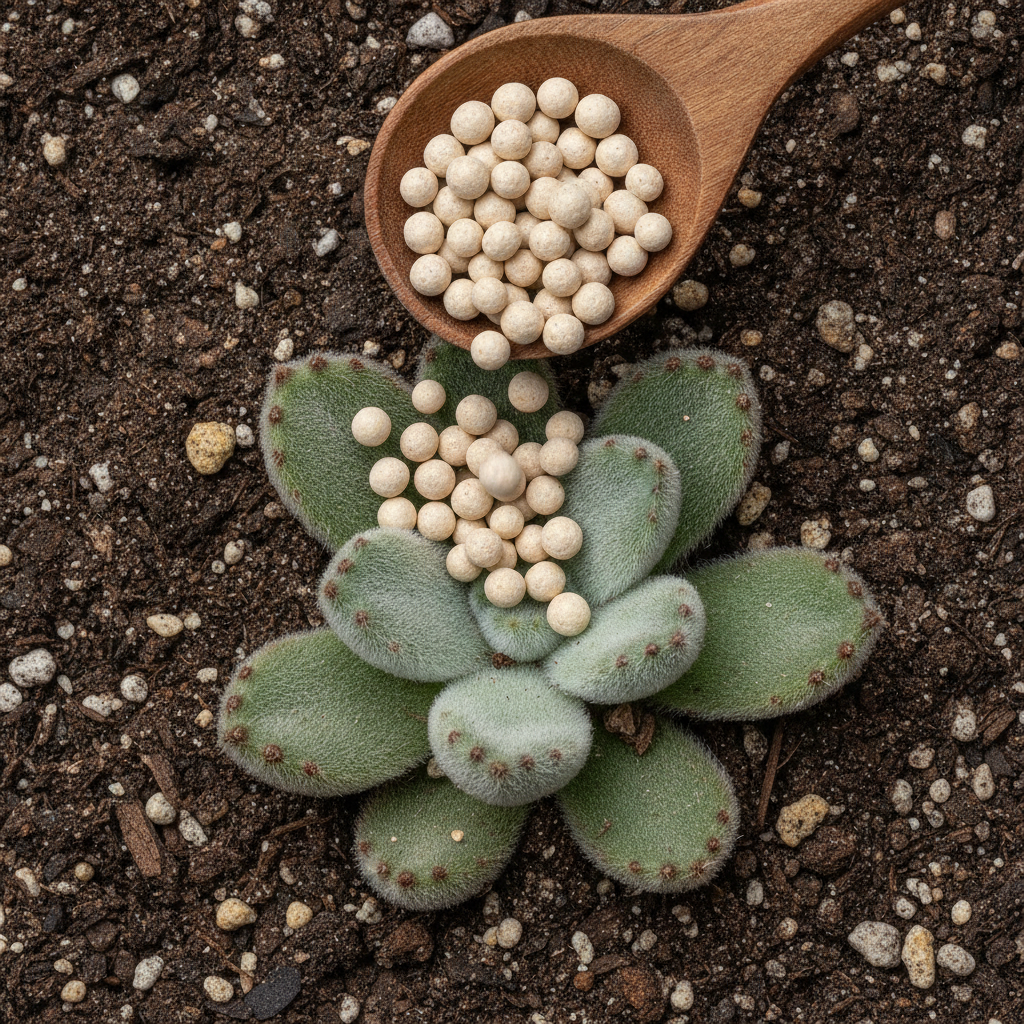
Understanding Plant Nutrients
Fertilisers are labelled with an NPK ratio giving the percentages of nitrogen, phosphorus and potassium, the three nutrients plants use in the largest amounts. For succulents like this one, a formula that is low in nitrogen relative to the others is preferable, because excess nitrogen drives the fast, soft, watery growth that spoils a compact succulent. The table below outlines the key nutrients and what their shortage looks like.
| Nutrient | Symbol | Primary Function | Deficiency Symptoms |
|---|---|---|---|
| Nitrogen | N | Leaf and stem growth | Pale, slow growth and older leaves yellowing |
| Phosphorus | P | Root development and flowering | Weak roots and poor flowering |
| Potassium | K | Overall vigour and stress tolerance | Weak stems and browning leaf edges |
| Calcium | Ca | Cell wall strength | Distorted or stunted new growth |
| Magnesium | Mg | Chlorophyll production | Yellowing between the leaf veins |
| Iron | Fe | Chlorophyll and enzyme function | Yellowing new leaves with green veins |
Types of Fertiliser
Liquid fertilisers: The easiest option for this plant, giving you full control over strength and timing. A balanced or low-nitrogen succulent feed diluted to half or quarter strength and applied with a normal watering during the growing season is all it needs.
Slow-release granular: A few coated prills scattered on the soil in spring will feed the plant gradually through the season with almost no effort. Use a light hand and the low end of the recommended dose, as it is easy to over-apply to such a small plant.
Organic fertilisers: Gentle options such as heavily diluted worm-casting tea work well and are hard to overdose. They release nutrients slowly and suit the plant’s preference for a lean, steady supply rather than a sudden feast.
Feeding Schedule
Feed only during the active growing months of spring and summer, roughly once a month, and stop entirely in autumn and winter when the plant is resting. A dormant succulent cannot use the nutrients, and fertiliser salts simply accumulate in the soil where they can burn the roots. When in doubt, feed less often rather than more.
Pro Tip — Dilute and Water First: Always apply liquid feed to already-moist soil, never to a bone-dry root ball, and mix it weaker than the label suggests. Fertiliser hitting dry roots at full strength is a fast route to chemical burn, and this plant needs far less than a leafy tropical would.
How to Fertilise
- Confirm the plant is in active growth, during spring or summer.
- Water lightly first if the soil is completely dry, so the roots are moist before feeding.
- Mix a succulent fertiliser to half or quarter of the recommended strength.
- Apply it to the soil in place of a normal watering, keeping it off the leaves.
- Flush the pot with plain water every couple of months to wash out any built-up salts.
Warning — Salt Build-Up: White crusting on the soil or pot rim and brown, scorched leaf tips are classic signs of fertiliser salts accumulating. If you see them, stop feeding and flush the pot thoroughly with plenty of plain water, letting it run out of the drainage holes to carry the excess away.
Propagation
One of the quiet pleasures of the panda ears succulent is how readily it multiplies. A single plant provides a steady supply of cuttings, and turning a leggy or overgrown specimen into several tidy young plants is both easy and satisfying. The most dependable route is stem cuttings, with leaf cuttings as a slower, more hit-and-miss backup.
The best time to propagate is spring or early summer, when the plant is growing actively and cuttings root fastest. Taking cuttings is also the perfect way to rescue a plant that has stretched in low light or begun to rot at the base, since you can simply start fresh from the healthy top growth.
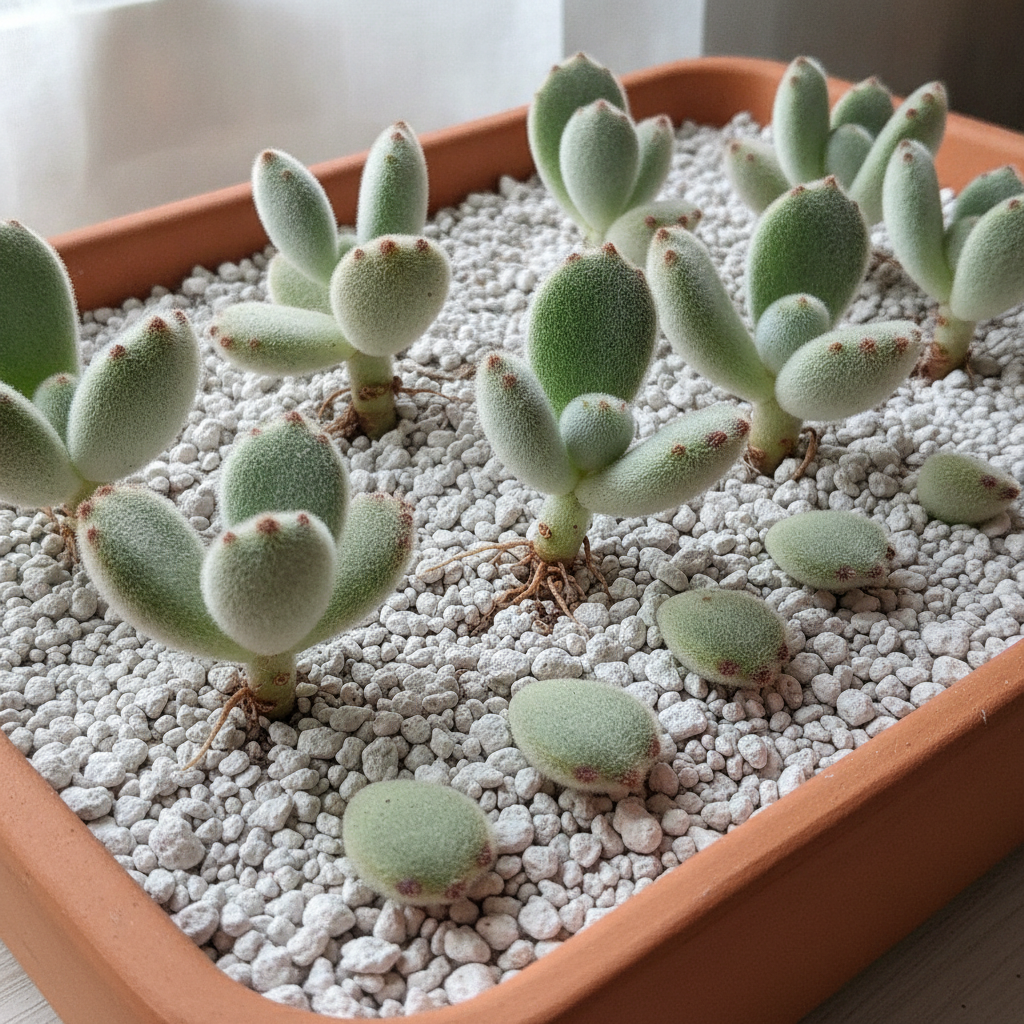
Understanding Calluses and Nodes
Success with succulent cuttings hinges on one idea: the cut surface must dry and seal, forming a protective callus, before it ever touches damp soil. A fresh, moist wound placed straight into wet mix simply rots. New roots then emerge from the callused base of a stem cutting or from the base of a leaf. Because this plant’s tissue is water-rich, patience during the callusing stage matters more than any rooting hormone.
Stem Cuttings: Step-by-Step
Stem cuttings are by far the most reliable method and the one to reach for first. A healthy shoot tip a few centimetres long will usually root within two to three weeks.
- Using clean, sharp scissors, cut a healthy stem tip 5 to 8 centimetres (2 to 3 inches) long.
- Gently remove the lowest one or two pairs of leaves to expose a short length of bare stem.
- Set the cutting aside in a dry, shaded spot for three to five days until the cut end calluses over.
- Insert the callused end into slightly moist gritty succulent mix or a tray of dry perlite.
- Place it in bright, indirect light and keep it warm, out of scorching direct sun.
- Wait about a week after you see new growth before watering lightly, then water sparingly as roots establish.
Pro Tip — Test for Roots: After a couple of weeks, give the cutting the gentlest tug. If it resists, roots have formed and you can begin normal care. If it lifts freely, set it back and wait longer before watering, since watering an unrooted cutting is the quickest way to rot it.
Leaf Cuttings: Step-by-Step
Leaf cuttings are less reliable for Cotyledon tomentosa than for many other succulents, but they are worth trying with the leaves you inevitably knock off while handling the plant. Expect a lower success rate and be patient.
- Gently twist off a whole, healthy leaf so it comes away cleanly with its base intact.
- Lay the leaf on a dry surface out of direct sun for two to three days to callus.
- Rest the callused leaf on top of, or just barely into, a tray of gritty mix.
- Keep it in bright, indirect light and mist the soil only very lightly every few days.
- Watch for tiny roots and a miniature rosette at the leaf base over the following weeks, then pot up once established.
Troubleshooting Propagation
| Problem | Likely Cause | Solution |
|---|---|---|
| Cutting turns mushy and black | Planted before callusing, or kept too wet | Allow a longer dry callus and water far more sparingly |
| Cutting shrivels and dries up | No roots formed and moisture ran out | Mist the soil lightly and ensure warmth and bright light |
| No roots after many weeks | Too cold or too dim to trigger growth | Move somewhere warmer and brighter and be patient |
| Leaf cutting fails to sprout | Leaf base damaged, or the method’s low odds | Take clean whole leaves and try several at once |
Pests & Diseases
A healthy, well-lit panda ears succulent in gritty soil is relatively pest-resistant, but its fuzzy leaves offer sheltered nooks where a few insects like to hide, and its intolerance of excess water makes fungal rots its most serious threat. Most problems trace back either to a pest that slipped in on a new plant or to conditions that are too damp.
Regular inspection is your best defence. Because the dense hairs can conceal early infestations, get into the habit of examining the leaf axils and undersides every week or two, ideally with a magnifier, and treat any trouble the moment you spot it rather than waiting for it to spread.
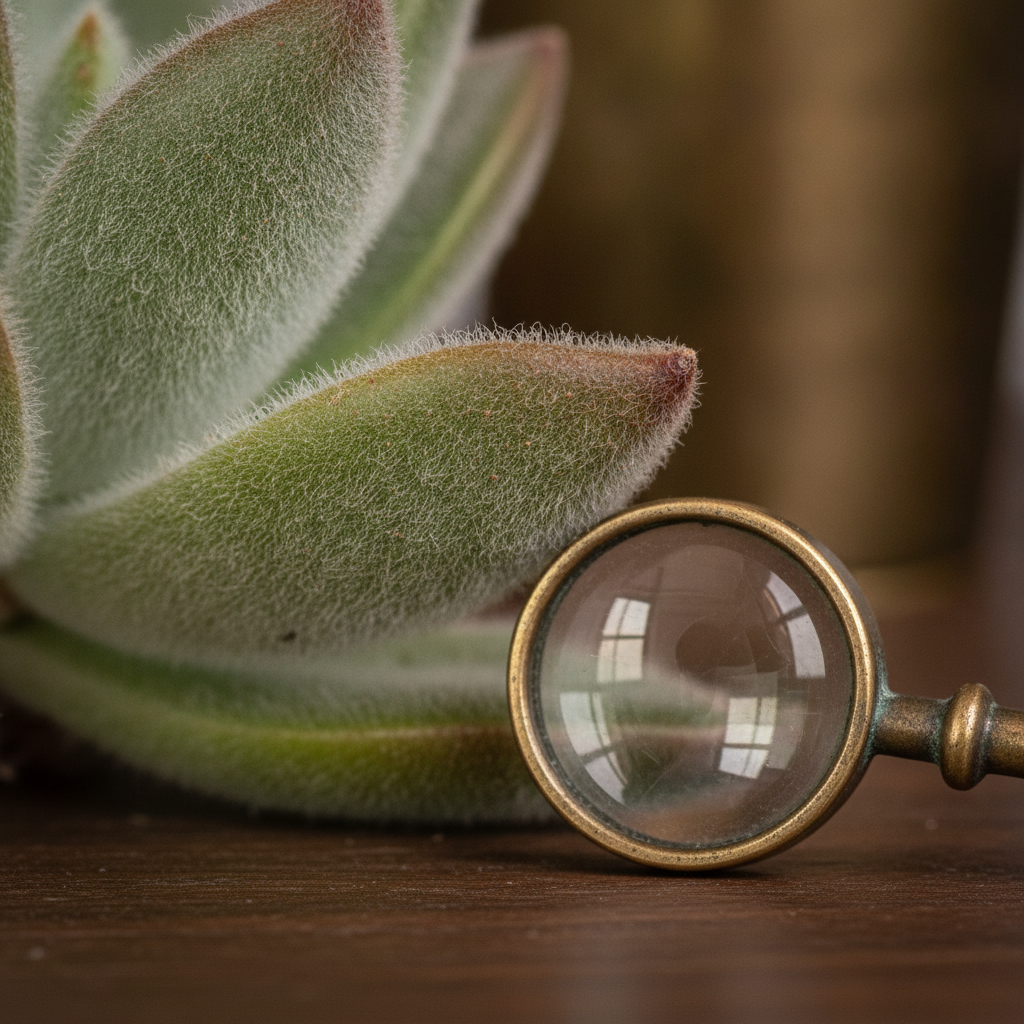
Common Pests
Mealybugs (Pseudococcus species)
Mealybugs are the number one pest of this plant and can be maddening, because their white, cottony bodies blend perfectly into the leaf fuzz and tuck themselves into the axils where leaves meet stems. They suck sap, weakening the plant and leaving sticky honeydew behind.
Treatment: Dab each insect directly with a cotton bud soaked in 70 per cent isopropyl alcohol, which kills them on contact. For wider infestations, follow up with a systemic succulent insecticide, and isolate the plant until you have gone two weeks without seeing a single bug.
Aphids (Aphidoidea)
Aphids are most likely to appear on tender new growth and especially on flower stalks, clustering in soft green or black colonies and distorting the parts they feed on. They multiply quickly if ignored.
Treatment: A firm rinse under a tap knocks most of them off, though keep the fuzzy leaves as dry as you can and let the plant dry fully afterward. Repeat treatment with insecticidal soap or a light neem-oil spray until the colonies are gone.
Spider Mites (Tetranychus urticae)
These tiny arachnids thrive in hot, dry, stagnant air and are hard to see, revealing themselves through fine webbing between leaves and a stippled, dull look to the foliage. They are less common on this succulent than on thin-leaved plants but can still appear.
Treatment: Improve air circulation, wipe down affected areas, and apply a miticide or neem oil at regular intervals. Because mites breed fast, repeat treatments every week or so until no new webbing appears.
Common Diseases
Root and Stem Rot (Pythium and Fusarium)
By far the most dangerous problem this plant faces, rot sets in when soil stays wet for too long. It shows as soft, brown or blackened tissue at the base, mushy leaves and a plant that collapses seemingly overnight. By the time it is obvious above ground, the roots are usually already lost.
Treatment: Act immediately. Unpot the plant, cut away every trace of soft, discoloured tissue back to firm healthy growth, and let the remaining piece callus for a day or two before replanting in fresh dry mix, or restart from clean top cuttings. Prevention through gritty soil and restrained watering is far easier than cure.
Fungal Leaf Spot (Botrytis and others)
Damp, still conditions and water trapped in the leaf fuzz can lead to brown or black spots on the foliage, sometimes with a fuzzy grey mould in severe cases. Poor airflow makes it worse.
Treatment: Remove affected leaves, improve ventilation, and keep water off the foliage entirely by switching to bottom watering. A copper-based or general fungicide can help in stubborn cases, but better airflow and dry leaves usually solve it.
Pest and Disease Summary
| Pest / Disease | Identification | Treatment |
|---|---|---|
| Mealybugs | White cottony tufts in leaf axils and fuzz | Alcohol dab, systemic insecticide, isolate |
| Aphids | Clusters on new growth and flower stalks | Rinse off, insecticidal soap or neem oil |
| Spider mites | Fine webbing and stippled, dull leaves | Better airflow, miticide or neem, repeat |
| Root and stem rot | Soft brown or black mushy base | Cut away rot, re-root clean cuttings, dry mix |
| Fungal leaf spot | Brown or black spots, occasional grey mould | Remove leaves, improve airflow, bottom water |
Prevention Strategies
The vast majority of problems are prevented by getting the basics right: bright light, a gritty free-draining mix, careful watering that keeps both soil and leaves from staying wet, and good air movement. A plant grown this way is vigorous enough to fend off most pests and simply never gives rot the damp conditions it needs.
Quarantine is the other habit worth keeping. Isolate every new plant for a couple of weeks before it joins your collection, and inspect it closely first, since mealybugs in particular usually arrive as hitchhikers on a newly bought succulent rather than appearing from nowhere.
Pro Tip — Alcohol Spot-Check: Keep a small bottle of isopropyl alcohol and a pack of cotton buds near your plants. Catching one or two mealybugs early and dabbing them on sight is far less work than tackling a full infestation buried in the leaf fuzz weeks later.
Popular Varieties
While the plain green species is the one most people picture, Cotyledon tomentosa comes in a small handful of forms that vary in leaf colour, variegation and the shape of their teeth. All share the same fuzzy leaves and identical care needs, so choosing between them is purely a matter of looks and availability.
It is worth noting that the wider Cotyledon genus contains close relatives sometimes sold under overlapping common names, such as the felted Cotyledon orbiculata. The forms below, however, are all true bear paws, cultivars and subspecies of tomentosa itself.
| Variety | Leaf Appearance | Light Needs | Growth Rate | Availability |
|---|---|---|---|---|
| Green Bear Paw (species) | Chunky fuzzy sage-green leaves, red teeth | Very bright, direct sun | Slow | Common |
| Variegated Bear Paw (‘Variegata’) | Cream, yellow and green marbling, red tips | Bright, avoid harsh midday sun | Slower | Uncommon |
| subsp. ladismithiensis | Narrower, finger-like leaves, fewer teeth | Very bright, direct sun | Slow | Occasional |
| ‘Chocolate Soldier’ | Green leaves with pronounced dark brown tips | Very bright, direct sun | Slow | Occasional |
Featured Varieties
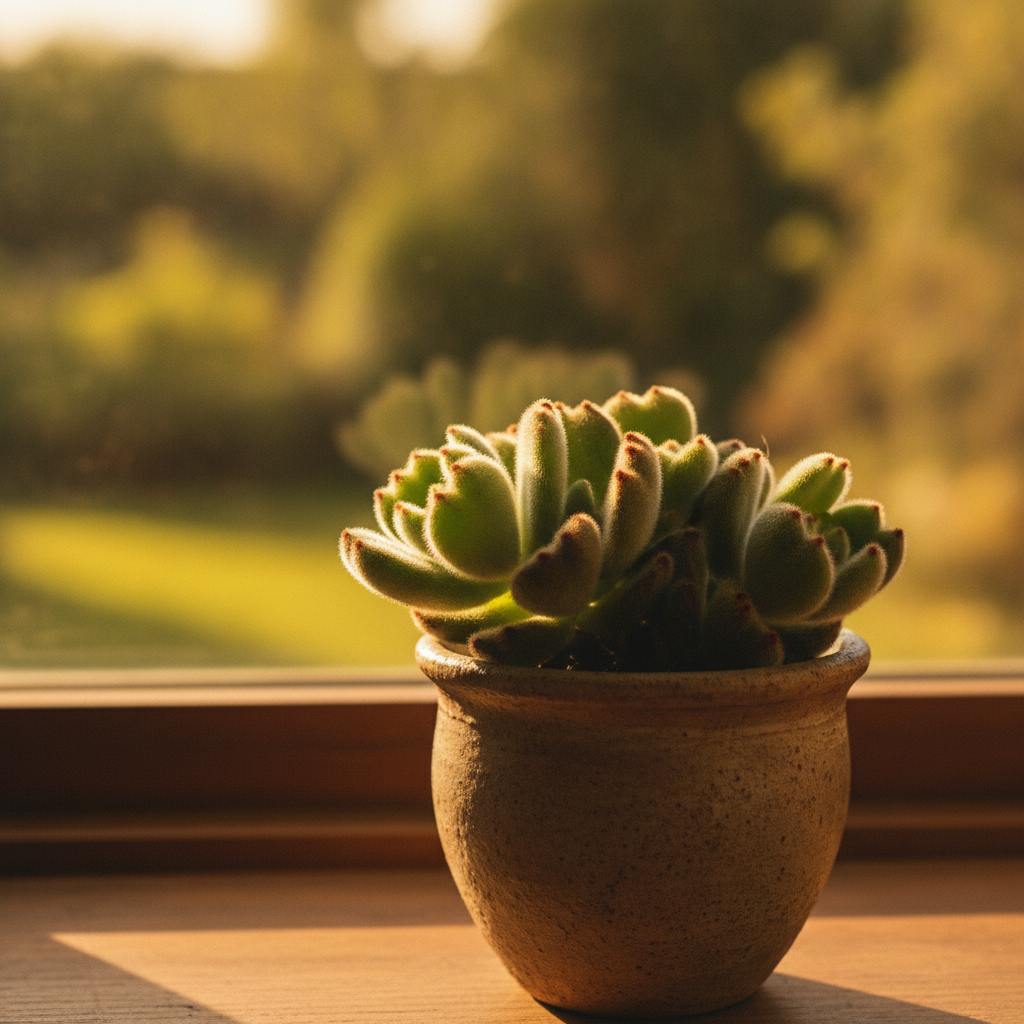
Green Bear Paw
The classic species form and the one that started it all: plump, silvery sage-green leaves in tight clusters, each crowned with a fan of dark reddish-brown claws that deepen in strong sun. It is the easiest and most widely sold of the bunch.
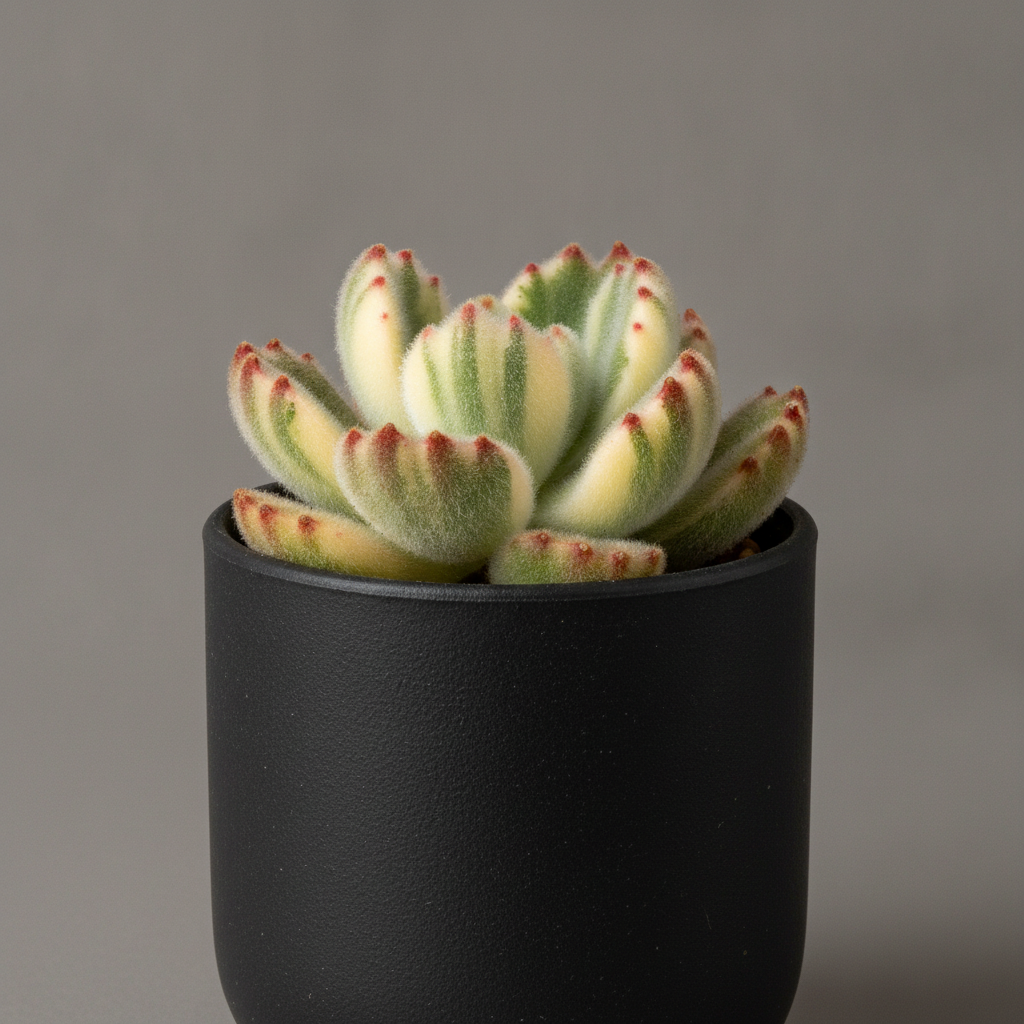
Variegated Bear Paw
A striking sport with the same fuzzy paws marbled in cream, pale yellow and green, still tipped with red teeth. The reduced chlorophyll makes it grow a little slower and prefer slightly gentler light, and its rarity means it commands a premium.
Variety Profiles in Detail
Green Bear Paw (Cotyledon tomentosa)
The straight species is the benchmark: dense, bushy and endlessly appealing, with the best red claw colour of the group when grown hard in full sun. If you want a single, foolproof bear paw, this is it. It also propagates most reliably from cuttings, making it the ideal choice for anyone hoping to build up a collection or share plants with friends.
Variegated Bear Paw (Cotyledon tomentosa ‘Variegata’)
The collector’s pick, prized for the creamy marbling that no two leaves share. Because the pale sections carry less chlorophyll, it is a touch more delicate: it grows slowly, scorches a little more easily in fierce sun and can occasionally throw a fully green or fully pale shoot that is best pruned to keep the variegation balanced. Given bright but not brutal light, it is just as rewarding as the species.
Finger Bear Paw (Cotyledon tomentosa subsp. ladismithiensis)
A distinct subspecies with longer, narrower, more finger-like leaves that carry only a few teeth at the very tip, giving it a looser, shaggier look than the classic paw. Care is identical to the species, and it makes an interesting companion for anyone who already grows the standard form and wants a subtle variation on the theme.
Choosing the Right Variety for Your Space
For a first bear paw, or for the brightest, sunniest windowsill you have, the green species is the obvious and most rewarding choice. If you have a slightly softer light or simply love unusual foliage, the variegated form brings extra colour at the cost of a little more care, while the finger-leaved subspecies appeals to collectors chasing every variation. Whichever you pick, the care is essentially the same, so let looks and availability lead the decision.
Frequently Asked Questions
Why is my panda ears succulent dropping its leaves?
Sudden leaf drop, where plump leaves fall at the lightest touch, is almost always a sign of overwatering. When the roots sit in wet soil they cannot function properly and the plant sheds leaves. Let the soil dry out completely, check the base for any soft rot, and review your watering routine. Occasional loss of the oldest lower leaves, by contrast, is normal ageing and nothing to worry about.
Can I mist my bear paw succulent to raise humidity?
No, misting is one of the worst things you can do to this plant. It prefers dry air, and water trapped in the fuzzy leaves invites fungal spotting and rot. Skip the mister entirely and water only the soil, ideally from below.
Why are the red tips on my plant fading to green?
The red claw-tips are produced by strong light, so fading to plain green almost always means the plant is not getting enough sun. Move it to your brightest window with several hours of direct light, and the colour should return to new growth. Fading tips often go hand in hand with the leaves stretching and spacing out, another light-shortage symptom.
How often should I water a panda ears succulent?
There is no fixed schedule. Water only when the soil has dried out completely, which might mean every 10 to 14 days in warm, bright summer conditions and as little as once a month in winter. Always let the plant and the soil, rather than the calendar, tell you when it is thirsty. Soft or slightly wrinkled leaves are your cue.
Is the panda ears succulent toxic to cats and dogs?
Yes. All Cotyledon species contain cardiac glycosides that are toxic to cats, dogs and other animals, as well as to humans, if the leaves or stems are eaten. Symptoms can include vomiting, drooling and an irregular heartbeat. Keep the plant out of reach of pets and children, and contact a vet or doctor promptly if ingestion is suspected.
Why is my bear paw growing tall and leggy?
Leggy, stretched growth with long gaps between leaves is called etiolation, and it is caused by insufficient light. The plant is reaching for a brighter source. You cannot reverse the stretch on existing stems, but moving it into strong light stops further stretching, and you can prune back the leggy growth and root the tips as compact new plants.
Does the panda ears succulent flower indoors?
It can. A mature, healthy plant in strong light may produce slender stalks of pendant, bell-shaped flowers in orange to red, usually in late winter or spring. Flowering is not guaranteed indoors and depends heavily on the plant receiving enough light through the year, so treat any blooms as a welcome bonus rather than an expectation.
What is the best soil for a bear paw succulent?
A gritty, fast-draining mix is essential. Use a cactus and succulent compost amended with plenty of pumice, perlite or coarse grit so that roughly half the volume is mineral. This lets water drain away quickly and the mix dry out fully between waterings, which is exactly what the plant needs to avoid rot. Always pair it with a pot that has a drainage hole.
How do I keep my panda ears succulent compact and bushy?
Compactness comes down to light above all else: give it the brightest spot you can, with direct sun, and it will naturally stay tight and dense. Beyond that, avoid overfeeding, which pushes soft leggy growth, and pinch or prune the occasional wayward stem to encourage branching. The cuttings you remove can be rooted to fill out the pot or start new plants.






