
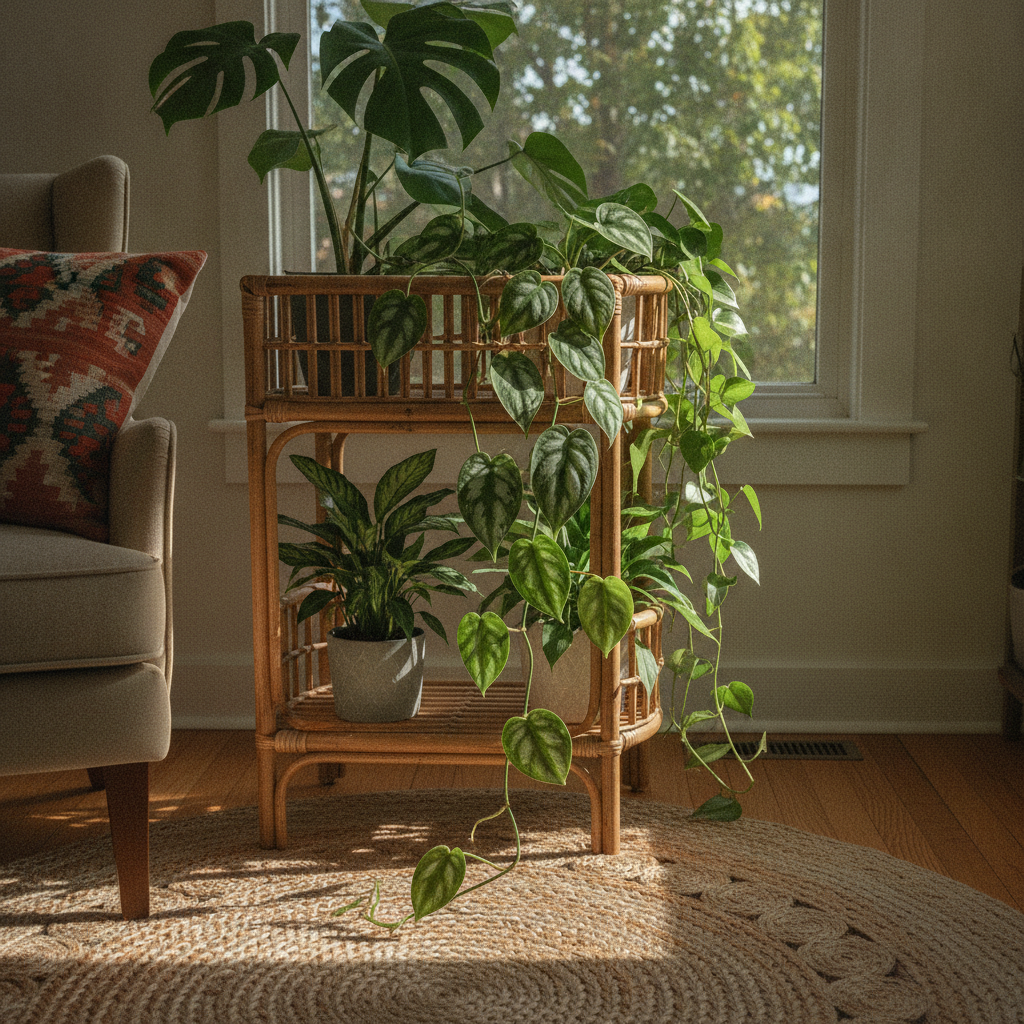
Few houseplants manage to look both rugged and jewel-like at the same time, but the Silver Philodendron pulls it off. Known botanically as Philodendron brandtianum, it carries broad, heart-shaped leaves in deep olive-green, each one overlaid with sweeping bands and blotches of metallic silver that catch the light as the plant trails or climbs. It belongs to the vast aroid family and hails from the warm, humid forests of the Amazon basin across Brazil, Bolivia and Peru, where it scrambles up tree trunks using clinging aerial roots. Among collectors it is sometimes simply called the Brandi plant or silver leaf philodendron, a nod to the feature that sells it on sight.
Part of the appeal is that this is a forgiving plant wearing an exotic costume. It asks for little more than a heartleaf philodendron or a pothos, yet it reads as something far rarer on a shelf. That gap between reputation and reality is exactly what this guide sets out to close. Keeping a Silver Philodendron merely alive is easy, but coaxing it to produce large, densely silvered leaves on strong, full stems takes a handful of deliberate choices around light, water, soil and feeding. Everything below is organised so you can find the difference between a plant that survives and one that genuinely thrives.
Contents
- Quick Reference
- Why Silver Philodendron Makes an Excellent Houseplant
- Light Requirements
- Watering & Humidity
- Soil, Potting & Repotting
- Fertilising
- Propagation
- Pests & Diseases
- Popular Varieties
- Frequently Asked Questions
Quick Reference: Silver Philodendron at a Glance
| Light | Bright, indirect light; tolerates medium light but silver fades in deep shade |
| Watering | When the top 2 to 3 cm (1 in) of mix dries; roughly weekly in growth, less in winter |
| Temperature | 18 to 27 degrees C (64 to 81 degrees F); avoid below 13 degrees C (55 degrees F) |
| Humidity | Prefers 60 percent or more; tolerates average household levels of 40 to 50 percent |
| Fertiliser | Balanced liquid feed at half strength every 4 to 6 weeks in spring and summer |
| Toxicity | Toxic to cats, dogs and humans if chewed or swallowed (calcium oxalate crystals) |
Why Silver Philodendron Makes an Excellent Houseplant
The strongest argument for the Silver Philodendron is the rare combination of high visual interest with genuinely low maintenance. Most plants that look this striking, the velvet anthuriums, the patterned alocasias, the fussier calatheas, demand exacting humidity and punish the slightest lapse. Philodendron brandtianum instead inherits the easygoing constitution of the wider philodendron clan. It copes with the dry air of a centrally heated room, forgives an occasional missed watering, and grows steadily through the warmer months without any special equipment. For someone who wants a collector-grade look without a collector-grade workload, it is close to ideal.
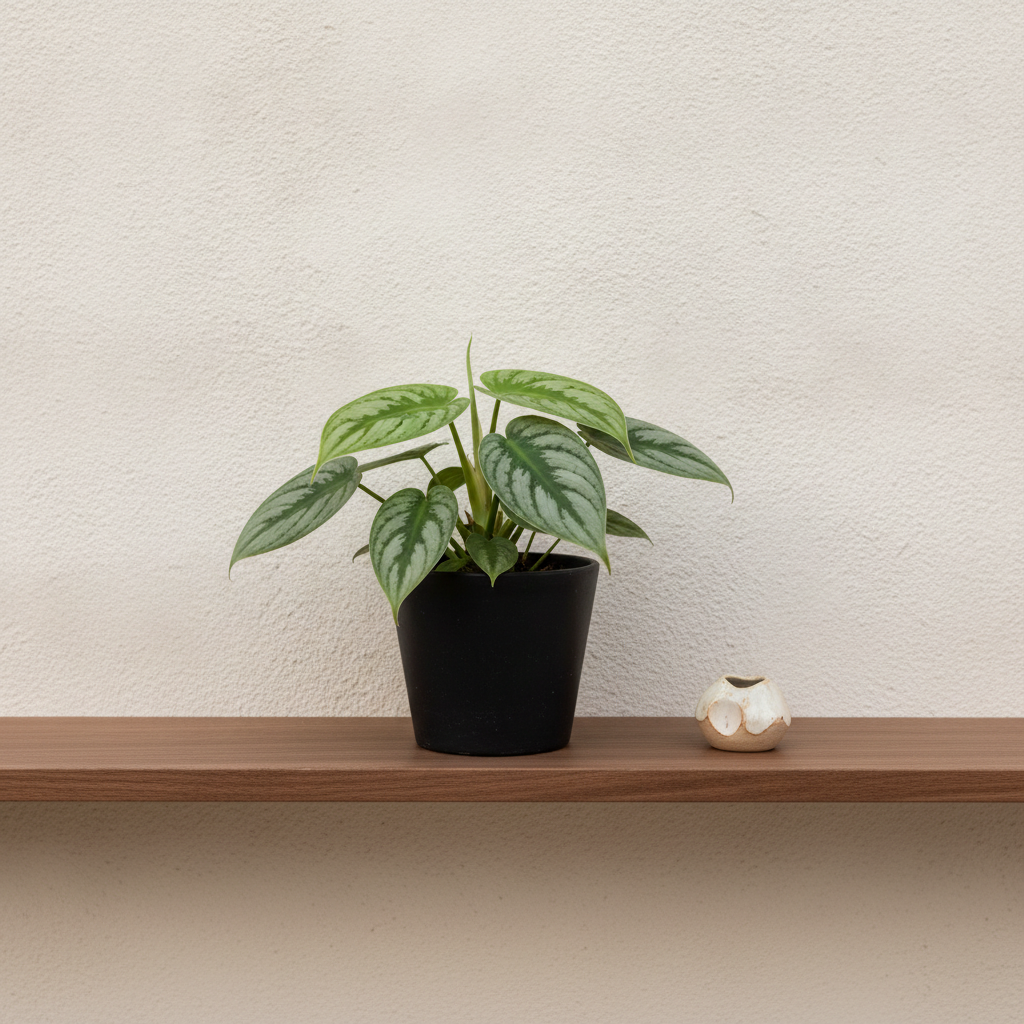
Its growth habit adds to the flexibility. As a climber it can be trained up a moss pole or trellis, where the leaves enlarge and the silver banding grows bolder, giving you an architectural statement piece. Left to trail from a shelf or hanging pot, it produces longer, more delicate stems with smaller leaves and a softer, cascading effect. The same plant can therefore suit a minimalist alcove or a layered, jungly corner depending on how you stage it. Add to that its modest size, its tolerance of medium light, and its willingness to be propagated almost endlessly from cuttings, and it earns its place as a plant that grows with you rather than testing you.
Important — Toxicity: Like all philodendrons, Philodendron brandtianum contains insoluble calcium oxalate crystals in every part of the plant. Chewing or swallowing leaves or stems can cause intense burning of the mouth, drooling, swelling and vomiting in cats, dogs and humans. Keep it well out of reach of curious pets and small children, and wash your hands after taking cuttings.
Light Requirements
Light is the single biggest lever you have over how this plant looks. In its native forest, Philodendron brandtianum grows in dappled shade beneath the canopy, receiving bright but filtered light rather than full sun. Indoors, the goal is to recreate that: plenty of brightness, but diffused rather than direct. Get this right and the leaves stay large, the stems stay compact, and the silver patterning develops to its fullest.
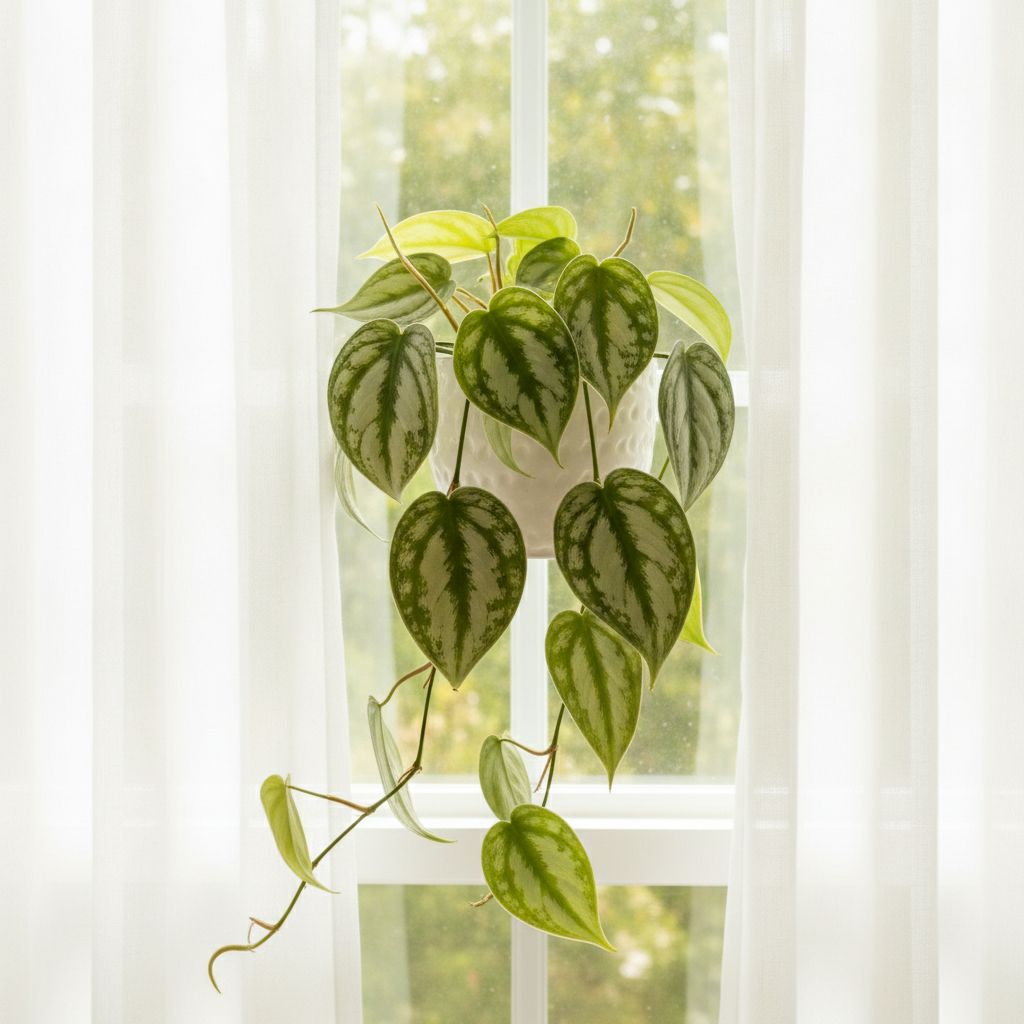
The ideal spot is a position that receives bright, indirect light for most of the day, such as a metre or two back from a south or west window, or directly beside a gentler east-facing one. Here the plant has enough energy to push out healthy new growth while the foliage remains protected from the harsh midday rays that would scorch it. If you can read a book comfortably by daylight in that spot without a lamp, your Silver Philodendron will usually be content there too.
Light Levels Explained
Plant light is easier to judge once you attach rough figures to the categories people throw around. The table below maps the common terms to approximate light levels and to the result you can expect from a Silver Philodendron in each.
| Light Category | Approx. Level | Typical Location | Outcome |
|---|---|---|---|
| Direct sun | 20,000 lux and above | On an unshaded south sill | Bleached, scorched leaves; silver burns out |
| Bright indirect | 10,000 to 20,000 lux | Near a curtained south or west window | Best growth, largest leaves, strongest silver |
| Medium | 5,000 to 10,000 lux | A metre or two into the room | Good, steady growth; slightly smaller leaves |
| Low | 1,000 to 5,000 lux | North window or dim corner | Slow, leggy growth; muted silver |
| Very low | Under 1,000 lux | Interior wall, no nearby window | Decline over time; not recommended |
Window Orientation and Placement
South-facing window: The brightest option in the northern hemisphere and a strong choice, provided you diffuse the light. Set the plant a little back from the glass or hang a sheer curtain so the direct beam never lands on the leaves during the middle of the day.
East-facing window: Often the easiest position of all. The plant catches gentle, cool morning sun and then sits in bright shade for the rest of the day, which suits its forest-floor preferences almost perfectly with no curtain required.
West-facing window: Workable, but the afternoon sun here is stronger and warmer than the morning equivalent. Pull the plant back from the glass or filter the light so the hottest hours do not bleach the foliage.
North-facing window: Tolerable rather than ideal. A Silver Philodendron will survive on a north sill but tends to grow slowly and stretch toward the light, with the silver patterning looking flatter. A grow light makes a real difference in this position.
Pro Tip — Rotate for Even Growth: Plants lean toward their light source, and a climbing philodendron will gradually turn one-sided if left untouched. Give the pot a quarter turn each time you water so every stem receives its share and the plant fills out symmetrically.
How Light Affects Silver Patterning
The metallic sheen that gives this plant its name is not a fixed trait; it responds to conditions. In bright, indirect light the leaves develop their broadest, most reflective silver bands and hold a healthy olive base colour. Push the plant into deep shade and new leaves emerge smaller, with the silver appearing duller and the spacing between leaves stretching out as the stems reach for light. Counter-intuitively, very harsh direct sun is just as damaging in the other direction, washing the colour out and leaving pale, papery patches. The richest silver therefore sits in the comfortable middle ground of strong but filtered light.
Warning — Direct Sunlight: A few hours of unfiltered midday sun can permanently scorch the leaves of Philodendron brandtianum, leaving crispy brown or bleached white patches that never recover. Damaged leaves will not heal, so prevention through shading or distance from the glass is the only cure.
Artificial Lighting
If your home simply lacks a bright enough window, the Silver Philodendron responds well to a full-spectrum LED grow light. A modest panel or bulb positioned 30 to 45 cm (12 to 18 in) above the plant and run for 10 to 12 hours a day will comfortably replace medium daylight and keep growth steady through dark winters. Because this is a compact plant, you do not need a powerful horticultural fixture; a single warm-white LED grow bulb in a nearby lamp is often enough to maintain good colour and prevent the leggy stretching that low light causes.
Seasonal Adjustments
Light shifts noticeably across the year, and your placement should shift with it. In the short, weak days of winter, move the plant closer to its window, or even to a brighter one, to make up for the drop in intensity. When spring returns and the sun climbs higher and stronger, ease the plant back from the glass or reintroduce a curtain so the increasingly direct rays do not catch it. Watching how the new leaves emerge, full-sized and well silvered, or small and stretched, tells you quickly whether your seasonal positioning is right.
Watering & Humidity
Watering is where most Silver Philodendron problems begin, and nearly always from giving too much rather than too little. As an aroid with relatively fine roots, Philodendron brandtianum wants its potting mix to feel consistently moist but never waterlogged. The reliable rhythm is to water thoroughly, let the top portion of the mix dry out, and then water thoroughly again, rather than keeping the soil permanently wet or dribbling small amounts on a fixed schedule.
When to Water
The most trustworthy guide is your finger rather than the calendar. Push it into the mix to the first knuckle: when the top 2 to 3 cm (about 1 in) feels dry, it is time to water. In a bright spot during spring and summer this typically works out to roughly once a week, but pot size, temperature and humidity all shift the interval, so test before you tip.
Growth slows dramatically in autumn and winter, and watering should slow with it. In the cooler months the mix can take two weeks or longer to dry to the same depth, and watering on the old summer schedule is the fastest route to root rot. Always let the plant, not the date, set the pace, and when in doubt, wait an extra day; this species recovers from slight dryness far more readily than from sitting in cold, soggy soil.
Pro Tip — Lift to Learn: Get to know the weight of the pot when freshly watered and again when it is ready for more. After a week or two of lifting it, you will be able to judge whether the plant needs water by heft alone, a quicker and cleaner check than digging into the mix each time.
How to Water Correctly
- Check that the top 2 to 3 cm (1 in) of mix is dry before you start.
- Take the plant to a sink and water slowly across the whole surface with room-temperature water.
- Keep going until water runs freely from the drainage holes, which ensures the entire root ball is moistened.
- Let the pot drain completely for several minutes so no excess remains.
- Empty the saucer or cache pot; never let the plant stand in collected water.
- Return it to its spot only once it has stopped dripping.
Signs of Overwatering vs. Underwatering
| Symptom | Overwatering | Underwatering |
|---|---|---|
| Leaf colour | Yellowing, often several leaves at once | Browning, starting at the tips and edges |
| Leaf texture | Soft, limp and mushy | Dry, crisp and curling inward |
| Soil | Stays wet for days, may smell sour | Bone dry, pulling away from the pot sides |
| Roots | Brown, soft and foul-smelling | Dry and brittle but otherwise pale |
| Stem base | Blackened and soft at the soil line | Firm but the whole plant looks deflated |
Warning — Root Rot: Persistently soggy mix starves the roots of oxygen and invites the fungal and bacterial rots that kill more philodendrons than any pest. If you find brown, mushy, smelly roots, unpot the plant at once, trim away all the damaged tissue with clean scissors, and repot into fresh, airy mix in a clean pot with good drainage.
Humidity Requirements
Coming from humid Amazonian forest, Philodendron brandtianum is happiest when air moisture sits at 60 percent or above, where leaves emerge larger and the silver banding looks at its most vivid. The good news is that it is far more tolerant than its tropical origins suggest and will grow perfectly well at the 40 to 50 percent humidity found in most homes. You only need to intervene if your air runs especially dry, which is common in winter when heating is running.
The signs of air that is too dry are easy to read once you know them: crispy brown leaf edges, new leaves that struggle to unfurl cleanly, and a general loss of lustre in the foliage. These symptoms often appear alongside, and get confused with, underwatering, so check the soil moisture first before concluding humidity is the culprit.
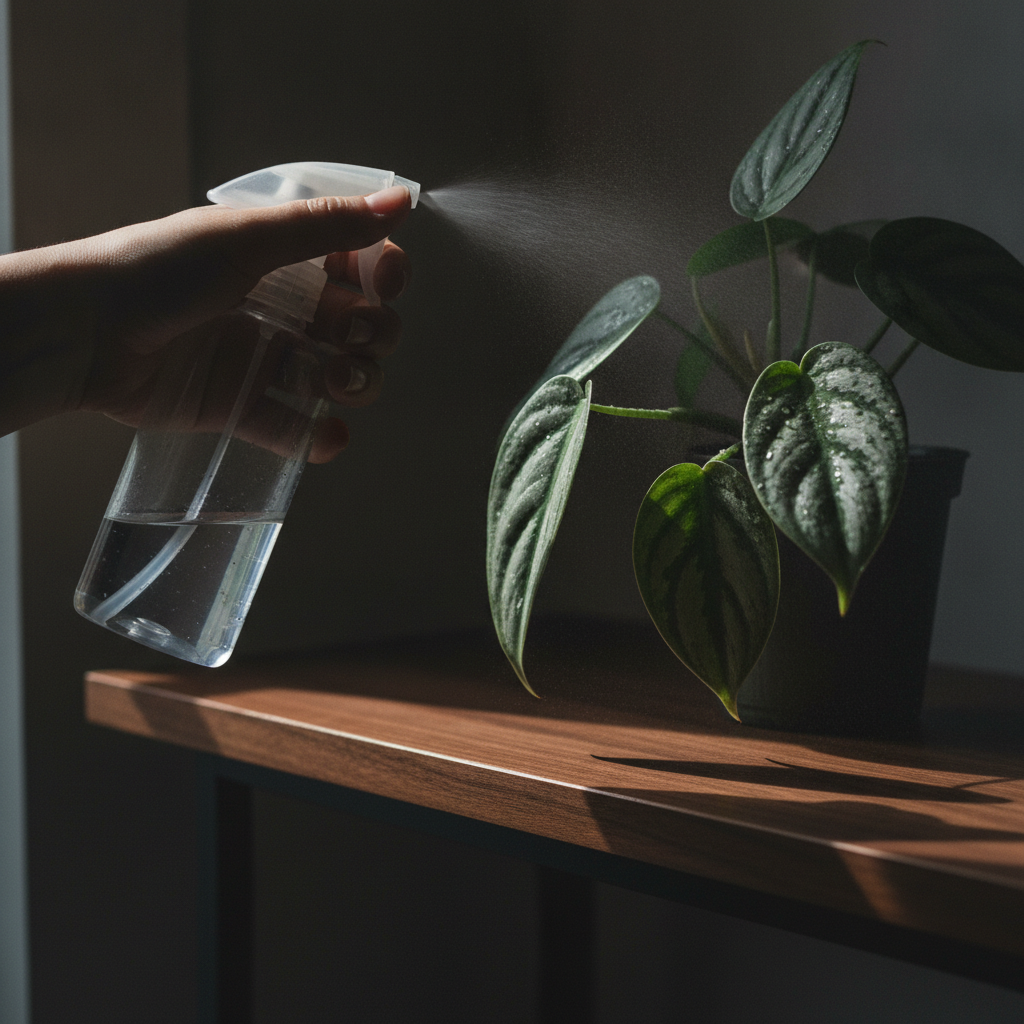
Raising humidity is straightforward. Grouping plants together creates a moister microclimate, while standing the pot on a tray of pebbles topped up with water lifts local humidity without wetting the roots. For a more reliable result, a small room humidifier nearby is the most effective option of all. Misting offers only a brief, fleeting boost and can encourage fungal spots if the foliage stays wet, so treat it as a minor extra rather than a real solution.
Water Quality
Silver Philodendron is not especially fussy about water, but it appreciates a little care. Tap water is generally fine, though in hard-water areas the dissolved minerals can build up over time and contribute to brown leaf tips. If your water is heavily chlorinated, leaving it to stand uncovered overnight allows much of the chlorine to dissipate. Rainwater or filtered water is the gentlest choice if you have it to hand, and always aim for room-temperature water, since cold water straight from the tap can shock the roots.
Soil, Potting & Repotting
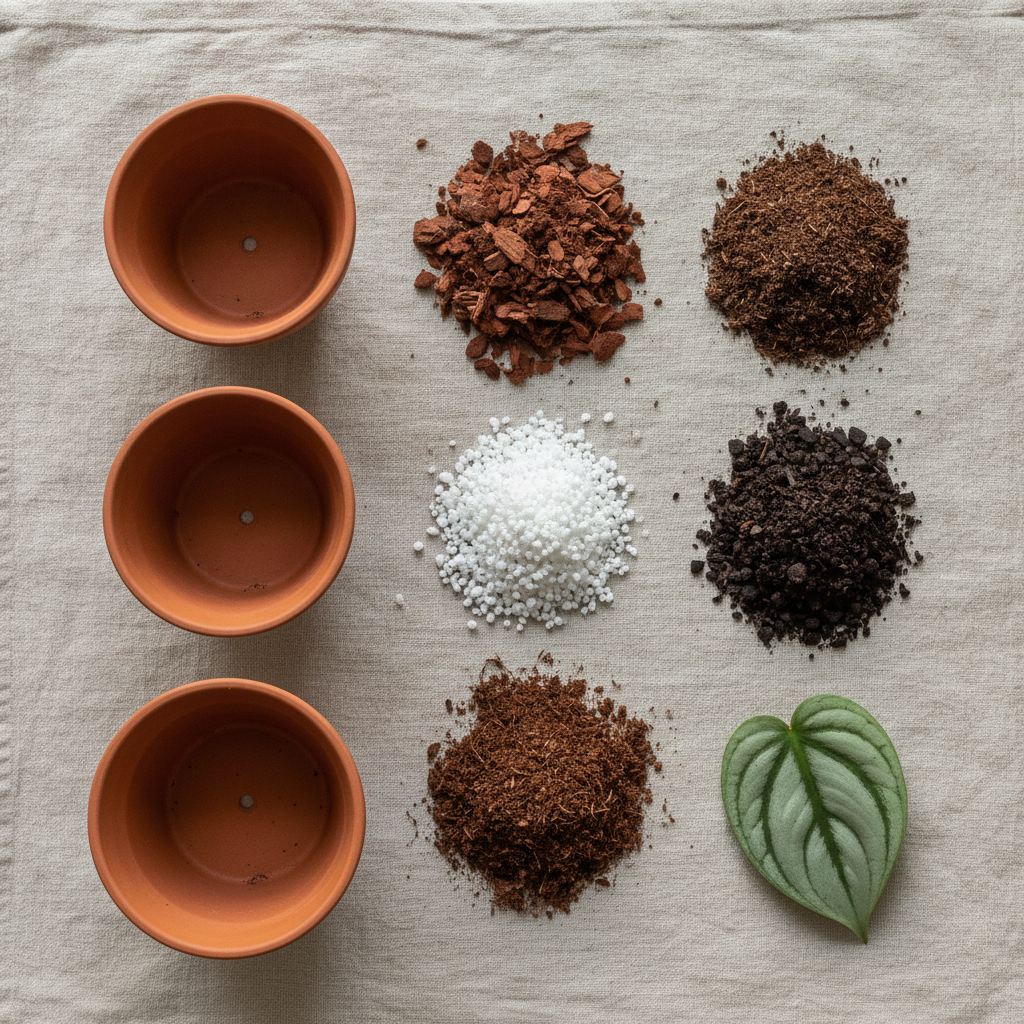
The right potting mix solves watering problems before they start. Because this is an epiphytic climber whose roots are used to clinging to bark and scrambling through loose forest litter, a dense, water-retentive compost suffocates it. What it wants instead is a chunky, free-draining aroid mix that holds some moisture while letting air reach the roots and excess water escape freely.
Ideal Soil Composition
Rather than reaching for a bag of standard houseplant compost, build or buy a mix designed for aroids. The aim is a blend that drains quickly yet stays lightly moist, with plenty of coarse material to keep it open. The components below, combined in roughly these proportions, produce an excellent base for Philodendron brandtianum.
| Component | Proportion | Function |
|---|---|---|
| Orchid bark | 30 percent | Creates air pockets and mimics the bark roots cling to |
| Coco coir or peat-free compost | 30 percent | Holds moisture and gives the mix body |
| Perlite or pumice | 25 percent | Improves drainage and keeps the blend from compacting |
| Worm castings or compost | 10 percent | Supplies gentle, slow-release nutrients |
| Horticultural charcoal | 5 percent | Keeps the mix sweet and helps prevent souring |
In terms of acidity, this plant prefers a slightly acidic to neutral root zone, somewhere around pH 5.5 to 6.5. The bark and coir-based blend above naturally falls in that range, so you rarely need to test or adjust it. Far more important than chasing an exact number is keeping the mix loose and open so water and air move through it freely.
Pro Tip — Quick Mix Recipe: If you want a no-fuss version, combine two handfuls of a quality peat-free houseplant compost with one handful of orchid bark and one handful of perlite. That simple one-to-one-to-two-ish ratio gives you the airy, fast-draining character a Silver Philodendron needs without sourcing specialist ingredients.
Choosing the Right Pot
The container matters as much as what goes in it. A pot that is too large holds a reservoir of wet soil the roots cannot use, while one with poor drainage traps water at the base. Match the pot to the plant and prioritise drainage above all else.
Drainage holes are non-negotiable. Whatever pot you choose, it must have holes in the base for excess water to escape. A decorative cache pot without drainage is fine as an outer cover, but the plant itself should sit in an inner pot that drains, and you must empty any water that collects in the cover.
Pot material: Terracotta is porous and wicks moisture from the mix, which suits anyone inclined to overwater. Plastic and glazed ceramic hold moisture longer, which can be an advantage in a very bright, warm spot or for forgetful waterers. Either works well as long as the watering routine is matched to it.
Pot size: Choose a pot only 2 to 3 cm (about 1 in) wider than the current root ball. Silver Philodendron actually grows happily a little snug, and stepping up gradually avoids the waterlogging that comes with drowning a small root system in a large volume of damp mix.
When to Repot
This is not a plant that needs frequent repotting; once every two years is typical. Tell-tale signs that the time has come include roots emerging from the drainage holes or circling tightly at the surface, water running straight through without wetting the mix, and growth that has slowed despite good light and feeding. The best season to repot is spring, when the plant is moving into active growth and recovers quickly from the disturbance.
How to Repot: Step-by-Step
- Water the plant a day or two beforehand so the root ball is moist and slides out cleanly.
- Ease the plant from its pot by tipping it and supporting the base of the stems, rather than pulling on the foliage.
- Gently tease apart any tightly circling roots and brush away a little of the old, spent mix.
- Add a layer of fresh aroid mix to the base of the new, slightly larger pot.
- Position the plant at the same depth it sat before and fill around the roots with fresh mix, firming lightly.
- Water thoroughly to settle the mix and eliminate air pockets, topping up with a little more mix if it sinks.
- Return the plant to indirect light and hold off on feeding for a month while it re-establishes.
Warning — Transplant Shock: Expect a brief sulk after repotting, with perhaps a drooping leaf or two as the roots settle. Resist the urge to fix it by watering more; soggy mix on freshly disturbed roots invites rot. Keep conditions stable, light bright and indirect, and let the plant recover at its own pace.
Fertilising
Silver Philodendron is not a heavy feeder, but a little regular nourishment during the growing season pays off in larger leaves, fuller stems and bolder silver. The mistake to avoid is over-feeding, which scorches roots and burns leaf edges. Think of fertiliser as a gentle supplement to good light and soil, not a substitute for them.
Timing is everything. Feed only when the plant is actively growing, through spring and summer, and stop almost entirely in autumn and winter when growth naturally pauses. Feeding a dormant plant simply leaves unused salts to accumulate in the mix, where they do more harm than good.
Understanding Plant Nutrients
Most fertilisers are labelled with an N-P-K ratio, the three numbers showing the percentages of nitrogen, phosphorus and potassium. For a foliage plant like this one, a balanced ratio such as 10-10-10, or a slightly nitrogen-forward blend, supports healthy leaf growth. The table below summarises the main nutrients and the symptoms that appear when they run short.
| Nutrient | Symbol | Primary Function | Deficiency Symptoms |
|---|---|---|---|
| Nitrogen | N | Drives leafy green growth | Older leaves yellow, growth slows |
| Phosphorus | P | Supports roots and energy transfer | Dull leaves, weak roots, stunting |
| Potassium | K | Regulates water use and overall vigour | Yellow or brown leaf margins |
| Calcium | Ca | Builds strong cell walls | Distorted, weak new growth |
| Magnesium | Mg | Central to chlorophyll | Yellowing between leaf veins |
| Iron | Fe | Aids chlorophyll formation | Pale new leaves with green veins |
Types of Fertiliser
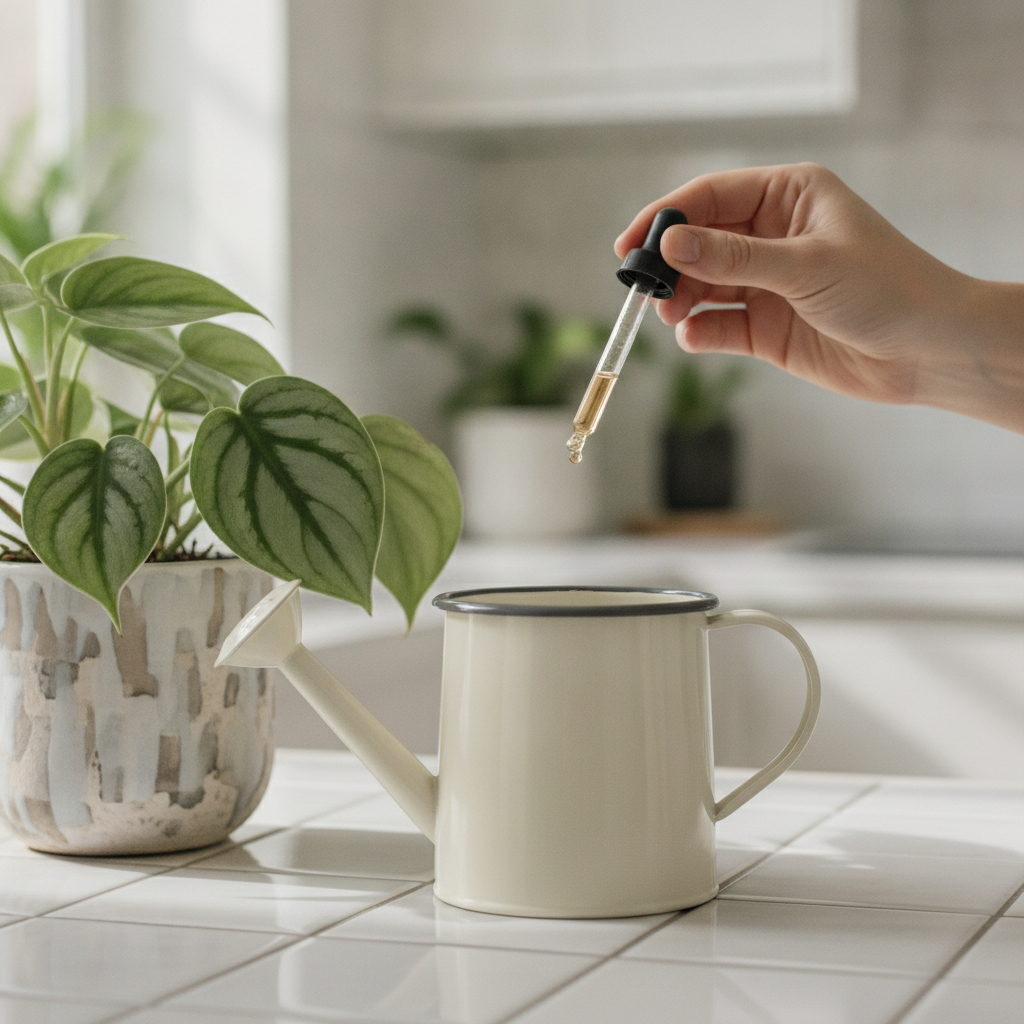
Liquid fertilisers: The easiest type to control and the best match for this plant. Diluted into your watering can, they deliver a measured dose and are quickly flushed if you overdo it, which makes them forgiving and precise.
Slow-release granular: Pellets mixed into the surface release nutrients gradually over several months. Convenient for hands-off growers, though they offer less control over exactly how much the plant receives at any one time.
Organic fertilisers: Worm castings, compost and seaweed feeds enrich the mix gently and improve its structure. They release nutrients slowly and are nearly impossible to overdo, making them a safe, sustainable choice.
Feeding Schedule
A simple, reliable routine is to feed with a balanced liquid fertiliser diluted to half the recommended strength every four to six weeks through spring and summer. As autumn arrives and growth slows, taper off and then stop entirely over winter. Resume in spring only when you see fresh leaves beginning to push out, the plant’s own signal that it is ready to use the nutrients.
Pro Tip — Less Is More: When it comes to feeding a Silver Philodendron, under-feeding is far safer than over-feeding. Half the strength on the bottle is plenty, and a slightly hungry plant simply grows a touch slower, whereas an over-fed one shows scorched, browning leaf edges that take months of new growth to grow out.
How to Fertilise
- Water the plant lightly first if the mix is very dry, so the feed never hits parched roots.
- Dilute a balanced liquid fertiliser to half the strength stated on the label.
- Apply it evenly across the surface of the mix until it begins to drain from the base.
- Every few months, flush the pot with plain water to wash out any accumulated mineral salts.
Warning — Salt Build-Up: A white, crusty deposit on the soil surface or around the pot rim signals a build-up of fertiliser salts, which can burn roots and brown leaf tips. Flush the pot thoroughly with plain water several times to leach the salts away, and ease back on how often or how strongly you feed.
Propagation
One of the quiet joys of the Silver Philodendron is how readily it propagates. A single healthy plant can become several within a season, which makes it perfect for filling out a fuller display, replacing a leggy original, or sharing with friends. The plant grows from stems studded with nodes, and almost any cutting that includes a node can be encouraged to root.
The best time to propagate is spring or early summer, when the plant is in active growth and cuttings root fastest. Take cuttings from healthy, mature stems rather than soft new tips, and always use clean, sharp scissors or secateurs to avoid introducing disease to either the cutting or the parent.
Understanding Nodes and Aerial Roots
The key to success is the node, the slightly swollen point on the stem where a leaf meets it and from which new roots and growth emerge. Many stems also carry small nubs or aerial roots near the nodes, which are the plant’s natural climbing anchors and which root especially eagerly once placed in water or moss. A cutting without a node has no growing point and will never root, no matter how healthy the leaf looks, so every cutting you take must include at least one.
Water Propagation: Step-by-Step
Rooting in water is the simplest method and lets you watch progress unfold, which makes it ideal for beginners.
- Cut a healthy stem section just below a node, so the node sits at the bottom of the cutting, with one or two leaves above.
- Remove any lower leaves that would otherwise sit underwater and rot.
- Place the cutting in a glass of room-temperature water with the node fully submerged and the leaves above the surface.
- Set the glass in bright, indirect light and refresh the water every few days to keep it clean and oxygenated.
- Wait for roots to appear at the node, usually within two to four weeks.
- Once the roots reach 3 to 5 cm (1 to 2 in), pot the cutting into a small container of aroid mix and keep it slightly moister than usual for the first couple of weeks.
Pro Tip — Pot Before Roots Grow Long: Water roots are brittle and differ from soil roots, so transfer cuttings to mix once the new roots reach a few centimetres rather than letting them grow long in the glass. Shorter water roots adapt to soil far more smoothly and the cutting establishes with less of a setback.
Sphagnum Moss Propagation: Step-by-Step
Rooting in damp sphagnum moss often produces sturdier roots that are better adapted to soil, with less of the transition shock that water-rooted cuttings can suffer.
- Soak a handful of sphagnum moss in water, then wring it out so it is damp but not dripping.
- Take a node-bearing cutting in the same way as for water propagation.
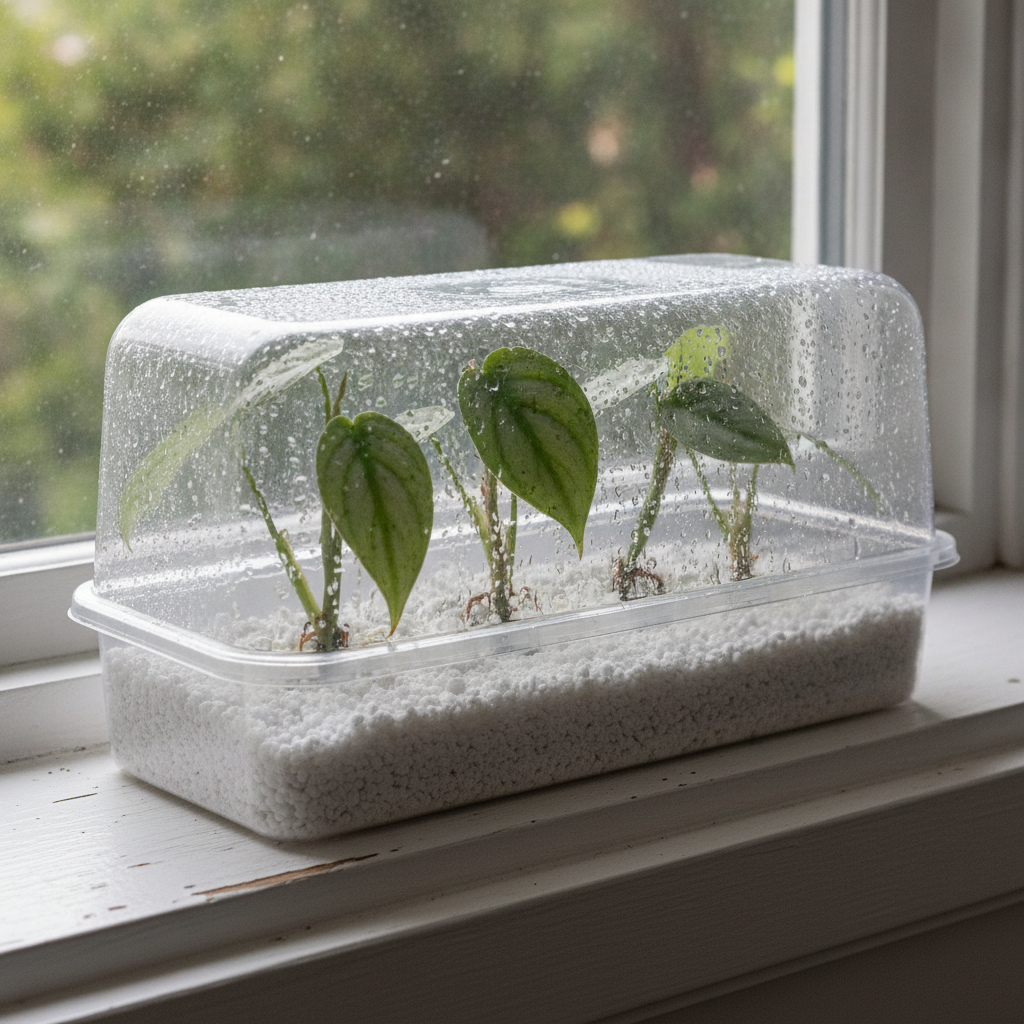
- Nestle the node into the moss inside a small pot or a clear tub, leaving the leaves exposed to the air.
- Keep the container somewhere warm and bright but out of direct sun, and maintain high humidity by covering it loosely or using a clear dome.
- Check that the moss stays lightly moist, misting it if it begins to dry, and watch for roots threading through within two to four weeks.
- Once a healthy root system has formed, pot the cutting on into aroid mix, leaving a little of the moss attached to protect the new roots.
Troubleshooting Propagation
| Problem | Likely Cause | Solution |
|---|---|---|
| Cutting rots in water | A leaf left submerged, or stale water | Remove lower leaves and refresh the water every few days |
| No roots after a month | Cutting lacks a node, or light and warmth are too low | Check for a node and move to a warmer, brighter spot |
| Roots form but cutting wilts | Moved to soil too abruptly or soil kept too dry | Keep humidity high and soil lightly moist while it settles |
| Yellowing cutting | Too much direct sun or an exhausted cutting | Shift to bright, indirect light and be patient |
Pests & Diseases
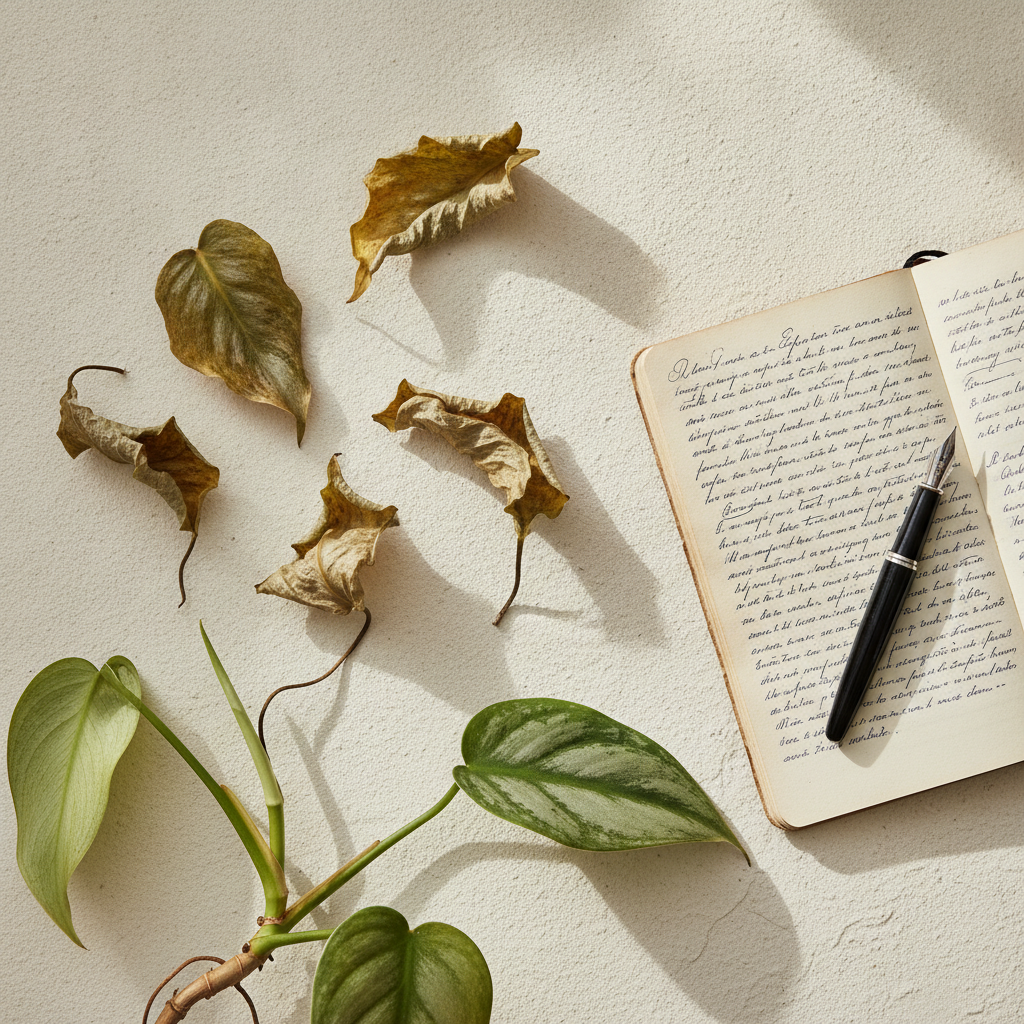
A healthy, well-positioned Silver Philodendron is rarely troubled, but no houseplant is entirely immune. Most problems take hold when a plant is stressed by poor light, erratic watering or very dry air, so good general care is itself the best defence. Catching trouble early, before a few pests become an infestation, makes treatment far easier.
Make a habit of inspecting your plant whenever you water, turning a few leaves over to check their undersides where pests like to hide. The earlier you spot fine webbing, sticky residue or tiny moving specks, the quicker and gentler your intervention can be.
Common Pests
Spider Mites (Tetranychus urticae)
These tiny arachnids thrive in warm, dry air and are often noticed first by the fine webbing they spin between leaves and stems, along with faint yellow stippling across the foliage. They are barely visible to the naked eye but multiply quickly when humidity is low.
Treatment: Rinse the plant thoroughly, then treat all surfaces with insecticidal soap or neem oil, repeating every week until clear. Raising humidity makes the environment far less welcoming to them.
Mealybugs (Pseudococcus species)
Mealybugs appear as small, white, cottony tufts tucked into leaf axils and along stems. They feed on sap, weakening the plant and leaving behind a sticky honeydew that can encourage sooty mould.
Treatment: Dab individual bugs with a cotton bud dipped in isopropyl alcohol, then follow up with neem oil or insecticidal soap across the whole plant. Isolate the plant until no new tufts appear.
Thrips (Thrips species)
These slender insects rasp at leaf surfaces, leaving silvery streaks, pale scarring and distorted new growth. They are fast-moving and can spread between plants quickly, so prompt action matters.
Treatment: Remove the worst-affected leaves, then treat repeatedly with neem oil or insecticidal soap. Yellow sticky traps help monitor and reduce the adult population.
Fungus Gnats (Bradysia species)
The small black flies drifting around the pot are usually fungus gnats, whose larvae live in persistently wet soil and feed on organic matter and fine roots. They are more a symptom of overwatering than a serious threat in themselves.
Treatment: Let the top of the mix dry out more between waterings, cover the surface with a layer of grit, and use yellow sticky traps to catch the adults until the cycle is broken.
Common Diseases
Root Rot (Pythium and Phytophthora species)
By far the most common and most serious disease, root rot follows from soil that stays waterlogged. The roots turn brown and mushy, the lower leaves yellow and droop, and the stem base may blacken and soften.
Treatment: Unpot the plant, cut away all soft, dark roots with clean scissors, and repot into fresh, airy mix in a clean pot. Going forward, water only when the top of the mix has dried.
Bacterial Leaf Spot (Erwinia and Xanthomonas species)
This shows up as dark, water-soaked spots, sometimes ringed with yellow, that spread when foliage stays wet and air movement is poor. In humid, still conditions it can advance quickly.
Treatment: Remove affected leaves promptly, avoid wetting the foliage, and improve air circulation around the plant. Keeping the leaves dry is the single most effective preventive measure.
Pest and Disease Summary
| Pest / Disease | Identification | Treatment |
|---|---|---|
| Spider mites | Fine webbing, yellow stippling | Rinse, neem oil, raise humidity |
| Mealybugs | White cottony tufts in axils | Alcohol swab, then neem oil |
| Thrips | Silvery streaks, distorted growth | Remove leaves, neem oil, sticky traps |
| Fungus gnats | Small black flies near soil | Dry out soil, grit topping, traps |
| Root rot | Brown mushy roots, yellow leaves | Trim roots, repot, water less |
| Bacterial leaf spot | Dark, water-soaked spots | Remove leaves, keep foliage dry |
Prevention Strategies
The vast majority of pest and disease problems are preventable through consistent, sensible care. A plant grown in appropriate light, watered only when it needs it, and given decent air movement is a far less inviting target than a stressed one. Quarantining every new plant for a couple of weeks before it joins your collection stops most infestations from ever spreading.
Routine maintenance helps too. Wiping the leaves occasionally removes dust and lets you inspect for early signs of trouble, while removing dead or yellowing foliage denies pests and fungi a foothold. Healthy growing conditions and a watchful eye together do more to keep a Silver Philodendron pest-free than any spray bottle.
Pro Tip — Neem as a Routine: A light monthly spray of diluted neem oil over the leaves, especially the undersides, acts as a gentle preventive that deters most common sap-sucking pests before they establish. Apply it in the evening or out of direct sun so the treated foliage does not scorch.
Popular Varieties
Unlike some philodendrons that exist in a long parade of named cultivars, Philodendron brandtianum is grown mainly as the species itself, prized for its naturally silvered foliage rather than for selected colour breaks. What does vary, and noticeably, is how the same plant presents at different life stages and under different training, which is why growers often speak of its juvenile and mature forms almost as if they were separate varieties.
It also sits within a small group of silver-marked aroids that are frequently confused with one another in shops and online listings. Knowing how it compares to its lookalikes helps you buy the true plant and set the right expectations. The table below sets out the forms and close relatives you are most likely to encounter.
| Variety | Leaf Appearance | Light Needs | Growth Rate | Availability |
|---|---|---|---|---|
| Juvenile silver-leaf form | Small, rounded, heavily silvered | Bright indirect | Moderate | Common |
| Mature climbing form | Larger, elongated, silver in bands | Bright indirect | Faster when climbing | Common |
| Scindapsus pictus (satin pothos) | Matte silver spots on dark green | Medium to bright indirect | Moderate | Very common |
| Philodendron hastatum (silver sword) | Arrow-shaped, metallic blue-silver | Bright indirect | Fast | Increasingly common |
| Philodendron mamei | Large, quilted, silver banding | Bright indirect | Moderate | Less common |
Featured Varieties
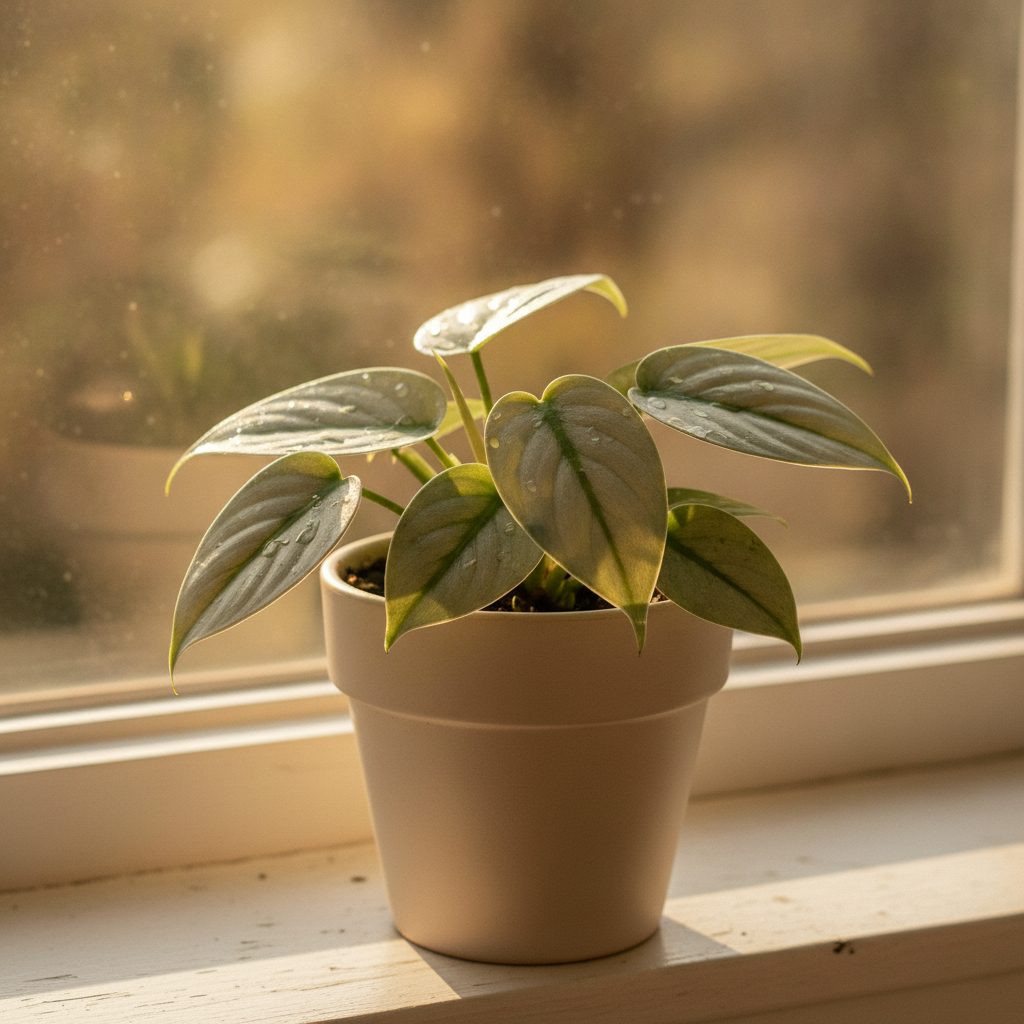
Juvenile Silver-Leaf Form
Young plants carry smaller, more rounded leaves where the silver wash covers almost the entire surface, giving the densely shimmering look that sells the plant on sight. This is the form most often seen in shops, compact and ideal for a shelf or small pot.
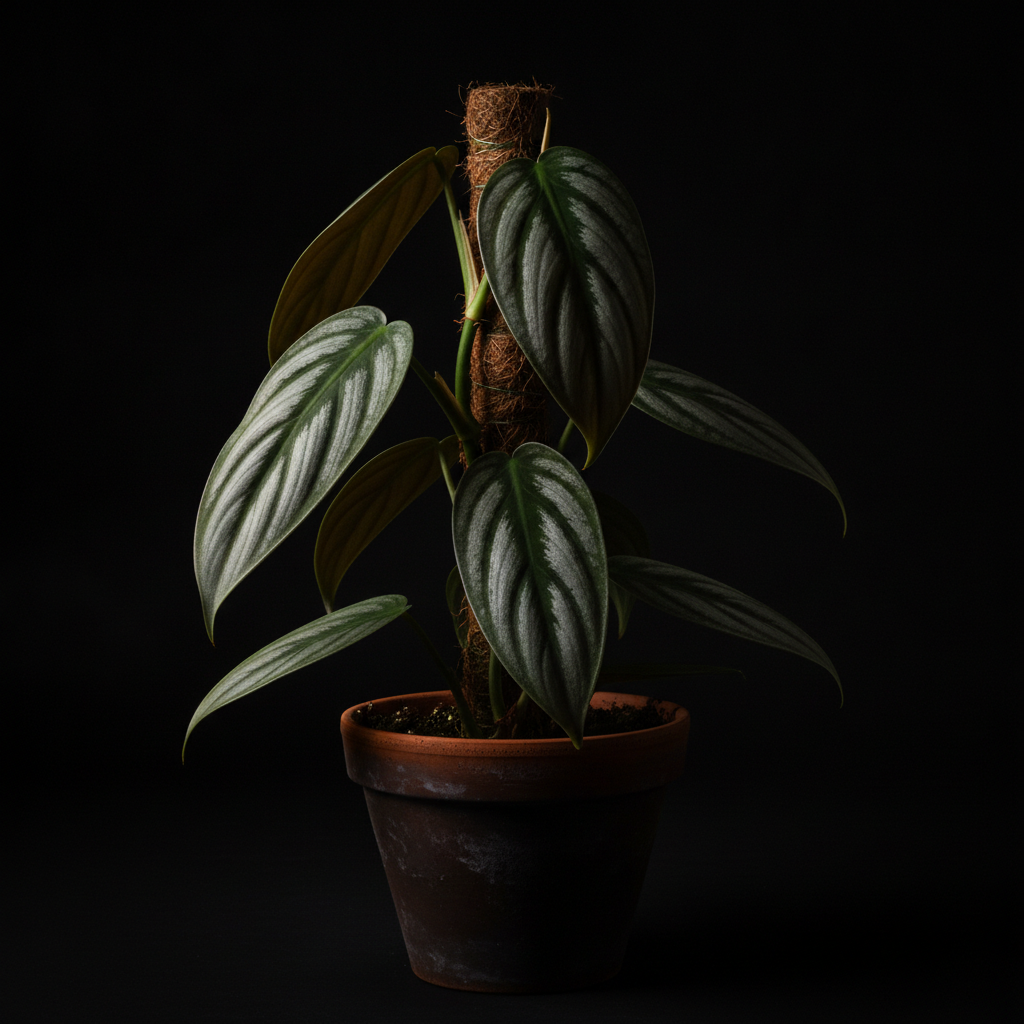
Mature Climbing Form
Given a moss pole to climb, the plant matures into larger, more elongated leaves with a deeper olive base and the silver concentrated into bold bands between the veins. This form is more architectural and makes a real statement as a floor or stand piece.
Variety Profiles in Detail
Satin Pothos (Scindapsus pictus)
The most common case of mistaken identity. Satin pothos carries a matte, almost felted silver speckling over dark green, rather than the glossier, more flowing silver of Philodendron brandtianum. Care is very similar, but the satin pothos tolerates lower light a little better and its leaves have a noticeably softer, more velvety surface.
Silver Sword Philodendron (Philodendron hastatum)
A genuine philodendron relative with a quite different look, its arrow-shaped leaves take on a metallic, almost blue-grey sheen as they mature. It is a faster, taller climber than the Silver Philodendron and reads as more dramatic and upright, making the two a striking pair when grown together.
Choosing the Right Variety for Your Space
Because the differences here are as much about form and staging as about distinct cultivars, your choice really comes down to how you want the plant to grow. For a compact, intensely silvered specimen on a shelf or desk, keep a young plant trailing and it will hold that jewel-like juvenile look. For something larger and more sculptural, give it a moss pole and let it climb into its bolder mature form. And if you are drawn to the silvery aesthetic in general, pairing the true Silver Philodendron with a satin pothos or a silver sword builds a layered, tonal display that stays cohesive while offering variety in leaf shape and texture.
Frequently Asked Questions
Why are the silver markings on my Silver Philodendron fading?
Fading silver is almost always a light issue. In too little light the plant produces smaller, duller leaves with less contrast, while harsh direct sun bleaches the colour out from the other direction. Move the plant to a spot with bright, indirect light and the next leaves should emerge with their full silver restored.
Is the Silver Philodendron safe around cats and dogs?
No. Like all philodendrons it contains calcium oxalate crystals that are toxic if chewed or swallowed, causing mouth irritation, drooling and vomiting in pets and people. Keep it well out of reach of animals and small children, and wash your hands after handling cut stems.
Why are the leaves on my plant turning yellow?
The most common cause is overwatering, particularly when several leaves yellow at once and the soil stays wet. Check that the top of the mix dries between waterings and that the pot drains freely. An occasional older leaf yellowing and dropping, however, is simply natural ageing and nothing to worry about.
Does the Silver Philodendron need a moss pole?
It does not strictly need one, and trails beautifully without support. However, giving it a moss pole to climb encourages noticeably larger leaves and bolder silver banding as the plant matures, so a pole is well worth adding if you want it to reach its fuller, more dramatic form.
How fast does a Silver Philodendron grow?
In good light and warmth through spring and summer it is a moderately fast grower, putting out a new leaf every few weeks and extending its vines steadily. Growth slows or stops in autumn and winter, which is entirely normal, and it resumes once the days lengthen again.
Why are the leaf tips turning brown?
Brown, crispy tips usually point to low humidity, inconsistent watering, or a build-up of mineral salts from tap water or fertiliser. Aim for steadier watering, raise the humidity if your air is dry, and flush the pot occasionally with plain water to wash out accumulated salts.
Can I grow a Silver Philodendron in a bathroom?
Yes, and it often thrives there, since bathrooms tend to offer the higher humidity it enjoys. The only requirement is enough light, so a bathroom with a reasonably bright window is ideal, while a windowless one will need a grow light to keep the plant healthy.
How is it different from a satin pothos?
They are frequently confused, but the satin pothos (Scindapsus pictus) has matte, felted silver spotting on thicker, more textured leaves, whereas the Silver Philodendron has a glossier, more flowing silver over thinner, heart-shaped foliage. Their care is broadly similar, so a mix-up is rarely a problem in practice.






