
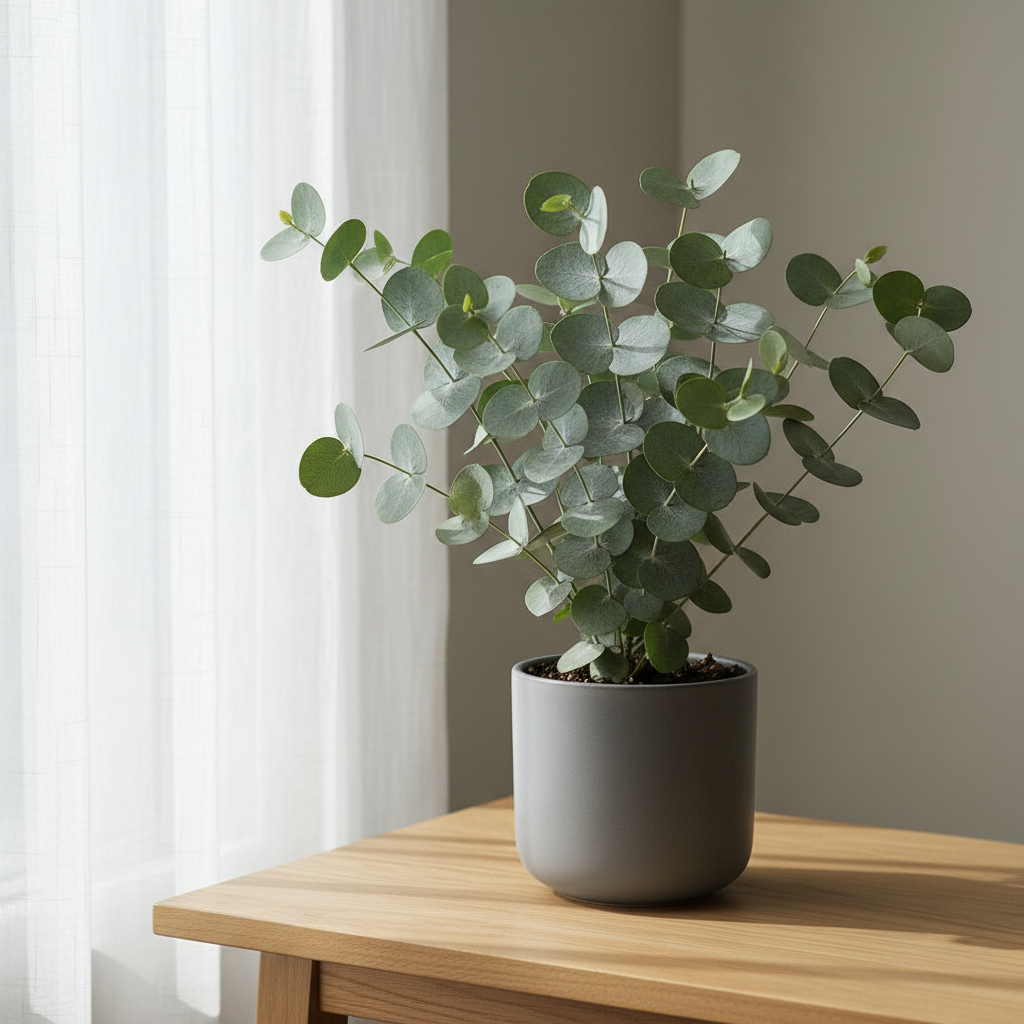
Few houseplants announce themselves by scent before sight, but the silver dollar eucalyptus does exactly that. Brush past a healthy specimen and the air fills with a clean, resinous menthol note rising from rounded, coin-shaped leaves dusted in silvery-blue wax. Eucalyptus cinerea, known in its native Australia as the Argyle apple, is grown indoors and in containers less for flowers than for that prized juvenile foliage, the same silver-dollar sprays that florists weave through bouquets and hang in steamy showers. It is a plant with a split personality: tough and fast as a young seedling, yet quietly particular about light, drainage and the chemistry of its food. Understanding the difference between merely keeping it alive and genuinely helping it thrive is what this guide is about.
Quick Reference
The table below distils the essentials. Treat it as a map rather than the territory, the sections that follow explain the reasoning behind each line so you can adapt to your own home rather than follow figures blindly.
| Botanical name | Eucalyptus cinerea |
| Common names | Silver dollar eucalyptus, silver dollar tree, Argyle apple, mealy stringybark |
| Family | Myrtaceae |
| Origin | Tablelands of New South Wales and Victoria, south-eastern Australia |
| Light | Very bright, direct sun preferred, a south-facing window indoors |
| Water | Keep evenly moist in growth, let the top 2 to 3 cm (about 1 in) dry between waterings |
| Soil | Free-draining, loam-based, slightly acidic to neutral, low in phosphorus |
| Temperature | 10 to 24 degrees C (50 to 75 degrees F), tolerates brief frost to about minus 5 degrees C (23 degrees F) |
| Humidity | Average, prefers good air movement over still, humid air |
| Feeding | Light, low-phosphorus feed monthly in spring and summer only |
| Growth rate | Fast, 0.5 to 1 metre (1.5 to 3 ft) per year when young |
| Mature size indoors | 1 to 2 metres (3 to 6 ft) with regular pruning |
| Toxicity | Toxic to cats, dogs and people if ingested, the foliage oils are the concern |
| Difficulty | Moderate, easy to grow but unforgiving of low light and waterlogging |
Why Silver Dollar Eucalyptus Makes a Rewarding Houseplant
Most foliage houseplants trade in shades of glossy green. The silver dollar eucalyptus offers something rarer: a soft, frosted blue-grey that reads almost metallic in bright light and cools down any colour scheme it joins. That powdery bloom is not decoration alone. It is a layer of epicuticular wax that the plant produces to reflect harsh Australian sun and reduce water loss, and it is the same wax that gives the leaves their matte, hand-blown look. Set against terracotta, warm wood or a linen sofa, the effect is unmistakably modern, which is why the plant has become a fixture of styled interiors and cut-flower arrangements alike.
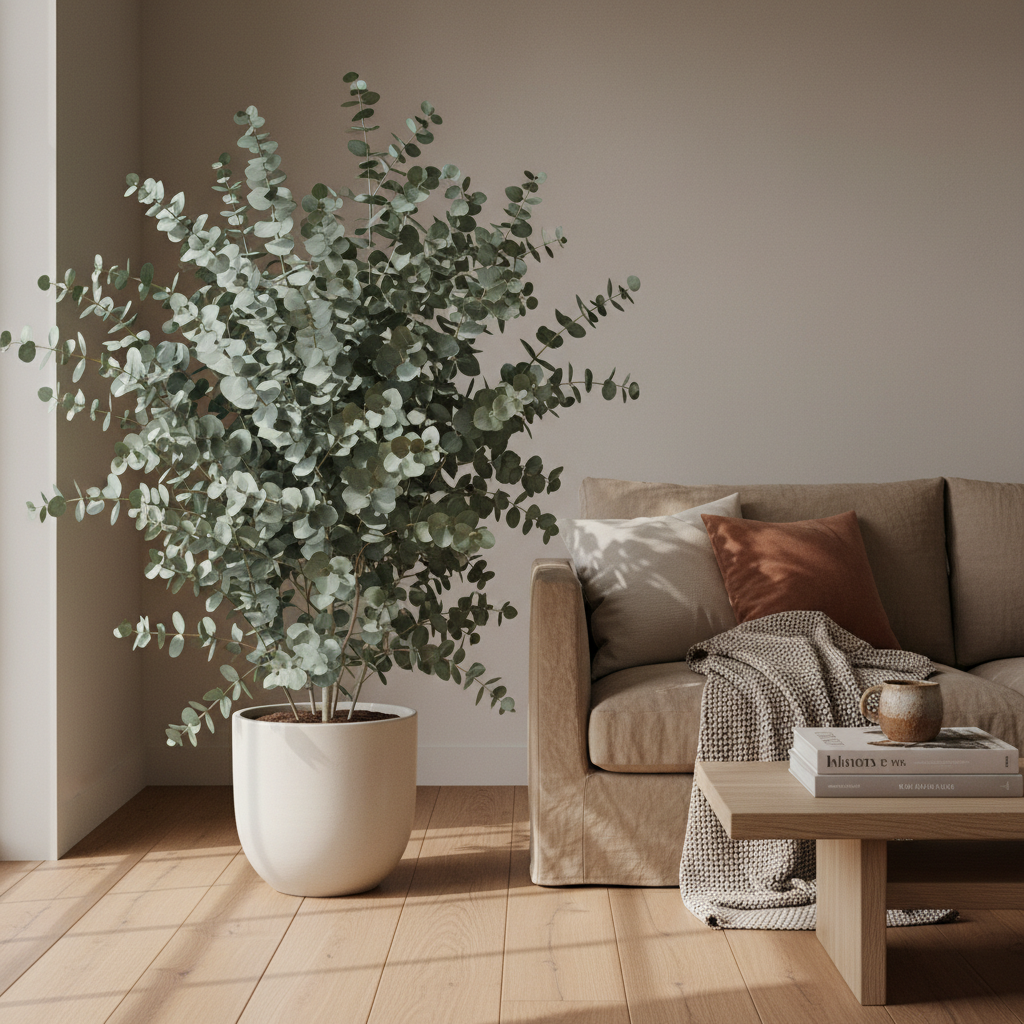
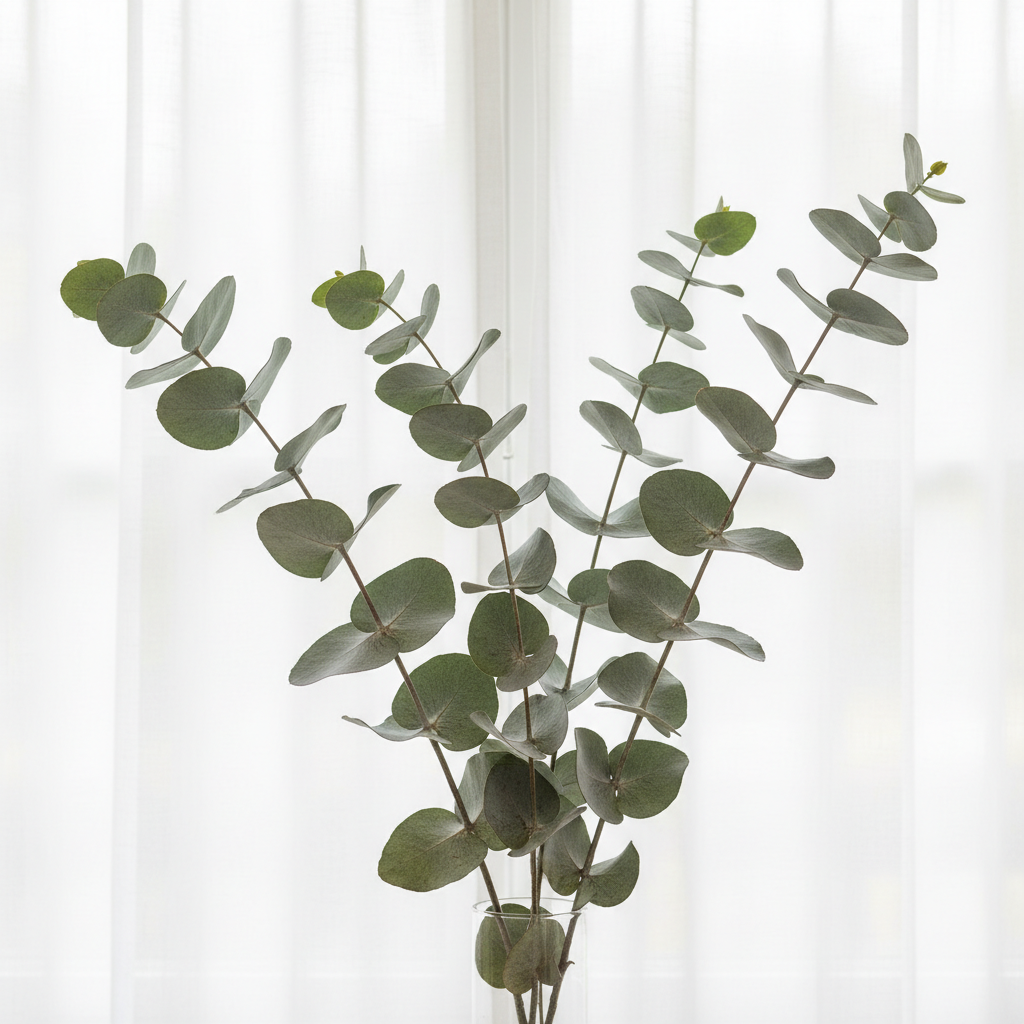
There is also the scent. Crushed or even gently disturbed, the leaves release the volatile oils, dominated by the compound eucalyptol, also called cineole, that the whole genus is famous for. The fragrance is genuinely useful: a few stems hung in a hot shower release a spa-like aroma, and dried sprays hold their colour and perfume for months. Beyond the sensory appeal, the plant earns its place by being undemanding in the ways that matter to a busy household. It is fast, so a small nursery plant becomes a substantial presence within a season or two. It is broadly pest-resistant, because those same aromatic oils deter many of the insects that plague softer-leaved plants. And it tolerates cool, even chilly, rooms that would sulk a tropical aroid into dropping its leaves, which makes it one of the few statement plants happy in an unheated porch, conservatory or bright north-European windowsill in winter.
The honest caveat is that surviving and thriving sit further apart with this plant than with, say, a pothos. A eucalyptus will limp along in a dim corner for a while, stretching, paling and shedding lower leaves, but it will never look the way the catalogue promised. Give it the light it actually wants and the picture changes entirely: dense, well-coloured growth, that characteristic chalky bloom intact, and the kind of vigour that has you reaching for the secateurs every few weeks. Almost everything that follows is about closing that gap.
Light
If you remember one thing about the silver dollar eucalyptus, make it this: it is a full-sun plant pretending to be a houseplant. In its homeland it grows in open woodland and on exposed tablelands, soaking up intensity that no interior can match. Indoors, this translates into a simple but demanding rule, give it the brightest position you have and then look for somewhere brighter. A south-facing window in the northern hemisphere, or a north-facing one south of the equator, with several hours of genuine direct sun on the foliage, is the baseline rather than the luxury. East and west windows can work if the light is strong and unobstructed, but a shaded or purely north-facing aspect will slowly disappoint you.
The plant tells you clearly when light falls short. The first symptom is etiolation, stems stretching and the gaps between leaf pairs lengthening as the plant reaches for a stronger source. The silvery bloom thins and the new leaves come in greener and floppier than the firm, rounded discs of a sun-grown plant. Lower leaves yellow and drop, and the whole specimen takes on a lanky, top-heavy look. None of this is fatal in the short term, but it is the plant rationing itself, and once that stretched growth has formed it will not shorten again. The remedy is more light, not less water or more fertiliser, two things people often reach for when a plant looks unhappy.
Pro Tip — Rotate and step outside: Turn the pot a quarter every week or two so the plant grows evenly rather than leaning hard into the glass. Better still, move it outdoors to a sunny, sheltered spot for the frost-free months. A summer outside, gradually acclimatised to avoid scorch, does more for foliage colour and density than any amount of indoor coaxing.
Scorch is the rare opposite problem, and it is mostly a risk of carelessness rather than too much sun in principle. A plant grown in dim conditions and then moved abruptly into fierce midday glass, or set outside in full sun after a winter indoors without a week or two of hardening off, can bleach or brown at the leaf tips. The fix is to acclimatise gradually. Outright, the eucalyptus wants as much light as you can realistically give it, far more than the average leafy houseplant, and that single factor governs how well every other aspect of its care will go.
Watering
Watering a potted eucalyptus is an exercise in holding two truths at once. Mature trees in the ground are famously drought-hardy, their roots ranging deep for moisture, which leads many people to treat a container plant as a near-cactus. Yet a fast-growing eucalyptus in a pot has a confined, thirsty root system and a large canopy transpiring hard in bright light, so in active growth it drinks far more than its reputation suggests. The plant that dries out completely will drop leaves and brown at the margins within a day or two; the plant left standing in saturated soil will rot at the roots just as surely. Your job is to keep the middle path.
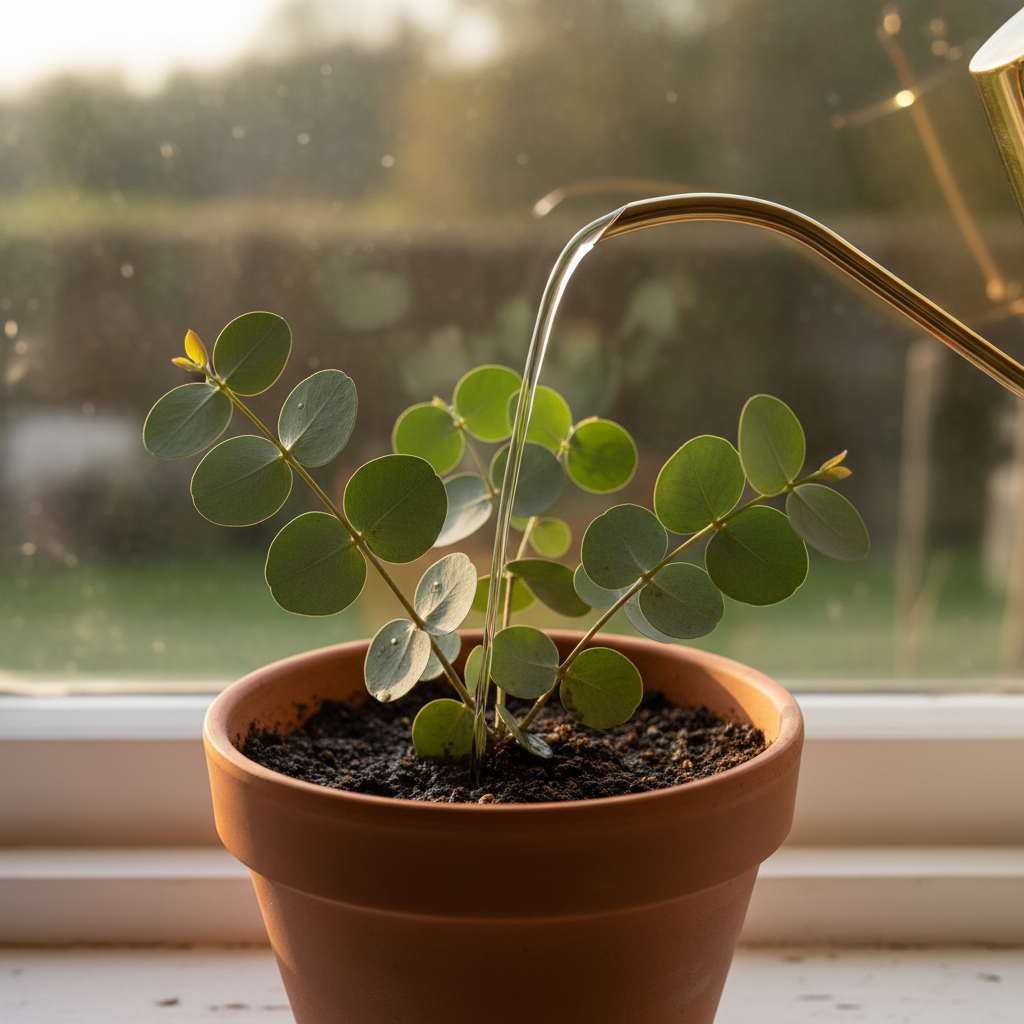
In practice, water thoroughly whenever the top 2 to 3 cm (about 1 in) of the mix have dried, letting water run freely from the drainage holes each time so the entire root ball is moistened and any salts are flushed through. Then empty the saucer; never let the pot sit in standing water. During the bright, warm months a vigorous plant in a sunny window may need this every two to four days, and an outdoor specimen in summer heat can need daily attention. In winter, as light fades and growth slows, the same plant might go a week or more between waterings. The calendar is a poor guide here, the finger pushed into the soil is a far better one, because the variables of light, temperature, pot size and season shift the schedule constantly.
Warning — Sudden leaf drop: A eucalyptus that sheds a flush of leaves all at once is almost always telling you about water, either a root ball that dried to the core, or roots suffocating in soil that has stayed wet too long. Check the weight of the pot and the moisture deep in the mix before assuming pests or disease. Recovery is possible from drought, much harder once root rot has set in.
Two refinements help. First, terracotta suits this plant better than glazed or plastic pots, because the porous clay wicks excess moisture away and breathes, buffering the plant against the overwatering that kills more eucalyptus than drought ever does. Second, the quality of water matters less than for many fussy plants, eucalyptus is not notably sensitive to fluoride or hard water, so tap water is generally fine. What it will not forgive is a pot without drainage or a heavy, water-retentive mix, which brings us neatly to the soil.
Soil
The ideal eucalyptus mix is built around one priority above all others: drainage. These plants evolved on lean, gritty, often stony ground, and they resent the dense, moisture-hoarding composts sold as general houseplant soil. A heavy peat-based mix holds water around the roots long after the plant has finished using it, and in a cool room that lingering wetness is an open invitation to root rot. The aim is a medium that holds enough moisture to carry the plant between waterings yet drains so freely that air returns to the root zone within minutes.
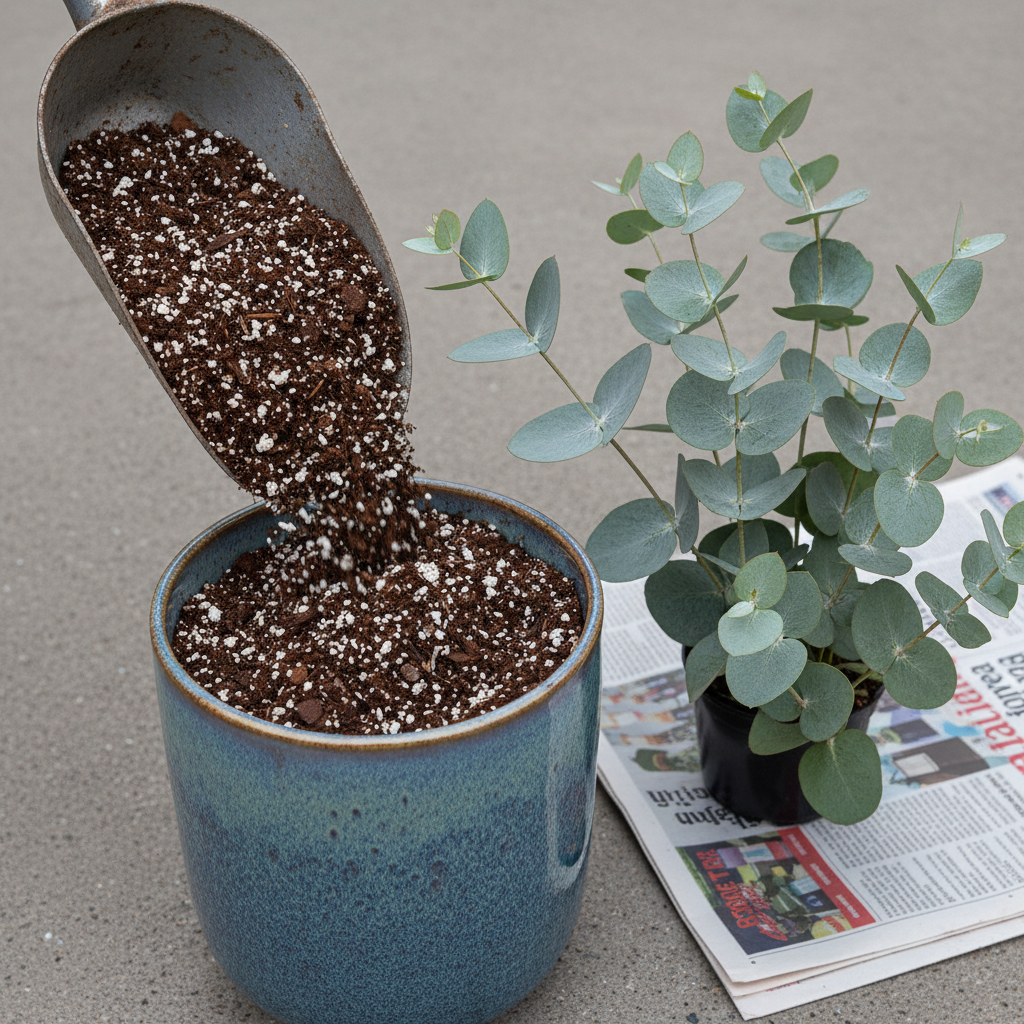
A reliable recipe is roughly two parts of a loam-based potting compost to one part coarse grit, perlite or sharp horticultural sand, with a handful of fine bark to keep the structure open. The loam gives body and a steadier hold on nutrients than a peat mix, while the grit guarantees the fast drainage the plant craves. Aim for a slightly acidic to neutral pH, somewhere in the range of 5.5 to 7.0, which suits eucalyptus well; you rarely need to test this, as most loam-based composts sit comfortably within it. Avoid mixes heavy with rich, water-holding organic matter, the plant grows better a little hungry and lean than overfed and wet.
Repot a young, fast-growing plant each spring, moving up just one pot size at a time, because an oversized pot holds a reservoir of damp soil that the roots cannot use and that quickly turns sour. Choose a container only a few centimetres wider than the previous one, with generous drainage holes, and resist the temptation to plant into something dramatically larger to save future work. As the plant matures and slows, you can extend the interval to every second or third year, top-dressing with fresh mix in the intervening springs. Eucalyptus are also content to be slightly pot-bound, which conveniently helps keep an inherently vigorous plant to a manageable indoor size.
Fertilising
Feeding eucalyptus is the one area where the plant breaks the usual houseplant rules, and getting it wrong does real harm. Like many Australian natives, eucalyptus evolved on soils that are naturally very low in phosphorus, and over millions of years it became extraordinarily efficient at scavenging the little that was there. The unhappy consequence indoors is that standard, phosphorus-rich plant foods can poison it. Excess phosphorus accumulates to toxic levels the plant cannot regulate, showing up as blackened, scorched leaf margins, yellowing between the veins and, in severe cases, dieback. More fertiliser is emphatically not better here.
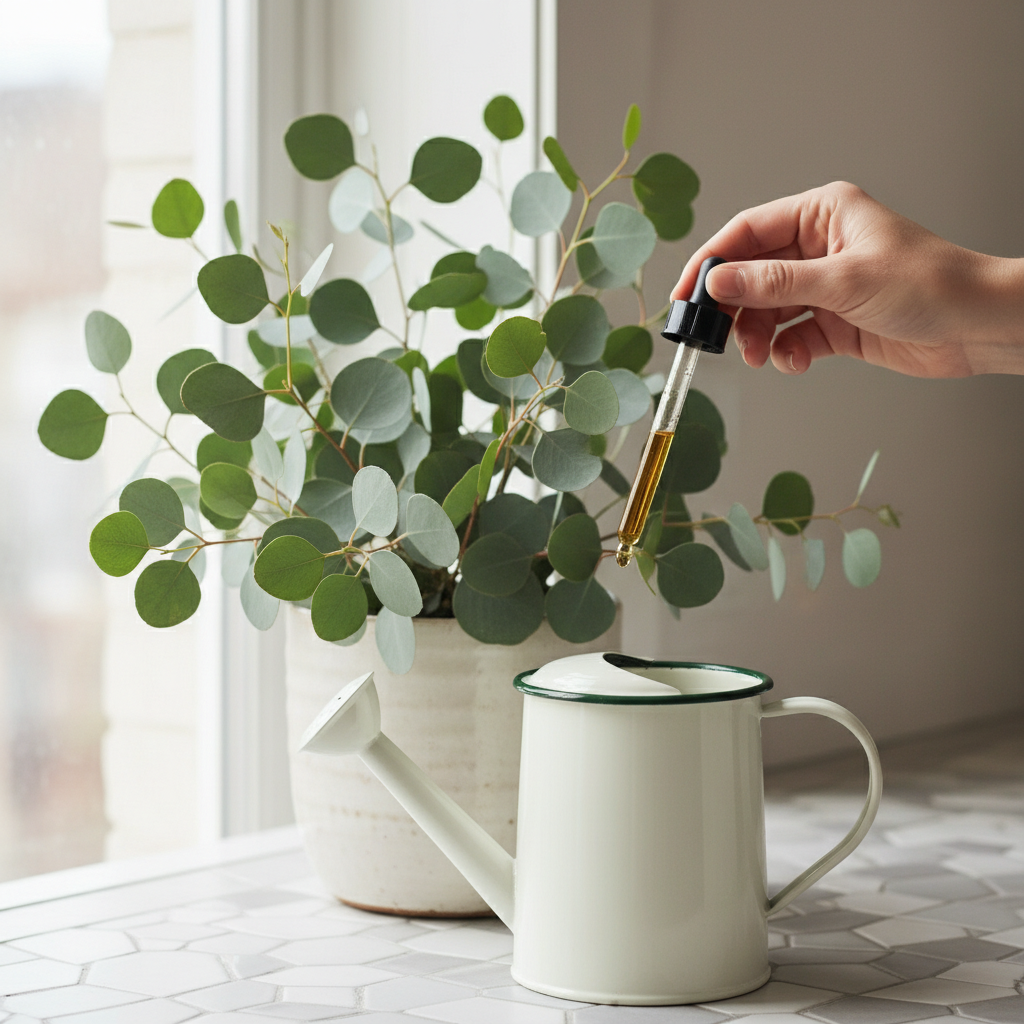
The safe approach is to feed lightly, infrequently and with the right formula. Use a low-phosphorus fertiliser, ideally one marketed for Australian or proteaceous native plants, or failing that a balanced feed diluted to half the recommended strength. Apply only during the active growing season, roughly monthly through spring and summer, and stop entirely in autumn and winter when the plant is not putting on new growth and unused fertiliser simply builds up as harmful salts. Read the nutrient ratio on the bottle, the middle number is phosphorus, and treat anything high in it with caution. A plant in good fresh soil often needs very little supplementary feeding at all.
Pro Tip — When in doubt, feed less: Eucalyptus growing slowly with pale leaves is far more often short of light than short of food. Before reaching for fertiliser, move the plant brighter and check that you are not overwatering. Reserve feeding for plants that are clearly growing actively and want for nothing else.
If you suspect you have already overfed, the remedy is to flush the pot thoroughly with several changes of plain water to leach out the accumulated salts, then withhold all fertiliser until the plant recovers and resumes healthy growth. Erring on the side of underfeeding costs you only a little growth; erring the other way can cost you the plant.
Propagation
Honesty serves you better than optimism here: eucalyptus is one of the more difficult houseplants to propagate, and the method most growers reach for first, taking cuttings, is the one least likely to succeed. The genus roots poorly from cuttings even under professional conditions, and the casual windowsill attempt rarely takes. By far the most reliable route to new plants is from seed, which germinates readily and gives you the vigour and clean root system that seed-grown eucalyptus are known for.
To grow from seed, sow onto the surface of a moist, free-draining seed compost in late winter or early spring, pressing the fine seed lightly into the surface without burying it, as light aids germination. Many eucalyptus, including cinerea, germinate more evenly after a period of cold, so a few weeks of chilling the sown tray in a refrigerator, known as cold stratification, can lift your success rate. Keep the tray bright, warm and lightly moist, and seedlings typically emerge within one to three weeks. Pot them on individually once they have a couple of true leaf pairs, and from there they grow quickly.
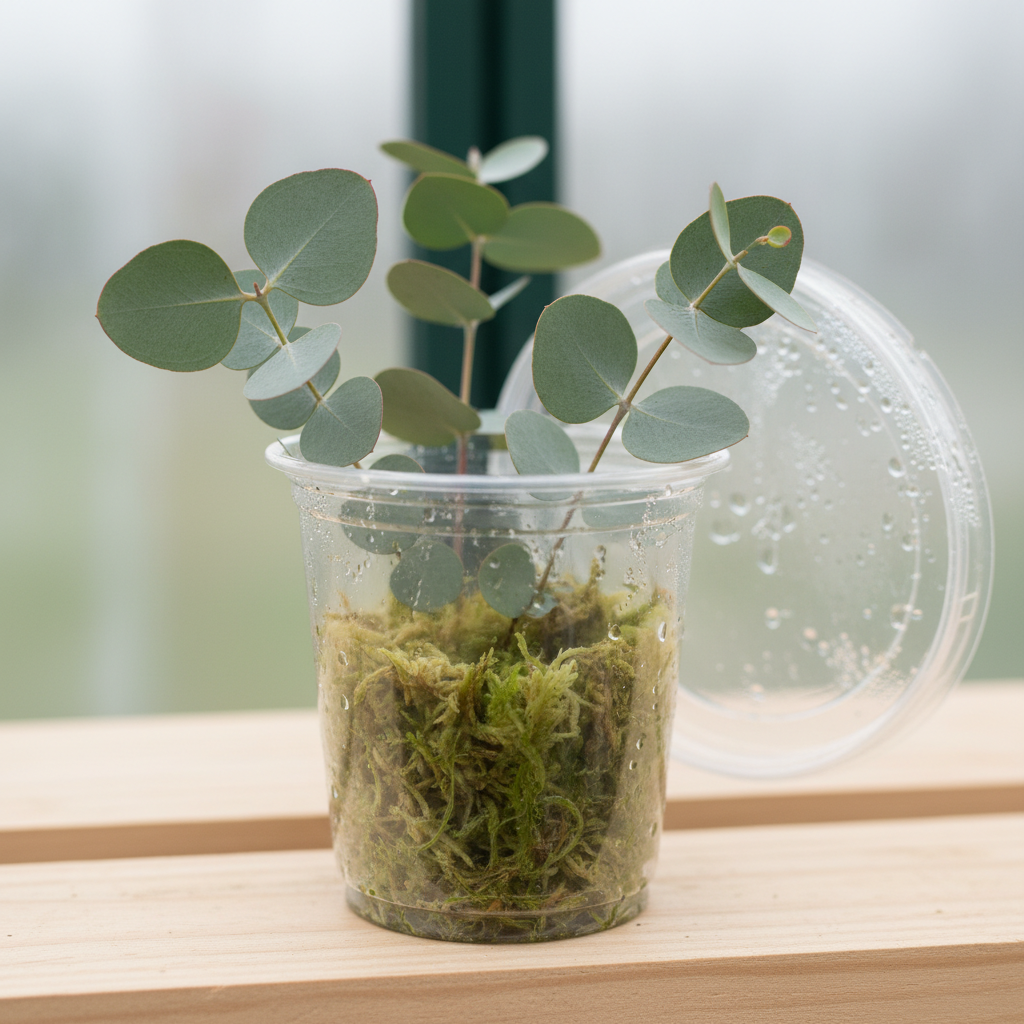
If you want to attempt cuttings despite the odds, give yourself every advantage. Take semi-hardwood material from the current season’s growth, dip the base in a rooting hormone, and insert the cuttings into a sterile, free-draining medium such as damp sphagnum moss or a perlite mix. Maintain very high humidity under a clear cover and provide gentle bottom heat to encourage roots, keeping the setup bright but out of scorching direct sun. Even then, accept that a low strike rate is normal and not a reflection of your skill. For most home growers, the satisfaction of a tray of seedlings is the surer and more rewarding path.
Pests and Problems
The good news is that the aromatic oils which scent the foliage also make the silver dollar eucalyptus markedly less appealing to pests than most houseplants. Infestations are the exception rather than the rule, and a plant kept in the bright, airy conditions it prefers will usually shrug off the insects that overwhelm softer-leaved neighbours. When trouble does appear, it tends to be one of a small cast of usual suspects, and most of the serious problems are not pests at all but consequences of watering and light.
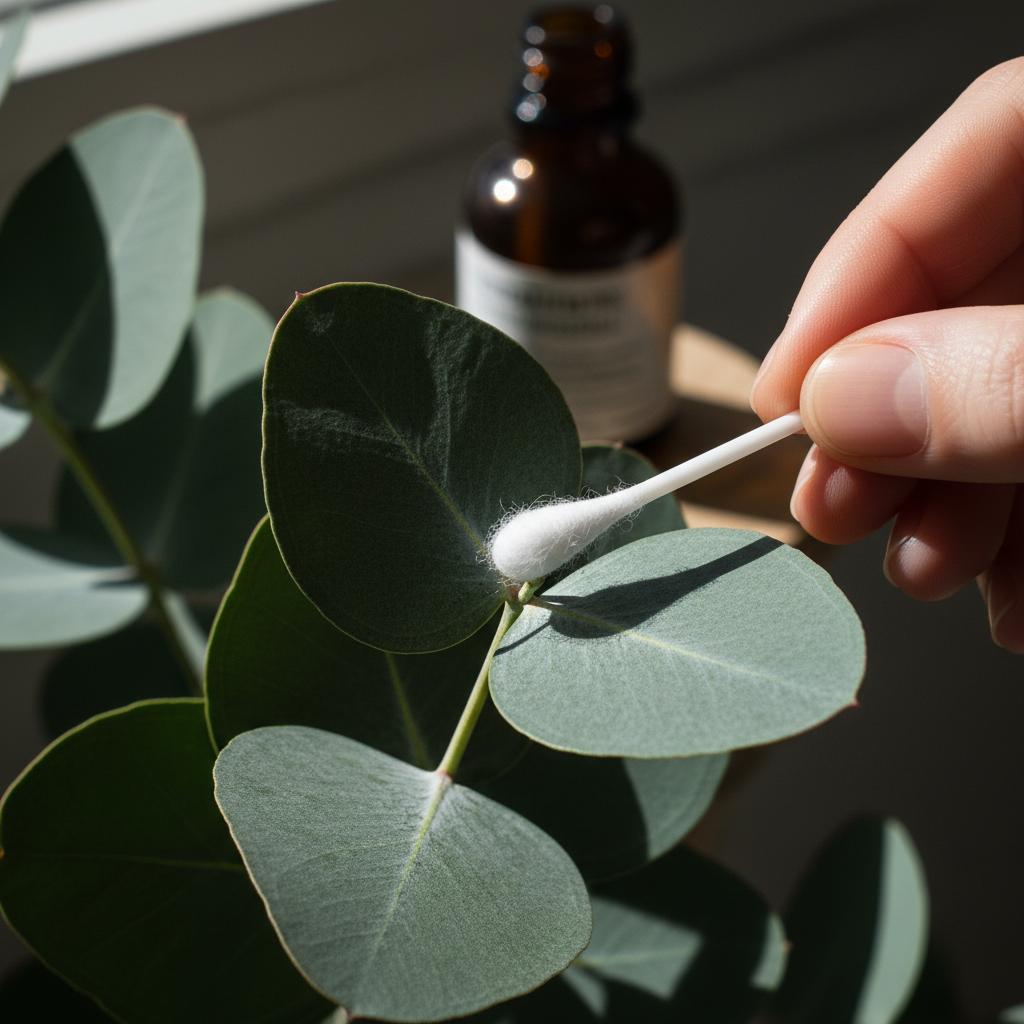
Of the insects, scale and psyllids are the ones to watch, both of which can colonise stems and leaves and excrete sticky honeydew that later blackens with sooty mould. Spider mites occasionally appear on plants kept too hot and dry in stagnant indoor air, betraying themselves with fine webbing and a stippled, dusty look to the leaves; better air movement and a cooler position discourage them. For a minor outbreak, dab the pests off with a cotton bud dipped in dilute isopropyl alcohol or wipe the foliage down, and for anything more established treat with a horticultural soap or a light insecticidal oil, repeating at intervals to catch successive generations.
The problems that actually fell eucalyptus indoors are physiological. Root rot from overwatering or poor drainage is the single most common killer, announced by sudden leaf drop, a sour smell from the soil and stems that soften and blacken at the base; prevention through a gritty mix and disciplined watering is far easier than any cure. Leaf drop and pale, stretched growth point to insufficient light, while blackened, scorched leaf edges most often signal phosphorus toxicity from the wrong fertiliser rather than any disease. Read these signs as a system, the plant is rarely suffering from one isolated fault but from a combination of light, water and feeding that has drifted out of balance, and correcting the underlying conditions usually resolves the symptoms in turn.
Warning — Keep it away from pets and children: Every part of the silver dollar eucalyptus is toxic if eaten, and the concentrated leaf oils can cause nausea, vomiting and worse in cats, dogs and people. Site the plant out of reach, and wash your hands after pruning. The same essential oils that make it smell wonderful are the reason it should never be ingested.
Varieties and Related Eucalyptus
Although Eucalyptus cinerea is the classic silver dollar, several closely related species are sold under the same loose label and grown for the same rounded, silvery juvenile foliage. They share the cultural needs described above, bright light, sharp drainage and a wary approach to phosphorus, but differ in leaf size, density and cold-hardiness, which makes some better suited than others to a given home. The two below are the most widely available alternatives and the ones you are most likely to meet at a nursery or florist.
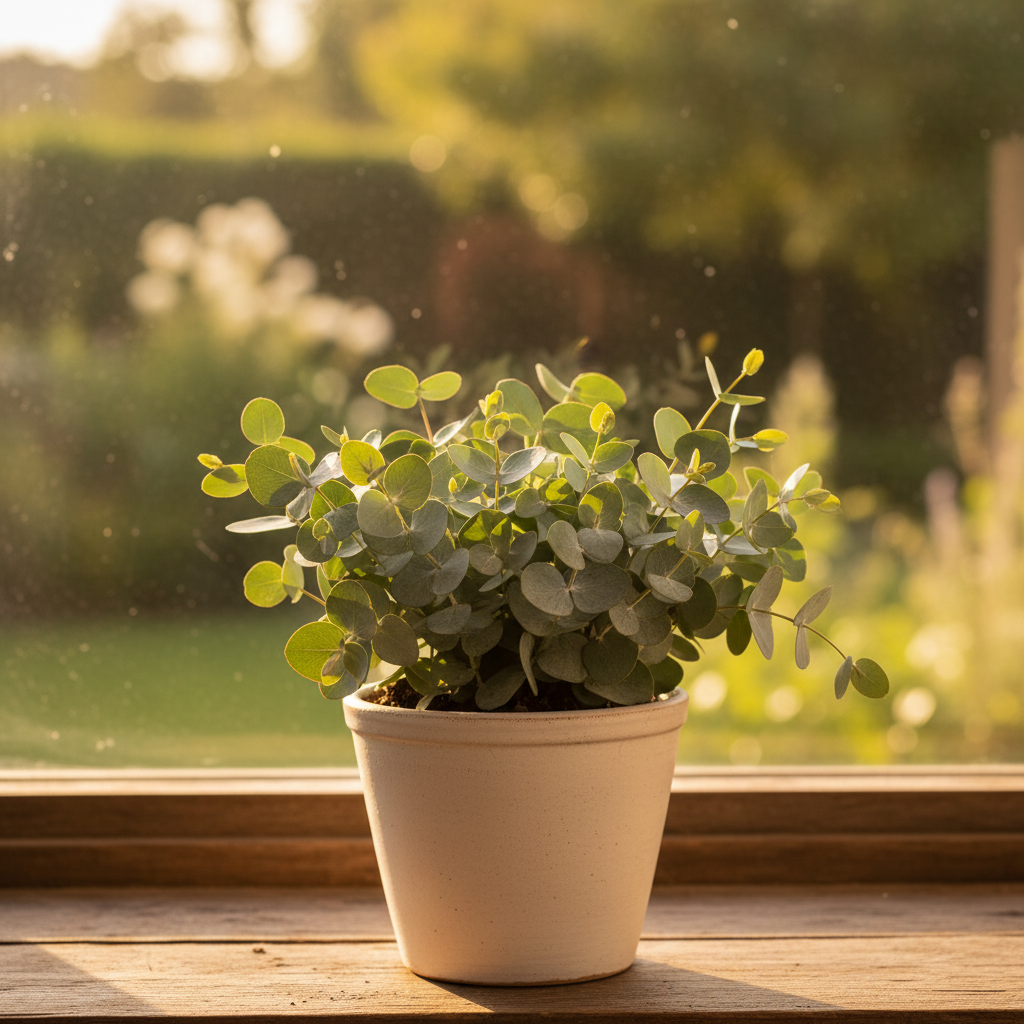
Baby Blue is the florist’s darling, a compact, bushy selection of Eucalyptus pulverulenta with rounded silvery-blue leaves set so densely along the stems that they appear to clasp them. It stays smaller and fuller than cinerea, which makes it the better choice for containers and for a tidy indoor plant, and its abundant, long-lasting cut stems are why it dominates the fresh and dried foliage trade. Treat it exactly as you would the species.
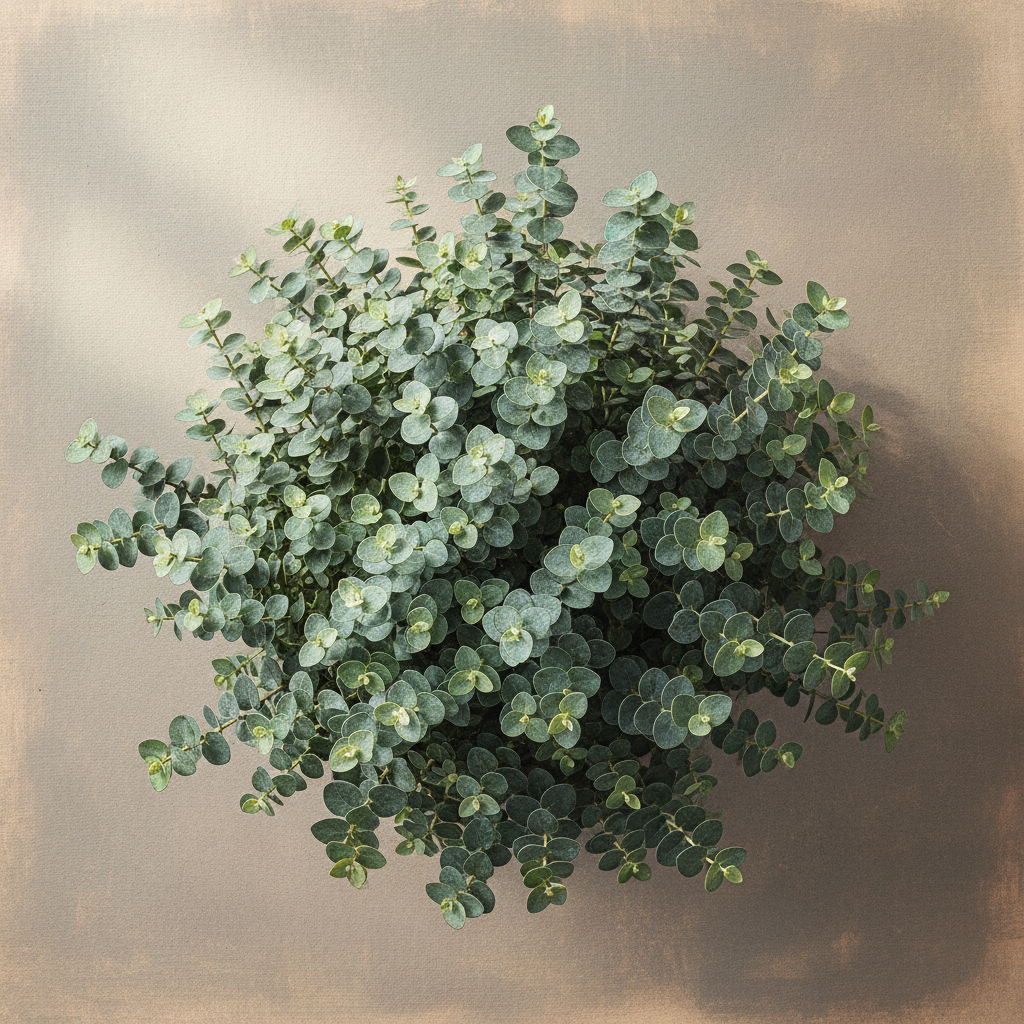
Silver Drop, a selection of the hardy cider gum Eucalyptus gunnii, carries smaller, rounded blue-green juvenile leaves on a bushy, quick-growing plant. Its standout trait is cold-hardiness, it shrugs off frosts that would damage more tender eucalyptus, so it is often grown outdoors in cooler climates or as a fast seasonal accent. Indoors it wants the same bright, cool, well-drained conditions, and responds just as readily to hard pruning to keep its juvenile foliage.
Whichever you grow, a word on pruning ties the varieties together. All of these eucalyptus produce their prized rounded, silvery leaves only as juveniles; left unchecked they eventually transition to longer, sickle-shaped adult foliage that loses much of the charm. Regular hard pruning, even cutting the plant back close to the base, a technique called coppicing, forces it to regenerate fresh juvenile growth and keeps it bushy and well within indoor bounds. The trimmings, of course, are exactly the silver-dollar sprays you would otherwise buy, so pruning pays you twice.
Frequently Asked Questions
Why is my eucalyptus dropping leaves?
Sudden leaf drop almost always traces back to water. A root ball that dried out completely will shed leaves within a day or two, as will roots that have suffocated in soil kept too wet. Check the weight of the pot and feel the moisture deep in the mix before suspecting anything else. Gradual loss of lower leaves, paired with stretched, pale growth, instead points to too little light. Move the plant to the brightest position you have and review your watering rhythm.
How big does a silver dollar eucalyptus get indoors?
In the ground Eucalyptus cinerea can become a 10 to 15 metre (30 to 50 ft) tree, but in a container indoors it is easily kept to 1 to 2 metres (3 to 6 ft) with regular pruning. The plant grows fast, so expect to cut it back hard once or twice a year, which also keeps it producing the rounded juvenile foliage you want rather than the longer adult leaves.
Is silver dollar eucalyptus toxic to cats and dogs?
Yes. The foliage contains essential oils that are toxic to cats, dogs and people if ingested, causing symptoms from drooling and vomiting to more serious effects in quantity. Keep the plant out of reach of curious pets and children, and wash your hands after handling or pruning it. The strong aroma usually deters animals, but it should not be relied upon as a safeguard.
Can I grow eucalyptus from a cutting taken from a bouquet?
It is very unlikely to work. Eucalyptus roots poorly from cuttings even under ideal professional conditions, and florist stems are usually too mature and have been out of water too long to stand any real chance. If you want more plants, growing from seed is far more reliable and gives you vigorous, well-rooted seedlings within weeks. Enjoy the bouquet stems for their scent and dried form instead.
Why are the leaf edges turning black or brown?
Blackened or scorched leaf margins are a classic sign of phosphorus toxicity, which in eucalyptus usually means the wrong fertiliser. These plants evolved on phosphorus-poor soils and cannot tolerate the levels in standard plant foods. Switch to a low-phosphorus or native-plant formula, feed only lightly in spring and summer, and flush the pot with plenty of plain water to leach out accumulated salts. Brown, crispy tips can also follow a complete dry-out, so check your watering too.
Does it really need direct sun, or will bright indirect light do?
It really does want direct sun. The silver dollar eucalyptus is among the most light-hungry plants commonly grown indoors, and bright indirect light, while tolerated, produces stretched, floppy growth and thins the silvery bloom. A south-facing window with several hours of direct sun is the practical minimum, and a spell outdoors in summer is the single best thing you can do for its colour and density.
Grown well, the silver dollar eucalyptus is a plant that gives back more than most. Meet its appetite for light, keep its roots in lean, sharp-draining soil, water with a steady hand and feed with a light one, and it rewards you with fast, fragrant, silvery growth and a steady supply of cuttings for the vase. The line between surviving and thriving is drawn almost entirely in those first two factors, light and drainage, and once you have those right the rest of its care is refreshingly simple.






