
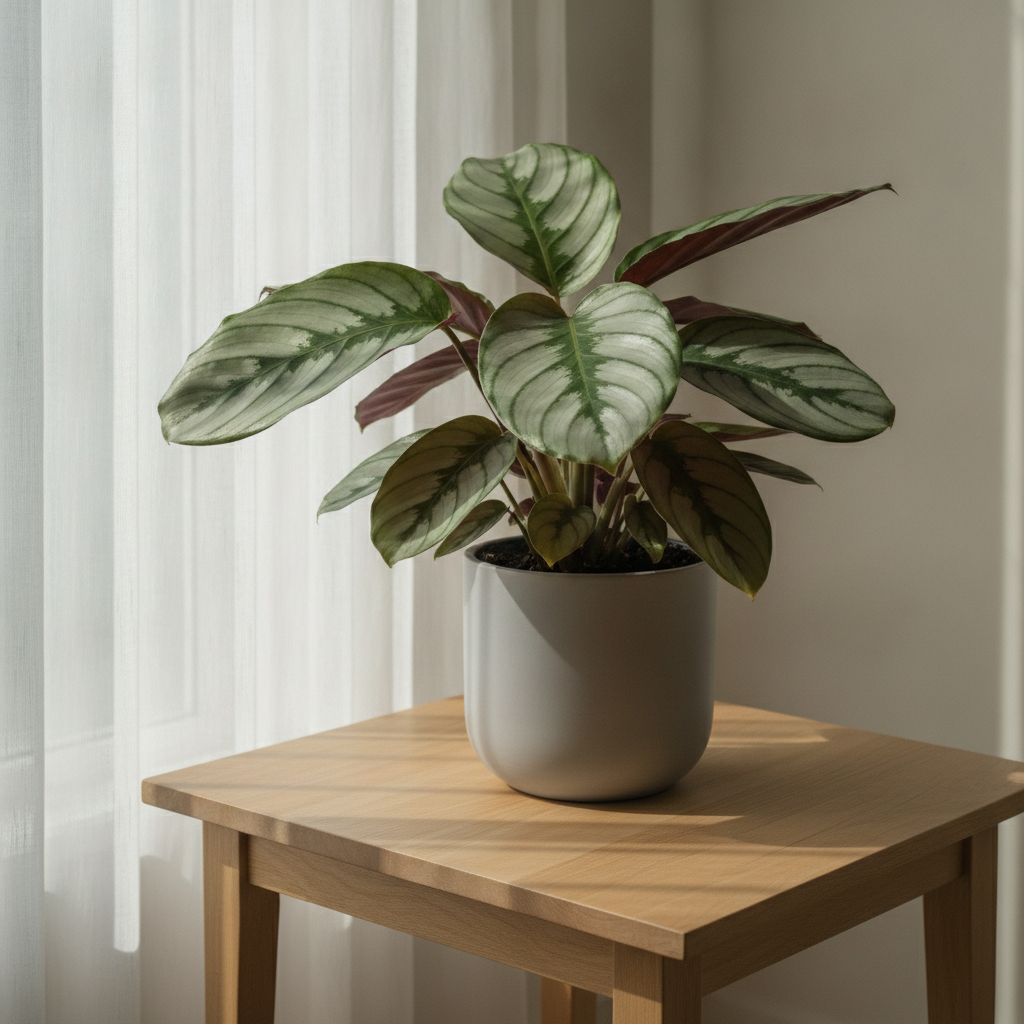
Few houseplants stop a room quite like the silver calathea. Its broad, oval leaves look as though someone brushed liquid mercury across the centre of each one, leaving only a thin ribbon of deep green around the edge and a flush of purple-red beneath. Goeppertia picturata belongs to the prayer plant family, and like its relatives it lifts and folds its foliage each evening in a slow, almost deliberate movement. That living, shape-shifting quality is part of the appeal, and part of the challenge. This is a plant that rewards attention to detail and quietly protests when the humidity drops or the water is wrong.
Quick Reference
Before we get into the detail, here is the plant at a glance. Use this table as a fast reminder once you know the reasoning behind each figure.
| Botanical name | Goeppertia picturata (formerly Calathea picturata) |
| Common names | Silver calathea, silver plate calathea |
| Family | Marantaceae (prayer plants) |
| Origin | Tropical rainforest understorey of Brazil |
| Light | Bright, indirect light; no direct midday sun |
| Water | Keep evenly moist, never soggy; use filtered or rainwater |
| Humidity | High, ideally 60 per cent or more |
| Temperature | 18 to 24 degrees Celsius (64 to 75 Fahrenheit) |
| Soil | Light, airy, moisture-retentive mix that still drains freely |
| Feeding | Dilute balanced feed monthly in spring and summer |
| Propagation | Division of the root clump |
| Toxicity | Non-toxic to cats, dogs and humans |
| Mature size | Around 40 to 60 centimetres (16 to 24 inches) tall and wide |
- Why grow a silver calathea
- Light
- Watering
- Soil and potting
- Fertilising
- Propagation
- Pests and problems
- Varieties
- Frequently asked questions
Why Grow a Silver Calathea as a Houseplant
The silver calathea occupies a particular niche among houseplants: it is grown almost entirely for its foliage, and that foliage is genuinely spectacular. Each leaf can reach 15 to 20 centimetres (6 to 8 inches) long, held on slender stalks that rise from a central clump. The upper surface carries a pale, pewter-to-silver wash that catches light and shifts in tone as you move around the plant, while the underside glows a soft wine-red. Against a dark wall or beside warmer-toned foliage plants, the effect is striking without being loud.
Like all members of the Marantaceae, this species performs a daily ritual called nyctinasty. As evening falls, tiny hinges of tissue at the base of each leaf, called pulvini, swell and contract to raise the foliage upward, and in the morning the leaves relax back down. Growers often say they can hear the faint rustle of a calathea settling for the night. It is a reminder that this is a responsive, almost animate plant rather than a static piece of decor.
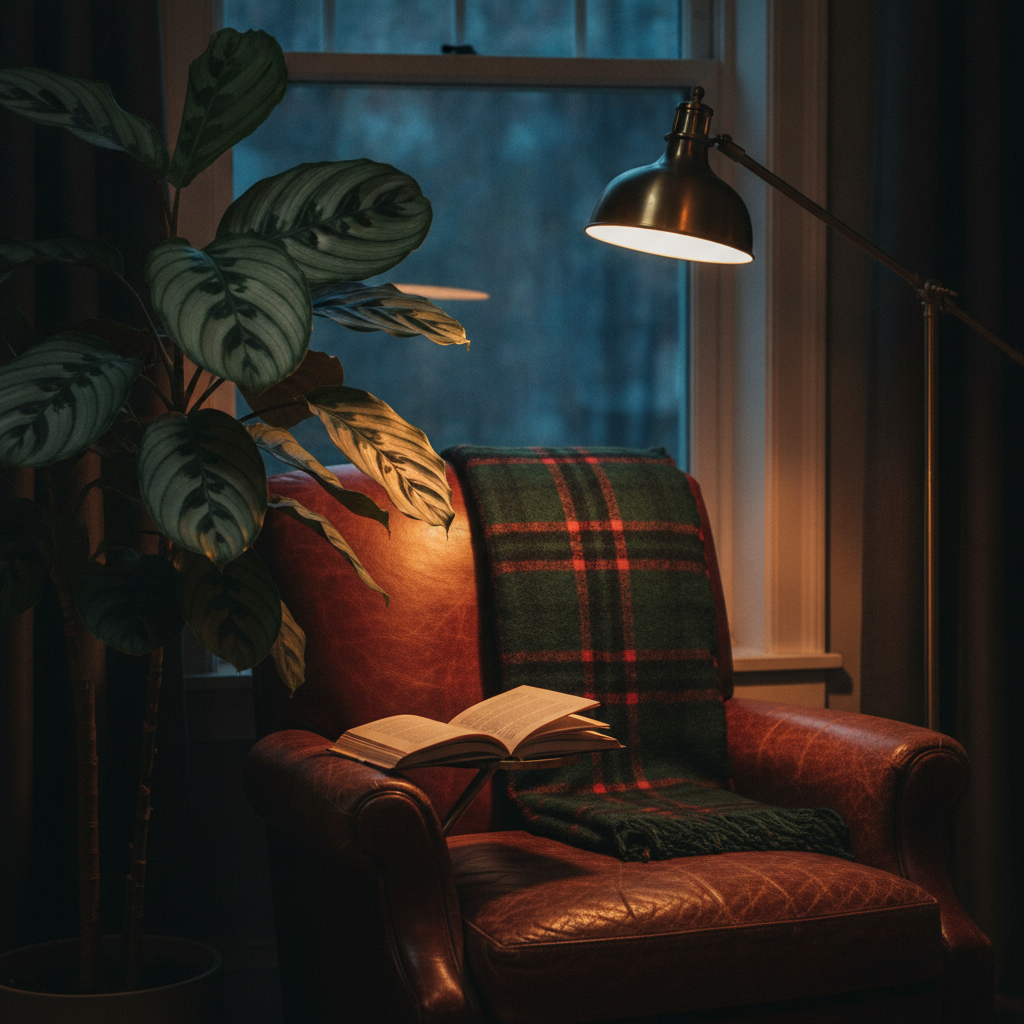
There is an honest conversation to have about difficulty. The silver calathea has a reputation as a diva, and that reputation is partly deserved. It will survive a fair range of ordinary indoor conditions, but the gap between surviving and thriving is wider here than with an easygoing pothos or snake plant. A calathea that is merely surviving develops crisp brown leaf edges, curling foliage and a generally tired look. A calathea that is thriving unfurls fresh leaf after fresh leaf with the silver markings at full intensity. Almost everything in this guide is aimed at closing that gap, and the good news is that the plant’s needs are consistent and logical once you understand where it comes from.
One further point in its favour: Goeppertia picturata is completely non-toxic to cats, dogs and children. Households that have to think carefully about pet-safe greenery can place this plant anywhere without worry, which is not something you can say about many of the dramatic foliage plants it competes with.
Pro Tip – Read the leaves: Your silver calathea is a living moisture and humidity gauge. Curling leaves usually mean the air is too dry or the roots are thirsty, while crisping brown edges point to mineral build-up or low humidity. Learn to read these signals early and you will rarely lose a leaf.
Light
In the wild, the silver calathea grows on the shaded floor of the Brazilian rainforest, where the dense canopy above filters sunlight down to a soft, dappled glow. Recreating that quality of light indoors is the single most important thing you can do for the plant’s appearance. It wants brightness without the harshness of direct sun striking the leaves.
Bright, indirect light is the target. An east-facing window that receives gentle morning sun is close to ideal, as is a spot a metre or so back from a south or west window where the fierce afternoon rays are broken by a sheer curtain. North-facing rooms can work provided they are genuinely bright, though growth will be slower and you may see the silver markings fade slightly. The mistake to avoid is placing the plant on a sunny sill where the midday sun lands squarely on the foliage. Direct sun scorches the delicate leaf surface, bleaches the silver to a washed-out grey and can leave dry, papery patches that never recover.
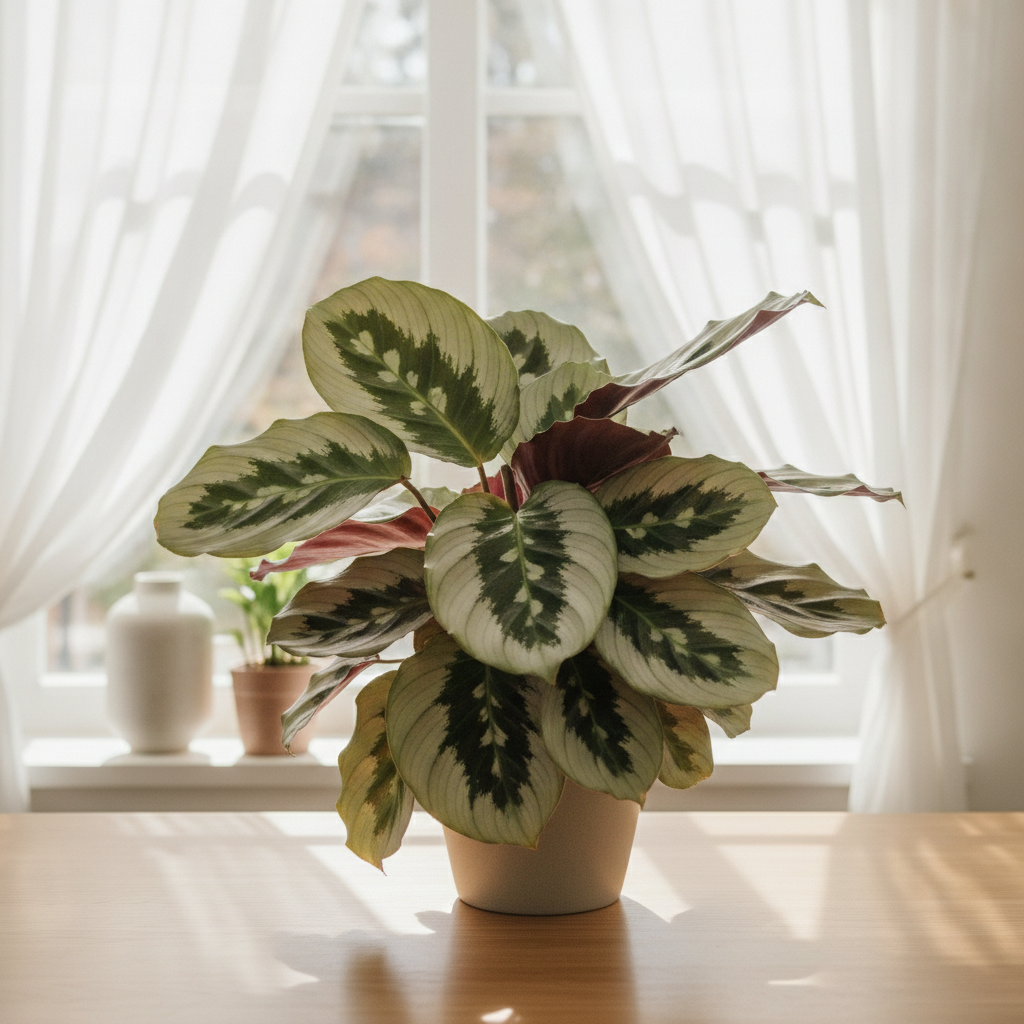
Watch the plant for feedback. If the leaves start to look pale and the vivid contrast between silver and green softens, the plant may be receiving too much light and is producing less pigment to protect itself. If the new leaves come in smaller, the stalks stretch and lean noticeably toward the window, and the plant looks generally sparse, it is reaching for more light and should be moved somewhere brighter. Rotating the pot a quarter turn each week keeps growth even and stops the clump leaning permanently in one direction.
Through the darker months, when daylight in temperate climates is short and weak, you may need to shift the plant closer to a window to maintain the same effective brightness. A full-spectrum LED grow light on a timer for 10 to 12 hours a day is a reliable way to keep colour and growth steady over winter, and calatheas respond well to it. Because the leaves are so sensitive, keep any grow light at a sensible distance rather than directly overhead and close.
Watering
Watering is where most silver calatheas are won or lost. The plant wants its soil kept consistently and evenly moist, like a wrung-out sponge, throughout the growing season. It does not want to dry out completely, and it emphatically does not want to sit in waterlogged, airless soil. Threading that needle takes a little practice, but the plant gives clear feedback along the way.
The practical routine is to check the top of the compost with a finger. When the top 2 to 3 centimetres (about an inch) feels barely moist and is beginning to dry, it is time to water. Add water slowly and evenly across the surface until it runs freely from the drainage holes, then let the pot drain fully before returning it to its cover pot or saucer. Never leave the plant standing in a reservoir of drained water, as the roots will suffocate and rot within days.
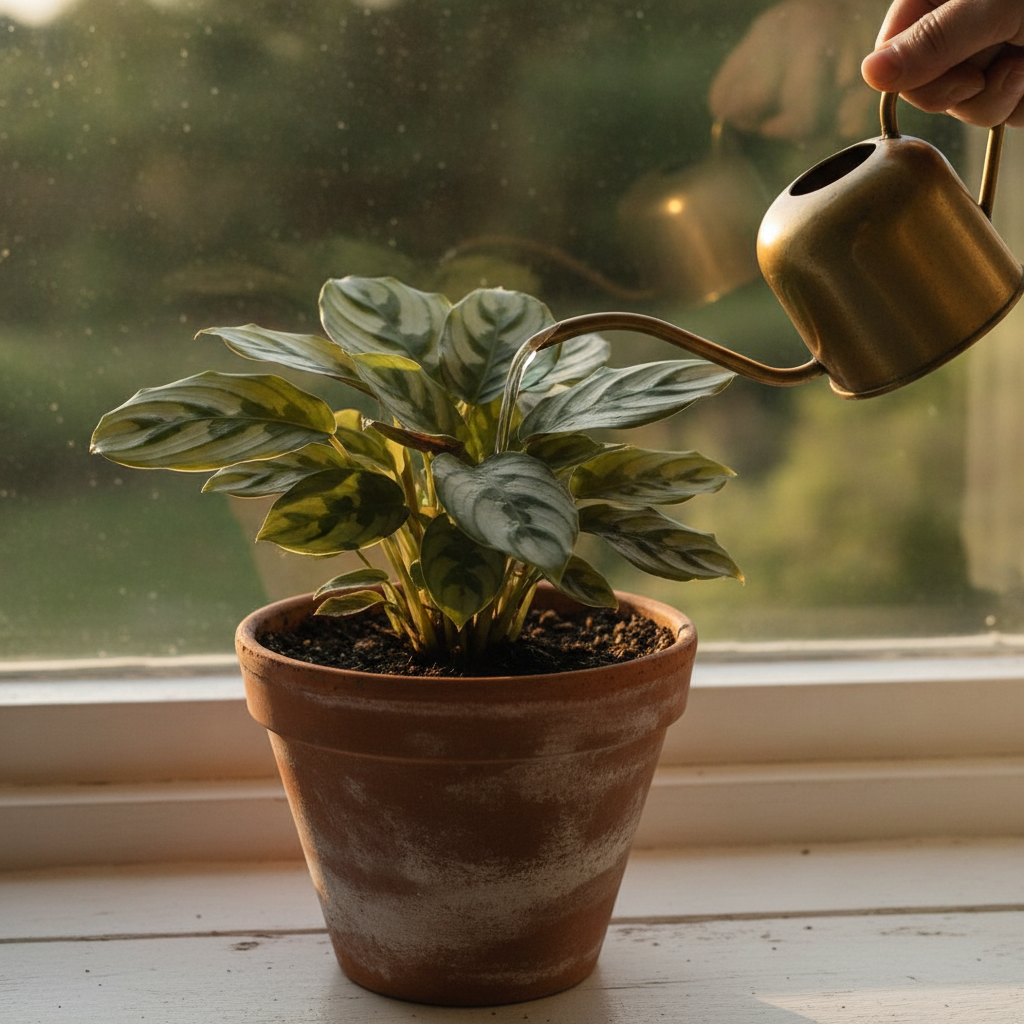
Water quality matters more for this plant than for almost any other common houseplant. Calatheas are sensitive to the fluoride, chlorine and dissolved salts found in much municipal tap water, and the classic symptom of that sensitivity is a hard brown crisping along the leaf edges. If you can, water with rainwater, distilled water or filtered water. If only tap water is available, leaving it to stand uncovered overnight allows some of the chlorine to dissipate, though it does nothing for fluoride, so filtered or collected rainwater remains the better long-term answer. Use water at room temperature, because cold water shocks the tropical roots.
Adjust the rhythm to the seasons. In the warmth and longer days of spring and summer the plant is actively growing and drinks more, so you might water once or twice a week depending on your conditions. In autumn and winter growth slows, the compost stays wet for longer, and overwatering becomes the main danger, so let the surface dry a little more between waterings. Always let the plant and the pot weight guide you rather than watering rigidly to a calendar.
Humidity
Humidity deserves its own note because it is inseparable from watering in keeping the leaves pristine. Coming from a humid rainforest floor, the silver calathea is happiest when relative humidity sits at 60 per cent or higher. In the dry air of a centrally heated home, which can fall below 30 per cent in winter, the leaf edges brown and curl no matter how carefully you water. The most effective remedy is a small room humidifier running near the plant. Grouping plants together raises the local humidity, and a tray of pebbles topped with water beneath the pot helps a little, provided the pot base sits on the pebbles and not in the water. Misting is popular but offers only a brief lift and, if the foliage stays wet in cool, still air, it can encourage fungal spotting, so it is not a substitute for genuinely humid air.
Warning – Cold, wet feet: The fastest way to kill a silver calathea is to combine cold and soggy. A plant left in waterlogged compost in a chilly, draughty spot will develop root rot with alarming speed. If in doubt, improve the drainage and warmth before you add more water.
Soil and Potting
The ideal compost for a silver calathea manages a careful balancing act: it must hold enough moisture to keep the roots evenly damp, yet remain open and airy enough that water drains freely and the roots can breathe. A dense, heavy compost that stays sodden is the enemy, and so is a fast-draining cactus mix that dries out in a day.
A reliable blend starts with a good peat-free houseplant compost or coco coir as the moisture-holding base, lightened with roughly one part perlite for aeration and drainage, and enriched with a handful of fine orchid bark and, if you have it, a little worm castings for gentle nutrition. Coco coir is a good sustainable choice for the base because it holds water well while resisting the compaction that ordinary garden soil suffers indoors. The finished mix should feel light and springy in the hand and should never pack down into a solid mass.
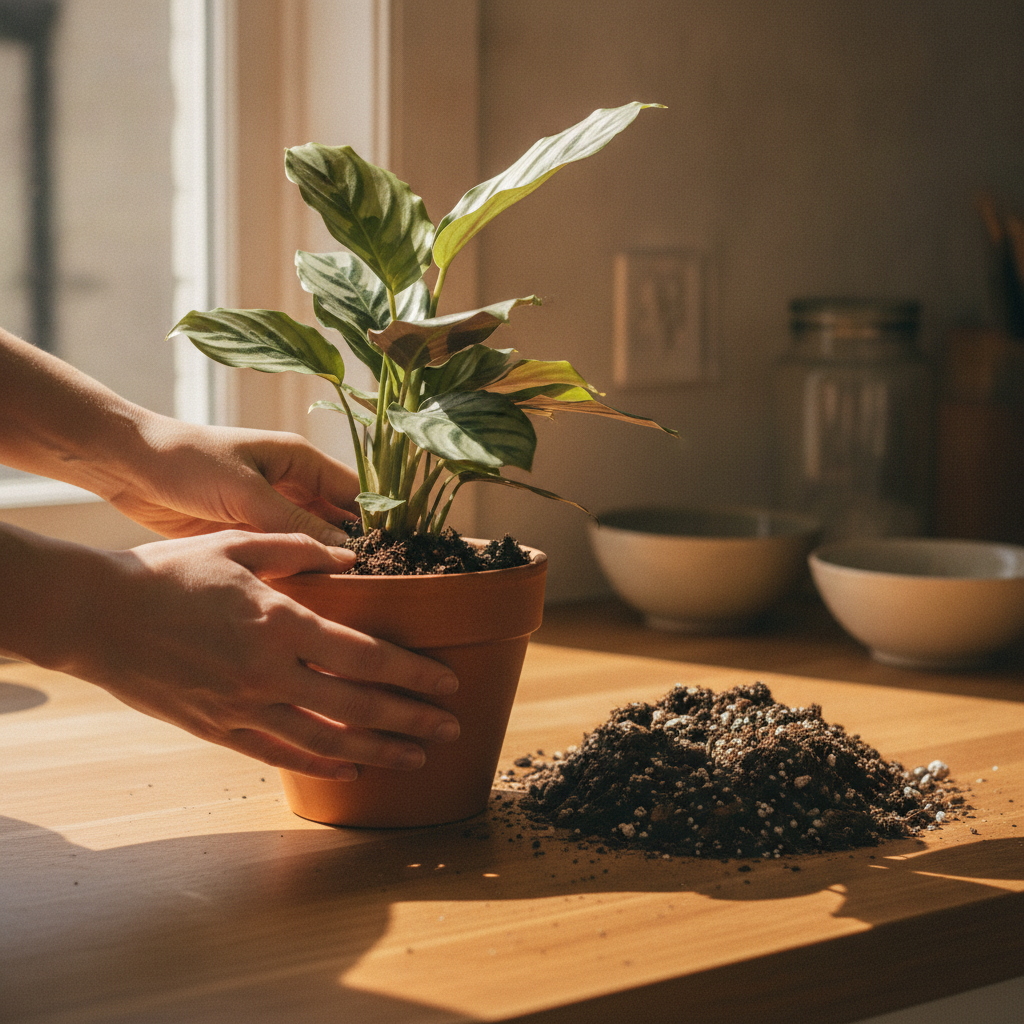
Silver calatheas are not aggressive growers, so they only need repotting every one to two years, ideally in spring as growth resumes. Signs that a repot is due include roots creeping out of the drainage holes, water running straight through without wetting the compost, and a plant that dries out unusually fast. When you do repot, choose a container only one size larger, around 2 to 4 centimetres wider than the current pot. An oversized pot holds a large volume of wet compost that the modest root system cannot use, and that surplus moisture invites rot. Whatever pot you choose, it must have drainage holes; a decorative cover pot without holes is fine only if you lift the inner pot out to water and drain it.
To repot, ease the plant from its old container, gently tease away some of the spent compost from around the roots, settle it at the same depth in fresh mix, and firm the compost lightly so there are no large air pockets. Water it in, then keep it somewhere warm and humid while it re-establishes. A little sulking for a week or two after repotting is normal and nothing to worry about.
Fertilising
The silver calathea is a light feeder, and restraint serves it far better than generosity. During the active growing season of spring and summer, a balanced liquid houseplant fertiliser diluted to half the recommended strength and applied roughly once a month is plenty. This steady trickle of nutrition supports the flush of new leaves without overwhelming the sensitive root system.
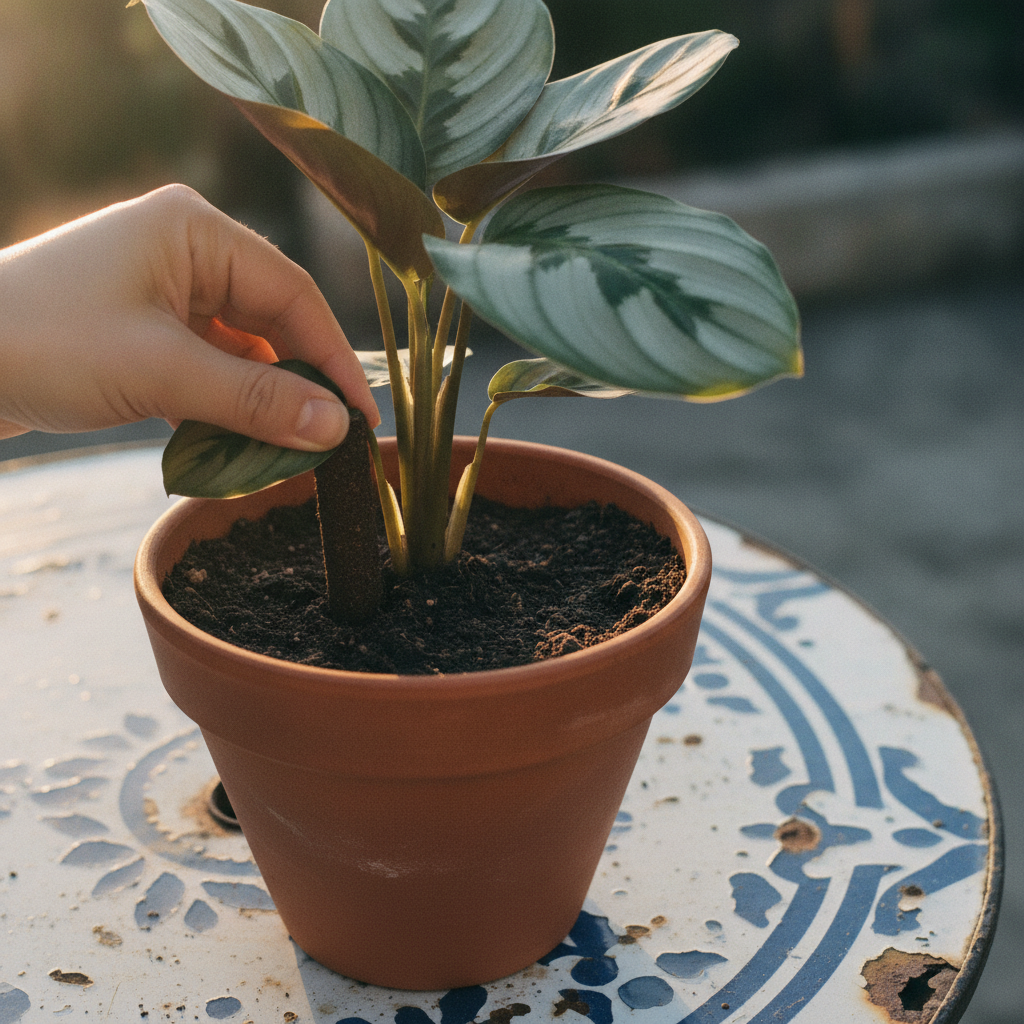
The chief risk with feeding a calathea is fertiliser salt build-up. Because the plant already resents the minerals in tap water, adding excess fertiliser compounds the problem, and the leaf tips and edges respond by turning brown and crisp. Always apply feed to already-damp compost rather than to bone-dry roots, which prevents the concentrated solution from burning fine root hairs. Every couple of months during the growing season it is worth flushing the pot: water it thoroughly two or three times in succession so that plenty runs out of the base, carrying accumulated salts away with it.
Stop feeding altogether through autumn and winter. Growth naturally pauses in the low light and cooler temperatures of those months, and fertiliser applied to a resting plant simply accumulates as unused salts in the compost. Resume the gentle monthly rhythm only when you see fresh growth signalling that the plant has woken up in spring.
Propagation
The silver calathea is propagated by division, and this is the only reliable method for the home grower. Unlike a pothos or a philodendron, it cannot be grown from a leaf or stem cutting placed in water, because it does not root from cut stems. Instead, the plant grows as a clump of individual shoots rising from a shared root system, and that clump can be separated into smaller plants, each with its own roots and foliage.
The best time to divide is in spring, at repotting time, when the plant is entering its most vigorous growth and will recover quickly. A mature, healthy clump with several distinct groups of stems is the ideal candidate. Attempting to divide a small or stressed plant only sets both halves back.
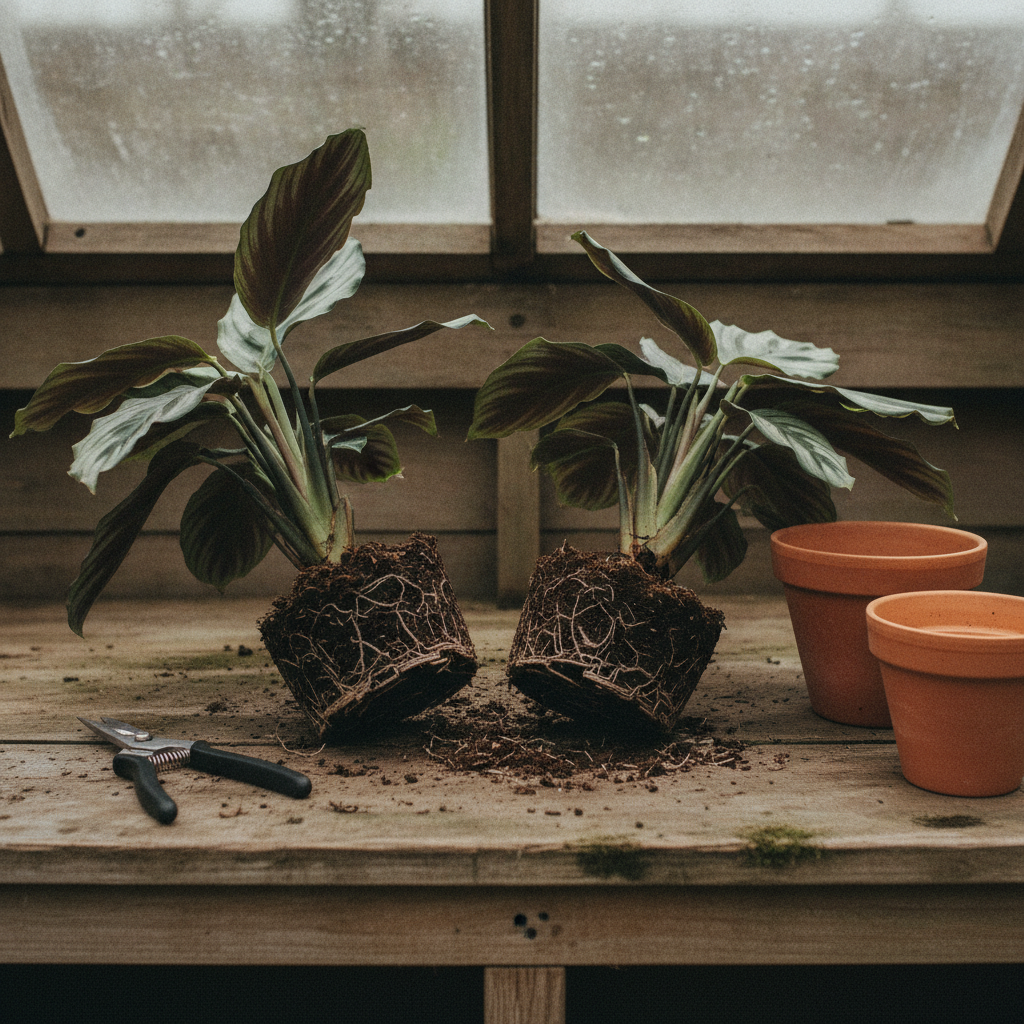
Work through the process gently and unhurriedly:
- Water the plant a day beforehand so the roots are hydrated and the compost eases away cleanly.
- Slide the whole plant out of its pot and brush away enough compost to see how the clump is naturally divided into separate crowns of stems.
- Tease the roots apart with your fingers, following the natural divisions. Where roots are too intertwined to pull apart, cut cleanly with a sterilised knife or secateurs, making sure each new section has a healthy portion of roots and at least a few leaves.
- Pot each division into its own small container filled with the same light, airy mix, planting at the depth it grew before.
- Water in gently and place the new plants somewhere warm, bright and humid, out of direct sun.
Newly divided plants often pause and sulk for a few weeks while their disturbed roots recover, and it is normal for a leaf or two to yellow and drop during this settling-in period. Keeping the humidity high, the warmth steady and the compost lightly moist, while resisting any urge to feed until fresh growth appears, gives each division the best chance of establishing into a full, healthy plant.
Pests and Problems
Most trouble with a silver calathea shows up first in the leaves, and most of it traces back to air that is too dry, water that is too mineral-rich, or compost that is too wet. Pests are a secondary concern, though the same dry conditions that stress the plant also invite the worst of them.
Spider mites are the classic enemy. These almost invisible pests thrive in warm, dry air, exactly the conditions a struggling calathea often endures, and they announce themselves with fine pale stippling on the leaves and delicate webbing in the leaf axils and along the undersides. Because high humidity discourages them, the same care that keeps the foliage pristine also keeps mites at bay. Thrips and the occasional mealybug can also appear, the latter as small cottony white tufts tucked where leaf meets stalk.
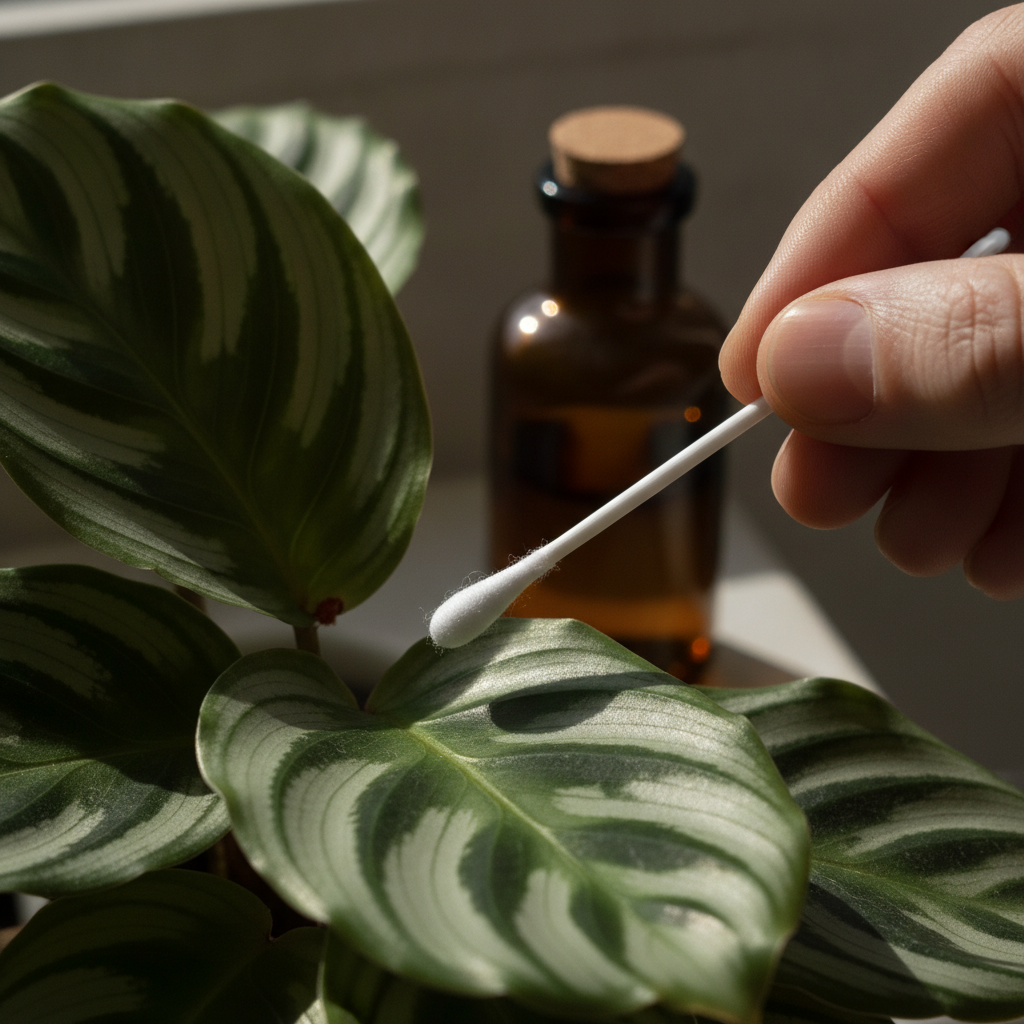
At the first sign of pests, isolate the plant so nothing spreads to your other greenery. For a light infestation, wipe the leaves, especially the undersides, with a damp cloth, and dab any visible mealybugs with a cotton bud moistened with diluted isopropyl alcohol. For anything more persistent, treat the whole plant with an insecticidal soap or a diluted neem oil solution, covering the undersides thoroughly and repeating every week or so until the problem is gone. Raising the humidity at the same time removes the conditions the pests favour.
The non-pest problems are more common and usually easier to fix once you know the cause. Crispy brown leaf edges point to low humidity, mineral-heavy tap water, or fertiliser salt build-up, so switch to filtered or rainwater, raise the humidity and flush the compost. Curling or folded leaves that do not relax overnight usually signal underwatering or dry air. Yellowing leaves most often mean overwatering and the beginnings of root rot, so check that the compost is not waterlogged and that the pot drains freely. Faded, washed-out silver markings suggest too much direct light. Sudden leaf drop or a general collapse tends to follow cold draughts or a chilly, wet root ball. In nearly every case the plant is telling you which of its core conditions has slipped, and correcting that condition brings the fresh growth back.
Varieties
Goeppertia picturata is grown in a handful of named forms, all sharing the same care but differing in exactly how the silver is distributed across the leaf. The two most widely available are shown below.
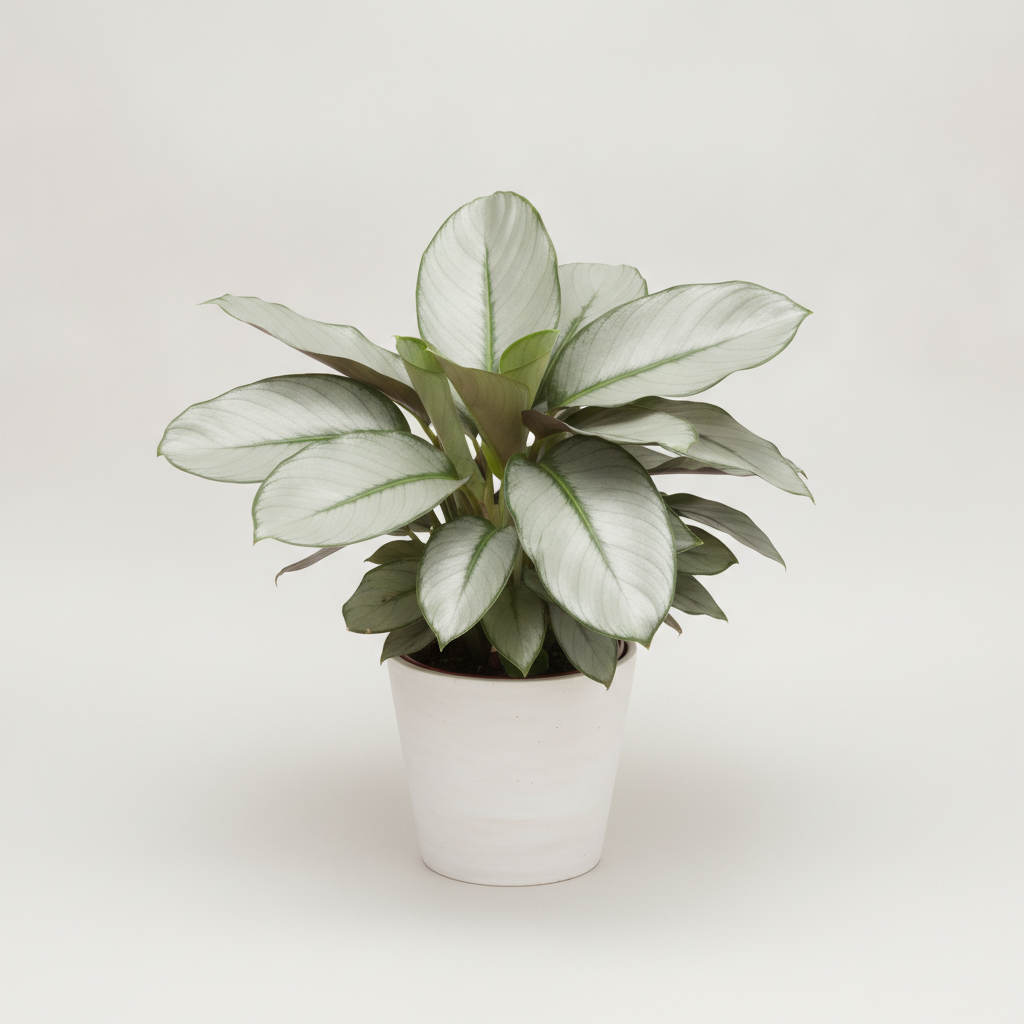
‘Argentea’
The most dramatic form, with leaves washed almost entirely in a luminous, metallic silver and edged by only the thinnest ribbon of dark green. From a distance an ‘Argentea’ can look as though its foliage has been dipped in pewter. It is the variety most people picture when they think of a silver calathea, and it makes an arresting specimen against a dark background.
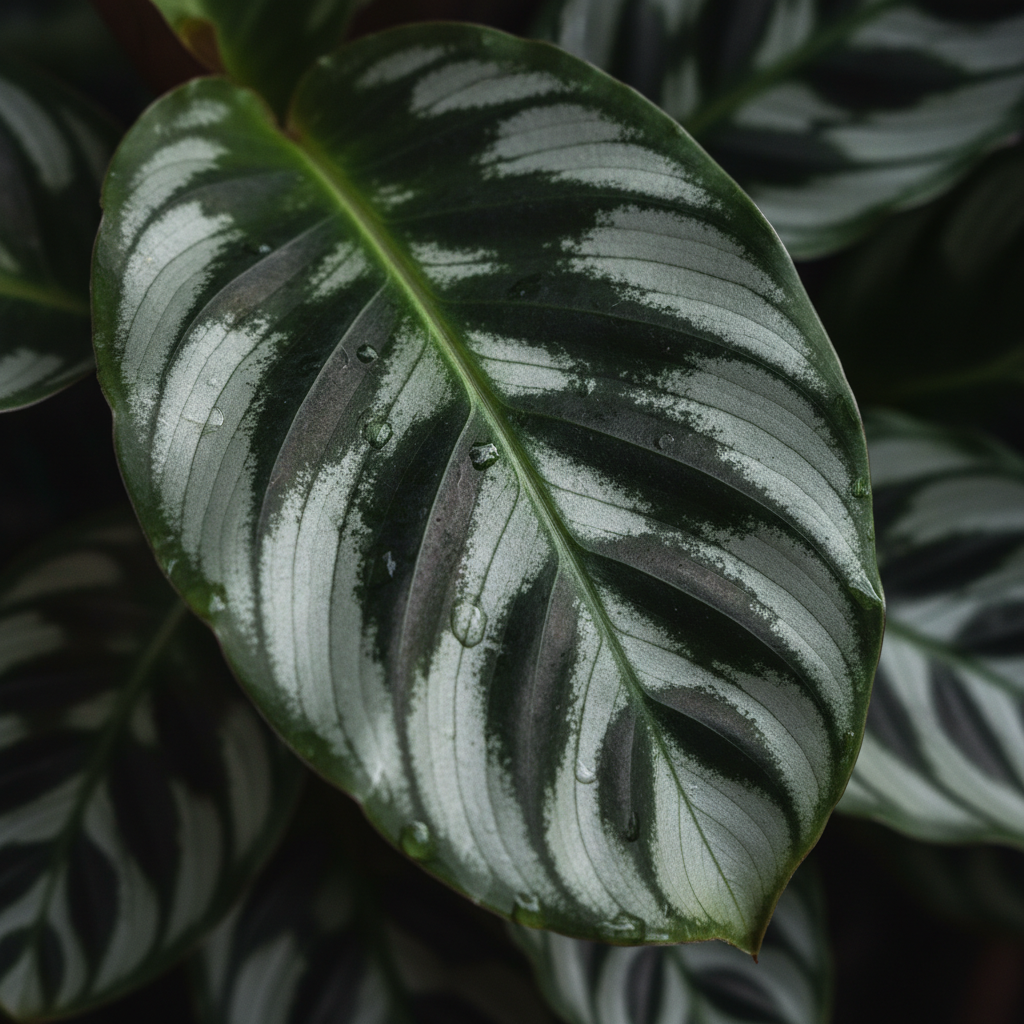
‘Vandenheckei’
A more patterned form, with deep green leaves marked by a broad, feathered silver stripe down the central vein and a second silvery band running just inside the leaf margin. The contrast between the dark green and the two silver zones gives it an almost hand-painted look, and many growers find it the more elegant of the two. Its care is identical to the species.
Frequently Asked Questions
Why are the leaf edges on my silver calathea turning brown and crispy?
This is the most common calathea complaint and it nearly always comes down to one of three things: air that is too dry, tap water high in fluoride, chlorine and salts, or fertiliser build-up in the compost. Switch to filtered water or rainwater, raise the humidity to 60 per cent or above with a humidifier, and flush the pot occasionally to wash out accumulated salts. Trim the crisp edges away with clean scissors if you wish, following the natural leaf shape.
Is the silver calathea safe for cats and dogs?
Yes. Goeppertia picturata is non-toxic to cats, dogs and humans, which makes it one of the safer dramatic foliage plants for a household with curious pets or young children.
Why do the leaves fold up at night?
This nightly folding, called nyctinasty, is a natural feature of the prayer plant family. Small hinges of tissue at the base of each leaf raise the foliage in the evening and lower it again in the morning. It is a sign of a healthy, responsive plant, not a problem. If the leaves stay curled during the day, however, the plant is usually thirsty or the air is too dry.
Can I propagate a silver calathea from a leaf cutting?
No. Unlike many trailing houseplants, a silver calathea will not root from a leaf or stem cutting placed in water or soil. The only reliable method is division, separating an established clump into smaller plants each with their own roots, ideally in spring at repotting time.
How often should I water it?
There is no fixed schedule. Aim to keep the compost evenly moist and water when the top 2 to 3 centimetres begins to dry, which might mean once or twice a week in spring and summer and less often in winter. Always use room-temperature filtered or rainwater, and let the pot drain fully so the roots never sit in standing water.
My silver calathea is losing its silver colour. What is wrong?
Faded, washed-out markings usually mean the plant is getting too much direct light and is producing less pigment to protect its leaves, or occasionally that light levels are too low for healthy growth. Move it to a spot with bright but indirect light, out of direct sun, and the contrast between silver and green should return with the next flush of leaves.






