
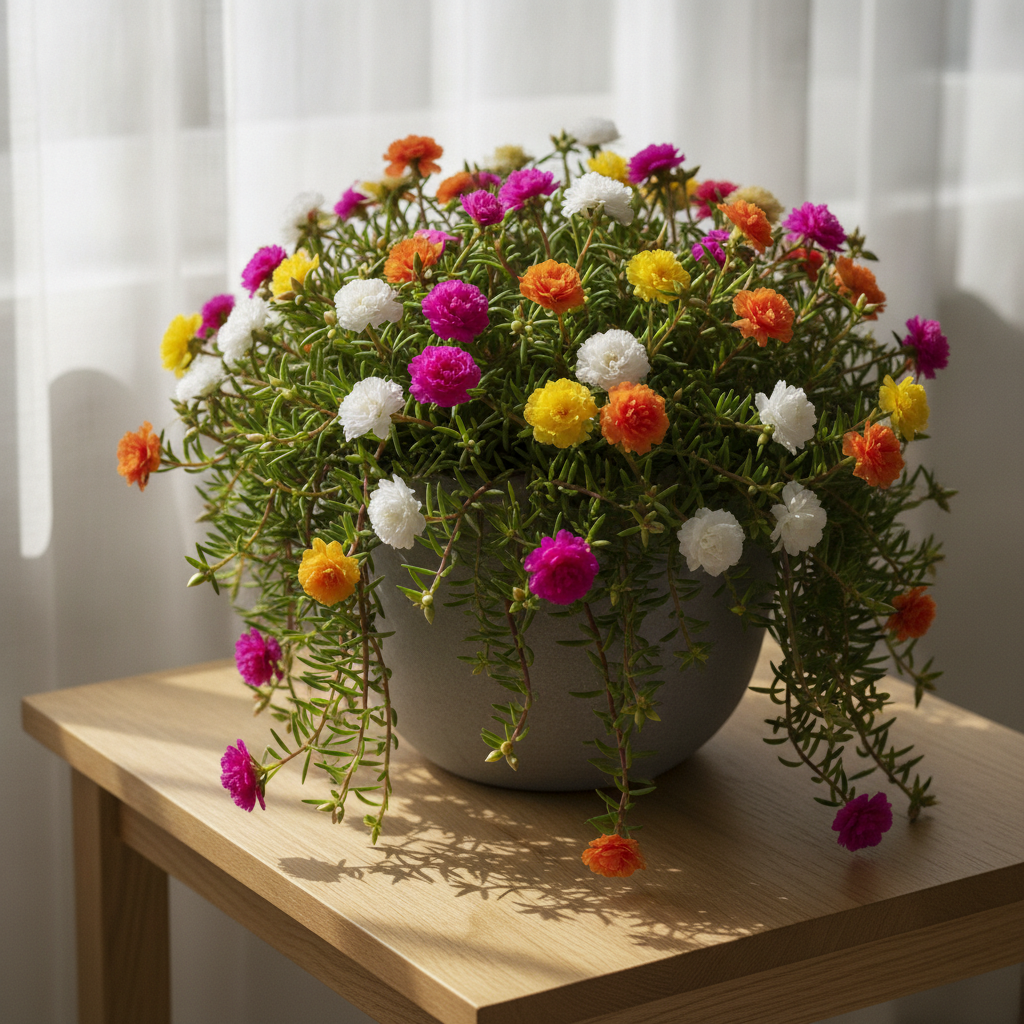
Few plants pack as much colour into as little effort as rose moss, a low, sprawling succulent whose satiny, rose-shaped flowers open across the hottest, brightest part of the day. Known botanically as Portulaca grandiflora, it travels under a long list of common names, including moss rose, sun plant, sun rose, Mexican rose and the charming “eleven o’clock”, a nod to the way its blooms unfurl only once the sun climbs high. Native to the hot, sandy plains of Argentina, southern Brazil and Uruguay, it evolved to shrug off drought, poor soil and blistering heat, storing water in fleshy, needle-like leaves and reddish trailing stems.
That heritage makes rose moss one of the easiest flowering plants you can grow, provided you give it the one thing it cannot live without: sunshine. It is usually grown as a warm-season annual in containers, hanging baskets and along sunny sills, and it is more than happy on the brightest windowsill in your home. The difference between a plant that merely survives and one that truly thrives comes down to light, restraint with the watering can and a gritty, fast-draining soil. This guide walks through every element of its care, from reading light levels correctly to propagating new plants from a single snipped stem.
Contents
- Quick Reference
- Why Rose Moss Makes a Rewarding Houseplant
- Light Requirements
- Watering & Humidity
- Soil, Potting & Repotting
- Fertilising
- Propagation
- Pests & Diseases
- Popular Varieties
- Frequently Asked Questions
Quick Reference: Rose Moss at a Glance
| Light | Full, direct sun; at least 6 to 8 hours daily. The brightest spot you have. |
| Watering | Sparing. Water only when the soil has dried out completely; drought tolerant. |
| Temperature | 21 to 32 degrees Celsius (70 to 90 Fahrenheit). Loves heat; not frost hardy below about 10 degrees Celsius (50 Fahrenheit). |
| Humidity | Low. Thrives in dry air and dislikes prolonged damp. |
| Fertiliser | Light. A diluted balanced feed once a month in the growing season, if at all. |
| Toxicity | Mildly toxic to cats, dogs and horses if eaten in quantity, due to soluble oxalates. |
Why Rose Moss Makes a Rewarding Houseplant
Rose moss earns its place on a sunny sill by doing something surprisingly few houseplants manage: flowering continuously, generously and in colours that read as almost artificial in their brightness. A single well-grown plant can carry dozens of open blooms at once through the warm months, in scarlet, magenta, coral, apricot, gold, cream and pure white, often with several shades scattered across the same tray of seedlings. The flowers are cup-shaped and rose-like, single in the wild species and fully double in most modern cultivars, and they sit just above a dense mat of glossy, cylindrical leaves that store water like tiny reservoirs.
Beyond the spectacle, the appeal is its sheer resilience. This is a plant that forgives the forgetful and punishes only the overzealous. It asks for no misting, no humidity trays and no fussing over draughts. Its succulent structure means it copes with a missed watering far better than a missed drink would trouble a fern or a calathea, and its love of heat makes it comfortable in the warm, dry conditions of a centrally heated home that many tropical foliage plants resent. The one non-negotiable is bright light, which we will return to at length. Give it that, and rose moss will thrive with an ease that makes it an excellent choice for beginners, children’s first gardens and anyone chasing colour on a hot, exposed windowsill or balcony.
Important — Toxicity: Rose moss contains soluble oxalates and is considered mildly toxic to cats, dogs and horses if eaten in quantity. Ingestion can cause drooling, vomiting and loss of appetite. It is not among the most dangerous houseplants, but curious pets and small children are best kept from grazing on it. Site it out of easy reach and contact a vet or doctor if a significant amount is swallowed.
Light Requirements
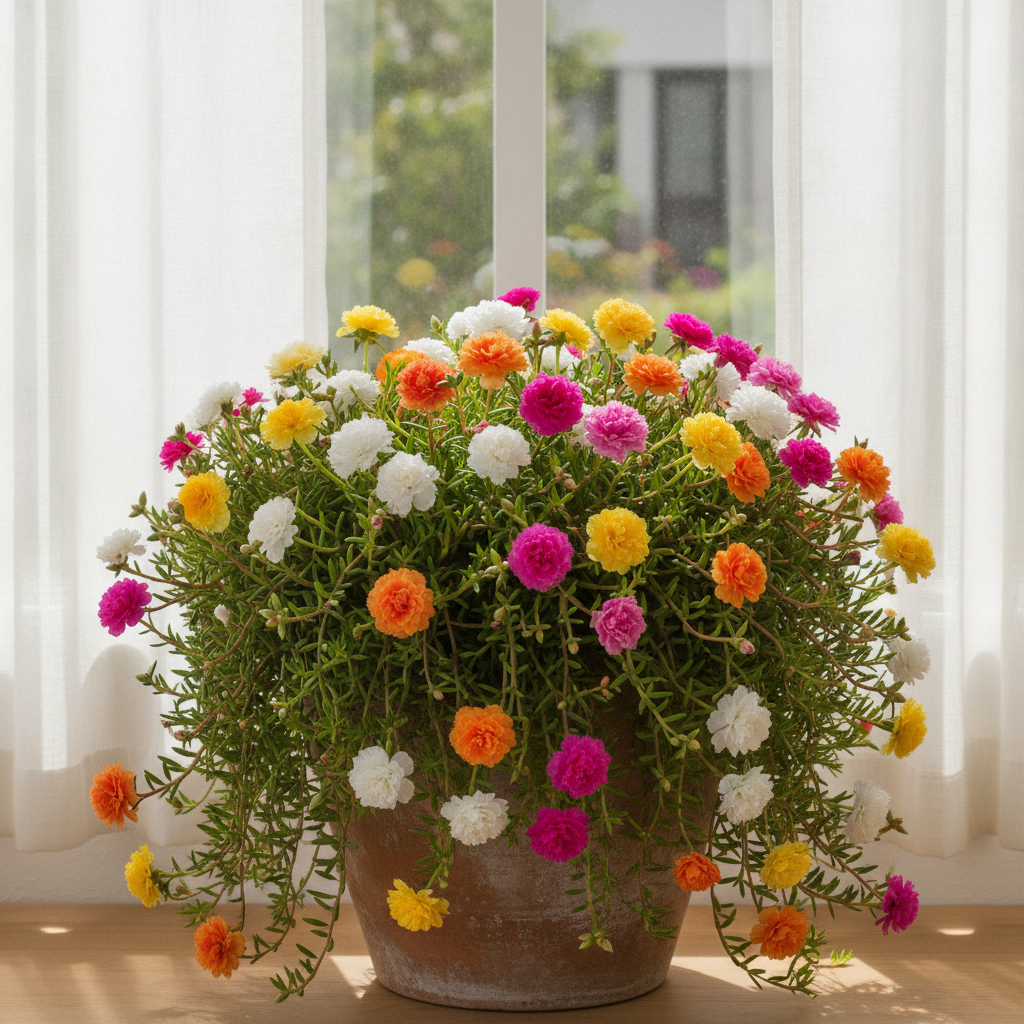
If you remember only one fact about rose moss, make it this: light is everything. This is a true sun worshipper, and almost every disappointment growers report, from leggy stems to a plant that simply refuses to flower, traces back to insufficient light. In its native range it grows in open, exposed ground under a fierce sun, and it has never lost that appetite. Indoors it needs the single brightest position you can offer, ideally with several hours of direct sun falling straight onto the leaves.
Aim for a minimum of six hours of direct sunlight a day, and understand that eight or more is better still. The flowers themselves are light-triggered: most open only in strong sun and close again in shade, cloud or the evening, which is precisely why the plant picked up the nickname eleven o’clock. A rose moss kept in gentle, indirect light may stay alive and even push out a few leaves, but it will sulk, stretch and stay stubbornly shut. Bright, unfiltered light is not a luxury for this plant; it is the switch that turns the flowers on.
Light Levels Explained
Gardeners often talk about light in loose terms, but rose moss responds so sharply to it that a clearer scale is worth having. The table below sets out how the plant behaves across the range of light levels found in a typical home, measured roughly in lux for reference.
| Light Category | Approx. Level | Typical Location | Outcome |
|---|---|---|---|
| Direct sun | 50,000 lux and above | On a south-facing sill, unobstructed | Ideal. Compact growth, abundant flowering. |
| Bright indirect | 10,000 to 25,000 lux | Just back from a bright window | Survives but flowers sparsely; stems begin to stretch. |
| Medium | 5,000 to 10,000 lux | An east or north sill | Poor. Leggy growth, few or no flowers. |
| Low | 1,000 to 5,000 lux | Interior of a room | Decline. Weak, pale stems; no blooms. |
| Very low | Below 1,000 lux | Hallways, shaded corners | Unsuitable. The plant slowly starves. |
Window Orientation and Placement
South-facing window: The best choice by a wide margin in the northern hemisphere. A south sill delivers the long hours of direct sun that rose moss needs to flower freely. Place the pot right against the glass rather than a metre back, and rotate it every few days so all sides bloom evenly.
East-facing window: Workable but second best. Morning sun is gentler and shorter, so expect fewer flowers. If an east sill is all you have, keep the plant hard against the glass and accept a slightly leggier habit.
West-facing window: A good alternative to south, offering strong afternoon sun. The main watch-point is summer heat build-up behind glass, which the plant generally welcomes but which can dry the soil very fast.
North-facing window: Unsuitable on its own. A north aspect never receives direct sun and cannot supply enough light for flowering. Reserve it only if you are supplementing heavily with a grow light.
Pro Tip — Move It Outdoors: Rose moss is at its spectacular best outside in summer. Once nights stay reliably above 10 degrees Celsius (50 Fahrenheit), harden the plant off over a week and move it to the sunniest spot on a patio, balcony or step. The extra light will transform a modest indoor plant into a cascade of colour.
How Light Affects Flowering
With most foliage houseplants, light drives leaf size and variegation. With rose moss, light governs the flowers directly. Strong sun keeps the stems short and packed with buds, and it prompts those buds to open wide each day. As light falls, the plant redirects energy into stretching towards the source, producing long, weak, sparsely leaved stems and abandoning flower production almost entirely. A rose moss that has stopped blooming is nearly always telling you it wants more sun, not more food or water. The remedy is simple: move it brighter.
Warning — Direct Sunlight: Unlike shade-loving tropicals, rose moss almost never scorches in direct sun. The one exception is a plant that has been grown in low light and is then moved abruptly into fierce midday sun, which can bleach or spot the leaves. Always acclimatise a plant to stronger light gradually over seven to ten days rather than shifting it in a single step.
Artificial Lighting
Because rose moss demands such intensity, it is a challenging candidate for artificial light, but not an impossible one. A standard low-wattage LED grow bulb will not cut it. You need a strong, full-spectrum LED grow light positioned close to the plant, within 15 to 30 centimetres (6 to 12 inches), running for 12 to 14 hours a day. Even then, results rarely match a summer windowsill. Treat grow lights as a way to keep a plant ticking over through a dark winter rather than as a substitute for the sun during the flowering season.
Seasonal Adjustments
Rose moss is a creature of summer. As autumn light weakens and days shorten, flowering slows and eventually stops, and in cool climates the plant is often treated as an annual and discarded once it fades. If you want to overwinter it, move it to your brightest possible window, cut watering right back and keep it in a warm room. Expect little to no growth until light and warmth return in spring, at which point a flush of new stems signals the start of another flowering season.
Watering & Humidity
Rose moss is a succulent, and it wants to be watered like one. The fleshy leaves and stems are built to bank moisture through dry spells, which means the plant is far more likely to die from kindness than from neglect. Overwatering is the single most common way growers lose it. The guiding principle is straightforward: water thoroughly, then wait until the soil is bone dry before watering again.
When to Water
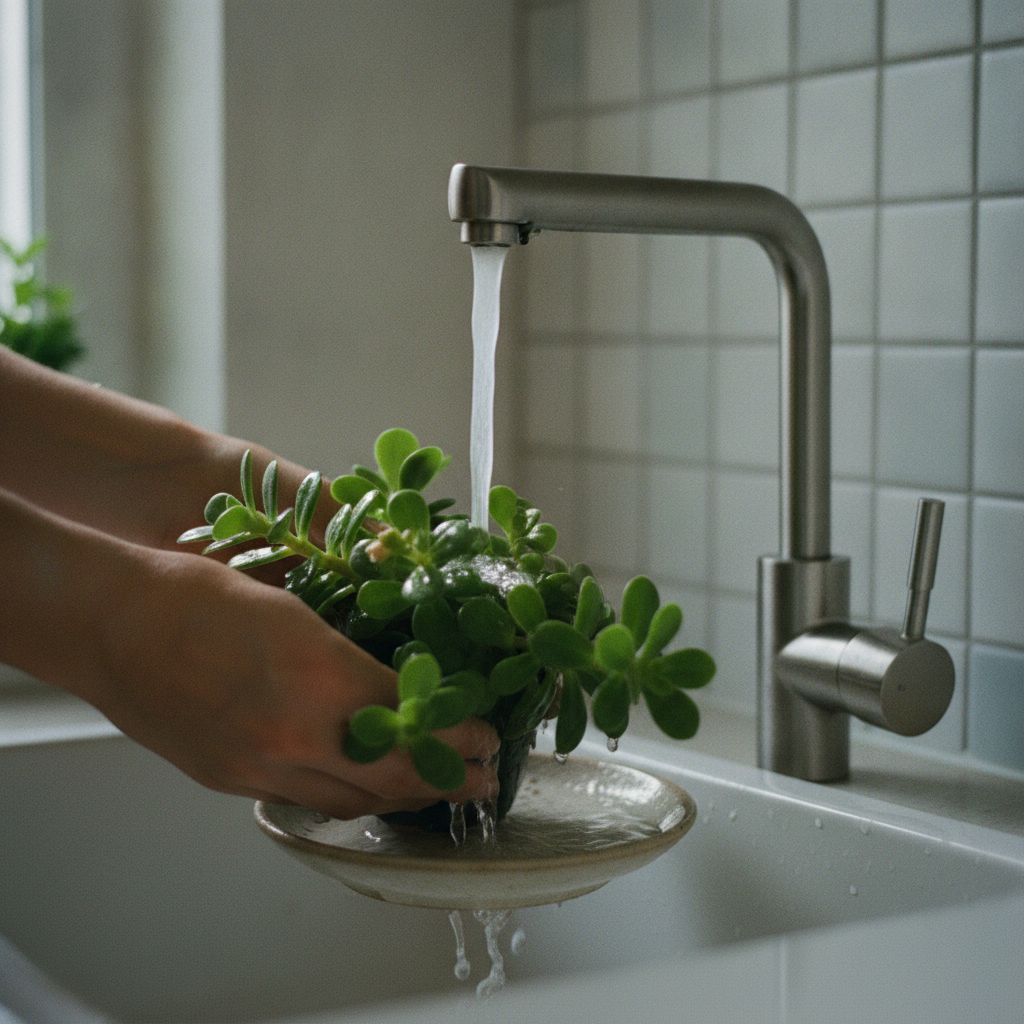
Rather than following a fixed calendar, check the soil. Push a finger a few centimetres into the mix, and only water if it feels completely dry. In peak summer on a hot sill, a small pot may need water every three to five days; in cooler or duller weather, once every week or two is plenty. The plant will always tell you if it is genuinely thirsty, because the normally plump leaves begin to look slightly soft and shrivelled, quickly recovering once watered.
When you do water, water generously. Soak the soil until liquid runs freely from the drainage holes, which ensures the whole root ball is wetted and helps flush out any build-up of salts. Then let every drop of excess drain away, and never leave the pot standing in a saucer of water. This wet-then-dry rhythm mimics the occasional heavy downpours followed by long dry spells that the plant evolved with, and it keeps the roots healthy.
Pro Tip — Water in the Morning: Water early in the day so the foliage and soil surface dry quickly in the sun. Damp leaves sitting through a cool night invite fungal problems, to which rose moss is prone. Morning watering also means the plant is fully charged for the hot, bright hours when it does most of its flowering.
How to Water Correctly
- Check the soil is completely dry a few centimetres down before you begin.
- Water at the base of the plant, aiming for the soil rather than the flowers and leaves.
- Continue until water flows freely from the drainage holes at the bottom of the pot.
- Let the pot drain fully for several minutes.
- Empty the saucer or cache-pot so the roots never sit in standing water.
- Wait until the mix has dried out again before the next watering.
Signs of Overwatering vs. Underwatering
| Symptom | Overwatering | Underwatering |
|---|---|---|
| Leaf colour | Yellowing, translucent leaves | Dull, slightly faded green |
| Leaf texture | Soft, mushy, collapsing | Wrinkled, shrivelled, thin |
| Soil | Constantly damp, sour smelling | Bone dry, pulling from pot sides |
| Roots | Brown, black, slimy | Dry but firm and pale |
| Stem base | Blackened, rotting, falls over | Firm but limp at the tips |
Warning — Root Rot: Root rot is the deadliest threat to rose moss and it moves fast. Constantly wet soil starves the roots of oxygen and lets fungi take hold, turning stems black and mushy at the base. If you catch it early, snip off healthy stem tips and root them as cuttings, because the parent plant is often beyond saving. Prevention through sharp drainage and restrained watering is far easier than any cure.
Humidity Requirements
Here rose moss is refreshingly undemanding, and in fact prefers the opposite of what most trendy houseplants crave. It thrives in low humidity and dry air, exactly the conditions found in a heated home or a sunny, breezy windowsill. There is no need for misting, pebble trays or humidifiers, all of which can actually work against it by keeping the foliage damp.
Problems only appear at the humid end of the scale. In stagnant, moist air the plant becomes vulnerable to fungal diseases such as white rust and stem rot, which show up as pale pustules on the leaves or blackening at the base. Good airflow is the antidote, so give the plant space rather than crowding it among thirstier, humidity-loving neighbours.
Because it wants dry air rather than moist, there is nothing to do to raise humidity, and everything to gain from keeping conditions bright and airy. If you grow rose moss alongside tropical plants that are being misted regularly, simply site it a little apart where the spray will not reach its leaves.
Water Quality
Rose moss is not fussy about water quality. Ordinary tap water is perfectly acceptable, and the plant tolerates a wide range of conditions without complaint. If your tap water is very hard, an occasional watering with rainwater will help prevent mineral crusting on the soil surface, but this is a refinement rather than a requirement. Room-temperature water is gentler on the roots than very cold water straight from the tap.
Soil, Potting & Repotting
The right soil is the quiet foundation of a healthy rose moss. In the wild it grows in loose, sandy, nutrient-poor ground that drains the moment rain stops, and it wants the same in a pot. Rich, moisture-retentive potting compost, the kind that suits leafy houseplants, is the wrong choice here and a fast route to root rot. Think gritty, open and free-draining above all else.
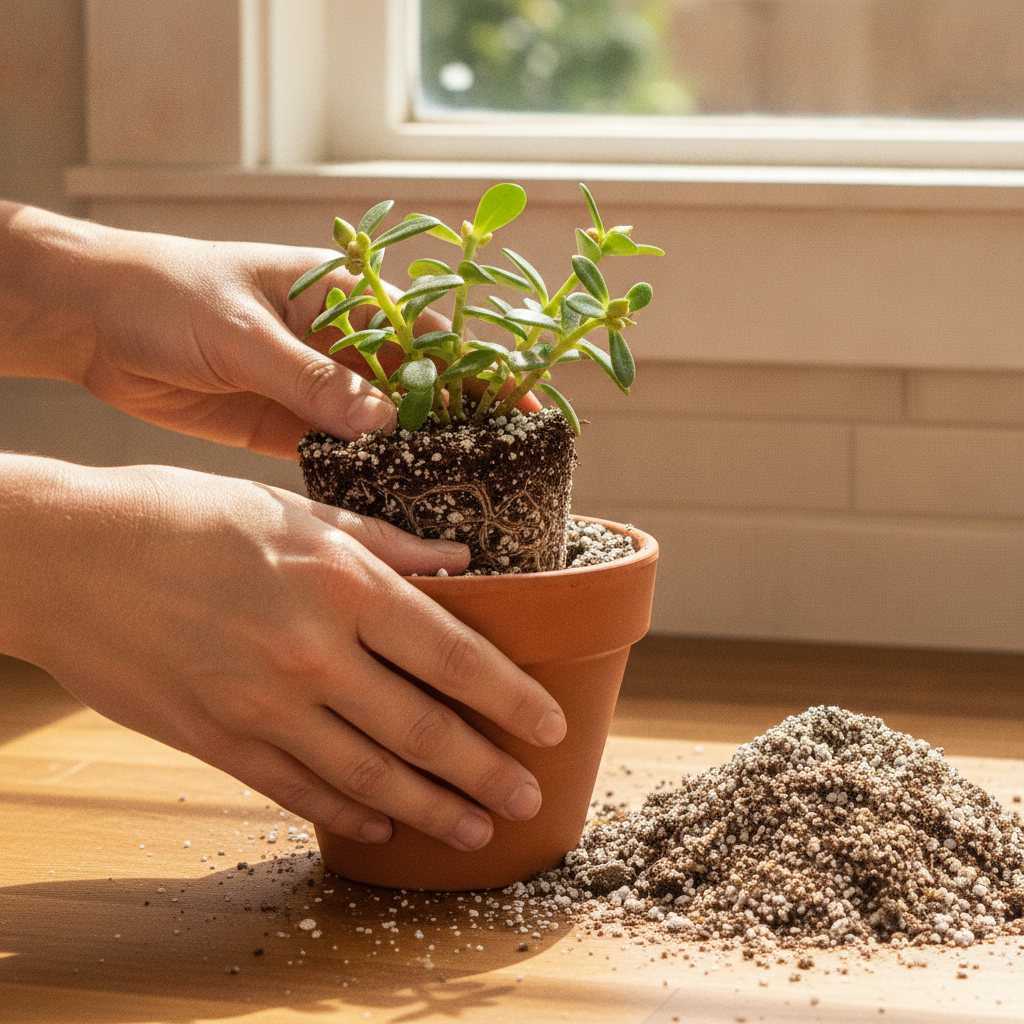
Ideal Soil Composition
A purpose-made cactus and succulent compost is the simplest starting point, and for many growers it is all that is needed. To sharpen the drainage further, or to build a mix from scratch, combine a base of standard potting soil with generous amounts of coarse sand and perlite or fine grit. The aim is a medium that holds just enough moisture to sustain the plant briefly, then dries quickly and never stays soggy.
| Component | Proportion | Function |
|---|---|---|
| Potting soil or compost | One third | Holds a little moisture and provides light nutrition |
| Coarse sand or fine grit | One third | Opens the structure and speeds drainage |
| Perlite or pumice | One third | Keeps the mix airy and prevents compaction |
Rose moss prefers a soil that is slightly acidic to neutral, in the region of pH 5.5 to 7.0. This is the natural range of most general-purpose and succulent composts, so it rarely needs adjusting. Far more important than the exact pH is the physical structure of the mix, which must let water pass through freely.
Pro Tip — Quick Mix Recipe: For an easy, reliable blend, stir together equal parts ordinary potting compost, sharp horticultural sand and perlite. If you can pour water onto the mix and watch it drain straight through within a few seconds, you have it right.
Choosing the Right Pot
Rose moss has a shallow, spreading root system rather than a deep one, so it suits wide, shallow containers, window boxes and hanging baskets far better than tall, deep pots. A broad, low pot also shows off the mounding, trailing habit to best effect, letting the flowering stems spill over the rim.
Drainage holes are non-negotiable. Whatever container you choose, it must have holes in the base. Given how sensitive this plant is to waterlogging, growing it in a pot without drainage is asking for root rot. If you love a decorative cache-pot without holes, keep the plant in a plain plastic nursery pot inside it and lift that inner pot out to water and drain.
Pot material: Terracotta is ideal because it is porous and wicks excess moisture from the soil, helping it dry between waterings. Glazed ceramic and plastic both work too, but hold water longer, so you will need to be even more disciplined about letting the mix dry out.
Pot size: Choose a container only slightly larger than the root ball. An oversized pot holds a large volume of soil that stays wet long after the roots have taken their fill, which is exactly the situation rose moss cannot abide. Snug is safe.
When to Repot
Because it is usually grown as an annual, rose moss often never needs repotting at all, living out a single glorious summer in the pot it was bought or sown in. If you are keeping a plant going longer, repot only when it has clearly filled its container with roots or when the old soil has broken down and stopped draining well. Early spring, as growth resumes, is the best moment. There is no benefit in potting up a dormant plant in autumn or winter.
How to Repot: Step-by-Step
- Water lightly a day before, so the root ball holds together without being soggy.
- Choose a clean pot with drainage holes, only one size larger than the current one.
- Add a layer of your gritty, free-draining mix to the base.
- Ease the plant out and gently tease away loose old soil from around the roots.
- Set the plant at the same depth it grew before, and fill around it with fresh mix.
- Firm the soil lightly so the plant sits securely without being compacted.
- Wait a few days before watering, then resume normal care in a bright spot.
Warning — Transplant Shock: The fleshy stems of rose moss bruise and snap easily, so handle the plant by the root ball rather than by the top growth. Waiting a few days before watering a freshly repotted plant lets any small root injuries callous over, which greatly reduces the risk of rot setting in at the wounds.
Fertilising
Rose moss is adapted to poor soil, and it flowers best when it is not overfed. This runs counter to the instinct many gardeners have to feed a flowering plant heavily, but with rose moss a light touch produces the best results. Too much fertiliser, especially anything rich in nitrogen, drives lush leafy growth at the direct expense of flowers, leaving you with a green, sprawling plant and few blooms.
In many cases, particularly for plants treated as summer annuals in decent soil, no feeding is needed at all. If you do choose to fertilise, do so sparingly and only during the active growing and flowering season, easing off entirely once autumn arrives and the plant winds down.
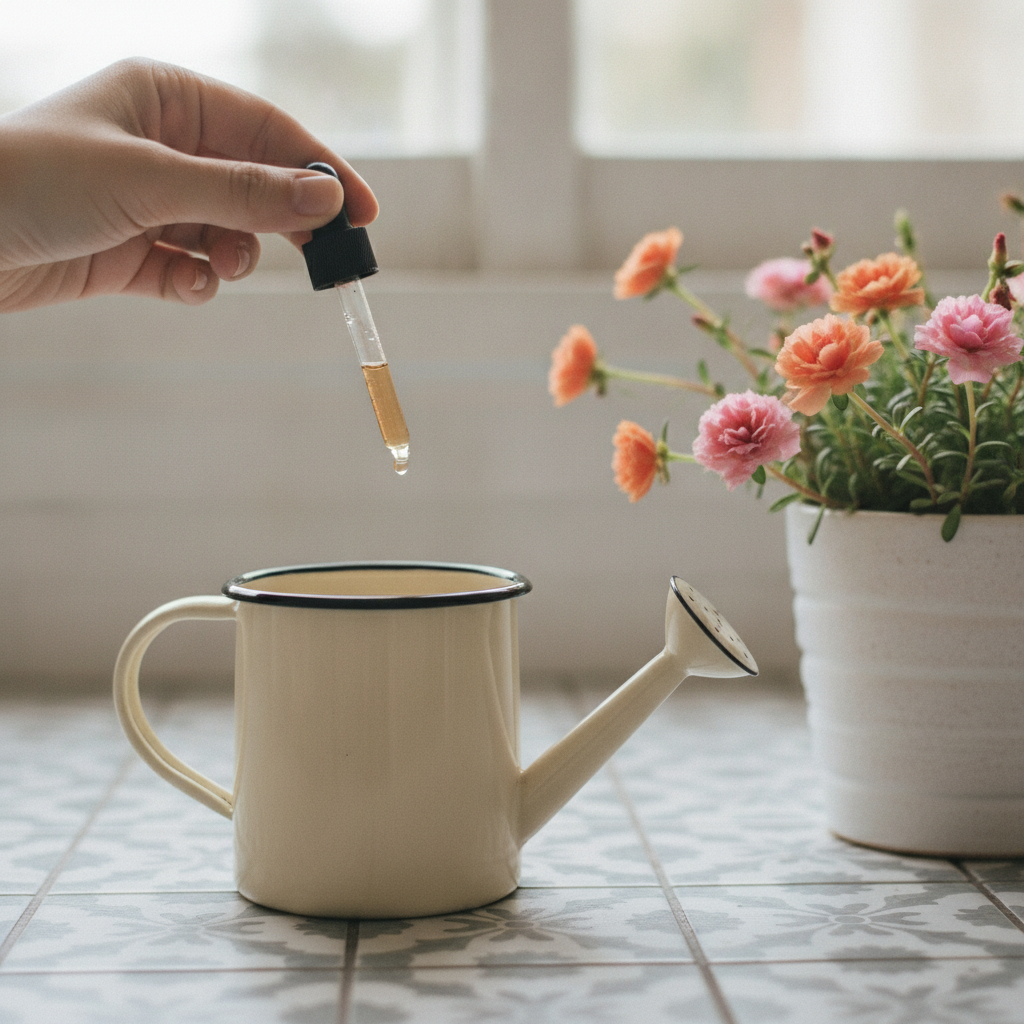
Understanding Plant Nutrients
Fertilisers are labelled with three numbers, the NPK ratio, standing for nitrogen, phosphorus and potassium. For rose moss, the balance matters more than the quantity. A feed lower in nitrogen and relatively higher in phosphorus and potassium encourages flowering, while a high-nitrogen feed pushes foliage. The table below outlines the main nutrients and what a shortage of each looks like.
| Nutrient | Symbol | Primary Function | Deficiency Symptoms |
|---|---|---|---|
| Nitrogen | N | Leaf and stem growth | Pale, yellowing older leaves; weak growth |
| Phosphorus | P | Root development and flowering | Poor blooming; dull, purplish foliage |
| Potassium | K | Overall vigour and flower quality | Browning leaf edges; weak flowering |
| Calcium | Ca | Cell wall strength | Distorted new growth |
| Magnesium | Mg | Chlorophyll production | Yellowing between leaf veins |
| Iron | Fe | Green pigment in new leaves | Pale young leaves with green veins |
Types of Fertiliser
Liquid fertilisers: The easiest to control, which makes them well suited to a plant that wants only a little food. Dilute a balanced or bloom-boosting liquid feed to half the recommended strength and apply it during watering, no more than once a month.
Slow-release granular: A small amount of slow-release fertiliser mixed into the soil at planting can carry the plant through the whole season with no further feeding. Use a light hand, as these products release steadily and it is easy to overdo the total dose.
Organic fertilisers: Gentle options such as diluted seaweed feed suit rose moss well because they release nutrients slowly and are hard to overapply. They are a good choice for growers nervous about scorching a plant that genuinely prefers to be underfed.
Feeding Schedule
A simple, restrained schedule works best. From late spring through summer, offer a half-strength balanced feed once every four weeks or so while the plant is actively flowering. Stop feeding entirely from early autumn onwards, as the plant slows down and prepares for its dormant period. Never feed a stressed, bone-dry or dormant plant, as the roots cannot take up the nutrients and salts simply accumulate in the soil.
Pro Tip — Less Is More: When in doubt, skip the feed. Rose moss flowers most generously in lean conditions, and a hungry plant blooms far better than a pampered one. If your plant is all leaf and no flower, the answer is usually more sun and less fertiliser, not the other way around.
How to Fertilise
- Water the plant lightly first if the soil is completely dry, to protect the roots.
- Dilute a balanced liquid feed to half the strength stated on the label.
- Apply the diluted feed to the soil during a normal watering, once a month at most.
- Avoid splashing fertiliser onto the leaves and flowers, which can mark them.
- Flush the pot with plain water every couple of months to clear any salt build-up.
Warning — Salt Build-Up: A white crust on the soil surface or around the pot rim is a sign that fertiliser salts are accumulating. This can burn the roots and stunt the plant. Clear it by watering deeply with plain water until it runs freely from the base, flushing the excess minerals out through the drainage holes.
Propagation
Propagating rose moss is one of the real pleasures of growing it, because it is almost absurdly easy. The plant roots from stem cuttings with barely any effort and sets seed so freely that it will happily self-sow around a garden or patio. Between these two methods you can turn a single plant into a whole trayful, or keep a favourite colour going from one year to the next.
Cuttings are the reliable way to reproduce a specific plant exactly, since seed from double or bicoloured cultivars often does not come true. Seed, on the other hand, is the route to large numbers of plants and to the surprise of new colour combinations. Both are worth trying, and summer, when the plant is in full growth, is the ideal time for each.
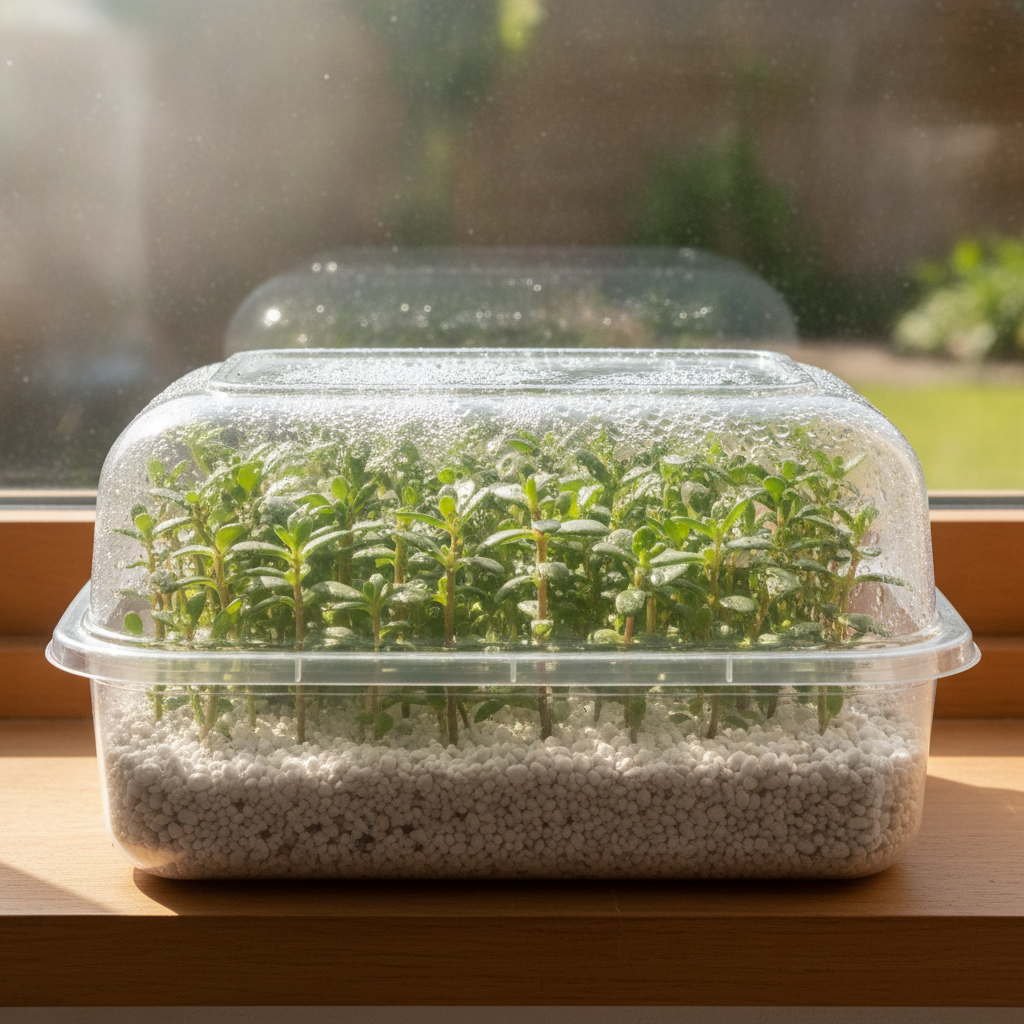
Understanding Stems and Nodes
Rose moss roots from its stems at the nodes, the slightly thickened points where leaves emerge. Given contact with moist medium, these nodes push out roots readily, and low, trailing stems often root where they touch the soil of their own accord. Understanding this makes propagation intuitive: any healthy piece of stem with a few nodes has everything it needs to become a new plant.
Stem Cuttings: Step-by-Step
This is the quickest and most dependable method, and cuttings often root within a week or two in warm, bright conditions.
- Snip a healthy stem about 5 to 8 centimetres (2 to 3 inches) long, cutting just below a node.
- Strip the leaves from the lower third of the cutting, leaving the nodes bare.
- Let the cut end dry and callous for a few hours to a day, which guards against rot.
- Insert the bare end into moist, gritty succulent mix or damp perlite.
- Place the cutting in bright, warm conditions out of the harshest midday sun.
- Keep the medium barely moist, and expect roots within one to two weeks.
- Once new growth appears, treat the young plant as a mature rose moss.
Pro Tip — Let Cuttings Callous: Because rose moss is a succulent, letting the cut end dry before planting is the single most useful trick. A calloused cutting is far less likely to rot in the soil than a fresh, wet one, and the small wait costs you nothing in overall rooting time.
Growing from Seed: Step-by-Step
Seed is the traditional way to raise rose moss in quantity, and the fine seed germinates quickly in warmth and light.
- In spring, scatter the tiny seed thinly over the surface of moist, well-draining seed compost.
- Do not cover the seed, as it needs light to germinate; press it gently onto the surface.
- Keep the tray warm, around 21 to 24 degrees Celsius (70 to 75 Fahrenheit), and brightly lit.
- Mist lightly to keep the surface from drying out, but avoid making it soggy.
- Expect seedlings within one to two weeks; thin them once they are large enough to handle.
- Pot on or plant out only once all danger of frost has passed and the weather is warm.
Troubleshooting Propagation
| Problem | Likely Cause | Solution |
|---|---|---|
| Cuttings rot before rooting | Medium too wet or cut end not calloused | Let cuttings dry first; keep mix barely moist |
| Seed fails to germinate | Too dark, too cold or seed buried | Sow on the surface in warmth and bright light |
| Seedlings collapse at soil line | Damping off, a fungal problem in damp conditions | Improve airflow, reduce moisture, sow more thinly |
| Leggy, weak seedlings | Insufficient light | Move to the brightest spot or add a grow light |
Pests & Diseases
Rose moss is a tough, largely trouble-free plant, and a healthy specimen grown in strong light and lean, dry conditions rarely suffers seriously. Most of the problems that do occur are linked to excess moisture, either in the soil or the air, rather than to any inherent weakness in the plant.
Vigilance is still worthwhile. Catching a pest infestation or the first spots of disease early makes it far easier to deal with, and a quick weekly glance over the leaves and stems is usually all it takes. Below are the issues most likely to appear, with practical treatments for each.
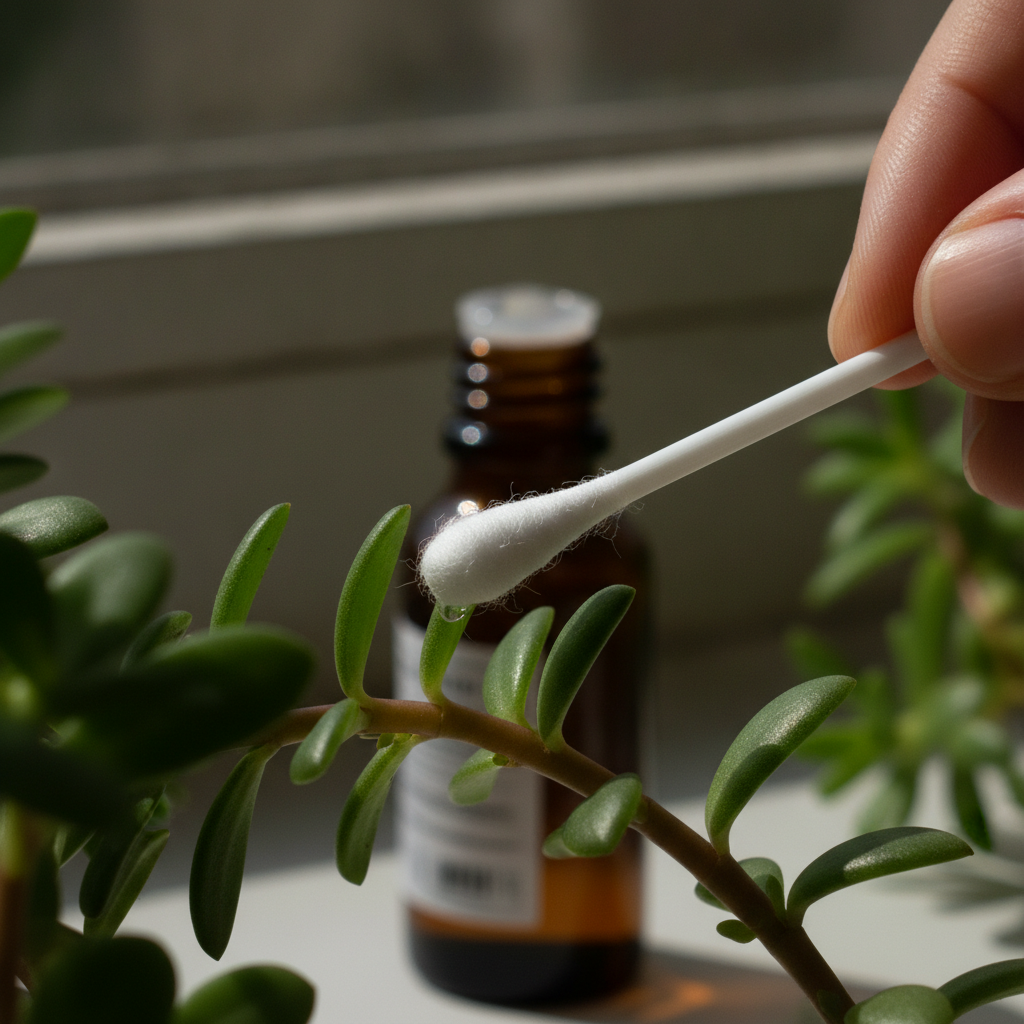
Common Pests
Aphids (Aphidoidea)
These small green, black or pink sap-suckers cluster on soft new growth and flower buds, weakening the plant and leaving sticky honeydew behind. They multiply quickly in warm weather and can distort buds before they open.
Treatment: Dislodge light infestations with a firm jet of water, or wipe them off by hand. For heavier attacks, treat with insecticidal soap or a diluted neem oil spray, repeating every few days until they are gone.
Mealybugs (Pseudococcidae)
Mealybugs appear as small, white, cottony tufts tucked into leaf axils and stem joints. They feed on sap and, like aphids, secrete honeydew that can lead to sooty mould. They are slow-moving but stubborn once established.
Treatment: Dab each insect directly with a cotton bud dipped in diluted isopropyl alcohol. Follow up with insecticidal soap for larger colonies, and check regularly, as they hide in tight crevices.
Slugs and Snails (Gastropoda)
Outdoors, slugs and snails are drawn to the soft, fleshy foliage of rose moss and can shred leaves and stems overnight, especially on young plants. Their presence is given away by ragged holes and silvery slime trails.
Treatment: Remove them by hand in the evening, set beer traps, or use a ring of grit or copper tape around containers. Keeping the surrounding area tidy removes the damp hiding places they favour.
Common Diseases
Root and Stem Rot (Pythium and Rhizoctonia)
By far the most serious threat, rot sets in when the soil stays wet for too long. Stems blacken and turn mushy at the base, and the plant collapses seemingly overnight. Once advanced, it is usually fatal to the affected plant.
Treatment: Prevention is the only reliable answer: sharp drainage and restrained watering. If rot appears, take healthy cuttings from unaffected tips to save the plant’s genetics, and discard the rotten remainder.
White Rust (Albugo portulacae)
Rose moss is prone to a specific white rust that shows as pale, blister-like pustules on the undersides of leaves and stems, sometimes with distortion of the growth above. It spreads in humid, still, crowded conditions.
Treatment: Remove and destroy affected foliage promptly, improve airflow around the plant and avoid wetting the leaves when watering. A suitable fungicide can help in persistent cases.
Pest and Disease Summary
| Pest / Disease | Identification | Treatment |
|---|---|---|
| Aphids | Clusters of tiny insects on buds and new growth | Water jet, insecticidal soap or neem oil |
| Mealybugs | White cottony tufts in leaf axils | Alcohol on a cotton bud, then insecticidal soap |
| Slugs and snails | Ragged holes and slime trails, outdoors | Hand removal, traps, grit or copper barriers |
| Root and stem rot | Blackened, mushy stem bases; collapse | Improve drainage; propagate healthy tips |
| White rust | Pale pustules on leaf undersides | Remove foliage, improve airflow, fungicide |
Prevention Strategies
The best defence is simply to grow the plant the way it wants to be grown. Strong light, a gritty free-draining soil, careful watering and good airflow between plants together head off almost every problem before it starts. A rose moss in these conditions is a robust, vigorous plant with little to fear from pests or disease.
Inspect new plants before bringing them home, and keep them apart from your others for a couple of weeks to be sure they are pest-free. Clear away fallen leaves and spent flowers, which can harbour fungal spores, and resist the urge to crowd pots together, as air moving freely around the foliage is one of the simplest disease preventives there is.
Pro Tip — Keep It Dry and Airy: Nearly every disease that troubles rose moss thrives in damp, stagnant conditions. Watering at the base in the morning, spacing plants generously and siting them where a breeze can reach them will do more to keep the plant healthy than any spray bottle.
Popular Varieties
Plant breeders have had a field day with rose moss, and the modern range is a riot of colour and form. Most are sold as seed series or as bedding plugs, grouped into named families that share a habit and flower type while offering a spread of colours. The wild species has simple single flowers, but almost all garden forms today are fully double, giving each bloom the look of a miniature rose.
When choosing, the main decisions are flower type, colour range and habit. Some series stay neat and mounded for pots and edging, while others trail generously for baskets and window boxes. A few, bred to open even in duller light, are especially useful for growers without blazing all-day sun.
| Variety | Flower Appearance | Light Needs | Growth Rate | Availability |
|---|---|---|---|---|
| Sundial series | Large, fully double blooms in many colours | Full sun | Fast | Common |
| Happy Hour series | Early, uniform double flowers | Full sun | Fast | Common |
| Happy Trails series | Double flowers on trailing stems | Full sun | Fast | Common |
| Margarita series | Semi-double to double, very heat tolerant | Full sun | Fast | Common |
| Sundance | Large, lightly fragrant, semi-trailing | Full sun | Fast | Occasional |
| Duet | Bicoloured, striped double blooms | Full sun | Moderate | Occasional |
Featured Varieties
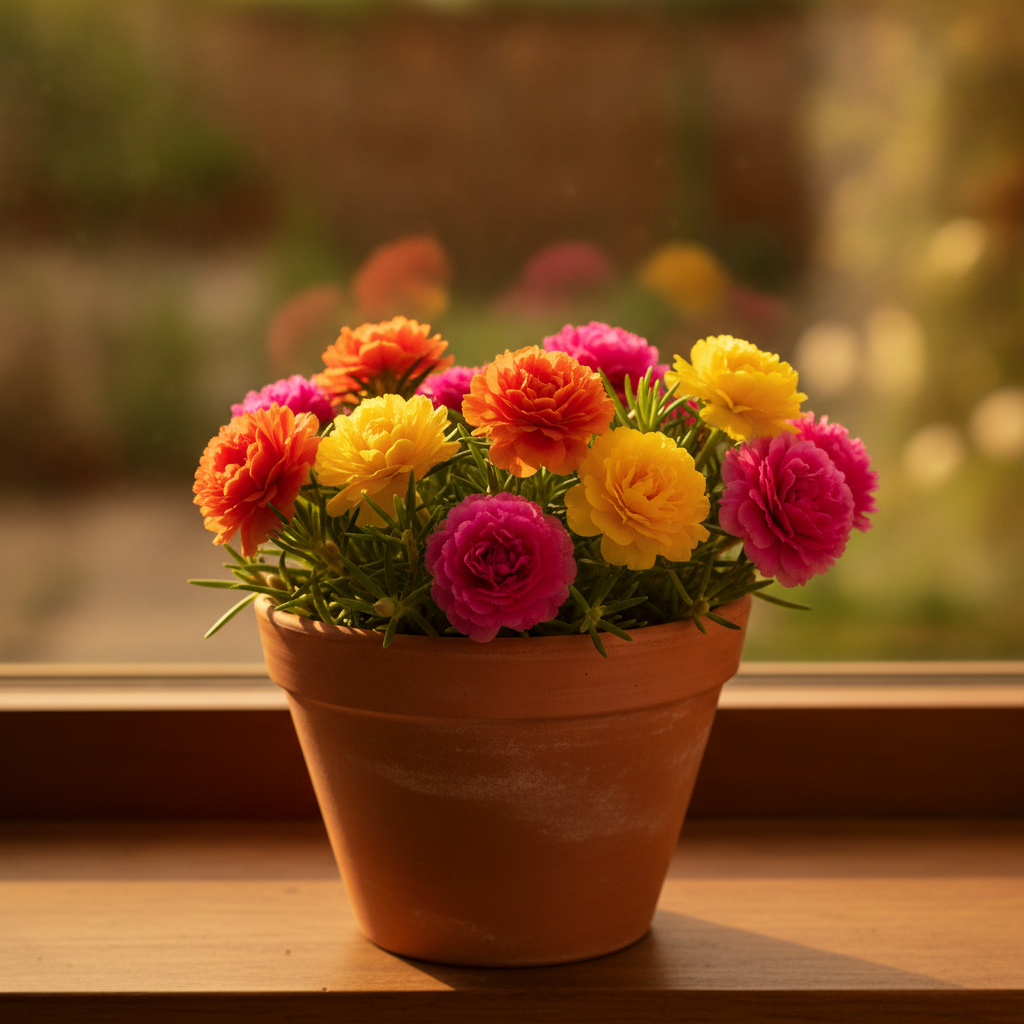
Sundial
A benchmark series prized for unusually large, fully double flowers that open earlier in the day and in lower light than most, making it a dependable choice where sun is strong but not endless. Available in a wide, saturated colour range.
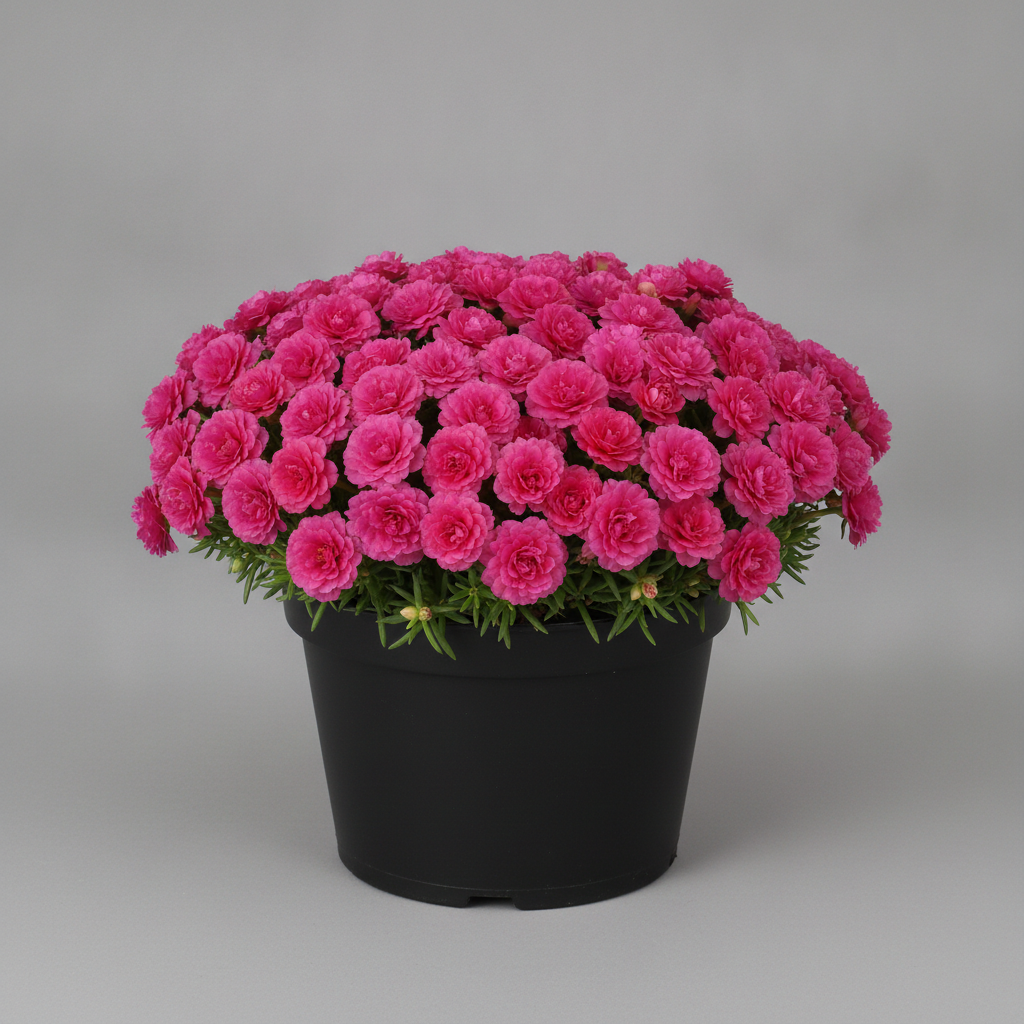
Happy Hour
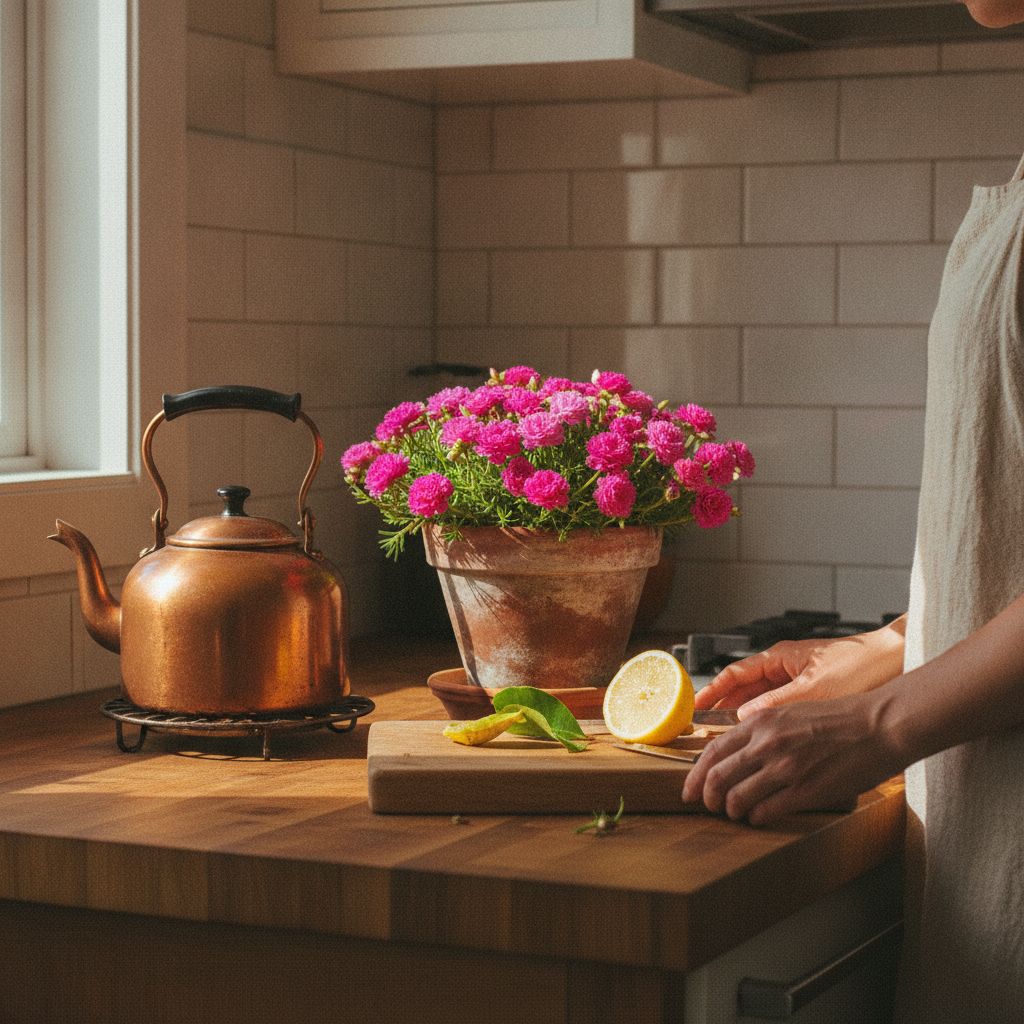
A compact, uniform series bred for early, prolific flowering and a tidy mounding habit that suits pots and bedding alike. The double blooms come in clear, vivid shades, here a deep rose-pink, and cover the plant densely through the summer.
Variety Profiles in Detail
Sundial Series (Portulaca grandiflora)
The Sundial series set the standard for modern rose moss, chosen by many growers precisely because its flowers open more readily under imperfect light than older strains. The blooms are among the largest available and fully double, and the colour list runs from fiery scarlet and tangerine through pink, cream, gold and white. It is a fast, free-flowering series that performs equally well in beds, pots and baskets.
Happy Trails Series (Portulaca grandiflora)
Where Happy Hour stays compact, its trailing cousin Happy Trails is bred to spill and cascade, making it a natural for hanging baskets and the edges of tall containers. The stems tumble over the rim and carry the same generous, double flowers along their length, creating a curtain of colour that is hard to beat for a sunny balcony.
Choosing the Right Variety for Your Space
Match the habit to the container. For a windowsill pot or edging, a compact, mounding series such as Happy Hour or Margarita gives a neat, floriferous display. For hanging baskets and window boxes where you want stems to trail, reach for Happy Trails or Sundance. If your sun is good but not relentless, the Sundial series, with its habit of opening in slightly lower light, is the safest bet for reliable colour. Whichever you choose, the underlying care is identical, so pick on looks and habit and let the plant do the rest.
Frequently Asked Questions
Why won’t my rose moss flower?
In almost every case, the answer is not enough light. Rose moss needs at least six hours of direct sun a day to bloom, and its flowers physically open only in bright light. If your plant is all leaf and no flower, move it to the sunniest spot you have. A secondary cause is overfeeding with high-nitrogen fertiliser, which pushes foliage at the expense of blooms.
Why do the flowers close in the afternoon and on cloudy days?
This is completely normal and one of the plant’s defining quirks. The blooms are triggered by sunlight, opening in strong sun and closing in shade, cloud or the evening. It is why rose moss earned the nickname eleven o’clock. Nothing is wrong; the flowers will reopen the next time the sun is out.
Is rose moss an annual or a perennial?
Technically it is a tender perennial, but in most climates it is grown as a warm-season annual because it cannot survive frost. In frost-free regions it may persist for more than one year, and everywhere it self-seeds so readily that new plants often appear the following spring without any effort on your part.
How often should I water rose moss?
Only when the soil has dried out completely. As a succulent, it stores water and strongly resents constantly damp roots. In hot summer weather that might mean every few days; in cooler conditions, once a week or less. When in doubt, wait a day longer, because it copes with dryness far better than with excess water.
Can I grow rose moss indoors all year?
You can keep it alive indoors, but flowering indoors is challenging because few windowsills match the intensity of summer sun outside. The best results come from growing it on your brightest, sunniest sill and moving it outdoors for the warm months. Over winter, keep it warm, bright and on the dry side, and expect little growth until spring.
Is rose moss safe around pets?
It is considered mildly toxic to cats, dogs and horses because it contains soluble oxalates, and eating a quantity can cause drooling, vomiting and reduced appetite. It is not among the most dangerous plants, but it is wise to keep it out of reach of pets that like to nibble, and to contact a vet if a significant amount is eaten.
My rose moss looks leggy and stretched. What happened?
Legginess is the classic sign of too little light. Starved of sun, the plant elongates its stems in a search for more, producing weak, sparse growth. Move it somewhere much brighter, and pinch back the leggy stems to encourage bushier regrowth. The pieces you remove can be rooted as cuttings, so nothing is wasted.
How do I get more flowers over a longer season?
Give it maximum sun, keep it slightly hungry rather than heavily fed, and water only when dry. Deadheading spent blooms and pinching back straggly stems encourages fresh flowering growth. With those conditions met, a healthy rose moss will flower continuously from early summer until the light fades in autumn.






