
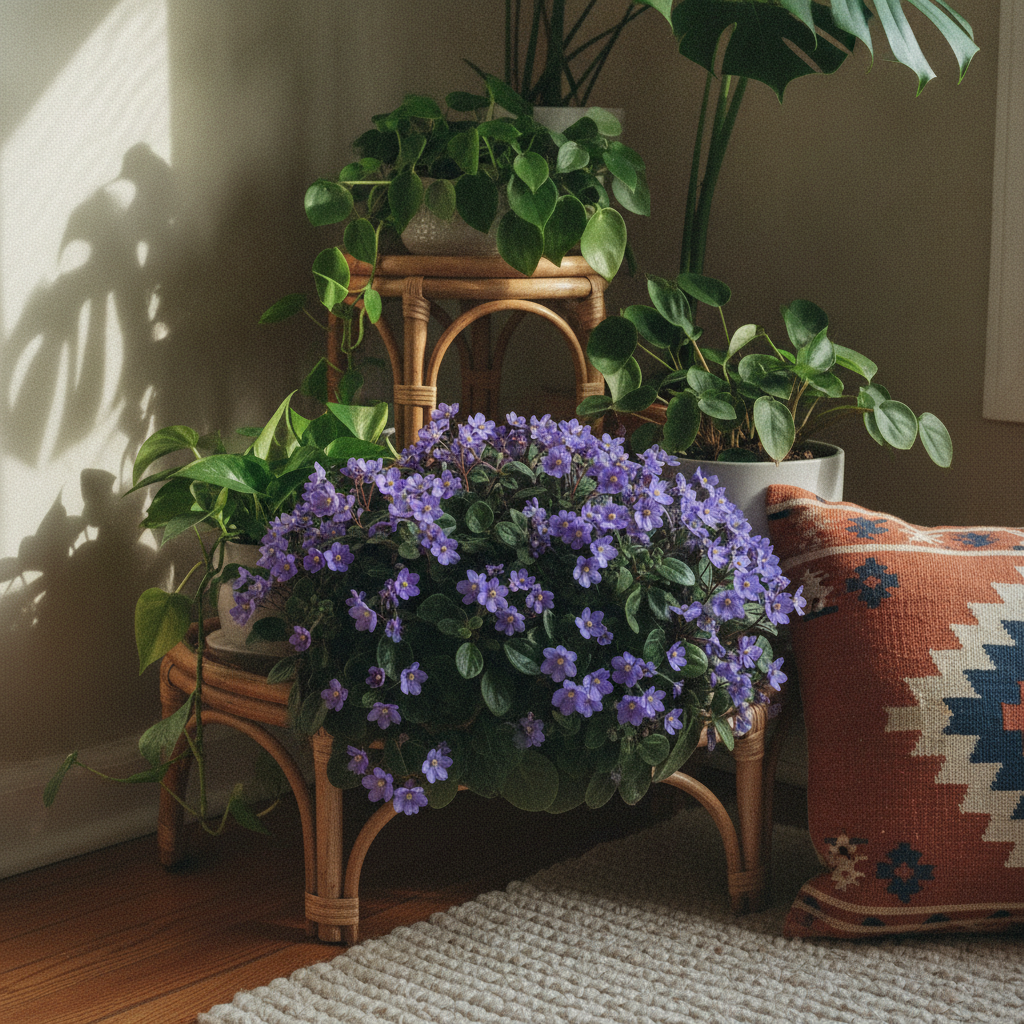
Few flowering houseplants pack as much colour into as small a footprint as the Persian violet. A neat dome of glossy leaves barely larger than a teacup can carry several hundred tiny five-petalled stars at once, each one violet-blue with a bright golden eye and carrying a soft, sweet scent. Despite its common name, Exacum affine is neither a violet nor Persian: it belongs to the gentian family and hails from the island of Socotra off the coast of Yemen. The misnomer has stuck for well over a century, and you will also see it sold as German violet or Arabian gentian.
The Persian violet has a reputation as a short-lived “gift plant,” something that blooms gloriously for a few weeks and is then thrown away. That reputation is only half deserved. With the right light, cool temperatures and steady moisture, a single plant will flower continuously for three to five months, and attentive growers can keep one going across more than one season or raise a fresh batch from seed. This guide covers everything that separates a plant that merely survives its time on the windowsill from one that thrives and rewards you with months of unbroken bloom.
Contents
- Quick Reference
- Why Persian Violet Makes a Rewarding Houseplant
- Light Requirements
- Watering & Humidity
- Soil, Potting & Repotting
- Fertilising
- Propagation
- Pests & Diseases
- Popular Varieties
- Frequently Asked Questions
Quick Reference: Persian Violet at a Glance
| Light | Bright indirect light with a little gentle morning sun; an east-facing window is ideal |
| Watering | Keep evenly moist at all times; never bone dry, never waterlogged |
| Temperature | 15 to 21 degrees Celsius (59 to 70 Fahrenheit); cool nights extend flowering |
| Humidity | Moderate to high, ideally 45 to 60 per cent |
| Fertiliser | Balanced or high-potassium feed at half strength every two weeks while in bloom |
| Toxicity | Listed as non-toxic to cats and dogs by the ASPCA; not intended for eating |
Why Persian Violet Makes a Rewarding Houseplant
The appeal of the Persian violet starts with sheer flower power. A well-grown specimen produces a continuous succession of blooms from late spring right through to autumn, and because the individual flowers are small and numerous, the plant always looks full rather than relying on one or two showy blossoms. The classic colour is a clear violet-blue, but breeders have introduced white, pale lilac and pink forms, all sharing the same prominent ring of yellow stamens that gives each flower its cheerful eye.
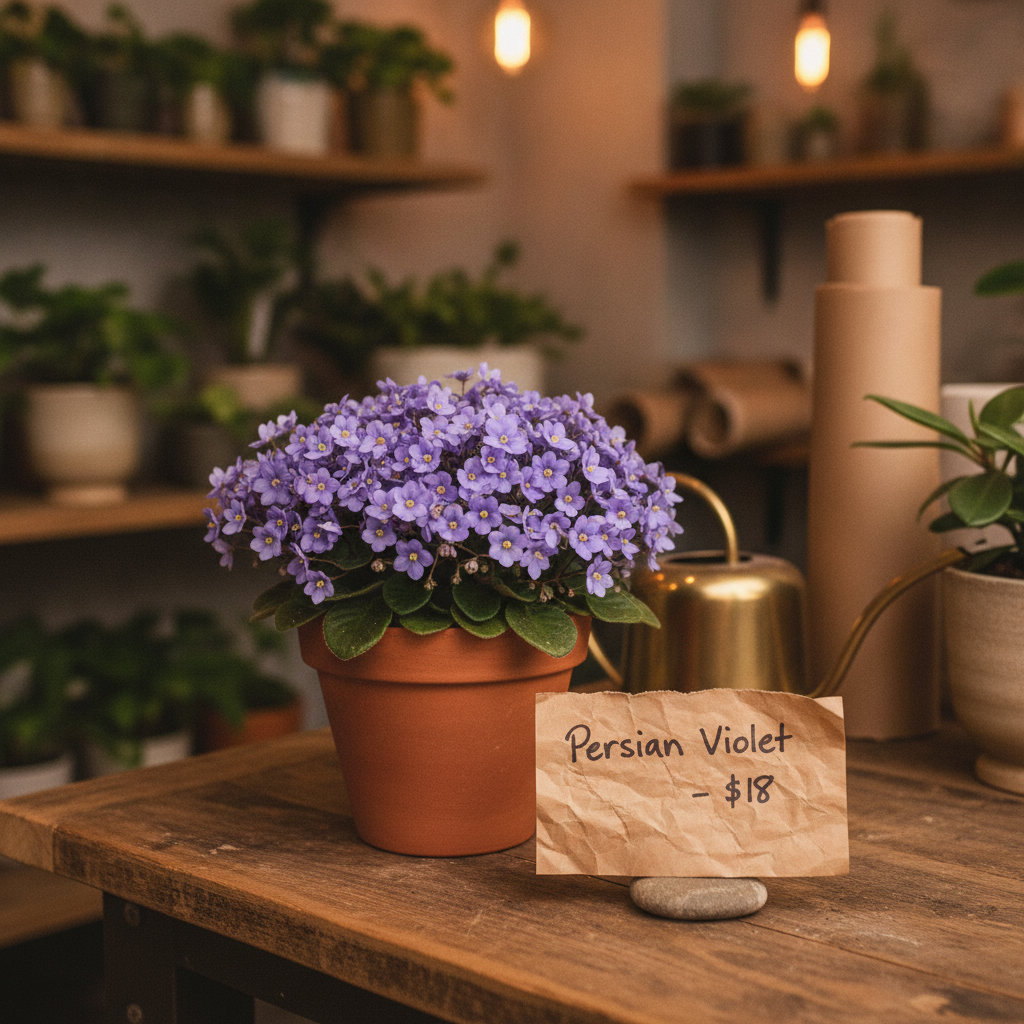
Beyond the flowers, the Persian violet earns its place for its manageable size and its scent. The whole plant rarely exceeds 25 to 30 centimetres (10 to 12 inches) in height and spread, so it fits on a crowded windowsill, a desk or a bathroom shelf where larger flowering plants would not. The blooms carry a light, sweet fragrance that is most noticeable in a warm room or in the morning. It is also a genuinely beginner-friendly flowering plant: its needs are simple and consistent, and the main thing standing between most growers and success is understanding that this is a cool-loving, moisture-loving plant rather than a tough succulent that can be neglected.
Important — Toxicity: The Persian violet is listed as non-toxic to cats and dogs by the ASPCA, which makes it a safer choice than many flowering houseplants for homes with curious pets. Even so, it is grown for display and not for eating, and nibbling any houseplant can cause mild stomach upset, so it is sensible to keep it out of reach of pets and small children who like to sample leaves.
Light Requirements
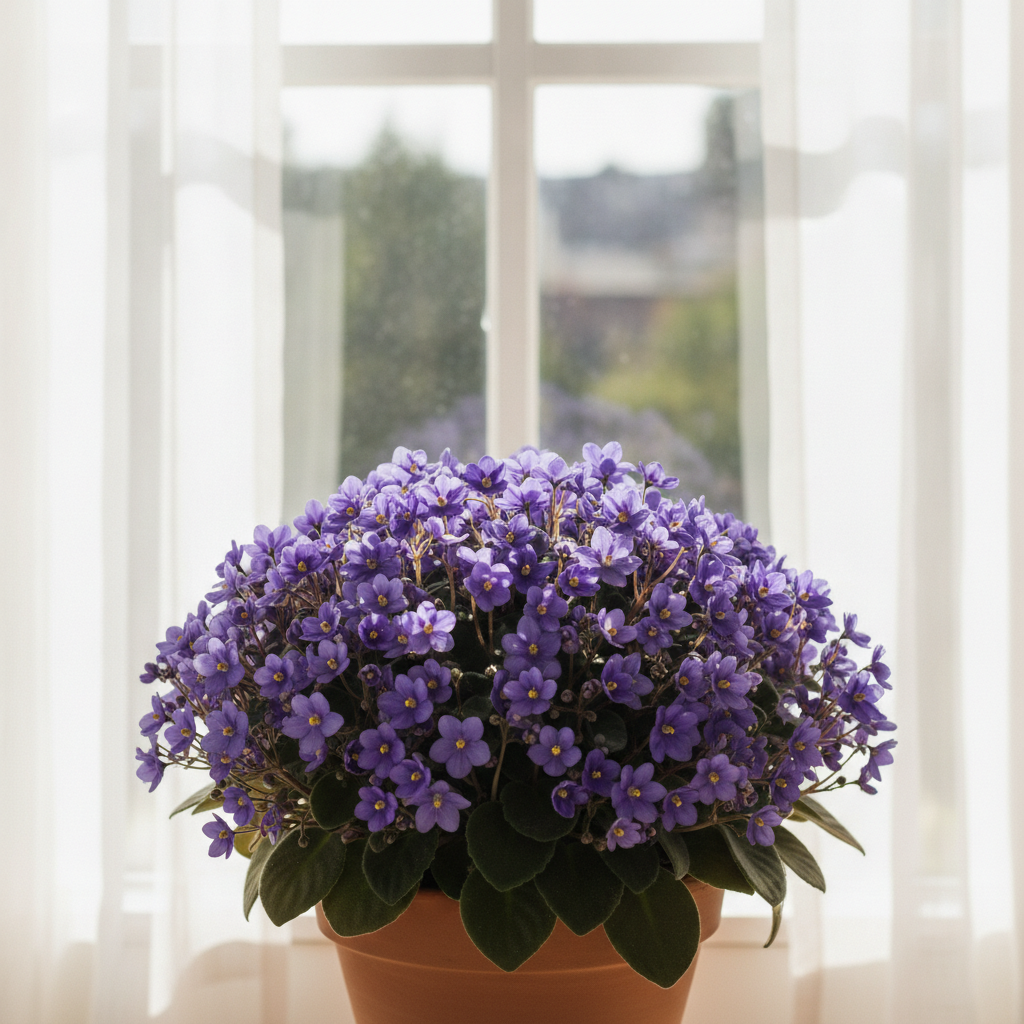
Light is the single biggest lever you have over how long and how heavily a Persian violet flowers. This is a plant that wants to be bright, and a shady corner will quickly translate into thin, leggy growth and only a scattering of blooms. The target is plenty of bright, indirect light with a modest amount of gentle direct sun, the kind you get through an east-facing window in the first half of the day.
In its ideal spot, a Persian violet receives several hours of soft sun in the morning and bright ambient light for the rest of the day. That balance keeps the foliage compact and deep green and fuels the constant production of flower buds. Too little light and the plant stretches, pales and stops blooming; too much harsh midday sun and the delicate leaves and petals scorch. Finding the bright-but-not-blasting middle ground is the whole game.
Light Levels Explained
Indoor light is far dimmer than most people assume, and the same windowsill can swing from blazing to gloomy across a single day. The table below sets out the broad light categories and how a Persian violet responds to each, so you can match the plant to a position rather than guessing.
| Light Category | Approx. Level | Typical Location | Outcome |
|---|---|---|---|
| Harsh direct sun | Over 50,000 lux | Unscreened south window in summer | Leaf scorch, faded petals, rapid wilting |
| Gentle direct sun | 20,000 to 50,000 lux | East window in the morning | Ideal; compact growth and heavy bloom |
| Bright indirect | 10,000 to 20,000 lux | Near a screened bright window | Very good; steady flowering |
| Medium | 5,000 to 10,000 lux | A metre or two back from a window | Survives but flowers sparsely |
| Low | Under 5,000 lux | Interior corner, north room | Leggy, pale, few or no flowers |
Window Orientation and Placement
South-facing window: Generous light, which the plant loves, but the direct midday sun in spring and summer is strong enough to scorch leaves and bleach flowers. Use this aspect only with a sheer curtain or by setting the plant a little back from the glass.
East-facing window: The best choice. Soft morning sun followed by bright indirect light for the rest of the day gives the Persian violet exactly the conditions it evolved for, without the risk of afternoon scorch.
West-facing window: Workable, but the afternoon sun here is hotter and more direct than morning sun, so some light diffusion is wise, especially in summer. Keep an eye out for crisping leaf edges.
North-facing window: Usually too dim to sustain heavy flowering. A plant here will hold on but tend to stretch and bloom only thinly. If north light is all you have, supplement with a grow light.
Pro Tip — Turn for Even Growth: A Persian violet will lean noticeably towards its light source. Give the pot a quarter turn every few days so the dome stays symmetrical and flowers open evenly all the way around rather than crowding to one side.
How Light Affects Flowering
Unlike foliage plants, where light mainly governs leaf size and colour, with a Persian violet light directly controls the flower supply. Bright conditions trigger a steady stream of new buds, while dim conditions cause the plant to coast along on foliage alone. If a previously floriferous plant suddenly slows down, the first thing to check is whether the days have shortened or a nearby plant has grown up to shade it. Moving it 30 centimetres closer to the glass is often enough to restart the show.
Warning — Direct Sunlight: The thin, soft leaves and petals of the Persian violet scorch far more easily than those of a sturdy foliage plant. Pale or bleached patches, brown crisp edges and flowers that fade within a day all point to too much direct sun. Move the plant out of the harsh beam or add a diffusing layer before the damage spreads.
Artificial Lighting
The Persian violet responds well to supplementary lighting, which makes it possible to keep one flowering through a dull winter or in a room with poor natural light. A full-spectrum LED grow light positioned 20 to 30 centimetres above the plant for 12 to 14 hours a day will sustain bud production. Because the plant is small, even a modest desk-style grow lamp is enough to cover it. Combine artificial light with the cool temperatures the plant prefers and you can stretch the flowering season considerably.
Seasonal Adjustments
Light intensity indoors drops sharply from autumn into winter, and the sun sits lower and weaker in the sky. A plant that was happy a metre back from an east window in June may need to be right on the sill by December. Conversely, the harsh high sun of midsummer may call for a sheer curtain on a south or west aspect that was fine in spring. Treat placement as something you adjust through the year rather than set once.
Watering & Humidity
If light decides how much your Persian violet flowers, water decides whether it stays alive long enough to do so. This is a thirsty plant with a small root system and a lot of leaf and flower to support, which makes it far less forgiving of dryness than the average houseplant. The guiding principle is constant, even moisture: the compost should feel like a wrung-out sponge at all times, never sodden and never dust dry.
When to Water
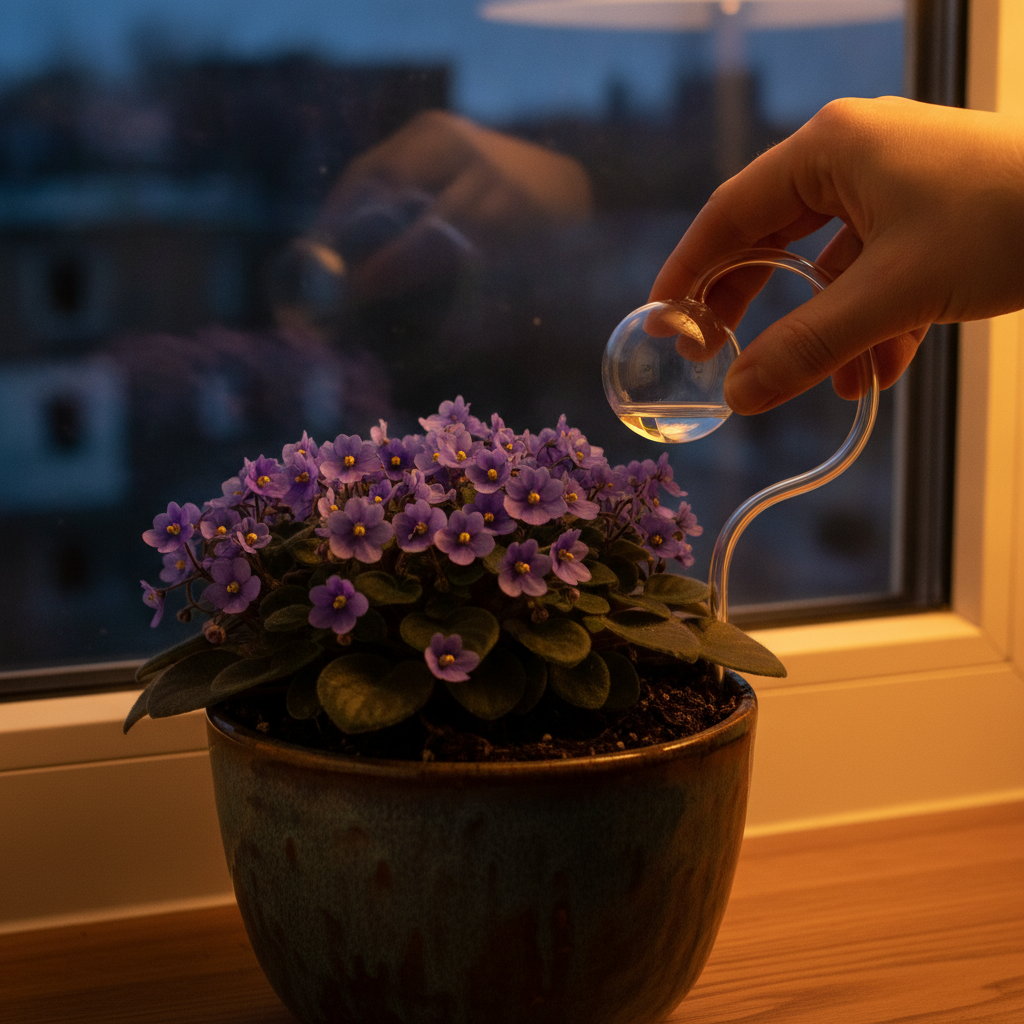
Check the top of the compost daily with a fingertip. As soon as the surface centimetre feels like it is starting to dry, it is time to water again. In a warm, bright room a Persian violet in active growth may need watering every one to two days, and on a hot summer afternoon a small pot can dry out alarmingly fast. This is not a plant you can put on a rigid weekly schedule and forget.
The penalty for letting it dry out completely is severe and quick. A Persian violet that runs out of water will collapse into a dramatic, total wilt within hours. It can sometimes be revived by an immediate, thorough soak, but every such episode costs flowers and stresses the plant, and repeated wilting will finish it off. Prevention is far better than rescue, so err on the side of checking more often rather than less.
Pro Tip — Water the Soil, Not the Plant: Wet petals and leaves invite grey mould, which can race through a densely packed flower head. Water at the base of the plant, or stand the pot briefly in a saucer and let it drink from below, keeping the foliage and blooms dry. Tip away any water left standing after 20 minutes.
How to Water Correctly
- Check the compost surface; water once the top centimetre begins to dry.
- Use room-temperature water, as cold water shocks the roots of this warmth-sensitive plant.
- Pour gently and directly onto the compost, keeping the stream off the leaves and flowers.
- Continue until water runs freely from the drainage holes, ensuring the whole root ball is wetted.
- Let the pot drain fully, then empty the saucer so the roots never sit in standing water.
- Alternatively, bottom-water by standing the pot in shallow water for 15 to 20 minutes, then drain.
Signs of Overwatering vs. Underwatering
| Symptom | Overwatering | Underwatering |
|---|---|---|
| Leaf colour | Yellowing, especially lower leaves | Dull, then browning at the edges |
| Leaf texture | Soft, limp, sometimes translucent | Crisp, papery, curling inward |
| Wilting | Wilts despite wet compost | Sudden dramatic collapse, dry compost |
| Soil | Stays wet for days, may smell sour | Pulls away from the pot sides, dusty |
| Flowers | Buds rot or drop before opening | Buds shrivel and blooms fade fast |
Warning — Root Rot: The flip side of this plant’s thirst is that its roots will rot if left standing in water. Constantly soggy, airless compost suffocates the roots and lets fungal rots take hold, producing a wilting plant in wet soil and a sour smell at the base. Keep the compost moist but never waterlogged, and always use a pot with drainage holes.
Humidity Requirements
Coming from a humid island climate, the Persian violet appreciates moderate to high humidity, somewhere in the region of 45 to 60 per cent. Average centrally heated rooms in winter often fall well below this, and the dry air shows up as brown leaf tips and buds that fail to open properly.
Crisp brown edges on otherwise healthy leaves, and a tendency for the newest buds to dry up rather than open, are the classic signs that the air is too dry. These symptoms are easy to confuse with underwatering, so check the compost first; if it is moist and the tips are still browning, humidity is the more likely culprit.
The safest way to raise humidity around a Persian violet is to stand the pot on a tray of damp pebbles, keeping the pot base above the waterline, or to group it with other plants so they share a more humid microclimate. Avoid heavy misting directly onto the foliage, since wet leaves and flowers are exactly what invites grey mould in this densely packed plant. A small room humidifier nearby is the cleanest solution of all.
Water Quality
The Persian violet is not especially fussy about water quality, but like most soft-leaved plants it does best with water that is not heavily chlorinated or very hard. If your tap water is strongly chemically treated, letting it stand uncovered for a few hours before use allows some chlorine to dissipate. Collected rainwater or filtered water is ideal where dry leaf tips persist despite good humidity, as it avoids the gradual build-up of minerals in the compost.
Soil, Potting & Repotting
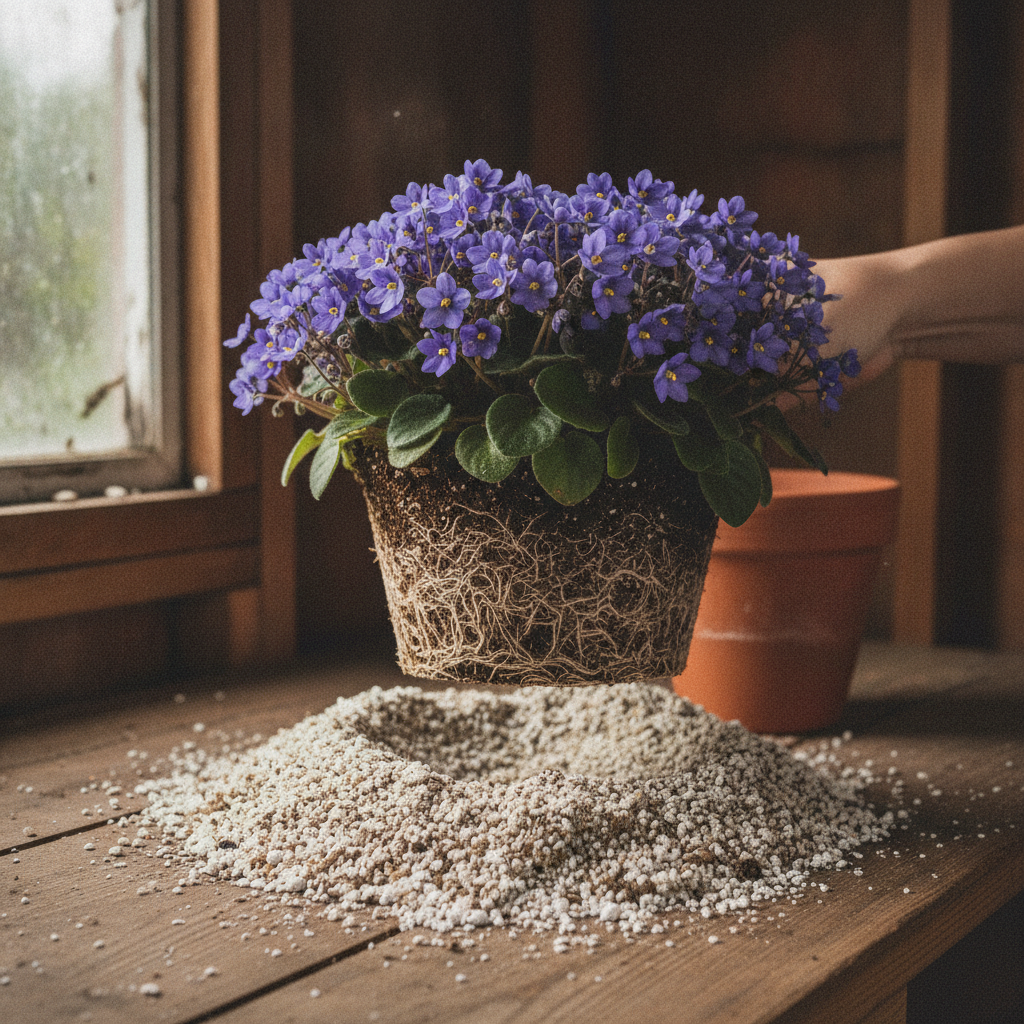
Because the Persian violet wants moisture without waterlogging, the compost has to do two seemingly opposite jobs: hold water reliably yet still drain and breathe. A light, rich, peat-free or peat-based potting mix that has been opened up with a drainage amendment hits that balance well, giving the small root system the steady moisture it craves while letting excess water escape.
Ideal Soil Composition
Start with a good-quality general houseplant compost as the base, then improve its structure. The aim is a mix that stays evenly damp without turning to mud. A handful of perlite improves aeration and drainage, while a little extra organic matter such as fine coir or leaf mould helps hold moisture and feeds the plant gently.
| Component | Proportion | Function |
|---|---|---|
| Quality houseplant compost | 60 per cent | Holds moisture and nutrients, the main growing medium |
| Perlite | 25 per cent | Improves drainage and keeps the mix airy |
| Fine coir or leaf mould | 15 per cent | Retains even moisture and adds gentle nutrition |
The Persian violet prefers a soil pH on the slightly acidic to neutral side, roughly 6.0 to 6.8, which most standard houseplant composts fall within naturally. There is no need to chase exact figures; a fresh, good-quality mix will be in the right range without any special adjustment.
Pro Tip — Quick Mix Recipe: For a fast, reliable blend, combine four parts houseplant compost, two parts perlite and one part fine coir. It drains freely, holds moisture between waterings and suits the shallow roots of a Persian violet without staying soggy.
Choosing the Right Pot
A Persian violet has a compact, shallow root system and does not want to be lost in a large volume of compost. A pot only slightly bigger than the root ball, typically 10 to 13 centimetres across, keeps the roots in proportion to the top growth and reduces the risk of unused wet compost turning sour.
Drainage holes are non-negotiable. Given how easily this plant rots in standing water, the pot must have open drainage holes so excess water can escape after every watering. Decorative cover pots are fine, but always lift the plant out to drain or empty the cover pot promptly so the roots are never left sitting in a reservoir.
Pot material: Plastic and glazed ceramic both hold moisture well, which suits a plant that likes to stay damp, and are usually the easier choice. Unglazed terracotta breathes and dries faster, so it can work but will demand even closer attention to watering on warm days.
Pot size: Resist the urge to over-pot. Move up only one size at a time, and only when roots are genuinely crowding the current pot. A Persian violet flowers most freely when slightly snug rather than swimming in compost.
When to Repot
Many Persian violets are bought already in full bloom and, being short-lived, are grown for a single long flowering season without ever needing a repot. If you are keeping a plant longer, or it arrived root-bound in a tiny nursery pot, repot in spring just as new growth resumes, choosing the next size up. Avoid repotting a plant in full, heavy bloom unless it is clearly struggling, as the disturbance can cause bud drop.
How to Repot: Step-by-Step
- Water the plant lightly an hour beforehand so the root ball holds together.
- Ease the plant out by supporting the base of the stems and tipping the pot, rather than pulling on the foliage.
- Gently tease a few of the outer roots free if they are circling, but keep most of the root ball intact.
- Add fresh mix to the base of the new pot, then set the plant so it sits at the same depth as before.
- Fill around the sides with fresh compost, firming lightly to remove large air pockets without compacting.
- Water thoroughly to settle the compost, let it drain, and return the plant to its bright spot.
- Keep it out of strong direct sun for a few days while it re-establishes.
Warning — Transplant Shock: Persian violets dislike root disturbance and may sulk after repotting, dropping a few buds or wilting briefly. Keep the plant warm, evenly moist and shaded from harsh sun while it recovers, and hold off feeding for two to three weeks until you see fresh growth.
Fertilising
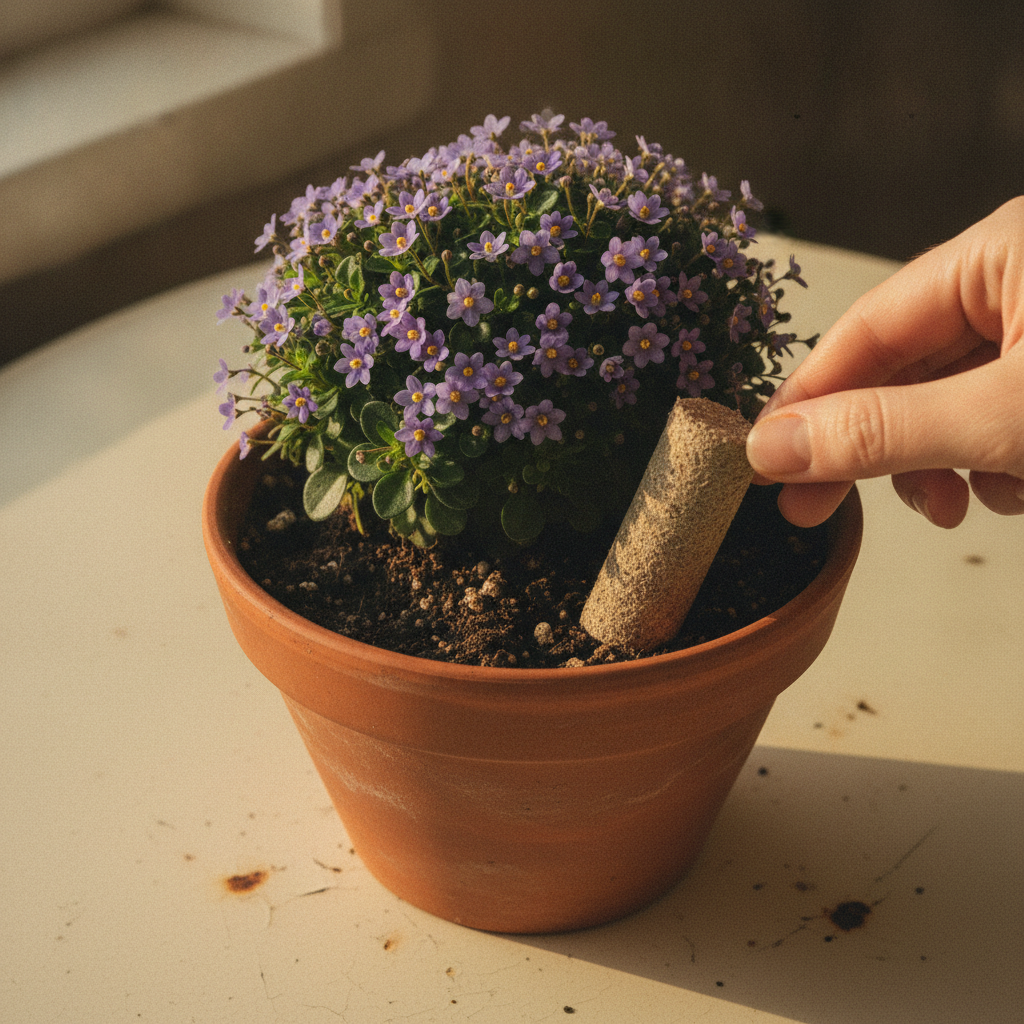
A plant that flowers as relentlessly as the Persian violet burns through nutrients quickly, and regular feeding is what keeps the bud supply coming rather than petering out after the first flush. Because the plant is small and its roots are sensitive, the rule here is little and often at reduced strength, rather than occasional heavy doses.
Feed actively only while the plant is growing and flowering, which for most indoor Persian violets means spring through autumn. A plant resting over winter, or one you are deliberately keeping cool and slow, needs little or no feeding until it picks up again.
Understanding Plant Nutrients
Fertilisers are labelled with an NPK ratio, the proportion of nitrogen, phosphorus and potassium they contain. For a flowering plant like the Persian violet, potassium is particularly valuable because it drives bud formation and bloom quality, which is why a high-potash feed of the sort sold for tomatoes works so well. The table below outlines the main nutrients and the symptoms that appear when each runs short.
| Nutrient | Symbol | Primary Function | Deficiency Symptoms |
|---|---|---|---|
| Nitrogen | N | Leaf and stem growth, green colour | Pale, yellowing older leaves; weak growth |
| Phosphorus | P | Root development and flowering | Poor roots, dull leaves, few buds |
| Potassium | K | Flower production and overall vigour | Brown leaf edges, scant, poor blooms |
| Magnesium | Mg | Chlorophyll production | Yellowing between leaf veins |
| Iron | Fe | Healthy new growth | Pale young leaves with green veins |
Types of Fertiliser
Liquid fertilisers: The most practical choice for a Persian violet, as they are easy to dilute to half strength and apply with routine watering. A balanced houseplant feed works well, and switching to a high-potassium bloom feed encourages heavier flowering.
Slow-release granular: Granules or pellets release nutrients gradually over weeks and suit growers who prefer not to mix feed every fortnight. Use a light hand, as it is harder to dial back if the plant shows signs of overfeeding.
Organic fertilisers: Worm castings, seaweed extracts and similar organic feeds release nutrients gently and are very forgiving, which suits this sensitive-rooted plant. They feed more slowly, so pair them with a liquid feed during peak bloom if growth seems hungry.
Feeding Schedule
During the spring-to-autumn growing season, feed every two weeks with a balanced or high-potassium liquid fertiliser diluted to half the recommended strength. In winter, or whenever the plant is not actively flowering, stop feeding or cut back to once a month at most. Always apply feed to already-moist compost, never to a dry root ball, to avoid scorching the roots.
Pro Tip — Half Strength, Double Frequency: The Persian violet responds far better to a weak feed given often than to a strong feed given occasionally. Mixing liquid fertiliser at half the label rate and applying it fortnightly keeps nutrient levels steady and avoids the root burn that a concentrated dose can cause in such a small plant.
How to Fertilise
- Water the plant first, or feed when the compost is already moist, never bone dry.
- Mix liquid fertiliser to half the strength stated on the bottle.
- Apply the diluted feed to the compost, keeping it off the leaves and flowers.
- Let any excess drain away and empty the saucer so salts do not concentrate at the roots.
- Every month or two, flush the pot with plain water to wash out accumulated mineral salts.
Warning — Salt Build-Up: Frequent feeding leaves mineral salts in the compost, which over time scorch the roots and brown the leaf edges. A white crust on the soil surface or pot rim is the warning sign. Flush the pot thoroughly with plain water every few weeks, letting it run freely from the drainage holes, to keep salts in check.
Propagation
Because the Persian violet is naturally short-lived, propagation is the way to keep its colour in your home from one year to the next rather than buying a fresh plant each time. There are two practical routes: raising new plants from seed, which is how commercial growers produce them in bulk, and taking softwood stem cuttings from a healthy plant.
Seed is the more reliable and true-to-type method and gives you a large number of plants, while cuttings are quicker and let you clone a particular plant you like. Neither is difficult, but both reward warmth, humidity and patience.
Understanding How Persian Violets Reproduce
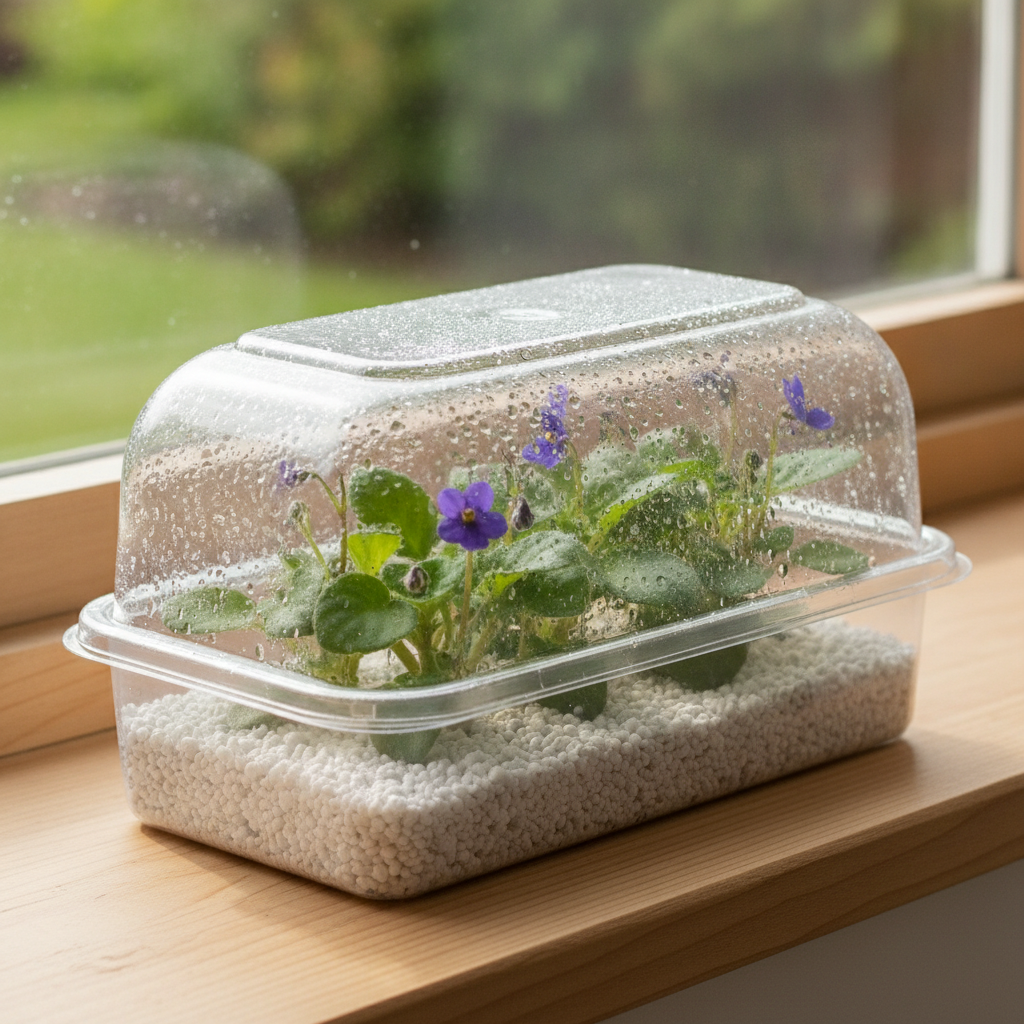
In the wild the Persian violet completes its life cycle by setting seed after flowering, and those tiny dust-like seeds germinate readily in warm, moist conditions. Indoors you can mimic this with a seed tray, or you can short-circuit the process by rooting a piece of soft stem, which will form roots from the cut node much as many other soft-stemmed plants do. Either way, the key structures to work with are the growing tips of healthy non-flowering shoots for cuttings, or ripe seed pods for seed.
Stem Cuttings: Step-by-Step
Take cuttings in late spring or summer from a vigorous plant, choosing soft, non-flowering shoot tips. This is the faster of the two methods and produces a flowering-sized plant within a few months.
- Cut a healthy shoot tip 5 to 8 centimetres long, just below a leaf node, using clean scissors.
- Remove the lower leaves and any flower buds so the cutting puts its energy into roots.
- Dip the cut end in rooting hormone, which is optional but improves the strike rate.
- Insert the cutting into damp perlite or a light, gritty cutting compost.
- Cover with a clear dome or bag to hold humidity, and keep at 18 to 22 degrees Celsius (64 to 72 Fahrenheit) in bright indirect light.
- Roots usually form within three to four weeks; pot up once they are well established.
Pro Tip — Ventilate the Dome: The same humidity that helps cuttings root also encourages mould on this rot-prone plant. Lift the cover for a few minutes daily to let fresh air in and wipe away condensation, which keeps fungal problems at bay while the cuttings establish.
Growing from Seed: Step-by-Step
Sowing seed in late winter or early spring gives plants that flower the same year. The seed is extremely fine, so handle it carefully and do not bury it, as it needs light to germinate.
- Fill a shallow tray with moist, fine seed compost and firm it lightly level.
- Scatter the tiny seeds thinly across the surface and do not cover them with compost.
- Mist the surface gently or water from below to settle the seed without washing it away.
- Cover with a clear lid and keep warm at around 20 to 22 degrees Celsius (68 to 72 Fahrenheit) in bright, indirect light.
- Germination takes two to three weeks; once seedlings have a couple of true leaves, prick them out into small pots.
Troubleshooting Propagation
| Problem | Likely Cause | Solution |
|---|---|---|
| Cuttings rot before rooting | Too wet, too little air, stale humidity | Use airy perlite, ventilate daily, avoid sogginess |
| Seed fails to germinate | Seed buried, too cold, or dried out | Surface sow, keep warm and consistently moist |
| Seedlings collapse at the base | Damping-off fungus from over-wet compost | Improve airflow, water from below, sow thinly |
| Cuttings wilt and shrivel | Drying out before roots form | Maintain humidity under a dome until rooted |
Pests & Diseases
A healthy, well-grown Persian violet is reasonably resilient, but its soft foliage and dense, humid flower head make it a target for a handful of common indoor pests and, more importantly, for fungal diseases. The single biggest threat is not an insect at all but grey mould, which thrives in exactly the moist, crowded conditions the plant creates.
The best defence is observation. Look over the plant whenever you water, checking the undersides of leaves and the spaces between the flowers, because problems caught in their first days are far easier to deal with than an established infestation or an outbreak of rot.

Common Pests
Aphids (Aphidoidea)
Small green, black or pinkish soft-bodied insects that cluster on tender new growth and flower buds, sucking sap and leaving sticky honeydew. Heavy infestations distort buds and can prevent flowers opening.
Treatment: Rinse them off with a gentle stream of water, then treat with insecticidal soap, repeating every few days until they are gone. Check the growing tips, where they congregate first.
Whitefly (Trialeurodes vaporariorum)
Tiny white moth-like insects that rise in a cloud when the plant is disturbed and gather on the undersides of leaves. Like aphids, they feed on sap and excrete honeydew that encourages sooty mould.
Treatment: Use yellow sticky traps to catch the adults and treat the foliage with insecticidal soap or a suitable spray, paying attention to leaf undersides. Persistence is needed to break their breeding cycle.
Spider mites (Tetranychus urticae)
Almost invisible mites that thrive in dry air, stippling the leaves with fine pale dots and spinning faint webbing in bad cases. The leaves take on a dull, dusty, mottled look.
Treatment: Raise the humidity, which mites dislike, and treat with insecticidal soap or a miticide. Isolate the plant, as mites spread quickly to neighbours.
Fungus gnats (Sciaridae)
Small dark flies that hover around the pot and whose larvae live in constantly moist compost, feeding on organic matter and fine roots. They are encouraged by the damp conditions this plant enjoys.
Treatment: Let the very top of the compost dry slightly between waterings, use yellow sticky traps for the adults, and a biological control or sand topping to interrupt the larvae.
Common Diseases
Grey mould (Botrytis cinerea)
The most serious threat to a Persian violet. A fuzzy grey-brown mould that takes hold on faded flowers and damp foliage, then spreads through the crowded flower head, rotting buds and stems. Wet petals and poor airflow are its allies.
Treatment: Remove affected flowers and leaves immediately, improve ventilation, keep water off the foliage and reduce humidity around the plant. Deadhead spent blooms promptly so there is nothing for the mould to colonise.
Root rot (Pythium and Phytophthora)
Caused by waterlogged, airless compost, root rot turns the roots brown and mushy and leaves the plant wilting even though the soil is wet. A sour smell from the pot is a telltale sign.
Treatment: Catch it early by easing back on watering and improving drainage. In advanced cases, remove the plant, cut away rotted roots, and repot into fresh, free-draining compost, though recovery is uncertain once it is widespread.
Powdery mildew (Erysiphales)
A white, powdery coating on leaves and stems, usually appearing where airflow is poor and humidity is high but the leaves stay dry. It rarely kills the plant but disfigures it and weakens growth.
Treatment: Improve air circulation, remove the worst-affected leaves and treat with a suitable fungicide or a dilute potassium bicarbonate spray if it persists.
Pest and Disease Summary
| Pest / Disease | Identification | Treatment |
|---|---|---|
| Aphids | Clusters on buds and new growth, sticky honeydew | Rinse off, insecticidal soap, repeat |
| Whitefly | White flies rising when disturbed | Sticky traps, insecticidal soap on undersides |
| Spider mites | Fine stippling, dull leaves, faint webbing | Raise humidity, miticide, isolate plant |
| Fungus gnats | Small flies around damp compost | Dry surface, sticky traps, biological control |
| Grey mould | Fuzzy grey rot on flowers and stems | Remove affected parts, ventilate, keep dry |
| Root rot | Wilting in wet soil, sour smell | Reduce watering, repot into fresh mix |
Prevention Strategies
Prevention with a Persian violet comes down to airflow, hygiene and restraint with water. Give the plant space rather than burying it among others, keep the air around it moving gently, and deadhead spent flowers regularly so dying petals cannot become a launchpad for grey mould. These simple habits prevent the great majority of problems before they start.
Inspect any new plant before bringing it home, and keep it apart from your collection for a couple of weeks if you have doubts. Wiping over the leaves occasionally and clearing fallen debris from the soil surface removes the hiding places and food sources that pests and fungi rely on.
Pro Tip — Deadhead Religiously: Pinching off faded flowers does double duty on a Persian violet. It removes the decaying tissue that grey mould loves, and it pushes the plant to produce new buds instead of setting seed, keeping the display going for weeks longer.
Popular Varieties
Although the wild species is violet-blue, decades of breeding have given the Persian violet a useful range of colours and sizes, mostly aimed at the pot-plant market. The differences are largely in flower colour, flower form and overall compactness rather than in care, so any of these can be grown using the advice in this guide.
Most named forms belong to compact “midget” or series-bred groups developed to flower heavily on a small, tidy plant. When buying, you will often find them simply labelled by colour, so the descriptions below help you recognise what you are looking at.
| Variety | Flower Appearance | Light Needs | Growth Rate | Availability |
|---|---|---|---|---|
| Blue Midget | Lavender-blue stars, golden centre | Bright indirect | Compact, fast | Common |
| White Midget | Pure white with yellow centre | Bright indirect | Compact, fast | Common |
| Rococo | Double, ruffled deep blue | Bright indirect | Compact | Occasional |
| Champion Blue | Large rich violet-blue flowers | Bright indirect | Vigorous | Common |
| Champion White | Large clean white flowers | Bright indirect | Vigorous | Common |
| Starlight Fragrance | Blue, notably scented | Bright indirect | Compact | Occasional |
| Tiddly Winks | Mixed blue, white and pink | Bright indirect | Very compact | Seed strains |
Featured Varieties
Blue Midget
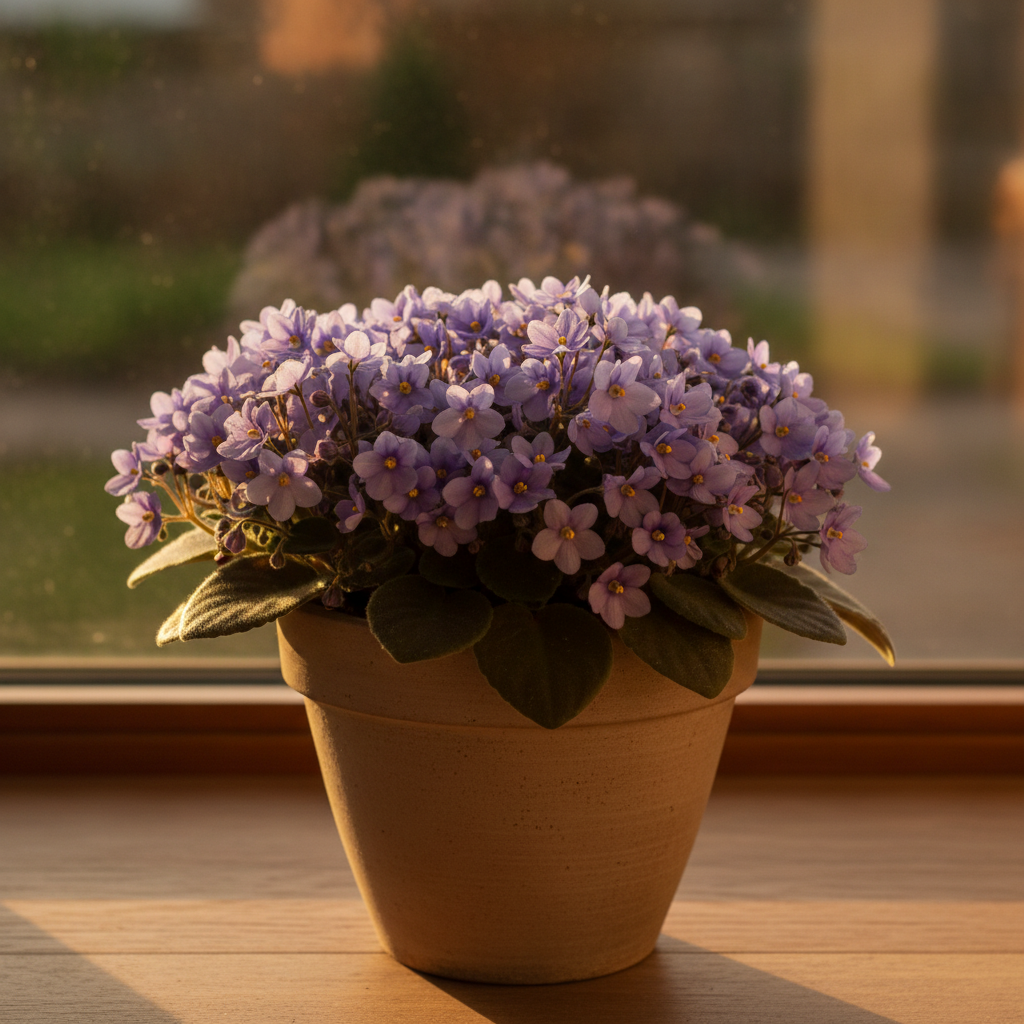
The quintessential Persian violet and the form most people picture. A dwarf, densely branched plant barely 15 to 20 centimetres tall, smothered in lavender-blue stars with bright yellow eyes. Its small size and heavy bloom make it ideal for windowsills and desks.
White Midget
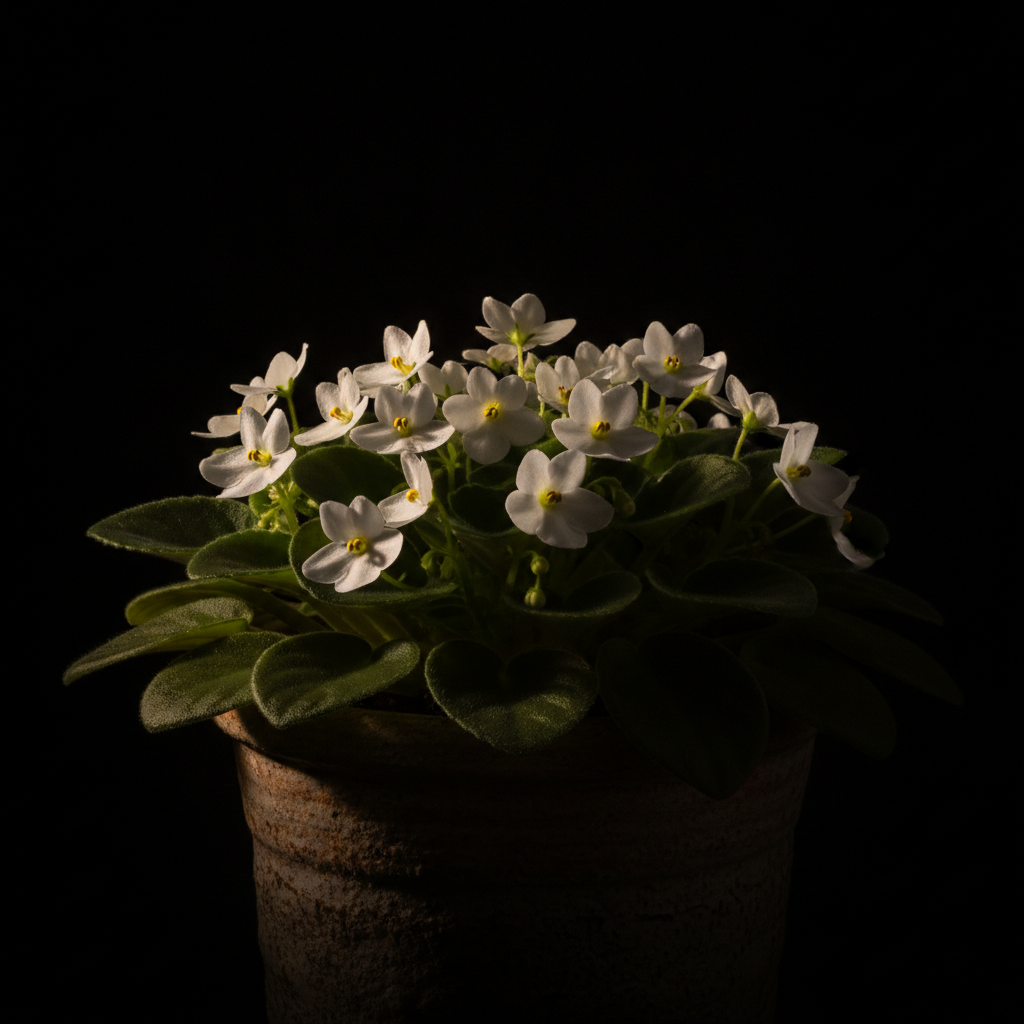
The white counterpart to Blue Midget, sharing the same compact, free-flowering habit but carrying pure white five-petalled stars set off by the familiar golden stamens. It brings a crisp, fresh look and pairs beautifully with the blue forms in a grouped display.
Variety Profiles in Detail
Rococo (Exacum affine ‘Rococo’)
A double-flowered selection whose ruffled, many-petalled deep blue blooms give a fuller, almost rose-like appearance compared with the simple stars of the species. It is showier but the dense flowers hold moisture, so good airflow and careful deadheading matter even more to keep grey mould away.
Champion Series (Exacum affine Champion)
A vigorous, large-flowered series bred for the commercial pot-plant trade, available in blue, white and lavender. The plants are a touch larger and the individual flowers bigger than the midget types, making them a good choice where you want a fuller plant with more presence.
Starlight Fragrance (Exacum affine ‘Starlight Fragrance’)
Selected for its stronger scent, this blue-flowered form pushes the species’ natural light fragrance further, making it a favourite for a position near where you sit. Its care is identical to the other forms, with the bonus of perfume on a warm day.
Choosing the Right Variety for Your Space
For a small windowsill or desk, the compact midget forms give the most flower for the least space and are the easiest to find. If you have a little more room and want a fuller plant, the Champion series delivers larger blooms on a more substantial plant. Where scent matters, seek out Starlight Fragrance, and for novelty the double-flowered Rococo offers a different texture, accepting that its packed blooms need slightly more vigilance against mould. Whichever you choose, grouping two or three colours together makes a far more striking display than a single plant alone.
Frequently Asked Questions
Why is my Persian violet dropping its flowers?
Bud and flower drop is usually a sign of stress: letting the compost dry out, sudden temperature swings, draughts from a heater or open door, or moving the plant abruptly into much brighter or darker conditions. Keep it evenly moist, in a stable cool-to-warm spot out of draughts, and the flowering will steady itself.
Can I get my Persian violet to bloom again next year?
It is possible but not guaranteed, since the plant is naturally short-lived and often declines after its main flowering. To improve the odds, keep it cool, deadhead diligently, feed lightly and avoid letting it dry out. Many growers find it more reliable to take cuttings or sow fresh seed each year rather than carry an old plant over.
Is the Persian violet safe around cats and dogs?
The Persian violet is listed as non-toxic to cats and dogs by the ASPCA, so it is among the safer flowering houseplants for pet households. It is still a plant grown for display rather than for eating, and chewing any houseplant can cause mild stomach upset, so it is best kept out of reach of determined nibblers.
Why are the leaf tips turning brown?
Brown, crisp leaf tips usually point to dry air or, less often, a build-up of mineral salts from feeding. Raise the humidity with a pebble tray or nearby humidifier, flush the pot occasionally with plain water to wash out salts, and check that the plant is not being allowed to dry out between waterings.
How much light does a Persian violet really need?
Plenty. It wants bright, indirect light with a little gentle morning sun, the kind of position an east window provides. Too little light is the most common reason a plant stops blooming and grows leggy, so if flowering slows, moving it closer to a bright window is the first fix to try.
My plant suddenly wilted completely. Can I save it?
If the compost is dry, the plant has simply run out of water and can often be revived by a thorough soak, ideally by standing the pot in water for 20 minutes. If the compost is wet and it has still wilted, suspect root rot instead, in which case ease off watering and check the roots. Repeated wilting from either cause shortens the plant’s life, so aim to keep moisture steady.
What temperature does a Persian violet prefer?
It likes things on the cool side, roughly 15 to 21 degrees Celsius (59 to 70 Fahrenheit), and cool nights actually prolong the flowering. Avoid hot, stuffy rooms and keep it away from radiators and cold draughts alike. Temperatures below about 10 degrees Celsius (50 Fahrenheit) will check its growth.
Should I mist my Persian violet?
It is better not to mist directly. While the plant enjoys humid air, wet petals and leaves invite grey mould in its crowded flower head. Raise humidity instead with a damp pebble tray, by grouping plants, or with a small humidifier, all of which moisten the air without wetting the plant.
Where does the Persian violet actually come from?
Despite the name, it is not from Persia. Exacum affine is native to the island of Socotra, off the coast of Yemen, and belongs to the gentian family. The “violet” in its common name simply refers to the flower colour, not to any relation to true violets.






