
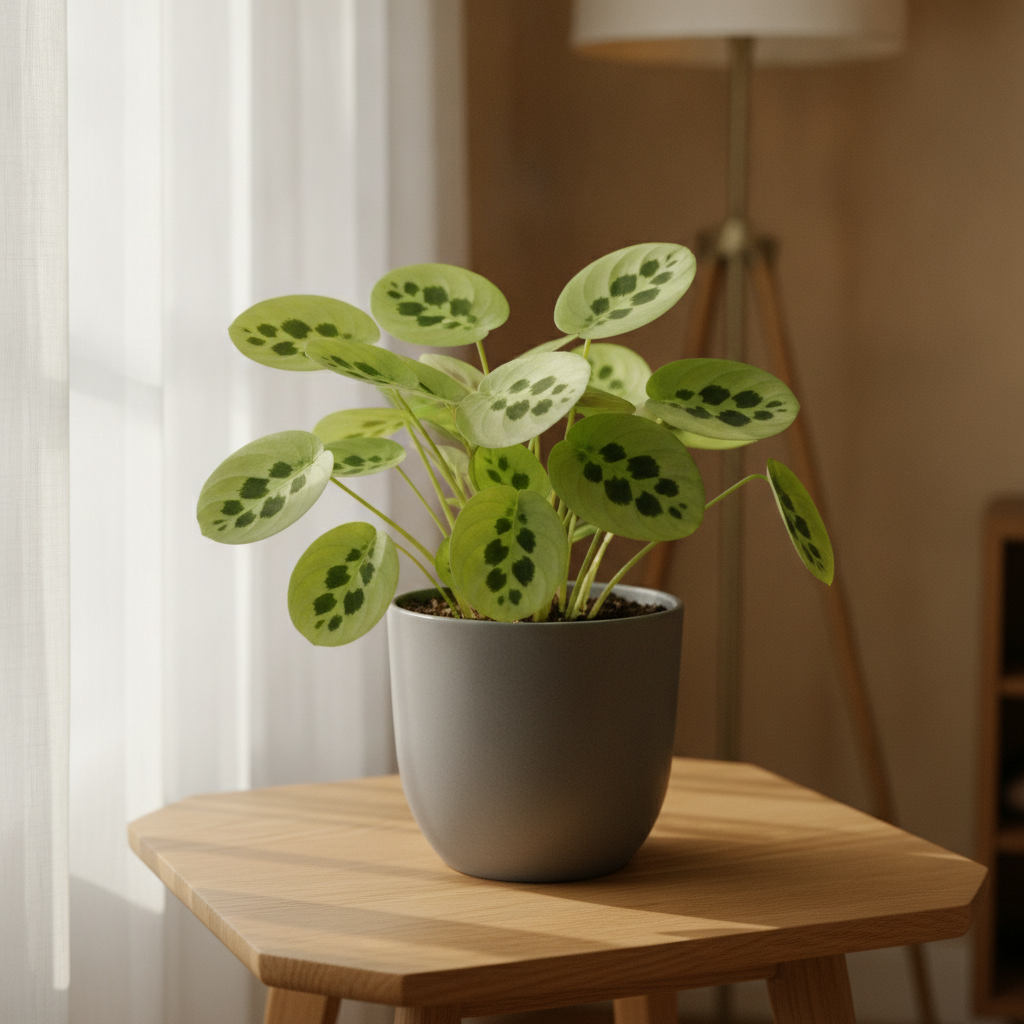
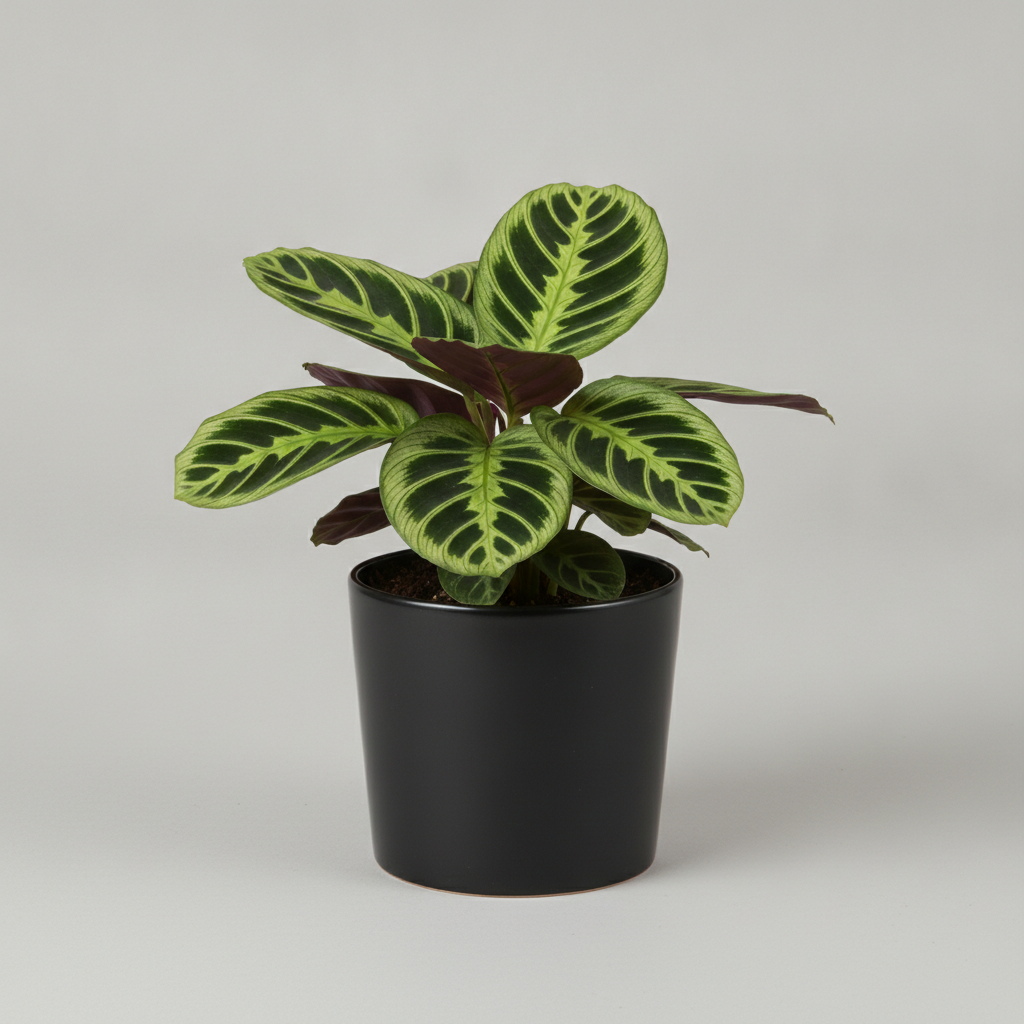
Few houseplants wear their common name as plainly as the rabbit tracks plant. Across each soft, oval leaf run two neat rows of dark blackish-green blotches, paired either side of the midrib like the prints a hare leaves crossing fresh snow. Botanically it is Maranta leuconeura var. kerchoveana, one of the oldest and most forgiving members of the prayer plant family, and the variety most likely to be sold simply as “the green prayer plant”. What sets it apart from its flashier, red-veined relatives is restraint: pale grass-green leaves, quiet markings, and a nightly habit of folding those leaves upward as though closing a book.
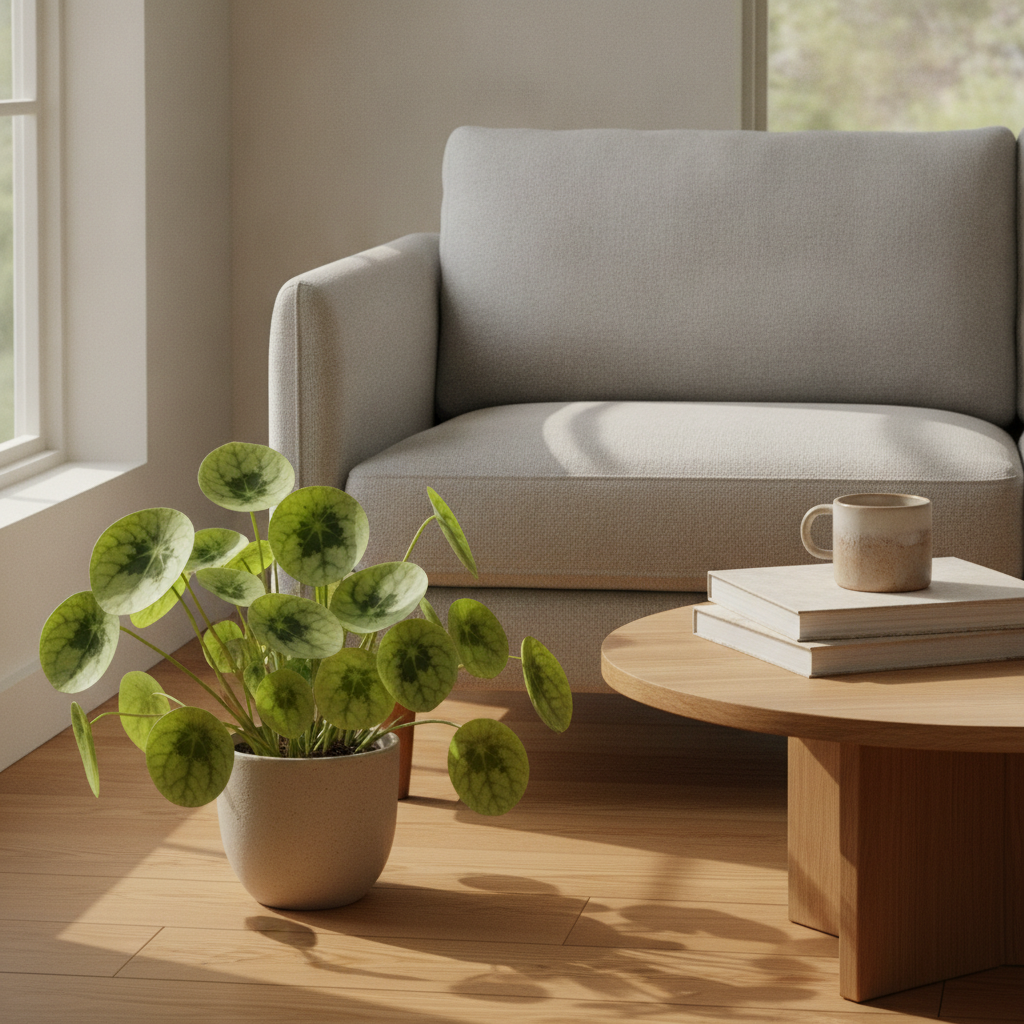
That folding movement, called nyctinasty, is the reason the whole genus is known as prayer plants. Tiny swellings at the base of each leaf stalk, called pulvini, pump water in and out to raise the leaves at dusk and lower them again at dawn. It is harmless, normal, and genuinely lovely to watch, and it gives the rabbit tracks plant a presence that static foliage plants never quite manage. The trade-off is that this is a plant with opinions about humidity, water quality and light, and learning to read those opinions is the difference between a plant that merely survives and one that truly thrives.
Quick Reference
Use the summary below as an at-a-glance reminder once you understand the reasoning behind each figure. The detailed sections that follow explain why these ranges matter and how to adjust them to your home.
| Common name | Rabbit tracks plant, green prayer plant, kerchoveana prayer plant |
| Botanical name | Maranta leuconeura var. kerchoveana |
| Family | Marantaceae |
| Light | Bright, indirect light; tolerates medium light, dislikes direct midday sun |
| Water | Keep evenly moist; let only the top 2 to 3 cm (1 in) dry between waterings |
| Humidity | High, ideally 60 percent or above; struggles below 40 percent |
| Temperature | 18 to 27 degrees C (65 to 80 degrees F); avoid below 15 degrees C (59 degrees F) |
| Soil | Light, airy, moisture-retentive peat or coir based mix with perlite |
| Feeding | Balanced fertiliser at half strength, monthly in spring and summer |
| Mature size | 20 to 30 cm (8 to 12 in) tall, spreading 30 to 40 cm (12 to 16 in) wide |
| Toxicity | Non-toxic to cats, dogs and humans |
| Difficulty | Intermediate; rewards consistency |
Why Grow the Rabbit Tracks Plant as a Houseplant
The rabbit tracks plant has been a fixture of windowsills since the Victorian era, and its endurance is no accident. Of all the prayer plants, the kerchoveana variety is the most adaptable to ordinary indoor conditions. The deeply coloured, red-veined cultivars are undeniably striking, but they sulk quickly when humidity drops or water quality is poor. The pale, simply marked kerchoveana shrugs off the same conditions far more gracefully, which is why it remains the entry point into the world of Marantaceae for so many growers.
It is also a plant that does something. The nightly raising and lowering of the leaves turns an ordinary shelf into a small daily event, and because the plant grows low and spreads outward rather than upward, it suits tabletops, hanging planters and the front edge of a grouped display where taller plants would dominate. Native to the humid forest floors of Brazil, it evolved in dappled shade beneath a dense canopy, which explains both its tolerance of lower light and its insistence on moisture and warmth. Understanding that origin is the single most useful thing you can carry into its care.
Pro Tip — Start with the green one: If you have never grown a prayer plant, begin with the rabbit tracks plant rather than a red-veined cultivar. It forgives the inevitable early mistakes in watering and humidity, and the lessons you learn transfer directly to the fussier members of the family.
Light
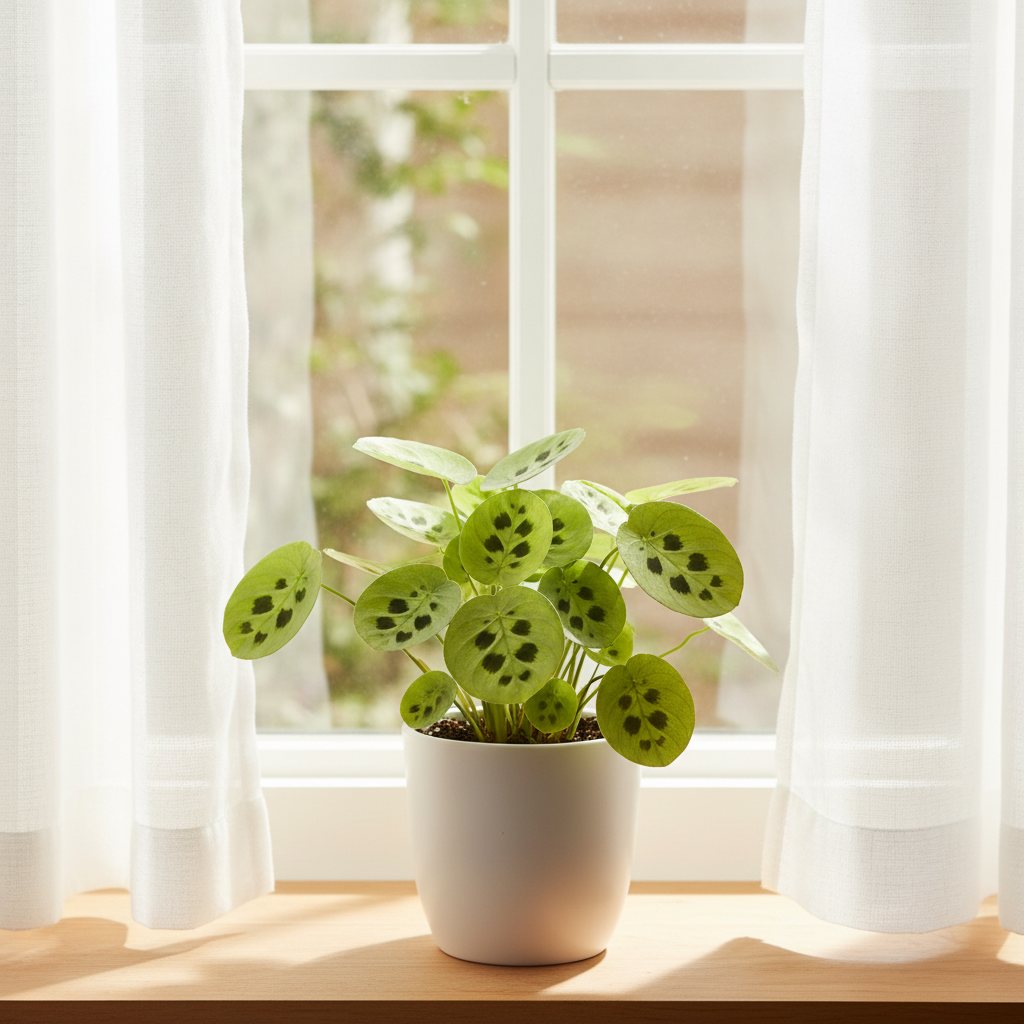
Bright, indirect light is the sweet spot. In its forest-floor home the rabbit tracks plant receives light that has already passed through layers of canopy, so it is adapted to brightness without the punishment of direct sun. An east-facing window where it catches gentle morning light, or a position a metre or two back from a brighter south or west window, suits it perfectly. A sheer curtain over a sunnier window achieves the same effect by softening the intensity.
The plant will survive in medium light, and this tolerance is part of why it has lasted so long as a houseplant, but survival and thriving are different things. In light that is too low, growth slows, the leaves space out on longer stalks as the plant reaches for brightness, and the characteristic markings fade toward a flat, uniform green. In light that is too strong, the opposite happens: direct midday sun bleaches the leaves to a washed-out yellow-green and scorches brown, papery patches that will not recover. The markings are the early-warning system. Crisp, well-contrasted blotches mean the light is right; faded or bleached ones mean it is wrong in one direction or the other.
Rotate the pot a quarter turn each week so every side receives equal light, because a prayer plant left unrotated will lean noticeably toward the window over a month or two. If your home is genuinely dark, a basic full-spectrum LED grow light run for ten to twelve hours a day will keep the plant healthy and the markings sharp through the darkest winter months.
Watering
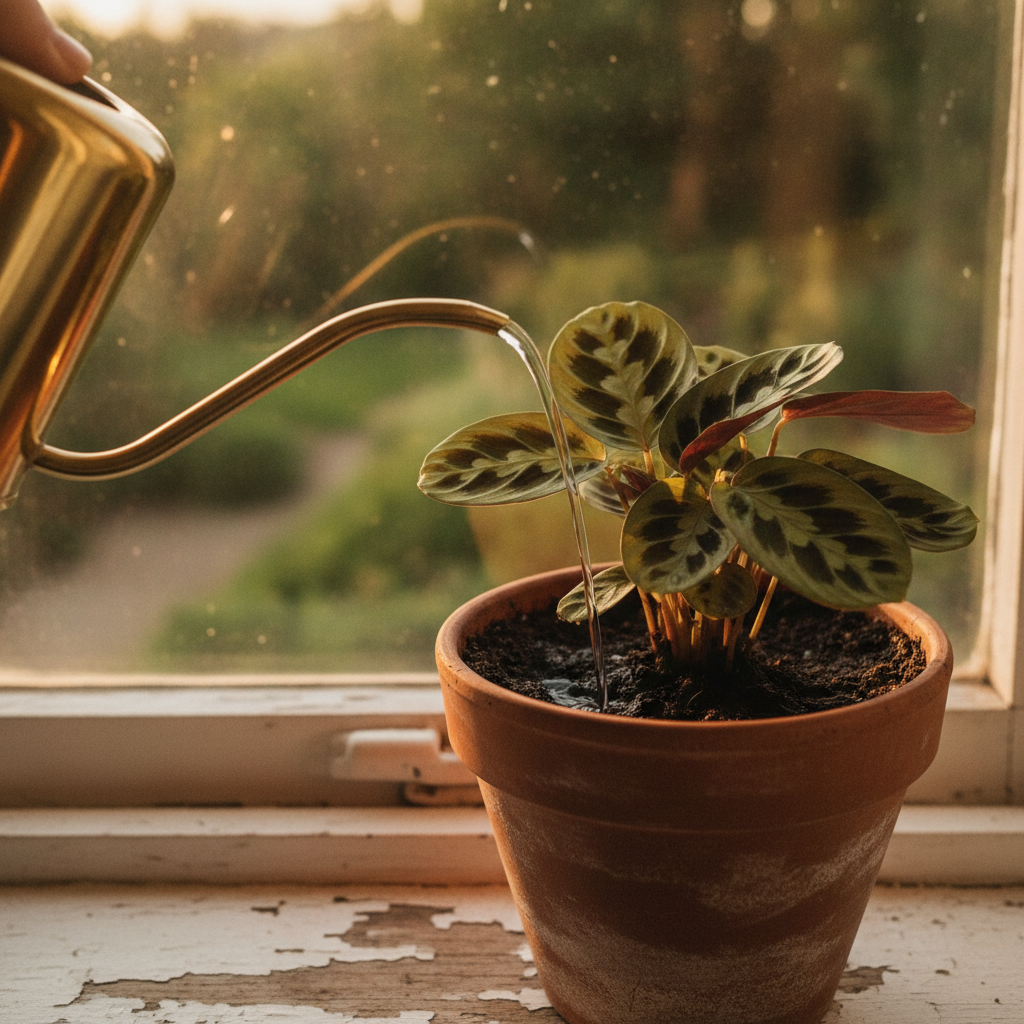
Watering is where most rabbit tracks plants are won or lost. The goal is soil that stays evenly moist, never waterlogged and never bone dry. Allow only the top 2 to 3 cm (about 1 in) to dry between waterings, then water thoroughly until it runs from the drainage holes, and tip away anything that collects in the saucer. This plant has fine, shallow roots that resent both extremes: sit them in standing water and they rot within days, let the rootball dry out completely and the leaf edges crisp brown and curl.
Water quality matters more for prayer plants than for almost any other common houseplant. The rabbit tracks plant is sensitive to the fluoride, chlorine and dissolved salts found in much tap water, and these build up over time to produce brown, scorched leaf tips and margins. If your tap water is hard or heavily treated, switch to rainwater, distilled water, or tap water that has been left to stand uncovered overnight so some of the chlorine can dissipate. Many growers blame humidity for brown tips when the real culprit is the water.
Adjust to the seasons. Through the warm, bright months of spring and summer the plant grows actively and drinks steadily, so you may water once or twice a week. In autumn and winter, growth slows and the soil stays wet far longer, so cut back accordingly and always check the soil with a finger before reaching for the watering can rather than following a fixed schedule. Lukewarm water is gentler than cold straight from the tap, which can shock the roots of a warmth-loving plant.
Warning — Watch for the curl: Leaves that curl inward and tips that turn brown usually signal underwatering or mineral-laden water, while yellowing lower leaves and a sour-smelling pot point to overwatering. Read the whole plant before changing your routine, because the two problems call for opposite responses.
Soil and Potting
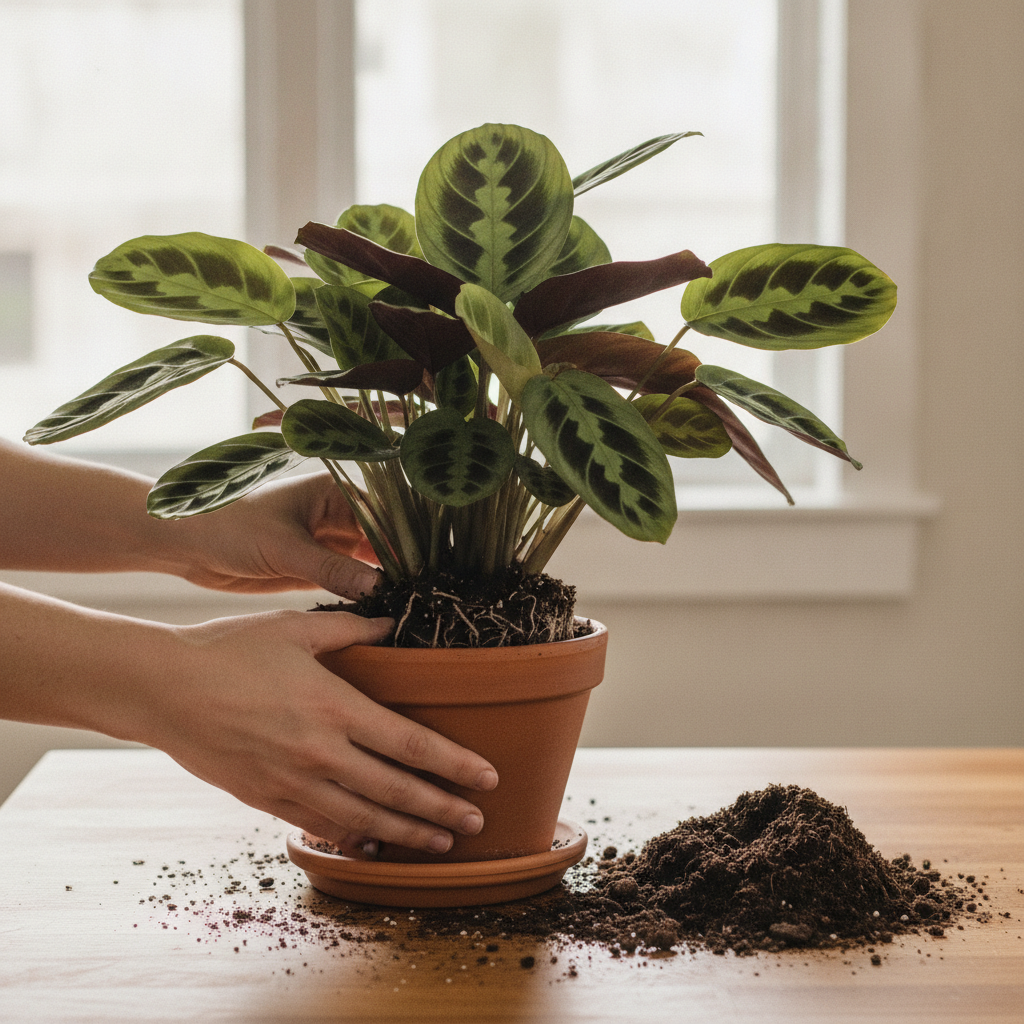
The ideal mix balances two demands that pull in opposite directions: it must hold moisture, because the plant likes consistent dampness, yet it must drain freely and stay airy, because the roots rot in stagnant wet. A general-purpose peat or coir based houseplant compost lightened with a generous handful of perlite achieves this well. A reliable recipe is two parts quality potting compost, one part coco coir for moisture retention, and one part perlite for aeration. Some growers add a little orchid bark or fine composted bark to keep the structure open over time.
Whatever vessel you choose, it must have drainage holes. A decorative pot without drainage is a common route to root rot, because water collects invisibly at the base. If you love a particular cachepot, keep the plant in a plain plastic nursery pot that sits inside it, lift it out to water, and return it only once it has finished draining. Plastic and glazed ceramic both hold moisture longer than unglazed terracotta, which suits this moisture-loving plant; terracotta works too but you will water more often.
Repot every one to two years in spring, moving up just one pot size, because these spreading plants stay relatively shallow and resent being lost in a huge volume of wet soil. Repotting is also the natural moment to divide a crowded clump, which the section on propagation covers. After repotting, water lightly and keep the plant somewhere warm and humid while the disturbed roots settle.
Fertilising
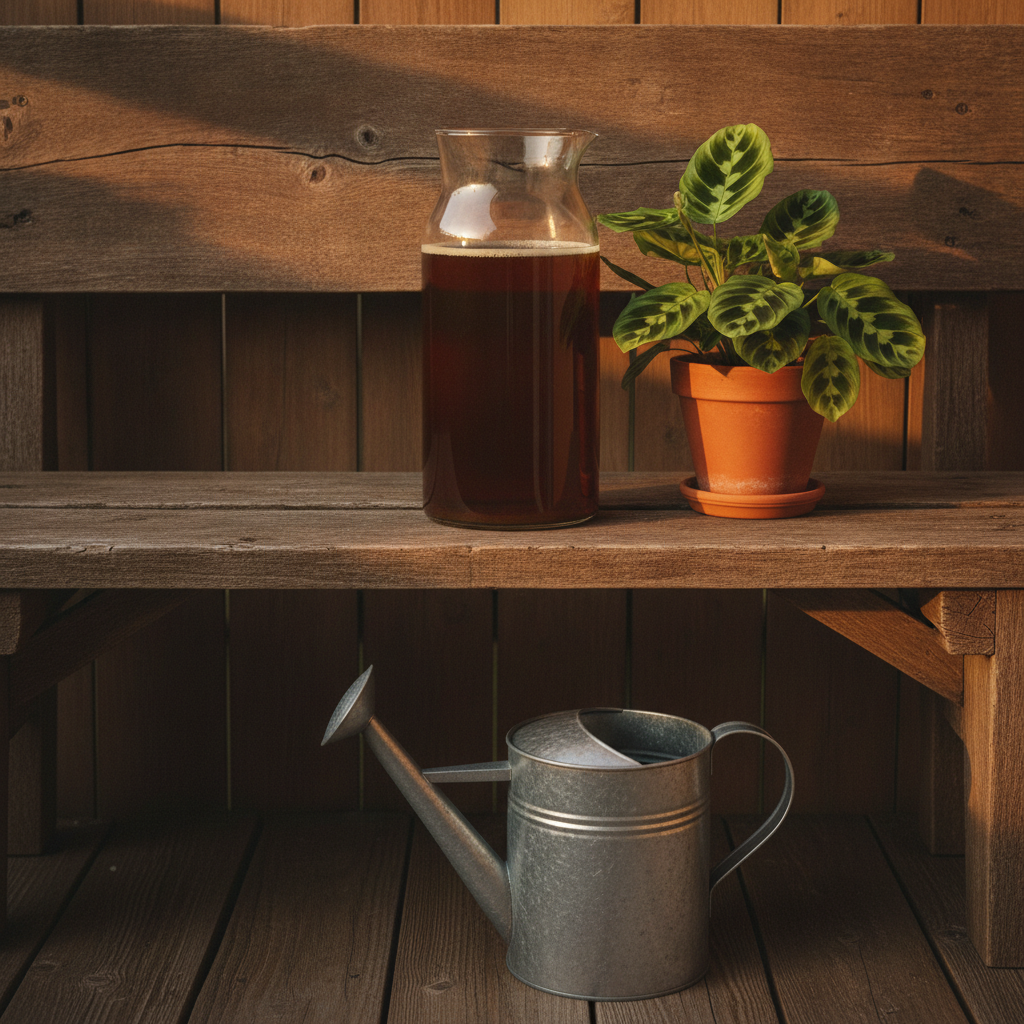
The rabbit tracks plant is a light feeder, and restraint serves it far better than enthusiasm. During the active growing season of spring and summer, a balanced liquid houseplant fertiliser diluted to half the recommended strength, applied roughly once a month, supplies everything it needs. Always feed onto already-moist soil rather than dry, because fertiliser salts applied to a dry rootball can burn the fine roots.
This plant is more sensitive than most to over-feeding. Because it dislikes the mineral salts in hard water, it is doubly intolerant of the salts that accumulate from heavy fertilising, and the symptom is the same familiar brown, crisped leaf tip. If you suspect a build-up, flush the pot thoroughly with several pot-volumes of clean water every couple of months to leach out the excess. Stop feeding altogether through autumn and winter, when growth naturally slows and unused fertiliser simply sits in the soil and accumulates.
Pro Tip — Less is genuinely more: When in doubt, under-feed. A rabbit tracks plant that is slightly hungry will keep growing slowly and healthily, whereas one that is over-fed shows scorched tips, weak growth and a slow decline that is far harder to reverse.
Propagation
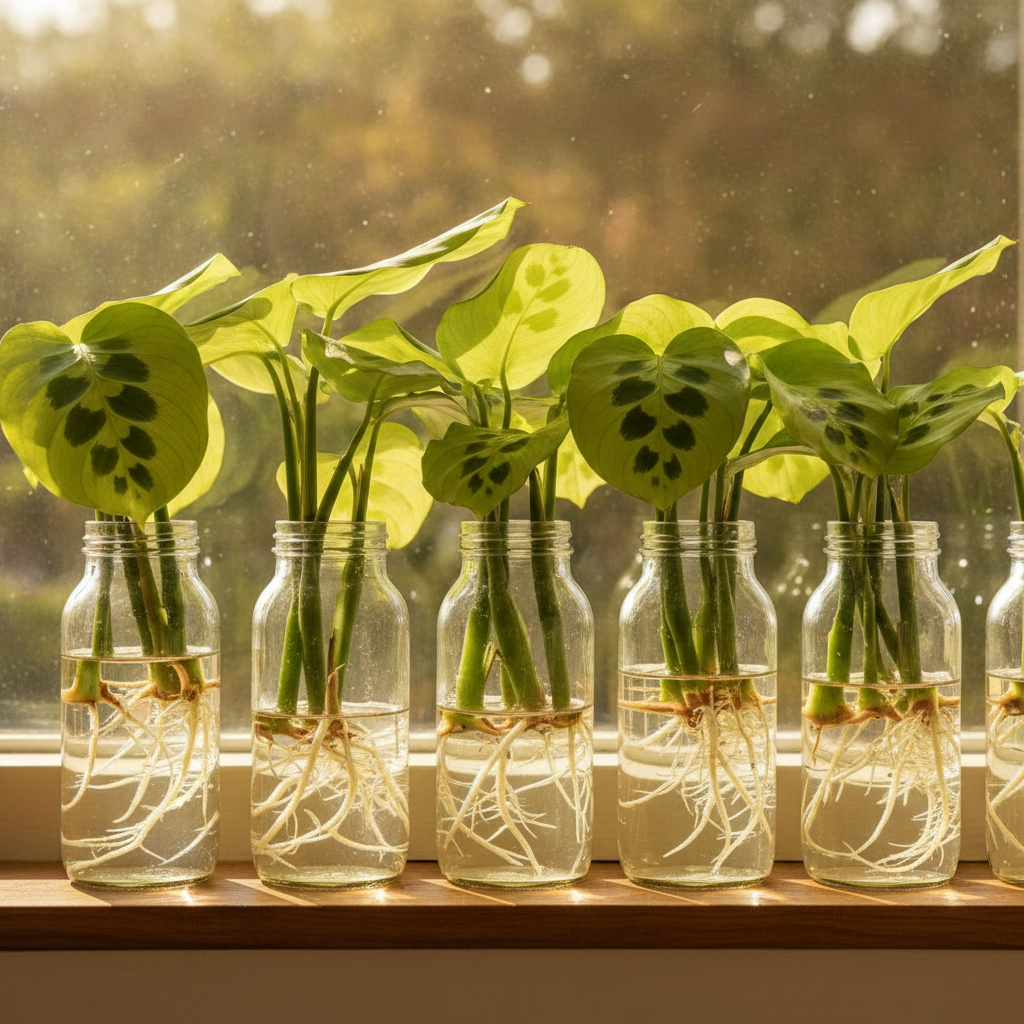
There are two reliable ways to make more rabbit tracks plants, and both are straightforward. The easiest is division, best done in spring when you are already repotting. Stem cuttings are the other route, useful when you want several new plants from a single specimen or want to share with friends.
To divide, slide the whole plant from its pot and gently tease the rootball apart into two or three sections, each with a healthy share of roots and several leaves. Use clean hands and, if the roots are tightly knit, a clean knife. Pot each division into its own container of fresh mix, water lightly, and keep it warm and humid while it re-establishes. The divisions will look a little limp for a week or two, which is normal, before they settle and resume growth.
For stem cuttings, take a section with at least one node, the small joint where leaf stalk meets stem, and cut cleanly just below it. Root the cutting either in a glass of clean water, changing the water every few days and watching white roots emerge over two to four weeks, or insert it directly into moist propagation mix. The steps below summarise the water-rooting method.
- Choose a healthy stem and cut cleanly just below a node using sterilised scissors.
- Remove the lowest leaf so the bare node sits below the water line.
- Place the cutting in a glass of clean, room-temperature water in bright indirect light.
- Change the water every three to four days to keep it fresh and oxygenated.
- Once roots reach 3 to 5 cm (1 to 2 in), pot the cutting into moist mix and keep it humid while it adjusts.
Pests and Problems

The most common pest by far is the spider mite, and it is no coincidence that mites flourish in exactly the dry indoor air that already stresses this humidity-loving plant. Look for fine webbing in the leaf joints, a faint stippling of pale dots across the leaf surface, and a generally dull, dusty appearance. Catch an infestation early by inspecting the undersides of leaves whenever you water, then treat by rinsing the plant thoroughly, raising the humidity, and applying insecticidal soap or a diluted neem oil spray every week until the mites are gone. Less frequently you may meet mealybugs, small white cottony clusters in the leaf axils, which can be dabbed away with a cotton bud dipped in isopropyl alcohol.
Most troubles with the rabbit tracks plant, though, are not pests at all but environmental, and the leaves report each problem clearly. Brown, crispy tips and edges point to dry air, mineral-heavy water, or over-feeding. Yellowing lower leaves usually mean overwatering, while curling leaves and faded markings indicate either underwatering or insufficient light. Leaves that stop their nightly folding movement are telling you the plant is stressed, most often by light levels or inconsistent watering. The table below maps the common symptoms to their likely causes and fixes.
| Symptom | Likely cause | Fix |
| Brown, crispy leaf tips | Low humidity, hard or fluoridated water, over-feeding | Raise humidity, switch to filtered or rainwater, flush the soil |
| Yellowing lower leaves | Overwatering or poor drainage | Let the top layer dry, check drainage, reduce frequency |
| Curling leaves | Underwatering or low humidity | Water more consistently, increase humidity |
| Faded, washed-out markings | Too little or too much light | Move to bright, indirect light away from direct sun |
| Leaves no longer fold at night | General stress, often light or watering | Review and steady the whole routine |
| Fine webbing and stippling | Spider mites | Rinse, raise humidity, treat with neem or insecticidal soap |
Humidity is the thread running through most of these problems. The rabbit tracks plant wants 60 percent or more, far above the level of most heated or air-conditioned homes. Group it with other plants to create a humid microclimate, stand it on a wide tray of pebbles topped up with water so the pot sits above the waterline, or run a small humidifier nearby in winter. Misting helps a little but is short-lived and, on a plant prone to fungal spotting, is best done in the morning so the leaves dry by nightfall.
Varieties and Relatives
The rabbit tracks plant is itself a variety of Maranta leuconeura, the species that anchors the prayer plant genus, and it sits among a small family of closely related cultivars that share the same care but differ markedly in colouring. If you fall for the green kerchoveana, these two relatives are the natural next steps, and because their needs are nearly identical you can grow the whole group together.
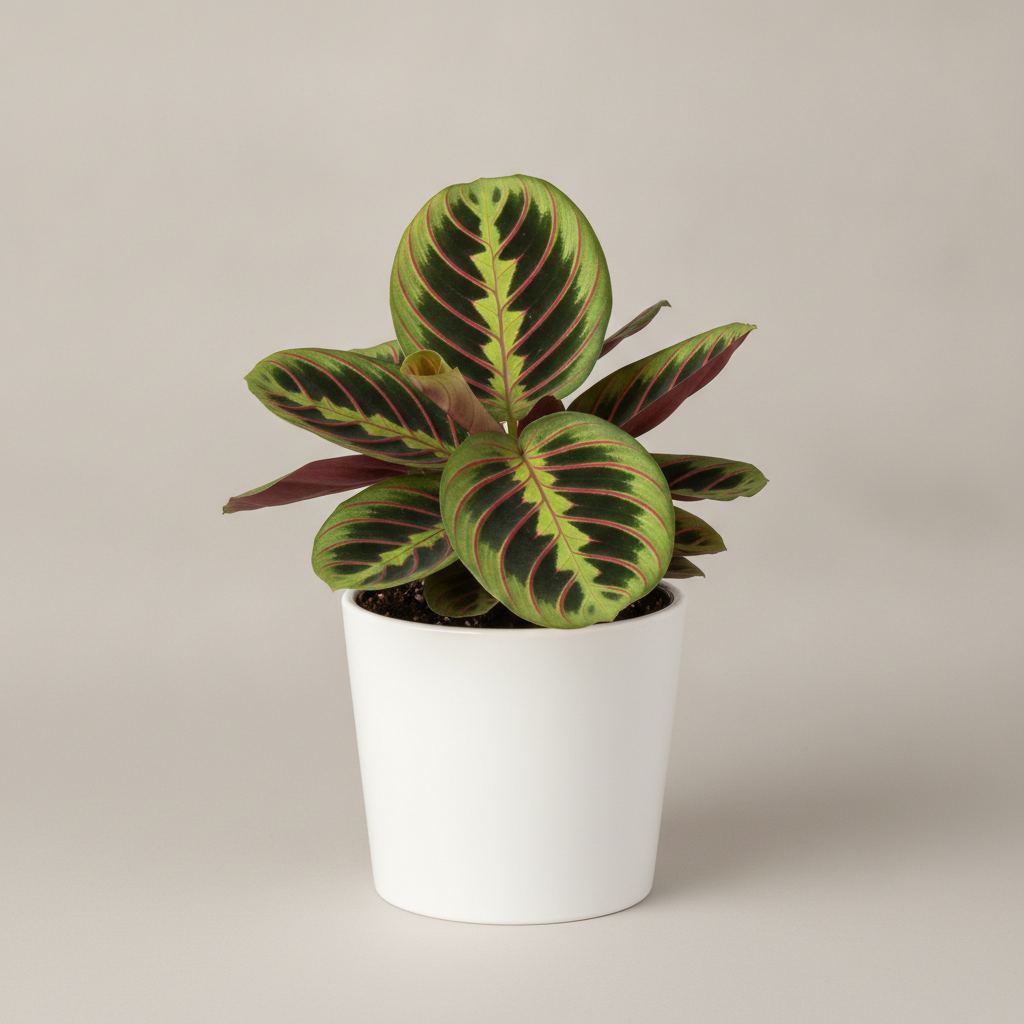
Herringbone Prayer Plant (Maranta leuconeura var. erythroneura) is the showpiece of the genus, with deep velvety green leaves, a bright lime herringbone zone tracing the midrib, and vivid red lateral veins. It is more demanding of humidity and water quality than the kerchoveana, so treat it as the rabbit tracks plant’s more temperamental sibling.
Lemon Lime Prayer Plant (Maranta leuconeura ‘Lemon Lime’) turns the herringbone pattern electric, painting neon lime-green veining across deep emerald leaves. It is a relatively recent selection and brings a brighter, more contemporary look while asking for the same warm, humid, evenly moist conditions as its cousins.
Beyond Maranta itself, the broader prayer plant family includes the calatheas, now reclassified under Goeppertia, along with stromanthe and ctenanthe. All share the nightly leaf movement and the love of warmth and humidity, so the habits you build caring for a rabbit tracks plant will serve you across the whole Marantaceae family.
Frequently Asked Questions
Why are the leaf tips on my rabbit tracks plant turning brown?
Brown, crispy tips are the plant’s most common complaint and usually point to one of three causes: air that is too dry, water that carries too much fluoride, chlorine or mineral salt, or a build-up of fertiliser. Raise the humidity to 60 percent or more, switch to rainwater or filtered water, and flush the soil thoroughly every couple of months to leach out accumulated salts.
Why has my plant stopped folding its leaves at night?
The nightly folding is powered by light cues and a healthy water balance, so when it stops the plant is signalling stress. The usual culprits are too little light, an erratic watering routine, or a recent move to a colder spot. Steady the conditions and the rhythmic movement typically returns within a week or two.
Is the rabbit tracks plant safe around pets?
Yes. Maranta leuconeura is non-toxic to cats, dogs and humans, which makes it one of the safest choices for households with curious pets or young children. It is still best to discourage nibbling, since any plant material can cause mild stomach upset, but there is no risk of poisoning.
How often should I water it?
Rather than following a fixed schedule, water when the top 2 to 3 cm (about 1 in) of soil has dried, which in a bright, warm spot through spring and summer often means once or twice a week and considerably less in winter. The aim is consistently moist soil that never sits waterlogged, so check with a finger each time before watering.
Does it need a lot of light to keep its markings?
It needs bright, indirect light to keep the dark blotches crisp and well-contrasted. In low light the markings fade toward uniform green and growth becomes leggy, while direct midday sun bleaches and scorches the leaves. A spot near an east window, or set back from a brighter window behind a sheer curtain, gives the best results.
Why is my rabbit tracks plant growing leggy and sparse?
Legginess, where the leaves space out on long, reaching stalks, is almost always a sign of insufficient light. Move the plant somewhere brighter but out of direct sun. You can also pinch back the longest stems to encourage bushier growth, and use the trimmings as cuttings to propagate new plants.






