
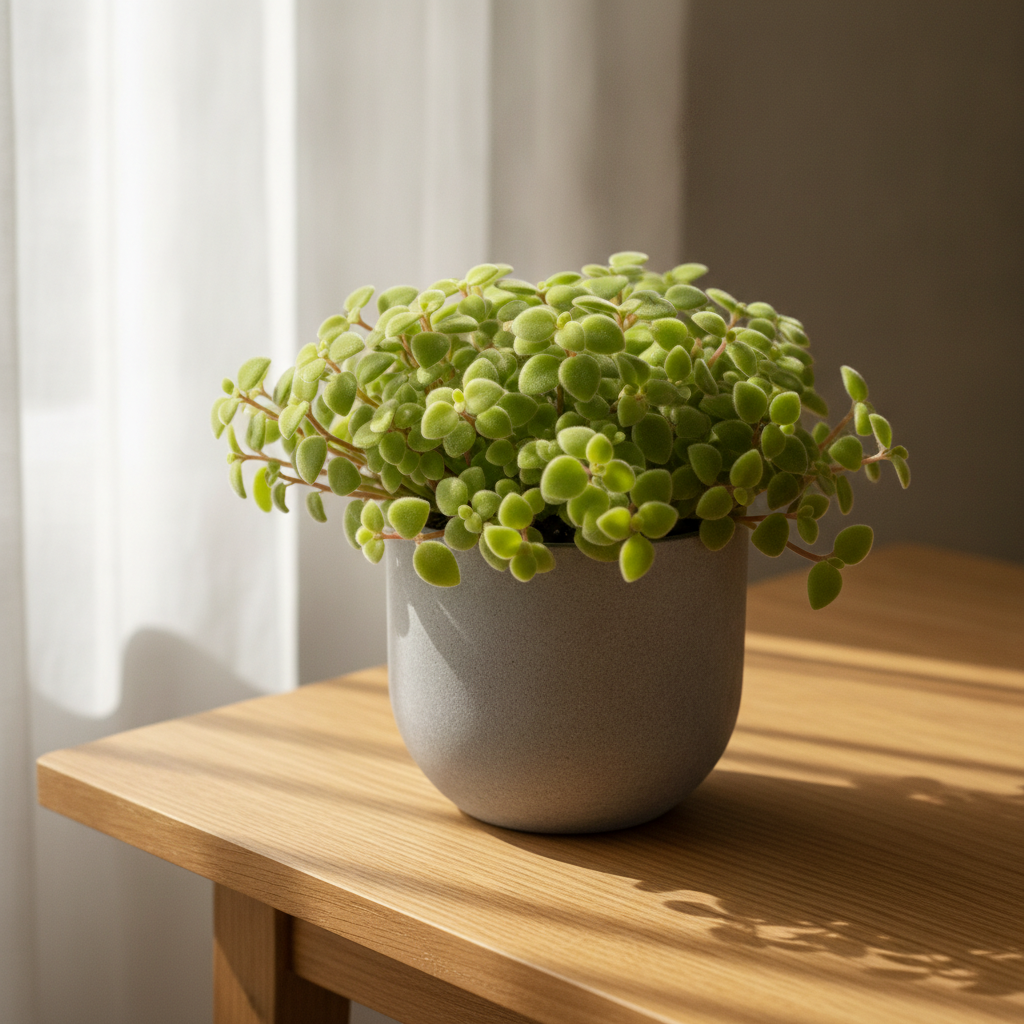
Few small houseplants pack as much charm into a windowsill footprint as the Pixie Lime peperomia. Barely the size of a coffee mug when young, Peperomia orba builds itself into a tidy dome of thick, spoon-shaped leaves in a fresh shade of lime, each one softly furred and held on slender pinkish stems. It asks for very little, forgives the occasional missed watering thanks to the moisture stored in its semi-succulent foliage, and stays comfortably compact for years. That combination of good looks and low drama is exactly why it has become a fixture on plant-shop shelves and a reliable first houseplant for nervous beginners.
This guide covers everything you need to keep one not just alive but genuinely thriving, from the light levels that keep its colour bright to the watering rhythm that keeps its roots healthy, along with propagation, feeding and the handful of pests worth watching for.
Quick Reference
Use the table below as an at-a-glance summary. The sections that follow explain the reasoning behind each figure, because understanding why a plant wants what it wants is what separates a plant that merely survives from one that thrives.
| Common names | Pixie Lime peperomia, Teardrop peperomia |
| Botanical name | Peperomia orba |
| Family | Piperaceae |
| Light | Bright indirect light; tolerates medium light |
| Water | When the top 2 to 3 cm (1 in) of mix is dry |
| Soil | Light, chunky, fast-draining mix |
| Humidity | Average room humidity, 40 to 60 per cent |
| Temperature | 18 to 27 degrees C (64 to 81 degrees F) |
| Mature size | 15 to 25 cm (6 to 10 in) tall and wide |
| Toxicity | Non-toxic to cats, dogs and humans |
| Difficulty | Easy, beginner friendly |
Why the Pixie Lime Peperomia Makes a Great Houseplant
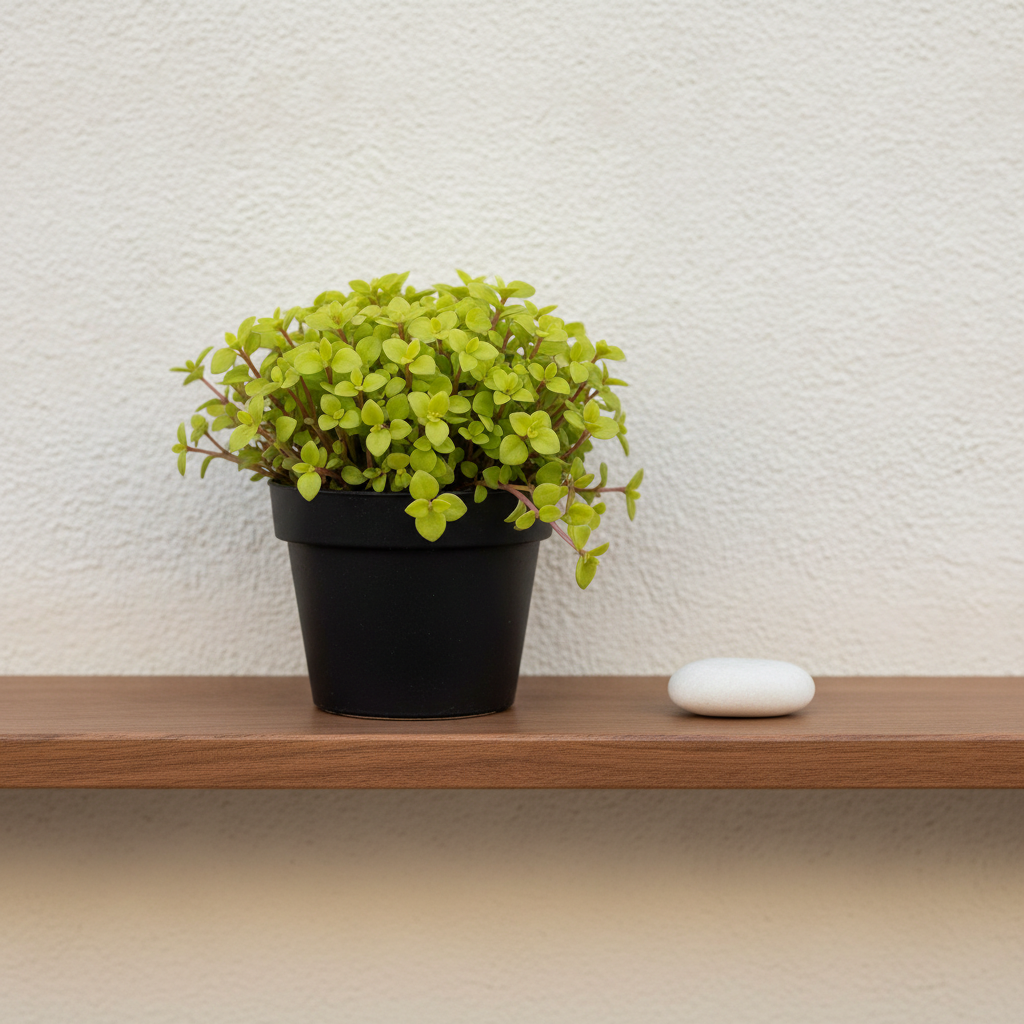
Peperomias belong to one of the largest genera in the plant kingdom, the Piperaceae or pepper family, which counts well over a thousand species scattered across the tropics of Central and South America. Most of them grow as epiphytes or on the shaded forest floor, tucked into pockets of leaf litter and mossy bark where soil is thin and drainage is sharp. The Pixie Lime peperomia carries the fingerprints of that heritage in every part of its biology, and once you picture its natural home you can read its care requirements almost without a chart.
The thick, slightly succulent leaves are the plant’s water reservoir, evolved to ride out the dry spells between tropical downpours. That built-in buffer is the single reason this plant forgives forgetful owners, and it is also why overwatering is far more dangerous to it than the occasional drought. The compact, mounding habit reflects a plant that never needed to climb or sprawl to find light, so it stays neat and self-contained rather than sending out long runners. Even the soft fuzz on the leaf surface and the reddish tint to the stems are practical adaptations, helping to diffuse strong light and protect tender tissue.
For the indoor gardener, all of this adds up to an unusually accommodating plant. It thrives in the same moderate light and comfortable warmth that people enjoy, it never outgrows a small pot in a hurry, and it is completely non-toxic, which makes it a safe choice in homes with curious cats, dogs or children. It works equally well as a solo specimen on a desk, a member of a shelf grouping, or a splash of fresh lime among darker-leaved companions in a terrarium-style arrangement.
Pro Tip — Read the leaves: Because this peperomia stores water in its foliage, the leaves themselves are your best gauge of its hydration. Firm, plump leaves mean the plant is comfortable; soft, slightly wrinkled leaves usually mean it is thirsty, while translucent or mushy leaves are a warning that it has had too much.
Light
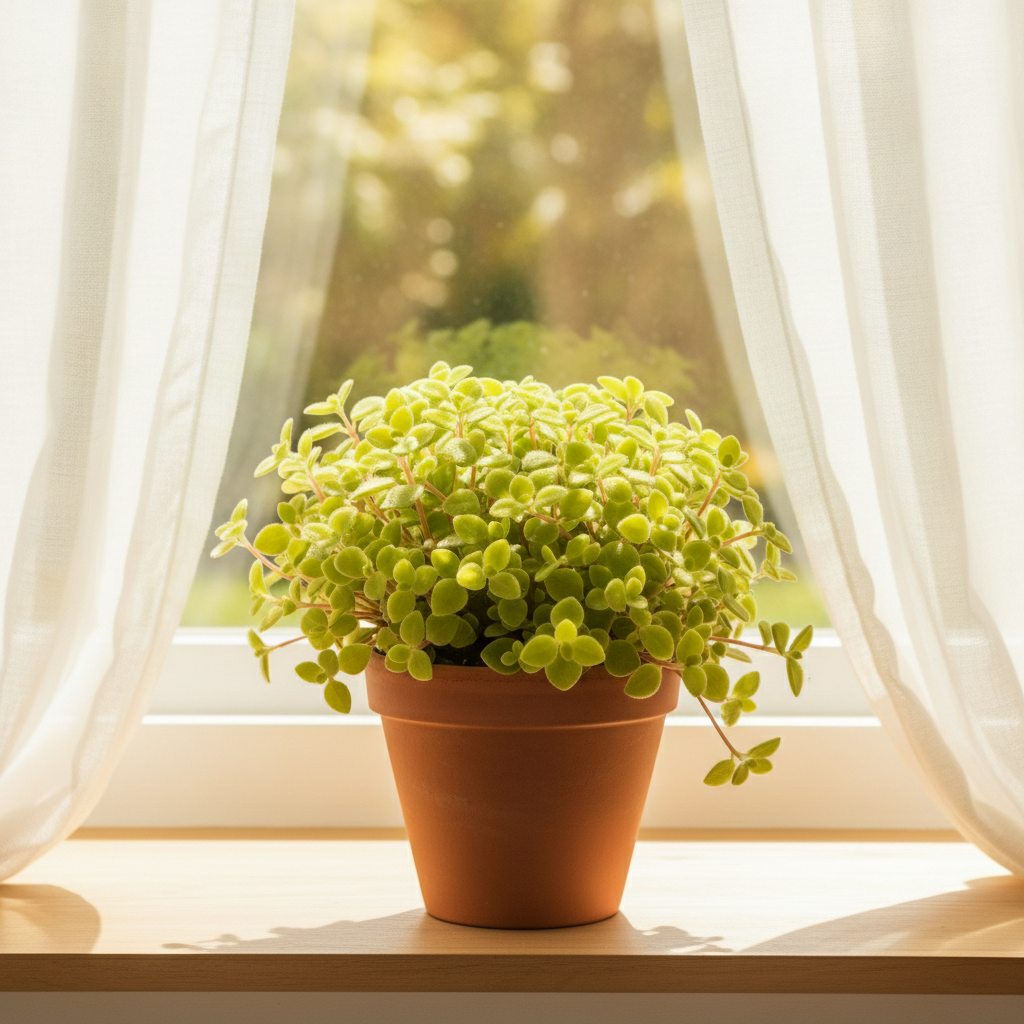
Bright, indirect light is the sweet spot for a Pixie Lime peperomia, and getting it right is the difference between a plant that keeps its cheerful lime colour and one that fades to a dull, leggy green. In the wild this species grows beneath a canopy where sunlight arrives dappled and diffused, so it is adapted to plenty of brightness without the full force of direct rays on its leaves. An east-facing windowsill that catches gentle morning sun is close to ideal, as is a spot a metre or so back from a bright south or west window where a sheer curtain softens the intensity.
The plant will survive in medium light, further from the window or in a north-facing room, but survival and thriving are not the same thing. In dim conditions the compact rosette begins to stretch, the gaps between leaves lengthen as the stems reach for the light, and the fresh lime colour deepens and dulls. This etiolation is reversible if you catch it early and move the plant somewhere brighter, but a plant left too long in gloom becomes sparse and floppy. If your home simply lacks a bright window, a small full-spectrum LED grow light running for ten to twelve hours a day keeps the growth tight and the colour true.
At the other extreme, avoid harsh, unfiltered midday sun striking the leaves directly for hours. The furred surface offers some protection, but prolonged direct exposure through glass can bleach or scorch the foliage, leaving pale, crispy patches that never recover. If you notice the colour washing out or brown dry spots appearing on the leaves nearest the glass, pull the plant back or add a diffusing curtain. Rotating the pot a quarter turn each week keeps growth even and stops the plant leaning noticeably towards its light source.
Watering
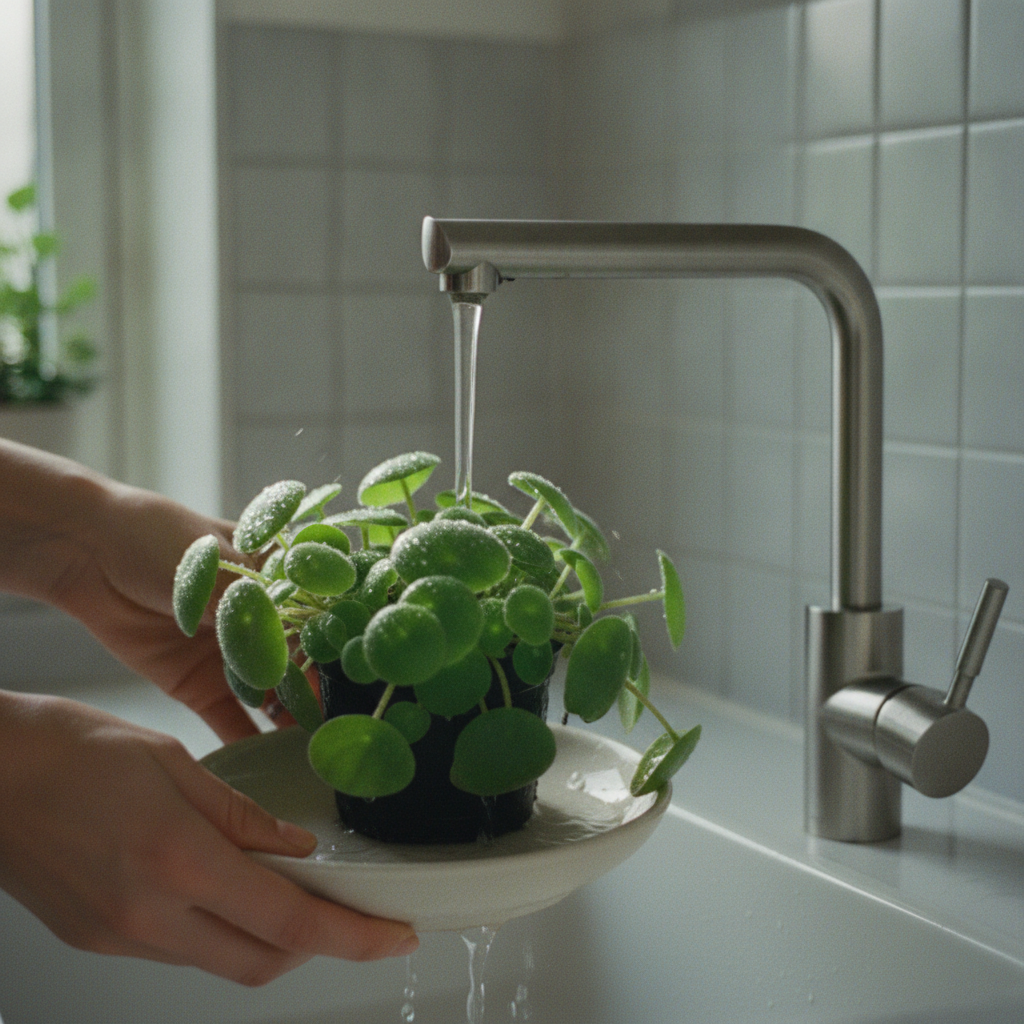
Watering is where most Pixie Lime peperomias live or die, and the golden rule is simple: when in doubt, wait. Because the plant hoards moisture in its thick leaves, it copes with a little neglect far better than with constant wet feet. The reliable method is to water only when the top 2 to 3 cm (about an inch) of the mix has dried out, which you can check by pushing a finger into the surface. When that layer feels dry, water thoroughly until liquid runs freely from the drainage holes, then let the pot drain completely before returning it to its saucer or cover pot. Never let the roots sit in a dish of standing water.
How often that dry-out happens depends on your conditions rather than the calendar. In a bright, warm room during the growing season you might water every seven to ten days, while in the cooler, darker months the interval can stretch to two or three weeks. Rather than watering on a fixed schedule, let the mix and the leaves tell you when. Slightly soft, floppy leaves that firm up again within a day of watering are the plant’s way of saying you left it a touch too long, which is a far safer error than the alternative.
Overwatering is the number one killer of this species. When the mix stays soggy, the fine roots suffocate and rot sets in, often before there is any sign above the soil. The first visible symptoms are usually deceptive: yellowing lower leaves, a general limpness, and leaves that turn translucent or mushy at the base. These look like thirst, which tempts the anxious owner to water more, accelerating the collapse. If you suspect rot, ease the plant out of its pot and check the roots, which should be pale and firm; slice away any that are brown and slimy, let the plant dry for a few hours and repot into fresh, barely-moist mix.
Warning — Soft, translucent leaves: Leaves that go glassy, soft and slightly see-through are almost always a sign of overwatering, not underwatering. If you see this, hold off on water immediately and check the roots before adding any more moisture.
Soil
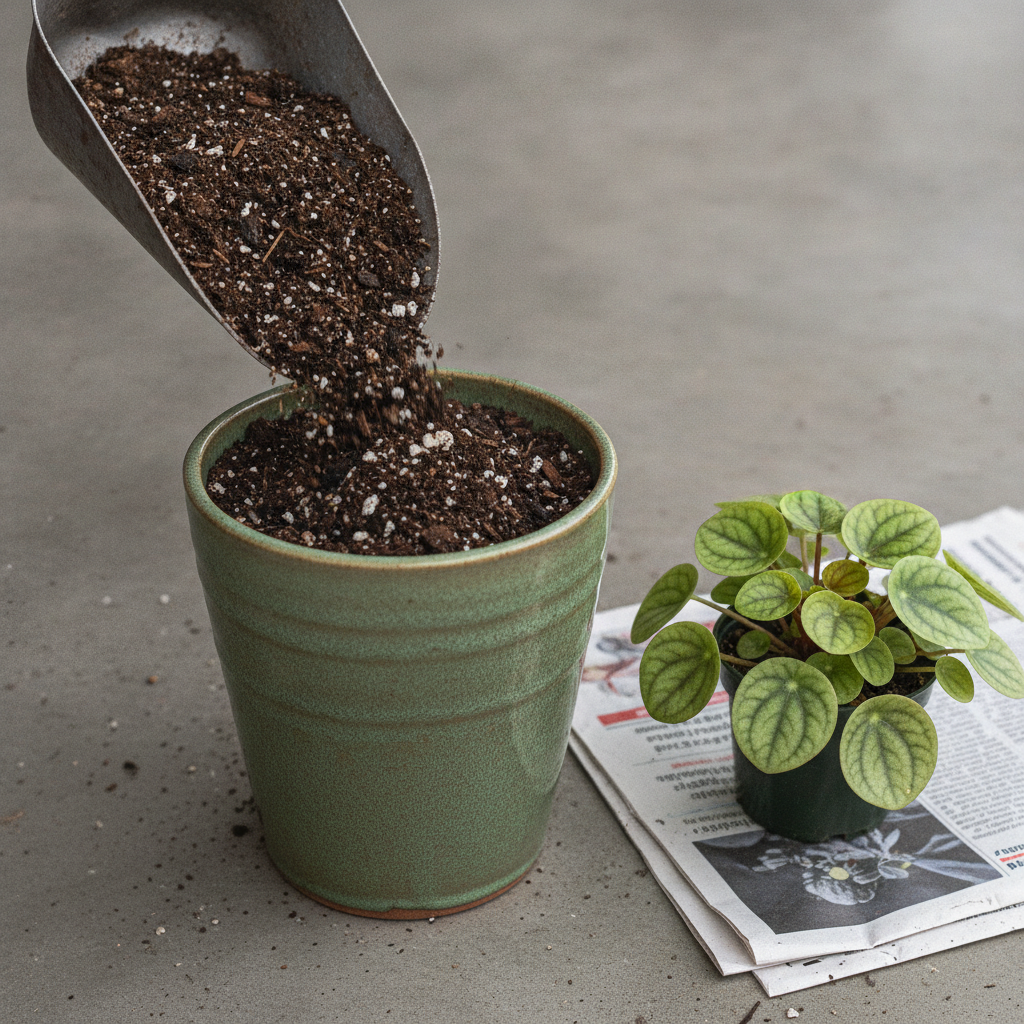
Everything about the Pixie Lime peperomia’s roots argues for a light, airy, fast-draining medium. As a plant that evolved to live in thin forest-floor litter and mossy crevices rather than dense earth, it has fine roots that need oxygen as much as they need water, and they resent the compacted, waterlogged conditions of a heavy, peat-only potting soil. A standard bagged houseplant compost used straight from the bag holds far too much water for too long and is the most common reason a healthy plant slides into root rot.
The aim is a mix that stays lightly moist but never soggy and drains within seconds of watering. A reliable recipe is roughly two parts of a good peat-free houseplant compost or coco coir to one part perlite for drainage and one part fine orchid bark for structure and air pockets. A handful of horticultural charcoal is a useful optional extra that helps keep the medium sweet. If you would rather not mix your own, a bagged cactus and succulent compost lightened with an extra scoop of perlite makes a perfectly good shortcut and matches the plant’s preference for sharp drainage.
Pot choice matters just as much as the mix. Always use a container with drainage holes, and lean towards a snug pot rather than a generous one, because a small root system swimming in a large volume of damp mix is an invitation to rot. Terracotta is an excellent choice for this plant, since the porous clay wicks away excess moisture and buffers against overwatering. Repotting is only needed every two to three years, and often the plant is happiest left a little pot-bound, so resist the urge to upsize until roots are visibly filling the pot or creeping from the drainage holes.
Fertilising
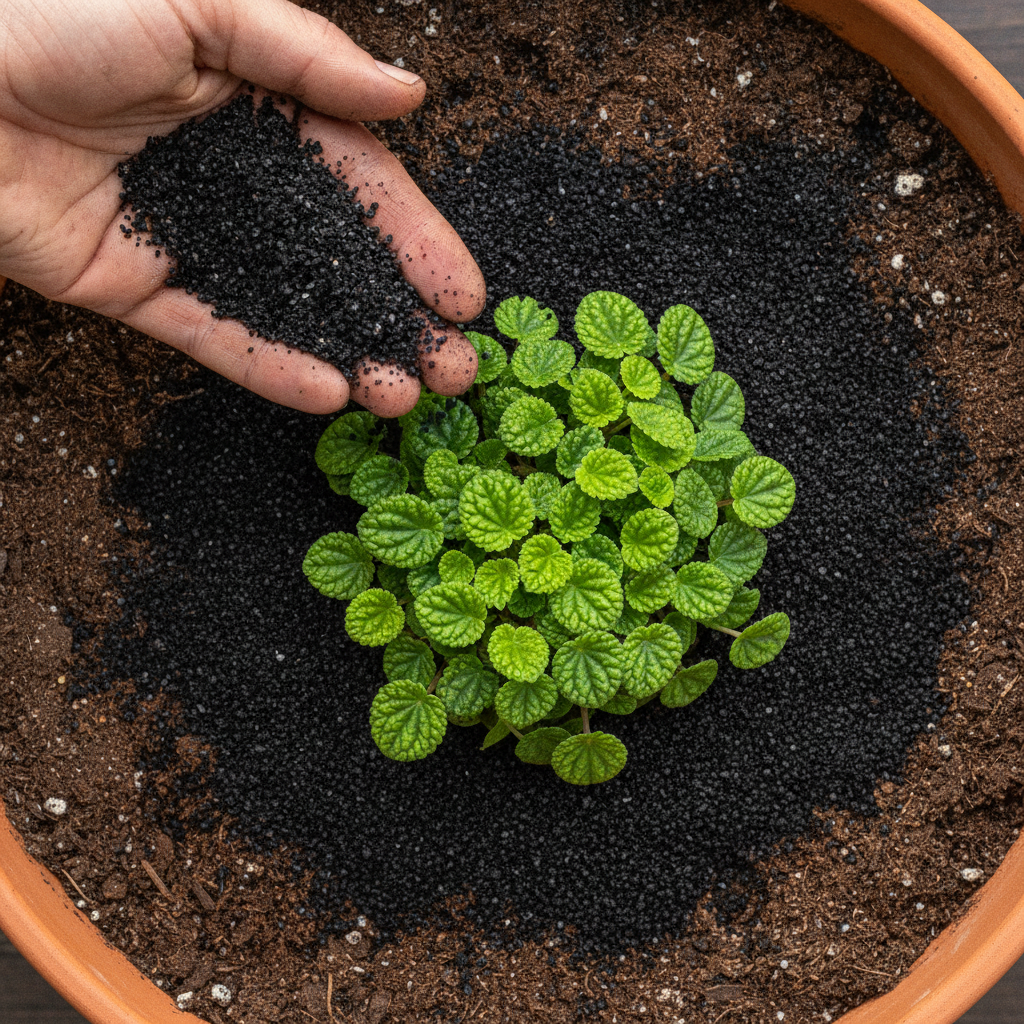
The Pixie Lime peperomia is a light feeder, and its modest appetite is easy to over-satisfy. In its native habitat it draws nutrients from a thin, slowly decomposing layer of organic matter rather than a rich soil, so it neither expects nor wants a heavy diet. A little feeding during the active growing months keeps the foliage full and the colour bright, but the plant grows perfectly well on very little, and erring towards too little is always safer than too much.
During spring and summer, feed roughly once a month with a balanced liquid houseplant fertiliser diluted to half the strength recommended on the label. Always apply feed to already-moist soil rather than a bone-dry rootball, since concentrated nutrients hitting dry, sensitive roots can scorch them. As autumn arrives and growth naturally slows, stop feeding altogether through the winter and resume only when you see fresh growth returning in spring. A gentle alternative, shown above, is to top-dress the surface with a thin layer of worm castings once or twice in the growing season, which releases nutrients slowly and mildly.
Overfeeding shows itself in a few tell-tale ways. A crusty white deposit on the soil surface or around the pot rim is a build-up of mineral salts, while brown, crisping leaf tips and edges often signal fertiliser burn. If you see either, flush the pot thoroughly with plain water to leach out the excess salts, letting it drain completely, and cut back on feeding. When in doubt, remember that a slightly hungry peperomia is a far healthier plant than an overfed one.
Propagation
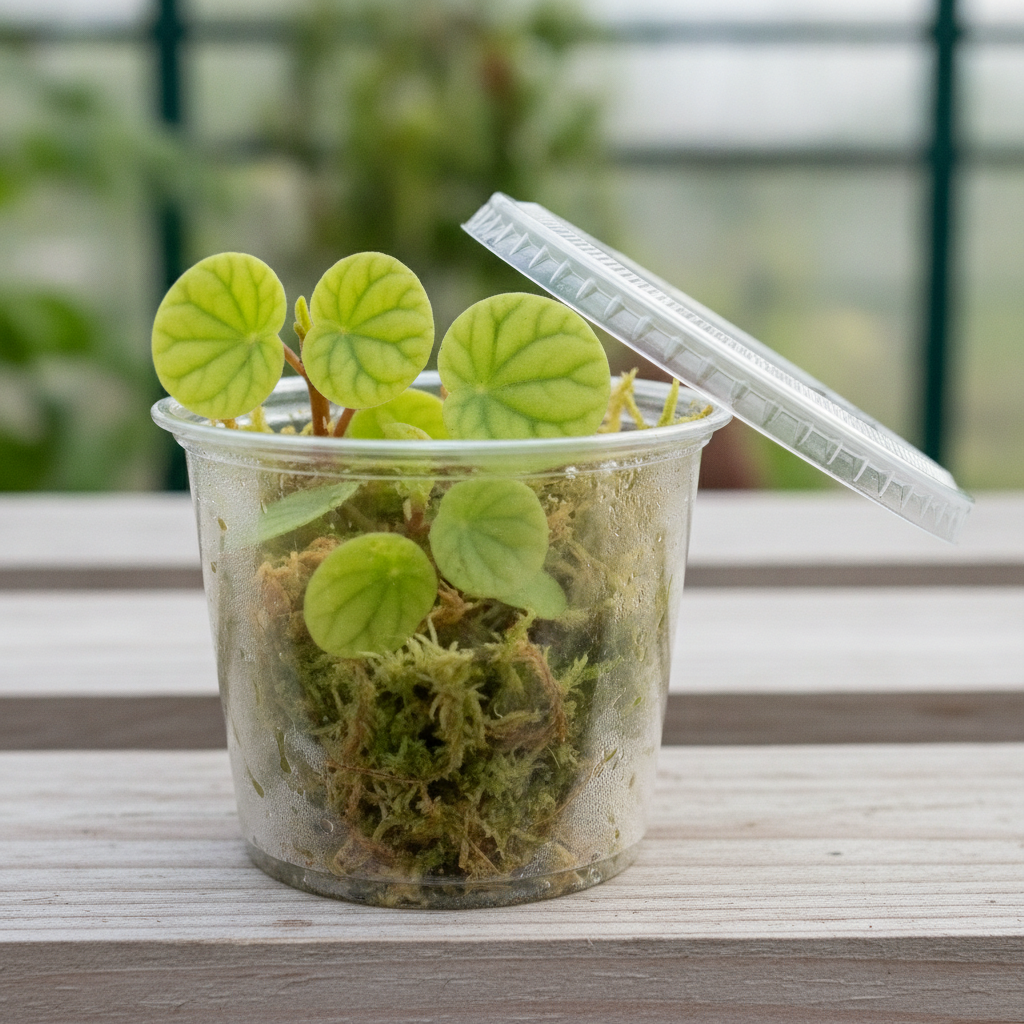
One of the quiet pleasures of the Pixie Lime peperomia is how willingly it multiplies. Like most peperomias it roots easily from both leaf and stem cuttings, so a single healthy plant can become a windowsill full of pixies with almost no equipment. The best time to take cuttings is spring or early summer, when the plant is in active growth and will heal and root fastest, though propagation is possible at any time of year with a little more patience.
The most reliable method uses stem cuttings. Follow the steps below for the best results:
- Using clean, sharp scissors or a blade, snip a short section of stem with two or three leaves attached, cutting just below a node where leaves meet the stem.
- Remove the lowest leaf or two so that a bare node is exposed, since this node is where new roots will emerge.
- Let the cut end dry and callus over for an hour or two, which reduces the chance of rot.
- Insert the cutting into damp sphagnum moss or a light, moist propagation mix, burying the exposed node.
- Cover with a clear cover, propagation lid or loose plastic bag to hold humidity, and place somewhere warm and bright but out of direct sun.
- Keep the medium lightly moist and ventilate briefly every few days; roots typically appear within three to six weeks, after which you can pot up the new plant.
Leaf cuttings work too, and are worth trying if you want lots of plants from a single leaf-heavy stem. Take a healthy leaf with a short piece of its stalk attached, let it callus, then insert the stalk into damp moss or mix and treat it exactly as a stem cutting. A tiny cluster of new leaves will eventually form at the base. Whichever method you use, bottom warmth of around 21 degrees C (70 degrees F) and steady humidity are the two factors that most improve your success rate, so a warm spot and a covered container make all the difference.
Pests and Common Problems
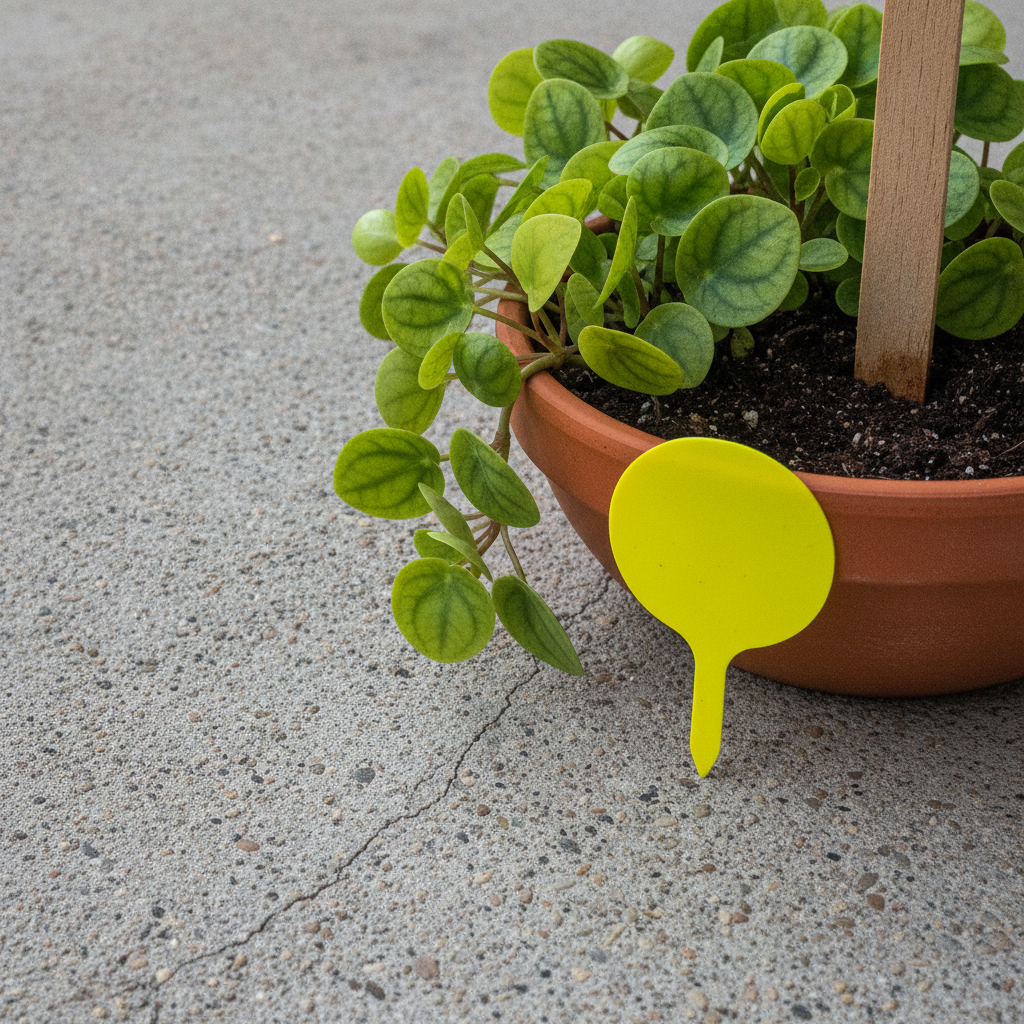
The Pixie Lime peperomia is relatively pest-resistant, and most of the troubles owners encounter are cultural rather than infestations. Still, a few insects will find their way to it, and knowing what to look for lets you deal with problems while they are small. A quick inspection of the leaves, including their undersides and the crevices where leaves meet the stem, every week or two is the single most effective pest-control habit you can build.
Fungus gnats are the most common nuisance, and they are really a symptom of overwatering rather than a plant problem in their own right. The little black flies lay eggs in the top layer of constantly damp soil, and their larvae feed on organic matter and fine roots. Letting the top of the mix dry out properly between waterings breaks their breeding cycle, and the yellow sticky traps pictured above catch the adults while giving you an early warning of their numbers. Mealybugs, which appear as small white cottony tufts in leaf joints, are the next most likely visitor; dab them off with a cotton bud dipped in diluted isopropyl alcohol and repeat every few days until they are gone. Spider mites are rare but can appear in hot, dry conditions, betrayed by fine webbing and a stippled, dusty look to the leaves.
Beyond insects, the most frequent complaints trace back to watering and light. Yellowing, mushy lower leaves point to overwatering and possible root rot, while soft, wrinkled leaves that recover after a drink indicate the plant was too dry. Leggy, stretched growth with widening gaps between the leaves means the plant wants more light, and brown, crispy leaf edges usually reflect either fertiliser build-up or very dry air near a heat source. Sudden leaf drop often follows a shock such as cold draughts, a chilly windowsill in winter or a dramatic change in conditions, so keep the plant away from draughty doorways and cold glass. The table below summarises the quick diagnoses.
| Symptom | Likely cause | Fix |
| Yellow, mushy lower leaves | Overwatering, root rot | Let dry, check roots, repot if needed |
| Soft, wrinkled leaves | Underwatering | Water thoroughly; leaves should firm up |
| Leggy, stretched growth | Too little light | Move to brighter, indirect light |
| Brown, crispy leaf edges | Fertiliser build-up or dry air | Flush the soil; move away from heat sources |
| Sudden leaf drop | Cold draught or shock | Move away from cold glass and draughts |
Varieties and Similar Peperomias
The name Pixie Lime refers to a particularly compact, bright-leaved form of Peperomia orba, but the species and its close relatives offer a small family of look-alikes worth knowing. The two forms below are the ones you are most likely to meet, and both are cared for in exactly the same way as the classic Pixie Lime.
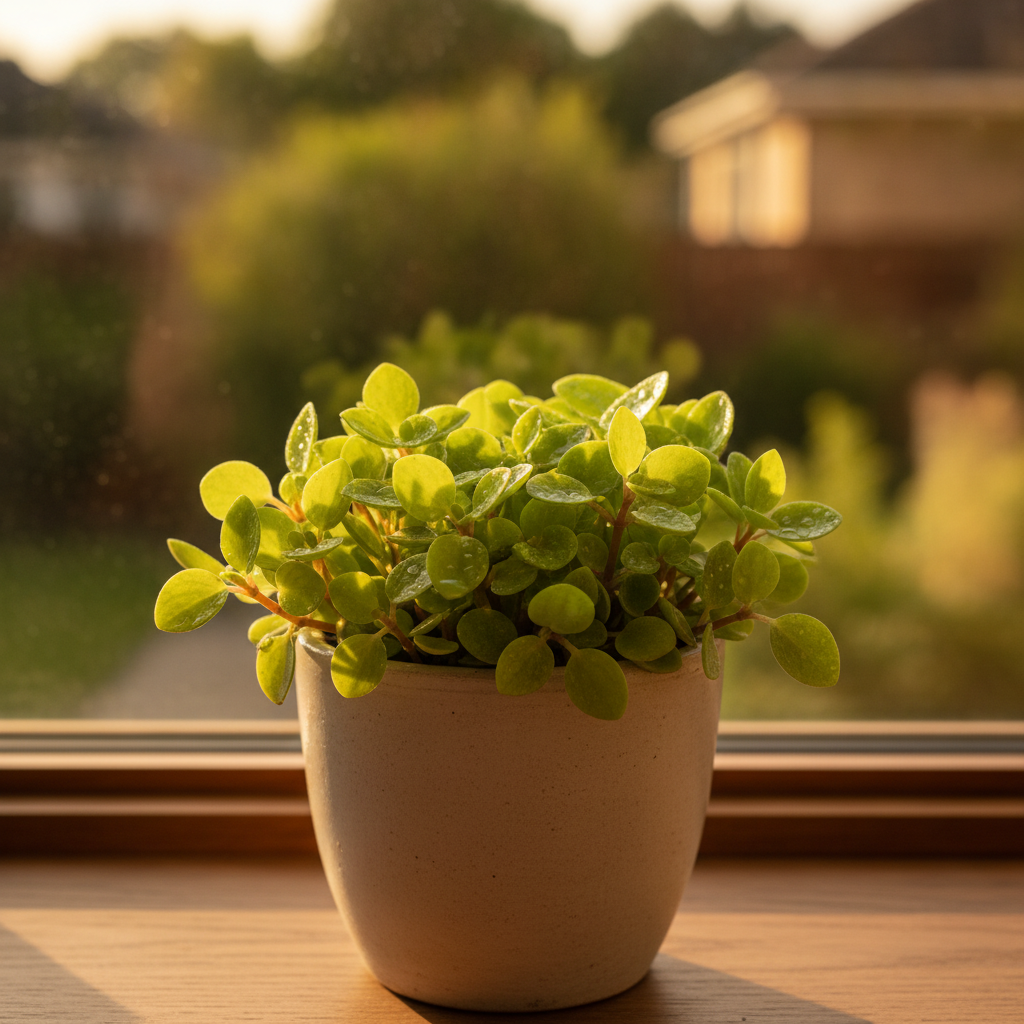
Peperomia orba ‘Pixie’ is the standard green form and the plant most people picture when they hear the name. It builds a compact mound of small, rounded, spoon-shaped leaves in a soft lime green, each faintly marked with pale veining and held on short pinkish stems. It is the most vigorous and forgiving of the group, making it the best choice for a first peperomia.
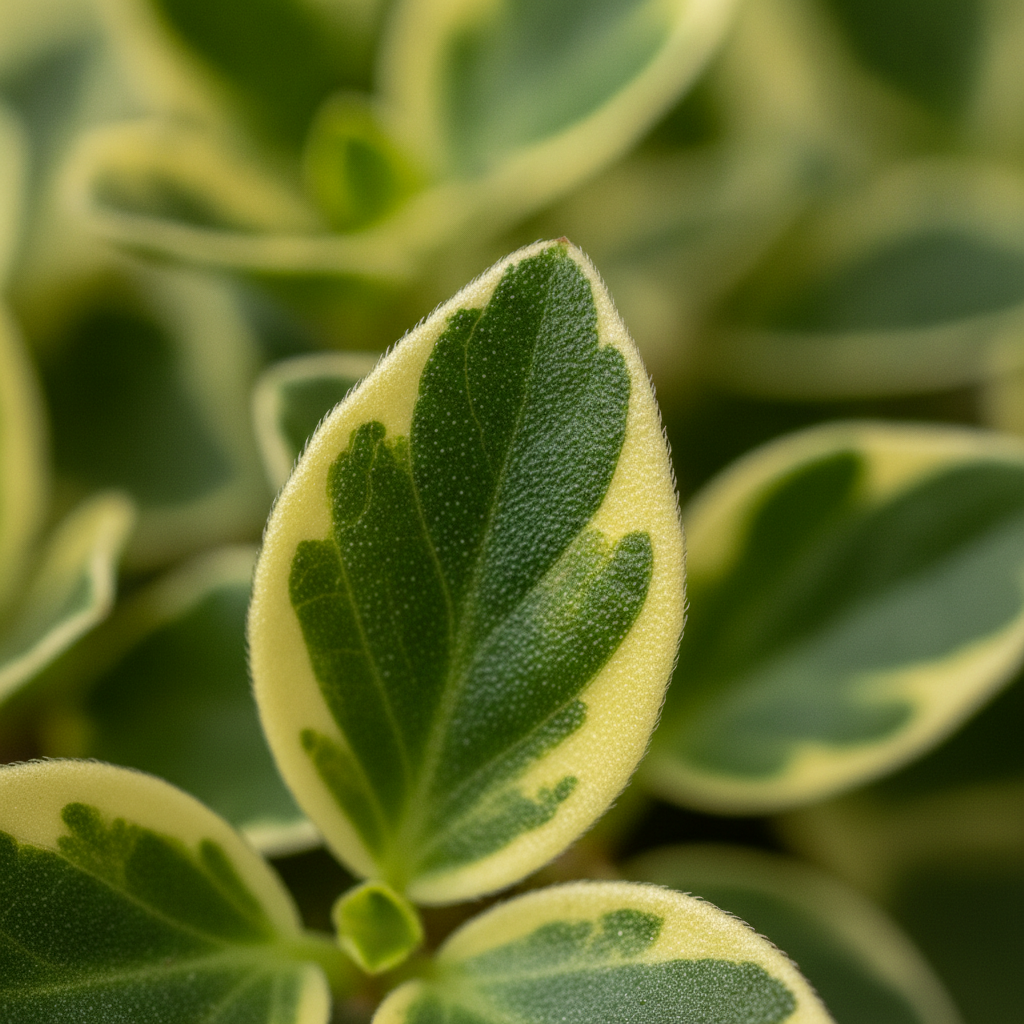
Peperomia orba ‘Variegata’, sometimes sold as ‘Astrid’, carries the same neat habit but edges each teardrop leaf with a band of creamy-yellow variegation around a green centre. The paler tissue holds less chlorophyll, so this form appreciates slightly brighter indirect light to keep its markings crisp and its growth compact, but it is otherwise just as easygoing.
Beyond these, gardeners often group the Pixie Lime with other small, thick-leaved peperomias such as Peperomia rotundifolia, the trailing button peperomia, and Peperomia prostrata, the string of turtles. They share the same love of bright indirect light, sharp drainage and cautious watering, so if you succeed with one you will very likely succeed with the rest, making the Pixie Lime an excellent gateway into a wider peperomia collection.
Frequently Asked Questions
Is the Pixie Lime peperomia safe for pets?
Yes. Peperomias, including Peperomia orba, are listed as non-toxic to both cats and dogs, and they are not poisonous to humans either. This makes the Pixie Lime a genuinely safe choice for households with pets or young children, though it is always sensible to discourage nibbling of any houseplant simply to keep the plant intact.
Why are the leaves on my Pixie Lime peperomia falling off?
Sudden leaf drop is usually a response to stress. The most common triggers are cold draughts or a chilly windowsill in winter, a sharp swing in watering from very dry to very wet, or root rot from soggy soil. Move the plant somewhere with stable, comfortable warmth away from cold glass, settle into a consistent watering rhythm, and check the roots if the soil has been staying wet.
How big does a Pixie Lime peperomia get?
It stays pleasingly small. A mature plant typically reaches only about 15 to 25 cm (6 to 10 in) in both height and spread, forming a tidy dome rather than a sprawling or climbing plant. This modest size is part of its appeal, since it never demands a large pot or a floor position and slots easily onto a shelf, desk or windowsill.
Why is my Pixie Lime peperomia losing its lime colour?
A fading, dulling green almost always means the plant is not getting enough light. In brighter indirect light the fresh lime tone stays vivid and the growth stays compact, whereas in dim conditions the colour deepens and the plant stretches. Move it closer to a bright window, behind a sheer curtain if the sun is strong, and the colour should gradually brighten with new growth.
How often should I repot my Pixie Lime peperomia?
Rarely. This peperomia has a small root system and is quite happy slightly pot-bound, so repotting every two to three years is usually enough. Only move it up a size when roots are visibly filling the pot or emerging from the drainage holes, and even then choose a container just one size larger, refreshing it with light, fast-draining mix at the same time.






