
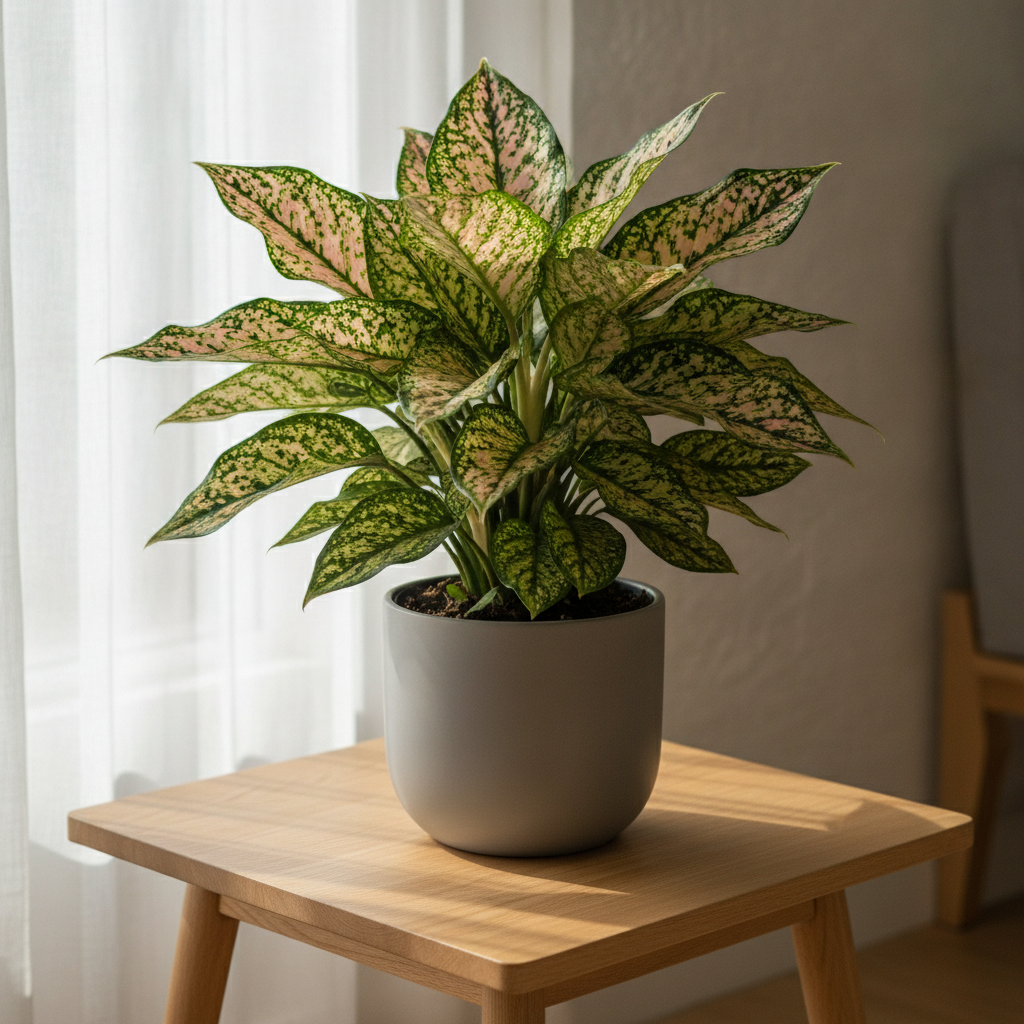
Few houseplants manage to look hand-painted, but the Pink Dalmatian Aglaonema comes close. A modern cultivar of the Chinese evergreen, Aglaonema, it carries broad, lance-shaped leaves of deep forest green that are freckled and splattered all over with flecks of bright pink, as though someone had flicked a loaded brush across each blade. The effect is playful rather than delicate, and unlike many pink-variegated plants it holds its markings well in ordinary home conditions. The genus belongs to the arum family, Araceae, and traces its roots to the shaded understorey of tropical and subtropical Asia, where its wild relatives grow in dappled light beneath the forest canopy.
That forest-floor heritage is the key to why the Pink Dalmatian is so forgiving indoors. It evolved to make the most of low, filtered light and steady warmth, which happens to describe the average living room rather well. Keeping one alive is genuinely easy, but keeping one looking its best, with dense pink speckling and plump, upright growth rather than a stretched and faded silhouette, takes a little understanding. This guide covers everything from light and watering to soil, feeding, propagation and pests, so you can move your plant from merely surviving to properly thriving.
Contents
- Quick Reference
- Why Pink Dalmatian Aglaonema Makes a Striking Houseplant
- Light Requirements
- Watering & Humidity
- Soil, Potting & Repotting
- Fertilising
- Propagation
- Pests & Diseases
- Popular Varieties
- Frequently Asked Questions
Quick Reference: Pink Dalmatian Aglaonema at a Glance
| Light | Medium to bright indirect light; tolerates lower light but pink speckling fades. No direct midday sun. |
| Watering | Water when the top 2 to 4cm (1 to 1.5in) of soil is dry, roughly every 7 to 10 days in summer and less in winter. |
| Temperature | 18 to 27°C (64 to 81°F). Keep above 15°C (59°F) and away from cold draughts. |
| Humidity | Prefers 50 to 60 percent; tolerates average household humidity. |
| Fertiliser | Balanced houseplant feed at half strength, monthly through spring and summer. |
| Toxicity | Toxic to cats, dogs and humans if chewed or swallowed, due to insoluble calcium oxalate crystals. |
Why Pink Dalmatian Aglaonema Makes a Striking Houseplant
The appeal of the Pink Dalmatian is immediate and easy to explain: it delivers the exotic, painterly colour of a fussy collector plant while asking almost nothing in return. Aglaonemas as a group are famous for tolerating conditions that would sulk or kill more demanding foliage plants, and this cultivar inherits that resilience. It grows in a compact, bushy clump that rarely outgrows a tabletop or shelf for years, and its steady, unhurried pace means you are not forever repotting or pruning. For anyone who wants colour without commitment, it is hard to beat.
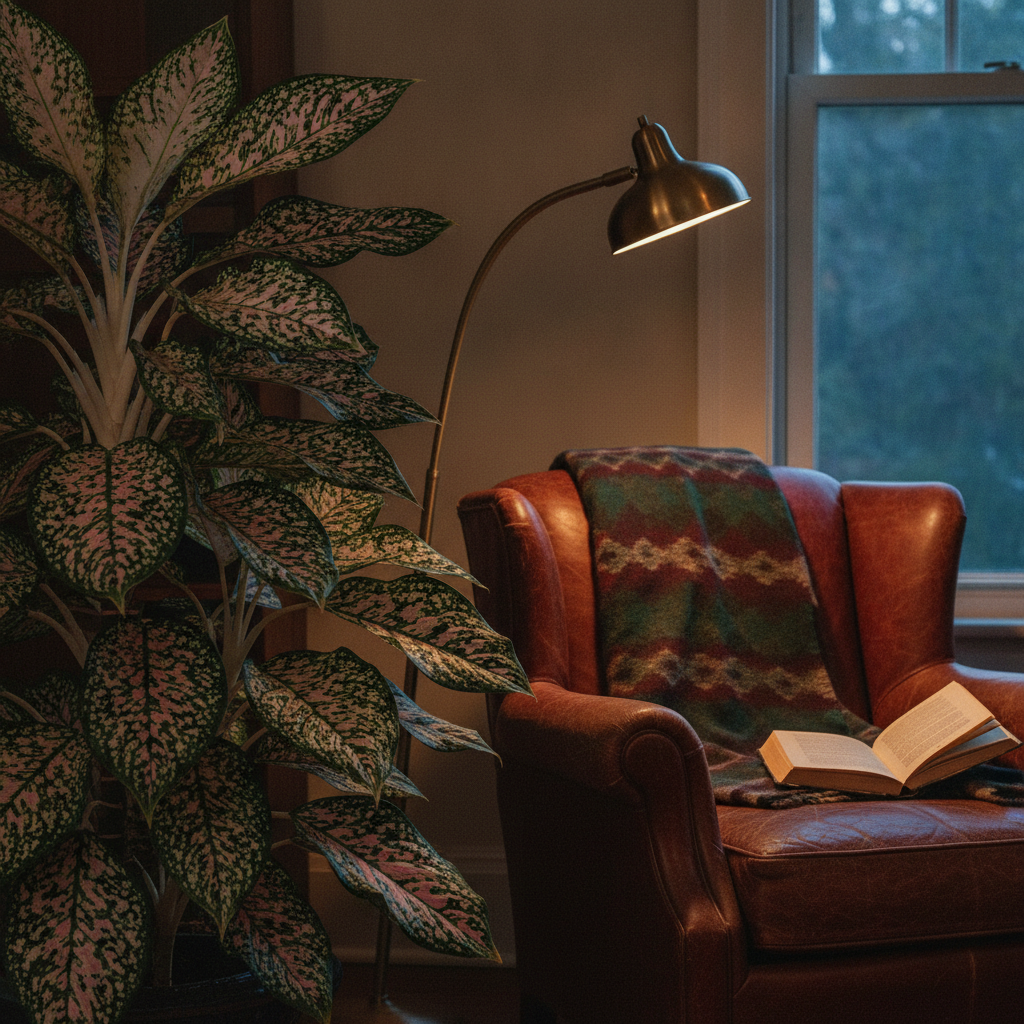
There is a practical bonus, too. Like other members of the genus, the Pink Dalmatian is an effective foliage plant for indoor spaces, contributing to the general greenery and moisture of a room. It thrives in the warm, stable indoor climate most homes maintain year-round, and it is happy in the medium light of a spot set back from a window, precisely where many other colourful plants would lose their markings and stretch. The result is a plant that earns its keep in the corners and interiors of a home that harsher-light plants simply cannot fill.
Important — Toxicity: Every part of the Pink Dalmatian contains microscopic calcium oxalate crystals. If chewed or swallowed by a cat, dog or child, they cause intense burning, drooling, mouth and throat swelling and stomach upset. Keep the plant out of reach of curious pets and small children, and wash your hands after handling cut stems, as the sap can irritate skin and eyes.
Light Requirements
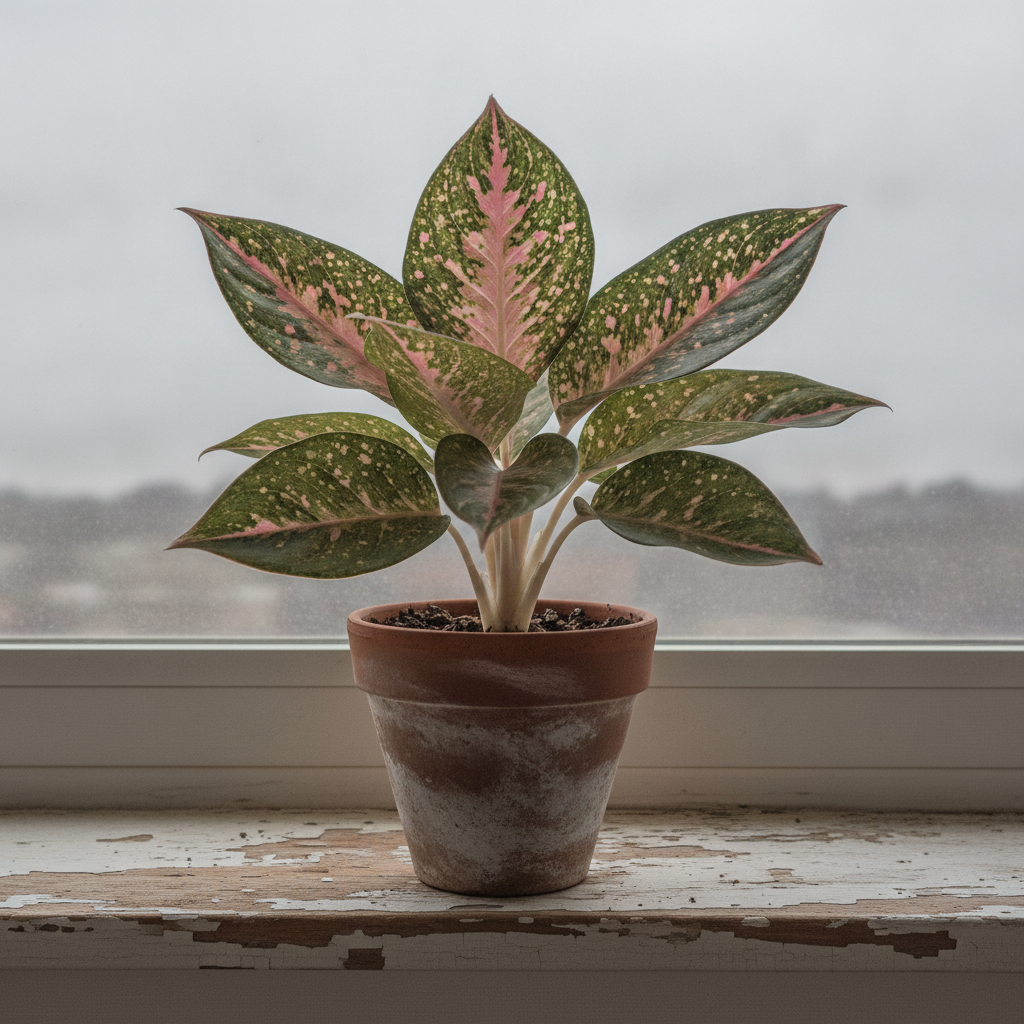
Light is where the difference between surviving and thriving becomes most visible with this plant. In the wild, aglaonemas grow beneath a dense canopy, receiving only the soft, filtered light that reaches the forest floor. Indoors they translate this into a genuine tolerance for medium and even low light, which is why they turn up so often in offices and shaded rooms. The Pink Dalmatian will keep growing in those conditions, but its signature pink freckling is another matter entirely.
The ideal position is bright, indirect light: a spot a metre or two back from an east or north window, or beside a south or west window screened by a sheer curtain. In this range the leaves stay densely speckled, the pink reads clearly against the green, and the plant grows compact and full. Push it into deep shade and the new leaves emerge greener and plainer as the plant prioritises chlorophyll over colour; give it too much direct sun and the markings bleach and scorch. Bright but gentle is the sweet spot.
Light Levels Explained
Understanding roughly how much light reaches a given spot helps you place the plant with confidence. The figures below are approximate and measured in lux, the standard unit for illuminance, to give you a sense of the ranges involved.
| Light Category | Approx. Level | Typical Location | Outcome |
|---|---|---|---|
| Direct sun | Over 50,000 lux | On an unscreened south windowsill | Too harsh; leaves bleach and scorch |
| Bright indirect | 10,000 to 20,000 lux | Near an east or curtained south window | Ideal; strong pink colour, compact growth |
| Medium | 5,000 to 10,000 lux | A metre or two back from a window | Good; steady growth, colour slightly softer |
| Low | 1,000 to 5,000 lux | An interior wall or shaded corner | Survives; new growth greener and slower |
| Very low | Under 1,000 lux | A windowless room or dim hallway | Declines over time; markings fade |
Window Orientation and Placement
South-facing window: The brightest exposure in the northern hemisphere. Excellent for the Pink Dalmatian provided the glass is filtered with a sheer curtain or the plant is set back a metre or more, so it receives the brightness without the direct rays that would scorch the leaves.
East-facing window: Arguably the best position of all. The gentle morning sun is soft enough to fall directly on the foliage for an hour or two without harm, and the light stays bright but indirect through the rest of the day.
West-facing window: Good, though the afternoon sun here is stronger and hotter than the morning light of an east window. Pull the plant back slightly or diffuse the glass to avoid the harshest few hours.
North-facing window: A reliable, gentle exposure that suits the plant well. Colour may soften a touch compared with brighter spots, but a Pink Dalmatian directly beside a north window will stay healthy and attractive.
Pro Tip — Rotate for Even Growth: Aglaonemas lean gradually towards their light source. Give the pot a quarter turn each time you water so every side receives its share, and the clump will stay symmetrical and upright rather than tilting towards the window.
How Light Affects Pink Colouring
The pink flecks are areas of leaf tissue that carry little or no green chlorophyll, relying on neighbouring green cells to feed them. Because those pink patches cannot photosynthesise for themselves, the plant balances colour against energy according to the light available. In bright, indirect light it can afford to keep the speckling generous. In dim conditions it quietly produces greener leaves to capture more light, and the pink recedes. If your plant is turning plainer over the seasons, the usual cure is simply more light, not more fertiliser.
Warning — Direct Sunlight: A few hours of harsh midday or afternoon sun through unscreened glass will bleach the pink to a papery cream and leave crisp brown scorch marks on the leaf surface. This damage is permanent on affected leaves, so move a scorched plant to gentler light and wait for fresh growth to replace them.
Artificial Lighting
The Pink Dalmatian responds well to artificial light, which makes it a strong choice for interior rooms and workplaces with little natural daylight. A standard full-spectrum LED grow light positioned 30 to 45cm (12 to 18in) above the plant and run for 10 to 12 hours a day will keep growth steady and colour intact. Ordinary bright office lighting on its own is usually enough to maintain the plant, though not always enough to preserve the strongest speckling.
Seasonal Adjustments
Light levels indoors fall considerably between summer and midwinter, and short, grey days can leave a plant that was perfectly placed in July sitting in near-gloom by December. As autumn arrives, consider moving the Pink Dalmatian closer to its window or adding a few hours of supplementary light. In summer, watch that a spot which was comfortable in winter has not become too bright as the sun climbs higher, and pull the plant back if the leaves start to look washed out.
Watering & Humidity
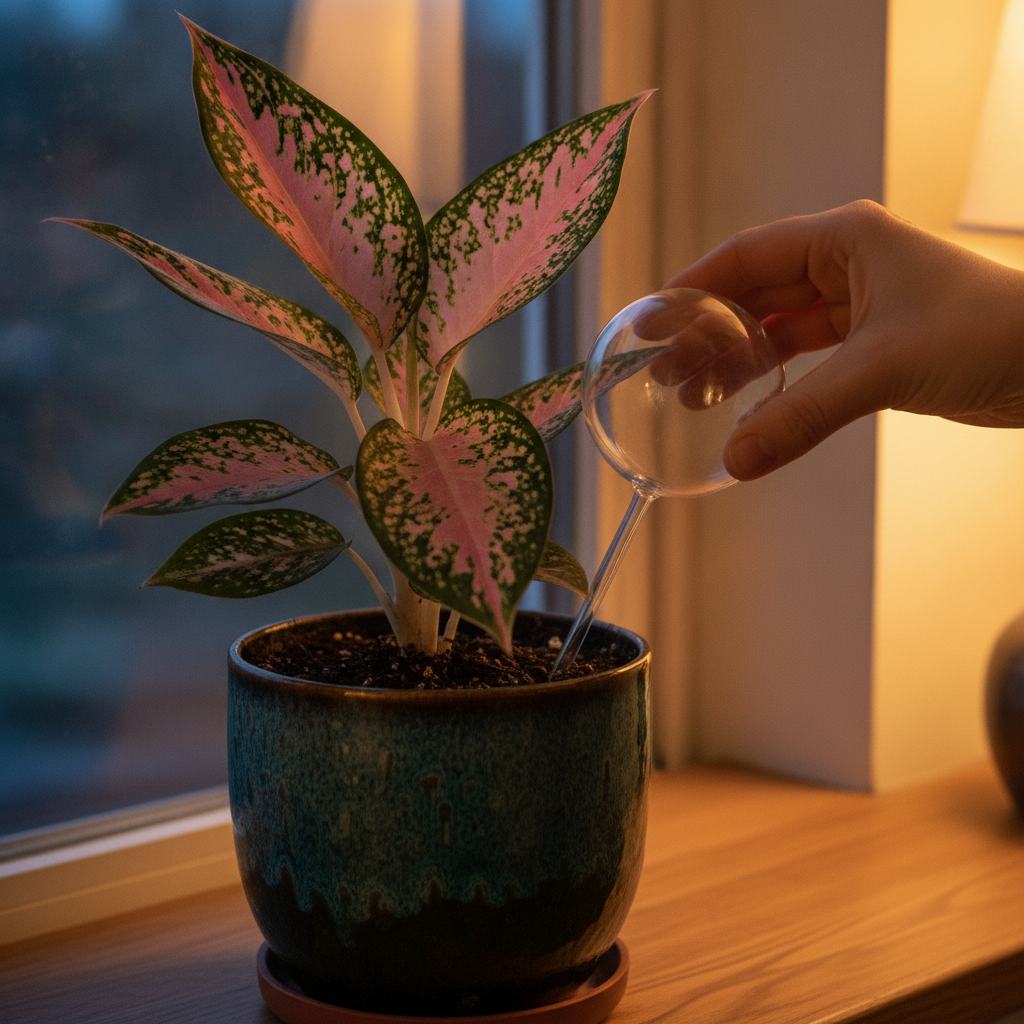
If there is one thing that troubles the Pink Dalmatian, it is too much water rather than too little. The plant stores a modest reserve of moisture in its fleshy stems and roots, so it copes far better with a slightly dry spell than with soggy soil. The guiding principle is to water thoroughly, then wait until the upper soil has dried before watering again, giving the roots the wet-then-dry cycle they need to breathe.
When to Water
Rather than following a fixed calendar, judge by the soil. Push a finger into the pot: when the top 2 to 4cm (1 to 1.5in) feels dry, it is time to water. In the warmth and brighter light of spring and summer this typically works out to roughly every 7 to 10 days, but the interval depends on your home, the pot and the season, so the finger test always trumps the schedule.
In autumn and winter, growth slows and the soil stays wet for much longer, so watering may drop to every two or three weeks. Overwatering is the single most common way to lose an aglaonema, and it almost always happens in the cooler months when people keep to their summer routine out of habit. When in doubt, wait another day or two; this plant would far rather be a little thirsty than waterlogged.
Pro Tip — Lift the Pot: A freshly watered pot is noticeably heavy, and a dry one surprisingly light. After a couple of weeks of lifting your plant just before and after watering, you will be able to judge its thirst by weight alone, which is quicker and more reliable than any moisture meter.
How to Water Correctly
- Check that the top few centimetres of soil are dry before you begin.
- Pour room-temperature water evenly over the whole soil surface, not just one spot.
- Keep going until water flows freely from the drainage holes at the base.
- Let the pot drain fully for several minutes in a sink or over a tray.
- Tip away any water left standing in the saucer or cachepot so the roots never sit in it.
- Return the plant to its spot and wait until the surface dries again before the next watering.
Signs of Overwatering vs. Underwatering
| Symptom | Overwatering | Underwatering |
|---|---|---|
| Leaf colour | Yellowing, often several leaves at once | Browning, starting at the tips and edges |
| Leaf texture | Soft, limp and translucent | Dry, crisp and papery |
| Soil | Constantly wet, sometimes with a sour smell | Bone dry and pulling away from the pot sides |
| Roots | Brown, mushy and foul-smelling | Pale, dry and brittle |
| Stem base | Soft, dark and collapsing | Firm but slightly shrivelled |
Warning — Root Rot: Persistent soggy soil suffocates the roots and invites the fungal and bacterial rots that kill aglaonemas fastest. If the stem base turns soft and dark or the soil smells sour, unpot the plant at once, cut away every brown or mushy root with clean scissors, and repot into fresh, barely moist mix.
Humidity Requirements
As a plant of the humid tropics, the Pink Dalmatian is happiest when the air holds 50 to 60 percent relative humidity. The good news is that it is far more adaptable than its rainforest origins suggest and will grow perfectly well in the drier air of an average home, somewhere between 30 and 50 percent, without complaint.
Problems only appear when the air becomes genuinely arid, which happens most often in winter when central heating is running. Very dry air shows up as crisp brown leaf tips and edges, and it can make the plant slightly more prone to spider mites. If you see those signs, a modest lift in humidity usually settles them.
The most reliable way to raise humidity around the plant is a small room humidifier, which lifts the whole area rather than a fleeting moment. Grouping plants together also helps, as they release moisture and create a more humid pocket of air between them, and standing the pot on a tray of pebbles topped up with water works too. Misting, by contrast, offers only a brief lift and does little for long-term humidity.
Water Quality
Aglaonemas can be a little sensitive to the fluoride and chlorine in some tap water, which occasionally contributes to browning leaf tips. If your tap water is heavily treated and you notice persistent tip burn, try leaving water out overnight so some of the chlorine can dissipate, or switch to filtered or rainwater. For most households, though, ordinary tap water at room temperature is perfectly acceptable.
Soil, Potting & Repotting
The right soil does more to prevent problems than almost any other single factor, because it governs how quickly water drains away from the roots. The Pink Dalmatian needs a mix that stays lightly moist yet never waterlogged, holding enough water to keep the plant hydrated while letting the excess escape freely so air can reach the roots.
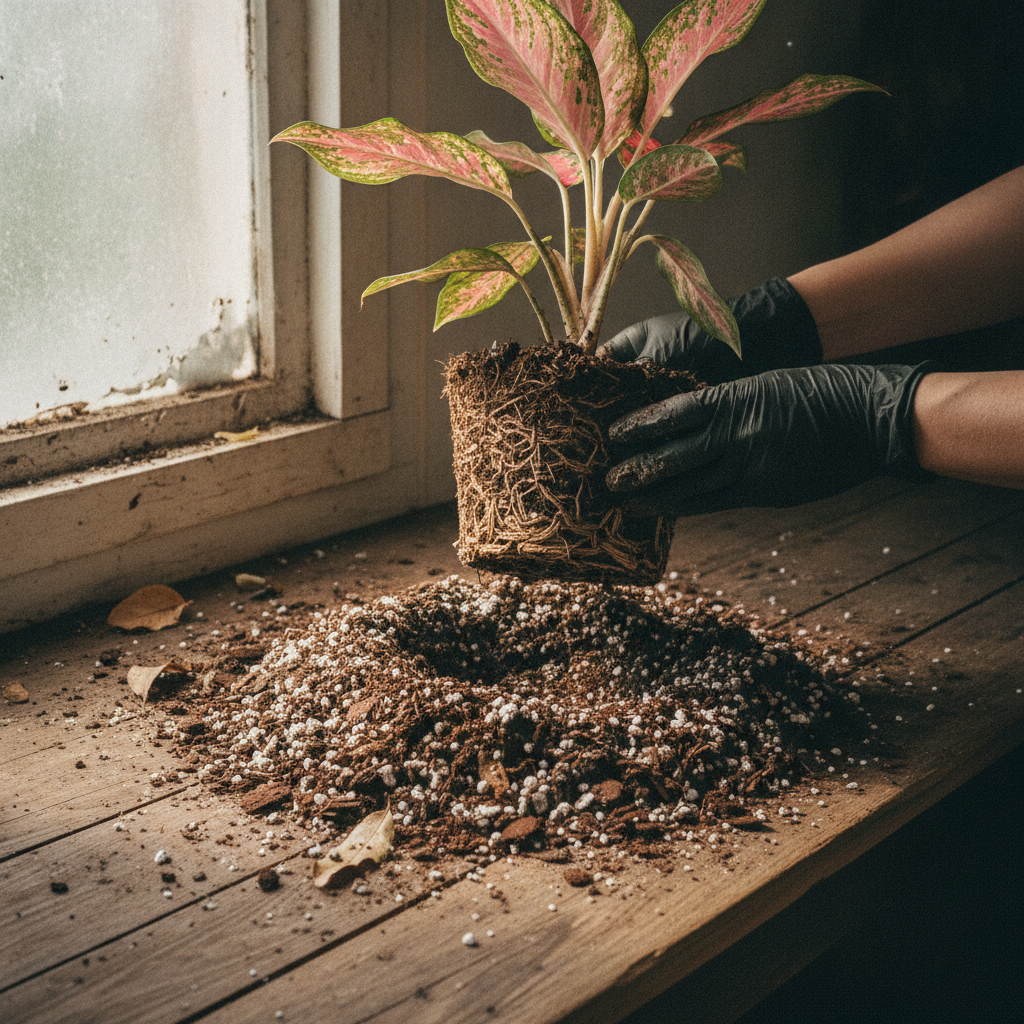
Ideal Soil Composition
A quality peat-free houseplant compost forms a good base, but on its own it tends to hold too much water and pack down over time. Lightening it with chunky, airy ingredients transforms it into the loose, breathable medium aglaonemas love. The blend below strikes a dependable balance for this plant.
| Component | Proportion | Function |
|---|---|---|
| Houseplant compost | Half | Holds moisture and nutrients, provides body |
| Perlite or pumice | One quarter | Opens the mix for drainage and air |
| Orchid bark or coco chips | One quarter | Creates structure and long-lasting air pockets |
| Handful of worm castings | Optional | Gentle, slow-release nutrition |
The Pink Dalmatian prefers soil that is slightly acidic to neutral, in the region of pH 6.0 to 6.5, which most standard houseplant composts fall comfortably within. There is rarely any need to test or adjust the pH; a good peat-free mix lightened for drainage will keep the plant well within its preferred range.
Pro Tip — Quick Mix Recipe: For a fast, reliable blend, combine two handfuls of ordinary houseplant compost with one handful of perlite and one handful of orchid bark. It drains freely, holds just enough moisture and suits almost every aroid, not only this one.
Choosing the Right Pot
The pot is as much a part of the watering system as the soil, and the wrong one can undo good care. For a plant this sensitive to excess moisture, the priorities are drainage and a sensible size rather than looks alone.
Drainage holes are non-negotiable. Whatever the material or style, the pot must have holes at the base so surplus water can escape. A decorative cachepot with no drainage is fine as an outer cover, but only if you lift the inner nursery pot out to water and let it drain fully before returning it.
Pot material: Plastic and glazed ceramic hold moisture longer and suit this plant well, particularly if you tend to underwater. Unglazed terracotta breathes and dries the soil faster, which reduces the risk of rot but means you will need to water more often. Either works; simply match your watering habits to the pot.
Pot size: Choose a pot only 2 to 4cm (1 to 2in) wider than the current root ball. An oversized pot holds a large volume of wet soil that the modest root system cannot use, and that reservoir of moisture is a fast track to root rot. Aglaonemas are also quite content growing a little snug.
When to Repot
The Pink Dalmatian grows slowly and actively enjoys being a touch pot-bound, so it needs repotting only every two to three years. The signs that it is ready are roots creeping out of the drainage holes or circling densely at the surface, water racing straight through without soaking in, or growth that has stalled despite good care. Spring or early summer, when the plant is entering active growth, is the best time to do it.
How to Repot: Step-by-Step
- Water the plant a day beforehand so the root ball is hydrated and slides out cleanly.
- Ease the plant from its pot by tipping it and supporting the base of the stems, rather than pulling on the foliage.
- Gently tease apart the outer roots and brush away some of the old, spent soil.
- Inspect the roots and trim off any that are brown, soft or mushy with clean scissors.
- Set the plant in its new pot at the same depth as before, on a layer of fresh mix.
- Fill around the sides with fresh soil, firming lightly so no large air gaps remain.
- Water thoroughly, let it drain, and return the plant to indirect light.
Warning — Transplant Shock: A little drooping or a paused growth spurt in the week or two after repotting is normal. Resist the urge to fix it with extra water or feed, which only stresses the recovering roots further. Keep the plant warm, in steady light, and water only when the soil dries as usual.
Fertilising
The Pink Dalmatian is not a hungry plant. Its slow, steady growth means it draws on nutrients gradually, and a light, regular feed through the growing season is far better than occasional heavy doses. Overfeeding is a real risk with aglaonemas and does more harm than skipping a feed altogether.
Think of fertiliser as a top-up rather than the main event. Fresh soil already carries a reserve of nutrients, so a newly repotted plant needs no feeding for the first couple of months. After that, a diluted balanced feed during spring and summer keeps the foliage dense and well coloured.
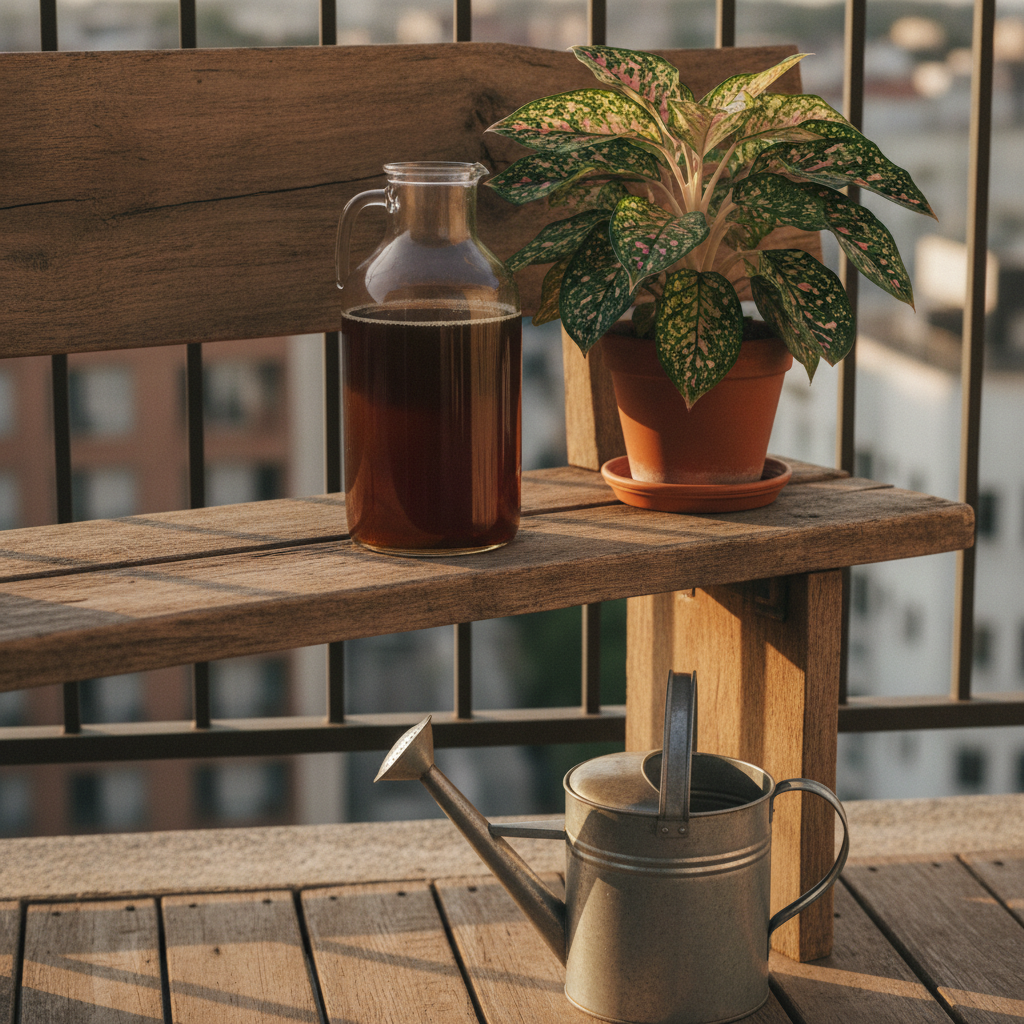
Understanding Plant Nutrients
Most houseplant feeds list three numbers on the label, the N-P-K ratio, standing for nitrogen, phosphorus and potassium. A balanced formula with roughly equal figures suits a foliage plant like the Pink Dalmatian, supplying steady nitrogen for leaf growth alongside the other nutrients that keep the whole plant healthy. The table below explains what each element does.
| Nutrient | Symbol | Primary Function | Deficiency Symptoms |
|---|---|---|---|
| Nitrogen | N | Drives leaf and stem growth and green colour | Pale, yellowing older leaves; weak growth |
| Phosphorus | P | Supports roots and energy transfer | Stunted growth, dull foliage |
| Potassium | K | Regulates water use and overall vigour | Yellow or brown leaf edges |
| Calcium | Ca | Builds strong cell walls | Distorted or hooked new leaves |
| Magnesium | Mg | Central to chlorophyll and photosynthesis | Yellowing between leaf veins |
| Iron | Fe | Aids chlorophyll production | Pale new leaves with green veins |
Types of Fertiliser
Liquid fertilisers: The easiest option for this plant. Diluted into the watering can, they deliver nutrients evenly and let you control the dose precisely, which matters for a light feeder. Simply skip the feed and water plainly whenever you want to pause.
Slow-release granular: Coated pellets that release nutrients gradually over several months. Convenient and low-effort, but they offer less control, so use them at half the recommended rate to avoid overfeeding a plant that needs little.
Organic fertilisers: Worm castings, diluted seaweed and compost-based feeds nourish the plant gently and improve the soil life at the same time. They are mild and forgiving, which makes them a natural fit for the undemanding Pink Dalmatian.
Feeding Schedule
Feed once a month with a balanced houseplant fertiliser diluted to half strength through spring and summer, the plant’s active growing season. As growth slows in autumn, taper off, and stop feeding entirely through winter when the plant is resting and cannot use the extra nutrients. Resume in spring as new growth appears.
Pro Tip — Less Is More: When it comes to feeding aglaonemas, err on the side of caution. A plant that is slightly underfed simply grows a little slower, but one that is overfed suffers scorched roots and brown leaf tips. Half the recommended strength is plenty.
How to Fertilise
- Dilute a balanced liquid feed to half the strength stated on the label.
- Water the plant with plain water first if the soil is very dry, to protect the roots.
- Apply the diluted feed evenly across the soil until it drains from the base.
- Feed only during spring and summer, roughly once a month.
- Flush the pot with plain water every couple of months to wash out any build-up of salts.
Warning — Salt Build-Up: Fertiliser salts accumulate in the soil over time and show up as a white crust on the surface or pot rim, along with browning leaf tips. Every two or three months, flush the pot thoroughly with plain water, letting plenty run out of the base to rinse the excess away.
Propagation
Propagating the Pink Dalmatian is a satisfying way to make more plants for free or to rejuvenate an older, leggy specimen. Unlike vining aroids that root readily from a single leaf and node, aglaonemas grow from a central clump of stems, so the two dependable methods are division and stem cuttings.
Both are best attempted in spring or early summer, when the plant is in active growth and will recover quickest. A quick note on expectations: this is a cultivar, so any offsets or cuttings you take will be genetically identical to the parent, but plants grown from seed would not reliably reproduce the same pink markings.
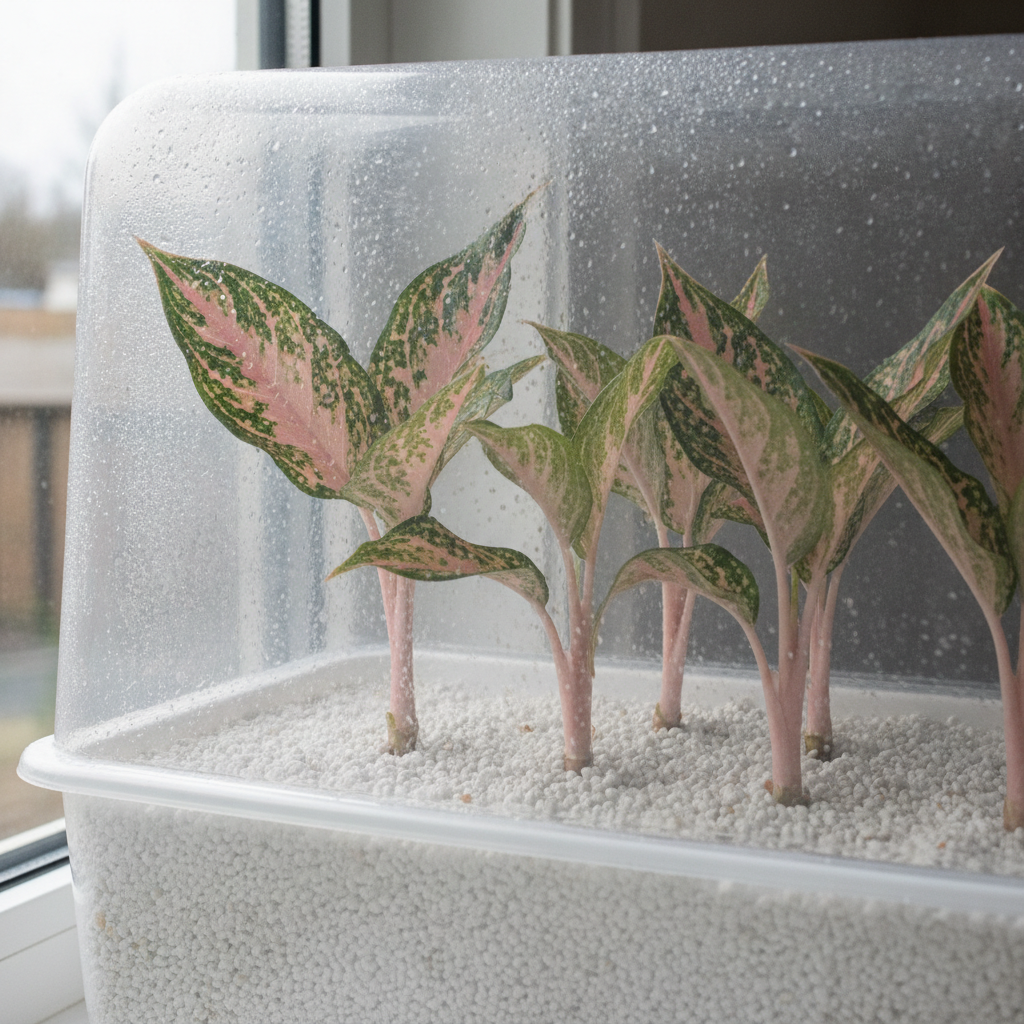
Understanding the Clumping Habit
An established Pink Dalmatian is not a single plant but a cluster of individual stems, or crowns, rising from a shared root mass. Over time the clump widens as new shoots emerge from the base. This natural habit is what makes division so easy: you are simply separating shoots that already have their own roots, rather than coaxing new roots from scratch.
Division: Step-by-Step
Division is the fastest and most reliable method, giving you an instant, fully rooted new plant. It works best on a mature clump with several stems, ideally done at the same time as a routine repot.
- Water the plant the day before, then slide the whole root ball out of its pot.
- Gently brush away loose soil so you can see where the natural clumps of stems and roots divide.
- Ease a section with its own stems and healthy roots away from the main plant, using your fingers where possible.
- If the roots are too tangled to pull apart, cut cleanly through the root mass with a sterilised knife.
- Pot each division into its own small pot of fresh, free-draining mix at its original depth.
- Water lightly, then keep the new plants warm and in indirect light while they settle.
Pro Tip — Divide While Repotting: The perfect moment to divide is when you have already lifted the plant to repot it. The roots are exposed, the clumps are visible, and you spare the plant a second round of disturbance by combining the two jobs into one.
Stem Cuttings: Step-by-Step
If your plant has grown tall and leggy with a length of bare stem, stem cuttings let you propagate and tidy it at once. Each cutting needs a section of stem with at least one or two growth points, or nodes, from which new roots and leaves will emerge.
- Using clean, sharp scissors, cut a healthy stem into sections, each with one or two nodes and a leaf or two.
- Let the cut ends dry and callus for an hour or two to reduce the risk of rot.
- Insert the cuttings upright into damp perlite, sphagnum moss or a light cutting mix, or stand them in a jar of water.
- Place them somewhere warm and bright but out of direct sun, ideally under a clear cover to hold in humidity.
- Keep the medium lightly moist and refresh any water every few days to keep it clean.
- After several weeks, once roots are a few centimetres long, pot the cuttings into standard mix.
Troubleshooting Propagation
| Problem | Likely Cause | Solution |
|---|---|---|
| Cutting rots before rooting | Medium too wet, or cut end not callused | Use fresh medium, let cuts dry first, ease off moisture |
| No roots after many weeks | Too cold, too dark, or no viable node | Move somewhere warmer and brighter; check a node is included |
| Division wilts badly | Too few roots on the separated section | Keep humid and shaded; only divide well-rooted sections |
| New leaves greener than parent | Light too low for the young plant | Increase indirect light as it establishes |
Pests & Diseases
A healthy, well-placed Pink Dalmatian is relatively untroubled by pests, but no houseplant is entirely immune. Most trouble arrives on new plants brought into the home or drifts across from an infested neighbour, so a quick inspection whenever you water is the best early-warning system you have.
Catching an infestation early makes it far easier to clear. Look over the leaves, especially the undersides and the crevices where leaf meets stem, for any specks, webbing or sticky residue, and act at the first sign rather than waiting for the problem to spread.
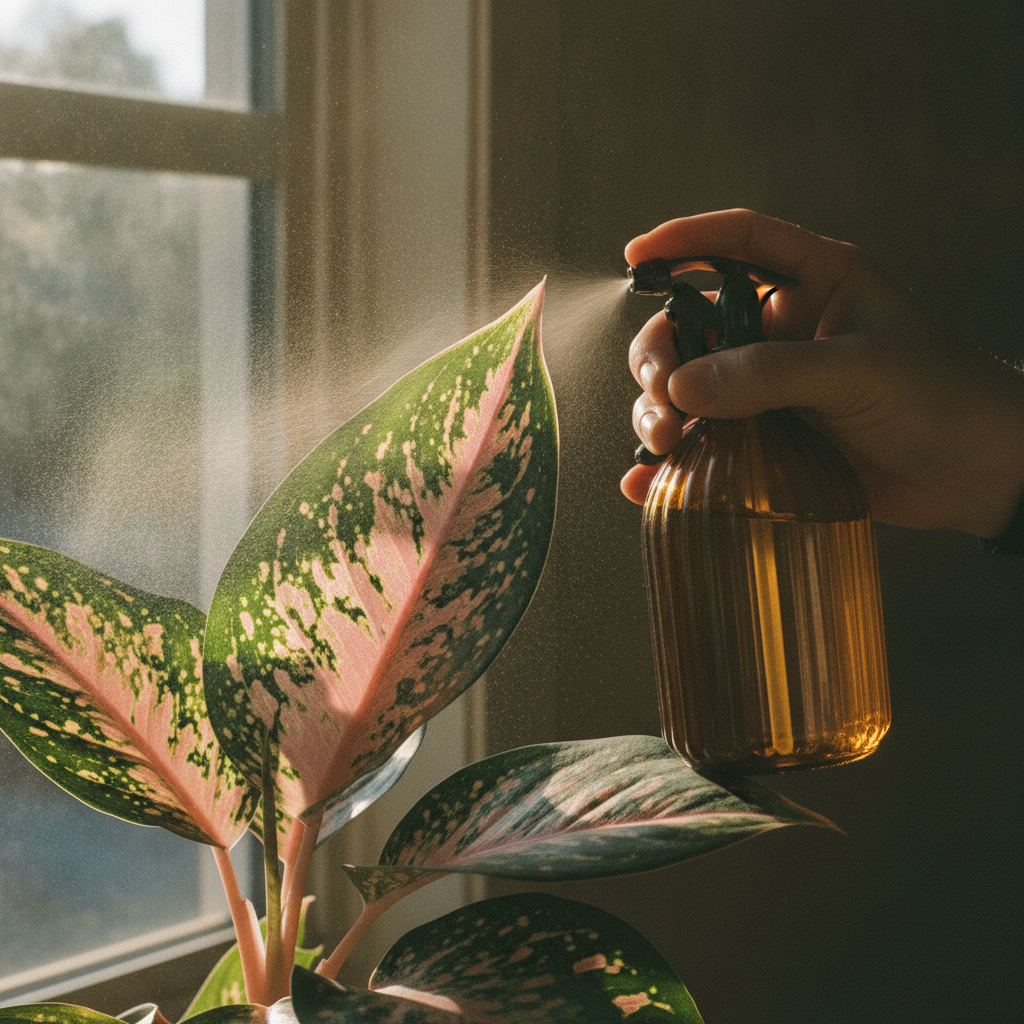
Common Pests
Mealybugs (Pseudococcidae)
The most frequent pest on aglaonemas, mealybugs appear as small, white, cottony tufts tucked into leaf axils and along the stems. They suck sap and excrete sticky honeydew, weakening the plant and leaving a shine on the leaves that can turn to sooty mould.
Treatment: Dab each insect directly with a cotton bud dipped in isopropyl alcohol, then wipe the plant over and follow up with neem oil or insecticidal soap. Repeat weekly until no new bugs appear.
Spider Mites (Tetranychus urticae)
Tiny sap-sucking mites that thrive in warm, dry air. Their signs are fine speckling or stippling on the leaves and delicate webbing strung between the foliage and stems. Left unchecked, they cause leaves to yellow and drop.
Treatment: Rinse the plant thoroughly, then treat with neem oil or insecticidal soap, paying close attention to the leaf undersides. Raising humidity makes conditions less favourable and helps prevent them returning.
Scale (Coccidae)
Scale insects look like small brown or tan bumps clinging to stems and the undersides of leaves. They are easy to mistake for part of the plant, but they too feed on sap and secrete honeydew, sapping the plant’s vigour over time.
Treatment: Scrape or wipe them off with an alcohol-dipped cloth or cotton bud, then treat with neem oil or a horticultural oil to smother any young crawlers you have missed.
Common Diseases
Root Rot (Pythium and Phytophthora)
By far the most serious threat to this plant, root rot is caused by soil-borne fungi and water moulds that take hold in constantly waterlogged soil. It shows as yellowing, wilting leaves, a soft and darkened stem base, and brown, mushy roots with a sour smell.
Treatment: Unpot the plant, cut away all affected roots with sterilised scissors, and repot into fresh, free-draining mix in a clean pot. Water sparingly while it recovers, and correct the overwatering that caused it.
Leaf Spot (Colletotrichum and bacterial pathogens)
Fungal and bacterial leaf spots appear as brown or black patches, often ringed with yellow, that spread when water sits on the foliage in still, humid conditions. They are unsightly and can enlarge, but rarely fatal if addressed.
Treatment: Remove affected leaves, improve air circulation, and avoid wetting the foliage when watering. A copper-based fungicide can help control a stubborn fungal outbreak.
Pest and Disease Summary
| Pest / Disease | Identification | Treatment |
|---|---|---|
| Mealybugs | White cottony tufts in leaf axils | Alcohol swab, then neem oil weekly |
| Spider mites | Fine stippling and webbing | Rinse, neem oil, raise humidity |
| Scale | Brown bumps on stems and leaves | Scrape off, treat with horticultural oil |
| Root rot | Yellowing, soft stem, mushy roots | Trim roots, repot, water less |
| Leaf spot | Brown or black patches on leaves | Remove leaves, improve airflow, keep foliage dry |
Prevention Strategies
Prevention is far simpler than cure, and it rests on keeping the plant healthy and its surroundings clean. A well-watered, well-lit plant with good air movement around it is naturally more resistant to both pests and disease, because stressed plants are the ones pests target first.
Quarantine any new plant for a couple of weeks before it joins your collection, wipe the leaves occasionally to remove dust and expose any early pests, and always use clean tools and pots. Above all, water correctly, since the majority of aglaonema deaths trace back to soggy soil rather than to any insect.
Pro Tip — Inspect on Watering Day: Fold your pest check into your watering routine. Every time you water, take ten seconds to turn a few leaves over and glance into the leaf axils. Spotting a single mealybug before it becomes a colony is the difference between a quick wipe and a lengthy campaign.
Popular Varieties
The Pink Dalmatian belongs to a wave of modern, brightly coloured aglaonema cultivars bred largely in Thailand, where breeders have transformed a once plain green foliage plant into a rainbow of pinks, reds and silvers. Knowing its relatives helps you place the Pink Dalmatian in context and choose companions that share its easy temperament.
All of these cultivars share broadly the same care, so mixing several makes for a low-effort, high-colour collection. They differ mainly in the amount and shade of pink or red they carry, and in how much light they need to hold that colour, with the pinker and redder forms generally wanting a little more brightness.
| Variety | Leaf Appearance | Light Needs | Growth Rate | Availability |
|---|---|---|---|---|
| Pink Dalmatian | Deep green densely freckled with pink spots | Medium to bright indirect | Slow | Common |
| Pink Anyamanee | Broad blush-pink centres with green margins | Bright indirect | Slow to moderate | Common |
| Siam Aurora (Red Lipstick) | Green leaves edged and veined in red | Medium to bright indirect | Moderate | Very common |
| Prestige | Broad pink zones speckled with green | Bright indirect | Slow to moderate | Common |
| Pink Moon | Silvery green flecked with soft pink | Medium indirect | Slow | Occasional |
| Super White | Near-white leaves with green veins | Bright indirect | Slow | Occasional |
Featured Varieties
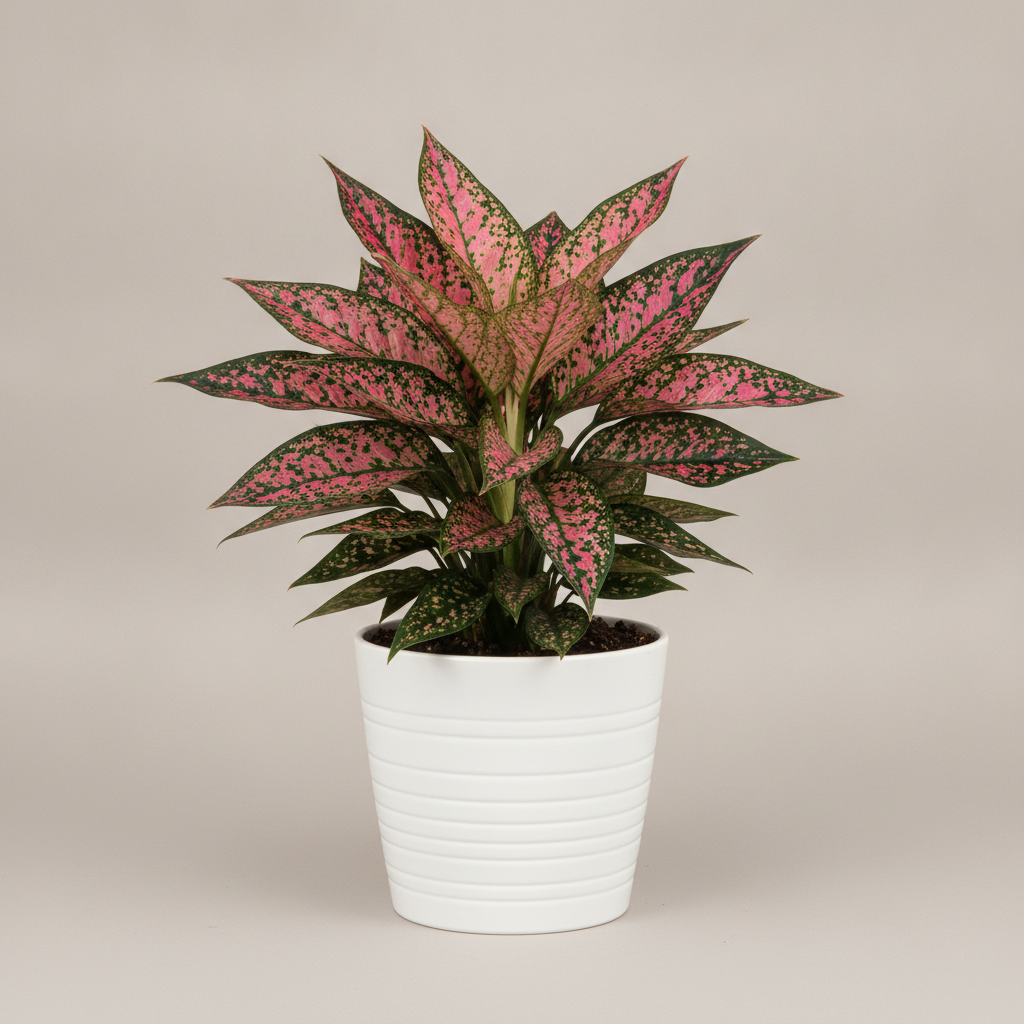
Pink Dalmatian
The star of this guide, with dark green leaves scattered all over in fine hot-pink freckles, like paint flicked from a brush. Compact and bushy, it holds its speckling well in ordinary indoor light.
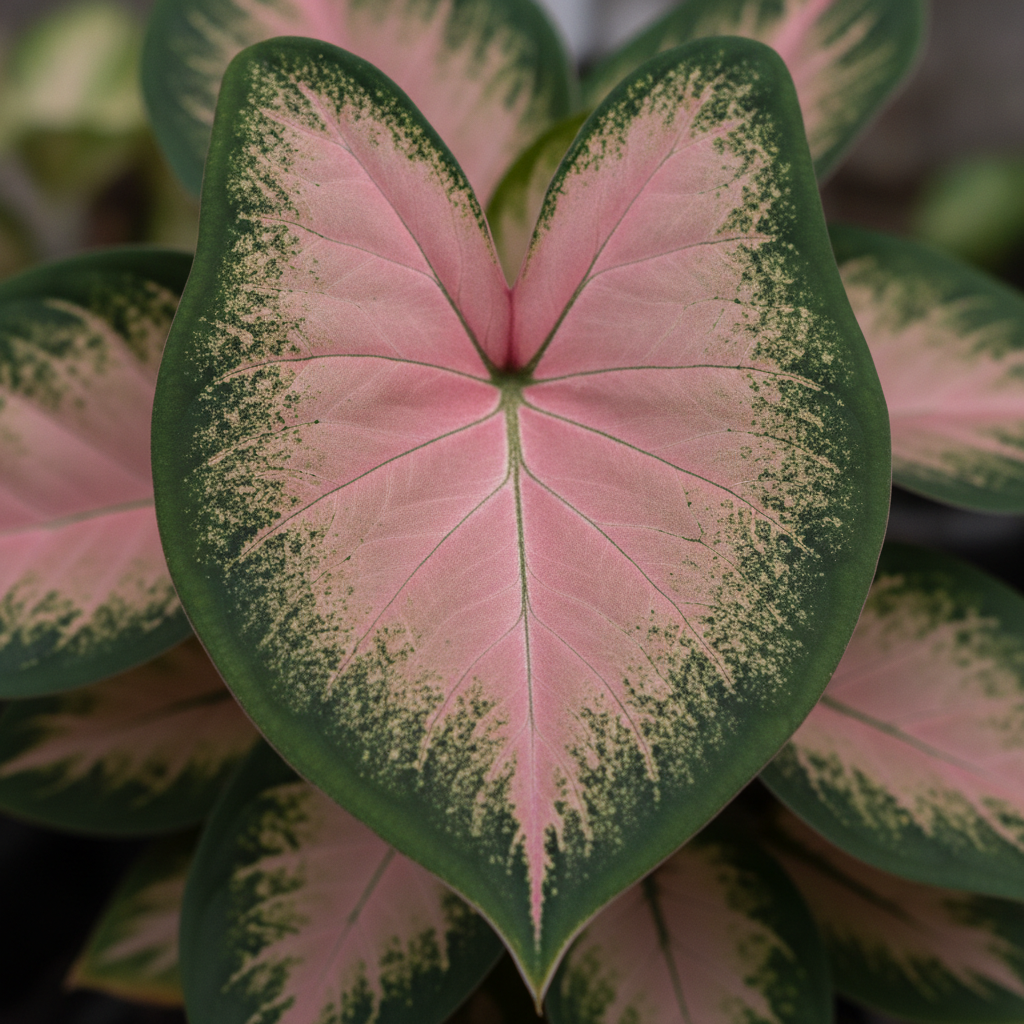
Pink Anyamanee
A bolder cousin whose broad leaves carry large soft-pink central zones bordered by deep green and fine pink veining. It wants slightly brighter indirect light to keep those pink expanses vivid.
Variety Profiles in Detail
Siam Aurora (Aglaonema ‘Siam Aurora’)
Also sold as Red Lipstick, this is one of the most widely grown coloured aglaonemas. Its green leaves are outlined and veined in bright red, giving a striking two-tone effect that is a little more forgiving of lower light than the pinker cultivars, which makes it a great entry point into the coloured aglaonemas.
Prestige (Aglaonema ‘Prestige’)
A showier, pinker relative whose leaves carry broad sweeps of pink broken up by green speckling and splashes. It reads as more solidly pink than the freckled Pink Dalmatian and rewards bright, indirect light with especially vivid colour.
Choosing the Right Variety for Your Space
Let the light of your intended spot guide your choice. For a brighter position near a screened window, the pinker forms such as Pink Anyamanee and Prestige will glow. For a medium or lower-light corner, the Pink Dalmatian and the red-veined Siam Aurora hold their character better. Whichever you choose, the care is essentially the same, so building a colourful, coordinated group of aglaonemas is one of the easiest wins in indoor gardening.
Frequently Asked Questions
Why is my Pink Dalmatian losing its pink colour?
Almost always the cause is too little light. In dim conditions the plant produces greener leaves to gather more energy, and the pink speckling recedes. Move it to a brighter spot with plenty of indirect light, and the new growth should return to its freckled best.
Is the Pink Dalmatian Aglaonema safe for pets?
No. Like all aglaonemas, it contains insoluble calcium oxalate crystals that are toxic to cats and dogs if chewed, causing mouth and throat irritation, drooling and vomiting. Keep it well out of reach of pets and children.
Why are the leaf tips turning brown?
Brown, crispy tips usually point to dry air, inconsistent watering, or a build-up of minerals and fertiliser salts in the soil. Try raising the humidity a little, watering more evenly, and flushing the pot with plain water every couple of months. Switching to filtered water can help if your tap water is heavily treated.
How often should I water it?
Water when the top 2 to 4cm (1 to 1.5in) of soil is dry, which tends to be about every 7 to 10 days in spring and summer and considerably less in winter. Always judge by the soil rather than the calendar, and lean towards underwatering, as this plant hates staying wet.
Why are lower leaves turning yellow?
The occasional old leaf yellowing at the base is normal ageing. If several leaves yellow at once and the soil is wet, overwatering is the likely culprit, so check the roots and let the soil dry out more between waterings. Yellowing paired with dry, compacted soil points instead to underwatering.
Does it flower indoors?
It can. Mature aglaonemas produce a modest arum-type flower, a pale spathe wrapped around a central spadix, much like a small peace lily bloom. The flowers are unremarkable and draw energy away from the foliage, so many growers pinch them off to keep the plant focused on its leaves.
Why is my plant growing tall and leggy?
Legginess, where the stems stretch and the plant looks sparse, is a sign of insufficient light. Move it somewhere brighter, and consider using the stem-cutting method described above to propagate the leggy growth and start a fuller, more compact plant.
Can it tolerate low light?
Yes, it survives happily in low light, which is part of the appeal of aglaonemas generally. The trade-off is colour: in genuinely dim conditions the pink speckling fades and growth slows. For the best of both, give it medium to bright indirect light, and treat low-light tolerance as a fallback rather than the ideal.






