
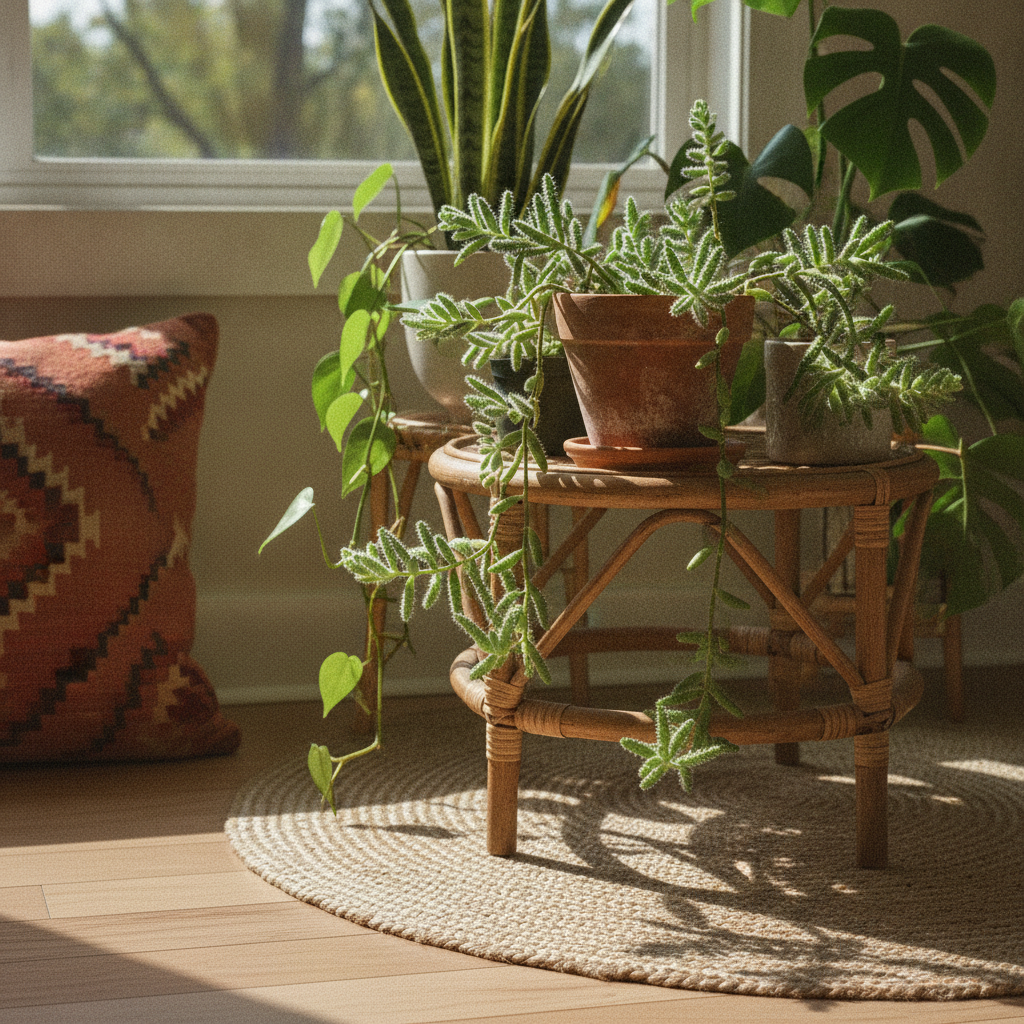
Few succulents earn their common name as literally as the pickle plant. Run a finger along one of its plump little leaves and the resemblance is uncanny: a miniature gherkin in green, complete with a coat of soft white bristles standing in for the warts of a real cucumber. Botanically it is Delosperma echinatum, a trailing member of the ice plant family from the dry country of South Africa, and it belongs to that small, forgiving group of houseplants that asks for very little and rewards neglect more readily than fuss. This guide covers everything from where to put it to how to turn one bristly stem into a windowsill full of them.
In This Guide
- Quick Reference
- Why Grow a Pickle Plant
- Light
- Watering
- Soil and Potting
- Fertilising
- Propagation
- Pests and Problems
- Varieties
- Frequently Asked Questions
Quick Reference
| Botanical name | Delosperma echinatum |
| Common names | Pickle plant, gherkin plant, bristly ice plant |
| Family | Aizoaceae (the ice plant or mesemb family) |
| Native range | Eastern Cape, South Africa |
| Plant type | Evergreen trailing succulent subshrub |
| Mature size | 15 to 30 cm (6 to 12 in) tall, trailing or spreading to 45 cm (18 in) |
| Light | Bright light with a few hours of direct sun |
| Water | Soak thoroughly, then let the soil dry out completely |
| Soil | Gritty, fast-draining cactus and succulent mix |
| Temperature | 18 to 27 °C (64 to 81 °F); keep above 5 °C (41 °F) |
| Humidity | Low; average household air is ideal |
| Fertiliser | Dilute succulent feed once or twice in spring and summer |
| Propagation | Stem cuttings, exceptionally easy |
| Toxicity | Generally considered non-toxic to cats, dogs and people |
| Difficulty | Easy, an excellent beginner succulent |
Why Grow a Pickle Plant
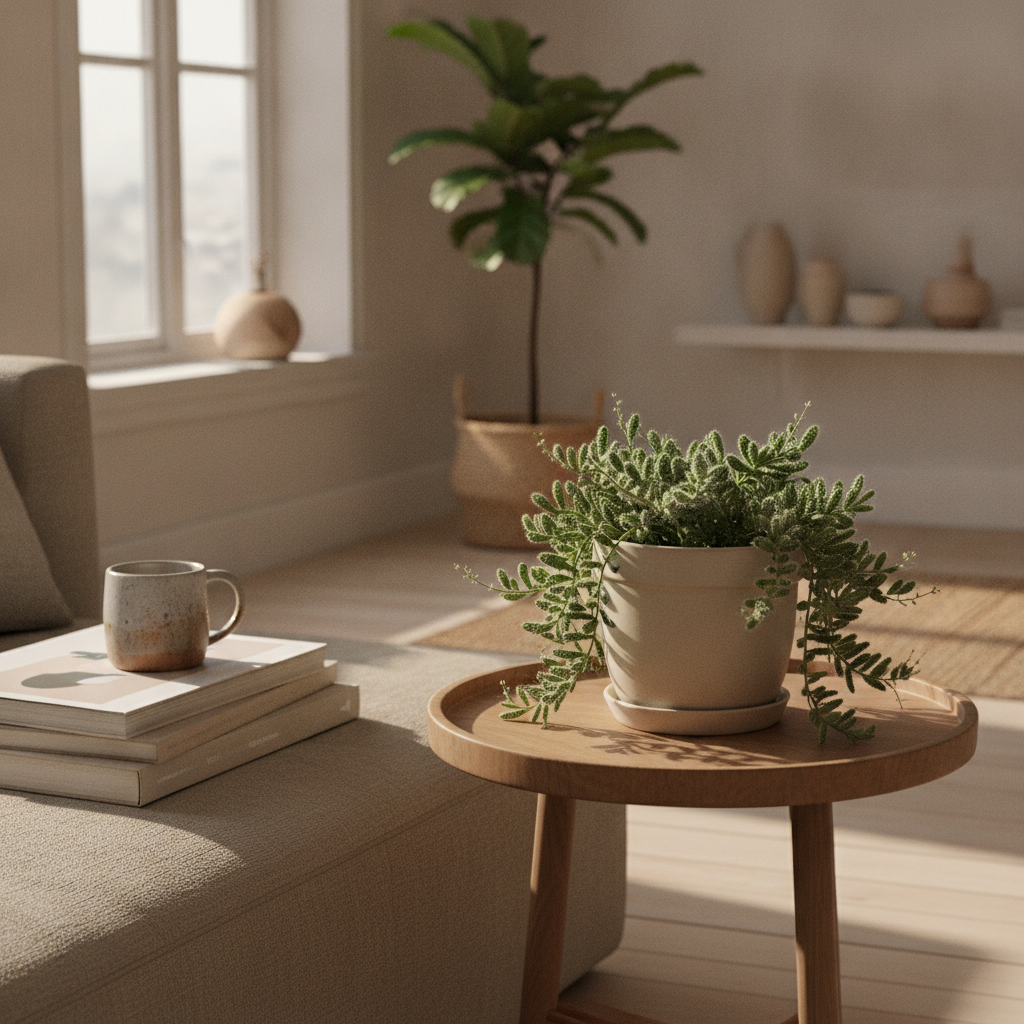
The appeal of Delosperma echinatum begins with novelty and ends with sheer ease. The plant is a tactile curiosity first and foremost. Each leaf is a short, swollen cylinder no longer than a fingernail, packed with water-storing tissue and studded with translucent, hair-tipped papillae that catch the light like frost. Those bristles are soft to the touch rather than spiny, and they give the whole plant a silvery, slightly fuzzy quality that sets it apart from the glossy rosettes most people picture when they think of succulents.
Beyond its looks, the pickle plant is one of the most undemanding succulents you can bring home. It comes from a part of South Africa where rain is seasonal and soils are thin and stony, so it is built to endure long dry spells and a great deal of sun. Translated to a windowsill, that toughness means the plant survives the kind of forgetfulness that kills fussier houseplants, and it thrives when you simply give it the brightest spot you have and water it only when the soil is bone dry. It trails gently as it grows, which makes it as comfortable spilling over the rim of a shallow bowl as it is sitting upright in a small pot, and mature plants throw out small star-shaped flowers in pale yellow that open in the middle of bright days.
It is worth knowing that the name “pickle plant” is shared by a couple of unrelated succulents, most notably Kleinia stapeliiformis and some bristly Senecio relatives. If you are buying by common name alone, check the label for Delosperma echinatum to be sure you are getting the bristly, gherkin-leaved ice plant described here rather than a lookalike with very different growth habits.
Pro Tip — Pet households: Unlike many popular houseplants, the pickle plant is not known to be toxic to cats or dogs, which makes it a sensible choice for homes where a trailing plant might tempt a curious nibble. Even so, no plant is meant to be eaten, and the bristly leaves are unappealing enough that most pets leave it alone.
Light
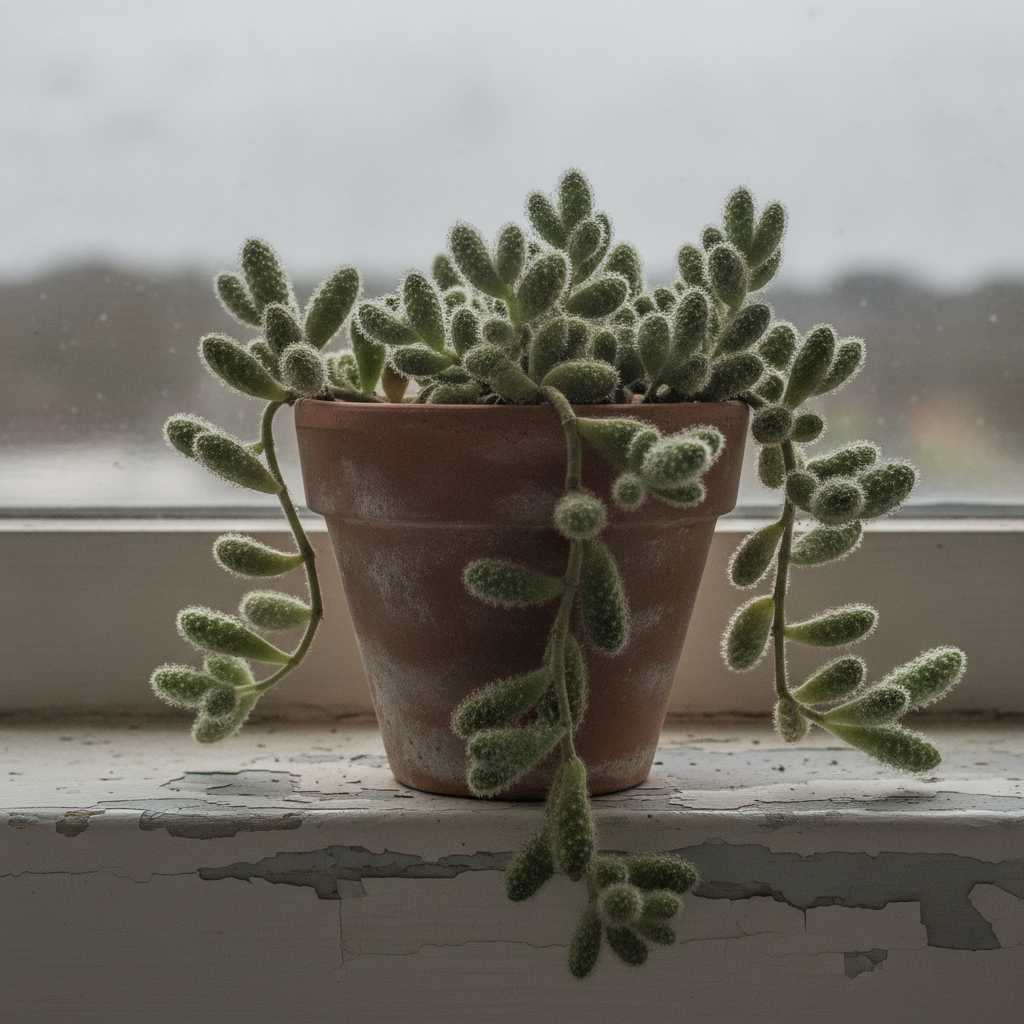
Light is the single factor that separates a pickle plant that merely survives from one that genuinely thrives. In its native habitat the plant grows fully exposed, so indoors it wants the brightest position you can offer. A south or west-facing window where it receives several hours of direct sun each day is close to ideal, and the plant will reward that exposure with tight, compact growth, densely packed leaves and the best chance of flowering. A few hours of gentle morning sun at an east window will keep it healthy too, though growth will be a little looser.
The tell-tale sign of insufficient light is etiolation, the stretching that succulents undergo when they reach for a brighter source. Stems lengthen, the gaps between leaves widen, and the whole plant takes on a pale, leggy, reaching appearance instead of staying plump and full. If you notice this happening, move the plant gradually closer to the window over a week or two rather than all at once, because a sudden jump from a dim corner into hot direct sun can scorch leaves that have not had time to adapt. When acclimatising a plant to stronger light, increase its exposure in stages and watch for any pale or bleached patches, which are the first warning of sunburn.
Through the darker months, when daylight is weak and short, even a sun-loving succulent slows almost to a standstill. There is no need to force growth in winter, but if your home is genuinely gloomy you can supplement with a full-spectrum grow light positioned a sensible distance above the plant for around ten to twelve hours a day. In summer the pickle plant is happy to spend time outdoors on a balcony or patio, provided it is introduced to outdoor sun gradually and brought back inside well before the first cold nights arrive.
Watering
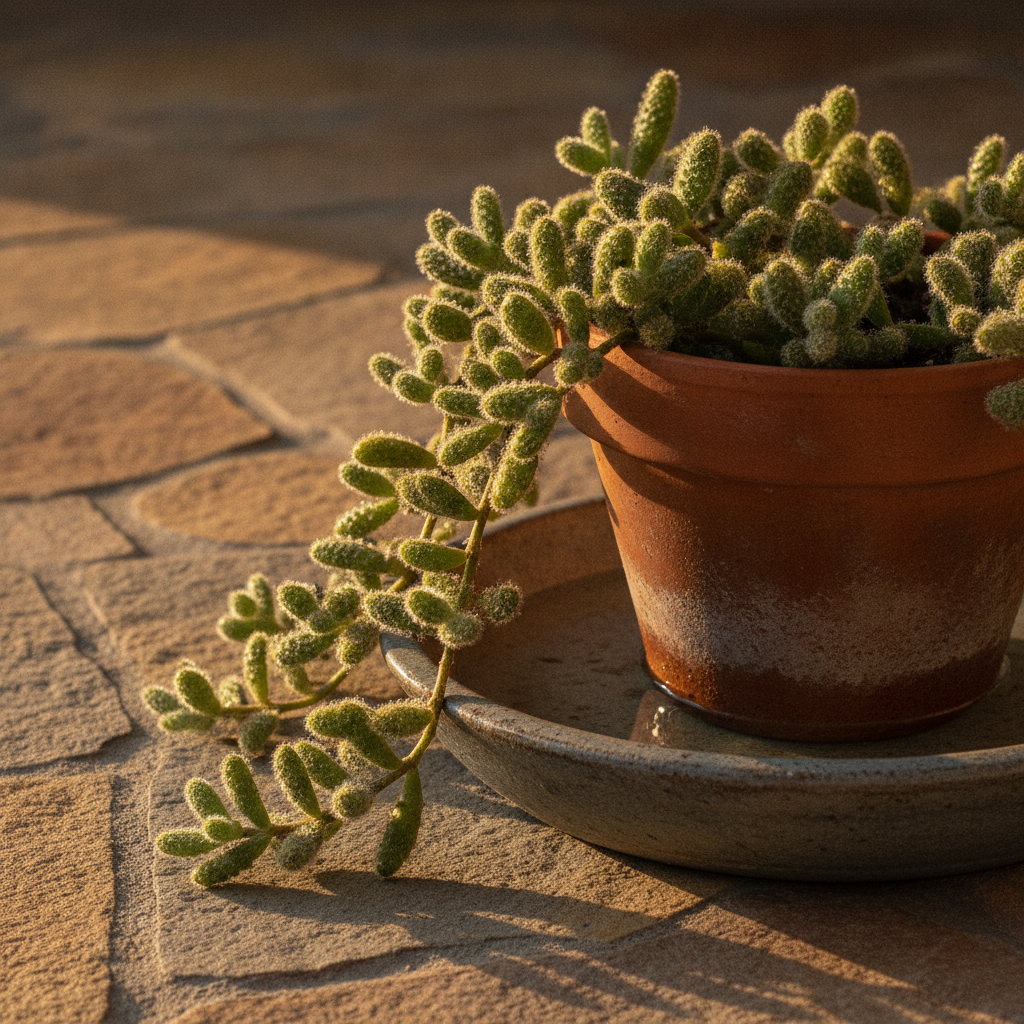
If there is one way to kill a pickle plant, it is by being kind with the watering can. Like most succulents, Delosperma echinatum stores its own water in those swollen leaves and stems, and it is far better adapted to drought than to soggy roots. The reliable approach is the soak-and-dry method: water thoroughly so that the whole root ball is wetted and excess runs from the drainage hole, then do not water again until the soil has dried out completely from top to bottom. Depending on the season, the pot size and your home, that might mean watering every week or two in summer and as little as once a month, or even less, in winter.
The single most useful habit you can build is to check the soil before reaching for water rather than working to a fixed schedule. Push a finger a few centimetres into the mix, or lift the pot to feel its weight; a dry pot is noticeably light, while a recently watered one feels heavy. Only water when the soil is genuinely dry. Bottom watering, where you stand the pot in a shallow dish of water and let the mix draw moisture up through the drainage hole for fifteen minutes or so, works beautifully for this plant because it wets the roots without leaving water sitting in the dense crown of bristly leaves, where trapped moisture can encourage rot.
Watch the leaves for guidance. Plump, firm leaves mean the plant is well hydrated and needs nothing. Leaves that look slightly soft, wrinkled or deflated are the plant drawing on its reserves and asking for a drink. Yellowing, translucent or mushy leaves point the other way entirely, towards overwatering, and they are a signal to stop watering at once and let everything dry out. In winter, when growth pauses, err firmly on the side of dryness; a pickle plant kept cool and barely watered through the cold months will come through far better than one kept damp.
Warning — The water trap: Overwatering is the most common cause of death for this species. When in doubt, do not water. A thirsty pickle plant recovers within hours of a drink, but one that has sat in wet soil and begun to rot at the roots is very hard to save.
Soil and Potting
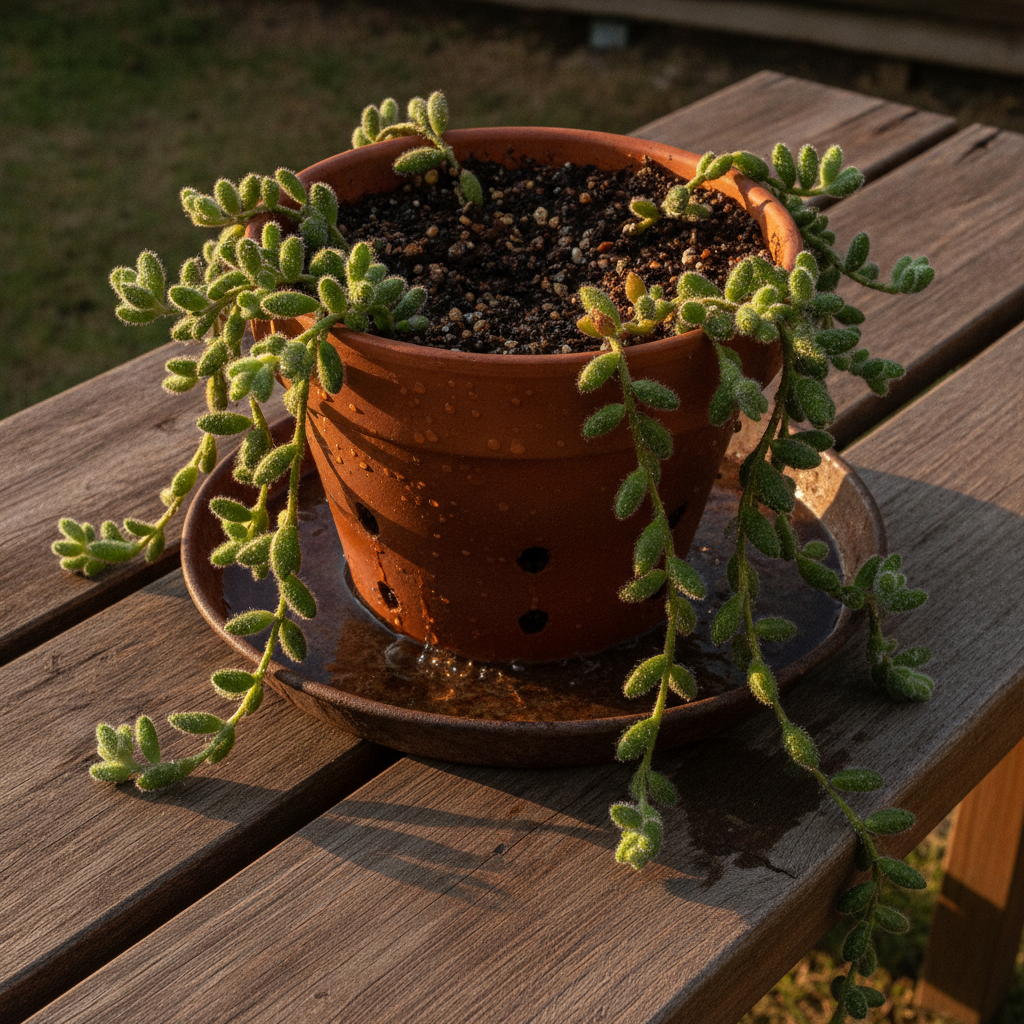
Everything about watering this plant successfully depends on the soil draining freely, so the potting mix matters as much as your watering habits. A standard general-purpose compost holds far too much moisture for a desert succulent and will keep the roots damp long after they should have dried. Reach instead for a proper cactus and succulent mix, or make your own by cutting a good-quality potting compost with plenty of grit. A blend of roughly two parts compost to one part coarse sand or fine grit, with a generous handful of perlite or pumice mixed through, gives the open, airy structure that lets water rush past the roots and air reach them between waterings.
The pot you choose is part of the drainage equation. A drainage hole is not negotiable for this plant; without one, water collects unseen at the bottom of the pot and roots sit in it. Terracotta is an excellent choice because the porous clay wicks moisture out of the soil and helps it dry more quickly, which suits a plant that hates staying wet. Keep the pot relatively snug rather than oversized, because a large volume of soil around a small root system stays damp for a long time and works against you. A shallow, wide bowl flatters the plant’s trailing habit and dries faster than a deep one.
Pickle plants are slow, modest growers and do not need frequent repotting. Refreshing the mix and moving up a single pot size every two or three years, or whenever you can see roots crowding the surface, is plenty. The best time is spring, at the start of the growing season. When you do repot, let the plant dry out for a few days beforehand so the root ball comes away cleanly, settle it into fresh dry mix, and then wait about a week before watering. That pause gives any roots disturbed or nicked during the move time to heal over, which greatly reduces the risk of rot taking hold.
Fertilising
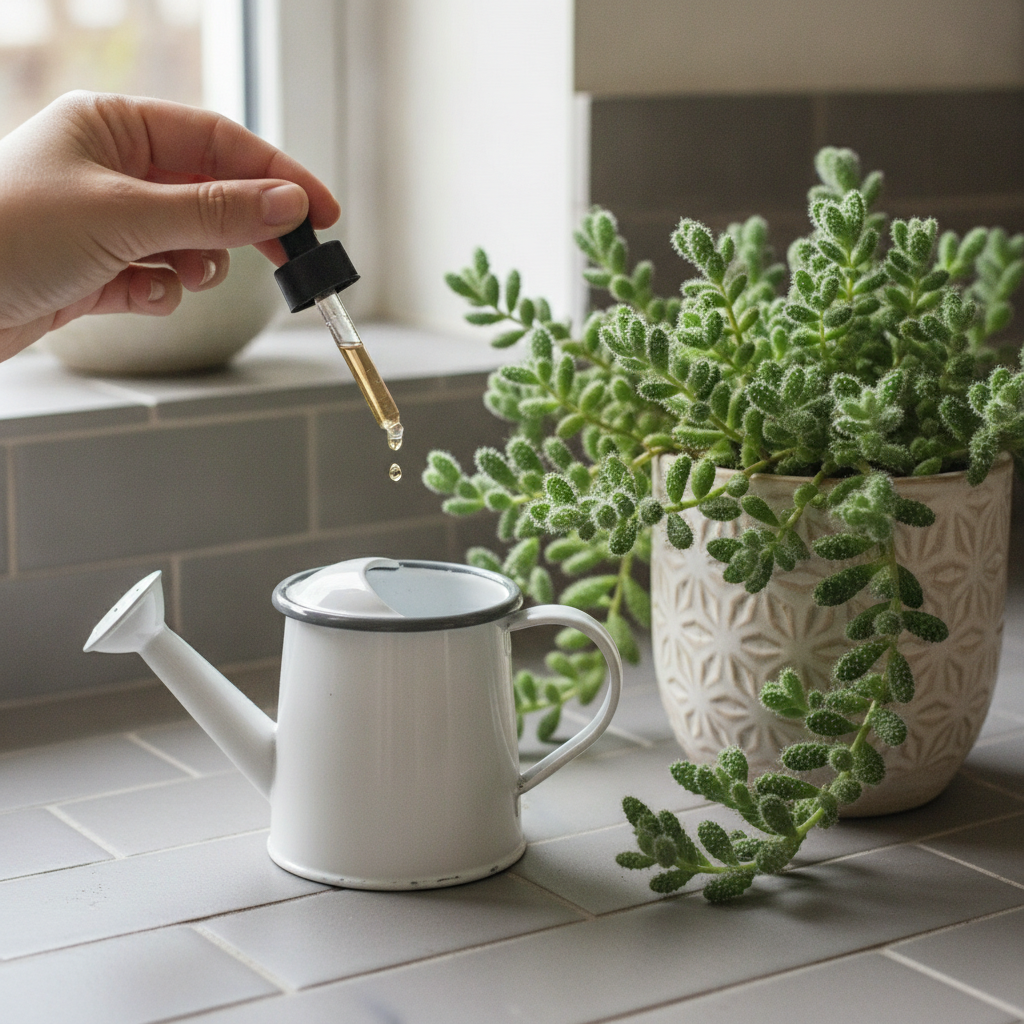
The pickle plant evolved on poor, stony ground and has no appetite for rich feeding. It is one of those plants where doing less is genuinely better, and many growers keep theirs healthy for years with no fertiliser at all beyond the nutrients in a fresh potting mix. If you do want to give it a boost, restraint is the rule. A specialised succulent or cactus fertiliser, diluted to half the strength suggested on the label, applied once or perhaps twice across the whole of spring and summer, is ample. Always feed onto already-moist soil rather than dry roots, which prevents the salts in the fertiliser from scorching them.
Timing matters as much as quantity. Feed only during the active growing season, from spring through to the end of summer, when the plant is putting on new growth and can actually use the nutrients. Never fertilise in autumn and winter, when the plant is resting; food it cannot use simply accumulates in the soil as a build-up of mineral salts that can damage the roots over time. Over-feeding tends to produce soft, weak, stretched growth that is more prone to pests and rot, the opposite of the tight, sturdy plant you are aiming for, so when you are unsure whether to feed, the safe answer is to skip it.
Propagation
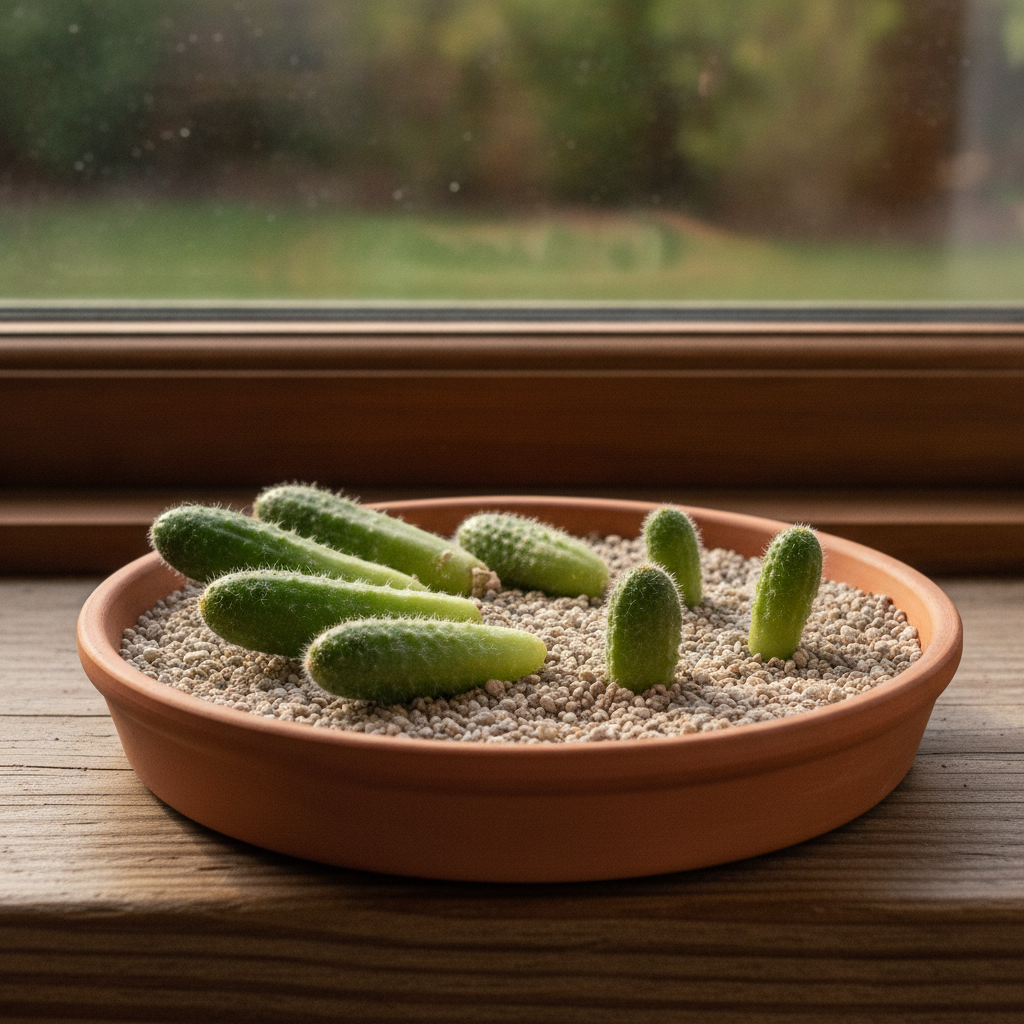
If there is a more rewarding plant to propagate than the pickle plant, it is hard to think of one. Stem cuttings root so readily that a single trailing plant can quickly become a shelf full, and the process is forgiving enough that beginners succeed on their first attempt. The best time is spring or summer, when the plant is in active growth, though cuttings will often take at other times of year too. All you need is a clean, sharp pair of scissors or a knife, a small pot of dry gritty succulent mix and a little patience.
- Choose a healthy trailing stem and cut a section several centimetres long, ideally with a few leaves along it. Cuttings taken from firm, plump growth root more reliably than soft or stretched stems.
- Set the cutting aside in a dry, shaded spot for one to two days so the cut end can callus over. This dry skin that forms across the wound is what stops the cutting rotting once it meets soil, and it is the step most often skipped to the propagator’s regret.
- Once the end has callused, lay or insert the cutting onto the surface of dry, gritty succulent mix. You can press the base lightly into the grit, but it does not need to be buried deep.
- Wait about a week before watering at all, then begin watering very lightly and only when the mix is dry. Roots usually form within two to three weeks, anchoring the cutting in place.
- Once you feel gentle resistance when you tug the cutting, roots have established and you can return to normal soak-and-dry watering and a bright position.
Even individual leaves that drop off will sometimes root and sprout a new plantlet where they land, which is why established pickle plants often have tiny volunteers appearing in the pot. Keep humidity low throughout the process; unlike tropical cuttings, succulent cuttings do not want a humid propagator or a covering dome, both of which trap moisture and invite rot. Bright, dry, airy conditions are exactly what these cuttings prefer.
Pro Tip — Fuller pots: To grow a lush, full plant rather than a few long trailers, root several cuttings together around the edge of one pot. As they establish and branch, they knit into a dense, generous mound far faster than a single plant ever would.
Pests and Problems
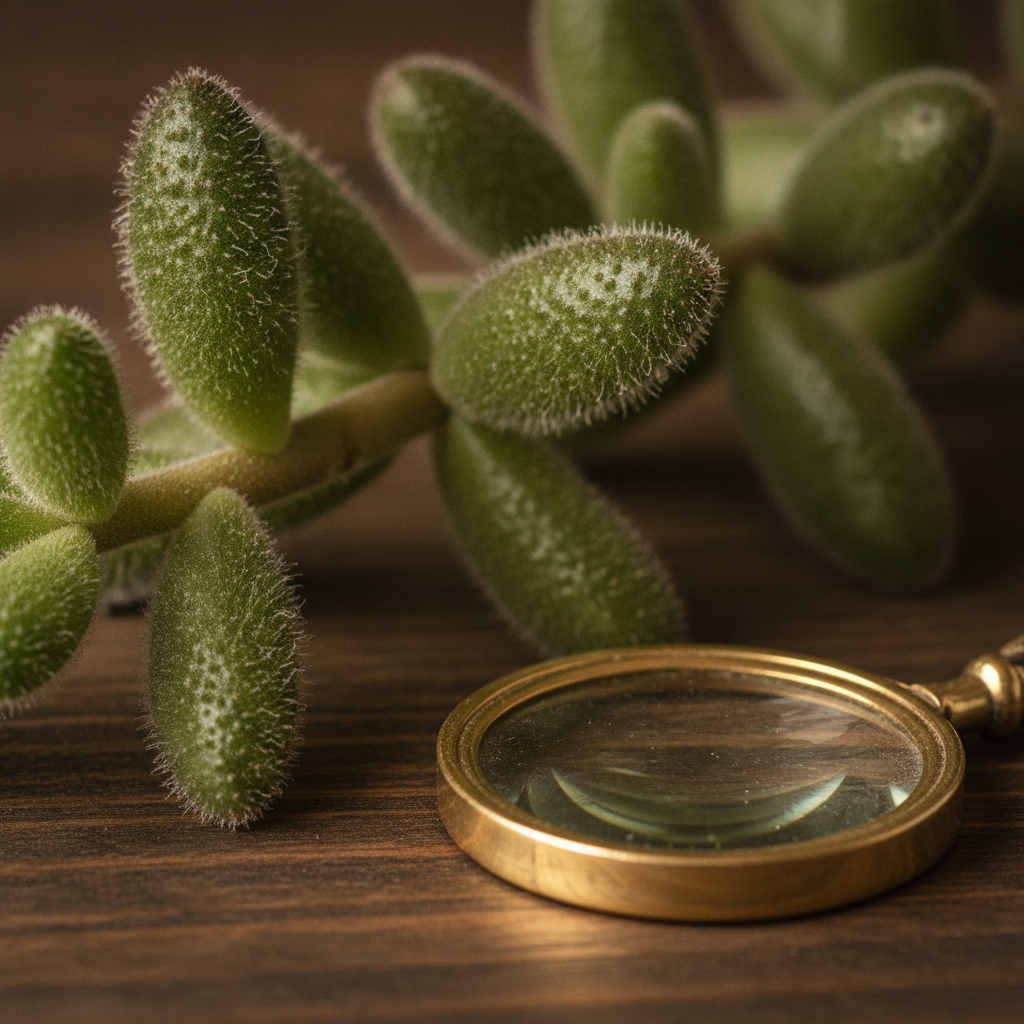
Healthy, well-grown pickle plants are not especially troubled by pests, and most of the problems owners encounter trace back to watering rather than insects. The pest most likely to appear is the mealybug, a small sap-sucker that hides as little tufts of white, cottony fluff tucked into the crevices between leaves and where leaf meets stem. The dense, bristly foliage gives them plenty of places to lurk, so a regular close inspection, ideally with a magnifying glass, is the best defence. When you find them, dab each one with a cotton bud dipped in diluted isopropyl alcohol, which kills them on contact, and follow up with treatments every few days until no new ones appear. Aphids and scale insects turn up occasionally and respond to the same approach or to an insecticidal soap.
The far more serious threat is root rot, and it is almost always self-inflicted through overwatering or poorly draining soil. Roots that sit in wet mix suffocate and begin to decay, and the first sign above ground is usually leaves turning yellow, translucent and mushy, often accompanied by stems that go soft and collapse at the base. If you catch it early, stop watering immediately and let the soil dry out completely. If the rot is advanced, the kindest course is often to take healthy cuttings from the top growth and start fresh, discarding the rotted root ball and its soil, since a plant that has rotted from the roots rarely recovers in place.
Most other complaints are cosmetic and easily read. A stretched, leggy plant with widely spaced leaves is asking for more light. Shrivelled, wrinkled leaves want a drink. Pale or bleached patches indicate sunburn from too much sudden direct sun. Fungus gnats, those small flies hovering around the pot, are a sign the soil is staying wet for too long, and they disappear once you let the mix dry out properly between waterings. Read alongside the watering and light sections above, these signals make the plant easy to keep on track.
Varieties
The pickle plant is grown far more for its distinctive species form than for any long list of named cultivars, and most plants sold under the name are simply Delosperma echinatum itself. There is, however, a handsome variegated form that turns up in specialist nurseries, and the two together cover almost everything you are likely to meet.
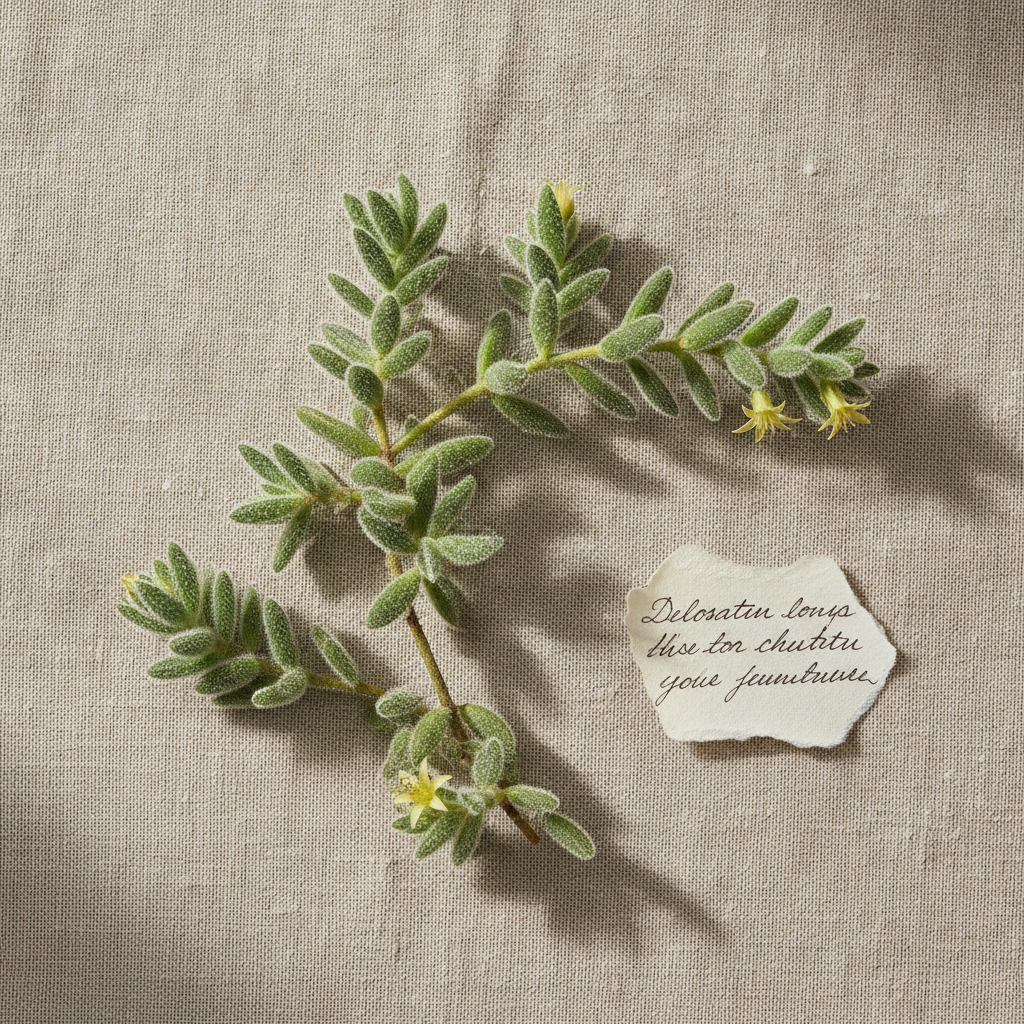
Species form (Delosperma echinatum): The classic and most widely grown pickle plant. Bright green, plump, gherkin-shaped leaves are densely covered in soft white bristles on freely trailing stems. Given enough sun, mature plants produce small, star-shaped flowers in pale yellow to creamy white that open through the brightest part of the day. This is the toughest and most vigorous form and the one to start with.
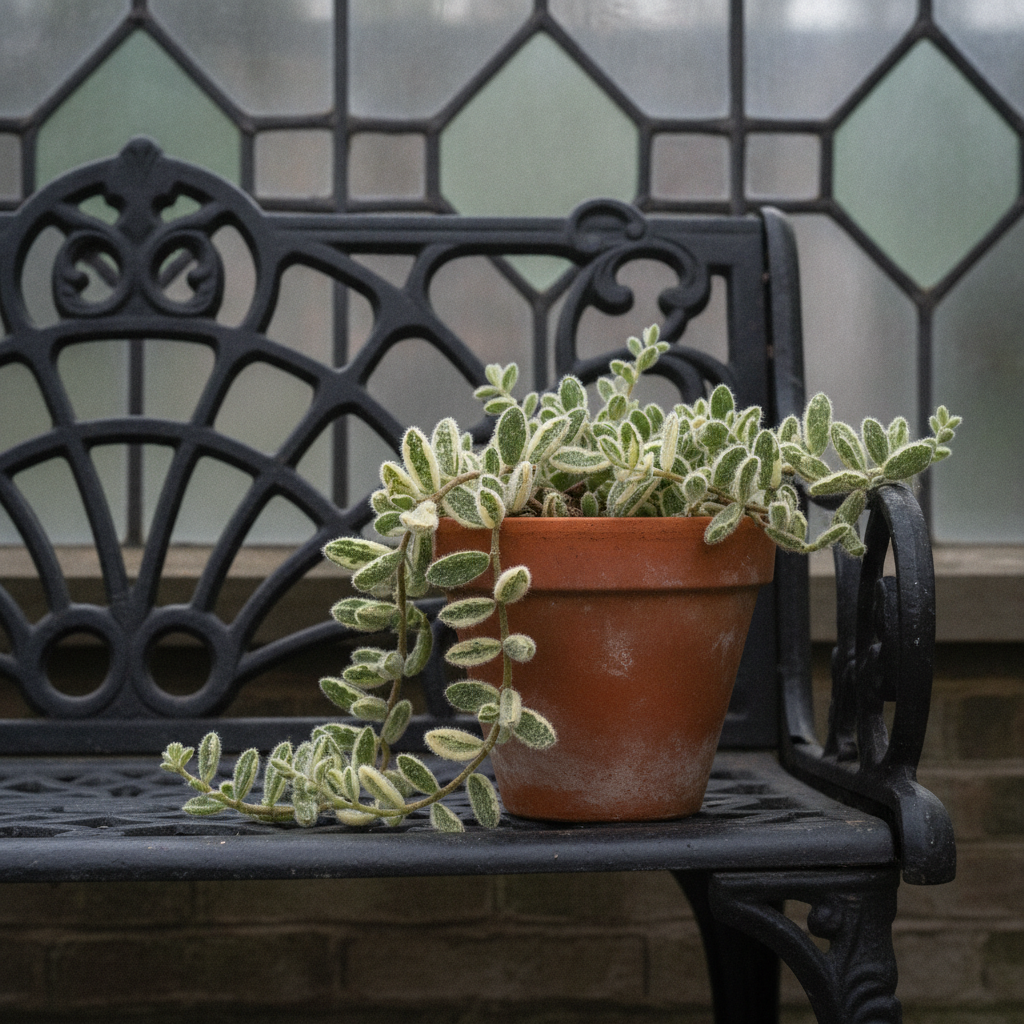
Variegated form: A less common selection whose leaves are marbled and streaked with creamy white alongside the usual green, while keeping the same bristly coat and trailing habit. The reduced chlorophyll makes it a touch slower and a little more light-hungry than the plain green form, so it appreciates a bright position to hold its colouring. It is otherwise grown in exactly the same way.
As noted earlier, do be alert that the common name “pickle plant” is also attached to Kleinia stapeliiformis and one or two bristly Senecio relatives, which are entirely different plants. If precise identity matters to you, buy from a seller who lists the botanical name Delosperma echinatum rather than relying on the common name alone.
Frequently Asked Questions
Why are my pickle plant’s leaves shrivelling?
Wrinkled, deflated or shrivelled leaves are usually a sign of thirst. The plant is drawing on the water stored in its leaves and is telling you it needs a drink. Give it a thorough soak and the leaves should plump back up within a day. If the soil is already damp and the leaves are also turning yellow or translucent, the cause is the opposite problem, overwatering, and you should let the soil dry out completely instead.
Is the pickle plant safe for cats and dogs?
Delosperma echinatum is generally regarded as non-toxic to cats, dogs and people, which makes it a reassuring choice for pet households. That said, no houseplant is intended to be eaten, and a pet that consumes a quantity of any plant may suffer mild stomach upset, so it is still sensible to discourage nibbling.
How often should I water a pickle plant?
There is no fixed schedule; you water according to how dry the soil is rather than by the calendar. In practice that often means roughly every one to two weeks in the warm growing season and as little as once a month or less in winter. Always check that the soil has dried out completely before watering again, and when in doubt, wait.
Why is my pickle plant growing tall and leggy?
Leggy, stretched growth with long gaps between the leaves is a classic sign of too little light. The plant is reaching for a brighter source. Move it to your sunniest window, increasing the light gradually so it does not scorch, and new growth will come in tighter and fuller. You can trim back the stretched stems and use the trimmings as cuttings to fill out the pot.
Does the pickle plant flower indoors?
Yes, given enough light. Mature, well-grown plants produce small star-shaped flowers in pale yellow to creamy white, typically opening in the middle of bright, sunny days. The more direct sun the plant receives, the more likely it is to bloom, which is one more reason to give it the brightest position you can.
Can I grow a pickle plant outdoors?
In warm, frost-free climates it grows happily outdoors year round in a sunny, well-drained spot. In cooler regions it is best treated as a houseplant or a summer container plant that comes inside before temperatures drop, as it is not reliably frost hardy and suffers below about 5 °C (41 °F). Whenever you move it outdoors, introduce it to direct sun gradually to avoid scorching.
The pickle plant is proof that a houseplant does not have to be demanding to be interesting. Give it a bright sill, a gritty pot and the discipline to leave the watering can alone, and Delosperma echinatum will quietly get on with being one of the most characterful and trouble-free succulents you can grow, multiplying into new plants almost faster than you can give them away.






