
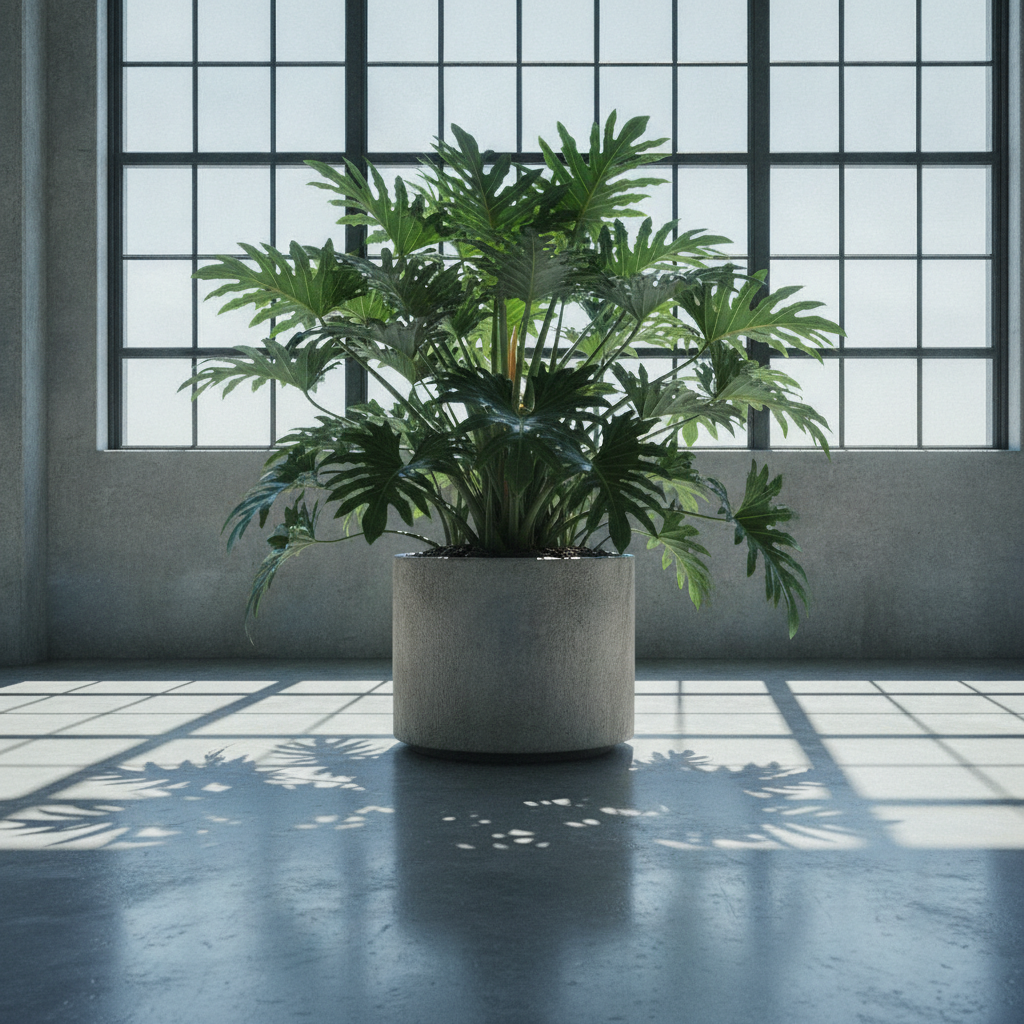
Few houseplants announce themselves quite as confidently as the Philodendron Selloum. Where many indoor aroids climb and trail, this one fountains outward, throwing up a dense rosette of enormous, deeply cut leaves that can each span half a metre across once the plant settles in. Botanically it has had a restless life, shuffling from Philodendron selloum to Philodendron bipinnatifidum and now, after a taxonomic reshuffle of the whole group, landing as Thaumatophyllum bipinnatifidum. Gardeners, unbothered by the paperwork, still call it Selloum, lacy tree philodendron, or simply the tree philodendron.
The good news for anyone tempted by its jungle drama is that the Selloum is genuinely forgiving. It tolerates a wider range of conditions than its fussy reputation suggests, recovers gracefully from the occasional missed watering, and rewards even modest attention with steady, vigorous growth. This guide walks through everything needed to keep one not just alive but thriving, from the light it prefers to the way it can eventually develop a sculptural woody trunk.
- Quick Reference
- Why Philodendron Selloum Makes a Great Houseplant
- Light
- Watering
- Soil and Potting
- Fertilising
- Propagation
- Pests and Problems
- Varieties
- Frequently Asked Questions
Quick Reference
The table below condenses the essentials. The rest of the guide explains the reasoning behind each figure, because understanding why a plant wants what it wants is what separates survival from genuine vigour.
| Botanical name | Thaumatophyllum bipinnatifidum (syn. Philodendron bipinnatifidum, Philodendron selloum) |
| Common names | Philodendron Selloum, lacy tree philodendron, tree philodendron, horsehead philodendron |
| Light | Bright, indirect light; tolerates some gentle direct morning sun |
| Water | When the top 3 to 5 cm (1 to 2 in) of soil is dry, roughly weekly in growth |
| Soil | Chunky, well-draining aroid mix, slightly acidic to neutral |
| Temperature | 18 to 27 degrees C (65 to 80 degrees F) |
| Humidity | Average to high; happiest above 50 per cent |
| Fertiliser | Balanced feed monthly during spring and summer |
| Mature size indoors | 1 to 1.5 m (3 to 5 ft) tall and often as wide |
| Toxicity | Toxic to pets and people if chewed or swallowed |
| Difficulty | Easy to moderate |
Why Philodendron Selloum Makes a Great Houseplant
The Selloum hails from the warm, humid forests of South America, ranging across southern Brazil, Paraguay, Bolivia and northern Argentina. In the wild it grows as a self-heading aroid, meaning it produces its leaves from a single central growing point rather than vining along a support. Over years and decades it builds a stout, semi-woody trunk studded with the dramatic eye-shaped scars of fallen leaves, and props itself up on thick aerial roots that drop to the forest floor. This is why an old specimen can look almost prehistoric, like a tree fern crossed with a monstera.
That heritage is exactly what makes it such a rewarding indoor plant. Forest-floor aroids are adapted to fluctuating light, irregular rainfall and the rich, fast-draining leaf litter of the jungle, all of which translate neatly into the conditions of an average home. The plant signals its needs clearly through its leaves, grows fast enough to feel responsive without becoming unmanageable, and forgives the lapses that catch out more temperamental tropicals. For anyone wanting the lush, big-leaf jungle look without the constant vigilance a calathea demands, the Selloum is close to ideal.
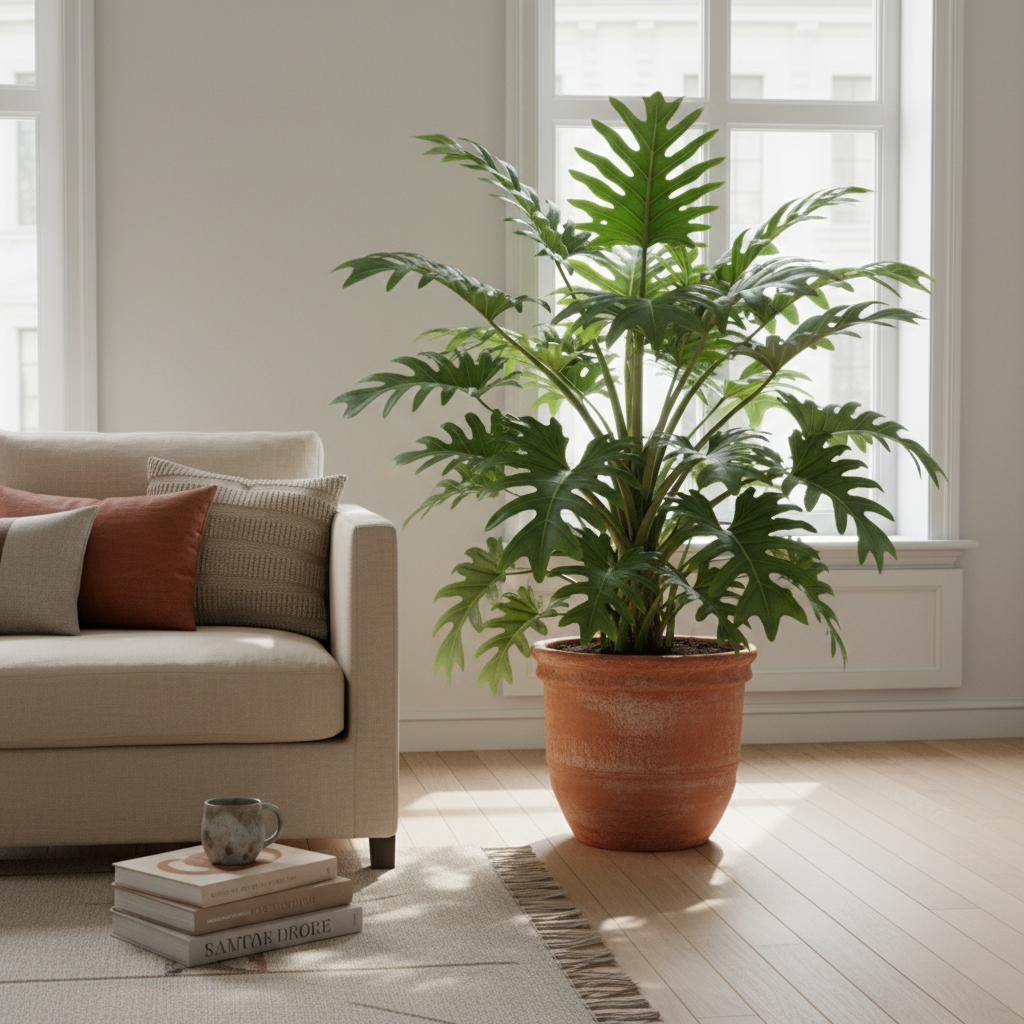
It is worth being honest about scale from the outset. This is not a windowsill plant. A happy Selloum wants floor space and will keep reaching outward, so it suits a corner, a wide landing or a bright bit of open floor far better than a crowded shelf. Plan for a plant that will, within a few years, command a square metre of room all to itself.
Pro Tip — Give it room to spread: Selloums grow outward as much as upward. Place yours where the lower leaves can extend without being crushed against a wall or furniture, and rotate the pot a quarter turn each week so it fills out evenly rather than leaning toward the light.
Light
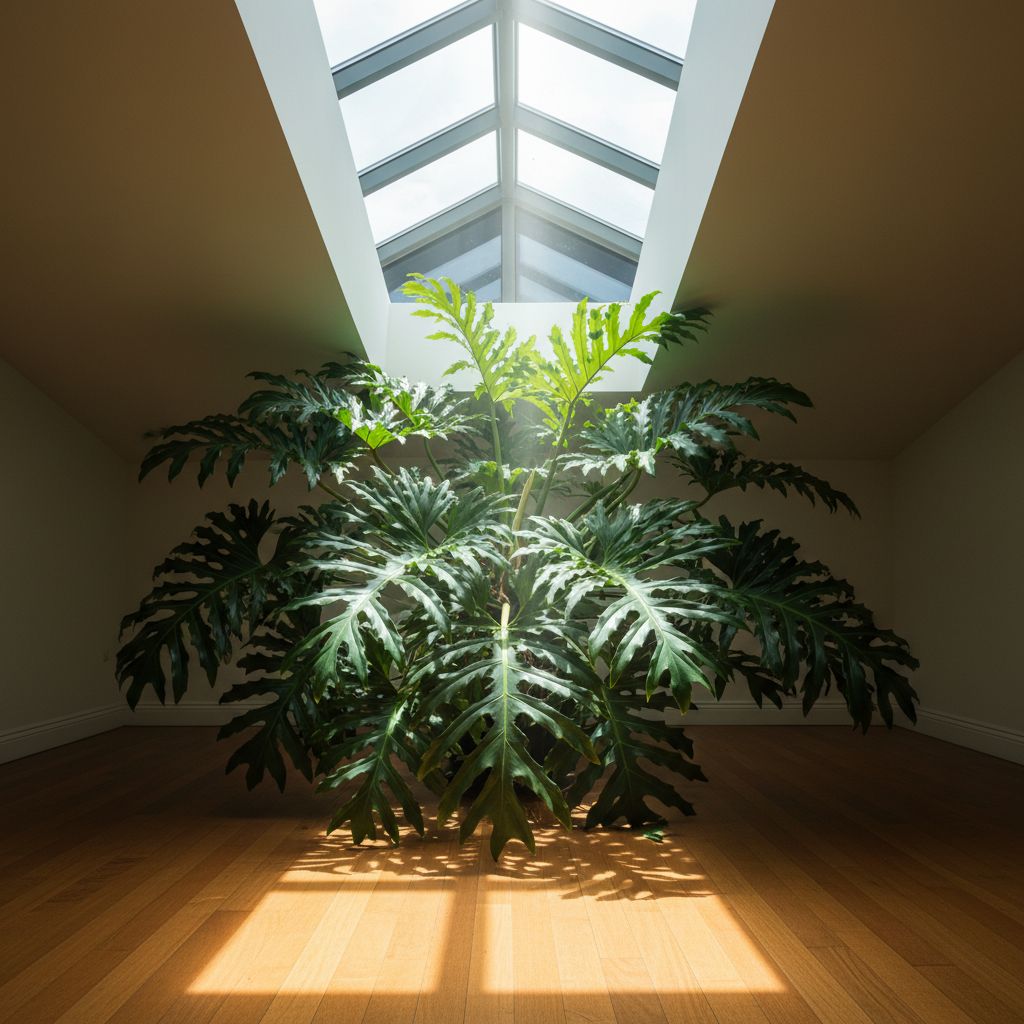
Light is the single biggest lever you have over how a Selloum looks. In its native forest the plant lives in dappled shade beneath the canopy, catching bright but filtered light for most of the day. Recreating that indoors means bright, indirect light: a spot a metre or two back from a large window, or directly beside one fitted with a sheer curtain. Given this, the plant produces broad, deeply divided leaves on sturdy petioles and grows with obvious purpose.
The plant will survive in medium light, but survival and thriving look very different here. In a dim corner the new leaves emerge smaller, with shallower lobing, and the gaps between leaves stretch out as the plant reaches for brightness, a habit known as etiolation. The result is a leggy, sparse plant that never develops the full lacy silhouette that makes the species worth growing. If the only available spot is on the darker side, a full-spectrum grow light running for ten to twelve hours a day closes the gap convincingly.
At the other extreme, harsh direct sun is the main thing to avoid. A few hours of soft early-morning light from an east-facing window are tolerated and even appreciated, but the intense midday and afternoon sun through a south or west window will scorch the leaves, leaving bleached, crispy patches that do not recover. If you are moving a plant from a shop or a shadier room into a brighter position, do it over a week or two so the foliage can acclimatise rather than burning.
Watering
Watering is where most Selloum problems begin, and almost always because of too much rather than too little. The plant likes its soil to dry out partially between drinks. The reliable test is your finger: push it into the top of the pot, and water only when the top 3 to 5 cm (1 to 2 in) feels dry. In a warm, bright room during spring and summer this tends to mean watering roughly once a week, but treat that as a rough guide rather than a schedule, because pot size, light and the season all shift the rhythm.
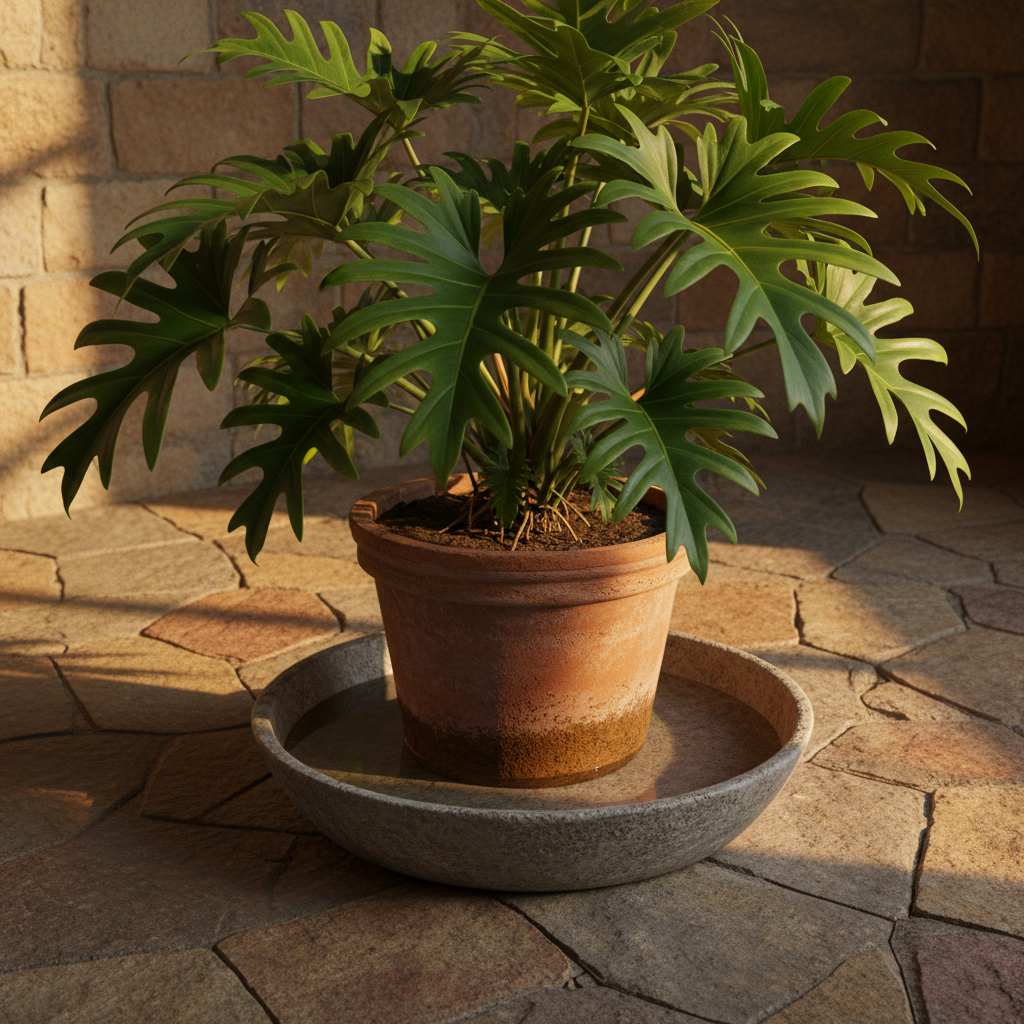
When you do water, do it thoroughly. Pour slowly and evenly until water runs freely from the drainage holes, which wets the entire root ball and flushes out any salts that have built up. Then let the pot drain completely and never leave it standing in a saucer of water. Roots that sit in stagnant moisture are starved of oxygen and quickly begin to rot, and root rot is by far the most common way a Selloum is killed. Bottom watering, where the pot sits in a tray of water for twenty minutes and wicks up what it needs, is a tidy alternative that encourages deep rooting.
The leaves are honest reporters of watering errors. Yellowing leaves, especially lower ones turning soft and yellow at once, usually point to overwatering. Brown, crispy leaf edges and drooping that perks up promptly after a drink point the other way, to underwatering or very dry air. A Selloum that wilts dramatically but recovers within an hour of watering was simply thirsty; one that wilts and stays limp despite damp soil is signalling root trouble that needs investigating.
In autumn and winter the plant’s growth slows and so should your watering can. Cooler temperatures and shorter days mean the soil stays wet for longer, so stretch the interval and always let the surface dry before topping up. Many a healthy Selloum is drowned in January on the same weekly routine that suited it perfectly in July.
Warning — When in doubt, wait: A thirsty Selloum recovers within hours of watering, but a waterlogged one rots from the roots up and is far harder to save. If you are unsure whether it needs water, leave it another day or two and check again.
Soil and Potting
Because the Selloum is so sensitive to soggy roots, the growing medium matters as much as the watering routine. The aim is a mix that holds enough moisture to keep the plant hydrated while draining fast and staying airy around the roots. A standard bagged houseplant compost used straight from the bag is usually too dense and water-retentive, and is the silent cause of many slow declines.
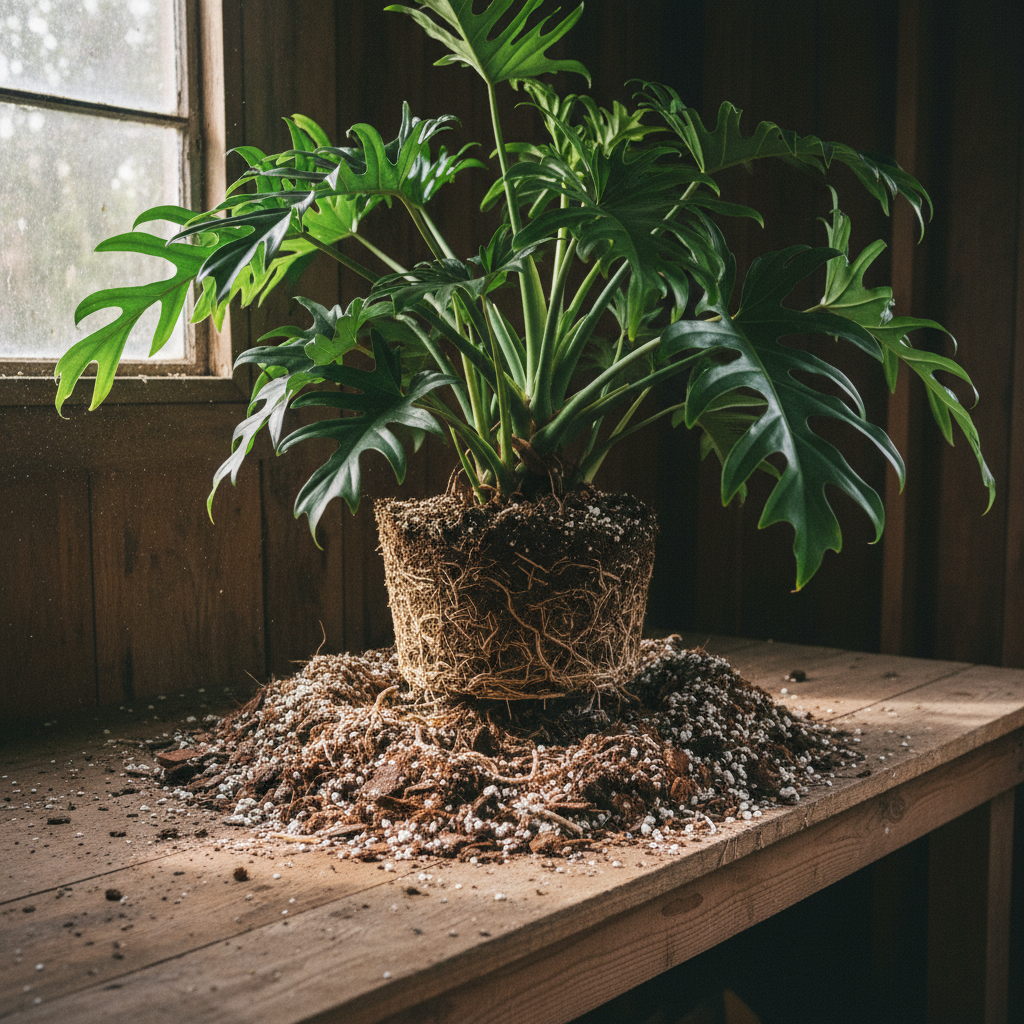
A good aroid mix is easy to assemble. Start with a base of quality potting compost for moisture and nutrients, then loosen it with chunky ingredients: orchid bark for structure and air pockets, perlite or pumice for drainage, and a handful of coco coir for gentle water retention. A rough recipe of equal parts compost, bark and perlite, with a little coir, suits the Selloum well. The plant prefers a slightly acidic to neutral soil, which most of these ingredients naturally provide, so there is rarely any need to adjust pH.
Always pot into a container with drainage holes. A decorative outer pot is fine for looks, but the plant itself should live in something that lets water escape. Terracotta has the advantage of breathing and drying the soil from the sides, which forgiving for an enthusiastic waterer, while plastic and glazed ceramic hold moisture longer and suit a drier hand.
Selloums are vigorous and will eventually fill their pots with roots, but they do not need frequent repotting. Every two to three years, or when roots circle the surface or push out of the drainage holes, move the plant up to a container one size larger, around 5 cm (2 in) wider in diameter. Spring is the best time, as the plant is gearing up to grow and recovers quickly. Going too big too fast is counterproductive, because a large volume of unused, damp soil around a small root ball is just another route to rot.
Fertilising
A Selloum putting out those huge leaves is a hungry plant during its growing season, and regular feeding makes a visible difference to leaf size and colour. From early spring through late summer, when the plant is actively growing, feed roughly once a month with a balanced liquid houseplant fertiliser diluted to the strength on the label, or a little weaker. Apply it to already-moist soil rather than bone-dry soil, which spreads the nutrients evenly and protects the roots from being burned by concentrated salts.
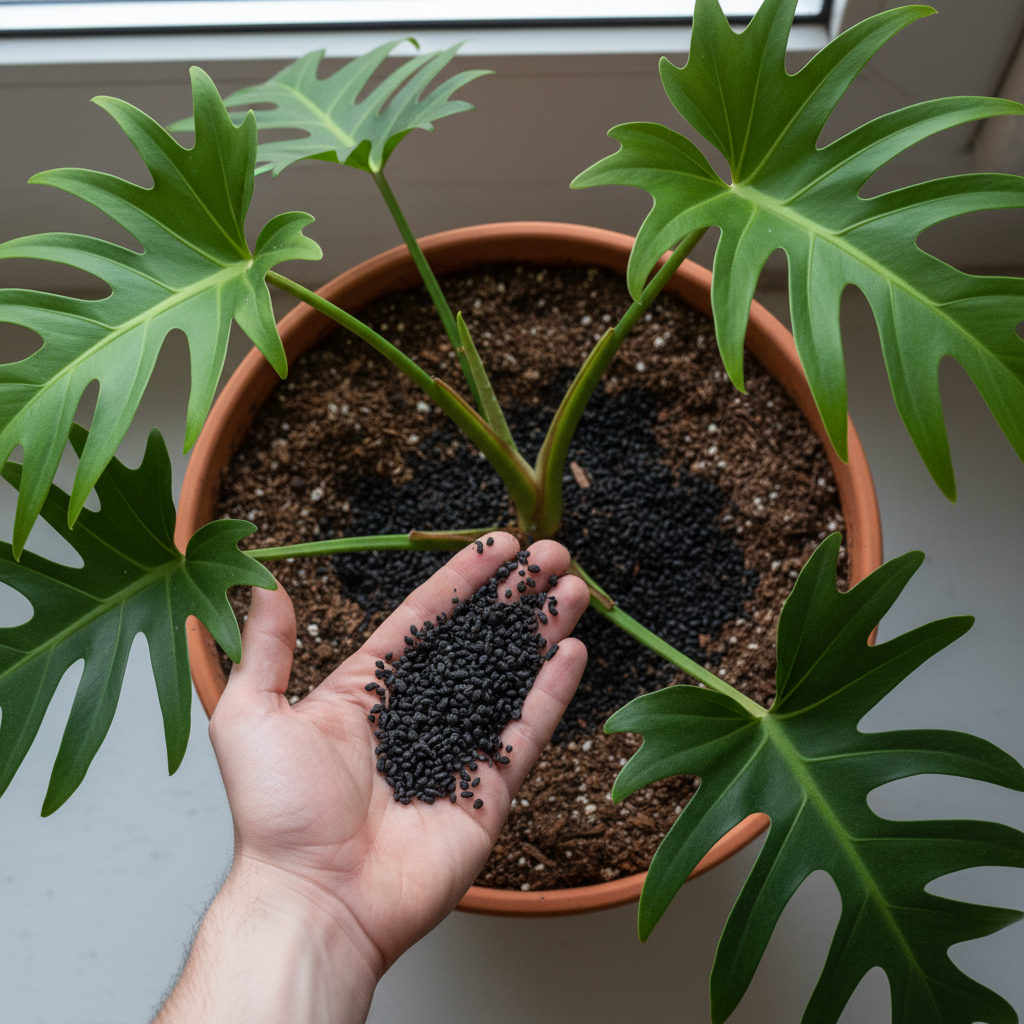
If you prefer an organic approach, a light top-dressing of worm castings worked into the soil surface in spring releases nutrients slowly and gently, and is almost impossible to overdo. Slow-release pellets stirred into the top layer at the start of the season are another low-effort option, feeding steadily over several months without the need to remember a monthly schedule.
Restraint matters more than abundance. Overfeeding causes a build-up of mineral salts in the soil that scorches the root tips and shows up as brown, crispy leaf edges that look deceptively like underwatering. If you suspect a build-up, flush the pot thoroughly with plain water two or three times to wash the salts through. In autumn and winter, when growth naturally stalls, stop feeding altogether and resume only when new leaves begin to appear in spring.
Propagation
Propagating a Selloum is less straightforward than rooting a pothos cutting in a jar, because as a self-heading plant it does not produce the long, node-studded vines that root so easily in water. Instead, the most dependable method is division, separating the offsets, or pups, that mature plants produce around their base, each of which already has its own roots.
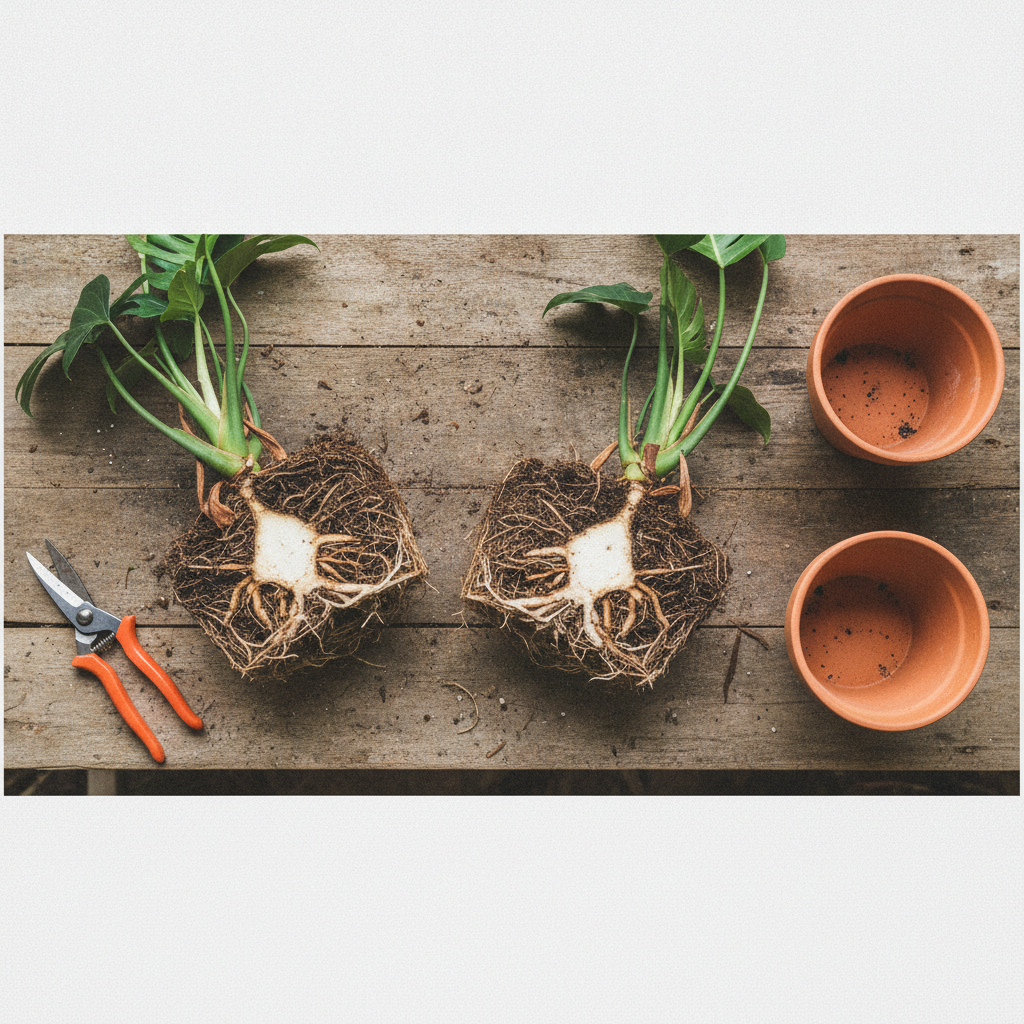
Division is best done in spring, alongside repotting, when the plant is primed to recover. The steps are simple but worth following carefully:
- Water the plant a day beforehand so it is well hydrated and the root ball slides out cleanly.
- Ease the whole plant out of its pot and gently loosen the soil from the roots so you can see where the pups join the main crown.
- Identify an offset that has several leaves of its own and a visible cluster of roots attached.
- Using a clean, sharp knife, separate the pup from the parent, keeping as many of its roots intact as possible.
- Pot the division into fresh aroid mix in a snug container, water it in, and keep it warm and humid out of direct sun while it establishes.
Mature plants that have developed a true trunk can also be propagated from stem sections that carry aerial roots, and patient growers sometimes air-layer the trunk by wrapping a section in damp sphagnum moss until roots form before cutting it free. Both are slower and better suited to established specimens. Growing from seed is possible but rare in the home, as it demands fresh seed and a long, warm germination period.
Whichever route you take, expect divisions to sulk for a few weeks while they root into their new pots. Resist the urge to overwater a freshly divided plant; a barely-rooted division sitting in wet soil is the most likely casualty. Warmth, humidity and patience do the work.
Warning — Wear gloves when dividing: Cut surfaces ooze sap that is rich in calcium oxalate crystals and can irritate skin and eyes. Wear gloves, keep your hands away from your face, and wash up afterwards.
Pests and Problems
A well-kept Selloum is fairly resistant to pests, but its broad leaves and warm, sheltered position can attract the usual indoor culprits if the plant is stressed. The main offenders are spider mites, mealybugs, scale and the occasional aphid. Catching them early, while an infestation is still a handful of insects rather than a colony, makes all the difference, so a quick inspection of the undersides of the leaves and the leaf axils every week or two is a habit worth keeping.
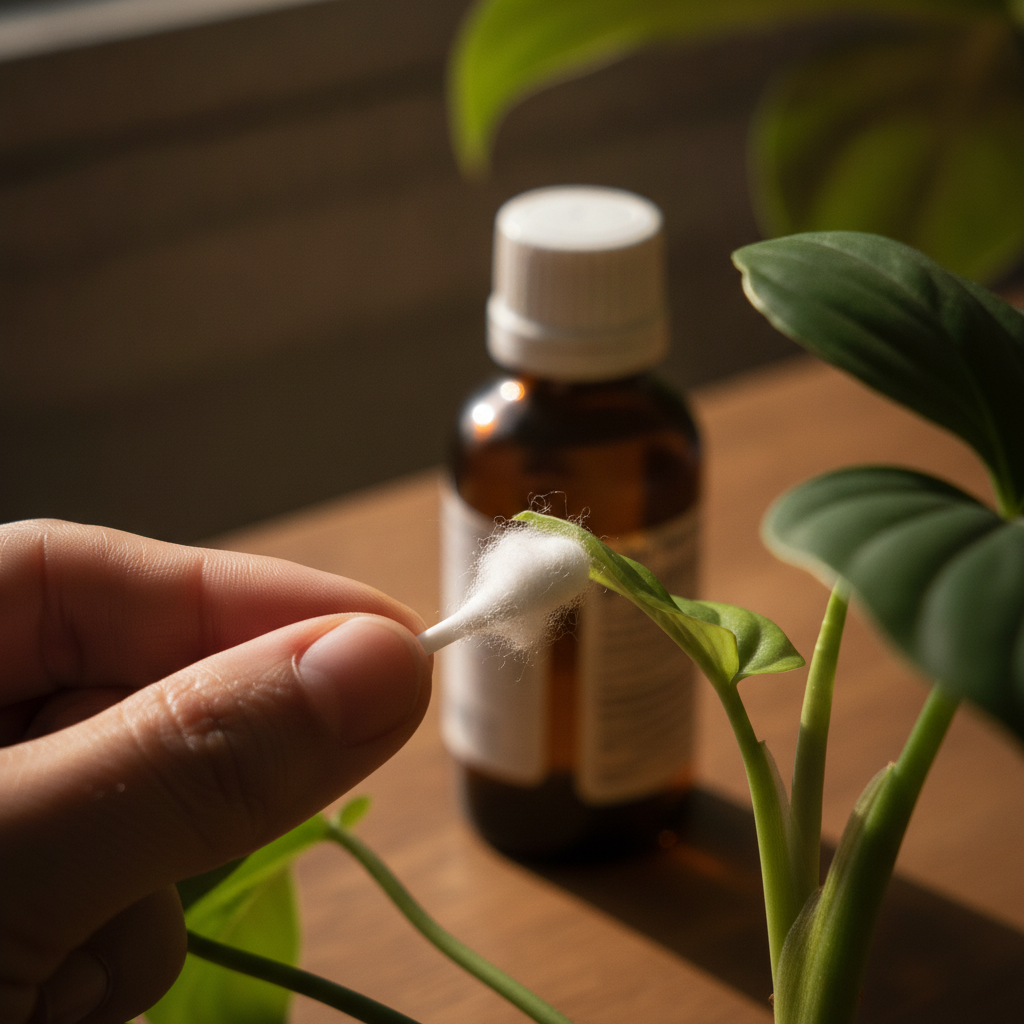
Spider mites thrive in hot, dry air and reveal themselves through fine speckling on the leaves and faint webbing in the leaf joints. Mealybugs appear as small white cottony tufts tucked into the axils where leaf meets stem, while scale shows up as flat brown bumps along the stems and veins. For a light infestation of mealybugs or scale, a cotton bud dipped in diluted isopropyl alcohol, dabbed directly onto each insect, is quick and effective. For wider outbreaks, wiping the leaves down and then treating the plant with insecticidal soap or a neem oil spray, repeated weekly until clear, brings things under control.
Most of the troubles a Selloum suffers, though, are cultural rather than pest-driven, and the leaves spell them out. Yellowing lower leaves typically mean overwatering, while brown crispy edges point to dry air, underwatering or a salt build-up from overfeeding. Pale, washed-out new growth suggests too little light, and bleached or scorched patches mean too much direct sun. A leaf or two yellowing and dropping as the plant matures is perfectly normal; a sudden wave of yellowing or limpness is the plant asking you to check its roots.
One quirk worth knowing is guttation, where the plant pushes out droplets of sap-laden water at the leaf tips, usually overnight when the soil is very moist. It looks alarming but is harmless, a sign the roots have taken up more water than the leaves are transpiring. If it happens often, simply ease back on watering. Wipe the droplets away, as they can leave small mineral marks, and keep them out of reach of curious pets given the sap is an irritant.
Pro Tip — Isolate new arrivals: Keep any newly bought plant apart from the rest of your collection for a couple of weeks and inspect it closely. Most pest invasions arrive hitchhiking on a new plant, and a short quarantine spares everything else.
Varieties
The straight species is striking enough that it needs no improvement, but breeders have selected a handful of cultivars that bring a different scale or colour to the same lacy leaf. Two stand out for indoor growers.
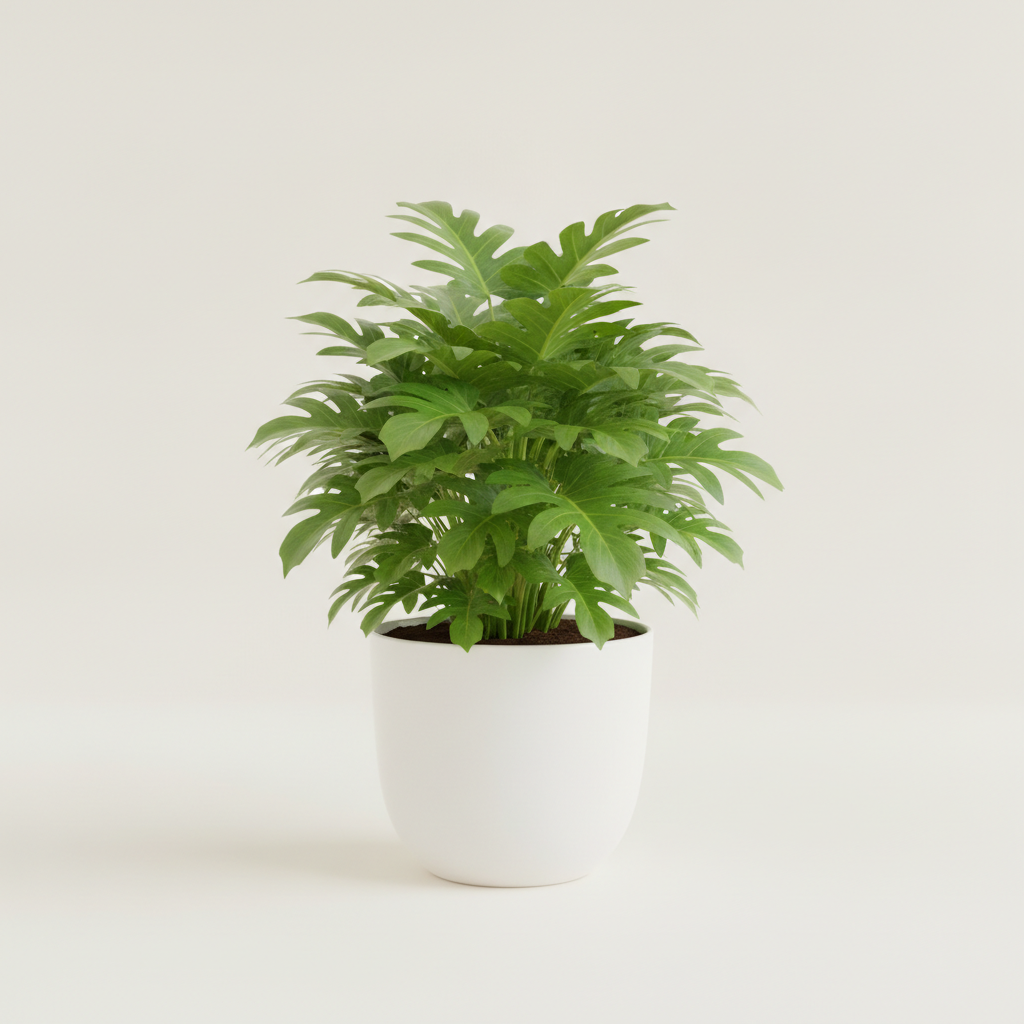
‘Hope’: By far the most widely sold form, ‘Hope’ is a compact, self-heading selection that keeps the deeply lobed, glossy leaves of the species on a tidier, fuller plant with shorter petioles. It suits smaller rooms where a full-sized Selloum would overwhelm the space, while still delivering the lush tropical silhouette. It is the easiest entry point into the group and the one most likely to turn up at a garden centre.
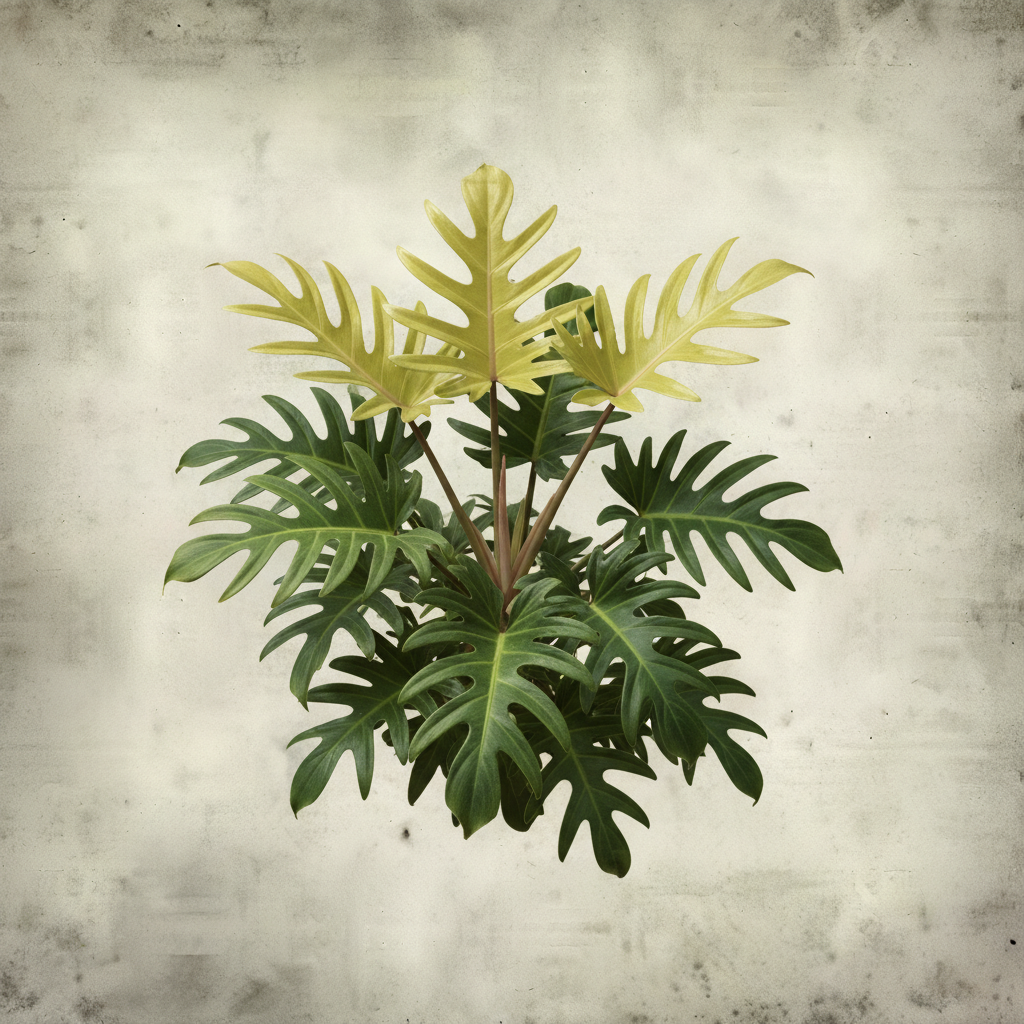
‘Gold’: This selection flushes its new growth in a vivid chartreuse-gold that gradually deepens to green as each leaf matures, giving a settled plant a glowing, layered look. It wants slightly brighter indirect light than the species to hold the colour, and the golden tones are at their best on actively growing plants in spring and summer. It is a showier, more collectible choice for those who already have the basics down.
A word on names is unavoidable here. The popular ‘Xanadu’, once sold as a Selloum cultivar, is now treated as a separate species, Thaumatophyllum xanadu, and several other compact aroids are loosely marketed under the Selloum banner. If a particular leaf shape or final size matters to you, it pays to check the botanical name rather than trusting the label on the pot.
Frequently Asked Questions
Is the Philodendron Selloum toxic to cats and dogs?
Yes. Like other aroids, every part of the plant contains insoluble calcium oxalate crystals, which cause intense burning and irritation of the mouth, drooling, vomiting and difficulty swallowing if a pet or child chews or swallows it. It is rarely life-threatening but genuinely unpleasant, so keep the plant out of reach of pets and small children, and contact a vet or doctor if a significant amount is eaten.
Why are my Selloum’s leaves turning yellow?
The most common cause is overwatering. If several leaves yellow and soften at once, check that the soil is draining freely and that the pot is not sitting in water, then let the top few centimetres dry before watering again. The occasional older, lower leaf yellowing and dropping as the plant grows is normal and nothing to worry about.
How big does a Philodendron Selloum get indoors?
Indoors a mature plant typically reaches 1 to 1.5 m (3 to 5 ft) tall and often just as wide, growing outward as much as upward. Outdoors in a frost-free climate it can become considerably larger, developing a thick trunk over many years. Compact cultivars such as ‘Hope’ stay noticeably smaller, which makes them a better fit for tighter spaces.
Does it need high humidity?
It appreciates humidity but is not demanding about it. Average household humidity is fine, though the plant is happiest above 50 per cent and may develop brown leaf edges in very dry air, especially near a radiator in winter. Grouping it with other plants, standing it on a pebble tray or running a humidifier all help if your home runs dry.
Why are the new leaves smaller and less divided than the old ones?
This is almost always a light issue. In bright, indirect light the Selloum produces large, deeply lobed leaves, but in dim conditions new growth comes through smaller, paler and with shallower cuts. Moving the plant somewhere brighter, or adding a grow light, restores full-sized foliage on subsequent leaves. Young plants also naturally produce simpler leaves and develop deeper lobing only as they mature.
What are the aerial roots for, and should I cut them off?
Mature plants send out thick aerial roots that help anchor and support the spreading crown and take up moisture. They are entirely natural and a sign of a healthy, maturing plant. You can guide them down into the pot or leave them be, and trimming the odd one for tidiness does no harm, but there is no need to remove them.






