
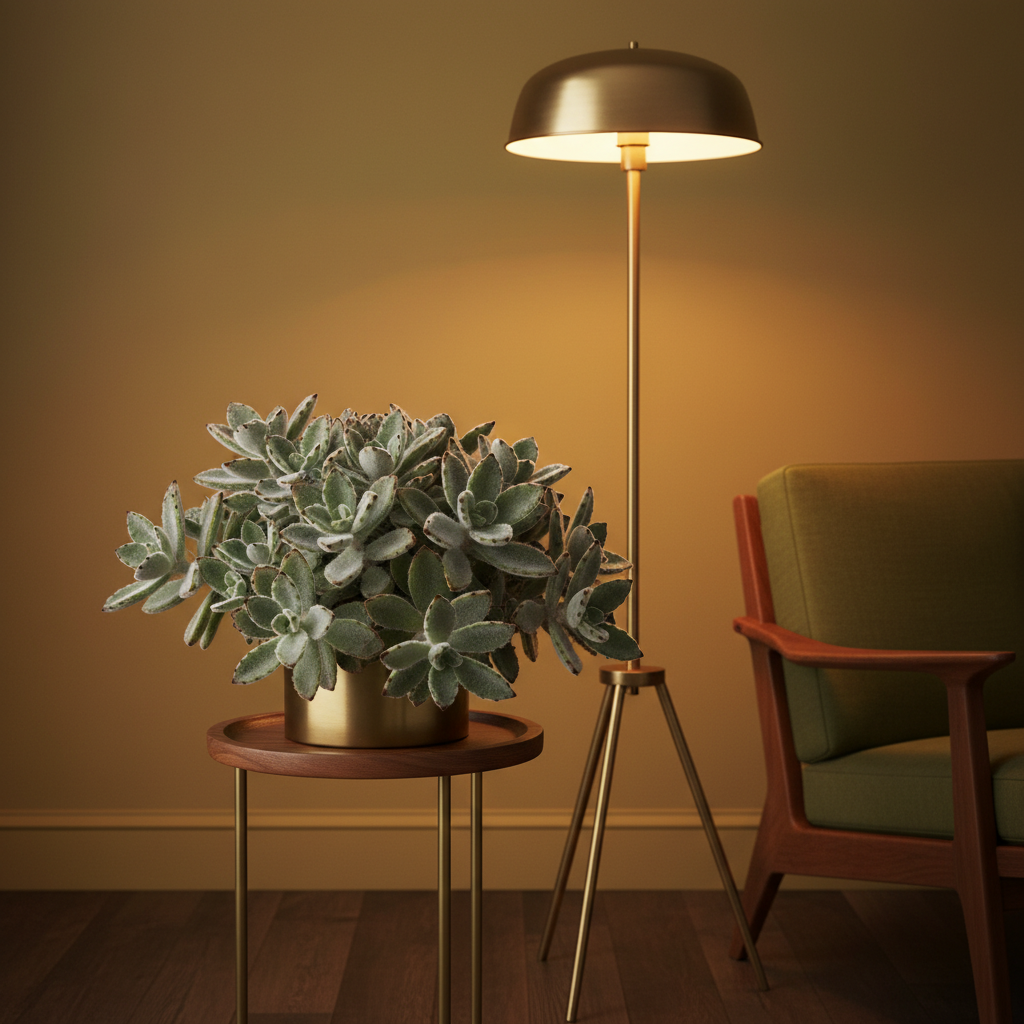
Few houseplants invite a touch quite as instinctively as the panda plant. Its thick, spoon-shaped leaves are coated in a dense felt of silvery-white hairs and tipped along their margins with neat, scalloped marks of chocolate-brown, an arrangement so peculiarly tactile that the plant has earned a small constellation of nicknames: pussy ears, plush plant, donkey ears, chocolate soldier. The botanical name is Kalanchoe tomentosa, a member of the stonecrop family Crassulaceae, native to the rocky granite slopes and dry shrublands of central and southern Madagascar, where its woolly coating helps reflect harsh sunlight and trap precious moisture in a climate that swings between intense heat and cool, dry nights.
The panda plant has a long-standing reputation as one of the most forgiving indoor succulents you can grow, which is partly why it shows up so often in classroom windowsills, dorm-room shelves and the bright corners of cafes. The truth is more interesting than that reputation suggests. Surviving a panda plant is easy: ignore it for a few weeks, and it will sit patiently in its pot, leaves intact, waiting for water. Thriving with one is a different exercise. To coax dense, well-coloured rosettes, deep chocolate margins, and the occasional fuzzy spike of bell-shaped flowers, you need to understand a Madagascan succulent on its own terms: a great deal of light, very little water, gritty mineral soil, and the discipline to leave it alone when every instinct says to do something. This guide covers everything from the practical day-to-day to the underlying biology, with sections on watering rhythm, propagation by leaf and stem, pests that hide in the fuzz, and the cultivars worth seeking out.
Contents
- Quick Reference
- Why Panda Plant Makes a Forgiving Houseplant
- Light Requirements
- Watering & Humidity
- Soil, Potting & Repotting
- Fertilising
- Propagation
- Pests & Diseases
- Popular Varieties
- Frequently Asked Questions
Quick Reference: Panda Plant at a Glance
| Botanical name | Kalanchoe tomentosa |
| Family | Crassulaceae |
| Native range | Central and southern Madagascar, on granite outcrops and dry rocky slopes |
| Mature size indoors | 30 to 50 cm (12 to 20 in) tall, very slow growing; up to 1 m (3 ft) in habitat over many years |
| Light | Bright indirect to several hours of direct sun; a south or west window suits it well |
| Watering | Deeply soak, then let the pot dry out completely; typically every 2 to 4 weeks in summer, every 4 to 8 weeks in winter |
| Temperature | 18 to 27 °C (65 to 80 °F) ideal; tolerates brief dips to about 5 °C (41 °F), no frost |
| Humidity | Low to average household humidity, 30 to 50 percent; dislikes constantly damp, stagnant air |
| Soil | Sharp, gritty cactus and succulent mix amended with pumice or perlite, pH 6.0 to 7.0 |
| Fertiliser | Diluted balanced or cactus formula at quarter strength, once every 4 to 6 weeks during the growing season only |
| Propagation | Leaf cuttings and stem cuttings, callused for several days before potting in dry mix |
| Toxicity | Mildly toxic to cats, dogs and other pets; contains bufadienolide cardiac glycosides, less concentrated than in flowering kalanchoes but still a concern if chewed |
| Pet and child safe | No; keep out of reach of curious nibblers |
Why Panda Plant Makes a Forgiving Houseplant
The panda plant occupies a particular niche in the houseplant world: it is one of the few succulents whose appeal is as much textural as visual. Most popular indoor succulents trade on geometry, the rosettes of Echeveria, the columnar stacks of Crassula, the spiralled jewels of Haworthia. Kalanchoe tomentosa, by contrast, asks to be felt. Its leaves carry a dense layer of trichomes, microscopic hair-like outgrowths that botanists call tomentum, which is also where the species name comes from. In its Madagascan home this fuzz serves a clear purpose. The pale silvery surface reflects intense ultraviolet light, the still air trapped between the hairs reduces water loss from the leaf surface, and the texture gives a precarious foothold to dew and the fine droplets of morning fog that drift across the rocky outcrops where it grows.
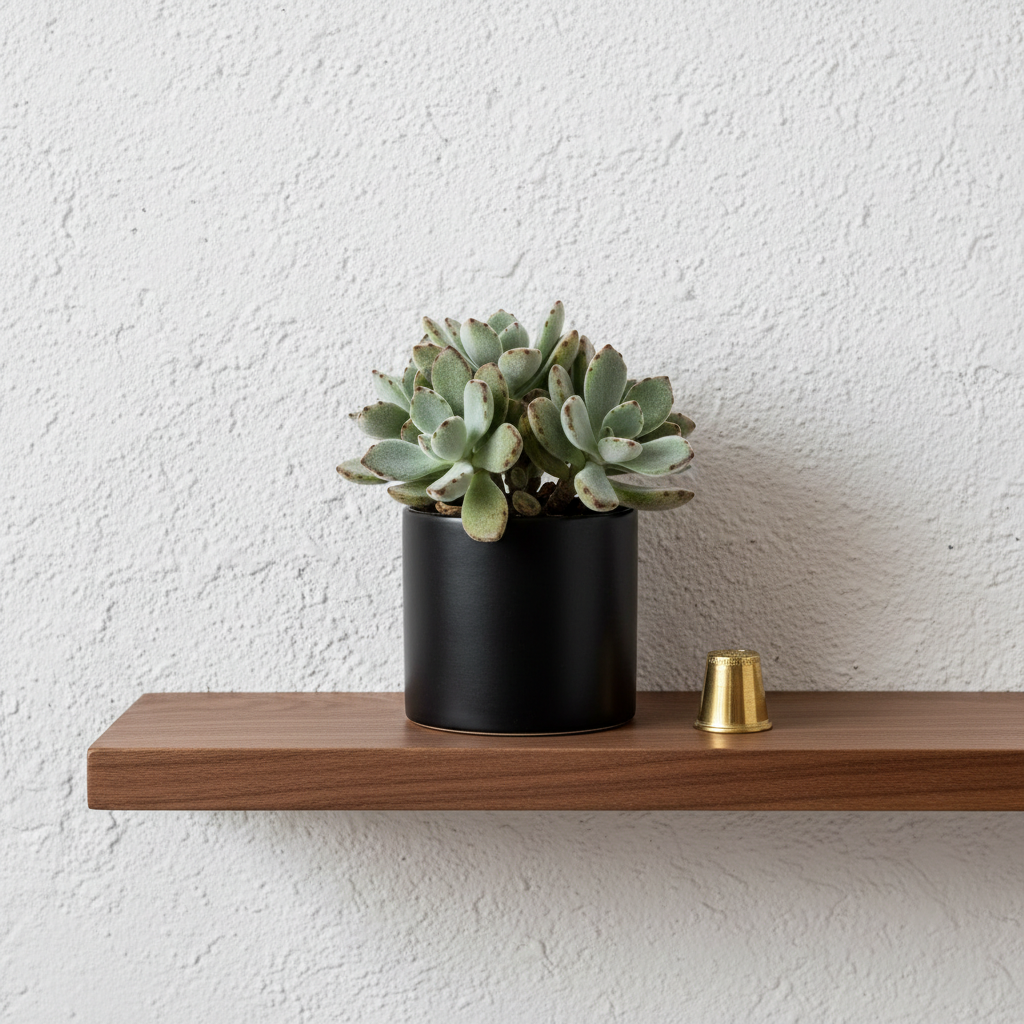
Indoors, that combination of features translates into a plant that is genuinely difficult to kill through neglect. The leaves are storage organs in their own right, plump with water-holding parenchyma cells, and a healthy panda plant can sit through several weeks of forgotten waterings without complaint. The same anatomy means it punishes overwatering just as readily as Sansevieria or Crassula ovata do, but the threshold for trouble is generous. For households where the routine is unpredictable, where a houseplant might be doted on one fortnight and ignored the next, the panda plant is among the most resilient choices available. It also remains relatively small, rarely exceeding 50 cm indoors after years of growth, which makes it easy to accommodate on a sunny windowsill, a brightly lit bathroom shelf, or alongside a cluster of other small succulents.
What lifts a panda plant from merely alive to genuinely lovely is light. In a dim corner the leaves remain green, but the felt thins out, the leaves stretch and elongate, and the characteristic chocolate-brown edges fade to a vague tan. In a bright south or west window the plant tightens up: leaves stay short and chubby, the silvery hairs grow back in densely, and the brown notches along each leaf margin darken to a striking espresso. The difference between a stretched, washed-out specimen and a compact, well-coloured one is almost entirely a matter of how much direct light it receives over the course of a year.
Pro Tip — Don’t touch the leaves more than you need to: the silvery fuzz is delicate. Every time you rub or wipe a leaf, you flatten or break some of the tiny hairs, which can leave permanent shiny patches and even darker bruise-like marks where oils from your fingers have settled. Move the plant by its pot, not its foliage, and dust with a soft brush or a gentle puff of air rather than a damp cloth.
Light Requirements
Light is the single most decisive factor in panda plant care, and most disappointing specimens are disappointing for a single reason: they are not getting enough of it. Kalanchoe tomentosa in habitat grows on exposed granite slopes between roughly 1,000 and 2,000 metres in elevation, where it spends the bulk of the day under direct sun. It is therefore not a low-light plant in any meaningful sense, despite its appearance occasionally on lists of “easy succulents for any room”. Treated as a low-light plant it will live for months, perhaps a couple of years, but it will steadily decline in colour, density and structural integrity.
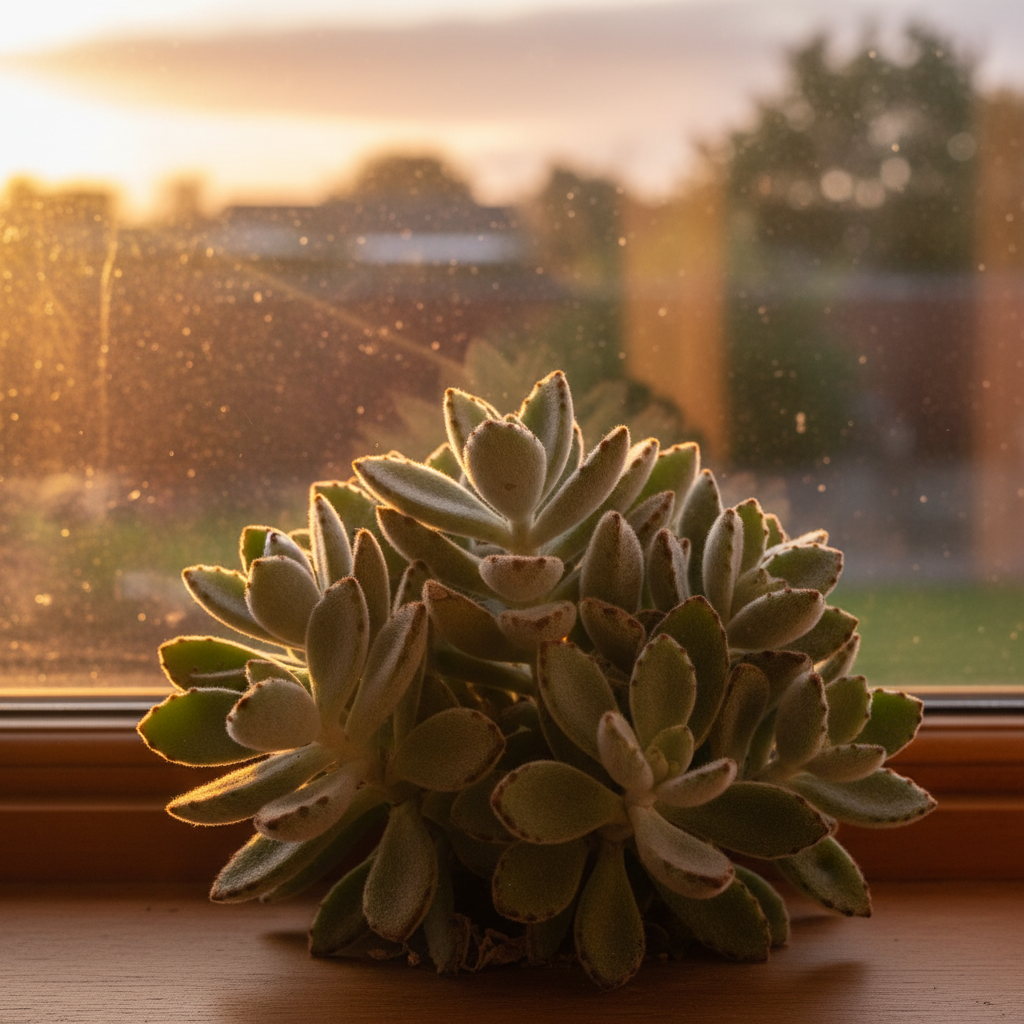
For the strongest, most compact growth, place a panda plant where it receives at least four to six hours of direct sun each day. A south-facing window in northern Europe or the northern United States is ideal year round. A west window works well from spring through autumn and remains adequate, with some loss of brightness, through the darker months. East-facing windows are workable if you have nothing brighter, particularly if the morning sun reaches the plant for several hours without obstruction. Pure north exposure is too dim for long-term success; the plant will hang on but become leggy, thin-haired and prone to leaning hard toward whatever distant light source exists.
The visual cues for too little light are easy to read. The space between leaves on the stem, the internodal distance, stretches outward; new leaves come in smaller and paler; the lower leaves yellow and drop. The plant develops an elongated, almost vine-like silhouette as it reaches for brightness, a state often called etiolation. It is possible to correct mild etiolation by gradually moving the plant into stronger light over a fortnight, but the stretched stem itself will not contract again; the only way to restore a compact form is to behead the rosette and propagate it as a stem cutting, which is covered later in this guide.
Sunburn is the opposite problem and far less common indoors, though it can happen when a plant grown in soft, filtered light is suddenly moved outdoors in midsummer or onto a glass balcony in full afternoon sun. The fuzz offers significant UV protection, but the plant still needs to acclimatise. Burned patches show up as bleached, papery areas on the upper leaf surface that never recover and that may attract secondary problems. When moving a panda plant from indoors to a sunnier spot, transition it over seven to ten days, starting with an hour or two of direct light and increasing slowly. The same applies in reverse for plants summered outdoors and brought back to a less intense window in autumn; the change is less risky in this direction, but a few days of adjustment still helps.
Under artificial light, a panda plant responds well to a full-spectrum LED grow-light positioned 15 to 25 cm above the rosette and run for 10 to 14 hours a day. This is a reliable solution for rooms without strong window light and for keeping plants compact through long winters at higher latitudes. The colour temperature does not need to be exotic; a standard 4000 to 6500 K bulb in the 20 to 30 watt range, marketed for indoor gardening, is enough to maintain a small specimen.
Pro Tip — Rotate a quarter turn every fortnight: panda plants lean toward the brightest light source, sometimes pronouncedly. Giving the pot a 90-degree turn every two weeks evens the growth out and keeps the rosette symmetrical. It also gives you a chance to inspect the back of the plant for pests hiding among the lower leaves, where they are very easy to miss.
Watering & Humidity
If you have only one habit to get right with a panda plant, it is to leave it dry for far longer than feels reasonable. The single most common cause of premature panda plant death is overwatering, and the second most common cause is overwatering. Like most members of the Crassulaceae, this is a plant evolved to absorb a brief, generous soak and then live off that stored moisture for weeks at a time. The roots are fine and fibrous and rot quickly in standing moisture, while the thick stems and leaves act as a long-term water reserve. Even a deeply wilted panda plant can usually be rehydrated; a panda plant in soggy mix for two weeks may not be saveable.
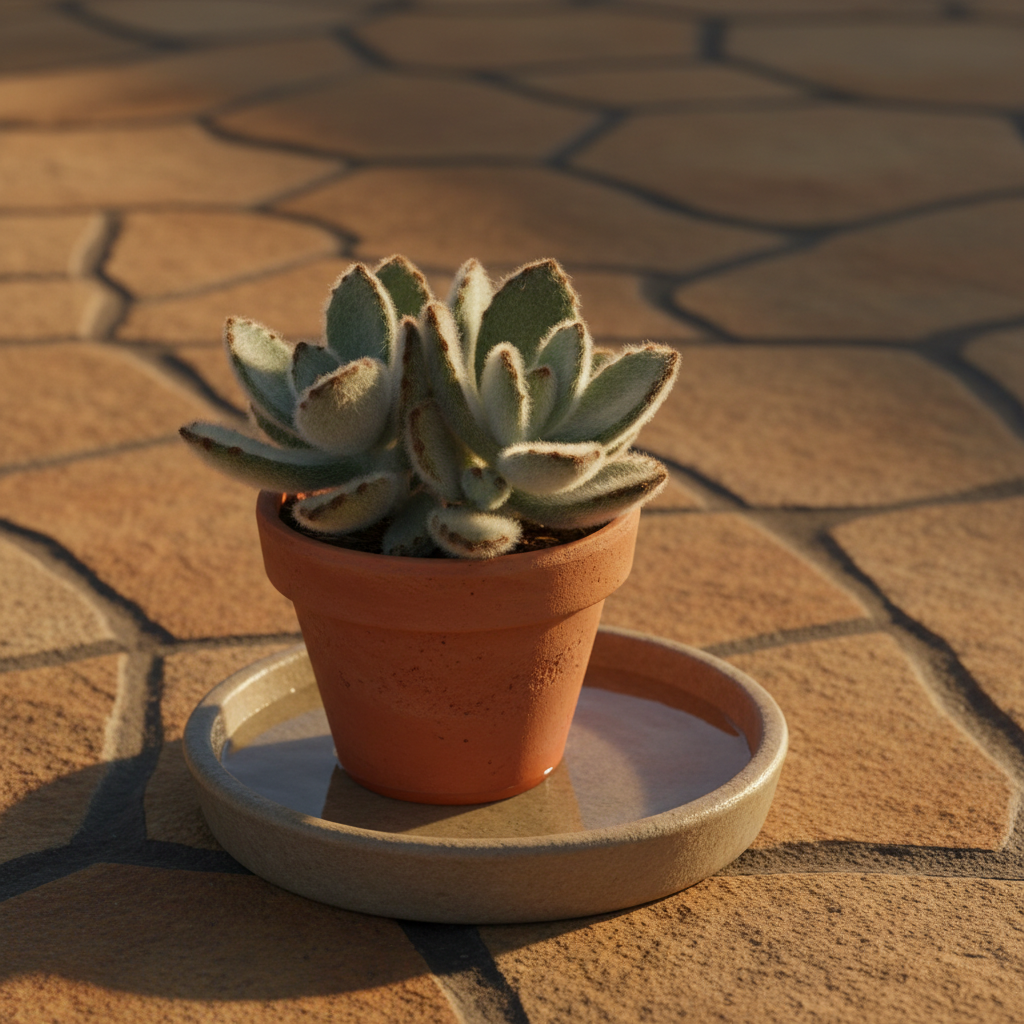
The reliable rhythm is the soak-and-dry method. When the potting mix has dried out completely, top to bottom, drench it thoroughly until water runs freely from the drainage holes. Empty any water that collects in the saucer within fifteen minutes; do not let the pot sit in a puddle. Then wait. In a bright window during the active growing season, late spring through early autumn, that wait might be two to three weeks. In winter, when growth slows almost to a halt and evaporation is minimal, it can stretch to six weeks or longer. There is no fixed calendar; checking by weight, by lifting the pot, is far more reliable than counting days. A dry pot feels surprisingly light, almost weightless for its size; a damp pot has noticeable heft.
How you deliver the water matters too. Because the felted leaves are slow to dry and prone to spotting when wet for long periods, it is wise to water at the soil level rather than from overhead, or to bottom-water by setting the pot in a shallow dish of water for fifteen to twenty minutes and letting the mix wick moisture upward. Bottom watering keeps the fuzzy foliage entirely dry and reduces the risk of crown rot, which begins where leaves meet stem and is one of the few fatal panda plant problems that can run its course before you notice anything is wrong. If you do water from above, aim a thin stream of water onto the soil surface and try to avoid splashing the leaves.
Wilted, soft leaves usually indicate underwatering, which is the easier of the two problems to fix. A panda plant rehydrates relatively quickly: after a proper soak, the leaves typically firm up within a day or two. Yellowing, translucent, or mushy leaves at the base of the rosette point to overwatering, especially if accompanied by a sour smell from the soil. At that point the appropriate response is usually to unpot the plant, inspect the roots, cut away anything black or slimy with clean snips, let the plant air-dry on a paper towel for a day, and then repot into fresh, dry, gritty mix. Do not water it again for at least a week after replanting.
Humidity is straightforwardly easy: a panda plant does best in ordinary, dry-ish indoor air. It thrives in the 30 to 50 percent humidity range that most homes naturally sit at, and it actively dislikes the close, damp conditions that suit tropical aroids and ferns. Avoid grouping it with humidifiers, terrariums or steamy bathrooms. If anything, slightly drier air is better than slightly more humid air, particularly in winter when poor airflow combined with cool temperatures and damp soil is the most reliable recipe for fungal trouble.
Warning — Don’t mist a panda plant: misting feels caring, but the trichomes that give the leaves their charm also hold droplets in place for hours, especially in still indoor air. Persistent moisture trapped against the leaf surface encourages fungal spotting, attracts mealybugs, and over time can rot the bases of older leaves. The plant evolved in a climate where dew dries fast in strong sun; a still living room is a very different environment.
Soil, Potting & Repotting
The right substrate matters enormously for a panda plant because, more than any other care decision, it determines how quickly water moves through the pot. In the gritty soils of its native range, rain does not linger; it drains rapidly through cracks in the granite, leaving roots aerated within hours. A houseplant pot is, by contrast, a small reservoir, and the wrong mix can hold moisture against the roots for days. The goal is to recreate something closer to a quarry floor than a forest floor.
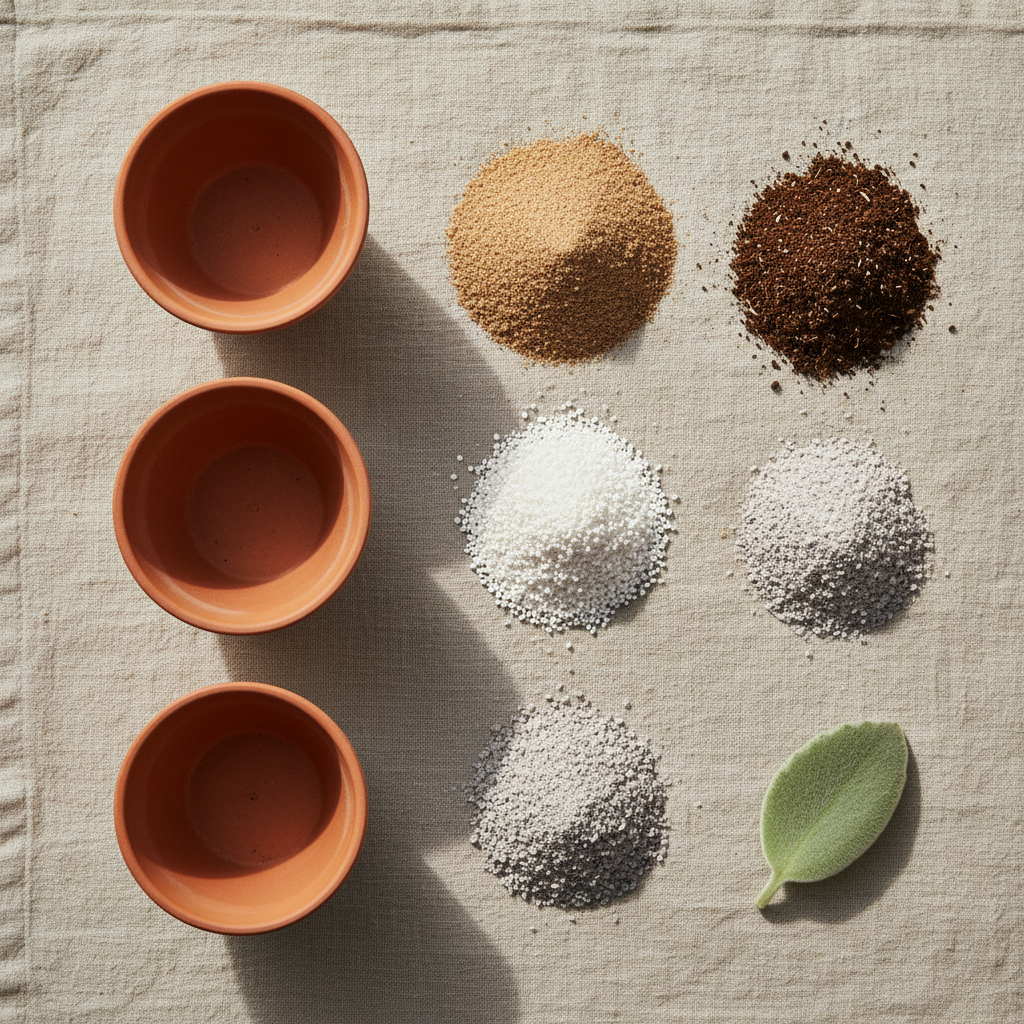
A working recipe is roughly half commercial cactus and succulent mix and half mineral grit. The cactus mix supplies a small amount of organic matter and the structure for fine root hairs to anchor in; the grit supplies the drainage and air spaces that make the whole pot dry out evenly. Suitable grit components include pumice, perlite, coarse horticultural sand, decomposed granite, and crushed lava rock. Pumice is the gold standard for panda plants because it is porous, slightly water-retentive without being soggy, and stable over years of repotting. Perlite works almost as well and is more widely available; the main caveat is that it tends to float to the surface over time, which is a cosmetic issue rather than a functional one.
What to avoid is ordinary peat-based houseplant compost on its own. Even good-quality bagged compost holds far more moisture than a panda plant wants and breaks down into a dense, airless mass over a year or two. If a houseplant compost is all you have, cut it at least one to one with grit. Coir-based mixes are slightly better than peat-based but still benefit from heavy amendment.
Pot choice is almost as important as mix choice. A terracotta pot is the traditional and well-justified default: the unglazed clay wicks moisture out through the walls and breathes between waterings, making it harder to leave the plant in damp soil. Glazed ceramic and plastic pots also work, but require a more cautious watering hand because the only escape route for moisture is the drainage hole. Whatever the material, the pot must have a drainage hole. Decorative cachepots without drainage can be used as outer sleeves around a properly draining inner pot, but a panda plant planted directly into a sealed vessel is a panda plant on borrowed time.
The pot should also be only slightly larger than the root ball. Panda plants have modest root systems relative to their above-ground size, and a pot that is too generous leaves wet, unused soil sitting around the roots for weeks. A new pot should be about 2 to 3 cm wider in diameter than the previous one, no more.
Repotting is needed infrequently, perhaps every two to three years for a healthy plant, and is best done in spring as growth resumes. The signs that repotting is overdue include water running straight through the pot without wetting the mix, roots circling visibly through the drainage hole, and a plant that has tipped top-heavy as the rosette has outgrown its base. Repot into dry mix, settle the plant in with gentle taps rather than pressing the soil down hard, and wait at least a week before the first watering. This dry rest gives any broken roots time to callus and reduces the risk of rot entering the wounds.
Pro Tip — Top-dress with a mineral mulch: a thin layer of fine gravel, decomposed granite, or coarse sand spread across the soil surface looks neat, keeps the lower leaves clean by preventing soil splash, reduces evaporation from the very top of the pot, and discourages fungus gnats from laying eggs in damp organic material at the surface.
Fertilising
Panda plants are light feeders. In their native habitat they grow on lean, mineral-rich but organic-poor soils, and they have evolved to make slow, efficient use of modest nutrient inputs. Heavy feeding is not just unnecessary; it actively works against the qualities most people want from the plant. Over-fertilised panda plants produce soft, oversized leaves that stretch on long internodes, the silvery felt thins out, and the chocolate-brown edges become less pronounced. The plant ends up looking like a generic green succulent rather than the distinctive species it should be.
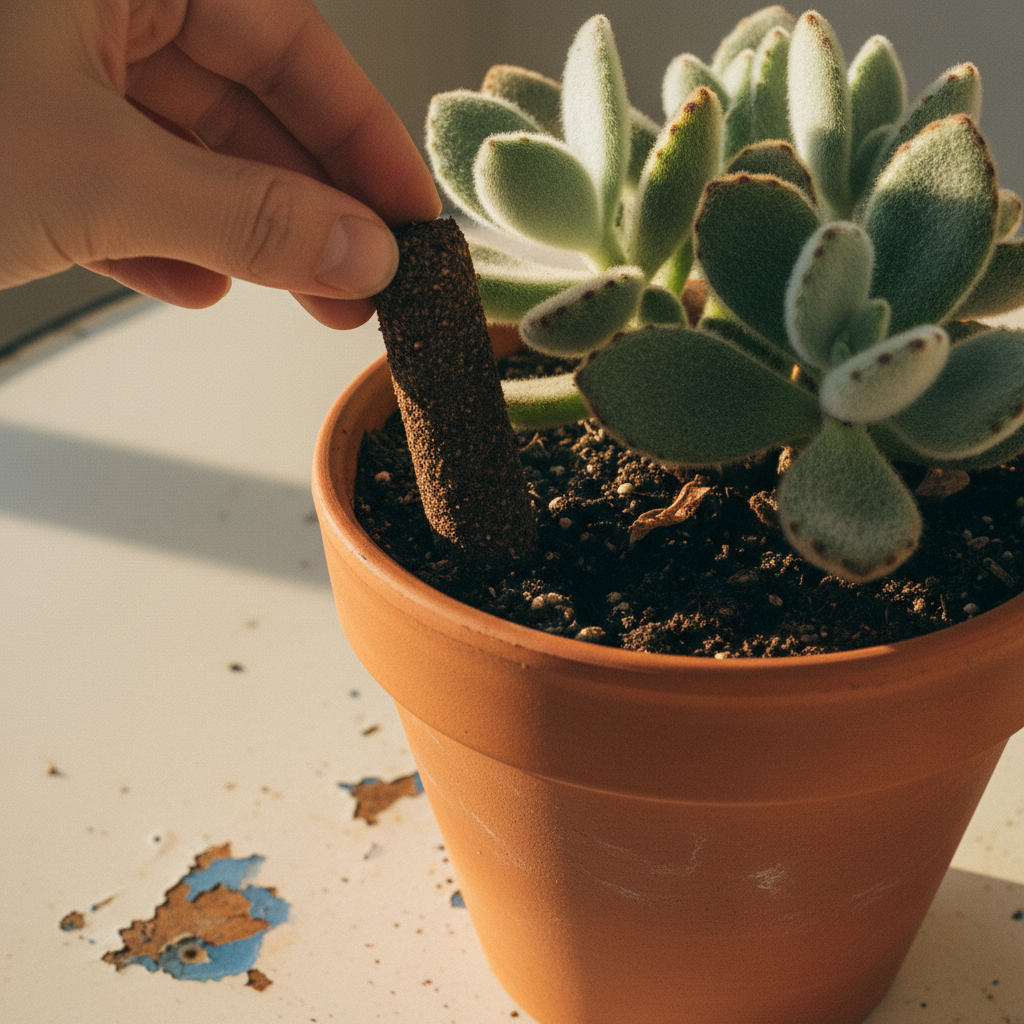
A workable feeding schedule is a balanced liquid fertiliser, ideally one formulated for cacti and succulents, applied at quarter strength once every four to six weeks from late spring through early autumn. A standard 10-10-10 or similar balanced houseplant feed works equally well at the same dilute rate; the formulation matters less than the strength. Stop fertilising entirely from late autumn through early spring, when the plant is essentially dormant and any nutrients applied to the soil will simply build up as salts rather than being taken up by the roots.
An alternative, particularly suited to gardeners who prefer not to think about a feeding calendar, is to use slow-release organic fertiliser sticks or pellets pushed into the soil at the edge of the pot. One or two pellets at the start of the growing season release nutrients gradually over several weeks and avoid the salt build-up that comes from regular liquid feeding. Top-dressing with a thin layer of worm castings in spring serves the same purpose with even gentler nutrient delivery.
The visible signs of overfeeding are crisp, brown leaf tips, leaves that look pale or washed-out compared with the rest of the rosette, and a chalky white crust forming on the soil surface or around the drainage hole. If you spot any of these, flush the pot thoroughly with plain water two or three times in succession, letting it drain fully between flushes, and then withhold fertiliser for at least three months. A panda plant will recover from underfeeding far more readily than from overfeeding, so when in doubt, feed less and feed less often.
Mature plants that have been in the same pot for several years can be revived without a full repot by gently scraping off the top 2 to 3 cm of old soil in spring and replacing it with fresh gritty mix, optionally with a small amount of slow-release fertiliser blended in. This refreshes the top layer without disturbing the root system and is often enough to restore vigour to a tired specimen.
Propagation
One of the small joys of growing a panda plant is how casually it propagates. It is among the easier succulents to multiply, and a single mature specimen can yield half a dozen offspring in a season without obviously suffering for it. Two methods work reliably: leaf cuttings and stem cuttings. Both rely on the same underlying biology, the capacity of intact succulent tissue to grow callus and then roots from a clean wound, and both follow the same critical first step of letting the cutting dry out before any contact with soil or water.
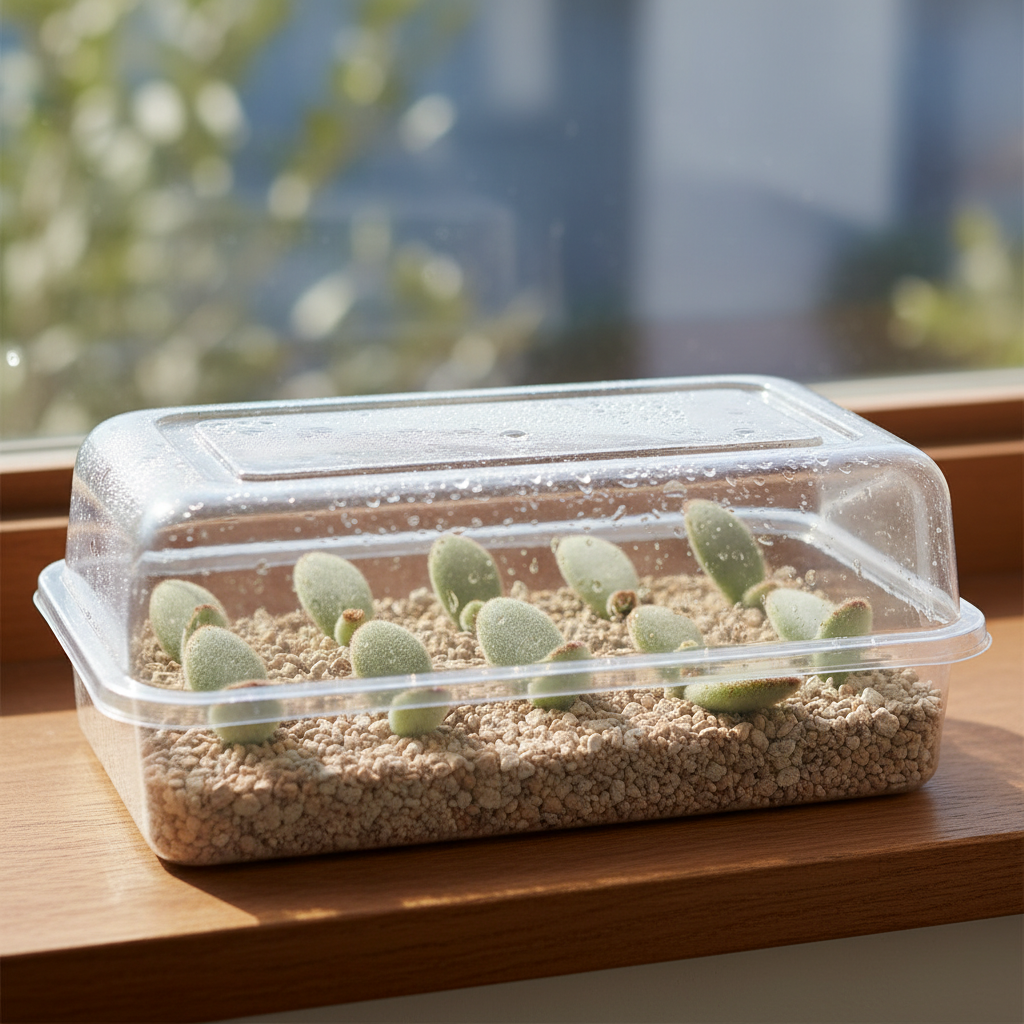
For leaf propagation, choose a few healthy, fully developed leaves from somewhere in the middle of a stem, not the youngest leaves at the growing tip and not the oldest ones near the base. Gently twist each leaf off the stem with a slight side-to-side motion until it pops free, taking care to keep the base of the leaf intact rather than tearing it. A clean break is essential. A torn leaf with a damaged base will rot rather than root.
Lay the leaves on a sheet of newspaper or a dry tray in a bright, airy spot out of direct sun for three to seven days. The cut surface should harden over into a dry, slightly papery callus. Once callused, set the leaves on the surface of a tray of dry gritty cactus mix, callused end touching the soil but not buried. Place the tray somewhere bright but not blazingly hot, and leave it largely alone. After two to four weeks, small pink-white roots begin to grow downward from the callused end, and shortly afterwards a tiny rosette of new leaves appears at the base of the original leaf. At this stage, a very light mist of water on the soil surface once a week is enough; do not flood the tray.
The original parent leaf eventually withers and falls away once its energy has been transferred into the new plant, usually two to four months after rooting begins. Once a new plantlet has several leaves of its own and a small but well-developed root system, it can be potted into its own small pot of standard panda plant mix. A 5 to 7 cm pot is plenty to start.
Stem cuttings work even more reliably and are the right choice when you want to reset a leggy or etiolated parent plant. Use clean, sharp snips to cut a section of stem 5 to 10 cm long, ideally with a small rosette at the top and several healthy leaves below. Strip off the bottom one or two leaves and set them aside; they can be propagated as leaf cuttings in parallel. Let the cut end of the stem callus for a week in a dry, shaded place, then push it gently into a small pot of dry gritty mix. Wait another week or so before the first light watering. Roots typically appear within three to four weeks. Once the cutting resists a very gentle tug, it is rooted and can be treated as a normal small plant.
The numbered steps below summarise the leaf-cutting process for ease of reference.
- Twist off three to five healthy mid-stem leaves from a mature plant, keeping the base of each leaf intact.
- Lay the leaves in a dry, bright spot out of direct sun for three to seven days, until the cut ends form a dry callus.
- Set the callused leaves on the surface of a tray of dry gritty cactus mix, callused end just touching the soil.
- Keep the tray bright and largely dry; mist lightly once a week after the first fortnight if conditions are very dry.
- Wait two to four weeks for roots, then a further few weeks for a small rosette of new leaves to emerge.
- When the new plantlet has several leaves and a working root system, pot it into a 5 to 7 cm pot of standard panda plant mix.
Pro Tip — Propagate when you prune: the best time to take cuttings is when you would prune the plant anyway, typically in spring to reset a leggy rosette or to control size on a top-heavy plant. That way every cut becomes a potential new plant rather than waste, and the parent plant gets the rejuvenation it needs at the same time.
Pests & Diseases
The same dense, woolly leaf surface that makes the panda plant so distinctive also makes it unusually vulnerable to one particular pest: mealybugs. The white, cottony tufts of a mealybug colony are camouflaged almost perfectly against the silvery trichomes of the leaves, especially in the leaf axils where stem meets leaf base. It is entirely possible to host a thriving mealybug population on a panda plant for weeks before noticing anything is wrong. Regular inspection, every fortnight or so, is the best defence.
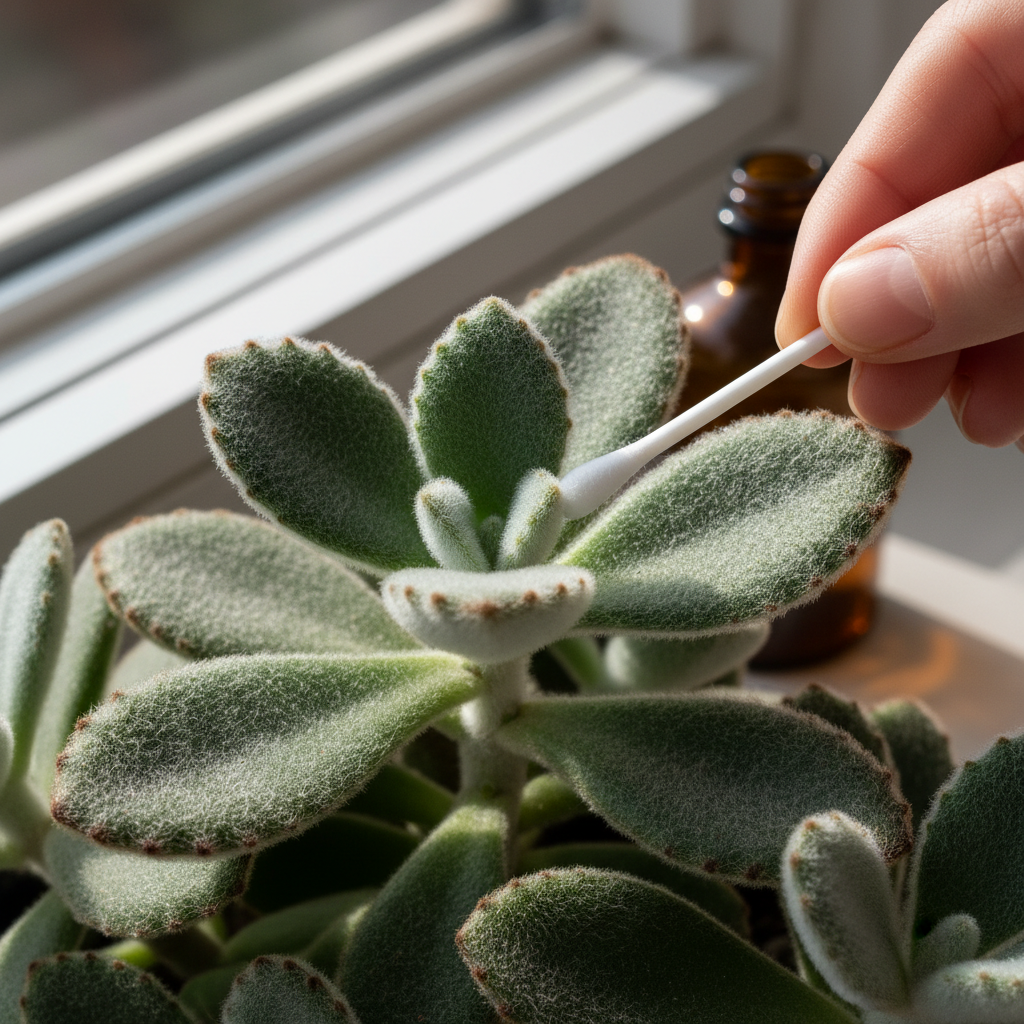
The reliable home treatment for mealybugs is 70 percent isopropyl alcohol applied with a cotton bud. Dip the bud, touch it directly to each visible mealybug and to any white cottony residue in the leaf axils, and repeat across every part of the plant. The alcohol dissolves the waxy coating that protects the insects and kills them on contact. Inspect again in three days and repeat the treatment; mealybug eggs continue hatching over a fortnight, so a single pass is rarely enough. Avoid the temptation to use spray bottles or full-leaf wipes on a panda plant. The fuzz holds the alcohol against the leaf for too long and can cause cosmetic damage, and full-leaf wipes flatten and discolour the trichomes.
Other pests are far less common but worth knowing. Aphids occasionally cluster on new growth and flower stalks; they are easier to dislodge than mealybugs and respond well to a gentle stream of water from a tap or a single application of neem oil. Spider mites can appear in very dry conditions, particularly on plants kept close to radiators, and announce themselves with fine webbing and a stippled, dusty look to the leaves. Increasing humidity slightly and wiping affected areas with a soft brush dipped in soapy water usually resolves a mild infestation. Soft scale, which looks like small brown or tan bumps along the stems, is rare on panda plants indoors but treatable in the same way as mealybugs with a cotton bud and alcohol.
Diseases are nearly always related to moisture rather than to pathogens arriving from elsewhere. Root rot is the most serious and is almost always the consequence of overwatering, a pot that holds too much moisture, or a mix that does not drain freely. Symptoms include mushy stems at the soil line, leaves dropping at the slightest touch, a sour smell from the pot, and a general collapse of the rosette. By the time these signs are obvious the plant is in trouble, but it is rarely beyond saving. Unpot it, wash the roots clean under a gentle tap, cut away every blackened or slimy section with sterilised snips, lay the plant out to callus for one or two days, and repot it into entirely fresh, dry, gritty mix. Do not water for at least a week.
Crown rot, a related problem, begins at the top of the plant where leaves meet the central growing point, often after water has settled into the rosette and not dried out. It progresses quickly and is harder to reverse than root rot. Prevention is the only reliable approach: water at the soil level rather than overhead, avoid wetting the rosette, and provide good air circulation around the plant, particularly in cool, low-light winter conditions.
Fungal leaf spots, showing as small brown or rust-coloured marks on individual leaves, occasionally appear in humid, still air. They are cosmetic rather than dangerous in most cases. Improve airflow, hold off watering slightly, and remove any badly affected leaves at the base with clean snips. The plant will produce new, unmarked leaves once conditions improve.
Warning — Quarantine new arrivals: the most common way mealybugs reach an established collection is on a newly bought plant. Treat every new panda plant as suspect for the first month: keep it isolated from your other succulents, inspect it weekly for any sign of white cottony residue or sticky leaves, and treat preemptively with a cotton-bud-and-alcohol pass before introducing it to the rest of your plants.
Popular Varieties
Although the straight species Kalanchoe tomentosa is itself extremely variable across nurseries, with leaves ranging from pale silver to grey-green and edges from soft tan to deep espresso, several named cultivars and closely related species are stable enough in their distinguishing features to be worth seeking out. The two most widely available are ‘Chocolate Soldier’ and ‘Teddy Bear’, and they sit at almost opposite ends of the visual spectrum the species can produce.
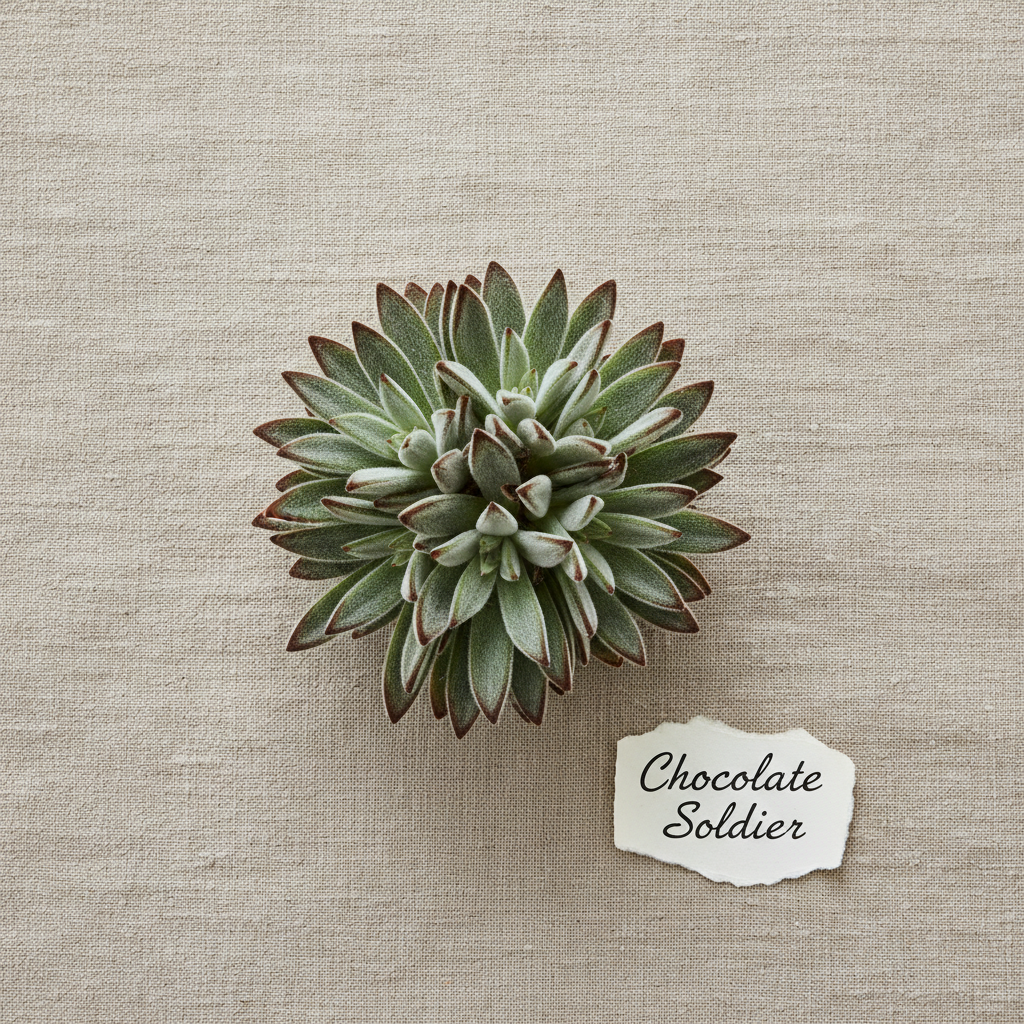
‘Chocolate Soldier’ is a more compact cultivar with narrower leaves and noticeably stronger pigment along the margins. Where the straight species shows a row of scalloped brown notches, ‘Chocolate Soldier’ carries a continuous, thick band of deep chocolate-brown running the entire length of each leaf edge. The fuzz is the same silvery-grey, but the higher contrast with the dark margins gives the plant a more graphic, almost drawn-on quality. It branches slightly more readily than the species type, making it a good candidate for shaping into multi-stemmed clumps over time.
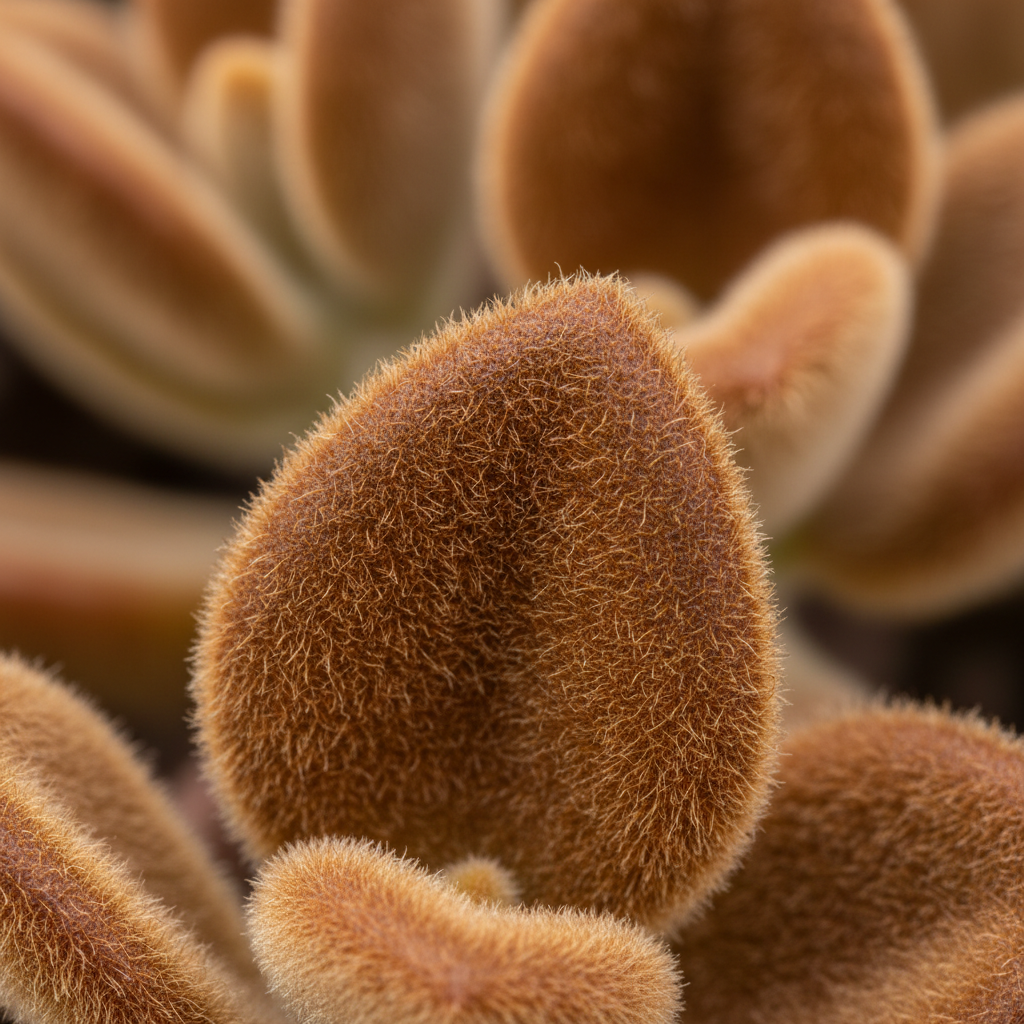
‘Teddy Bear’ is the warmer, plusher counterpart. Its leaves are broader, rounder and shorter than those of the species, and instead of the silvery felt with brown margins, the entire leaf surface is coated in a uniform, warm cinnamon-brown velvet. The effect is closer to a small chestnut animal than to a typical succulent, hence the common name. It is slightly slower growing than ‘Chocolate Soldier’ but otherwise has identical care requirements. The cultivar is sometimes sold under the trade name ‘Cinnamon’ or, confusingly, simply as a brown-leaved form of the species.
Beyond these two, several other named selections circulate among specialist succulent growers. ‘Golden Girl’, sometimes labelled ‘Golden Panda’, is a yellow-leaved sport with a softer, almost lime-toned fuzz and golden-bronze margins; it is striking but slower and more demanding of light than the green types. ‘Super Fuzzy’ is a selection with denser-than-usual trichomes that give the leaves a frosted, almost ghostly white cast in bright light. There are also a small number of related Madagascan species frequently confused with Kalanchoe tomentosa in the trade, most notably Kalanchoe eriophylla, the snow white panda plant, which has even thicker white wool and clearer water requirements but no chocolate-brown edges, and Kalanchoe orgyalis, the copper spoons, which shares the felted look but with copper-bronze new growth that ages to silver.
When buying, look for compact plants with short internodes, evenly fuzzy leaves with no flattened or shiny patches, and well-coloured margins. Avoid plants in waterlogged pots, plants showing yellow lower leaves, and plants where the soil smells sour. Almost any healthy panda plant from a reputable nursery will adapt quickly to a new home, but a stressed plant can take months to recover, especially if root rot has already begun unseen below the soil line.
Frequently Asked Questions
Is the panda plant safe for cats and dogs?
No. Kalanchoe tomentosa, like other members of its genus, contains bufadienolides, a group of cardiac glycosides that can cause vomiting, drooling, lethargy and, in larger ingestions, irregular heart rhythms in cats, dogs and other small pets. The concentration in Kalanchoe tomentosa is lower than in flowering kalanchoes such as Kalanchoe blossfeldiana, but it is still high enough that pets nibbling on the plant can become ill. Keep panda plants well out of reach of pets and curious children, and contact a veterinarian if ingestion is suspected.
Why are my panda plant’s leaves turning yellow and falling off?
The most common cause is overwatering, especially if the falling leaves feel soft, translucent or mushy at the base. Check the soil: if it is damp and you watered recently, hold off, let it dry out completely, and consider unpotting the plant to inspect the roots. If, on the other hand, the leaves are shrivelled and dry rather than mushy, the plant is underwatered and needs a thorough soak. A few yellow lower leaves on an otherwise healthy plant are normal as the rosette grows upward.
My panda plant has lost its chocolate-brown edges. Why?
Fading margins almost always indicate insufficient light. The darker edge pigment is produced in response to bright conditions, much like a tan, and is partly a UV-protective response. Move the plant to a sunnier window, ideally with several hours of direct sun a day, and the new leaves that emerge over the following months will come in with stronger margin colour. The existing pale-edged leaves will not change, but they will eventually be replaced by darker ones as the plant grows.
Does the panda plant flower indoors?
Rarely. In its native Madagascar it produces tall stalks of small, fuzzy, bell-shaped flowers in greenish-yellow with reddish tips, but indoor specimens almost never bloom unless they are mature, root-bound, and receive long hours of direct sun for several consecutive months. Most people grow the panda plant for its foliage rather than its flowers, and the absence of blooms is not a sign that anything is wrong.
How long does a panda plant live?
Indoor panda plants commonly live for five to ten years and can persist much longer with good care, although they tend to become leggy and lose their compact form over time. Many growers refresh their plant every few years by taking stem cuttings from the best parts of the rosette and starting fresh, rather than keeping a single specimen indefinitely. Done this way, a panda plant lineage can effectively continue for decades.
Can I keep a panda plant outdoors?
Yes, in suitable climates. The plant is hardy outdoors year round in roughly USDA zones 9b through 11, broadly the warmer parts of the Mediterranean, southern California, and similar mild, dry-summer regions. In cooler climates it can spend summer outdoors in a sheltered, sunny spot but needs to come inside well before night-time temperatures fall below about 5 °C (41 °F). It does not tolerate frost. When moving the plant outdoors, acclimatise it gradually over a week to avoid sunburn, and protect it from heavy rain that would saturate the soil.
Why are the lower leaves on my panda plant shrivelled?
A small number of shrivelled, papery lower leaves on an otherwise healthy panda plant is entirely normal; the plant sacrifices its oldest leaves as the rosette grows upward and as their stored water is reallocated to newer foliage. If the lower leaves are shrivelling at a rate that thins out the whole plant, however, the cause is usually chronic underwatering. Give the pot a thorough soak, let it drain fully, and resume a regular soak-and-dry rhythm. If the shrivelling continues after watering, check the roots for rot, which can also produce dehydrated-looking foliage by preventing the plant from taking up moisture.
Should I dust my panda plant?
Yes, but very gently. Dust accumulates on the fuzzy leaves over time and reduces photosynthesis. The safest approach is a soft, dry watercolour brush or a small paintbrush, used to flick dust off the upper surfaces. A puff of air from a rubber bulb camera-lens blower works well too. Avoid damp cloths, which flatten and stain the trichomes, and avoid running water over the leaves except in emergencies, since the fuzz holds moisture too long for a fuzzy succulent’s comfort.
My panda plant is leaning hard to one side. Can I fix it?
Leaning is almost always a response to one-sided light. Rotate the pot a quarter turn every fortnight to even the growth out from now on, and the new growth will come in straighter. The existing bent stem will not straighten on its own. For a heavily leaning specimen, the simplest fix is to behead the rosette, callus the cut stem for a week, and replant it upright as a stem cutting. The original base typically resprouts new growth from below the cut, giving you two plants from one.
Is the panda plant the same as the air plant?
No. They are unrelated. Air plants are Tillandsia species in the bromeliad family, which grow on tree branches and absorb moisture from the air through specialised leaf scales. The panda plant is a soil-grown Madagascan succulent in the stonecrop family with conventional roots. The two are sometimes shelved together because both have soft, slightly furry leaves and casual care reputations, but their water and light requirements are quite different.






