
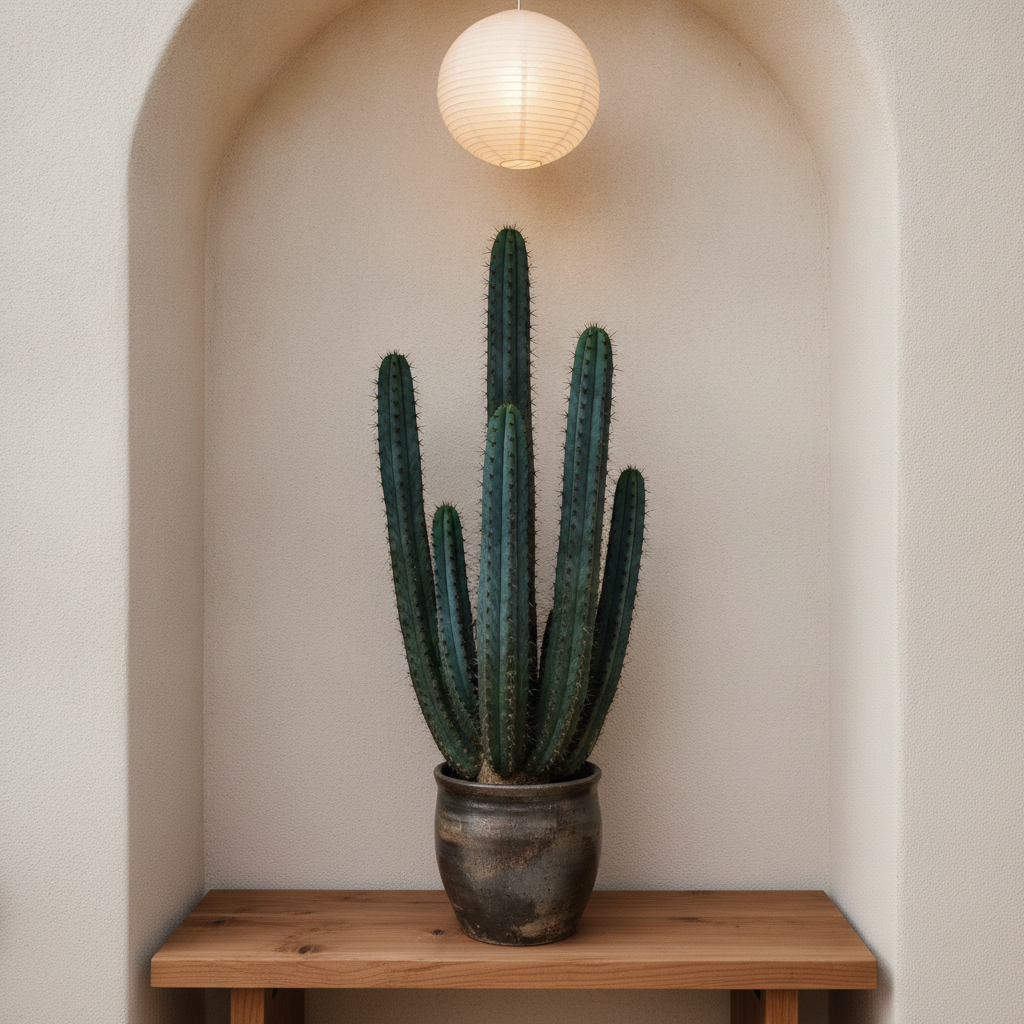
Few houseplants carry as much desert drama as the organ pipe cactus. Named for the way its tall, ribbed stems rise in a clustered row that resembles the pipes of a great church organ, Stenocereus thurberi is one of the signature columnar cacti of the Sonoran Desert, growing wild across southern Arizona and the Mexican states of Sonora and Baja California. In its native range it can reach more than five metres (16 feet) tall and live for well over a century, producing fragrant night-blooming flowers and a sweet edible fruit known locally as pitaya dulce. Grown indoors it stays far smaller and slower, but it keeps every bit of its sculptural, architectural presence.
As a houseplant the organ pipe cactus has a reputation for being demanding, but that reputation is mostly unearned. It is not fussy so much as specific: it wants what the desert gives it, which is intense light, fast-draining grit, and long dry spells punctuated by the occasional soaking. Get those three things right and it will reward you with steady, trouble-free growth for decades. Get them wrong, particularly the watering, and it will rot quietly from the base. This guide walks through the full picture, from the bright windowsill it needs to the precise way to take and callus a cutting, so you can move beyond simply keeping it alive to genuinely helping it thrive.
Contents
- Quick Reference
- Why Organ Pipe Cactus Makes a Striking Houseplant
- Light Requirements
- Watering & Humidity
- Soil, Potting & Repotting
- Fertilising
- Propagation
- Pests & Diseases
- Popular Varieties
- Frequently Asked Questions
Quick Reference: Organ Pipe Cactus at a Glance
| Light | Full sun, the brightest position you have, ideally several hours of direct light a day |
| Watering | Soak thoroughly, then let the soil dry out completely. Roughly every 2 to 3 weeks in summer, monthly or less in winter |
| Temperature | 21 to 32 degrees Celsius (70 to 90 Fahrenheit) in growth. Keep above 10 degrees Celsius (50 Fahrenheit); not frost-hardy |
| Humidity | Low. Average to dry household air, 30 to 40 percent, is ideal |
| Fertiliser | A dilute low-nitrogen cactus feed once a month in spring and summer only |
| Toxicity | Non-toxic to cats, dogs and humans, but the sharp spines are a genuine physical hazard |
Why Organ Pipe Cactus Makes a Striking Houseplant
The appeal of the organ pipe cactus is almost entirely about form. Rather than growing as a single trunk, it branches from the base into a cluster of tall, slender columns, each one deeply ribbed and lined with neat rows of spine clusters. The effect is vertical, rhythmic and unmistakably architectural, which is why designers reach for it as a living sculpture in minimalist and mid-century interiors. A young specimen of 30 to 60 centimetres (12 to 24 inches) already reads as a statement piece, and because growth indoors is measured in a few centimetres a year, it holds that scale and shape for a very long time.
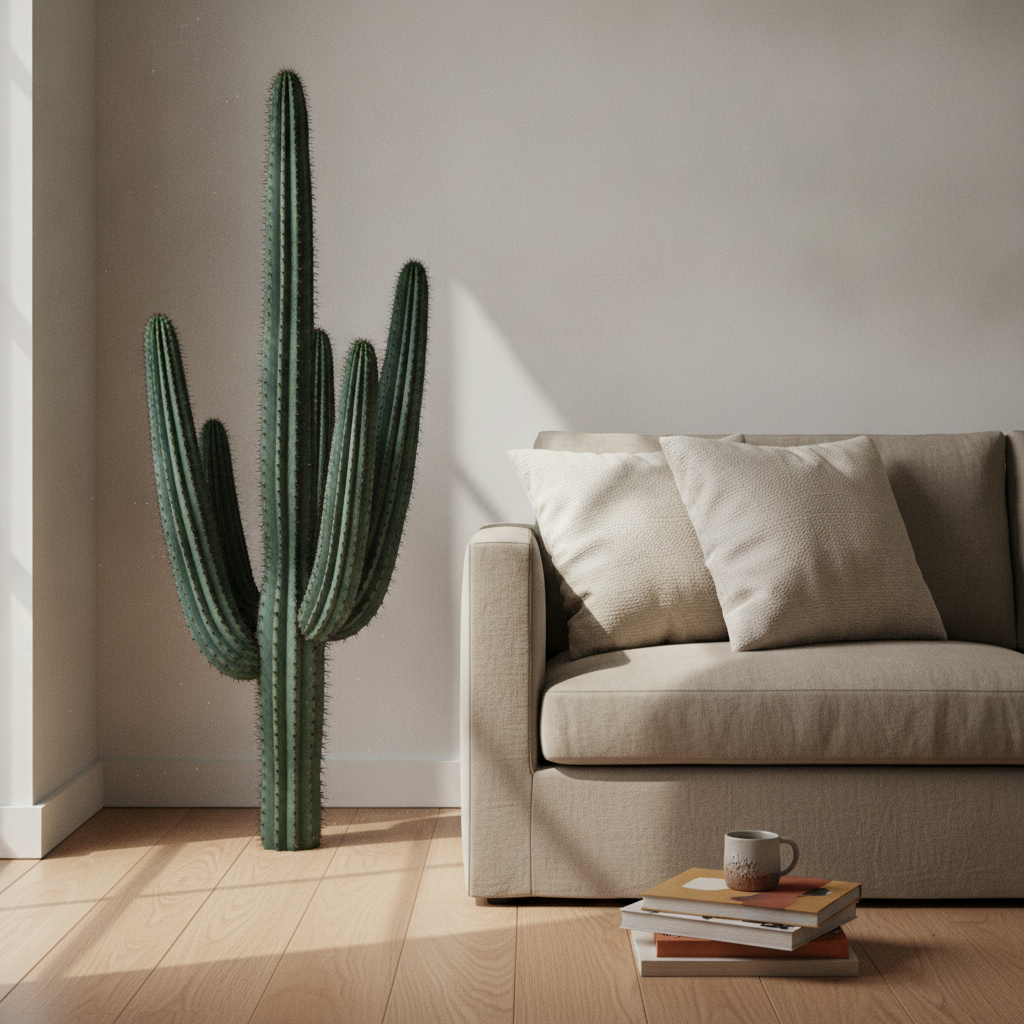
Beyond looks, this is a genuinely low-maintenance plant for anyone who travels or forgets to water. It stores months of moisture in its fleshy ribs and actively prefers to be left alone, so it suits a hands-off owner far better than a thirsty tropical. It is also clean and pet-safe in the toxic sense, with no irritating sap, though the spines mean it belongs out of reach of curious paws and small hands. The one trade-off is patience: this is not a plant that will fill a corner in a season. You are buying a slow, dependable, decades-long companion rather than instant impact.
Important — Toxicity: The organ pipe cactus is not chemically toxic to cats, dogs or people, and its fruit is edible when ripe. The real danger is mechanical. The stiff spines can cause painful puncture wounds and the fine glochid-like bristles on some stems can lodge in skin, so site the plant where pets and children cannot brush against it.
Light Requirements
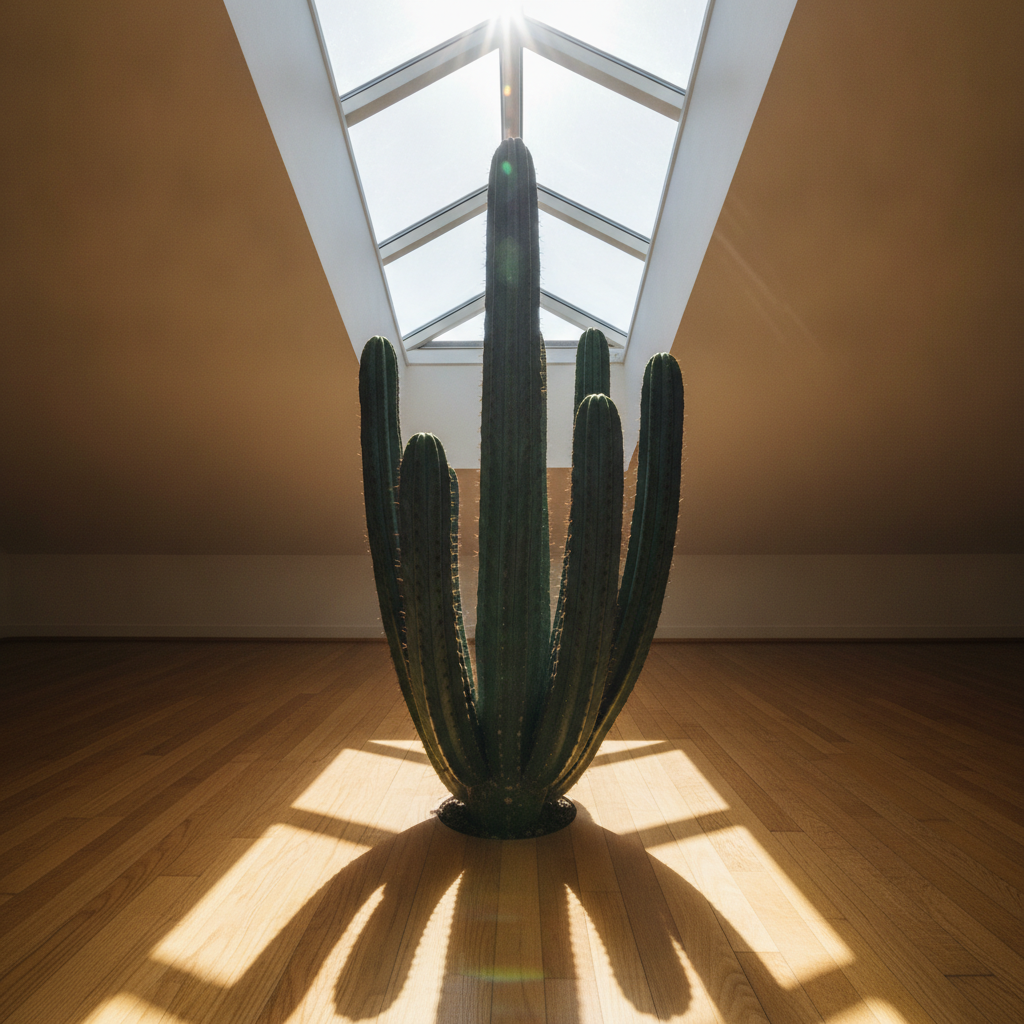
Light is the single most important factor in keeping an organ pipe cactus healthy indoors, and it is where most people fall short. This is a true desert species adapted to the relentless sun of the Sonoran Desert, where it grows fully exposed on rocky south-facing slopes. It does not merely tolerate direct sun, it needs it. Anything less than the brightest spot in your home will produce weak, etiolated growth that compromises the plant’s whole character.
The ideal indoor position is directly in front of an unobstructed, sun-facing window where the plant receives at least four to six hours of direct light each day. A conservatory, sunroom or a wide south-facing sill is perfect. In summer the plant also benefits enormously from a spell outdoors in full sun, provided you acclimatise it gradually to avoid scorching the tissue that grew under glass.
Light Levels Explained
Understanding how different light intensities translate to real positions in your home makes it easier to find the right spot. The table below sets out the broad tiers and what each one means for a sun-loving columnar cactus.
| Light Category | Approx. Level | Typical Location | Outcome |
|---|---|---|---|
| Direct sun | 20,000 to 100,000 lux | On a south or west sill, outdoors in summer | Ideal. Compact, firm, well-coloured growth |
| Bright indirect | 10,000 to 20,000 lux | Just back from a sunny window | Acceptable, but growth slows and stems may lean toward the light |
| Medium | 5,000 to 10,000 lux | An east window or a few metres into a bright room | Poor. Weak, stretched, pale growth over time |
| Low | 1,000 to 5,000 lux | A north window or interior wall | Unsuitable. Etiolation and eventual decline |
| Very low | Below 1,000 lux | Hallways, deep interiors | The plant will slowly starve |
Window Orientation and Placement
South-facing window: This is the best position in the home for an organ pipe cactus in the northern hemisphere. The strong, sustained midday light closely matches its native exposure. Place it as close to the glass as possible.
East-facing window: Workable but second-best. The plant gets gentle morning sun and then sits in shade for the rest of the day, which usually means slower growth and a tendency to lean. Rotate it regularly to keep it upright.
West-facing window: A good choice. The intense afternoon sun suits the plant well, though in a hot climate behind glass you should watch for any sign of scorching during heatwaves.
North-facing window: Not enough light. A north aspect will not sustain healthy growth, and the plant will gradually stretch and weaken. Avoid it unless you supplement heavily with a grow light.
Pro Tip — Rotate for Symmetry: Cacti grow toward their light source, so a plant in a window will slowly lean. Give the pot a quarter turn every week or two to keep the columns growing straight and the cluster balanced.
How Light Affects Growth and Form
In strong light, an organ pipe cactus produces firm, evenly ribbed stems with a healthy blue-green or grey-green cast and tightly spaced spine clusters. Starve it of light and the newest growth tells the story immediately: the stem narrows, the ribs flatten, the colour shifts to a pale, sickly green, and the whole tip stretches upward in a desperate reach for brightness. This etiolated growth is permanent and structurally weak, prone to flopping under its own weight. Once you see it, the only remedy is to move the plant into stronger light so that subsequent growth returns to a normal diameter.
Warning — Direct Sunlight: A plant grown indoors or recently bought from a shaded shop has soft tissue that can sunburn within hours of sudden full exposure. Sunscald shows as yellow, then bleached white or brown patches that never recover. Always harden the plant off over a week or two when moving it into stronger sun.
Artificial Lighting
If you cannot offer a bright enough window, a full-spectrum LED grow light is a genuine solution rather than a compromise, and many serious cactus growers rely on them year-round. Position a strong horticultural LED 20 to 40 centimetres (8 to 16 inches) above the plant and run it for 12 to 14 hours a day to mimic the long, intense desert day. The light needs to be substantially more powerful than a standard household bulb to make any difference to a sun-demanding cactus, so choose a dedicated grow light rated for high-light plants.
Seasonal Adjustments
Light levels indoors fall dramatically between summer and winter, and the organ pipe cactus responds by slowing or stopping growth in the darker months. This is normal and even beneficial: a cool, bright, dry winter rest encourages the plant to bloom and keeps it compact. Move the plant to your sunniest available window as the days shorten, and resist the urge to compensate for weak winter growth by watering or feeding more, which only invites rot. Come spring, increase light gradually as the plant wakes back into active growth.
Watering & Humidity
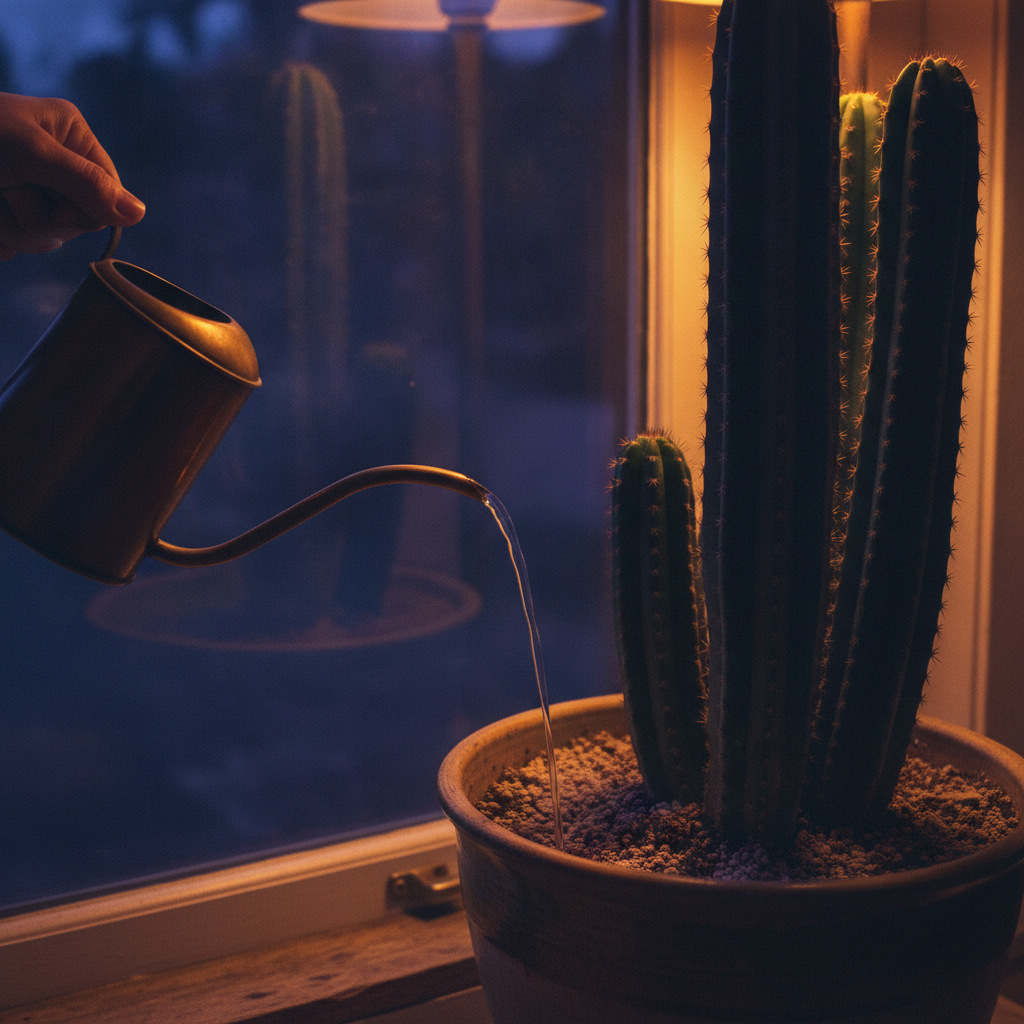
If light is what keeps an organ pipe cactus thriving, watering is what most often kills it. This plant evolved to survive long droughts by storing water in its fleshy stems, then absorbing a large drink quickly when rain finally arrives. The way to keep it healthy is to imitate that rhythm: a thorough soak followed by a complete dry-out. Frequent light watering, the instinct that serves most houseplants well, is precisely the thing that rots a cactus.
When to Water
The only reliable trigger for watering is dryness, not the calendar. Wait until the potting mix is bone dry all the way through, then water. During the active growing season of late spring through summer, in a bright warm spot, that typically falls every two to three weeks. In the cooler, darker months the interval stretches to monthly or, for a plant resting in a cold bright room, even less.
Because the mix should be gritty and free-draining, a moisture meter is less useful here than your own judgement. Lift the pot: a freshly watered cactus is noticeably heavy, and a dry one is light. You can also push a wooden skewer to the bottom of the pot and check that it comes out completely dry before watering again. When in doubt, wait. An organ pipe cactus will sit happily underwatered for weeks, but it can be killed by a single overwatering in cold conditions.
Pro Tip — The Lift Test: Get to know the weight of your pot when it is freshly watered and again when it is fully dry. Within a couple of cycles you will be able to judge whether the plant needs water just by picking it up, which is far more reliable than any surface check.
How to Water Correctly
- Confirm the soil is completely dry from top to bottom before you begin.
- Water at the soil surface, directing the stream around the base of the stems rather than letting it pool in the crown.
- Keep adding water slowly until it runs freely from the drainage holes, which ensures the entire root ball is wetted.
- Let the pot drain fully and tip away any water that collects in the saucer. The roots must never stand in water.
- Return the plant to its bright spot and do not water again until the mix has dried out entirely.
Signs of Overwatering vs. Underwatering
| Symptom | Overwatering | Underwatering |
|---|---|---|
| Stem colour | Yellowing, then translucent or blackened patches | Dull, faded green |
| Stem texture | Soft, mushy, water-logged to the touch | Wrinkled, shrunken, ribs drawn tightly together |
| Base of plant | Brown or black rot spreading up from soil level | Firm but slightly shrivelled |
| Soil | Stays wet for days, may smell sour | Bone dry, pulling away from the pot edge |
| Recovery | Often fatal once rot reaches the core | Quick and full once watered |
Warning — Root Rot: A soft, darkening base is the classic sign of root and stem rot, and it is the most common cause of death in indoor columnar cacti. If you catch it early, cut well above the damage with a sterile blade, let the healthy cutting callus, and re-root it. Once rot reaches the centre of the plant, it cannot be saved.
Humidity Requirements
Humidity is one area where the organ pipe cactus asks for nothing special. It is built for dry desert air, so the typical relative humidity of a heated home, somewhere around 30 to 40 percent, suits it perfectly. There is no need to mist, group it with other plants for moisture, or use a humidity tray, and doing so can actually be counterproductive by encouraging fungal problems on the stems.
The plant only struggles with humidity at the extremes. Persistently damp, stagnant air, such as in a poorly ventilated bathroom, raises the risk of fungal spotting and rot, particularly when combined with cool temperatures. If your home runs humid, prioritise good airflow around the plant and err on the side of even less water.
There is, in short, almost nothing to do here. Site the cactus in a normal, airy room, keep it away from steamy or stagnant corners, and let the dry household air do its work. This indifference to humidity is one of the reasons the plant is so undemanding once its light and watering are sorted.
Water Quality
Organ pipe cactus is not especially sensitive to water quality and ordinary tap water is fine in most areas. If your water is very hard, you may over time see pale mineral crusting on the soil surface and the stem base, in which case occasional use of rainwater or filtered water helps. Always let cold tap water come up to room temperature before applying it, as an icy soak can shock the roots of a warmth-loving desert plant.
Soil, Potting & Repotting
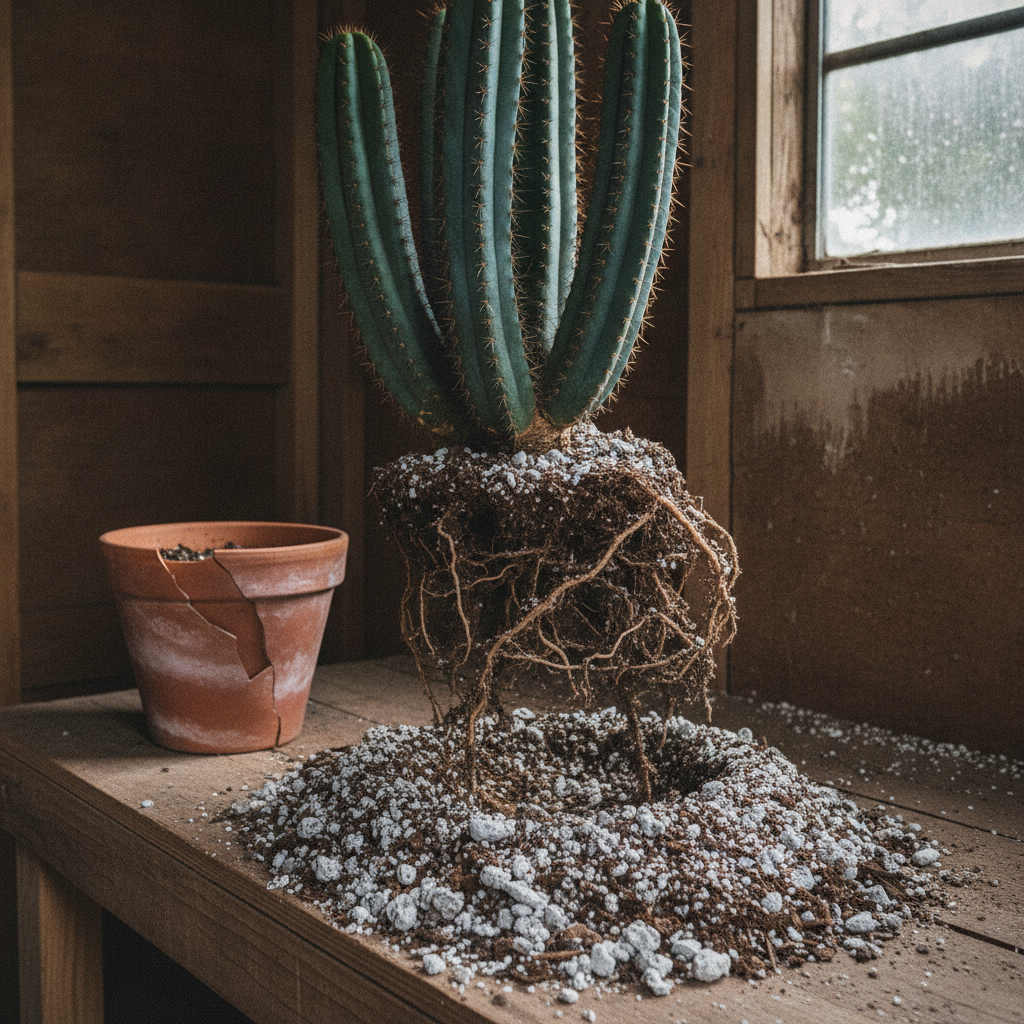
The right soil is non-negotiable for an organ pipe cactus, and it is the foundation that makes correct watering possible. The single goal is drainage so fast that water rushes through and the mix dries out within a few days. A standard houseplant compost holds far too much moisture and will keep the roots wet long enough to rot, no matter how careful you are with the watering can.
Ideal Soil Composition
Aim for a mix that is roughly half mineral grit and half organic matter, far grittier than most bagged cactus composts, which are often too rich on their own. The mineral component, made up of materials such as pumice, perlite or coarse sand, creates large air pockets and channels that drain instantly, while a modest amount of organic matter holds just enough moisture and nutrients to support growth.
| Component | Proportion | Function |
|---|---|---|
| Pumice or perlite | 30 to 40 percent | Creates air space and rapid drainage, prevents compaction |
| Coarse horticultural grit or sand | 10 to 20 percent | Adds weight, stability and further drainage |
| Cactus or quality potting compost | 40 to 50 percent | Holds light moisture and supplies nutrients |
Organ pipe cactus prefers a neutral to slightly acidic soil, in the region of pH 6.0 to 7.0, which most peat-free or standard composts fall comfortably within once cut with grit. There is rarely any need to adjust pH deliberately; getting the drainage right matters far more than fine-tuning acidity.
Pro Tip — Quick Mix Recipe: For a reliable blend, combine two parts of a good peat-free potting compost with one part pumice or perlite and one part coarse horticultural grit. If in doubt, add more grit rather than less. It is almost impossible to make the mix too sharp for this plant.
Choosing the Right Pot
Pot choice has a real effect on how easy this plant is to keep. Because the columns grow tall and can become top-heavy, stability matters as much as drainage, and a heavier pot helps anchor a maturing specimen.
Drainage holes are non-negotiable. Never plant an organ pipe cactus in a pot without drainage. Without a clear exit for excess water, even the grittiest mix will eventually waterlog and the plant will rot. If you love a particular decorative cachepot, keep the cactus in a plain plastic nursery pot inside it and lift it out to water.
Pot material: Terracotta is the natural choice. Its porous walls wick moisture out of the soil and let it dry quickly, which is exactly what this plant wants, and its weight counters the plant’s height. Glazed ceramic and plastic both work but retain moisture longer, so you must water even more cautiously in them.
Pot size: Choose a pot only slightly larger than the root ball. A cactus sitting in a large volume of soil is surrounded by moisture its small root system cannot use quickly, which keeps the mix wet and invites rot. Snug is safe.
When to Repot
Organ pipe cactus grows slowly and dislikes disturbance, so it needs repotting only infrequently, typically every three to four years or when the cluster of stems becomes unstable in its pot or visibly outgrows it. The best time is early in the growing season, in spring, so the plant can settle and put out fresh roots in the warm months ahead. Always repot into dry soil and wait several days before the first watering to give any damaged roots time to seal.
How to Repot: Step-by-Step
- Make sure the soil is dry, which makes the plant easier to remove and the roots less prone to breaking.
- Protect your hands with thick gloves, folded newspaper or a strip of foam, and wrap a band of it around the stems to lift the plant safely past the spines.
- Ease the plant out of its pot and gently crumble away the old soil from around the roots.
- Inspect the roots and base, trimming away anything soft, brown or rotten with a sterilised blade.
- Set the plant in a clean pot at the same depth it sat before, never burying the stem base, and fill around it with fresh dry gritty mix.
- Firm the mix lightly and add a top dressing of grit if you like, both for looks and to keep the base dry.
- Wait five to seven days before watering, then resume the normal soak-and-dry routine.
Warning — Transplant Shock: Watering immediately after repotting is a common mistake. Any roots nicked during the move are open wounds, and wet soil turns them into entry points for rot. Always give the plant several dry days to callus before the first drink.
Fertilising
Organ pipe cactus is a slow, frugal feeder that gets by on very little. In the wild it draws a meagre living from thin, poor desert soils, so the danger indoors is almost always over-feeding rather than starvation. A light hand here keeps growth firm and well-formed; too much fertiliser produces soft, swollen, weak tissue that is prone to splitting and rot.
That said, a plant confined to a small pot does eventually exhaust the modest nutrients in its soil, so a little feeding during the growing season supports steady growth and, in a mature specimen, flowering. The key is to feed only when the plant is actively growing and to keep the dose well below the strength you would use for a leafy houseplant.
Understanding Plant Nutrients
Fertilisers are labelled with an NPK ratio showing the percentage of nitrogen, phosphorus and potassium. For a cactus, a feed low in nitrogen relative to phosphorus and potassium is best, because excess nitrogen drives fast, soft, green growth at the expense of firmness and flowers. A dedicated cactus and succulent feed is formulated with exactly this balance in mind.
| Nutrient | Symbol | Primary Function | Deficiency Symptoms |
|---|---|---|---|
| Nitrogen | N | Drives green growth; needed only in small amounts here | Pale colour, very slow growth |
| Phosphorus | P | Supports roots and flowering | Weak roots, poor or no blooms |
| Potassium | K | Strengthens tissue and overall hardiness | Soft stems, low stress tolerance |
| Calcium | Ca | Builds firm cell walls | Distorted or collapsing new growth |
| Magnesium | Mg | Central to photosynthesis | Yellowing on older stem tissue |
| Iron | Fe | Aids chlorophyll formation | Pale, yellowed new growth |
Types of Fertiliser
Liquid fertilisers: These are the easiest to control for a cactus because you can dilute them precisely and apply them with a normal watering. A liquid cactus feed at half the recommended strength, given monthly in summer, is the simplest reliable approach.
Slow-release granular: A small amount of slow-release feed mixed into the soil at repotting can supply a gentle background of nutrients across the whole season. Use sparingly, as it is easy to overdose a plant with such low requirements.
Organic fertilisers: Dilute organic options such as worm-castings tea offer a mild, slow feed that is hard to overdo. They release nutrients gently, which suits the cactus’s modest appetite well.
Feeding Schedule
Feed only during the active growing season, from mid-spring to late summer, and stop entirely in autumn and winter when the plant is resting. Once a month at half strength is plenty. A plant fed through the winter, when it cannot use the nutrients, simply accumulates salts in the soil and produces weak growth, so when in doubt, skip a feed rather than add one.
Pro Tip — Feed a Damp Pot: Always apply liquid feed to soil that is already slightly moist, never to bone-dry mix. Fertiliser hitting dry roots can scorch them, so water lightly first or feed as part of your normal deep watering.
How to Fertilise
- Confirm the plant is in active growth and that it is spring or summer.
- Dilute a cactus and succulent fertiliser to half the strength shown on the label.
- Apply it in place of a normal watering, soaking the mix thoroughly so the nutrients reach all the roots.
- Let the pot drain fully and tip away any run-off, then resume the usual dry-out cycle before the next water or feed.
Warning — Salt Build-Up: Over time, fertiliser salts can accumulate and appear as a white crust on the soil and pot rim, eventually burning the roots. Flush the pot with plain water two or three times in succession once or twice a year to wash these salts away.
Propagation
Organ pipe cactus is propagated almost exclusively from stem cuttings, and the process is satisfyingly reliable once you understand the one rule that governs all cactus propagation: the cut must dry and callus before it ever touches damp soil. Take a healthy segment, let the wound seal over for a week or more, then plant it dry, and a new plant roots itself with very little fuss.
Growing from seed is possible but slow and rarely worthwhile for the home grower, as seedlings take many years to reach any size. Cuttings are far faster and produce a plant identical to the parent, which is why they are the standard method. The best time to take cuttings is late spring or early summer, when the warmth and long days help the cutting root quickly.
Understanding the Callus
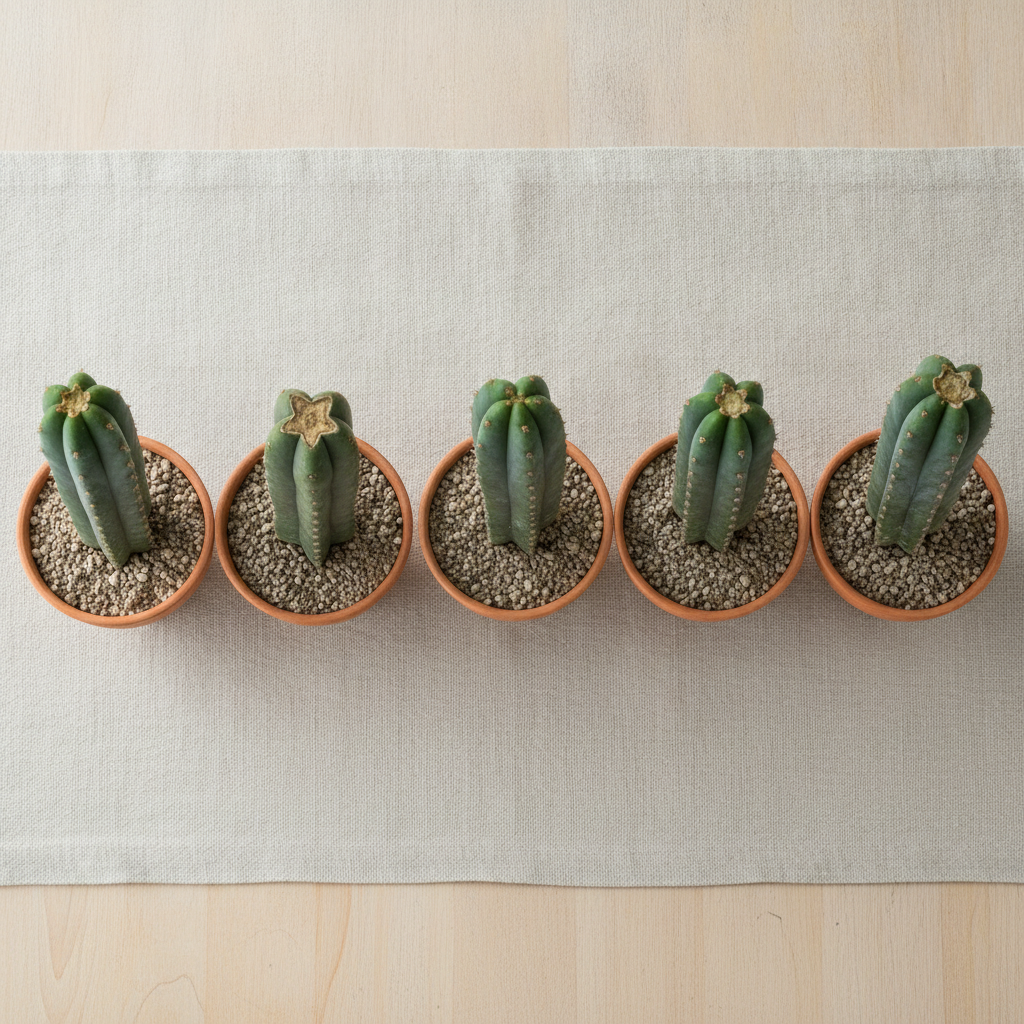
A callus is the dry, hardened layer of tissue that forms over a fresh cut on a cactus, sealing the wound the way a scab protects a graze. It is the plant’s natural defence against infection and water loss, and it is the single most important step in propagation. Planting a freshly cut, still-moist stem straight into soil almost guarantees rot, because the open wound draws in moisture and the fungi and bacteria that travel with it. Give the cut time to callus first and the same cutting will root cleanly and reliably.
Stem Cuttings: Step-by-Step
This is the primary method and the one to reach for in almost every case. Choose a firm, healthy column or side branch to take your cutting from.
- Wearing thick gloves, use a clean, sharp, sterilised knife to cut a 10 to 20 centimetre (4 to 8 inch) section from the top of a healthy stem.
- Note which end was the bottom, as the cutting must be planted the same way up that it grew.
- Set the cutting somewhere dry, shaded and airy, and leave the cut end to callus for one to three weeks until it is fully dry and hardened.
- Once calloused, insert the bottom end two to four centimetres (one to one and a half inches) into a pot of dry, gritty cactus mix, just deep enough to stand it upright.
- Place the pot in bright, indirect light and leave it dry for a week, then begin watering very sparingly.
- After several weeks, test for rooting by gently tugging the cutting; resistance means roots have formed and you can move it to its normal bright spot and care routine.
Pro Tip — Bigger Cuttings Root Faster: A larger cutting carries more stored water and energy, so it establishes more reliably than a small one. A column of 15 centimetres or more will usually root with far less drama than a short stub.
Dividing Offsets: Step-by-Step
A mature, clustering organ pipe cactus sometimes produces offsets or branches low on the plant, and these can be separated as a second route to new plants. The principle is identical to stem cuttings: separate cleanly, callus, then pot dry.
- Identify a well-developed offset or low branch at the base of the cluster.
- Cut it away cleanly at its junction with the parent using a sterilised blade, taking any roots it may already have.
- If the offset is rootless, set it aside to callus for one to two weeks just as you would a cutting.
- Pot the calloused or rooted offset into dry, gritty mix and keep it in bright, indirect light.
- Wait a week before watering lightly, then settle it into the standard soak-and-dry routine once new growth appears.
Troubleshooting Propagation
| Problem | Likely Cause | Solution |
|---|---|---|
| Cutting goes soft and black at the base | Planted before the cut calloused, or kept too wet | Recut above the rot, callus longer, and pot in drier mix |
| Cutting shrivels and never roots | Too dry for too long, or no root initiation | Give a little more warmth and the occasional light watering once calloused |
| No roots after many weeks | Cool conditions or taken outside the growing season | Be patient; move somewhere warm and bright and wait for the warm months |
| Cutting leans or falls over | Not yet rooted and unsupported | Prop it upright with grit or small stakes until roots anchor it |
Pests & Diseases
A well-grown organ pipe cactus in a bright, airy spot is remarkably trouble-free, and most of the problems owners encounter trace back to husbandry rather than to pests. The handful of insects that do bother cacti are easy to manage if you catch them early, and the diseases are overwhelmingly the result of too much moisture rather than infection that arrives out of nowhere.
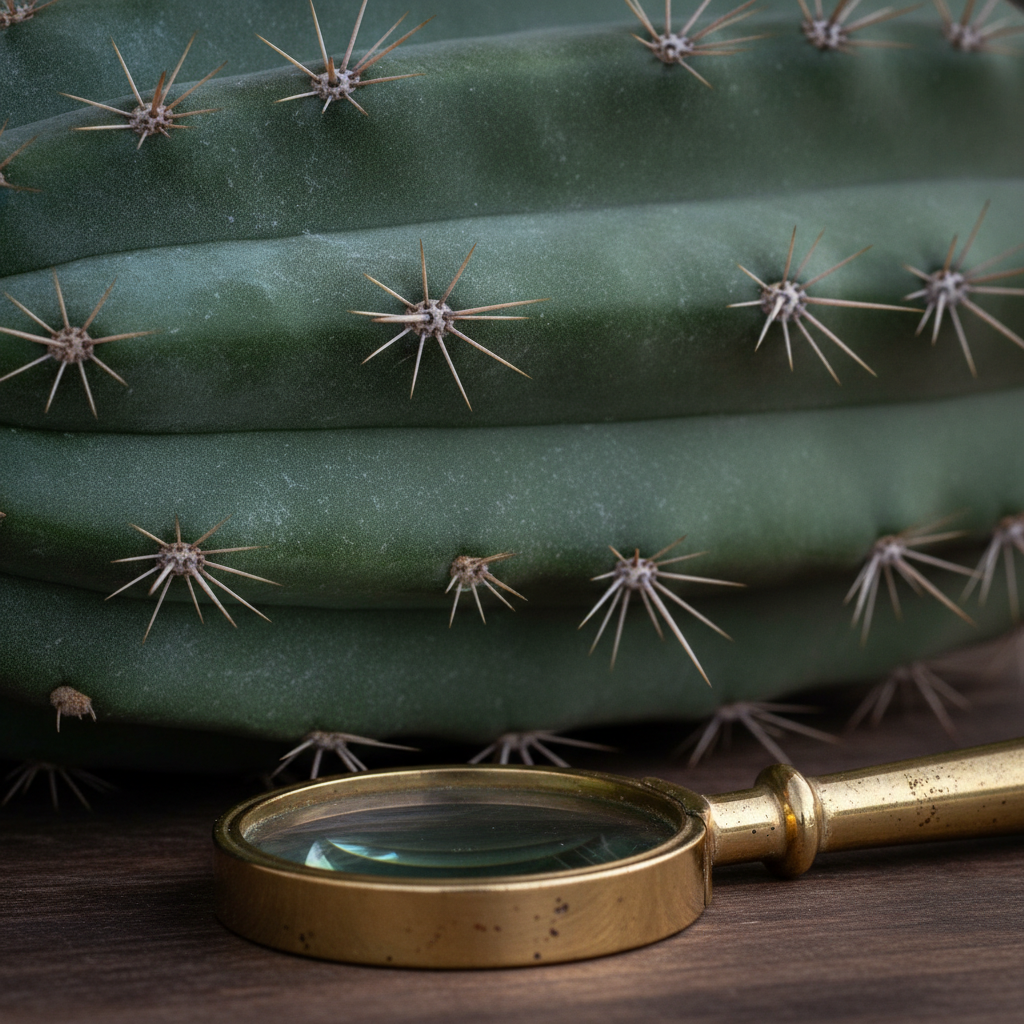
Prevention is mostly a matter of inspection. The ribbed stems and tight spine clusters give pests plenty of places to hide, so it pays to look the plant over closely from time to time, ideally with a magnifier, paying special attention to the crevices between the ribs and the joints where stems meet.
Common Pests
Mealybugs (Pseudococcus species)
Mealybugs are the most common pest of indoor cacti, appearing as small, soft, white cottony tufts tucked into the ribs and spine clusters. They suck sap and weaken the plant, leaving behind a sticky residue that can encourage sooty mould.
Treatment: Dab each insect with a cotton bud dipped in isopropyl alcohol, which kills them on contact. For heavier infestations, treat the whole plant with a systemic insecticide or an insecticidal soap, and isolate it from other plants until clear.
Spider Mites (Tetranychus urticae)
Spider mites thrive in hot, dry conditions and are tiny enough to be hard to see, but they leave fine webbing and a stippled, bronzed discolouration on the stem surface as they feed. They can build up quickly on a stressed plant.
Treatment: Wipe the stems with a damp cloth to remove webbing and mites, then treat with a miticide or insecticidal soap, repeating every few days to break the breeding cycle. Improving airflow helps prevent their return.
Scale Insects (Diaspididae family)
Scale appear as small, hard, brown or grey bumps clinging tightly to the stem, often along the ribs. Like mealybugs they feed on sap and can be surprisingly stubborn because their waxy shells protect them from many sprays.
Treatment: Scrape or pick off individual scales, or loosen them with an alcohol-dipped cotton bud, then follow up with a systemic insecticide to reach any you have missed and any crawlers still hatching.
Common Diseases
Root and Stem Rot (Fusarium and Phytophthora species)
This is by far the most serious threat to an organ pipe cactus and it is caused almost entirely by overwatering or poor drainage. It shows as a soft, darkening, often foul-smelling decay that usually starts at the base and spreads upward through the stem.
Treatment: Act fast. Cut well above any visible rot with a sterile blade, let the healthy upper section callus, and re-root it as a cutting. Discard the rotten base and its soil. Once rot reaches the core there is no saving the original plant.
Fungal Spotting (various pathogens)
Damp, stagnant air and water sitting on the stems can lead to corky or sunken spots on the surface. These blemishes are usually cosmetic rather than fatal, but they signal that conditions are too humid or poorly ventilated.
Treatment: Improve airflow, reduce watering, and keep water off the stems. Badly affected tissue will not heal but the spread can be halted by drying out the plant’s environment.
Pest and Disease Summary
| Pest / Disease | Identification | Treatment |
|---|---|---|
| Mealybugs | White cottony tufts in ribs and joints | Alcohol on a cotton bud, insecticidal soap, isolate |
| Spider mites | Fine webbing, stippled bronzing | Wipe down, miticide or soap, improve airflow |
| Scale | Hard brown or grey bumps on stems | Scrape off, systemic insecticide |
| Root and stem rot | Soft, dark, smelly decay from the base | Cut above rot, callus, re-root the healthy top |
| Fungal spotting | Corky or sunken surface spots | Improve airflow, reduce moisture |
Prevention Strategies
The best defence is the same set of conditions that keeps the plant thriving in the first place: bright light, fast-draining soil, careful watering and good airflow. A cactus grown this way is rarely stressed enough to attract pests or succumb to disease, and any problem that does arise is usually caught early during routine inspection.
Quarantine is the other key habit. Always isolate a newly bought plant for a couple of weeks before placing it near your others, as nursery stock is a frequent source of mealybugs and scale. Check new arrivals thoroughly, and keep tools sterilised between plants to avoid spreading anything you cannot see.
Pro Tip — Treat at the First Sign: A single mealybug is far easier to deal with than a colony. The moment you spot one, treat the whole plant rather than just the visible insect, because for every pest you can see there are usually several hidden deeper in the ribs.
Popular Varieties
The organ pipe cactus is a single botanical species rather than a plant with a long list of cultivated forms, so the variation you will encounter is largely natural rather than the product of breeding. Across its wide range the species shows two recognised subspecies that differ in stature and branching, and growers also sometimes group it informally with the other tall columnar cacti it resembles on the shelf.
For the home grower the practical point is that almost any organ pipe cactus you buy will be the typical upright form, and care is identical whichever you have. The distinctions below are worth knowing mostly for interest and for choosing a plant whose habit suits your space.
| Variety | Stem Appearance | Light Needs | Growth Rate | Availability |
|---|---|---|---|---|
| S. thurberi subsp. thurberi | Tall, upright clustered columns | Full sun | Slow | Common |
| S. thurberi subsp. littoralis | Shorter, more sprawling, denser branching | Full sun | Slow | Uncommon |
| Seed-grown juveniles | Single slim column, not yet branched | Full sun | Very slow | Common |
| Mature branched specimens | Many tall pipes from the base | Full sun | Slow | Rare and costly |
Featured Varieties
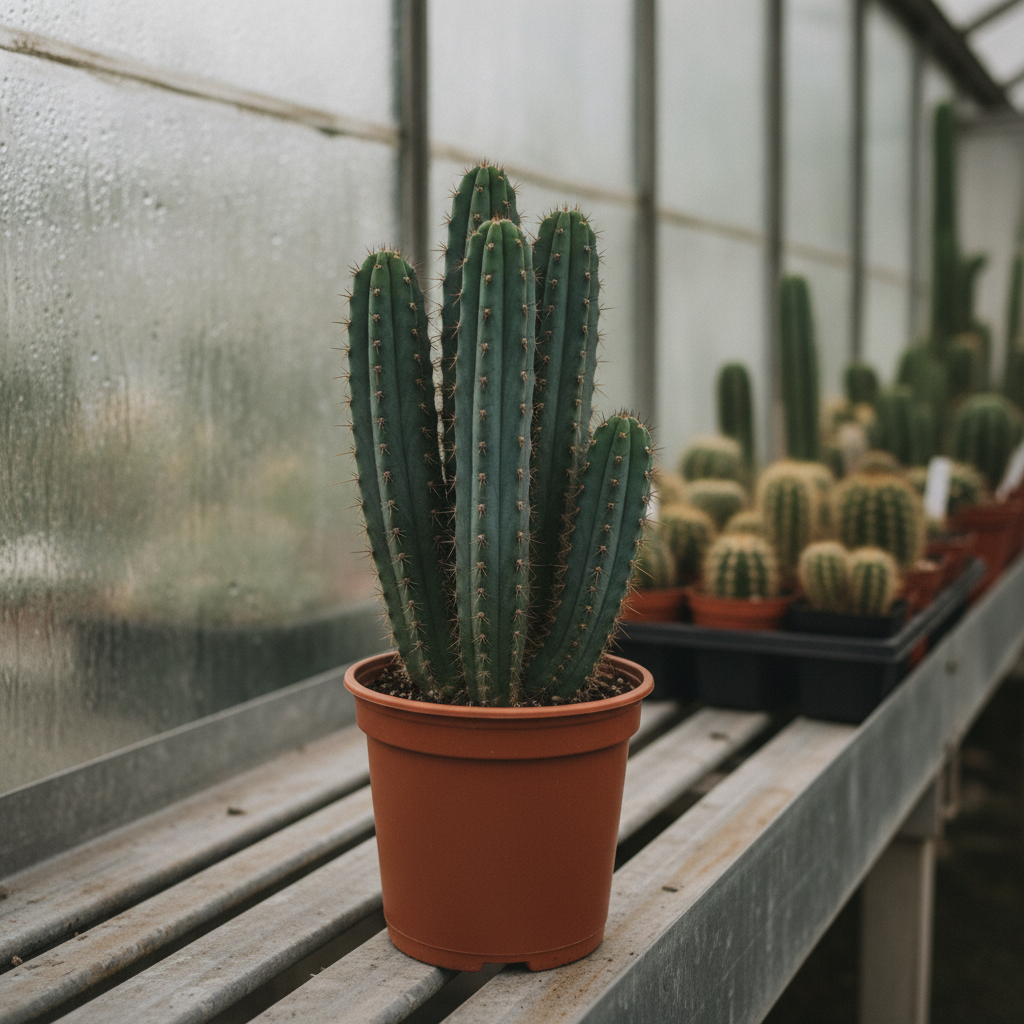
Subspecies thurberi
The classic inland form, with a tight cluster of tall, vertical blue-green pipes rising from the base. This is the plant most people picture and the one most often sold, prized for its crisp ribs and upright, sculptural habit.
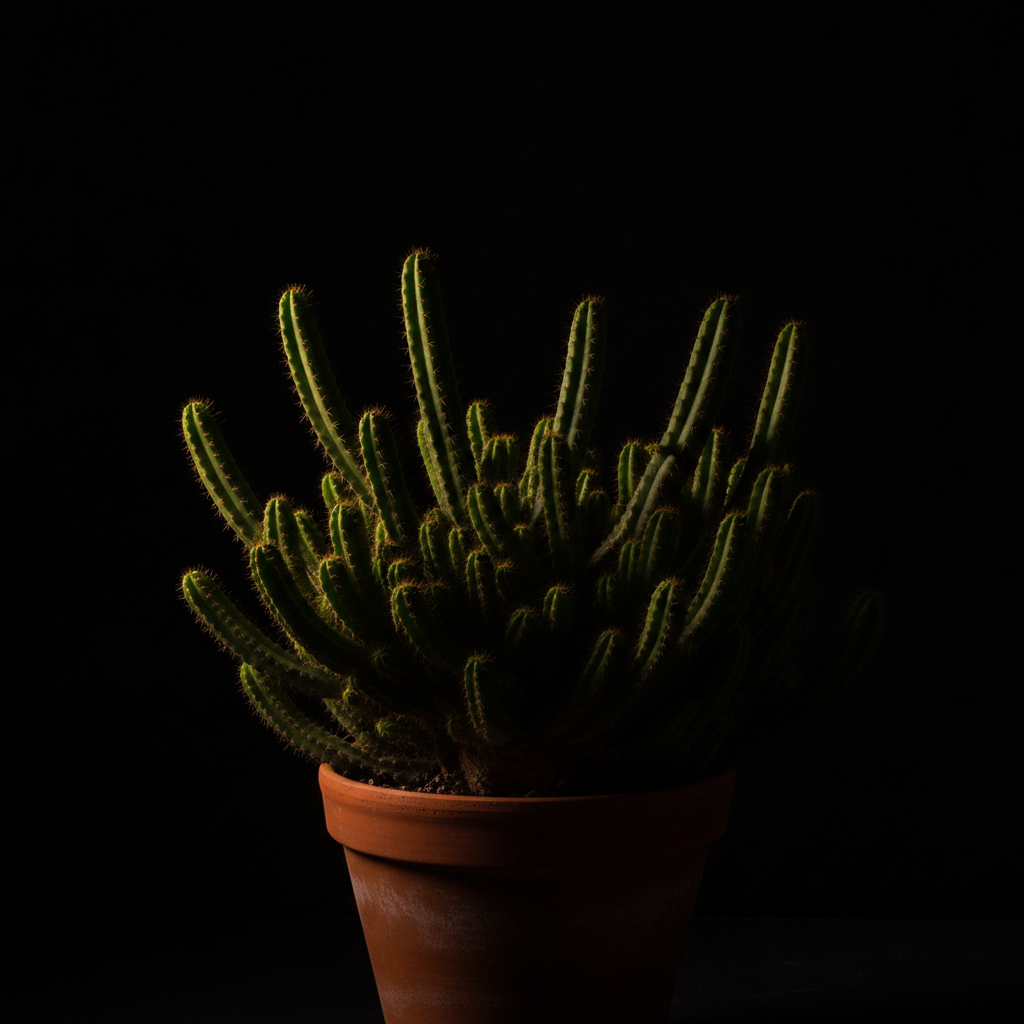
Subspecies littoralis
The coastal form from the Baja peninsula, shorter and more sprawling than the inland type, branching densely near the base into greener, slightly thinner stems. It makes a fuller, lower cluster and is a collector’s favourite where available.
Variety Profiles in Detail
Subspecies thurberi (Stenocereus thurberi subsp. thurberi)
This is the type form of the species, native to the inland Sonoran Desert across Arizona and Sonora. It develops into a striking candelabra of tall, slender columns that all rise more or less vertically from a short basal trunk, and in time a mature wild plant can carry dozens of pipes. Indoors it keeps this upright character at a fraction of the size, making it the most architectural and the most widely available choice.
Subspecies littoralis (Stenocereus thurberi subsp. littoralis)
Found along the coast of Baja California Sur, this subspecies has adapted to a milder, more humid maritime climate. It tends to be shorter and to branch much more freely close to the ground, forming a broad, dense, somewhat sprawling thicket of stems rather than a tall narrow cluster. It is less commonly offered as a houseplant but is sought after by collectors for its fuller, bushier silhouette.
Choosing the Right Variety for Your Space
For most homes the choice is simply whatever specimen you can find, and the standard upright subspecies thurberi is both the most available and the most dramatic in a minimalist interior. If you have the rare opportunity to choose, pick the tall inland form for a vertical accent in a narrow corner or beside a sunny window, and the sprawling coastal form if you want a fuller, lower cluster for a wide sill or a sunroom bench. Whichever you grow, give it the brightest spot you have and the same lean, gritty care, and it will reward you for decades.
Frequently Asked Questions
How fast does an organ pipe cactus grow indoors?
Slowly. Even in ideal conditions you can expect only a few centimetres of new growth a year, and growth all but stops in winter. This is a plant to enjoy for its form rather than for any dramatic change, but its slowness also means it holds its shape and scale for many years without outgrowing its spot.
Will my organ pipe cactus flower indoors?
Rarely. The fragrant, funnel-shaped flowers open at night and appear only on large, mature plants that have had years of strong light and a proper cool, dry winter rest. Most indoor specimens never reach the size or maturity needed, so treat any bloom as a special bonus rather than an expectation.
Is the organ pipe cactus safe around pets?
It is not chemically toxic to cats or dogs, so a nibble will not poison them. The genuine hazard is physical: the sharp spines can cause painful injuries to a curious animal or child. Place the plant well out of reach to keep everyone safe.
Why is my cactus turning yellow or soft at the base?
A soft, yellowing or darkening base is almost always a sign of rot from overwatering or poor drainage. Stop watering immediately, check the roots, and if rot is present, cut well above the damage and re-root the healthy top as a cutting. Switch to a grittier mix and a stricter dry-out routine going forward.
Why is the new growth thin and pale?
Thin, pale, stretched growth is etiolation, the plant’s response to insufficient light. The remedy is to move it to a much brighter position, ideally a sun-facing window or under a grow light. The existing stretched section will not thicken, but new growth in stronger light will return to a normal, sturdy diameter.
How often should I really water it?
There is no fixed schedule. Water only when the soil has dried out completely, which tends to be every two to three weeks in summer and as little as once a month or less in winter. The interval depends on your light, warmth and pot, so judge by the dryness of the mix and the weight of the pot rather than by the calendar.
Can I move my cactus outside in summer?
Yes, and it loves it, provided you acclimatise it gradually so the tissue grown under glass does not sunburn. Move it out once nights are reliably warm, increase its sun exposure over a week or two, and bring it back indoors well before temperatures fall toward 10 degrees Celsius (50 Fahrenheit) in autumn, as it is not frost-hardy.
How do I handle such a spiny plant when repotting?
Protect your hands with thick gloves and wrap a band of folded newspaper, a strip of foam, or a length of old hose around the stems to use as a handle. This lets you lift and steady the plant without gripping the spines directly, which is both safer for you and gentler on the cactus.
Is the fruit really edible?
It is. In its native range the ripe red fruit, known as pitaya dulce, is harvested and eaten fresh or made into syrups and drinks, and it is considered one of the finest of the desert fruits. An indoor plant is very unlikely to flower and fruit, however, so this is part of the species’ wild story rather than something to expect on a windowsill.






