

Few houseplants carry their name as honestly as the Limelight Dracaena. Where most foliage settles into deep forest tones, the broad, arching blades of Dracaena fragrans ‘Limelight’ glow in an almost electric chartreuse, a colour that seems to hold light even in a dim room. It is a plant that reads as exotic yet asks for very little, which is precisely why it has travelled from tropical West Africa into living rooms, lobbies and north-facing hallways across the world. This guide walks through everything that separates a Limelight that merely survives from one that genuinely thrives.
- Quick Reference
- Why the Limelight Dracaena Makes a Great Houseplant
- Light
- Watering
- Soil and Potting
- Fertilising
- Propagation
- Pests and Problems
- Varieties and Relatives
- Frequently Asked Questions
Quick Reference
| Botanical name | Dracaena fragrans ‘Limelight’ (sometimes listed as Dracaena deremensis ‘Limelight’) |
| Common names | Limelight Dracaena, Neon Dracaena, Lime Corn Plant |
| Family | Asparagaceae |
| Origin | Tropical West Africa (species range across Sudan to Mozambique) |
| Light | Bright indirect to moderate; tolerates low light |
| Water | When the top 5 cm (2 in) of soil dries out |
| Humidity | Average room humidity, happier above 40 per cent |
| Temperature | 18 to 27 degrees C (65 to 80 degrees F) |
| Mature size indoors | 1 to 1.8 metres (3 to 6 ft) tall |
| Toxicity | Toxic to cats and dogs if eaten |
| Difficulty | Easy, forgiving of neglect |
Why the Limelight Dracaena Makes a Great Houseplant
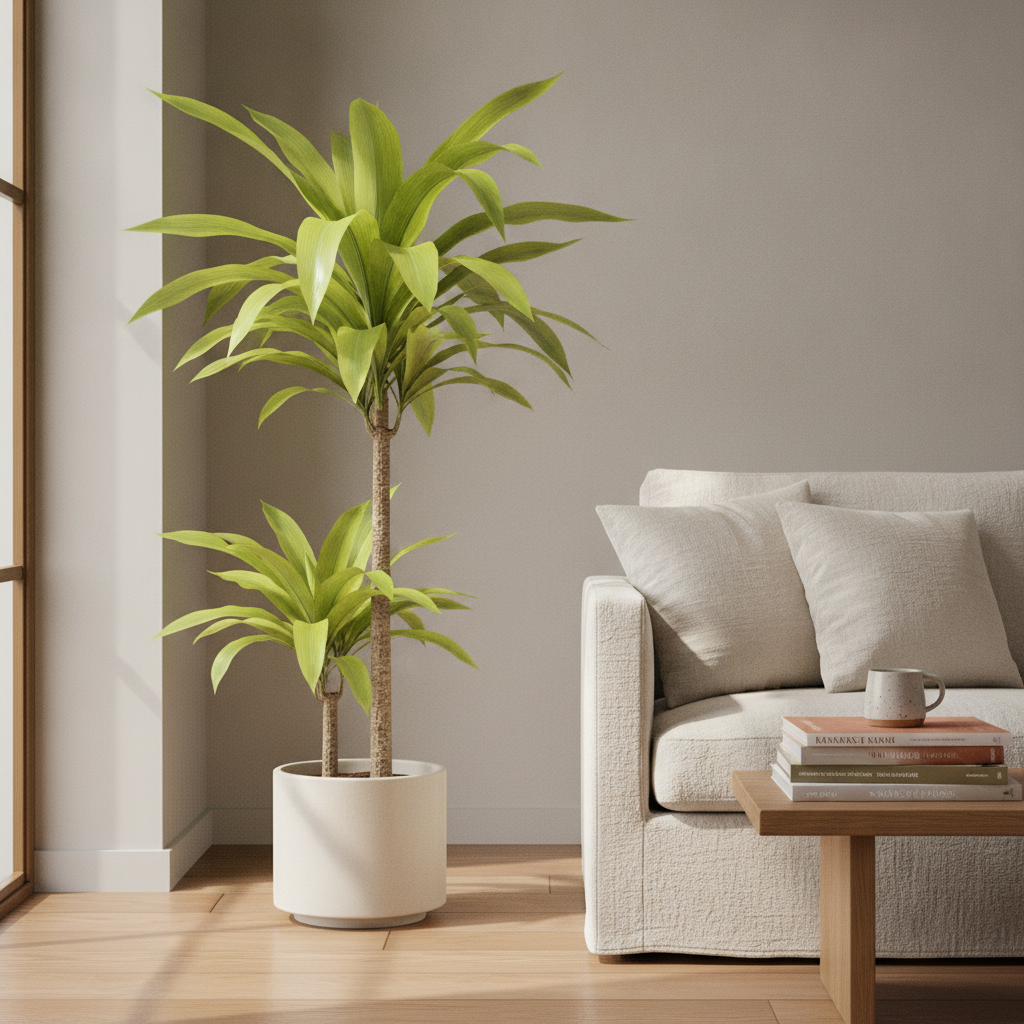
The Limelight belongs to the same forgiving clan as the corn plant and the snake plant, a group of African dracaenas that evolved under the dappled, unpredictable light of forest margins. That heritage is the secret to its easygoing nature indoors. It is built to cope with stretches of low light, irregular rainfall and the kind of benign neglect that finishes off fussier tropicals. For anyone who has watched a calathea sulk or a fern crisp at the edges, the Limelight feels almost too cooperative.
What sets this cultivar apart from its greener cousins is colour. New leaves emerge in a vivid, almost fluorescent yellow-green and mature to a slightly deeper chartreuse, so the whole plant glows rather than recedes. In a shaded corner where a darker plant would simply disappear, the Limelight does the opposite, drawing the eye and bouncing what little light there is back into the room. It also happens to be one of the dracaenas most often cited in research on indoor air, valued for steadily processing common household compounds while quietly going about its growth.
Structurally it is an upright, architectural plant. A mature specimen carries its strappy leaves in a loose fountain atop one or more woody canes, giving height and presence without the sprawl of a vining plant. That makes it a natural choice for filling a vertical gap beside a sofa, framing a doorway or softening the hard lines of an office. It grows slowly enough that it rarely outpaces its setting, yet steadily enough to feel alive.
Pro Tip — Start with the light, not the plant: The single biggest predictor of a happy Limelight is matching it to a spot before you buy. Walk your home at midday, note where you can read a book comfortably without a lamp, and place the plant just inside that zone. Everything else in this guide is easier once the light is right.
Light
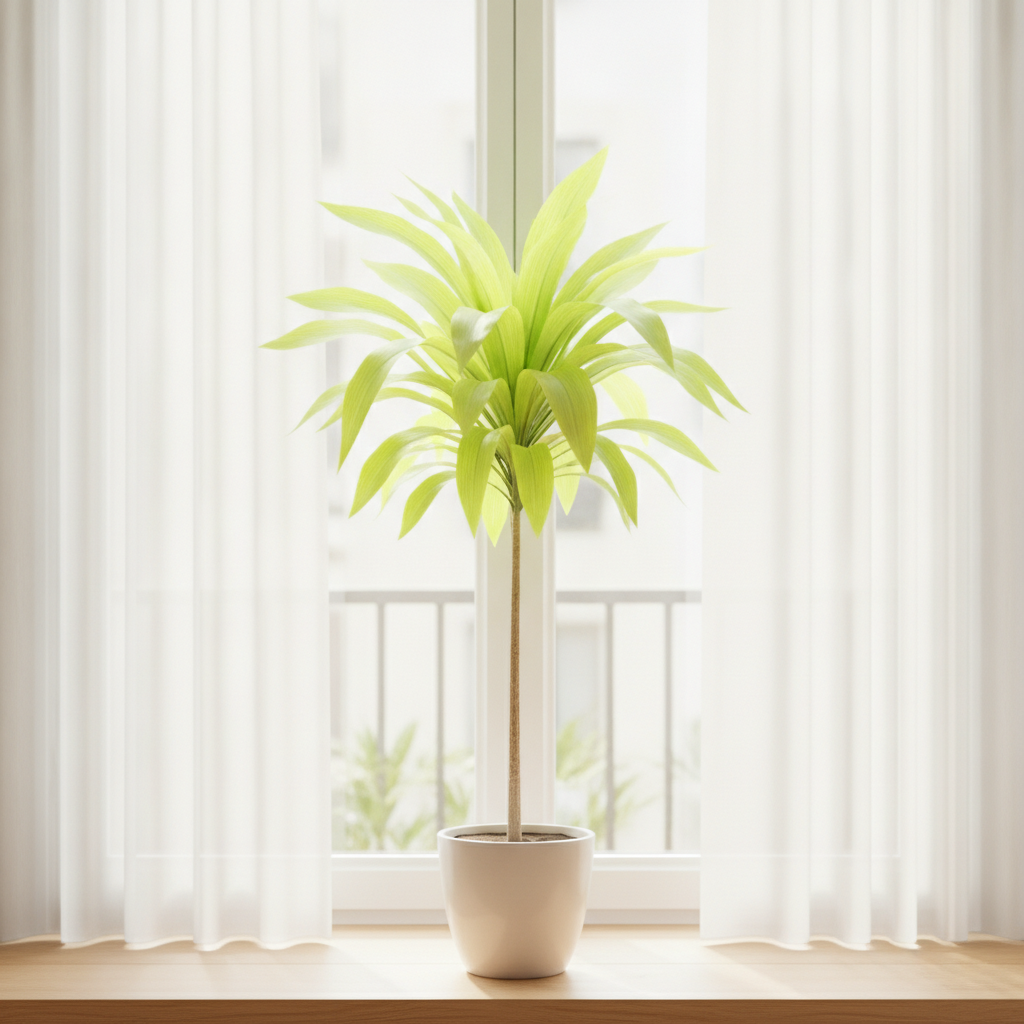
Light is where the survive versus thrive distinction becomes most visible with this plant, quite literally, in the colour of the leaves. A Limelight will live in genuinely low light, tucked several metres from a window, and will hold its shape for a long time. What it will not do in deep shade is keep its glow. Starved of light, the bright chartreuse drifts towards a flatter mid-green and new growth slows to a crawl. The plant is not dying, but it has stopped performing the one trick you bought it for.
The sweet spot is bright, indirect light. An east-facing windowsill that catches gentle morning sun, or a position a metre or two back from a south or west window with a sheer curtain in between, suits it perfectly. In that kind of light the new leaves come through at their most luminous and the canes stay compact rather than stretching. What the Limelight will not tolerate is harsh, direct midday sun through unshaded glass. Those pale leaves contain less protective pigment than a dark-leaved plant, so they bleach and scorch quickly, leaving dry tan patches that never recover.
If your only option is a dim interior, the plant will still earn its place, just rotate it into brighter light for a week every month or two if you can, or supplement with a simple full-spectrum LED grow light on a timer. A few hours of artificial light a day is enough to keep the colour and pace of growth respectable. Turn the pot a quarter turn each time you water so that every side gets its share and the plant grows evenly rather than leaning towards the window.
Warning — Reading the leaves: Pale, washed-out new growth and long bare gaps between leaves mean too little light. Crispy bleached patches on the upper leaf surfaces mean too much direct sun. Both are easy to fix by moving the plant a metre in the right direction before the damage spreads.
Watering
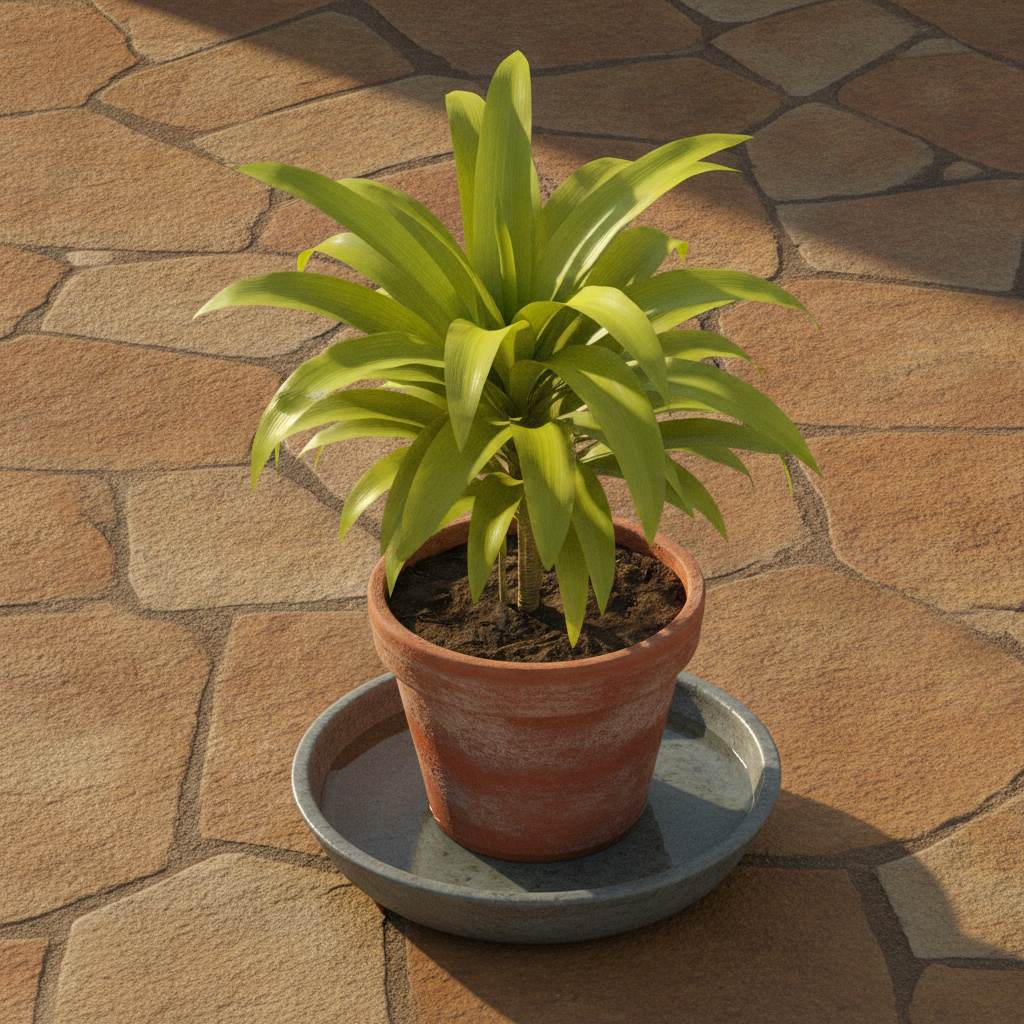
More Limelight Dracaenas are killed by kindness than by neglect. Like most dracaenas, this plant stores a little moisture in its canes and resents sitting in wet soil, so the guiding principle is to water thoroughly and then wait. Let the top 5 cm (2 in) of the mix dry out before you water again. In practice that usually means watering roughly once a week in the warm growing months and every ten days to a fortnight through winter, but a finger pushed into the soil tells you far more than any calendar.
When you do water, do it properly. Take the plant to a sink or use a long-spouted can and add water steadily until it runs freely from the drainage holes, then let it drain completely before the pot goes back on its saucer. This flushes the whole root ball and washes salts down and out. Never leave the pot standing in a tray of water, because constantly saturated roots are the express route to root rot, the most common cause of a sudden decline in an otherwise healthy plant.
Water quality deserves a mention, because dracaenas are unusually sensitive to it. The species is prone to leaf-tip burn from fluoride and, to a lesser extent, the chlorine and boron found in some tap water. If you notice brown, dead tips forming a thin dry margin around otherwise healthy leaves, your water is the likely culprit. Switching to filtered or rainwater, or simply leaving tap water to stand uncovered overnight before use, usually stops new damage. Trim existing brown tips with clean scissors, following the natural leaf shape, for a tidier look.
| Season | Approximate frequency | What to check first |
|---|---|---|
| Spring and summer | Every 7 to 10 days | Top 5 cm of soil dry |
| Autumn | Every 10 to 14 days | Cooler temperatures slow drying |
| Winter | Every 14 to 21 days | Soil dries slowly, err on the dry side |
Soil and Potting
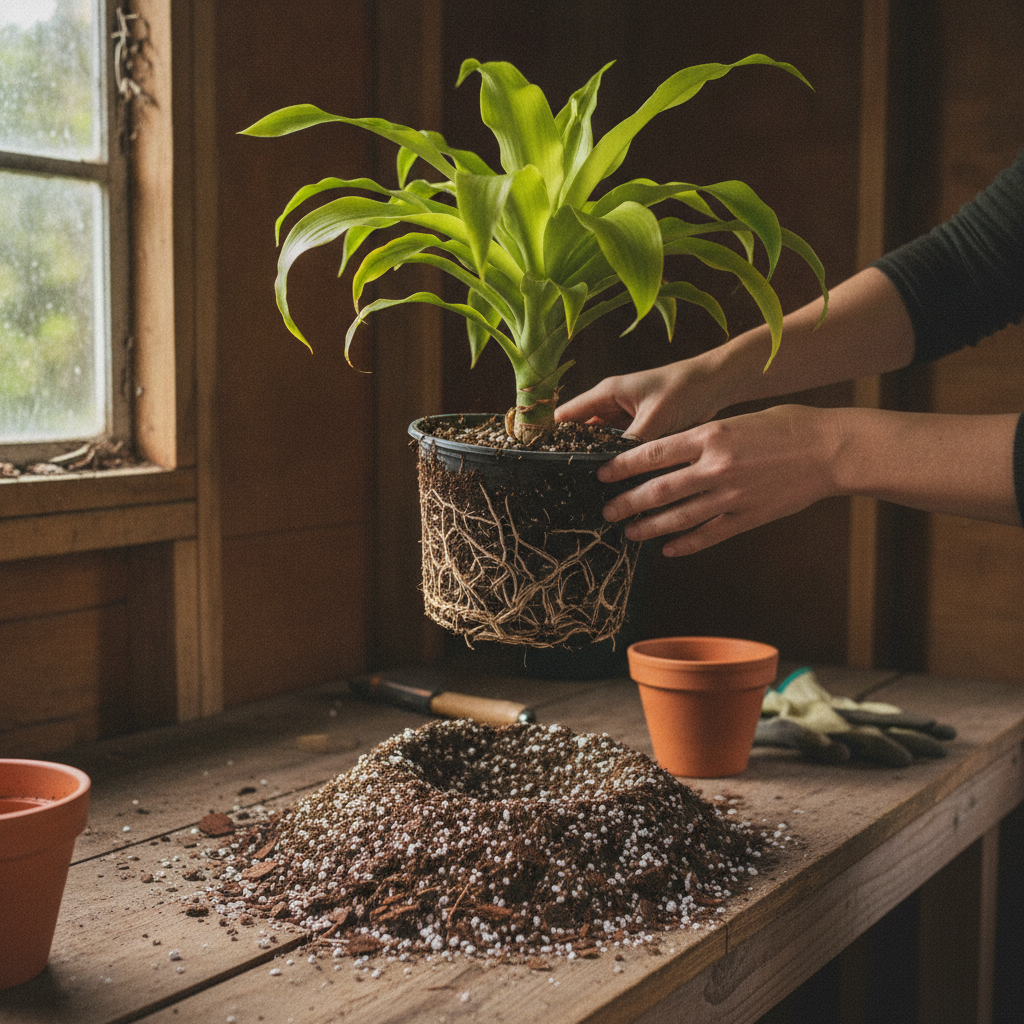
The Limelight is not fussy about soil chemistry, but it is particular about drainage. Its roots need air as much as water, and a dense, water-retentive mix is the surest way to invite rot. A good recipe is roughly two parts general-purpose houseplant compost to one part perlite or pumice, with a handful of orchid bark stirred through to open up the structure further. The aim is a mix that holds enough moisture to keep the plant going for several days yet drains within seconds when you pour water through it.
Choose a pot with drainage holes, always. A decorative cover pot is fine for looks, but the plant itself should sit in a container that can shed excess water. Terracotta is a forgiving choice because its porous walls let the root ball breathe and dry a little faster, which suits a plant that prefers the drier side. If you favour a glazed or plastic pot for moisture retention, simply lean a touch more cautious with the watering can.
Repotting is an occasional task rather than an annual chore. The Limelight is content to be a little snug and grows slowly, so it typically needs moving up only every two to three years, ideally in spring as growth picks up. Step up by a single pot size, no more, because a vast pot full of damp compost around a small root ball simply stays wet and raises the rot risk. Between repots, refresh the top few centimetres of soil each spring to renew nutrients without disturbing the roots.
Pro Tip — The drainage test: Before potting, wet a handful of your mix and squeeze it. It should clump briefly then crumble apart as you open your hand. If it stays in a dense, dripping ball, add more perlite or bark until it loosens. Your Limelight’s roots will thank you for the air pockets.
Fertilising
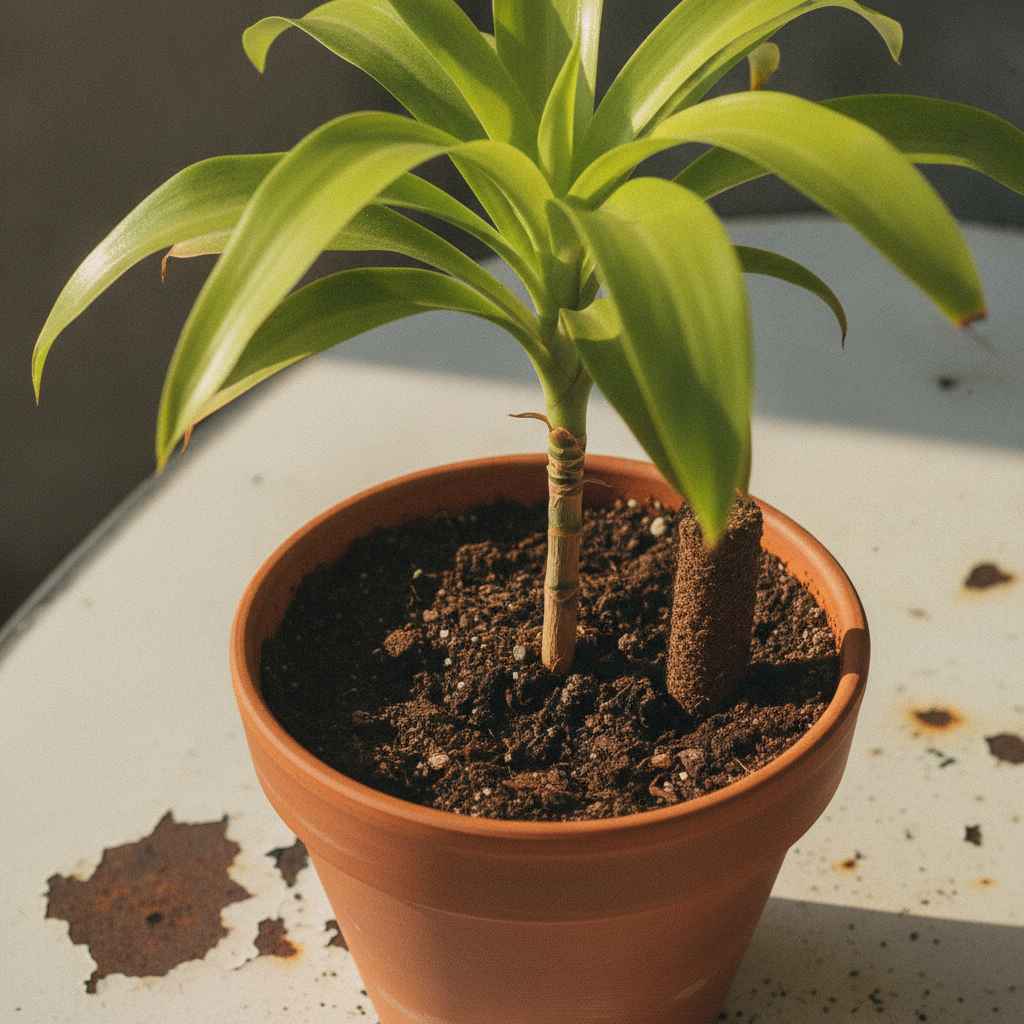
This is a modest feeder, and restraint serves it far better than generosity. During the active growing season from spring through to early autumn, a balanced liquid houseplant fertiliser diluted to half the recommended strength, applied roughly once a month, is plenty to keep new growth coming through at full colour. Always feed onto already-moist soil rather than a bone-dry root ball, which helps the nutrients spread evenly and protects the fine roots from a concentrated dose.
Through the darker months the plant’s growth naturally slows, and so should the feeding. Stop fertilising entirely from late autumn until you see fresh growth resume in spring. Feeding a resting plant simply leaves unused mineral salts to accumulate in the soil, and dracaenas are especially quick to show the consequences as brown, scorched leaf tips and margins. If you suspect a build-up, flush the pot thoroughly with plain water two or three times in succession to leach the excess away.
Slow-release fertiliser sticks or pellets are a convenient alternative for anyone who forgets a monthly routine, releasing a small, steady trickle of nutrients with each watering. They work well here precisely because the Limelight needs so little. Whichever method you choose, watch the plant rather than the label. Lush, well-coloured new leaves mean you have it right, while leggy, pale growth points to too little light far more often than too little food.
Propagation
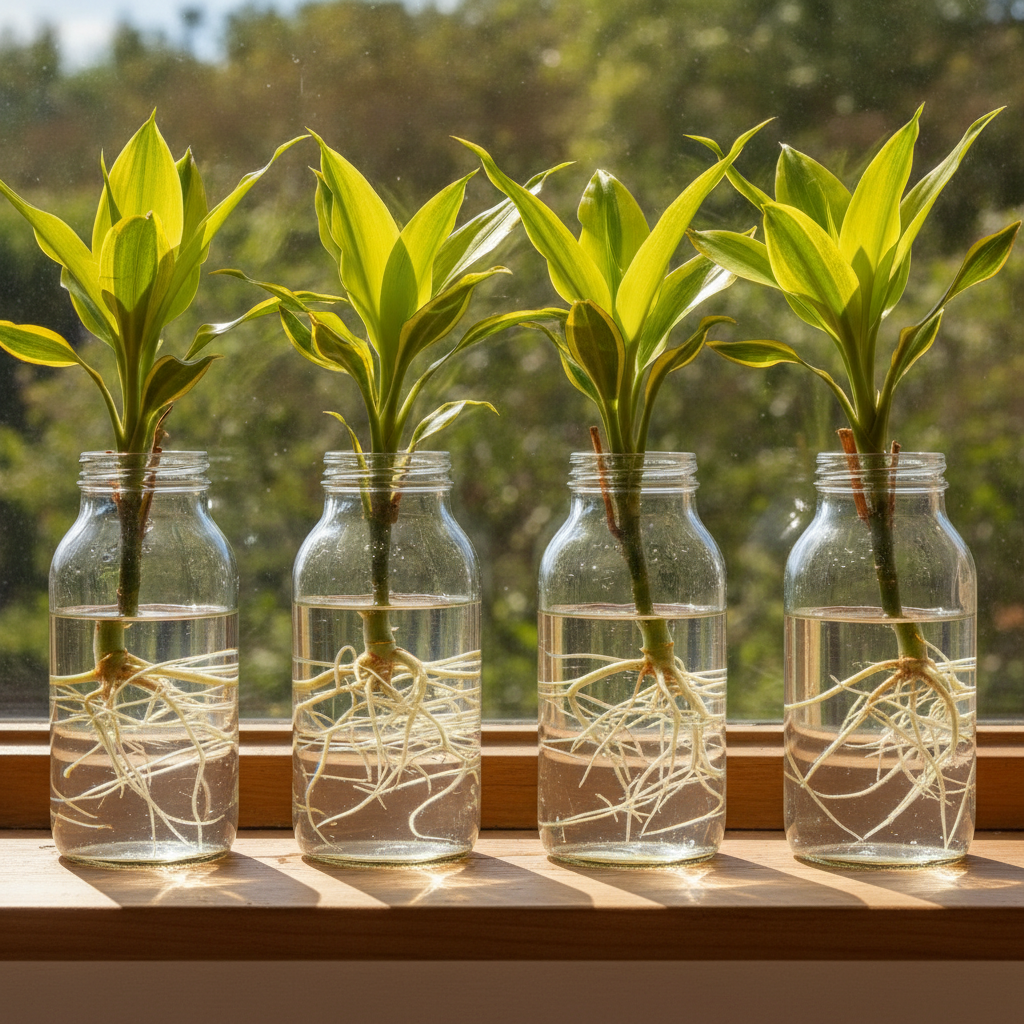
Propagating a Limelight is satisfyingly simple, and it doubles as a way to rejuvenate a plant that has grown tall and bare at the base. Unlike clumping plants that you split, dracaenas are propagated from stem cuttings, which means the same cut that gives you a new plant also encourages the parent to branch and bush out below the cut. Spring and early summer, when the plant is actively growing, give the fastest and most reliable results.
To take cuttings, use a clean, sharp knife or secateurs and cut a healthy section of cane 10 to 20 cm (4 to 8 in) long, noting which end was the bottom so you root it the right way up. You can take a leafy tip cutting from the top of a cane, or cut a bare length of cane into sections, each of which can sprout new growth from dormant buds. Follow these steps:
- Cut a healthy cane section and let the wound air-dry for an hour or two so it seals slightly.
- Place the cutting bottom-end down in a jar of clean, room-temperature water, or insert it into moist, free-draining propagation mix.
- Stand it somewhere warm and bright but out of direct sun, and refresh the water every few days if rooting in a jar.
- Wait for white roots to appear, which usually takes three to six weeks; tip cuttings root faster than bare cane sections.
- Once roots reach a few centimetres long, pot up into the standard well-draining mix and care for it as a mature plant.
Patience is the only real requirement. Bare cane sections can look inert for weeks before a bud swells and pushes out a fresh rosette of leaves, so resist the urge to disturb them to check progress. Keeping the cuttings warm, ideally above 20 degrees C (68 degrees F), speeds the whole process noticeably. There is no need for rooting hormone, though a dip will do no harm and may hurry along the more stubborn cane pieces.
Pests and Problems

The Limelight is robust, and most of its troubles are environmental rather than the work of insects. Still, a handful of pests will occasionally find their way onto an indoor plant. Spider mites are the most likely, especially in warm, dry air; their presence shows as fine pale stippling on the leaves and, in bad cases, delicate webbing where leaf meets stem. Raising humidity and wiping the foliage regularly discourages them, while a more established infestation responds to insecticidal soap or a diluted neem oil spray applied every few days until clear.
Mealybugs and scale are less common but worth knowing. Mealybugs appear as small white cottony tufts tucked into leaf joints, while scale shows up as flat brown discs clinging to stems and the undersides of leaves. Both can be dealt with by hand on a plant this size: a cotton bud dipped in rubbing alcohol dabbed directly onto each insect lifts them away, followed by a wider neem treatment to catch any survivors. Isolating an affected plant while you treat it stops the problem spreading to neighbours.
Most of the time, though, a struggling Limelight is telling you about its conditions, not its visitors. Brown leaf tips usually point to fluoride or salt in the water, or to very dry air. Yellowing lower leaves that drop are often a sign of overwatering, though a few old leaves yellowing and shedding from the base is simply normal ageing. Pale, leggy growth signals too little light. The table below sorts the common symptoms by their most likely cause.
| Symptom | Likely cause | Remedy |
|---|---|---|
| Brown, dry leaf tips | Fluoride or salts in water, dry air | Use filtered or stood water, raise humidity, flush soil |
| Yellow lower leaves, soft stems | Overwatering, soggy soil | Let soil dry, check drainage, reduce frequency |
| Pale, washed-out colour | Too little light | Move to brighter indirect light |
| Bleached or scorched patches | Direct midday sun | Filter the light or move back from glass |
| Fine webbing and stippling | Spider mites | Wipe leaves, raise humidity, treat with neem |
Warning — Keep it away from pets: Like all dracaenas, the Limelight is toxic to cats and dogs. Eating the leaves can cause vomiting, drooling and loss of appetite. It is not usually dangerous in small amounts, but place the plant out of reach of curious pets and contact a vet if you suspect a nibble.
Varieties and Relatives
The Limelight is one cultivar in a large and varied species. Dracaena fragrans has given rise to a whole family of foliage plants, from the deep green of ‘Janet Craig’ to the bold central stripe of the classic corn plant. If you fall for the Limelight’s easy temperament, these close relatives offer different colourways on the same dependable plant, and they share almost identical care.
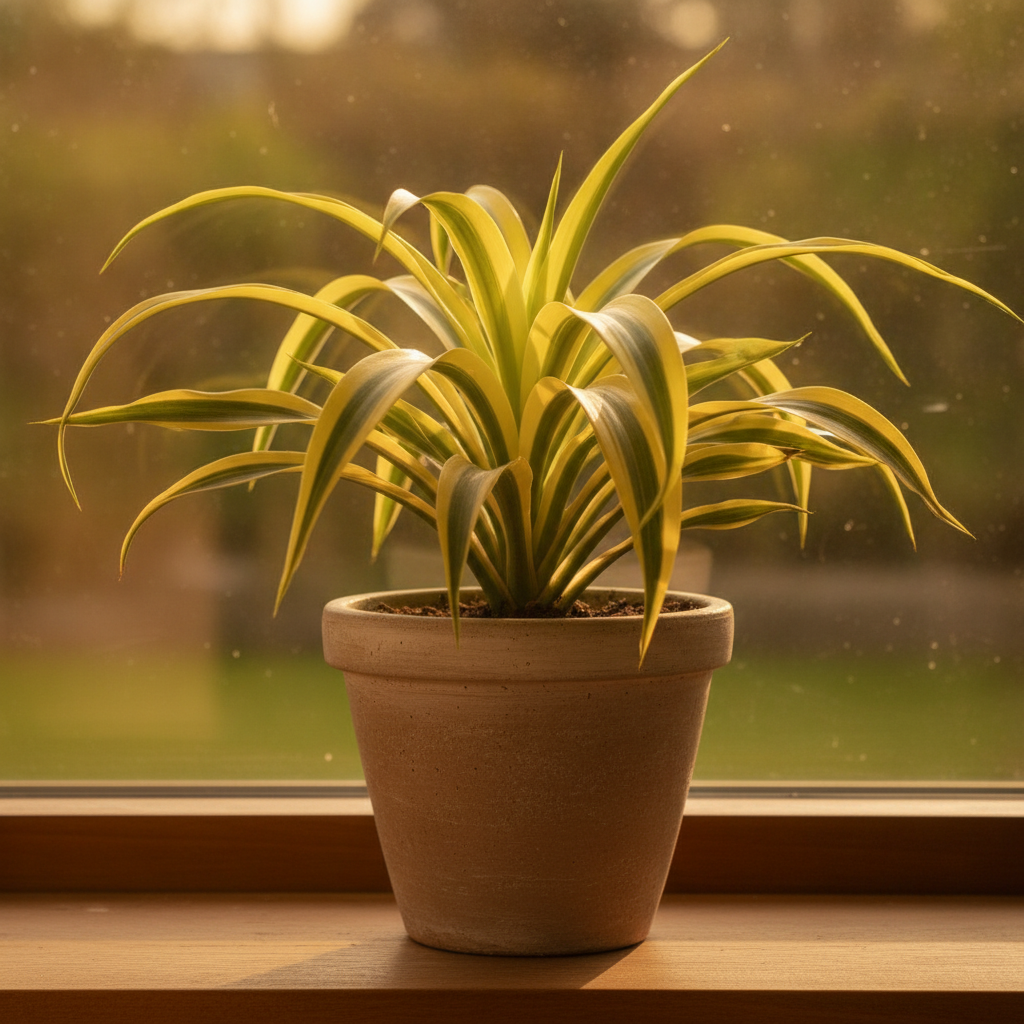
‘Lemon Lime’
A close, more patterned cousin, ‘Lemon Lime’ carries the same luminous energy but breaks it into stripes. Each strappy leaf is edged in bright chartreuse-yellow margins with softer grey-green central bands, giving a busier, more graphic look than the solid Limelight. It wants the same bright indirect light to keep its contrast crisp and reaches a similar height indoors.
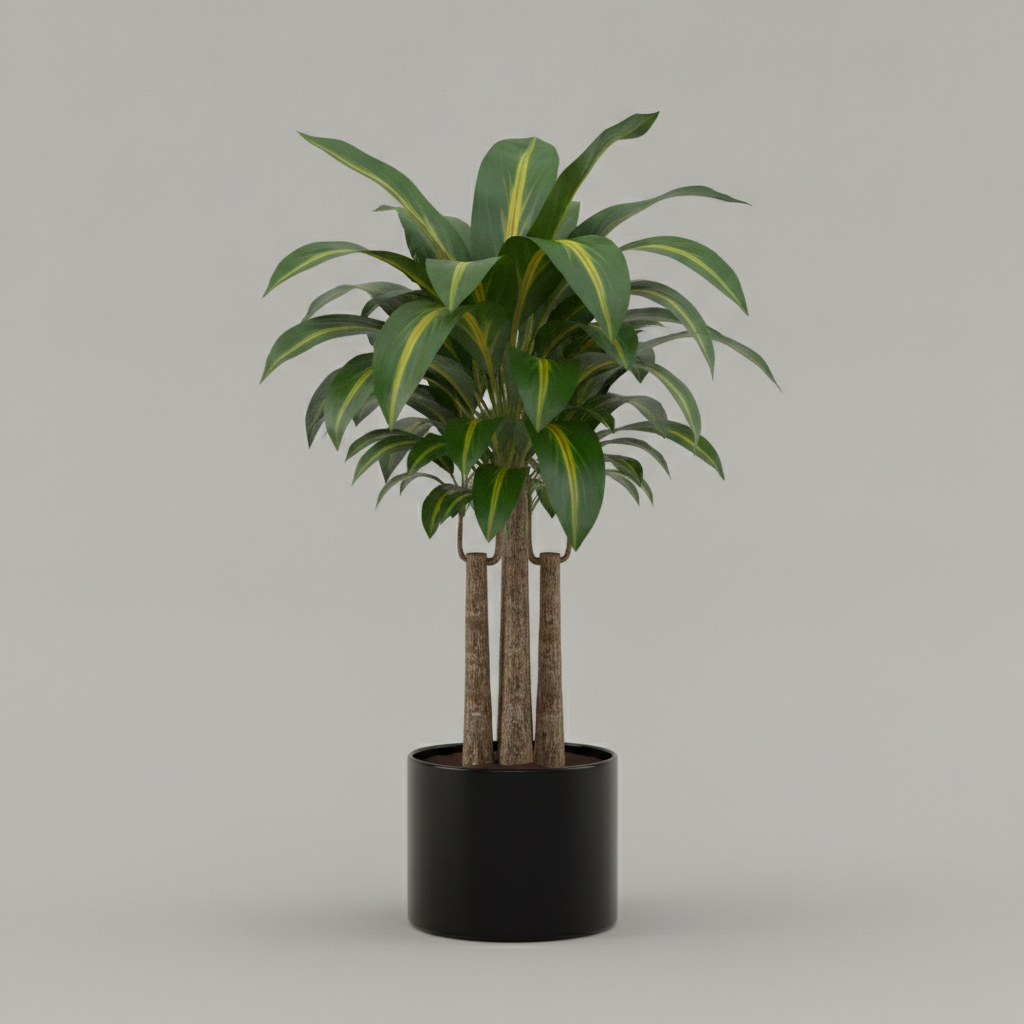
‘Massangeana’ (Mass Cane)
The original corn plant, ‘Massangeana’ is the tall, tree-like form most people picture when they hear dracaena. Its wide, gently arching leaves are deep green with a broad golden-yellow stripe down the centre, carried on thick woody trunks. It is the most architectural of the group and a popular floor plant for filling a corner with height.
Frequently Asked Questions
Why are the tips of my Limelight Dracaena turning brown?
Brown leaf tips are the classic dracaena complaint and usually come down to water quality. The genus is sensitive to fluoride and salts found in much tap water, which accumulate and burn the delicate leaf tips. Switch to filtered or rainwater, or leave tap water to stand overnight before using it, flush the soil occasionally to clear built-up minerals, and the new growth should come through clean.
Is the Limelight Dracaena safe for cats and dogs?
No. All dracaenas, including the Limelight, contain compounds called saponins that are toxic to cats and dogs. Eating the leaves can cause vomiting, drooling, dilated pupils in cats and a loss of appetite. It is rarely life-threatening, but it is best kept out of reach of pets, and you should contact a vet if you think your animal has chewed on it.
Can a Limelight Dracaena really survive in low light?
It can survive, but there is a trade-off. The plant tolerates low light better than almost any other coloured-leaf houseplant, which is part of its appeal for offices and dim corners. In poor light, however, the signature lime colour fades towards plain green and growth slows considerably. For the brightest foliage, give it bright indirect light, and rotate it into a sunnier spot now and then if it lives somewhere dim.
How big does a Limelight Dracaena get indoors?
Indoors it typically reaches 1 to 1.8 metres (3 to 6 ft) tall over many years, growing slowly on one or more upright canes. You can keep it shorter and bushier by cutting the canes back, which prompts new growth to branch from below the cut, and the removed tops can be rooted as cuttings to make new plants.
Why are the lower leaves yellowing and falling off?
A few of the oldest leaves at the base yellowing and dropping over time is completely normal as the plant lifts its canopy and forms its characteristic bare cane. If many leaves yellow at once, especially with soft stems or soggy soil, suspect overwatering instead. Let the soil dry further between waterings and confirm the pot drains freely, and the shedding should settle.






