
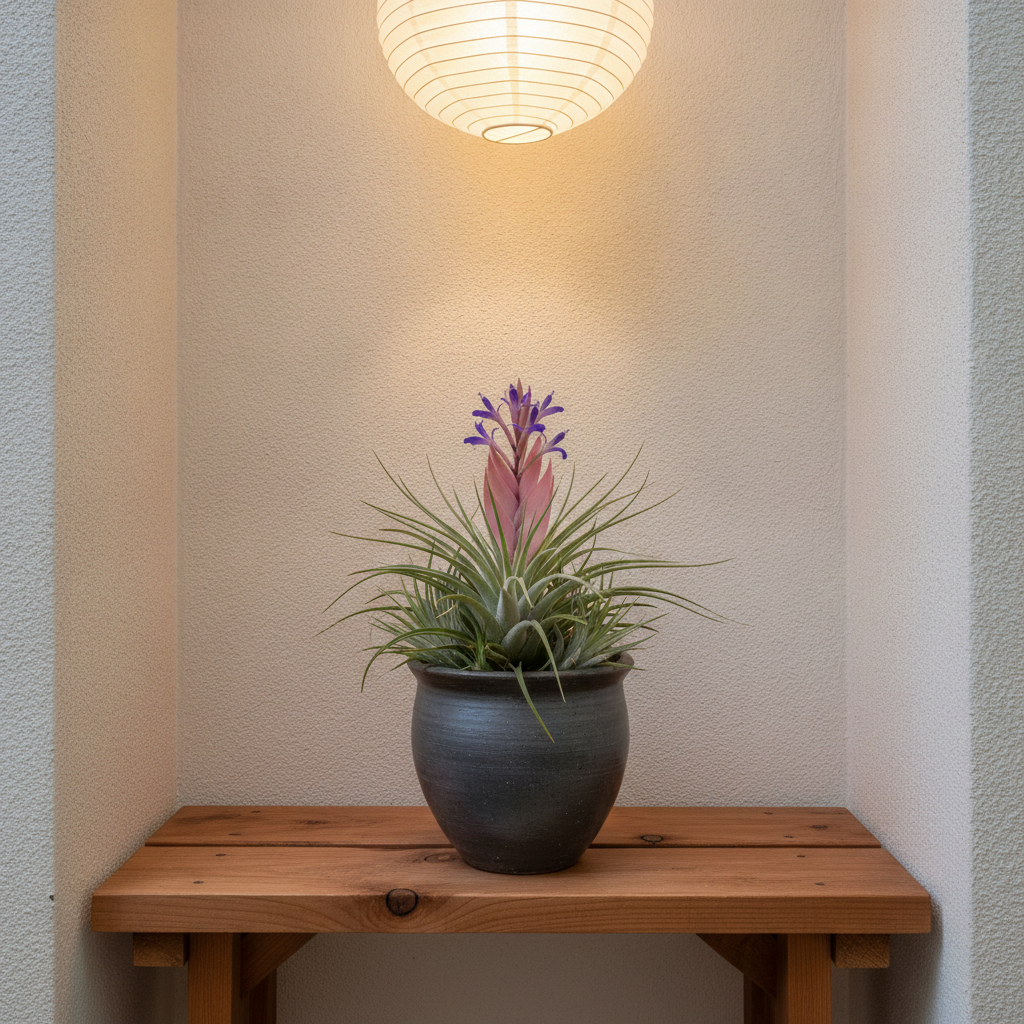
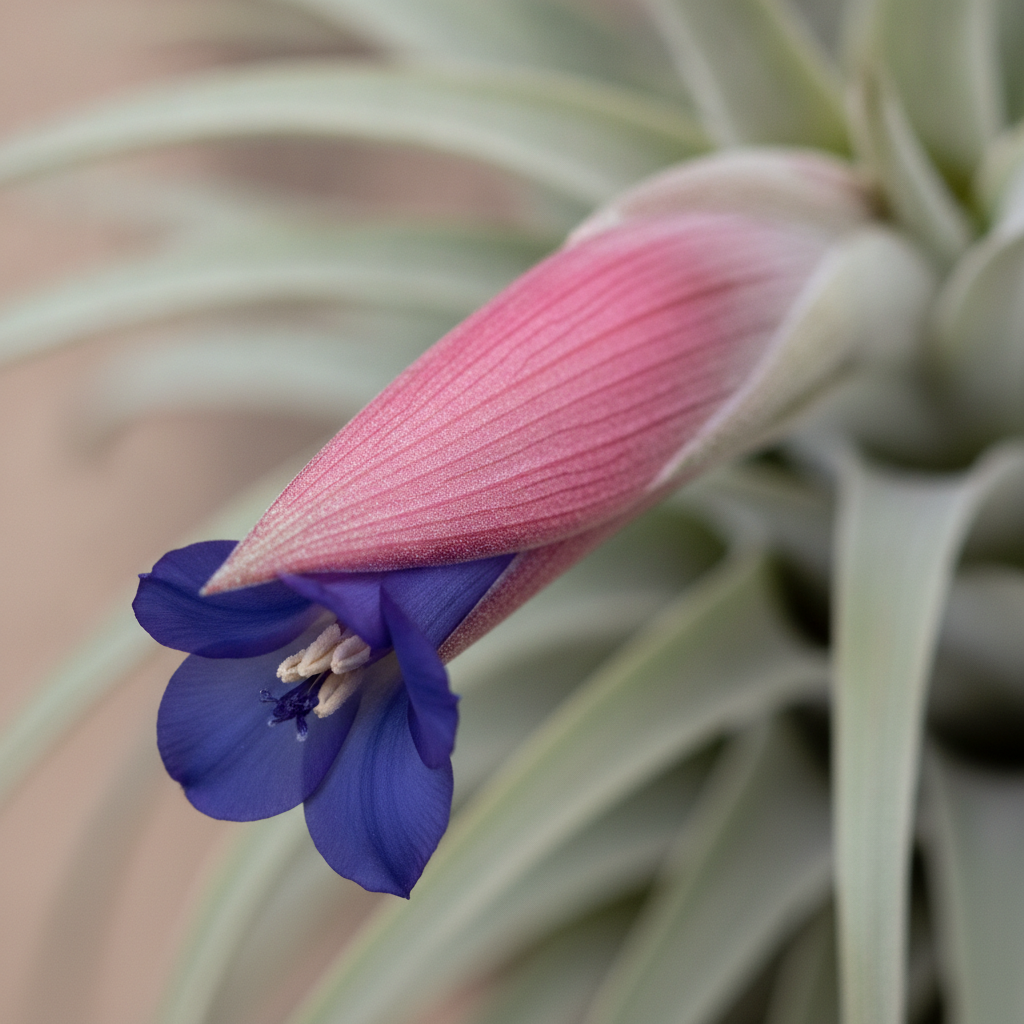
Most air plants earn their keep on foliage alone, but the orchid air plant (Tillandsia cyanea) breaks the mould by pushing up a flattened, paddle-shaped bract of intense rose-pink and opening a slow procession of violet-blue flowers along its edge. It is the bloom that draws people in, yet the reason it survives on so many windowsills is that beneath the drama sits a forgiving epiphyte that asks for very little soil and even less fuss. This guide walks through everything that separates an orchid air plant merely surviving from one that thrives, flowers, and eventually gifts you a new generation of pups.
- Quick Reference
- Why Grow the Orchid Air Plant
- Light
- Watering
- Soil and Mounting
- Fertilising
- Propagation
- Pests and Problems
- Varieties
- Frequently Asked Questions
Quick Reference
| Botanical name | Tillandsia cyanea |
| Common names | Orchid air plant, pink quill, pink quill plant |
| Family | Bromeliaceae |
| Origin | Cloud forests of Ecuador |
| Light | Bright, indirect light; gentle morning sun tolerated |
| Water | Mist two to three times weekly, or soak weekly; keep any potting medium barely moist |
| Humidity | Moderate to high, ideally 50 to 60 per cent or more |
| Temperature | 18 to 27 degrees Celsius (65 to 80 degrees Fahrenheit) |
| Growing medium | None required; loose bark or sphagnum if potted, or mounted bare |
| Fertiliser | Dilute bromeliad feed at quarter strength, monthly in spring and summer |
| Mature size | Rosette roughly 20 to 30 centimetres (8 to 12 inches) across |
| Toxicity | Non-toxic to cats and dogs |
| Difficulty | Easy to moderate |
Why Grow the Orchid Air Plant
Air plants tend to arrive in the home as curiosities, small silvery tufts glued to shells or wedged into glass globes, admired for their independence from pots. The orchid air plant is the member of the genus that turns that curiosity into a centrepiece. Where its cousins flower briefly and inconspicuously, Tillandsia cyanea raises a broad, flattened inflorescence, often called a quill or paddle, that flushes a saturated pink and holds that colour for two to three months. From the overlapping bracts emerge single violet-blue flowers, each lasting only a day or two but appearing in succession, so the plant seems perpetually in bloom through its display.

Native to the humid cloud forests of Ecuador, the species grows as an epiphyte, perching on tree branches and drawing moisture and nutrients from the air rather than the ground. This heritage explains its most useful trait as a houseplant: it does not depend on soil, so root rot from a heavy, waterlogged pot is far less likely than with a conventional plant. Unusually for a Tillandsia, though, cyanea is often sold established in a loose, open potting mix, because it does develop a modest anchoring root system and appreciates the extra humidity around its base. That gives the grower flexibility, since the plant can be kept potted, mounted on bark, or simply set in a decorative dish.
It is also a safe choice for households with animals. Like most bromeliads, the orchid air plant is non-toxic to cats and dogs, so a curious nibble will not send anyone to the vet. Combined with its compact size, its long flowering display, and its relaxed watering needs, it makes an ideal step up for anyone who has kept a mounted air plant alive and wants something with more presence.
Light
Light is the single lever that most reliably decides whether an orchid air plant will flower. In its native canopy it lives in the dappled brightness beneath the treetops, receiving plenty of light that has been softened as it passes through foliage above. Indoors, the equivalent is a position of bright, indirect light: near an east-facing window that catches gentle morning sun, or set back a metre or so from a brighter south or west aspect where the fierce midday rays are filtered by a sheer curtain.
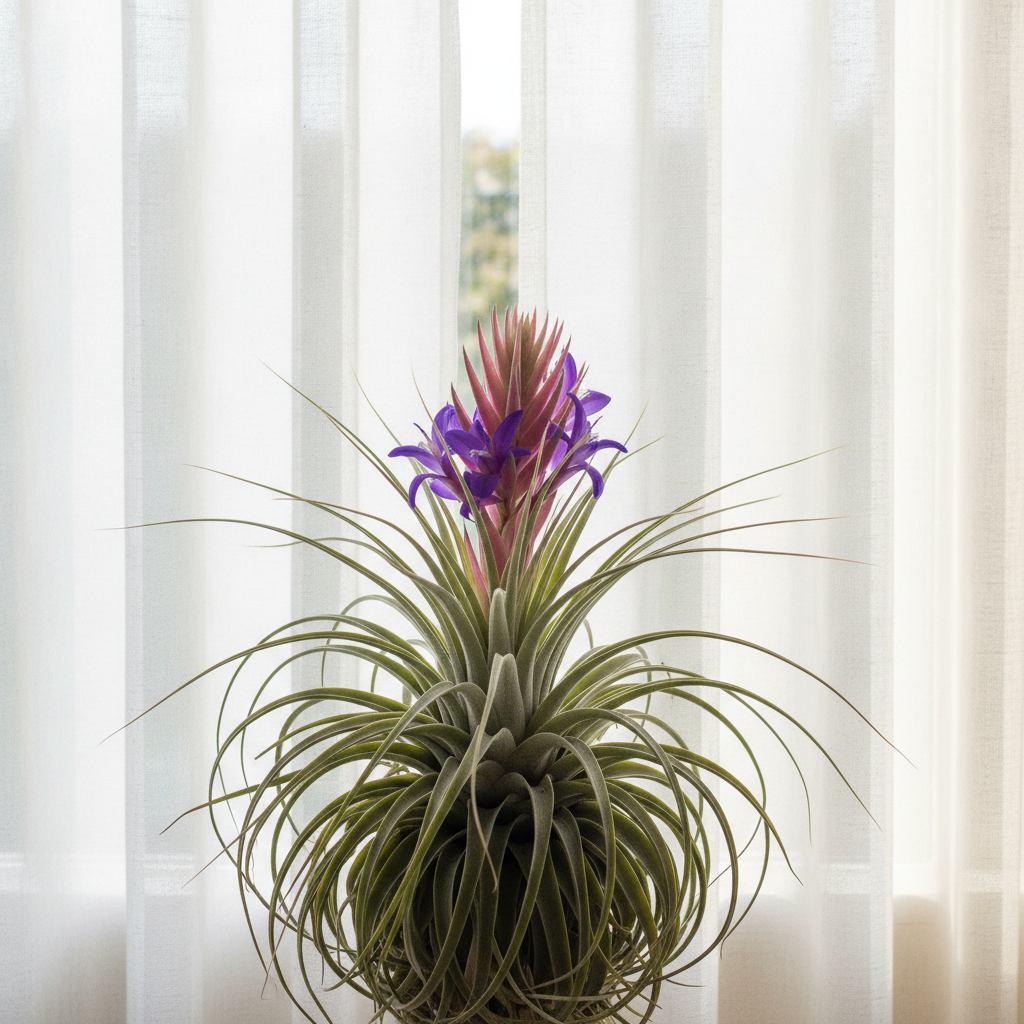
Too little light is the more common failing. In a dim corner the leaves stay soft and floppy, the silvery sheen of their scales fades to a plain green, and the plant will not muster the energy to form a bract. If you have grown one for a full year without a bloom and everything else seems right, insufficient light is almost always the culprit. Move it closer to a window before you change anything else. The reverse problem, too much direct sun, shows as bleached or crisped leaf tips and pale, scorched patches on the upper surfaces. A few hours of early sun is welcome, but hours of unfiltered afternoon glare through glass will burn the foliage.
Pro Tip — Reading the leaves: Healthy orchid air plant leaves are firm, arching, and dusted with a faint silver bloom of trichomes. If they turn deep glossy green and limp, the plant wants more light; if the tips brown and curl, it is getting too much direct sun. Let the foliage guide small adjustments rather than moving the plant repeatedly.
Watering
Because the orchid air plant is an epiphyte, it takes up most of its water through tiny scales on its leaves called trichomes rather than through its roots. Those scales are also what give the foliage its silvery cast, and they open to absorb moisture whenever water lands on the leaf. This changes how you should think about watering: rather than saturating a rootball, you are wetting the whole plant and then letting it dry.
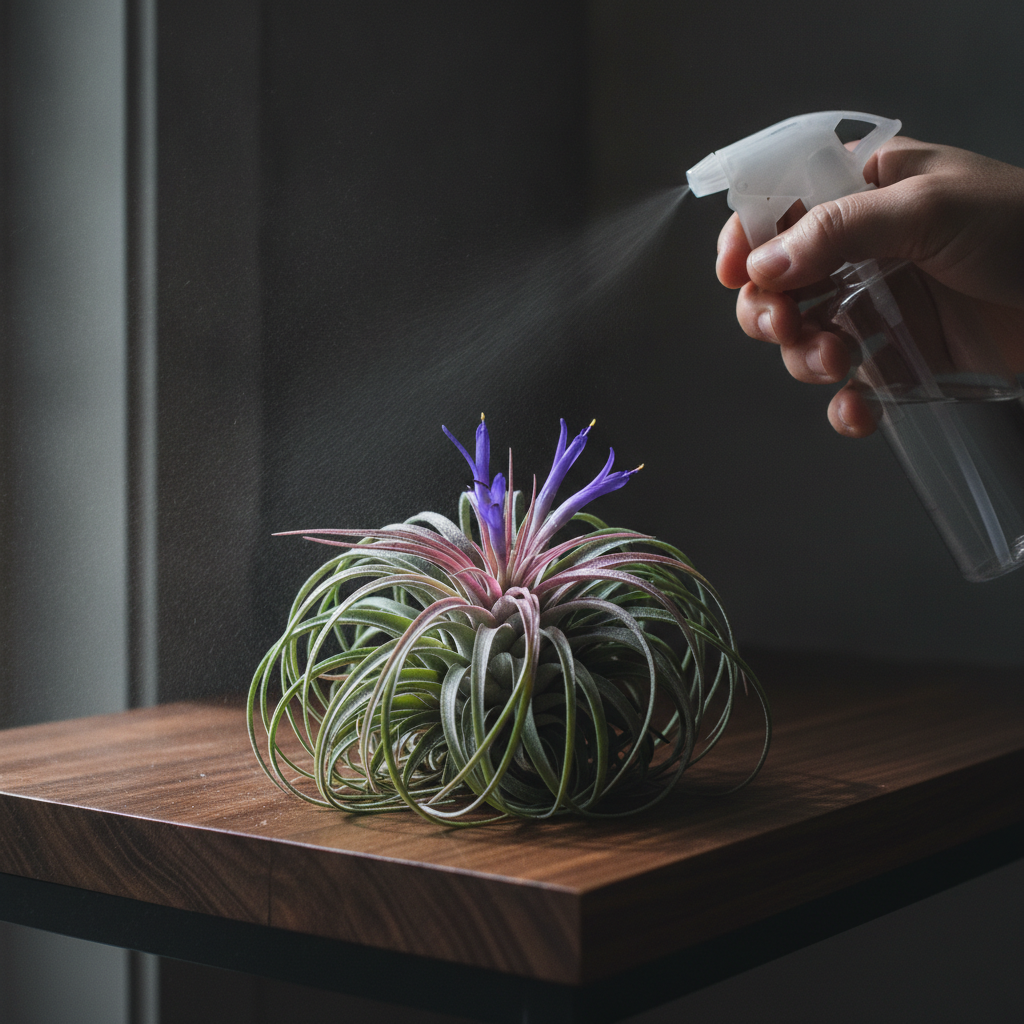
For a plant kept bare or mounted, mist thoroughly two to three times a week so the leaves glisten, or take it down every seven to ten days and soak it in a bowl of room-temperature water for twenty to thirty minutes. After any soak, shake off the excess and set the plant upside down or on its side to drain completely before returning it to its spot. For a potted specimen in loose bark or sphagnum, water by wetting the foliage and letting a little run through the medium, keeping that medium barely moist but never soggy. In every case the golden rule is the same: the plant must dry out within a few hours. Water trapped in the crown of the rosette or sitting in a stagnant pot is the fastest route to rot.
Rainwater, distilled water, or filtered water is preferable, because bromeliads are sensitive to the salts and minerals in hard tap water, which can build up on the trichomes and dull their function over time. If you only have hard tap water, letting it stand overnight helps a little, but collecting rainwater is the single kindest thing you can do for the plant. Frequency should flex with the season and your home: warm, dry, brightly lit rooms call for more frequent watering, while cool, humid, or dim conditions call for less. Judge by how quickly the plant dries rather than by the calendar alone.
Warning — Crown rot: Never leave water pooled in the centre of the rosette for long periods, especially in cool weather or poor air movement. A soft, browning, foul-smelling base means rot has set in, and by that stage the plant is usually beyond saving. Always let the crown dry within a few hours of watering.
Soil and Mounting
Strictly speaking, the orchid air plant needs no soil at all. In the wild it clings to bark with wiry roots that serve mainly as anchors, drawing nutrients from rain, mist, and the debris that washes past. That gives you three legitimate ways to display it, and none of them involves ordinary potting compost.
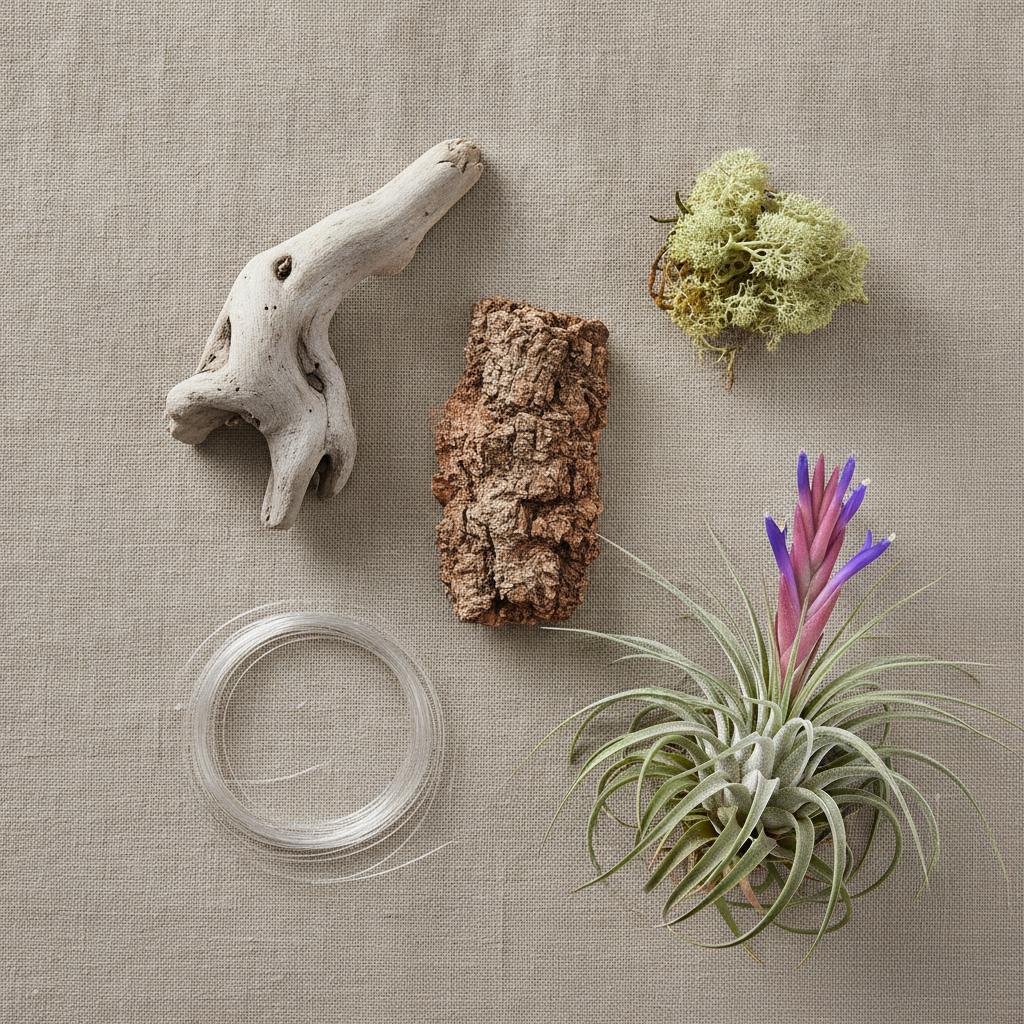
The first option is to grow it mounted, wiring or gluing the base to a slab of cork bark or a piece of driftwood with a small pad of sphagnum moss at the roots to hold a little humidity. The second is to keep it in the loose, open medium many nurseries sell it in, which is typically a blend of orchid bark, coarse perlite, and sphagnum that drains almost instantly while giving the roots something to grip. The third is simply to nestle it in a decorative dish or shallow bowl with no medium at all, treating it exactly like a classic mounted air plant. Whichever you choose, the priority is air. The roots and base must never sit in a dense, moisture-holding material, because that is precisely the condition ordinary compost creates and precisely what causes the plant to rot.
If you do repot a potted specimen, do it sparingly, only when the plant has clearly outgrown its container or the old bark has broken down into fine, sour-smelling particles. Lift it gently, shake away the spent medium, and settle it into fresh bark mix without burying the base of the rosette. Firm the mix just enough to hold the plant upright; it does not need to be packed. Good air circulation around the whole plant, not just the roots, is what keeps this species healthy, so avoid crowding it tightly against a wall or among other plants where the air stays still.
Fertilising
Feeding is light work for this plant, but a little at the right time makes a real difference to the size and colour of the bloom. Because it absorbs nutrients through its leaves, fertiliser is applied to the foliage rather than to a rootball, and it must be heavily diluted to avoid burning the delicate trichomes.
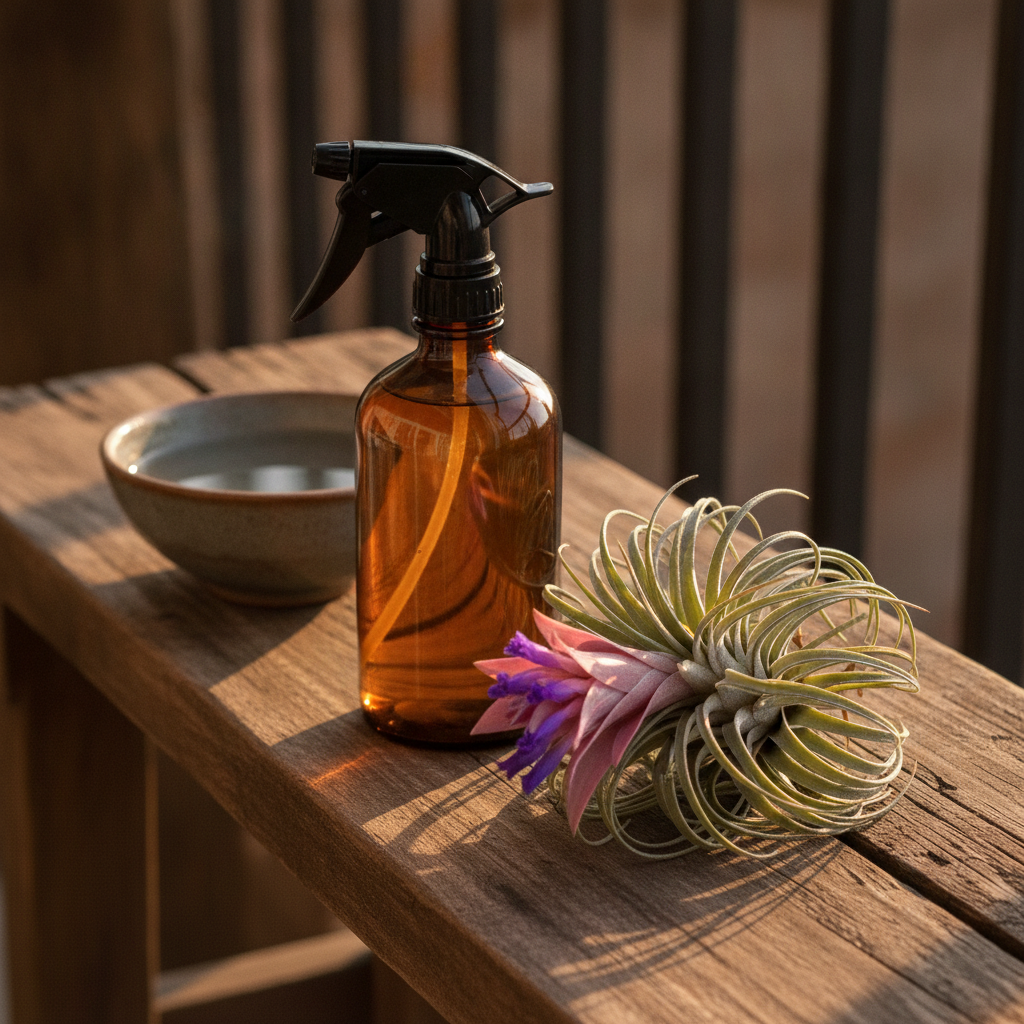
Use a fertiliser formulated for bromeliads or air plants if you can find one, or a balanced houseplant feed low in nitrogen and free of copper and boron, which bromeliads dislike. Mix it to about a quarter of the strength recommended on the label, then either add it to the water you soak the plant in or spray it lightly over the leaves. Once a month through spring and summer, the active growing season, is plenty. Stop feeding entirely in autumn and winter, when growth naturally slows and the plant is resting. Over-feeding does more harm than under-feeding: too much nitrogen produces soft, weak, elongated leaves and can actually discourage flowering, so err on the side of less.
Pro Tip — Timing the feed: A monthly dilute feed in the months leading up to the plant’s natural flowering season gives it the resources to build a large, richly coloured quill. Once the bract has coloured up, ease off; the display will last for months regardless, and heavy feeding at that point only encourages leafy growth at the expense of the flower.
Propagation
The life cycle of the orchid air plant carries a bittersweet twist that every grower should understand. Like all bromeliads, each rosette flowers only once. After that spectacular pink quill has run its course, the mother plant slowly begins to decline over the following months. This is not a sign of poor care; it is simply what the species does. The reward for that decline is a cluster of pups, offsets that emerge from the base of the mother and carry the plant into its next generation.
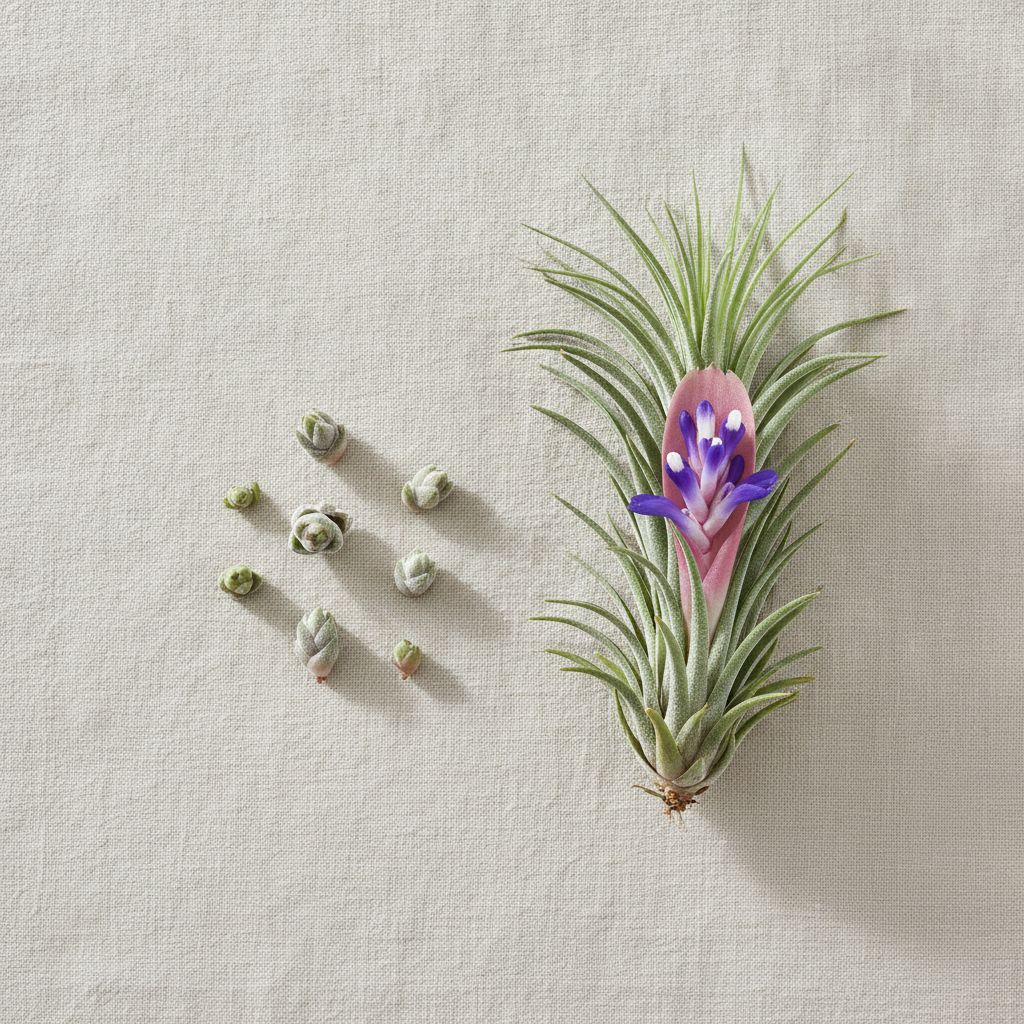
To propagate, wait until a pup has grown to at least a third, and ideally a half, of the size of the mother plant. At that point it has developed enough of its own root initials and leaf mass to survive on its own. Follow these steps to divide them cleanly.
- Hold the mother plant steady and locate where the pup joins her base.
- Using clean, sharp scissors or a sterilised blade, cut the pup away, taking a small sliver of the mother’s base tissue with it if you can, as this helps the pup establish.
- Let the cut surface dry in the open air for a few hours to callus over and reduce the risk of rot.
- Mount the pup on bark, set it in loose bark mix, or place it in a dish, exactly as you would a mature plant.
- Mist lightly and keep it in warm, bright, indirect light while it settles, then resume the normal watering routine.
You can also leave the pups attached and let them grow on around the spent mother, which will gradually form a fuller clump over time. This is the easiest approach and often the most attractive, since a well-grown clump can carry several rosettes and, in due course, several blooms. A pup typically takes one to three years to reach flowering size, so patience is part of the bargain. Seed propagation is possible but painstaking and very slow, and it is rarely worth the effort for the home grower when pups are so reliable.
Pests and Problems
The orchid air plant is not especially pest-prone, and most of the trouble it runs into is cultural rather than the fault of an insect. Even so, a few pests do target bromeliads, and knowing what to watch for lets you deal with them before they take hold.
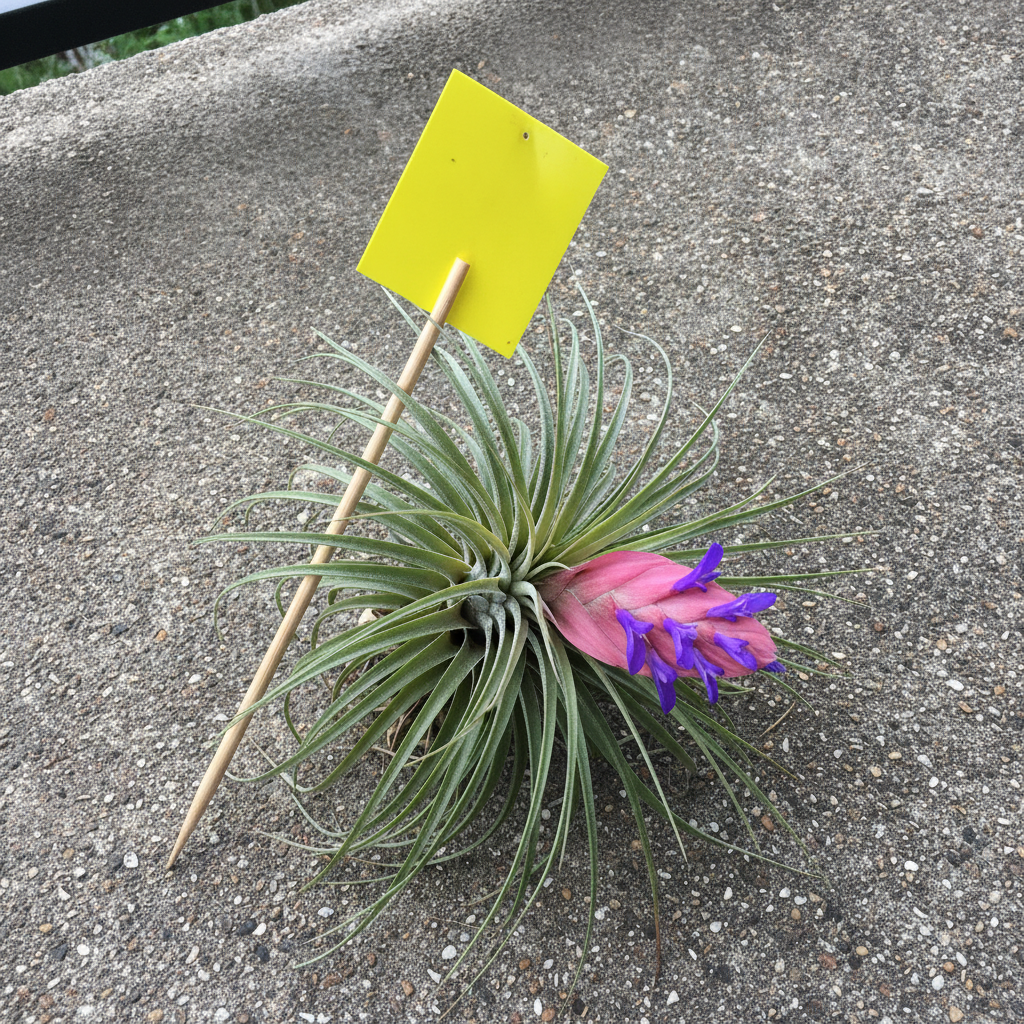
Mealybugs are the most likely visitors, appearing as small white cottony tufts tucked into the leaf axils where they meet the base. Scale insects can also settle as flat brown discs along the leaves. Both suck sap and weaken the plant, and both respond to the same treatment: dab each insect with a cotton bud dipped in isopropyl alcohol, then rinse the whole plant a day or two later. Aphids occasionally cluster on the soft flower spike when it emerges and can simply be washed off with a gentle stream of water. Because the leaves are sensitive, avoid oily or soapy sprays at full strength; a very dilute neem solution applied sparingly is safer if an infestation is stubborn.
The problems that actually kill orchid air plants are almost all about water and air. Rot, discussed in the watering section, follows from moisture trapped in the crown or a base kept constantly wet. Brown, crispy leaf tips point to air that is too dry, water that is too hard, or too much direct sun, and raising humidity or switching to rainwater usually resolves it. A plant that simply refuses to flower is telling you it needs more light, a little feeding in the growing season, and time to reach maturity. And a mother plant that yellows and fades after blooming is not sick at all; it is completing its natural cycle and should be left in place to raise its pups.
Pro Tip — Quarantine new arrivals: Bromeliads often pick up mealybugs at the nursery. Keep any newly bought orchid air plant apart from your other plants for a couple of weeks and inspect the leaf axils closely before introducing it to the collection.
Varieties
The species itself is the plant most people mean by orchid air plant, but a couple of close relatives and selections are worth knowing, since they are frequently sold under the same or similar names and differ in the size and shape of that famous quill.
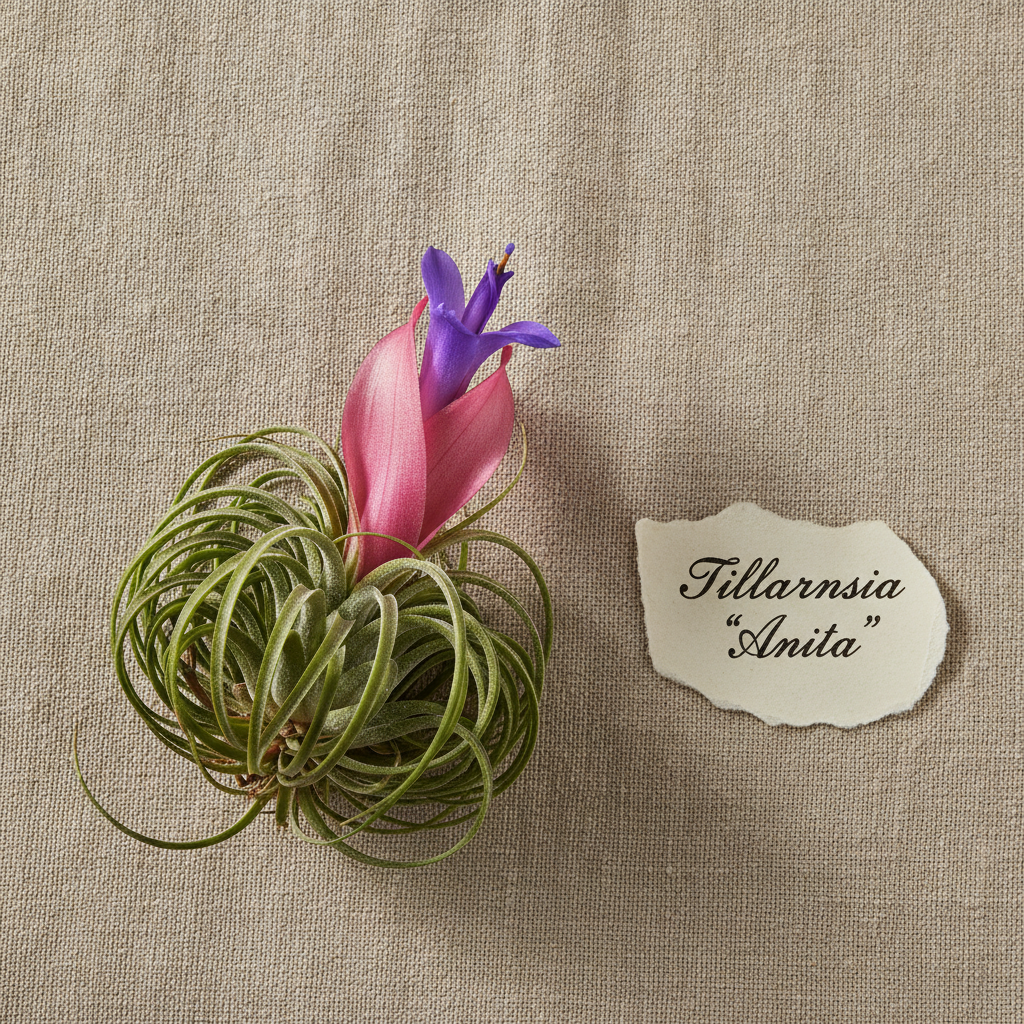
‘Anita’ is the cultivar most commonly found in garden centres and is often what is sold simply as pink quill. A hybrid of Tillandsia cyanea, it forms a compact rosette topped by a broad, vivid rose-pink paddle with violet-blue flowers, and it is a little more robust and free-flowering than the wild species, which makes it an excellent first choice.
Tillandsia lindenii is a close cousin often confused with the orchid air plant and sometimes sold as it. It carries a taller, more elongated bract and larger, deeper blue flowers, giving a more upright, torch-like display. Its care is essentially identical, so if you enjoy the species you can grow this alongside it without changing a thing.
Frequently Asked Questions
Why is my orchid air plant not flowering?
The most common reason is insufficient light. This species needs consistently bright, indirect light to build the energy for a bract. A plant may also simply be too young, since pups can take one to three years to reach flowering size, and one that has already bloomed will not flower again, though its pups eventually will. A monthly dilute feed through spring and summer helps push a mature plant into bloom.
How long does the pink bract last?
The pink quill itself holds its colour for two to three months, sometimes longer in good conditions. The individual violet-blue flowers that emerge from it last only a day or two each, but they open in succession over several weeks, so there is usually a flower somewhere on the bract for much of the display.
Does the orchid air plant need soil?
No. As an epiphyte it can be mounted on bark, kept in a loose bark or sphagnum mix, or displayed in a dish with no medium at all. It should never be planted in ordinary potting compost, which holds too much moisture around the base and causes rot.
Is it safe around cats and dogs?
Yes. The orchid air plant is non-toxic to cats and dogs, in common with other bromeliads, so it is a good choice for homes with pets.
My mother plant is dying after flowering. What did I do wrong?
Nothing. Each bromeliad rosette blooms only once and then slowly declines over the following months, which is entirely natural. Leave it in place and let it channel its remaining energy into the pups forming at its base, then remove the spent mother once it has fully browned.
How often should I water it?
As a rough guide, mist two to three times a week or soak weekly, but let the plant’s environment set the pace. In a warm, bright, dry room it will want water more often, while in cool, humid, or dim conditions it will need less. The key in every case is that the plant, and especially its crown, dries out within a few hours of watering.






