
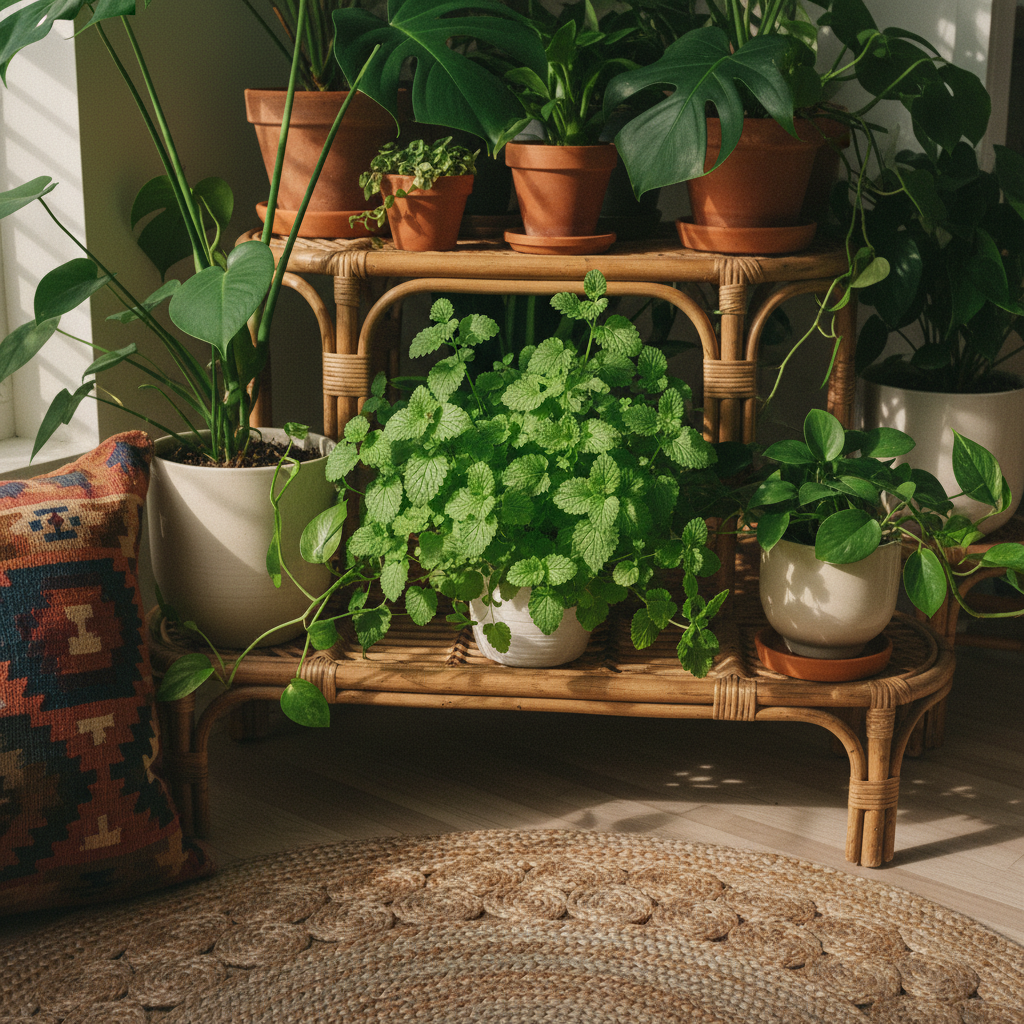
Few houseplants reward a gentle brush of the fingertips quite as generously as lemon balm. Crush a single leaf and the air fills with bright, candied citrus, soft and unmistakably lemony, with a green herbal edge that no candle or essential oil quite manages to copy. The plant in question is Melissa officinalis, a bushy perennial herb in the mint family (Lamiaceae) that has been cultivated around homes and apothecaries in southern Europe, the Mediterranean basin and western Asia for at least two thousand years. The Greek physician Dioscorides recommended it. Medieval Carmelite nuns built a famous tonic around it. Beekeepers rubbed it inside empty hives to coax swarms to settle. The genus name itself, Melissa, comes from the ancient Greek word for honey bee, an acknowledgement of the way its small white summer flowers draw pollinators from a remarkable distance.
As an indoor plant, lemon balm is generous in spirit and forgiving in temperament. It is far easier to keep alive than coriander, faster to bounce back from neglect than basil, and altogether less demanding than rosemary on a winter windowsill. That said, there is a meaningful gap between the lemon balm that merely survives in a forgotten kitchen pot, growing leggy and tired with leaves the size of a fingernail, and the lemon balm that thrives, mounding out in a generous cushion of glossy, sharply scented foliage you can pinch and harvest every week. This guide walks through what makes the difference: where to place the pot, how to water without rotting the crown, how to repot for steady growth, and how to keep an indoor herb from collapsing into a tangle of woody stems by the end of its second year.
Contents
- Quick Reference
- Why Lemon Balm Makes a Rewarding Houseplant
- Light Requirements
- Watering and Humidity
- Soil, Potting and Repotting
- Fertilising
- Propagation
- Pests and Diseases
- Popular Varieties
- Frequently Asked Questions
Quick Reference: Lemon Balm at a Glance
| Botanical name | Melissa officinalis (family Lamiaceae) |
| Common names | Lemon balm, balm mint, sweet balm, common balm, melissa, garden balm, bee balm (a name also used for Monarda) |
| Native range | South-central Europe, the Mediterranean, North Africa, the Caucasus and western Asia as far east as Iran |
| Mature size indoors | 30 to 50 cm tall and roughly as wide in a generous pot, occasionally taller in very bright conditions |
| Light | Bright indirect light to four hours of direct sun. The brightest windowsill you have, ideally south or south-east facing |
| Watering | Keep the top 2 to 3 cm (about 1 inch) of mix lightly moist. Water thoroughly when that layer dries, then drain fully. Never sit in a saucer of water |
| Temperature | Ideal range 15 to 24 °C (59 to 75 °F). Tolerates a cool dormancy down to about 4 °C (39 °F) but stops growing well below 10 °C (50 °F) |
| Humidity | Average household humidity (40 to 55 %) is fine. Does not need misting and dislikes stagnant humid air |
| Soil | Loose, free-draining peat-free potting mix with grit or perlite, slightly alkaline to neutral pH (6.5 to 7.5) |
| Fertiliser | Light. Half-strength balanced liquid feed every four to six weeks in spring and summer only. Too much nitrogen weakens the aroma |
| Propagation | Stem cuttings in water (very easy), division of mature root balls, or seed sown in spring |
| Toxicity | Non-toxic to humans, cats, dogs and most pets. The leaves are edible and have a long history of culinary and herbal use |
| Lifespan | A perennial that lives indefinitely outdoors, but indoor plants are best refreshed by cuttings or division every two to three years to avoid woodiness |
Why Lemon Balm Makes a Rewarding Houseplant
Lemon balm earns its place on an indoor herb shelf for the same reason it has earned its place in monastery gardens for centuries: it is useful, it is fragrant, and it asks for very little. The leaves can be pinched fresh into ice water or hot tea, muddled into a gin and tonic, scattered over a green salad, folded into custards and ice cream, or dried for winter infusions. The aroma alone is enough reason to keep one near a sunlit window. Brushing past the plant releases a soft citrus cloud that lingers in the room for several minutes, more like a wash of fresh lemon zest than the medicinal pungency of culinary mint.
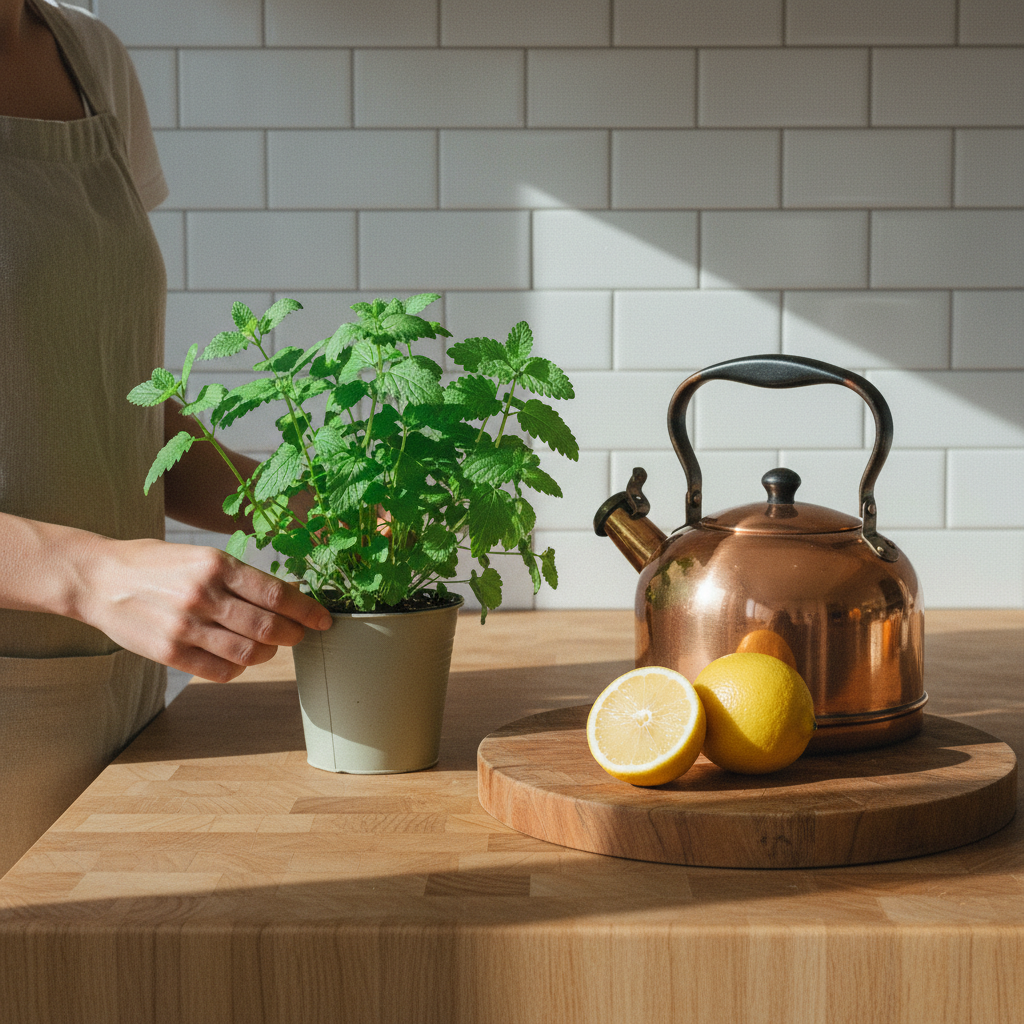
The plant is also forgiving in ways that matter when life gets in the way of plant care. A lemon balm that has been allowed to wilt almost flat will, in most cases, recover within an hour of a thorough watering. A lemon balm that has been pinched back to a stub will resprout vigorously from the base. It tolerates the cooler temperatures most centrally heated homes drift towards overnight and copes well in unheated porches and conservatories. The plant is non-toxic to cats and dogs, edible to children, and entirely free of the irritating sap that makes so many fashionable houseplants a hazard around curious pets.
Where lemon balm fails as a houseplant is almost always traceable to one of three causes: a windowsill that is too dim to support the plant’s appetite for light, a watering pattern that keeps the crown perpetually wet, or a pot too small for the surprisingly vigorous root system. Address those three things and a single nursery-bought plug can carry a household through years of fresh tea, infused syrups and aromatic harvests.
Important — Toxicity: Lemon balm is considered safe and non-toxic to humans, cats, dogs, rabbits and horses, and is widely sold as a culinary herb. As with any plant, individual sensitivities exist, so introduce it gradually if a pet shows unusual interest in chewing the leaves. People taking thyroid medication or sedatives should consult a doctor before consuming lemon balm regularly, as the herb has documented effects on both systems.
Light Requirements
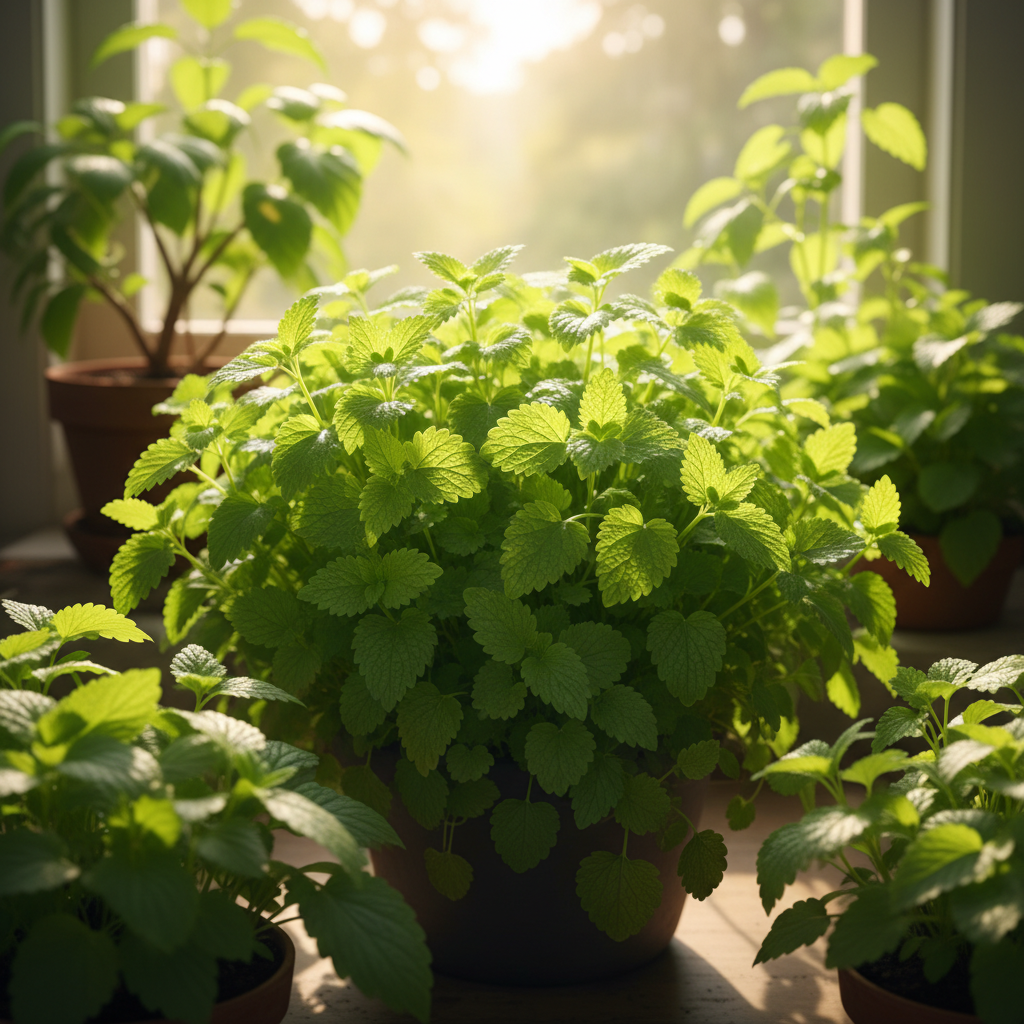
Light is by some margin the most decisive factor in growing a healthy potted lemon balm indoors. In its native Mediterranean range, the plant settles in sunny meadows, hedgerow margins and rocky slopes, often in places that receive six or more hours of direct sun a day. The cushiony habit and sharp aroma we associate with a thriving lemon balm are direct expressions of that solar appetite. Move the same plant to a dim corner and within weeks it stretches towards the nearest window, leaves grow paler and noticeably larger, internodes lengthen, and the essential oil concentration in the foliage drops away to the point where a crushed leaf smells flat and grassy rather than zesty.
For indoor cultivation the practical target is bright indirect light supplemented by two to four hours of direct sun a day. This is brighter than most foliage houseplants prefer and demands a windowsill with genuine sky view, not just a wall in a brightly painted room. A south-facing kitchen window with morning sun and lightly diffused afternoon light is close to perfect. A south-east or east-facing window also works, particularly in the warmer months. North-facing sills are not enough to support the plant year-round, and west-facing sills work in spring and autumn but can scorch leaves during a hot summer afternoon if the glass is unshaded.
Light Levels Explained
It helps to translate the vague language of “bright light” into something more measurable. The figures below are approximate but useful when comparing one potential placement to another. A simple smartphone light meter app is enough to get a working sense of where each window in a home falls on this scale.
| Light Category | Approx. Level (lux) | Typical Location | Outcome for Lemon Balm |
|---|---|---|---|
| Direct sun | 30,000 to 100,000 | Right up against a south-facing window, no curtain | Compact, intensely aromatic, occasional leaf burn in midsummer |
| Bright indirect | 10,000 to 25,000 | One metre back from a sunny window, or directly at a sheer-curtained south window | Ideal — bushy, dense, strongly scented growth |
| Medium | 2,500 to 10,000 | East-facing windowsill, or further into a south-facing room | Slow but acceptable growth, slightly leggier stems |
| Low | 500 to 2,500 | North window or two metres back from a side window | Steady decline, pale leaves, weak fragrance, eventual collapse |
| Very low | Below 500 | Interior shelf, hallway, bathroom without a window | Will not survive without supplemental lighting |
Window Orientation and Placement
South-facing window: The best year-round option in the northern hemisphere. From spring through autumn, place the pot directly on the sill with a sheer curtain or move it slightly inside the room during the hottest weeks of summer to prevent leaf scorch. In winter, push the pot right up to the glass to maximise the short daylight hours.
East-facing window: Excellent throughout spring and summer, when soft morning sun provides three to five hours of direct light before the plant transitions into bright indirect for the rest of the day. In winter, an east window in higher latitudes is generally not bright enough on its own and may need a small supplemental lamp.
West-facing window: A solid option in spring and autumn, with strong afternoon light. In peak summer the heat through unshaded west-facing glass can crisp foliage rapidly, especially in modern double-glazed windows that amplify thermal gain. Pull the pot slightly back from the glass during heatwaves.
North-facing window: Generally inadequate for lemon balm in temperate climates. The plant will survive for a season but will not develop the dense bushy form or the full aroma you would hope for. North windows are best avoided unless paired with a grow light.
Pro Tip — Rotate the Pot Weekly: Lemon balm leans towards the brightest light source very obviously, much more than slower-growing foliage plants. Give the pot a quarter turn every week to keep the canopy even. Skip a month and you will end up with a one-sided plant that requires a hard prune to rebalance.
How Light Affects Flavour and Fragrance
The essential oils responsible for lemon balm’s characteristic scent — chiefly citronellal, geranial, neral and a small amount of citronellol — are produced in glandular trichomes on the leaf surface as a defence mechanism against herbivory and ultraviolet stress. The brighter the light a plant receives, the more of these volatile compounds it produces. A lemon balm grown in full sun on a sunny balcony will have a noticeably sharper, more concentrated scent than the same cultivar grown on a shaded indoor sill, even when both plants look visually similar. Strong light also produces shorter internodes, thicker leaves and a more compact silhouette, all of which contribute to better culinary harvests.
Variegated cultivars such as ‘Aurea’ depend on adequate light to express their golden patterning. In low light the gold variegation reverts to plain green within a few flushes of new growth. Move a fading variegated plant into a brighter spot and the new leaves will return to their proper colour within four to six weeks.
Warning — Acclimating to Direct Sunlight: A plant grown indoors in moderate light for several months cannot be moved abruptly into full midday sun without scorching. The sudden exposure burns the leaf tissue before the plant can adjust its protective pigments. Acclimate over seven to ten days by extending direct sun exposure by an hour at a time, starting with early morning light only.
Artificial Lighting
Lemon balm responds well to supplemental lighting and is one of the easier herbs to grow under LEDs through the dark months of the year. A 20 to 40 watt full-spectrum LED panel positioned 30 to 45 cm above the canopy and run for twelve to fourteen hours a day will sustain vigorous growth even in a windowless kitchen. Look for fixtures rated at a photosynthetic photon flux density (PPFD) of at least 200 to 400 micromoles per square metre per second at canopy height. Cheaper purple-spectrum panels work for survival but tend to produce slightly paler foliage than white-spectrum LEDs. A simple plug-in timer makes the entire setup low-maintenance.
Seasonal Adjustments
Outdoors lemon balm is winter-dormant in temperate regions, dying back to the crown after the first hard frost and resprouting in spring. Indoor plants do not experience the same seasonal trigger and tend to keep growing through winter, but at a slower pace and with weaker stems if light levels drop substantially. Reduce watering, withhold fertiliser entirely from late October to mid-February, and consider giving the plant a short cool rest at 8 to 12 °C (46 to 54 °F) for a few weeks to mimic the brief dormancy that keeps it vigorous in the long run.
Watering and Humidity
Watering lemon balm correctly sits at the heart of growing it well indoors. The plant occupies an interesting middle position on the moisture spectrum: it is far thirstier than its sage and rosemary cousins, which prefer to dry between waterings, but considerably less greedy than basil or parsley, which sulk at the slightest hint of dryness. Get the rhythm right and a healthy lemon balm will reward the effort with weeks of unbroken harvest. Get it wrong in either direction and the plant signals its displeasure quickly, with limp drooping stems in drought and the duller, slower symptoms of root rot when consistently overwatered.
The simplest reliable approach is to keep the top 2 to 3 cm (roughly an inch) of the potting mix lightly moist at all times during the growing season, and to water thoroughly only when that surface layer has dried to the touch. Insert a finger up to the first knuckle; if the mix feels cool and slightly damp, wait. If it feels dry and the pot lifts noticeably lighter than usual, water. In a typical centrally heated home this works out to a thorough watering every three to five days in summer and every seven to ten days in winter, though the exact rhythm depends on pot size, room temperature and how much sun the plant receives.
How to Water Properly
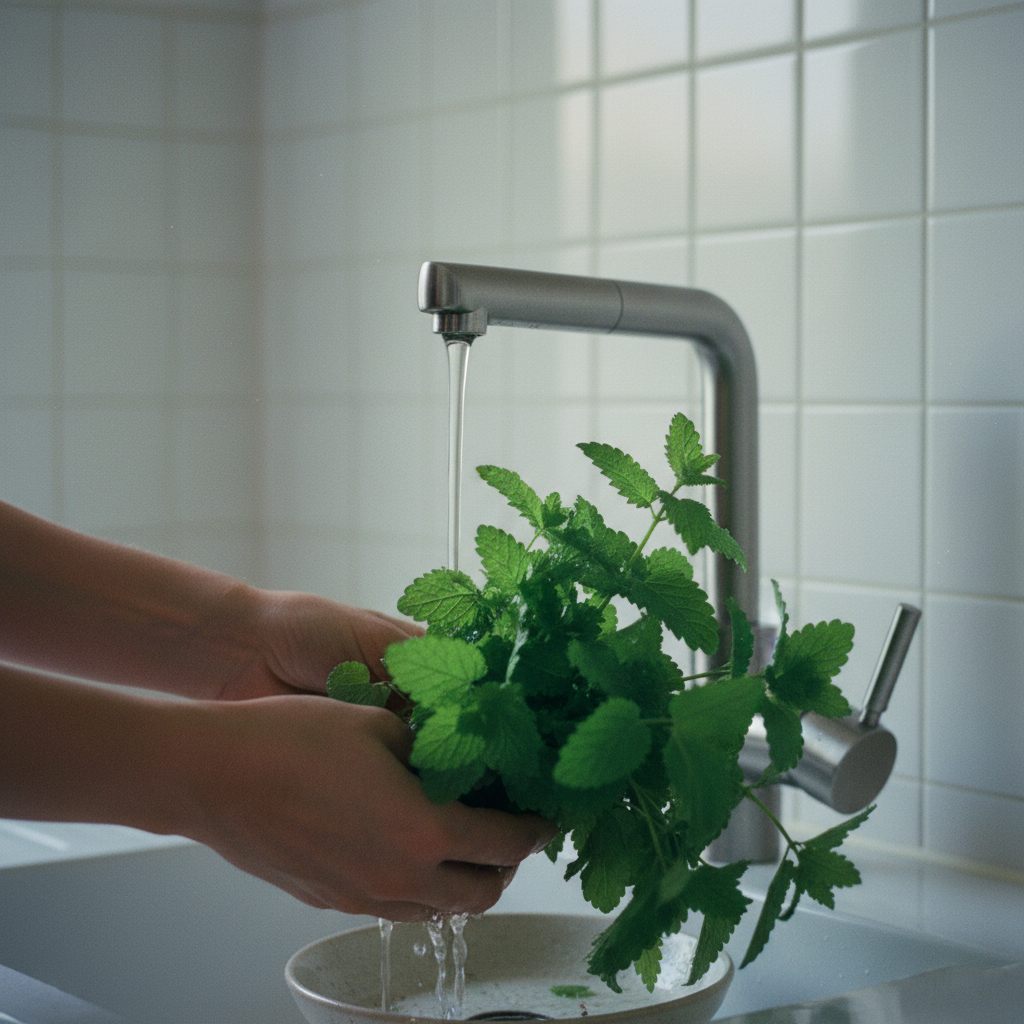
Take the pot to the sink and water from above with a moderate stream until water flows freely from the drainage holes at the base. Wait one minute and water again, more lightly this time, to ensure the entire root ball has rehydrated rather than leaving dry pockets in the middle. Let the pot drain completely for ten to fifteen minutes in the sink before returning it to its tray. Never leave the pot standing in collected drainage water, as the lower roots will suffocate within days.
Where possible, water at the soil level rather than over the foliage. Wet leaves are not catastrophic for lemon balm, but they do increase the risk of powdery mildew during humid spells and can encourage the lower leaves to drop. If you do water from overhead, do it in the morning so the foliage has the rest of the day to dry off.
Signs of Underwatering and Overwatering
| Symptom | Likely Cause | Action |
|---|---|---|
| Whole plant wilts dramatically, leaves limp but still green | Acute underwatering | Water thoroughly. Plant usually recovers within two hours. Repeat episodes weaken the plant |
| Lower leaves yellow and drop while upper foliage stays green | Chronic overwatering or poor drainage | Allow soil to dry out further between waterings. Check drainage holes are clear |
| Leaf edges brown and crispy | Underwatering or salt build-up from tap water | Flush the pot thoroughly at the sink, then resume a regular watering schedule |
| Soft blackened stems at the base | Crown rot from waterlogged crown | Take cuttings immediately and discard the parent. The disease rarely reverses |
| Leaves curl downward and feel papery | Heat stress combined with dryness | Move to a cooler position and water more frequently in hot weather |
| White crust on soil surface or pot rim | Mineral build-up from hard tap water | Flush the pot with rainwater or filtered water and repot in fresh mix annually |
Water Quality
Lemon balm is not fussy about water quality, but it does respond visibly to long-term mineral build-up in hard water areas. Tap water is generally fine, but in regions with very hard water (above 200 ppm calcium carbonate) the upper edges of older leaves can begin to brown after several months. Collected rainwater is ideal where available. Cooled boiled water is a reasonable middle ground that drops out some of the hardness. Avoid water that has passed through a softener that uses sodium chloride, as the residual sodium accumulates in the soil and stunts growth over time.
Humidity
Unlike many of the tropical foliage houseplants featured elsewhere on this site, lemon balm does not need elevated humidity. It evolved in the dry, open Mediterranean and is perfectly comfortable in the 40 to 55 per cent relative humidity that most centrally heated European homes provide year-round. There is no need to mist, no need for a humidifier, and no need for a pebble tray. In fact, high humidity combined with poor air movement is the single most reliable way to bring on the powdery mildew that occasionally afflicts indoor lemon balm. A small fan or simply opening a window for an hour a day in winter does more good than any humidity-raising measure.
Pro Tip — Watering by Weight: Pick up the pot just after a thorough watering and again three days later. The difference in weight is dramatic and unmistakable once you have felt it a few times. Within a couple of weeks of practice you can tell whether a lemon balm needs water simply by lifting the pot, without ever touching the soil. This is the most reliable indoor watering technique by some margin.
Soil, Potting and Repotting
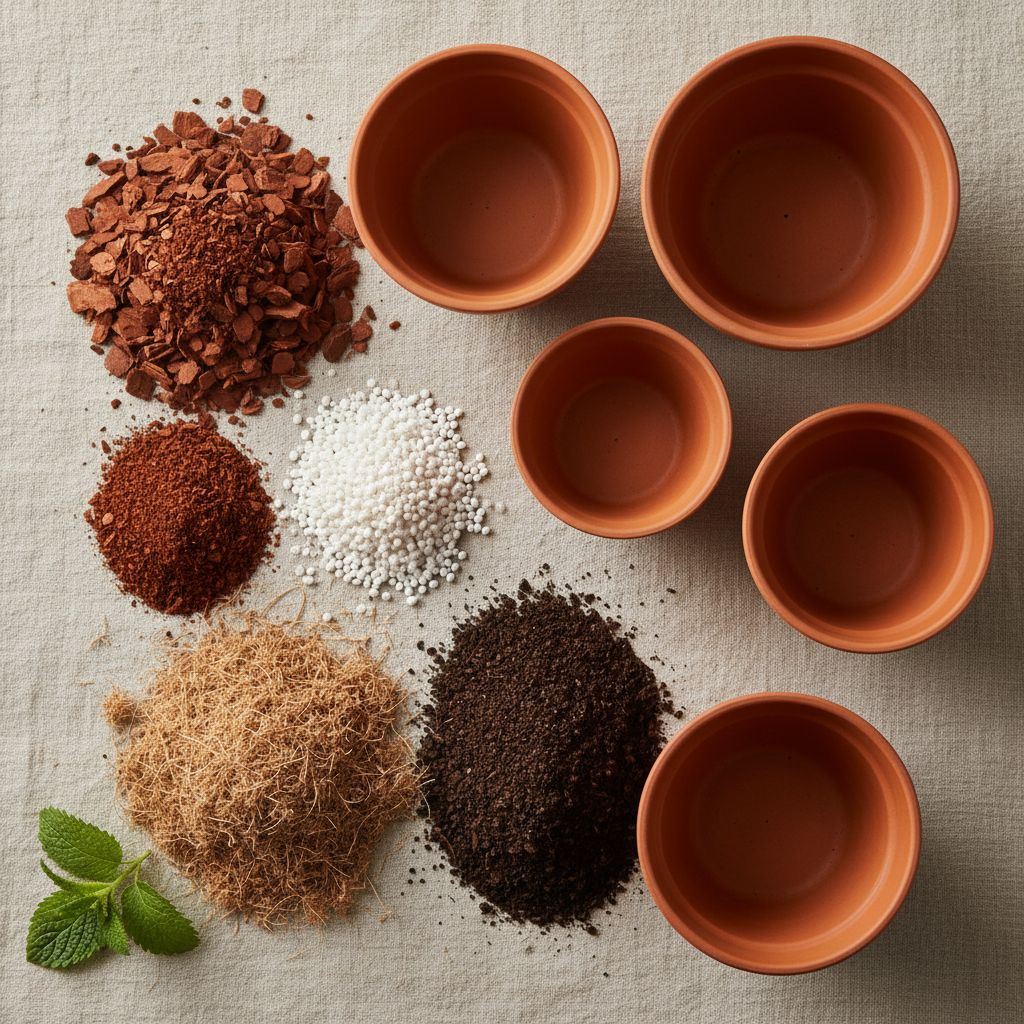
The soil you put under a lemon balm matters more than is usually appreciated. A herb grown in dense, peat-heavy supermarket compost slows down within a few months because the mix collapses, holds too much water and starves the roots of oxygen. The same plant in a free-draining mix with grit, perlite or coarse bark will grow steadily for two seasons without complaint. Lemon balm does not need a specialised aroid mix or anything exotic; it needs an ordinary, structurally robust potting medium with good drainage and a neutral to slightly alkaline pH.
A Good Lemon Balm Mix
A reliable starting point is three parts peat-free multi-purpose compost, one part perlite or pumice for drainage, and one part fine bark or horticultural grit for structure. To this base add a small handful of well-rotted worm castings to provide a gentle slow-release source of nitrogen and a pinch of horticultural lime if the compost is acidic, as lemon balm prefers a pH between 6.5 and 7.5. Coco coir can replace some of the compost where peat-free choices are limited, but it should not make up more than a quarter of the mix because it tends to compact over time.
Avoid mixes labelled as “moisture retentive” or “seed and cutting” compost for established plants. The first holds too much water for the long term and the second is too lean to feed a vigorous herb past the first few weeks.
Choosing a Pot
Pot size is a small but consequential decision. A starter plug or supermarket-bought herb usually arrives in a 9 cm plastic pot, which is too small to sustain a mature plant for more than a month or two. Pot up promptly into a 15 to 17 cm pot, and from there move to a 20 to 22 cm final container as the plant fills out. Lemon balm has a fibrous root system that spreads laterally as much as it goes down, so a wide shallow pot suits it better than a deep narrow one. Terracotta is an excellent choice because it breathes, wicks excess moisture away from the crown, and develops a handsome patina over time. Glazed ceramic and plastic also work as long as they have multiple drainage holes at the base.
Always pick a pot with at least one generous drainage hole. A purely decorative pot without drainage can be used as a cover-pot around an inner nursery pot, but never plant directly into one. The crown of a lemon balm is uncommonly prone to rotting if it sits in collected water, and a sealed pot guarantees that fate sooner or later.
When and How to Repot
Repot annually in early spring, just as new growth begins to push from the base. The signs that a repot is overdue include roots circling visibly at the base of the pot, water running straight through the soil without being absorbed, growth that has slowed despite good light and care, and a noticeable drop in fragrance from the foliage. Most healthy plants will need going up one pot size every year for the first two seasons and then either dividing or refreshing the same pot every subsequent spring.
- Water the plant thoroughly the day before repotting so the root ball comes out cleanly.
- Prepare the new pot with a few centimetres of fresh mix in the base. Do not add a “drainage layer” of gravel or shards; modern horticultural research has shown this actually impairs drainage by creating a perched water table.
- Gently slide the plant from its current pot. If it resists, run a thin knife around the inside of the pot to release it.
- Tease the outer roots free with your fingers. If the plant is very pot-bound, score the sides of the root ball with a knife to encourage outward growth.
- Centre the plant in the new pot at the same depth it was previously growing. Never bury the crown deeper than it was, as this invites rot.
- Backfill with fresh mix, firming gently with your fingers but not compacting heavily.
- Water thoroughly and place the plant in slightly reduced light for three or four days while the roots settle, then return it to its usual position.
Pro Tip — Refreshing Without Repotting: If a mature plant is in its final pot and you do not want to go larger, lift it out in spring, gently remove the outer two centimetres of soil and root mass around the entire perimeter, and return the same plant to the same pot with fresh mix packed around the sides. The plant gets new substrate and renewed vigour without growing physically larger.
Fertilising
It is tempting to feed an actively growing herb generously, but lemon balm is one of those plants that produces its best harvest when treated with restraint. Heavy feeding pushes rapid lush growth at the expense of essential oil concentration, leaving you with a tall, soft-leaved plant whose foliage smells of nothing in particular. A more modest regime, matched to the plant’s actual needs, produces shorter, denser growth with the intense citrus aroma the herb is grown for.
A Practical Feeding Schedule
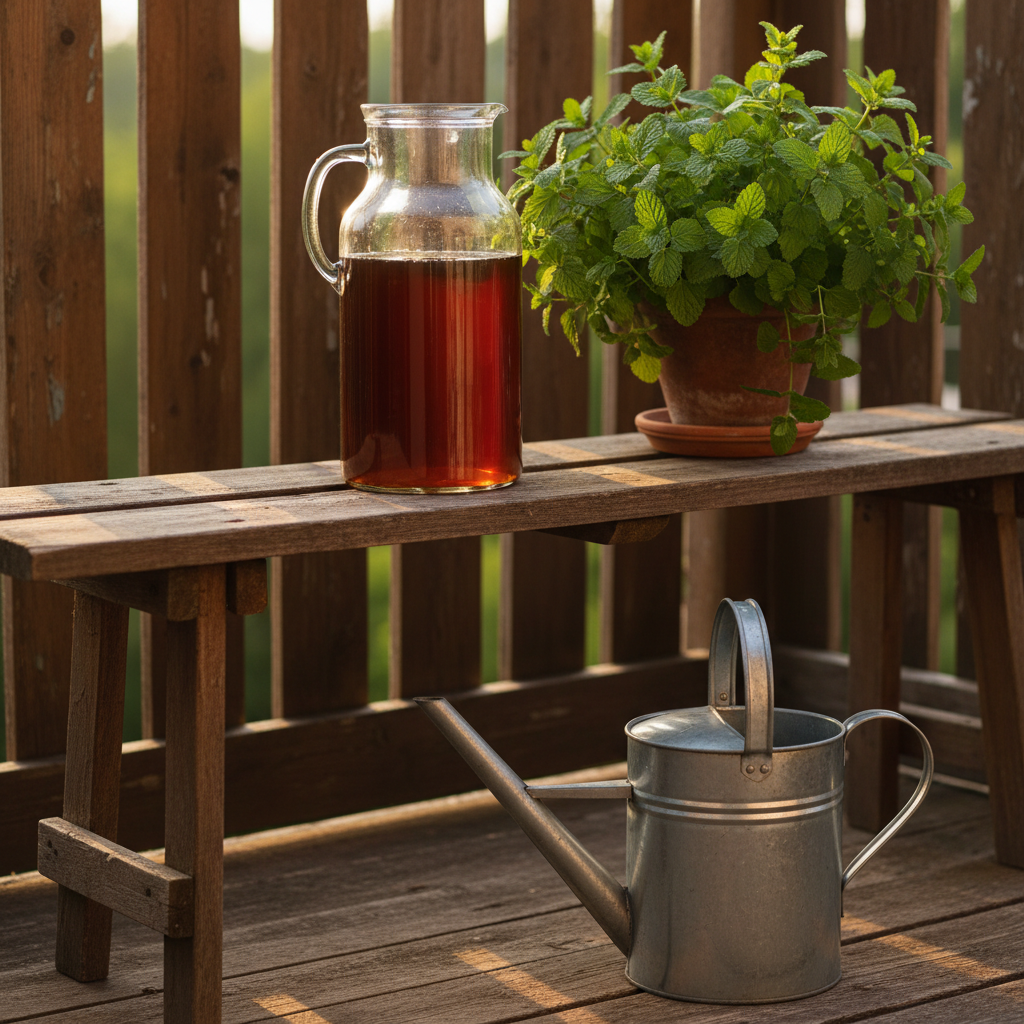
From mid-March to late September, when the plant is actively growing, apply a balanced liquid fertiliser at half the strength recommended on the label once every four to six weeks. A general houseplant feed at an NPK ratio close to 5-5-5 or 7-7-7 is ideal. Specialist herb fertilisers work but are not strictly necessary. From October to February, stop feeding entirely; the plant is in a slow phase and added nutrients will simply build up as salts in the soil.
If you use a slow-release granular fertiliser, apply a single light dose at the start of spring and do not top it up later in the year. The granules release nutrients as soil temperatures and moisture levels permit, providing a slow background drip that suits this herb well.
Organic Alternatives
Gentle organic feeds suit lemon balm beautifully and avoid the risk of salt build-up that comes with synthetic fertilisers. Worm castings worked lightly into the top centimetre of soil once a season provide a slow steady release of nitrogen and beneficial microbes. A diluted compost tea applied once a month at watering time is similarly gentle. Avoid strong organic feeds such as undiluted seaweed extract or fresh manure tea, both of which can scorch the fine root hairs of a potted herb.
Signs of Over- and Under-Feeding
An overfed lemon balm grows tall, soft and pale. Internodes lengthen, leaves enlarge, and the trademark citrus fragrance fades. The stems become brittle and flop over after watering. The most useful corrective is to stop feeding immediately, flush the pot at the sink with two or three pot-volumes of plain water to leach out accumulated salts, and prune the plant back to encourage compact regrowth. An underfed plant, by contrast, slows down visibly, produces smaller paler new leaves and stops responding to harvesting. A single half-strength feed usually restores normal vigour within two weeks.
Warning — Flowering and Feeding: When lemon balm sends up its small white flower spikes in summer, the leaves nearest the bloom lose much of their aroma and the plant diverts energy from foliage to seed. If you are growing the plant primarily for harvest, pinch out flower buds as soon as they appear and reduce feeding slightly, otherwise the plant rapidly turns to seed production and the next flush of leaves comes back smaller.
Propagation
Lemon balm is one of the easiest herbs to multiply, and any indoor plant of two seasons or more should be replaced or rejuvenated by propagation before woodiness sets in at the base. There are three reliable methods: rooting stem cuttings in water, dividing a mature root ball, and sowing seed in spring. Each has its place. Stem cuttings are quickest and most satisfying, division is best for refreshing an old plant, and seed is the cheapest way to start from scratch if cultivar fidelity does not matter.
Stem Cuttings in Water
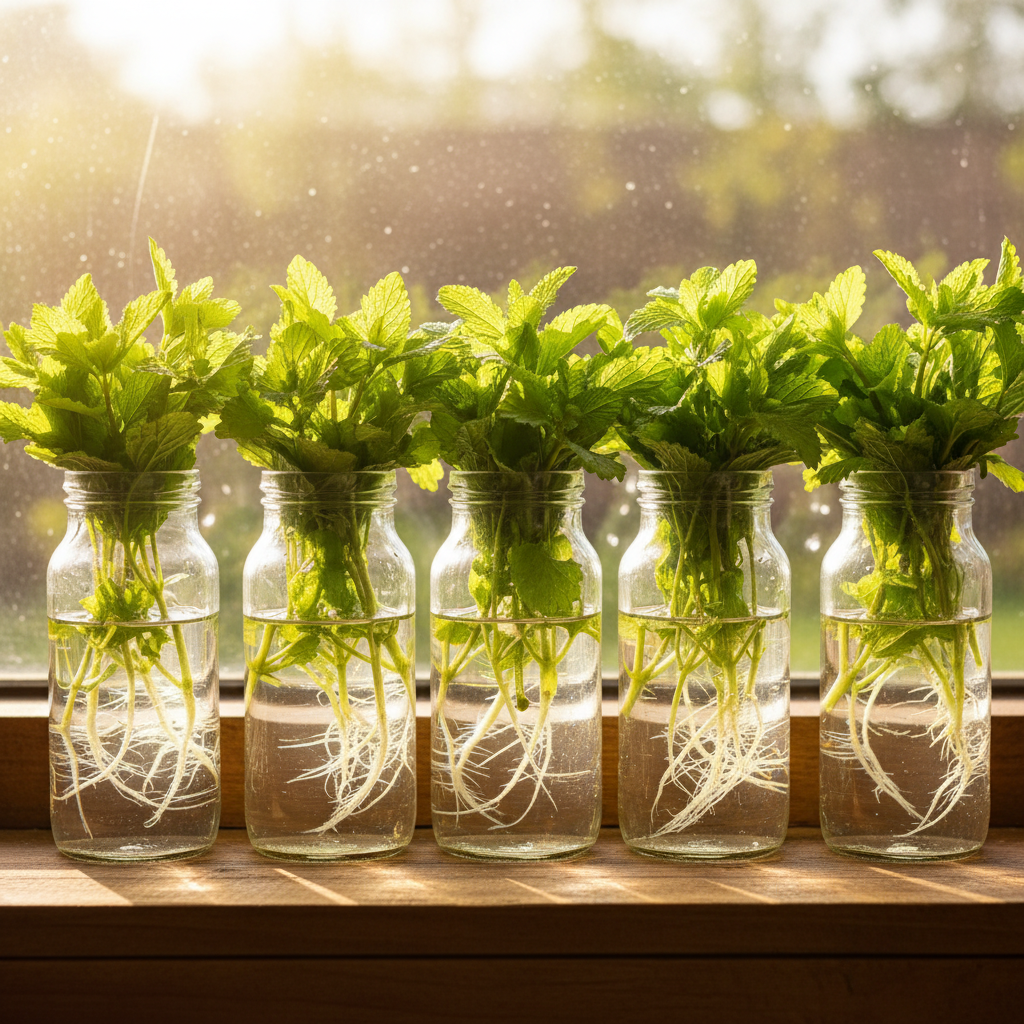
- In late spring or early summer, choose three or four healthy non-flowering stems about 10 to 15 cm long.
- Cut each stem cleanly just below a leaf node with sharp scissors or a sterilised blade.
- Strip the lower leaves so the bottom four to five centimetres of stem are bare. Leave at least two pairs of leaves at the top.
- Place the cuttings in a small glass of clean room-temperature water on a bright windowsill out of direct midday sun.
- Change the water every two to three days to keep it fresh and oxygenated.
- Within seven to fourteen days small white roots will emerge from the submerged nodes.
- When the roots reach 3 to 4 cm long, pot the cuttings up into a small pot of free-draining mix. Keep the soil consistently moist for the first two weeks while the water roots adjust to a soil environment.
Division
A mature lemon balm in its second or third year develops a tough, fibrous crown that lends itself to division. In early spring, lift the entire root ball from its pot and place it on a sheet of newspaper. Use a clean sharp knife or sturdy hand-fork to cut the crown into two or three sections, each with a healthy share of roots and several visible growth points at the base. Pot each section into its own container with fresh mix at the same depth it was previously planted. Water in thoroughly and keep the divisions in slightly reduced light for a week while the cut surfaces seal. Within a month each division will be producing new growth and the resulting plants will be vigorous and renewed for another two seasons.
Seed
Lemon balm seed germinates readily but slowly, taking two to three weeks at warm room temperature. Sow on the surface of a damp seed compost in late winter or early spring, do not cover (the seed needs light to germinate), cover the tray with clear film and place somewhere bright at around 20 °C (68 °F). Prick out seedlings into individual pots when they have two pairs of true leaves. Seedlings reach harvestable size in about three to four months. Seed-grown plants are slightly variable and rarely come true from named cultivars, so the variegated forms in particular are best propagated from cuttings or division.
Pro Tip — Take Cuttings Before You Need Them: Lemon balm gradually goes woody at the base after about two seasons in a pot, even with the best care. Rather than rescuing a tired plant, take three or four cuttings each summer and keep a small “next generation” growing on a side windowsill. By the time the parent plant declines, you already have its successor at half size and full vigour.
Pests and Diseases
Among indoor herbs, lemon balm is one of the more pest-resistant species. The essential oils that flavour the leaves are unappealing to many of the sap-sucking insects that plague indoor foliage plants, and the upright bushy habit is harder for spider mites to colonise than a tightly congested rosette. That said, no plant is immune, and a weakened or overcrowded lemon balm in dry winter air will eventually attract attention from a few specific pests. Catching trouble early is the entire game; the same infestation that takes a week to clear at the start will take a month at full strength.
Common Pests
| Pest | Signs | Treatment |
|---|---|---|
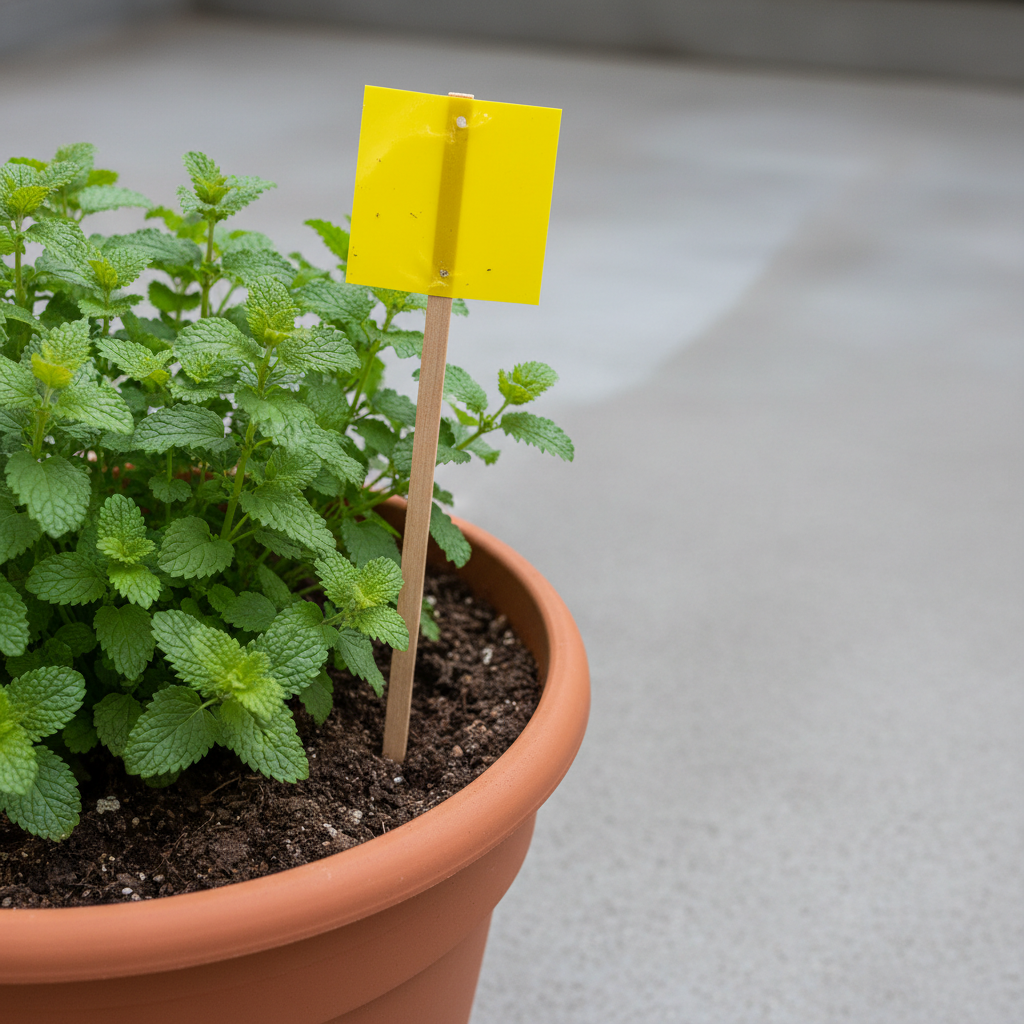
| Whitefly | Small white triangular insects on leaf undersides, fluttering up in a cloud when disturbed, sticky honeydew on lower leaves | Yellow sticky traps in the pot, regular insecticidal soap sprays every five days for three weeks. Isolate from other plants |
| Aphids | Clusters of soft green or black insects on new growth, distorted young leaves, sticky honeydew | Rinse off with a strong jet of water, follow with insecticidal soap or a 1:10 dilution of mild detergent solution applied every four days |
| Spider mites | Very fine webbing on leaf undersides, tiny moving specks visible under a hand lens, stippled or bronzed leaf surfaces | Increase humidity around the affected plant temporarily, wipe leaves with damp cloth, treat with horticultural oil or neem spray. Severe cases benefit from hard pruning |
| Fungus gnats | Small dark flies hovering around the pot, larvae visible in the top layer of damp soil | Allow soil to dry out more between waterings, top-dress with a centimetre of horticultural grit, use yellow sticky traps. Bti drench treats persistent populations |
| Slugs and snails (outdoor pot) | Ragged holes in leaves, silvery slime trails on the pot or soil surface | Bring the pot indoors at night, use copper tape around the rim, hand-pick at dusk. Rarely an issue for purely indoor plants |
Diseases
Powdery mildew is the most common disease of indoor lemon balm and appears as a fine dusty white coating on the upper leaf surfaces, generally in late summer when the air is warm and still. Affected leaves are not edible. Improve air movement around the plant with a small desk fan, prune out the worst-affected stems, water at soil level rather than over the foliage, and apply a milk-and-water spray (one part full-fat milk to nine parts water) once a week as a mild fungicide. Severe outbreaks may respond to a sulphur-based fungicide, but in most cases improving ventilation alone resolves the issue.
Crown rot is the most dangerous disease, almost always triggered by overwatering or a pot without sufficient drainage. The stems blacken at soil level and the entire plant collapses within a few days. There is no reliable cure once the rot reaches the crown. The only useful response is to take clean cuttings from any unaffected upper growth, root them in water, and start over with a fresh plant in better-drained conditions.
Septoria leaf spot occasionally appears on indoor plants as small grey-brown spots with darker borders. It is rarely fatal but disfigures the foliage. Remove and dispose of affected leaves, avoid overhead watering, and ensure good air circulation. A copper-based fungicide can be used as a last resort.
Pro Tip — Quarantine New Arrivals: Most pest outbreaks on indoor lemon balm trace back to a new plant brought in from a garden centre or nursery. Keep any new arrival isolated from other plants for at least two weeks, inspect it weekly for early signs of trouble, and only move it into the main collection once you are confident it is clean.
Popular Varieties
Although the species form of Melissa officinalis is by far the most commonly grown lemon balm, several selected cultivars are worth seeking out for their ornamental foliage or intensified fragrance. The named forms are propagated vegetatively because they rarely come true from seed.
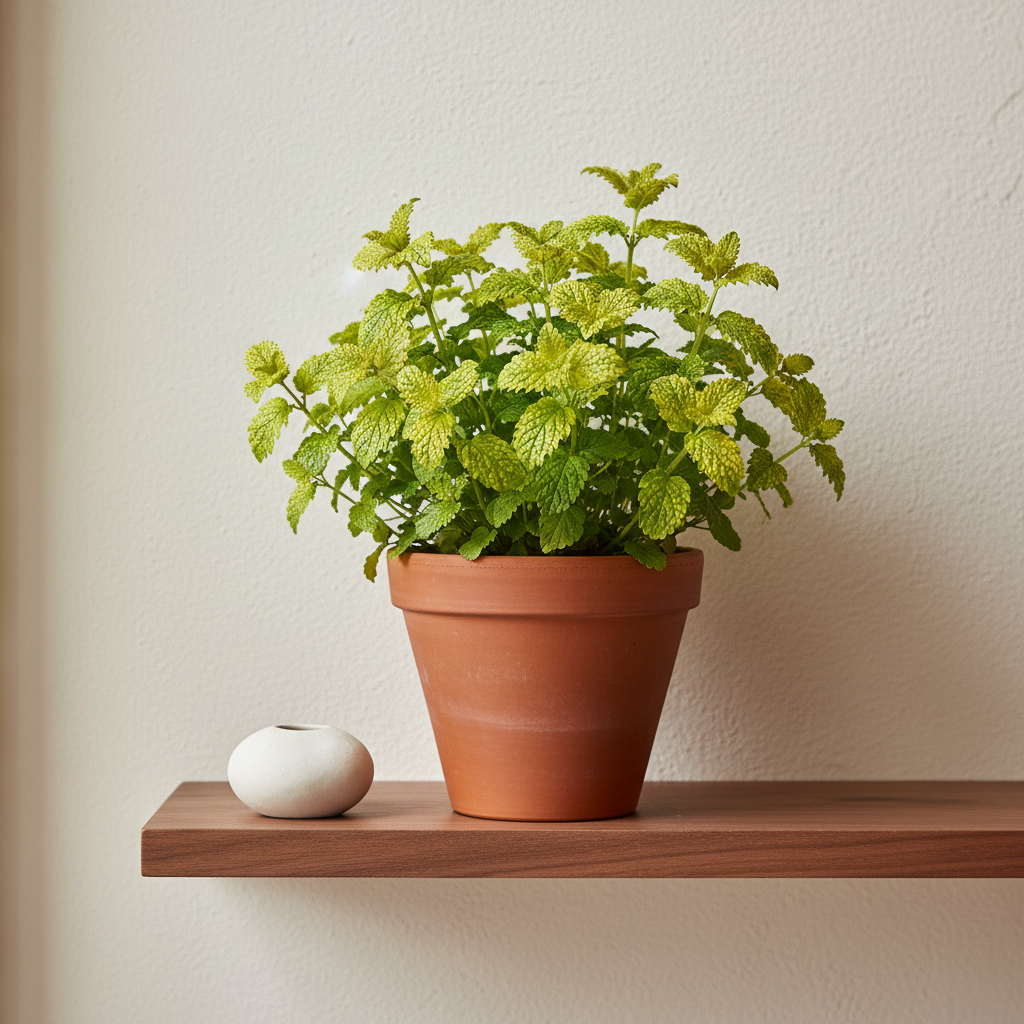
‘Aurea’ (Golden Lemon Balm) bears the species’ characteristic crinkled heart-shaped leaves, but each leaf is irregularly splashed and marbled with bright golden yellow. The variegation is most vivid on new spring growth and tends to fade towards mid-summer, when the leaves shift to a softer yellow-green. Place in good direct light to keep the gold pattern intense. The fragrance and culinary character are essentially identical to the plain species. A handsome plant for a sunny kitchen windowsill where the foliage colour can be appreciated up close.
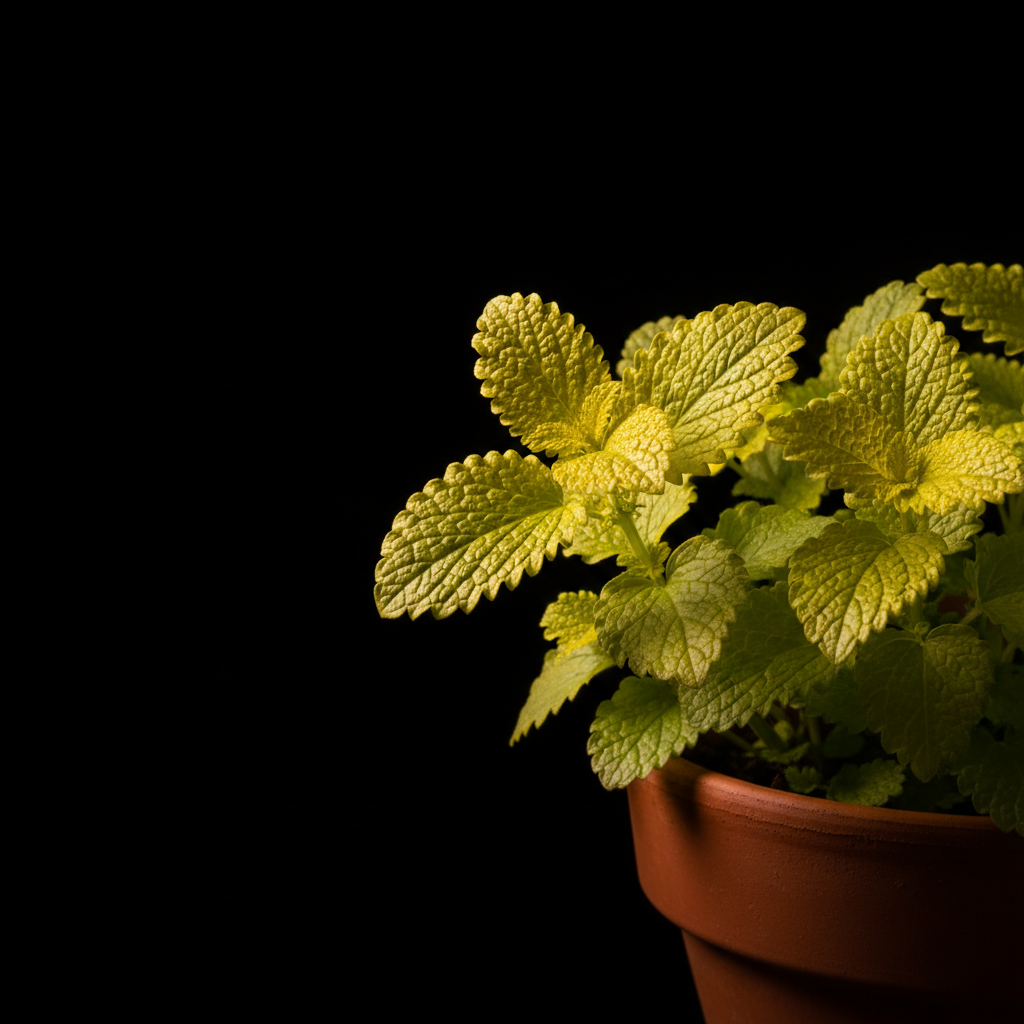
‘All Gold’ is a striking cultivar with leaves that are uniformly chartreuse to luminous yellow-gold throughout the growing season, with no green flecking. The colour is most intense on plants receiving several hours of bright filtered light a day; under direct midday sun the leaves can scorch, so a slightly more sheltered position is preferable. The fragrance is reportedly slightly milder than the species but still distinctly lemony. The cultivar is somewhat slower-growing and remains usefully compact in a pot.
Other cultivars worth knowing about, though less commonly available, include ‘Quedlinburger Niederliegende’, a German selection bred for high essential oil content and a particularly intense lemon scent; ‘Lime Balm’ (Melissa officinalis var. citrata), which carries a noticeable lime note alongside the lemon; ‘Variegata’, an older cream-and-green variegated form somewhat similar to ‘Aurea’ but with cooler tones; and ‘Mandarina’, a more recent selection said to combine a hint of orange with the standard lemon character. Two related species are sometimes confused with true lemon balm: Monarda species (also called “bee balm” but in the same family as oregano, with very different flowers and uses) and Cedronella canariensis (Canary balm, sometimes sold as “lemon balm” but considerably less hardy).
Frequently Asked Questions
Why is my lemon balm leggy and sparse?
The almost-universal answer is insufficient light. A lemon balm growing in fewer than three or four hours of bright direct sun a day stretches towards the light source, lengthens its internodes and thins out the canopy. Move the plant to the brightest spot available, prune back the leggy stems to a pair of healthy lower nodes, and watch the regrowth come back more compact. Light light light, before water, fertiliser or anything else.
Why have the leaves lost their lemon scent?
Reduced fragrance follows from one of three things, usually working in combination: too little light, too much nitrogen-heavy fertiliser, or the plant having entered its flowering phase. Increase light, withhold fertiliser for a month, pinch out any flower buds, and harvest the older leaves to encourage fresh aromatic growth. Within three to four weeks the new foliage should be back to full strength.
Can I grow lemon balm in a windowless kitchen?
Not without supplemental lighting. Lemon balm needs light levels that are simply not present in any room without natural light. A full-spectrum LED grow light running twelve to fourteen hours a day at 30 to 45 cm above the canopy will sustain a healthy plant. Without that, the plant declines steadily over weeks regardless of how attentively it is watered.
How often can I harvest from one plant?
A vigorous lemon balm in a 17 cm pot will tolerate a hard pinch of three or four sprigs every week through spring and summer without slowing down. Twice a season, cut the entire plant back by about a third to encourage fresh dense regrowth from the base. Harvest in the morning, after the dew has dried but before the heat of the day has volatilised the essential oils. The mid-morning harvest carries the most aroma.
Should I let it flower?
That depends on your purpose. If you grow the plant for harvest, pinch off flower spikes as soon as they form, because flowering reduces leaf aroma and energy is diverted to seed production. If you grow the plant for its ornamental and pollinator value (and have access to outdoor space), let it flower freely; the small white blossoms are extremely attractive to bees and other beneficial insects, hence the genus name Melissa, after the Greek word for honey bee.
Is lemon balm safe for cats and dogs?
Yes. Lemon balm is widely considered non-toxic to cats, dogs, rabbits and most household pets, and the ASPCA does not list it among toxic plants. Some cats may show mild interest in chewing the leaves, much as they do with catnip (a more distant mint relative), with no harmful effects. As with any plant, excessive consumption could cause mild stomach upset, but the essential oils and habitual flavour make this very unlikely.
Why is my lemon balm dying back in winter?
Lemon balm is a perennial that naturally rests in winter when temperatures drop. Indoors the dieback should be much less pronounced than outdoors, but some loss of lower leaves and slowed growth is normal between November and February. As long as the central crown remains firm and a few green stems persist, the plant will resprout in spring. If the entire plant collapses, it is usually a sign of overwatering during the slow phase rather than the cold itself.
Can I dry the leaves?
Yes, but with care, because lemon balm loses its essential oils more readily during drying than most herbs. The best method is to harvest stems on a dry morning, bundle them loosely and hang them upside down in a warm, dark, well-ventilated room for ten to fourteen days. Once the leaves are crisp, strip them from the stems and store in an airtight jar in a dark cupboard. Use within six months for the strongest flavour. A food dehydrator on its lowest setting (around 35 °C / 95 °F) gives slightly better aroma retention than air drying. Freezing whole sprigs in ice cubes is another excellent option that preserves the fresh character of the herb almost intact.
Is lemon balm the same plant as bee balm?
No, although the names overlap and are sometimes used interchangeably in popular sources. True lemon balm is Melissa officinalis, in the mint family. The name “bee balm” is more correctly applied to Monarda species, North American natives with showy red, pink or purple flowers, used in Earl Grey-style teas and quite different in scent and habit from lemon balm. Both attract bees, hence the shared common name, but the two plants are botanically distinct and not directly substitutable in cooking or herbalism.






