
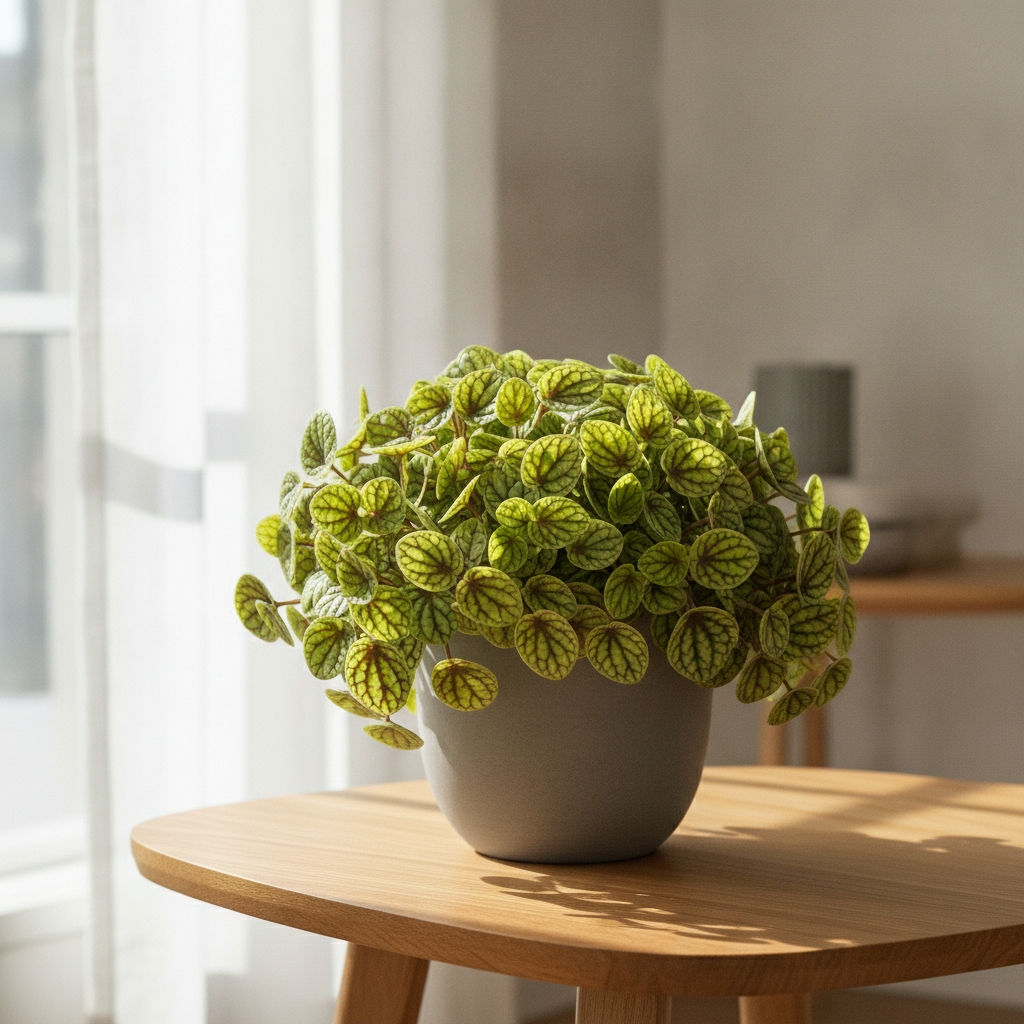
Few houseplants wear their name as literally as the Moon Valley friendship plant. Look closely at a single leaf of Pilea mollis and the surface reads like an aerial photograph of a lunar landscape: chartreuse to apple-green tissue puckered into deep quilted craters, every sunken vein traced in coppery bronze. It is a small, bushy plant from the shaded floors of Central and South American rainforests, a member of the nettle family (Urticaceae) that has none of the sting and all of the charm. The “friendship” half of the name comes from how generously it propagates, passing so readily from cutting to cutting that gardeners have shared it hand to hand for generations.
It has a reputation as an easy plant, and that is broadly fair, but there is a meaningful gap between a Moon Valley plant that survives and one that truly thrives. A neglected specimen limps along as a leggy, faded stem with a few pale leaves clinging to the tip. A well-tended one forms a dense, textured cushion of foliage that catches the light like crushed velvet. This guide covers everything that separates the two: how to read its light, water and humidity needs, how to pot and feed it, how to turn one plant into a dozen, and how to head off the handful of pests that find it appealing.
Contents
- Quick Reference
- Why the Moon Valley Friendship Plant Makes a Charming Houseplant
- Light Requirements
- Watering & Humidity
- Soil, Potting & Repotting
- Fertilising
- Propagation
- Pests & Diseases
- Popular Varieties
- Frequently Asked Questions
Quick Reference: Moon Valley Friendship Plant at a Glance
| Light | Bright, indirect light; tolerates medium light but colour and texture fade |
| Watering | Keep evenly moist; water when the top 2 to 3 cm (1 in) of soil feels dry |
| Temperature | 18 to 24°C (64 to 75°F); keep above 13°C (55°F) |
| Humidity | Moderate to high, ideally 50 to 60% or more |
| Fertiliser | Balanced liquid feed at half strength every 2 to 4 weeks in spring and summer |
| Toxicity | Non-toxic to cats, dogs and humans |
Why the Moon Valley Friendship Plant Makes a Charming Houseplant
The first thing that wins people over is the foliage. Where most houseplants offer smooth or glossy leaves, Pilea mollis offers texture you can almost feel with your eyes: a heavily embossed, quilted surface that throws tiny shadows across itself and shifts colour from lime to bronze as the light moves. It stays compact, rarely exceeding 20 to 30 cm (8 to 12 in) tall and about as wide, which makes it a natural fit for a desk, a shelf, a bathroom windowsill or the front row of a plant grouping where taller species would hide it.
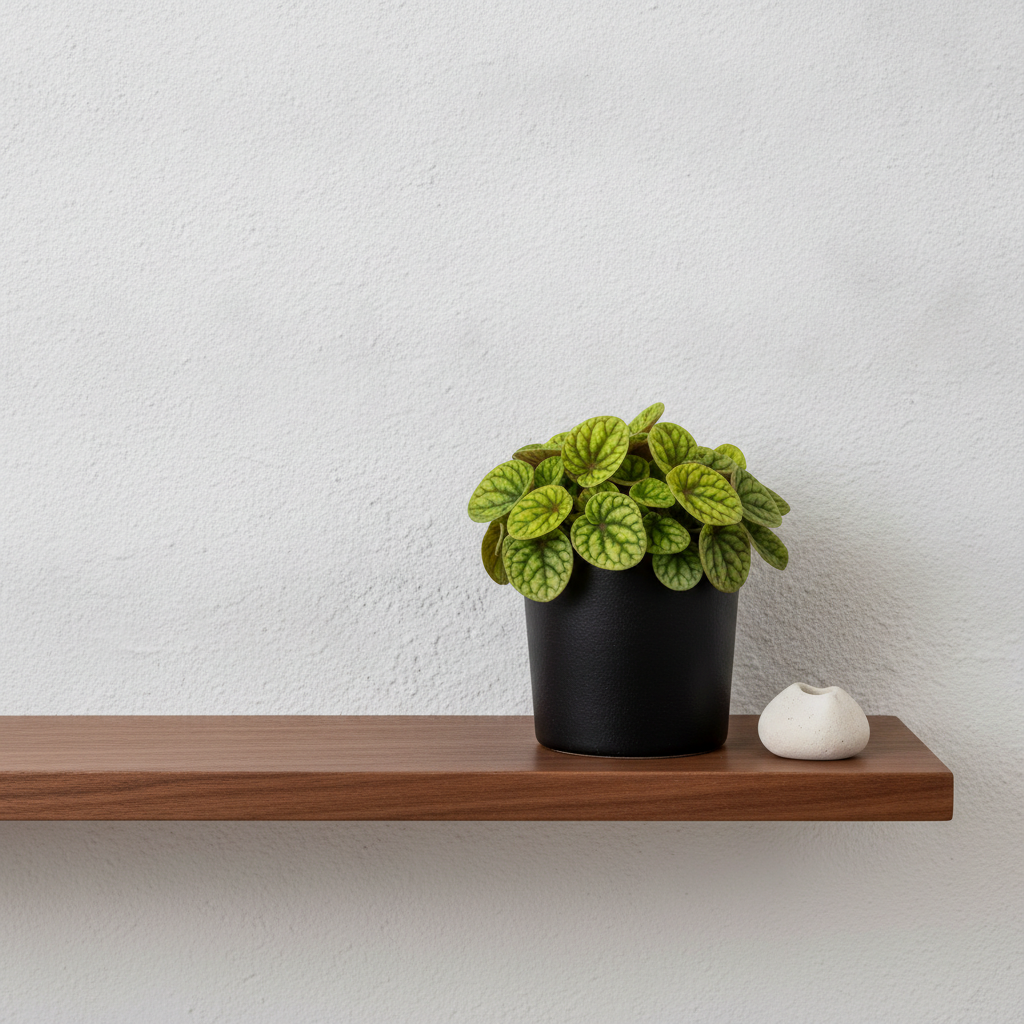
The second draw is temperament. This is a fast, forgiving grower that recovers quickly from most mistakes, tells you clearly when it is thirsty by softening its leaves, and roots so willingly from cuttings that a single plant can furnish an entire windowsill within a season. It is also genuinely pet-safe, an increasingly important consideration in homes with curious cats and dogs, and it does not demand the exacting conditions that its more temperamental relatives among the calatheas and marantas insist upon. For a beginner looking for a plant with real visual interest but a gentle learning curve, it is hard to better.
Important — Toxicity: The Moon Valley friendship plant is considered non-toxic to cats, dogs and humans, making it one of the safer choices for pet-owning households. As with any plant, nibbling can still cause mild stomach upset in a determined pet, so it is sensible to keep it out of reach of habitual leaf-chewers.
Light Requirements
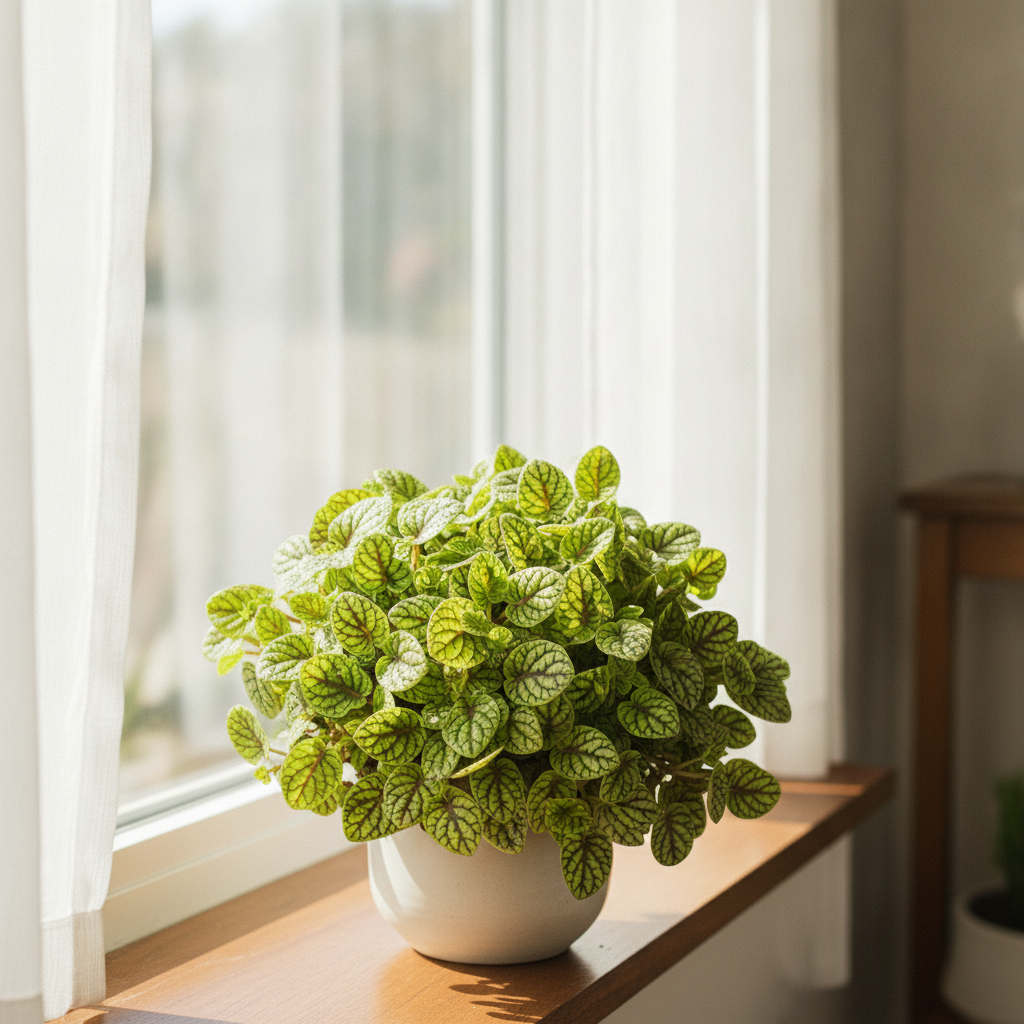
In the wild, Pilea mollis grows on the dappled forest floor, sheltered beneath a canopy that filters the tropical sun before it reaches the leaves. That heritage explains its indoor preferences precisely: it wants bright light, but almost never direct light. Give it a well-lit position out of the sun’s direct path and it will reward you with tight growth and saturated colour.
The ideal spot is a couple of steps back from a bright window, or directly in front of one that faces away from the midday sun. In this bright, indirect light the leaves stay small, densely packed and vividly two-toned. Push it into deep shade and the plant stretches toward the light, spacing its leaves further apart on elongating stems and losing the bronze contrast that makes it special.
Light Levels Explained
Understanding what “bright, indirect light” actually means in a room is the single most useful skill for keeping this plant happy. The table below translates the common light categories into practical placements and the results you can expect.
| Light Category | Approx. Level | Typical Location | Outcome |
|---|---|---|---|
| Direct sun | Over 50,000 lux | On a south-facing sill in summer | Leaves scorch, bleach and crisp |
| Bright indirect | 10,000 to 20,000 lux | Near an east or filtered south window | Ideal; compact, colourful growth |
| Medium | 5,000 to 10,000 lux | A metre or two back from a window | Acceptable; slightly looser growth |
| Low | 1,000 to 5,000 lux | A dim corner or north room | Leggy, faded, stalled growth |
| Very low | Under 1,000 lux | Interior hallway, far from light | Decline; not sustainable long term |
Window Orientation and Placement
South-facing window: The brightest exposure in the northern hemisphere. Excellent as long as you diffuse the light with a sheer curtain or set the plant a little back from the glass so the summer sun never lands directly on the leaves.
East-facing window: Often the perfect home. Gentle morning sun followed by bright indirect light for the rest of the day suits Pilea mollis beautifully, and the early rays are rarely strong enough to burn.
West-facing window: Workable, though the harsher afternoon sun means the plant should sit just off to the side or behind a curtain rather than directly on the sill.
North-facing window: The gentlest light. A Moon Valley plant will survive here and may hold its colour reasonably, but growth slows and stems tend to stretch. Consider supplementing with a grow light in winter.
Pro Tip — Rotate for Even Growth: This plant leans noticeably toward its light source. Give the pot a quarter turn each time you water so every side receives equal exposure, and the mound stays symmetrical rather than tipping toward the window.
How Light Affects Leaf Colour and Texture
The signature quilting and bronze veining of Pilea mollis are, in large part, a response to light. In bright indirect conditions the leaves stay small and the copper tones in the sunken veins deepen, giving that dramatic two-tone relief. In insufficient light the plant prioritises leaf size over colour, producing larger, flatter, more uniformly green leaves spaced widely along stretching stems. If your plant is losing its character and looking pale and lanky, low light is the most likely cause, and the fix is simply to move it somewhere brighter.
Warning — Direct Sunlight: The soft, thin leaves of this plant have little defence against strong sun. A few hours of direct summer light through glass can bleach the surface to a washed-out yellow and leave dry, brown scorch patches that never recover. When in doubt, err toward slightly less light rather than more.
Artificial Lighting
The Moon Valley friendship plant responds very well to artificial light, which makes it a good candidate for offices, north-facing rooms and winter supplementation. A standard full-spectrum LED grow light positioned 30 to 45 cm (12 to 18 in) above the plant for 10 to 12 hours a day is more than enough to keep it compact and colourful. Because the plant is small, even a modest desk grow lamp will cover it comfortably.
Seasonal Adjustments
Light intensity indoors can fall by more than half between summer and midwinter. As the days shorten, move your plant closer to its window or add supplementary lighting to keep growth tight. Come spring, watch for signs of too much light as the sun climbs higher and strengthens, and be ready to pull the plant back or add a diffusing curtain. A small seasonal shuffle of a metre or so is often all it takes to keep conditions consistent year round.
Watering & Humidity
Watering is where most Moon Valley friendship plants live or die, and the plant makes it easy by being expressive about its needs. It likes soil that stays lightly and evenly moist, never bone dry and never waterlogged. The soft, thin leaves lose water quickly, so this is not a plant you can leave to dry out for weeks like a succulent, but its fine roots also rot fast in standing water. The middle path is the goal.
When to Water
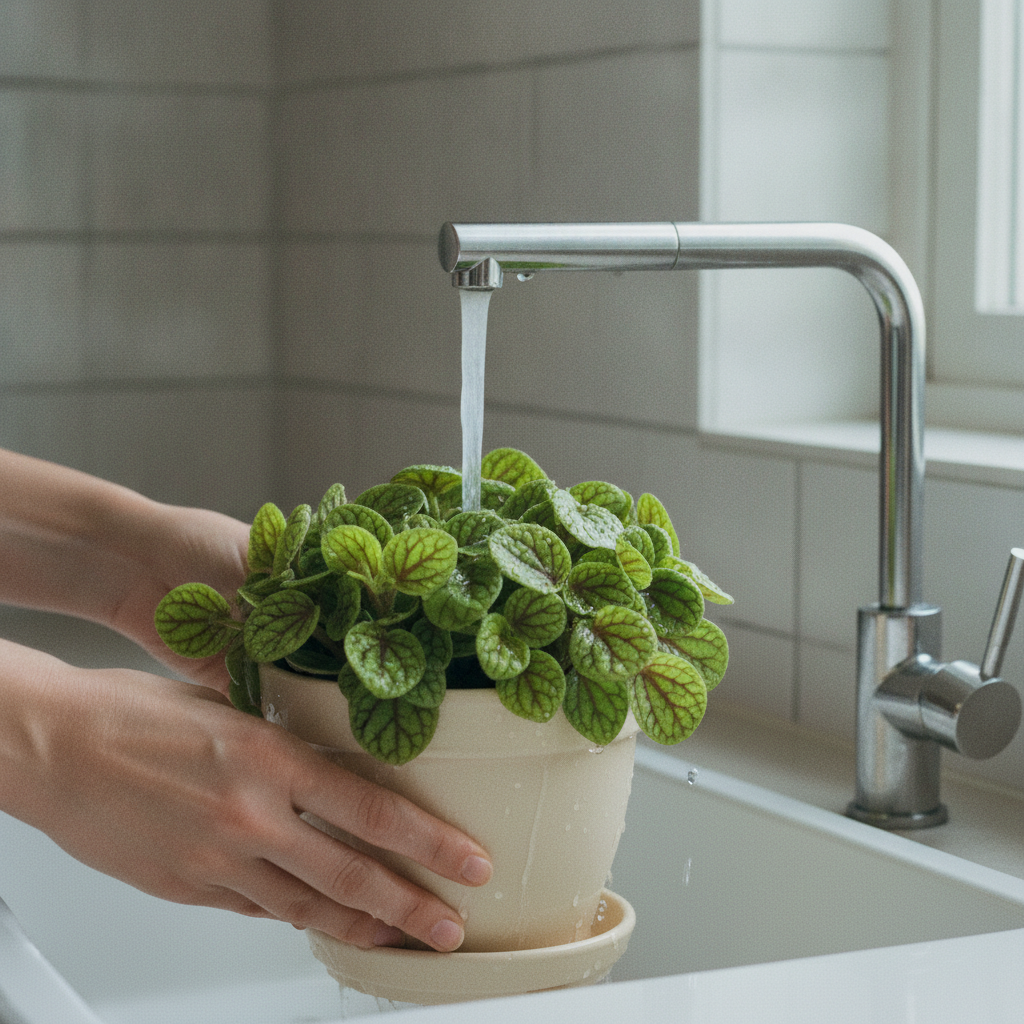
The reliable test is your finger. Push it into the soil and water when the top 2 to 3 cm (about 1 in) feels dry but the layer beneath is still faintly damp. In a bright, warm room during the growing season this often works out to roughly once or twice a week, but resist watering on a fixed schedule. Light, temperature, pot size and season all change how fast the soil dries, so check by touch every few days rather than by the calendar.
If you ever forget and the plant wilts dramatically, do not panic. A thorough watering usually revives it within a few hours, and the leaves plump back up as if nothing happened. That said, repeated wilting is stressful and will eventually cost you lower leaves, so use it as a last-resort signal rather than a routine cue. In winter, when growth slows, let the soil dry a little more between waterings to match the plant’s reduced demand.
Pro Tip — Lift the Pot: Learn the weight of the pot right after watering and again when it is due for the next drink. Lifting it becomes a two-second check that is often more reliable than the finger test, especially once you know your particular plant.
How to Water Correctly
- Check the soil first; only water once the top 2 to 3 cm (1 in) has dried.
- Use room-temperature water to avoid shocking the fine roots.
- Pour evenly over the soil surface, keeping water off the crown and leaves where possible.
- Continue until water flows freely from the drainage holes, wetting the entire root ball.
- Let the pot drain completely for several minutes.
- Empty the saucer or cache pot so the plant never sits in standing water.
Signs of Overwatering vs. Underwatering
| Symptom | Overwatering | Underwatering |
|---|---|---|
| Leaf colour | Yellowing, often lower leaves first | Dull, then browning at the edges |
| Leaf texture | Soft, limp, translucent | Thin, papery, crisp |
| Soil | Constantly wet, may smell sour | Dry, pulling away from the pot sides |
| Roots | Brown, mushy, foul-smelling | Dry but firm and pale |
| Overall | Wilting despite wet soil | Dramatic wilt that recovers on watering |
Warning — Root Rot: Chronically soggy soil is the leading killer of this plant. If you notice yellowing lower leaves combined with wet soil and a sour smell, act quickly: unpot the plant, trim away any brown mushy roots with sterilised scissors, and repot into fresh, well-draining mix. Caught early, root rot is often reversible.
Humidity Requirements
As a rainforest-floor plant, Pilea mollis appreciates more humidity than the average home provides. It is happiest at 50 to 60% relative humidity or higher, which is why it often flourishes in bathrooms and kitchens where moisture in the air runs naturally high. It will tolerate ordinary room humidity, but the thin leaves may develop crisp brown edges when the air turns very dry, particularly during winter when central heating is running.
The clearest sign that the air is too dry is browning, papery leaf margins that appear despite correct watering. You may also see slowed growth and a general lack of the lush, plumped-up look the plant has in humid conditions. These symptoms are cosmetic rather than fatal, but they do detract from the plant’s appeal.
Raising humidity is straightforward. Grouping plants together creates a shared humid microclimate, and a pebble tray filled with water beneath the pot lifts local moisture without wetting the roots. In very dry homes, a small room humidifier is the most effective and consistent solution. Misting offers only a brief, marginal lift and, because the quilted leaves can trap water and encourage fungal spots, it is not the best choice for this particular plant.
Water Quality
The Moon Valley friendship plant is not especially fussy about water, and most tap water suits it fine. If your water is very hard or heavily chlorinated, occasional brown leaf tips may appear over time; letting tap water stand overnight, or using filtered or collected rainwater, sidesteps the problem. Room-temperature water is always kinder to the roots than cold water straight from the tap.
Soil, Potting & Repotting
Getting the growing medium right underpins everything else. Because this plant wants consistent moisture but detests waterlogging, the perfect mix walks a line between water retention and drainage: rich enough to hold moisture between waterings, open enough that excess water drains away within seconds rather than lingering around the roots.
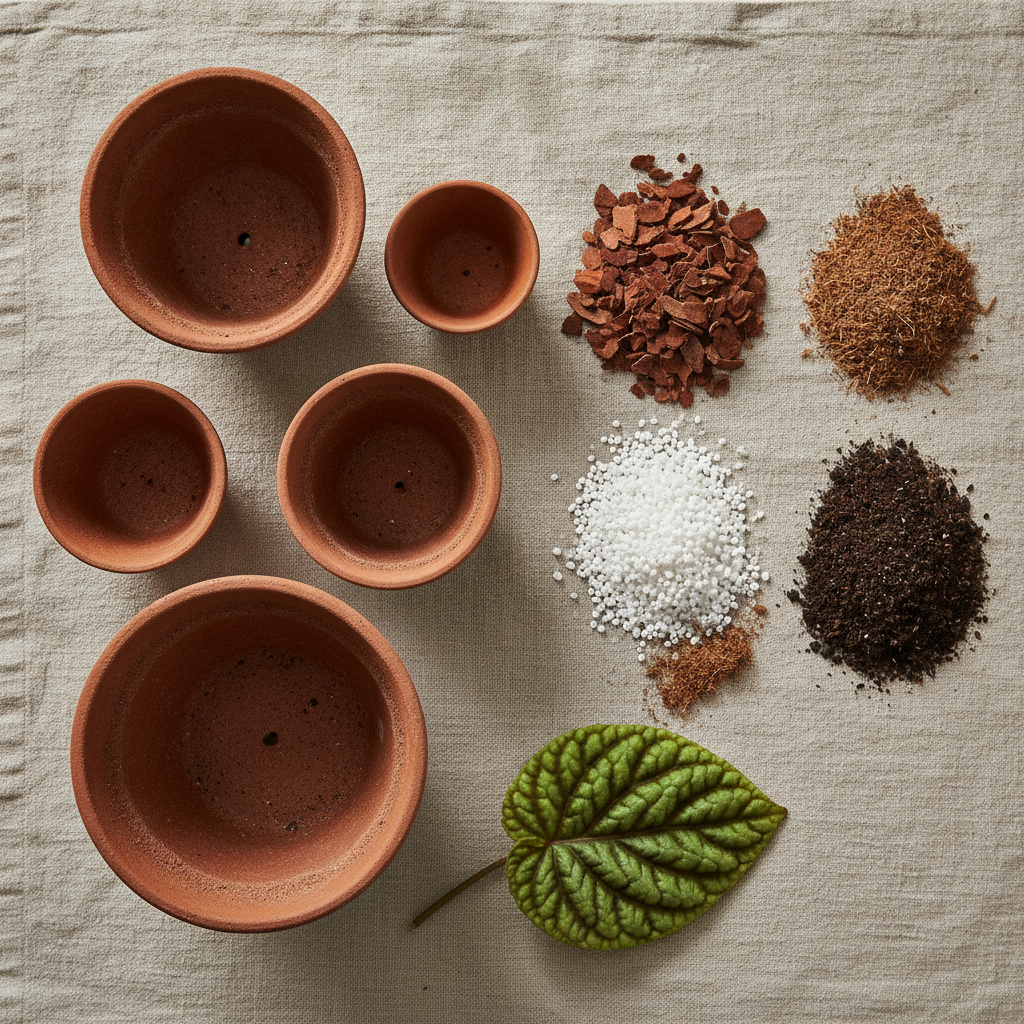
Ideal Soil Composition
A quality peat-free houseplant potting mix based on coir works well straight from the bag for many growers, but the plant does noticeably better in a slightly amended blend that improves aeration. The aim is a light, springy medium that never compacts into a dense, airless block.
| Component | Proportion | Function |
|---|---|---|
| Coir or quality potting compost | 2 parts | Holds moisture and nutrients |
| Perlite | 1 part | Opens the mix and improves drainage |
| Fine orchid bark | Half part | Adds structure and air pockets |
| Worm castings | Half part | Gentle, slow-release nutrition |
The plant prefers a slightly acidic to neutral soil, roughly pH 6.0 to 7.0, which most standard houseplant mixes fall within naturally. There is no need to test or adjust pH under normal circumstances; a good general mix will keep the plant comfortably in range.
Pro Tip — Quick Mix Recipe: If you want a no-fuss blend, combine two handfuls of ordinary houseplant compost with one handful of perlite. That single amendment transforms a moisture-trapping bag mix into something far safer for a plant that is sensitive to wet feet.
Choosing the Right Pot
Because it stays small and has a modest, fibrous root system, the Moon Valley friendship plant does not need a large pot. In fact it grows best when slightly snug, so choose a container only a little wider than the root ball.
Drainage holes are non-negotiable. Whatever pot you choose, it must have holes in the base. A decorative cache pot without drainage can be used as an outer cover, but only if you remove the inner nursery pot to water and let it drain fully before returning it.
Pot material: Plastic and glazed ceramic retain moisture longer and suit this plant well, reducing how often you need to water. Terracotta breathes and dries faster, which is safer against overwatering but means you will need to water more frequently, especially in warm rooms.
Pot size: Move up by only 2 to 3 cm (1 in) in diameter at a time. An oversized pot holds a large volume of wet soil that the small root system cannot use, and that lingering moisture invites rot.
When to Repot
Expect to repot roughly once a year, or when you see roots emerging from the drainage holes, water running straight through without wetting the soil, or growth slowing noticeably. Spring is the ideal time, as the plant is entering its active season and recovers fastest. Many growers find that rather than potting up endlessly, the better long-term strategy is to refresh the plant periodically from cuttings, since older specimens naturally grow leggy at the base.
How to Repot: Step-by-Step
- Water the plant a day before repotting so the root ball is hydrated and holds together.
- Gently ease the plant out of its pot, supporting the base of the stems.
- Tease apart the outer roots and remove any that are brown, soft or dead.
- Add fresh mix to the base of the new pot, then position the plant at the same depth it grew before.
- Fill around the sides with fresh mix, firming lightly to remove air gaps without compacting.
- Water thoroughly and let it drain, then return the plant to bright, indirect light.
Warning — Transplant Shock: Expect a little sulking after repotting, sometimes a slight droop for a few days. Keep the plant out of direct sun, hold off on fertiliser for a month, and resist the urge to overwater a plant that is not yet actively drinking from its new soil.
Fertilising
The Moon Valley friendship plant is a light feeder, but because it grows quickly and is often kept in a small pot with a limited reservoir of nutrients, a regular gentle feed during the growing season makes a real difference to the density and colour of its foliage.
The cardinal rule is moderation. This is a plant far more easily harmed by too much fertiliser than too little, so a diluted, regular approach beats an occasional heavy dose every time.
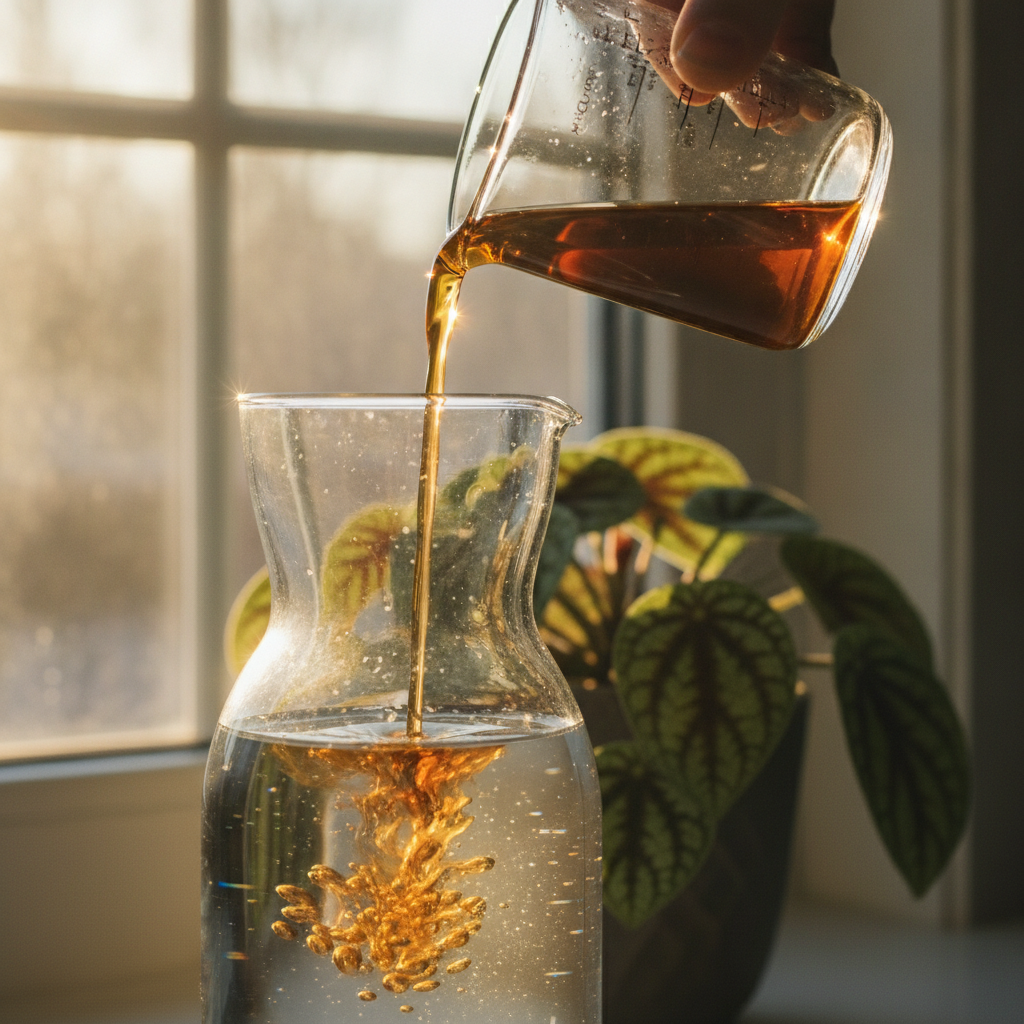
Understanding Plant Nutrients
Most balanced houseplant fertilisers supply the three primary nutrients in roughly equal measure, along with the secondary and trace elements plants need in smaller amounts. Knowing what each one does helps you read your plant and choose the right product.
| Nutrient | Symbol | Primary Function | Deficiency Symptoms |
|---|---|---|---|
| Nitrogen | N | Leafy growth and green colour | Pale, yellowing older leaves |
| Phosphorus | P | Root and overall vigour | Stunted growth, dull foliage |
| Potassium | K | General health and resilience | Brown leaf edges, weak stems |
| Calcium | Ca | Cell wall structure | Distorted new growth |
| Magnesium | Mg | Core of the chlorophyll molecule | Yellowing between leaf veins |
| Iron | Fe | Chlorophyll production | Yellow new leaves, green veins |
Types of Fertiliser
Liquid fertilisers: The easiest and most controllable option for this plant. Diluted into your watering can, they deliver nutrients evenly and let you dial the strength up or down at will, which is exactly what a sensitive light feeder wants.
Slow-release granular: Convenient prills that release nutrients gradually over months. Usable, but harder to control precisely on a small plant, and easy to over-apply, so measure carefully if you go this route.
Organic fertilisers: Worm castings worked into the soil or a diluted seaweed feed provide gentle, forgiving nutrition with little risk of burning. They pair naturally with this plant’s modest appetite.
Feeding Schedule
Feed every two to four weeks through spring and summer with a balanced liquid fertiliser diluted to half the recommended strength. As growth slows in autumn, taper off, and stop feeding entirely through winter when the plant is resting. Resuming too early or feeding a dormant plant simply leaves unused salts to accumulate in the soil.
Pro Tip — Half Strength Always: When in doubt, halve it again. The most common feeding mistake with friendship plants is over-concentration, which scorches the fine roots. A weaker solution applied more often is always safer than a strong one applied occasionally.
How to Fertilise
- Dilute a balanced liquid feed to half the label strength in your watering can.
- Water the plant with plain water first if the soil is very dry, to protect the roots.
- Apply the diluted feed evenly over the soil until it just begins to drain.
- Feed only during the active growing season, never a dormant winter plant.
- Flush the pot with plain water every couple of months to clear accumulated salts.
Warning — Salt Build-Up: A white crust on the soil surface or around the pot rim, along with brown, crispy leaf tips, signals a build-up of fertiliser salts. Flush the pot thoroughly by running water through it several times, and cut back on feeding frequency going forward.
Propagation
If any single trait earned this plant the name “friendship plant”, it is the sheer ease of propagation. Stem cuttings root quickly and reliably, so much so that sharing them has been a tradition among plant lovers for as long as the species has been in cultivation. Propagation is also the best way to keep your plant looking its best, since it lets you start fresh, bushy specimens before the parent grows leggy with age.
The best time to take cuttings is spring or early summer, when the plant is actively growing and will root fastest. All you need is a healthy parent, a clean pair of scissors, and either a glass of water or a small pot of moist mix.
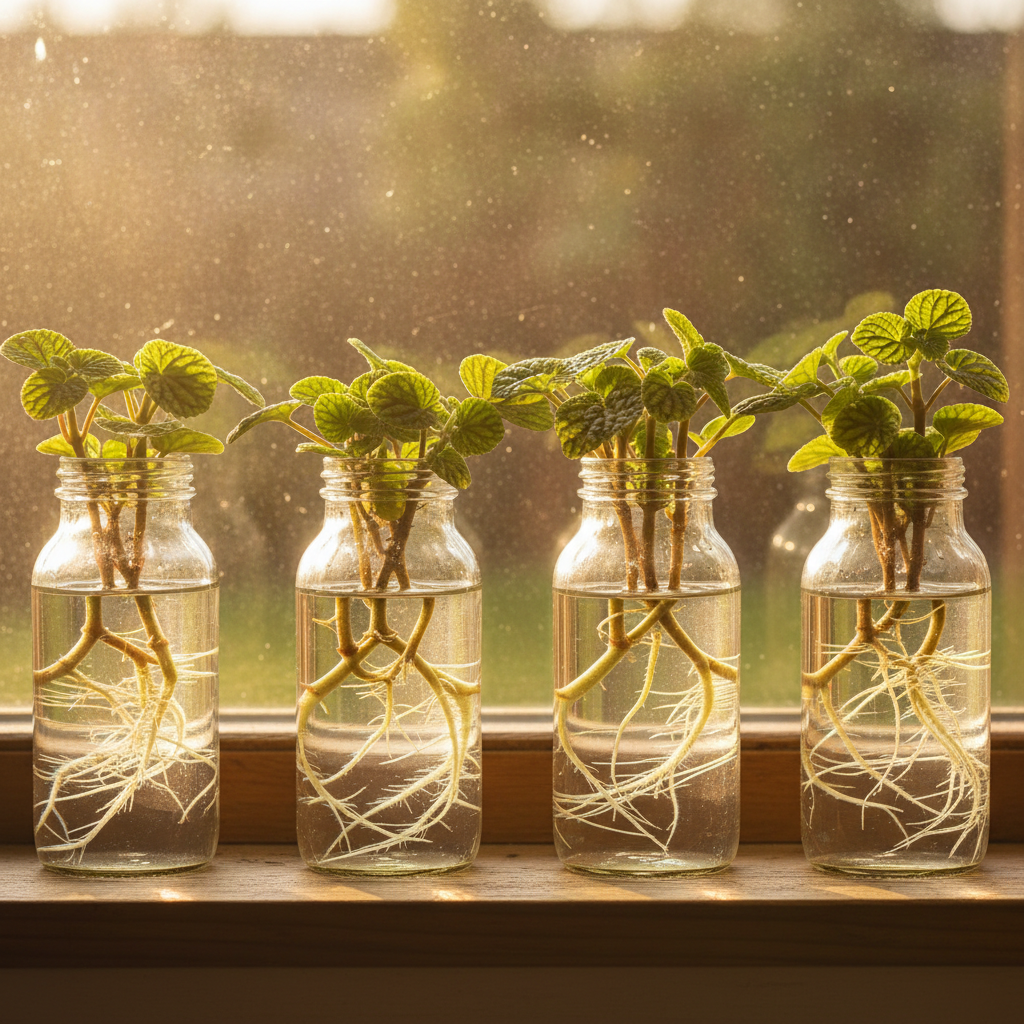
Understanding Nodes
The key to successful cuttings is the node, the small joint on the stem where leaves and roots emerge. Each cutting must include at least one node below the surface of the water or soil, because that is where new roots will form. A cutting without a node, no matter how healthy its leaves, will never root. Once you learn to spot nodes, propagating this plant becomes almost foolproof.
Water Propagation: Step-by-Step
Water propagation is the most satisfying method because you can watch the roots develop, and it works exceptionally well for this fast-rooting plant.
- Choose a healthy stem tip 8 to 10 cm (3 to 4 in) long with several leaves.
- Cut just below a node using clean, sharp scissors.
- Remove the lowest leaves so no foliage will sit underwater.
- Place the cutting in a glass of room-temperature water with at least one node submerged.
- Set it in bright, indirect light and refresh the water every few days.
- Once roots reach 2 to 3 cm (1 in), usually within two to three weeks, pot up into moist mix.
Pro Tip — Plant in Clusters: Pot three or four rooted cuttings together in a single container. Because each cutting stays fairly slender, grouping them from the start gives you a full, bushy plant far faster than waiting for one cutting to fill out alone.
Soil Propagation: Step-by-Step
Soil propagation skips the transplant step and often produces sturdier roots, though you lose the pleasure of watching them grow.
- Take a stem tip cutting with at least one or two nodes, as above.
- Optionally dip the cut end in rooting hormone to speed things along.
- Insert the cutting into a small pot of moist, well-draining mix so a node is buried.
- Firm the mix gently and water lightly to settle it around the stem.
- Cover loosely with a clear bag or propagator to hold humidity, venting occasionally.
- Keep warm and bright; gentle resistance when you tug after a few weeks means roots have formed.
Troubleshooting Propagation
| Problem | Likely Cause | Solution |
|---|---|---|
| Cutting rots in water | Submerged leaves, stale water | Remove lower leaves, refresh water often |
| No roots after weeks | No node below water, low light or cold | Recut below a node, move somewhere warmer and brighter |
| Cutting wilts in soil | Too dry or humidity too low | Keep evenly moist, cover to raise humidity |
| Roots but no new growth | Normal settling-in period | Be patient; new leaves follow once established |
Pests & Diseases
The Moon Valley friendship plant is not especially pest-prone, but its soft, moisture-loving nature makes it attractive to a few of the usual indoor culprits, and its taste for damp soil means fungal problems are the main disease risk. The good news is that a healthy, well-sited plant shrugs off most trouble, and early intervention handles the rest.
Prevention beats cure at every turn. Inspect your plant regularly, especially the undersides of leaves and the leaf axils where pests like to hide, and isolate any new arrival for a couple of weeks before letting it join your collection.
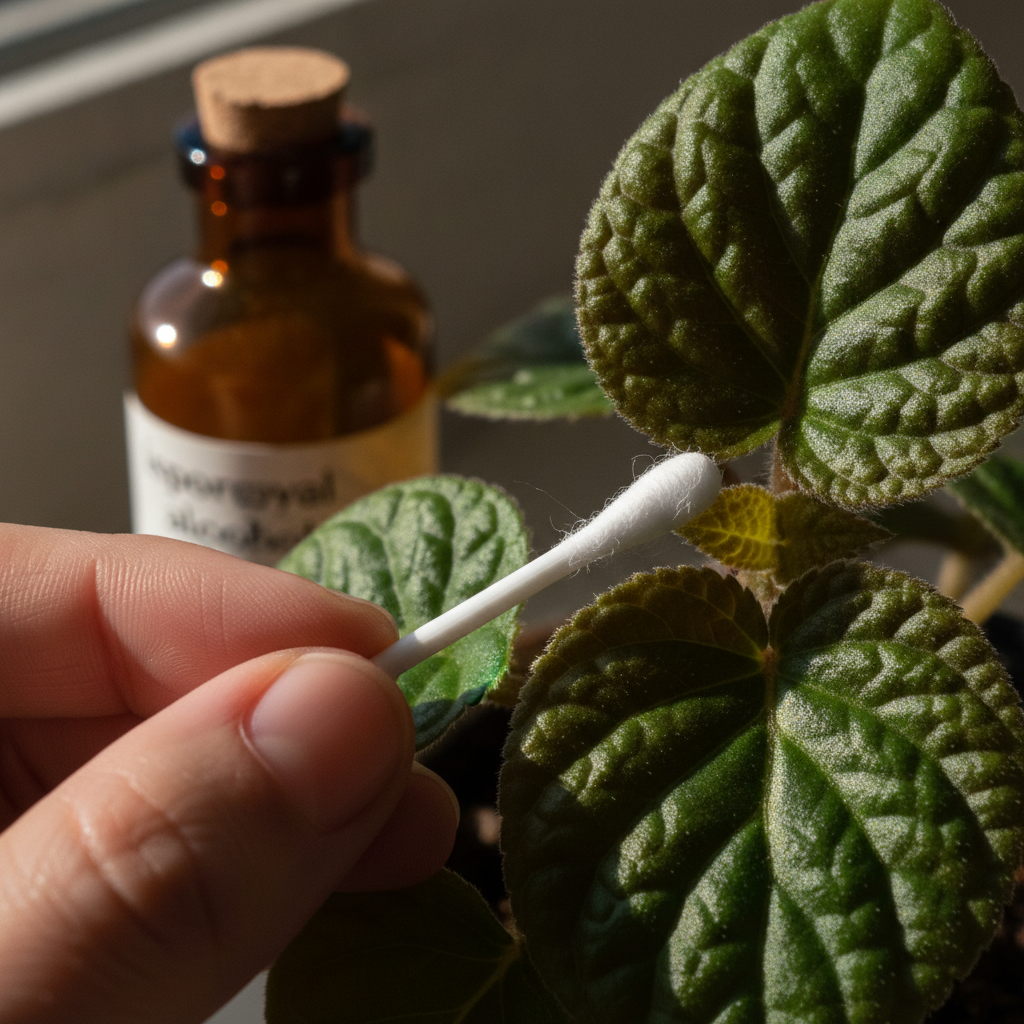
Common Pests
Fungus Gnats (Bradysia species)
Small black flies drifting around the pot are usually fungus gnats, whose larvae thrive in the consistently moist soil this plant enjoys. They are more nuisance than serious threat, but heavy infestations can damage fine roots and young cuttings.
Treatment: Let the top layer of soil dry a little more between waterings, set yellow sticky traps to catch the adults, and drench with a beneficial nematode or a bacterial larvicide to break the breeding cycle.
Spider Mites (Tetranychus urticae)
Thriving in dry air, these tiny mites cause fine speckling on the leaves and spin delicate webbing between stems. Because they favour the very dry conditions that also stress this plant, they often appear in heated winter rooms.
Treatment: Rinse the foliage under a gentle shower, raise humidity to make the plant less hospitable, and treat with insecticidal soap or neem oil, repeating weekly until the mites are gone.
Mealybugs (Pseudococcus species)
Small, white, cottony clusters tucked into leaf axils and along stems are mealybugs. They feed on sap, weakening the plant and leaving behind sticky honeydew that can turn into sooty mould.
Treatment: Dab each insect directly with a cotton bud dipped in diluted isopropyl alcohol, then follow up with insecticidal soap or neem oil over the whole plant to catch any you missed.
Aphids (Aphidoidea)
Clusters of small green, black or pink insects on tender new growth are aphids. They too feed on sap, distorting fresh leaves and shoots and leaving sticky residue behind.
Treatment: Blast them off with a spray of water, then treat with insecticidal soap or neem oil. Because aphids reproduce quickly, repeat every few days until no more appear.
Common Diseases
Root Rot (Pythium and Phytophthora)
By far the most serious threat to this plant, root rot is caused by fungal pathogens that flourish in waterlogged soil. Symptoms include yellowing lower leaves, a wilting plant despite wet soil, and blackened, mushy roots with a sour smell.
Treatment: Unpot immediately, cut away all affected roots with sterilised scissors, and repot into fresh, free-draining mix. Reduce watering thereafter and ensure the pot drains freely. Prevention through careful watering is far more reliable than any cure.
Powdery Mildew (Erysiphaceae)
A dusty white coating on the leaves, powdery mildew develops in humid, still air with poor circulation. On the textured leaves of this plant it can be easy to miss until it spreads.
Treatment: Improve air movement around the plant, remove badly affected leaves, and treat with a suitable fungicide or a diluted potassium bicarbonate spray. Avoid wetting the foliage when you water.
Pest and Disease Summary
| Pest / Disease | Identification | Treatment |
|---|---|---|
| Fungus gnats | Small black flies near the soil | Dry out topsoil, sticky traps, nematodes |
| Spider mites | Speckled leaves, fine webbing | Rinse, raise humidity, neem oil |
| Mealybugs | White cottony clusters in axils | Alcohol swab, insecticidal soap |
| Aphids | Insect clusters on new growth | Water spray, insecticidal soap |
| Root rot | Yellowing, wilting, mushy roots | Trim roots, repot, water less |
| Powdery mildew | White dusty coating on leaves | Improve airflow, fungicide spray |
Prevention Strategies
The most effective defence is a healthy plant in the right conditions. Correct watering, good light, adequate humidity and decent air circulation together make your plant far less inviting to pests and disease. A stressed plant, by contrast, is a magnet for trouble.
Build a habit of quick weekly inspections, wipe or rinse the leaves occasionally to keep them clean and dust-free, and always quarantine new plants before introducing them to your collection. Catching a problem when it involves three insects rather than three hundred makes all the difference.
Pro Tip — Neem as Routine: A monthly preventive spray of diluted neem oil on the undersides of the leaves deters most common pests before they establish. Apply it in the evening or out of direct sun to avoid marking the foliage.
Popular Varieties
The Moon Valley friendship plant belongs to a small, closely related group of Pilea species and cultivars collectively known as friendship plants, most of them native to Central and South American rainforests and grown for their remarkable leaf texture and colour. While Pilea mollis ‘Moon Valley’ is the most recognisable, its relatives offer a spectrum of finishes from iridescent silver to deep bronze.
All share the same easygoing care, so choosing between them is largely a matter of which foliage you find most striking. Many collectors end up growing several together, and because they propagate so readily, a small starter of each soon becomes a full shelf.
| Variety | Leaf Appearance | Light Needs | Growth Rate | Availability |
|---|---|---|---|---|
| ‘Moon Valley’ | Quilted chartreuse with bronze veins | Bright indirect | Fast | Common |
| ‘Norfolk’ | Bronze-green with silvery-pink bands | Bright indirect | Moderate | Common |
| ‘Silver Tree’ | Bronze leaf with a central silver stripe | Bright indirect | Moderate | Fairly common |
| ‘Dark Mystery’ | Deep bronze-black with a green midrib | Bright indirect | Moderate | Less common |
| Pilea spruceana | Textured bronze, quilted surface | Bright indirect | Moderate | Less common |
Featured Varieties
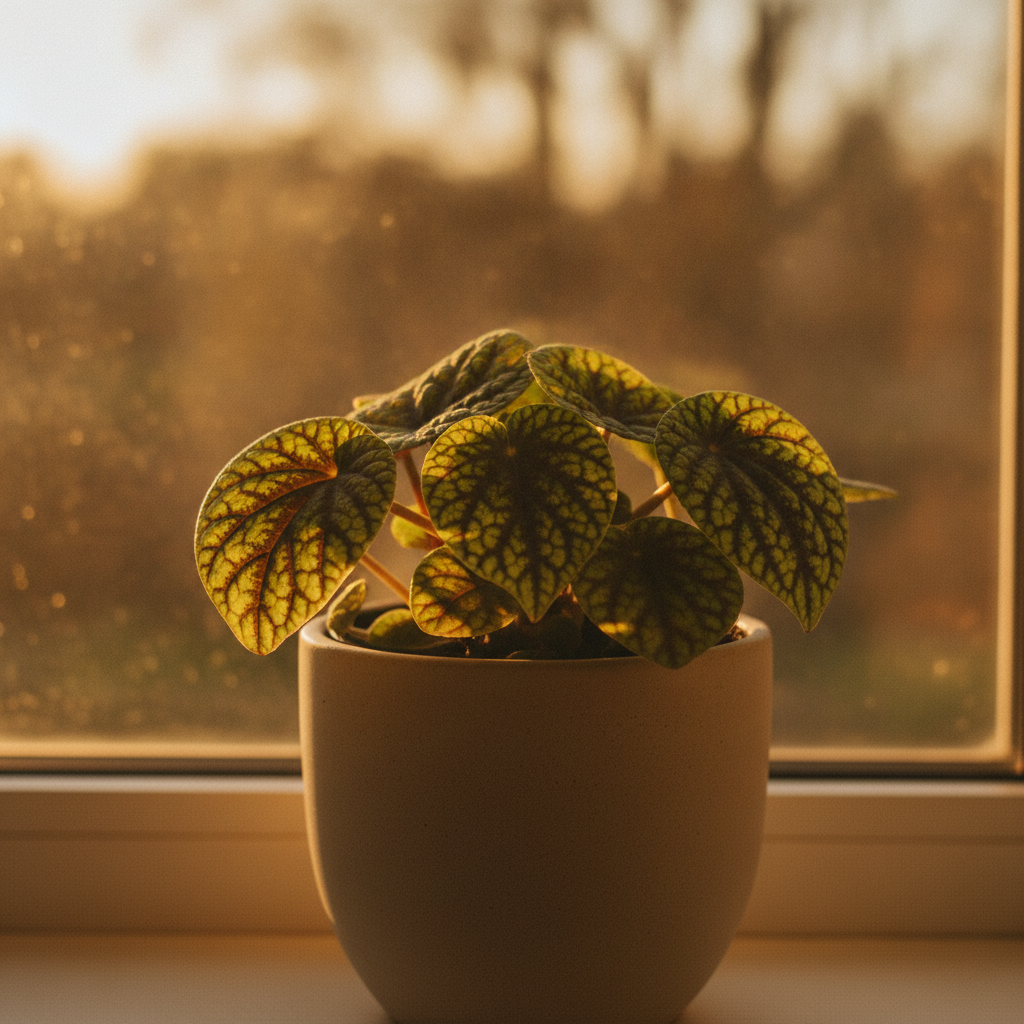
‘Moon Valley’
The classic and most widely grown form, prized for its deeply quilted apple-green leaves with sunken bronze veins that give the surface its distinctive lunar-landscape relief.
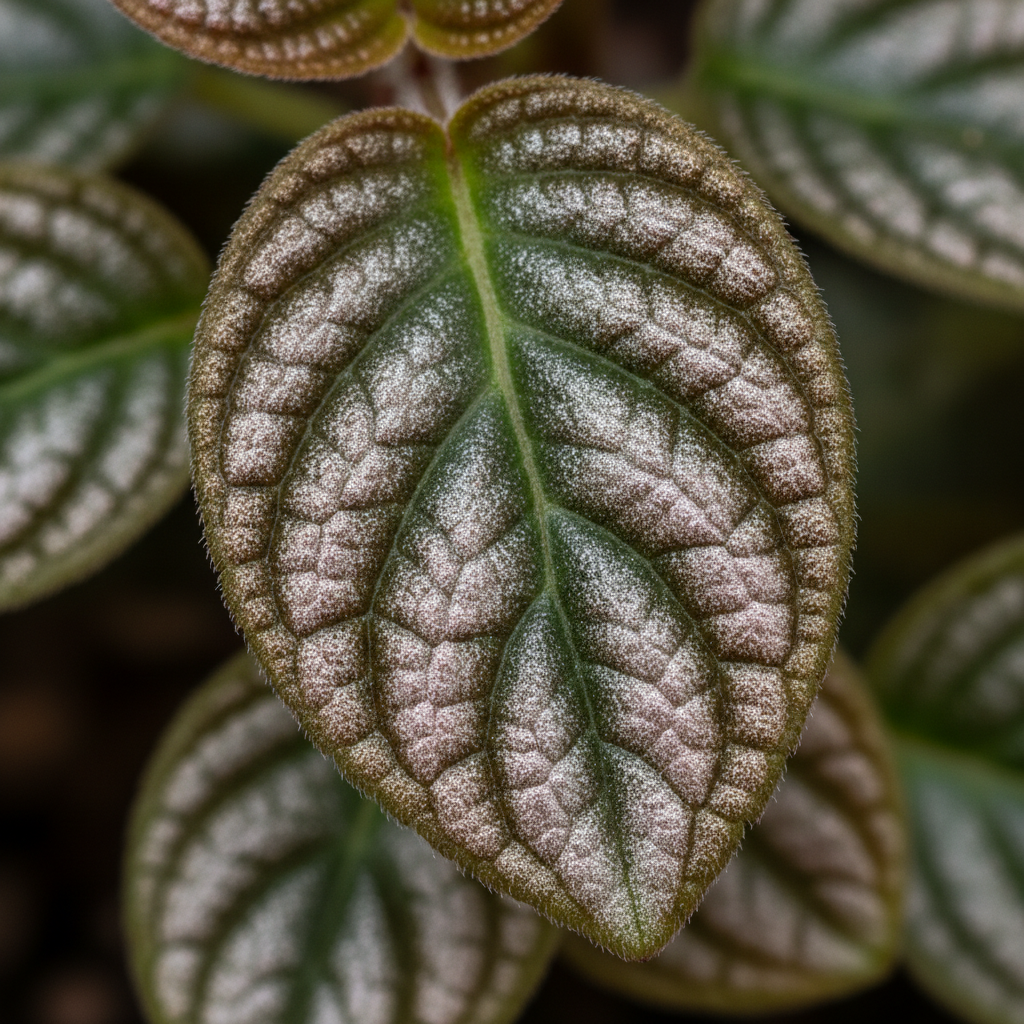
‘Norfolk’
A closely related friendship plant with bronze-green leaves overlaid by shimmering silvery-pink bands between the veins, catching the light with an almost metallic sheen.
Variety Profiles in Detail
‘Moon Valley’ (Pilea mollis)
The plant this guide is built around. Its serrated, oval leaves are heavily embossed with sunken veins picked out in coppery bronze against a bright chartreuse ground, and the overall effect really does evoke a photographed lunar surface. It is the fastest and bushiest of the group, and the easiest to find in shops.
‘Norfolk’ (Pilea involucrata ‘Norfolk’)
Perhaps the most ornamental of the friendship plants, ‘Norfolk’ pairs a bronze to olive base with iridescent pinkish-silver bands running between deeply impressed veins. It holds its colour best in bright, even light and slightly higher humidity than ‘Moon Valley’ demands.
‘Silver Tree’ (Pilea ‘Silver Tree’)
Distinguished by a broad silver stripe down the centre of each bronze, quilted leaf, flanked by silvery flecks. It brings a cooler, more metallic palette to a friendship-plant grouping and cares for identically to the others.
Choosing the Right Variety for Your Space
Because every friendship plant shares the same compact size and forgiving care, your choice comes down to colour and where the light falls. For a warm, sunlit shelf, the bright chartreuse-and-bronze of ‘Moon Valley’ glows beautifully. For a cooler, more dramatic look, the metallic sheen of ‘Norfolk’ or the silver stripe of ‘Silver Tree’ reads better, particularly in slightly softer light. Whichever you pick, all reward the same attentive but undemanding routine, and all pass so freely from cutting to cutting that you need never buy the same variety twice.
Frequently Asked Questions
Why is my Moon Valley friendship plant getting leggy?
Legginess, meaning long bare stems with widely spaced leaves, is almost always a sign of insufficient light. Move the plant somewhere brighter, and pinch back the stretched stems to encourage bushier growth. The tips you remove can be rooted as cuttings to fill the plant out further.
Is the Moon Valley friendship plant safe for cats and dogs?
Yes. Pilea mollis is considered non-toxic to cats, dogs and humans, which makes it a reassuring choice for pet households. A curious pet that eats a large amount could still get a mild stomach upset, so it is worth keeping determined chewers away from it.
Why are the leaf edges turning brown and crispy?
Crispy brown margins usually point to air that is too dry, and sometimes to inconsistent watering or a build-up of fertiliser salts. Raise humidity with a pebble tray or humidifier, keep the soil evenly moist rather than letting it swing between soaked and bone dry, and flush the pot occasionally to clear salts.
How often should I water it?
Rather than following a fixed schedule, water when the top 2 to 3 cm (1 in) of soil feels dry. In practice this often means once or twice a week in the growing season and less in winter, but always check by touch, since light, temperature and pot size all affect how quickly the soil dries.
Why has my plant suddenly wilted?
A sudden dramatic wilt is usually simple thirst, and a good watering typically revives the plant within hours. If the soil is already wet, however, wilting points to root rot instead, so check the roots and reduce watering if they look brown or feel mushy.
Does it flower?
It can. Mature plants may produce small, inconspicuous pinkish or greenish flowers, but they are insignificant and this plant is grown purely for its foliage. Removing the flowers, if they appear, directs the plant’s energy back into leaf production.
How do I keep it looking full and bushy?
Regular pinching is the secret. Nipping out the growing tips encourages the plant to branch, and planting several rooted cuttings together in one pot creates fullness from the outset. Combined with good light, this keeps the plant dense rather than sprawling.
My plant has become old and woody. What should I do?
Friendship plants naturally decline and grow woody at the base after a few years, and this is entirely normal. The best response is to take fresh cuttings from the healthy top growth and start a new plant, which is exactly what the plant’s easy propagation is there for. Think of it as renewal rather than loss.
Can it grow in a terrarium?
Its compact size and love of humidity make it a superb terrarium plant. In a closed or partly closed case it enjoys the steady moisture in the air, though you may need to trim it occasionally to keep it within bounds, and ensure the setup has enough light and some air movement to prevent fungal issues.






