
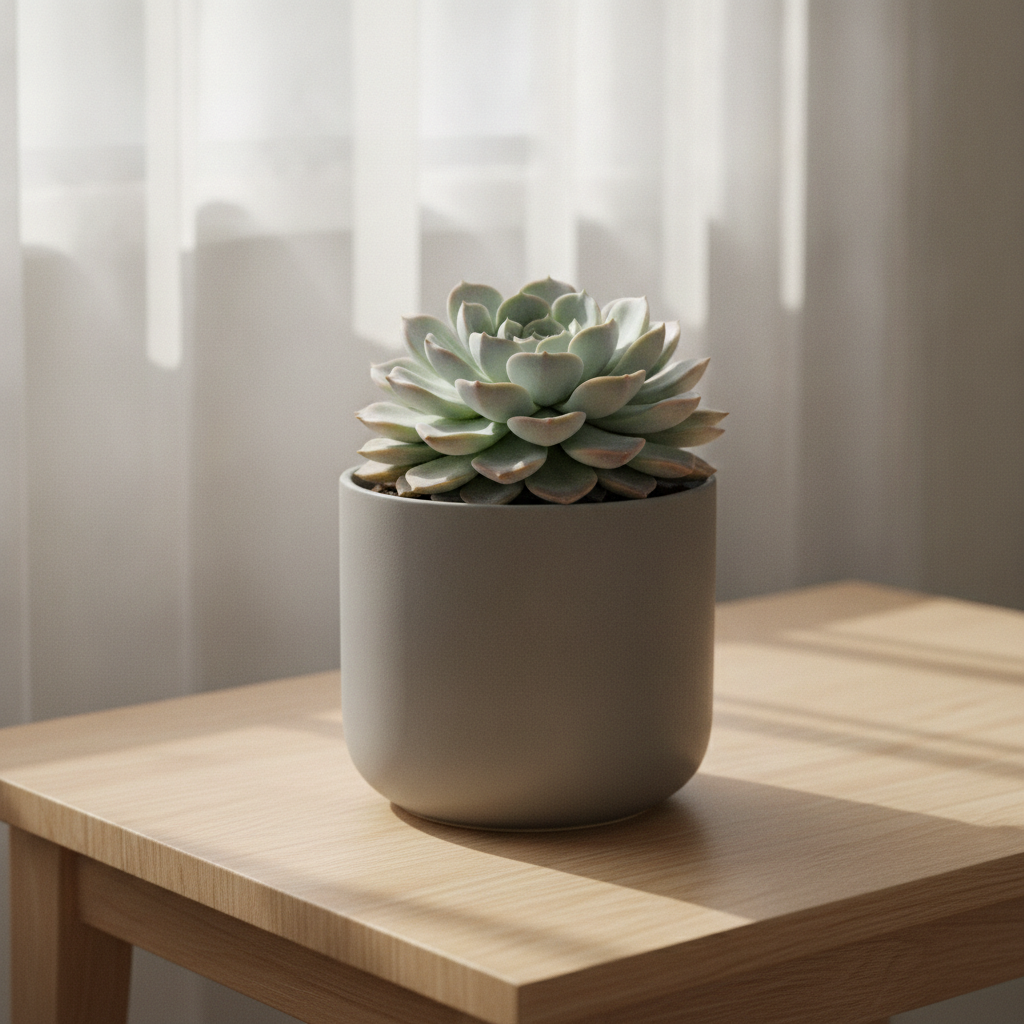
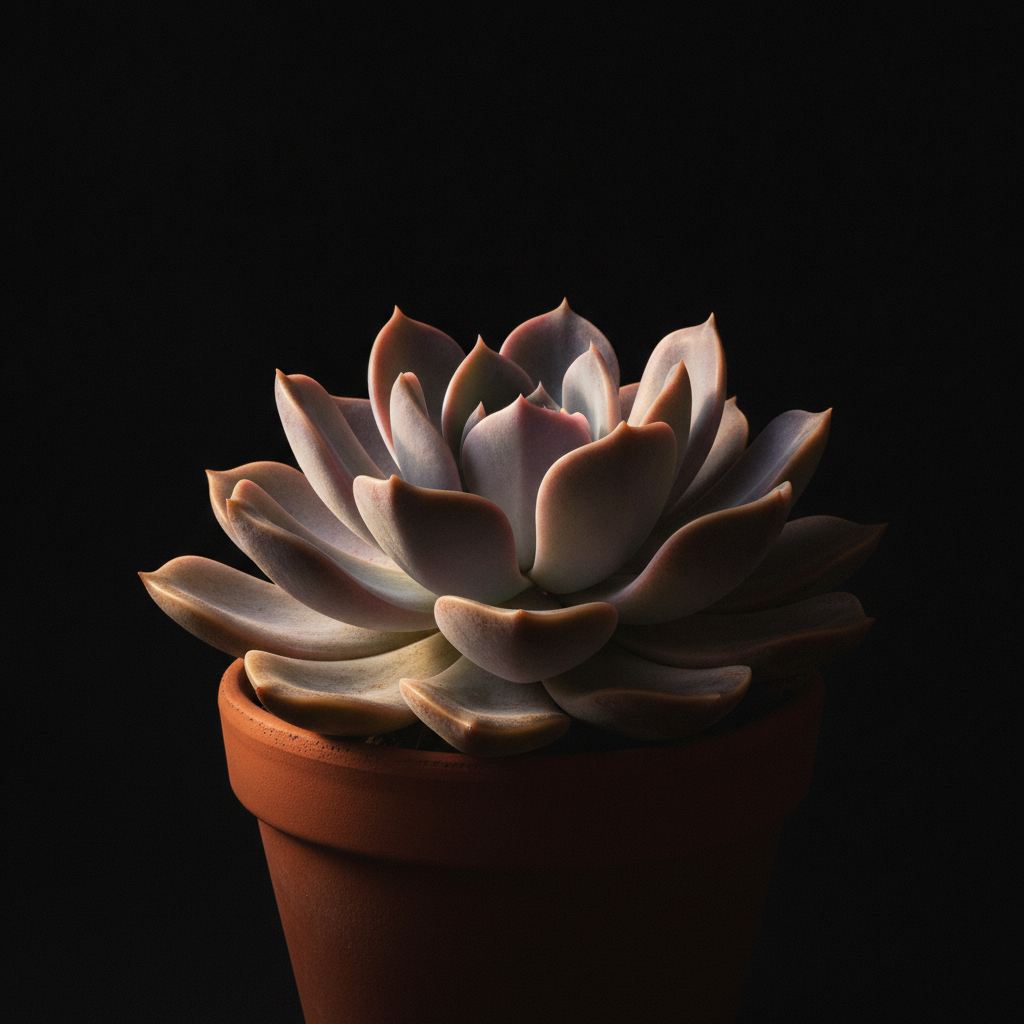
Few succulents look quite as deliberately designed as the Lola echeveria (Echeveria ‘Lola’), a tight, symmetrical rosette that resembles an unopened stone rose carved from pale blue-green wax. It is a hybrid rather than a wild species, raised by the celebrated Californian succulent breeder Dick Wright from a cross between Echeveria lilacina and Echeveria derenbergii, and it inherits the best of both parents: the ghostly lilac colouring of one and the compact, orderly geometry of the other. The whole plant is dusted in a fine powdery coating called farina, which gives the leaves their soft, frosted glow and a delicate pink flush that deepens toward the pointed tips.
Lola has a reputation as one of the more forgiving ornamental echeverias, which is part of why it turns up so often in wedding bouquets, living wreaths and windowsill collections. That reputation is deserved, but there is a real difference between a Lola that merely survives and one that truly thrives. A neglected plant will stretch, lose its rose-like symmetry and shed its lower leaves; a well-grown one stays tight, keeps its silvery bloom intact and blushes pink in strong light. This guide covers everything you need to move a plant from the first category into the second, from reading its light to watering without ruining that precious farina.
Contents
- Quick Reference
- Why Lola Echeveria Makes a Rewarding Houseplant
- Light Requirements
- Watering & Humidity
- Soil, Potting & Repotting
- Fertilising
- Propagation
- Pests & Diseases
- Popular Varieties
- Frequently Asked Questions
Quick Reference: Lola Echeveria at a Glance
| Light | Very bright light with several hours of gentle direct sun; an unobstructed south or east window indoors. |
| Watering | Soak thoroughly, then let the soil dry out completely; roughly every 10 to 14 days in summer, far less in winter. |
| Temperature | 18 to 27 C (64 to 81 F) ideal; keep above 5 C (41 F) and away from frost. |
| Humidity | Low to average; dry household air is preferred, high humidity invites rot. |
| Fertiliser | A weak, diluted succulent feed once monthly during spring and summer only. |
| Toxicity | Non-toxic to cats, dogs and people; safe around curious pets. |
Why Lola Echeveria Makes a Rewarding Houseplant
The appeal of Lola starts with its form. Where many echeverias grow loose or leggy over time, Lola holds a remarkably compact rosette, usually 10 to 15 centimetres (4 to 6 inches) across, with leaves arranged in a tight spiral so precise it looks almost machined. That geometry, combined with the frosted lilac colouring, is why the plant photographs beautifully and why it has become a florist favourite for arrangements that need to last. Unlike cut flowers, a Lola rosette used in a bouquet can often be rooted afterwards and grown on into a full plant.
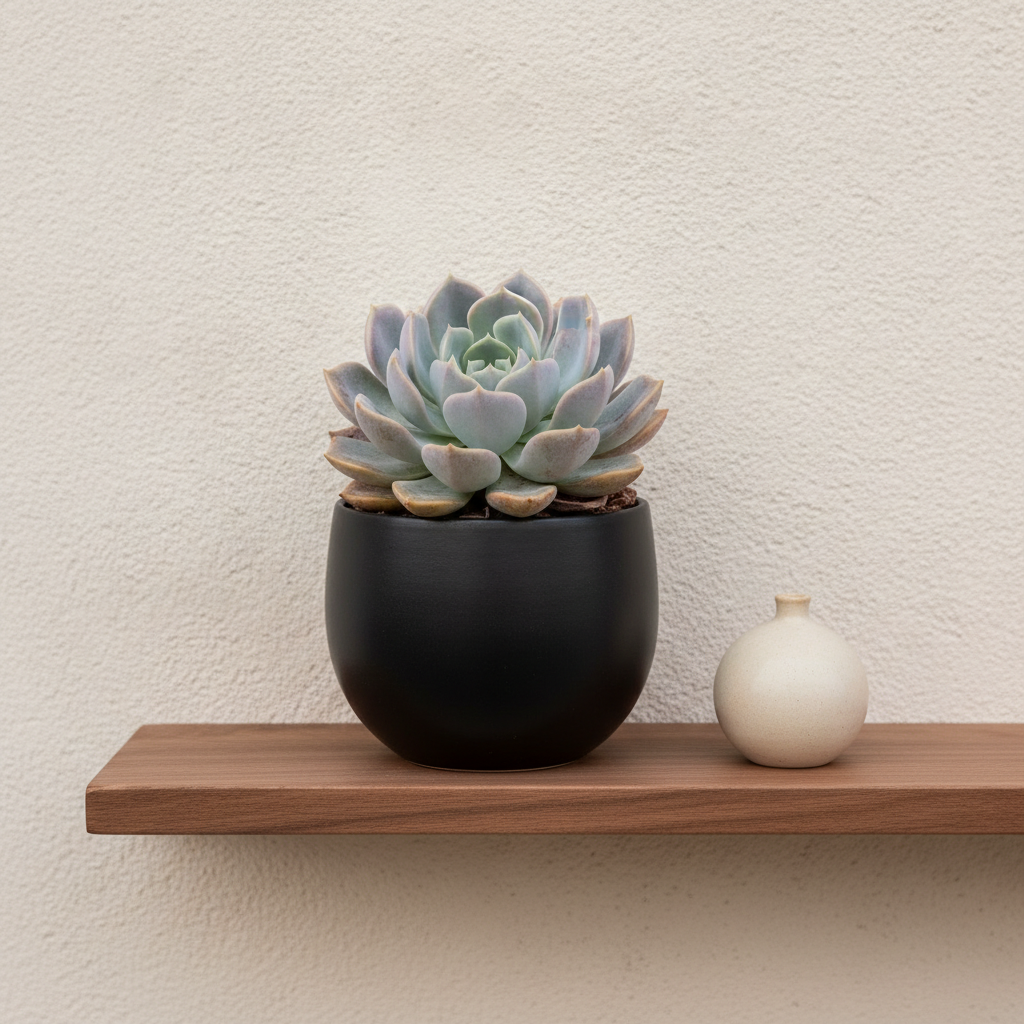
Beyond looks, Lola earns its keep as a low-demand plant. It stores water in its fleshy leaves, so it copes with the occasional missed watering better than almost any leafy houseplant, and it asks for no misting, no humidity trays and no fussing over draughts. It is slow growing, which means it rarely outgrows its pot or needs frequent repotting, and it stays small enough to live comfortably on a windowsill, a desk or a bright bathroom shelf. Give it sun and restraint with the watering can and it will reward you for years, occasionally sending up an arching stalk of small bell-shaped flowers in shades of coral and yellow during spring.
Pro Tip — Handle by the pot: The powdery farina that gives Lola its frosted look does not grow back once rubbed off. Always lift and move the plant by its pot or root ball, never by grasping the leaves, or you will leave permanent fingerprints on the bloom.
Light Requirements
Light is the single most important factor in growing a good-looking Lola, and it is where most indoor plants quietly fail. Echeverias evolved on sun-baked slopes and rocky outcrops in Mexico, and they are built to sit in strong, direct light for much of the day. Indoors, that translates to the brightest position you can offer: an unobstructed south-facing windowsill in the northern hemisphere, or a very bright east-facing one that catches several hours of gentle morning sun. Anything dimmer and the plant will begin to change shape in ways that are hard to reverse.
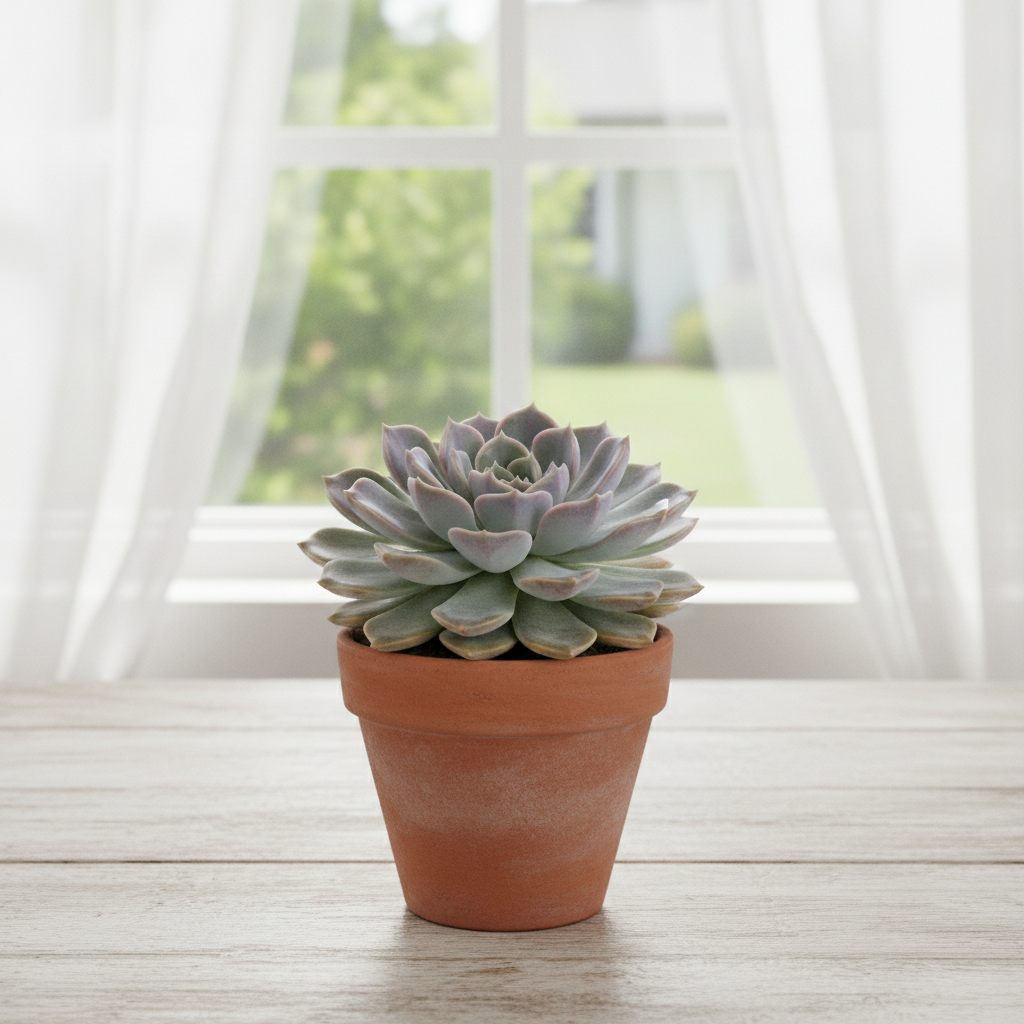
The clearest warning sign of insufficient light is etiolation, the technical term for stretching. A Lola that is not getting enough sun will start to elongate its central stem, space its leaves further apart and point them upward as it reaches toward the window, losing the flat, symmetrical rose shape that made it desirable in the first place. It may also fade to a flatter green as it drops the protective pink and lilac pigments it only produces under stress from bright light. Once a plant has stretched, it cannot compress itself back into shape; the only fix is to behead the rosette and re-root it, or to accept the leggy form and improve the light going forward.
Direct sun is welcome, but it must be introduced gradually. A plant that has spent the winter in weaker light, or one freshly bought from a shaded shop display, can scorch if moved abruptly into intense summer sun, developing dry brown patches on the leaves that never heal. Acclimatise a new or overwintered plant over a week or two, adding an hour of direct sun at a time, and watch the leaves for any bleaching or browning. If you grow Lola outdoors in summer, which it enjoys, the same rule applies, and a position with morning sun and light afternoon shade is often the sweet spot in hotter climates. If a sunny window simply is not available, a full-spectrum LED grow light positioned close overhead for 10 to 12 hours a day is an effective substitute and will keep the rosette tight.
Pro Tip — Rotate weekly: Because Lola leans toward its light source, give the pot a quarter turn every week or so. This keeps the rosette growing evenly and symmetrical rather than lopsided toward the glass.
Watering & Humidity
If light keeps a Lola looking good, watering is what keeps it alive, and overwatering is the most common way these plants die. As a succulent, Lola stores its own water reserves in those plump leaves, so it is designed to endure drought and then drink deeply when rain finally arrives. The way to mimic that indoors is the soak-and-dry method: water thoroughly until liquid runs freely from the drainage holes, then do not water again until the soil has dried out completely, all the way to the bottom of the pot. Testing with a finger or a wooden skewer pushed to the base of the pot is far more reliable than watering on a fixed schedule.
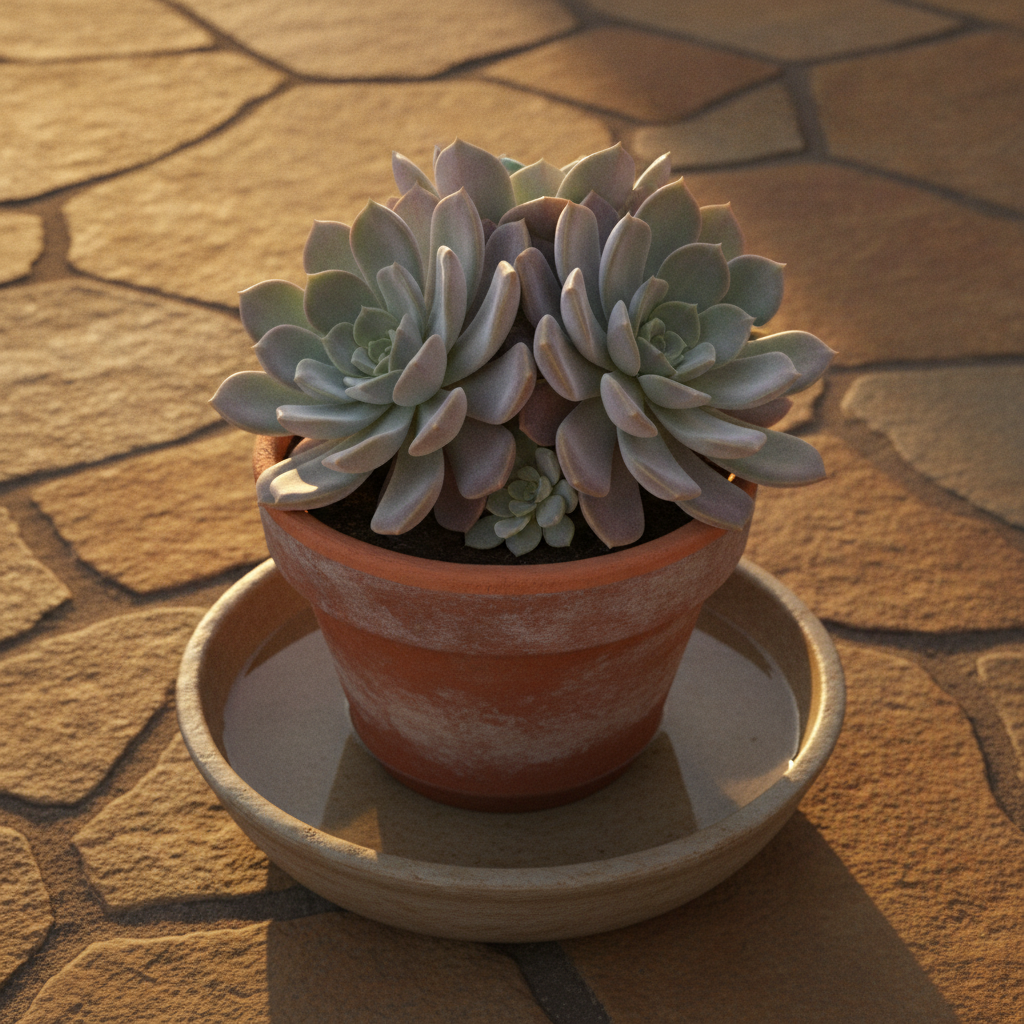
In practice, that means roughly one watering every 10 to 14 days during the warm growing months, though your own conditions of light, pot size and airflow will shift that number. The single most important thing is to let the soil dry between drinks rather than keeping it damp. How you deliver the water matters too. Lola forms such a tight rosette that water poured over the top pools in the centre, where it is slow to evaporate and can trigger crown rot, the collapse of the plant from its core. It also spots and damages the farina. For this reason many growers water from below, standing the pot in a shallow dish of water for 10 to 15 minutes so the mix wicks moisture up through the drainage holes, or they water carefully at the soil surface around the edge of the rosette with a narrow-spouted can.
Winter changes the rules. As light levels fall and the plant slows into dormancy, its water needs drop dramatically, and a soak that lasted two weeks in summer might last a month or more in the cold months. Watering a barely-growing plant sitting in cool, damp compost is a near-certain route to root rot, so err firmly on the side of dryness from late autumn through to early spring. A slightly thirsty Lola will show it first in the lowest leaves, which grow soft, wrinkled or slightly translucent; that is your cue to water, and the leaves will plump back up within a day or two. Genuinely overwatered leaves feel mushy, turn yellow or clear, and often fall away at the slightest touch, which is a far more dangerous signal.
Humidity is refreshingly simple with this plant. Lola actively prefers the dry air most homes provide and has no need for misting, pebble trays or humidifiers. In fact, high humidity combined with still air raises the risk of fungal problems and rot, so good airflow around the plant is more valuable than any moisture in the air. A spot with gentle air movement, not a stagnant corner, helps the soil dry evenly and keeps the rosette healthy.
Warning — Never mist the rosette: Water trapped in the tight crown of leaves is the leading cause of sudden collapse in Lola. Keep the centre dry at all times and water only the soil.
Soil, Potting & Repotting
Everything about watering a Lola depends on the soil draining fast, so the mix is not a detail to overlook. Standard houseplant compost holds far too much moisture around the roots and will keep them wet long after the plant has had enough, which leads straight to rot. What Lola wants is a gritty, open, fast-draining medium that lets water rush through and air reach the roots within minutes. A dedicated cactus and succulent compost is the easy starting point, but even these are often improved by cutting them further with grit.
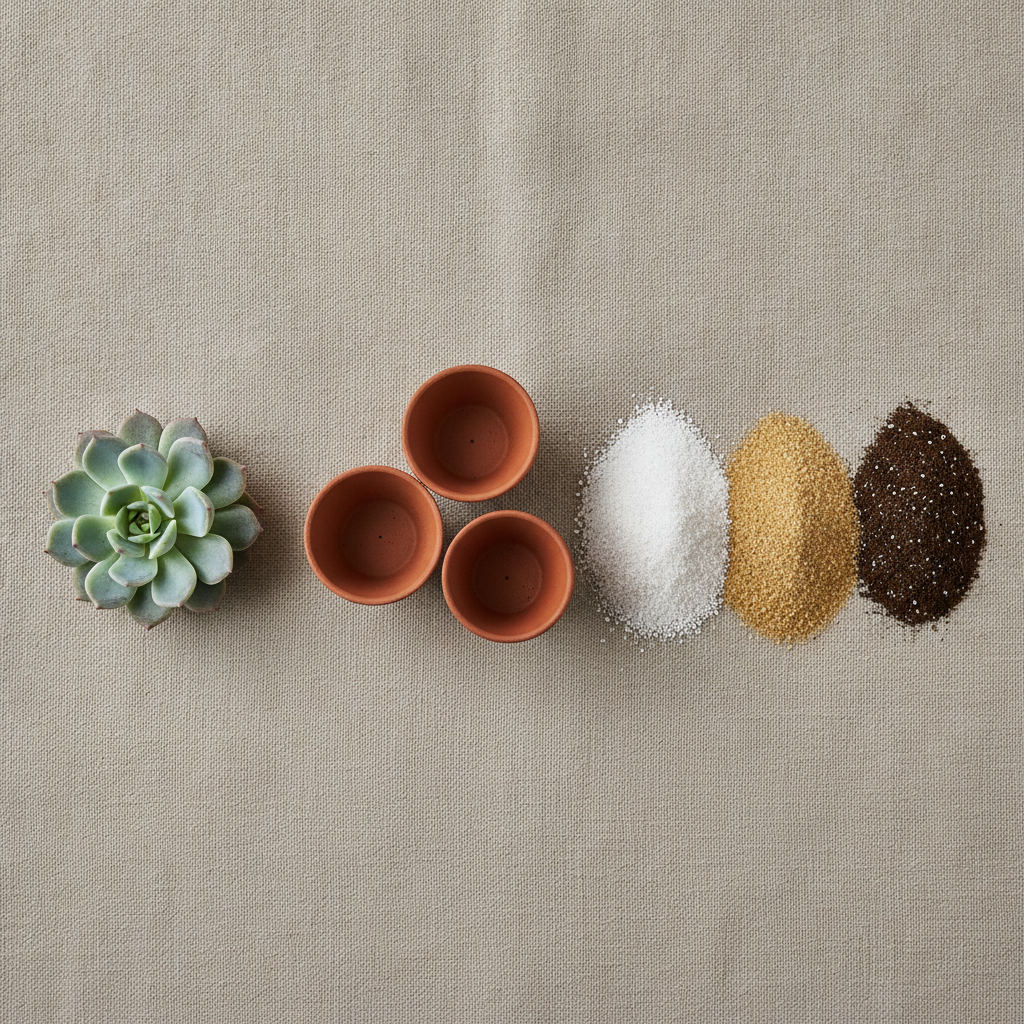
A reliable home blend is roughly two parts cactus compost to one part coarse mineral grit, using pumice, perlite or fine horticultural grit rather than builder’s sand. The aim is a mix where at least a third of the volume is inorganic and gritty, so the soil never stays soggy. Some growers push this even further for a very free-draining medium, and Lola tolerates it happily; when in doubt, grittier is safer than richer. The pot matters as much as the mix. A drainage hole is non-negotiable, and terracotta is the ideal material because its porous walls wick moisture out of the soil and let it breathe, drying the root zone faster than glazed ceramic or plastic. Choose a pot only slightly larger than the root ball, since an oversized pot holds a reservoir of damp soil the small root system cannot use.
Lola is slow growing and does not need frequent repotting, so once every two or three years is usually plenty, ideally in spring at the start of the growing season. Repot when the plant has clearly outgrown its container, when the roots are circling the base, or simply to refresh tired, broken-down compost. To repot, follow these steps.
- Let the soil dry out fully first, as a dry root ball slides out more cleanly and with less root damage.
- Gently ease the plant from its pot, handling it by the root ball rather than the leaves, and crumble away the old spent soil from the roots.
- Inspect the roots and trim off any that are black, mushy or rotten with clean scissors, leaving the healthy pale ones.
- Settle the plant into fresh gritty mix in a pot one size up, positioning the base of the lowest leaves at the soil surface, not buried.
- Wait about a week before watering, giving any disturbed or trimmed roots time to callus and heal so they do not rot.
Fertilising
Echeverias are naturally adapted to lean, mineral soils where nutrients are scarce, and Lola is no exception. It needs very little feeding, and overdoing it does more harm than doing nothing at all. Too much fertiliser pushes soft, rapid growth that stretches the rosette, dilutes the pink and lilac colouring and leaves the plant weaker and more prone to pests. A gentle, restrained approach suits it far better than a generous one.
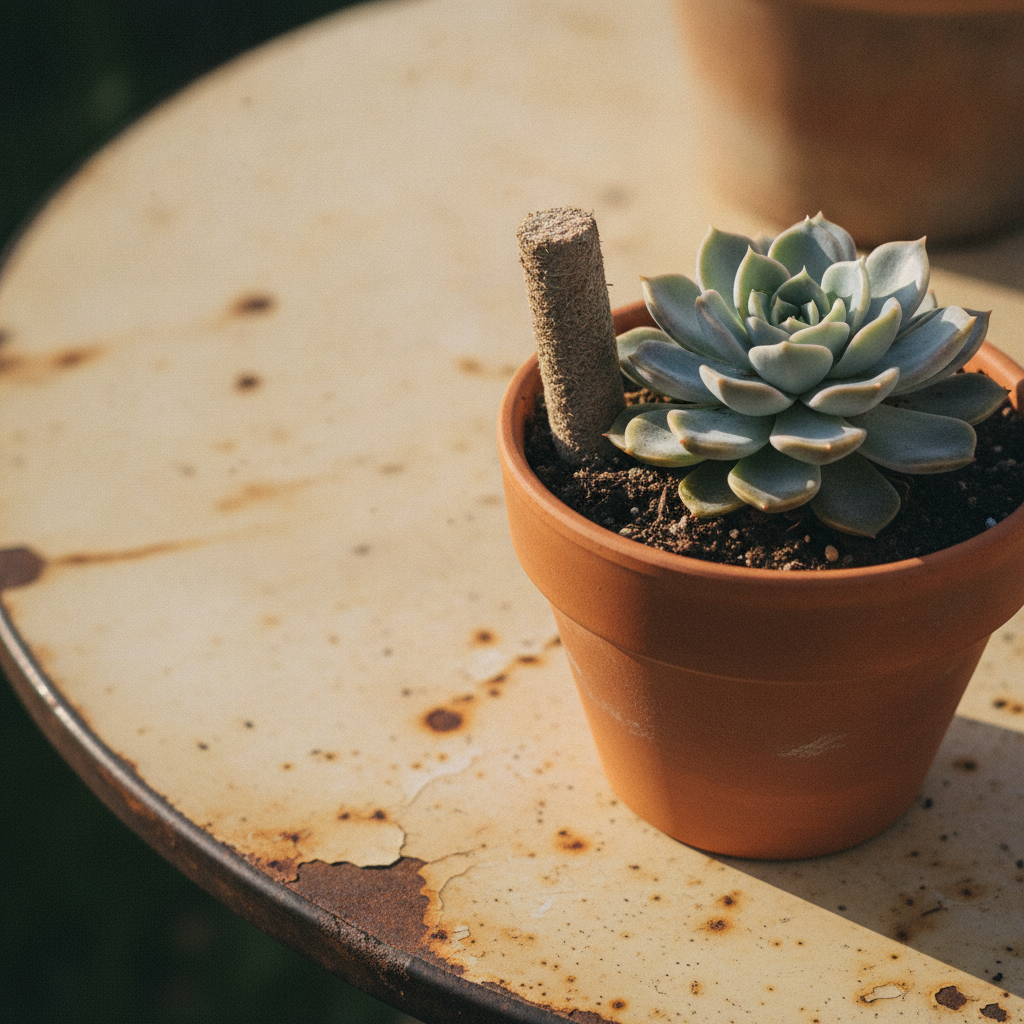
Feed only during the active growing season of spring and summer, and stop entirely in autumn and winter when the plant is resting. Once a month is ample, and the feed should be well diluted, ideally a fertiliser formulated for cacti and succulents, which is lower in nitrogen and better balanced for this kind of plant. If you only have a general houseplant feed, dilute it to a quarter or half of the recommended strength before using it. Always apply fertiliser to soil that is already slightly moist rather than bone dry, as feeding into completely dry compost can burn the roots. Many growers of established Lolas skip feeding altogether and simply refresh the soil every couple of years at repotting, and the plants do perfectly well on that alone.
Propagation
One of the quiet pleasures of growing Lola is how readily it multiplies, letting you turn a single rosette into a whole collection for nothing. There are three main routes: leaf propagation, separating offsets, and beheading a stretched plant. All of them rely on the same succulent trick of letting cut or torn tissue dry and callus before it touches soil, which prevents the rot that would otherwise set in.
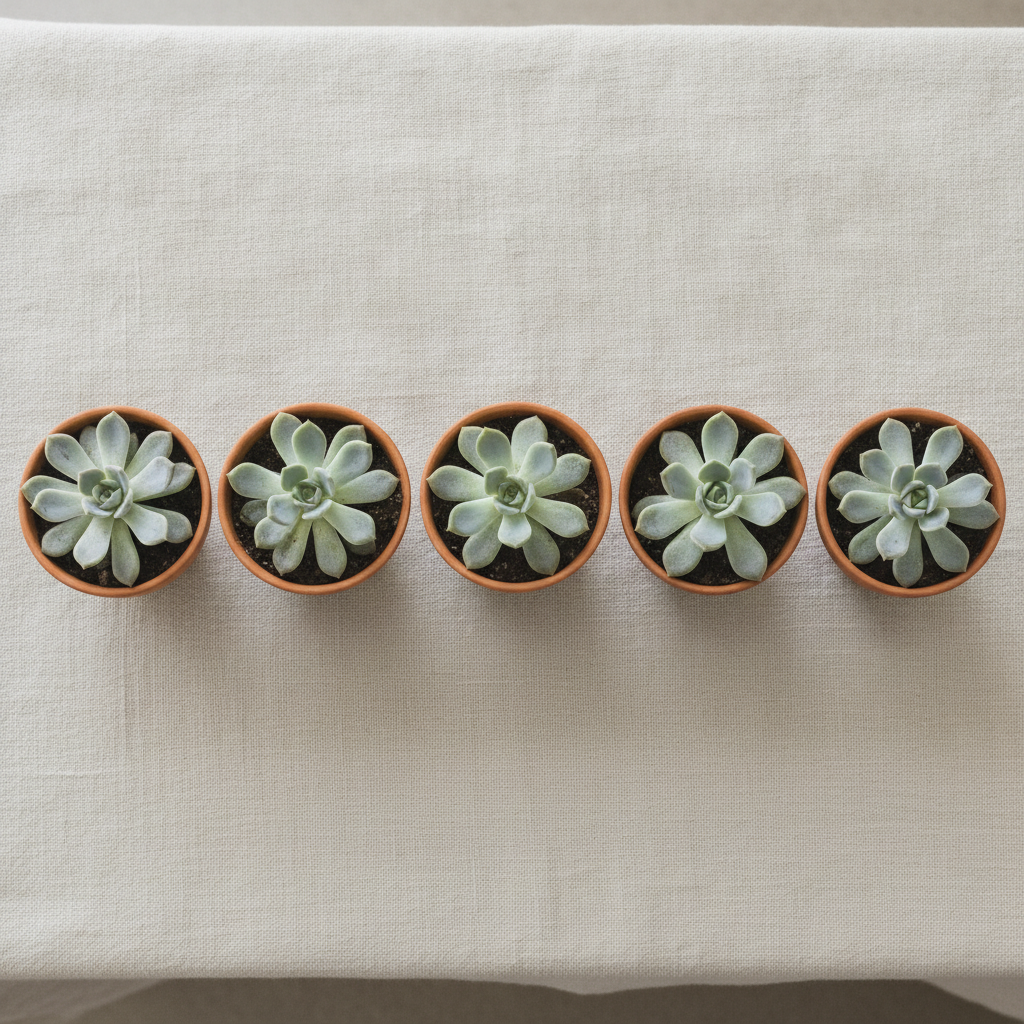
Leaf propagation is the most productive method and the most satisfying to watch. Choose a plump, healthy leaf from low on the rosette and remove it with a gentle sideways wiggle, taking care to pull away the entire leaf cleanly including its base where it meets the stem; a torn leaf that leaves part of itself behind will not root. Lay the leaves on a tray of dry, gritty mix in a bright spot out of harsh direct sun and simply wait. After a few days the cut ends callus over, and within a couple of weeks tiny pink roots and a miniature rosette begin to form at the base. Mist the roots lightly every few days once they appear, and pot each baby up only once it has developed its own small root system and the original mother leaf has shrivelled away, having given up its stored energy to the new plant.
Offsets, sometimes called pups, are the second route. Lola is a little more reserved about producing offsets than some echeverias, but a mature, well-grown plant will in time push out small clone rosettes around its base. Once an offset has grown to a reasonable size and ideally shown a few roots of its own, it can be gently teased or cut away from the parent, left to callus for a day or two, and potted into its own small container of gritty mix. Beheading is the third method and doubles as the cure for a stretched, etiolated plant. Cut the compact top rosette off cleanly with a sterile blade, leaving a short stem, let the cut surface callus for several days, and then set it on or just into dry gritty soil to root. As a bonus, the decapitated stem left behind will often sprout multiple new offsets from its sides.
Pro Tip — Patience beats water: The most common propagation failure is impatience with moisture. Keep cuttings and leaves on the dry side, give them bright indirect light, and let roots appear before you think about watering. Damp propagation soil rots leaves before they ever root.
Pests & Diseases
A healthy, well-grown Lola in bright light and gritty soil is not especially troubled by pests, but a few problems recur often enough to be worth knowing. By far the most damaging issue is not a pest at all but overwatering, and the resulting root and crown rot is the number one killer of echeverias. The signs are mushy, translucent or blackening leaves, particularly at the base or the centre of the rosette, and a stem that feels soft. Caught early, the cure is to unpot the plant, cut away all rotten tissue back to firm, healthy flesh, let it dry and callus, and re-root the salvageable top as a fresh cutting. Prevention, through dry soil and good drainage, is far easier than the cure.

Among the true pests, mealybugs are the classic enemy of echeverias. These small, sap-sucking insects look like tiny tufts of white cotton wool and love to hide deep in the crevices between the leaves and in the tight centre of the rosette, exactly where they are hardest to spot and reach. A light infestation can be dealt with by dabbing each bug with a cotton bud soaked in isopropyl alcohol, which kills it on contact; a heavier one may need repeated treatment or a systemic insecticide. Aphids sometimes appear on the soft flower stalks when Lola blooms, and can be rinsed or wiped off, while fungus gnats, whose larvae live in damp soil, are really a symptom of overwatering and vanish once the soil is allowed to dry properly. Whenever you bring home a new succulent, isolate it away from your other plants for a couple of weeks so any hitchhiking pests reveal themselves before they can spread.
Cosmetic issues round out the list. Dry brown scorch marks come from sudden intense sun on an unacclimatised plant, and while they do not heal they do no lasting harm. Bare, leggy stems and faded colour point back to insufficient light rather than any disease. And a lost bloom, where the leaves become shiny and marked, usually just means the farina has been rubbed off by handling; it is purely aesthetic and the new growth will emerge fully frosted again.
Popular Varieties
Lola itself is a named hybrid rather than a species, so strictly it does not have varieties of its own, but it belongs to a small family of closely related Dick Wright hybrids that share its frosted, rose-like character. Collectors often grow these alongside Lola, and they are easy to confuse at a glance. The two below are the most commonly encountered relatives.
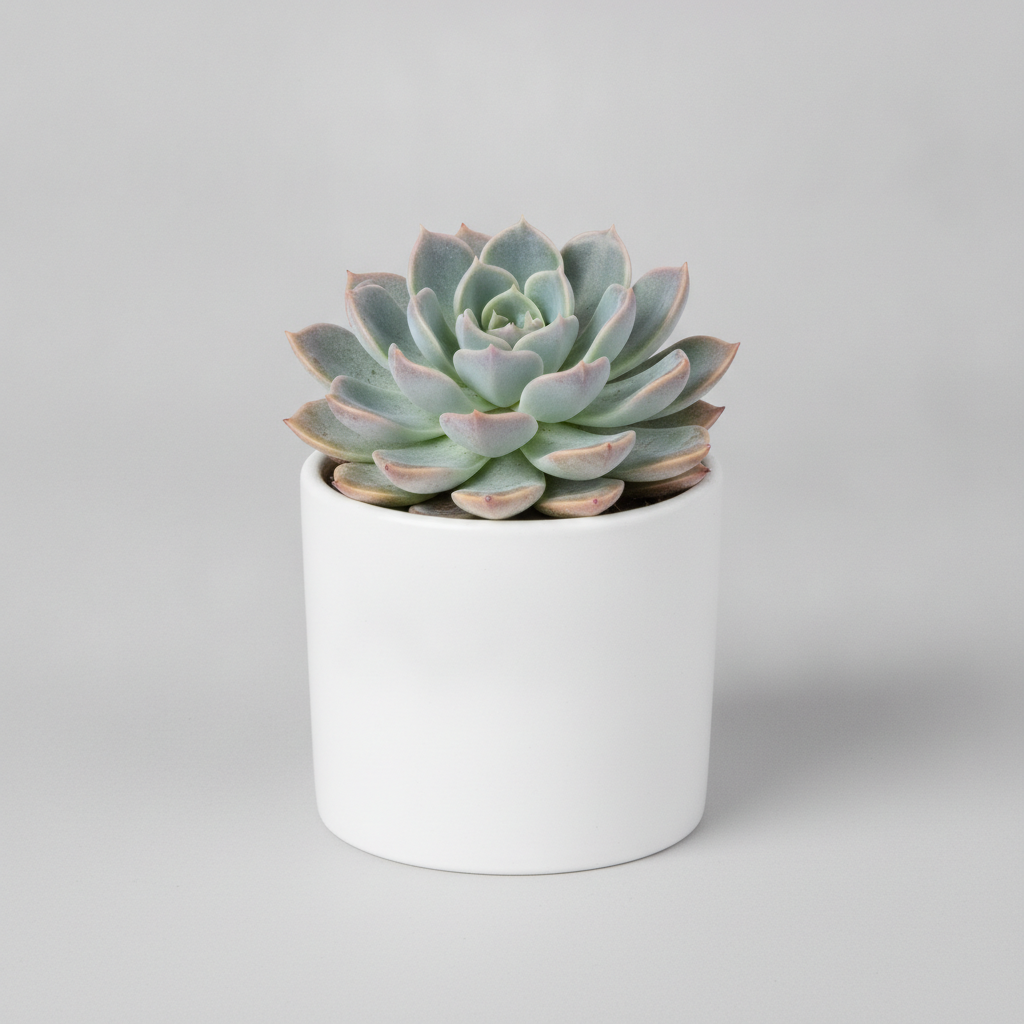
The original and best known form, prized for its near-perfect symmetry, silvery blue-green leaves coated in fine chalky bloom, and delicate pink flush at the tips. It stays compact and tidy, making it the benchmark against which its relatives are judged.
A hybrid of Lola crossed with ‘Perle von Nurnberg’, Lolita forms a slightly larger and looser rosette with stronger lavender and rose-pink tones washing over the pale blue-green leaves. It brings more colour drama while keeping the family resemblance.
Frequently Asked Questions
Why is my Lola echeveria stretching out and losing its shape?
This is etiolation, and it is caused by too little light. The plant elongates its stem and spreads its leaves as it reaches toward the nearest window. Move it to the brightest spot you have, ideally a sunny south or east window, or add a grow light. The stretched growth will not tighten back up, but you can behead the rosette and re-root it to restore a compact shape.
How often should I water a Lola echeveria?
Water only when the soil has dried out completely, which is roughly every 10 to 14 days in summer and much less, sometimes monthly, in winter. Rather than following a calendar, check the soil with a finger or skewer and water thoroughly when it is dry to the base of the pot. When in doubt, wait, since these plants tolerate drought far better than soggy roots.
Is Lola echeveria safe for cats and dogs?
Yes. Echeverias, including Lola, are considered non-toxic to cats, dogs and humans, so they are a safe choice for homes with curious pets. That said, no plant is truly meant to be eaten, and a pet that chews on the fleshy leaves may still get a mild stomach upset, so it is best to keep it out of reach of determined nibblers.
What is the white powdery coating on the leaves, and why did mine rub off?
That coating is called farina, a natural waxy bloom the plant produces to protect itself from sun and reduce water loss. It gives Lola its frosted, silvery appearance. Farina does not regenerate on leaves where it has been rubbed away by handling, leaving permanent marks, so always move the plant by its pot. New leaves will emerge with the bloom fully intact.
Why are the bottom leaves of my Lola shrivelling?
If the lowest leaves are going soft, wrinkled or slightly translucent while the rest of the plant looks fine, this is usually normal. Echeverias naturally consume their oldest leaves from the bottom up, and a thirsty plant will show it here first. A good soak will plump most of them back up. Only worry if leaves turn mushy, yellow and drop easily, which signals overwatering instead.
Can I grow Lola echeveria outdoors?
Yes, in warm weather Lola thrives outdoors in a bright spot, and the strong light brings out its best colour and tightest form. It is not frost hardy, however, and needs to come inside before temperatures drop toward 5 C. Acclimatise it gradually to direct sun to avoid scorching, and in hot climates give it some light afternoon shade rather than relentless full sun.
Will my Lola echeveria flower?
A mature, well-grown plant that gets plenty of light will often bloom in spring, sending up a slender arching stalk lined with small bell-shaped flowers in coral, orange and yellow. Flowering does not harm the plant. Once the blooms fade you can simply cut the spent stalk away at its base, and keep an eye on the stalk while it lasts, as aphids sometimes gather on the soft flower stems.






