
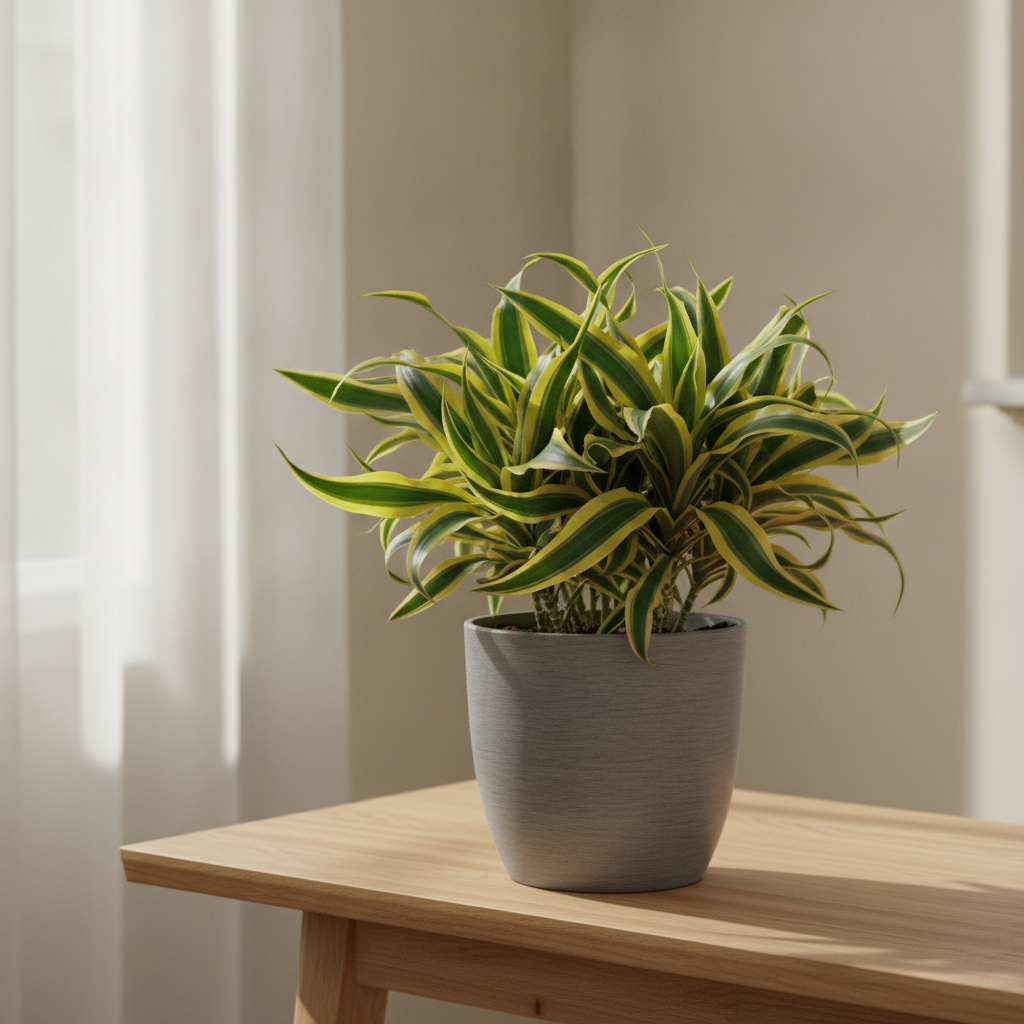
Few compact houseplants pack as much personality into a small footprint as the Lemon Surprise dracaena (Dracaena deremensis ‘Lemon Surprise’), a cheerful cultivar whose short, glossy leaves twist and curl outward from a tight central rosette. Each blade is painted dark green down the middle and edged with a broad band of vivid lemon-yellow, finished with a hair-thin white pinstripe where the two colours meet. Sometimes sold simply as Lemon Dracaena, it belongs to the same easy-going African genus as the corn plant and the dragon tree, and it inherits their famous tolerance of neglect while offering something they rarely do: brightness and a playful, sculptural form on a windowsill or desk.
Dracaenas have a reputation as some of the most forgiving foliage plants you can grow indoors, and Lemon Surprise is no exception. It will survive in a shady corner with erratic watering and stale air, but surviving and thriving are two different things. Coax it into the right light, water it with a little care for its sensitivity to tap-water minerals, and feed it lightly through the growing season, and it rewards you with tight, colourful new growth and a compact silhouette that never sprawls. This guide walks through every aspect of its care, from reading its light needs to diagnosing the leaf-tip browning that trips up so many dracaena owners.
Contents
- Quick Reference
- Why Lemon Surprise Dracaena Makes a Great Houseplant
- Light Requirements
- Watering & Humidity
- Soil, Potting & Repotting
- Fertilising
- Propagation
- Pests & Diseases
- Popular Varieties
- Frequently Asked Questions
Quick Reference: Lemon Surprise Dracaena at a Glance
| Light | Bright, indirect light; tolerates medium light with reduced variegation. No harsh direct sun. |
| Watering | When the top 3 to 5 cm (1 to 2 in) of soil is dry, roughly every 7 to 14 days. Prefers slightly dry over soggy. |
| Temperature | 18 to 24 degrees C (65 to 75 degrees F). Keep above 13 degrees C (55 degrees F). |
| Humidity | Average to above average, 40 to 60 percent. Tolerates normal room humidity. |
| Fertiliser | Balanced liquid feed at half strength, monthly in spring and summer only. |
| Toxicity | Toxic to cats and dogs if ingested. Keep away from curious pets. |
Why Lemon Surprise Dracaena Makes a Great Houseplant
The appeal of Lemon Surprise starts with its scale. Where many dracaenas grow into tall, cane-like floor plants over a metre high, this cultivar stays compact and shrubby, typically topping out around 40 to 60 cm (16 to 24 in) indoors. That makes it a rare thing: a colourful dracaena that fits on a shelf, a bathroom counter or an office desk without demanding floor space. Its densely packed, outward-arching leaves give it a rounded, almost pom-pom-like habit that softens hard edges and brings a splash of citrus colour to spots that a plain green plant would leave flat.
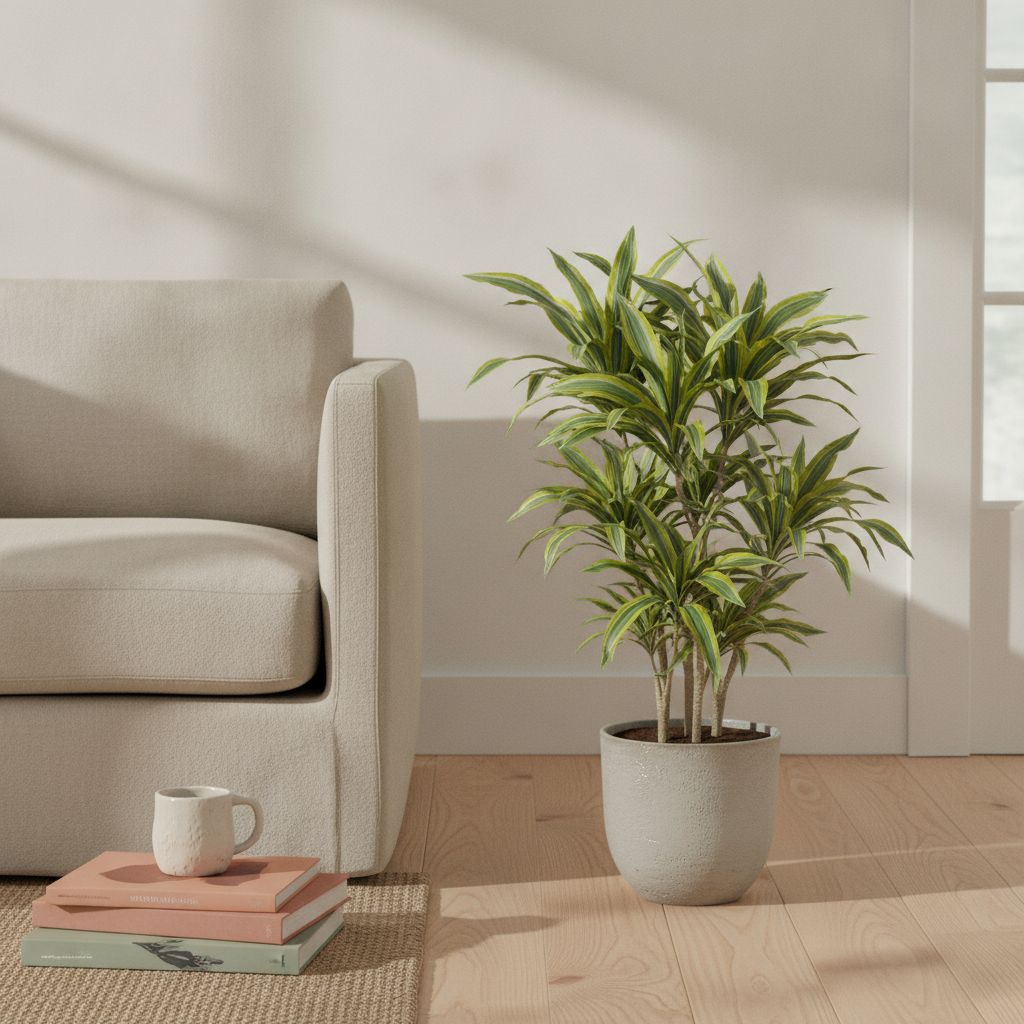
Beyond looks, this is a genuinely low-maintenance plant. Like its relatives, it copes with the dry air of centrally heated rooms, shrugs off the occasional missed watering, and grows slowly enough that it seldom needs repotting more than once every couple of years. Dracaenas were among the plants studied in NASA’s well-known research on indoor air, and while the practical air-cleaning effect in a real home is modest, the plant’s ruggedness in typical household conditions is beyond doubt. For a beginner wanting colour without fuss, or an experienced grower wanting a tidy accent plant, Lemon Surprise earns its place.
Important — Toxicity: All parts of Lemon Surprise dracaena contain saponins that are toxic to cats and dogs. Ingestion can cause vomiting (sometimes with blood), drooling, loss of appetite and dilated pupils in cats. It is only mildly irritating to humans, but keep the plant out of reach of pets and small children, and contact a vet if a pet chews the leaves.
Light Requirements
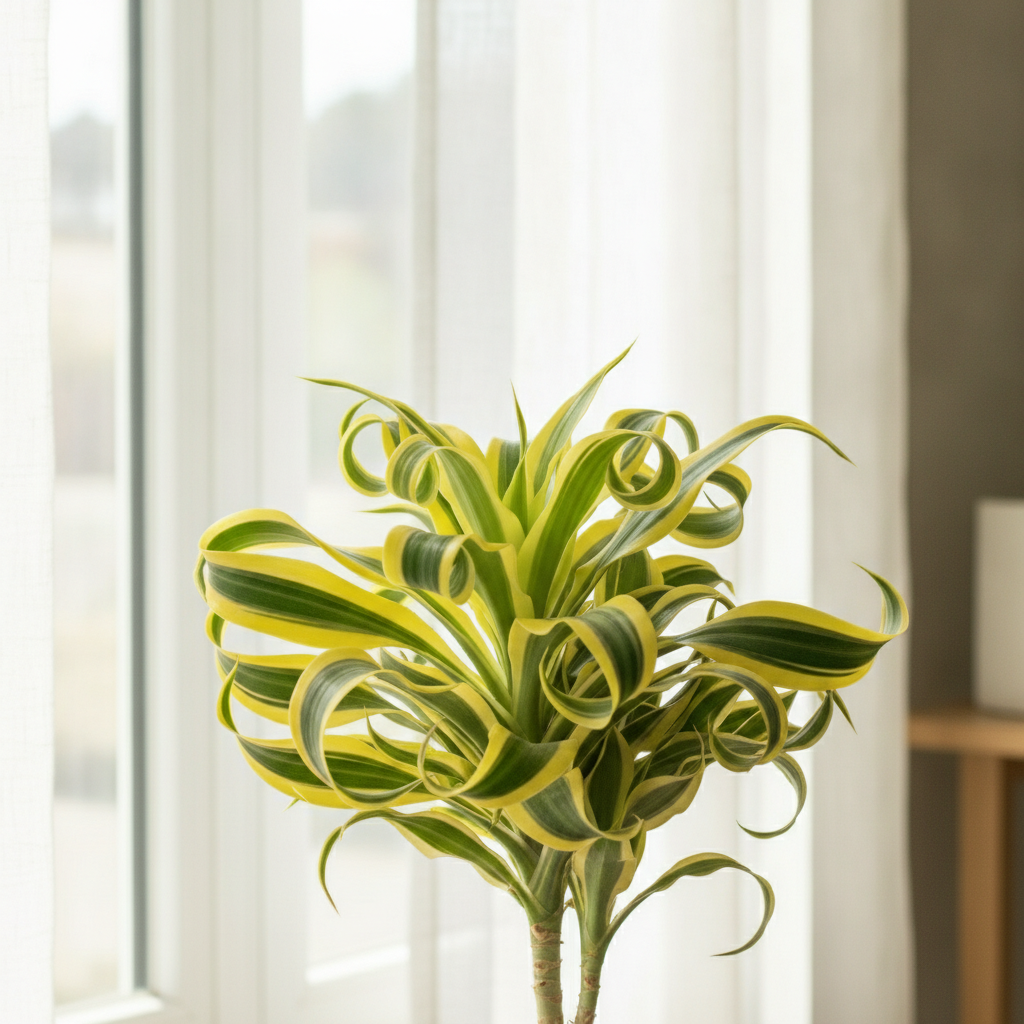
Light is the single biggest factor separating a dull, sparse Lemon Surprise from a bright, tightly packed one. In its native tropical African understorey, the parent species grows in dappled shade beneath taller trees, receiving plenty of ambient brightness but little or no direct sun. Recreating that indoors means giving it bright, indirect light for most of the day.
The ideal position is a spot that feels bright to your eye but where direct rays never fall on the leaves, such as a metre or so back from a large south or west window, or directly beside an east-facing one. Given this, the yellow margins stay wide and saturated and new leaves emerge densely spaced. In too little light the plant does not die, but the variegation fades toward green, the gaps between leaves stretch, and the whole rosette loosens and leans toward the window.
Light Levels Explained
Indoor light is far dimmer than most people assume, and terms like “bright” are easier to understand with rough figures. The table below maps common household positions to the outcomes you can expect from Lemon Surprise.
| Light Category | Approx. Level | Typical Location | Outcome |
|---|---|---|---|
| Direct sun | 20,000 lux and above | On an unshaded south sill | Risk of scorched, bleached leaf patches |
| Bright indirect | 10,000 to 20,000 lux | Near east or curtain-filtered south window | Best colour and compact growth |
| Medium | 5,000 to 10,000 lux | A metre or two into a bright room | Steady but slower growth, slightly muted colour |
| Low | 1,000 to 5,000 lux | North window or shaded corner | Survives, fades to green, leggy over time |
| Very low | Below 1,000 lux | Interior hallway, far from any window | Slow decline, leaf loss, needs a grow light |
Window Orientation and Placement
South-facing window: The brightest exposure in the northern hemisphere. Excellent as long as you diffuse the midday sun with a sheer curtain or set the plant a metre back from the glass. Unfiltered summer sun here will scorch the leaves.
East-facing window: Arguably the perfect spot. Gentle morning sun is soft enough not to burn, and the bright ambient light for the rest of the day keeps the variegation strong. Place the plant right on or beside the sill.
West-facing window: Good, but the stronger afternoon sun is harsher than morning light. Keep the plant slightly back or filter the glass to avoid hot direct rays landing on the foliage in late afternoon.
North-facing window: The dimmest exposure. Lemon Surprise will hang on here, but expect the yellow to drift toward lime-green and the plant to grow loosely. Consider supplementing with a grow light through winter.
Pro Tip — Rotate for Symmetry: Because the rosette leans toward its light source, give the pot a quarter turn each time you water. This keeps the plant growing evenly on all sides instead of flattening itself against the window.
How Light Affects Variegation
The lemon-yellow margins are the whole point of this plant, and they are directly light-dependent. Yellow leaf tissue contains less chlorophyll than green, so it photosynthesises less efficiently. In strong indirect light the plant can afford to keep those bright bands wide. In dim conditions it compensates by producing more chlorophyll, and the new leaves emerge greener and less striking. If your Lemon Surprise is losing its colour, the cause is almost always too little light rather than anything you are doing wrong at the roots.
Warning — Direct Sunlight: Despite loving brightness, the leaves scorch easily in direct sun. Bleached white or brown crispy patches, especially on the side facing the glass, are sunburn. The damage is permanent on affected leaves, so move the plant back or add a diffusing curtain at the first sign.
Artificial Lighting
Lemon Surprise responds well to supplemental lighting, which makes it a good candidate for windowless offices or dim winter rooms. A standard full-spectrum LED grow light positioned 30 to 45 cm (12 to 18 in) above the plant for 10 to 12 hours a day will maintain colour and compact growth. Ordinary desk or ceiling bulbs are far too weak to matter, but a dedicated horticultural LED bridges the gap comfortably.
Seasonal Adjustments
Light indoors drops dramatically between summer and winter, both because the sun sits lower and because shorter days mean fewer hours of it. A plant that thrived a metre from the window in July may look pale and stretched by January in the same spot. Move it closer to the glass through the darker months, and back again in spring once the sun strengthens, to keep growth and colour consistent year-round.
Watering & Humidity
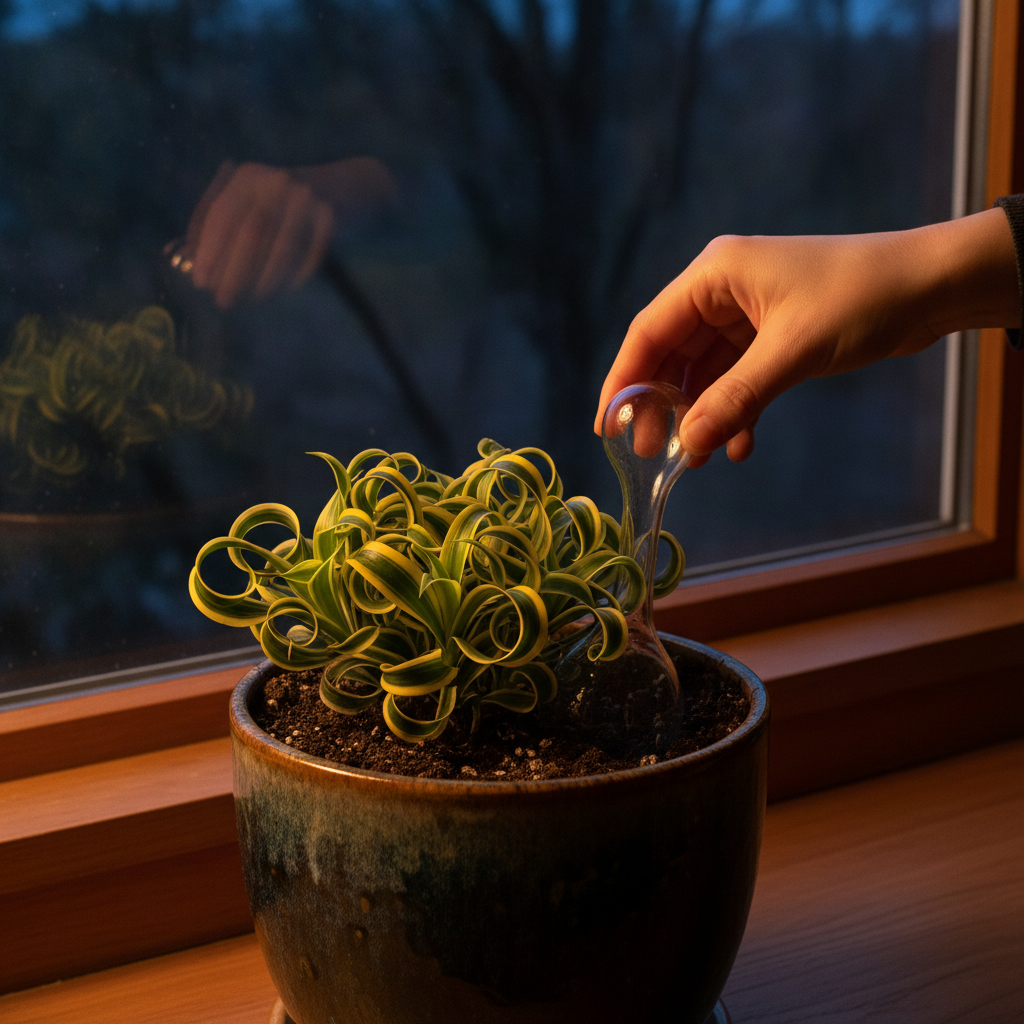
If there is one skill that makes or breaks dracaena care, it is watering, and specifically the discipline to water less than you think you should. Lemon Surprise stores moisture in its fleshy roots and thick lower stem, which means it copes far better with a short drought than with constantly wet feet. Overwatering, not underwatering, is the leading cause of death for this plant.
When to Water
Forget any fixed weekly schedule and let the soil be your guide. Push a finger into the pot and water only when the top 3 to 5 cm (1 to 2 in) feels dry. In a bright, warm room in summer this might mean watering every 7 to 10 days; in a cool, dim room in winter it could stretch to every two or three weeks. The plant is telling you what it needs through the soil, so check before you pour rather than watering out of habit.
A moisture meter takes the guesswork out for beginners, but the finger test is just as reliable once you learn the feel of the pot. Lifting the pot also helps: a dry rootball is noticeably lighter than a freshly watered one, and after a few weeks you will judge watering day by weight alone.
Pro Tip — When in Doubt, Wait: A thirsty dracaena recovers within hours of a good drink, but a waterlogged one may be rotting invisibly below the soil. If you are unsure whether it needs water, wait another two or three days and check again. Erring on the dry side is almost always the safer choice.
How to Water Correctly
- Take the plant to a sink if it is small enough, or work with a saucer in place.
- Pour room-temperature water evenly over the soil surface until it runs freely from the drainage holes.
- Let it drain completely for several minutes so no water sits at the base.
- Empty the saucer or cache-pot. Never let the plant stand in collected water.
- Return it to its spot and do not water again until the top few centimetres are dry.
Signs of Overwatering vs. Underwatering
| Symptom | Overwatering | Underwatering |
|---|---|---|
| Leaf colour | Yellowing lower leaves, often several at once | Whole plant dulls, older leaves yellow slowly |
| Leaf texture | Soft, limp, sometimes translucent | Dry, crispy, curling at the edges |
| Soil | Stays wet for days, may smell sour | Bone dry, pulling away from the pot sides |
| Roots | Brown, mushy, foul-smelling | Firm but dry and pale |
| Stem base | Soft, spongy, darkening | Firm, occasionally slightly wrinkled |
Warning — Root Rot: A sour smell from the soil and a soft, darkening stem base signal root rot from prolonged wetness. Act quickly: unpot the plant, cut away any brown mushy roots with sterile scissors, and repot into fresh, dry, well-draining mix. Withhold water until new growth shows the plant has recovered.
Humidity Requirements
Lemon Surprise is comfortable in the average humidity of most homes, somewhere between 40 and 60 percent, and does not demand the tropical steaminess that calatheas or ferns insist on. That easygoing tolerance is a large part of why dracaenas are so widely grown. It will, however, appreciate a little extra moisture in the air, particularly during winter when central heating dries rooms out.
Very low humidity tends to show up as brown, crispy leaf tips. On a dracaena, though, tip browning is more often a symptom of water quality than dry air, so before you reach for a humidifier, consider what is coming out of your tap (covered below). If the rest of the leaf is healthy and only the very tips brown, mineral sensitivity is the more likely culprit.
If you do want to raise humidity, grouping plants together, standing the pot on a tray of damp pebbles, or running a small humidifier nearby are all effective. Misting is largely decorative and its effect fades within minutes, so it is not worth relying on.
Water Quality
This is the detail that catches out more dracaena owners than any other. Dracaenas are unusually sensitive to fluoride, chlorine and boron, which are common in treated tap water. These minerals accumulate in the leaf margins and tips over time and show up as browning, scorched edges, quite distinct from the yellowing of overwatering. If your Lemon Surprise develops brown tips despite correct watering and reasonable humidity, tap-water chemistry is the prime suspect. Use rainwater, distilled water, or tap water left to stand uncovered overnight so some of the chlorine can dissipate, and avoid fluoridated water in particular.
Soil, Potting & Repotting
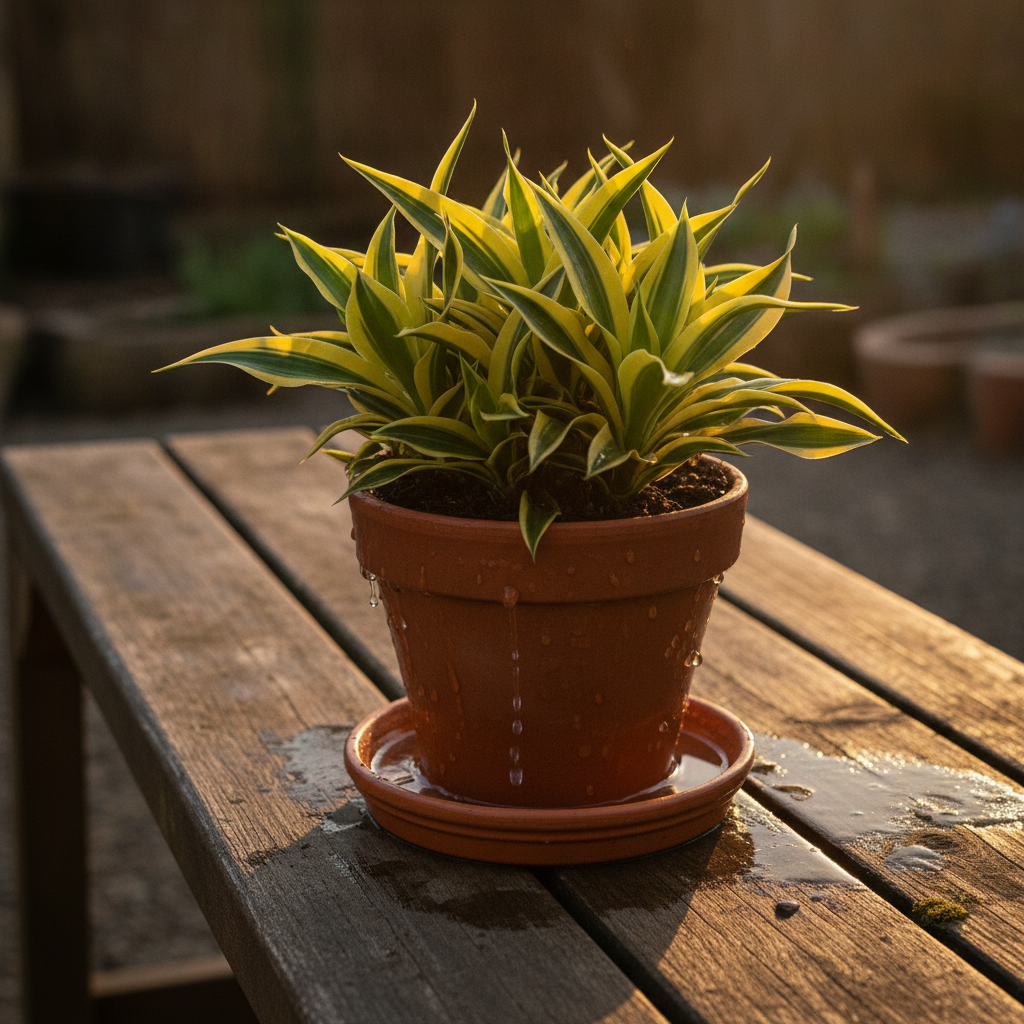
The right growing medium underpins everything else. Because Lemon Surprise is so sensitive to sitting in water, the goal is a mix that holds enough moisture to keep the roots hydrated between waterings while draining freely so excess runs straight through. A dense, water-retentive soil is the fastest route to root rot.
Ideal Soil Composition
A good-quality general houseplant compost forms the base, lightened with material that opens up the structure and improves drainage. You are aiming for something loose and airy rather than heavy and moisture-hugging.
| Component | Proportion | Function |
|---|---|---|
| Peat-free houseplant compost | 60 percent | Base that holds moisture and nutrients |
| Perlite or pumice | 25 percent | Opens structure, improves drainage and aeration |
| Orchid bark or coco chips | 15 percent | Creates air pockets, prevents compaction |
Lemon Surprise prefers a slightly acidic to neutral soil, with a pH of roughly 6.0 to 6.5. Most commercial houseplant composts already fall within this range, so it is not something you need to test or adjust unless you are mixing your own medium from raw ingredients.
Pro Tip — Quick Mix Recipe: For a fast, reliable blend, combine two handfuls of standard houseplant compost with one handful of perlite and a small scoop of orchid bark. This ratio drains well, resists compaction, and suits Lemon Surprise perfectly without any specialist ingredients.
Choosing the Right Pot
Pot choice affects watering more than most people realise. The container is not just a holder; it governs how quickly the soil dries and how much air reaches the roots.
Drainage holes are non-negotiable. Whatever pot you choose, it must have holes in the base. Without them, water collects at the bottom and the roots sit in a reservoir you cannot see, which for a rot-prone dracaena is fatal. If you love a decorative pot with no hole, use it as a cache-pot with a plain nursery pot inside that you can lift out to drain.
Pot material: Terracotta is unglazed and breathes, wicking moisture out through its walls, which suits growers who tend to overwater. Plastic and glazed ceramic hold moisture longer, which is helpful in bright, warm spots or for people who forget to water. Either works well as long as you match your watering habits to it.
Pot size: Choose a pot only 2 to 3 cm (about an inch) wider than the rootball. An oversized pot holds a large volume of soil that stays wet long after the roots have taken what they need, dramatically raising the risk of rot. Dracaenas are also quite happy being a little snug at the roots.
When to Repot
Lemon Surprise is a slow grower and dislikes disturbance, so it only needs repotting every two to three years, or when roots begin creeping through the drainage holes or circling tightly at the surface. Spring is the best time, as the plant is entering active growth and recovers fastest. Often the more useful annual task is simply refreshing the top few centimetres of soil rather than a full repot.
How to Repot: Step-by-Step
- Water the plant a day beforehand so the rootball holds together and slides out cleanly.
- Ease the plant from its pot by tipping it and supporting the base, rather than pulling on the leaves.
- Gently tease apart any tightly circling roots and brush off some of the old, spent soil.
- Inspect the roots, trimming away anything brown, soft or foul-smelling with sterile scissors.
- Add fresh mix to a pot one size up, set the plant at its original depth, and fill around the sides.
- Firm the soil lightly to remove large air gaps, then water thoroughly and let it drain.
- Return the plant to bright, indirect light and hold off on feeding for four to six weeks.
Warning — Transplant Shock: Do not be alarmed if a repotted dracaena droops or drops a leaf or two for a week or so. This is normal transplant shock. Keep it in stable, bright conditions, resist the urge to overwater in sympathy, and it will settle and resume growth once the roots re-establish.
Fertilising
Lemon Surprise is a light feeder, and a modest approach to fertilising serves it far better than an enthusiastic one. It draws most of what it needs from fresh soil, so supplementary feeding is about topping up rather than force-feeding growth.
Because dracaenas are sensitive to mineral build-up, over-fertilising causes the very same brown leaf tips that fluoride and chlorine do. More is emphatically not better here, and the safest habit is to feed lightly and infrequently, always at reduced strength.
Understanding Plant Nutrients
Fertilisers are labelled with an N-P-K ratio showing the proportion of nitrogen, phosphorus and potassium, the three nutrients plants use in the largest amounts. A balanced formula suits foliage plants like Lemon Surprise, where healthy leaf growth is the priority. The table below outlines the key nutrients and the deficiency signs to watch for.
| Nutrient | Symbol | Primary Function | Deficiency Symptoms |
|---|---|---|---|
| Nitrogen | N | Leaf and stem growth, green colour | Pale, yellowing older leaves, slow growth |
| Phosphorus | P | Root development and energy transfer | Stunted growth, dull foliage |
| Potassium | K | Overall vigour and water regulation | Yellow or brown leaf edges |
| Magnesium | Mg | Core of the chlorophyll molecule | Yellowing between leaf veins |
| Iron | Fe | Chlorophyll production in new growth | Pale new leaves with green veins |
Types of Fertiliser
Liquid fertilisers: The easiest option for houseplants and the one recommended for Lemon Surprise. Diluted into the watering can, they deliver an even, controllable dose and are simple to reduce to half strength. This is the method most growers should default to.
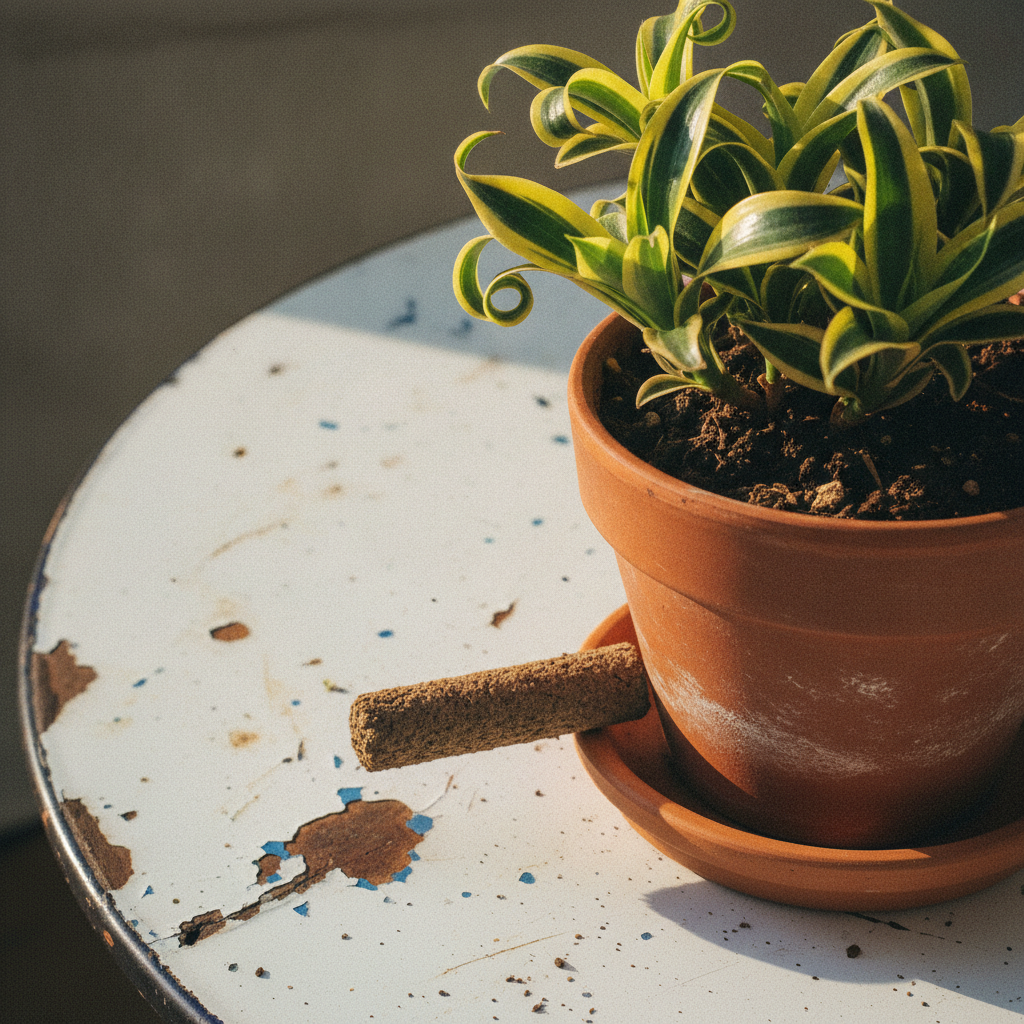
Slow-release granular: Coated prills or sticks that release nutrients gradually over months. Convenient, but they give you less control over the dose, which matters for a mineral-sensitive plant. If you use them, apply at half the recommended amount.
Organic fertilisers: Worm castings, seaweed extract and similar gentle feeds release nutrients slowly and are very hard to overdo, making them a forgiving choice. They also improve soil life over time. Their nutrient content is lower, so results are gradual rather than dramatic.
Feeding Schedule
Feed only during the active growing season, roughly spring through late summer, using a balanced liquid fertiliser at half the label strength about once a month. That is genuinely all this plant needs. Stop feeding entirely in autumn and winter, when growth naturally slows and unused fertiliser salts simply accumulate in the soil to no benefit.
Pro Tip — Half Strength, Always: Whatever the bottle recommends, dilute to half for Lemon Surprise. Dracaenas are far more likely to suffer from too much fertiliser than too little, and a weaker, more frequent feed is gentler on their sensitive root systems than an occasional strong dose.
How to Fertilise
- Water the plant lightly first if the soil is very dry, to protect the roots from concentrated feed.
- Dilute a balanced liquid fertiliser to half the recommended strength in your watering can.
- Apply evenly to the soil until it just begins to drain, avoiding splashing the leaves.
- Empty any liquid that collects in the saucer so salts do not wick back into the pot.
Warning — Salt Build-Up: Over months, fertiliser salts can crust on the soil surface or the pot rim and burn the roots, worsening leaf-tip browning. Flush the soil every few months by running plenty of clean water through the pot until it drains freely, carrying the accumulated salts away with it.
Propagation
Propagating Lemon Surprise is straightforward and satisfying, and it doubles as a rescue technique for a plant that has grown leggy or lost its lower leaves. Dracaenas root readily from stem cuttings, which is how they are multiplied commercially, and the same method works easily at home.
The best time to take cuttings is spring or early summer, when the plant is growing actively and will root fastest. A note on variegation: because Lemon Surprise is a cultivar, cuttings reliably reproduce the parent’s colouring, so your new plants will carry the same lemon margins.
Understanding Stem Nodes
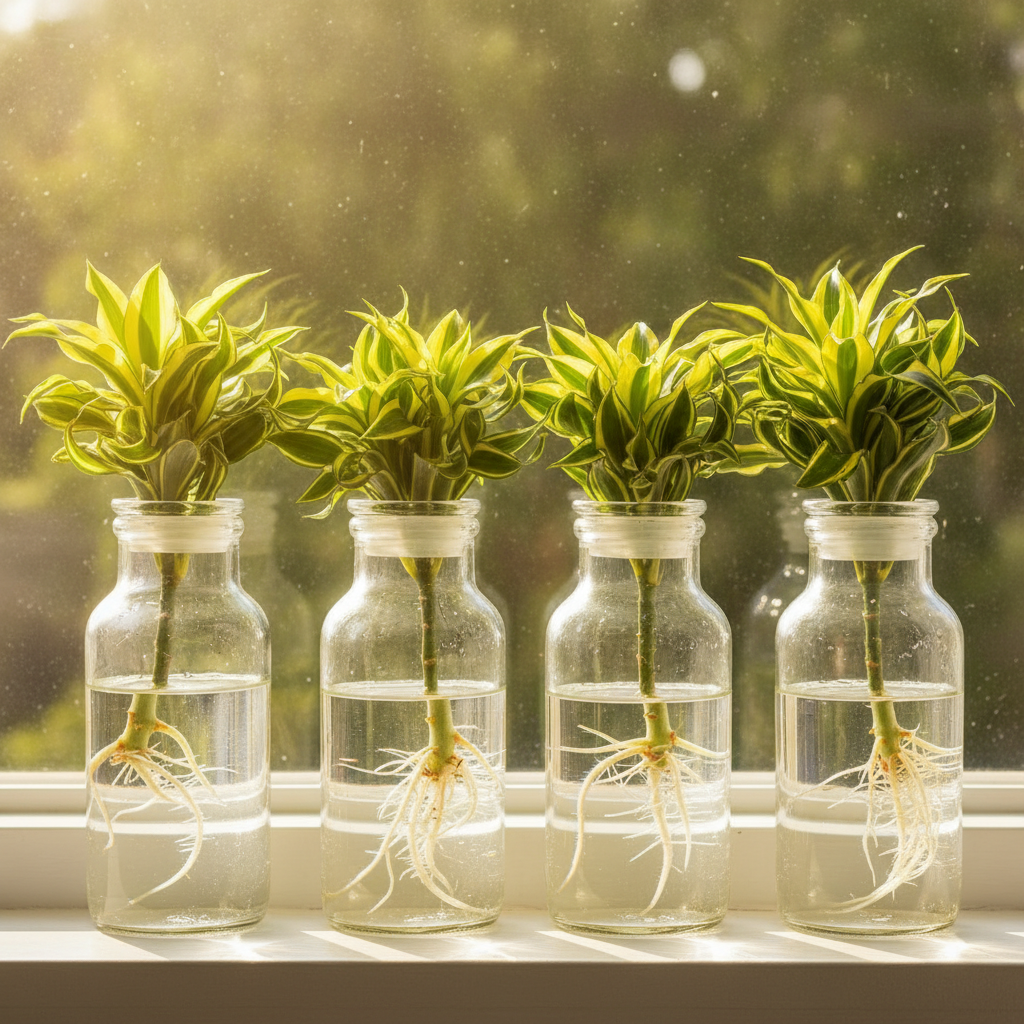
The key to dracaena propagation is the node, the slightly raised band on the stem where leaves once grew. Nodes contain the dormant cells that produce both new roots and new shoots, so every viable cutting must include at least one. A length of bare stem with no node will not root. On Lemon Surprise the nodes are closely spaced along the short stem, which is why healthy cuttings root so dependably.
Water Propagation: Step-by-Step
Rooting cuttings in water is the most popular method because it lets you watch the roots develop, and it works beautifully for dracaenas.
- Using clean, sharp scissors, cut a stem section 10 to 15 cm (4 to 6 in) long that includes at least one node.
- Remove the lower leaves so no foliage will sit below the waterline.
- Place the cutting in a jar of clean, room-temperature water with the node submerged.
- Set the jar in bright, indirect light and refresh the water every three or four days.
- Wait for white roots to appear from the node, usually within three to six weeks.
- Once roots reach 3 to 5 cm (1 to 2 in), pot the cutting into a small container of the standard mix.
Pro Tip — Save the Whole Plant: If your Lemon Surprise has gone leggy, cut the top off as a cutting and do not discard the base. The remaining stump, kept lightly watered in its pot, will usually sprout fresh shoots from the nodes just below the cut, giving you two bushy plants from one tired specimen.
Soil Propagation: Step-by-Step
Rooting directly in soil skips the transplant step and often produces sturdier roots suited to potted life from the start.
- Take a cutting as above, 10 to 15 cm long with at least one node, and remove the lower leaves.
- Dip the cut end in rooting hormone, which is optional but improves the success rate.
- Insert the node into a small pot of moist, free-draining propagation mix.
- Cover loosely with a clear bag or propagator to hold humidity, leaving a gap for airflow.
- Keep the mix lightly moist and in bright, indirect light, and resist tugging the cutting.
- After four to eight weeks, gentle resistance when you tug signals that roots have formed.
Troubleshooting Propagation
| Problem | Likely Cause | Solution |
|---|---|---|
| Cutting rots in water | Water too warm or changed too rarely | Refresh water more often, use a cooler spot |
| No roots after two months | No node included, or light too low | Re-cut below a node, move to brighter light |
| Cutting wilts | Too many leaves losing moisture | Remove some upper leaves, raise humidity |
| Mushy stem base | Bacterial rot from a dirty cut | Re-cut with sterile tools into fresh water or mix |
Pests & Diseases
Lemon Surprise is not especially prone to pests, and a healthy, well-positioned plant generally shrugs off trouble. Most problems arrive on newly bought plants or during the dry, low-light stretch of winter when plants are stressed and sap-sucking insects thrive.
The best defence is vigilance. Check your plant over whenever you water, paying attention to the leaf undersides and the tight crevices where leaves meet the stem, which is exactly where pests like to hide. Catching an infestation early makes it far easier to clear.

Common Pests
Spider Mites (Tetranychus urticae)
The most common dracaena pest, thriving in the warm, dry air of heated rooms. They are almost too small to see, but the fine webbing they spin between leaves and the pale stippling they leave on the foliage give them away. Badly affected leaves take on a dusty, faded look.
Treatment: Rinse the plant under a tepid shower to knock down the population, then treat with insecticidal soap or neem oil every week until clear. Raising humidity makes the environment far less hospitable to them.
Mealybugs (Pseudococcus species)
Soft-bodied insects that look like small tufts of white cotton wool, clustering in leaf axils and along the stem. They suck sap and excrete sticky honeydew, weakening the plant and encouraging sooty mould.
Treatment: Dab each insect directly with a cotton bud dipped in isopropyl alcohol, which kills them on contact. Follow up with neem oil for larger infestations and re-check weekly, as eggs hatch in waves.
Scale (Coccidae family)
Scale insects appear as small brown or tan bumps stuck firmly to stems and the undersides of leaves. Their waxy shell protects them, so they are easy to mistake for part of the plant and easy to overlook until numbers build.
Treatment: Scrape them off gently with a fingernail or an alcohol-dipped cotton bud, then treat with horticultural oil to smother any young crawlers you cannot see. Persistence over several weeks is usually needed.
Common Diseases
Root Rot (Pythium and Fusarium species)
By far the most serious threat to Lemon Surprise, caused by soil that stays wet for too long. The roots suffocate and decay, the stem base softens, and lower leaves yellow and drop. Left unchecked it kills the plant from the bottom up.
Treatment: Unpot the plant, cut away all brown, mushy roots with sterile scissors, and repot into fresh, dry, free-draining mix. Water sparingly afterward and correct the overwatering that caused it in the first place.
Leaf Spot (Fusarium and bacterial pathogens)
Shows up as brown or tan spots, sometimes ringed with yellow, usually where water has sat on the foliage in poorly ventilated conditions. It spreads through splashing water and lingering leaf moisture.
Treatment: Remove affected leaves, improve airflow around the plant, and keep water off the foliage when you water. A copper-based fungicide can help if the spotting continues to spread.
Pest and Disease Summary
| Pest / Disease | Identification | Treatment |
|---|---|---|
| Spider mites | Fine webbing, pale stippling on leaves | Rinse, then insecticidal soap or neem weekly |
| Mealybugs | White cottony tufts in leaf axils | Alcohol on a cotton bud, then neem oil |
| Scale | Brown waxy bumps on stems and leaves | Scrape off, treat with horticultural oil |
| Root rot | Yellow lower leaves, soft stem base | Trim rotten roots, repot dry, water less |
| Leaf spot | Brown spots ringed with yellow | Remove leaves, improve airflow, keep dry |
Prevention Strategies
Prevention is far easier than cure. Quarantine every new plant away from your collection for a couple of weeks so any hitchhiking pests reveal themselves before they spread. Wipe the leaves occasionally to remove dust and let you spot early trouble, and keep the plant in the bright light and careful watering regime that keeps it strong, because a healthy plant resists pests and disease far better than a stressed one.
Good cultural habits do most of the work: avoid waterlogging, ensure decent airflow, and do not crowd plants so tightly that air cannot circulate between them. These simple measures head off the great majority of problems before they start.
Pro Tip — Neem as Routine: A monthly preventative wipe or spray with diluted neem oil during the vulnerable autumn and winter months keeps sap-sucking pests from ever gaining a foothold. Apply in the evening, out of direct sun, to avoid marking the leaves.
Popular Varieties
Lemon Surprise is itself a selected cultivar within a large and varied group of shrubby dracaenas, once grouped under Dracaena deremensis and now often folded into the Dracaena fragrans complex by botanists. Whatever the label on the pot, these plants share the same easy care, and their differences are mostly a matter of leaf colour, size and form.
If you enjoy Lemon Surprise, its relatives make natural companions, letting you build a collection with a consistent care routine but a range of looks from bright chartreuse to crisp silver stripes. The table and profiles below cover the most widely available.
| Variety | Leaf Appearance | Light Needs | Growth Rate | Availability |
|---|---|---|---|---|
| Lemon Surprise | Short, twisting, dark green with lemon margins | Bright indirect | Slow | Common |
| Lemon Lime | Broad, arching, chartreuse and grey-green stripes | Bright indirect | Moderate | Common |
| Warneckii | Upright, grey-green edged with white | Medium to bright | Slow | Common |
| Janet Craig | Solid deep glossy green, strappy | Low to bright | Moderate | Very common |
| Janet Craig Compacta | Short, stiff, very dark green rosette | Low to medium | Very slow | Common |
| Malaika | Grey-green with a paler central band | Medium to bright | Slow | Occasional |
Featured Varieties
Lemon Lime
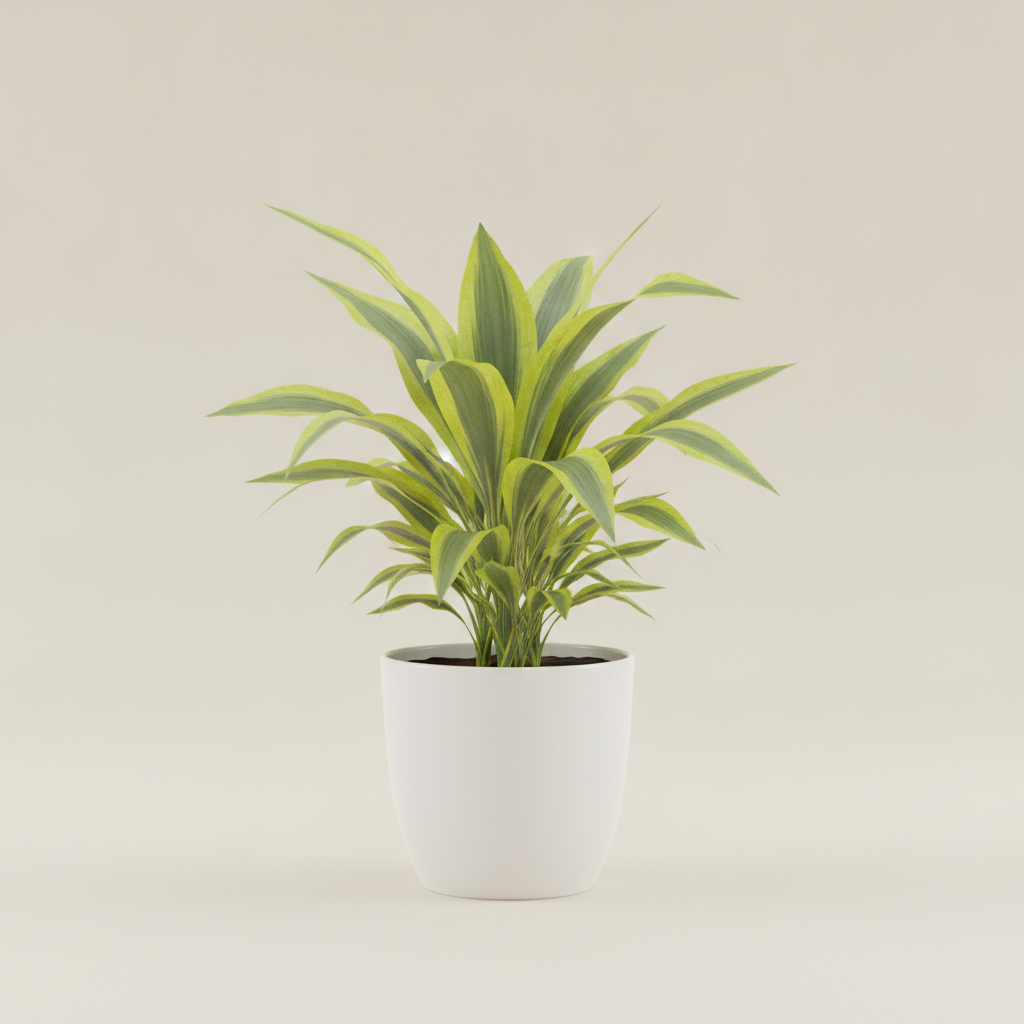
A bolder, larger relative with broad, upright-arching leaves striped in vivid chartreuse, bright yellow-green and grey-green. Where Lemon Surprise is a compact accent, Lemon Lime grows into a striking small floor plant while asking for identical care.
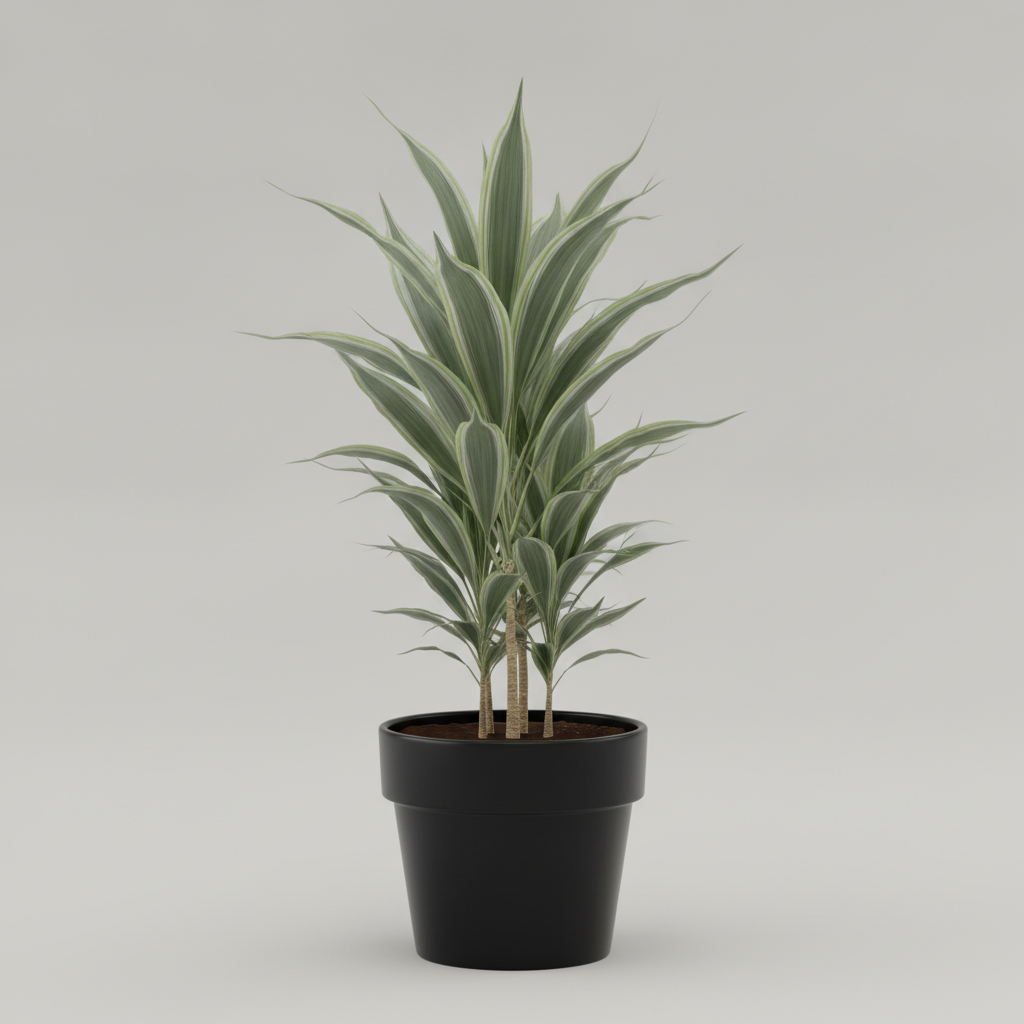
Warneckii
A classic dracaena with upright, lance-shaped grey-green leaves edged in crisp white and pale green pinstripes. Its cool, architectural colouring makes a calm counterpoint to the warm yellow of Lemon Surprise on the same shelf.
Variety Profiles in Detail
Lemon Lime (Dracaena fragrans ‘Lemon Lime’)
One of the most popular variegated dracaenas, Lemon Lime carries the same citrus palette as Lemon Surprise but on a much larger, upright plant with long, gracefully arching leaves. It can reach well over a metre indoors and makes an excellent statement floor plant for a bright corner. Its care is identical, though its size means it drinks a little more and benefits from occasional staking as it matures.
Warneckii (Dracaena fragrans ‘Warneckii’)
A long-established favourite valued for its clean, formal look. The stiff, upright grey-green leaves are boldly striped with white and pale green, giving it a crisp, almost silvery appearance that suits modern interiors. Warneckii tolerates lower light better than the yellow-variegated cultivars, making it a dependable choice for spots where Lemon Surprise would fade.
Choosing the Right Variety for Your Space
Match the plant to your conditions and the space you have. For a colourful accent on a shelf or desk in bright light, Lemon Surprise is ideal. If you want the same cheerful colour scaled up to fill a corner, choose Lemon Lime. For a lower-light room or a cooler, more architectural look, Warneckii or a solid-green Janet Craig will thrive where the yellows would struggle. All share the same forgiving temperament, so you can mix them freely and care for the whole group as one.
Frequently Asked Questions
Why are the tips of my Lemon Surprise turning brown?
Brown leaf tips on a dracaena are usually caused by fluoride, chlorine or salt build-up rather than dry air. Switch to rainwater, distilled water, or tap water left to stand overnight, ease off on fertiliser, and flush the soil occasionally to clear accumulated minerals. Low humidity can contribute, but water quality is the more common cause.
Is Lemon Surprise dracaena safe for pets?
No. Like all dracaenas, it contains saponins that are toxic to cats and dogs. Ingestion can cause vomiting, drooling and loss of appetite, and cats may also show dilated pupils. Keep it out of reach of pets, and consult a vet if your animal chews the leaves.
Why is my plant losing its yellow colour?
Fading variegation is almost always a sign of insufficient light. The yellow tissue holds less chlorophyll, so in dim conditions the plant produces greener leaves to photosynthesise more efficiently. Move it to a brighter, indirect spot and new growth should return to its proper lemon colouring.
How often should I water it?
There is no fixed schedule. Water when the top 3 to 5 cm (1 to 2 in) of soil is dry, which typically works out to every 7 to 14 days depending on light, warmth and season. Always check the soil first, and when in doubt, wait, since this plant tolerates dryness far better than sogginess.
Why are the lower leaves turning yellow and dropping?
An occasional yellowing lower leaf is normal ageing as the plant sheds its oldest foliage. If several leaves yellow at once and the soil is staying wet, however, suspect overwatering and check the roots. Persistent lower-leaf loss combined with a soft stem base points to root rot that needs immediate attention.
How big does Lemon Surprise dracaena get?
It stays refreshingly compact, usually reaching 40 to 60 cm (16 to 24 in) tall indoors and growing slowly. That modest size is a large part of its appeal, since it offers dracaena colour and form without the height of its larger cousins, and it seldom outgrows a shelf or tabletop.
Can I grow it in low light?
It will survive in low light, but it will not thrive. Expect the yellow margins to fade toward green, the growth to loosen and stretch, and the plant to lean toward whatever light it can find. For the best colour and compact shape, give it bright, indirect light, or supplement with a grow light in dim rooms.
How do I make my Lemon Surprise bushier?
Bright light is the main driver of dense, compact growth. Beyond that, you can encourage branching by cutting the top off a leggy stem, which prompts the remaining base to sprout multiple new shoots from the nodes below the cut. The removed top can be rooted as a cutting, so you gain a second plant in the bargain.






