
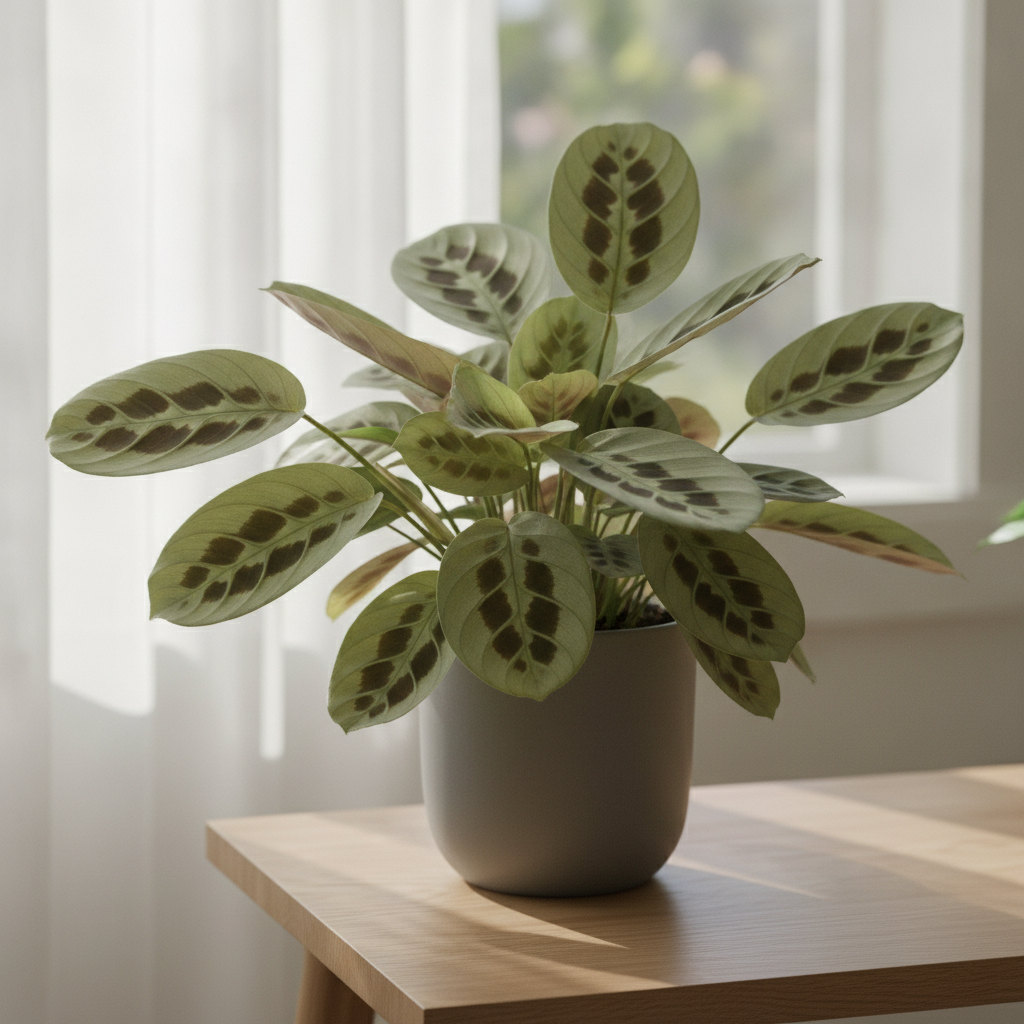
Few houseplants perform quite as literally as the Kerchoveana Prayer Plant. Each evening its rounded, pale grey-green leaves lift and press together as though clasped in prayer, then relax again at dawn, a daily piece of living theatre that has kept Maranta leuconeura var. kerchoveana in cultivation since the Victorian glasshouse era. Known variously as the rabbit’s tracks plant, rabbit’s foot, green prayer plant and even the “ten commandments” for the paired blotches marching down each leaf, it is a low, spreading member of the arrowroot family Marantaceae, native to the shaded, humid floor of Brazil’s tropical rainforests.
The Kerchoveana has a reputation for being a touch dramatic, and it is true that it will tell you plainly when something is wrong, usually through crisping leaf edges or curling foliage. Yet that expressiveness is exactly what makes it such a rewarding plant to learn: it rarely fails without warning. This guide covers everything from the science behind the nightly movement to watering, humidity, soil, feeding, propagation and pest control, drawing a clear line between the conditions that will merely keep your plant alive and the conditions that will let it flourish into a dense, cascading mound of patterned foliage.
Contents
- Quick Reference
- Why the Kerchoveana Prayer Plant Makes a Rewarding Houseplant
- Light Requirements
- Watering & Humidity
- Soil, Potting & Repotting
- Fertilising
- Propagation
- Pests & Diseases
- Popular Varieties
- Frequently Asked Questions
Quick Reference: Kerchoveana Prayer Plant at a Glance
| Light | Bright, indirect light; tolerates medium light. No direct sun. |
| Watering | Keep evenly moist, never soggy. Water when the top 2 to 3 cm (1 in) of soil feels dry. |
| Temperature | 18 to 27 degrees C (65 to 80 degrees F). Avoid below 15 degrees C (59 degrees F) and cold draughts. |
| Humidity | High, 60 percent or above. Struggles below 50 percent. |
| Fertiliser | Balanced feed at half strength every 2 to 4 weeks in spring and summer. |
| Toxicity | Non-toxic and pet-safe for cats, dogs and humans. |
Why the Kerchoveana Prayer Plant Makes a Rewarding Houseplant
The single greatest draw of the Kerchoveana is its nyctinasty, the daily rise and fall of its leaves driven by tiny hinge-like organs called pulvini at the base of each leaf stalk. As light fades, cells on one side of the pulvinus lose turgor while the other side stays firm, folding the leaves upward into their prayer pose; the process reverses with morning light. This is not mere decoration. It is thought to reduce water loss overnight and to shed rainwater and pests during the plant’s evolution on the forest floor. For the indoor grower, it means the plant visibly participates in the room, and a healthy Kerchoveana that folds crisply each night is one of the clearest signals that its care is on track.
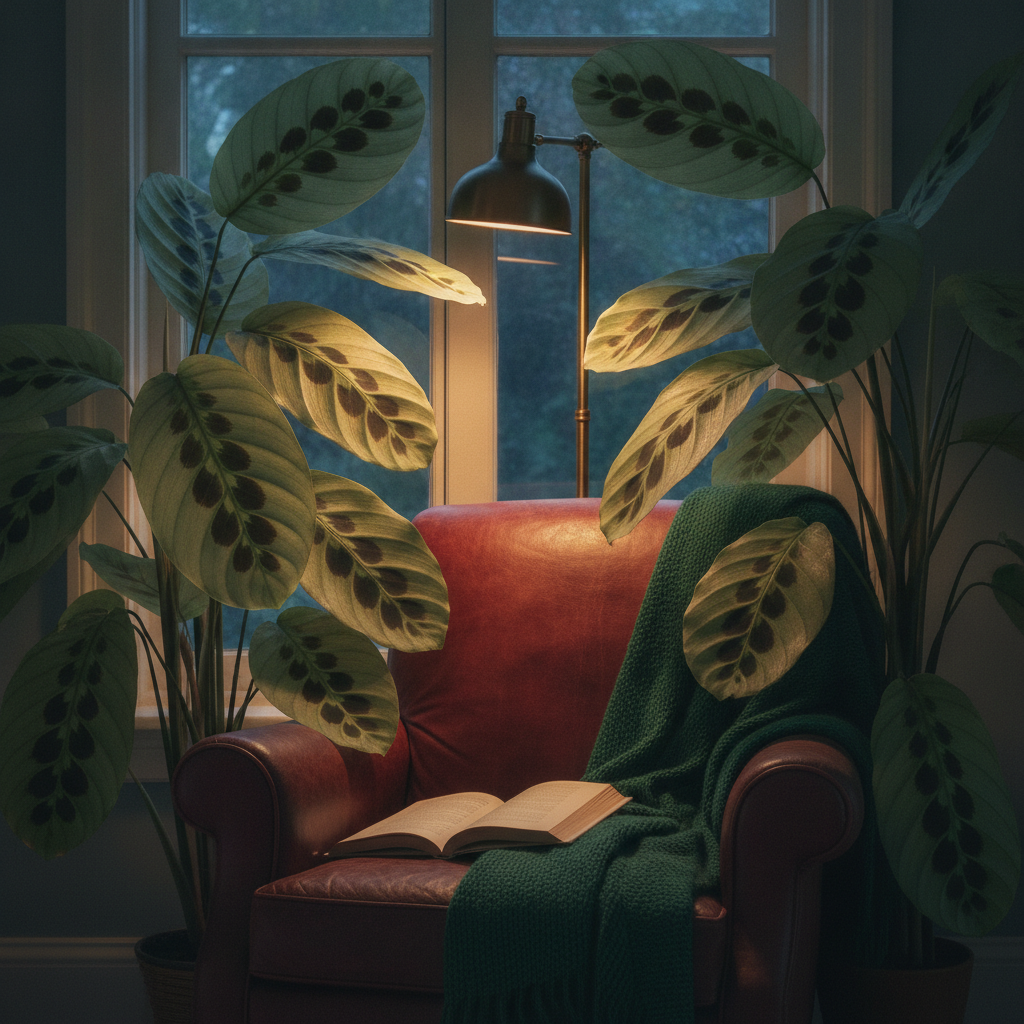
Beyond the movement, the Kerchoveana earns its place through practicality. It stays compact, rarely exceeding 30 cm (12 in) in height while spreading outward, so it suits shelves, coffee tables and the front rank of a plant collection rather than demanding floor space. It thrives in the medium light of an average living room, tolerates the lower light that defeats flashier tropicals, and, crucially for households with animals or young children, it is entirely non-toxic. The pale sage leaves with their double row of dark chocolate blotches, which soften to olive-green as each leaf matures, offer pattern without the fussiness of the more temperamental calatheas to which it is often compared.
Important — Toxicity: The Kerchoveana Prayer Plant is listed as non-toxic to cats and dogs by the ASPCA and poses no poisoning risk to humans. It is one of the safest choices for a pet-friendly or child-friendly home, though as with any plant, discourage deliberate nibbling to keep both plant and pet happy.
Light Requirements
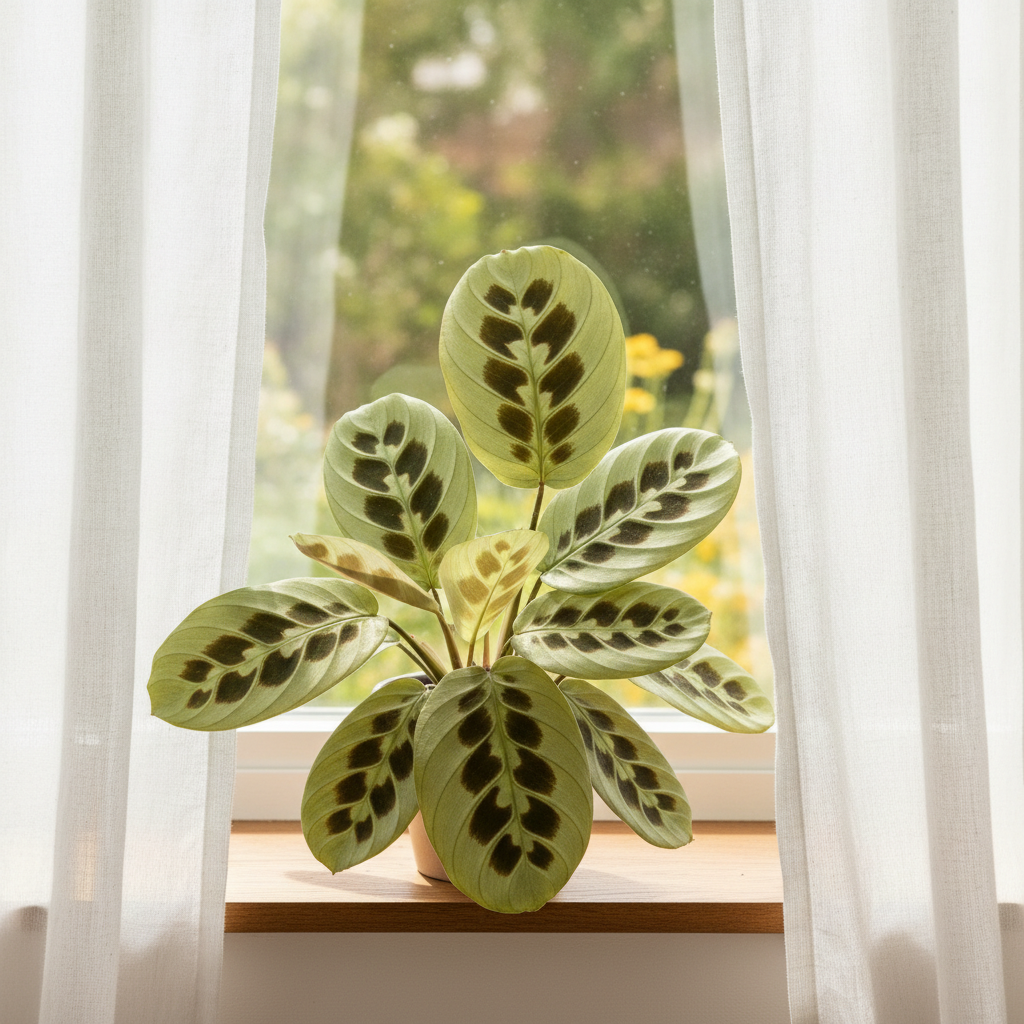
As a rainforest understorey plant, the Kerchoveana evolved beneath a canopy that filters and softens the tropical sun, so it is adapted to bright but diffuse light rather than direct rays. Indoors, the sweet spot is bright indirect light: a position where the plant receives plenty of ambient brightness but the sun’s disc never falls directly on the foliage for more than an hour or so of gentle morning light.
In practical terms, this means a spot a metre or two back from a bright window, or directly beside a window screened by a sheer curtain. Given the right light, the Kerchoveana will hold its markings boldly, produce leaves of a good size and fold reliably each evening. Too little light and the new growth becomes small and sparse, the nightly movement grows sluggish, and the plant stops spreading; too much and the leaves bleach, scorch and curl defensively.
Light Levels Explained
Understanding how light is measured helps you match a room to the plant’s needs. The table below outlines the practical light tiers found in most homes and how the Kerchoveana responds to each.
| Light Category | Approx. Level | Typical Location | Outcome |
|---|---|---|---|
| Direct sun | 20,000 lux and above | On an unscreened south or west sill | Leaves scorch, bleach and curl. Avoid. |
| Bright indirect | 10,000 to 20,000 lux | Near an east window or behind a sheer curtain | Ideal. Strong markings, steady growth. |
| Medium | 5,000 to 10,000 lux | A metre or two into a bright room | Very good. Slightly slower but healthy. |
| Low | 1,000 to 5,000 lux | A north room or interior wall | Survives, but sparse and slow growth. |
| Very low | Below 1,000 lux | A dim hallway or windowless corner | Declines over time. Add a grow light. |
Window Orientation and Placement
South-facing window: The brightest exposure in the northern hemisphere. Excellent for the Kerchoveana only if the light is diffused with a sheer curtain or the plant is set back a couple of metres, otherwise the midday sun will scorch the leaves.
East-facing window: Arguably the best natural position. Gentle morning sun is soft enough to be tolerated directly, and the plant enjoys bright indirect light for the rest of the day without the risk of afternoon scorch.
West-facing window: Workable, but the strong afternoon sun can be as fierce as a south window. Set the plant back from the glass or filter the light, and watch for bleaching on the leaves nearest the window.
North-facing window: Provides gentle, even light with no scorch risk, and the Kerchoveana will grow contentedly here, if a little more slowly. In the darker months a north room may drop below the plant’s comfort zone, so consider supplementing.
Pro Tip — Read the Leaves: The Kerchoveana points its foliage toward its light source. If the plant leans hard toward the window or the leaves flatten out and stretch, it wants more light; rotate the pot a quarter-turn each week to keep growth even and symmetrical.
How Light Affects Leaf Pattern and Movement
The contrast between the pale leaf base and the dark blotches is at its most striking in good light. In dim conditions the plant produces smaller, paler, less patterned leaves and its nightly folding becomes weak or stops altogether, because the pulvini rely partly on the day-night light signal to trigger movement. If your Kerchoveana has stopped praying, insufficient light is one of the first things to check, alongside disrupted watering.
Warning — Direct Sunlight: Even an hour of harsh midday or afternoon sun through unscreened glass can permanently bleach and crisp Kerchoveana leaves. The damage appears as faded, papery patches that do not recover, so err toward too little direct sun rather than too much.
Artificial Lighting
The Kerchoveana responds well to full-spectrum LED grow lights, which makes it a good candidate for offices, north rooms and winter supplementation. A modest 20 to 40 watt LED positioned 30 to 45 cm (12 to 18 in) above the plant and run for 10 to 12 hours a day is ample. Because the plant also uses the light cycle to time its leaf movement, put grow lights on a timer that mimics a natural day, switching off in the evening so the plant can fold and rest.
Seasonal Adjustments
Light intensity indoors can halve between summer and midwinter. As the days shorten, move the Kerchoveana closer to its window or add supplemental lighting to keep growth steady, then ease it back in spring as the sun strengthens. A plant that was perfectly placed in June may be starved by December in the same spot, so treat placement as a seasonal decision rather than a one-off.
Watering & Humidity
Watering is where most Kerchoveana problems begin and end. The plant likes its soil kept evenly, lightly moist, never bone dry and never waterlogged, which is a narrower target than the drought-and-drench routine that suits succulents or even pothos. Get the moisture and the water quality right, and most of the plant’s other complaints tend to disappear.
When to Water
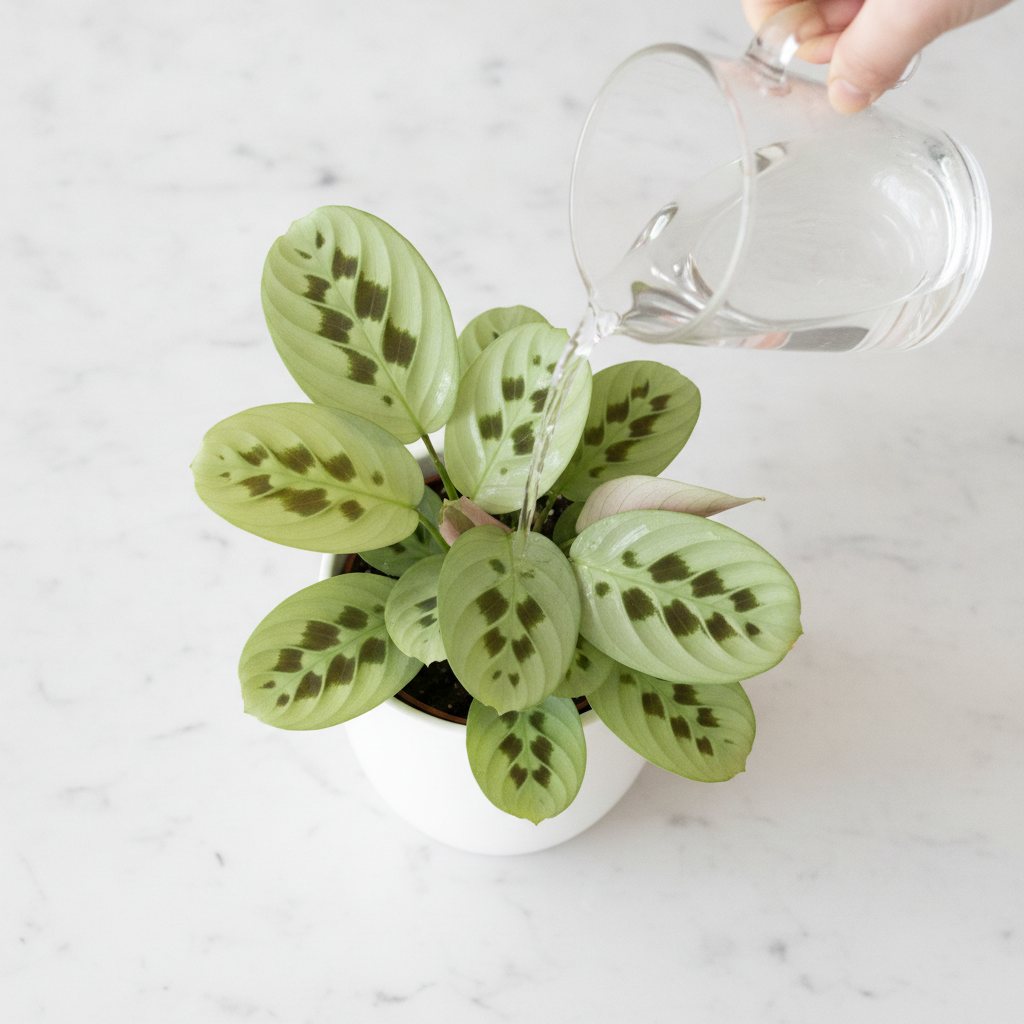
Check the top 2 to 3 cm (1 in) of the mix with a finger. When that layer feels dry but the soil beneath is still faintly cool and moist, it is time to water. In a bright, warm spot during the growing season this typically means watering once or twice a week; in winter, when growth slows and evaporation drops, it may stretch to once every week and a half or so. Rather than watering on a fixed calendar, let the soil tell you, because pot size, light and season all shift the plant’s thirst.
The Kerchoveana is unusually sensitive to the minerals and chemicals in tap water. Fluoride, chlorine and dissolved salts accumulate in the leaf tissue and show up as brown, crispy leaf tips and edges, the single most common complaint growers report. Wherever possible, water with rainwater, distilled water or tap water that has been left to stand uncovered for 24 hours so the chlorine can dissipate. This one change resolves more Kerchoveana troubles than any other.
Pro Tip — Beat the Crispy Tips: If your tap water is hard or heavily treated, switch to filtered or rainwater and always water until a good amount runs from the drainage holes. That thorough flush carries accumulated salts out of the pot rather than concentrating them around the roots.
How to Water Correctly
- Check the top 2 to 3 cm (1 in) of soil and water only once it feels dry to the touch.
- Use room-temperature rainwater, distilled or filtered water; cold water can shock the roots.
- Pour slowly and evenly over the soil surface, avoiding a hard stream that displaces the mix.
- Continue until water flows freely from the drainage holes, wetting the entire root ball.
- Let the pot drain completely for several minutes, then empty the saucer so the roots never sit in standing water.
- Return the plant to its spot and check again in a few days, adjusting frequency to the season.
Signs of Overwatering vs. Underwatering
| Symptom | Overwatering | Underwatering |
|---|---|---|
| Leaf colour | Yellowing, often of lower leaves | Dull, faded, with browning edges |
| Leaf texture | Soft, limp, sometimes translucent | Crispy, curled, brittle at the margins |
| Soil | Constantly wet, may smell sour | Dry throughout, pulling from the pot sides |
| Roots | Brown, mushy, foul-smelling | Dry and papery, but firm |
| Stem base | Blackened or soft at soil level | Wilted but recovers after watering |
Warning — Root Rot: Soggy, airless soil quickly suffocates Kerchoveana roots and invites rot. If the base of the plant turns soft and the soil smells sour, unpot immediately, trim away any brown mushy roots with sterile scissors, and repot into fresh, free-draining mix in a clean pot.
Humidity Requirements
Humidity is not optional for a thriving Kerchoveana. Coming from the moist forest floor, it wants ambient humidity of 60 percent or higher and begins to struggle below 50 percent, which is drier than most centrally heated or air-conditioned homes. Low humidity is the other major cause of the brown, crisping leaf edges that plague this plant.
The telltale symptoms of air that is too dry are crispy brown tips and margins, edges that curl inward, and a general lack of vigour even when watering is correct. If you see these signs and your watering routine is sound, humidity is almost certainly the culprit.
To raise humidity reliably, a small room humidifier is by far the most effective tool and the one worth investing in. Grouping the Kerchoveana with other plants creates a moister microclimate, and standing the pot on a tray of pebbles topped up with water (keeping the pot base above the waterline) adds useful local moisture. A bathroom or kitchen with good light also suits the plant well. Misting offers only a brief lift and can encourage fungal spotting if the leaves stay wet, so treat it as a minor supplement rather than a solution.
Water Quality
It bears repeating because it matters so much: the Kerchoveana is a mineral-sensitive plant. Chlorine, chloramine, fluoride and the salts in hard water all build up over time and burn the delicate leaf tissue. Rainwater is the gold standard, distilled water is a dependable alternative, and filtered or 24-hour-stood tap water is a reasonable compromise. Avoid softened water, which is high in sodium, entirely.
Soil, Potting & Repotting
The right growing medium lets you hit the Kerchoveana’s tricky moisture target far more easily. It wants a mix that holds moisture without becoming waterlogged, is rich in organic matter, and drains freely enough that excess water passes straight through. A dense, compacted soil that stays sodden is a fast route to root rot, while a coarse cactus mix dries out too quickly and leaves the plant permanently thirsty.
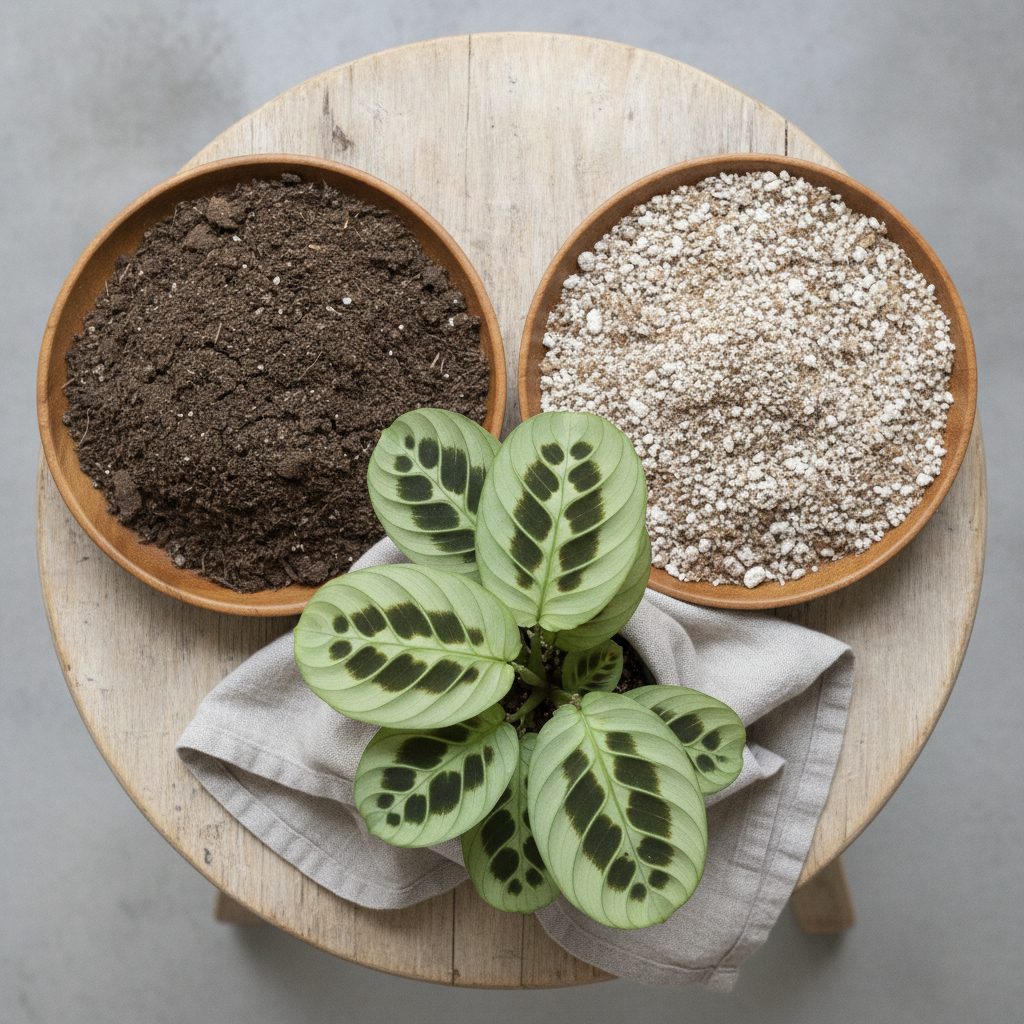
Ideal Soil Composition
A good Kerchoveana mix is built around a moisture-retentive base of peat or, more sustainably, coco coir, loosened with perlite for aeration and enriched with a little compost or worm castings for fertility. The aim is a medium that feels spongy and stays evenly damp but never turns to mud. The components below combine to strike that balance.
| Component | Proportion | Function |
|---|---|---|
| Coco coir or peat | 50 percent | Retains moisture and provides an acidic, organic base |
| Perlite | 30 percent | Opens the mix for drainage and root aeration |
| Compost or worm castings | 10 percent | Adds gentle, slow-release fertility |
| Fine orchid bark or leaf mould | 10 percent | Improves structure and mimics the forest floor |
The Kerchoveana prefers a slightly acidic root zone, with a pH of roughly 5.5 to 6.0. Peat and coir naturally sit in this range, so a coir or peat-based mix rarely needs adjusting. If you use a lot of tap water over time, the root zone can drift more alkaline, which is another reason to flush the pot thoroughly and refresh the soil periodically.
Pro Tip — Quick Mix Recipe: For a fast, reliable blend, combine two handfuls of coco coir, one handful of perlite and a small handful of worm castings. It holds moisture like the plant wants while draining fast enough to keep the roots breathing.
Choosing the Right Pot
Because the Kerchoveana has a shallow, spreading root system, it does not need a deep pot. A wide, relatively shallow container suits its growth habit and reduces the volume of soil left soggy below the roots.
Drainage holes are non-negotiable. Whatever pot you choose, it must have drainage holes. Without them, water collects invisibly at the base and rots the roots no matter how careful your watering. If you love a decorative cover pot with no holes, use it as an outer sleeve and keep the plant in a plain nursery pot that can be lifted out to drain.
Pot material: Plastic and glazed ceramic hold moisture longer and suit the Kerchoveana’s love of consistent dampness, making them a good default. Unglazed terracotta breathes and dries quickly, which can be useful if you tend to overwater but may leave the plant too dry in a warm room, requiring more frequent watering.
Pot size: Move up only one size at a time, choosing a pot 2 to 4 cm (1 to 2 in) wider than the current one. An oversized pot holds a reservoir of wet soil the small root system cannot use, which invites rot.
When to Repot
The Kerchoveana is a moderate grower and generally needs repotting every one to two years, or when you see roots emerging from the drainage holes, water running straight through without wetting the soil, or growth slowing despite good care. Spring, at the start of the active season, is the ideal time, as the plant recovers fastest then. Repotting also gives you the chance to refresh spent, salt-laden soil, which benefits this mineral-sensitive plant.
How to Repot: Step-by-Step
- Water the plant a day beforehand so the root ball is hydrated and holds together.
- Gently slide the plant out, supporting the base, and tease apart any tightly circling roots.
- Inspect the roots, trimming away any that are brown, soft or rotten with sterile scissors.
- Add a layer of fresh mix to the new pot, then position the plant at the same depth it grew before.
- Fill around the root ball with fresh mix, firming gently to remove large air pockets without compacting.
- Water thoroughly with low-mineral water and let it drain completely.
- Return the plant to bright indirect light and hold off on feeding for four to six weeks while it settles.
Warning — Transplant Shock: Expect a little sulking after repotting, with some leaf curling or drooping for a week or two. Keep conditions stable, warm, humid and out of direct sun, and resist the urge to overwater a stressed plant, which only compounds the problem.
Fertilising
The Kerchoveana is a light feeder that benefits from regular, dilute feeding during the growing season but is easily harmed by too much. Its sensitivity to mineral salts, the same trait behind its fussiness over water quality, means over-fertilising causes exactly the crispy, burnt leaf edges you are trying to avoid.
The guiding principle is little and often, always diluted. A balanced houseplant fertiliser applied at half the recommended strength gives steady nutrition without overwhelming the roots. Feeding should track the plant’s growth cycle, tapering off almost entirely in the darker, dormant months.
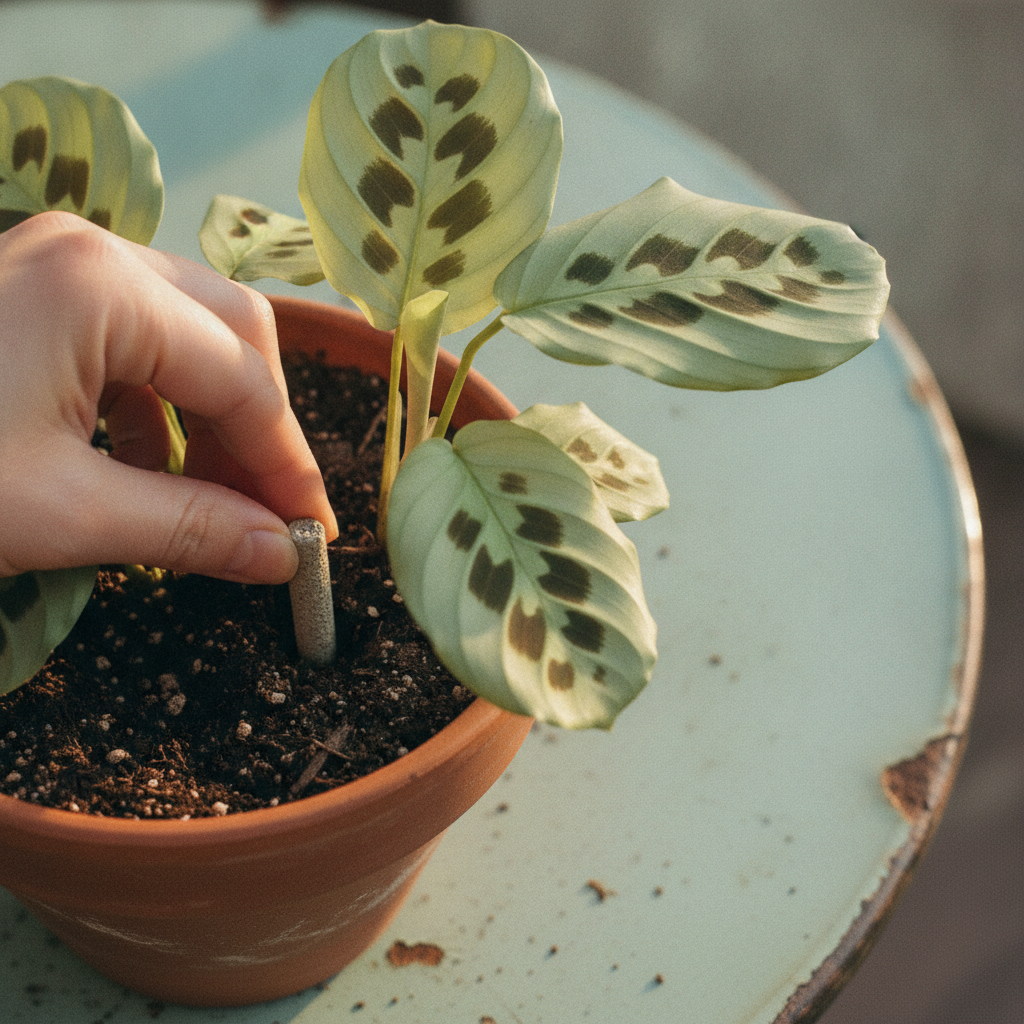
Understanding Plant Nutrients
Fertilisers are labelled with an NPK ratio, the percentages of nitrogen, phosphorus and potassium they contain. For a foliage plant like the Kerchoveana, a balanced ratio such as 10-10-10, or one slightly higher in nitrogen, supports lush leaf growth. Secondary nutrients and trace elements matter too, and their absence shows in specific patterns of leaf discolouration.
| Nutrient | Symbol | Primary Function | Deficiency Symptoms |
|---|---|---|---|
| Nitrogen | N | Drives leafy green growth | Overall paling, yellowing of older leaves |
| Phosphorus | P | Root development and energy transfer | Stunted growth, dull or purplish tint |
| Potassium | K | Overall vigour and water regulation | Yellow or browning leaf margins |
| Calcium | Ca | Cell wall structure | Distorted, weak new growth |
| Magnesium | Mg | Core of the chlorophyll molecule | Yellowing between the leaf veins |
| Iron | Fe | Chlorophyll production | Pale new leaves with green veins |
Types of Fertiliser
Liquid fertilisers: The easiest option for the Kerchoveana, because you control the dilution precisely and can flush the pot regularly. Mix to half strength and apply with your normal watering during the growing season.
Slow-release granular: Convenient prills that release nutrients gradually over months. Usable but riskier for a salt-sensitive plant, as you cannot easily dial the dose back once applied, so use sparingly if at all.
Organic fertilisers: Worm castings, diluted compost tea and gentle organic feeds suit the Kerchoveana well, delivering nutrients mildly and improving the soil biology, with far less risk of salt burn than concentrated synthetics.
Feeding Schedule
Feed every two to four weeks from spring through late summer, always at half strength. As growth slows in autumn, reduce to monthly, then stop entirely through winter when the plant is resting. Feeding a dormant plant simply deposits unused salts in the soil, which the roots then have to contend with.
Pro Tip — Feed Damp, Never Dry: Always apply fertiliser to already-moist soil. Feeding into dry soil concentrates the solution against thirsty roots and can scorch them, so water first or feed as part of a normal watering.
How to Fertilise
- Dilute a balanced liquid fertiliser to half the label’s recommended strength.
- Ensure the soil is already moist, watering first if it has dried out.
- Apply the diluted feed evenly over the soil until it just begins to drain.
- Once every couple of months, flush the pot with plain low-mineral water to clear accumulated salts.
Warning — Salt Build-Up: A white crust on the soil surface or around the pot rim signals fertiliser salts accumulating. Leach the pot by running low-mineral water through it several times, and cut back your feeding, because that crust is the same salt burning your leaf edges.
Propagation
Propagating the Kerchoveana is straightforward and satisfying, and there is no better time than at repotting, when the plant is already out of its pot. The two dependable methods are division, which is the most reliable, and stem cuttings, which let you multiply the plant from just a few nodes.
Because the Kerchoveana grows from a spreading, shallow root system with multiple crowns and creeping stems, both methods work with its natural habit rather than against it. Spring and early summer, during active growth, give the fastest, most successful results.
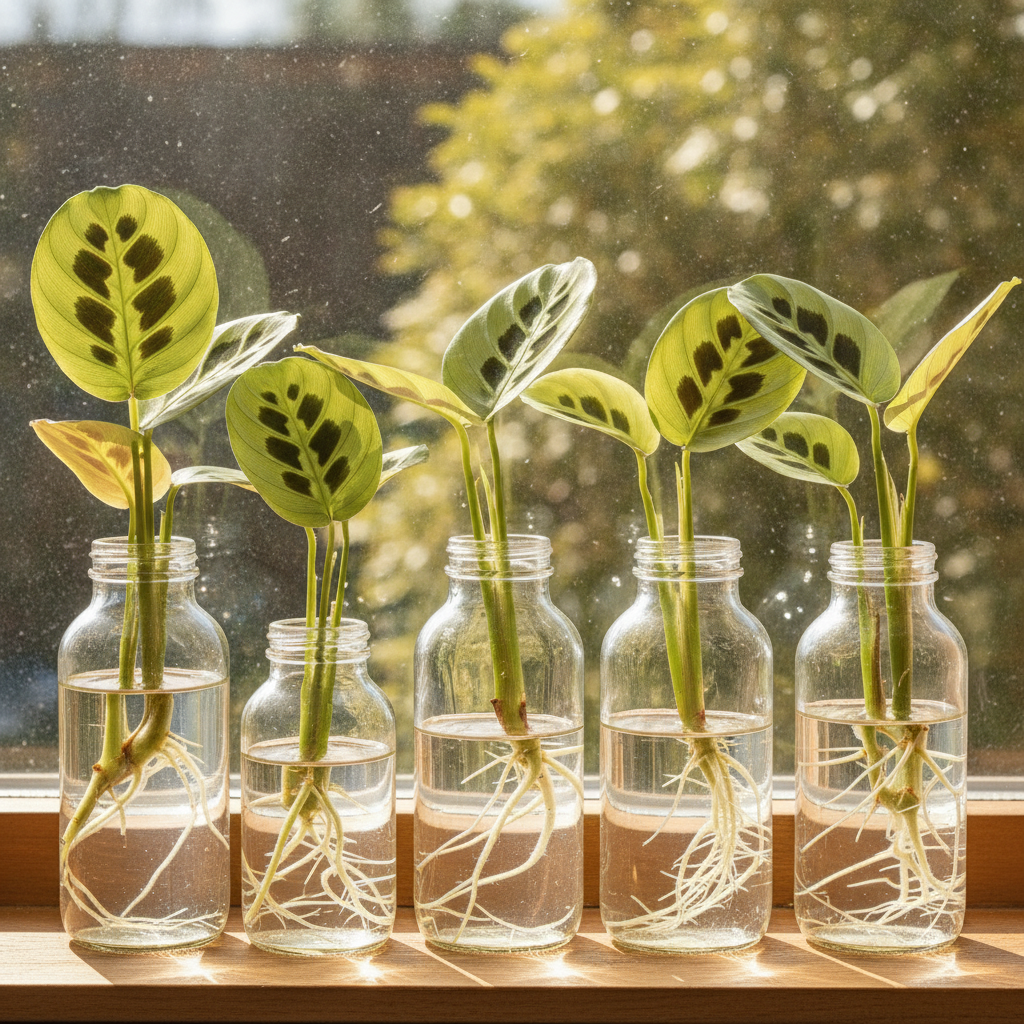
Understanding Nodes and Crowns
Successful propagation hinges on the node, the slightly swollen point on a stem where a leaf joins and from which new roots emerge. Any cutting must include at least one node to root. The Kerchoveana also naturally forms clumps of separate crowns, each with its own roots and stems, which is what makes division so reliable: you are simply separating growth that is already independent.
Division: Step-by-Step
Division is the surest way to propagate a Kerchoveana and works best on a mature, clumping plant during repotting.
- Remove the plant from its pot and gently shake or wash away enough soil to see the root system and the separate crowns.
- Identify natural clumps, each with its own healthy roots and several stems and leaves.
- Tease the clumps apart by hand, or cut them apart with a sterile knife if the roots are entangled.
- Pot each division into its own container of fresh, moist Kerchoveana mix at its original depth.
- Water in with low-mineral water and place in warm, bright indirect light with high humidity.
- Keep the soil lightly moist; the divisions will establish over the following few weeks.
Pro Tip — Keep Divisions Humid: Fresh divisions lose water faster than their reduced roots can replace it. Cover them loosely with a clear plastic bag or place them in a propagator for the first week or two to hold humidity high while they settle.
Stem Cuttings: Step-by-Step
Stem cuttings let you make several new plants from a single healthy specimen and are a good way to use the trimmings from a tidy-up.
- Choose a healthy stem and cut just below a node with clean, sharp scissors, taking a section with one or two leaves.
- Remove the lowest leaf so a bare node is exposed, as this is where roots will form.
- Place the cutting in a jar of low-mineral water with the node submerged and the leaves above the surface, or insert it into moist propagation mix.
- Set it in warm, bright indirect light and, if rooting in water, refresh the water every few days.
- Roots usually appear within two to four weeks; once they reach 3 to 5 cm (1 to 2 in), pot water-rooted cuttings into moist mix.
- Keep the humidity high and the mix lightly moist while the young plant establishes.
Troubleshooting Propagation
| Problem | Likely Cause | Solution |
|---|---|---|
| Cutting rots in water | No node submerged, or stale water | Ensure a node is under water and refresh it every few days |
| No roots after weeks | Too cold, too dark, or no node | Move somewhere warm and bright; check the cutting includes a node |
| Division wilts badly | Root loss and low humidity | Tent with plastic and keep warm, out of direct sun |
| Leaves crisp on new plant | Dry air or mineral-heavy water | Raise humidity and switch to rainwater or distilled water |
Pests & Diseases
A well-cared-for Kerchoveana is reasonably resilient, but its love of humidity and soft foliage make it a target for a handful of common houseplant pests, spider mites above all. Most trouble is preventable, and the earlier you spot an infestation, the easier it is to clear.
Make a habit of inspecting your plant, particularly the undersides of the leaves and the leaf axils, every week or two. Isolate any new plant for a fortnight before introducing it to your collection, as bought-in plants are the usual source of pests.
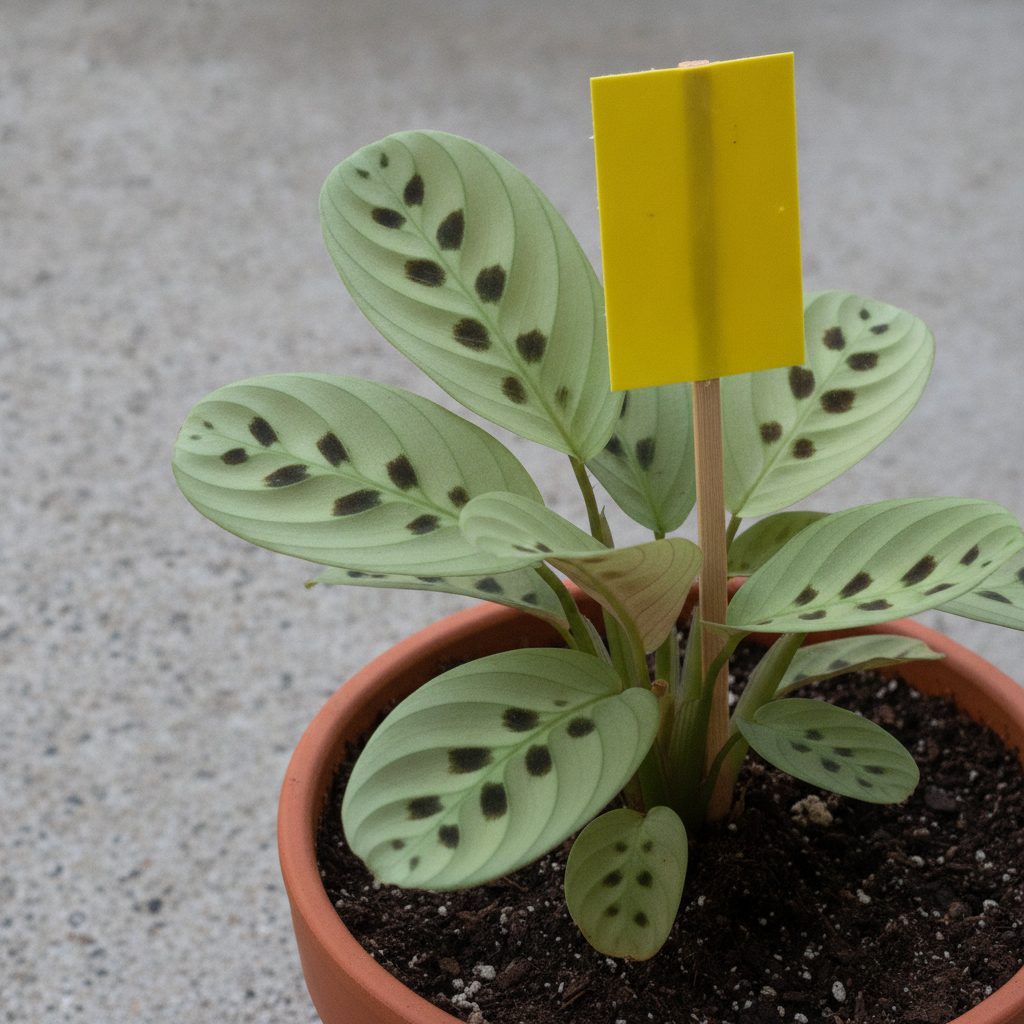
Common Pests
Spider Mites (Tetranychus urticae)
By far the most common threat to a Kerchoveana, spider mites thrive in the warm, dry air the plant dislikes. They are tiny and hard to see, but their fine webbing between leaves and stems and the pale stippling or bronzing they leave on the foliage give them away. A dry plant with speckled, dulling leaves should always be checked for mites.
Treatment: Rinse the plant thoroughly, including the leaf undersides, then treat with insecticidal soap or neem oil every five to seven days until clear. Raising humidity makes the environment far less hospitable to them and is your best long-term defence.
Mealybugs (Pseudococcus spp.)
Mealybugs appear as small, white, cottony tufts tucked into leaf axils and along stems. They suck sap, weakening the plant and leaving behind sticky honeydew that can turn into sooty mould.
Treatment: Dab each insect with a cotton bud dipped in isopropyl alcohol, then follow up with neem oil or insecticidal soap. Repeat weekly, checking hidden crevices carefully, as mealybugs are persistent.
Fungus Gnats (Bradysia spp.)
These small black flies are drawn to the consistently moist soil the Kerchoveana enjoys. The adults are merely a nuisance, but their larvae feed on organic matter and fine roots in the soil.
Treatment: Let the top layer of soil dry slightly between waterings, use yellow sticky traps to catch the adults, and treat the soil with a Bacillus thuringiensis drench or a fine layer of horticultural sand to break the breeding cycle.
Common Diseases
Root Rot (Pythium and Phytophthora spp.)
The most serious disease affecting the Kerchoveana, root rot follows from waterlogged soil that starves the roots of oxygen. Signs include yellowing lower leaves, a soft, blackened stem base and a sour smell from the soil.
Treatment: Unpot the plant, trim away all brown, mushy roots with sterile scissors, and repot into fresh, free-draining mix in a clean pot. Water more conservatively afterwards and ensure the pot drains freely.
Leaf Spot (Helminthosporium and bacterial pathogens)
Leaf spot shows as brown or yellow-ringed lesions on the foliage, usually where leaves stay wet for long periods or air circulation is poor. It can spread if left unchecked.
Treatment: Remove affected leaves, avoid wetting the foliage when watering, improve airflow around the plant, and treat persistent cases with a suitable fungicide.
Pest and Disease Summary
| Pest / Disease | Identification | Treatment |
|---|---|---|
| Spider mites | Fine webbing, stippled or bronzed leaves | Rinse, raise humidity, neem oil or insecticidal soap |
| Mealybugs | White cottony tufts in axils | Alcohol dab, then neem oil, repeated weekly |
| Fungus gnats | Small black flies over the soil | Dry the topsoil, sticky traps, Bt drench |
| Root rot | Yellow leaves, soft black stem base, sour smell | Trim rotten roots, repot in fresh mix, water less |
| Leaf spot | Brown or ringed lesions on leaves | Remove affected leaves, improve airflow, fungicide |
Prevention Strategies
Prevention comes down to good routine care. A Kerchoveana kept in appropriate light, humidity and watering is far less attractive to pests and far more able to shrug off disease. Keep the leaves clean and dust-free, avoid the extremes of soggy or bone-dry soil, and give the plant enough space for air to move around it.
Quarantine every new plant for two weeks, inspect regularly so you catch problems early, and act at the first sign of trouble rather than waiting. Most infestations that become disasters were simply missed when they were small and easy to treat.
Pro Tip — Humidity Is Pest Control: Because spider mites are the Kerchoveana’s number one enemy and they hate moisture, raising ambient humidity does double duty. It keeps the leaf edges from crisping and makes the plant genuinely inhospitable to its most persistent pest.
Popular Varieties
The Kerchoveana is itself one of the classic named forms of Maranta leuconeura, the wider prayer plant species that has given houseplant growers several distinct and much-loved varieties. Understanding where the Kerchoveana sits within this group helps in choosing companions and in telling it apart from its more colourful relatives.
The Kerchoveana is distinguished by its pale grey-green leaves and paired dark blotches with plain green undersides, whereas other Maranta leuconeura forms such as the red-veined erythroneura add vivid colour. The varieties below range from the standard green form to variegated sports and closely related cultivars.
| Variety | Leaf Appearance | Light Needs | Growth Rate | Availability |
|---|---|---|---|---|
| Green Kerchoveana | Pale green with dark paired blotches | Bright indirect | Moderate | Common |
| Variegated Kerchoveana | As above, splashed with cream and lime | Bright indirect | Slower | Uncommon |
| Kerchoveana ‘Kim’ | Green with purple flecks and white variegation | Bright indirect | Moderate | Uncommon |
| Erythroneura (Red Prayer Plant) | Dark leaves with bright red veins | Bright indirect | Moderate | Common |
| Leuconeura (Black or Massangeana) | Silver-blotched with a black-green base | Bright indirect | Moderate | Common |
| Lemon Lime | Bright chartreuse with darker herringbone | Bright indirect | Moderate | Uncommon |
Featured Varieties
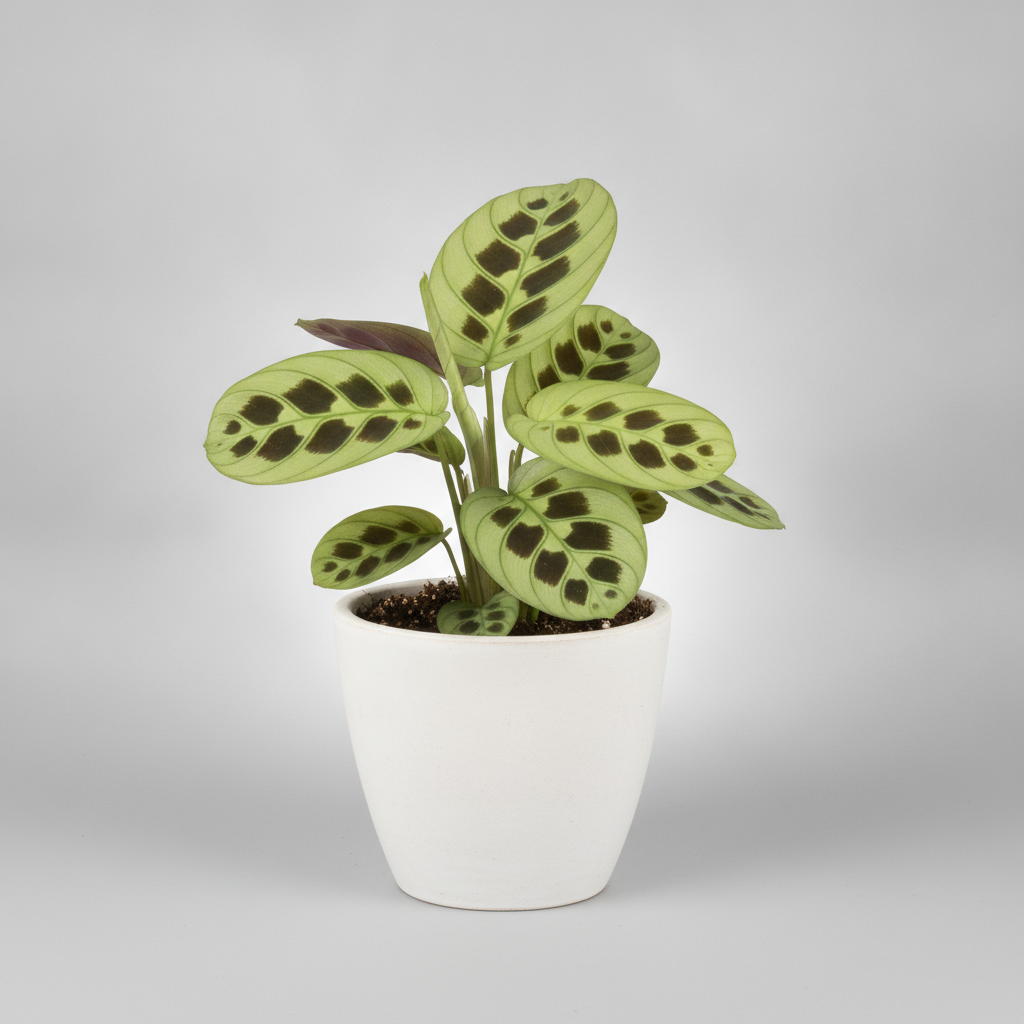
Green Kerchoveana (Rabbit’s Foot)
The classic form, with rounded pale sage leaves carrying two neat rows of dark olive-brown blotches either side of the midrib, the pattern that earned it the rabbit’s tracks nickname. Reliable, forgiving and the easiest of the group to find.
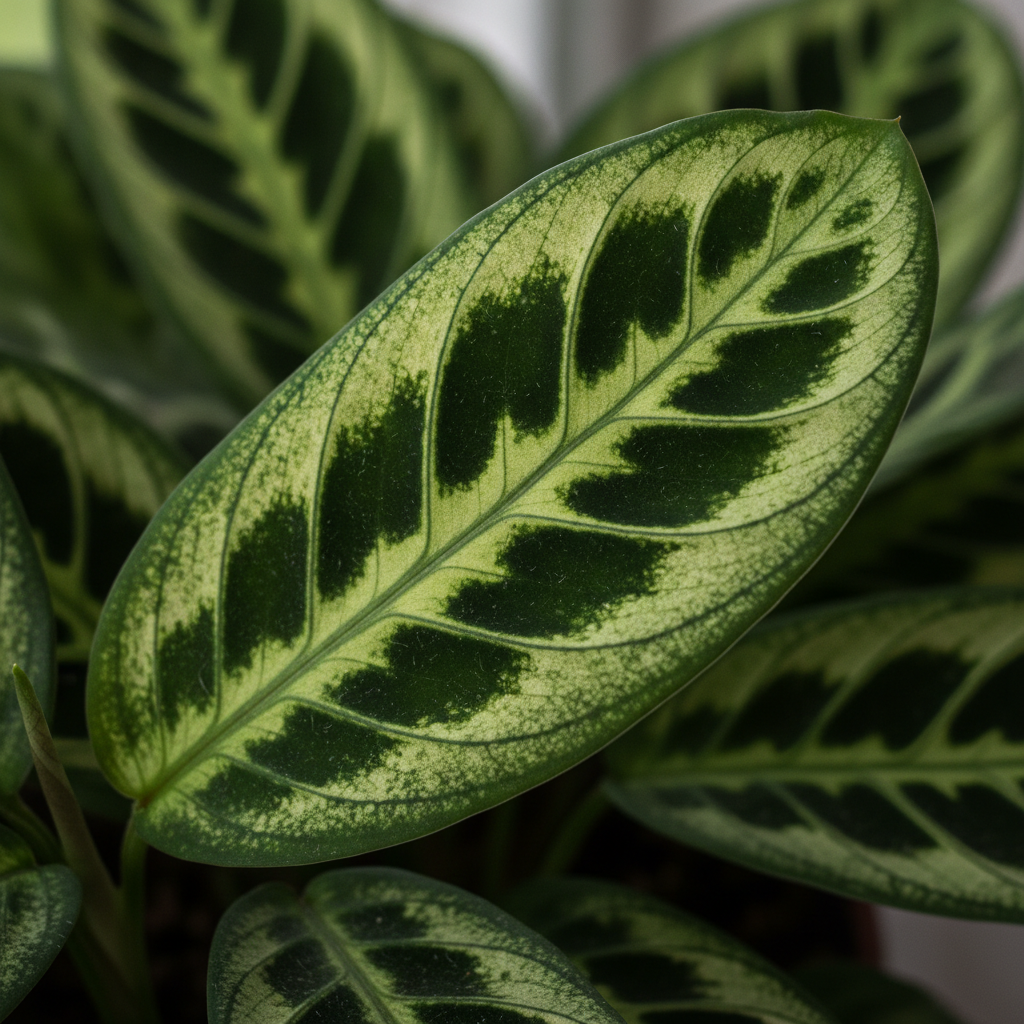
Variegated Kerchoveana
A prized sport of the standard form, with the familiar rabbit-track leaves irregularly splashed and streaked with cream and lighter lime-green. Slightly slower growing and more light-hungry, and well worth seeking out for its extra drama.
Variety Profiles in Detail
Green Kerchoveana (Maranta leuconeura var. kerchoveana)
The subject of this guide and the most widely grown Maranta. Its pale leaves and bold paired markings, which mature from dark chocolate to soft olive-green, combine with a compact, spreading habit to make it an ideal beginner’s prayer plant. It shows its needs plainly and rewards good humidity and clean water with dense, healthy growth.
Red Prayer Plant (Maranta leuconeura var. erythroneura)
The showiest relative, with deep green, feathered leaves marked by a herringbone of vivid red veins and a lighter central zone. Care is essentially identical to the Kerchoveana, so the two make natural companions, offering contrasting looks under the same conditions.
Choosing the Right Variety for Your Space
If you are new to prayer plants, start with the green Kerchoveana, which is the most forgiving and the easiest to source. Choose the variegated form or ‘Kim’ if you can offer consistently bright indirect light and want more pattern, and add the erythroneura or a black leuconeura alongside it for a coordinated Maranta grouping that shares one care routine. All of them stay compact, so several can share a shelf or windowsill without crowding.
Frequently Asked Questions
Why are the leaf tips and edges turning brown and crispy?
This is the single most common Kerchoveana complaint and it usually points to one of three things: low humidity, minerals in the water such as fluoride and chlorine, or a build-up of fertiliser salts. Raise the humidity to 60 percent or above, switch to rainwater, distilled or filtered water, and make sure you are not over-feeding. Together these three changes resolve the vast majority of crispy-edge cases.
Why has my prayer plant stopped folding its leaves at night?
The nightly movement depends on healthy pulvini and a clear day-night light cycle. If the plant has stopped praying, the usual causes are too little light, inconsistent watering, or a plant under stress from another problem. Move it to brighter indirect light, keep watering steady, and the movement generally returns as the plant recovers.
Is the Kerchoveana Prayer Plant safe for cats and dogs?
Yes. It is listed as non-toxic to both cats and dogs by the ASPCA and is safe around humans too, making it one of the best choices for a pet-friendly home. It is always sensible to discourage pets from chewing houseplants, but no poisoning risk exists with this species.
Why are the leaves curling?
Curling leaves usually signal that the plant is too dry, either at the roots or in the air. Check that the soil has not dried out completely and that humidity is high enough. Some inward curling at night is perfectly normal as part of the prayer movement, so only worry if the curling persists through the day.
How often should I water my Kerchoveana?
There is no fixed schedule. Water when the top 2 to 3 cm (1 in) of soil feels dry, which in practice is often once or twice a week in the growing season and less in winter. The goal is soil that stays lightly, evenly moist rather than ever going fully dry or staying soggy.
Why are the lower leaves turning yellow?
Occasional yellowing of the oldest, lowest leaves is a natural part of ageing. Widespread yellowing, especially with soggy soil, usually means overwatering and the early stages of root trouble, so check the soil moisture and the roots. Let the mix dry a little more between waterings and confirm the pot drains freely.
Does the Kerchoveana flower?
It can. Mature, happy plants sometimes produce small, delicate white to pale purple flowers on slender stalks. The blooms are modest compared with the foliage, and the Kerchoveana is grown almost entirely for its leaves, so flowering is a pleasant bonus rather than the goal.
Can I grow a Kerchoveana in a bathroom?
A bathroom with a window can be an excellent home for a Kerchoveana, because the naturally higher humidity from showering suits the plant perfectly. The one requirement is enough light: a windowless bathroom will not do unless you add a grow light, but a bright, steamy bathroom is close to ideal.
My Kerchoveana looks leggy and sparse. How do I make it bushier?
Legginess usually means insufficient light. Move the plant somewhere brighter, though still out of direct sun, and pinch back the longest stems just above a node to encourage branching. The trimmings can be rooted as cuttings and potted back into the same container to fill it out faster.






