
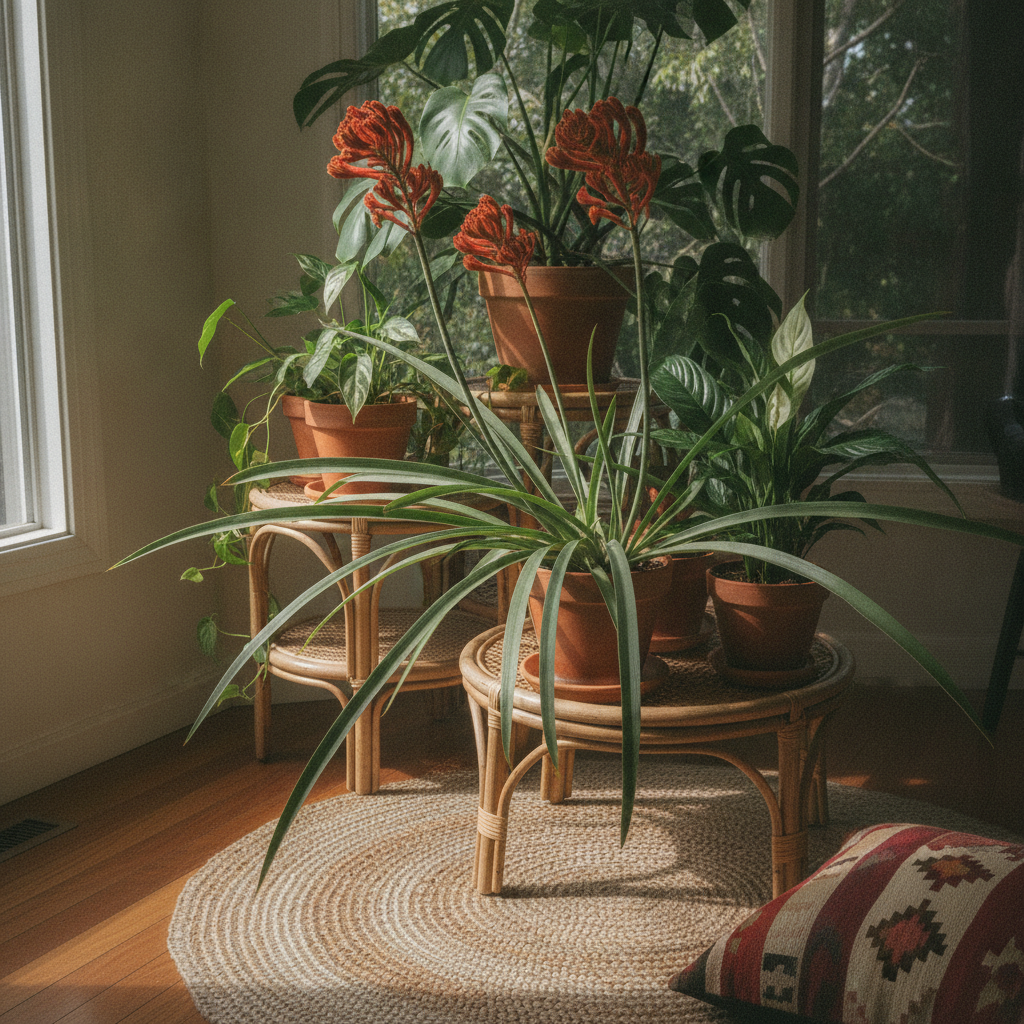
Few Australian natives bring as much drama to a bright room as the kangaroo paw, whose furred, tubular blooms rise on tall stems in shades of red, orange, yellow and pink. Anigozanthos flavidus, the tall kangaroo paw, is the most vigorous and forgiving member of its genus, native to the swamps and open woodland of south-western Western Australia, where it copes with wet winters and long, dry summers. Its common name comes from the velvety, claw-shaped flowers, which look uncannily like an animal’s paw held up at the tip of each stem.
As a container and indoor plant the kangaroo paw has a reputation for being fussy, and that reputation is only half deserved. Keeping one alive is straightforward once you accept that it wants the sunniest position you can offer and soil that never stays wet. Coaxing it to thrive, to send up those spectacular flower spikes season after season, asks for a little more attention to light, feeding and airflow. This guide walks through placement, watering, feeding, dividing established clumps and heading off the ink disease that troubles the whole genus, so you can tell the difference between a plant that merely survives on your windowsill and one that truly flourishes.
Contents
- Quick Reference
- Why Kangaroo Paw Makes a Striking Houseplant
- Light Requirements
- Watering & Humidity
- Soil, Potting & Repotting
- Fertilising
- Propagation
- Pests & Diseases
- Popular Varieties
- Frequently Asked Questions
Quick Reference: Kangaroo Paw at a Glance
| Light | Full sun; the brightest window in the home, a sunroom or a conservatory, with a minimum of six hours of direct light |
| Watering | Regular through spring and summer, letting the top few centimetres dry between waterings; sparing in autumn and winter |
| Temperature | 15 to 25°C (59 to 77°F); tolerates brief dips to around 5°C (41°F) but dislikes hard frost |
| Humidity | Low to moderate; steady air movement matters far more than raising humidity |
| Fertiliser | Low-phosphorus native-plant feed, applied monthly during the growing season |
| Toxicity | Non-toxic to cats, dogs and humans |
Why Kangaroo Paw Makes a Striking Houseplant
The appeal of the kangaroo paw is immediate. From a low fan of flat, strap-like leaves rise slender stems topped with clusters of woolly, tubular flowers, and on a mature Anigozanthos flavidus those stems can reach one to two metres (three to six and a half feet), turning a sunny corner into a living sculpture. Unlike most flowering houseplants, which offer a fleeting display and then sulk, a well-placed kangaroo paw can bloom for months, and the cut stems last remarkably well in a vase. In its native range the flowers are pollinated by honeyeaters, and the tall, sturdy spikes evolved as perches for those birds, which is part of why they hold themselves so proudly upright.
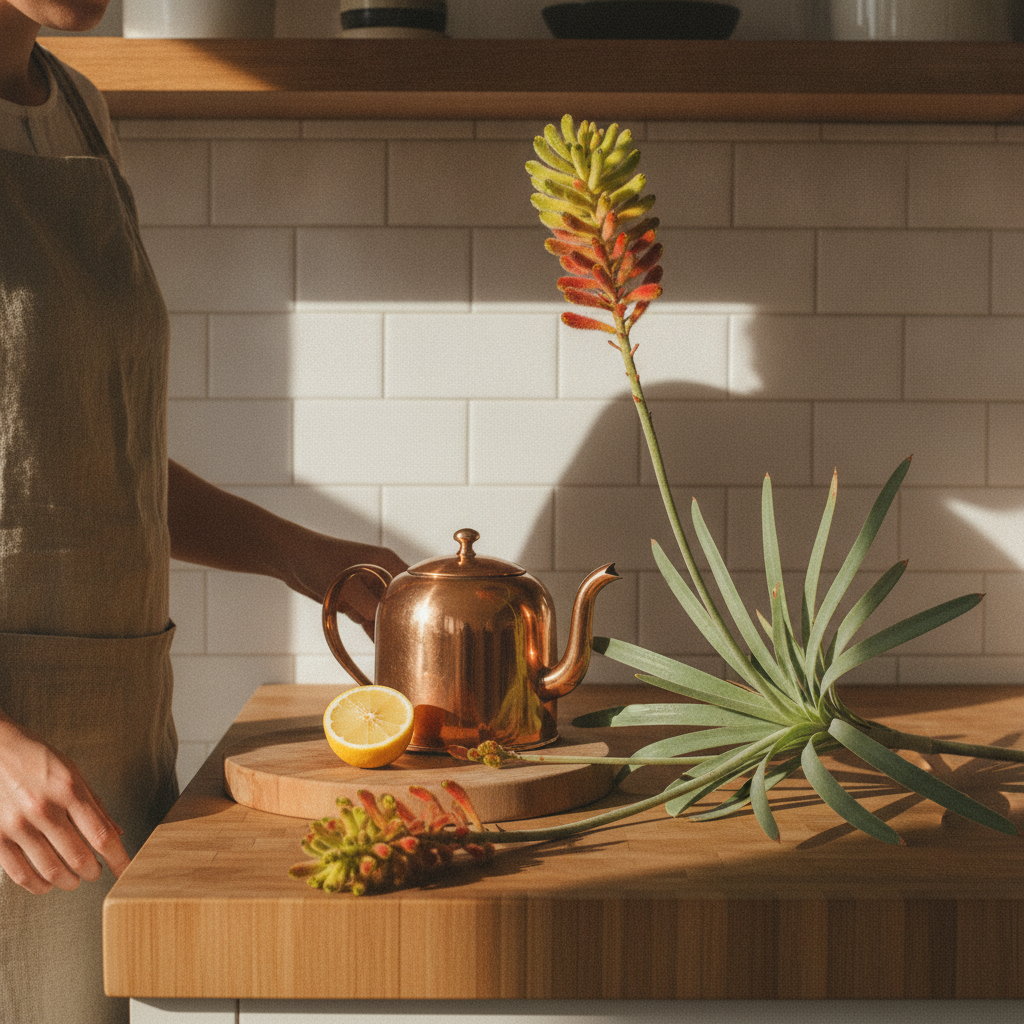
Honesty helps here, because the kangaroo paw is not a low-light plant and never will be. It belongs to a group of sun-loving perennials, and indoors it performs best in a sunroom, a conservatory or directly against a large south-facing window rather than tucked into a shaded living room. Gardeners in mild climates often grow it in a pot on a balcony or patio and simply bring it under cover for the coldest weeks. Treated that way it is genuinely rewarding, evergreen, long-flowering and, unlike many statement plants, entirely safe around pets and children. The tall kangaroo paw is also the toughest of its relatives, longer lived and far more disease resistant than the dwarf species, which makes it the sensible choice for anyone new to the genus.
Important — Toxicity: The kangaroo paw is regarded as non-toxic to cats, dogs and people, so a curious pet or child is not at risk of poisoning. The only minor caveat is that the fine hairs coating the flowers and stems can irritate sensitive skin or eyes, so wash your hands after handling spent blooms and keep the fuzz away from your face.
Light Requirements
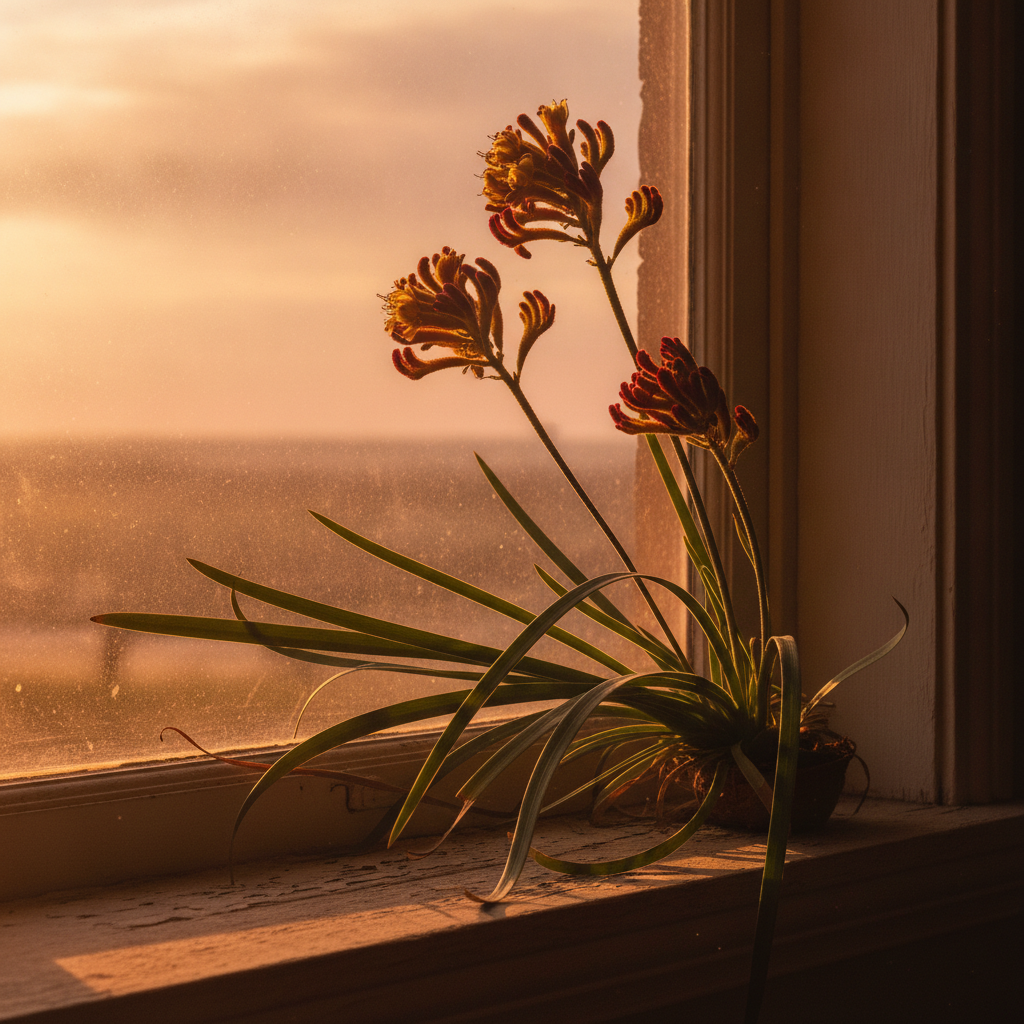
If there is a single factor that decides whether your kangaroo paw flowers or merely exists, it is light. This is a full-sun plant from an open, sun-baked landscape, and it needs the brightest position you can give it indoors. Aim for at least six hours of direct sunlight a day, and treat that as a minimum rather than a target.
In practice this means the plant should sit right in a window rather than a metre back from it, ideally one that faces the sun for most of the day. Light falls away far more quickly indoors than our eyes suggest, so a spot that feels bright to us may deliver only a fraction of what the plant experienced in the nursery. When a kangaroo paw is starved of light it stops producing flower stems, the foliage grows soft and floppy, and the whole clump leans towards the glass.
Light Levels Explained
Gardening advice throws around terms like bright indirect and medium light without ever defining them. The table below translates the usual categories into approximate light levels and the outcome you can expect from a kangaroo paw in each. Unusually for a houseplant guide, the good news for this species sits at the top of the range.
| Light Category | Approx. Level | Typical Location | Outcome |
|---|---|---|---|
| Direct sun | 20,000 lux and above | In a south or west window, sunroom or glasshouse | Ideal; strong growth and reliable flowering |
| Bright indirect | 10,000 to 20,000 lux | Just beside a bright window | Survives and stays green but flowers sparsely |
| Medium | 5,000 to 10,000 lux | A metre or two from a bright window | Slow decline, weak floppy leaves, no flowers |
| Low | 1,000 to 5,000 lux | Interior wall, north-facing room | Unsuitable; the plant fades over months |
| Very low | Below 1,000 lux | Hallway, far from any window | Fatal; will not survive |
Window Orientation and Placement
South-facing window: In the northern hemisphere this is the best position in the house for a kangaroo paw. The long hours of direct light suit it perfectly, and you rarely need to worry about giving it too much.
East-facing window: Usable, especially if the plant sits right against the glass, but the gentler morning sun often falls short of what is needed for heavy flowering. Expect green, healthy foliage and fewer spikes.
West-facing window: A good second choice after south. The strong afternoon sun delivers plenty of energy, though rooms can heat up, so make sure air can move around the plant.
North-facing window: Not enough light on its own. A kangaroo paw in a north window will hang on for a while but steadily weaken and will never flower, so pair it with a grow light or choose a different position.
Pro Tip — Harden Off Gradually: If you move your kangaroo paw outdoors for summer or bring a nursery-fresh plant into full sun, increase its exposure over a week or two. Even a sun-lover can scorch if it jumps straight from a shaded shelf to blazing midday light with no adjustment.
How Light Affects Flowering
With many foliage houseplants light governs leaf colour and variegation, but with the kangaroo paw the visible stakes are the flowers themselves. Flower spikes form only when the plant banks enough light energy, so a shortfall shows up first as a season with no blooms, then as pale, weak-stemmed growth. Give it strong light and the reverse happens: sturdy upright stems, densely furred flowers and richer colour in the coloured forms. Foliage colour stays green in most types regardless of light, so treat the presence or absence of flower spikes as your honest gauge of whether the plant is getting enough sun.
Warning — Direct Sunlight: Although this is a full-sun plant, glass can intensify heat, and a plant that has been grown soft in low light will burn if suddenly exposed to hot direct sun. Scorch appears as bleached or brown papery patches on the leaves that never recover, so make any increase in light a gradual one.
Artificial Lighting
Because natural light indoors is often the limiting factor, a full-spectrum LED grow light is one of the most effective tools for keeping a kangaroo paw flowering out of season or in a dim home. Position the light 20 to 30 centimetres (8 to 12 inches) above the foliage and run it for 12 to 14 hours a day to supplement or replace window light. Given the plant’s high demand, a grow light is far more than a gimmick here; for many indoor growers it is the difference between a plant that flowers and one that never does.
Seasonal Adjustments
Light levels drop sharply through autumn and winter in temperate regions, and a windowsill that bakes in July can be gloomy by December. Move the plant to your brightest available position for the colder months, clean the glass and wipe dust from the leaves so nothing is lost, and consider a grow light over winter. As the days lengthen again in spring, growth and flower production pick up naturally, and this is the moment to resume regular feeding and watering.
Watering & Humidity
Watering is where good intentions most often go wrong with a kangaroo paw. Coming from a climate of wet winters and dry summers, the plant is genuinely drought tolerant once established, yet it also resents sitting in stagnant, waterlogged soil. The aim is generous but infrequent watering into a mix that drains fast, so the roots get a proper drink and then a chance to breathe.
When to Water
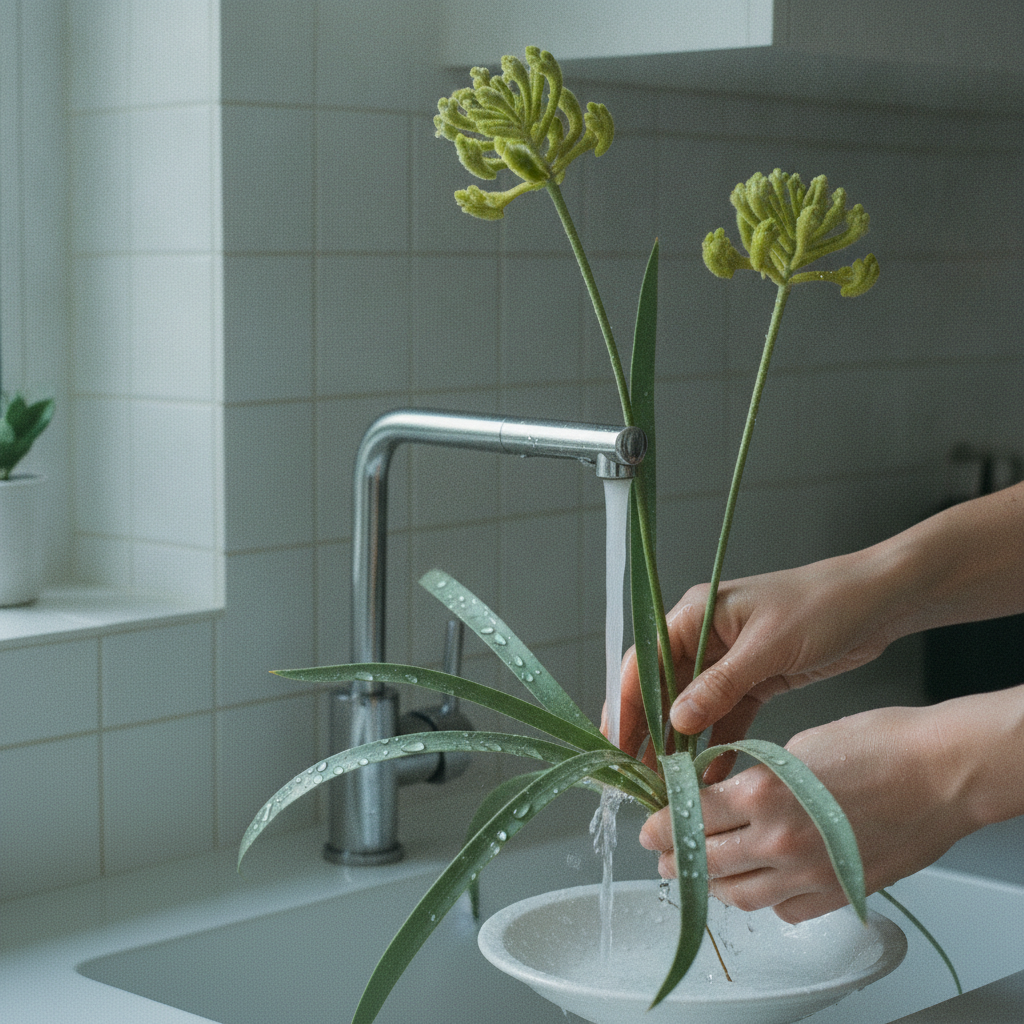
Through the active growing season of spring and summer, water when the top three to four centimetres (about one and a half inches) of mix have dried out. Push a finger into the soil rather than trusting the surface, which dries first, and water only when that upper layer feels dry. In the warmth and strong light the plant favours, this might mean watering once or twice a week, but let the plant and the pot tell you rather than watering on a fixed calendar.
In autumn and winter, growth slows and the plant needs much less. Cut back to occasional watering, letting the mix dry more deeply between drinks, and never leave the pot standing in a full saucer over winter. Cold, wet roots are the fastest route to rot in this species, so when in doubt during the cool months, wait another few days.
Pro Tip — Weigh the Pot: A freshly watered pot is noticeably heavier than a dry one. Lift yours just after watering and again a few days later to learn the difference by feel. Before long you will be able to judge whether your kangaroo paw needs water simply by tipping the pot, which is more reliable than any schedule.
How to Water Correctly
- Check the mix first, watering only once the top few centimetres have dried.
- Water at the base of the plant, directing the flow onto the soil rather than over the foliage and flower stems.
- Add water steadily until it runs freely from the drainage holes, wetting the entire root ball.
- Let the pot drain completely, then tip away anything that collects in the saucer or cover pot.
- Wait until the surface layer dries again before the next watering rather than topping up little and often.
Signs of Overwatering vs. Underwatering
| Symptom | Overwatering | Underwatering |
|---|---|---|
| Leaf colour | Yellowing, often from the base of the fan upward | Tips and edges turn brown and dry |
| Leaf texture | Soft, limp, sometimes mushy near the base | Thin, papery, curling inward |
| Soil | Stays wet for days, may smell sour | Bone dry, pulling away from the pot sides |
| Roots | Dark, soft and foul smelling | Dry and brittle but otherwise pale and firm |
| Base of the clump | Blackening or collapse at soil level | Overall wilting that perks up after watering |
Warning — Root Rot: Persistent wet feet are the single biggest killer of container kangaroo paws. Once the rhizome blackens and softens there is rarely a way back, so if you suspect rot, unpot the plant at once, cut away any dark mushy tissue with a sterile blade, and repot into fresh, sharply draining mix on the dry side.
Humidity Requirements
Unlike the tropical foliage plants that dominate most collections, the kangaroo paw has no craving for high humidity. It evolved in open, breezy country and is perfectly content in the average dry air of a heated home. Ordinary household humidity of 40 to 60 percent suits it well.
What it does dislike is stale, still air. Poor circulation around the leaves and flower stems encourages the fungal ink disease that plagues the genus, showing up as dark blotches on the foliage. Good airflow is therefore a genuine part of care, not an afterthought.
For that reason, resist the usual houseplant advice to mist or crowd this plant onto a pebble tray. Both raise humidity and reduce air movement, which is exactly the wrong direction. Instead, give the plant space, keep a window cracked or a gentle fan running in still rooms, and let the air move.
Water Quality
Kangaroo paws are not especially fussy about water quality and tolerate ordinary tap water in most areas. If your supply is very hard or heavily chlorinated, rainwater is a good alternative and one the plant would recognise from home. More important than the type of water is that it drains straight through; the plant would rather drink briefly from the tap than sit in softened or standing water for days.
Soil, Potting & Repotting
Get the growing medium right and half the battle with a kangaroo paw is won, because so many of its problems trace back to soil that holds too much water. In the wild it grows in sandy, gritty ground that drains almost instantly after rain, and the closer you can get a potting mix to that character, the happier the plant will be.
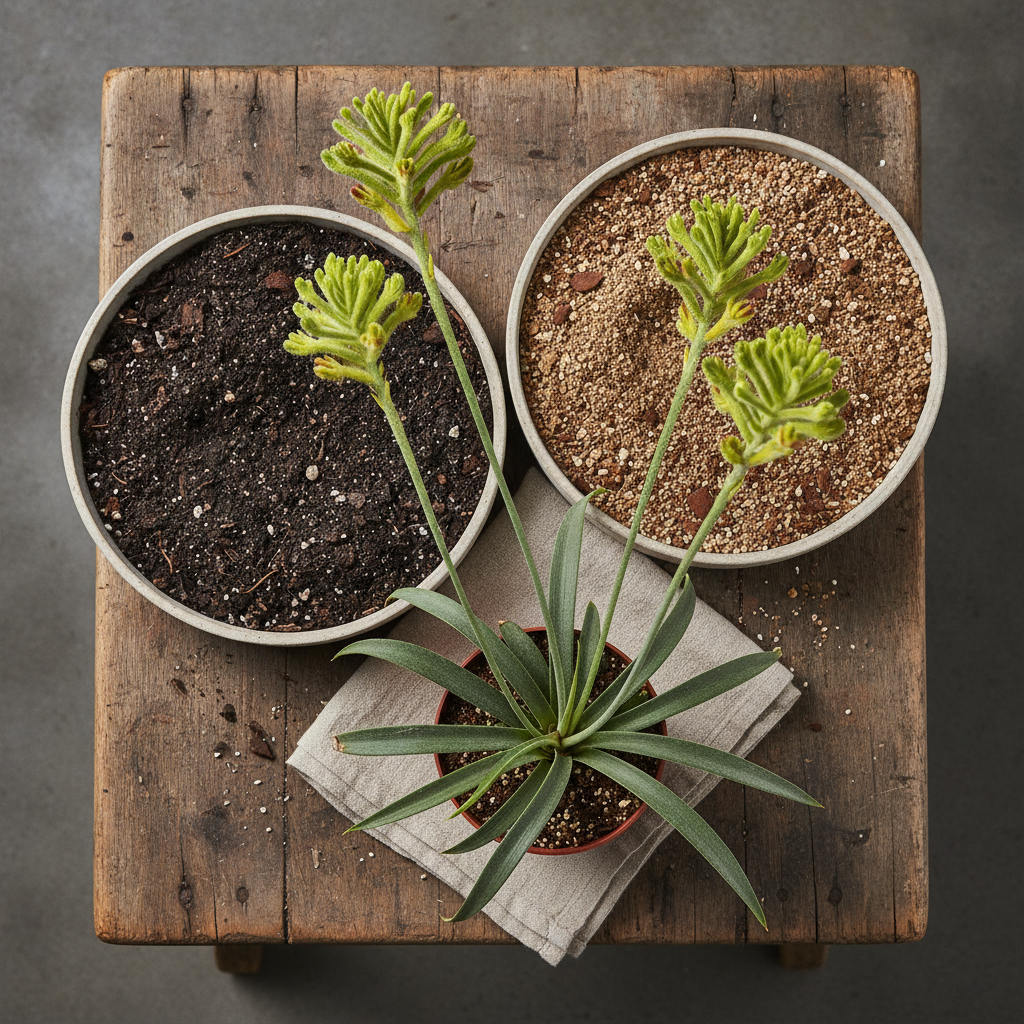
Ideal Soil Composition
Start with a quality potting mix, ideally one formulated for Australian native plants, and open it up with plenty of coarse material so water moves through freely. A blend built around free-draining sand and grit, with just enough organic matter to hold a little moisture and nutrition, gives the roots the air they need while never staying soggy.
| Component | Proportion | Function |
|---|---|---|
| Native or general potting mix | Half | Base structure, moisture and gentle nutrition |
| Coarse sand or fine grit | One quarter | Sharp drainage and weight to steady tall stems |
| Perlite or pumice | One quarter | Aeration and open pore space around the roots |
Kangaroo paws prefer a soil that runs from slightly acidic to neutral, roughly pH 5.5 to 7.0, which most native and general mixes provide without adjustment. Far more critical than a precise pH is keeping phosphorus low, because like many Australian natives this plant is sensitive to excess phosphorus and can be damaged by the high-phosphorus feeds sold for ordinary houseplants.
Pro Tip — Quick Mix Recipe: Combine two parts native or general potting mix, one part coarse propagating sand and one part perlite or pumice. This gives the fast drainage a kangaroo paw craves while still holding enough moisture to carry it between waterings.
Choosing the Right Pot
The pot matters more for this plant than for most, both because tall flower spikes need a stable base and because drainage is everything. Choose a container that balances the height of the clump so it will not topple in a breeze on a patio or when the stems are in full bloom.
Drainage holes are non-negotiable. Never plant a kangaroo paw in a pot without generous drainage, and never let the pot stand in a saucer of water. If you love a decorative cover pot with no holes, keep the plant in a plain nursery pot inside it and lift it out to water so it can drain fully before going back.
Pot material: Terracotta is an excellent match because its porous walls wick away excess moisture and dry the mix faster, which is exactly what this plant wants. Terracotta is also heavier than plastic, an advantage for a top-heavy clump. Plastic and glazed pots work too, but you will need to water a touch more carefully since they hold moisture longer.
Pot size: Choose a pot only a little larger than the current root ball. An oversized pot holds a reservoir of wet soil that the roots cannot use, and that lingering moisture invites rot. Step up gradually, one size at a time, as the clump fills its container.
When to Repot
A kangaroo paw is best repotted every couple of years, or when the clump has clearly outgrown its pot, roots are circling the base or emerging from the drainage holes, and water races straight through an exhausted mix. Early spring, just as growth resumes, is the ideal time, since the plant recovers quickly and repotting then often coincides with the chance to divide a large clump. Avoid disturbing the plant in the depths of winter or while it is in full flower.
How to Repot: Step-by-Step
- Water the plant lightly a day ahead so the root ball holds together and slides out cleanly.
- Ease the clump from its pot by tipping it and supporting the base of the foliage, rather than pulling on the stems.
- Tease away old, spent mix from the outer roots and check the rhizome for any soft or blackened areas, trimming them with a sterile blade.
- Add a layer of fresh, gritty mix to the base of the new pot so the plant will sit at the same depth as before.
- Centre the clump, backfill around it with fresh mix and firm gently to remove air pockets without compacting the soil.
- Water in thoroughly, let the pot drain, then return the plant to its bright position and hold off feeding for a few weeks.
Warning — Transplant Shock: Some wilting or a pause in growth after repotting is normal. Resist the urge to overwater a sulking plant, as saturated soil around freshly disturbed roots does more harm than good. Keep it bright, water only when the surface dries, and let it settle in its own time.
Fertilising
Feeding a kangaroo paw is less about pushing rich growth and more about respecting the plant’s unusual chemistry. It responds well to regular but gentle feeding through the growing season, rewarding you with more and stronger flower stems, but it can be harmed by the wrong fertiliser.
The golden rule is to use a low-phosphorus feed. Australian native plants of this type evolved in phosphorus-poor soils and have no tolerance for the high-phosphorus formulas common in general houseplant food, which can scorch the roots and yellow the foliage. A fertiliser labelled for native plants, or any balanced feed low in phosphorus, is the safe choice.
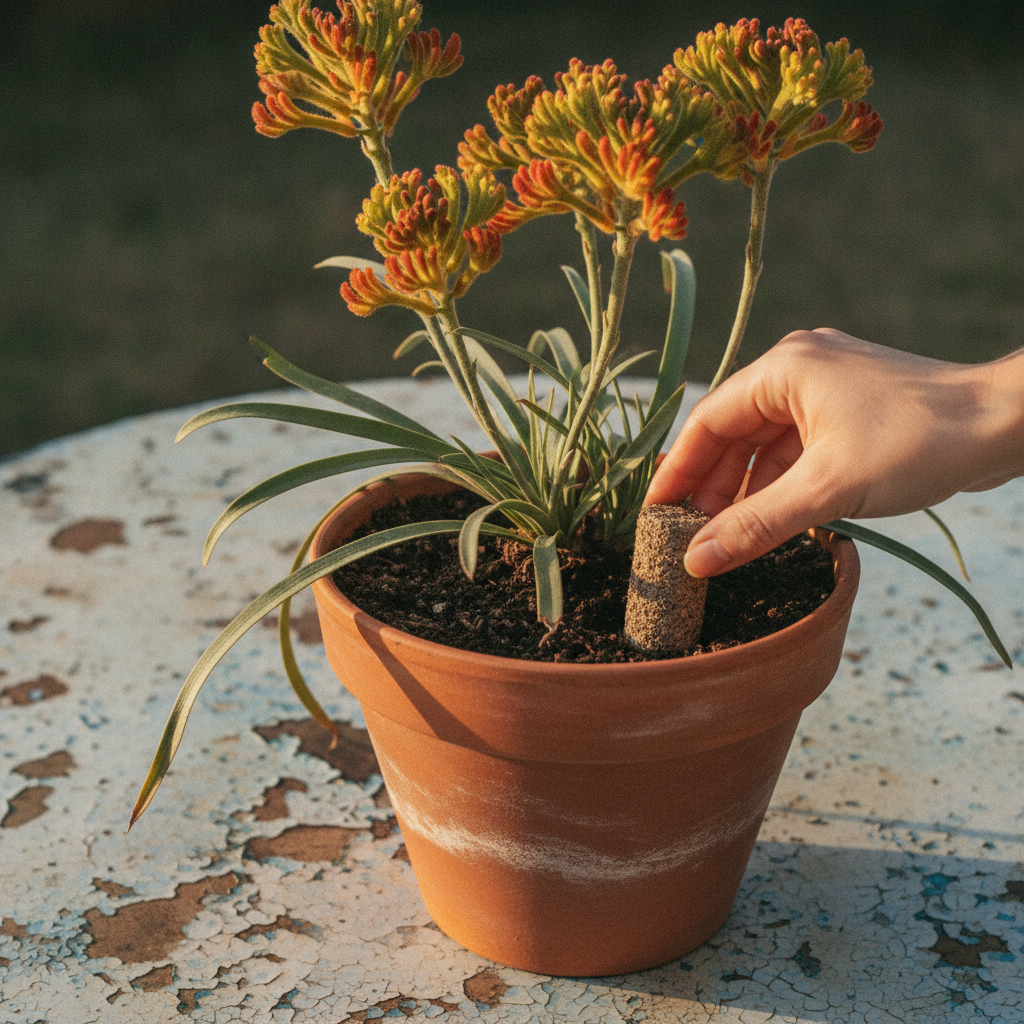
Understanding Plant Nutrients
Fertiliser labels carry three headline numbers, the ratio of nitrogen, phosphorus and potassium, alongside trace elements. Understanding what each does helps you read a label and, in this plant’s case, spot the phosphorus figure that matters so much.
| Nutrient | Symbol | Primary Function | Deficiency Symptoms |
|---|---|---|---|
| Nitrogen | N | Leaf and stem growth, green colour | Pale, yellowing older leaves, weak growth |
| Phosphorus | P | Root and flower development; needed only in small amounts here | Rare in this plant; excess is the real danger |
| Potassium | K | Flowering, overall vigour and stress tolerance | Yellow or scorched leaf margins |
| Iron | Fe | Chlorophyll production | Yellowing between the veins of new leaves |
| Magnesium | Mg | Chlorophyll and enzyme function | Yellowing between veins on older leaves |
Types of Fertiliser
Liquid fertilisers: A native-plant liquid feed, diluted and watered in, gives you the most control and is easy to apply during regular watering. It acts quickly and is simple to stop if the plant shows any sign of stress.
Slow-release granular: Controlled-release pellets formulated for native plants are convenient, feeding gently over several months from a single spring application. Choose a low-phosphorus native blend rather than a general granular feed.
Organic fertilisers: Well-rotted compost or a light top dressing of worm castings suits this plant, releasing nutrients slowly and naturally. Avoid heavy manures and bone-meal based products, which tend to be high in phosphorus.
Feeding Schedule
Feed roughly once a month through spring and summer, when the plant is actively growing and building flower stems. Stop feeding entirely in autumn and winter, when growth slows and unused fertiliser simply builds up in the mix. A plant given steady, gentle feeding across the warm months will flower far more generously than one left unfed.
Pro Tip — Less Is More: With kangaroo paws, err on the side of under-feeding. These plants thrive in lean soils, and a light hand with a low-phosphorus feed will always beat a generous dose of the wrong fertiliser. When unsure, dilute further and feed less often.
How to Fertilise
- Check that the fertiliser is low in phosphorus, ideally one labelled for native plants.
- Water the plant lightly first so feed is never applied to bone-dry roots.
- Dilute a liquid feed to the strength on the label, or slightly weaker, and apply to the soil rather than the foliage.
- Water through again afterwards to distribute the nutrients evenly and flush away any concentration at the surface.
- Pause feeding as autumn arrives and resume only when new growth appears in spring.
Warning — Salt Build-Up: Fertiliser salts accumulate in the mix over time, showing as a white crust on the soil or pot rim and as brown leaf tips. Every couple of months, flush the pot by running plenty of plain water through it until it drains freely, which washes the excess away.
Propagation
Propagating a kangaroo paw is straightforward once you know that it will not grow from leaf or stem cuttings the way many houseplants do. The plant spreads from a slowly expanding underground rhizome, and the two reliable ways to make more of it are dividing an established clump and sowing seed.
Division is the method of choice for named varieties, because it produces new plants identical to the parent and gives you a flowering-sized clump straight away. Seed is rewarding if you are patient and do not mind some variation in the results, and it is the natural way the plant multiplies in the wild.
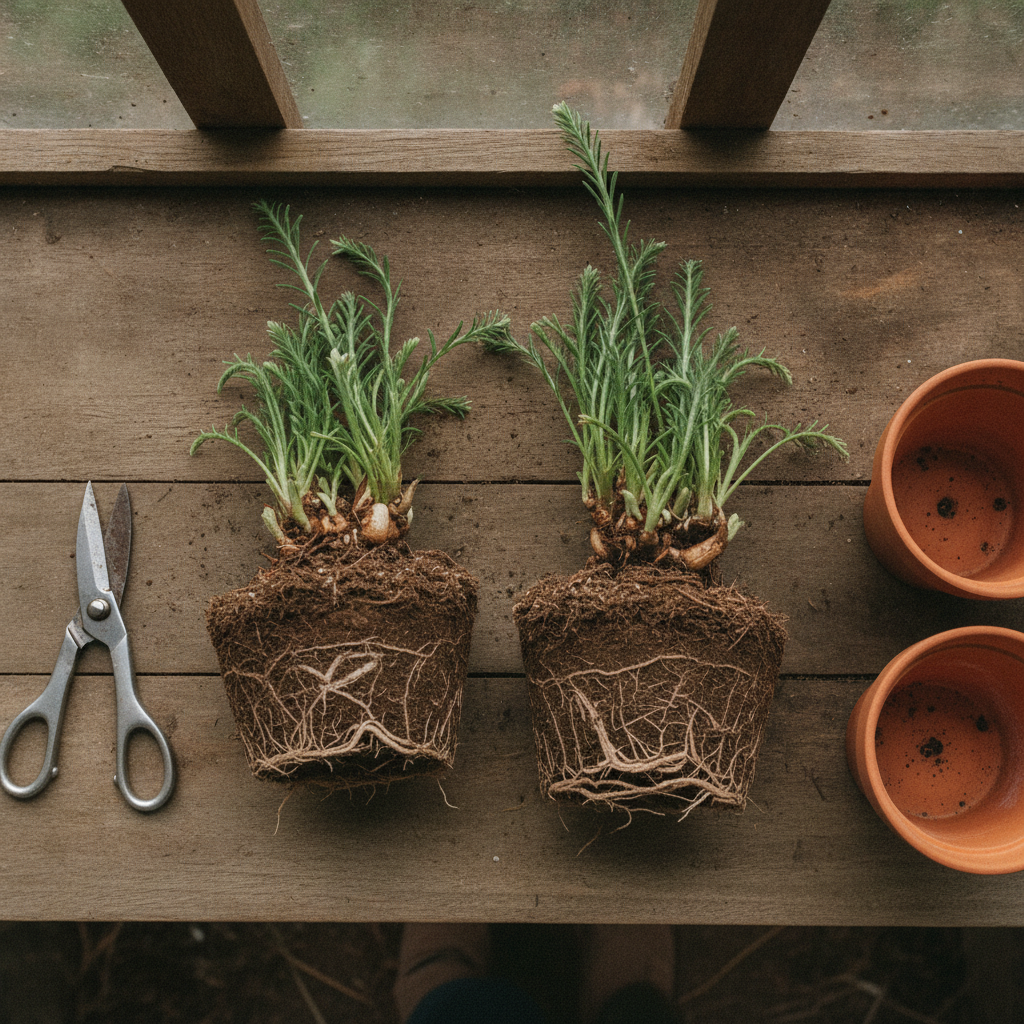
Understanding the Rhizome
At the heart of every kangaroo paw is a rhizome, a thickened, horizontal underground stem from which the fans of leaves and the roots emerge. As the plant matures the rhizome branches, and a healthy clump is really a colony of connected crowns. Because each crown can grow on independently once separated, the rhizome is what makes division possible, so the goal when propagating is to lift the clump and split it into pieces that each carry a strong crown and a good share of roots.
Division: Step-by-Step
Divide in spring, just as the plant begins active growth, so the new sections establish quickly in the warm months ahead. Choose a mature, crowded clump rather than a young single fan.
- Water the plant a day before so the root ball is moist and holds together.
- Lift the whole clump from its pot or the ground and gently shake or wash away enough soil to see the rhizome and crowns.
- Identify natural divisions where the clump separates into sections, each with its own fan of leaves and roots.
- Cut cleanly through the rhizome with a sterilised knife, making sure every division has at least one healthy crown and a generous portion of roots.
- Trim any long, damaged roots and cut the foliage back by about a third to reduce stress on the new division.
- Pot each section into its own container of gritty, free-draining mix at the same depth it grew before.
- Water in, then keep the divisions bright but sheltered from the harshest midday sun for a fortnight while they root out.
Pro Tip — Divide While Repotting: The easiest time to divide is during a routine spring repot, when the clump is already out of its pot. Tackling both jobs at once spares the plant a second disturbance and gives every new division a fresh start in clean mix.
Growing from Seed: Step-by-Step
Seed is a slower route and the seedlings of named hybrids will not come true to the parent, but it is inexpensive and can yield surprising colour variation. Sow fresh seed in spring for the best germination.
- Fill a shallow tray with a free-draining seed-raising mix and firm it lightly.
- Scatter the fine seed thinly over the surface and cover with only a whisper of mix, as it needs warmth and light to germinate.
- Moisten gently with a fine mist and keep the tray warm, around 18 to 22°C (64 to 72°F), in a bright spot out of scorching sun.
- Keep the mix just moist, never wet, and be patient, as germination can be uneven and take several weeks.
- Once seedlings have a few leaves and are sturdy enough to handle, prick them out into individual pots of gritty mix.
- Grow them on in strong light, and expect the first flowers a year or more after sowing.
Troubleshooting Propagation
| Problem | Likely Cause | Solution |
|---|---|---|
| Divisions rot after potting | Mix too wet or crowns buried too deep | Use sharper-draining mix, plant at the correct depth and water sparingly until established |
| Divisions wilt and fail to establish | Too few roots on the division or too much sun | Take larger sections with more roots and give light shade for the first fortnight |
| Seed fails to germinate | Old seed, buried too deep or too cold | Sow fresh seed on the surface and provide steady warmth and light |
| Seedlings damp off and collapse | Overwatering and poor air movement | Ease off watering, improve ventilation and avoid a closed, humid cover |
Pests & Diseases
A kangaroo paw grown in strong light with good airflow is a robust plant, and the tall species is the most disease resistant of the genus. Even so, a handful of problems are worth knowing, and one of them, the fungal ink disease, is more or less unique to this group of plants.
Most trouble can be traced back to conditions the plant dislikes, chiefly stagnant air, overhead watering and soggy soil. Fix those and you will rarely reach for a spray bottle, but check your plant regularly so you catch anything early.
Common Pests
Aphids (Aphidoidea)
Aphids cluster on tender new flower stems and buds, sucking sap and leaving sticky honeydew behind. Small infestations distort the developing spikes and can spoil a flush of bloom.
Treatment: Dislodge them with a firm jet of water, or treat with insecticidal soap or a horticultural oil, repeating every week until they are gone. Keeping the plant in strong airflow discourages them from settling.
Snails and Slugs (Gastropoda)
Snails and slugs are especially fond of kangaroo paws, chewing ragged holes in the leaves and grazing the emerging flower stems, often overnight. They are more of a problem when the plant summers outdoors.
Treatment: Pick them off by hand after dark, remove hiding places such as debris around the pot, and use pet-safe iron-based slug pellets or copper barriers if damage continues.
Spider Mites (Tetranychus urticae)
In hot, dry indoor air spider mites can colonise the foliage, causing fine speckling and, in bad cases, faint webbing between the leaves. They are easy to miss until numbers build.
Treatment: Rinse the foliage, then treat with horticultural oil or an appropriate miticide, repeating to catch newly hatched mites. Good airflow again helps, though avoid raising humidity, which invites fungal problems instead.
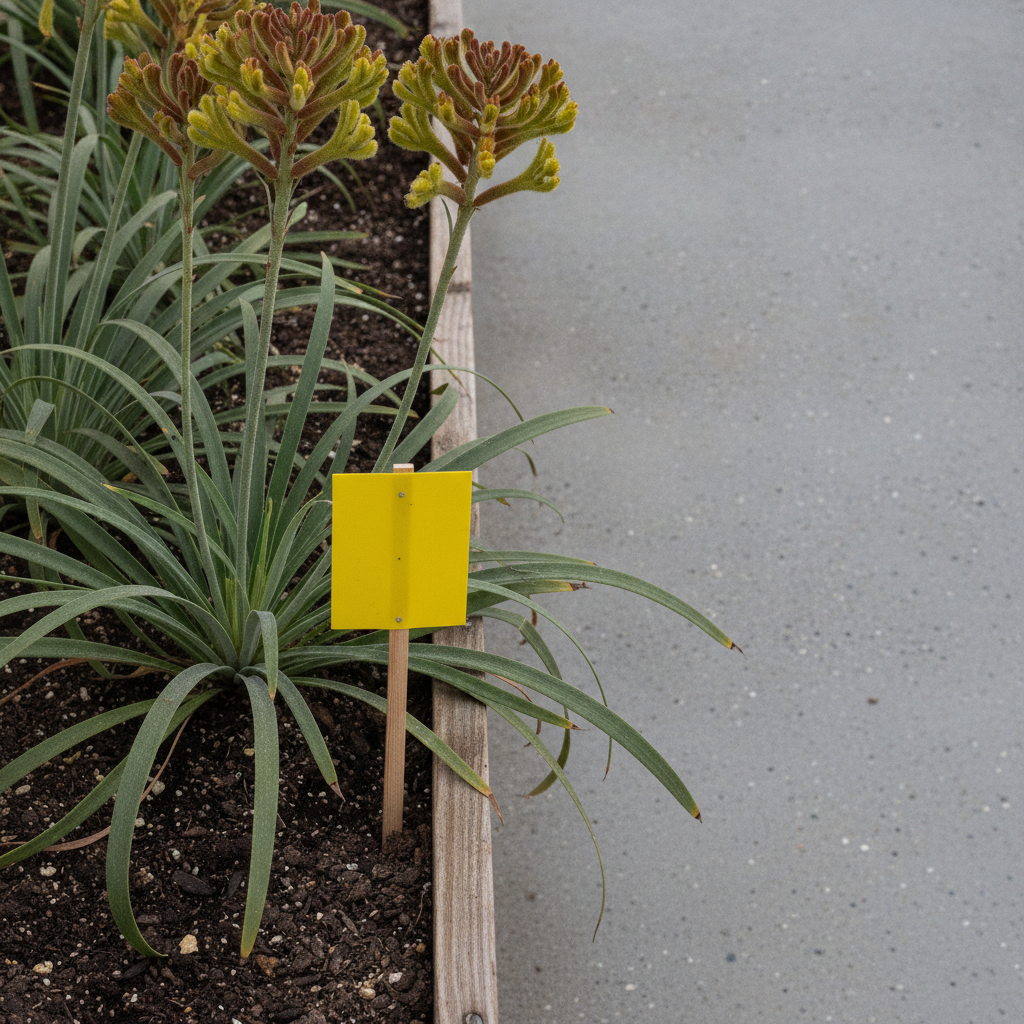
Fungus Gnats (Sciaridae)
Small black flies drifting around the pot are fungus gnats, whose larvae live in the top layer of constantly moist soil. They are a symptom of overwatering more than a serious pest in themselves.
Treatment: Let the surface of the mix dry out between waterings, use yellow sticky traps to catch the adults, and the problem usually clears itself once the soil is no longer permanently wet.
Common Diseases
Ink Disease (Alternaria alternata)
Ink disease, sometimes called ink spot, is the signature affliction of the genus. It appears as black or dark brown blotches and streaks that spread along the leaves, most often in cool, damp, still conditions or after rain and overhead watering. The tall kangaroo paw is more resistant than the dwarf species, but it is not immune.
Treatment: Cut off badly affected leaves at the base and improve airflow at once. Keep water off the foliage, and in a bad outbreak cut the whole clump back hard so it can regrow clean foliage in better conditions. A fungicide can help in severe cases, but ventilation and dry leaves are the real cure.
Root Rot (Phytophthora and Pythium)
Root rot follows waterlogging, when soil-borne fungi attack roots that can no longer breathe. The above-ground signs are yellowing, wilting foliage and a plant that collapses despite wet soil, while the rhizome and roots turn dark and mushy.
Treatment: Unpot the plant, cut away all soft, blackened tissue with a sterile blade, and repot into fresh, sharply draining mix. Water sparingly afterwards. Prevention through good drainage and restrained watering is far more effective than any cure.
Pest and Disease Summary
| Pest / Disease | Identification | Treatment |
|---|---|---|
| Aphids | Clusters on new stems, sticky honeydew | Water jet, insecticidal soap or oil |
| Snails and slugs | Ragged holes, chewed stems, slime trails | Hand removal, iron-based pellets, copper barriers |
| Spider mites | Fine speckling and webbing in dry air | Rinse foliage, horticultural oil or miticide |
| Fungus gnats | Small flies around persistently wet soil | Let soil dry, yellow sticky traps |
| Ink disease | Black blotches and streaks on leaves | Remove affected leaves, improve airflow, keep foliage dry |
| Root rot | Yellowing, collapse, dark mushy roots | Cut away rot, repot in dry, gritty mix |
Prevention Strategies
Prevention with a kangaroo paw comes down to giving it the conditions it wants: strong light, sharp drainage, restrained watering and, above all, freely moving air. Water at the base rather than over the leaves, space the plant away from its neighbours, and keep the foliage dry, especially in cool weather when ink disease takes hold.
Tidy habits go a long way too. Remove spent flower stems and any dead or damaged leaves promptly, since decaying tissue harbours both pests and fungal spores. Inspect new plants before they join your collection, and check yours over each time you water so small problems never become large ones.
Pro Tip — Cut Back for a Fresh Start: After flowering, or if ink disease or scruffy old foliage takes over, do not be afraid to cut the whole clump back hard, close to the base. A healthy kangaroo paw regrows vigorously from the rhizome, giving you a flush of clean new leaves and often a fresh round of flower stems.
Popular Varieties
Although Anigozanthos flavidus is a fine plant in its own right, most kangaroo paws sold today are named hybrids bred largely from it, chosen for compact habit, disease resistance and a rainbow of flower colours. The tall species contributes the vigour and hardiness that make these hybrids so much easier to grow than the pure dwarf species.
The most widely available range is the Bush Gems series, bred for garden and container life, but you will also find larger landscape types and the tall yellow-green species form itself. The table below gathers the most popular kinds to help you choose.
| Variety | Flower Appearance | Light Needs | Growth Rate | Availability |
|---|---|---|---|---|
| Species (A. flavidus) | Yellow-green, sometimes red-tinged, on tall stems | Full sun | Vigorous | Common |
| Bush Pearl | Deep rose-pink, long flowering | Full sun | Moderate | Common |
| Bush Ranger | Vivid red-orange, compact | Full sun | Moderate | Common |
| Bush Diamond | Soft pink and cream | Full sun | Moderate | Widely available |
| Bush Tango | Orange, dwarf habit | Full sun | Moderate | Widely available |
| Bush Ruby | Rich burgundy-red | Full sun | Moderate | Occasional |
| Yellow Gem | Bright yellow-green, tall stems | Full sun | Vigorous | Occasional |
| Landscape Lilac | Purple-pink, tall and robust | Full sun | Vigorous | Occasional |
Featured Varieties
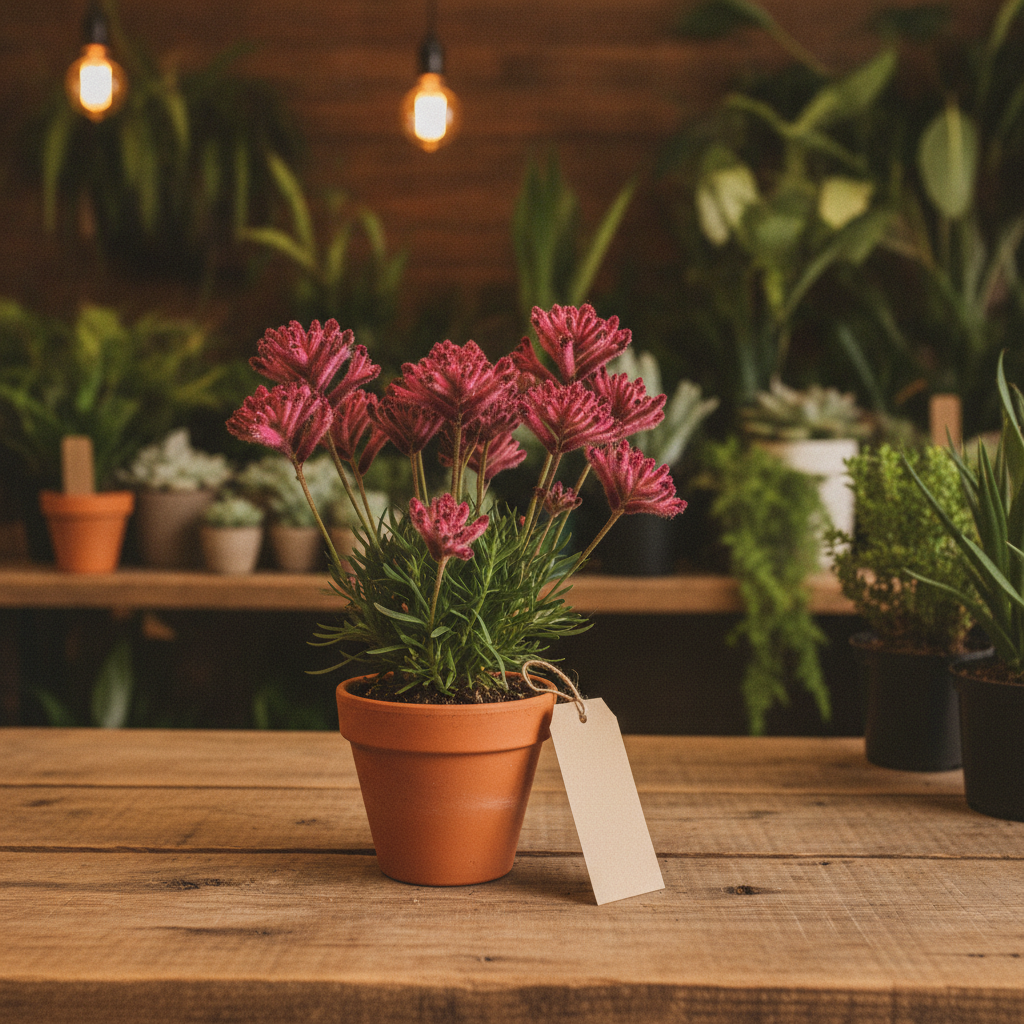
Bush Pearl
A compact, evergreen hybrid with densely furred, deep rose-pink flowers held above a neat fan of narrow green leaves. Bush Pearl is prized for its exceptionally long flowering season and tidy habit, which make it one of the best kangaroo paws for a large pot.
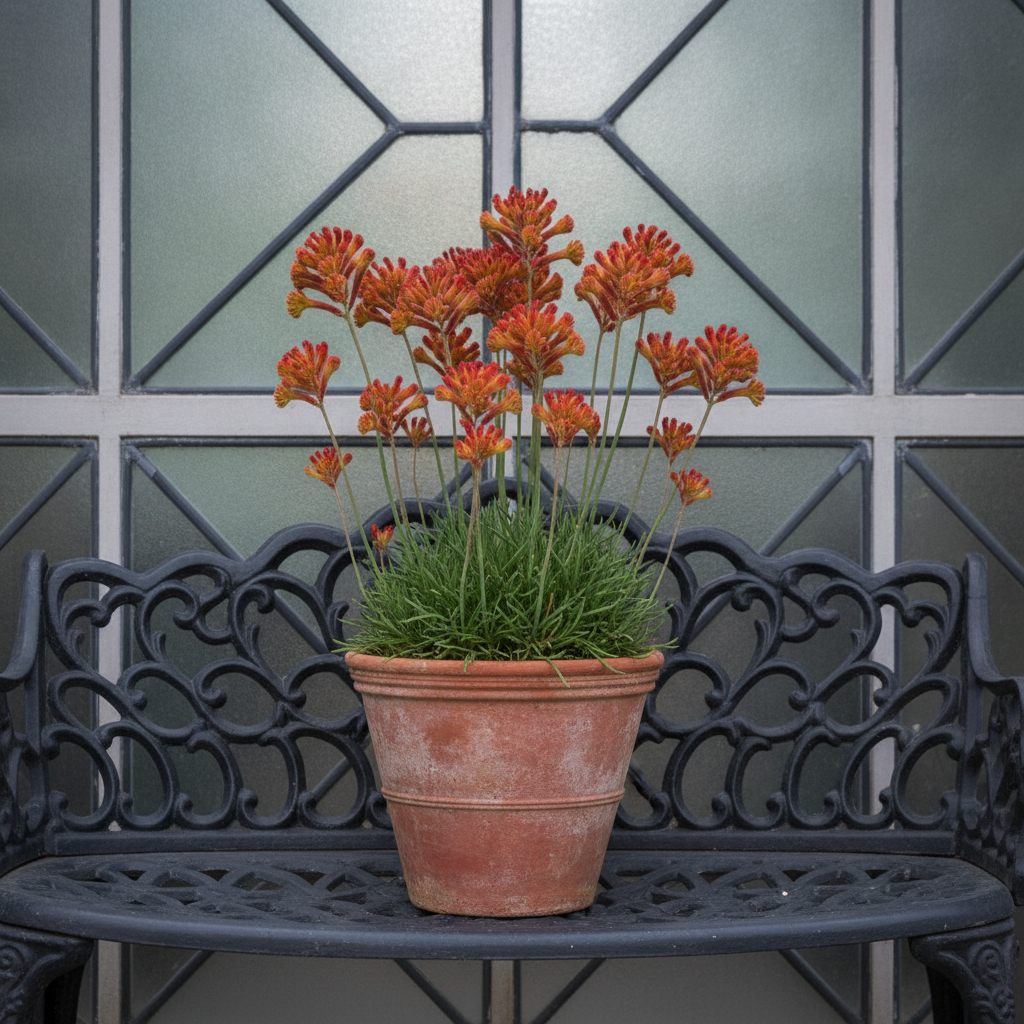
Bush Ranger
A dwarf hybrid carrying vivid red-orange, velvety flowers on compact stems above short, strap-like foliage. Bush Ranger brings intense colour to a smaller footprint, making it ideal where a full-height kangaroo paw would be too large.
Variety Profiles in Detail
Tall Kangaroo Paw (Anigozanthos flavidus)
The species itself remains a garden and container favourite for good reason. It is the largest, hardiest and longest-lived of the kangaroo paws, sending up branching stems of yellow-green flowers, often flushed red, to well over a metre. Where the dwarf hybrids can be short-lived, the tall species soldiers on for years and shrugs off ink disease better than any of its relatives.
Bush Gems Series (Anigozanthos hybrids)
The Bush Gems range, which includes Bush Pearl, Bush Ranger, Bush Diamond and many more, was bred specifically to combine the toughness of A. flavidus with compact size and a wide colour palette. These are the plants most gardeners mean when they buy a kangaroo paw for a pot, offering reliable flowering and manageable proportions.
Landscape Series (Anigozanthos hybrids)
Bred for larger displays, the Landscape hybrids such as Landscape Lilac are taller and more robust than the Bush Gems, closer in stature to the species. They make a strong vertical statement in a big container or a sunny bed and share the same love of full sun and sharp drainage.
Choosing the Right Variety for Your Space
Let the space and the light decide. For a bright balcony or a large sunroom pot, a compact Bush Gems hybrid such as Bush Pearl or Bush Ranger gives long colour without overwhelming its container. If you have the room and want the toughest, longest-lived plant, the tall species or a Landscape hybrid rewards you with height and vigour. Whichever you choose, the care is the same, so pick on colour and scale and give it the sunniest spot you can.
Frequently Asked Questions
Can a kangaroo paw really live indoors?
It can, but only in a genuinely sunny spot such as a sunroom, conservatory or right against a large south-facing window. In an ordinary living room it will slowly decline and never flower. Many growers treat it as an indoor-outdoor plant, keeping it on a bright patio in the warm months and bringing it under cover for the coldest weeks.
Why won’t my kangaroo paw flower?
Nearly always the answer is not enough light. Flower spikes form only when the plant banks plenty of sun, so a position that is too dim gives you green leaves and no blooms. Move it to the brightest place you have, feed lightly through the growing season, and consider a grow light if natural light is limited.
What are the black marks on the leaves?
Black or dark brown blotches and streaks are almost certainly ink disease, a fungal problem common to the whole genus. It thrives in cool, damp, still conditions. Cut off the affected leaves, improve airflow around the plant, keep water off the foliage, and in a bad case cut the whole clump back so it can regrow clean.
Why are the leaf tips turning brown?
Brown, dry tips usually point to underwatering or a build-up of fertiliser salts in the mix. Check that you are watering thoroughly when the top few centimetres dry out, and flush the pot with plenty of plain water every couple of months to wash away accumulated salts.
Should I cut off the old flower stems?
Yes. Once a flower stem has finished, cut it right down to the base. This tidies the plant, redirects energy into new growth and often encourages a further flush of flowers. Removing spent stems also reduces hiding places for pests and fungal spores.
Is the kangaroo paw safe around pets?
Yes, it is considered non-toxic to cats, dogs and people, so it is a safe choice for a household with curious animals or children. The only minor point is that the fine hairs on the flowers can irritate sensitive skin, so it is worth washing your hands after handling the blooms.
What fertiliser should I use?
Always use a low-phosphorus feed, ideally one formulated for Australian native plants. Kangaroo paws are sensitive to excess phosphorus, and the high-phosphorus fertilisers sold for general houseplants can damage the roots and yellow the leaves. Feed lightly once a month through spring and summer only.
How often should I divide my kangaroo paw?
Divide every two to three years, or whenever the clump becomes crowded and the centre grows woody or less productive. Spring is the ideal time, and dividing then not only gives you new plants but also rejuvenates the parent, keeping it vigorous and free-flowering.






