
- Quick Reference: Pest Prevention Habits
- Know the Usual Suspects
- Inspect Before You Buy
- Quarantine New Plants
- Keep Plants Healthy, Not Spoiled
- First Response: Isolate, Identify, Reduce
- Reduce Fungus Gnat Conditions
- Frequently Asked Questions
Houseplant pests rarely arrive with trumpets. They appear as a sticky leaf, a suspicious white fleck, a fine web under a leaf, or one fungus gnat performing laps around your coffee. By the time the problem is obvious, the pest has often already toured the collection.
The best pest strategy is prevention. Healthy plants in appropriate conditions are less vulnerable, and early detection is far easier than full-scale indoor pest warfare. Oregon State University Extension notes that environmental stress can set plants up for pest and disease problems, while appropriate light, sensible watering and suitable temperatures help keep plants healthier.[5]
Quick Reference: Pest Prevention Habits
| Habit | Why it works | Frequency |
|---|---|---|
| Inspect new plants | Prevents importing pests. | Before purchase and again at home. |
| Quarantine new arrivals | Gives hidden pests time to reveal themselves. | Two to four weeks when possible. |
| Clean leaves | Removes dust and helps reveal pests early. | Monthly or as needed. |
| Avoid chronic overwatering | Reduces fungus gnat and root stress issues. | Every watering decision. |
| Remove dead leaves | Reduces hiding places and decay. | As needed. |
| Inspect undersides of leaves | Many pests feed or hide there. | Every plant check. |
Know the Usual Suspects
Common indoor plant pests include aphids, mealybugs and mites.[5] Aphids often cluster on tender new growth and undersides of leaves. Mealybugs look like small cottony patches in leaf joints, on stems or around roots. Spider mites are tiny, but their damage appears as pale stippling, bronzing and sometimes fine webbing.
Scale insects may look like brown or tan bumps stuck to stems and leaves. Fungus gnats are small flies that hover around moist potting mix. Thrips can cause silvery scarring, black specks and distorted new growth.
Inspect Before You Buy
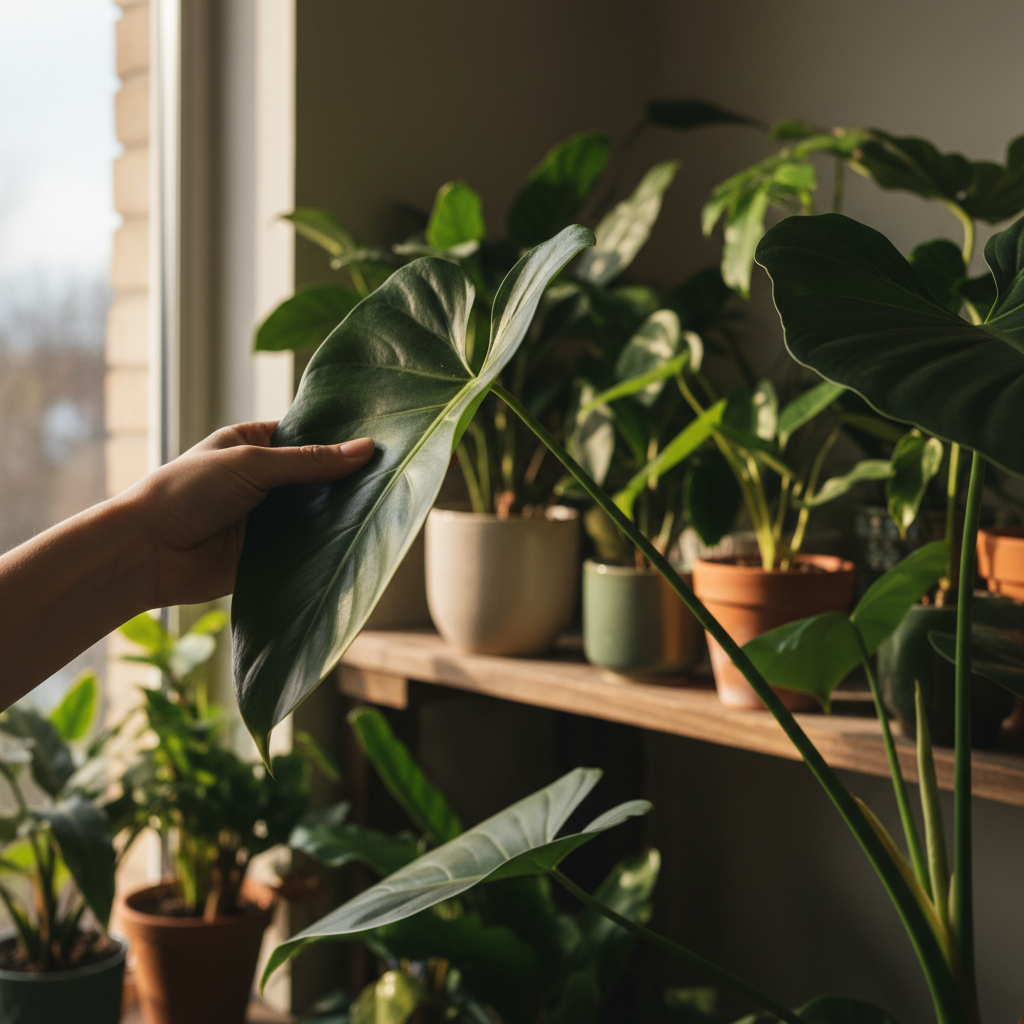
A plant shop can be beautiful and still contain pests. Before buying, check the undersides of leaves, stem joints, new growth and soil surface. Avoid plants with sticky residue, webbing, cottony masses, unexplained speckling or clouds of tiny flies.
Oregon State University Extension specifically recommends inspecting plants carefully before purchase as a prevention step.[5] This is one of the simplest pest controls available, and conveniently it costs nothing except the courage to look slightly suspicious in the plant aisle.
Pro Tip — Use Your Phone Torch: Shine light across the undersides of leaves. Webbing, stippling and tiny moving dots are much easier to see.
Quarantine New Plants
Even a clean-looking plant can carry eggs or early-stage pests. Keep new plants separate from the main collection if space allows. Two weeks is useful; four weeks is better for valuable or dense collections. During quarantine, inspect the plant every few days and avoid sharing water, tools or decorative cachepots with other plants.
Quarantine is especially important for plants bought from clearance racks, swaps, online sellers or crowded shops. A bargain plant becomes less of a bargain if it introduces mealybugs to thirty healthy plants.
Keep Plants Healthy, Not Spoiled
Pests often take advantage of stressed plants. Low light, soggy roots, drought stress, dust buildup and poor airflow all make plants less resilient. Correct care is pest prevention. That does not mean overfeeding or overwatering; it means matching the plant to the location and adjusting care as conditions change.
Clemson Cooperative Extension notes that cleaning indoor leaves improves appearance, supports healthy growth and helps control insects.[6] Clean leaves also make pest signs easier to spot. Dusty leaves can hide early trouble.
First Response: Isolate, Identify, Reduce
If you find pests, move the plant away from others. Identify the pest before treating, because fungus gnats, mites and scale do not respond to the same approach. For light infestations, prune badly affected growth, rinse foliage thoroughly and wipe pests away where possible. Oregon State University Extension recommends pruning infested stems and leaves, rinsing plants including undersides of leaves, and using horticultural oils or soaps according to label directions when needed.[5]
Avoid using harsh chemicals indoors unless you are certain they are labelled for indoor use and the pest involved. More spray is not always better. Sometimes it is just more spray.
Reduce Fungus Gnat Conditions
Fungus gnats often signal wet potting mix. Let the top layer dry appropriately between waterings for plants that tolerate it, improve drainage and avoid leaving organic debris on the soil surface. Sticky traps catch adults, but larvae live in the moist mix, so moisture management matters.
Frequently Asked Questions
| Question | Answer |
|---|---|
| Are houseplant pests a sign I did something wrong? | Not necessarily. Pests are common. The key is catching them early and reducing stress. |
| Should I throw away a pest-infested plant? | If the infestation is severe, the plant is inexpensive or pests keep returning, disposal may protect the rest of the collection. |
| Can pests spread between plants that do not touch? | Yes. Some crawl, some fly and some move on tools, hands, pets or water. |
| Do beneficial insects work indoors? | Sometimes, but they require correct pest identification and suitable conditions. For most homes, inspection and isolation are simpler. |



