
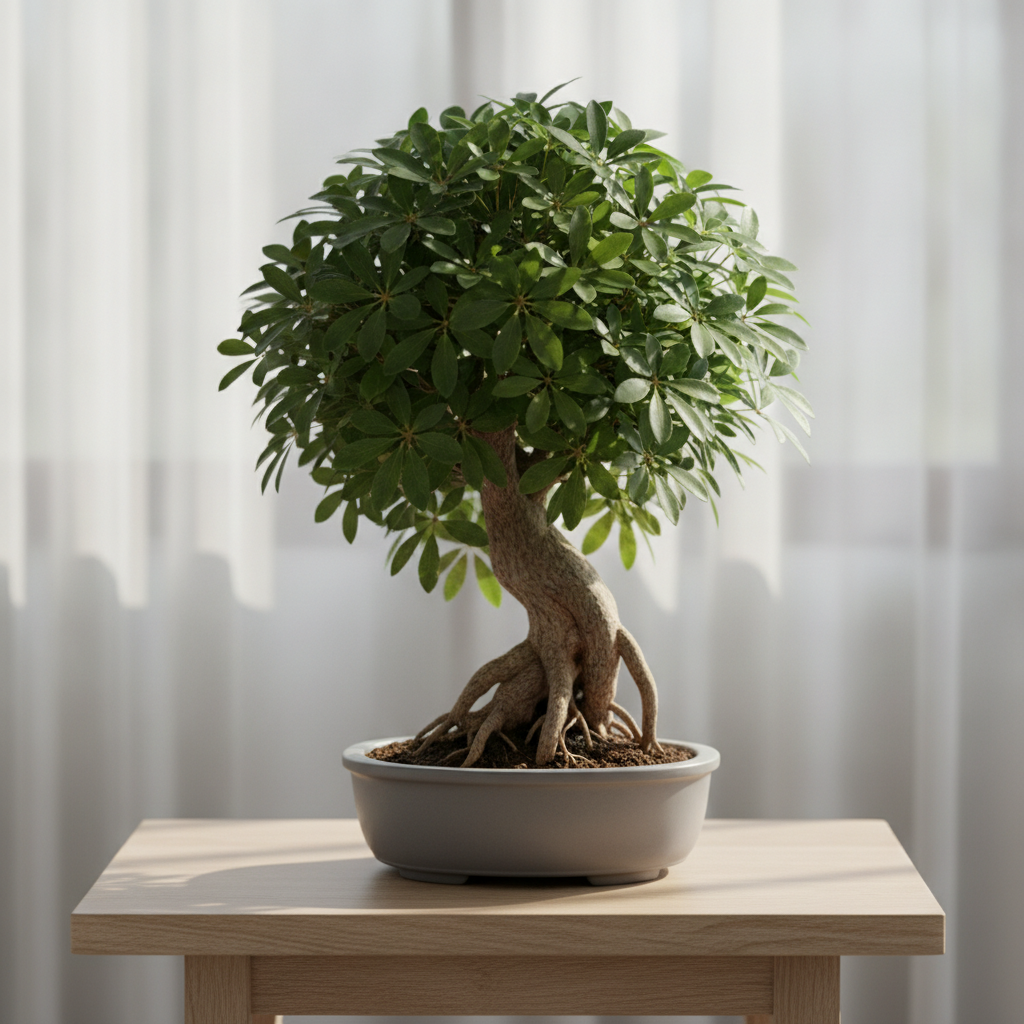
Few plants make the leap from ordinary houseplant to living sculpture as willingly as the Hawaiian umbrella bonsai. Known botanically as Schefflera arboricola, this dwarf umbrella tree carries glossy, hand-shaped whorls of leaflets on a trunk that thickens and gnarls with age, and it tolerates the warm, low-light conditions of an ordinary living room far better than the classic outdoor bonsai species ever could. For anyone who has admired a windswept juniper in a shallow tray but feared the winter care and constant vigilance those trees demand, the umbrella bonsai is the gentler, more forgiving entry into the art.
The distinction worth holding onto from the very start is the difference between keeping this plant alive and helping it truly thrive. A Hawaiian umbrella bonsai will survive a surprising amount of neglect, pushing out new leaves in a dim hallway and shrugging off the occasional missed watering. To thrive, though, to build the ramified branching, dense pads of foliage and characterful aerial roots that make a bonsai worth looking at, it needs deliberate light, disciplined watering and regular pruning. This guide walks through both, so you can decide how far along that spectrum you want to take your tree.
Quick Reference
Use the summary below as an at-a-glance reminder once you have read the detail. The figures assume an indoor bonsai grown in a shallow container, which dries out faster and demands more attention than the same plant in a deep nursery pot.
- Why it makes a good houseplant
- Light
- Watering
- Soil and repotting
- Fertilising
- Propagation
- Pests and problems
- Varieties
- Frequently asked questions
| Botanical name | Schefflera arboricola |
| Common names | Hawaiian umbrella tree, dwarf umbrella tree, dwarf schefflera, parasol plant |
| Light | Bright indirect light; some direct morning sun tolerated |
| Water | When the top 1 to 2 cm (0.5 to 0.75 in) of mix begins to dry |
| Soil | Free-draining inorganic bonsai mix or gritty potting blend |
| Temperature | 16 to 24 degrees C (61 to 75 degrees F); keep above 10 degrees C (50 degrees F) |
| Humidity | Moderate to high, 50 percent or more encourages aerial roots |
| Feeding | Balanced feed every 2 to 4 weeks in the growing season |
| Mature size | 20 to 90 cm (8 to 35 in) as bonsai, depending on style |
| Toxicity | Toxic to cats and dogs if chewed; mildly irritating to people |
Why the Hawaiian Umbrella Makes a Good Houseplant
Most bonsai sold in garden centres are temperate trees, junipers, elms, pines and maples, that resent the dry heat of a centrally heated home and need a cold winter dormancy outdoors to stay healthy. The Hawaiian umbrella is different. It is a true tropical, native to the warm forests of Taiwan and Hainan, and it is perfectly at home in the same conditions that suit a spider plant or a pothos. That single fact is why it has become the most widely recommended beginner bonsai in the world: it lets you practise the craft of shaping a miniature tree indoors, year round, without the steep learning curve of dormancy management.
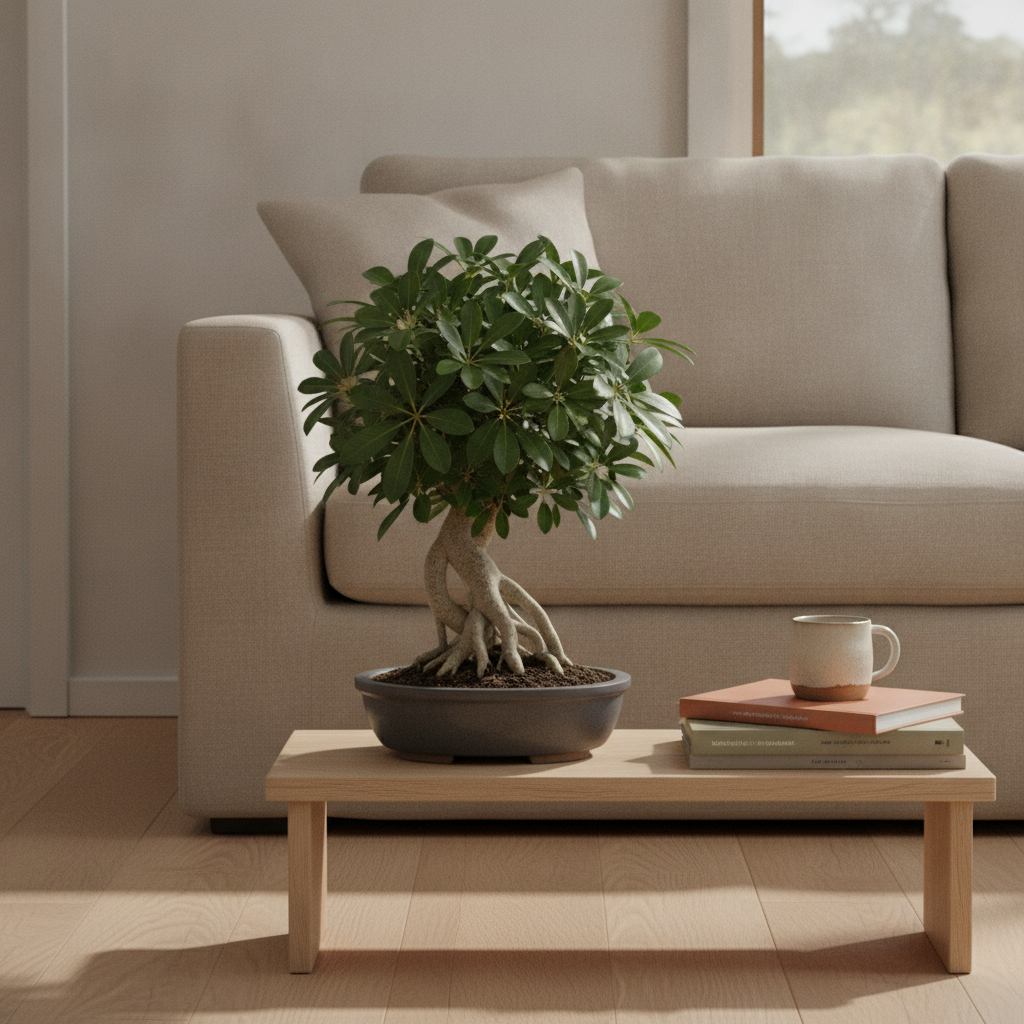
The species also happens to be extraordinarily vigorous. Cut it back hard and it responds with a flush of new shoots; damage the trunk and it heals; leave a stem in a jar of water and it roots within weeks. This forgiving energy is a gift to the beginner, because nearly every mistake is recoverable. It also readily produces aerial roots in humid conditions, which growers exploit to create the dramatic banyan style, a fat trunk supported by a cage of descending roots that mimics the strangler figs of the tropics. Few other beginner-friendly plants offer that kind of theatrical potential.
Beyond bonsai, the same plant is a handsome foliage houseplant in its own right. Left unpruned in a standard pot it grows into a bushy shrub of glossy, palmate leaves, each one a small umbrella of seven to eleven leaflets radiating from a central point. Whether you commit to the wire and the shears or simply enjoy it as greenery, it earns its place indoors by being both beautiful and almost impossible to kill.
Pro Tip — Start with a nursery plant: If you are new to bonsai, buy an inexpensive full-size Schefflera arboricola from a houseplant shop rather than a pre-trained bonsai. You can practise pruning and wiring on cheap material with nothing to lose, and the plant grows fast enough to reward experiments within a single season.
Light
Light is the single lever that most separates a merely surviving umbrella bonsai from a thriving one. In its native forest the plant grows as an understorey shrub and small tree, so it is adapted to bright, filtered conditions rather than scorching open sun. Indoors, the sweet spot is bright indirect light: a position within a metre or two of an east or west window, or a few steps back from an unobstructed south window, gives the plant the energy it needs to produce compact growth with short spaces between leaves.
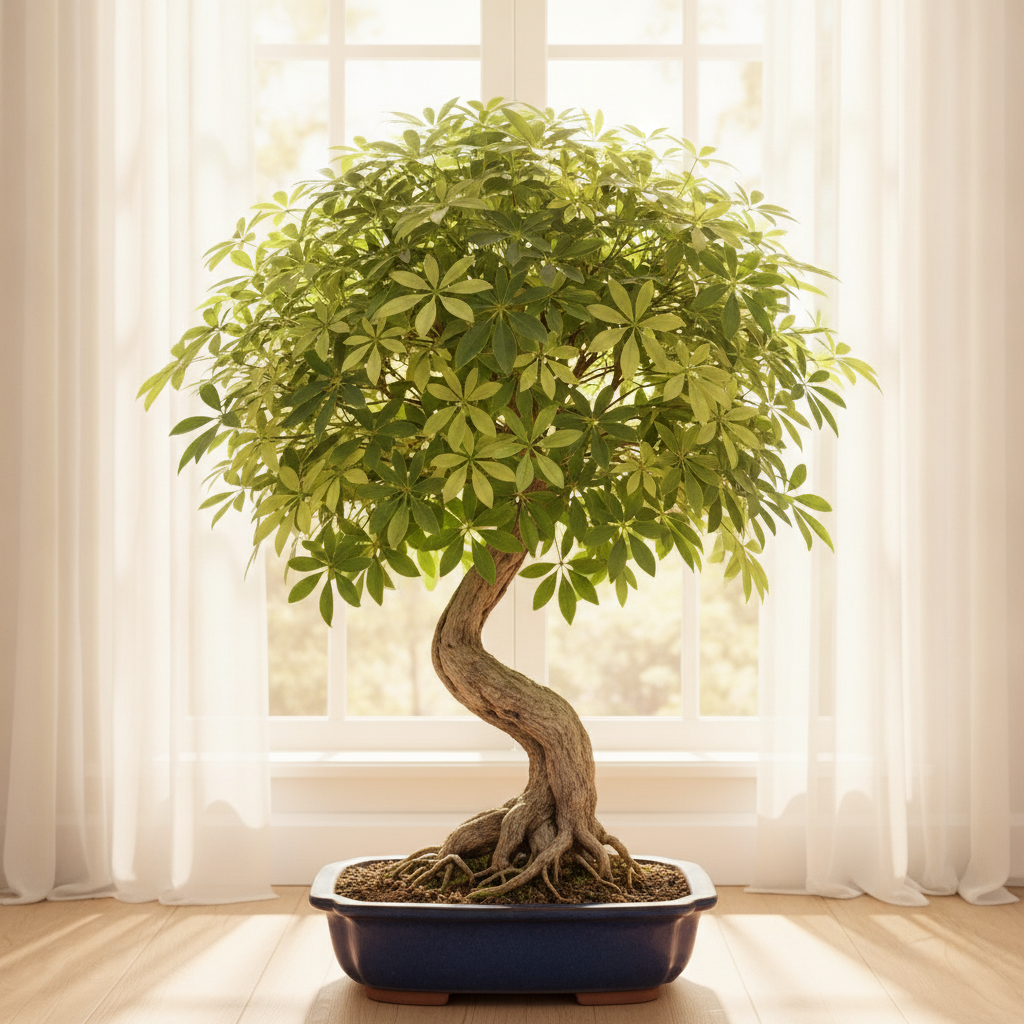
The plant will survive in lower light, and this tolerance is part of its reputation as an easy houseplant, but there is a visible cost. In a dim corner the stems stretch and reach for the window, the gaps between leaves lengthen, and the tree loses the tight, twiggy structure that makes a bonsai convincing. Leggy growth is the classic symptom of too little light, and no amount of pruning fully compensates for it. If your only available spot is dim, a full-spectrum LED grow light running ten to twelve hours a day is a genuinely effective substitute and will keep growth compact.
A little direct sun is beneficial rather than harmful, provided it is gentle. Morning sun through an east window, or an hour or two of low winter sun, deepens leaf colour and tightens growth. What to avoid is prolonged, intense midday and afternoon summer sun through glass, which can scorch the thin leaflets and bleach their colour. Variegated cultivars such as Gold Capella and Trinette are hungrier for light than the plain green form, because their pale tissue contains less chlorophyll; give them your brightest indirect spot to keep the variegation crisp and prevent them reverting to green. Rotate the pot a quarter turn each week so every side receives equal light and the canopy develops evenly rather than leaning.
Watering
Watering is where growing a bonsai differs most sharply from growing an ordinary houseplant, and it is worth understanding why. A bonsai lives in a shallow, free-draining container holding only a small volume of mix, so it dries out far faster than the same plant in a deep plastic pot. At the same time, Schefflera arboricola is prone to root rot if it sits in soggy conditions. The task, then, is to keep the root ball evenly and lightly moist while never letting it turn to a waterlogged sludge.
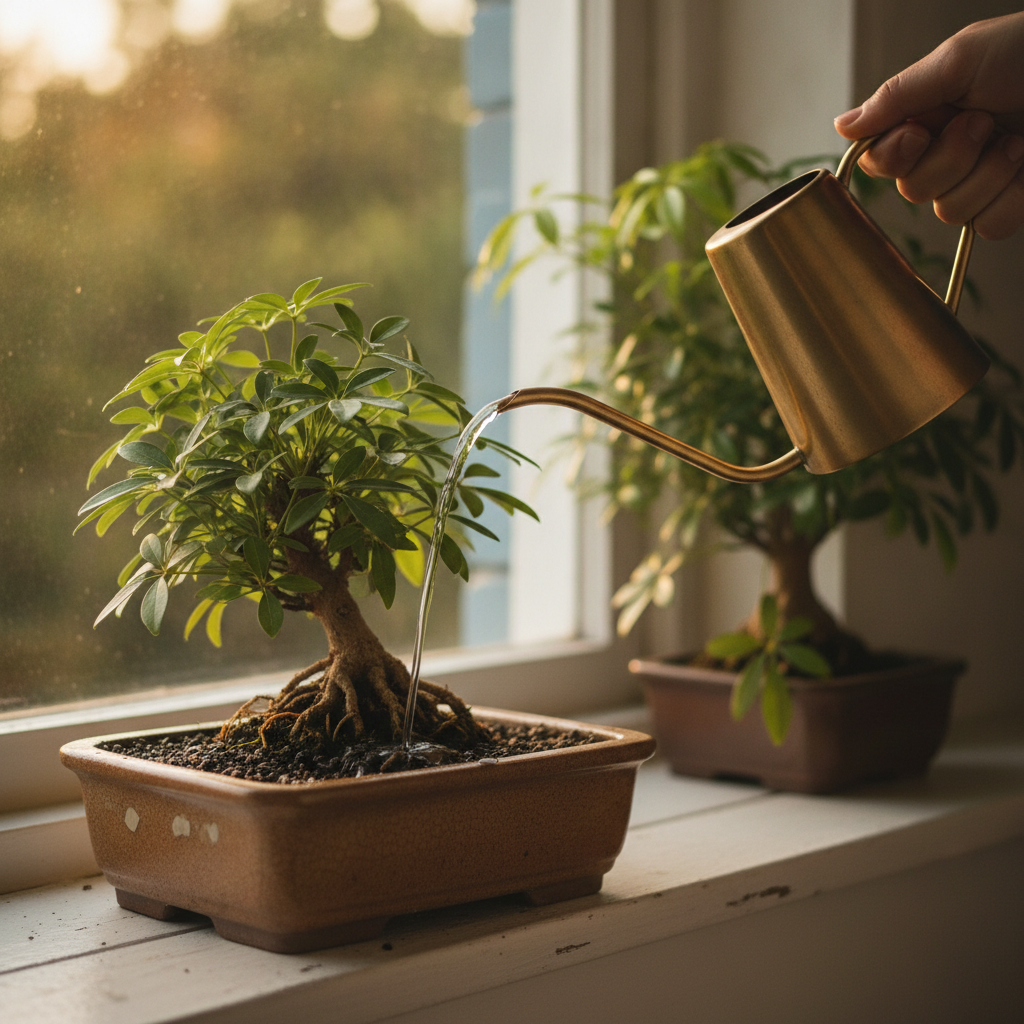
Rather than watering on a fixed schedule, check the mix with your finger. When the top one to two centimetres (roughly half an inch) has begun to dry, water thoroughly, letting water run freely from the drainage holes so the entire root ball is soaked and any built-up salts are flushed away. Then let it approach dryness again before the next watering. In a warm, bright spot during summer this might mean watering every day or two; in the shorter, cooler days of winter it could stretch to once a week. The plant tells you what it needs far more reliably than the calendar does.
The umbrella bonsai gives clear feedback when watering goes wrong. Persistent overwatering shows up as yellowing leaves that drop from the base of the plant, sometimes accompanied by black, mushy roots and a sour smell, the signature of rot. Underwatering, by contrast, causes leaflets to wilt, curl and go crisp at the tips, and in a severe drought the plant will shed leaves to conserve moisture. The good news is that a wilted but not desiccated schefflera usually recovers fully within hours of a thorough drink. Because a shallow bonsai pot is unforgiving, many growers stand the whole container in a shallow tray of water for ten minutes to let it soak from below, then allow it to drain completely, which guarantees the core of the root ball is properly rehydrated.
Warning — Aerial root loss: If you are growing aerial roots for a banyan style, letting the plant dry out too far will kill those delicate hanging roots before they thicken and reach the soil. Trees being developed this way need steadier moisture and higher humidity than a plain bonsai.
Soil and Repotting
The right soil is the quiet foundation of a healthy bonsai. Ordinary bagged potting compost holds far too much water for a shallow container and compacts into an airless mass that suffocates roots. What the umbrella bonsai wants instead is an open, free-draining medium that holds a little moisture while letting excess drain away instantly and keeping air around the roots. A classic bonsai blend of akadama, pumice and lava rock in roughly equal parts works beautifully, but a simpler and cheaper mix of a good-quality potting soil cut heavily with pumice, perlite or fine grit, so that at least half the volume is inorganic, serves the same purpose.
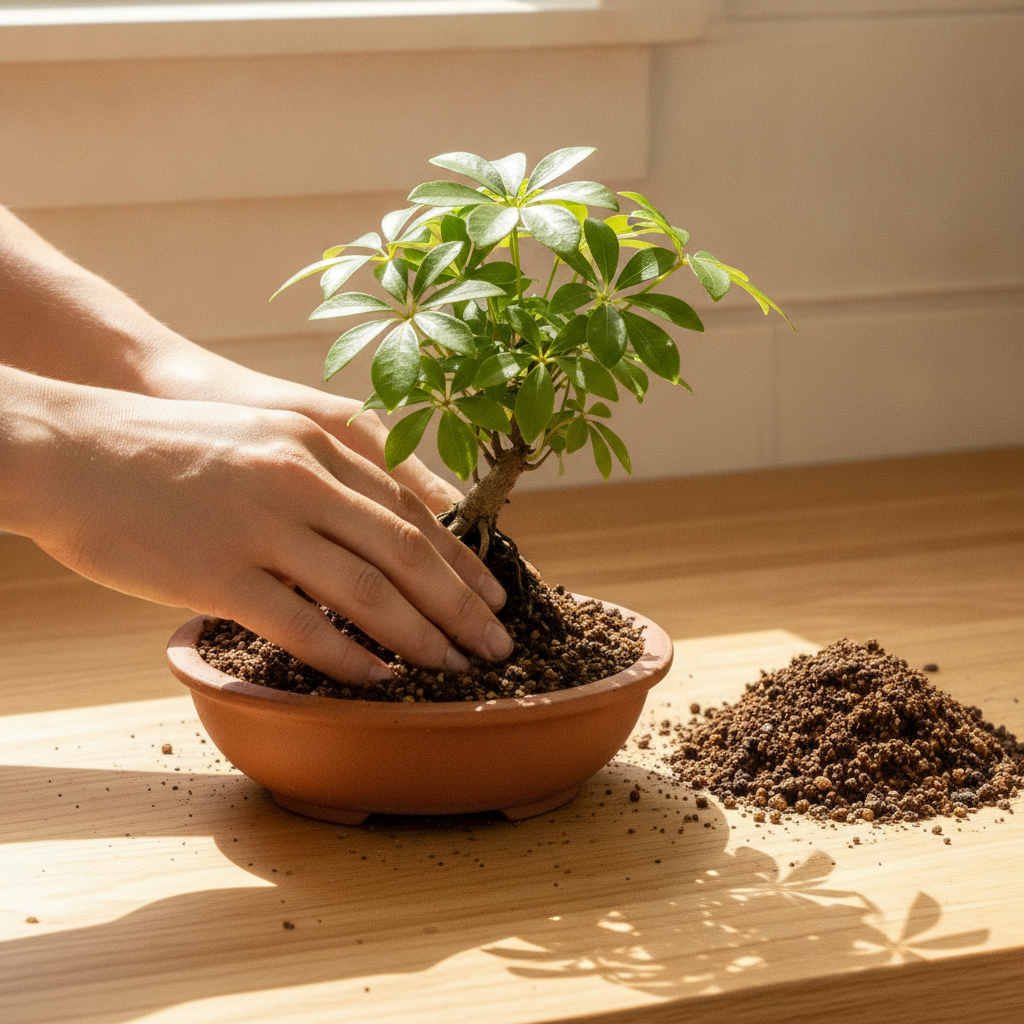
Repotting serves two purposes: it refreshes exhausted soil and it lets you prune the roots to keep the tree in balance with its shallow pot. A young, vigorous umbrella bonsai benefits from repotting every one to two years, while an older, established tree can go three years or more between repottings. Late spring and early summer, when the plant is in active growth and warm enough to recover quickly, is the ideal window. Because this is a tropical species, avoid repotting in the cold, dark depths of winter when the plant is barely growing and root wounds are slow to heal.
To repot, ease the tree from its container and gently tease away the outer layer of old soil with a chopstick or root hook, working from the edges inward. Trim back the longest and thickest roots and any that circle the pot, removing up to about a third of the root mass on a healthy tree, which encourages a finer, more compact root system. Settle the tree into fresh mix at the same depth as before, working the medium into every gap so no air pockets remain, then water thoroughly. Keep a freshly repotted tree out of direct sun and slightly on the dry side for a couple of weeks while new roots establish.
Fertilising
Because a bonsai holds so little soil, its reserves of nutrients are quickly used up, and regular feeding is what keeps the foliage lush and the growth steady. Fortunately the umbrella bonsai is not fussy about how it is fed. A balanced liquid houseplant fertiliser, diluted to half the label strength and applied every two to four weeks through the active growing season from spring into early autumn, keeps the tree well nourished without risk of burning its roots.
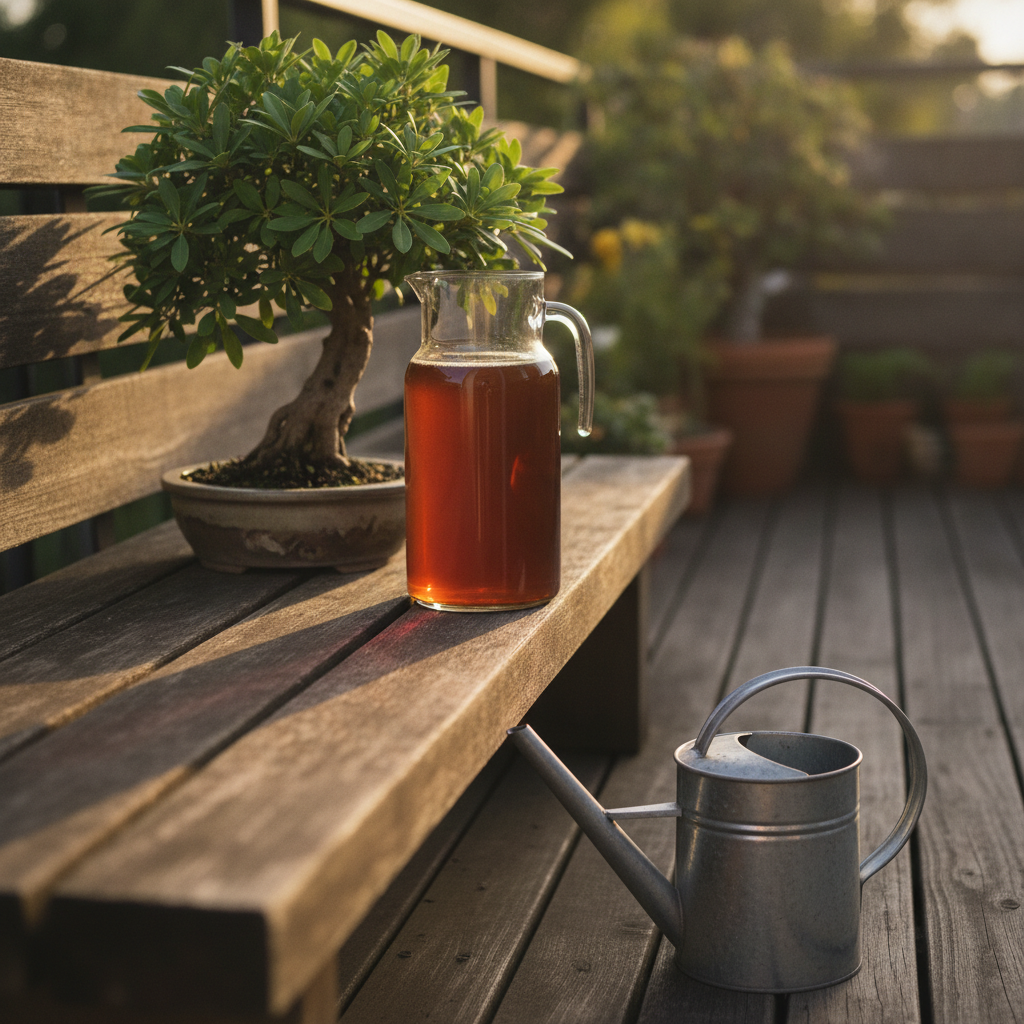
Always feed onto a root ball that is already moist rather than bone dry, because concentrated fertiliser drawn into dry roots can scorch them. If you prefer a lower-maintenance approach, slow-release fertiliser pellets scattered on the soil surface, or the traditional bonsai practice of pressing solid organic fertiliser cakes onto the mix, release nutrients gradually every time you water and suit growers who would rather not measure out liquid feed each fortnight. Organic options such as a dilute compost tea or seaweed extract also work well and are gentle on the roots.
Ease off feeding in late autumn and through winter. Although a tropical schefflera does not go fully dormant indoors, its growth slows markedly in the low light and shorter days of winter, and feeding at full strength during this quiet period simply builds up unused salts in the soil that can damage roots. A monthly feed at quarter strength is plenty over winter, or you can pause entirely until the days lengthen again. Pale, yellowing older leaves during the growing season, once you have ruled out overwatering, often signal that the tree is hungry and due a feed.
Propagation
The umbrella bonsai is one of the easiest of all bonsai subjects to propagate, which is another reason it suits beginners so well. The most reliable method is the stem cutting. Take a healthy shoot around ten to fifteen centimetres (four to six inches) long, cut just below a node, strip the lower leaves, and either stand it in a jar of water on a bright windowsill or push it into moist, free-draining mix. Roots usually appear within a few weeks, and once they are a couple of centimetres long a water-rooted cutting can be potted up. Warmth and bright indirect light speed the process considerably.
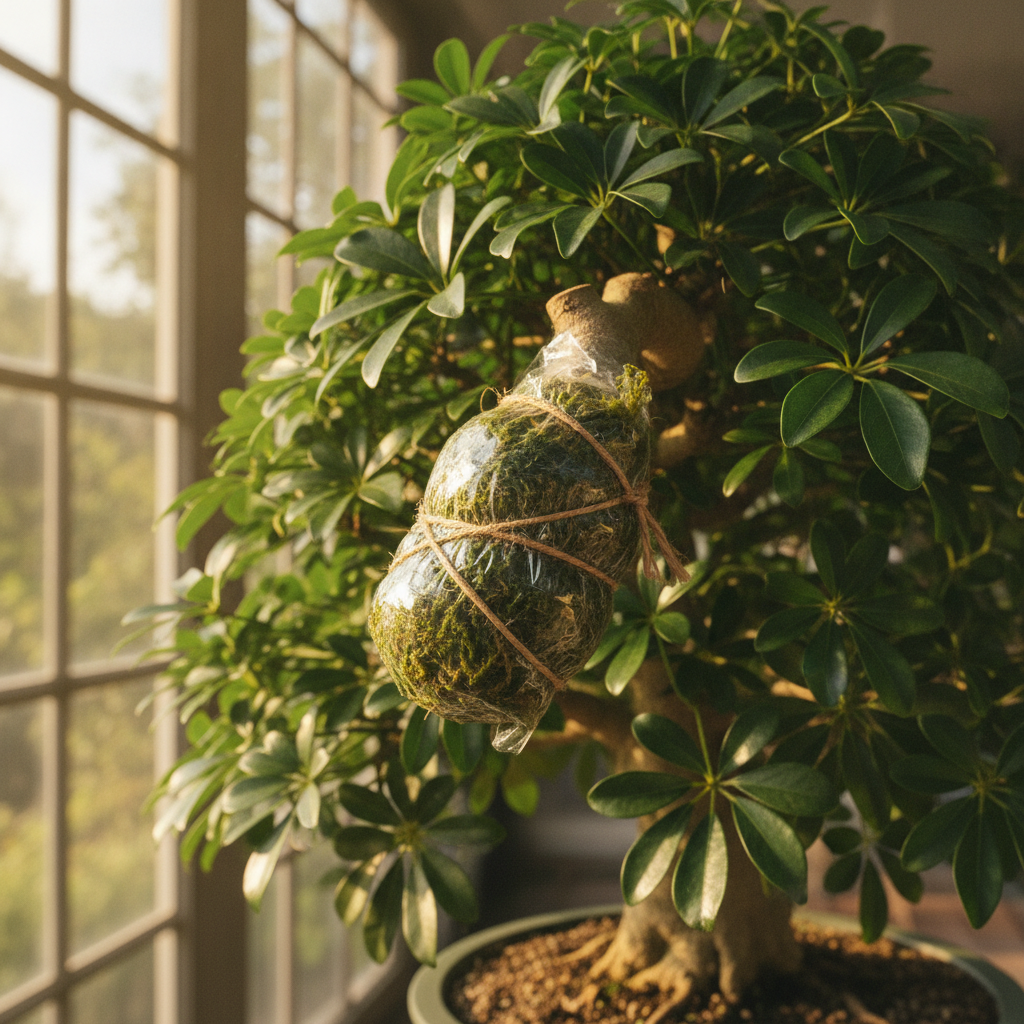
For bonsai specifically, air layering is the technique worth mastering, because it lets you create a thick, mature-looking trunk with a ready-made root system in a single season rather than waiting years. The steps are straightforward and the plant’s vigour makes success likely.
- Choose a healthy stem of the thickness you want for your future trunk and pick a point just below where you would like the new roots to form.
- Remove a ring of bark about one to two centimetres wide all the way around the stem, cutting down to the hard wood beneath, or simply make a firm upward cut and hold it open.
- Wrap the wounded area in a generous ball of damp sphagnum moss.
- Enclose the moss in clear plastic film, tying it firmly above and below so it holds moisture, and keep the moss damp.
- After several weeks to a couple of months roots will fill the moss; once they are well developed, cut the stem off below the new root ball and pot it up as an independent tree.
The umbrella bonsai also produces aerial roots freely in humid conditions, and these can be trained downward into the soil to build the banyan-style trunk buttresses the species is famous for. High humidity, steady moisture and patience are all it takes to encourage them.
Pests and Problems
A healthy, well-lit umbrella bonsai is not especially prone to pests, but the dry air of a heated home does invite a few familiar troublemakers. Spider mites are the most common, thriving in warm, dry conditions and betraying themselves with fine speckling on the leaves, a dull bronzed look and delicate webbing in the leaf axils. Scale insects appear as small brown limpet-like bumps along the stems and leaf undersides, and mealybugs as white cottony tufts tucked into crevices. All three sap the plant’s vigour if left unchecked.
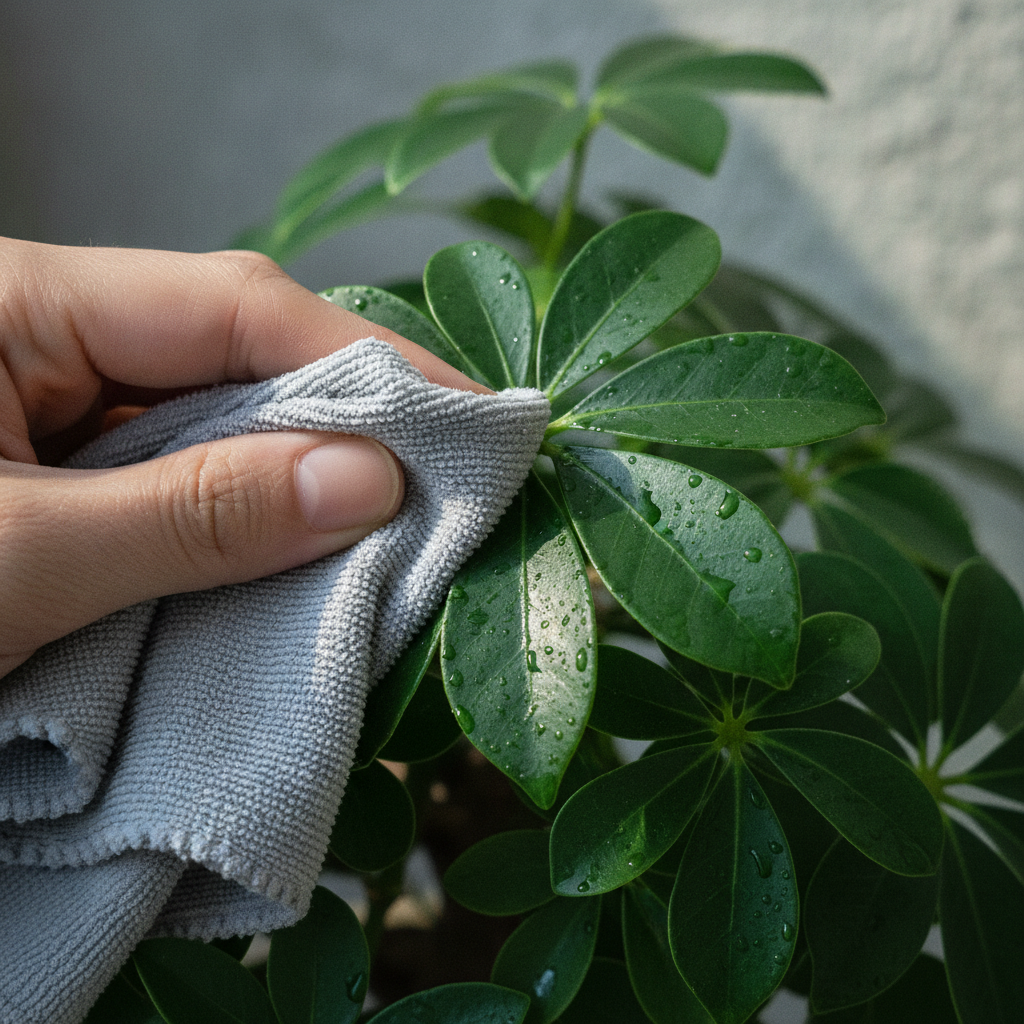
The first line of defence is simply keeping the foliage clean. Wiping the leaves every week or two with a damp cloth removes dust, disrupts spider mites and lets you spot an infestation while it is still small. Raising humidity discourages mites in particular, since they hate moist air. When you do find pests, isolate the plant, wipe or wash off what you can, and treat with insecticidal soap or a neem oil solution, repeating every week or so until the problem clears; individual scale and mealybugs can be dabbed off with a cotton bud dipped in dilute isopropyl alcohol.
Most complaints about umbrella bonsai, though, are cultural rather than pest-related. Sudden leaf drop is the plant’s stock response to stress, whether from a cold draught, a big change in light after a move, overwatering or letting it dry out too far, and it usually recovers once conditions stabilise. Yellowing lower leaves most often point to overwatering, blackened crispy tips to underwatering or low humidity, and stretched, sparse growth to insufficient light. A useful reference for spotting trouble early appears below.
| Symptom | Likely cause | Remedy |
| Yellowing lower leaves, soft stems | Overwatering or poor drainage | Let mix dry more between waterings; check roots and drainage |
| Crispy brown leaf tips, wilting | Underwatering or very dry air | Soak thoroughly; raise humidity |
| Sudden dropping of many leaves | Shock: draught, cold, or a move | Stabilise conditions and wait; new growth follows |
| Long stems, wide leaf spacing | Too little light | Move brighter or add a grow light |
| Fine webbing and speckled leaves | Spider mites | Wash foliage, raise humidity, treat with neem or soap |
| Variegation fading to green | Insufficient light on a variegated form | Give the brightest indirect light available |
Warning — Toxic to pets: All parts of Schefflera arboricola contain calcium oxalate crystals and are toxic to cats and dogs, causing mouth irritation, drooling and vomiting if chewed. The sap can also irritate sensitive skin, so keep the tree out of reach of curious pets and wash your hands after pruning.
Varieties
While the plain green Schefflera arboricola is the classic bonsai subject, prized for its rich, uniform colour and dense foliage, a couple of variegated cultivars bring extra brightness to the miniature tree. They are grown exactly like the species but need a touch more light to hold their markings. The two most widely available are shown below.
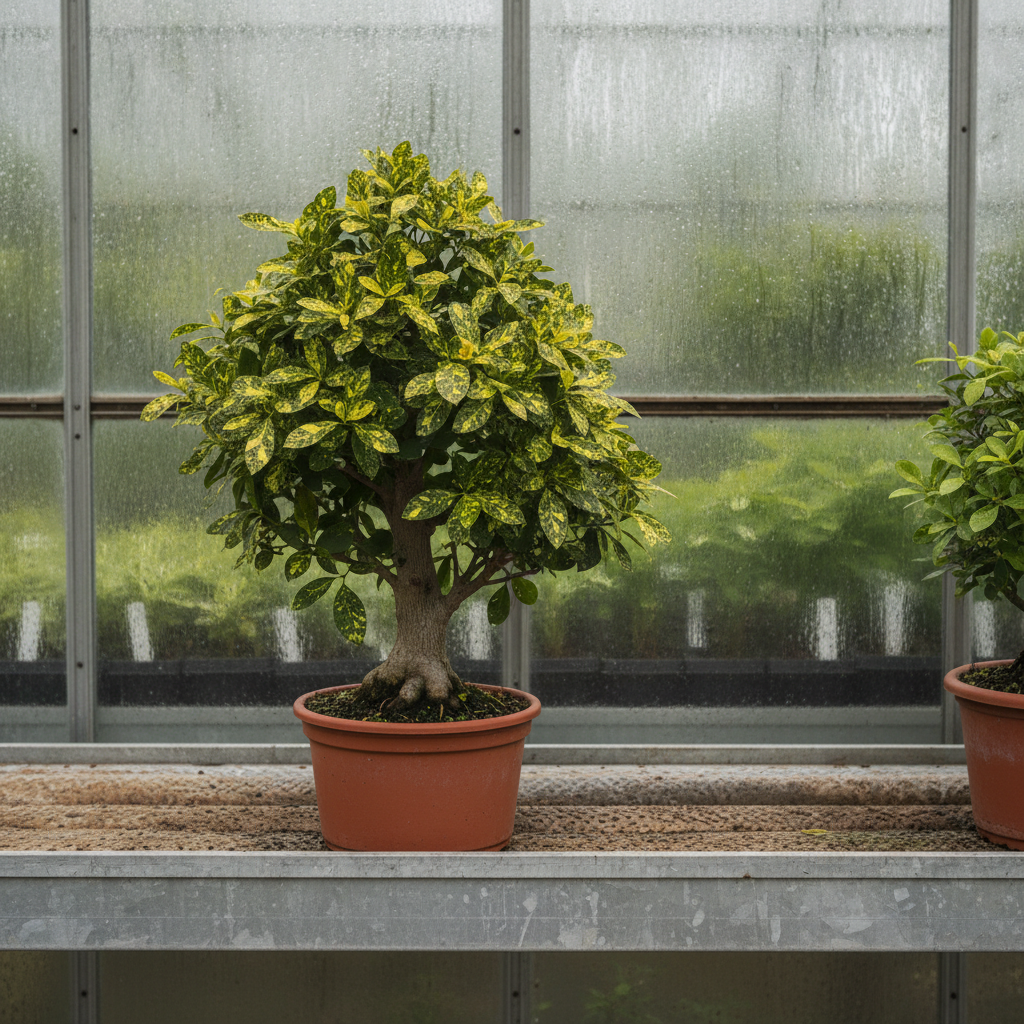
Gold Capella: The best-known variegated form, with leaflets boldly splashed and mottled in bright golden-yellow over glossy green. The colour is warmest and most vivid in strong indirect light; in shade it fades toward plain green. It makes a cheerful, luminous bonsai but reverts more readily than the species, so prune out any fully green shoots to keep the variegation coming.
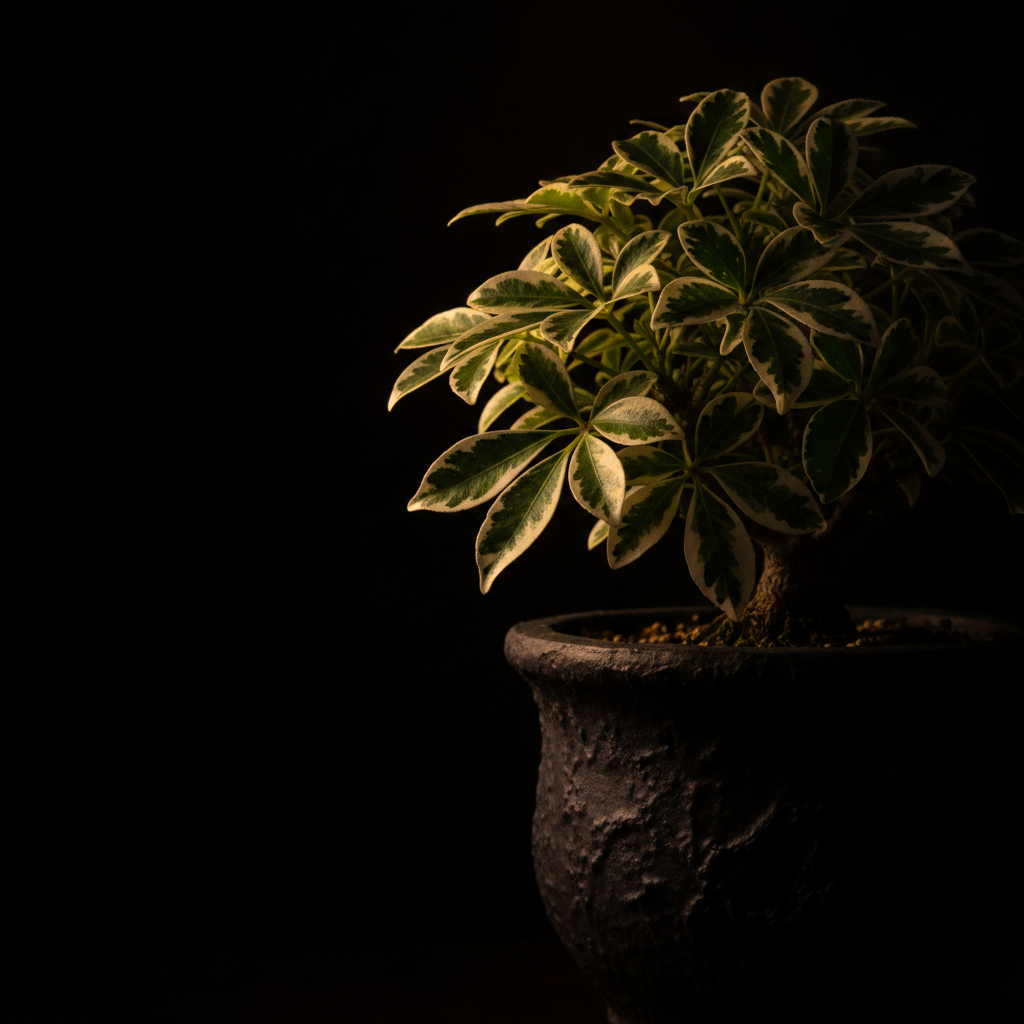
Trinette: A cooler-toned variegate whose leaflets are edged and marbled in creamy white against deep green, giving a bright, dappled effect. The paler tissue means it is a little slower growing and hungrier for light than the green form, but it holds its markings well in a bright spot and brings a fresh, airy quality to a bonsai composition.
Beyond these two you may encounter forms with curled or twisted leaflets such as Renata, and named selections chosen for extra-compact growth, but for a first tree the plain green species remains the most rewarding and forgiving choice.
Frequently Asked Questions
Is the Hawaiian umbrella bonsai a good tree for beginners?
It is widely regarded as the best indoor bonsai for beginners. Because it is a tropical plant it thrives in ordinary room conditions without the winter dormancy that temperate bonsai demand, it recovers readily from pruning mistakes, and it roots and air-layers with ease. As long as you give it decent light and water it sensibly, it is remarkably hard to kill.
How often should I water it?
There is no fixed schedule. Water when the top one to two centimetres (about half an inch) of mix begins to dry, giving it a thorough soak until water runs from the drainage holes. In a warm, bright spot this may be every day or two in summer, dropping to roughly weekly in winter. Checking the soil with your finger beats watering by the calendar every time.
Why is my umbrella bonsai dropping leaves?
Sudden leaf drop is almost always a stress response, most often to a change in environment such as a move to a new home, a cold draught, overwatering or letting the plant dry out too far. Stabilise its conditions, keep light and watering consistent, and it will usually push out fresh growth within a few weeks.
Can I grow it in low light?
It will survive in low light, which is why it is such a popular office plant, but it will not thrive there. In dim conditions the stems stretch and the foliage thins, ruining the compact structure a bonsai needs. For a good-looking tree, give it bright indirect light or supplement with a grow light.
Is Schefflera arboricola toxic to cats and dogs?
Yes. The plant contains calcium oxalate crystals that are toxic to cats and dogs, causing mouth and throat irritation, drooling and vomiting if chewed. Keep it out of reach of pets, and wash your hands after handling cut stems, as the sap can irritate sensitive skin.
How do I make the trunk thicker?
Trunks thicken through vigorous growth, so the fastest route is to let the plant grow freely in a larger pot for a season or two before restyling, since unrestricted foliage fuels trunk expansion. Air layering a already-thick stem is the shortcut to a mature-looking trunk, and encouraging aerial roots to fuse and descend adds girth and character over time.






