
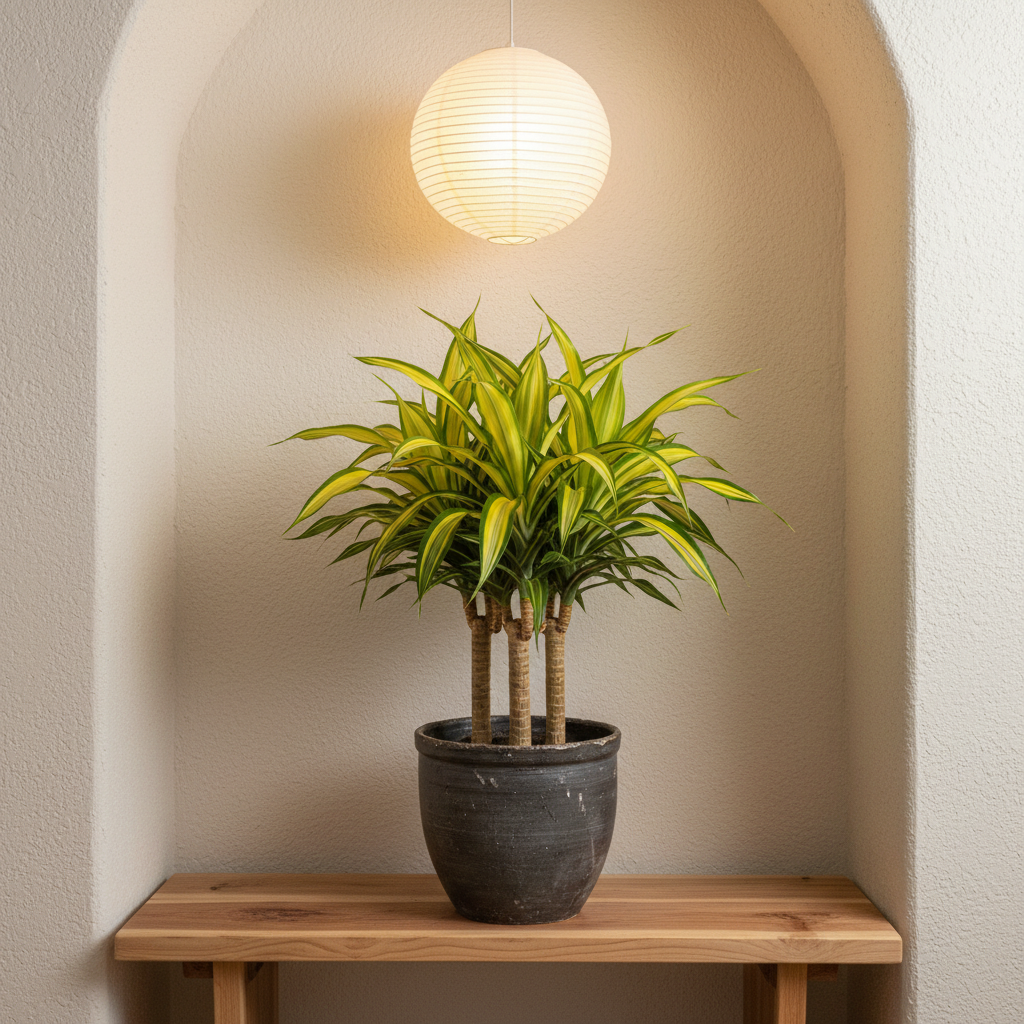
Few houseplants manage to look like a shaft of sunlight while tolerating the gloomiest corner of a room, but the Hawaiian Sunshine dracaena pulls off exactly that trick. A cultivated form of Dracaena fragrans, the species long grown as the dependable corn plant, this variety carries long, glossy, lance-shaped leaves washed in bright chartreuse-gold and edged with softer green. It grows as an upright rosette atop a thick woody cane, and over years it can slowly build into a sculptural floor specimen. The species is native to the tropical forests and highlands of central and eastern Africa, from Sudan and Ethiopia down through Mozambique, where it grows in dappled understorey shade beneath taller trees.
That woodland understorey heritage explains almost everything about how forgiving this plant is. Adapted to fluctuating light and irregular rainfall, it shrugs off the conditions that kill fussier foliage plants: dim hallways, forgotten waterings, dry winter air. The catch is that surviving and thriving are two different things. A neglected Hawaiian Sunshine will hang on for years as a thin, faded survivor, while one given the right light, clean water and a sensible feeding rhythm becomes genuinely radiant, its golden variegation holding strong and its canes thickening into a proper indoor tree. This guide covers everything needed to push your plant firmly into the second category.
Contents
- Quick Reference
- Why the Hawaiian Sunshine Dracaena Makes a Forgiving Houseplant
- Light Requirements
- Watering & Humidity
- Soil, Potting & Repotting
- Fertilising
- Propagation
- Pests & Diseases
- Popular Varieties
- Frequently Asked Questions
Quick Reference: Hawaiian Sunshine Dracaena at a Glance
| Light | Bright indirect light is ideal; tolerates medium and even low light, though golden variegation fades in deep shade. No harsh direct sun. |
| Watering | Allow the top 3 to 5 cm (1 to 2 in) of soil to dry between waterings. Roughly every 7 to 14 days in summer, less in winter. |
| Temperature | 18 to 27 degrees C (65 to 80 degrees F). Avoid anything below 12 degrees C (54 degrees F) and cold draughts. |
| Humidity | Tolerates average household humidity but prefers 40 to 60 percent. Brown leaf tips signal air that is too dry. |
| Fertiliser | Balanced liquid feed at half strength once a month during spring and summer; none in winter. |
| Toxicity | Toxic to cats and dogs if eaten, due to saponins. Keep out of reach of curious pets. |
Why the Hawaiian Sunshine Dracaena Makes a Forgiving Houseplant
The strongest argument for this plant is the gap between how good it looks and how little it demands. The bright golden foliage reads as a high-maintenance, light-hungry tropical, yet underneath that glow sits one of the most adaptable foliage species in cultivation. It copes with the low light of an office or a north-facing flat, it stores enough water in its thick cane to forgive a missed watering or two, and it grows slowly enough that it rarely outpaces its pot or its owner. For anyone who has killed a fern through neglect or a calathea through fussy water, the Hawaiian Sunshine offers a far gentler learning curve.
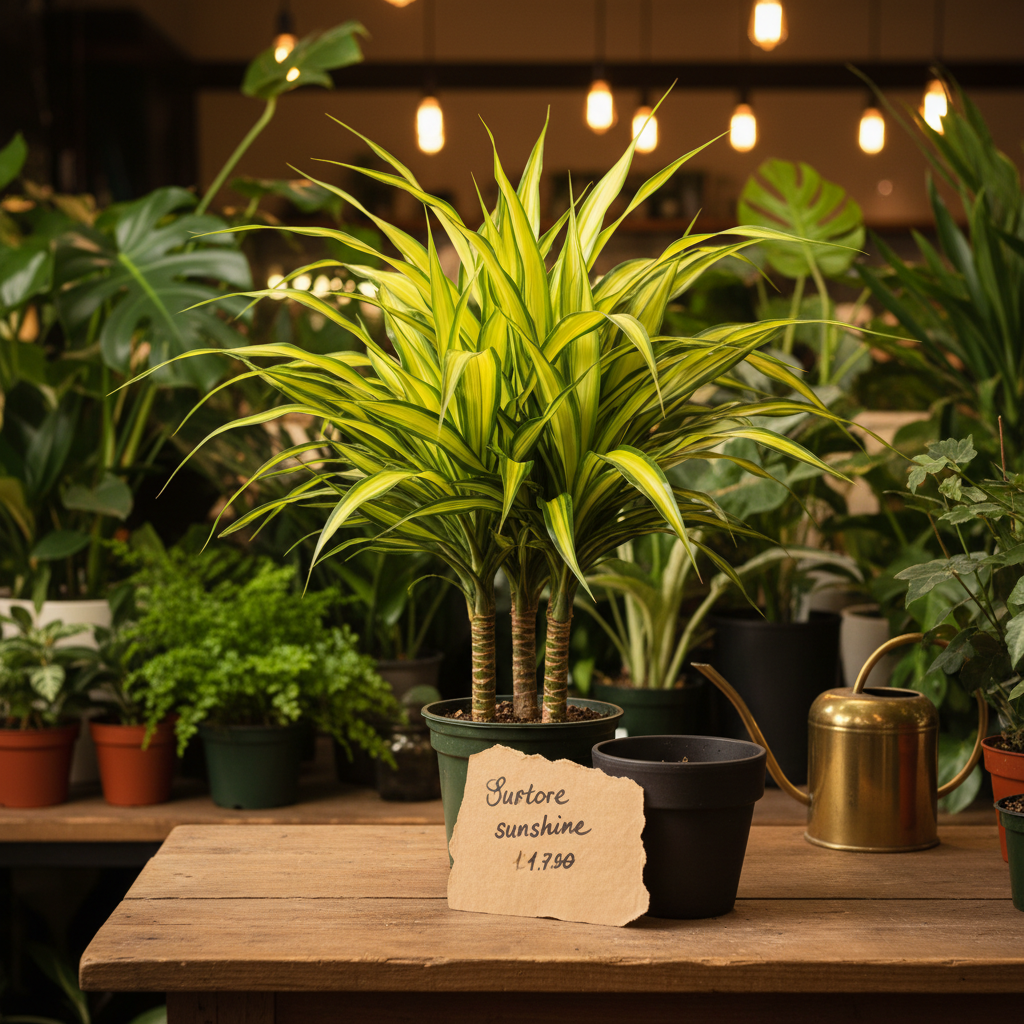
There is also a practical bonus. Like other members of its genus, Dracaena fragrans was among the species studied for its ability to filter common indoor air pollutants, and while the real-world effect in a furnished room is modest, the plant earns its keep in other ways. Its strong vertical habit makes it useful for adding height and structure to a planting scheme, it lives happily for a decade or more with minimal intervention, and a single cane can eventually be cut and rooted into several new plants. Few houseplants reward so little effort with so much presence.
Important — Toxicity: All parts of the Hawaiian Sunshine dracaena contain saponins that are toxic to cats and dogs. Ingestion can cause vomiting, drooling, loss of appetite and, in cats, dilated pupils. It is not considered seriously toxic to humans, but children should not chew the leaves. If a pet shows symptoms after eating any part of the plant, contact a veterinarian.
Light Requirements
Light is the single biggest lever you have over this plant, not because it needs a lot but because the amount it receives controls the colour that makes it worth growing. In its native understorey, Dracaena fragrans sits beneath a broken canopy that filters strong tropical sun into bright, shifting shade. Recreating that indoors means aiming for bright indirect light: a position near a window where the plant is bathed in plenty of brightness but spared the direct beam of the sun for most of the day.
In that sweet spot the gold variegation stays vivid, new leaves emerge well coloured, and the cane grows steadily without stretching. Push the plant into deeper shade and it will keep living, but the gold drifts towards a flat, tired green as the plant manufactures extra chlorophyll to compensate for the dim conditions, and the gaps between leaves lengthen as it reaches for the light. Move it into harsh midday sun and you risk the opposite problem, bleached and scorched patches that never recover.
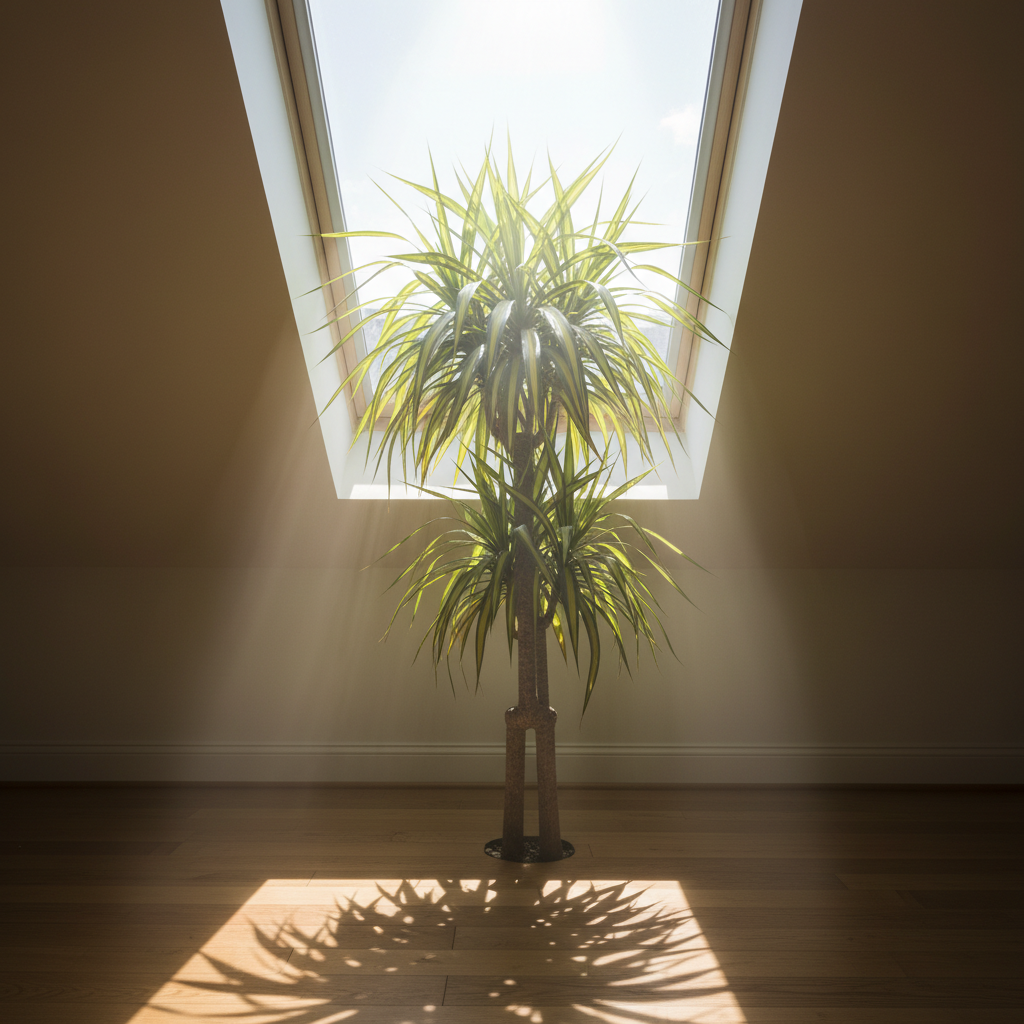
Light Levels Explained
Indoor light is notoriously hard to judge by eye, because the human eye adjusts to dimness in a way a plant cannot. The table below translates the usual descriptive categories into rough light levels and likely outcomes for this particular plant, so you can match a candidate spot to what the foliage actually needs.
| Light Category | Approx. Level | Typical Location | Outcome |
|---|---|---|---|
| Direct sun | Over 50,000 lux | On an unshaded south windowsill | Risk of leaf scorch and bleaching; avoid |
| Bright indirect | 10,000 to 25,000 lux | Near an east or filtered south window | Ideal; strong colour and steady growth |
| Medium | 5,000 to 10,000 lux | A metre or two back from a bright window | Good; slightly slower growth, colour holds |
| Low | 1,000 to 5,000 lux | A dim corner or north room | Survives; variegation fades, growth stalls |
| Very low | Under 1,000 lux | Interior hallway, no windows | Slow decline; needs a grow light |
Window Orientation and Placement
South-facing window: The brightest exposure in the northern hemisphere, and usually too intense if the plant sits directly in the glass. Set it back a metre or so, or filter the light with a sheer curtain, and a south window becomes excellent.
East-facing window: Often the best choice. Gentle morning sun followed by bright indirect light for the rest of the day suits the plant perfectly and rarely causes scorch.
West-facing window: Similar to east but with stronger, hotter afternoon light. A position just off the direct beam works well; right against the glass may need a curtain in summer.
North-facing window: The dimmest aspect, but still workable thanks to this plant’s shade tolerance. Expect slower growth and somewhat muted variegation, and place the plant as close to the window as possible.
Pro Tip — Rotate for Even Growth: Dracaenas grow towards their light source, so a plant left in one position will gradually lean. Give the pot a quarter turn every week or two to keep the rosette symmetrical and the cane growing straight.
How Light Affects Variegation
The golden colour that defines the Hawaiian Sunshine is the result of reduced chlorophyll in parts of the leaf, which lets the underlying yellow pigments show through. Because those gold zones contain less of the green pigment the plant uses to photosynthesise, they depend on the rest of the leaf and on good ambient light to pay their way. In bright indirect conditions the plant can afford to keep the variegation vivid. In low light it cannot, so it responds by producing greener, more efficient leaves, and the trademark glow drains away. If your plant is greening up, the fix is almost always more light rather than more food or water.
Warning — Direct Sunlight: Move a shade-adapted plant straight into strong sun and the pale gold tissue, which has little protective pigment, scorches within days. The damage shows as dry, bleached or brown patches that never green back. Always acclimatise a plant to brighter conditions gradually over two to three weeks.
Artificial Lighting
This is one of the easiest houseplants to keep under artificial light, which makes it a strong candidate for windowless offices and interior rooms. A standard full-spectrum LED grow light positioned 30 to 60 cm (12 to 24 in) above the plant and run for 10 to 12 hours a day will comfortably maintain colour and growth. Because the plant’s needs are modest, even an ordinary bright LED desk or shelf lamp can supplement a dim natural spot enough to keep the variegation from fading.
Seasonal Adjustments
Light levels indoors can halve between summer and midwinter, so a position that was ideal in July may be too dim by December. As the days shorten, move the plant closer to its window, clean any dust from both the glass and the leaves to maximise what light there is, and ease back on water and feed to match the slower winter growth. When spring returns and the sun climbs higher, watch for any signs of scorch in spots that were perfectly safe through winter, and shift the plant back if needed.
Watering & Humidity
If light controls how good this plant looks, water controls whether it lives or dies, and the most common cause of a failing dracaena is too much of it rather than too little. The thick cane and fleshy roots store moisture, so the plant is built to ride out dry spells but resents sitting in soggy soil. The guiding principle is simple: water thoroughly, then wait until the soil has partly dried before watering again.
When to Water
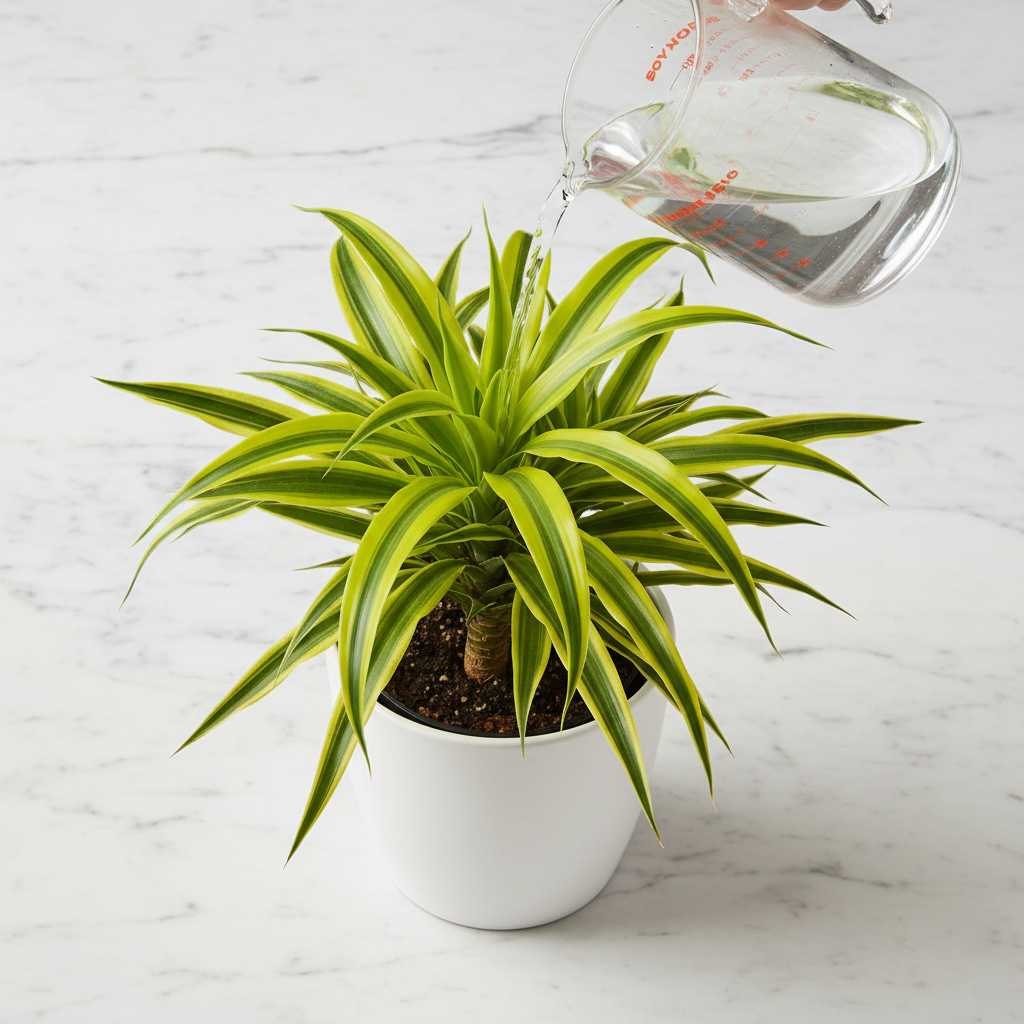
Rather than watering on a fixed calendar, check the soil. Push a finger into the top of the pot, and water only once the top 3 to 5 cm (1 to 2 in) feels dry. In a warm, bright room during the growing season that often works out to roughly once a week, while in a cool or dim spot, or through winter, the interval may stretch to two or three weeks. A cheap moisture meter or the simple weight of the pot, light when dry and heavy when freshly watered, both make reliable guides once you learn the feel of them.
When you do water, do it properly. Add water steadily until it runs freely from the drainage holes, which wets the entire root ball and flushes stale salts through. Let the pot drain completely and never leave it standing in a saucer of water, because waterlogged roots are starved of oxygen and quickly begin to rot. Underwatering, by contrast, is far easier to correct: a thirsty plant will droop and develop dry tips, but recovers within a day of a good soak.
Pro Tip — Read the Leaves: Brown, crispy leaf tips on a dracaena usually point to water quality or low humidity rather than underwatering, while soft, yellowing lower leaves almost always mean the soil has stayed too wet. Learning to tell these two apart saves a great deal of guesswork.
How to Water Correctly
- Check that the top 3 to 5 cm (1 to 2 in) of soil is dry before you begin.
- Use room-temperature water, ideally filtered, distilled or rainwater rather than fresh tap water.
- Pour slowly and evenly over the soil surface, working around the whole pot.
- Continue until water flows freely from the drainage holes at the base.
- Let the pot drain fully for several minutes, then tip away anything that collects in the saucer.
- Return the plant to its spot and wait until the soil partly dries before repeating.
Signs of Overwatering vs. Underwatering
| Symptom | Overwatering | Underwatering |
|---|---|---|
| Leaf colour | Lower leaves yellow and drop | Leaves dull, tips and edges brown |
| Leaf texture | Soft, limp, sometimes translucent | Dry, crisp, papery at the tips |
| Soil | Stays wet for many days, may smell sour | Bone dry, pulls away from the pot edge |
| Roots | Brown, mushy, foul smelling | Dry but firm and still pale |
| Stem base | Soft or spongy near the soil line | Firm, occasionally slightly wrinkled |
Warning — Root Rot: A soft, darkened, foul-smelling stem base means rot has set in, usually from chronic overwatering. Unpot the plant immediately, cut away all mushy roots and any rotten cane with sterilised tools, repot what remains into fresh dry mix, and water sparingly while it recovers. Caught early it can be saved; left alone, root rot is the most common way these plants die.
Humidity Requirements
As a tropical species the Hawaiian Sunshine appreciates moderate humidity, ideally somewhere between 40 and 60 percent, but it is far more tolerant of dry air than delicate plants such as ferns or calatheas. Ordinary household humidity is usually enough to keep it healthy, and only in very dry conditions, such as a room with strong winter heating, does the air become a problem.
The first sign of air that is too dry is browning at the very tips and edges of the leaves, often with a thin yellow halo just inside the brown. This is harmless cosmetically and can be trimmed with clean scissors, following the natural leaf shape, but it is a useful early warning. If many leaves are affected, raising the humidity a little will prevent it spreading.
Lifting humidity is straightforward. Grouping plants together raises the moisture in their shared pocket of air, a tray of pebbles topped up with water beneath the pot evaporates gently around the foliage, and in a particularly dry room a small humidifier solves the problem outright. Misting is popular but offers only a brief and minor lift, and on a dracaena it does little to prevent tip browning.
Water Quality
This is the one fussy trait of an otherwise easygoing plant. Dracaenas are unusually sensitive to fluoride, chlorine and the soluble salts found in much tap water, and these build up in the leaf tips over time, causing the persistent brown, scorched tips that frustrate so many owners. Where tap water is heavily treated, switch to filtered, distilled or collected rainwater. If that is impractical, leaving tap water to stand uncovered overnight allows some chlorine to dissipate, and flushing the pot thoroughly every few months helps wash accumulated salts out of the soil.
Soil, Potting & Repotting
Good soil for a dracaena does two jobs at once: it holds enough moisture and nutrients to keep the plant fed between waterings, and it drains freely enough that the roots are never left sitting in water. Get the balance right and most of the watering worries above largely take care of themselves, because excess moisture simply runs away before it can do harm.
Ideal Soil Composition
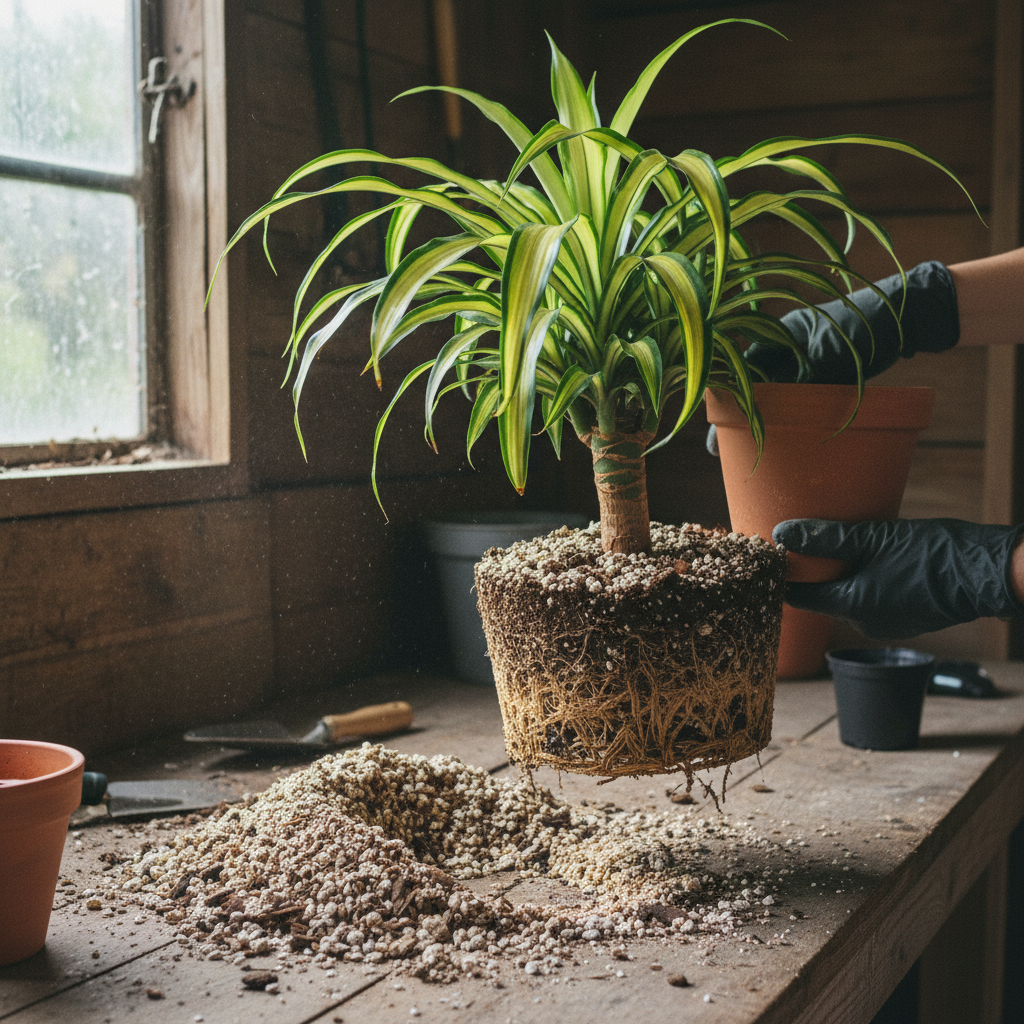
A quality peat-free houseplant compost forms a fine base, but on its own it tends to hold too much water and compact over time. Opening it up with chunky materials that create air pockets transforms it into something a dracaena will thrive in. The aim is a mix that feels moist after watering but never sodden, and that you can squeeze without water streaming out.
| Component | Proportion | Function |
|---|---|---|
| Houseplant compost | 60 percent | Holds moisture and nutrients, provides body |
| Perlite or pumice | 20 percent | Improves drainage and aeration |
| Orchid bark or coco chips | 15 percent | Creates lasting air pockets, resists compaction |
| Worm castings or compost | 5 percent | Adds slow, gentle nutrition |
The plant prefers a slightly acidic to neutral soil, somewhere around pH 6.0 to 6.5, which most standard composts already provide. There is no need to test or adjust this in ordinary cultivation, but it is worth knowing that very alkaline conditions can lock up iron and other nutrients, contributing to pale new growth.
Pro Tip — Quick Mix Recipe: For a fast, reliable blend, combine three handfuls of houseplant compost with one handful of perlite and one handful of orchid bark. It drains well, stays structured for a couple of years, and suits almost every dracaena.
Choosing the Right Pot
The pot matters more than people expect, because it governs how quickly the soil dries and how much room the roots have. A pot only slightly larger than the root ball keeps the soil from staying wet in unused corners, while a vastly oversized pot holds a reservoir of damp soil that invites rot.
Drainage holes are non-negotiable. Whatever the material or style, the pot must have holes in the base so excess water can escape. Decorative cover pots without drainage are fine as outer sleeves, but the plant itself should sit in an inner pot that drains, and that inner pot should never be left standing in collected water.
Pot material: Terracotta is porous and wicks moisture from the soil, which helps if you tend to overwater, while plastic and glazed ceramic retain moisture longer and suit drier homes or forgetful waterers. A tall, heavy pot also adds welcome stability once the plant grows top-heavy on its cane.
Pot size: When potting up, choose a container just 2 to 5 cm (1 to 2 in) wider in diameter than the current one. This plant is slow growing and happy to be a little snug, so resist the urge to give it a dramatic upgrade.
When to Repot
Because it grows slowly, the Hawaiian Sunshine needs repotting only every two to three years, and often less. The signs that it is time include roots circling the base or pushing out of the drainage holes, water that runs straight through without wetting the soil, soil that dries out unusually fast, or growth that has visibly stalled despite good care. Spring, at the start of the active growing season, is the best time to repot, giving the plant maximum time to settle and root into its new home.
How to Repot: Step-by-Step
- Water the plant a day beforehand so the root ball holds together and slides out cleanly.
- Ease the plant from its pot by tipping it and supporting the base of the cane, rather than pulling on the foliage.
- Gently tease apart any tightly circling roots and brush off some of the old, spent soil.
- Add a layer of fresh mix to the new pot, then position the plant at the same depth it grew before.
- Fill around the root ball with fresh mix, firming lightly to remove large air gaps.
- Water thoroughly to settle the soil, top up any that sinks, and return the plant to indirect light.
- Hold off on feeding for four to six weeks while new roots establish.
Warning — Transplant Shock: Some drooping or a dropped leaf or two in the days after repotting is normal as the roots recover. Resist the temptation to compensate by overwatering or feeding, which only stresses the plant further. Keep it in stable, bright indirect light, water normally, and it will settle within a couple of weeks.
Fertilising
Dracaenas are light feeders, and far more are harmed by overfeeding than by hunger. In the wild they grow in lean forest soils and have evolved to make the most of modest nutrition, so a little feed delivered at the right time goes a long way. The goal of fertilising indoors is simply to replace the nutrients that watering gradually washes out of the pot, not to force fast growth.
Timing matters as much as quantity. Feed only during the active growing season of spring and summer, when the plant can actually use the nutrients, and stop entirely in autumn and winter when growth naturally slows. Feeding a dormant plant simply leaves unused salts to accumulate in the soil, where they do real harm.
Understanding Plant Nutrients
Most houseplant fertilisers list three numbers, the ratio of nitrogen, phosphorus and potassium, usually written as N-P-K. A balanced foliage feed, where these three are roughly equal, suits the Hawaiian Sunshine well, since it is grown for its leaves rather than flowers. Beyond these three, plants also need smaller amounts of secondary nutrients and trace elements, and a deficiency in any of them shows up in the foliage in characteristic ways.
| Nutrient | Symbol | Primary Function | Deficiency Symptoms |
|---|---|---|---|
| Nitrogen | N | Leaf and stem growth, green colour | Pale, yellowing older leaves; weak growth |
| Phosphorus | P | Root development and energy transfer | Stunted growth, dull or darkened leaves |
| Potassium | K | Overall vigour and water regulation | Yellow or browning leaf margins |
| Calcium | Ca | Cell wall structure | Distorted, weak new growth |
| Magnesium | Mg | Core of the chlorophyll molecule | Yellowing between the veins of older leaves |
| Iron | Fe | Chlorophyll production | Yellowing between veins of new leaves |
Types of Fertiliser
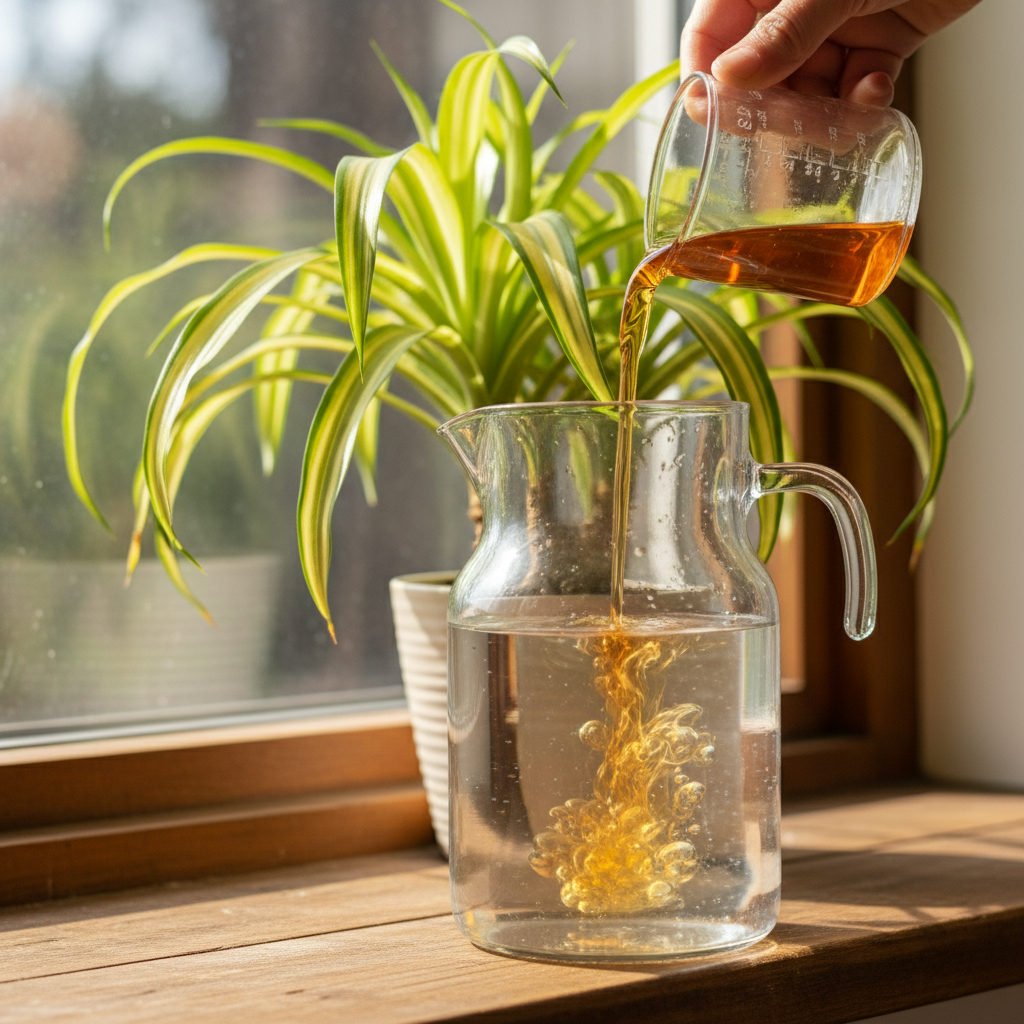
Liquid fertilisers: The easiest option for this plant. Diluted into the watering can, they deliver nutrients evenly and let you control the dose precisely, which matters for a light feeder. Always mix them weaker than the label suggests.
Slow-release granular: Pellets mixed into the soil or scattered on the surface release nutrients gradually over months. Convenient, but harder to control and easy to overdose in a small pot, so use them at the low end of any recommended rate.
Organic fertilisers: Worm castings, diluted seaweed and similar gentle options feed slowly and improve the soil itself, with very little risk of burning the roots. They are an excellent match for a plant that dislikes strong feeding.
Feeding Schedule
A simple, reliable routine is a balanced liquid feed at half the recommended strength once a month from spring through to the end of summer, and nothing at all through autumn and winter. A plant in lower light, growing more slowly, needs even less, so feed every six weeks or skip a month if growth is minimal. When in doubt, underfeed; a slightly hungry dracaena is far healthier than an overfed one.
Pro Tip — Half Strength Always: The single most useful feeding habit for dracaenas is to dilute liquid feed to half the label rate. It gives the plant everything it needs while dramatically reducing the salt accumulation that causes brown tips, the very problem most owners are trying to avoid.
How to Fertilise
- Water the plant first if the soil is dry, as feeding into dry soil can burn the roots.
- Dilute a balanced liquid fertiliser to half the recommended strength in your watering can.
- Apply the solution evenly over the soil until it just begins to drain from the base.
- Avoid splashing the diluted feed onto the foliage, and wipe off any that lands on the leaves.
- Every few months, water with plain water alone to flush accumulated salts from the pot.
Warning — Salt Build-Up: A white crust on the soil surface or around the pot rim, combined with worsening brown leaf tips, signals a build-up of fertiliser salts. Flush the pot by running plenty of clean water through it several times, let it drain fully, and ease back on feeding until the plant recovers.
Propagation
Propagating a Hawaiian Sunshine is satisfyingly simple and is also the standard way to rejuvenate a plant that has grown leggy or lost its lower leaves. Unlike many houseplants it is not grown from a single leaf; instead it is propagated from sections of stem, because the cane carries dormant growth points that will sprout new shoots and roots when encouraged.
The best time to take cuttings is late spring or early summer, when the plant is growing actively and will root fastest. A bonus of cane propagation is that it works in two directions at once: the top section regrows roots while the bare stump left behind sprouts fresh shoots, so a single leggy plant can become two or more bushier ones.
Understanding Nodes and Canes
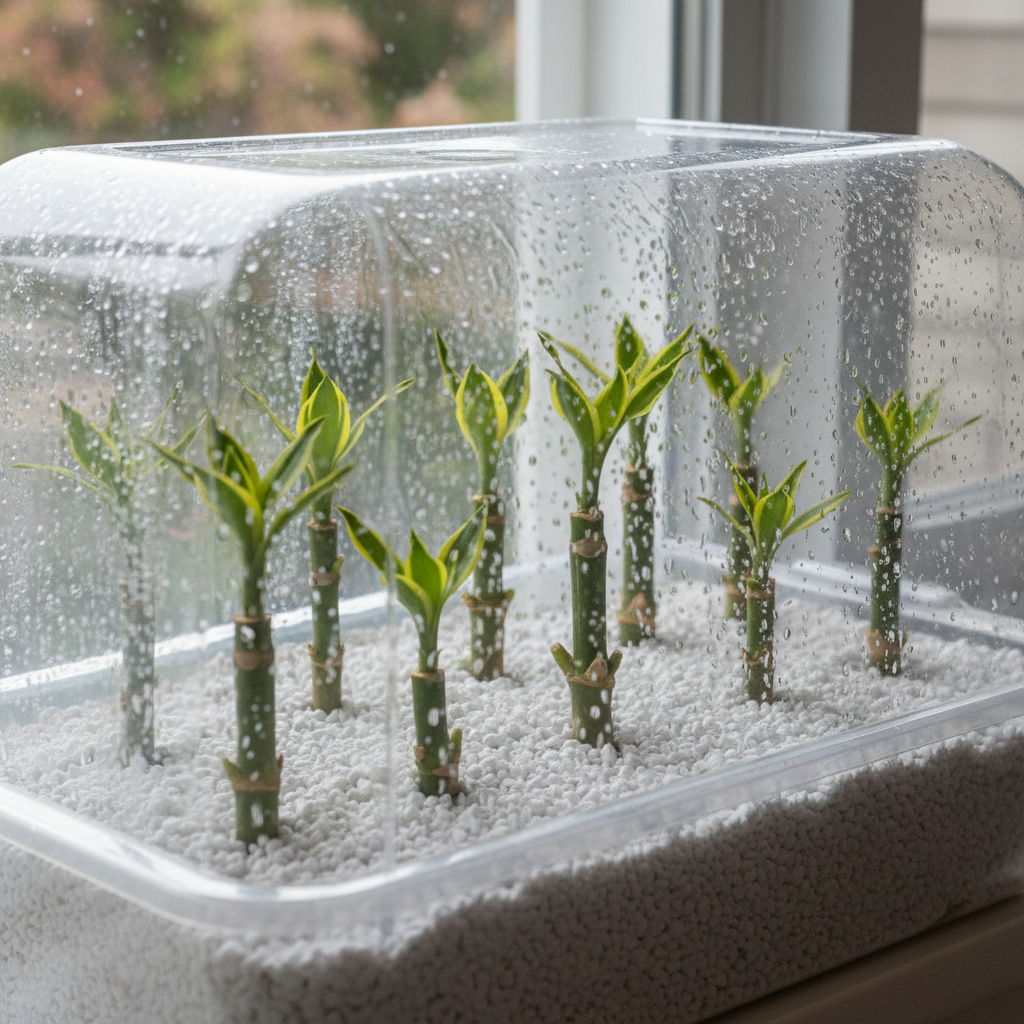
The key to success is the node, the faint ringed scar left on the cane where a leaf once grew. Each node hides dormant tissue capable of producing both new shoots and new roots, which is why a seemingly bare length of stem can spring back to life. When taking cuttings, make sure each piece contains at least one or two nodes, and keep track of which end was the top, since a cane section will only sprout correctly if planted the right way up.
Top Cuttings: Step-by-Step
The simplest method takes the leafy crown of the plant and roots it as a new specimen, instantly producing an attractive plant while triggering the old stump to branch.
- Using a clean, sharp knife, cut the leafy top of the plant, including roughly 10 to 15 cm (4 to 6 in) of cane below the lowest leaves.
- Remove any leaves from the bottom few centimetres so the lower nodes are bare.
- Let the cut surface dry and callus for a few hours to reduce the risk of rot.
- Insert the bare cane into damp, free-draining mix or a jar of clean water, keeping at least one node below the surface.
- Place it in warm, bright indirect light and keep the medium lightly moist.
- Roots usually appear within three to six weeks; once they are several centimetres long, pot a water-rooted cutting into soil.
Pro Tip — Warmth Speeds Rooting: Dracaena cuttings root noticeably faster with gentle bottom heat. Standing the pot on a warm windowsill or a seedling heat mat at around 22 to 25 degrees C (72 to 77 degrees F) can halve the time to roots.
Cane Cuttings: Step-by-Step
A longer length of bare cane can be divided into several sections, each capable of producing a whole new plant, which is how nurseries multiply these plants in quantity.
- Cut a healthy section of cane into pieces 8 to 15 cm (3 to 6 in) long, each with at least two nodes.
- Mark or remember the top of each piece, as cane sections must be planted the same way up they grew.
- Allow the cut ends to callus for several hours to a day.
- Lay sections horizontally half-buried in damp mix, or stand them upright with the lower node buried.
- Cover loosely with a clear humidity dome or bag to hold moisture, and keep warm and brightly lit.
- Watch for shoots from the upper nodes and roots from the lower ones over the following one to two months.
Troubleshooting Propagation
| Problem | Likely Cause | Solution |
|---|---|---|
| Cutting rots at the base | Medium too wet, or cut not callused | Use fresh airy mix, let cuts dry first, water less |
| No roots after many weeks | Too cold, too dim, or no node submerged | Add warmth and brighter light, check node placement |
| Cutting shrivels and dries | Too dry or low humidity | Keep medium lightly moist and cover to raise humidity |
| Shoots but no roots | Energy spent on top growth first | Be patient and keep conditions stable; roots follow |
Pests & Diseases
A healthy Hawaiian Sunshine is rarely troubled by pests, and most problems that do arise are linked to stressed plants or imported infestations rather than the plant being especially vulnerable. Good airflow, sensible watering and the occasional close inspection prevent the great majority of issues before they take hold.
The most important habit is regular inspection. Check the undersides of the leaves and the crevices where leaves meet the cane every couple of weeks, since this is where pests gather first and where an early infestation is easiest to wipe out. Catching a problem at a handful of insects is the difference between a quick wipe-down and a drawn-out battle.
Common Pests
Spider Mites (Tetranychus urticae)
These tiny arachnids thrive in warm, dry air and are the most common dracaena pest. They cause fine pale speckling on the leaves and spin delicate webbing between the foliage, and a heavy infestation gives the plant a dusty, dulled look.
Treatment: Rinse the plant thoroughly, then treat all surfaces with insecticidal soap or neem oil, repeating every five to seven days for several cycles. Raising humidity makes the environment far less hospitable to them.
Mealybugs (Pseudococcus species)
Mealybugs appear as small white, cottony tufts tucked into leaf axils and along the cane. They feed on sap, weakening the plant and excreting sticky honeydew that can lead to sooty mould.
Treatment: Dab each insect directly with a cotton bud soaked in isopropyl alcohol, then follow up with neem oil or insecticidal soap. Isolate the plant until no new bugs appear for a fortnight.
Scale (Coccidae family)
Scale insects look like small brown, waxy bumps clinging to stems and the undersides of leaves. They are easy to overlook because they barely move, but they sap the plant’s strength and produce honeydew like mealybugs.
Treatment: Scrape or wipe them off with an alcohol-dampened cloth, then treat with neem oil or horticultural oil to smother any survivors and the next generation of crawlers.
Fungus Gnats (Sciaridae family)
Small black flies hovering around the pot are fungus gnats, whose larvae live in persistently damp soil and feed on organic matter and fine roots. They are more a nuisance than a serious threat, but signal that the soil is staying too wet.
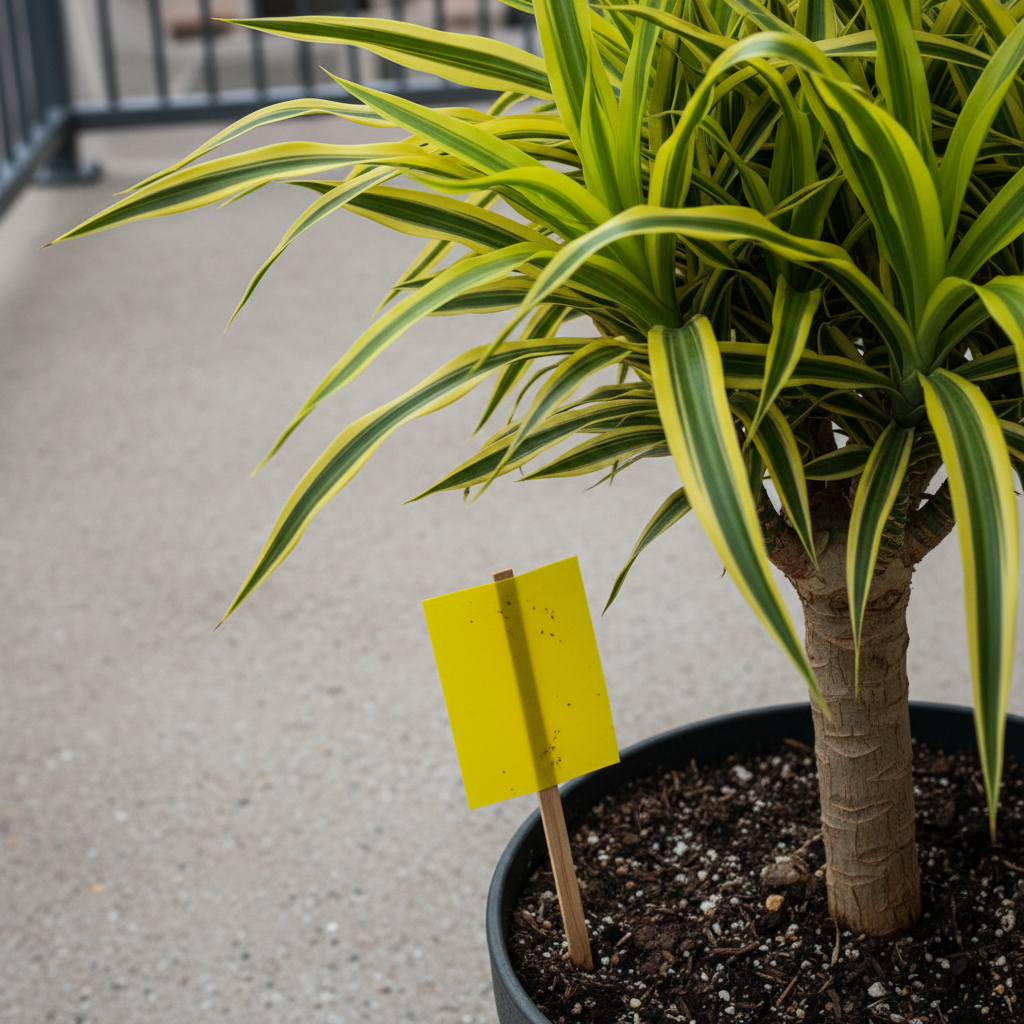
Treatment: Let the top of the soil dry out more thoroughly between waterings, set yellow sticky traps to catch the adults, and treat the soil with a beneficial bacterial drench if they persist.
Common Diseases
Root Rot (Pythium and Fusarium species)
By far the most serious disease of this plant, root rot is caused by fungi and water moulds that flourish in waterlogged soil. It shows as yellowing, wilting foliage, a soft stem base and dark, mushy roots with an unpleasant smell.
Treatment: Unpot the plant, cut away all affected roots and rotten cane with sterilised tools, and repot into fresh dry mix. Prevent recurrence by watering only when the soil has partly dried and ensuring the pot drains freely.
Leaf Spot (Fusarium and bacterial pathogens)
Leaf spot appears as brown or tan lesions, sometimes ringed with yellow, usually where water has sat on the foliage in poorly ventilated conditions. It spreads through splashing water and contact.
Treatment: Remove affected leaves, avoid wetting the foliage, improve airflow around the plant, and treat persistent cases with a suitable fungicide if necessary.
Pest and Disease Summary
| Pest / Disease | Identification | Treatment |
|---|---|---|
| Spider mites | Fine speckling and webbing | Rinse, insecticidal soap or neem, raise humidity |
| Mealybugs | White cottony tufts in axils | Alcohol swab, then neem or soap |
| Scale | Brown waxy bumps on stems | Scrape off, treat with horticultural oil |
| Fungus gnats | Small flies around the soil | Dry out soil, sticky traps, bacterial drench |
| Root rot | Yellowing, soft base, mushy roots | Cut away rot, repot dry, water less |
| Leaf spot | Brown lesions on leaves | Remove leaves, improve airflow, keep foliage dry |
Prevention Strategies
Prevention costs far less effort than cure. Inspect new plants carefully before bringing them home and quarantine them away from your collection for a couple of weeks, since most infestations arrive on newcomers. Keep the foliage clean by wiping it occasionally, which both removes dust that blocks light and exposes any early pests.
Beyond hygiene, the best defence is a plant grown in the right conditions. Correct watering prevents root rot and fungus gnats, good airflow discourages leaf spot and spider mites, and sensible feeding keeps the plant vigorous enough to shrug off minor attacks. A stressed plant is a magnet for problems; a healthy one rarely suffers them.
Pro Tip — Neem as Routine: A light monthly spray of diluted neem oil over the foliage, including the undersides, acts as a gentle preventative that deters most sap-sucking pests before they establish. Apply it out of direct sun to avoid leaf marking.
Popular Varieties
The Hawaiian Sunshine belongs to a large and varied family of Dracaena fragrans cultivars, all sharing the same easy temperament but differing strikingly in leaf colour, stripe pattern and size. Knowing the relatives is useful, both for telling apart the plants on a nursery bench and for choosing companions that share its care while adding variety to a collection.
What unites them all is the broad, arching corn-plant leaf and the upright caned habit, while the differences lie almost entirely in variegation. Some carry a single bold central stripe, others are edged in colour, and a few, like the Hawaiian Sunshine, flood much of the leaf with gold. The table and profiles below cover the most widely grown forms.
| Variety | Leaf Appearance | Light Needs | Growth Rate | Availability |
|---|---|---|---|---|
| Hawaiian Sunshine | Broad chartreuse-gold leaves edged in green | Bright indirect | Slow | Uncommon |
| Massangeana | Deep green with a wide gold central stripe | Medium to bright | Slow | Very common |
| Victoria | Bold yellow margins around a green centre | Bright indirect | Slow | Rare |
| Lemon Lime | Bright chartreuse and grey-green stripes | Bright indirect | Moderate | Common |
| Warneckii | Grey-green with white-edged stripes | Medium to bright | Slow | Common |
| Limelight | Solid bright lime-yellow leaves | Bright indirect | Moderate | Uncommon |
Featured Varieties
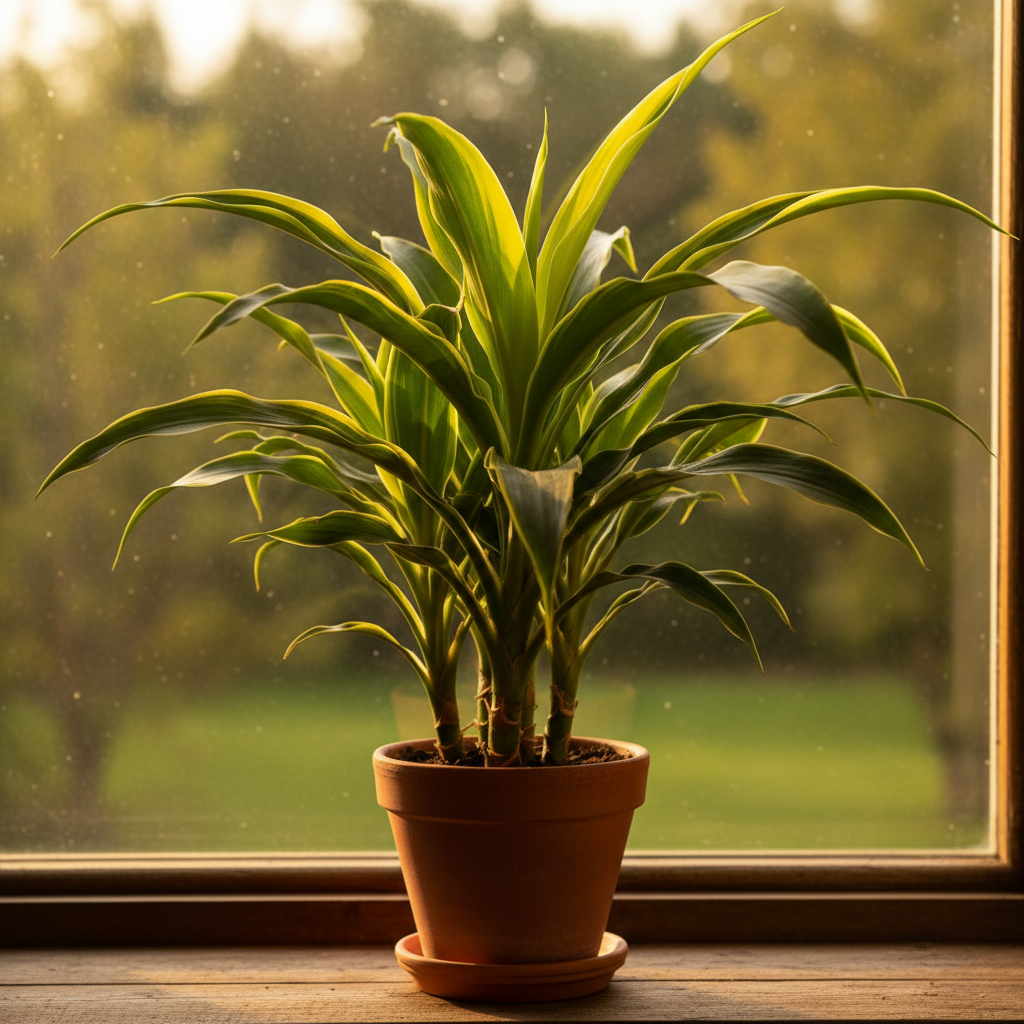
Massangeana
The classic corn plant and the most widely sold dracaena of all. Its broad, deep green leaves each carry a wide golden-yellow central stripe, and on a thick cane it makes an undemanding, long-lived floor plant.
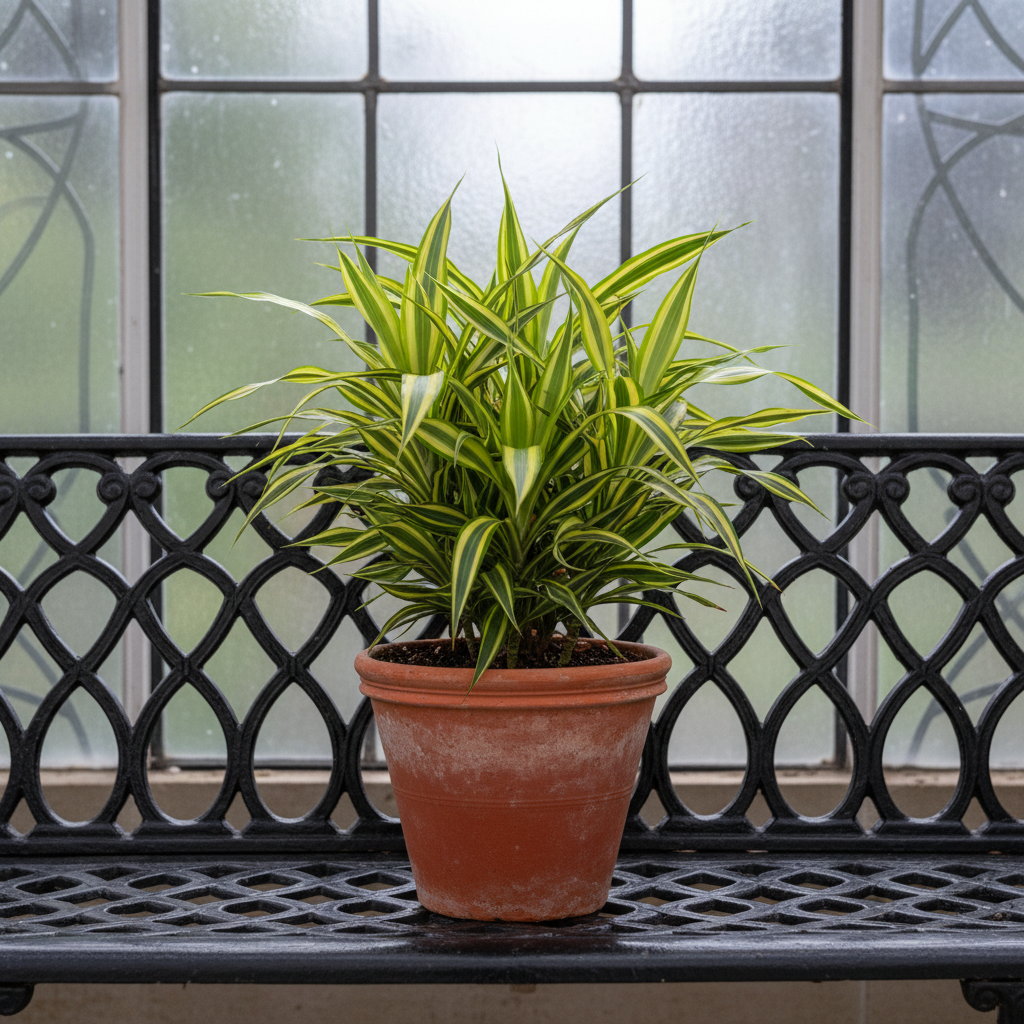
Victoria
A rarer, more compact cultivar with shorter, stiffer leaves boldly margined in bright yellow around a grass-green centre. Slower and more sought-after than the common forms, it makes a striking tabletop specimen.
Variety Profiles in Detail
Massangeana (Dracaena fragrans ‘Massangeana’)
The reference point for the whole group, Massangeana is the plant most people picture when they hear the name corn plant, for the simple reason that its strap-like leaves resemble those of maize. The broad gold central band needs reasonable light to stay bright, and the plant is famously tolerant of neglect, making it a fixture in offices and lobbies the world over.
Victoria (Dracaena fragrans ‘Victoria’)
A collector’s version of the corn plant, Victoria reverses the usual pattern by carrying its colour on the leaf margins rather than the centre, framing a green heart in vivid yellow. It grows slowly and stays more compact than Massangeana, and its scarcity in the trade makes a well-grown specimen a genuine prize.
Choosing the Right Variety for Your Space
For a low-light room, the more solidly green cultivars such as Massangeana or Warneckii hold their appearance better than the heavily gold forms, which dull without good light. Where you can offer bright indirect light, the Hawaiian Sunshine, Limelight and Victoria reward you with far more vivid colour. For sheer presence choose a tall, multi-caned plant; for a desk or shelf, a single young cane or a compact form like Victoria fits better. Whichever you pick, the care described in this guide applies across the whole group, so collecting several is no extra work.
Frequently Asked Questions
Why are the tips of my Hawaiian Sunshine turning brown?
Brown leaf tips are the classic dracaena complaint and usually come down to water quality, since the genus is sensitive to fluoride, chlorine and salts in tap water. Switching to filtered, distilled or rainwater, flushing the pot occasionally, and keeping humidity moderate will prevent new browning. Existing brown tips can be trimmed away following the leaf’s natural shape.
Why is my plant losing its golden colour?
Fading variegation is almost always a sign of too little light. In dim conditions the plant produces greener leaves to photosynthesise more efficiently, sacrificing the gold. Move it to a brighter spot with plenty of indirect light, or add a grow light, and new growth should return with stronger colour.
How often should I water it?
There is no fixed schedule; water when the top 3 to 5 cm (1 to 2 in) of soil has dried out. In practice that tends to mean roughly weekly in warm, bright conditions and every two to three weeks in cooler or dimmer spots. Always judge by the soil rather than the calendar.
Is the Hawaiian Sunshine dracaena toxic to pets?
Yes. Like all dracaenas it contains saponins that are toxic to cats and dogs if eaten, potentially causing vomiting, drooling and lethargy. It is not seriously toxic to humans, but it is best kept out of reach of pets and small children, and a vet should be contacted if an animal eats any part of it.
Why are the lower leaves yellowing and dropping?
Some loss of the oldest, lowest leaves is entirely natural as the cane grows and sheds its lower foliage over time. If many leaves yellow at once and the soil is staying wet, however, the cause is more likely overwatering. Check that the soil drains freely and let it dry further between waterings.
How big will it get and how fast?
This is a slow grower, but given years it can reach 1.5 to 1.8 metres (5 to 6 ft) or more indoors as the cane lengthens. You can keep it shorter and bushier by cutting the top off, which both limits the height and encourages the cane to branch into multiple heads.
Can I grow it in low light?
It will survive in low light better than most variegated plants, which is part of its appeal, but it will not truly thrive there. Expect slower growth and muted, greener foliage in a dim spot. For the best colour and steady growth, aim for bright indirect light or supplement with a grow light.
My plant has become tall and bare at the bottom. What can I do?
A leggy cane with foliage only at the top is common in older plants, especially those kept in lower light. The remedy is to cut the top off and root it as a new plant, which instantly gives you a tidy specimen while the old stump sprouts fresh shoots lower down. Both halves then regrow into fuller plants.






