
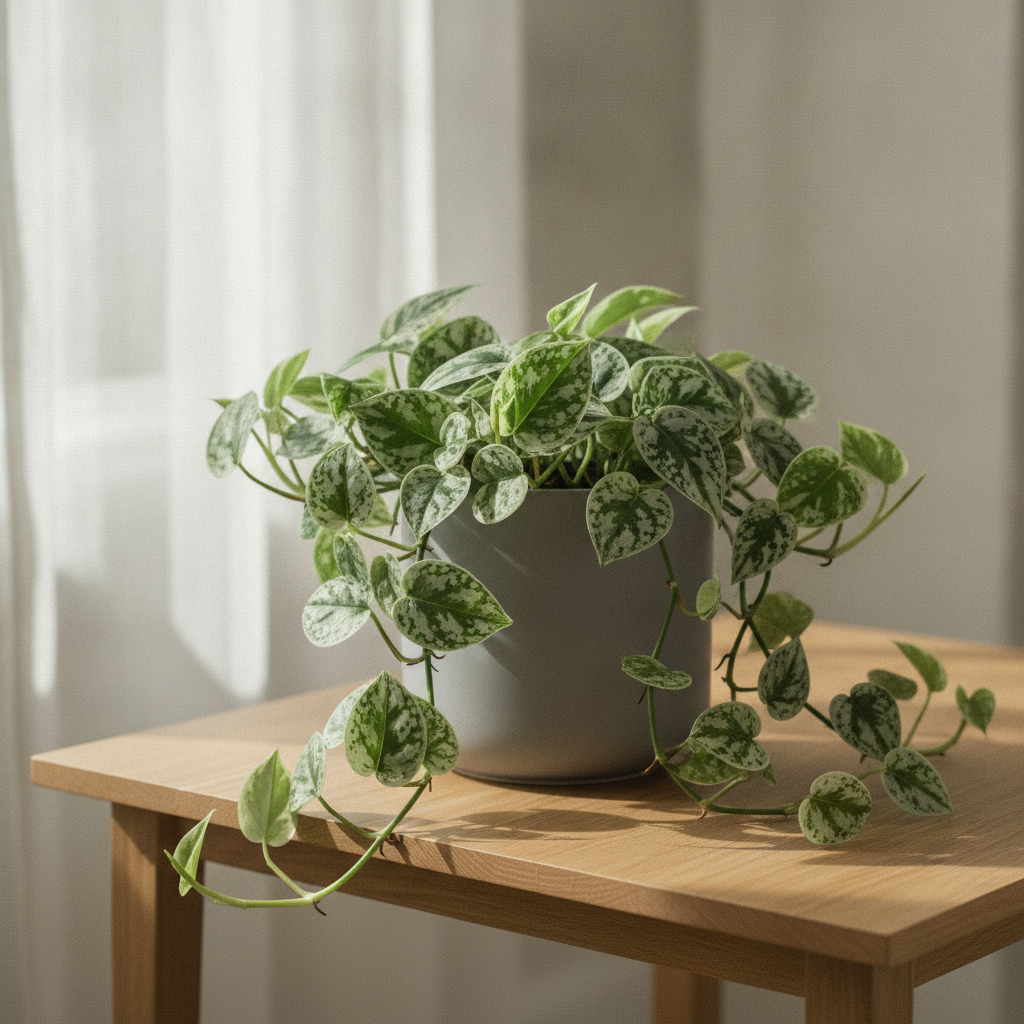
Small, frost-flecked and endlessly forgiving, the Glacier Pothos has quietly become one of the most sought-after compact aroids on the houseplant scene. It is a selected form of Epipremnum aureum, the same species behind the ubiquitous golden pothos, but where its parent sprawls and trails for metres, ‘Glacier’ stays neat, dense and small-leaved, its foliage marbled in silvery-white, mint and grey-green as though dusted with hoarfrost. That combination of striking variegation and genuinely undemanding care is what makes it such a rewarding plant to live with.
This guide covers everything you need to keep a Glacier Pothos not merely alive but genuinely thriving: the light that brings out its variegation, the watering rhythm that keeps its roots healthy, the soil and feeding it prefers, how to propagate it reliably, and how to head off the handful of pests and problems that occasionally appear. Throughout, the aim is to explain not just what to do but why, so you can read your own plant rather than follow a rigid schedule.
Quick Reference
- Why the Glacier Pothos makes a good houseplant
- Light
- Watering
- Soil and potting
- Fertilising
- Propagation
- Pests and problems
- Varieties and similar plants
- Frequently asked questions
| Aspect | At a glance |
|---|---|
| Botanical name | Epipremnum aureum ‘Glacier’ |
| Common names | Glacier Pothos, White Pothos |
| Light | Bright indirect; tolerates medium light |
| Water | When the top 3 to 5 cm (1 to 2 in) of soil dries out |
| Soil | Light, chunky, free-draining aroid mix |
| Temperature | 18 to 27 °C (64 to 81 °F) |
| Humidity | Average room humidity is fine; appreciates 50 % or more |
| Feeding | Balanced feed monthly in spring and summer |
| Growth habit | Compact trailing or climbing vine |
| Mature size indoors | Trails 60 to 120 cm (2 to 4 ft) over time |
| Toxicity | Toxic to pets and humans if ingested |
| Difficulty | Easy |
Why the Glacier Pothos Makes a Good Houseplant
Most variegated houseplants ask you to trade beauty for tolerance. The more white in the leaf, the less chlorophyll, and the fussier and slower the plant tends to be. The Glacier Pothos sits at a happy point on that curve. It carries enough silvery-white and grey marbling to look genuinely special, yet retains plenty of green tissue across each leaf, so it photosynthesises well and forgives the ordinary neglect of everyday life. For anyone who wants a plant with real visual interest but cannot commit to daily attention, that balance is the whole appeal.
Its compact scale is the second reason it earns its place. Where a golden or marble queen pothos quickly throws metre-long runners that need pruning, training or a large moss pole, ‘Glacier’ grows slowly and stays small, with shorter internodes and leaves rarely larger than a few centimetres across. That makes it a natural fit for a desk, a bathroom shelf, a windowsill or the front of a plant grouping where a vigorous trailer would simply take over. It will still trail or climb given time, but on a domestic scale that feels manageable rather than relentless.
There is also the matter of resilience. Like all pothos, the Glacier descends from a tough tropical climber that scrambles over forest floors and up tree trunks across Southeast Asia and the western Pacific, coping with fluctuating light, irregular rainfall and poor pockets of soil. That heritage translates into a houseplant that shrugs off the odd missed watering, the dry air of a centrally heated room and a less than perfect position. The difference between a Glacier that merely survives and one that thrives comes down to a few small habits, and the rest of this guide walks through each of them in turn.
Pro Tip — Start with a healthy plant: When buying, look for firm, evenly variegated leaves and pale, plump roots rather than the largest specimen. A compact, well-rooted Glacier with good colour will establish and grow faster than a leggy bargain with sparse roots.
Light
Light is the single biggest lever you have over a Glacier Pothos, because it governs both the plant’s health and the intensity of its variegation. The ideal is bright, indirect light: a position near a window where the plant is bathed in plenty of brightness but the sun’s direct rays fall just short of the leaves. An east-facing windowsill that catches gentle morning sun, or a spot a metre or so back from a south or west window, suits it perfectly. In these conditions the silvery marbling stays crisp and the plant grows steadily.
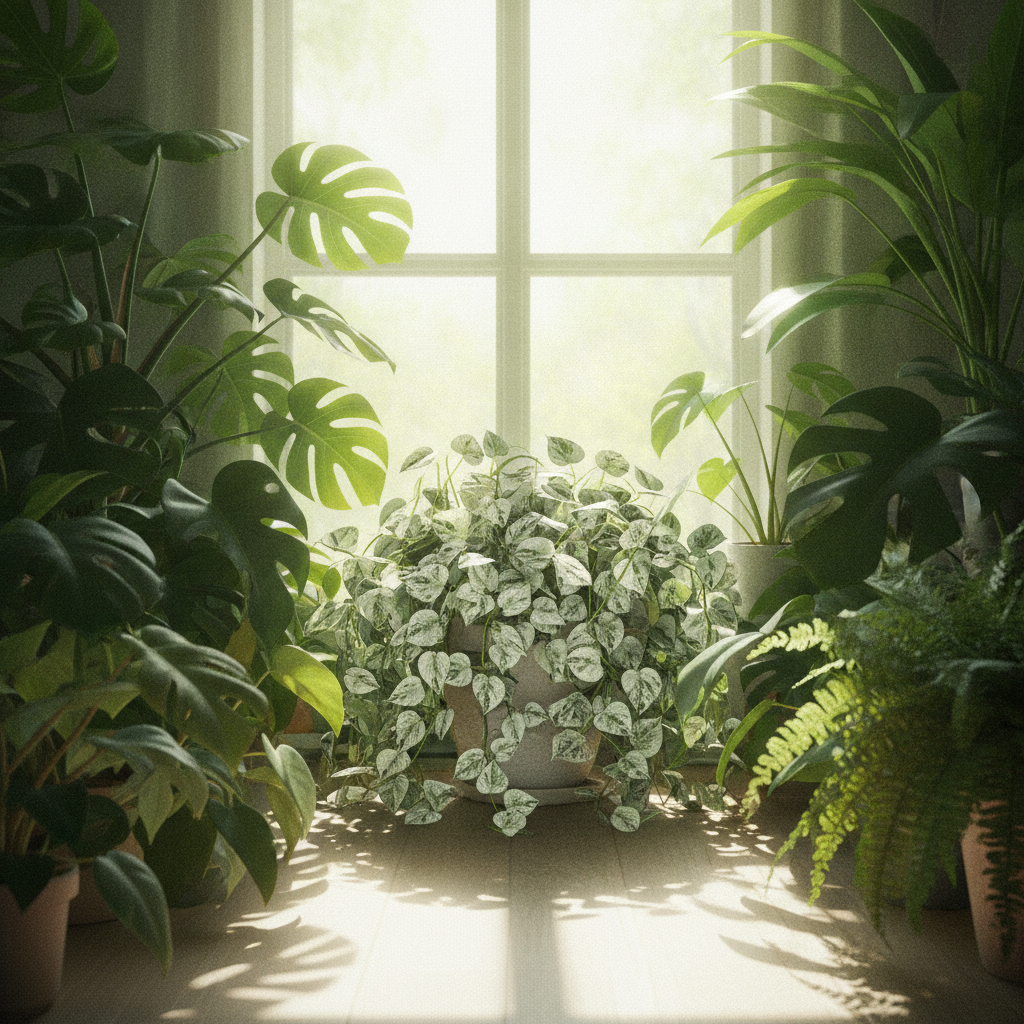
The Glacier will tolerate medium light, the kind found in the middle of a well-lit room, and this is where its forgiving nature shows. It simply slows down: growth becomes more spaced out, new leaves emerge smaller, and the variegation tends to drift greener as the plant produces more chlorophyll to compensate for the dimmer conditions. This is a survival response rather than a problem, but if you prize the frosty colouring, keep the plant bright. In genuinely low light, far from any window, growth stalls and the lower leaves eventually drop, so a dark corner is one of the few places this otherwise easygoing plant struggles.
Direct sun is the other extreme to avoid. The pale, low-chlorophyll sections of each leaf have little protection against intense light and scorch easily, bleaching to papery brown patches that do not recover. A few hours of soft early morning sun are usually fine, but harsh midday or afternoon sun through unscreened glass will mark the leaves within days. If you want to give the plant a sunnier window, filter the light with a sheer curtain or set it back from the glass. Rotating the pot a quarter turn each week keeps growth even and stops the plant leaning toward the light.
Warning — Reverting variegation: If new leaves come in noticeably greener than the rest, the plant is telling you it needs more light. Move it brighter before the reversion spreads, as fully green growth tends to outcompete and gradually replace the variegated foliage.
Watering
If light sets the ceiling on how well a Glacier Pothos grows, watering is the factor most likely to kill it, almost always through too much rather than too little. The roots of this plant evolved to scramble through airy, fast-draining leaf litter, and they need oxygen as much as moisture. Sitting in saturated soil for days starves them of air and invites the rot that is the most common cause of pothos death. The guiding principle is simple: water thoroughly, then let the plant dry out meaningfully before you water again.
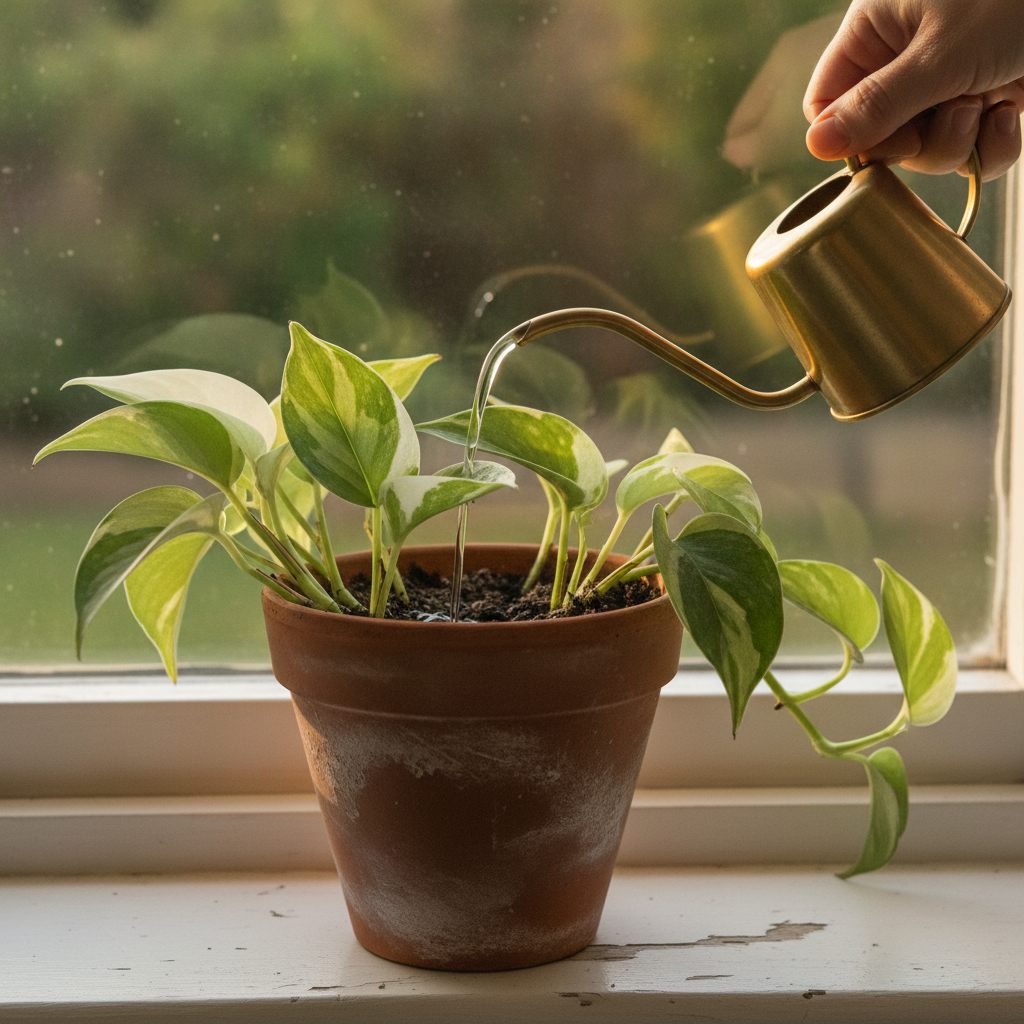
In practice, check the soil with a finger before reaching for the watering can. When the top 3 to 5 cm (1 to 2 in) feels dry, it is time to water. When that moment arrives, water generously: pour slowly and evenly until water flows freely from the drainage holes, which wets the entire root ball and flushes out any built-up mineral salts. Let the pot drain completely and never leave it standing in a full saucer, as that reabsorbed water is exactly what keeps the roots dangerously wet. A Glacier in a bright spot during summer might need this every five to seven days; in winter, when growth slows and evaporation falls, the same plant may go two weeks or more between drinks.
The plant gives clear signals when you misjudge the balance. Underwatering shows first as limp, slightly curled leaves that perk up within hours of a good soak; let it go too far and you will see crisp brown leaf edges. Overwatering is more insidious and more dangerous: soft, yellowing leaves, a sour smell from the soil, and in advanced cases mushy, blackened stem bases. Because both extremes can produce yellow leaves, always feel the soil before acting. If it is wet and the leaves are yellowing, the answer is to hold off and improve drainage, not to water more. Room-temperature water is gentlest, and if your tap water is heavily chlorinated or very hard, letting it stand overnight or using filtered or rainwater reduces the mineral spotting that can flecking the pale variegation over time.
Soil and Potting
Everything about watering becomes easier when the soil is right, because the substrate is what determines how quickly the root zone drains and re-aerates. A Glacier Pothos wants a light, chunky, free-draining mix that holds a little moisture but never stays soggy. Ordinary houseplant compost used straight from the bag is usually too dense and water-retentive on its own, compacting over time and smothering the roots. The fix is to open it up with coarse material.
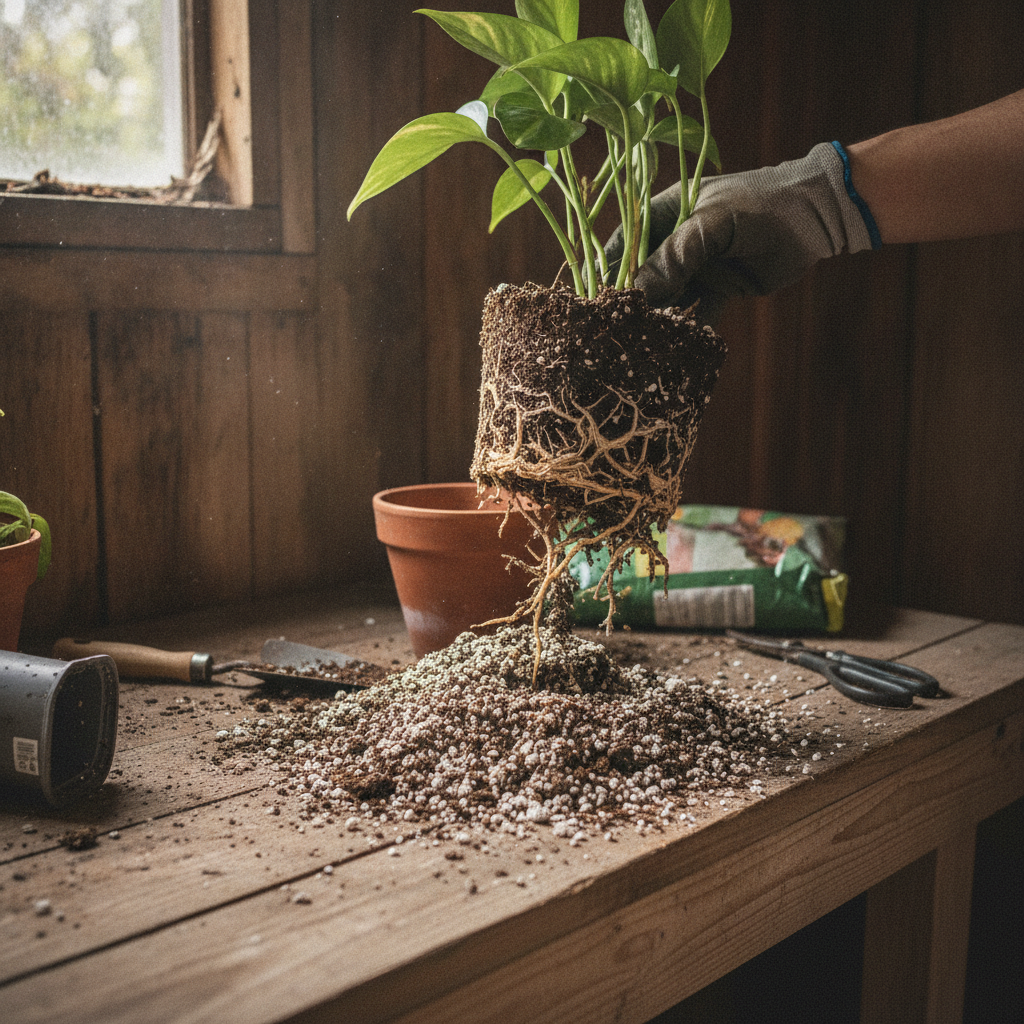
A reliable recipe is roughly two parts quality potting compost to one part orchid bark and one part perlite, with an optional handful of coco coir or worm castings for a little extra moisture retention and nutrition. The bark creates air pockets and gives the climbing roots something to grip, the perlite keeps the whole mix from compacting, and the result drains within seconds of watering while staying lightly moist for days. If you prefer a ready-made option, any bagged aroid or monstera mix works well straight away.
Whatever the mix, the pot must have drainage holes; this is non-negotiable for a plant so sensitive to wet feet. Choose a container only slightly larger than the root ball, as a Glacier Pothos is happiest a little snug and an oversized pot holds a reservoir of wet soil the small root system cannot use. Repotting is needed only every two years or so, when roots circle the base or creep out of the drainage holes. Spring is the ideal time, giving the plant a full growing season to settle in. Lift it gently, tease apart any tightly wound roots, trim away anything soft or brown, and settle it into fresh mix at the same depth it sat before.
Pro Tip — Size up modestly: When repotting, move up just one pot size, around 2 to 3 cm (1 in) wider. A small jump keeps the soil-to-root ratio in balance and avoids the waterlogging that comes with a pot that is too big.
Fertilising
The Glacier Pothos is not a heavy feeder, and its modest, compact growth means it needs far less fertiliser than a fast-growing trailing plant. Still, the nutrients in fresh potting mix are depleted within a few months, and a little regular feeding through the growing season keeps the foliage full and the colour strong. The goal is gentle, consistent nourishment rather than occasional large doses.
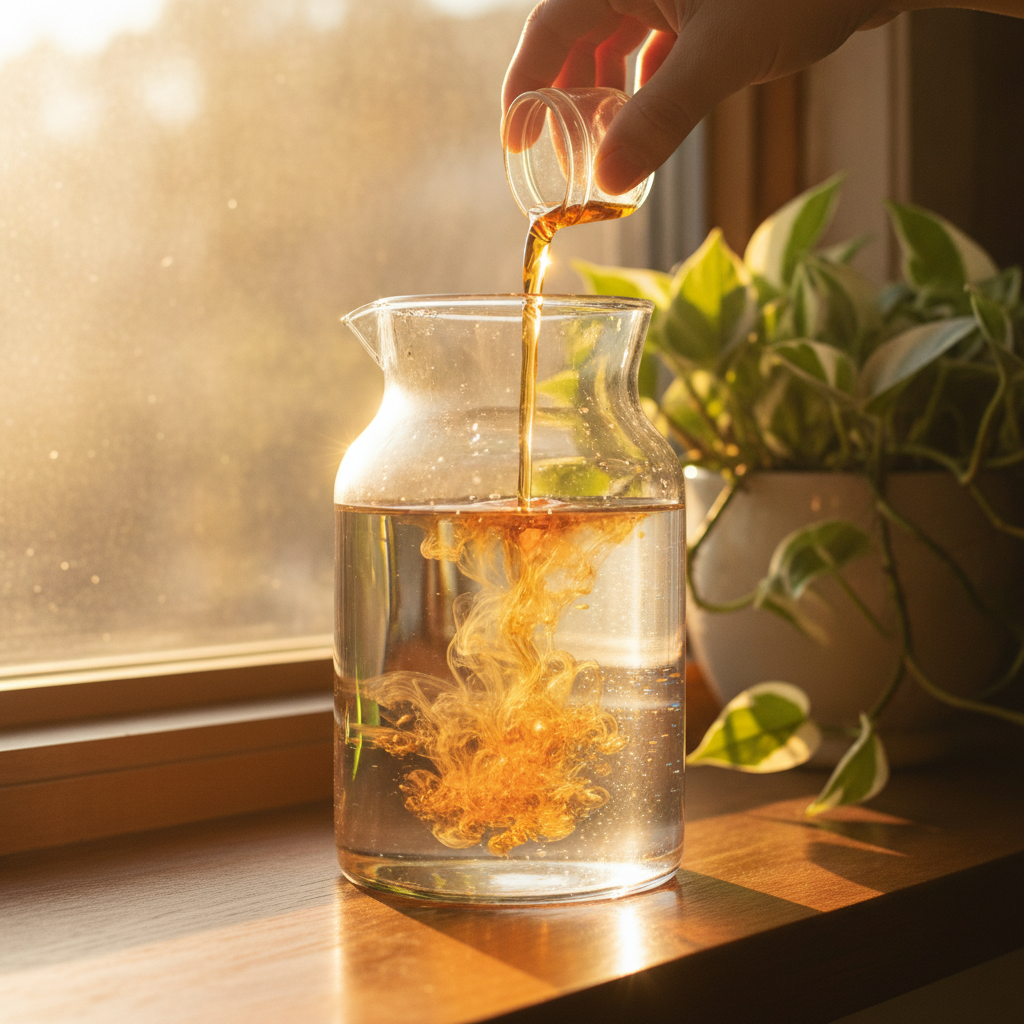
A balanced liquid houseplant fertiliser, diluted to half the strength on the label, applied once a month from spring through to late summer, is all most plants require. Because the Glacier carries less chlorophyll than an all-green pothos, it does not push the same volume of new growth and can be scorched by concentrated feed, so erring on the dilute side protects the roots and the delicate variegated tissue. Always apply fertiliser to already-moist soil, never to a bone-dry root ball, as feeding a dry plant can burn the fine feeder roots.
As autumn arrives and light levels fall, the plant’s growth naturally slows and its need for nutrients drops with it. Stop feeding through the darker months and resume only when you see fresh growth appear in spring. Overfeeding is a more common mistake than underfeeding and shows as a white crust of mineral salts on the soil surface or pot rim, along with brown, crisped leaf tips. If you notice this, flush the pot thoroughly with plain water to leach out the excess and scale back your feeding. A Glacier that is slightly underfed will simply grow a touch slower; one that is overfed can suffer real root damage.
Propagation
One of the quiet pleasures of growing a Glacier Pothos is how readily it propagates. Like all pothos it roots from stem cuttings with very little fuss, which means you can fill out a sparse plant, share cuttings with friends, or grow new plants for nothing. The key is the node, the small bump on the stem where a leaf meets the vine and where new roots emerge. Every viable cutting must include at least one node.
To take cuttings, use clean, sharp scissors and snip a healthy length of stem just below a node, so the cut sits at the base of the cutting. Aim for sections with one or two leaves each. Remove the lowest leaf if it would otherwise sit in water or substrate. From here you have two reliable routes. The steps below describe both.
- Place the cuttings in a glass of clean water with the node submerged and the remaining leaves above the surface. Set the glass in bright indirect light and refresh the water every few days. Within two to four weeks you should see white roots emerging from the node.
- Once the roots are 3 to 5 cm (1 to 2 in) long, pot the cutting into the same chunky aroid mix the parent enjoys, keeping it lightly moist for the first couple of weeks while it adjusts from water to soil.
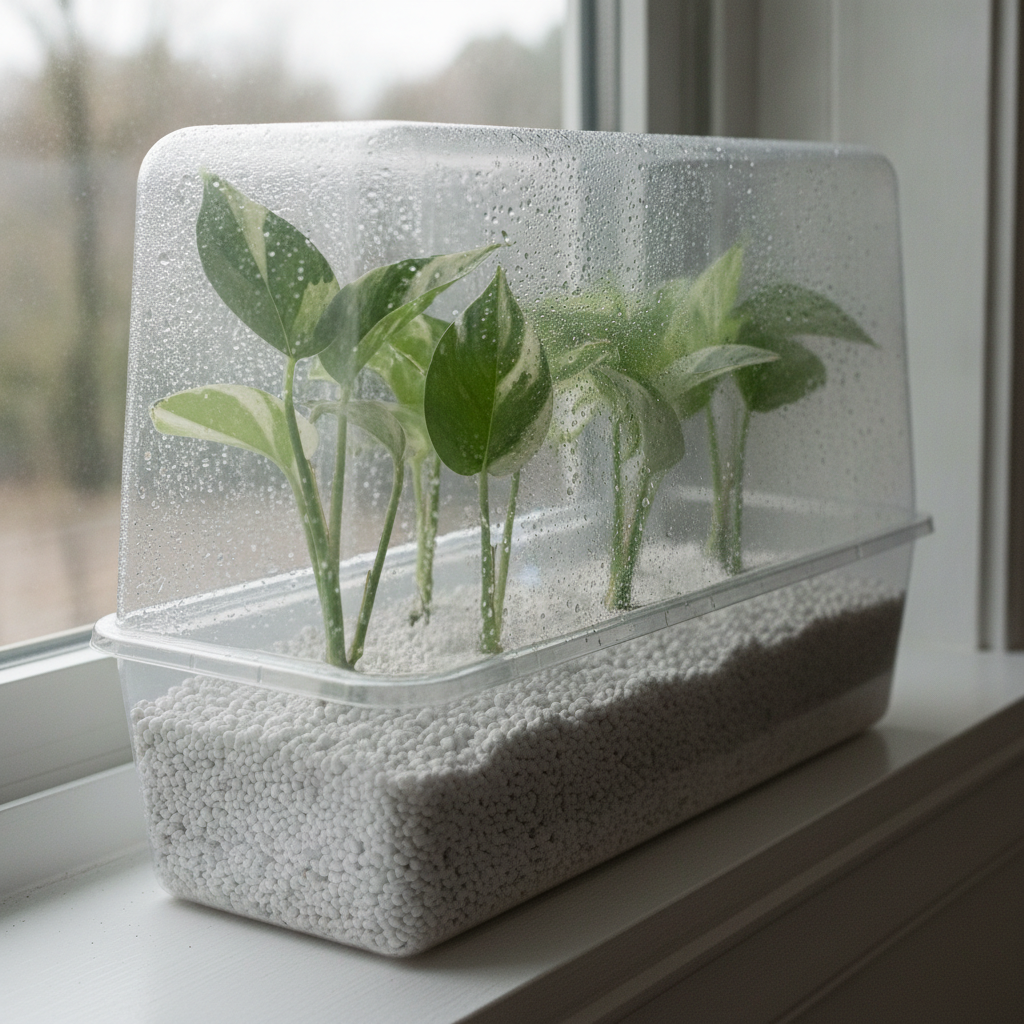
- Alternatively, skip the water stage and insert the cuttings directly into damp perlite or a light potting mix. Cover with a clear humidity dome or a loose plastic bag to hold moisture, ventilating briefly every day or two to prevent mould.
- Keep the substrate just moist and warm, around 20 to 24 °C (68 to 75 °F), and roots will establish over the same few weeks before the cutting begins to push new leaves.
Water propagation has the advantage of letting you watch the roots develop, which is reassuring and helps you time the move to soil. Rooting straight into substrate skips the sometimes tricky transition from water roots to soil roots and tends to give a sturdier young plant. Either way, warmth and bright indirect light speed things along, while a cold windowsill in midwinter will slow rooting to a crawl. For a fuller, bushier pot, root several cuttings together and plant them as a cluster rather than waiting for a single vine to branch.
Pro Tip — Propagate while you prune: The cuttings you remove to keep the plant tidy are the same ones that root best. Time your trimming for spring and early summer and you turn routine maintenance into a tray of new plants.
Pests and Problems
A Glacier Pothos grown in decent light with sensible watering is rarely troubled by pests, but no houseplant is entirely immune, and catching trouble early is far easier than clearing an established infestation. A brief weekly look at the plant, paying attention to the undersides of leaves and the joints where leaf meets stem, is the best defence you have.
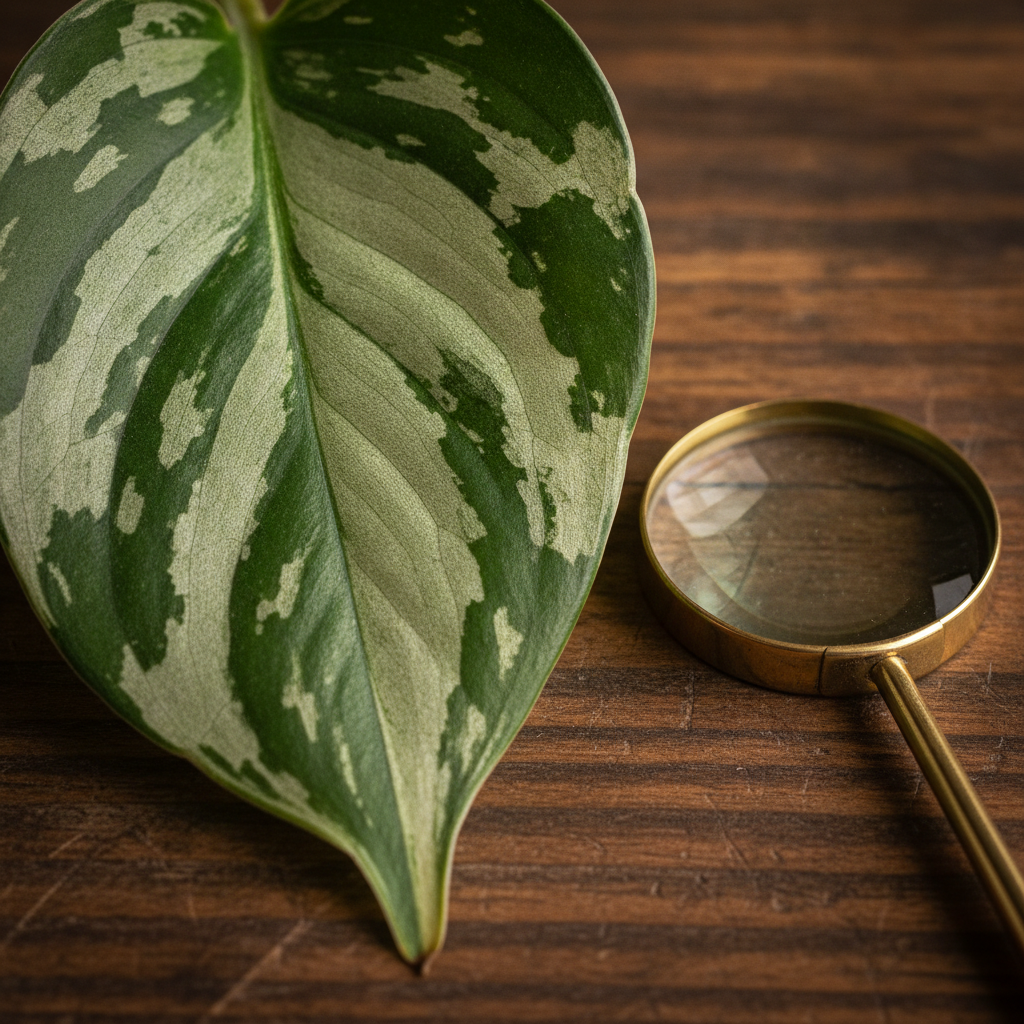
The pests most likely to appear are sap-suckers that thrive in warm indoor air. Mealybugs show up as small white, cottony tufts tucked into leaf axils and along stems. Spider mites are harder to spot, betraying themselves through fine webbing and a faint stippling or speckling on the leaves, and they multiply fast in dry conditions. Scale insects look like small brown or tan bumps stuck firmly to stems and leaf undersides. For light infestations, wiping the affected areas with a cotton bud dipped in diluted isopropyl alcohol removes the pests directly; for anything more widespread, treat the whole plant with insecticidal soap or a neem oil spray, repeating every week or so until no new pests appear, and isolate the plant from your collection while you do.
Most of the everyday complaints with a Glacier Pothos, though, are not pests at all but care-related signals worth learning to read. The table below summarises the common ones and what they usually mean.
| Symptom | Likely cause | What to do |
|---|---|---|
| Yellowing leaves, soft and soggy | Overwatering or poor drainage | Let the soil dry, check roots, improve the mix |
| Crisp brown leaf tips or edges | Underwatering, low humidity or salt build-up | Water more evenly, flush the soil, raise humidity |
| New leaves coming in greener | Not enough light | Move to a brighter, indirect position |
| Pale, bleached patches | Direct sun scorching variegated tissue | Filter the light or move back from the glass |
| Leggy stems, wide leaf spacing | Insufficient light | Increase brightness and prune to encourage bushiness |
| Fine webbing and speckled leaves | Spider mites | Rinse, treat with neem or insecticidal soap, raise humidity |
The reassuring theme running through that list is that nearly every problem traces back to the two factors covered earlier in this guide: light and water. Get those broadly right and the Glacier Pothos largely looks after itself.
Warning — Toxic if eaten: Like all pothos, the Glacier contains insoluble calcium oxalate crystals that cause mouth irritation, drooling and stomach upset if chewed or swallowed. Keep it out of reach of curious pets and small children.
Varieties and Similar Plants
The Glacier Pothos belongs to a small group of compact, white-and-green variegated pothos that are easily confused with one another, and knowing the look-alikes helps you identify what you actually own. Two cultivars in particular are its closest relatives on the shelf.
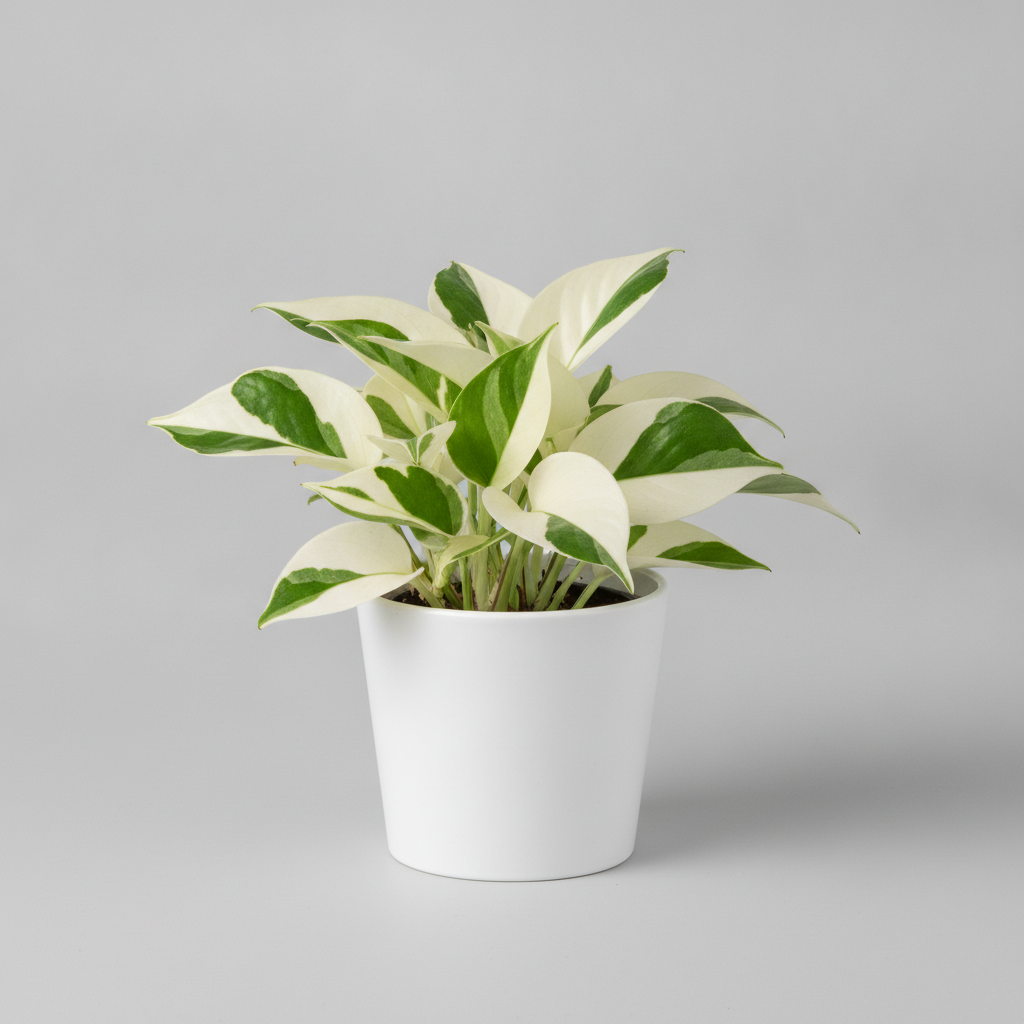
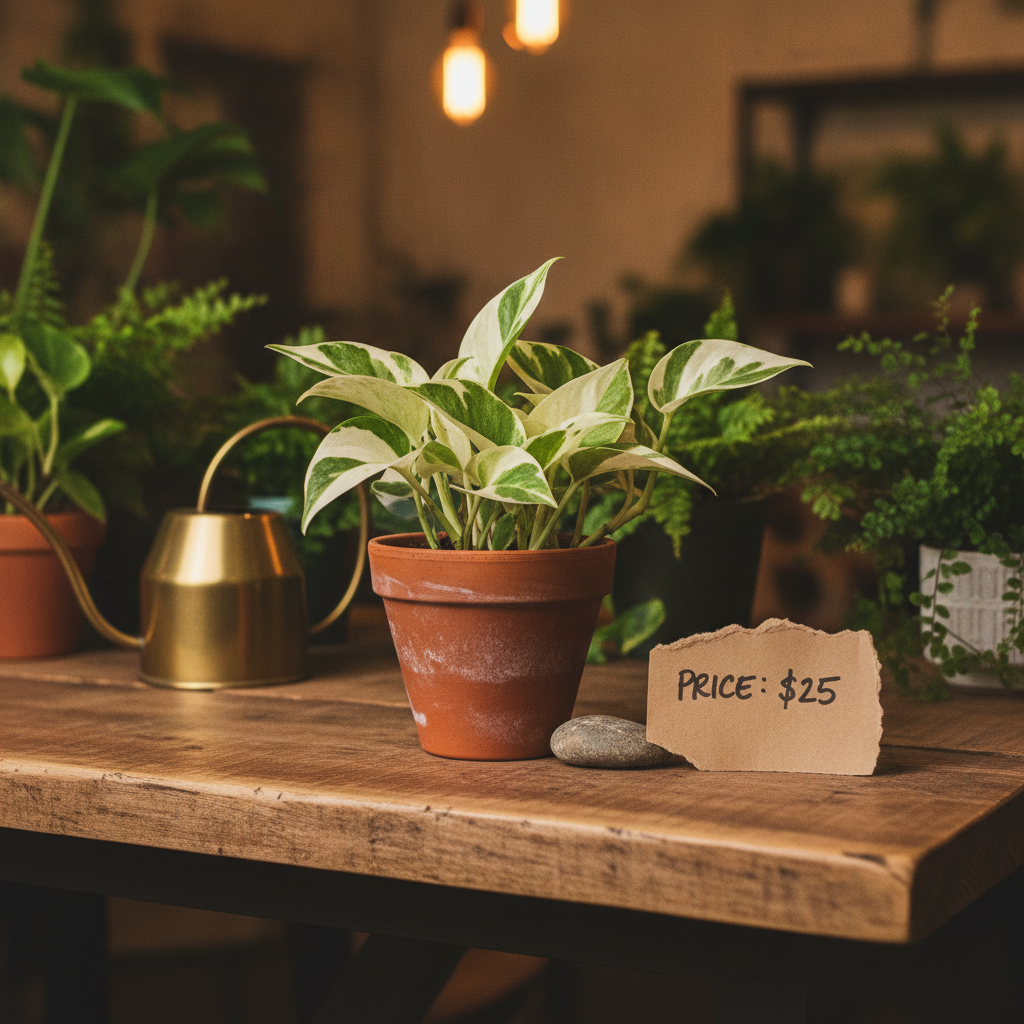
N’Joy (Epipremnum aureum ‘N’Joy’) is the cultivar most often mistaken for Glacier. Its variegation comes in larger, blockier patches of clean creamy-white set against solid green, with crisp, well-defined margins between the two colours. Compared with Glacier it looks bolder and less misty, lacking the fine grey speckling that gives Glacier its frosted appearance.
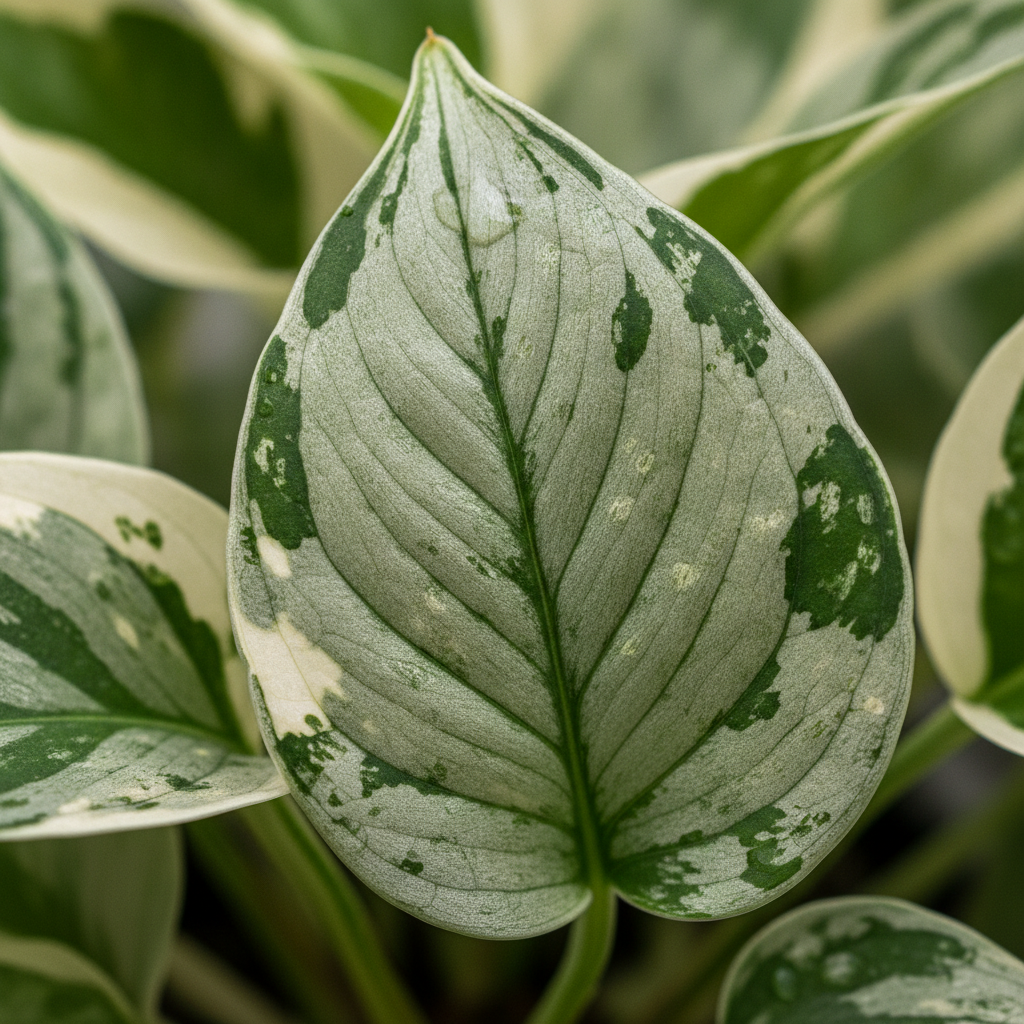
Pearls and Jade (Epipremnum aureum ‘Pearls and Jade’) shares Glacier’s smaller leaves and is perhaps its nearest twin. It carries green leaves edged and splashed with silvery-white and grey, flecked with tiny green and cream speckles, and frequently keeps a green central vein. The overall effect is busier and more peppered than N’Joy, sitting between that cultivar and Glacier in style.
Beyond these two, the wider pothos family offers plenty of variety for a collection: the classic golden pothos with its splashes of yellow, the heavily marbled ‘Marble Queen’, the chartreuse ‘Neon’, and the satin pothos (Scindapsus pictus), a related genus with velvety, silver-spotted leaves. Reassuringly, every one of these shares essentially the same easygoing care as the Glacier, so the knowledge in this guide carries straight across to the rest of the group. The main practical difference is light: the more white and silver a cultivar carries, the brighter the indirect light it needs to hold that colour and keep growing well.
Frequently Asked Questions
Why is my Glacier Pothos turning more green?
Loss of variegation is almost always a light issue. In dimmer conditions the plant produces more chlorophyll to make the most of what light it has, so new leaves emerge greener. Move it to a brighter spot with plenty of indirect light and subsequent growth should return to its frosted colouring. If a stem reverts entirely to green, prune it back to encourage variegated growth from lower down.
How often should I water a Glacier Pothos?
There is no fixed schedule, because the right frequency depends on light, temperature and the season. The reliable method is to water when the top 3 to 5 cm (1 to 2 in) of soil feels dry, which often works out to every five to seven days in summer and every ten to fourteen days in winter. Always check the soil rather than watering by the calendar.
Is the Glacier Pothos safe around pets?
No. Like all pothos, it is toxic to cats, dogs and humans if ingested, thanks to insoluble calcium oxalate crystals that irritate the mouth and digestive tract. It is not usually life-threatening, but it can cause significant discomfort, so position the plant out of reach of pets and young children.
Why does my Glacier Pothos grow so slowly?
A degree of slow growth is simply the nature of this compact, variegated cultivar; it will never match the speed of an all-green golden pothos. That said, very slow or stalled growth usually points to low light, cool temperatures or the dormant winter season. Brighten its position and feed lightly through spring and summer, and you should see a steadier flush of new leaves.
Can I grow a Glacier Pothos in water permanently?
Yes, a cutting can live in water long term if you keep the water fresh and add a few drops of dilute hydroponic fertiliser regularly, since plain water offers no nutrients. Growth tends to be slower and the plant a little less robust than in soil, but many people keep pothos as decorative water-rooted cuttings for months or years. If you later move it to soil, do so while the roots are still young to ease the transition.
How do I make my Glacier Pothos bushier?
Regular pruning is the key. Snipping just above a node encourages the plant to branch from that point, producing a fuller shape rather than long bare stems. Better still, root the cuttings you remove and plant them back into the same pot to thicken it up. Combine pruning with bright light and you will keep a dense, compact plant rather than a leggy one.
The Glacier Pothos rewards a light touch. Give it bright indirect light to keep its frosted variegation crisp, let it dry out between thorough waterings, plant it in an airy mix that never stays soggy, and feed it modestly through the growing season. Do that and this small, silver-dusted aroid will quietly get on with the business of looking beautiful, asking remarkably little in return for everything it gives back.






