
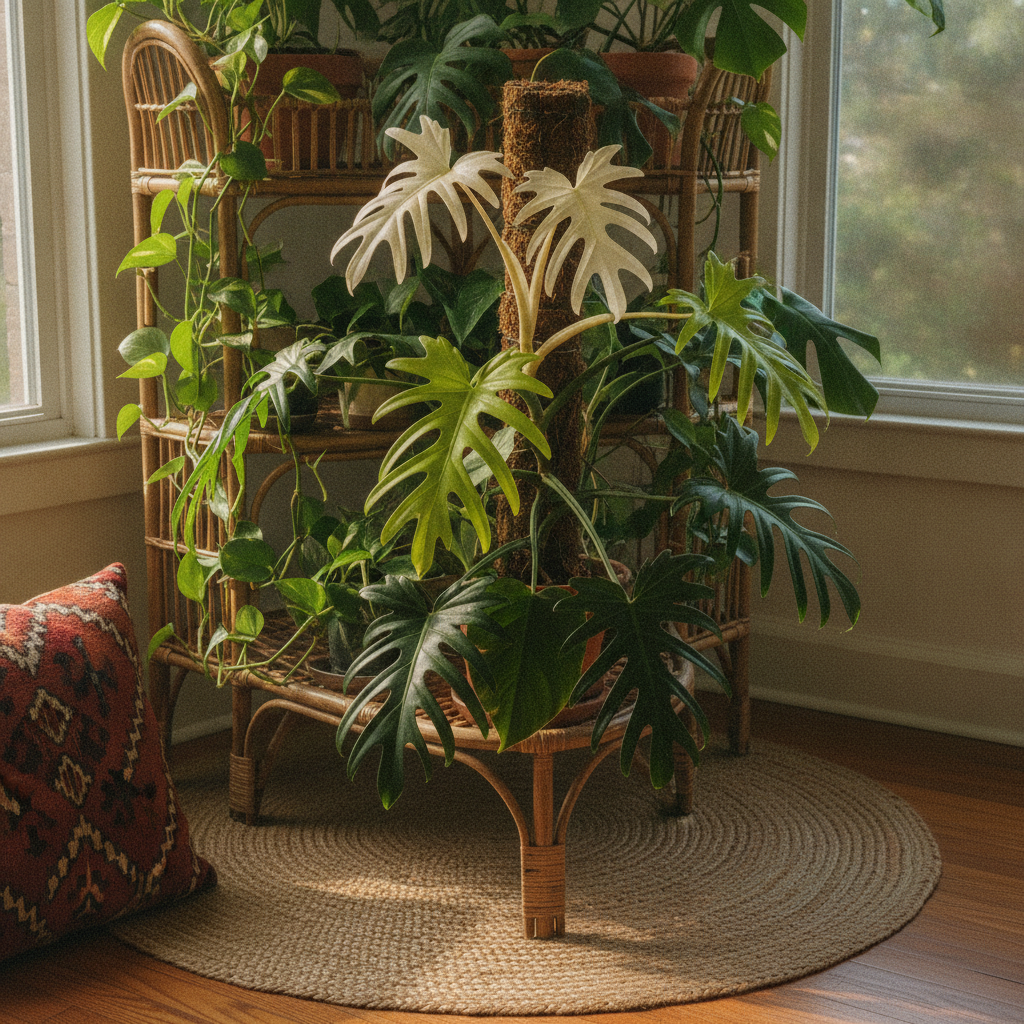
Few houseplants pull off a magic trick on the windowsill quite like the Florida Ghost philodendron (Philodendron pedatum). Each new leaf unfurls an eerie, almost waxy cream-white, as though the plant has forgotten to colour it in, before slowly hardening off through lime and finally settling into a deep, glossy forest green. The result is a single plant carrying several “ages” of leaf at once, pale ghosts at the growing tip and dark, deeply lobed veterans further down the stem. It is a climbing aroid native to the tropical forests of South America, where it scrambles up tree trunks as a hemiepiphyte, and the named “Florida Ghost” selection has become one of the most sought-after forms of the species.
Despite its collector-plant reputation, the Florida Ghost is far more forgiving than its dramatic looks suggest. It asks for the same basic conditions as most climbing philodendrons: bright indirect light, a chunky and free-draining mix, and a support to climb. The difference between a plant that merely survives and one that genuinely thrives comes down to a few details, chief among them light levels, which directly control how white those ghostly new leaves stay and how quickly the plant produces them. This guide covers everything from light and watering to soil, feeding, propagation and pests, so you can keep yours pushing out fresh, pale leaves year after year.
Contents
- Quick Reference
- Why the Florida Ghost Philodendron Makes a Standout Houseplant
- Light Requirements
- Watering & Humidity
- Soil, Potting & Repotting
- Fertilising
- Propagation
- Pests & Diseases
- Popular Varieties
- Frequently Asked Questions
Quick Reference: Florida Ghost Philodendron at a Glance
| Light | Bright indirect light; tolerates a little gentle morning sun. Brighter conditions keep the ghost-white leaves pale for longer. |
| Watering | Water when the top 2 to 3 cm (1 inch) of mix is dry, roughly weekly in summer and every 10 to 14 days in winter. |
| Temperature | 18 to 29 degrees C (64 to 84 degrees F). Keep above 13 degrees C (55 degrees F). |
| Humidity | Prefers 60 percent or higher; tolerates average household humidity but new leaves stay whiter in humid air. |
| Fertiliser | Balanced liquid feed at half strength every 2 to 4 weeks during spring and summer. |
| Toxicity | Toxic to cats, dogs and humans if chewed or swallowed (insoluble calcium oxalate crystals). |
Why the Florida Ghost Philodendron Makes a Standout Houseplant
The appeal of the Florida Ghost begins with its colour-changing foliage, but it is the leaf shape that keeps people hooked. Mature leaves are pedate, meaning they are divided into finger-like lobes that spread from a central point, giving each leaf the look of a stylised hand or an oak leaf redrawn by a botanical illustrator. Juvenile plants produce simpler, less divided leaves, so part of the pleasure of growing one is watching it graduate into ever more sculptural foliage as it climbs and matures. Set against the pale new growth, the architecture of those dark, deeply cut older leaves is what gives the plant its presence.
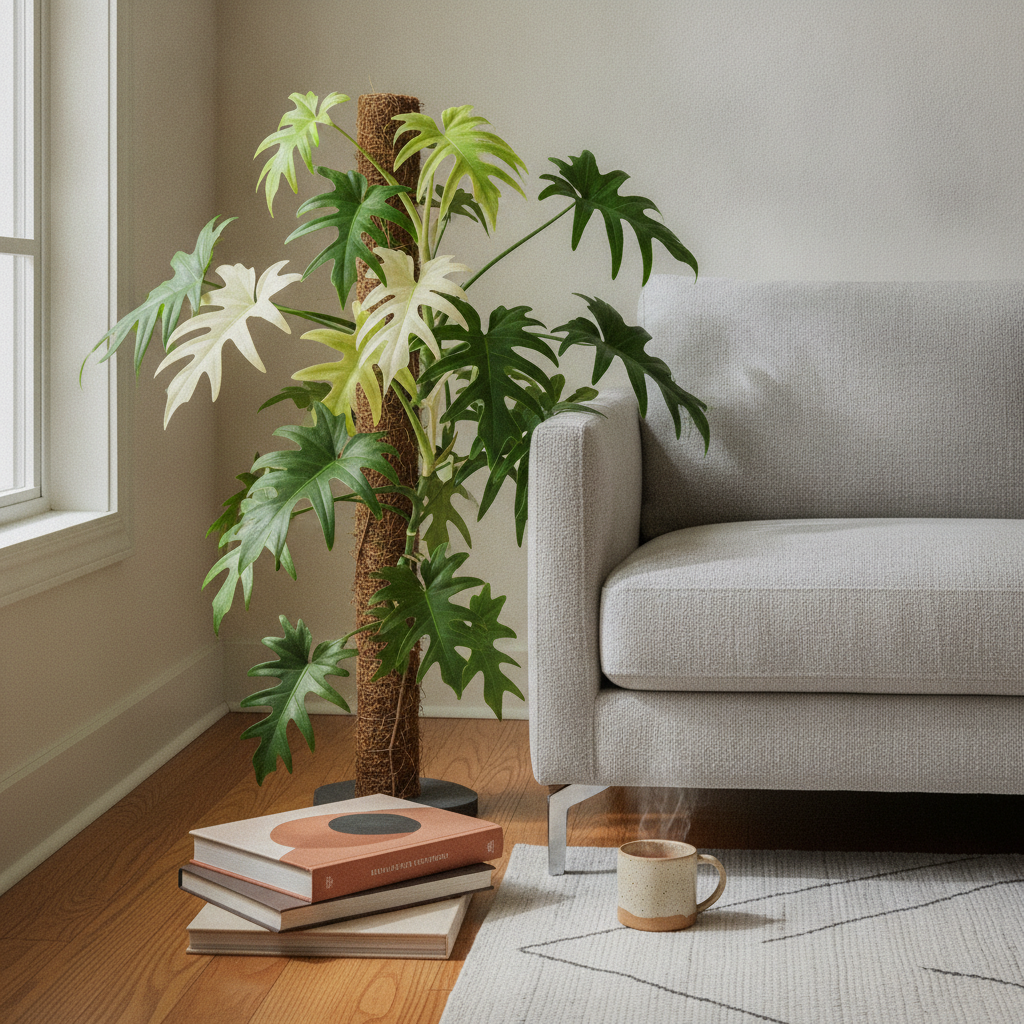
Beyond the looks, this is a genuinely practical plant. As a climbing aroid it grows vertically rather than sprawling, so it takes up little floor space while still reading as a statement specimen, and a single moss pole turns it into a slim green column. It is fast enough to be rewarding without becoming a thug, roots readily from cuttings so one plant quickly becomes several, and it shares the easy-going constitution of the wider philodendron family. For anyone who wants the thrill of a rarer-looking plant without the fussiness that often comes with it, the Florida Ghost hits a rare sweet spot.
Important — Toxicity: Like all philodendrons, the Florida Ghost contains insoluble calcium oxalate crystals. Chewing or swallowing any part can cause intense burning, drooling, swelling of the mouth and difficulty swallowing in pets and people. Keep it out of reach of cats, dogs and small children, and wash your hands after handling cut stems, as the sap can irritate skin.
Light Requirements
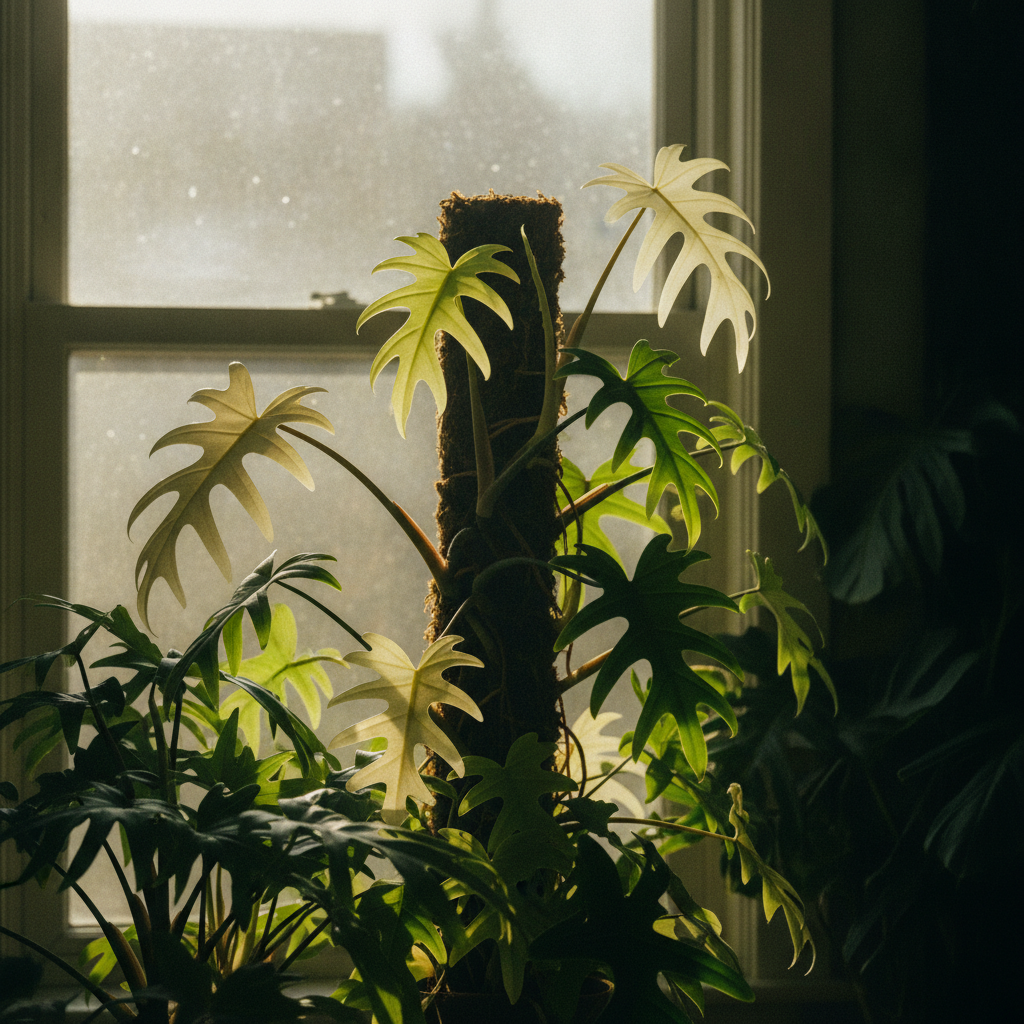
Light is the single most important factor in growing a good Florida Ghost, because it governs not only how fast the plant grows but how white its signature new leaves stay. In its native forest the species climbs from shaded floor into the dappled mid-canopy, so it is adapted to bright but filtered light rather than full, unbroken sun. Indoors, that translates to a position with plenty of brightness but little or no direct beam on the leaves for most of the day.
Aim for bright indirect light: a spot near a window where the sky is clearly visible but the sun itself only grazes the plant, if at all. In good light the ghost-white new leaves emerge strongly pale and hold that colour for weeks before greening up, and the plant pushes out leaves more frequently. In dim corners growth slows to a crawl, leaves come out smaller and less lobed, and the pale phase is brief and muddy.
Light Levels Explained
Plant light is often described in vague terms, so the table below translates the usual categories into approximate brightness, a typical spot in the home, and what you can expect from a Florida Ghost grown there.
| Light Category | Approx. Level | Typical Location | Outcome |
|---|---|---|---|
| Direct sun | Over 50,000 lux | On an unshaded south sill | Risk of bleaching and scorch, especially on pale new leaves |
| Bright indirect | 10,000 to 25,000 lux | Near an east window, or just back from south or west | Ideal: fast growth, whitest new leaves, deeply lobed foliage |
| Medium | 5,000 to 10,000 lux | A metre or two from a bright window | Steady but slower growth, slightly smaller leaves |
| Low | 1,000 to 5,000 lux | Interior wall, north room | Leggy, sparse growth; weak, short-lived ghost colour |
| Very low | Under 1,000 lux | Hallway, far from any window | Decline over time; not suitable long term |
Window Orientation and Placement
South-facing window: The brightest option and very productive, but set the plant a little back from the glass or filter the midday sun with a sheer curtain, as the chalky new leaves have less protective pigment and scorch easily.
East-facing window: Often the sweet spot. Gentle morning sun followed by bright indirect light for the rest of the day suits the Florida Ghost perfectly and rarely burns the foliage.
West-facing window: A good choice, though the stronger afternoon sun can be harsh in summer. A light curtain or a half-metre of distance from the glass keeps it comfortable.
North-facing window: Usable in summer and right at the glass, but light is often too weak in winter for vigorous growth. Be prepared to supplement or move the plant during the darker months.
Pro Tip — Rotate for Even Growth: Climbing philodendrons lean hard towards their light source. Give the pot a quarter turn each week so the plant climbs straight up its support rather than reaching out sideways and growing lopsided.
How Light Affects Leaf Colour
The defining feature of the Florida Ghost is directly tied to light. New leaves emerge pale because they contain very little chlorophyll at first, and as the leaf matures it builds pigment and turns green so it can photosynthesise. In bright conditions the plant can afford to keep leaves in their pale phase longer and still meet its energy needs, so the ghostly white lasts and the contrast across the plant is at its best. In low light the plant is short of energy and greens its leaves up quickly to start earning a living, so the white phase is fleeting and far less striking.
Warning — Direct Sunlight: Because pale new leaves lack the pigments that shield against strong light, several hours of direct summer sun can bleach them to papery white patches or crisp brown edges within a day or two. Introduce more light gradually and shield the growing tip during heatwaves.
Artificial Lighting
The Florida Ghost responds very well to LED grow lights, which makes it practical in dim flats or through dark northern winters. A full-spectrum LED positioned 30 to 45 cm (12 to 18 inches) above the plant and run for 10 to 12 hours a day will keep it growing and maintain the pale new leaves. Grow lights are particularly useful for keeping leaf colour and shape consistent year round rather than watching the plant stall every autumn.
Seasonal Adjustments
Light intensity indoors drops dramatically between summer and winter, so plan to move the plant closer to the window, or onto a brighter sill, as the days shorten, then back again in spring when the sun strengthens. Watch the new leaves as your guide: if the pale phase becomes brief and the foliage looks dull, the plant is asking for more light.
Watering & Humidity
The Florida Ghost likes its mix to stay lightly moist during active growth but never waterlogged, a balance that is easy to strike once you stop watering on a fixed schedule and start checking the mix instead. As an aroid with thick, oxygen-hungry roots, it is far more often killed by staying wet than by drying out a little, so when in doubt, wait a day.
When to Water
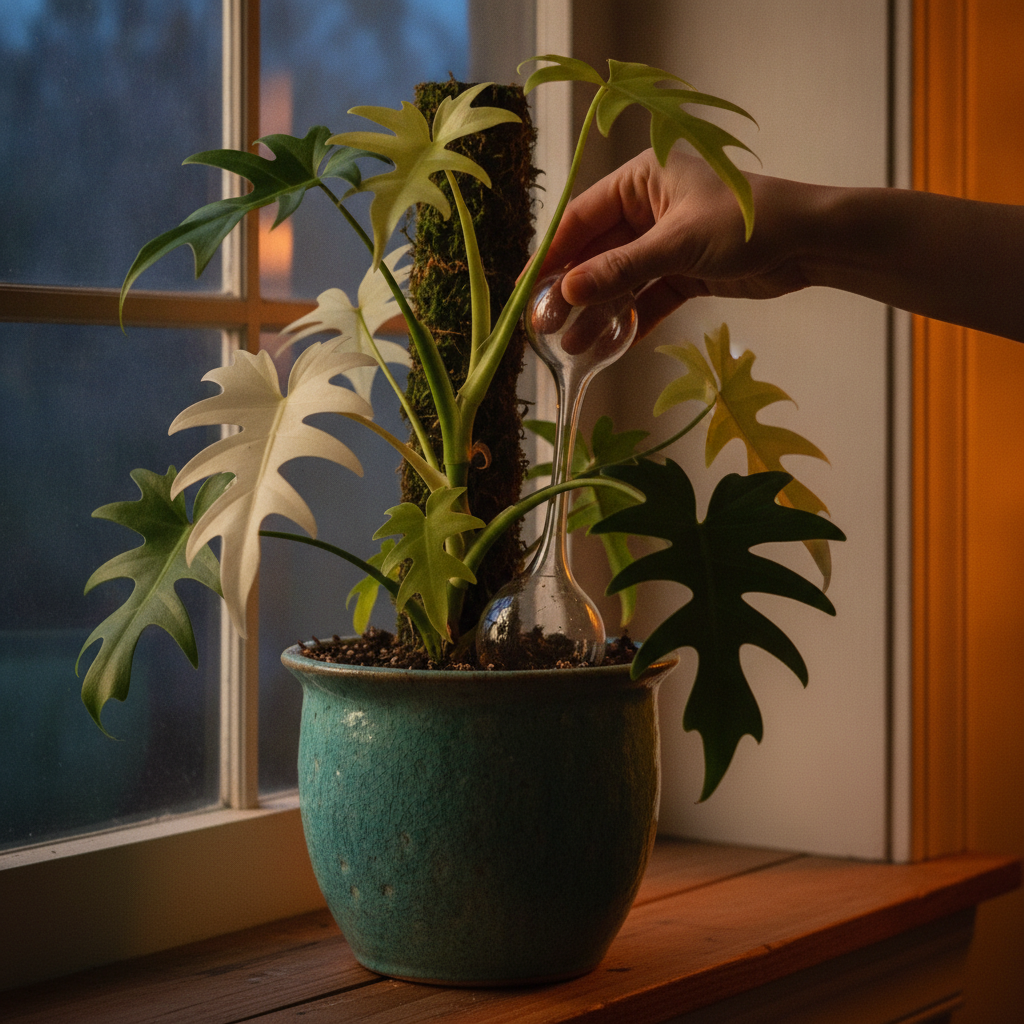
Water when the top 2 to 3 cm (about 1 inch) of the mix feels dry to the touch. In a warm, bright spot during spring and summer this usually works out to roughly once a week, while in the cooler, dimmer months it can stretch to every 10 to 14 days. These are starting points, not rules: pot size, mix, light and the temperature of your home all shift the timing, so the finger test always wins over the calendar.
When you do water, do it thoroughly. Add water until it runs freely from the drainage holes, which wets the entire root ball and flushes out accumulated salts, then let the pot drain completely and never leave it standing in a full saucer. A chunky aroid mix makes this kind of generous-then-dry rhythm easy, because excess water drains away in seconds rather than sitting around the roots.
Pro Tip — Weigh the Pot: Lift the pot just after watering and again a few days later. The difference in weight is a reliable, mess-free way to judge how much moisture is left, and with a little practice you will know when to water without touching the soil at all.
How to Water Correctly
- Check the top 2 to 3 cm of mix with a finger or moisture meter; water only if it is dry.
- Take the plant to a sink if you can, so it can drain freely without making a mess.
- Pour room-temperature water evenly over the surface until it flows from the drainage holes.
- Let it drain for several minutes until dripping stops completely.
- Empty the saucer or cache pot so the roots are never left sitting in water.
- Return the plant to its spot and wait until the surface dries again before repeating.
Signs of Overwatering vs. Underwatering
| Symptom | Overwatering | Underwatering |
|---|---|---|
| Leaf colour | Yellowing, often several leaves at once | Browning, crisp tips and edges |
| Leaf texture | Soft, limp, sometimes translucent | Dry, papery and curling inward |
| Soil | Stays wet for many days, may smell sour | Pulls away from the pot, bone dry throughout |
| Roots | Brown, mushy and foul smelling | Dry, brittle and pale |
| Stem base | Soft, dark and collapsing | Firm but the whole plant droops, reviving after watering |
Warning — Root Rot: Persistently soggy mix starves the roots of oxygen and invites the fungal and bacterial rots that are the leading killer of philodendrons. If the base turns soft and the soil smells sour, unpot at once, cut away any brown mushy roots with sterilised scissors, and repot into fresh, dry, chunky mix.
Humidity Requirements
Coming from humid tropical forest, the Florida Ghost is happiest at 60 percent relative humidity or above, and higher humidity visibly improves leaf quality, helping new leaves emerge cleanly and stay pale rather than browning at the margins. That said, it is adaptable and will grow perfectly well in average household humidity of 40 to 50 percent, simply with slightly less drama in the new growth.
The warning signs of air that is too dry are crispy brown leaf edges and tips, new leaves that stick or tear as they unfurl, and a general lack of vigour, all of which tend to worsen in winter when central heating dries the air indoors.
To raise humidity, group the plant with other foliage plants so they share moisture, stand the pot on a wide tray of damp pebbles with the pot base kept above the waterline, or run a small humidifier nearby, which is by far the most effective and consistent method. A moss pole kept damp also creates a pocket of humidity right where the aerial roots and new leaves emerge.
Water Quality
The Florida Ghost is not especially fussy about water, but in hard-water areas the minerals and chlorine in tap water can build up over time and contribute to brown leaf tips. If you notice this, switch to filtered or rainwater, or leave tap water to stand overnight before using it so some of the chlorine dissipates. Always use room-temperature water, as a cold shock can briefly stall growth.
Soil, Potting & Repotting
Get the mix right and most of the watering worries that plague philodendron growers simply disappear. The Florida Ghost has chunky, climbing-aroid roots that need air as much as moisture, so the goal is a loose, open medium that holds some water while letting the rest drain away fast. A dense, peaty bagged “houseplant compost” used on its own is the most common cause of trouble, because it stays wet and compacts around the roots.
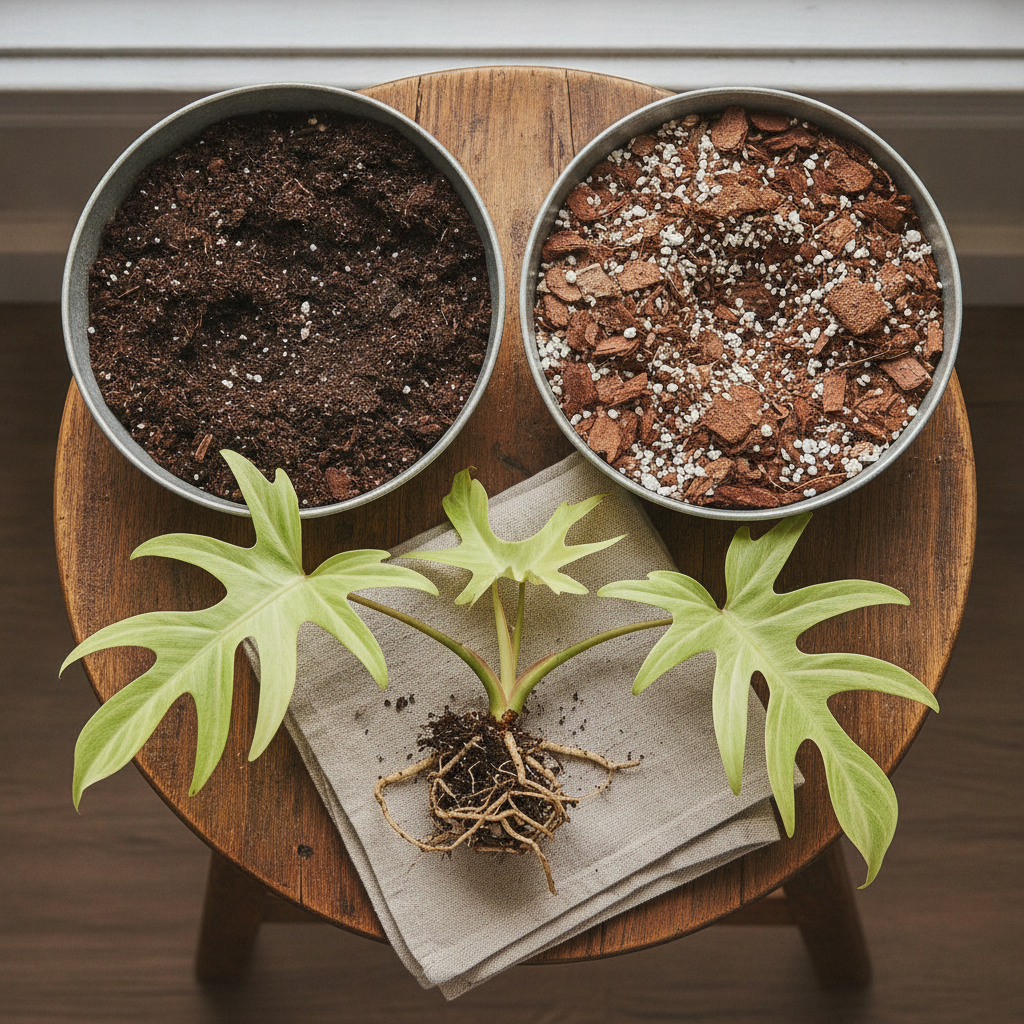
Ideal Soil Composition
The classic “aroid mix” is the gold standard here. Rather than a single material, it is a blend that combines moisture retention, drainage and structure, so the roots stay evenly damp without ever sitting in stagnant water. The table below shows a reliable recipe and what each component does.
| Component | Proportion | Function |
|---|---|---|
| Orchid bark | 30 percent | Creates air pockets and gives roots something to grip, mimicking the forest floor |
| Coco coir or peat-free compost | 30 percent | Holds moisture and nutrients without compacting as readily as peat |
| Perlite or pumice | 25 percent | Keeps the mix open and sharply draining |
| Worm castings | 10 percent | Adds gentle, slow-release nutrition and beneficial microbes |
| Horticultural charcoal | 5 percent | Helps keep the mix fresh and absorbs impurities |
The Florida Ghost prefers a slightly acidic to neutral root zone, around pH 5.5 to 6.5, which is exactly where a bark and coir based mix naturally sits, so there is rarely any need to adjust it.
Pro Tip — Quick Mix Recipe: No time to blend from scratch? Take a bag of standard peat-free houseplant compost and cut it roughly half and half with a ready-made orchid bark and perlite blend. It is not a precision mix, but it transforms drainage and is far better than compost alone.
Choosing the Right Pot
The pot you choose has as much influence on root health as the mix inside it. With a fast-draining aroid blend you have plenty of freedom, but a few principles still apply.
Drainage holes are non-negotiable. The Florida Ghost should never be planted in a pot without drainage. If you love a decorative cache pot with no holes, keep the plant in a plain plastic nursery pot that slips inside it, and lift it out to water and drain.
Pot material: Plastic and glazed ceramic hold moisture longer and suit most homes well. Terracotta breathes and dries faster, which can be useful if you tend to overwater, but you will need to water more often to compensate.
Pot size: Choose a pot only 2 to 3 cm (1 inch) wider than the current root ball. An oversized pot holds a large reservoir of wet mix the small root system cannot use, which is a fast route to root rot.
When to Repot
Plan to repot roughly every one to two years, or whenever you see roots circling the bottom or pushing out of the drainage holes, water running straight through without wetting the mix, or growth slowing despite good care. Spring and early summer are the best times, as the plant is actively growing and recovers quickly. Refreshing the mix periodically matters even if you do not size up, because old aroid mix breaks down, compacts and loses its airy structure over time.
How to Repot: Step-by-Step
- Water the plant a day or two beforehand so the root ball is hydrated and slides out cleanly.
- Ease the plant out by tipping the pot and supporting the base of the stems, rather than pulling on the foliage.
- Gently tease away old, spent mix from the roots and inspect them, trimming any that are brown, soft or rotten.
- Add a layer of fresh aroid mix to the new pot, then position the plant at the same depth it sat before.
- Backfill around the roots with fresh mix, firming lightly so there are no large air gaps but without compacting it.
- If the plant climbs a moss pole, settle the pole firmly at this stage so you do not disturb the roots later.
- Water thoroughly, let it drain, and keep the plant out of harsh light for a week while it settles.
Warning — Transplant Shock: Some drooping or a paused growing tip in the days after repotting is normal. Resist the urge to fix it by watering more or feeding, which only adds stress. Keep conditions stable, warm and bright but not sunny, and the plant will recover on its own within a week or two.
Fertilising
The Florida Ghost is a moderate feeder, and because its pale new leaves carry so little chlorophyll, the plant relies on its mature green foliage to power growth. Feeding it well during the growing season keeps those older leaves healthy and dark, which in turn supports a steady flow of new pale leaves. The key is to feed lightly and regularly rather than occasionally and heavily.
Fertiliser is not plant food in the way sunlight is; it simply replaces the mineral nutrients that get used up or flushed out of a pot over time. In the open, free-draining mix this plant prefers, those nutrients deplete and wash away fairly quickly, which is exactly why a little regular feeding through spring and summer pays off.
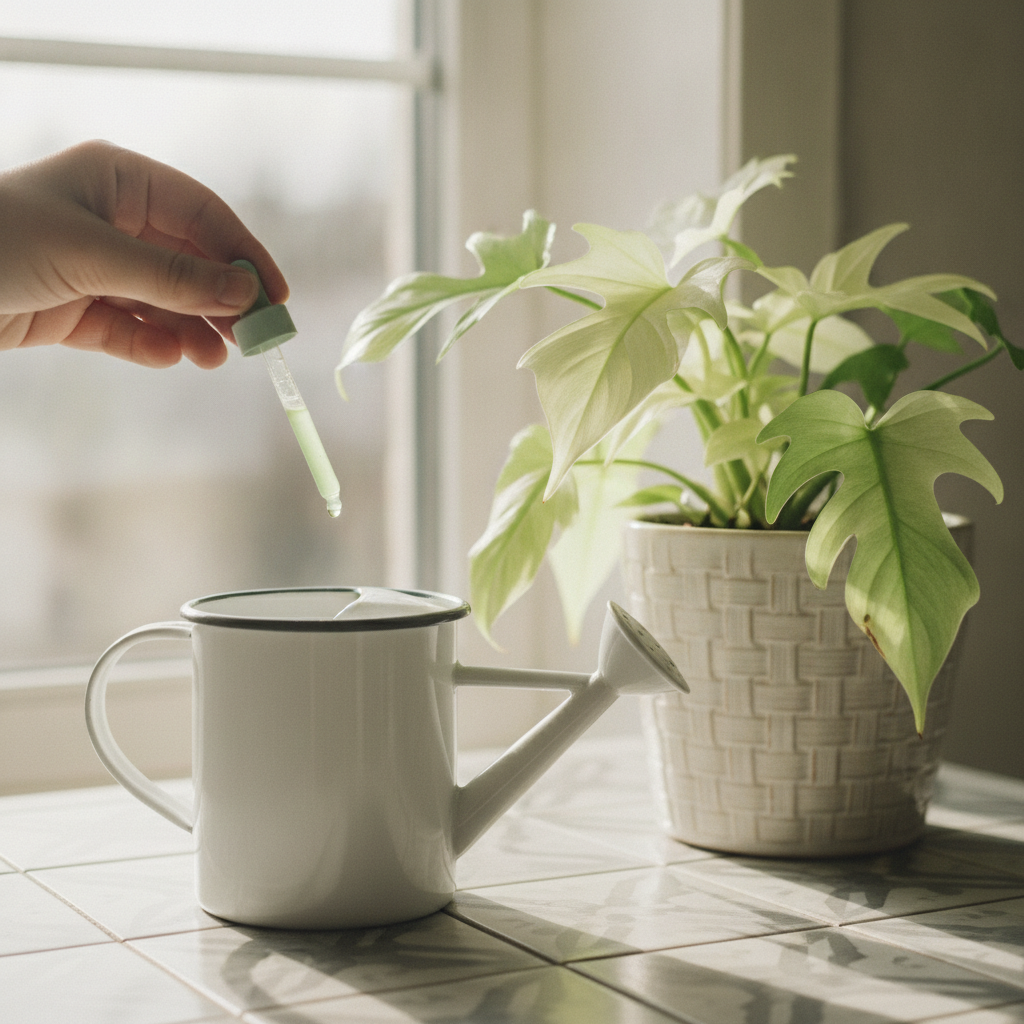
Understanding Plant Nutrients
Fertiliser labels show three numbers, the N-P-K ratio, representing nitrogen, phosphorus and potassium. For a foliage plant like the Florida Ghost, a balanced ratio or one slightly higher in nitrogen encourages the lush leaf growth you want. The table below outlines the main nutrients and what a shortage of each looks like.
| Nutrient | Symbol | Primary Function | Deficiency Symptoms |
|---|---|---|---|
| Nitrogen | N | Leaf and stem growth, green pigment | Older leaves yellow, growth slows |
| Phosphorus | P | Root development and energy transfer | Stunted growth, dull or purplish leaves |
| Potassium | K | Overall vigour and water regulation | Yellow or brown leaf margins |
| Calcium | Ca | Cell wall structure, new growth | Deformed or weak new leaves |
| Magnesium | Mg | Core of the chlorophyll molecule | Yellowing between leaf veins |
| Iron | Fe | Chlorophyll production in new leaves | Pale young leaves with green veins |
Types of Fertiliser
Liquid fertilisers: The easiest choice for the Florida Ghost. Diluted into the watering can, they give you precise control over strength and timing, and you can simply stop during the dormant months. A balanced houseplant feed at half the recommended strength is ideal.
Slow-release granular: Coated prills that release nutrients gradually over several months. Convenient and low effort, but they offer less control, and in a fast-draining mix they can release unevenly, so use them at the lower end of the recommended rate.
Organic fertilisers: Worm castings, diluted seaweed and similar gentle feeds release nutrients slowly and are very hard to overdo, while also supporting the soil microbes that help roots thrive. They are a forgiving option for anyone nervous about overfeeding.
Feeding Schedule
Feed every 2 to 4 weeks through spring and summer while the plant is actively pushing out new leaves. As growth slows in autumn, taper off, and through the depths of winter stop feeding altogether, since an idle plant cannot use the nutrients and the unused salts simply accumulate in the mix. Resume in spring once you see a fresh growing tip emerge.
Pro Tip — Less Is More: When it comes to feeding the Florida Ghost, underdoing it is far safer than overdoing it. Diluting to half strength gives you the steady supply of nutrients the plant wants while keeping well clear of the fertiliser burn that scorches roots and browns leaf tips.
How to Fertilise
- Make sure the mix is already slightly moist; never apply fertiliser to bone-dry roots.
- Dilute a balanced liquid feed to half the strength stated on the label.
- Water the plant with the diluted solution until it drains from the bottom.
- Every month or two, water with plain water alone to flush out any salt build-up.
- Skip feeding entirely on any plant that is sick, newly repotted or fully dormant.
Warning — Salt Build-Up: A white crust on the soil surface or around the pot rim signals accumulated fertiliser salts, which can burn roots and brown leaf edges. Flush the pot by running plenty of plain water through it until it drains freely, and ease back on the feeding rate.
Propagation
One of the great pleasures of growing a Florida Ghost is how easily it multiplies. As a climbing aroid it roots readily from stem cuttings, so a single plant can become a whole shelf of them, and propagating is also a tidy way to use the material you remove when pruning a leggy specimen. The method is straightforward, but there is one quirk worth understanding before you start.
Because the pale ghost leaves contain so little chlorophyll, a cutting that consists only of a white leaf and a node has almost no ability to photosynthesise and feed its developing roots. The most reliable cuttings therefore include at least one mature green leaf, or are taken so they can lean on the parent plant or a green leaf for energy while they root.
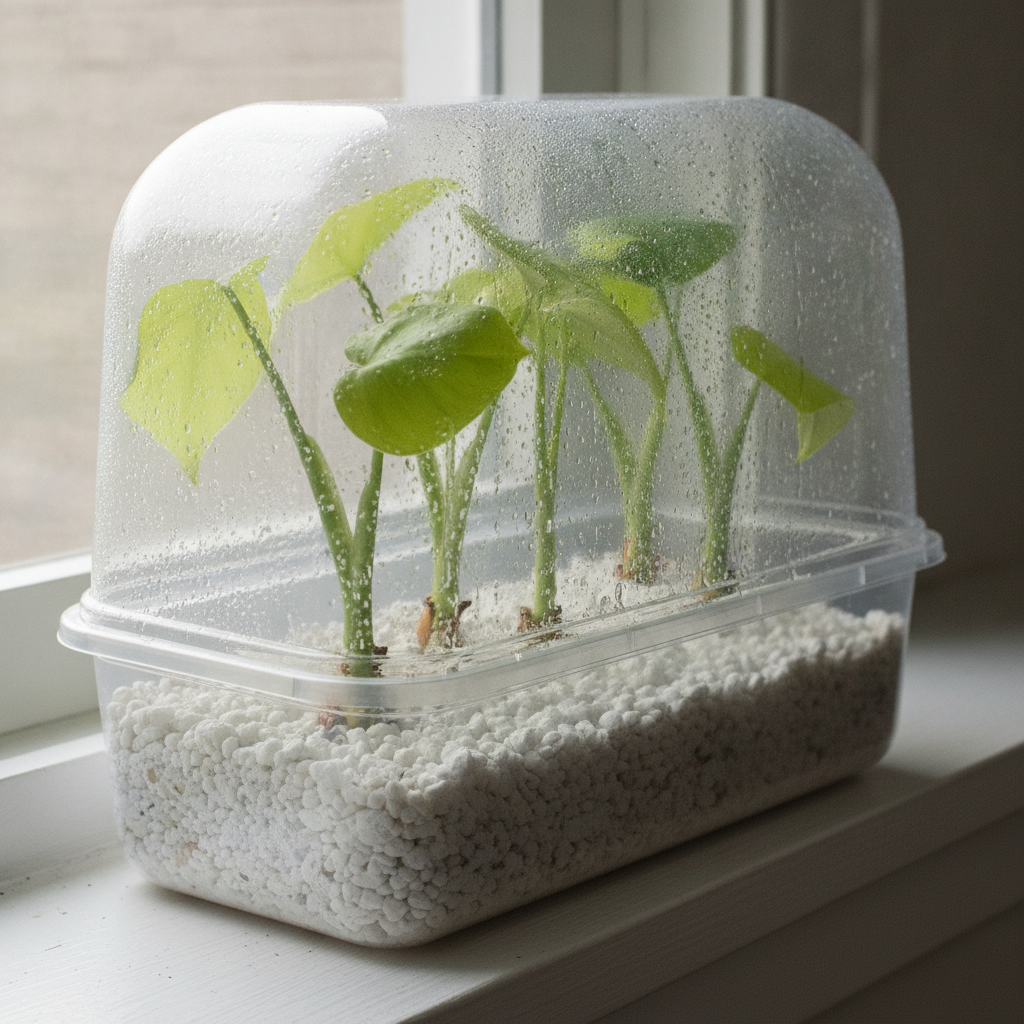
Understanding Nodes and Aerial Roots
The single most important structure for propagation is the node, the slightly swollen point on the stem where a leaf and petiole join. Every node contains the dormant tissue that can produce new roots and shoots, and on a climbing philodendron you will often see small nubs or aerial roots already emerging at the nodes. A cutting without a node will never root, no matter how many leaves it carries, while a cutting with a node and a visible aerial root is almost guaranteed to succeed.
Stem Cuttings in Water: Step-by-Step
Water propagation is the most popular method because you can watch the roots develop, which makes it both reassuring and oddly addictive.
- Using clean, sharp scissors, cut a section of stem just below a node, making sure the piece has at least one node and ideally one mature green leaf.
- Remove any lower leaves so that the node, but no foliage, will sit beneath the water.
- Place the cutting in a glass of room-temperature water with the node submerged and the leaves above the surface.
- Set the glass in bright indirect light and refresh the water every few days to keep it clear and oxygenated.
- Wait for roots to reach around 3 to 5 cm (1 to 2 inches) long, which usually takes two to four weeks.
- Pot the rooted cutting into a small pot of moist aroid mix, keeping it slightly more humid than usual for the first couple of weeks.
Pro Tip — Ease the Transition: Water-grown roots differ from soil roots and can sulk when first potted up. Keep the newly potted cutting a little more humid, perhaps under a loose clear bag for a week or two, and the move from water to mix will be far smoother.
Stem Cuttings in Sphagnum Moss: Step-by-Step
Rooting directly in damp sphagnum moss or perlite produces sturdier roots that adapt to potting mix more easily, and it suits collectors propagating several cuttings at once.
- Take a node cutting as before, again favouring a piece that includes a mature green leaf.
- Soak a handful of sphagnum moss, then wring it out so it is damp but not dripping.
- Nestle the cutting into the moss inside a clear container or deli cup so the node is in contact with the moss.
- Cover loosely or set the cup in a propagation box to hold humidity, leaving a small gap for airflow.
- Keep the moss lightly moist and in bright indirect light; roots usually appear within two to four weeks.
- Once roots are several centimetres long, pot the cutting up into standard aroid mix.
Troubleshooting Propagation
| Problem | Likely Cause | Solution |
|---|---|---|
| Cutting rots in water | Stale water, or a leaf submerged and decaying | Refresh water more often and keep all foliage above the surface |
| No roots after a month | No node included, or too little light and warmth | Check the cutting has a node; move somewhere brighter and warmer |
| Pale cutting fails to thrive | Cutting is all white leaf with no chlorophyll to fuel rooting | Always include a mature green leaf or node on each cutting |
| Cutting wilts after potting | Shock moving from water to mix | Raise humidity and keep the mix lightly moist while it adjusts |
Pests & Diseases
A well-grown Florida Ghost in bright light and an airy mix is a resilient plant, but no houseplant is entirely immune to trouble. Most problems are introduced on new plants or in damp, stagnant conditions, and the pale new leaves can be especially attractive to sap-sucking pests, so regular inspection is your best defence.
Make a habit of checking the undersides of leaves, the leaf axils and the tender growing tip whenever you water. Catching an infestation in its first days, when it is a handful of insects rather than a colony, is the difference between a quick wipe-down and a drawn-out battle.
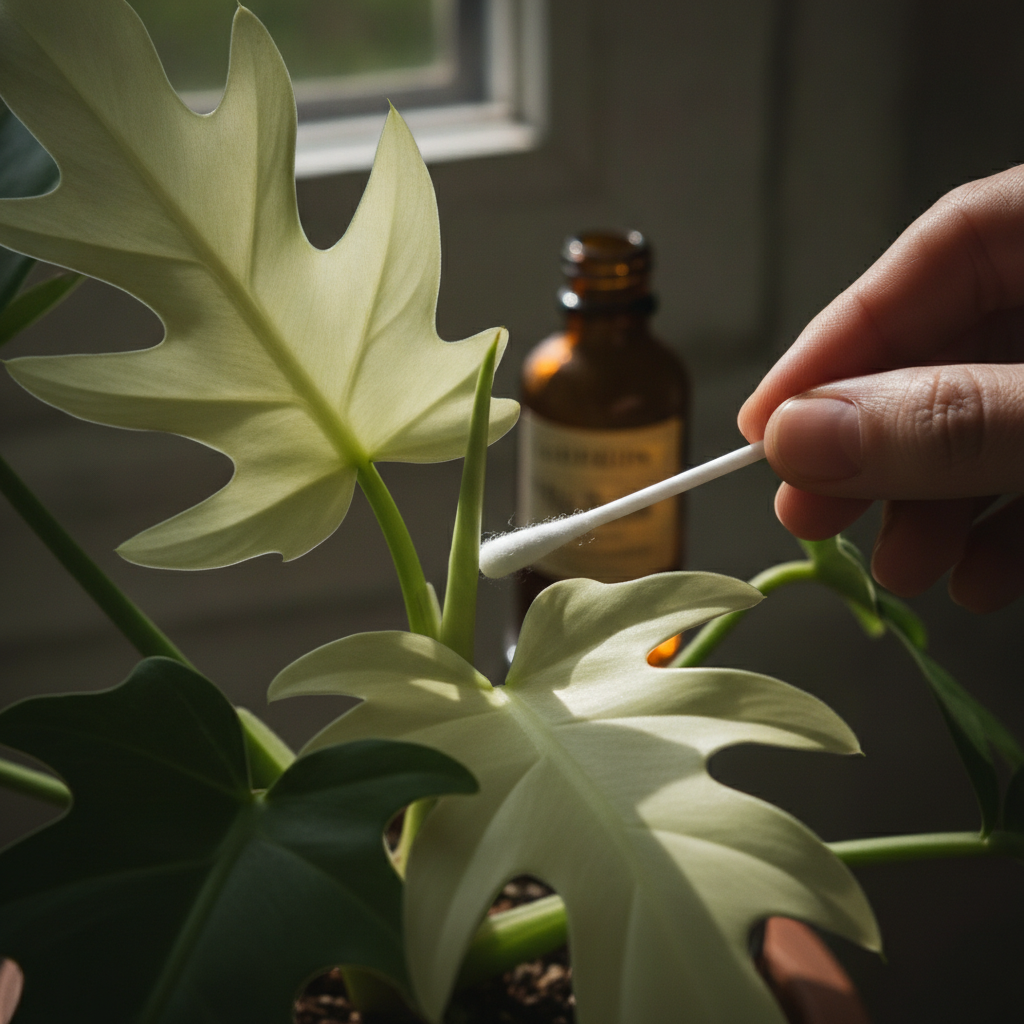
Common Pests
Thrips (Thysanoptera)
Thrips are the bane of philodendron growers and have a particular fondness for the soft, pale new growth of the Florida Ghost. These tiny, slender insects rasp at the leaf surface, leaving silvery streaks, pale stippling and distorted, scarred new leaves. They are quick to spread between plants.
Treatment: Isolate the plant at once. Wipe down accessible leaves, then spray thoroughly with insecticidal soap or neem oil, reaching the growing tip and leaf undersides. Repeat every five to seven days for several weeks to break the life cycle, and consider blue sticky traps to monitor adults.
Spider Mites (Tetranychus urticae)
Thriving in warm, dry air, spider mites are almost too small to see, but their fine webbing strung between leaves and the stem is a giveaway. Affected leaves take on a dusty, stippled look and may yellow and fall.
Treatment: Rinse the foliage in the shower to dislodge mites and webbing, then treat with neem oil or insecticidal soap, paying attention to leaf undersides. Raising humidity makes the plant far less hospitable to them and helps prevent a return.
Mealybugs (Pseudococcidae)
Mealybugs appear as small, white, cottony tufts tucked into leaf axils and along stems. They suck sap and excrete sticky honeydew, which can lead to sooty mould, and they multiply quickly if ignored.
Treatment: Dab each insect directly with a cotton bud dipped in diluted isopropyl alcohol, which kills them on contact. Follow up with neem oil or insecticidal soap across the whole plant, and re-check the hidden axils every few days.
Fungus Gnats (Sciaridae)
These small black flies hover around the soil surface and are more nuisance than serious threat, but their larvae feed on roots in consistently wet mix and can harm young plants and fresh cuttings.
Treatment: Let the top of the mix dry out more between waterings, which kills off the larvae, and use yellow sticky traps to catch the adults. A layer of coarse grit or a bottom-watering routine also discourages them from laying eggs.
Common Diseases
Root Rot (Pythium and Phytophthora)
By far the most common and most serious disease of the Florida Ghost, root rot is caused by soil-borne fungi and water moulds that flourish in waterlogged, airless mix. Signs include yellowing leaves, a soft and darkening stem base, and a sour smell from the soil.
Treatment: Unpot the plant, rinse the roots and cut away every brown, mushy root with sterilised scissors. Repot into fresh, dry, chunky mix and water sparingly until it recovers. Prevention through correct watering and an open mix is far easier than the cure.
Bacterial Leaf Spot (Xanthomonas)
This shows up as dark, water-soaked spots, often ringed with a yellow halo, that can spread and merge across a leaf. It is encouraged by water sitting on the foliage and by poor air circulation around the plant.
Treatment: Remove affected leaves with clean scissors and dispose of them. Keep the foliage dry when watering, improve airflow around the plant, and avoid crowding it tightly against others until the problem clears.
Pest and Disease Summary
| Pest / Disease | Identification | Treatment |
|---|---|---|
| Thrips | Silvery streaks, stippling, scarred new leaves | Neem or insecticidal soap, repeated weekly; isolate |
| Spider mites | Fine webbing, dusty stippled leaves | Rinse, neem oil, raise humidity |
| Mealybugs | White cottony tufts in axils | Dab with alcohol, then treat with neem oil |
| Fungus gnats | Small flies over moist soil | Dry the topsoil, yellow sticky traps |
| Root rot | Yellow leaves, soft stem base, sour soil | Trim rotten roots, repot in fresh dry mix |
| Bacterial leaf spot | Dark water-soaked spots with yellow halos | Remove leaves, keep foliage dry, improve airflow |
Prevention Strategies
Prevention is overwhelmingly easier than treatment. Quarantine every new plant for a couple of weeks before it joins your collection, inspect your Florida Ghost regularly while watering, and keep the foliage clean by wiping the leaves, which also removes dust that can harbour pests. A plant grown in good light, an open mix and steady conditions is naturally far more resistant to attack.
Good airflow is a quietly powerful tool: gentle air movement keeps foliage dry, discourages fungal and bacterial disease, and makes life harder for spider mites and fungus gnats alike. Avoid cramming plants together so tightly that air cannot circulate between them.
Pro Tip — Inspect the New Growth First: Thrips and other sap-suckers head straight for the soft, pale ghost leaves at the tip, so that is where you will spot trouble earliest. Check the newest leaf and the growing point every time you water, and you will rarely be caught out.
Popular Varieties
The Florida Ghost is itself a named selection of Philodendron pedatum, a variable species whose leaf shape and new-growth colour differ noticeably from plant to plant. That variability has given rise to a small family of related forms and close cousins that collectors seek out, each with its own take on the ghostly new leaf.
The forms below share the same easy care, so choosing between them is purely a matter of the look you prefer. The table gives a quick comparison before the detailed profiles.
| Variety | Leaf Appearance | Light Needs | Growth Rate | Availability |
|---|---|---|---|---|
| Florida Ghost | New leaves chalky cream-white, maturing to deep green | Bright indirect | Moderate to fast | Increasingly common |
| Florida Ghost Mint | New leaves soft mint-green rather than white | Bright indirect | Moderate | Less common |
| Florida Beauty | Lobed leaves splashed and marbled with cream variegation | Bright indirect | Moderate | Sought after |
| Philodendron pedatum (green form) | Deeply lobed green leaves, new growth lightly flushed | Bright indirect to medium | Fast | Common |
| Philodendron squamiferum | Similar lobed leaves with distinctive red bristly petioles | Bright indirect | Moderate | Specialist growers |
Featured Varieties
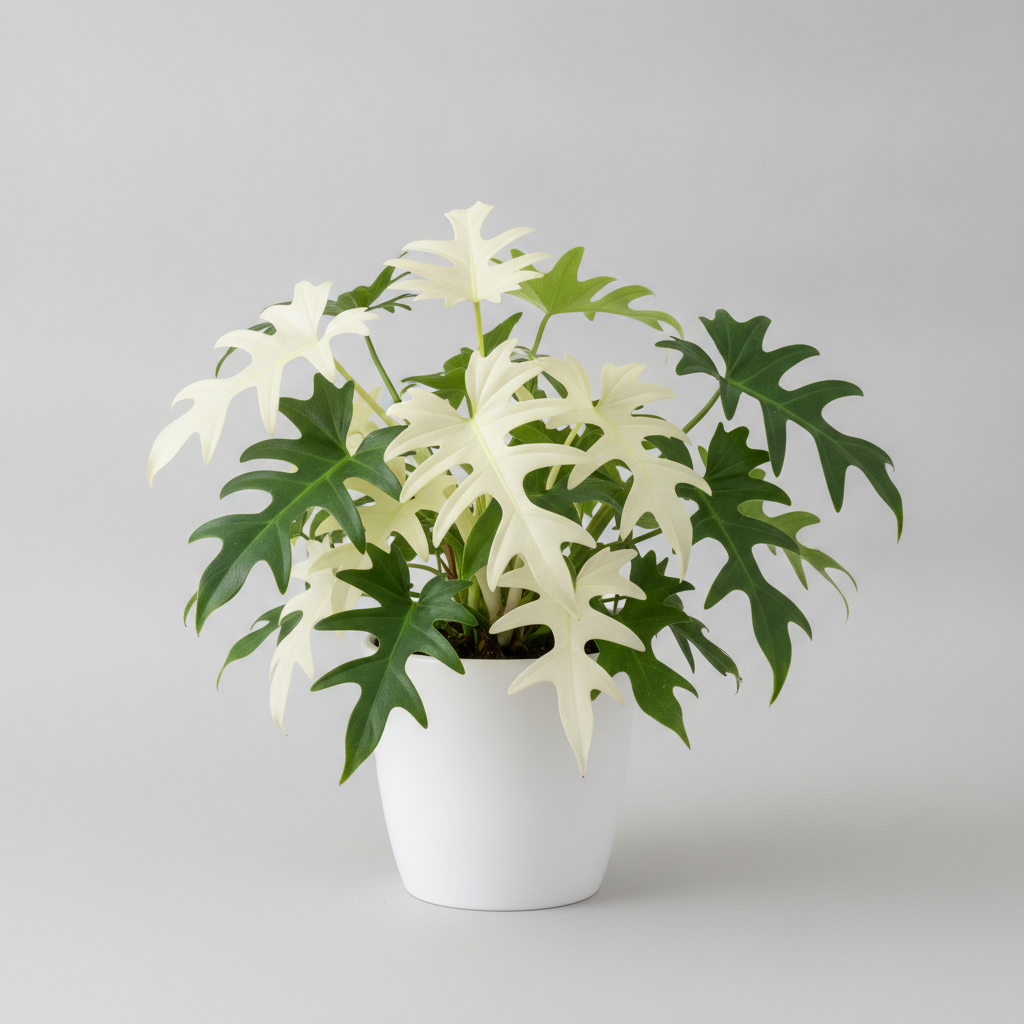
Florida Ghost
The classic form and the reason for all the fuss. Its deeply cut pedate leaves emerge an almost waxy cream-white, occasionally with a faint green flush, then harden slowly through lime to deep green, so a healthy plant carries pale ghosts and dark veterans at the same time.
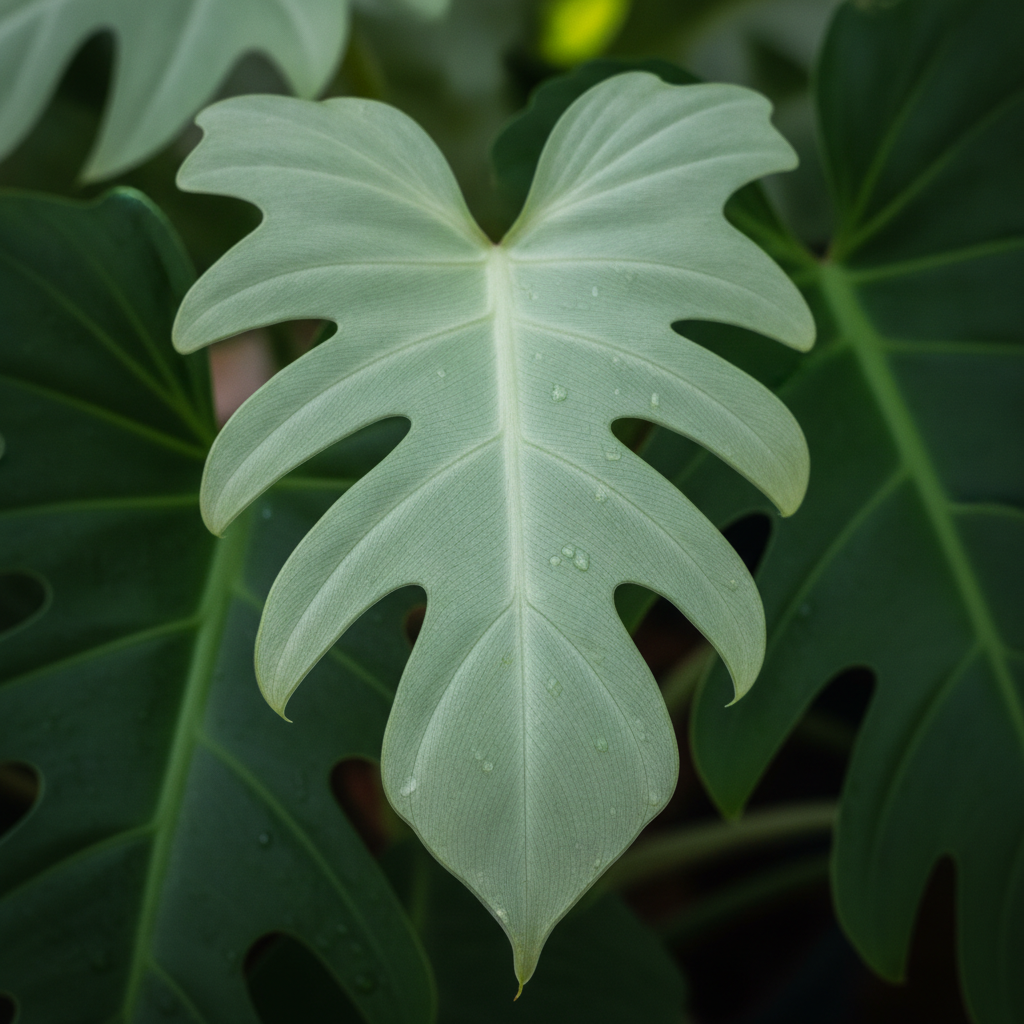
Florida Ghost Mint
A softer-toned selection whose new leaves open a pale mint-green rather than chalky white before maturing to the same deeply lobed dark green. Growers who find the stark white a little too ghostly often prefer the gentler, more naturalistic gradient of the Mint.
Variety Profiles in Detail
Florida Beauty (Philodendron ‘Florida Beauty’)
A variegated relative in the Florida group, its lobed leaves are splashed, speckled and marbled with cream and pale yellow over green, no two leaves quite alike. Variegation varies with light, so it needs consistently bright indirect conditions to hold its pattern, and it is a touch slower than the plain Florida Ghost.
Green Form (Philodendron pedatum)
The wild-type species without the dramatic pale new growth. It offers the same handsome, deeply lobed climbing foliage and is faster and even more forgiving than the named selections, making it an excellent and affordable entry point for anyone drawn to the leaf shape rather than the ghostly colour.
Philodendron squamiferum (Philodendron squamiferum)
A close cousin often grown alongside P. pedatum and sometimes confused with it. The leaves are similarly lobed, but its standout feature is the petioles, which are covered in soft, bristly red hairs. Care is identical, so it pairs naturally with a Florida Ghost in a collection.
Choosing the Right Variety for Your Space
If it is the signature pale new growth you are after, the classic Florida Ghost delivers the boldest contrast, while the Florida Ghost Mint offers a softer version for those who find white leaves a little stark. For maximum drama and a brighter spot, the variegated Florida Beauty is hard to beat, whereas the plain green Philodendron pedatum gives you all the sculptural leaf shape at a fraction of the price and fuss. All of them want the same bright indirect light, chunky mix and a pole to climb, so you can mix and match with complete confidence.
Frequently Asked Questions
Why are my Florida Ghost’s new leaves green instead of white?
This is almost always a light issue. In dim conditions the plant greens up its new leaves quickly to start photosynthesising, so the ghostly pale phase is brief and muddy. Move it to a brighter spot with strong indirect light, and the next leaves should emerge much whiter and hold that colour for longer.
Is the Florida Ghost philodendron toxic to pets?
Yes. Like all philodendrons it contains insoluble calcium oxalate crystals, which cause burning, drooling and swelling of the mouth and throat if chewed or swallowed by cats, dogs or people. Keep it well out of reach of curious pets and small children.
Does a Florida Ghost need a moss pole?
It does not strictly need one, but it strongly benefits from a support. As a climbing aroid, it produces larger and more deeply lobed leaves when it can climb, gripping a damp moss pole with its aerial roots. Grown without support it will still survive but tends to stay smaller and look untidy.
How fast does the Florida Ghost grow?
In good light, warmth and a chunky mix, it is a moderately fast grower that can push out a new leaf every few weeks during spring and summer. Growth slows or pauses in winter, which is normal. A plant climbing a pole in bright light will outpace one sitting in a low-light corner.
Why are the new white leaves browning or scorching?
Because pale leaves lack the pigments that protect against strong light, they scorch far more easily than mature green ones. Too much direct sun is the usual culprit, sometimes combined with low humidity. Filter the light during the brightest part of the day and raise humidity around the plant to keep new leaves clean.
Can I propagate from a purely white leaf cutting?
It is risky. A cutting made up only of a white leaf and a node has very little chlorophyll, so it struggles to generate the energy needed to root and often fails. For reliable results, always include a mature green leaf, or at least a node positioned to draw on green tissue, on every cutting.
Why is my Florida Ghost leggy with small leaves?
Long gaps between leaves and shrinking leaf size point to insufficient light, often made worse by the lack of a support to climb. Give the plant brighter indirect light and a moss pole, and the new growth will gradually become larger, more deeply lobed and more closely spaced.
How often should I repot a Florida Ghost?
Roughly every one to two years, or sooner if roots are circling the pot or escaping the drainage holes. Move up just one pot size at a time and refresh the aroid mix, since the old mix breaks down and compacts over time even when the plant has not outgrown its container.
What is the difference between the Florida Ghost and Philodendron squamiferum?
They share a similar deeply lobed leaf shape and are closely related, but the easiest way to tell them apart is the petiole. Philodendron squamiferum has distinctive red, bristly hairs along its leaf stems, while the Florida Ghost has smooth petioles and is grown chiefly for its pale, colour-changing new leaves.
My Florida Ghost’s lower leaves are yellowing. Is that a problem?
The occasional old lower leaf yellowing and dropping is natural as the plant ages and redirects energy upward. If several leaves yellow at once, however, suspect overwatering and check the roots and the moisture in the mix, as soggy conditions are the most common cause of widespread yellowing in philodendrons.






