

Few houseplants announce themselves quite as boldly as the fishtail palm. Where most palms fan out in tidy, feathery symmetry, Caryota mitis does something no other palm on earth does: it splits each frond twice over, ending every leaflet in a jagged, wedge-shaped flourish that looks unmistakably like the torn tail fin of a fish. Native to the humid lowland forests of Southeast Asia, from India and Myanmar through Malaysia, Java and the Philippines, this clustering palm has become a favourite for bright living rooms, atriums and offices where its ragged silhouette can breathe.
The fishtail palm has a reputation for being moderately demanding, and that reputation is fair. It is not a plant that forgives long stretches of neglect the way a snake plant or a ZZ will, and it has a genuine appetite for water, humidity and light. Yet none of its needs are complicated once you understand them, and the difference between a fishtail palm that merely survives, dropping to a thin cluster of brown-tipped canes, and one that thrives into a lush two-metre fountain of foliage comes down to a handful of consistent habits. This guide covers every one of them, from reading light levels correctly to dividing a mature clump and handling the plant’s genuinely hazardous fruit.
Contents
- Quick Reference
- Why the Fishtail Palm Makes a Striking Houseplant
- Light Requirements
- Watering & Humidity
- Soil, Potting & Repotting
- Fertilising
- Propagation
- Pests & Diseases
- Popular Varieties
- Frequently Asked Questions
Quick Reference: Fishtail Palm at a Glance
| Light | Bright, indirect light; tolerates a few hours of gentle direct sun once acclimated |
| Watering | Keep evenly moist; water when the top 2 to 3 cm (1 in) of soil begins to dry, never bone dry |
| Temperature | 18 to 27 degrees C (65 to 80 degrees F); avoid anything below 10 degrees C (50 degrees F) |
| Humidity | High; 50 per cent or more preferred, above 60 per cent ideal |
| Fertiliser | Balanced palm feed monthly in spring and summer; watch for potassium and magnesium deficiency |
| Toxicity | Toxic; fruit pulp and sap contain needle-like calcium oxalate crystals that severely irritate skin and are harmful if ingested by people or pets |
Why the Fishtail Palm Makes a Striking Houseplant
The fishtail palm earns its place indoors on the strength of its foliage alone. Every other palm in cultivation carries either pinnate fronds, the classic feather shape, or palmate ones, the fan shape. Caryota mitis is the outlier: its leaves are bipinnate, divided not once but twice, so that the frond branches into secondary stems and each of those carries the distinctive triangular leaflets with their ragged, bitten-off tips. The overall effect is soft, layered and slightly wild, closer to a fern’s texture than a palm’s, which is exactly why interior designers reach for it when a room needs greenery with movement rather than architecture.
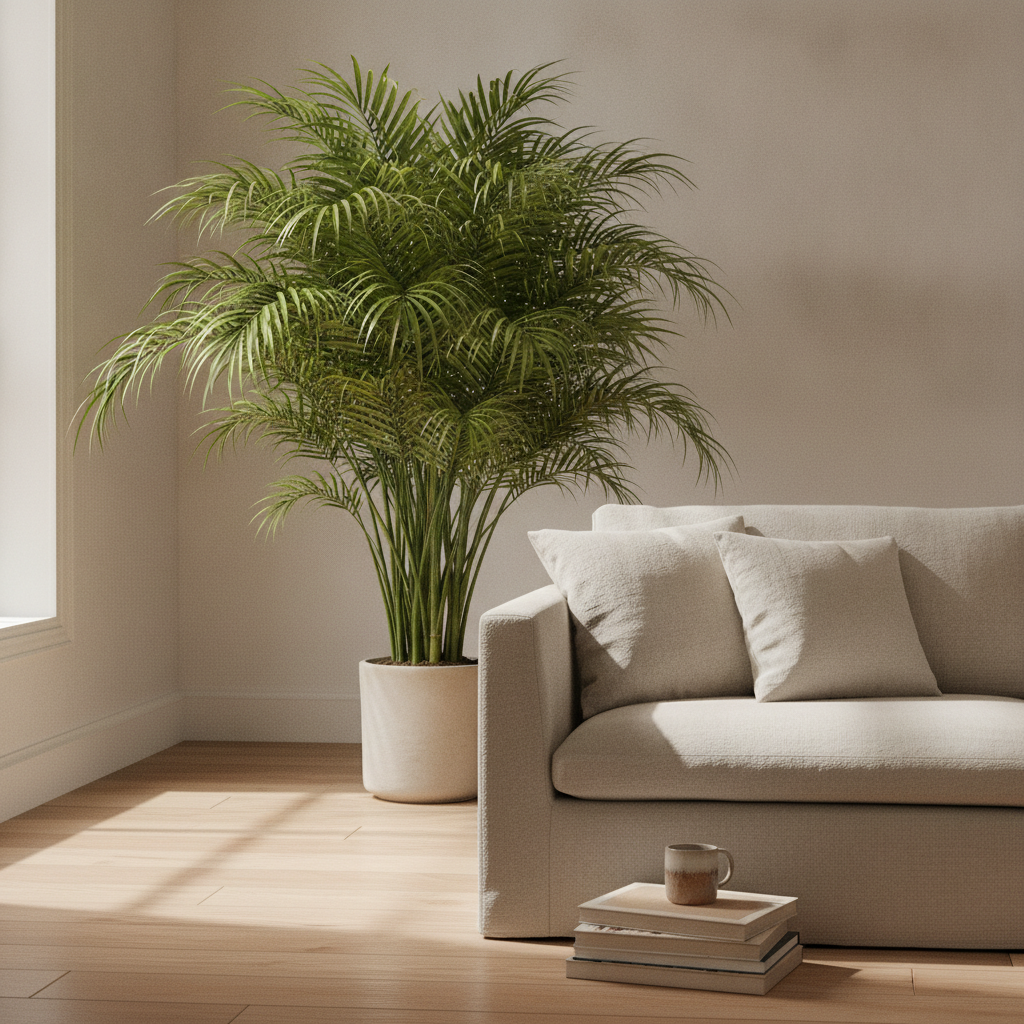
Beyond looks, the clustering habit of this species makes it a generous, long-lived plant. Unlike its solitary relative Caryota urens, the clustering fishtail palm sends up multiple canes from a shared base, so as older stems mature the clump continually renews itself with fresh suckers. Indoors it typically settles between 1.8 and 3 metres (6 to 10 feet), full and bushy rather than towering, and it grows at a moderate pace that keeps it manageable for years. It is worth knowing from the outset that each individual stem is monocarpic: once a cane flowers and fruits, that cane dies. Because the plant is a clump, this is not the loss it sounds like, but it does explain the occasional browning cane on an otherwise healthy specimen.
Important — Toxicity: The fishtail palm is toxic. Its fruit and sap contain raphides, microscopic needle-shaped crystals of calcium oxalate, that cause intense burning, itching and swelling on contact with skin and can cause serious irritation of the mouth and throat if any part is chewed or swallowed. Keep the plant away from children and pets, and always wear gloves and eye protection when handling the fruit or pruning mature, fruiting canes.
Light Requirements
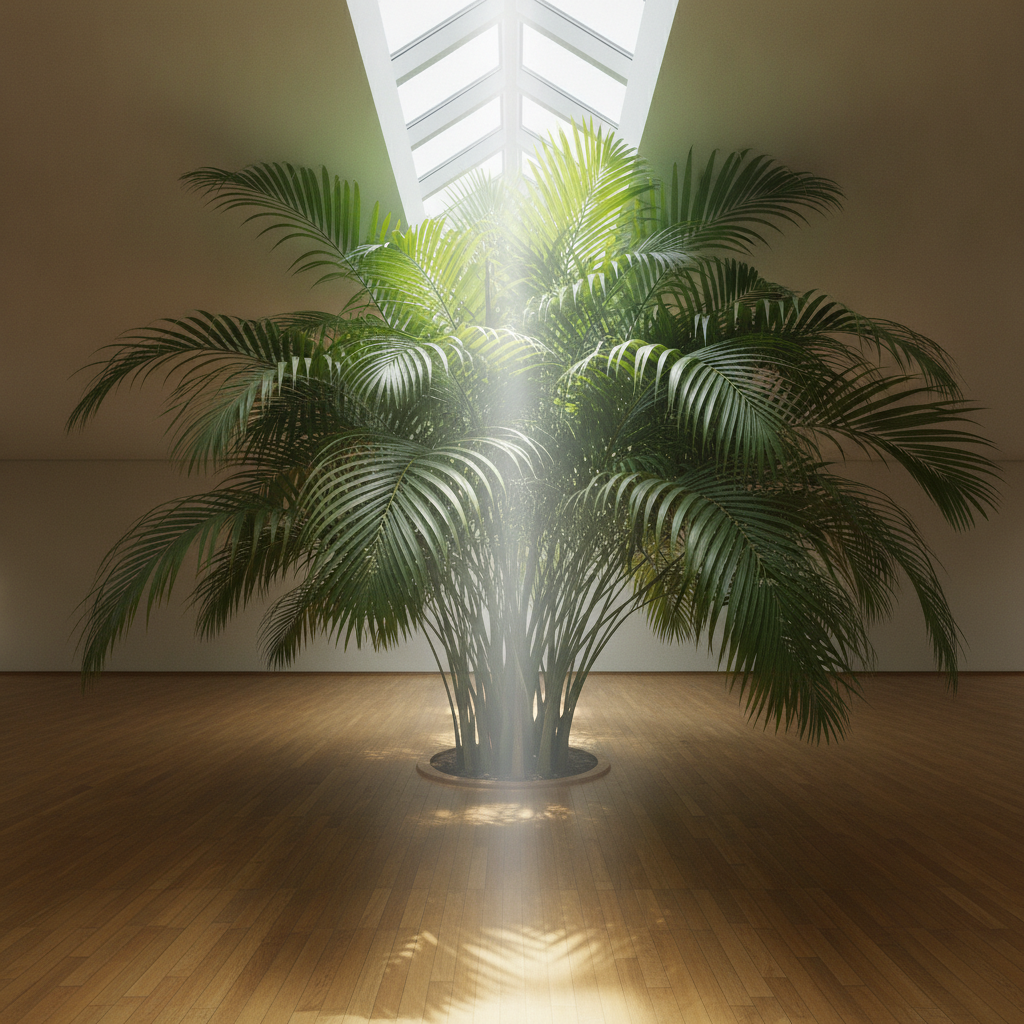
In its native forests the fishtail palm begins life on the shaded floor and climbs steadily towards the brighter mid-storey as it matures, which tells you almost everything about its indoor light preference. It wants a lot of light, but light that has been filtered rather than the full, unbroken glare of a midday sun through glass. Give it the brightest position you can that still avoids scorching, and it will reward you with dense, richly coloured fronds held on sturdy canes.
The ideal is bright, indirect light for most of the day, with perhaps two or three hours of soft, direct morning sun. A spot a metre or so back from a large, unobstructed window is close to perfect. In lower light the palm will not die quickly, but its growth slows to a crawl, the new fronds emerge smaller and paler, and the plant stretches awkwardly towards the nearest window, losing the balanced, fountain-like shape that makes it worth growing.
Light Levels Explained
Because “bright indirect light” means very different things to different people, it helps to think in rough measured terms. The table below maps common indoor light categories to the outcome you can expect from a fishtail palm placed there.
| Light Category | Approx. Level | Typical Location | Outcome |
|---|---|---|---|
| Direct sun | Over 50,000 lux | Pressed against a south window | Risk of scorched, bleached leaflets unless slowly acclimated |
| Bright indirect | 10,000 to 25,000 lux | Near a bright east or filtered south window | Best growth, full canes, deep colour |
| Medium | 5,000 to 10,000 lux | A metre or two into a bright room | Steady but slower growth, acceptable form |
| Low | 1,000 to 5,000 lux | North window or interior corner | Weak, stretched growth, few new fronds |
| Very low | Under 1,000 lux | Windowless room | Gradual decline; not sustainable long term |
Window Orientation and Placement
South-facing window: The brightest option and a fine choice, but keep the palm a short distance back or diffuse the light with a sheer curtain so the harsh midday rays do not fall directly on the foliage during summer.
East-facing window: Often the sweet spot. The plant catches gentle, cool morning sun and then sits in bright, indirect light for the rest of the day, which suits it perfectly.
West-facing window: Workable, though the strong late-afternoon sun can be surprisingly fierce in summer, so pull the plant back a little or filter the glass.
North-facing window: Usable only if the window is large and unobstructed. Expect noticeably slower growth here, and consider supplementing with a grow light through the darker months.
Pro Tip — Rotate for Symmetry: A fishtail palm leans towards its light source over time. Give the pot a quarter turn every week or two so all sides receive even light and the clump grows upright and balanced rather than one-sided.
How Light Affects Frond Density and Colour
Light is the single biggest lever on how full a fishtail palm looks. In strong, filtered light the canes stay short and stocky, the fronds crowd together, and the leaflets take on a saturated mid-green. Starved of light, the same plant produces long internodes, wide gaps between fronds and a thin, see-through canopy. If your palm has grown leggy, the cause is almost always insufficient light rather than any watering or feeding fault, and the fix is to move it brighter and let the newer growth fill back in.
Warning — Direct Sunlight: A palm moved suddenly from a shaded spot into full sun will scorch, showing bleached, crispy patches on the most exposed leaflets that never recover. If you want to give yours more sun, increase exposure gradually over two to three weeks so the foliage can adapt.
Artificial Lighting
The fishtail palm responds well to supplemental lighting, which makes it viable in offices and darker rooms that could not otherwise support it. A full-spectrum LED grow light positioned above the canopy and run for ten to twelve hours a day will keep growth steady through winter or in a location that never sees strong daylight. Keep the fixture far enough back that it does not heat the foliage, and remember that the tall, upright growth habit means the light needs to sit above the plant rather than beside it.
Seasonal Adjustments
Light intensity indoors can halve between summer and midwinter, so a palm that was thriving a metre back from the window in July may be struggling in the same spot in December. Move it closer to the glass as the days shorten, clean the window and the foliage so nothing blocks the weak winter light, and ease it back to its summer position once the sun climbs again in spring.
Watering & Humidity
Water is where the fishtail palm parts company with the easy-going, drought-tolerant crowd. This is a plant of humid, high-rainfall forests, and it likes its roots consistently moist. The goal is a substrate that stays damp like a wrung-out sponge without ever becoming waterlogged, and the most common ways to kill a fishtail palm are letting it dry out completely at one extreme and drowning it in a pot with no drainage at the other.
When to Water
Check the soil with your finger and water when the top 2 to 3 cm (about an inch) has begun to dry but the soil beneath is still cool and slightly moist. Do not wait until the whole pot dries out; a fishtail palm that dries to the core responds by browning its lower fronds and crisping its leaflet tips, damage that cannot be reversed once it appears. In a bright, warm room during summer this often means watering two or three times a week, while in winter the interval stretches out considerably.
Rather than watering on a fixed calendar, let the plant and its conditions set the pace. A palm in a small pot, strong light and dry indoor air will drink far faster than the same plant in a large pot in a cool, humid room. Feel the soil each time before you water, and you will quickly learn the rhythm your particular plant keeps through the seasons.
Pro Tip — Weigh the Pot: Lift the pot just after a thorough watering to learn its heavy weight, then lift it again a few days later. A pot that feels noticeably light has dried out; a pot that still feels heavy can wait. With a large palm this quickly becomes a more reliable gauge than poking the surface.
How to Water Correctly
- Check that the top few centimetres of soil have started to dry before you begin.
- Water slowly and evenly across the whole surface, using room-temperature water so the roots are not shocked by cold.
- Keep going until water runs freely from the drainage holes, which ensures the entire root ball is moistened rather than just the top.
- Let the pot drain fully for several minutes.
- Empty the saucer or cachepot so the palm never sits in standing water.
- Every month or two, water in the sink or shower and let it flush through generously to rinse out accumulated mineral salts.
Signs of Overwatering vs. Underwatering
| Symptom | Overwatering | Underwatering |
|---|---|---|
| Leaf colour | Yellowing across whole fronds, often lower ones first | Dull green fading to brown, starting at the tips |
| Leaf texture | Soft, limp, sometimes translucent | Dry, crisp and brittle |
| Soil | Stays wet for days, may smell sour | Pulls away from the pot sides, dusty and hard |
| Roots | Brown, mushy and foul-smelling | Dry, thin and papery |
| Stem base | Soft or darkened at the soil line | Firm but the whole clump looks wilted |
Warning — Root Rot: A fishtail palm left standing in water quickly develops root rot, which spreads from soft, blackened roots up into the canes. If you catch a sour smell or find mushy roots, unpot the plant at once, trim away every affected root with sterilised tools, and repot into fresh, free-draining mix in a pot with generous drainage. Prevention through proper drainage is far more reliable than any cure.
Humidity Requirements
Humidity is not optional for this palm. Coming from perpetually moist forests, it wants ambient humidity of at least 50 per cent and is happiest above 60 per cent. Average centrally heated or air-conditioned homes often sit well below this, especially in winter, and the fishtail palm registers its displeasure through brown, papery tips and margins on its leaflets.
Crispy leaflet tips are the classic symptom of air that is too dry, frequently compounded by underwatering or a build-up of fertiliser salts. If you see the delicate ragged edges of the fishtail leaflets browning and curling while the soil moisture is correct, low humidity is almost always the culprit.
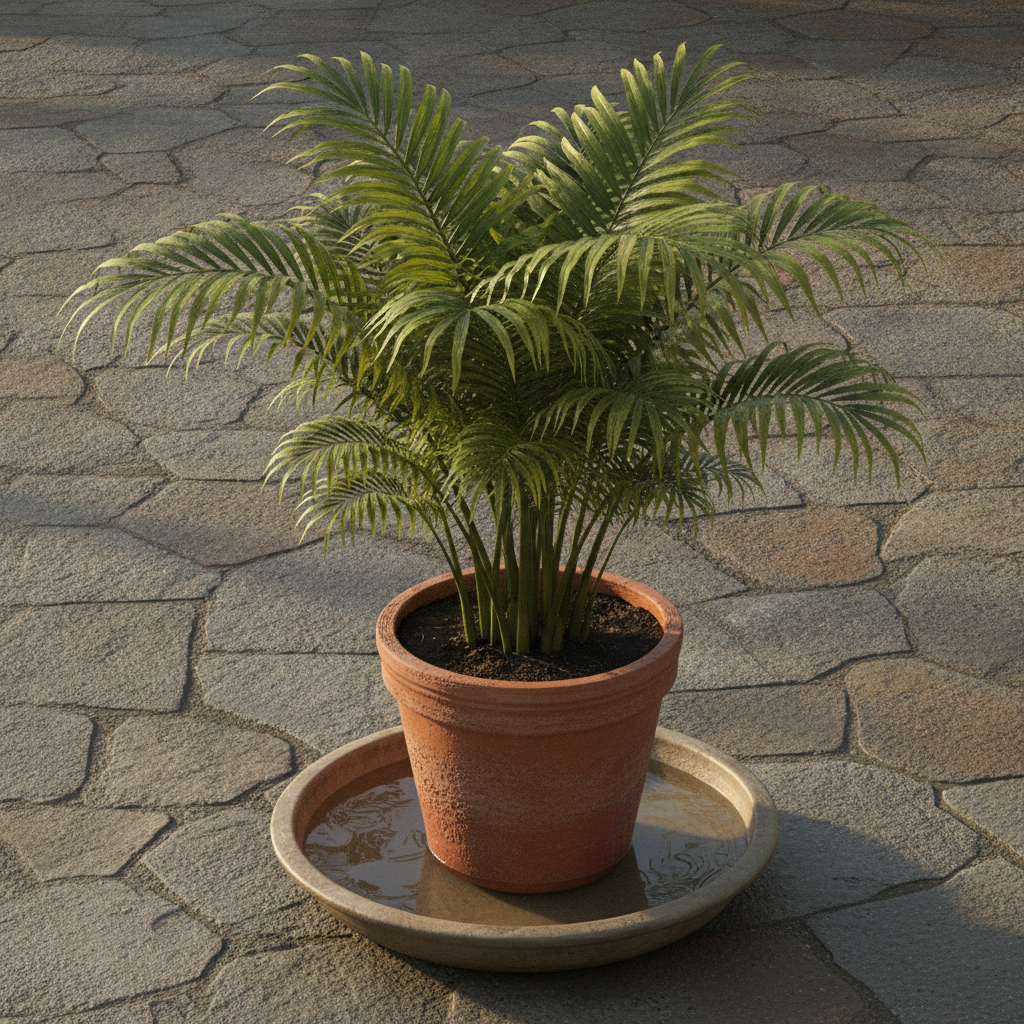
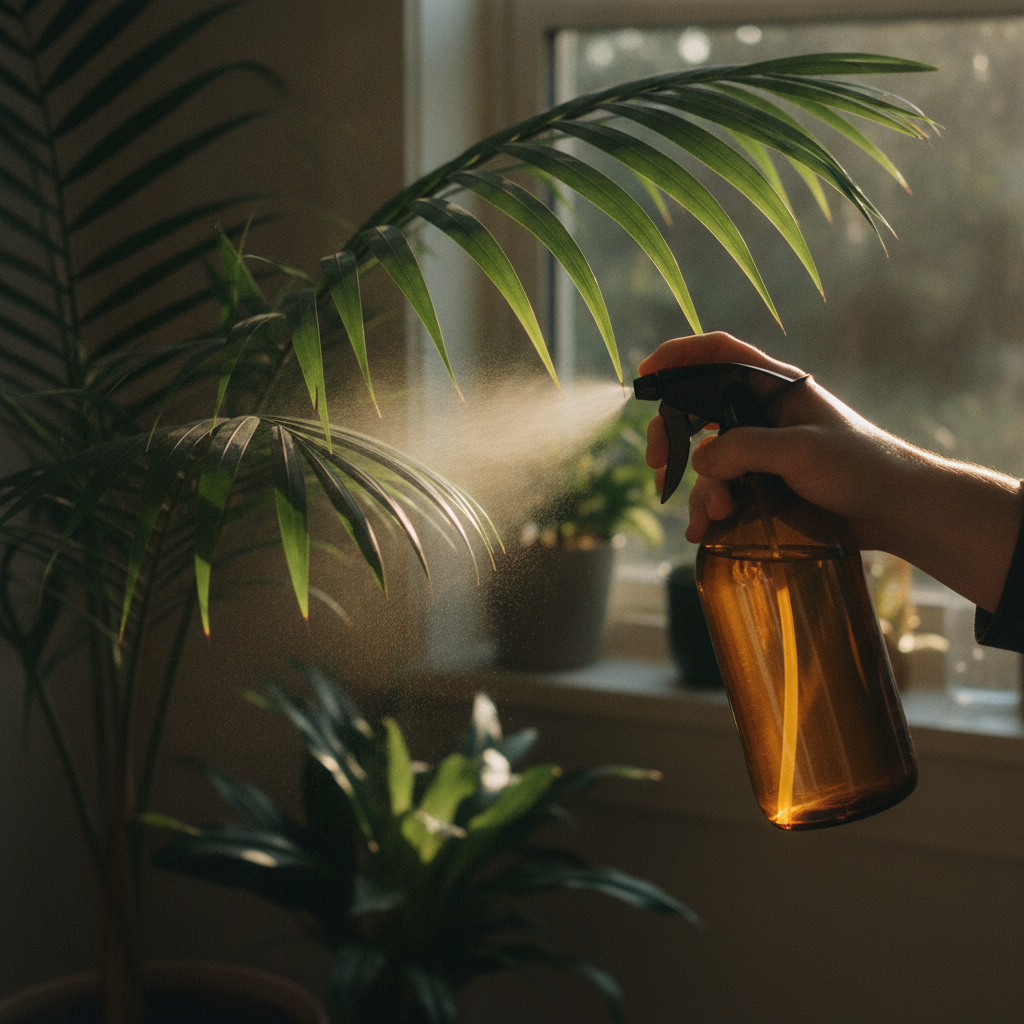
To raise humidity, group the palm with other plants so they share the moisture they transpire, stand the pot on a wide tray of pebbles topped up with water so evaporation rises around the foliage, or run a humidifier nearby during the dry months. A humidifier is by far the most effective option for a plant this size; misting looks helpful but evaporates too quickly to change the ambient humidity in any lasting way.
Water Quality
Fishtail palms can be sensitive to the fluoride and chlorine found in some tap water, which contributes to leaf-tip burn over time. If your water is heavily treated or very hard, let it stand overnight before use, or switch to filtered or collected rainwater. Consistently soft, room-temperature water keeps those fine leaflet tips green for longer.
Soil, Potting & Repotting
The fishtail palm asks for a substrate that manages a careful balancing act: rich and moisture-retentive enough to keep those thirsty roots damp, yet open and free-draining enough that water never stagnates. Get this balance right and most watering problems solve themselves, because the soil holds what the plant needs and lets the excess run away.
Ideal Soil Composition
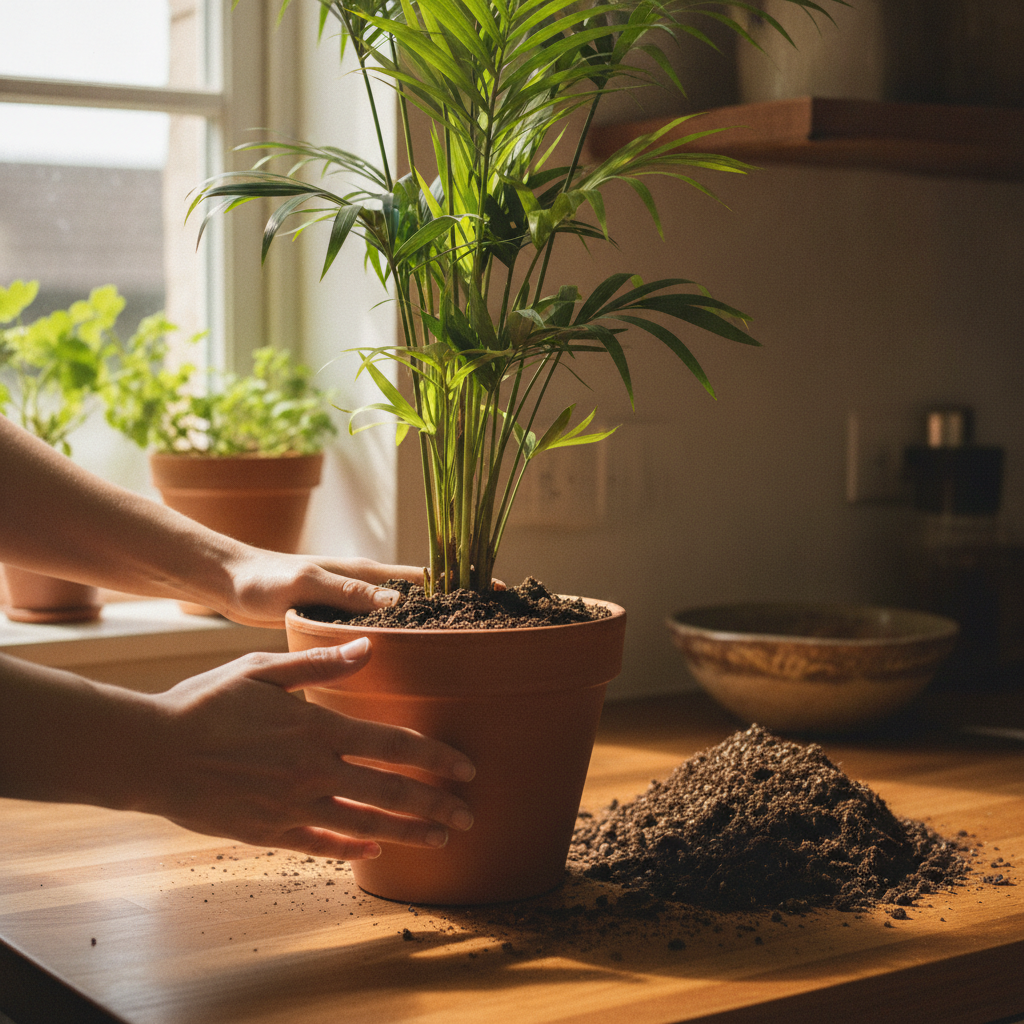
A quality peat-free or peat-based potting compost forms the base, lightened with material that keeps it airy. Blending in perlite or coarse grit provides drainage, while a portion of orchid bark or coco coir holds moisture without compacting. The aim is a mix that feels spongy and holds together loosely when squeezed damp, then falls apart again, rather than one that sets into a dense, sodden block.
| Component | Proportion | Function |
|---|---|---|
| Quality potting compost | 50 per cent | Base nutrition and moisture retention |
| Perlite or coarse grit | 20 per cent | Drainage and aeration |
| Orchid bark | 20 per cent | Open structure and slow moisture release |
| Coco coir or worm castings | 10 per cent | Extra moisture buffering and gentle feeding |
The fishtail palm prefers a slightly acidic to neutral root zone, roughly pH 5.5 to 6.5, which most standard potting composts already provide. There is rarely any need to adjust pH deliberately; a good quality mix refreshed at repotting keeps the plant in the right range.
Pro Tip — Quick Mix Recipe: For a fast, reliable blend, combine two parts general houseplant compost, one part perlite and one part orchid bark, with a handful of worm castings stirred through. It holds moisture beautifully yet drains freely, which is exactly what this palm wants.
Choosing the Right Pot
Because a fishtail palm carries a tall, top-heavy canopy on a clustering root ball, pot choice affects both its health and its stability. A pot that is sturdy and reasonably heavy stops a well-grown plant from tipping, while the right size and material keep the roots in good order.
Drainage holes are non-negotiable. Whatever pot you choose, it must have generous drainage. Given this palm’s love of water, a pot without drainage is a near-certain route to root rot. If you adore a decorative cachepot with no holes, use it as an outer sleeve and keep the plant in a practical inner pot you can lift out to water.
Pot material: Terracotta breathes and dries faster, which suits growers who tend to overwater, while glazed ceramic and plastic hold moisture longer and reduce watering frequency. For a large palm, a heavier glazed or ceramic pot also provides valuable ballast against the tall foliage.
Pot size: Move up only one size at a time, choosing a pot around 3 to 5 cm (1 to 2 in) wider than the current one. An oversized pot holds a reservoir of wet soil the roots cannot reach, and that lingering moisture invites rot.
When to Repot
Fishtail palms are moderately fast growers when happy and generally need repotting every two years or so, though a vigorous plant in strong light may fill its pot in a single season. Tell-tale signs include roots circling the surface or escaping the drainage holes, water that races straight through without wetting the soil, and a plant that dries out far quicker than it used to. The best time to repot is spring or early summer, as the plant enters its active growth and can recover quickly. Take care, though: fishtail palms dislike root disturbance, so repot only when genuinely necessary rather than as a routine.
How to Repot: Step-by-Step
- Water the plant a day beforehand so the root ball is moist and holds together as you work.
- Prepare the new pot with a layer of fresh, free-draining mix in the base.
- Ease the palm out gently, supporting the base of the canes, and try not to tear the roots.
- Tease apart only the outermost circling roots; leave the dense inner root ball largely intact, as this species resents heavy disturbance.
- Set the plant in the new pot at the same depth it grew before, never burying the base of the canes.
- Backfill with fresh mix, firming gently around the sides to remove large air pockets without compacting.
- Water thoroughly and return the palm to bright, indirect light, holding off on feeding for four to six weeks.
Warning — Transplant Shock: Expect a fishtail palm to sulk for a week or two after repotting, sometimes browning a frond tip or pausing its growth. Keep conditions stable, resist the urge to overwater the freshly potted plant, and it will settle. Repotting at the wrong time or shredding the roots turns this brief sulk into a serious, lasting setback.
Fertilising
A fishtail palm grows fast enough to be genuinely hungry, and it draws heavily on nutrients to build its large, complex fronds. Regular, moderate feeding through the growing season is the difference between deep green, full foliage and a pale, sparse plant that never quite fills out.
Palms as a group are notably prone to specific nutrient deficiencies, particularly potassium and magnesium, which show up as yellowing or spotting on the older fronds. A fertiliser formulated for palms, which carries the right balance of these elements plus micronutrients, is a better choice than a generic feed for keeping this species in top condition.
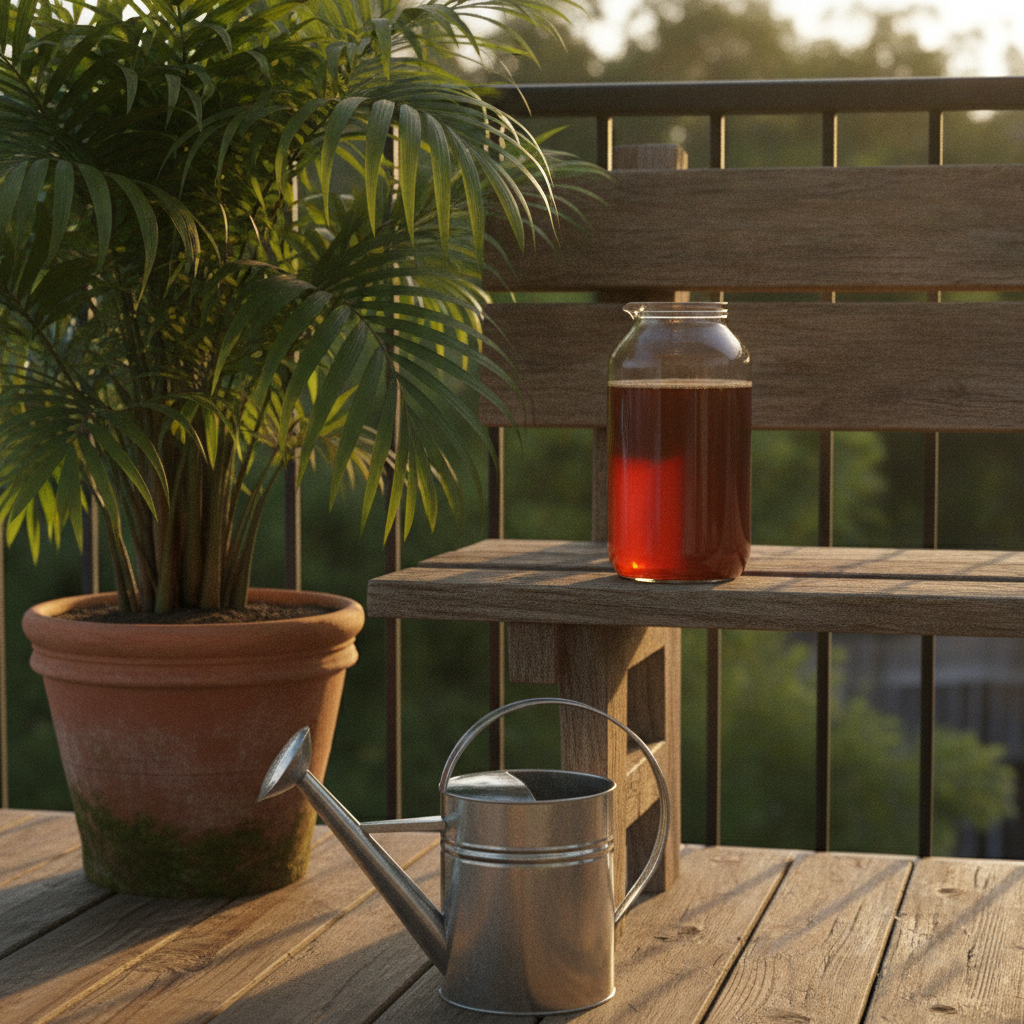
Understanding Plant Nutrients
Fertilisers are labelled with an N-P-K ratio showing the percentages of nitrogen, phosphorus and potassium, the three nutrients plants use in the largest quantities. For a foliage plant like the fishtail palm, a balanced or slightly nitrogen-forward feed works well, but the secondary and trace elements matter just as much here given the palm family’s known weaknesses.
| Nutrient | Symbol | Primary Function | Deficiency Symptoms |
|---|---|---|---|
| Nitrogen | N | Leaf and stem growth, green colour | Uniform paling of older fronds, weak growth |
| Phosphorus | P | Root development and energy transfer | Stunted growth, dull foliage |
| Potassium | K | Overall vigour and stress tolerance | Yellow-orange spotting and necrosis on older leaflets |
| Calcium | Ca | Cell-wall structure | Deformed or weak new growth |
| Magnesium | Mg | Core of the chlorophyll molecule | Broad yellow bands along the edges of older fronds |
| Iron | Fe | Chlorophyll production in new leaves | Yellowing between the veins of the newest fronds |
Types of Fertiliser
Liquid fertilisers: Diluted and applied with watering, these give you fine control and fast uptake, making them the easiest way to feed a fishtail palm little and often through the growing season.
Slow-release granular: Coated prills scattered onto the soil release nutrients gradually over several months, which is convenient for a large plant, though you sacrifice the ability to stop feeding quickly if the plant slows down.
Organic fertilisers: Worm castings, compost tea and seaweed feeds release nutrients gently and improve soil life, a forgiving approach that carries little risk of burning the roots, albeit with slower, subtler results.
Feeding Schedule
Feed actively from spring through late summer, roughly once a month with a balanced palm fertiliser at the recommended strength, or more frequently at half strength if you prefer little-and-often. As growth slows in autumn, taper the feeding off, and stop entirely through winter when the plant is resting and cannot use the nutrients. Feeding a dormant palm simply loads the soil with unused salts.
Pro Tip — Dilute and Observe: When in doubt, feed at half the recommended concentration. A fishtail palm responds far better to frequent light feeding than to occasional heavy doses, and diluting reduces any risk of scorching the roots or burning those sensitive leaflet tips.
How to Fertilise
- Water the plant lightly first so the roots are damp, never applying feed to bone-dry soil.
- Dilute liquid fertiliser to the correct strength in room-temperature water.
- Pour evenly across the soil surface until a little drains from the base.
- Empty any run-off from the saucer so salts do not concentrate at the roots.
- Flush the pot with plain water every couple of months to rinse out accumulated salts.
Warning — Salt Build-Up: Over-fertilising leaves a white crust of mineral salts on the soil and pot rim and burns the leaflet tips brown. If you see this, flush the pot thoroughly with plenty of plain water to leach out the excess, and cut back on both the strength and the frequency of feeding.
Propagation
Propagating a fishtail palm is a different exercise from propagating a trailing vine or a leafy aroid. Palms grow from a single growing point at the top of each cane and cannot be rooted from leaf or stem cuttings; snip a frond off and you simply have a frond. Fortunately the clustering habit of Caryota mitis gives you a straightforward alternative, and there is a second, slower route from seed for the patient grower.
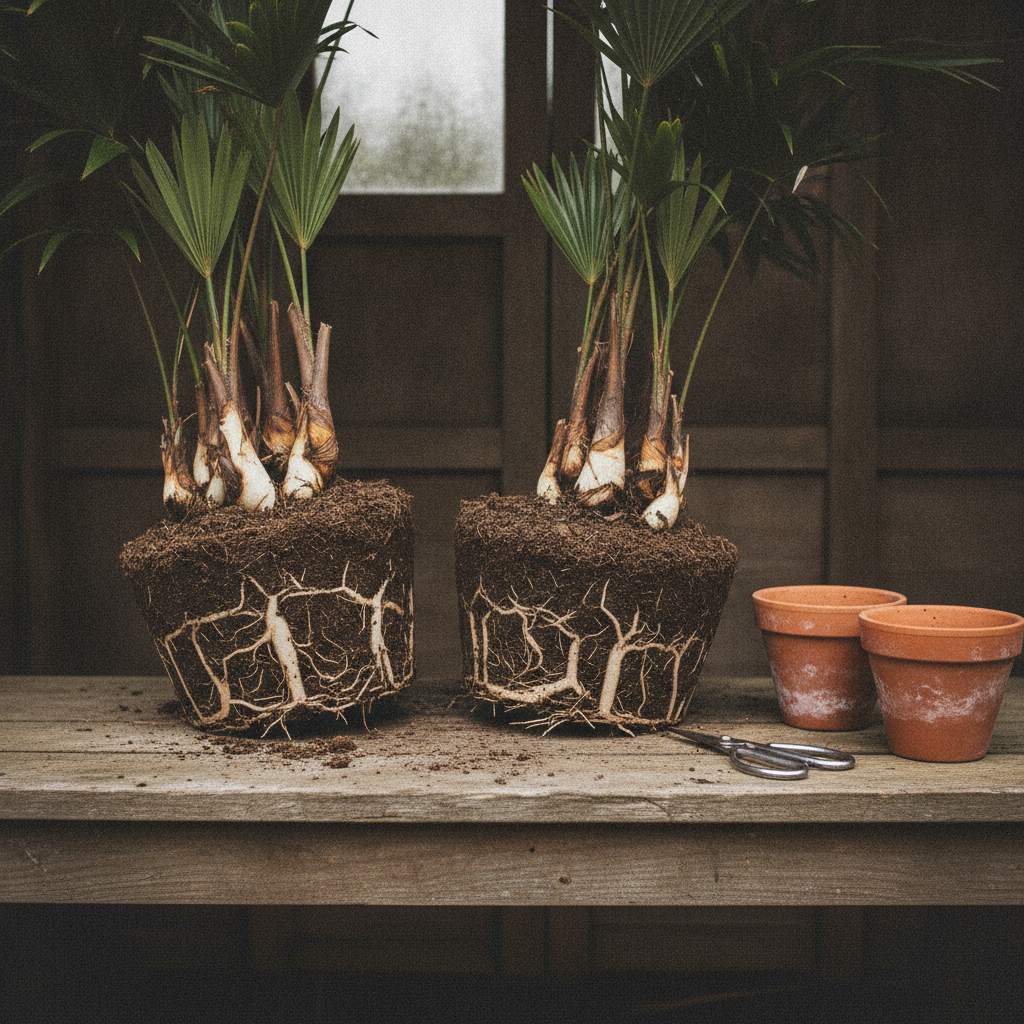
The reliable method for the home is division of the clump, separating the naturally produced offshoots, or suckers, that rise around the base of the parent. The seed route works too but demands access to fruit, considerable patience, and real caution given the hazardous crystals in the fruit pulp.
Understanding Suckers and Clumps
Unlike the solitary fishtail palms, the clustering species continually throws up new shoots from its base, each with the potential to become an independent plant once it has developed its own roots. A sucker that has grown a decent tuft of foliage and, crucially, its own root system can be separated and grown on. The key is patience: a sucker taken too early, before it can support itself on its own roots, rarely survives the split.
Division: Step-by-Step
Division is best attempted in spring or early summer when the plant is in active growth and will recover fastest. Choose a well-established sucker with several fronds of its own before you begin.
- Water the plant the day before so the root ball is moist and cohesive.
- Slide the whole clump out of its pot and gently brush away enough soil to expose where the sucker joins the parent.
- Identify a sucker that carries its own roots; if it has no roots of its own, leave it attached and wait.
- Using a clean, sharp knife, cut cleanly through the connecting tissue, keeping as many of the sucker’s roots intact as you can.
- Pot the division into a small container of fresh, free-draining mix, matching its previous depth.
- Water it in and place it somewhere warm and humid with bright, indirect light, out of direct sun.
- Keep the soil lightly moist and be patient; new growth signals that the division has rooted and taken.
Pro Tip — Raise the Humidity: A fresh division has a reduced root system and loses water faster than it can replace it. Enclosing it loosely in a clear plastic bag or placing it in a humid propagator for the first couple of weeks dramatically improves the odds while the new roots establish. Vent it regularly to prevent mould.
Growing from Seed: Step-by-Step
Growing from seed is rewarding but slow, and it comes with a genuine safety warning because the surrounding fruit pulp is packed with irritant crystals. Always wear gloves and eye protection when handling the fruit.
- Wearing gloves, clean the flesh fully away from ripe seeds and rinse them well, keeping the pulp away from skin and eyes.
- Soak the cleaned seeds in warm water for a day or two to soften the coat and encourage germination.
- Sow into a warm, moist, free-draining seed mix, barely covering each seed.
- Keep the mix consistently warm, ideally 24 to 29 degrees C (75 to 85 degrees F), and evenly moist.
- Be patient; germination is erratic and can take anywhere from a few weeks to several months.
- Once seedlings have a couple of leaves and a working root system, pot them on individually.
Troubleshooting Propagation
| Problem | Likely Cause | Solution |
|---|---|---|
| Division wilts and collapses | Too few roots taken, or air too dry | Raise humidity, keep warm and shaded, and choose better-rooted suckers next time |
| Cut surface rots | Over-wet mix or a dirty blade | Use sterilised tools and a barely moist, free-draining mix |
| No new growth for months | Slow establishment, normal for palms | Keep conditions stable and warm; be patient rather than overwatering |
| Seeds never germinate | Old seed or too cool | Use fresh seed and provide steady bottom heat |
Pests & Diseases
A healthy, well-watered fishtail palm growing in good humidity shrugs off most problems, but the dry indoor air that so often stresses this species also lays out a welcome mat for sap-sucking pests. Spider mites in particular are the fishtail palm grower’s recurring adversary, and they thrive in exactly the warm, dry conditions the plant dislikes.
The best defence is vigilance. Inspect your palm regularly, paying attention to the undersides of the fronds and the crevices where leaflets meet the stem, since catching an infestation early makes it far easier to control before it takes hold across a large, dense canopy.
Common Pests
Spider Mites (Tetranychus urticae)
By far the most common pest on indoor fishtail palms, these tiny arachnids are hard to see individually but reveal themselves through fine pale stippling on the leaflets and delicate webbing strung between the fronds. They multiply explosively in warm, dry air, so an outbreak often signals that humidity has dropped too low.
Treatment: Rinse the whole plant thoroughly with a strong jet of water, then treat with neem oil or insecticidal soap, coating the undersides of the fronds. Repeat every five to seven days for several cycles to break the breeding cycle, and raise the ambient humidity to make the plant less hospitable.
Mealybugs (Pseudococcus species)
Mealybugs appear as small, white, cottony blobs tucked into leaf axils and along the stems, where they feed on sap and excrete sticky honeydew that can turn black with sooty mould. They spread slowly but stubbornly if ignored.
Treatment: Dab each visible bug with a cotton bud dipped in rubbing alcohol, then follow up with neem oil or insecticidal soap over the whole plant. Check regularly for survivors, as mealybugs are experts at hiding deep in the crown.
Scale Insects (Coccus species)
Scale look like small brown or tan bumps clinging to stems and the undersides of fronds, protected under a waxy shell that makes them easy to overlook and stubborn to treat. Like mealybugs, they secrete honeydew and weaken the plant over time.
Treatment: Scrape off what you can by hand or with an alcohol-dipped cloth, then apply horticultural oil to smother the rest. Persistent infestations may need several rounds of treatment spaced a week or two apart.
Common Diseases
Root Rot (Pythium and Phytophthora species)
The most serious threat to a fishtail palm, root rot follows chronic overwatering or poor drainage. The roots turn brown and mushy, the lower canes soften, and the plant yellows and wilts even though the soil is wet. Left unchecked it is usually fatal.
Treatment: Unpot the plant, cut away all soft, blackened roots with sterilised tools, and repot into fresh, free-draining mix in a clean pot with good drainage. Water sparingly until the plant recovers, and correct the drainage that caused the problem.
Leaf Spot (fungal, various pathogens)
Fungal leaf spot shows as brown or black blotches, sometimes ringed with yellow, usually where water sits on the foliage in still, humid air. It is rarely life-threatening but disfigures the fronds and can spread if conditions stay damp.
Treatment: Remove the affected fronds, improve air circulation around the plant, and avoid wetting the foliage when you water. A copper-based fungicide can help stop a stubborn case from spreading.
Pest and Disease Summary
| Pest / Disease | Identification | Treatment |
|---|---|---|
| Spider mites | Pale stippling and fine webbing on fronds | Rinse, then neem oil or insecticidal soap; raise humidity |
| Mealybugs | White cottony clusters in leaf axils | Alcohol swab plus neem oil, repeated |
| Scale | Brown waxy bumps on stems and fronds | Scrape off, then horticultural oil |
| Root rot | Mushy brown roots, yellowing wilt in wet soil | Trim roots, repot, correct drainage |
| Leaf spot | Brown or black blotches on foliage | Remove leaves, improve airflow, keep foliage dry |
Prevention Strategies
Nearly every pest and disease that troubles a fishtail palm can be headed off by keeping the plant genuinely healthy. A palm grown in good light, watered correctly and kept in decent humidity is far more resistant than a stressed one, and stress from dry air is the single condition that opens the door to spider mites more than any other.
Quarantine any new plant for a couple of weeks before it joins your collection, wipe the fronds occasionally to remove dust and expose early problems, and inspect the undersides regularly. Good airflow, sensible watering and stable humidity together form a defence that rarely needs to be backed up with chemicals.
Pro Tip — Shower It Off: Every few weeks, give your fishtail palm a lukewarm shower to rinse dust and any early pest colonies off the foliage. It cleans the intricate leaflets, boosts humidity around the plant for a while, and lets you inspect every frond up close, all in one quick job.
Popular Varieties
The fishtail palms belong to the genus Caryota, a group of around a dozen species united by that unmistakable bipinnate, fish-tailed foliage. While Caryota mitis is the one you are most likely to grow indoors, it helps to know the wider family, since several relatives appear in cultivation and differ mainly in size and whether they cluster or grow as a single trunk.
The most important distinction for a houseplant grower is clustering versus solitary. Clustering species like Caryota mitis stay bushier and renew themselves through suckers, making them the more forgiving and manageable choice indoors, while the solitary giants are magnificent but ultimately outgrow most rooms.
| Variety | Leaf Appearance | Light Needs | Growth Rate | Availability |
|---|---|---|---|---|
| Clustering Fishtail (C. mitis) | Bushy, mid-green ragged leaflets on multiple canes | Bright indirect | Moderate | Common |
| Variegated Fishtail (C. mitis ‘Variegata’) | Cream and white streaked leaflets | Bright indirect | Slow | Rare |
| Wine or Jaggery Palm (C. urens) | Larger fronds on a single trunk | Bright indirect to sun | Fast | Occasional |
| Giant Fishtail (C. gigas) | Massive, broad ragged fronds | Bright indirect to sun | Fast | Uncommon |
| Himalayan Fishtail (C. maxima) | Large fronds, cold-tolerant | Bright indirect | Moderate | Uncommon |
| Solitary Fishtail (C. no) | Huge fronds, single massive trunk | Bright indirect to sun | Fast | Rare |
Featured Varieties
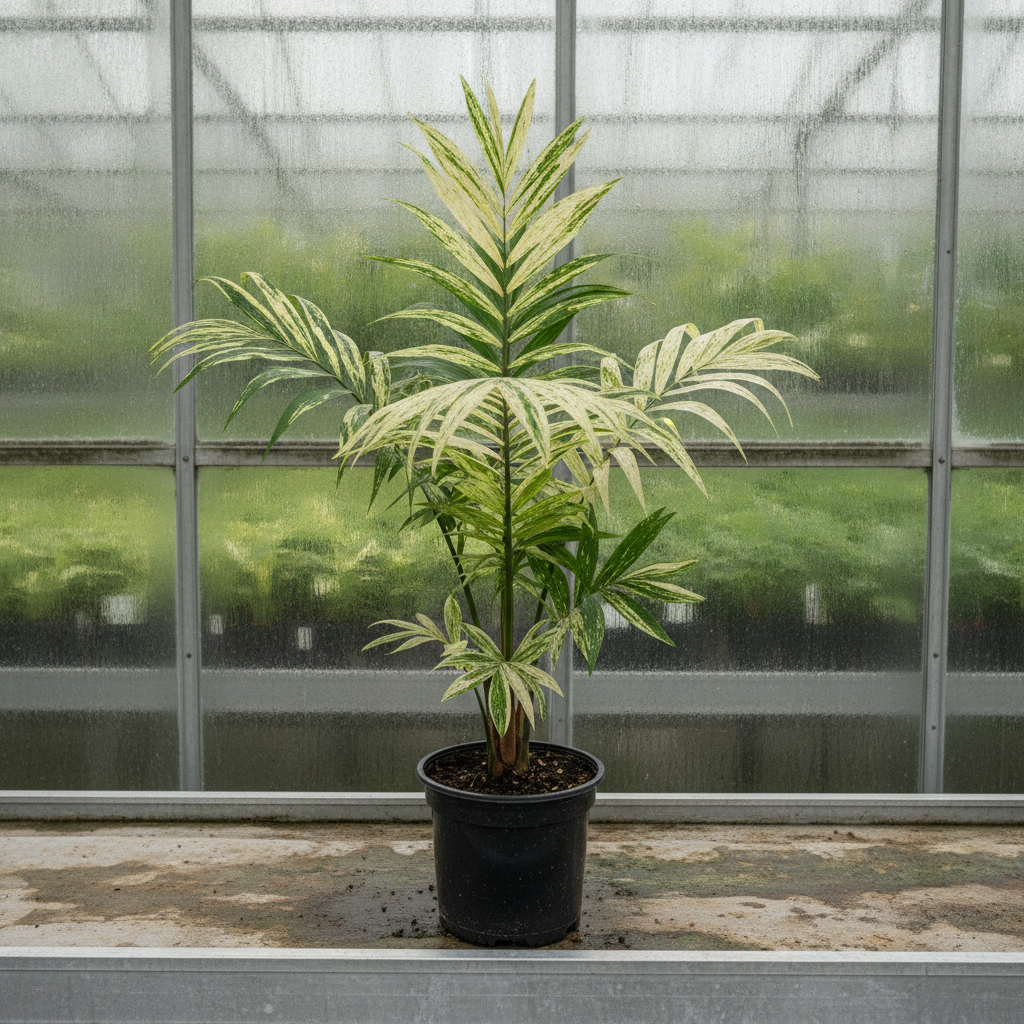
Variegated Fishtail Palm
A prized and uncommon form of Caryota mitis whose fishtail leaflets are streaked and marbled with creamy white and pale yellow. The variegation is beautiful but reduces the leaf’s green tissue, so this form grows more slowly and needs consistently bright, indirect light to hold its markings.
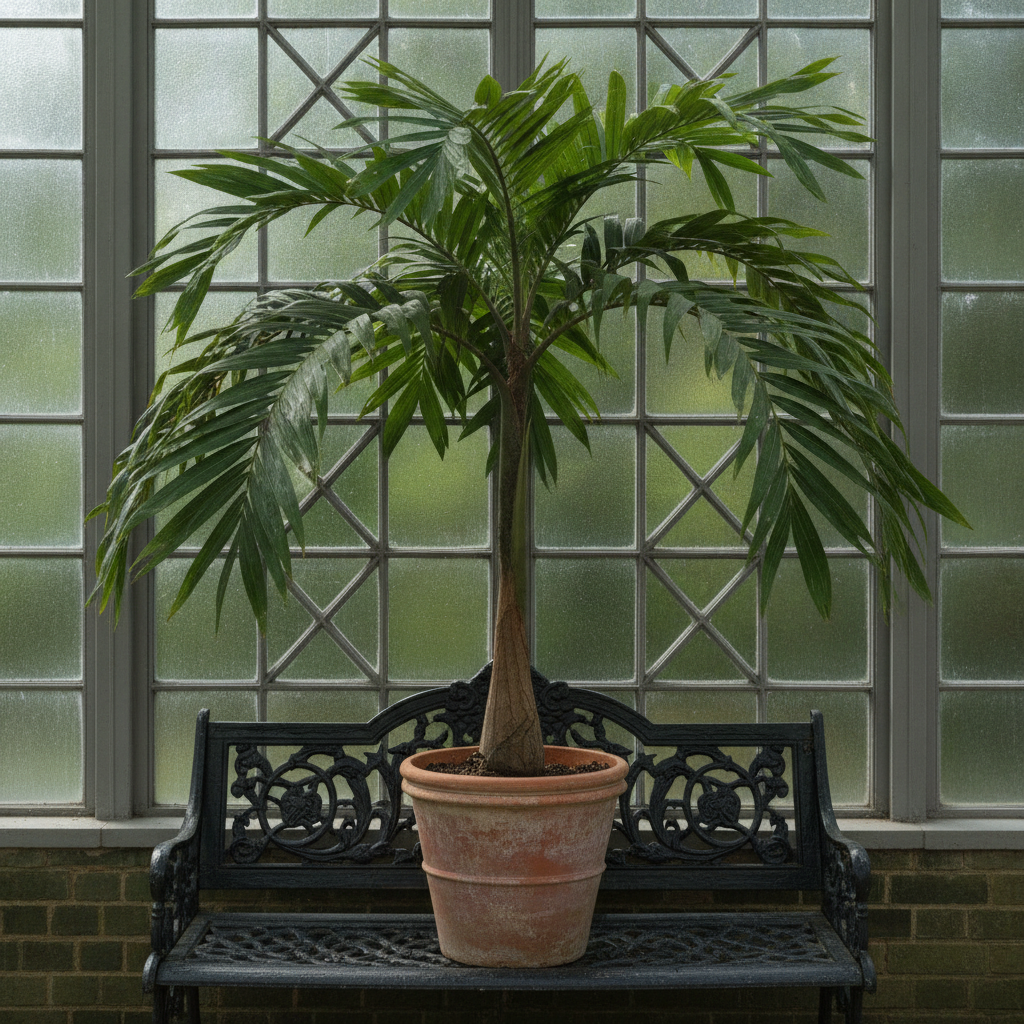
Giant Fishtail Palm
The solitary Caryota urens trades the bushy clumping habit for a single robust trunk and much larger, longer arching fronds. Fast-growing and dramatic, it makes a superb specimen for a tall atrium or conservatory, though it eventually outgrows an ordinary living room.
Variety Profiles in Detail
Clustering Fishtail Palm (Caryota mitis)
The classic houseplant of the genus and the subject of this guide. Its clumping habit keeps it full and bushy, its moderate growth rate makes it manageable, and its self-renewing suckers give it real longevity. For almost everyone, this is the fishtail palm to grow indoors.
Wine or Jaggery Palm (Caryota urens)
A solitary, single-trunked species famous in its native range for the sweet sap tapped from its flower stalks to make palm sugar and toddy. Indoors it is faster and far larger than C. mitis, suited only to spaces with real height to spare.
Giant Fishtail Palm (Caryota gigas)
Among the largest of all fishtail palms, with broad, imposing fronds. It is grown mainly outdoors in warm climates or in very large glasshouses, and it is best appreciated by collectors with the room to let it reach its full stature.
Choosing the Right Variety for Your Space
For the vast majority of homes, the clustering Caryota mitis is the sensible and rewarding choice, offering all the drama of the fishtail form at a size a room can accommodate. Reserve the solitary giants for atriums, stairwells and conservatories with genuine height, and treat the variegated form as a collector’s piece that repays extra attention to light. Match the plant to your space and light before you buy, and your fishtail palm will be a striking companion for many years.
Frequently Asked Questions
Why are the tips of my fishtail palm turning brown?
Brown, crispy leaflet tips are almost always a sign of low humidity, often combined with underwatering, hard or fluoridated water, or a build-up of fertiliser salts. Raise the ambient humidity with a humidifier or pebble tray, keep the soil evenly moist, switch to filtered or rested water, and flush the pot occasionally to leach out salts.
Is the fishtail palm toxic to cats and dogs?
Yes. The plant contains calcium oxalate crystals, and the fruit in particular is a severe irritant. If a pet chews the foliage or fruit it can suffer intense mouth irritation, drooling, vomiting and difficulty swallowing. Keep the plant out of reach, and contact a vet if you suspect ingestion.
How big does a fishtail palm get indoors?
Indoors, a clustering fishtail palm usually reaches between 1.8 and 3 metres (6 to 10 feet) over several years, staying full and bushy rather than towering. In its native habitat it can climb considerably higher, but pot culture and indoor light keep it to a room-friendly size.
Why is one of the canes dying even though the plant looks healthy?
Each individual cane of a fishtail palm is monocarpic, meaning it flowers and fruits once and then naturally dies. Because the plant is a clump, this is normal and not a sign of illness; simply cut out the spent cane and the surrounding suckers will carry the clump on. If a cane is dying without having flowered, look instead to watering or root problems.
How often should I water a fishtail palm?
Rather than a fixed schedule, water when the top 2 to 3 cm (about an inch) of soil begins to dry, keeping the root ball consistently moist but never waterlogged. In warm, bright conditions this can mean two or three times a week; in winter it may be far less. Always feel the soil before watering.
Can a fishtail palm tolerate low light?
It will survive medium light for a while but not truly low light, where it grows weak, stretched and sparse before slowly declining. For a full, healthy plant it needs bright, indirect light, supplemented with a grow light in darker rooms or through winter.
Can I propagate a fishtail palm from a cutting?
No. Palms grow from a single growing point per cane and cannot regenerate from leaf or stem cuttings. The reliable home method is division of the clustering suckers once they have their own roots, while seed is a slower alternative that requires careful handling of the irritant fruit.
Why are the lower fronds of my palm yellowing?
Occasional yellowing of the oldest, lowest fronds is natural as the plant sheds spent foliage. Widespread yellowing, however, usually points to overwatering and poor drainage, or to a potassium or magnesium deficiency common in palms. Check the roots and drainage first, then consider a palm-specific fertiliser if the soil is healthy.
Should I mist my fishtail palm?
Misting raises humidity only fleetingly and does little lasting good, while leaving water sitting on the fronds can encourage fungal leaf spot. A humidifier or a pebble tray is far more effective for meeting this palm’s genuine need for humid air.
Why does handling the plant sometimes irritate my skin?
The sap and especially the fruit of the fishtail palm carry needle-like calcium oxalate crystals that can cause burning and itching on contact. Wear gloves when pruning mature canes or handling any fruit, and keep the fruit pulp well away from your skin and eyes.






