
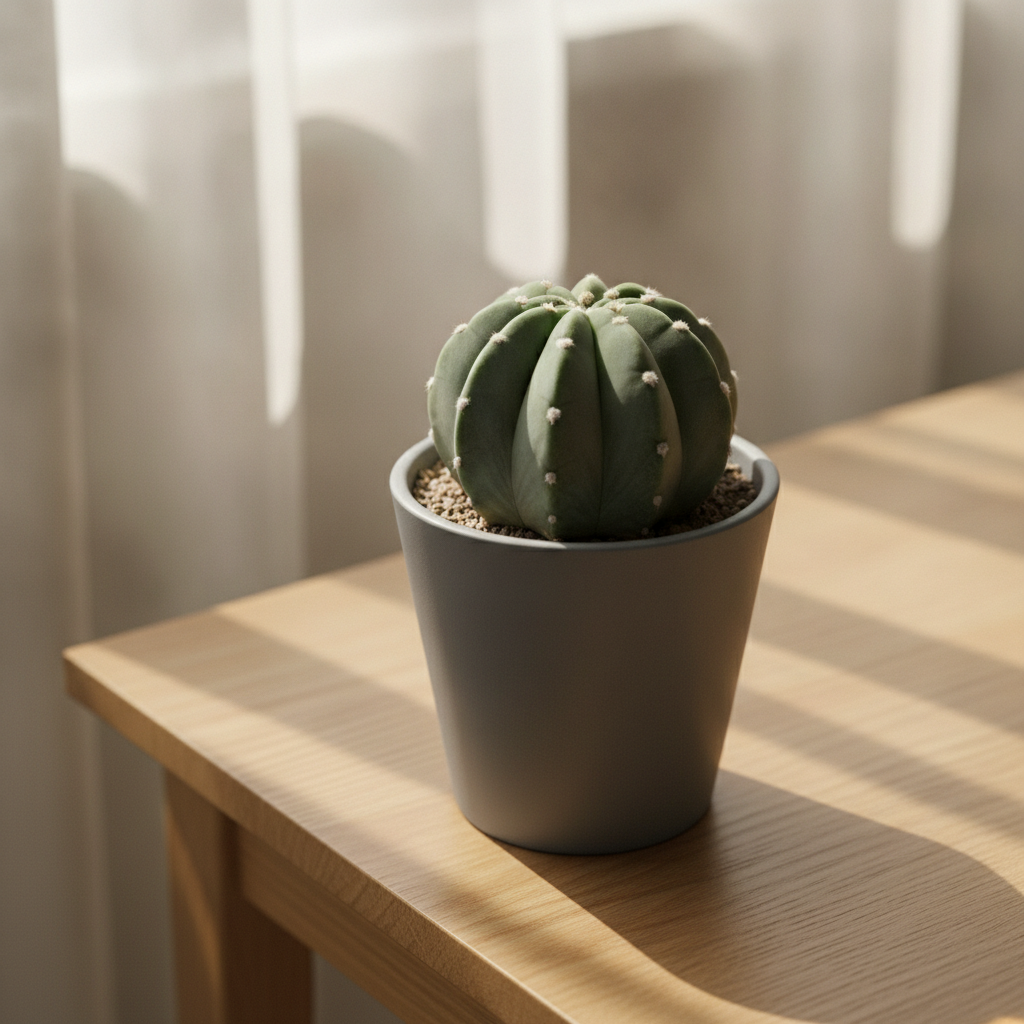
Few small cacti reward so little effort with so much drama as the domino cactus. For most of the year it sits quietly on a windowsill as a modest grey-green globe, ribbed and almost spineless, easy to overlook among flashier houseplants. Then, on a single summer evening, it unfurls a trumpet-shaped white flower longer than the plant is tall, releases a sweet nocturnal perfume, and closes again by the following afternoon as though nothing had happened. That contrast between the unassuming body and the spectacular bloom is exactly why Echinopsis subdenudata has been passed between growers for generations.
The good news for anyone new to cacti is that the domino cactus is genuinely forgiving. It tolerates the neglect that kills fussier plants, asks for little more than sun and sharp drainage, and multiplies itself freely into a cluster of offsets you can share. The difference between a plant that merely survives and one that thrives, and above all one that flowers, comes down to a handful of details covered below: enough light, a hard soak followed by complete dryness, and a cool, dry winter rest that most people forget to give it.
Quick Reference
- Why the Domino Cactus Makes a Good Houseplant
- Light
- Watering
- Soil
- Fertilising
- Propagation
- Pests and Problems
- Varieties
- Frequently Asked Questions
| Attribute | Detail |
| Botanical name | Echinopsis subdenudata |
| Common names | Domino cactus, Easter lily cactus, night-blooming hedgehog |
| Family | Cactaceae |
| Origin | Highlands of Bolivia and Paraguay |
| Mature size | 8 to 12 cm (3 to 5 in) wide, clustering with age |
| Light | Bright light with several hours of direct sun |
| Water | Soak thoroughly, then let the soil dry out completely |
| Soil | Gritty, fast-draining mineral cactus mix |
| Temperature | 18 to 29 degrees C (64 to 84 degrees F) in growth; cool rest in winter |
| Humidity | Low; ordinary room air is fine |
| Fertiliser | Low-nitrogen cactus feed, spring to late summer |
| Propagation | Offsets (pups); also from seed |
| Toxicity | Non-toxic to cats and dogs, but spined |
| Difficulty | Easy, well suited to beginners |
Why the Domino Cactus Makes a Good Houseplant
The domino cactus belongs to the genus Echinopsis, a group of South American cacti prized by collectors for producing outsized flowers on comparatively small bodies. Its species name, subdenudata, means “somewhat naked”, a reference to the sparse, tiny spines that make it far more approachable than the fiercely armed cacti most people picture. The body is a smooth, matte grey-green globe, usually a little wider than it is tall, divided into eight to fifteen broad, rounded ribs. Small woolly areoles march up the crest of each rib, and from these emerge the flower buds that give the plant its reputation.
As a houseplant it earns its place through sheer resilience. It stores water in its thick body, which means it shrugs off the missed waterings and long absences that finish off tropical foliage plants. It stays small enough for a sunny windowsill for years, and it slowly forms a domed cluster of offsets that turns a single specimen into a colony. Where it truly distinguishes itself, though, is in bloom. A mature, well-rested plant sends up one or several enormous white flowers, each with a long slender tube opening into a nodding trumpet up to 15 to 20 cm (6 to 8 in) long. They open in the evening, glow almost luminously in low light, carry a soft sweet fragrance to attract night-flying pollinators, and are usually spent within a day. It is a fleeting, memorable event that keeps growers coming back.
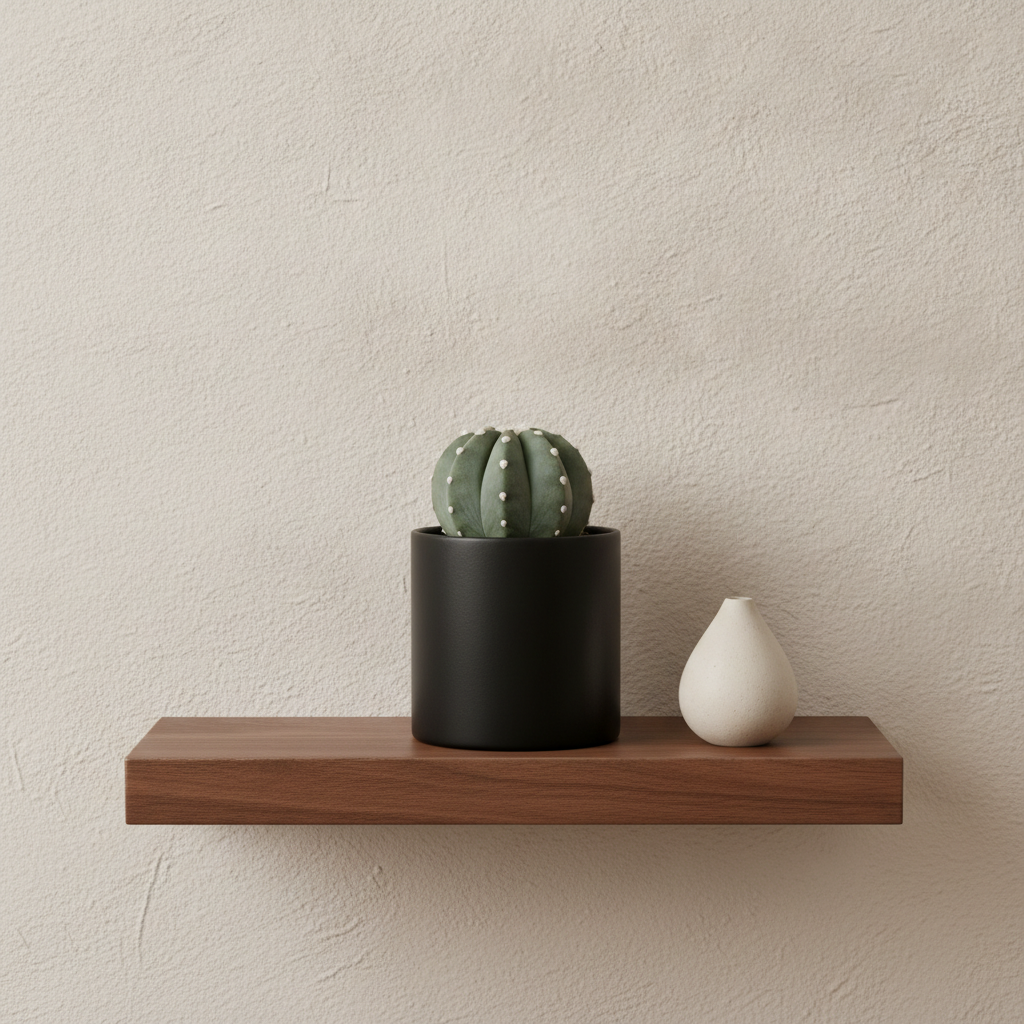
It is also a reassuringly safe plant to keep. Unlike the euphorbias it is sometimes confused with, Echinopsis subdenudata carries no caustic sap, and it is listed as non-toxic to cats and dogs. The only real hazard is mechanical: even a lightly spined cactus can prick, so it is worth positioning out of the reach of curious pets and small children. For a plant that combines beginner-proof toughness, a tidy footprint and one of the most theatrical flowers in the cactus world, the domino cactus is hard to beat.
Light
Light is the single biggest factor separating a domino cactus that merely stays alive from one that grows firmly and flowers. In the wild it grows in open, sun-baked grassland and rocky ground, exposed for most of the day. Indoors it wants the brightest position you can offer, ideally a south or west-facing window where it receives several hours of direct sun. A plant kept in bright but indirect light will persist for a long time, but it will grow slowly, its ribs may flatten and stretch, and it is unlikely to set a single bud.
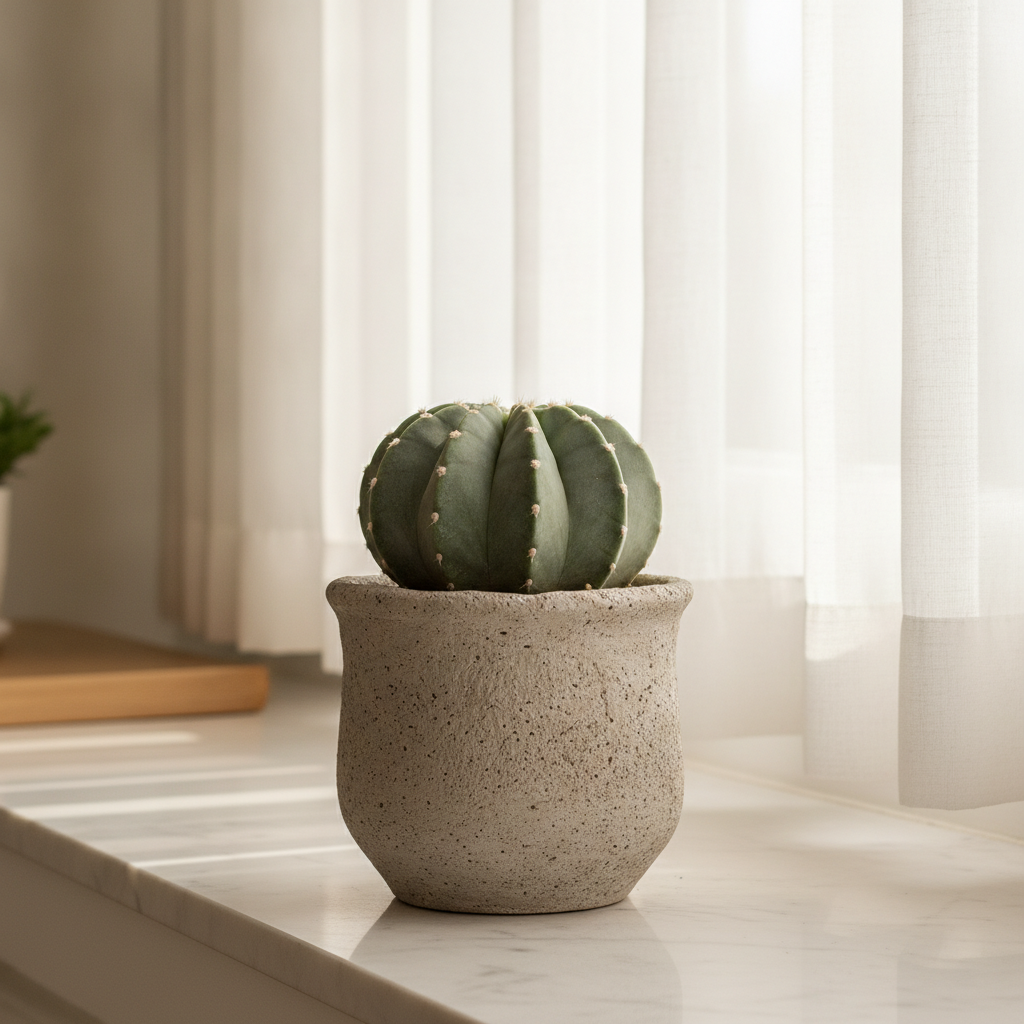
The classic sign of insufficient light is etiolation, where the plant loses its neat globular shape and begins to grow tall and narrow, reaching towards the window with a pale, soft new growth at the top. This stretching is permanent; the elongated section will never fill back out, though better light will restore normal proportions to whatever grows next. If you notice the crown narrowing or leaning, move the plant closer to the glass or supplement with a full-spectrum grow light positioned above it.
There is a caveat at the opposite extreme. A cactus that has spent the winter in dim indoor light cannot be moved straight into blazing summer sun without risk of scorching, which shows as pale, tan or bleached patches on the sun-facing side that never fully recover. Acclimatise it gradually over two to three weeks, increasing exposure a little at a time, especially if you move it outdoors for the warmer months. Rotating the pot a quarter-turn every week or two also keeps growth symmetrical rather than lopsided towards the light.
Pro Tip — Summer holiday outdoors: Domino cacti relish a spell outside once nights are reliably above 10 degrees C (50 degrees F). The stronger light and natural day-night temperature swing build a sturdier body and greatly improve the odds of flowering. Introduce it to full sun slowly and bring it back indoors before the first cold snap of autumn.
Watering
More domino cacti are killed by kindness than by neglect, and almost always through overwatering. The plant is built to endure long dry spells by drawing on the water stored in its body, so the guiding principle is simple: water thoroughly, then do nothing until the soil has dried out completely. This soak-and-dry rhythm mimics the infrequent, heavy downpours of its native habitat far better than little-and-often sips, which keep the roots perpetually damp and invite rot.
When you do water, water generously. Drench the mix until water runs freely from the drainage holes, then let the pot drain fully so no water sits in the saucer. During the active growing season of spring and summer this might mean watering roughly every week to ten days, but never on a fixed schedule. Instead, check the soil: it should be bone dry all the way through before you water again. Lifting the pot is the most reliable test, as a dry pot feels noticeably light, while pushing a wooden skewer or your finger into the mix confirms whether any moisture remains lower down.
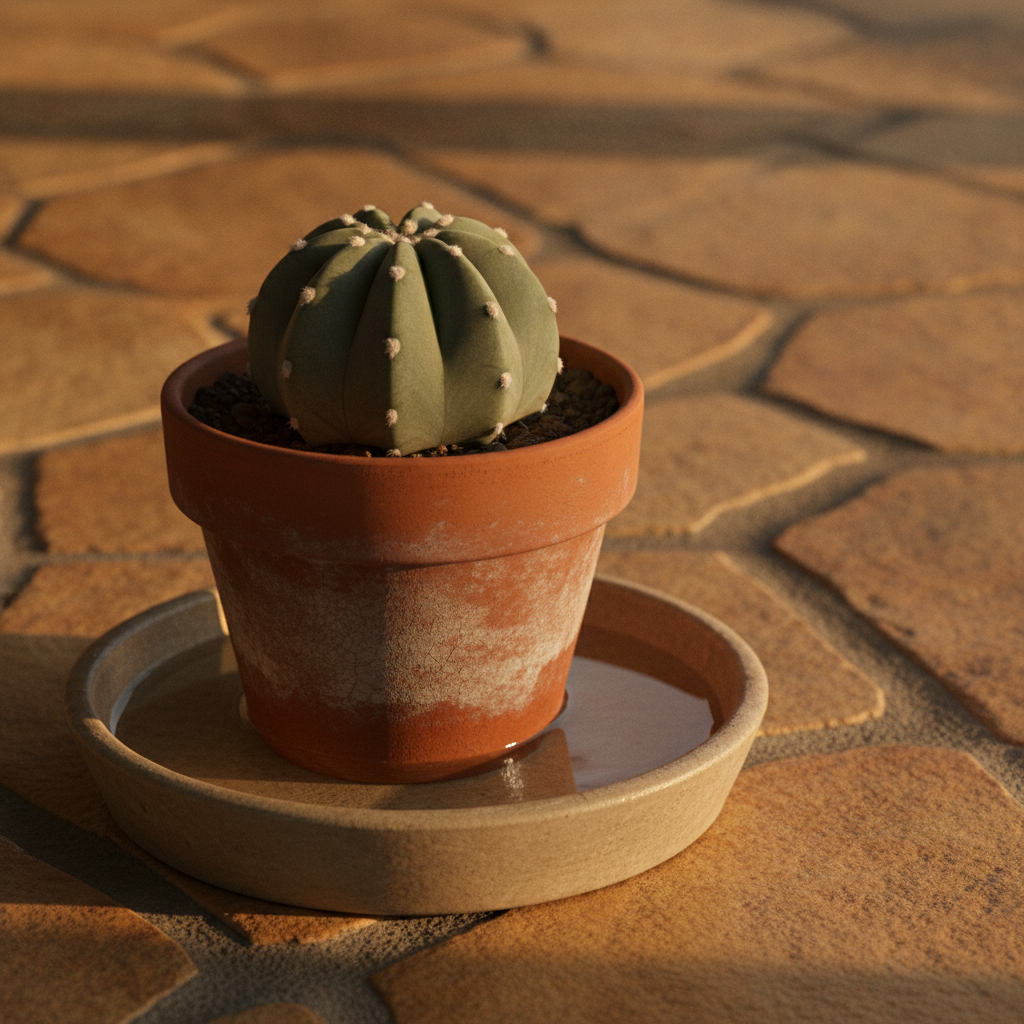
Winter changes everything. As light levels fall the plant enters a natural rest, and its water needs drop to almost nothing. From late autumn through to early spring, reduce watering drastically, giving only the occasional light drink every four to six weeks, or in a cool room withholding water almost entirely. This dry winter dormancy is not merely tolerated; it is essential. A cactus kept warm and watered through the winter rarely flowers, whereas one kept cool and dry sets buds far more readily when growth resumes. If the body shrivels or wrinkles slightly over winter, that is normal and reversible; it will plump up again with the first spring watering.
Warning — Signs of overwatering: A body that turns soft, yellow, translucent or brown at the base, especially near the soil line, is a classic symptom of root or stem rot from excess moisture. Rot spreads upward and is often fatal once it reaches the growing point, so stop watering immediately, unpot the plant to inspect the roots, and if the base is mushy, cut back to firm green tissue and attempt to re-root the healthy top as a fresh cutting.
Soil
If watering is the most common way to kill a domino cactus, the wrong soil is the quiet accomplice. Standard houseplant compost holds far too much moisture around the roots of a desert plant, so the aim is a gritty, open mix that drains almost the instant water passes through it and never stays soggy. A good cactus substrate is closer to a mineral scree than to potting soil, and getting it right removes much of the guesswork from watering.
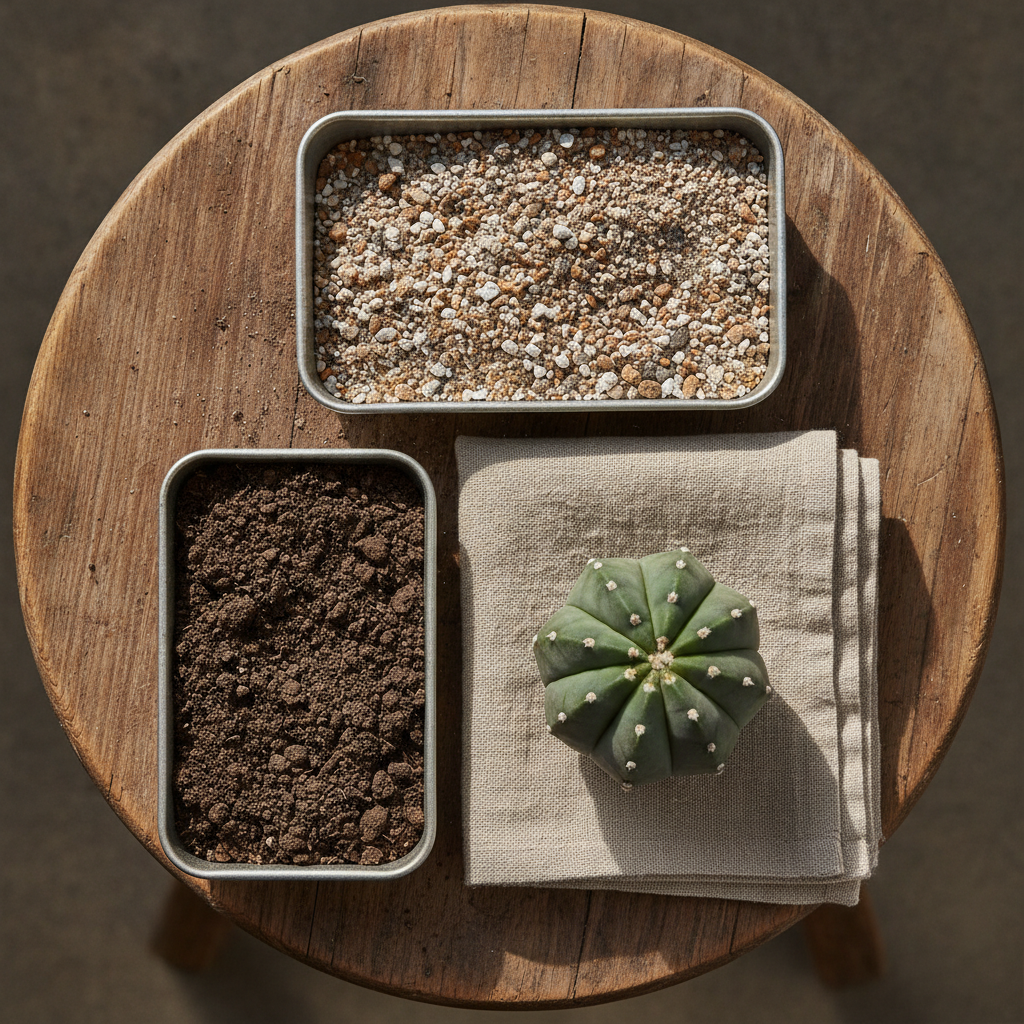
A reliable recipe is roughly one part ordinary potting compost or coco coir to two parts coarse mineral grit, using pumice, perlite, coarse horticultural sand or fine gravel. Many growers push the mineral content even higher for cacti, aiming for a mix that is more than half grit by volume. A ready-made cactus and succulent compost works as a base, but most bagged blends still hold too much moisture on their own, so cutting them with extra pumice or perlite improves them considerably. The finished mix should feel gritty in the hand and fall apart rather than clumping when squeezed.
The pot matters as much as the mix. Choose one with drainage holes without exception, since no soil can compensate for water trapped in the base of a sealed container. Terracotta is ideal for this plant because its porous walls wick moisture out of the soil and dry the rootball faster, offering a margin of safety against overwatering. Keep the pot only slightly larger than the plant; an oversized pot holds a large reservoir of damp soil that the modest root system cannot use, and that lingering moisture is a common cause of rot. Repot every two to three years in spring, easing the plant into fresh mix and a pot one size up only when roots fill the current one. Handle the spined body with a folded strip of newspaper or thick gloves, and wait about a week after repotting before watering so any damaged roots can callus over.
Fertilising
The domino cactus is a slow, undemanding feeder, and it will grow perfectly well with only modest feeding. In its natural habitat it draws nutrients from lean mineral soils, so the goal indoors is a light supplement during the growing season rather than the rich diet a leafy plant would want. Overfeeding, particularly with high-nitrogen fertiliser, pushes soft, swollen growth that is prone to splitting and rot and can actually suppress flowering, so restraint pays off.
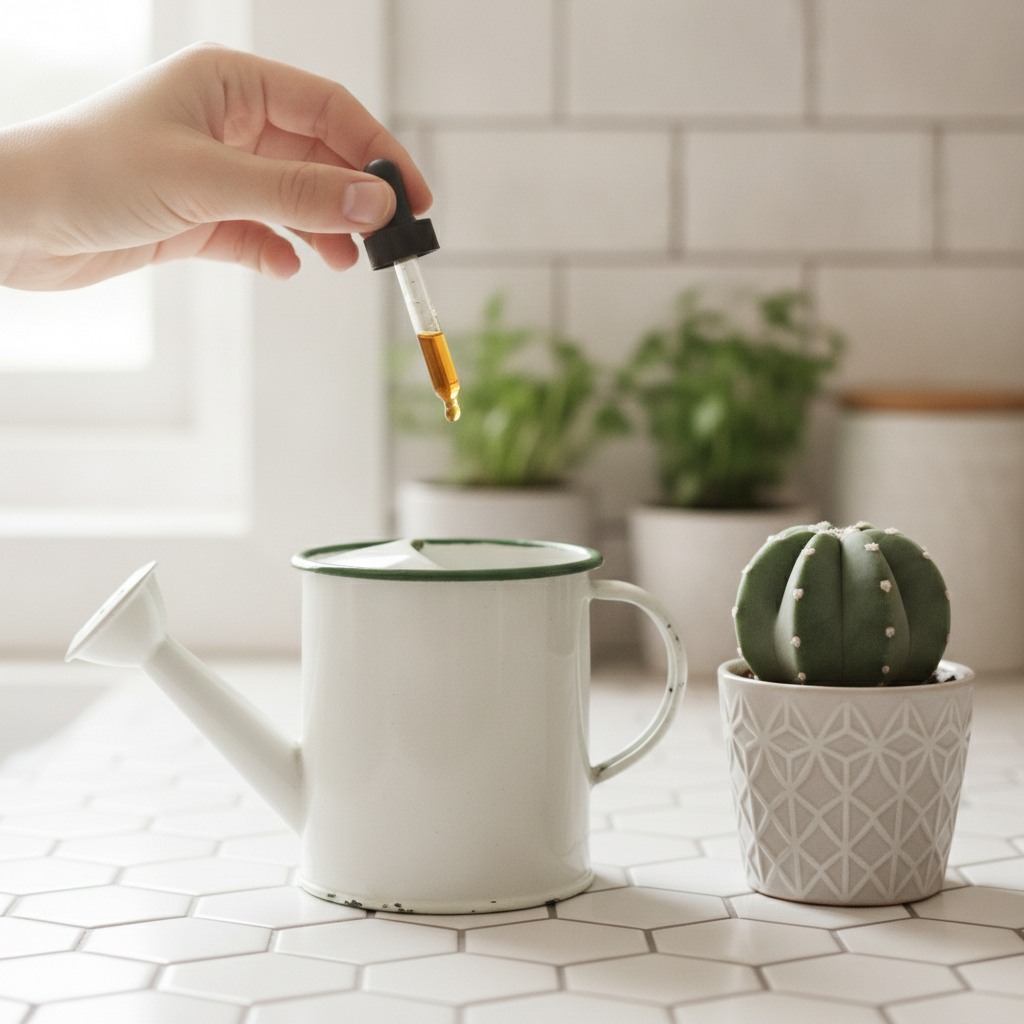
Use a fertiliser formulated for cacti and succulents, which is low in nitrogen and higher in potassium and phosphorus to favour firm growth and bloom rather than lush green bulk. Apply it diluted to half the recommended strength, and only from mid-spring through to the end of summer while the plant is actively growing. Feeding once a month during that window is plenty. Always water a little first or feed with an already-moist rootball, since applying concentrated fertiliser to bone-dry soil can burn the roots.
Stop feeding entirely from early autumn onward. The plant is winding down towards its winter rest, and nutrients applied now cannot be used and simply build up as salts in the soil. Resume the following spring once you see fresh growth at the crown. A freshly repotted cactus needs no feeding for its first few months, as new mix already contains enough nutrients to see it through the season.
Propagation
One of the quiet pleasures of the domino cactus is how readily it multiplies. As a plant matures it produces offsets, or pups, small clones that sprout around the base and lower flanks of the parent until a single globe becomes a tidy cluster. These pups are the easiest and most reliable route to new plants, and separating them is a simple task for even a first-time propagator. The plant can also be raised from seed, though that is a slower project better suited to collectors with patience.
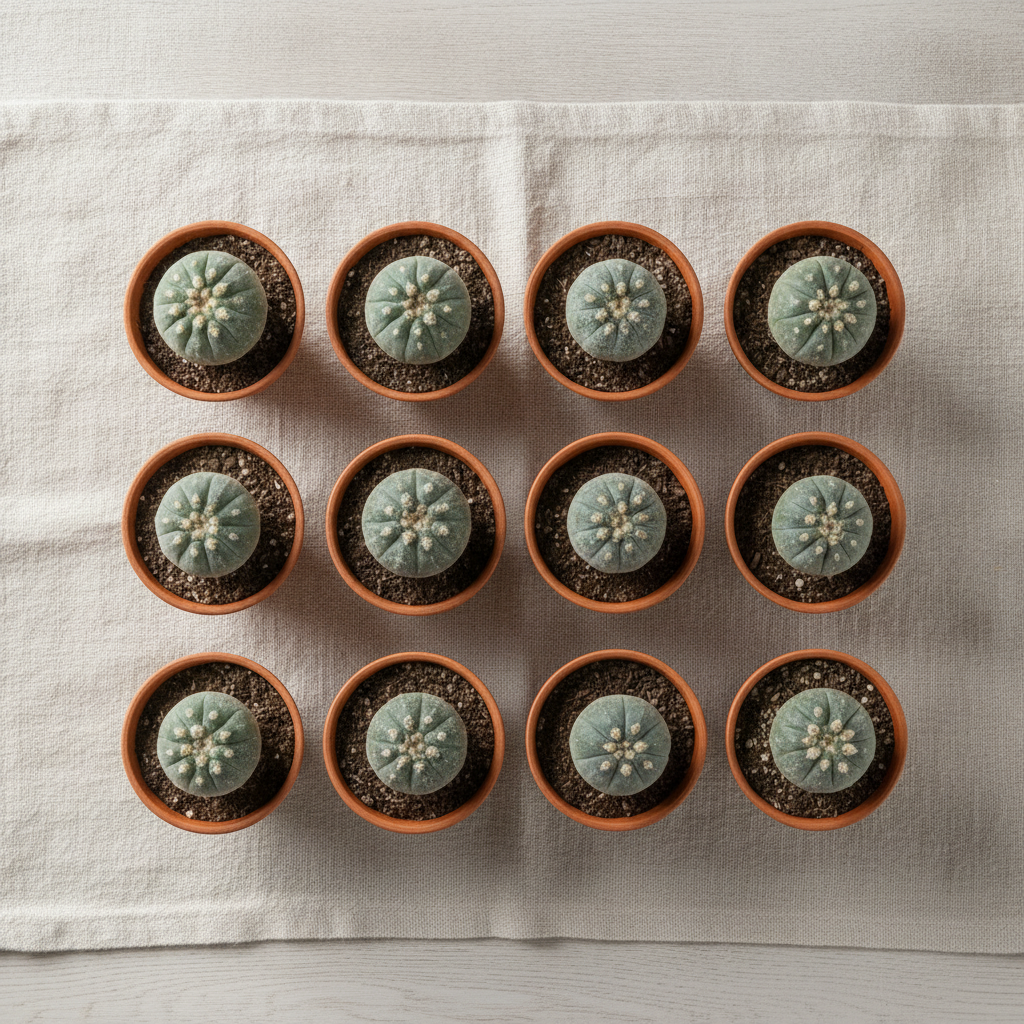
The best time to take offsets is spring or early summer, when the plant is growing actively and wounds heal fastest. Work carefully to avoid the spines, and follow these steps for the highest success rate:
- Gently wiggle a pup away from the parent by hand, or slice it cleanly at the point of attachment with a sterilised, sharp knife. Try to keep any roots the offset may already have made.
- Set the offset aside in a dry, shaded spot for several days to a week so the cut surface dries and forms a firm callus. Potting a fresh, wet wound straight into soil is the surest way to rot it.
- Once calloused, nestle the base of the pup into a small pot of the same gritty cactus mix used for the parent, just deep enough to hold it upright.
- Wait about a week, then begin watering sparingly. Keep the pot in bright, indirect light and slightly warm until new roots take hold, at which point you can move it into fuller sun.
- Expect signs of rooting within a few weeks, shown by firm anchoring and fresh growth at the crown. From there, treat the young plant exactly as you would a mature one.
Growing from seed is rewarding but demands patience. Sow fresh seed on the surface of a moist, sterile gritty mix, keep it warm and humid under a cover with bright light, and expect tiny green spheres to appear within a few weeks. Seedlings grow slowly and take several years to reach flowering size, so most people stick with offsets for quick, dependable results.
Pro Tip — Encouraging pups: A healthy, well-lit plant offsets more freely than a struggling one. Ample sun, a snug pot and the natural stress of a proper cool winter rest all nudge the domino cactus to cluster, so the same conditions that promote flowering also give you more plants to share.
Pests and Problems
A healthy domino cactus grown in sharp soil and good light is remarkably trouble-free, and most of the problems owners encounter trace back to watering and environment rather than to pests. Even so, a few sap-sucking insects find their way onto indoor cacti, and knowing the early signs lets you deal with them before they spread through a collection.
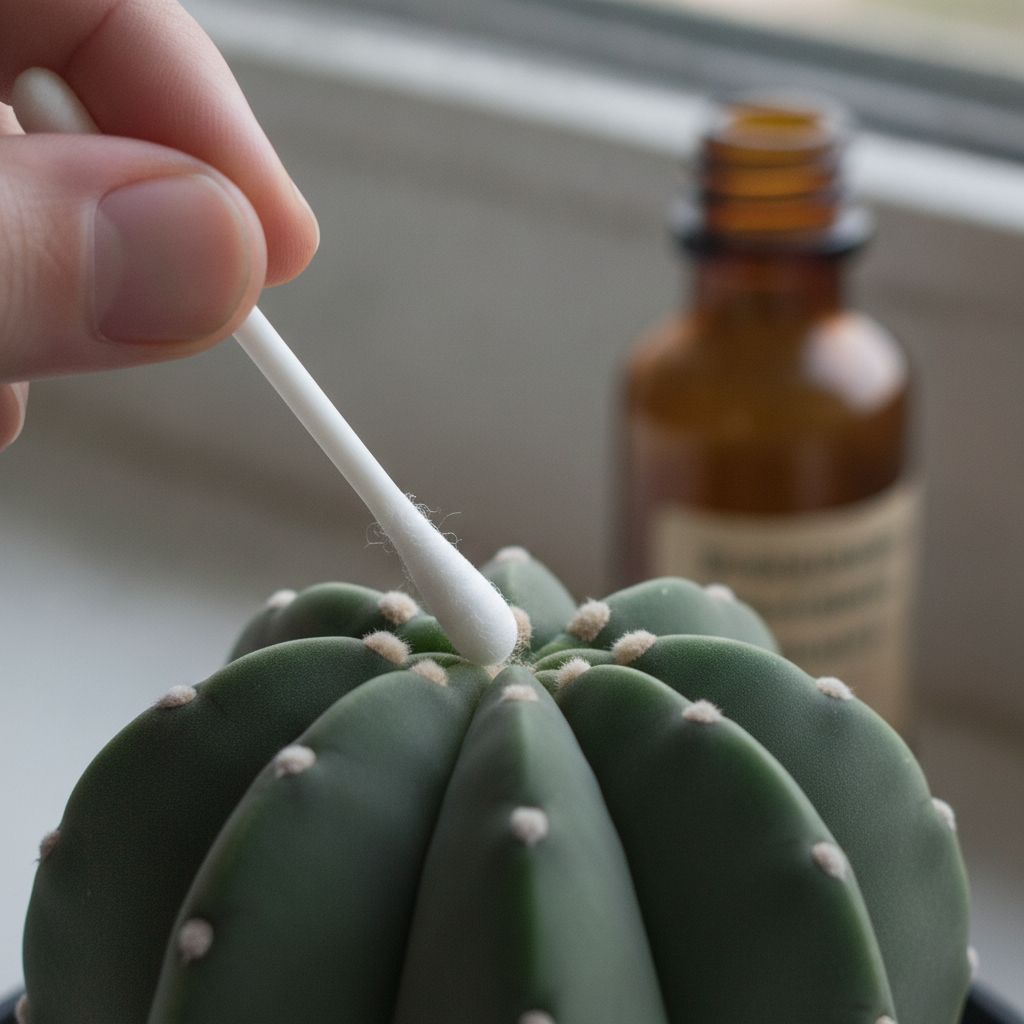
Mealybugs are the most frequent offenders, appearing as small white cottony tufts tucked between the ribs and around the woolly areoles where they are easily mistaken for the plant’s own fluff. They weaken the cactus by feeding on its sap and excrete sticky honeydew that can lead to sooty mould. Dab each insect with a cotton bud dipped in dilute isopropyl alcohol, then follow up with a systemic or horticultural treatment if the infestation is widespread. Spider mites are a subtler threat, betraying themselves by fine webbing and a stippled, dull bronzing of the skin, and they thrive in hot, dry conditions; raising humidity slightly and treating with a suitable miticide brings them under control. Scale insects, seen as small brown limpet-like bumps, and fungus gnats, whose larvae breed in perpetually damp soil, round out the usual cast, and both are far less likely on a plant watered correctly.
The most serious problem, however, is not an insect at all but rot, driven by excess moisture. Root and stem rot begins out of sight at the base and works upward, turning firm green tissue soft, yellow, brown or black and often mushy to the touch. By the time discolouration is obvious the damage is usually advanced, so prevention through gritty soil, a well-drained pot and disciplined watering is far more effective than any cure. If rot takes hold, your best hope is to cut away all affected tissue back to clean, firm green flesh with a sterile blade, let the cut callus, and re-root the salvageable top as a cutting. The table below summarises the common issues and their remedies.
| Symptom | Likely cause | Remedy |
| Soft, brown or yellow mushy base | Root or stem rot from overwatering | Cut back to firm tissue, callus, re-root the healthy top |
| White cottony tufts in the ribs | Mealybugs | Dab with alcohol, then treat with insecticide if needed |
| Fine webbing and dull bronzing | Spider mites | Raise humidity slightly and apply a miticide |
| Small brown raised bumps | Scale insects | Scrape off and treat with horticultural oil |
| Tall, pale, stretched growth | Too little light (etiolation) | Move to brighter light or add a grow light |
| Bleached tan patches on one side | Sun scorch from sudden strong sun | Acclimatise gradually; damage is permanent but harmless |
| Wrinkled, shrivelled body in winter | Normal winter dormancy or underwatering | Usually fine; a spring watering restores it |
| No flowers despite a healthy plant | Missing cool, dry winter rest or too little light | Provide a cool dry winter and maximum sun |
Varieties
The domino cactus is grown more for its form and flowers than for a long list of named cultivars, but a couple of distinct selections do circulate among enthusiasts. All share the same easy care described above; they differ only in the look of the body.
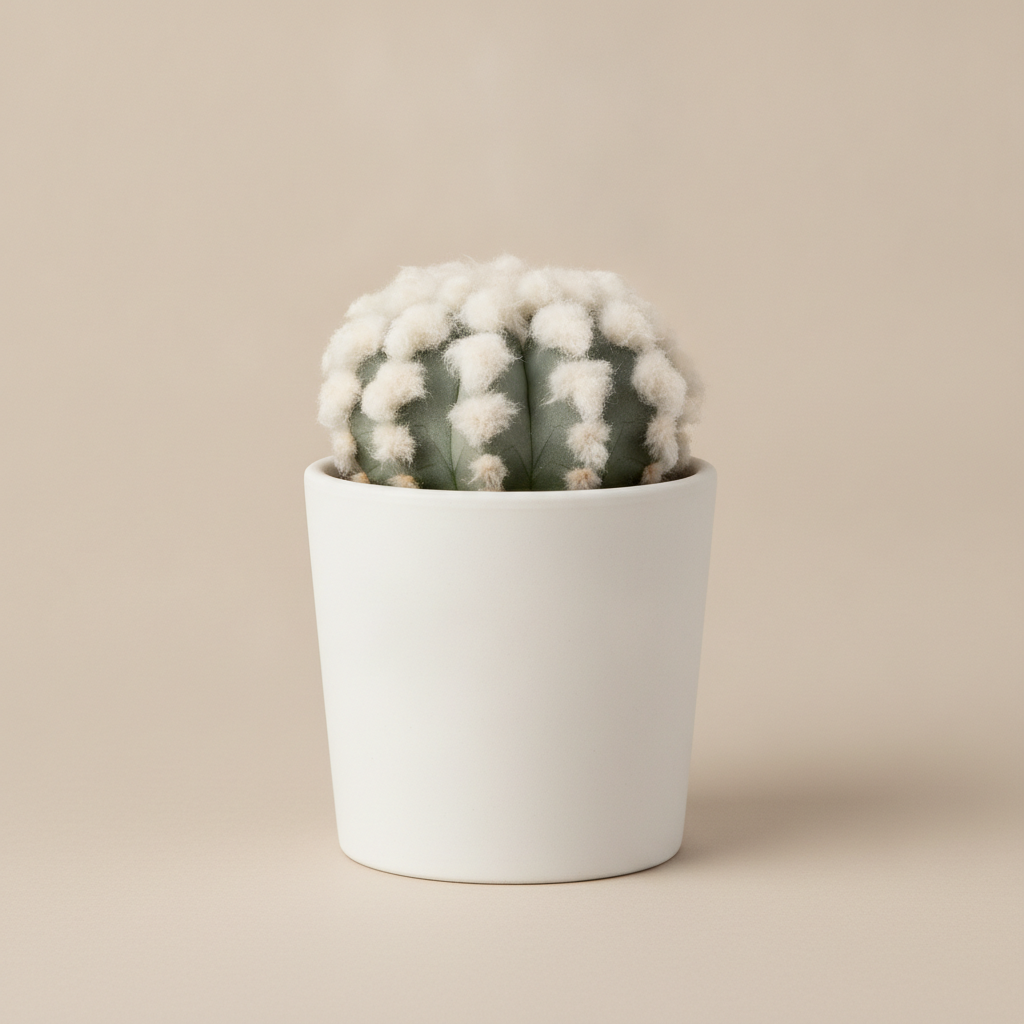
Fuzzy Navel
A selection valued for its exaggerated wool, the Fuzzy Navel carries the same ribbed grey-green globe but with markedly denser, cottony white tufts clustered at every areole. The overall effect is soft and almost frosted, and the heavier wool makes the flowers, when they come, seem to emerge from a nest of fluff. Care is identical to the species.
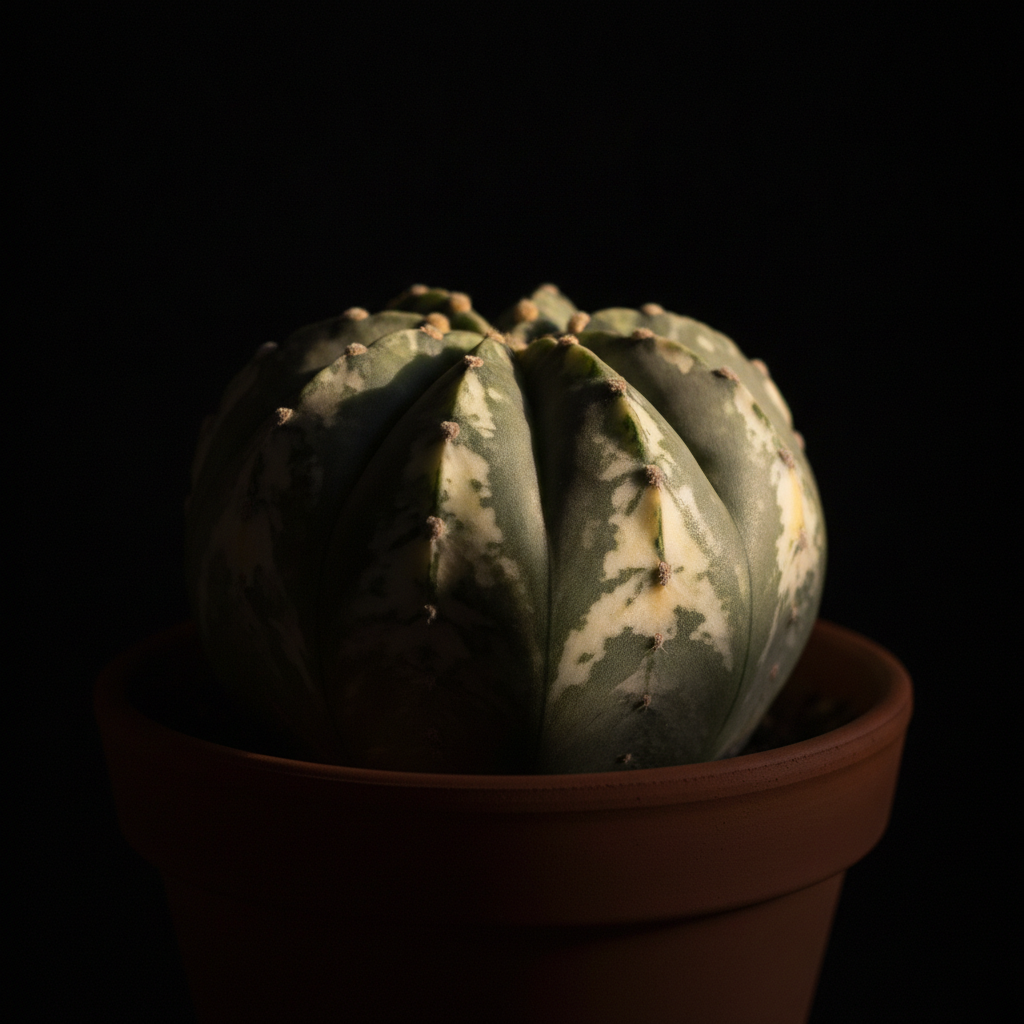
Variegated Domino
Variegated forms marble the grey-green body with irregular patches of cream and pale yellow where the plant produces less chlorophyll. They are slower growing and a little more light-sensitive, since the pale tissue scorches more easily, so give them bright light without harsh midday sun. Their scarcity makes them a prized find among collectors.
Frequently Asked Questions
Why won’t my domino cactus flower?
The two most common reasons are too little light and the absence of a cool, dry winter rest. Domino cacti set their buds in response to the natural stress of a cold, dry dormancy, so a plant kept warm and watered all year rarely blooms. Give it the sunniest spot you have through the growing season, then keep it cool, around 7 to 13 degrees C (45 to 55 degrees F), and almost completely dry from late autumn until spring. Maturity also matters, as very young plants simply are not old enough to flower.
How often should I water a domino cactus?
There is no fixed schedule; water only when the soil has dried out completely. In spring and summer that often works out to roughly every week to ten days, but you should always check first rather than water by the calendar. In winter, reduce this to a light drink every four to six weeks at most, or withhold water almost entirely if the plant is kept cool, to honour its essential dry rest.
Is the domino cactus safe for cats and dogs?
Yes. Echinopsis subdenudata is considered non-toxic to cats and dogs and contains no irritant sap. The only real risk is physical, as even the plant’s small spines can prick an inquisitive nose or paw, so it is sensible to keep it somewhere pets are unlikely to bump into it.
Why is my cactus growing tall and thin?
Tall, narrow, pale growth is etiolation, the plant stretching towards a light source that is too weak. Move it to a brighter window with direct sun, or add a full-spectrum grow light. The elongated portion will not return to a round shape, but with better light the new growth above it will grow compact and healthy again.
My domino cactus has gone wrinkled and soft. What is wrong?
It depends where the softness is. A body that is merely wrinkled and slightly shrunken, but still firm, is usually thirsty or in normal winter dormancy, and a thorough watering in the growing season will plump it back up. A base that is soft, mushy, discoloured yellow or brown, however, points to rot from overwatering, which is far more serious and calls for cutting back to healthy tissue and re-rooting the top.
How big does a domino cactus get?
It stays small. An individual body typically reaches around 8 to 12 cm (3 to 5 in) across, roughly the size of a tennis ball or a little larger, and only a similar height. Rather than growing much bigger, a mature plant spreads by producing offsets around its base, gradually forming a low cluster of several heads over the years.






