
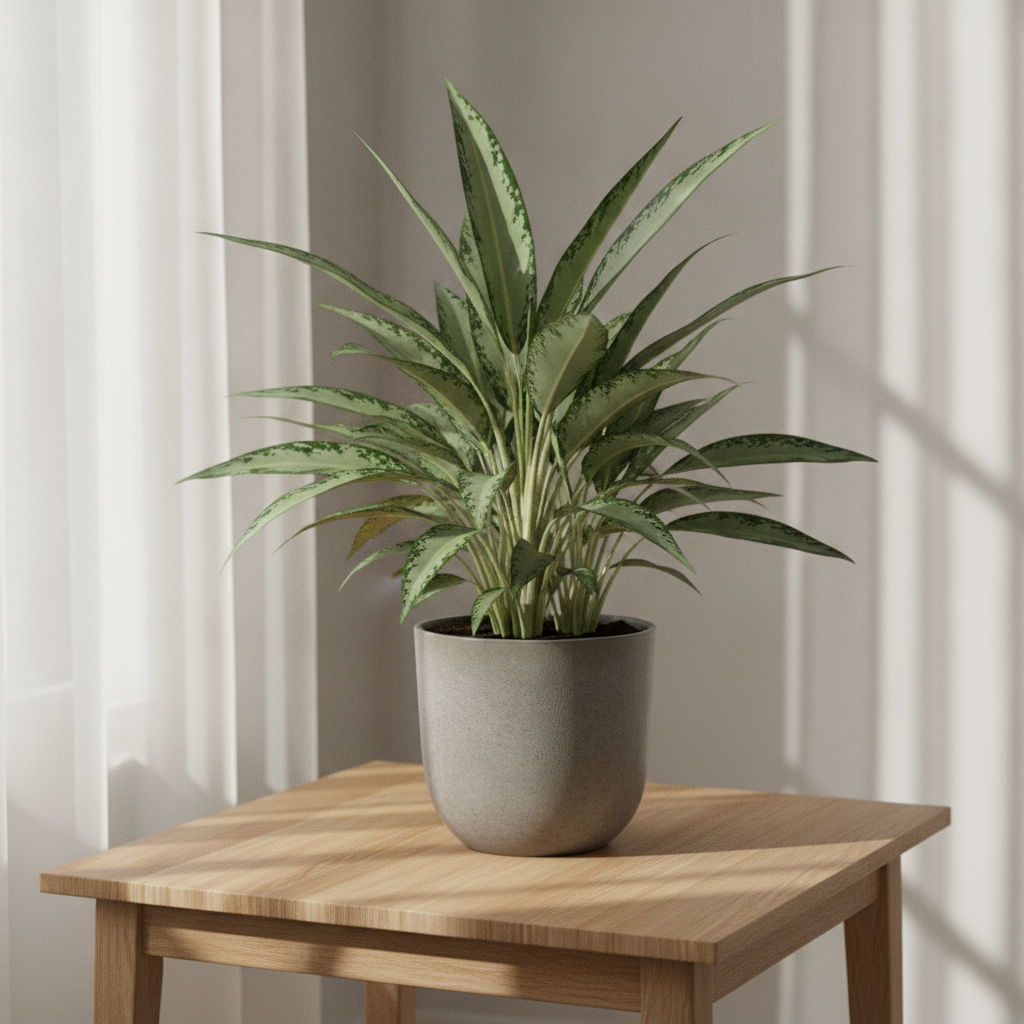
Few houseplants combine architectural elegance with such an easygoing temperament as the Cutlass Aglaonema. A named cultivar of the Chinese evergreen group, Aglaonema ‘Cutlass’ stands apart from its rounder-leaved relatives with narrow, sword-shaped blades of silvery sage-green feathered along dark green margins. The plant belongs to the arum family (Araceae) and traces its lineage to the shaded understorey of tropical Asia, where the genus ranges from the forests of the Philippines and Malaysia through Thailand and southern China. Generations of nursery breeding have refined those wild species into compact, colourful hybrids, and ‘Cutlass’ is prized for the slim, upright silhouette that gives it its blade-like name.
Aglaonemas have a well-earned reputation as some of the most forgiving foliage plants you can grow indoors, and ‘Cutlass’ is no exception. It tolerates low light, shrugs off the occasional missed watering, and rarely demands the humidity theatrics that its aroid cousins insist upon. Yet there is a meaningful gap between a plant that merely survives in a dim corner and one that pushes out dense, well-coloured new growth season after season. This guide covers everything you need to close that gap, from reading the light in your room to mixing the right soil, feeding on a sensible schedule, dividing your plant for more, and heading off the handful of pests that occasionally take an interest.
Contents
- Quick Reference
- Why Cutlass Aglaonema Makes an Excellent Houseplant
- Light Requirements
- Watering & Humidity
- Soil, Potting & Repotting
- Fertilising
- Propagation
- Pests & Diseases
- Popular Varieties
- Frequently Asked Questions
Quick Reference: Cutlass Aglaonema at a Glance
| Light | Low to bright indirect light; no direct midday sun |
| Watering | When the top 3 to 5 cm (1 to 2 in) of soil is dry, roughly every 7 to 12 days |
| Temperature | 18 to 27 degrees C (65 to 80 degrees F); keep above 15 degrees C (59 degrees F) |
| Humidity | Average room humidity of 40 to 60 percent is fine; higher is appreciated |
| Fertiliser | Balanced feed at half strength every 4 to 6 weeks in spring and summer |
| Toxicity | Toxic to cats, dogs and humans if chewed or swallowed |
Why Cutlass Aglaonema Makes an Excellent Houseplant
The strongest case for the Cutlass Aglaonema is its remarkable adaptability. This is a plant evolved for the forest floor, where light is scarce, air is still and humid, and the soil stays evenly moist under a thick layer of leaf litter. Those origins translate directly into the modern home: a Cutlass will hold its colour and form in exactly the kind of low-light interior corner where most decorative plants sulk and decline. For anyone who has watched a fussier plant collapse in a north-facing flat, the reliability of an Aglaonema is a genuine relief.

Beyond its tolerance, the cultivar earns its place on aesthetic grounds. The narrow leaves give a lighter, more feathery presence than the broad paddles of a classic Chinese evergreen, and the silver-and-green patterning reads as both calm and striking depending on the light around it. The clumping growth habit keeps the plant tidy and upright rather than sprawling, so it holds its shape in a decorative pot without staking or pruning. It is slow enough to stay in scale with a tabletop or shelf for years, yet vigorous enough to reward good care with a visibly fuller crown. Add in the plant’s documented ability to help filter common indoor air pollutants, and the Cutlass becomes an easy recommendation for beginners and collectors alike.
Important — Toxicity: Like all aglaonemas, ‘Cutlass’ contains insoluble calcium oxalate crystals in its sap. Chewing or swallowing any part can cause intense oral irritation, drooling, swelling and vomiting in cats, dogs and people. Keep the plant out of reach of pets and young children, and wash your hands after handling cut stems.
Light Requirements
Light is where the Cutlass Aglaonema is most misunderstood. It is routinely sold as a “low light” plant, and it is true that it will persist in conditions that would kill most foliage plants. Persisting and thriving, however, are not the same thing. In genuinely dim positions the plant simply idles, holding onto its existing leaves without producing much new growth and gradually losing some of the crisp contrast in its variegation.
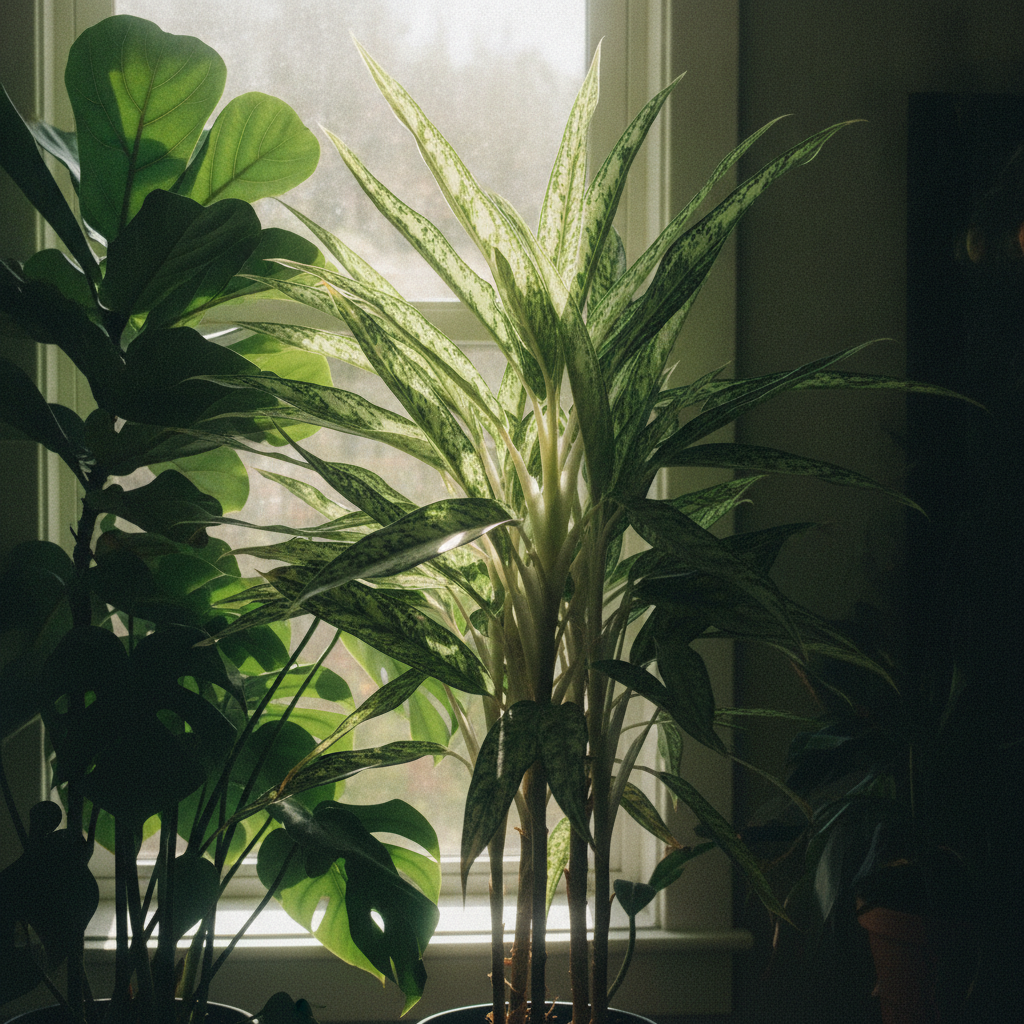
The sweet spot for strong growth and good colour is bright, indirect light: a position near a window where the plant receives plenty of ambient brightness but no beam of direct sun falling across the leaves. In these conditions a Cutlass will fill out steadily, keep its silvery markings sharp, and reward you with new blades from the centre of each clump throughout the growing season.
Light Levels Explained
Understanding where your plant sits on the light spectrum makes placement far more intuitive. The table below translates the usual plant-care shorthand into approximate light levels and the outcomes you can expect from a Cutlass at each tier.
| Light Category | Approx. Level | Typical Location | Outcome |
|---|---|---|---|
| Direct sun | Over 20,000 lux | On a south-facing sill in full sun | Leaves scorch and bleach; avoid |
| Bright indirect | 10,000 to 20,000 lux | A metre back from a bright window | Best growth and strongest colour |
| Medium | 5,000 to 10,000 lux | Middle of a well-lit room | Steady, healthy growth |
| Low | 1,000 to 5,000 lux | A dim corner or north aspect | Survives, slow growth, muted colour |
| Very low | Under 1,000 lux | An interior hallway with no window | Decline over time; supplement light |
Window Orientation and Placement
South-facing window: The brightest aspect in the northern hemisphere, and too intense directly on the sill. Set the plant two to three metres back, or filter the glass with a sheer curtain, so it enjoys the brightness without the burning beam.
East-facing window: An excellent choice. Gentle morning sun is soft enough that a Cutlass can sit right on or beside the sill, catching an hour or two of low-angle light before the day warms up.
West-facing window: Also good, though the afternoon sun is stronger than the morning. Keep the plant just off the direct path of late-day rays, or diffuse them with a light curtain.
North-facing window: The classic Aglaonema position. Light here is cool and even all day, never harsh. A Cutlass will be content close to a north window, though growth will be a touch slower than in a brighter aspect.
Pro Tip — Rotate for Symmetry: Aglaonemas lean gently towards their light source over time. Give the pot a quarter turn each time you water, and the clump will grow evenly on all sides rather than reaching to one side.
How Light Affects Variegation
The silvery patterning on a Cutlass is not fixed; it responds to the light the plant receives. In bright indirect light the contrast between the pale centres and dark margins stays crisp and defined. In very low light the plant produces more chlorophyll to make the most of what little it gets, and new leaves can emerge greener and less strongly marked. If you notice fresh growth losing its silver, the plant is usually asking for a brighter spot rather than a fertiliser boost.
Warning — Direct Sunlight: A few hours of unfiltered midday or afternoon sun will scorch the leaves, leaving bleached, papery patches that never recover. Damage appears within days of a move to a too-bright sill, so introduce any increase in light gradually.
Artificial Lighting
The Cutlass is one of the best candidates for growing under artificial light, which is part of why it appears so often in offices and windowless interiors. A standard full-spectrum LED grow light positioned 30 to 45 cm (12 to 18 in) above the plant, run for 10 to 12 hours a day, will keep it in excellent condition. Even ordinary bright office lighting on a long daily cycle is often enough to maintain a healthy plant, if not to drive fast growth.
Seasonal Adjustments
Indoor light drops considerably in winter as the sun sits lower and the days shorten. A Cutlass that was thriving a metre from the window in summer may benefit from moving closer to the glass in the darker months, or from a few hours of supplementary light. As the plant naturally slows in winter, ease back on both water and feed to match its reduced demand, then step them up again as light returns in spring.
Watering & Humidity
Watering is the single most important skill for keeping a Cutlass Aglaonema healthy, and happily it is one that rewards a relaxed hand rather than an anxious one. The plant stores a modest reserve of moisture in its thick stems and roots, which is exactly why it copes so well with the occasional lapse. Consistent overwatering, by contrast, is the fastest way to kill it.
When to Water
The reliable rule is to water when the top 3 to 5 cm (1 to 2 in) of soil has dried out. Push a finger into the mix near the edge of the pot; if it feels dry at that depth, it is time to water, and if it still feels cool and damp, wait a few days and check again. Depending on your light, warmth and pot size, this usually works out to somewhere between once a week and once every twelve days.
Resist the urge to water on a fixed calendar schedule. A plant in a bright, warm room will drink faster than the same plant in a cool, dim corner, and its needs change with the seasons. Reading the soil rather than the diary keeps you responsive to what the plant actually wants, and it is the habit that separates a thriving Aglaonema from a waterlogged one.
Pro Tip — Lift the Pot: Learn the weight of the pot right after watering and again when the soil has dried. A freshly watered pot is noticeably heavy; a thirsty one feels surprisingly light. With a little practice you can judge watering by lifting the pot alone.
How to Water Correctly
- Take the plant to a sink or use a saucer to catch the runoff.
- Pour room-temperature water slowly and evenly across the whole soil surface.
- Keep going until water flows freely from the drainage holes, which ensures the entire root ball is moistened.
- Let the pot drain completely for several minutes so no water is left standing.
- Empty the saucer or cache pot; never leave the plant sitting in collected water.
- Return the plant to its spot and wait until the top few centimetres dry again before the next watering.
Signs of Overwatering vs. Underwatering
| Symptom | Overwatering | Underwatering |
|---|---|---|
| Leaf colour | Yellowing, often on lower leaves | Browning at the tips and edges |
| Leaf texture | Soft, limp, translucent | Dry, crisp, curling inwards |
| Soil | Stays wet for days, may smell sour | Bone dry, pulling away from the pot |
| Roots | Brown, mushy, foul-smelling | Dry but firm and pale |
| Stem base | Soft or blackened at the soil line | Firm but growth stalls |
Warning — Root Rot: Persistently soggy soil suffocates the roots and invites rot, the most common cause of Aglaonema death. If the stem base turns soft and dark, unpot immediately, cut away all mushy roots with sterile scissors, and repot into fresh, barely-moist mix. Caught early, the plant often recovers.
Humidity Requirements
Although the Cutlass hails from humid tropical forests, it adapts far better to average household air than most aroids. Ordinary room humidity of 40 to 60 percent keeps it perfectly happy, which means you rarely need to intervene. Higher humidity does encourage lusher growth and helps prevent the occasional brown leaf tip, so it is a nice bonus rather than a strict requirement.
If your home runs particularly dry, especially in winter when central heating strips moisture from the air, you may see crisp brown edges on the leaves. This is the plant’s clearest signal that the surrounding air is too arid for its liking, and it is easily remedied.
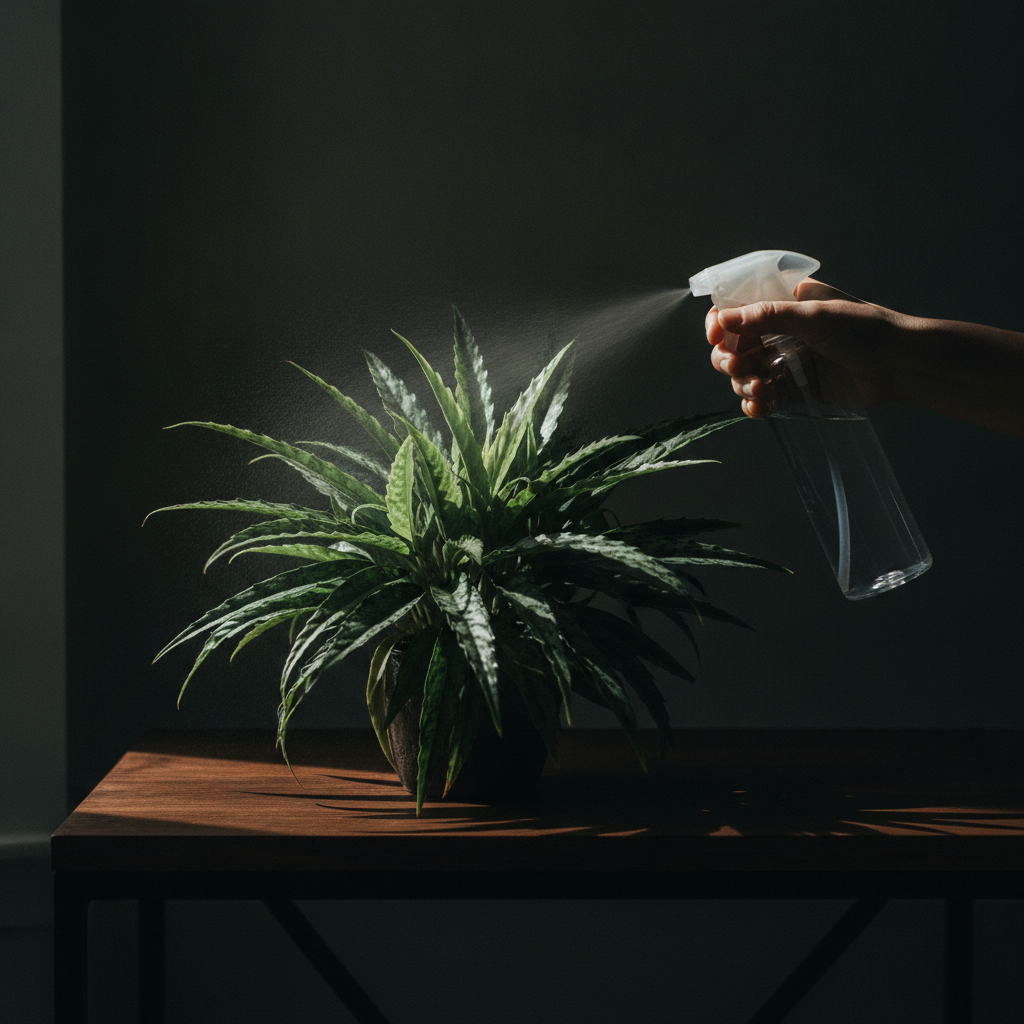
To raise humidity, group the plant with other foliage plants so they share the moisture they release, stand the pot on a tray of pebbles topped up with water, or run a small humidifier nearby during the driest months. Misting offers only a fleeting lift and does little for soil-borne needs, so treat it as cosmetic rather than a genuine humidity strategy.
Water Quality
Aglaonemas can be mildly sensitive to the fluoride and chlorine in some tap water, which occasionally shows up as brown leaf tips. If your water is heavily treated, leaving it to stand overnight before use allows chlorine to dissipate, or you can switch to filtered or collected rainwater. Always use water at room temperature, as a cold drench can shock the roots of this warmth-loving plant.
Soil, Potting & Repotting
The right growing medium underpins everything else in this guide. Because the Cutlass is so vulnerable to overwatering, the soil’s job is to hold enough moisture to keep the roots hydrated while draining freely enough that they never sit in water. A dense, water-retentive potting soil straight from the bag is the wrong choice; it stays soggy for too long and sets the stage for rot.
Ideal Soil Composition
Aim for a light, chunky, well-aerated mix built on a base of quality potting soil and opened up with generous amounts of perlite and bark. The goal is a medium that feels fluffy in the hand, holds together when moist without turning to mud, and lets water pass through in seconds rather than minutes.
| Component | Proportion | Function |
|---|---|---|
| Quality potting soil | 50 percent | Holds moisture and nutrients |
| Perlite or pumice | 25 percent | Improves drainage and aeration |
| Orchid bark | 15 percent | Creates air pockets around roots |
| Coco coir | 10 percent | Retains gentle moisture evenly |
Aglaonemas prefer a slightly acidic to neutral soil, roughly pH 5.5 to 6.5, which most general potting mixes fall within naturally. There is no need to test or adjust pH under normal conditions; simply refreshing the mix every couple of years keeps it in the right range.
Pro Tip — Quick Mix Recipe: For a fuss-free blend, combine two handfuls of houseplant potting soil with one handful of perlite and one handful of orchid bark. It drains fast, resists compaction, and suits the Cutlass perfectly.
Choosing the Right Pot
The container is as much a part of the drainage system as the soil, so it deserves real thought rather than being chosen on looks alone.
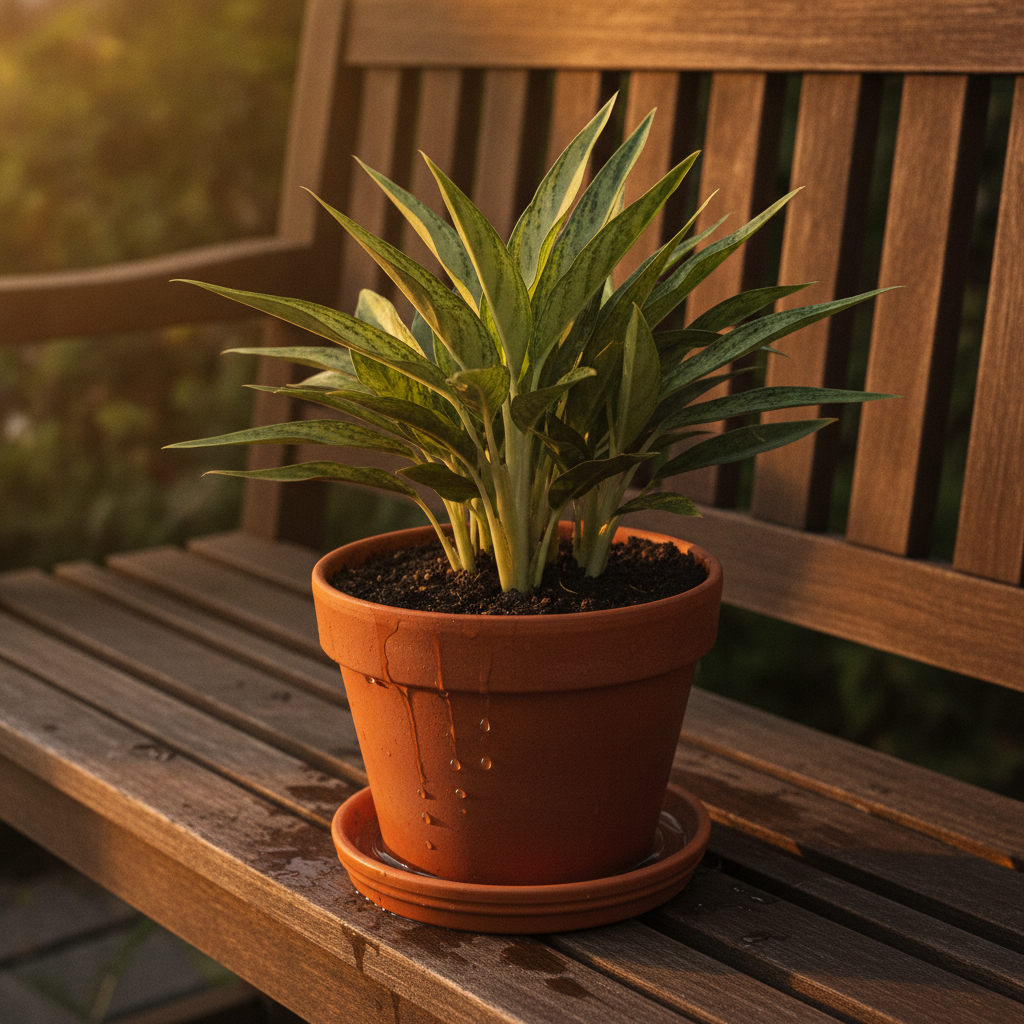
Drainage holes are non-negotiable. Whatever the material or style, the pot must have at least one hole in the base for excess water to escape. A decorative cache pot with no hole can be used as an outer sleeve, but only if you lift the inner pot out to water and let it drain fully before returning it.
Pot material: Terracotta is porous and wicks moisture from the soil, which suits growers who tend to overwater. Glazed ceramic and plastic hold moisture longer, which suits drier homes or more forgetful waterers. Either works well for a Cutlass; match the material to your own watering habits.
Pot size: Choose a pot only 2 to 4 cm (1 to 2 in) wider than the current root ball. Aglaonemas actually flower and grow best when slightly snug, and an oversized pot holds a reservoir of wet soil the roots cannot reach, raising the risk of rot.
When to Repot
The Cutlass is a slow grower that dislikes disturbance, so it needs repotting only every two to three years. The clearest signals are roots creeping out of the drainage holes or circling the surface, water running straight through without moistening the soil, or the plant drying out far faster than it used to. Spring, at the start of the active growing season, is the ideal time to repot so the plant can recover quickly.
How to Repot: Step-by-Step
- Water the plant a day ahead so the root ball is hydrated and holds together.
- Slide the plant out by tipping the pot and supporting the base of the stems, easing rather than pulling.
- Gently tease away the old soil from the outer roots and inspect them, trimming any that are brown or mushy.
- Add a layer of fresh mix to the base of a clean pot only slightly larger than the last.
- Set the plant at the same depth it grew before and backfill around it, firming lightly to remove air gaps.
- Water thoroughly and allow the pot to drain completely.
- Return the plant to indirect light and hold off on feeding for a month while it settles.
Warning — Transplant Shock: Some drooping or a paused growth spurt in the days after repotting is normal. Keep conditions stable, avoid the temptation to overwater a stressed plant, and give it a couple of weeks to adjust before worrying.
Fertilising
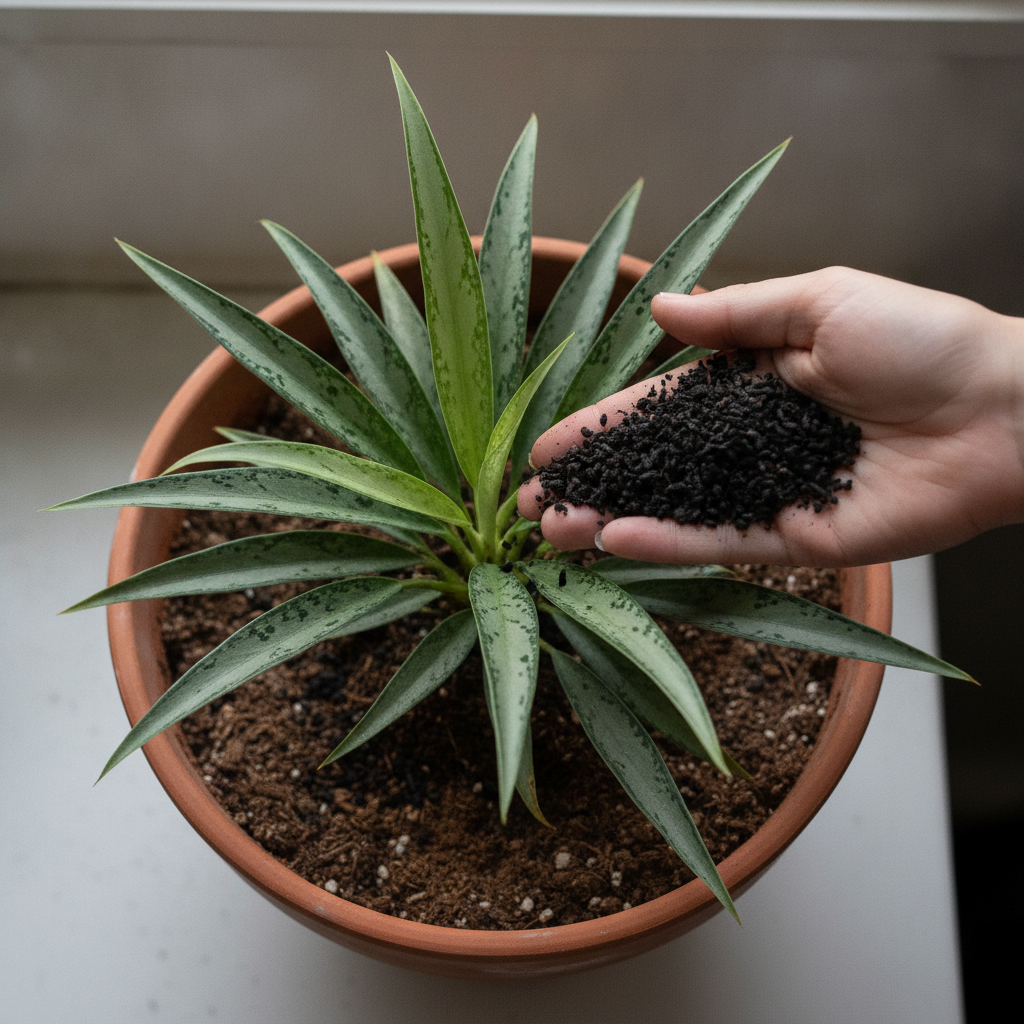
The Cutlass Aglaonema is a light feeder, and its modest appetite is easy to satisfy. In the wild it draws a slow, steady trickle of nutrients from decomposing leaf litter, never a sudden flood. Replicating that gentle supply, rather than overloading the plant, produces the best results and avoids the problems that come with heavy-handed feeding.
Feeding matters most during the active growing months of spring and summer, when the plant is putting out new leaves. In autumn and winter, as growth naturally slows, the plant needs little or no supplementary feed, and continuing to fertilise through the dormant season simply builds up unused salts in the soil.
Understanding Plant Nutrients
Fertiliser labels carry three headline numbers, the NPK ratio, standing for nitrogen, phosphorus and potassium. For a foliage plant like the Cutlass, a balanced ratio such as 10-10-10, or one slightly higher in nitrogen to support leafy growth, works well. Beyond these three, plants need smaller amounts of secondary nutrients and trace elements, which quality fertilisers include.
| Nutrient | Symbol | Primary Function | Deficiency Symptoms |
|---|---|---|---|
| Nitrogen | N | Leaf and stem growth | Pale, yellowing older leaves |
| Phosphorus | P | Root and overall vigour | Stunted growth, dull foliage |
| Potassium | K | Cell health and disease resistance | Brown leaf edges and weak stems |
| Calcium | Ca | Cell wall structure | Distorted new growth |
| Magnesium | Mg | Core of the chlorophyll molecule | Yellowing between leaf veins |
| Iron | Fe | Chlorophyll production | Yellow new leaves with green veins |
Types of Fertiliser
Liquid fertilisers: Diluted into the watering can, these give you precise control over dose and timing and act quickly. They are the simplest option for most indoor growers, and diluting to half the recommended strength suits the Cutlass well.
Slow-release granular: Coated prills release nutrients gradually over several months as you water. They are convenient for hands-off growers, though they offer less control if the plant shows signs of overfeeding.
Organic fertilisers: Worm castings, diluted seaweed and compost teas feed gently and improve the soil life over time. They are very hard to overdo, which makes them a forgiving choice for a light feeder like this one.
Feeding Schedule
A simple, reliable routine is to feed with a balanced liquid fertiliser at half strength once every four to six weeks from spring through to early autumn. That is genuinely all the Cutlass needs. Stop feeding entirely through late autumn and winter, and resume only when you see fresh growth appear as the days lengthen again.
Pro Tip — Less Is More: When in doubt, underfeed. Aglaonemas suffer far more from too much fertiliser than too little, and a plant that is slightly hungry is easily corrected, whereas one damaged by salt build-up takes weeks to recover.
How to Fertilise
- Water the plant lightly first if the soil is very dry, to protect the roots from concentrated feed.
- Dilute the fertiliser to half the strength stated on the label.
- Pour the solution evenly over the soil until it just begins to drain.
- Avoid splashing feed onto the leaves, and wipe off any that lands to prevent spotting.
- Every few months, flush the pot with plain water to wash out any accumulated salts.
Warning — Salt Build-Up: A white crust on the soil surface or the pot rim, along with brown leaf tips, signals a build-up of fertiliser salts. Flush the pot thoroughly with plenty of plain water, letting it drain fully, and cut back on feeding frequency.
Propagation
Propagating a Cutlass Aglaonema is deeply satisfying, both because it multiplies a plant you already love and because it neatly rejuvenates an older, crowded clump. Unlike trailing aroids that root readily from a single node in a glass of water, the Cutlass grows as an upright, clumping plant, so its most reliable propagation methods work with the crown rather than with cut vines.
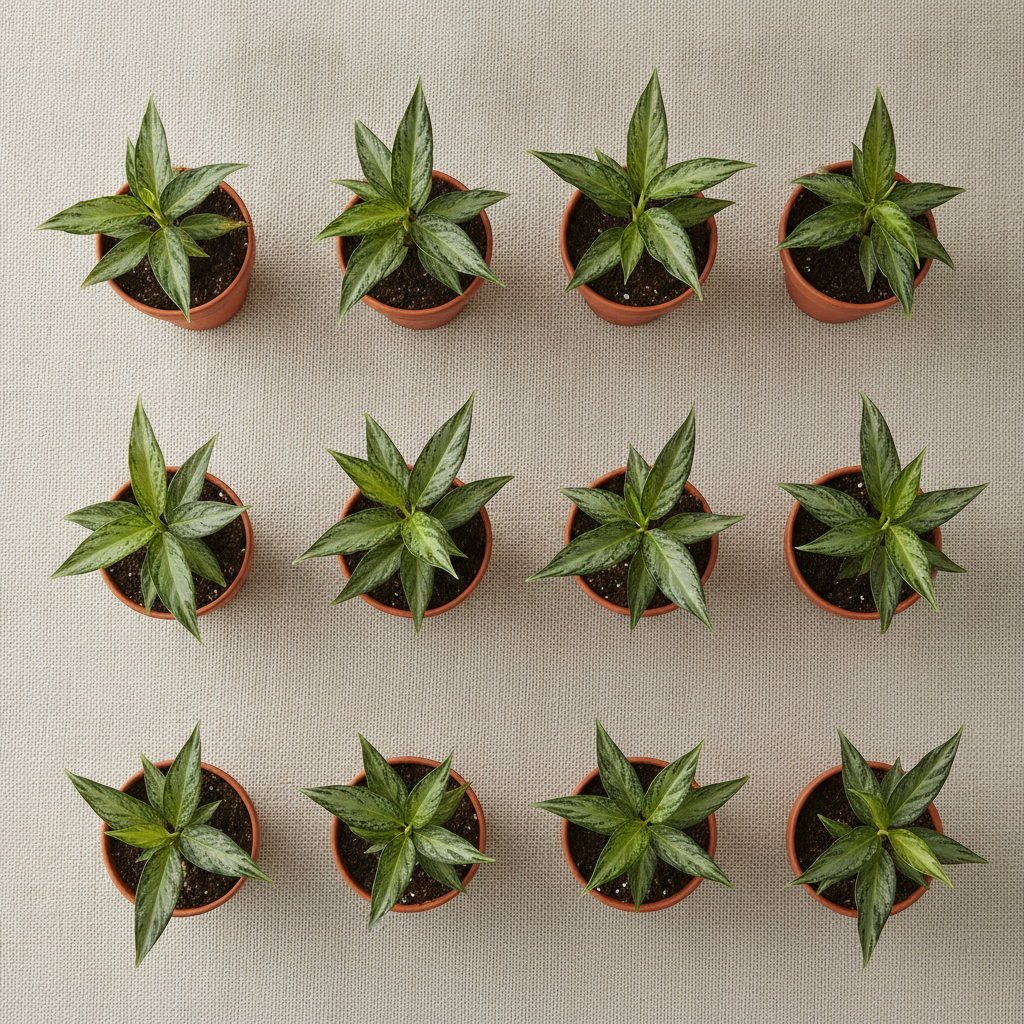
The two dependable approaches are division of the whole clump and separation of the offsets, or pups, that mature plants push up around the base. Both are best carried out in spring or early summer, when the plant has the vigour to recover quickly and establish new roots.
Understanding the Clump and Offsets
A mature Aglaonema is not a single stem but a cluster of growth points sharing one root mass. Over time the plant produces new shoots from the base, each with its own developing roots. This natural clumping habit is what makes division so straightforward: you are simply separating growth points that are already partly independent, rather than forcing a cutting to root from scratch.
Division: Step-by-Step
Division is the surest method and the one most likely to give you full-sized plants quickly. It works best on a specimen that has filled its pot with several distinct clusters of stems.
- Water the plant a day beforehand, then slide the whole root ball out of its pot.
- Gently brush away loose soil so you can see where the natural clumps and their roots divide.
- Tease the clump apart with your hands, or cut through the root mass with a clean, sharp knife, ensuring each division has both healthy roots and several leaves.
- Pot each division into its own container of fresh, free-draining mix at its original depth.
- Water lightly and place the new plants in warm, bright indirect light.
- Keep the soil just barely moist and hold off feeding for a month while roots re-establish.
Pro Tip — Sterilise Your Blade: Wipe your knife or scissors with isopropyl alcohol before cutting through the root mass. A clean blade prevents you from introducing rot or disease into the freshly exposed tissue.
Offset Separation: Step-by-Step
If your plant has thrown up small pups around its base but is not yet crowded enough to divide fully, you can remove individual offsets without disturbing the whole plant.
- Ease the plant partly out of its pot, or clear soil from around the base of the chosen pup.
- Identify an offset that has developed a few of its own roots and at least two or three leaves.
- Separate it from the parent by hand or with a sterile blade, keeping as many of its roots intact as possible.
- Pot the offset into a small container of moist, well-draining mix.
- Keep it warm and humid, out of direct sun, until it shows new growth and has clearly rooted in.
Troubleshooting Propagation
| Problem | Likely Cause | Solution |
|---|---|---|
| Division wilts badly | Root loss and transplant shock | Keep warm and humid; do not overwater; be patient |
| Cut base turns mushy | Rot from wet soil or dirty tools | Trim to clean tissue, sterilise blade, use fresh mix |
| No new growth for weeks | Cool temperatures or too little light | Move somewhere warmer and brighter, indirect |
| Offset fails to root | Separated with too few roots | Take offsets only once they have their own roots |
Pests & Diseases
The Cutlass Aglaonema is not a magnet for pests, and a healthy plant grown in good conditions is rarely troubled. Most problems arrive with a new plant, hitch a ride from an infested neighbour, or take hold when a plant is stressed by overwatering or poor air circulation. Vigilance and early action keep the handful of usual suspects easily in check.
Make a habit of inspecting your plant whenever you water, paying particular attention to the undersides of leaves and the crevices where leaves meet stems. Catching an infestation in its first days, when only a few insects are present, is far easier than tackling an established outbreak.
Common Pests
Mealybugs (Pseudococcidae)
These small, sap-sucking insects look like tufts of white cotton wool tucked into leaf axils and along stems. They weaken the plant and leave behind sticky honeydew that can turn sooty and black.
Treatment: Dab each insect with a cotton bud dipped in isopropyl alcohol, then follow up with an insecticidal soap or neem oil spray every week until no new bugs appear. Isolate the plant while you treat it.
Spider Mites (Tetranychus urticae)
Almost too small to see, spider mites thrive in warm, dry air and betray themselves with fine webbing and a stippled, speckled look on the leaves. Populations explode quickly if left unchecked.
Treatment: Rinse the foliage thoroughly, raise the humidity around the plant, and treat with neem oil or a miticide at weekly intervals. Mites hate moisture, so better air humidity is both a cure and a deterrent.
Fungus Gnats (Sciaridae)
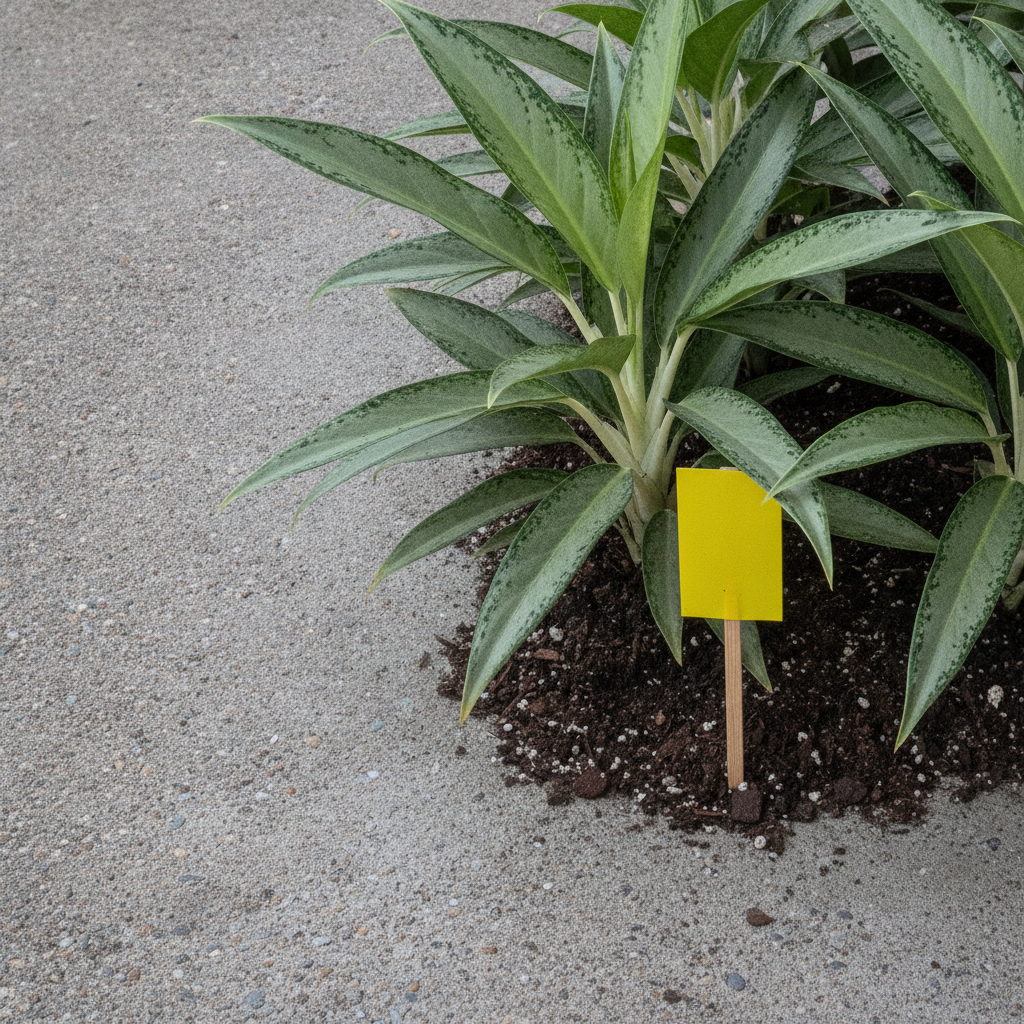
These tiny black flies hover around the soil and are more a nuisance than a serious threat, though their larvae can nibble young roots. They are a classic symptom of soil kept too wet.
Treatment: Let the top of the soil dry out more thoroughly between waterings, set yellow sticky traps to catch the adults, and water with a Bacillus thuringiensis drench to kill the larvae if needed.
Common Diseases
Root Rot (Pythium and Phytophthora)
The most serious threat to any Aglaonema, root rot is caused by fungal and water-mould organisms that flourish in waterlogged soil. It shows as yellowing, wilting foliage and a soft, blackened stem base, and untreated it kills the plant.
Treatment: Unpot at once, cut away every brown or mushy root with sterile scissors, and repot into fresh, free-draining mix in a clean pot. Water sparingly afterwards and correct the overwatering habit that caused it.
Leaf Spot (Colletotrichum and others)
Bacterial and fungal leaf spots appear as brown or yellow-haloed lesions that can spread across the foliage, usually where water sits on the leaves in still, humid air.
Treatment: Remove affected leaves, improve air circulation, and avoid wetting the foliage when you water. A copper-based fungicide helps with stubborn cases.
Pest and Disease Summary
| Pest / Disease | Identification | Treatment |
|---|---|---|
| Mealybugs | White cottony tufts in leaf axils | Alcohol swab, then neem or soap |
| Spider mites | Fine webbing, stippled leaves | Rinse, raise humidity, neem oil |
| Fungus gnats | Small flies around wet soil | Dry soil, sticky traps, Bt drench |
| Root rot | Yellowing, soft black stem base | Trim roots, repot, water less |
| Leaf spot | Brown or haloed lesions | Remove leaves, improve airflow |
Prevention Strategies
The best defence is a healthy plant in the right conditions. Correct watering, good drainage, sensible light and steady warmth remove most of the stress that lets pests and disease gain a foothold. Quarantine any new plant for a couple of weeks before it joins your collection, and wipe the leaves occasionally to keep them clean and to give yourself a regular close look.
Good air circulation deserves special mention, as still, stagnant air encourages both fungal disease and mite outbreaks. A little space between plants and the occasional open window go a long way towards keeping a Cutlass trouble-free.
Pro Tip — Neem as Routine: A light monthly spray of diluted neem oil during the growing season deters most common pests before they establish. Apply in the evening or out of direct sun to avoid marking the leaves.
Popular Varieties
The Cutlass belongs to a vast and colourful family of Aglaonema cultivars, and part of the pleasure of growing one is discovering how varied the group can be. While ‘Cutlass’ is defined by its slender, sword-shaped leaves, its relatives range from broad silver paddles to leaves flushed with pink and red, all sharing the same easygoing temperament.
Because every named Aglaonema in this list wants essentially the same care, collecting several is a low-risk way to build a striking group of plants with real visual variety but a single, simple routine. The table and profiles below highlight some of the most popular cultivars alongside ‘Cutlass’ itself.
| Variety | Leaf Appearance | Light Needs | Growth Rate | Availability |
|---|---|---|---|---|
| Cutlass | Narrow silvery-green, dark margins | Low to bright indirect | Slow | Common |
| Silver Queen | Broad silver marbling, green edges | Low to medium | Slow to moderate | Very common |
| Siam Aurora | Green with pink and red edges | Medium to bright indirect | Moderate | Common |
| Silver Bay | Large silver centres, green border | Low to medium | Moderate | Very common |
| Maria | Deep green with silver streaks | Low | Slow | Common |
| Pink Dalmatian | Green speckled with pink flecks | Medium to bright indirect | Moderate | Less common |
Featured Varieties
Silver Queen
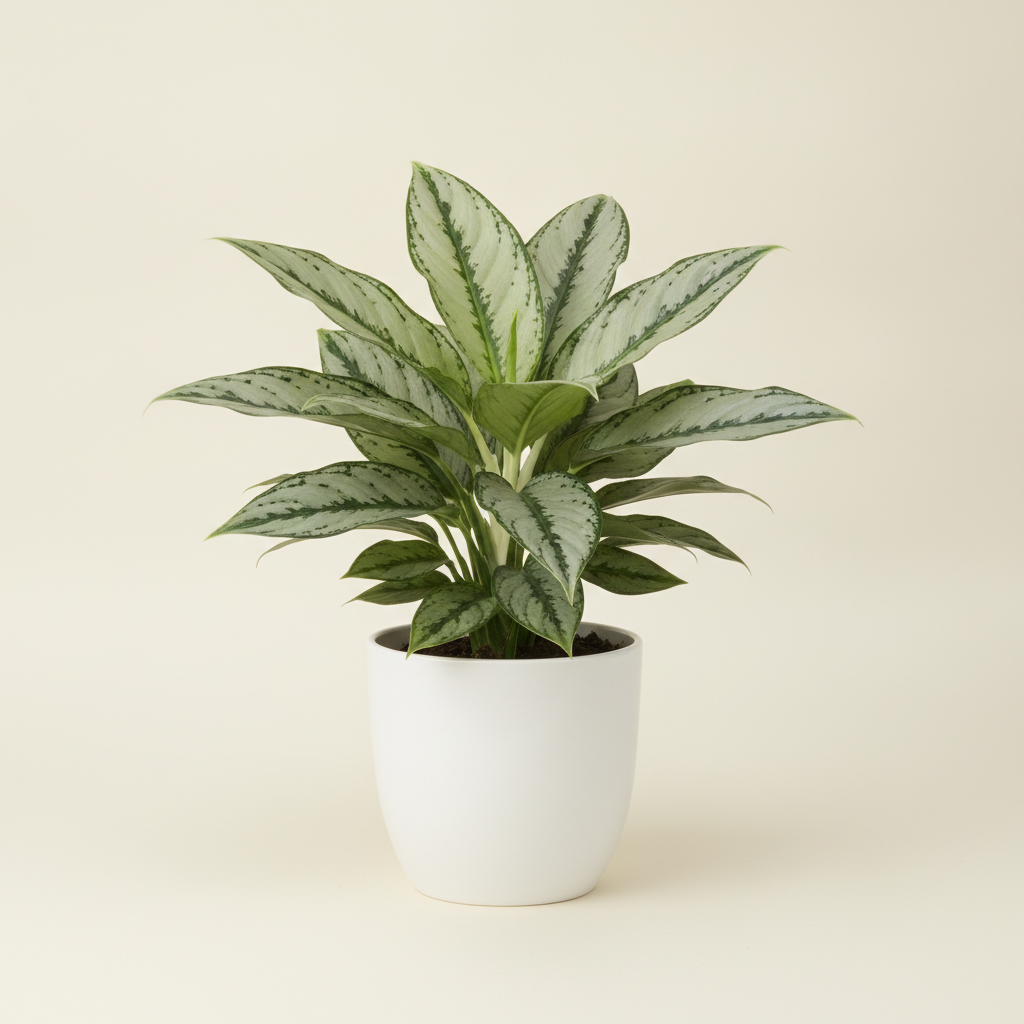
The classic Chinese evergreen, with broad leaves heavily marbled in silver-grey and edged in soft green. It is one of the most widely available aglaonemas and among the most shade-tolerant, making it a dependable partner to the slimmer ‘Cutlass’.
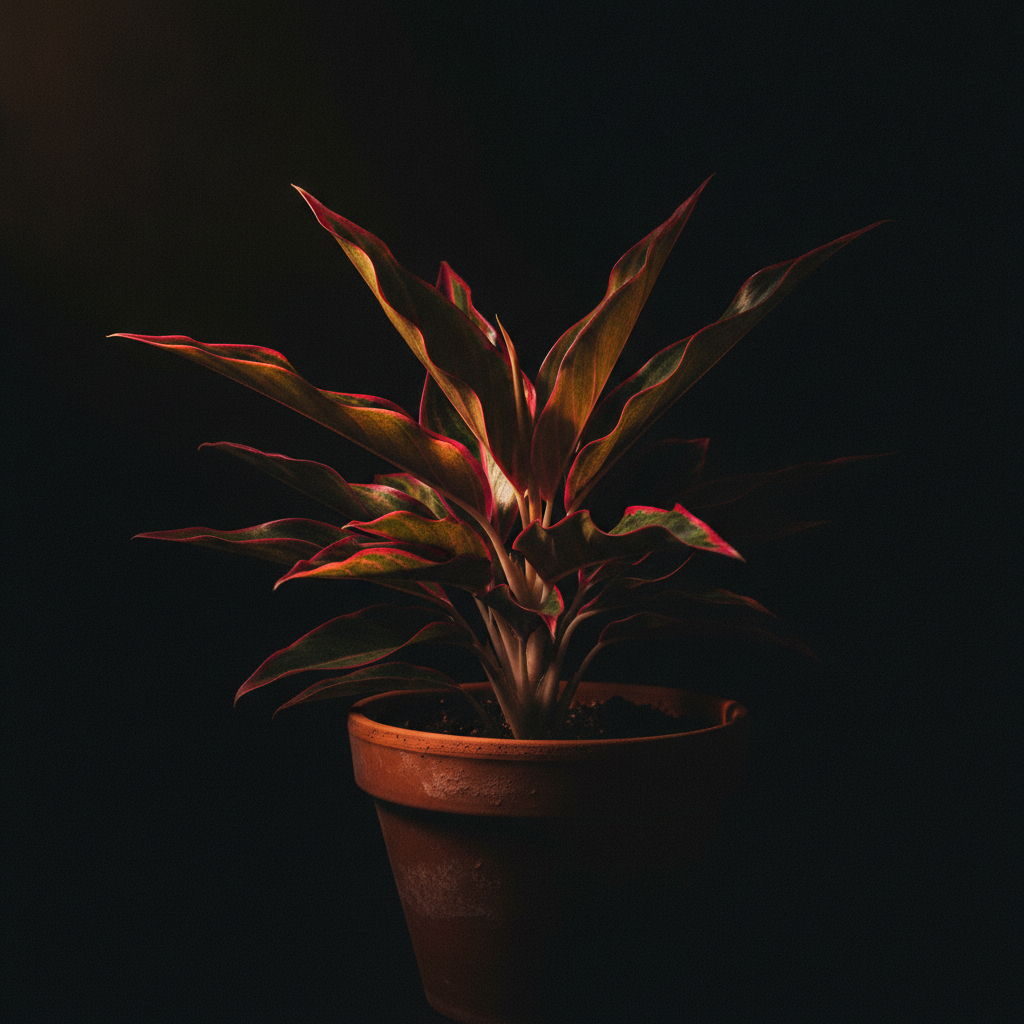
Siam Aurora
Also sold as Red Aglaonema, this cultivar brings vivid colour with deep green leaves boldly edged and veined in pink and red. It wants a little more light than ‘Cutlass’ to keep its colour rich, and adds a warm accent to any Aglaonema grouping.
Variety Profiles in Detail
Cutlass (Aglaonema ‘Cutlass’)
The subject of this guide stands out for its unusually narrow, lance-shaped leaves, a departure from the broad ovals of most Chinese evergreens. The silvery centres and fine dark margins give it a light, feathery look, and its upright clumping habit keeps it neat in a pot. It is slow-growing and exceptionally shade-tolerant, an ideal choice for a low-light corner that needs structure.
Silver Bay (Aglaonema ‘Silver Bay’)
A robust, larger-growing cultivar with big leaves that carry sweeping silver centres bordered in green. It grows a little faster than many aglaonemas and forms an imposing floor or side-table plant over time, while sharing the same forgiving care.
Maria (Aglaonema ‘Maria’)
One of the darkest and most shade-loving varieties, ‘Maria’ offers deep green foliage brushed with subtle silver. It is prized for its ability to hold up in genuinely dim offices and interiors where more colourful cultivars would fade.
Choosing the Right Variety for Your Space
Let your light guide your choice. For a dim corner, the darker green cultivars like ‘Maria’ or ‘Cutlass’ cope best, since they rely less on bright light to hold their patterning. For a spot with more brightness, the pink and red varieties such as ‘Siam Aurora’ reward you with richer colour. Whichever you choose, the care laid out in this guide applies across the board, so a mixed collection of aglaonemas remains one of the easiest and most rewarding groupings a houseplant grower can keep.
Frequently Asked Questions
Why are the leaves on my Cutlass Aglaonema turning yellow?
Yellowing, especially on the lower leaves, most often points to overwatering. Check whether the soil is staying wet for days and feel the stem base for softness. Let the top few centimetres dry more thoroughly between waterings, and confirm the pot drains freely. Occasional yellowing of the oldest leaf as the plant grows is normal and no cause for concern.
Why does my plant have brown, crispy leaf tips?
Crispy brown tips usually mean the air is too dry, or that fluoride and salts have built up. Raise the humidity with a pebble tray or humidifier, flush the pot with plain water to clear excess salts, and consider switching to filtered or rainwater if your tap water is heavily treated.
Is the Cutlass Aglaonema safe around pets?
No. Like all aglaonemas it is toxic to cats and dogs because of the calcium oxalate crystals in its sap, which cause mouth irritation, drooling and vomiting if chewed. Place it well out of reach of curious pets and children, and contact a vet or doctor if ingestion is suspected.
How fast does a Cutlass Aglaonema grow?
It is a slow to moderate grower, putting out a handful of new leaves over a growing season rather than shooting up quickly. Good light, warmth and a light feed in spring and summer encourage the fastest growth it is capable of, but patience is part of the deal with this plant.
Can it really survive in low light?
Yes, better than almost any other decorative foliage plant. It will hold its leaves and general form in a genuinely dim spot, though growth slows and the silver markings may soften. For the best colour and fullest growth, give it bright indirect light, but do not worry if the only space you have is a shadier one.
Why is my new growth greener and less silvery?
Reduced variegation on fresh leaves is the plant’s response to low light. To capture more of the limited light, it produces extra chlorophyll, which greens up the new foliage. Moving the plant somewhere brighter, still out of direct sun, usually restores the crisp silver pattern on subsequent leaves.
How often should I repot?
Only every two to three years, as the Cutlass grows slowly and prefers to be a little snug. Repot in spring when you see roots emerging from the drainage holes or the soil drying out unusually fast, and move up just one pot size at a time.
Can I grow a Cutlass Aglaonema in water alone?
It can be kept in water for a time and even rooted that way during propagation, but it grows far better long term in a proper free-draining soil mix. If you enjoy the look of a plant in water, treat it as a temporary display and pot it up into soil once its roots are established for lasting health.






