
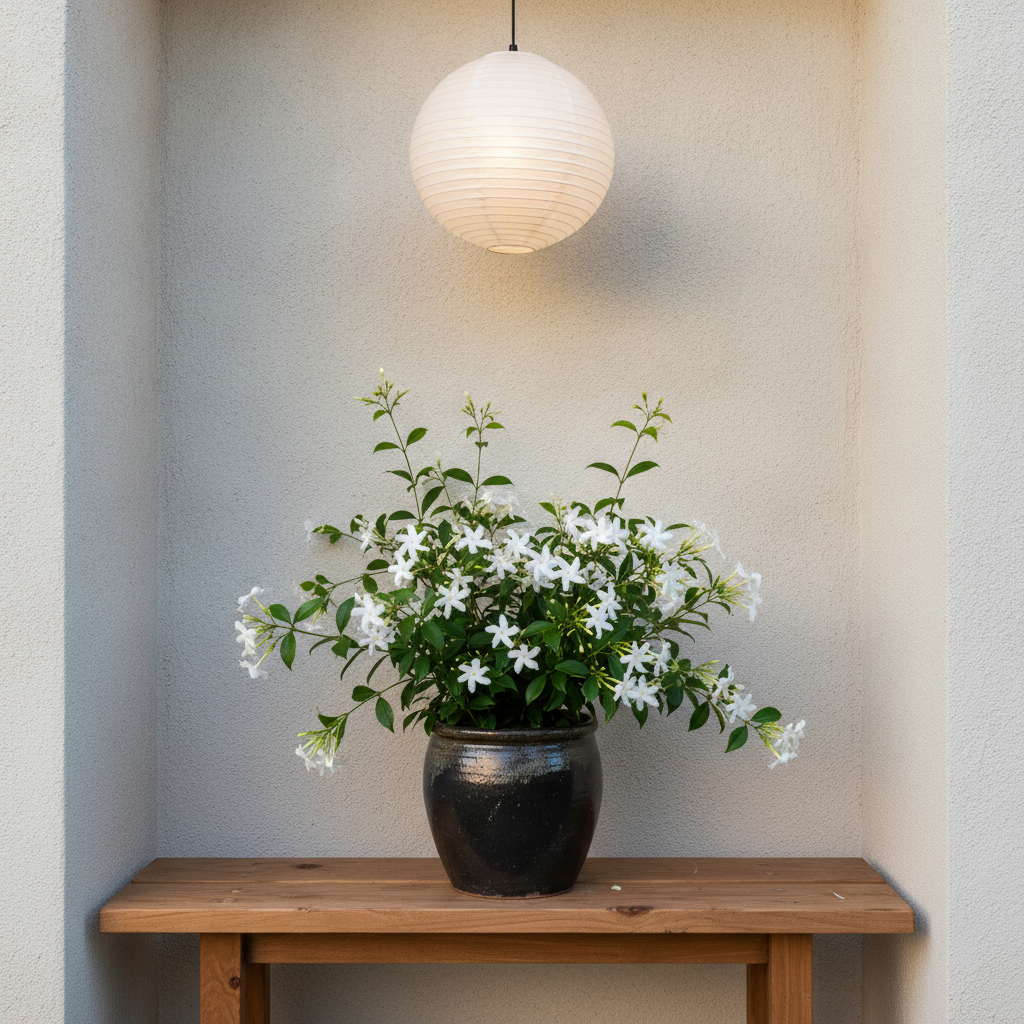
Few plants announce themselves the way confederate jasmine does. Long before you round the corner and see the glossy evergreen foliage, the perfume reaches you: a warm, sweet, almost creamy scent that a single vine can push across a whole courtyard or sunroom. Trachelospermum jasminoides is not a true jasmine at all, yet it has borrowed the name fair and square, because for sheer fragrance it rivals anything in the genus Jasminum. Grown as a climbing houseplant, a conservatory specimen or a trained topiary, it rewards a little patience with one of the most generous flowering displays available to the indoor gardener.
This guide walks through everything the plant needs to move from merely surviving to genuinely thriving, from the light levels that separate a leafy-but-flowerless vine from a fragrant one, to the cool winter rest that most growers overlook. Whether you have just brought home a small trellised plant from the garden centre or you are nursing an established vine that has stopped blooming, the sections below cover the practical detail that makes the difference.
Quick Reference
- Why grow confederate jasmine
- Light
- Watering
- Soil and potting
- Fertilising
- Propagation
- Pests and problems
- Varieties
- Frequently asked questions
| Botanical name | Trachelospermum jasminoides |
| Common names | Confederate jasmine, star jasmine, Chinese star jasmine |
| Family | Apocynaceae (dogbane family) |
| Origin | Eastern and south-eastern Asia (China, Japan, Korea, Vietnam) |
| Light | Bright light with some direct sun; the brightest spot you have indoors |
| Water | Keep evenly moist in growth; let the top 2 to 3 cm (1 in) dry between drinks |
| Humidity | Average to moderate; tolerant of dry rooms |
| Temperature | 18 to 24 C (64 to 75 F) in growth; a cool winter rest at 7 to 13 C (45 to 55 F) to set buds |
| Soil | Fertile, free-draining, slightly acidic to neutral |
| Feeding | Monthly in spring and summer, favouring phosphorus and potassium for flowers |
| Growth habit | Evergreen twining woody vine, 3 to 6 m (10 to 20 ft) outdoors, easily kept smaller on a support |
| Toxicity | Low toxicity, but the milky sap can irritate skin; best kept out of reach of pets and children |
| Difficulty | Easy to grow, moderate to flower reliably indoors |
Why Grow Confederate Jasmine as a Houseplant
The first thing to understand about confederate jasmine is that despite its common name it belongs to the dogbane family, Apocynaceae, alongside oleander, hoya and mandevilla, rather than to the olive family that holds the true jasmines. The resemblance is one of scent and flower shape rather than botany. Its blooms are five-petalled and pinwheel-shaped, arranged so that the petals sweep in the same direction like the spokes of a turning wheel, and they open pure white before ageing to a soft cream. It is this pinwheel outline that gives rise to the other widely used name, star jasmine.
As a plant to live with, it earns its place on three counts. The fragrance is the obvious one: a mature vine in full bloom can perfume an entire room, and unlike some heady tropical flowers the scent of Trachelospermum is warm rather than cloying. The foliage is the second. Even out of flower the plant is handsome, clothed year round in leathery, glossy dark-green leaves that reflect the light and never look tired. The third is its versatility. Left to its own devices it twines, so it can be trained up a trellis, wound around a hoop, grown as a trailing plant from a high shelf or clipped into a compact standard. Few flowering houseplants are as willing to be shaped.
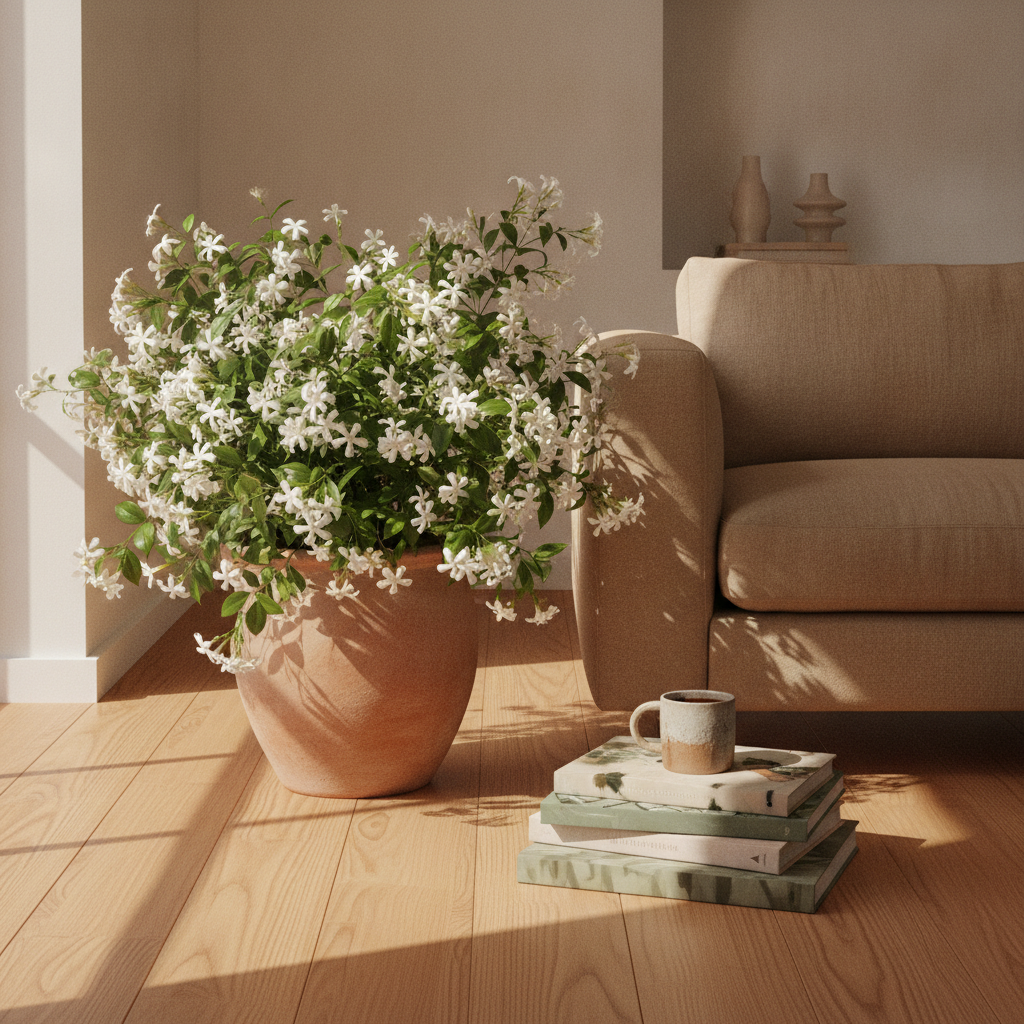
It helps to know the plant’s outdoor life to grow it well indoors. In the ground across warm-temperate regions it is a vigorous evergreen climber that can reach 3 to 6 metres (10 to 20 feet), hardy in USDA zones 8 to 10 and able to shrug off a light frost once established. That vigour does not disappear when you bring it inside. A pot restricts its size, but the plant still wants to climb, still wants a bright position and still keeps the annual rhythm of its wild ancestors: a strong flush of growth and flowers in late spring and early summer, followed by a quieter, cooler dormant spell in winter. Work with that rhythm and the plant flowers; ignore it and you tend to get a lush green vine that never quite blooms.
Light
Light is the single factor that most often decides whether an indoor confederate jasmine flowers, and it is where the survive-versus-thrive gap is widest. The plant will stay alive and green in moderate light, producing new leaves and twining stems quite happily, but it will not form flower buds without a genuinely bright position. To bloom, it needs the strongest light you can offer, including a few hours of direct sun each day.
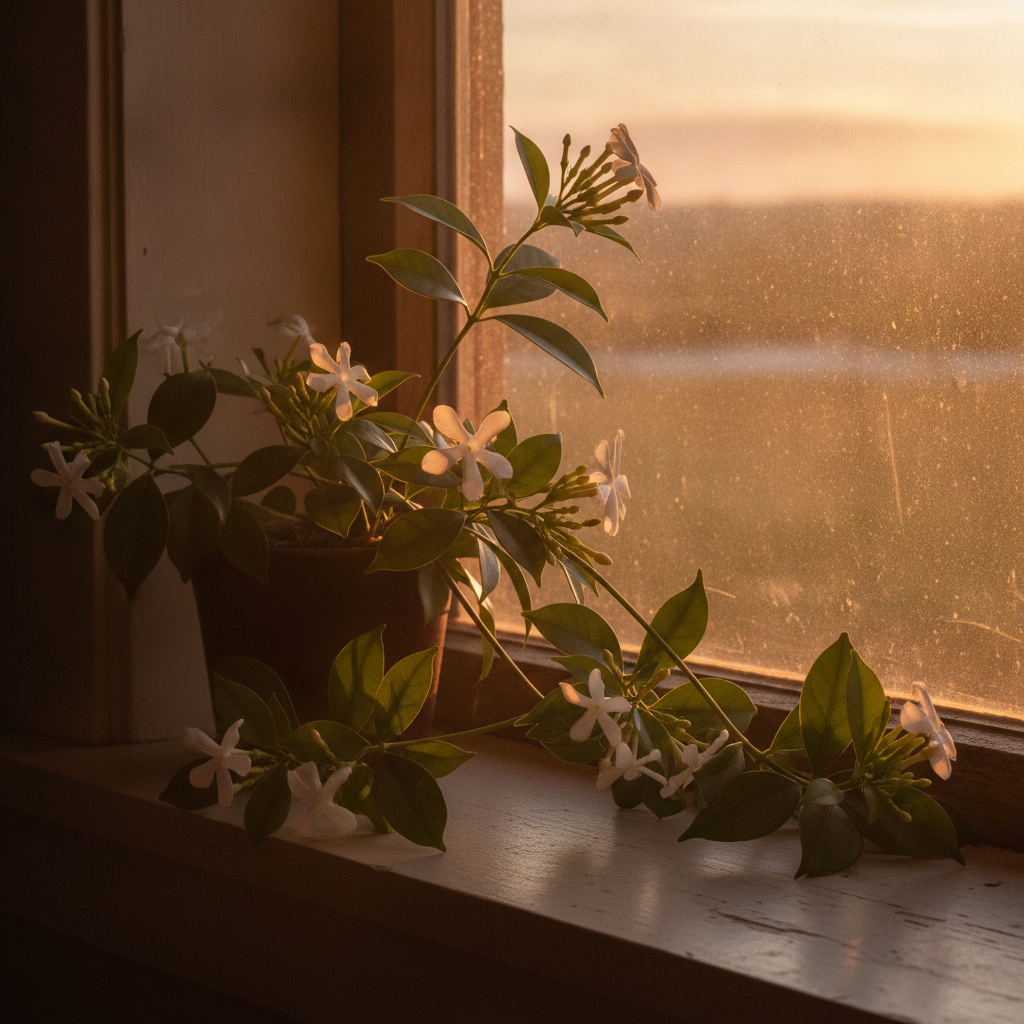
In practical terms, an east-facing window that delivers gentle direct sun through the morning is close to perfect, giving warmth and brightness without the scorching intensity of midday. A south-facing window is excellent too, though in high summer you may want a sheer curtain to soften the harshest hours and prevent the glossy leaves from bleaching or scorching. A west window suits it well. A north window, or any position more than a metre or two back from the glass, is where problems begin: the plant survives but sulks, growth becomes leggy and pale, and flowers fail to appear. If your brightest window still falls short, especially through a dim winter, a full-spectrum LED grow light run for ten to twelve hours a day makes an effective supplement.
Outdoors in summer the plant relishes being moved to a sunny balcony or patio, which is one of the surest ways to build up the reserves it needs for a strong flowering. If you do this, acclimatise it gradually over a week or two, starting in dappled shade and increasing the sun exposure, so that leaves adapted to indoor light are not suddenly burned. Bring it back inside well before the first frost.
Pro Tip — Chase the light for flowers: If your vine grows lush and green but never blooms, the cause is almost always too little light rather than anything you are doing wrong with water or feed. Move it to your brightest window or give it a summer outdoors, and be patient through one full season.
Watering
Confederate jasmine likes to be kept evenly moist through its growing season without ever sitting in water. The reliable approach is to water thoroughly when the top 2 to 3 centimetres (about an inch) of compost have dried, letting water run freely from the drainage holes each time and then emptying the saucer so the roots are never left standing. This wet-then-slightly-dry cycle mimics the plant’s natural conditions and keeps the roots healthy and active.
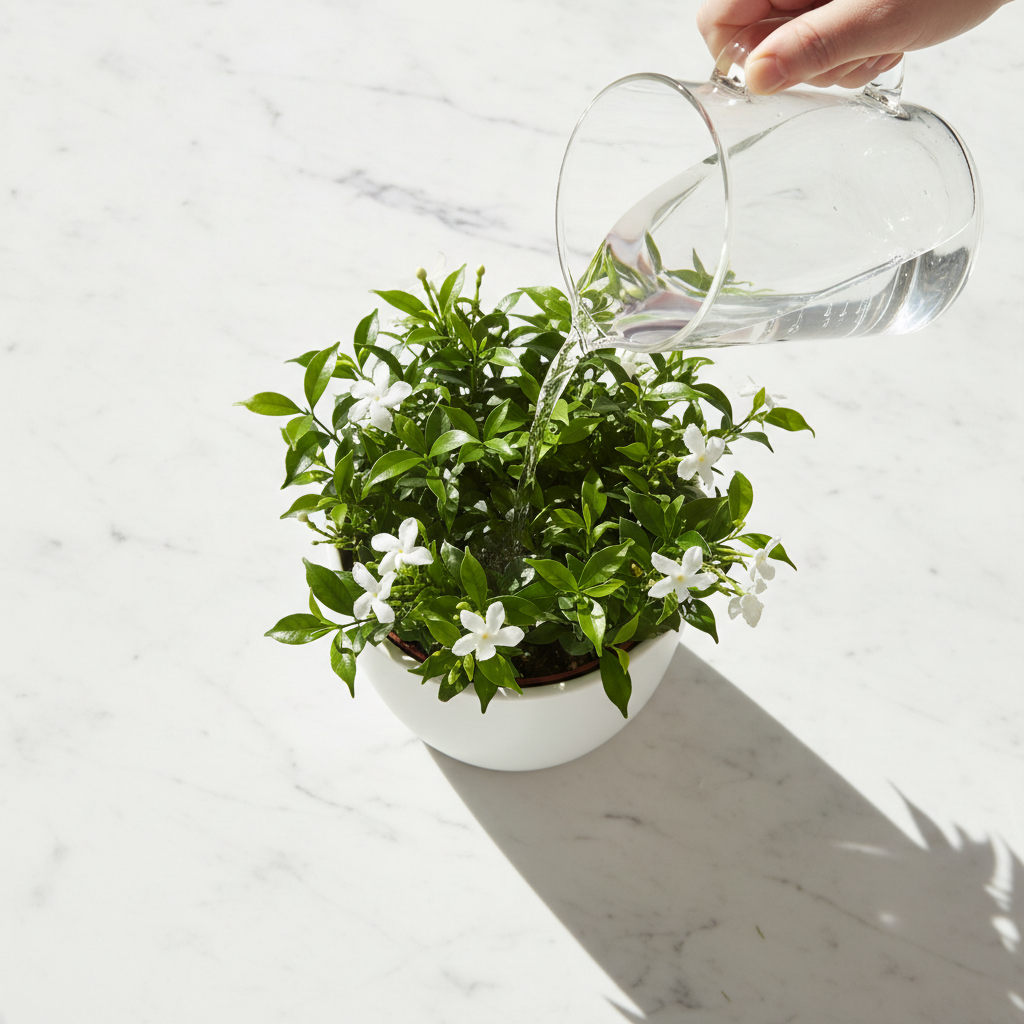
During the active months of spring and summer, and particularly while the plant is flowering, it drinks steadily and may need watering two or three times a week in a warm bright room. A vine in flower is especially thirsty, and allowing it to dry out hard at that point often causes buds to drop before they open. As light and temperature fall in autumn, growth slows and water needs drop with it. Through the cool winter rest the plant should be kept only just moist, watered sparingly and allowed to dry more between drinks, because cold wet compost is the fastest route to root rot.
The plant is reasonably forgiving of the occasional missed watering, thanks to its woody stems and leathery leaves, but it does not enjoy extremes in either direction. Persistent overwatering shows first as yellowing lower leaves and a generally limp look even though the soil is wet, a sign the roots are struggling for air. Chronic underwatering shows as crisp brown leaf edges, wilting and leaf drop. Room-temperature water is kinder than cold straight from the tap, and if your tap water is very hard, the plant will appreciate rainwater or filtered water, though it is not as fussy on this point as a true fern would be.
Soil and Potting
Good drainage is the non-negotiable requirement. Confederate jasmine wants a fertile but free-draining medium that holds enough moisture to keep it evenly damp yet never turns to a waterlogged sponge. A quality general-purpose potting compost forms a fine base, improved with roughly a third by volume of drainage material such as perlite, coarse horticultural grit or fine bark. The aim is an open structure that lets excess water pass through quickly while retaining enough to sustain the plant between waterings. A slightly acidic to neutral pH, somewhere around 6.0 to 7.0, suits it best, which most peat-free multipurpose composts provide naturally.
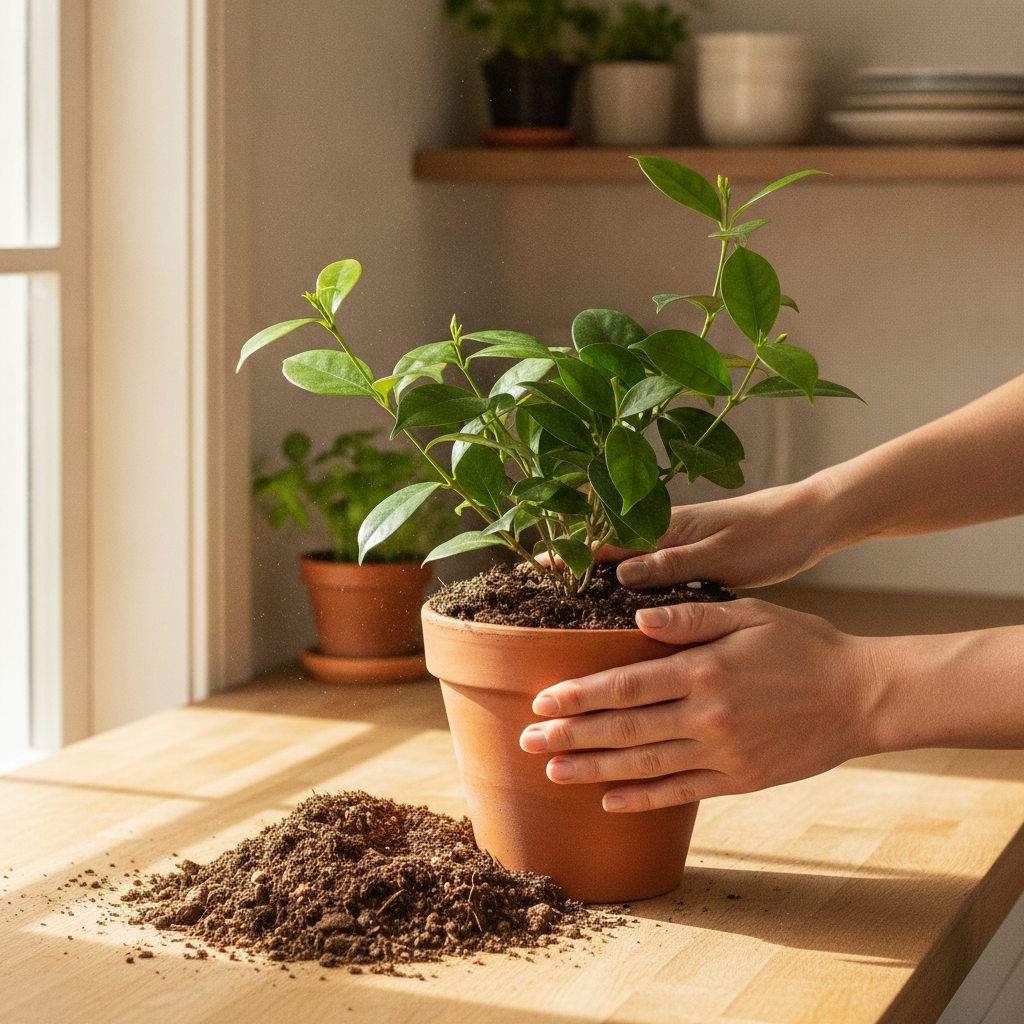
Always choose a pot with drainage holes. A decorative cachepot is fine as an outer sleeve provided you lift the inner pot out to water and let it drain before returning it. In terms of size, the plant flowers more freely when its roots are a little snug, so resist the urge to move it into a much larger container. A pot only one size up from the current one, repotted every two to three years in early spring, is ample. Overpotting into a large volume of damp compost encourages leafy growth at the expense of flowers and raises the risk of the roots staying too wet.
When you do repot, do it as growth resumes in spring, easing the plant out and teasing a few of the outermost roots free if they have started to circle the pot. Set it at the same depth it grew before, firm fresh compost gently around the root ball, and water it in. If the plant is trained on a support, repot the whole thing together rather than trying to untangle the stems.
Pro Tip — Keep it slightly pot-bound: A confederate jasmine that fills its pot with roots is far more likely to flower than one swimming in fresh compost. Step up pot sizes slowly and only when the plant is visibly root-bound.
Fertilising
A vine carrying this much foliage and, in season, this many flowers is a hungry plant, and regular feeding through the growing months pays off in both vigour and bloom. From early spring through to late summer, feed monthly, or dilute a feed to half strength and apply it more frequently every couple of weeks, whichever suits your routine. The important detail is the type of feed. Early in the season a balanced fertiliser supports the flush of new growth, but as the plant builds towards flowering, switch to one higher in phosphorus and potassium, such as a tomato or general flowering feed, to encourage buds rather than more leaves.
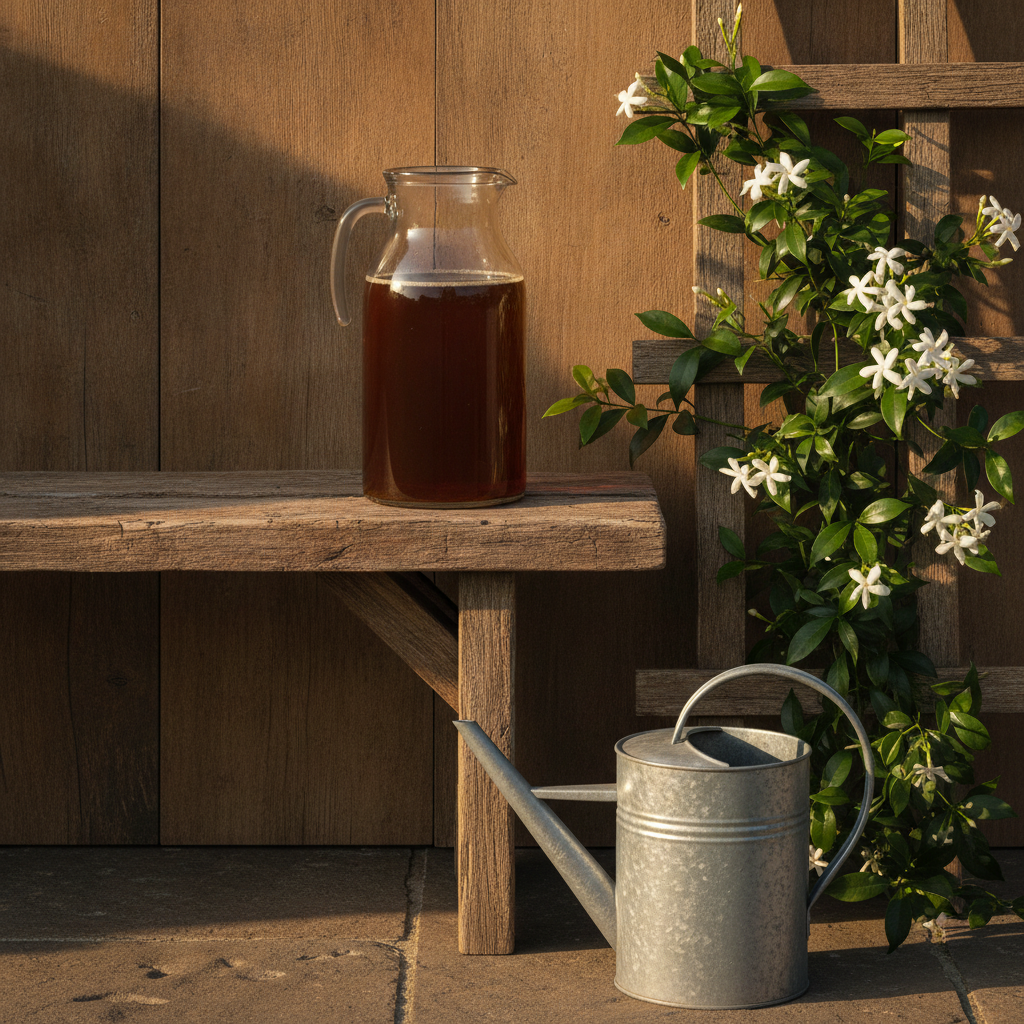
The most common feeding mistake is an excess of nitrogen. High-nitrogen fertilisers, including many all-purpose houseplant feeds, drive lush green growth and can actively suppress flowering, so a vine that grows enthusiastically but never blooms is sometimes simply overfed on the wrong nutrient. If that describes your plant, ease off the nitrogen and move to a flowering formula. Always apply feed to compost that is already moist rather than to a bone-dry root ball, which reduces the risk of scorching the roots.
Stop feeding entirely from autumn through winter while the plant is resting. There is no benefit to fertilising a plant that is not in active growth, and salts building up in cold, barely moist compost can do harm. Resume only when you see fresh growth signalling the start of a new season. If you notice a white crust forming on the compost surface or pot rim over time, flush the pot through with plenty of plain water occasionally to leach out accumulated fertiliser salts.
Propagation
Confederate jasmine is propagated from stem cuttings or by layering rather than by division or offsets, since it grows as a single twining vine rather than a clumping plant. The most dependable method for the home grower is semi-hardwood cuttings taken in mid to late summer, when the current season’s growth has begun to firm up but is not yet fully woody. This is also a good moment to use any healthy trimmings left over after pruning.
To take stem cuttings, follow these steps:
- Choose a healthy, non-flowering stem and cut a length of 10 to 15 centimetres (4 to 6 inches) just below a leaf node, using clean, sharp secateurs.
- Remove the leaves from the lower half of the cutting, leaving two or three leaves at the top, and wipe away the milky sap that seeps from the cut with a cloth.
- Dip the cut end in rooting hormone, which noticeably improves success with this semi-woody plant.
- Insert the cutting into a small pot of moist, free-draining cuttings compost or a mix of perlite and coir, firming it gently.
- Cover with a clear plastic bag or propagator lid to hold humidity, and keep it warm and brightly lit but out of direct scorching sun.
- Keep the compost lightly moist and ventilate occasionally to prevent mould. Roots usually form within four to eight weeks, shown by fresh new growth and resistance when the cutting is gently tugged.
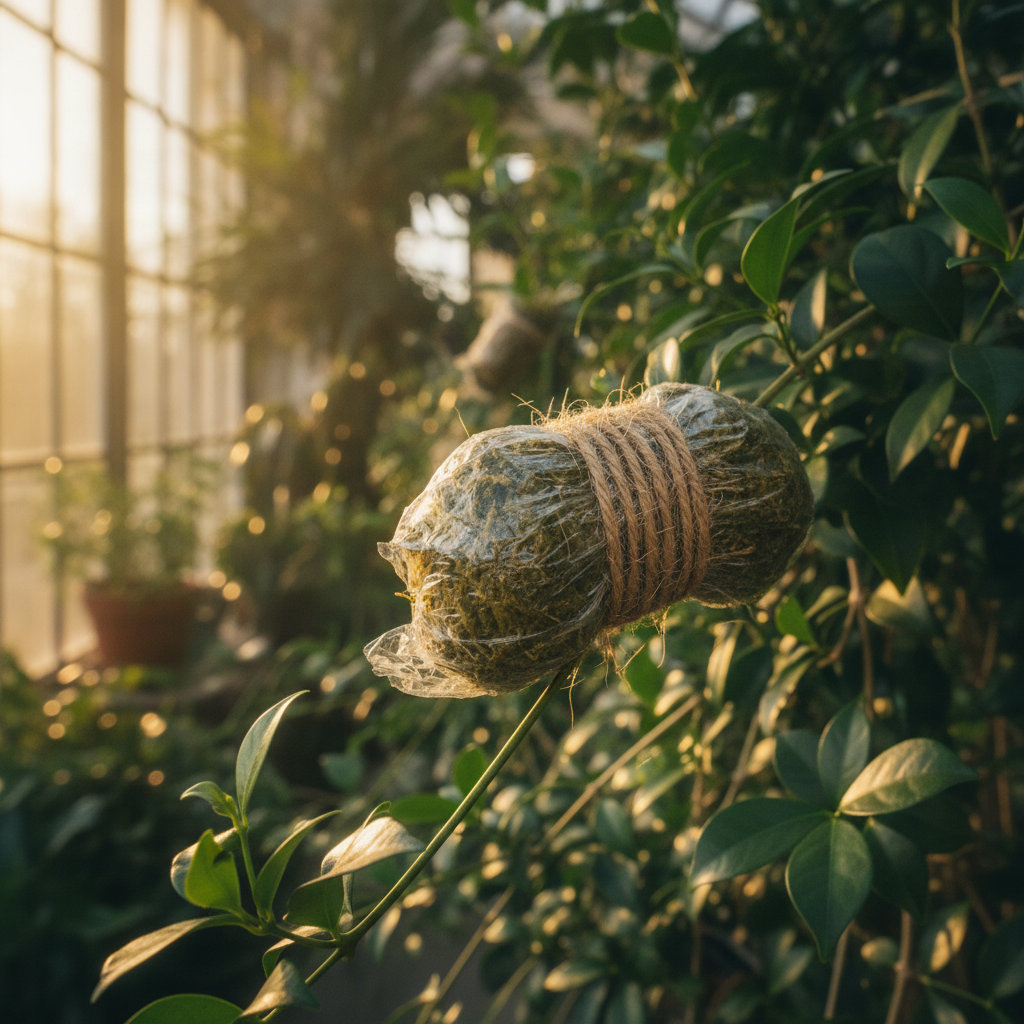
Air layering, shown above, is the other reliable route and is especially useful on an established vine. Choose a healthy stem, wound it lightly at a node, wrap that section in a handful of damp sphagnum moss enclosed in clear film and secure it top and bottom with twine or ties. Keep the moss moist, and over several weeks roots develop within the wrapping. Once a good cluster of roots has formed, cut the stem below the new roots and pot it up as an independent plant. Because the layer stays attached to and nourished by the parent throughout, this method carries a very high success rate.
Warning — Mind the milky sap: Cut stems ooze a white latex sap that can irritate skin and eyes. Wear gloves if your skin is sensitive, avoid touching your face while working, and wash your hands afterwards.
Pests and Problems
Confederate jasmine is a robust plant that stays largely trouble-free when its basic needs are met, but like any leafy houseplant it can attract the usual sap-sucking insects, particularly when grown in warm, still indoor air. The main culprits are mealybugs, which appear as white cottony tufts tucked into leaf axils and stem joints; scale, seen as small brown limpet-like bumps along the stems and leaf undersides; aphids, which cluster on soft new growth and flower buds; and spider mites, which thrive in hot dry conditions and leave fine webbing and a stippled, dusty look on the leaves.

The best defence is regular inspection. Check the undersides of leaves and the tucked-away joints of stems every week or two, especially in summer, because a small colony caught early is far easier to clear than an established one. For light infestations, wipe insects off with a cloth or a cotton bud dipped in diluted isopropyl alcohol, or rinse the whole plant under a gentle shower. For anything more persistent, treat with insecticidal soap or a neem-based spray, covering both leaf surfaces and repeating every week to ten days until the problem clears. Sap-suckers excrete sticky honeydew that can turn black with sooty mould, so cleaning the leaves also removes the residue that mould grows on.
Beyond pests, most complaints about confederate jasmine trace back to culture rather than disease. The table below gathers the problems growers most often report and their usual causes.
| Symptom | Likely cause and remedy |
| No flowers despite healthy foliage | Too little light, too much nitrogen, or no cool winter rest. Move to the brightest spot, switch to a flowering feed, and give a cool dormant spell in winter. |
| Yellowing lower leaves | Usually overwatering or poor drainage. Let the top of the compost dry more between waterings and check the pot drains freely. |
| Crisp brown leaf edges | Underwatering, very dry air or fertiliser scorch. Water more consistently and flush the pot to clear salt build-up. |
| Buds forming then dropping | Drying out at the wrong moment, cold draughts or a sudden move. Keep moisture steady while in bud and avoid disturbing a flowering plant. |
| Leggy, pale growth | Insufficient light. Move closer to a bright window or add a grow light, and pinch back to encourage bushiness. |
| Sticky leaves or black film | Honeydew and sooty mould from sap-sucking pests. Treat the insects and wipe the leaves clean. |
One further point is worth flagging on the plant’s own biology rather than any pest: the winter rest matters. Many indoor vines that never flower are simply kept too warm all year. A spell of cooler temperatures, roughly 7 to 13 C (45 to 55 F), through the darkest months, paired with reduced watering, is what triggers the plant to set flower buds for the following spring. A cool, bright porch, an unheated but frost-free room or a sheltered spot outdoors in a mild climate all serve the purpose.
Varieties
The species itself, with its dark-green leaves and white pinwheel flowers, is the most widely grown and the most reliably fragrant, but a handful of selected cultivars bring different foliage and flower colours to the table. The two below are the most popular and the easiest to find.
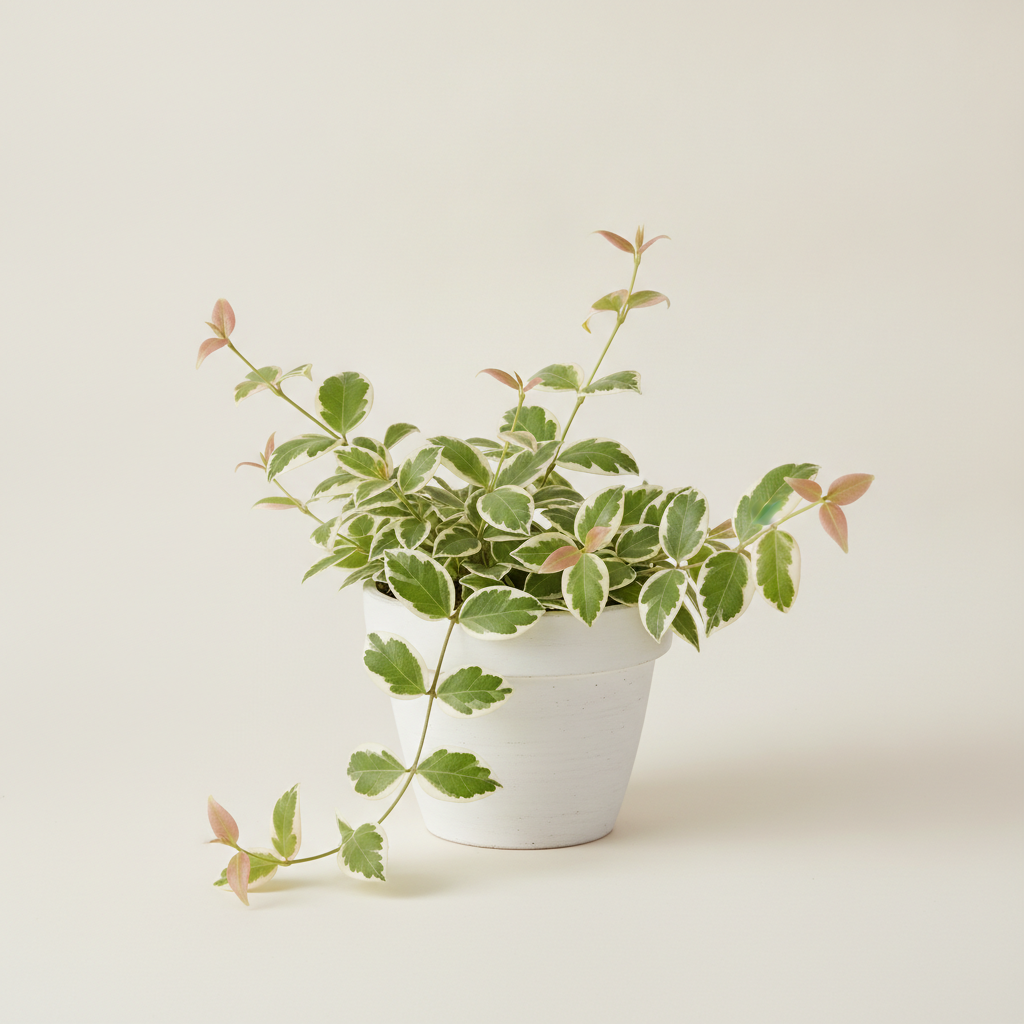
‘Variegatum’
The best-loved variegated form, with oval leaves marbled in sage-green and edged with irregular creamy-white margins. New growth often flushes a soft rosy pink before hardening off, giving the plant year-round interest even out of flower. It grows a little more slowly than the plain species and shows its colour best in strong light, though it appreciates protection from the very harshest midday sun, which can crisp the pale leaf edges. The flowers are the same fragrant white stars.
‘Madison’
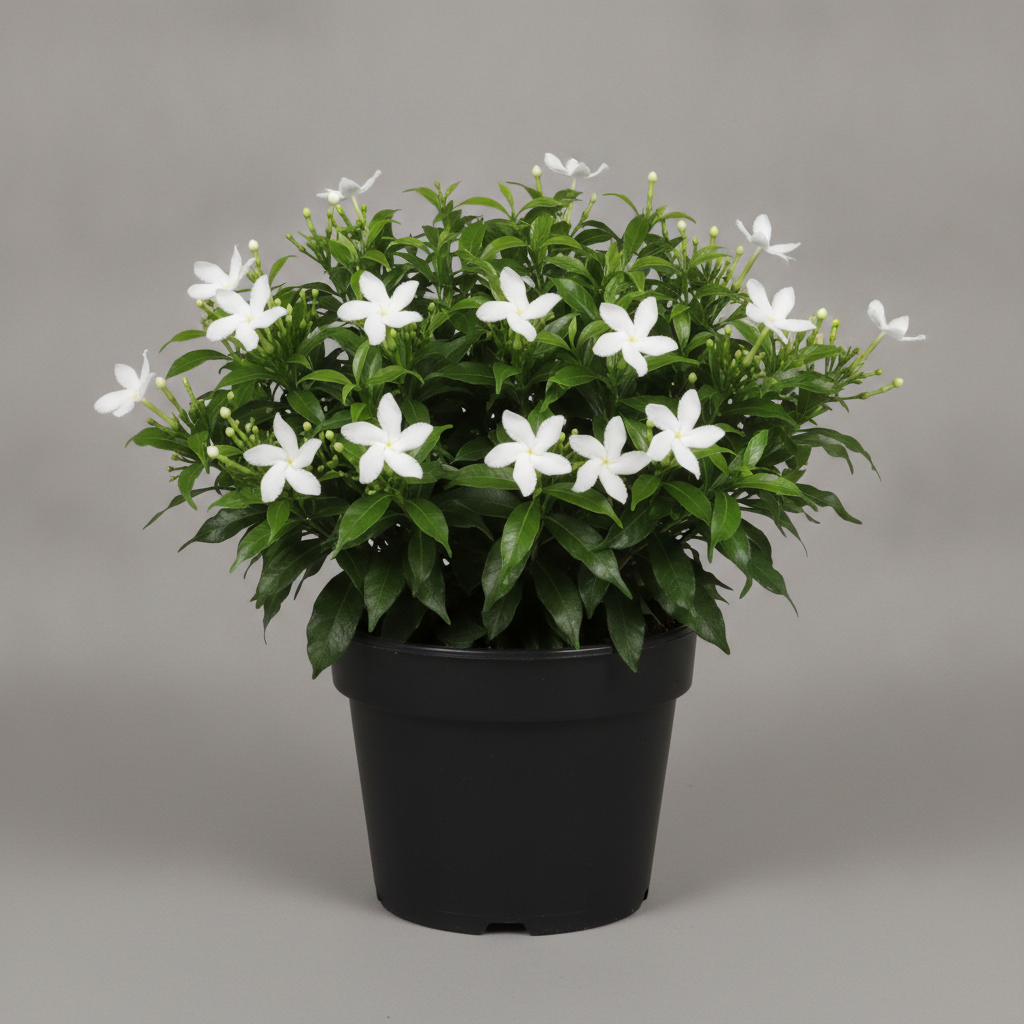
A compact, more cold-hardy selection prized for its especially glossy, dark-green foliage and its slightly larger, pure-white five-petalled flowers. Its tidier, denser habit makes it a natural choice for growing in a pot or training on a small support, and its extra hardiness is welcome for anyone keeping the plant on a cool porch or in a chilly conservatory. The fragrance is every bit as strong as the species, and the flowering can be a touch earlier.
Beyond these two, growers may come across cultivars such as ‘Star of Toscana’, which opens in shades of soft yellow rather than white, and various pink-tinged selections. All share the same fundamental care described in this guide, so a plant chosen for its foliage or flower colour asks nothing different of you than the classic white-flowered species.
Frequently Asked Questions
Why won’t my confederate jasmine flower indoors?
The three usual culprits are too little light, too much nitrogen and no cool winter rest. Give the plant your brightest window with some direct sun, switch from an all-purpose feed to one higher in phosphorus and potassium, and allow it a cool spell at 7 to 13 C (45 to 55 F) through winter with reduced watering. Most non-flowering vines are simply kept too dim, too warm and too well fed on the wrong nutrient all year round.
Is confederate jasmine toxic to cats and dogs?
Trachelospermum jasminoides is considered to have low toxicity and is not listed among the seriously dangerous houseplants, but it belongs to a family that includes some toxic relatives, and its milky sap can irritate skin, mouth and stomach if chewed. It is sensible to keep it out of reach of pets and small children and to wash your hands after pruning. If an animal does eat a quantity and shows signs of distress, contact your vet.
Is it a true jasmine?
No. Despite the common names confederate jasmine and star jasmine, it is not a member of the genus Jasminum and belongs instead to the dogbane family, Apocynaceae, alongside oleander and hoya. It earned the jasmine name purely for its strongly scented, jasmine-like white flowers.
How big will it get in a pot?
Far smaller than it would outdoors, where it can climb 3 to 6 metres (10 to 20 feet). Confined to a pot and trained on a hoop or trellis, it is easily kept to a metre or two, and regular pruning after flowering keeps it compact and well shaped. Its willingness to be cut back is one of the reasons it adapts so well to indoor life.
When and how should I prune it?
Prune straight after the main flush of flowers fades, usually in mid to late summer. This lets you shape the plant and remove any wayward or tangled stems while giving it the rest of the season to produce the new growth that will carry next year’s flowers. Avoid hard pruning in late winter or early spring, as you risk cutting off the stems that are about to bloom.
Can I grow it outdoors in summer and bring it in for winter?
Yes, and it is one of the best ways to build up a strong flowering. Move it outside once nights are reliably mild, acclimatising it gradually to brighter light, and let it enjoy a sunny sheltered spot through summer. Bring it back indoors before the first frost threatens, checking carefully for hitchhiking pests as you do, and settle it into your brightest window for the cooler months.






