

Most aloes sit still. They form tidy rosettes, hoard water in stiff leaves, and grow with the geological patience their desert homes demand. The climbing aloe (Aloiampelos ciliaris) ignores all of this. It is the only aloe that genuinely climbs, the fastest-growing of the entire group, and a plant that would rather scramble two metres up through a neighbouring shrub than wait politely in a pot. For an indoor grower this combination is a gift: a soft-leaved, fast-filling succulent that flowers in scarlet for much of the year and asks for very little in return. Survival is almost guaranteed once you understand its lax, vining habit. Thriving, with a plant that flowers and clambers across a trellis, takes only a little more attention to light and support.
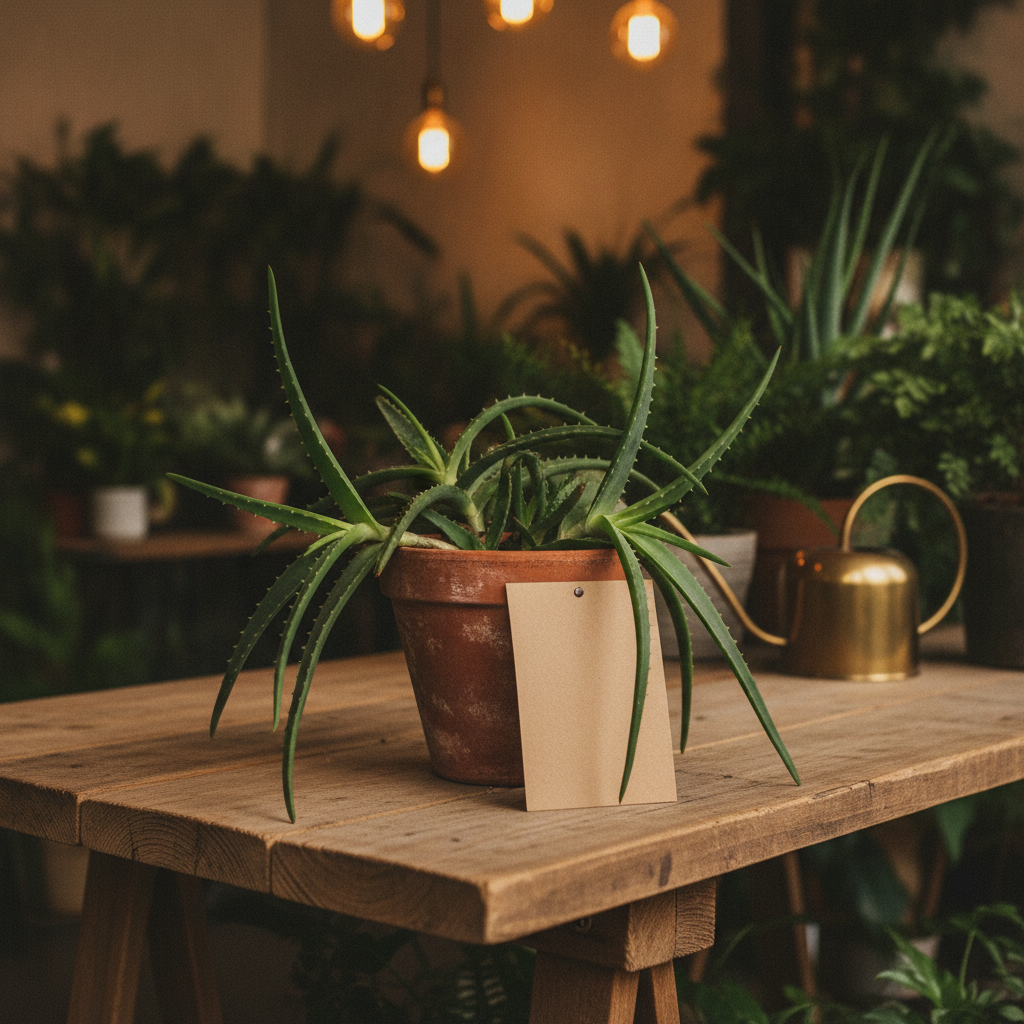
Quick Reference
The table below summarises everything you need to keep a climbing aloe alive, followed by the detail that turns mere survival into a flowering, fast-growing specimen.
| Attribute | Requirement |
|---|---|
| Botanical name | Aloiampelos ciliaris (formerly Aloe ciliaris) |
| Common names | Climbing aloe, scrambling aloe |
| Family | Asphodelaceae |
| Origin | Eastern Cape, South Africa |
| Light | Bright light with a few hours of direct sun; tolerates light shade |
| Water | Soak when the top 3 to 4 cm (1 to 1.5 in) of mix is dry; far less in winter |
| Soil | Free-draining gritty cactus or succulent mix |
| Temperature | 15 to 27 degrees C (59 to 81 degrees F); brief dips to near freezing tolerated |
| Humidity | Average household; indifferent to dry air |
| Feeding | Dilute succulent feed monthly in spring and summer |
| Growth habit | Fast-growing scrambler, 2 to 3 m (6.5 to 10 ft) of trailing stem |
| Propagation | Stem cuttings and offsets, both very reliable |
| Toxicity | Mildly toxic to cats, dogs and people if eaten |
| Difficulty | Easy |
Why Grow the Climbing Aloe as a Houseplant
The climbing aloe earns its place indoors by behaving unlike anything else on the shelf. In its native thicket vegetation of the Eastern Cape it germinates on the ground, then sends thin, flexible stems clambering up through whatever woody shrub it can find, using the leaf sheaths as soft anchors against the supporting branches. The result is a succulent that reads more like a vine, with stems only eight to ten millimetres thick supporting a procession of narrow, recurved leaves spaced along their length. No other aloe does this, and the contrast with the stiff, ground-hugging rosettes most people picture when they hear the word “aloe” is exactly what makes it a conversation piece.
Speed is the second attraction. Among a genus famous for sluggishness, Aloiampelos ciliaris is the sprinter. A rooted cutting can put on a striking length of stem in a single growing season, quickly filling a trellis, spilling over the lip of a hanging pot, or framing a bright window. That pace also means mistakes are forgiving, because the plant regrows so readily that a clumsy prune or a snapped stem becomes next month’s new plant rather than a lasting loss.
Then there are the flowers. Where many succulents bloom briefly and only under precise conditions, the climbing aloe produces unbranched spikes of tubular, scarlet to orange-red flowers, often over a long stretch from late winter into summer and sometimes scattered through much of the year in a happy indoor specimen. In the wild these flowers are pollinated by sunbirds, and even on a windowsill they bring a vivid jolt of colour to a plant that is already unusual in form. For a grower who wants the resilience of a succulent without the static stillness, the climbing aloe is one of the most rewarding plants you can choose.
Pro Tip — Give it something to climb: A climbing aloe left without support will simply sprawl and eventually cascade. Both looks are attractive, but if you want the upright, branch-clambering habit it shows in the wild, install a small trellis, moss pole or a few stakes early and loosely tie the longest stems to it as they grow.
Light
Light is the single factor that most separates a leggy, pale climbing aloe from a compact, flowering one. In habitat the plant grows in open thicket where it receives strong light and several hours of direct sun, and it carries that appetite indoors. The brightest position you can offer is rarely too much. An unobstructed east or west window, or a spot within a metre of a south-facing window, suits it well, giving the foliage the firm, slightly grey-green colour and tight leaf spacing that signal a contented plant.
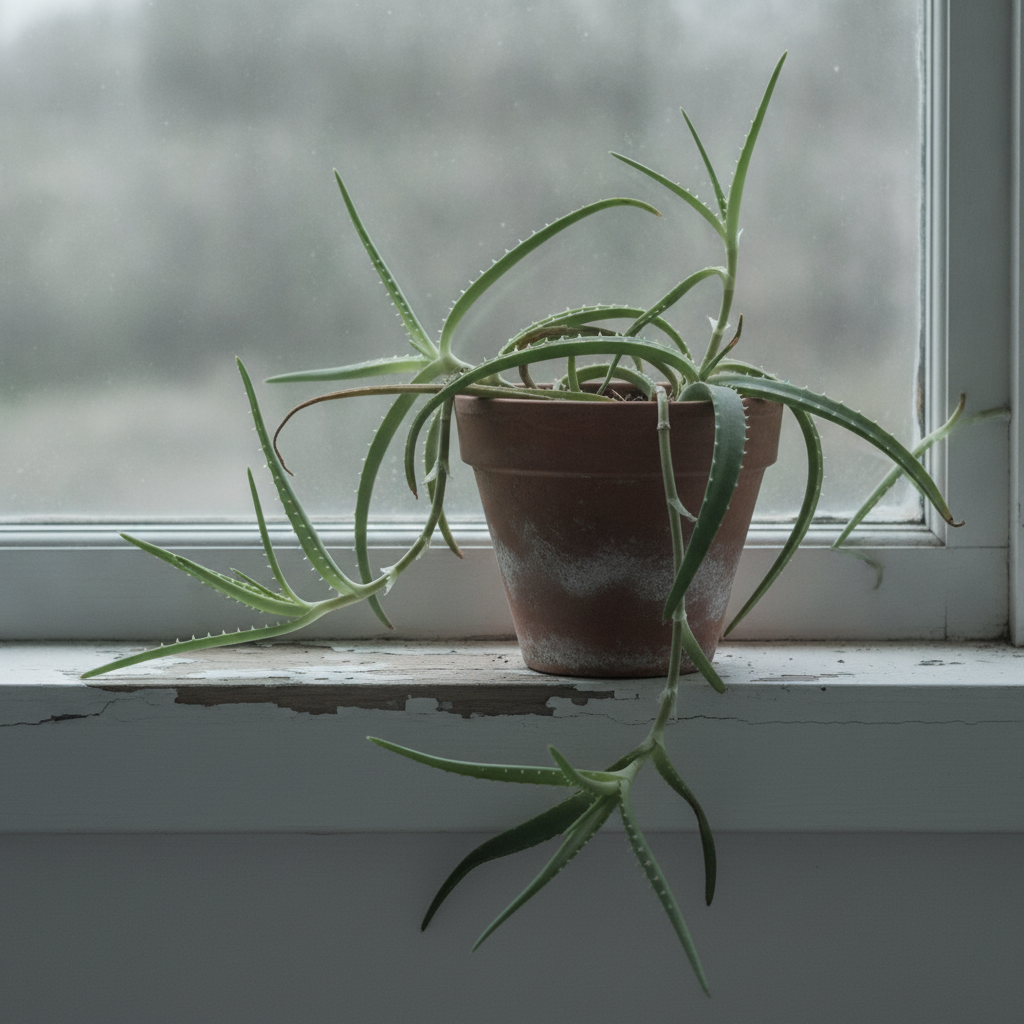
The plant will survive in lower light, but the cost is visible. Stems stretch and thin as the leaves reach for the nearest source, the gaps between leaves widen, and flowering stops altogether. If your aloe begins to look stringy and reluctant, the remedy is almost always more light rather than more water or feed. Move it closer to the glass, rotate the pot a quarter-turn each week so it grows evenly rather than leaning, and consider a full-spectrum grow light through the short days of winter if your windows are dim.
One caution applies to direct summer sun behind glass. A plant that has spent winter in subdued indoor light can scorch if moved abruptly into intense, magnified midday sun, showing bleached or brown patches on the most exposed leaves. Introduce stronger light gradually over a week or two, especially when bringing the plant outdoors for summer, and the foliage will adapt without complaint.
Watering
The climbing aloe occupies an interesting middle ground in watering. It is unmistakably a succulent, storing moisture in its leaves and stems and shrugging off the occasional missed watering, yet its fast growth and comparatively soft, thin leaves mean it draws on water more readily than a thick-leaved desert aloe would. The reliable approach is to water thoroughly and then wait. Soak the mix until water runs from the drainage holes, let any excess drain away completely, and then leave the plant alone until the top three to four centimetres (one to one and a half inches) of mix has dried out.
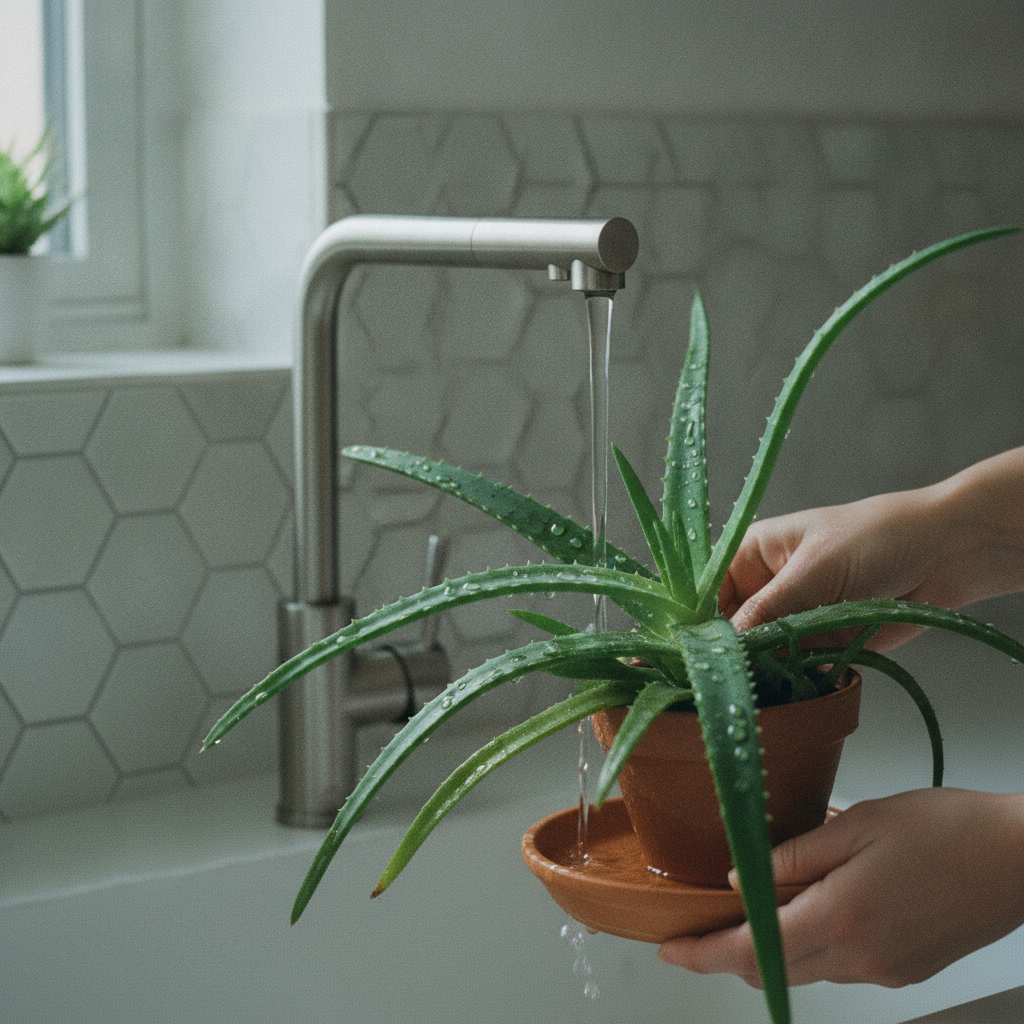
Through spring and summer, when the plant is growing hardest, this might mean watering every week to ten days in a bright, warm room. In winter, when growth slows and light is weak, the interval stretches considerably, often to once every three or four weeks, and the soil should be allowed to dry almost completely between drinks. The most common way to kill a climbing aloe is not drought but a soggy pot in the cool, dim months, when roots that are barely working sit in moisture they cannot use. When in doubt during winter, wait.
Read the plant rather than the calendar. Leaves that begin to look thin, curled or slightly wrinkled are telling you the plant is genuinely thirsty, and these recover quickly after a soak. Leaves that turn soft, translucent, yellow or mushy at the base are the warning sign of overwatering, and the correct response is to stop watering, check the roots, and improve drainage rather than to water more.
Warning — Soft, yellow leaves: If leaves turn translucent and mushy rather than thin and wrinkled, the plant is overwatered, not underwatered. Let it dry out fully, and if the stem base feels soft, take a healthy cutting from higher up the stem as insurance before rot spreads.
Soil and Potting
Drainage is everything for this plant. The climbing aloe wants a gritty, fast-draining medium that holds enough moisture to fuel its quick growth but never stays wet long enough to suffocate the roots. A commercial cactus and succulent compost is a sound starting point, and it improves further with the addition of extra grit. A practical mix is roughly two parts succulent compost to one part coarse material such as horticultural grit, pumice or perlite, which opens up the structure and lets water pass through freely.
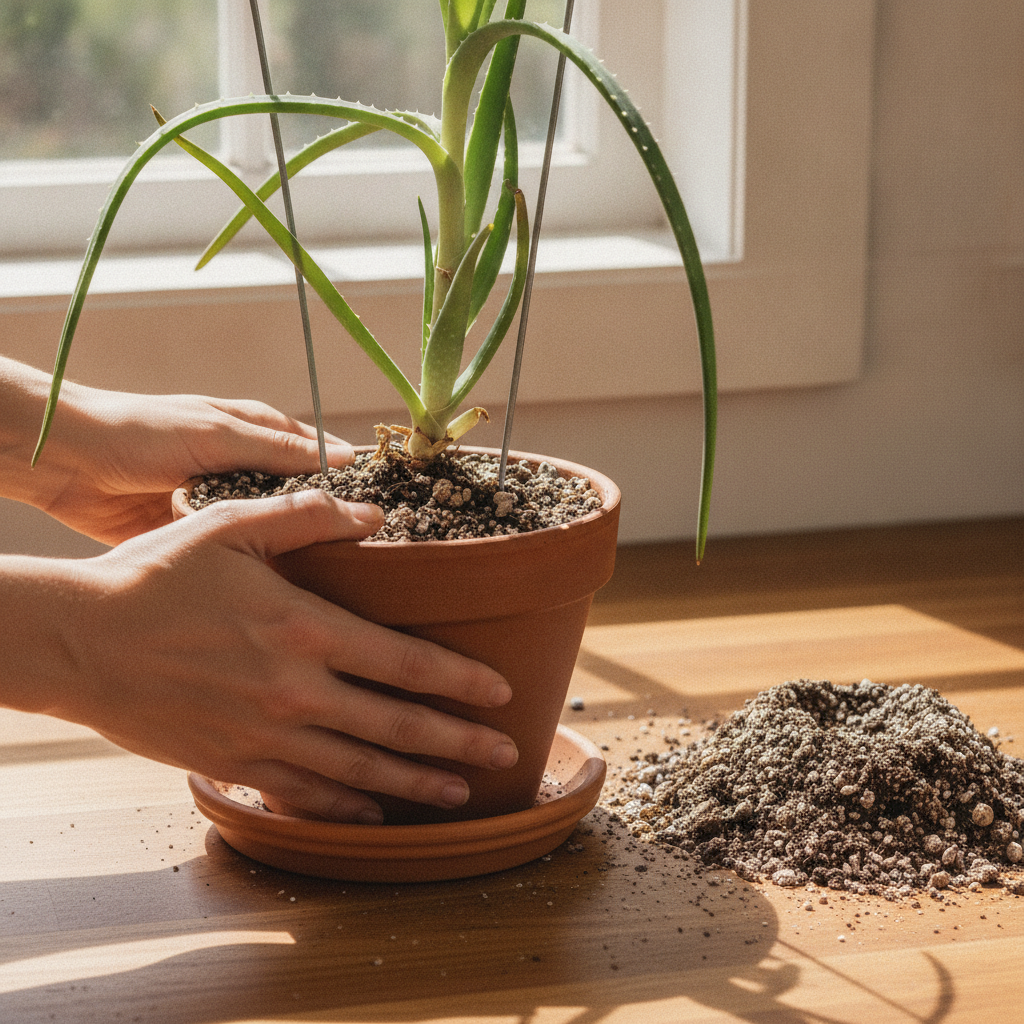
The pot matters as much as the mix. Drainage holes are non-negotiable, and a terracotta pot is ideal because its porous walls wick moisture away and help the soil dry between waterings. Because the climbing aloe grows fast and develops a relatively modest root system in proportion to its long stems, it does not need a large container, and a pot only slightly bigger than the current root ball is better than an oversized one that holds a reservoir of wet soil the roots cannot reach.
Repot in spring, roughly every one to two years or whenever roots begin to fill the pot. To repot, ease the plant out, gently tease away the old spent mix from the outer roots, settle it into fresh medium at the same depth it grew before, and press the mix firmly around the root ball so the often top-heavy stems are supported. Wait a few days before watering a freshly repotted plant, which gives any roots disturbed in the process time to seal and reduces the risk of rot.
Fertilising
Because it grows so quickly, the climbing aloe benefits from feeding more obviously than a slow desert aloe does, but the principle of restraint still applies. During the active growing season of spring and summer, a balanced liquid succulent or cactus fertiliser diluted to half the recommended strength and applied roughly once a month gives the plant the nutrients it needs to sustain its rapid stem extension and to flower well.
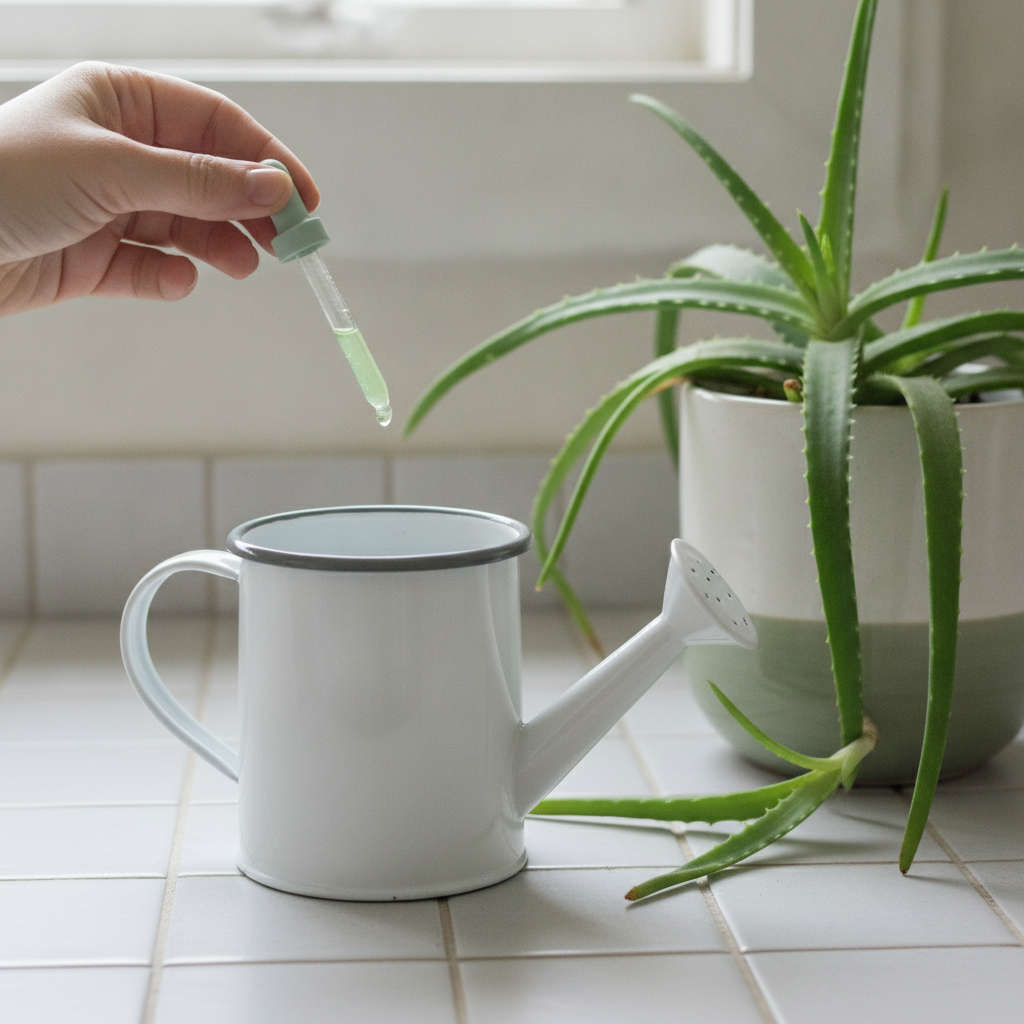
Always feed onto already-moist soil rather than dry mix, because applying fertiliser to a parched root ball risks chemically burning the fine roots. The simplest routine is to water normally, then follow with the dilute feed at the next watering. Stop feeding entirely in autumn and winter, when the plant is resting and cannot use the extra nutrients. Fertiliser left to accumulate in dormant soil builds up as salts, which can scorch the roots and leave a crusty white deposit on the surface of the mix and the pot.
If you ever see that white salt crust, or if the leaf tips begin to brown, flush the pot thoroughly with plain water two or three times to wash the excess away, and ease off the feeding. As with most succulents, a slightly underfed climbing aloe is healthier and more compact than an overfed one pushed into soft, weak, leggy growth.
Propagation
Propagating a climbing aloe is almost embarrassingly easy, which is part of its charm. The plant’s fast growth and willingness to root from cut stems mean that a single specimen can become a windowsill full of plants within a season, and that any pruning you do for shape doubles as free propagation material. There are two reliable routes: stem cuttings and offsets.
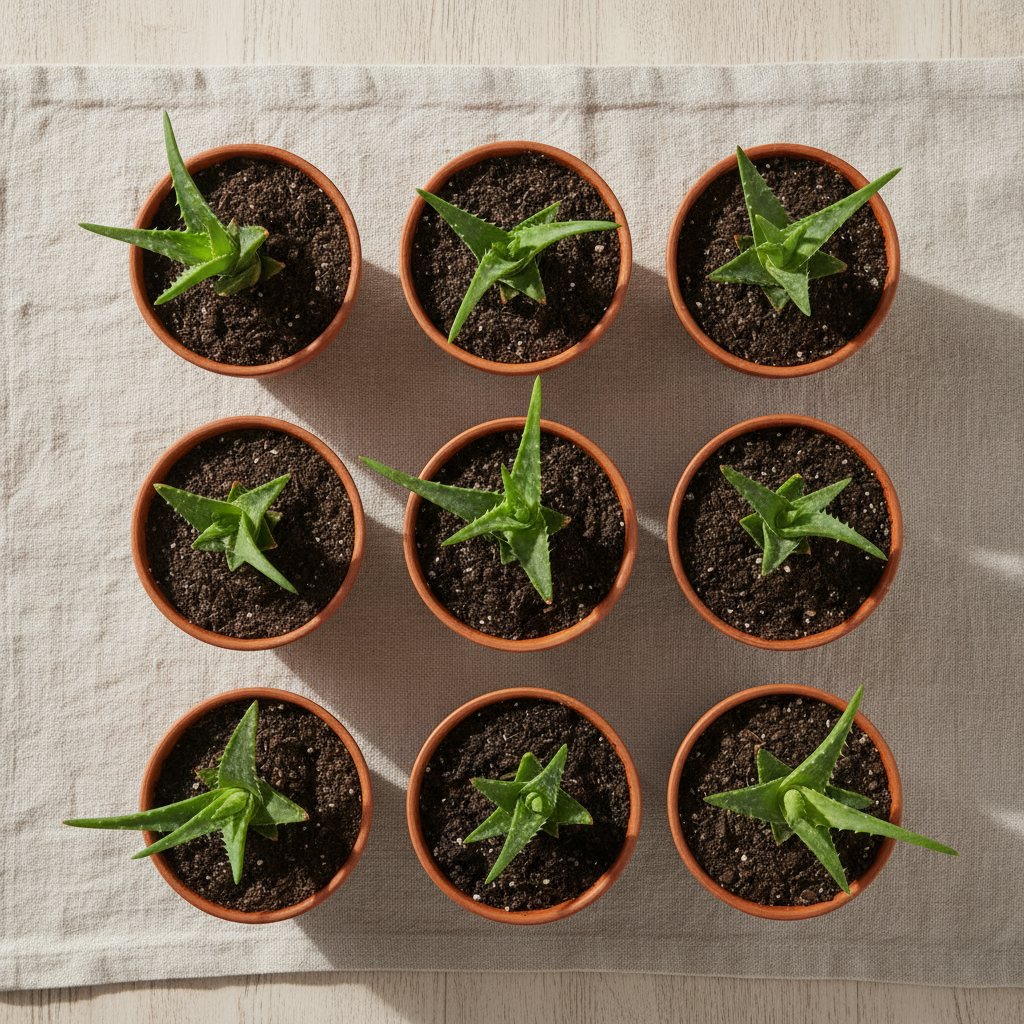
Stem cuttings are the most productive method and the one to reach for first. To take a cutting:
- Using clean, sharp secateurs, cut a healthy length of stem about ten to fifteen centimetres (four to six inches) long, ideally with several leaves attached.
- Set the cutting aside in a dry, shaded, airy spot for two to four days so the cut surface forms a dry callus. This step is essential, because an uncalloused cut placed straight into moist soil readily rots.
- Insert the calloused end a few centimetres deep into barely moist gritty succulent mix, and firm it gently so it stands upright.
- Place the pot in bright, indirect light and keep the mix only just damp. Roots usually form within two to four weeks.
- Once you feel resistance when you give the cutting a gentle tug, roots have established and you can begin a normal watering routine.
Offsets are the second route. Mature plants produce basal shoots and side stems at the base, and these can be carefully separated with a little root attached and potted individually in the same gritty mix. Treat a freshly separated offset much like a cutting, keeping it lightly watered and out of harsh sun until you see new growth that confirms it has rooted. Both methods establish best in the warmth of spring and summer, when the plant’s natural vigour does most of the work for you.
Pro Tip — Prune and propagate at once: When a climbing aloe grows leggy or one-sided, cut it back hard. The parent will branch and bush out from below the cuts, and every trimmed stem is a ready-made cutting. One tidy-up session can turn a single sparse plant into a fuller specimen plus a tray of new ones.
Pests and Problems
The climbing aloe is robust and largely untroubled by pests, but a few problems show up often enough to be worth recognising early. The most frequent are sap-sucking insects: mealybugs, which appear as small white cottony tufts tucked into leaf joints and along stems; scale, which look like flat brown limpets stuck to stems and leaf undersides; and aphids, which cluster on tender new growth and especially on developing flower spikes. In hot, dry indoor air, spider mites can also appear, betrayed by fine stippling on the leaves and faint webbing.
For small infestations, dab mealybugs and scale directly with a cotton bud dipped in isopropyl alcohol, which kills them on contact, and rinse aphids off under a gentle stream of water. Larger or recurring problems respond to a thorough application of insecticidal soap or a diluted neem oil spray, repeated every week or so until the population is gone. Whatever the pest, isolate an affected plant from your other succulents while you treat it, because these insects spread readily from leaf to leaf and pot to pot.
The most serious threat, however, is not an insect at all but root and stem rot caused by overwatering, particularly in cool winter conditions. Soft, blackening, foul-smelling tissue at the base of the plant is a sign that rot has set in, and once it reaches the main stem it is difficult to reverse. The defence is cultural rather than chemical: a gritty free-draining mix, a pot with drainage holes, and a disciplined hand with the watering can through the dormant months. If you do find rot, act fast by cutting well above the affected tissue, letting the healthy cutting callus, and rooting it afresh to save the plant. Brown, crisping leaf tips usually point to a different cause, most often a build-up of fertiliser salts or chronic underwatering, both of which are easily corrected.
Warning — Mildly toxic if eaten: Like other aloes, Aloiampelos ciliaris contains compounds that can cause vomiting and digestive upset in cats, dogs and people if the leaves are chewed or swallowed. It is not among the most dangerous houseplants, but keep it out of reach of curious pets and small children, and wash your hands after pruning the sap-bearing stems.
Varieties
The climbing aloe is a variable species, and botanists have recognised a small number of forms over the years that differ mainly in size and in how pronounced the leaf-margin teeth and the white sheath fringing are. Two are most likely to be encountered, and both share the same easy care described above.
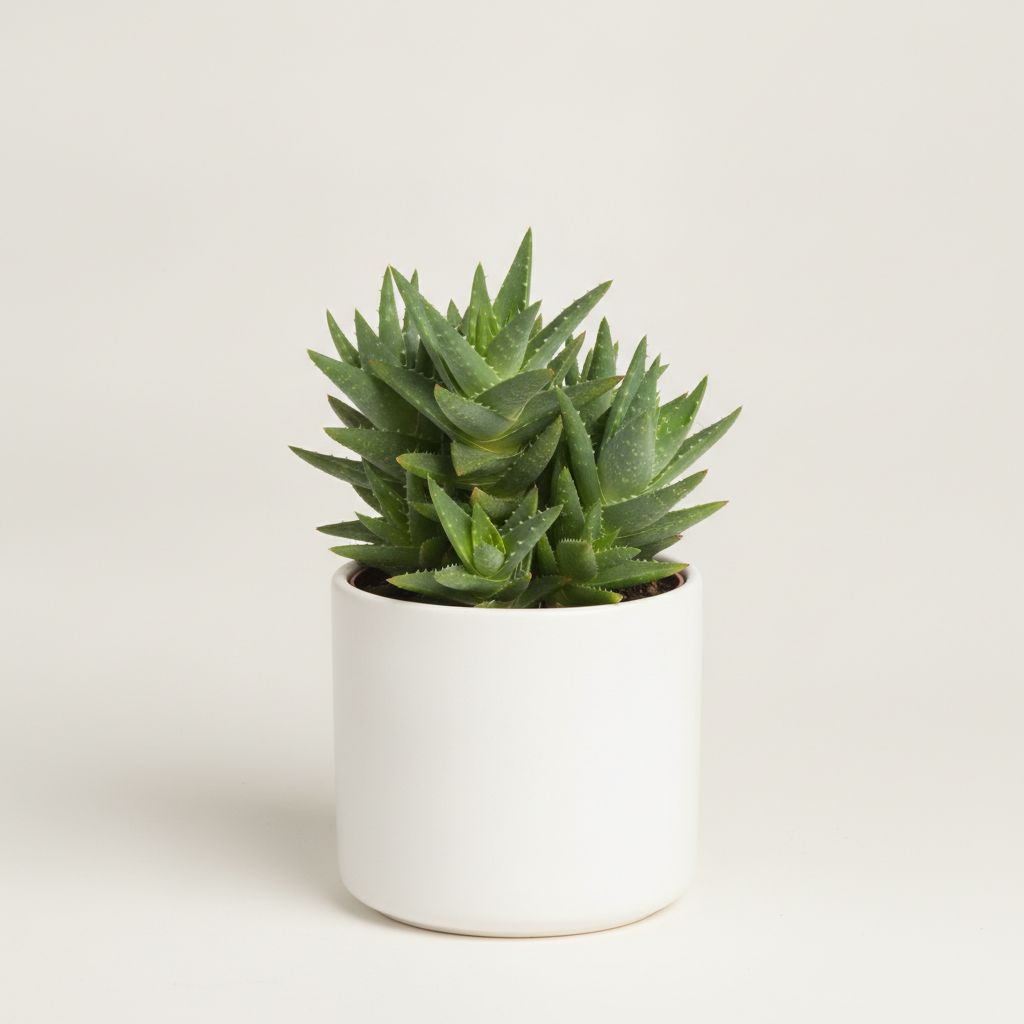
var. tidmarshii
A smaller, more compact form with shorter internodes and a denser arrangement of leaves, giving a tidier, less rangy plant overall. Its leaf margins carry fewer and finer teeth than the type, and its restrained habit makes it a good choice for those who want the climbing aloe’s character in a more manageable size.
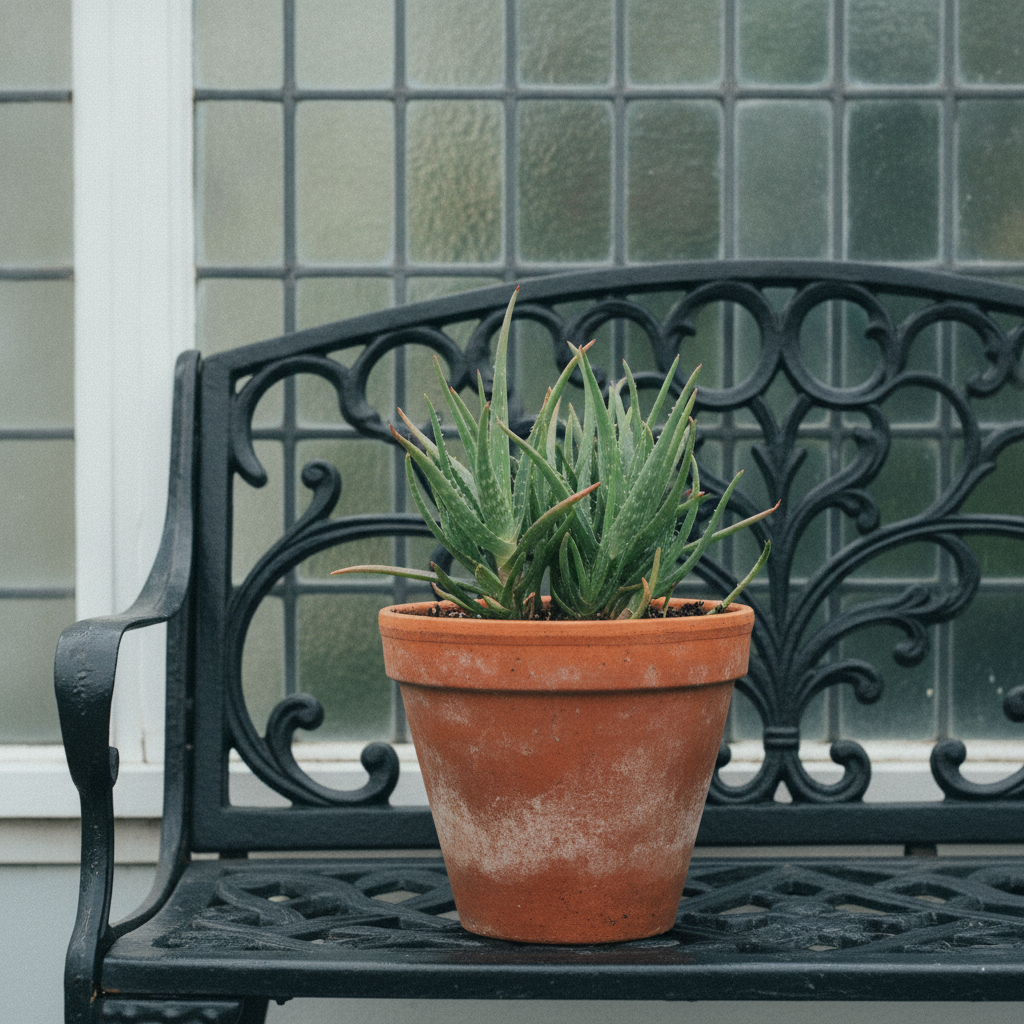
var. redacta
A dwarf, slower-growing form distinguished by reduced fringing on the leaf sheaths and tighter, more upright slender stems. It stays noticeably smaller and neater than the typical scrambling form, making it well suited to a compact pot or a collection where space is at a premium.
It is also worth knowing that the climbing aloe was reclassified in 2013, when the rambling and scrambling aloes were moved out of the huge genus Aloe into the new genus Aloiampelos. You will therefore still see it sold under its older name, Aloe ciliaris, and it is sometimes confused with its close relatives Aloiampelos tenuior and Aloiampelos commixta, which share the same scrambling habit but differ in leaf and flower detail.
Frequently Asked Questions
Why is my climbing aloe so leggy and stretched?
Long gaps between leaves and thin, reaching stems are almost always a sign of too little light. Move the plant to the brightest window you have, rotate it regularly so it grows evenly, and cut back the leggiest stems to encourage branching. The trimmings root easily, so nothing is wasted.
How fast does a climbing aloe grow?
It is the fastest-growing of all aloes. Given bright light, warmth and a growing-season feed, a healthy plant can add a substantial length of stem in a single year, which is why support and occasional pruning quickly become part of its care.
Does the climbing aloe really flower indoors?
Yes, more readily than many succulents. In good light it produces unbranched spikes of tubular scarlet to orange-red flowers, often over a long period from late winter through summer. Insufficient light is the usual reason an indoor plant fails to bloom.
Can I grow my climbing aloe outdoors?
In frost-free or nearly frost-free climates, roughly USDA zones 9b to 11, it thrives outdoors and will scramble happily through shrubs or over a wall. It tolerates brief, light frost but not a hard freeze, so in colder regions grow it in a pot that can be moved indoors or into a conservatory for winter.
Is the climbing aloe safe around pets?
It is mildly toxic. Like other aloes, it can cause vomiting and digestive upset in cats and dogs if the leaves are eaten, so site it out of reach of pets that like to nibble. It is not among the most dangerous houseplants, but it is not entirely pet-safe either.
My climbing aloe’s leaves are soft and yellow. What is wrong?
Soft, translucent, yellowing leaves usually mean overwatering, especially in cool or low-light conditions. Let the mix dry out completely, check that the pot drains freely, and reduce how often you water. If the stem base has gone soft, take a healthy cutting from higher up as insurance against rot spreading.






