
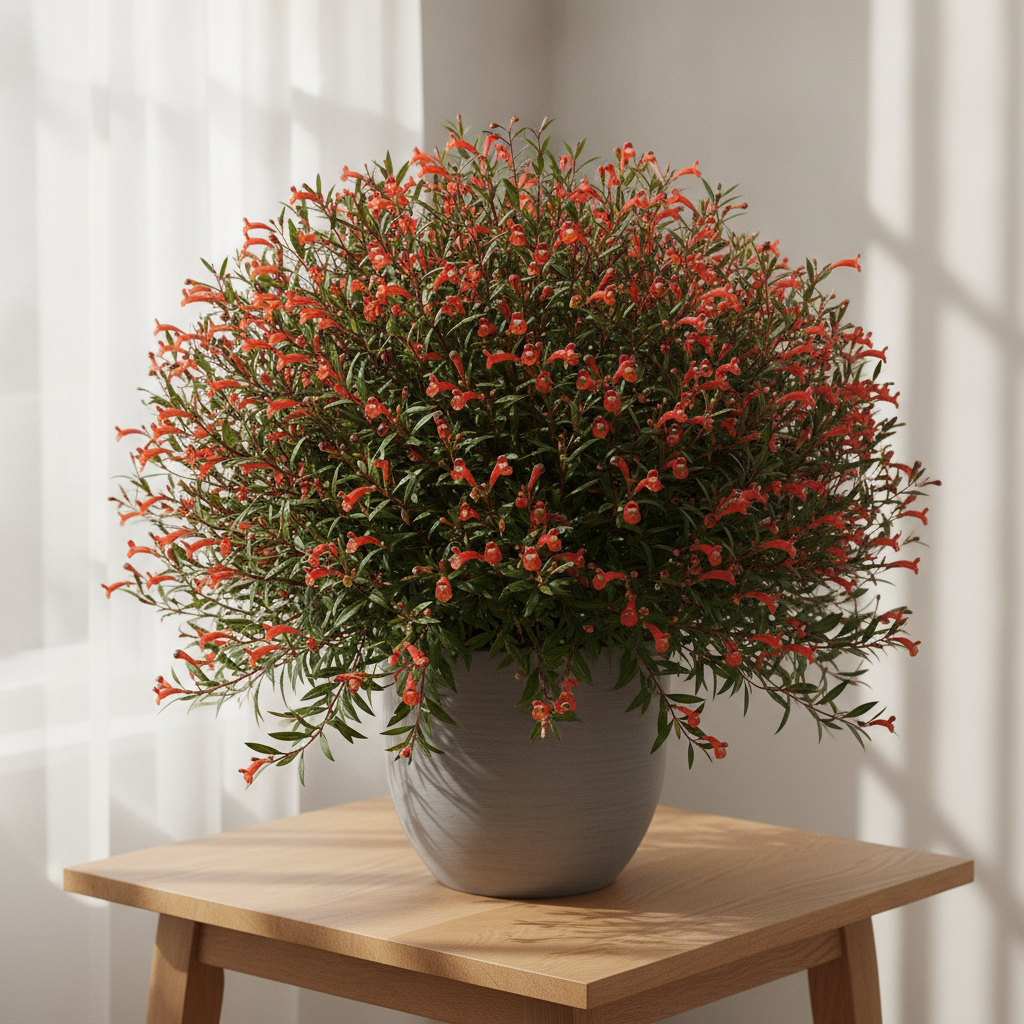
Few small houseplants earn their common name as literally as the cigar plant. Its slender tubular flowers are bright orange-red, banded with a dark ring and tipped with a tiny pale mouth, so that each bloom looks uncannily like a miniature lit cigar complete with a band of ash. Known botanically as Cuphea ignea and sometimes sold as the cigar flower, firecracker plant or Mexican cigar plant, it is a tender evergreen subshrub from Mexico and the warmer parts of Central America and the Caribbean, where it flowers almost without pause.
As a houseplant it has a reputation for being cheerful and undemanding, and that reputation is largely deserved. The difference between a cigar plant that merely survives and one that truly thrives, though, comes down to a single factor more than any other: light. Give it enough of it, keep the watering steady, and it will reward you with hundreds of blooms over a long season and a steady stream of visiting bees and hummingbirds if you summer it outdoors. This guide covers everything from the ideal light levels and watering rhythm to soil, feeding, propagation from cuttings and the handful of pests that occasionally trouble it.
Contents
- Quick Reference
- Why the Cigar Plant Makes a Rewarding Houseplant
- Light Requirements
- Watering & Humidity
- Soil, Potting & Repotting
- Fertilising
- Propagation
- Pests & Diseases
- Popular Varieties
- Frequently Asked Questions
Quick Reference: Cigar Plant at a Glance
| Light | Very bright light, including several hours of direct sun. Full sun outdoors. |
| Watering | Keep evenly moist in growth; let the top 2 to 3 cm (1 in) dry between waterings. Never waterlogged. |
| Temperature | 18 to 27 degrees C (64 to 81 degrees F). Protect below 10 degrees C (50 degrees F); not frost hardy. |
| Humidity | Average room humidity is fine; tolerant of 40 to 60 percent. |
| Fertiliser | Balanced or bloom-boosting feed every 2 to 4 weeks during spring and summer. |
| Toxicity | Generally considered non-toxic to cats, dogs and humans. |
Why the Cigar Plant Makes a Rewarding Houseplant
The chief appeal of Cuphea ignea is its sheer flowering stamina. Where many flowering houseplants offer a brief burst of colour and then sulk, a well-lit cigar plant produces its small fiery tubes continuously from spring through autumn, and often year-round in a warm bright room. The flowers sit against a tidy mound of small, narrow, glossy deep-green leaves carried on slender, slightly reddish stems, so the plant looks neat and full even between flushes. It stays compact, typically 30 to 60 cm (12 to 24 in) tall and roughly as wide indoors, which makes it a good choice for a sunny windowsill, a conservatory shelf or a patio container that comes inside for winter.
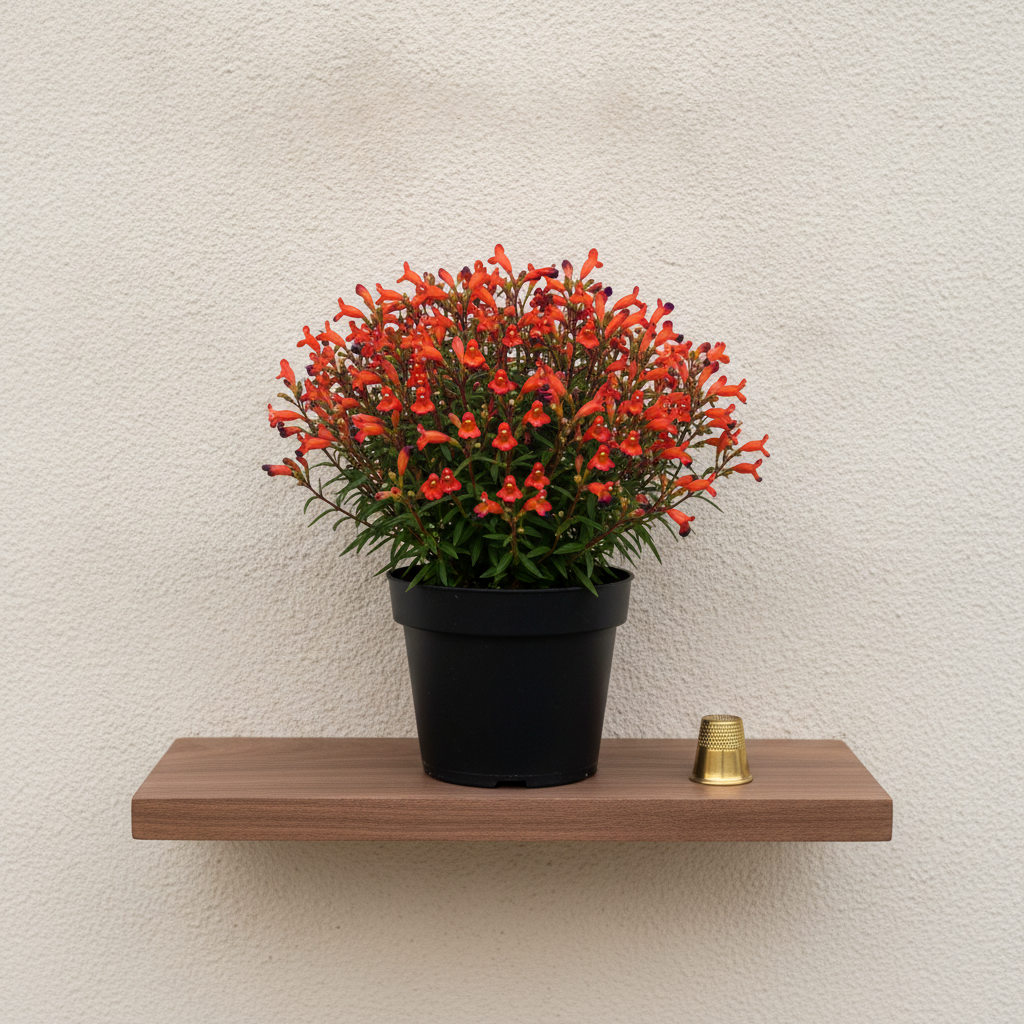
It is also forgiving in the ways that matter to a busy household. The cigar plant is not fussy about humidity, shrugs off normal indoor temperatures, and recovers quickly from the occasional missed watering. Outdoors in summer it becomes a magnet for pollinators, with bees working the open mouths of the flowers and hummingbirds, where present, drawn to the nectar-rich tubes. Because it is a tender perennial rather than a true tropical, it appreciates a cooler, brighter winter rest than many leafy houseplants, which makes it an easy companion for sun-loving herbs and succulents on the same sill.
Important — Toxicity: The cigar plant is generally regarded as non-toxic to cats, dogs and people, and it is not listed among the common poisonous houseplants. That said, no plant is intended for eating, and nibbling foliage can still cause mild stomach upset in pets, so it is sensible to keep curious animals from grazing on it.
Light Requirements
If you remember only one thing about cigar plant care, make it this: light drives flowering. Cuphea ignea evolved in open, sunny habitats, and it converts bright light directly into blooms. In dim conditions it will stay alive, but it stretches towards the window, the stems grow thin and floppy, the leaves space out, and flowering slows to a trickle or stops altogether. This is the single biggest reason a cigar plant disappoints indoors.
The ideal is a position that receives at least four to six hours of direct sun a day, supplemented by bright indirect light for the rest of the daylight hours. A south or west-facing windowsill is usually perfect. Unlike many delicate foliage plants, the cigar plant actively wants the sun on its leaves, so do not tuck it behind a sheer curtain unless midday glare through glass is scorching. Think of it as a flowering plant first and a houseplant second.

Light Levels Explained
Indoor light is far weaker than most people assume, and a spot that looks bright to the eye can be surprisingly dim in plant terms. The table below translates the usual light categories into what they mean for a cigar plant.
| Light Category | Approx. Level | Typical Location | Outcome |
|---|---|---|---|
| Direct sun | 20,000 to 100,000 lux | On a south or west sill, foliage in the sunbeam | Ideal; compact growth and heavy flowering |
| Bright indirect | 10,000 to 20,000 lux | Just back from a sunny window, or an east sill | Good; steady growth, moderate to good bloom |
| Medium | 2,500 to 10,000 lux | A metre or two from a bright window | Survives; leggy stems, sparse flowers |
| Low | 500 to 2,500 lux | A north window or interior wall | Poor; stretched, weak, rarely blooms |
| Very low | Below 500 lux | A dim hallway or far corner | Declines steadily; not viable long term |
Window Orientation and Placement
South-facing window: the best position in most homes. The cigar plant will take all the light a south window offers, and the extra warmth and brightness translate directly into more flowers. In high summer, watch only that the soil is not drying out too fast.
East-facing window: a good option, delivering gentle direct morning sun followed by bright light. Flowering will be reliable, if slightly less profuse than at a south window.
West-facing window: also very suitable, offering strong afternoon sun. The plant tends to thrive here, though the afternoon heat means you will need to keep a closer eye on watering.
North-facing window: generally too dim for good flowering. A cigar plant on a north sill will grow leggy and bloom poorly. If a north window is your only option, plan to supplement with a grow light.
Pro Tip — Rotate for an Even Mound: Because the plant leans hard towards the light, give the pot a quarter turn every few days. This keeps the mound symmetrical and stops all the flowers facing the glass while the room side goes bare.
How Light Affects Flowering
The relationship between light and bloom is direct and quick to read. A plant in strong light stays dense, with short internodes, deep-green leaves and a constant supply of buds at the stem tips. Move the same plant into shade and within a few weeks the new growth becomes pale and elongated, the gaps between leaves widen, and bud production falls off. If your cigar plant has stopped flowering, the first thing to change is almost always its position, not its feeding or watering.
Warning — Acclimatise to Direct Sun: A plant grown indoors or bought from a shaded greenhouse can scorch if it is moved straight into intense outdoor summer sun. Harden it off over a week or two, starting with morning sun and dappled shade, before giving it a full all-day position.
Artificial Lighting
The cigar plant responds well to supplemental lighting, which makes it possible to keep it flowering through a dark northern winter. A full-spectrum LED grow light positioned 20 to 30 cm (8 to 12 in) above the canopy, run for 12 to 14 hours a day, will keep growth compact and buds coming. Because this plant wants high light, do not rely on a single weak bulb at a distance; choose a panel or bar rated for flowering plants and keep it close enough to cast a genuinely bright pool of light.
Seasonal Adjustments
Light levels indoors can halve between summer and midwinter, even at the same window. As the days shorten, move the plant to your brightest sill, clean the glass and the leaves so nothing dims the light, and accept that flowering will naturally slow during the darkest weeks. A slightly cooler, brighter winter rest suits the cigar plant and sets it up for a strong flush when light returns in spring.
Watering & Humidity
The cigar plant likes its soil evenly moist during the growing season but it has no tolerance for sitting in water. It walks a sensible middle line: it is not a succulent that wants to dry out hard, nor a bog plant that wants permanent wet feet. The aim is steady, moderate moisture, which keeps the flowers coming without inviting root rot.
When to Water
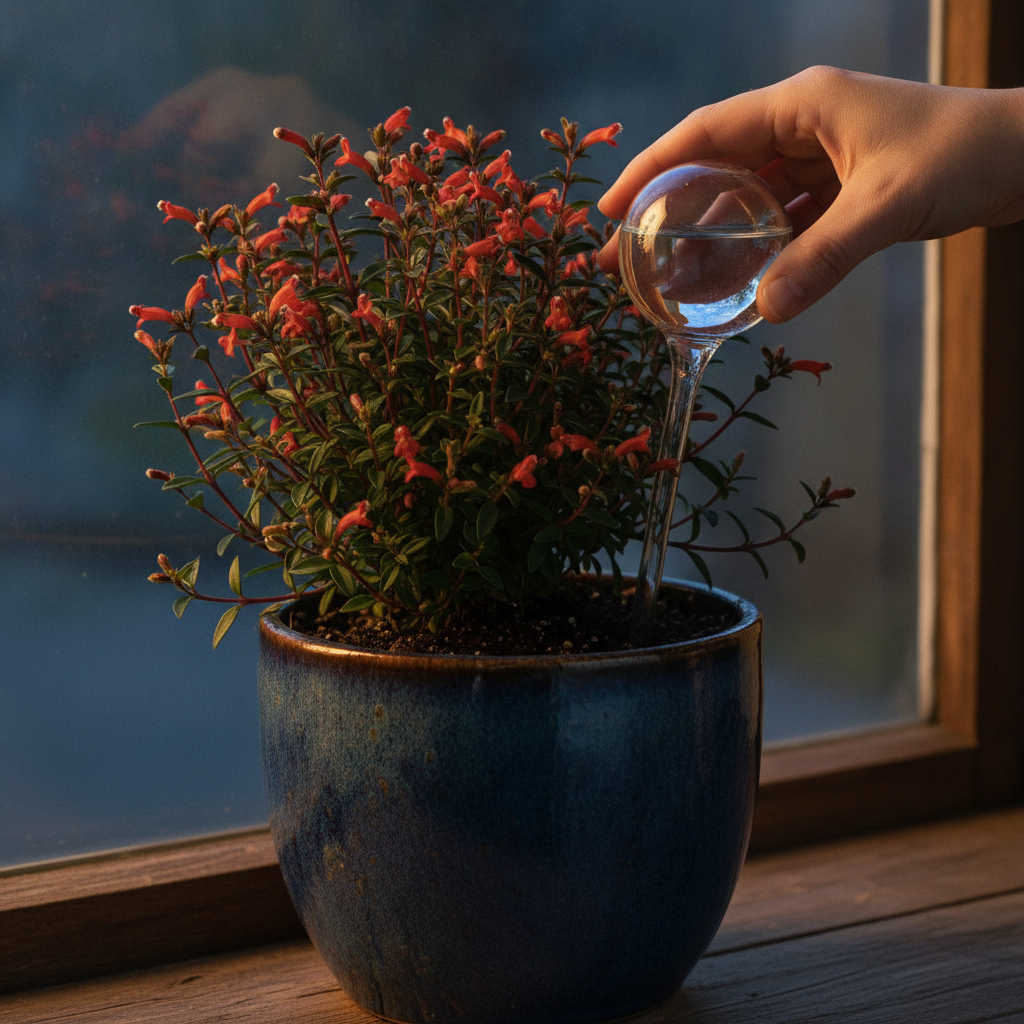
Check the soil rather than the calendar. When the top 2 to 3 cm (about 1 in) of the mix feels dry to your finger, it is time to water. In the bright warmth of summer, a flowering cigar plant in a small pot can need watering every two to four days; in winter, when growth slows and light is weak, that may stretch to once a week or less. The plant tells you when it is thirsty too, with a slight softening and dulling of the leaves that perks up quickly once watered.
Because this plant produces so much foliage and so many flowers, it transpires freely and can dry faster than its modest size suggests. During a hot, sunny spell, do not be surprised to find the top of the pot dry again within a day or two. Adjust to the conditions in front of you rather than watering on a fixed schedule.
Pro Tip — Weigh the Pot: Lift the pot just after watering and again when the surface has dried. The difference in weight quickly becomes a reliable gauge of when to water, and it is far more accurate than guessing from the soil surface alone.
How to Water Correctly
- Water at the soil level rather than over the foliage, using room-temperature water so you do not chill the roots.
- Pour slowly and evenly across the whole surface until water runs freely from the drainage holes, which ensures the entire root ball is moistened.
- Let the pot drain fully for a few minutes before returning it to its saucer or cover pot.
- Tip away any water that collects in the saucer; the plant should never stand in it.
- Wait until the top few centimetres dry again before the next watering rather than topping up little and often.
Signs of Overwatering vs. Underwatering
| Symptom | Overwatering | Underwatering |
|---|---|---|
| Leaf colour | Yellowing, often from the lower leaves upward | Dulling and slight greying, tips browning |
| Leaf texture | Soft, limp, sometimes translucent | Crisp, dry and brittle at the edges |
| Soil | Stays wet for days, may smell sour | Pulls away from the pot sides, bone dry |
| Flowers and buds | Buds drop before opening | Buds shrivel; flowering pauses |
| Stem base | Darkened, soft or mushy near the soil | Firm but the whole plant wilts, then recovers when watered |
Warning — Root Rot: Constantly soggy soil is the quickest way to kill a cigar plant. If the stem base turns soft and dark and the plant wilts despite wet soil, suspect root rot. Unpot it, trim away any blackened mushy roots, and repot into fresh, free-draining mix in a clean pot, watering sparingly until it recovers.
Humidity Requirements
Here the cigar plant is refreshingly easy. It is happy in ordinary household humidity of roughly 40 to 60 percent and does not need misting, pebble trays or a humidifier to flourish. This tolerance is part of what makes it a low-fuss flowering plant compared with moisture-craving tropicals.
Problems only tend to appear at the extremes. In very dry air, such as right beside a radiator or in a room with forced-air heating running all winter, leaf tips may brown slightly and the plant can dry out faster than expected. None of this is serious, and simply moving the plant away from the heat source usually resolves it.
If your home is exceptionally dry, grouping the cigar plant with other plants raises the local humidity a little through shared transpiration. There is rarely any need to go further than that. Good airflow matters more than high humidity for this plant, since stagnant, damp air around a dense flowering canopy can encourage fungal problems.
Water Quality
The cigar plant is not especially sensitive to water quality and tolerates ordinary tap water in most regions. If your water is very hard, you may see a slight whitish crust build up on the soil surface over time; flushing the pot thoroughly every month or two clears it. In areas with heavily chlorinated water, letting it stand uncovered overnight or using collected rainwater is a small refinement the plant will appreciate but does not strictly require.
Soil, Potting & Repotting
The cigar plant asks for a soil that holds enough moisture to keep it flowering yet drains freely enough that the roots never sit in water. A good general-purpose potting compost, opened up with some grit or perlite, hits that balance neatly. The dense fibrous root system likes a mix that stays aerated rather than compacting into a soggy block.
Ideal Soil Composition
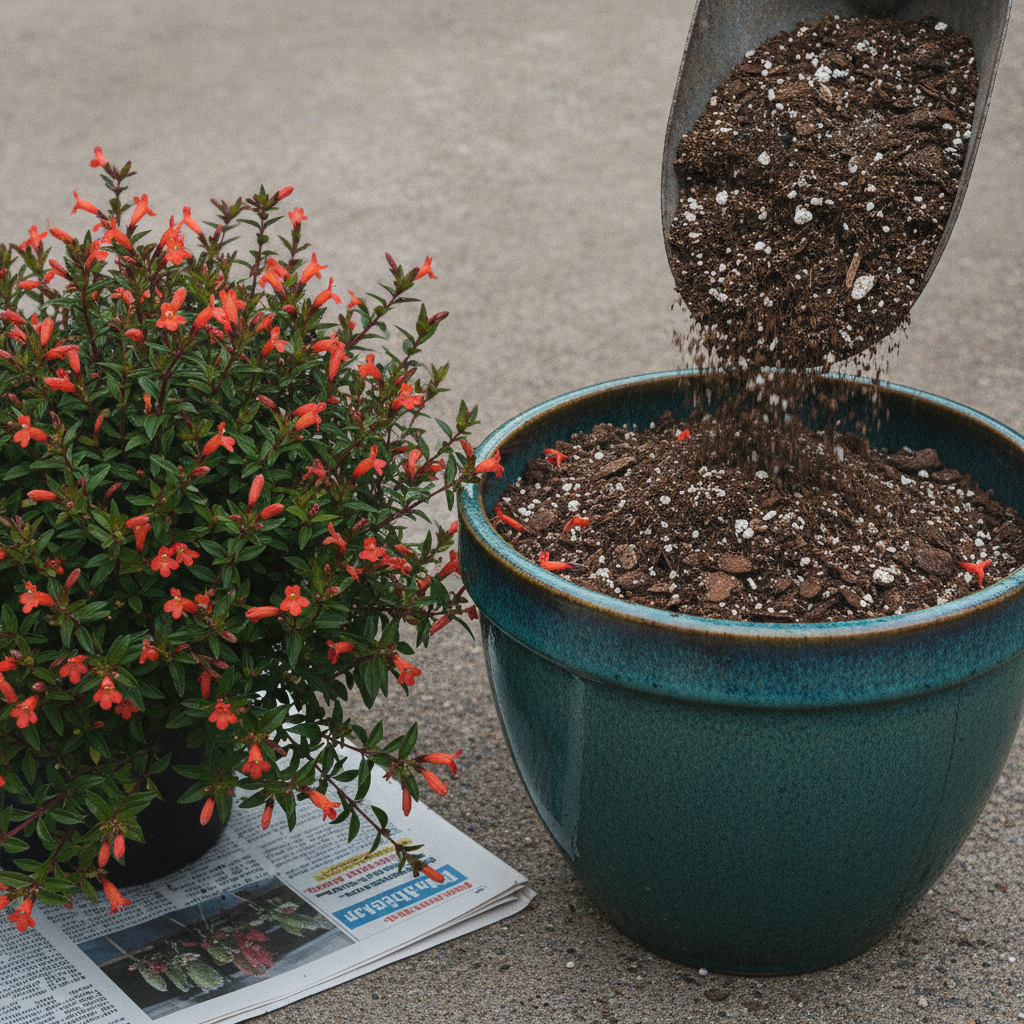
Start with a quality peat-free multipurpose compost as the base, then add material to improve drainage and a little organic matter to feed steady growth. The goal is a mix that feels moist but springy, not heavy or claggy.
| Component | Proportion | Function |
|---|---|---|
| Multipurpose potting compost | 60 percent | Holds moisture and nutrients; the main growing medium |
| Perlite or horticultural grit | 30 percent | Opens the mix for drainage and root aeration |
| Worm castings or fine compost | 10 percent | Adds gentle, slow-release nutrition and structure |
The cigar plant is not particular about pH and grows well in the slightly acidic to neutral range, roughly 6.0 to 7.0, that most commercial composts naturally provide. There is no need to test or adjust pH for it under normal conditions.
Pro Tip — Quick Mix Recipe: If you want a no-fuss blend, combine two handfuls of multipurpose compost with one handful of perlite and a small scoop of worm castings. It drains well, holds enough moisture for steady flowering, and suits almost any container.
Choosing the Right Pot
Because the cigar plant stays compact, it does not need a large pot, and an oversized container holds more wet soil than the roots can use, which raises the risk of rot. Choose a pot only slightly larger than the root ball.
Drainage holes are non-negotiable. Whatever the style, the pot must have holes in the base. A decorative cover pot is fine for looks, but lift the inner pot to water and drain it fully, and never let the plant stand in trapped water.
Pot material: terracotta is an excellent choice, since its porous walls let excess moisture evaporate and make overwatering harder. Glazed ceramic and plastic both work too, but with these you will need to be a little more disciplined about letting the surface dry between waterings.
Pot size: step up by just 2 to 3 cm (1 in) in diameter at a time. A cigar plant actually flowers more freely when its roots are comfortably, even slightly, snug, so resist the urge to over-pot.
When to Repot
Most cigar plants need repotting once a year, ideally in early spring as growth resumes. Signs that it is time include roots emerging from the drainage holes, water running straight through without wetting the soil, or growth and flowering that have clearly slowed despite good light and feeding. Because this is a fast grower that many people treat as a short-lived plant or annual, some growers simply take fresh cuttings each year rather than repotting an old, woody specimen.
How to Repot: Step-by-Step
- Water the plant a day before repotting so the root ball is moist and holds together.
- Ease the plant out of its pot by tipping it and supporting the base of the stems, rather than pulling on the top growth.
- Gently tease away the outer roots and remove an inch or so of old, spent soil from the surface and sides.
- Add a layer of fresh mix to a clean pot only slightly larger than the old one, then set the plant so it sits at the same depth as before.
- Fill around the root ball with fresh mix, firming lightly to remove air pockets without compacting it.
- Water thoroughly, let it drain, and return the plant to its bright spot.
- Hold off on feeding for three to four weeks while new roots establish.
Warning — Transplant Shock: A repotted cigar plant may drop a few buds or flowers and look briefly sulky as it settles. This is normal. Keep it out of harsh midday sun for a week, water carefully, and do not feed until you see fresh growth, and it will bounce back quickly.
Fertilising
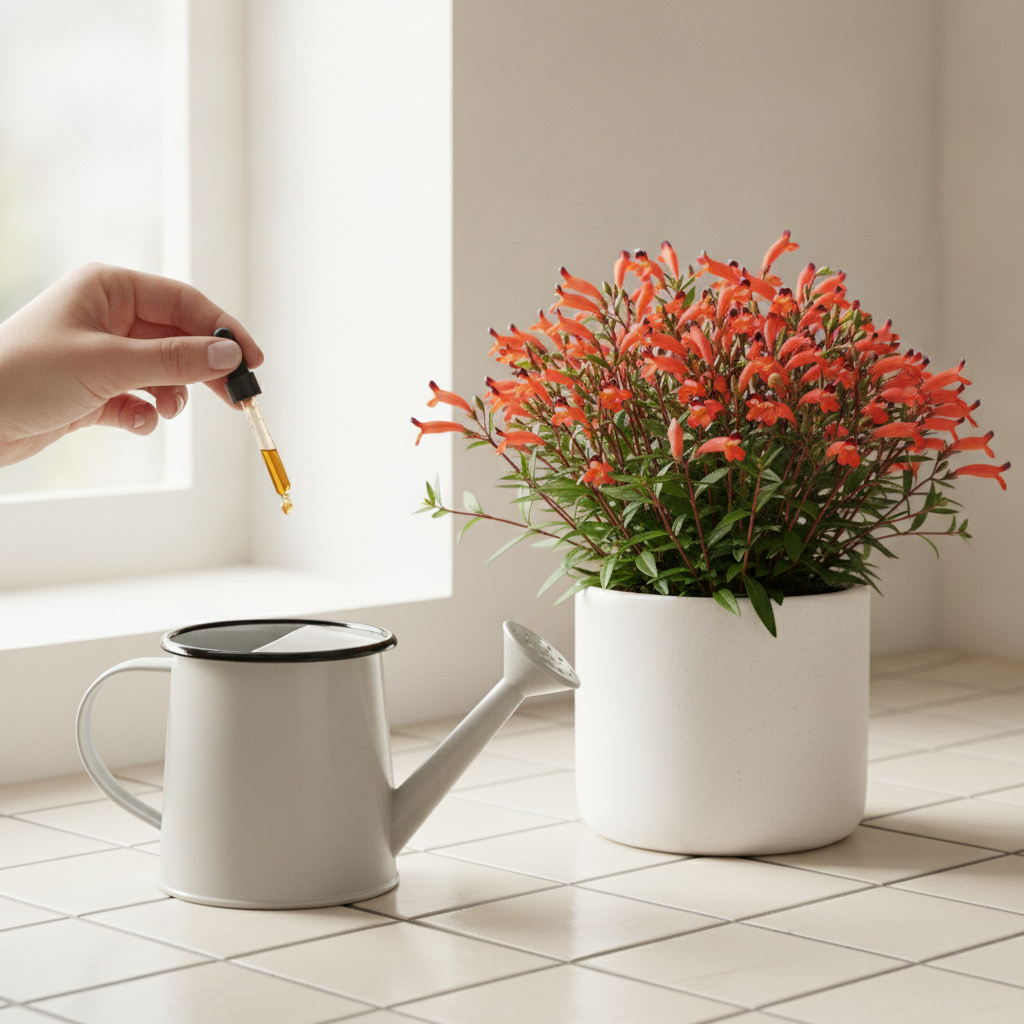
A plant that flowers as relentlessly as the cigar plant is a hungry one. Producing wave after wave of blooms draws heavily on stored nutrients, so regular feeding through the growing season is the difference between a few scattered flowers and a plant smothered in colour.
That said, the cigar plant is not a heavy feeder in the sense of wanting strong doses. It prefers a light, frequent feeding regime that keeps a steady trickle of nutrients available, which sustains continuous flowering without forcing soft, sappy growth that pests love.
Understanding Plant Nutrients
Fertilisers are labelled with an N-P-K ratio, the three numbers giving the percentages of nitrogen, phosphorus and potassium. For a flowering plant like the cigar plant, potassium is especially valuable because it supports bud and flower formation, while a balanced supply of all three keeps the foliage healthy enough to fuel the show.
| Nutrient | Symbol | Primary Function | Deficiency Symptoms |
|---|---|---|---|
| Nitrogen | N | Leaf and stem growth, deep green colour | Pale, yellowing older leaves; weak growth |
| Phosphorus | P | Root development and flower formation | Dull leaves, poor rooting, few buds |
| Potassium | K | Flowering, overall vigour and stress tolerance | Browning leaf edges, sparse blooming |
| Magnesium | Mg | Central component of chlorophyll | Yellowing between the veins of older leaves |
| Iron | Fe | Chlorophyll production in new growth | Yellowing between veins of the youngest leaves |
Types of Fertiliser
Liquid fertilisers: the easiest and most responsive choice for the cigar plant. A balanced houseplant feed, or a high-potassium bloom feed such as a tomato fertiliser, diluted and applied with watering, gives you precise control and visible results within a week or two.
Slow-release granular: convenient for hands-off growers. Mixed into the soil or scattered on the surface, controlled-release pellets feed gradually over several months. They suit summer patio containers well but offer less control over timing than liquids.
Organic fertilisers: worm castings, seaweed extract and other organic feeds release nutrients gently and improve soil life. They are a fine, low-risk way to support a cigar plant, though their flowering push is milder than a targeted high-potassium feed.
Feeding Schedule
Feed every two to four weeks from spring through to early autumn while the plant is in active growth and flower. As light fades and growth slows in late autumn, taper off, and stop feeding entirely through the depths of winter. Resume in spring once you see fresh growth and the first new buds.
Pro Tip — Feed at Half Strength: Dilute liquid feed to about half the label rate and apply it more often rather than giving an occasional strong dose. Little and often suits the cigar plant’s steady flowering habit and greatly reduces the risk of fertiliser burn.
How to Fertilise
- Water the plant lightly first if the soil is very dry, since feeding bone-dry roots can scorch them.
- Dilute the fertiliser to half the recommended strength in your watering can.
- Apply the solution evenly to the soil until it just begins to drain, avoiding splashing the foliage and flowers.
- Every month or so, flush the pot with plain water to wash out any accumulated salts.
Warning — Salt Build-Up: A white crust on the soil or pot rim and brown, scorched leaf edges point to a build-up of fertiliser salts. Cut back on feeding and leach the pot by running plenty of plain water through it until it drains freely from the bottom.
Propagation
One of the cigar plant’s friendliest traits is how readily it propagates. It roots quickly and easily from stem cuttings, which means a single plant can give you a whole windowsill of new ones in a season, and it lets you keep a fresh, vigorous specimen going year after year rather than nursing an old, woody one through winter.
The two practical methods are softwood stem cuttings, by far the most popular, and sowing seed. Cuttings are faster and produce an exact copy of the parent, which matters if you are propagating a named cultivar. Seed is cheap and useful for raising large numbers at once, but is slower and less predictable.
Understanding Stem Nodes
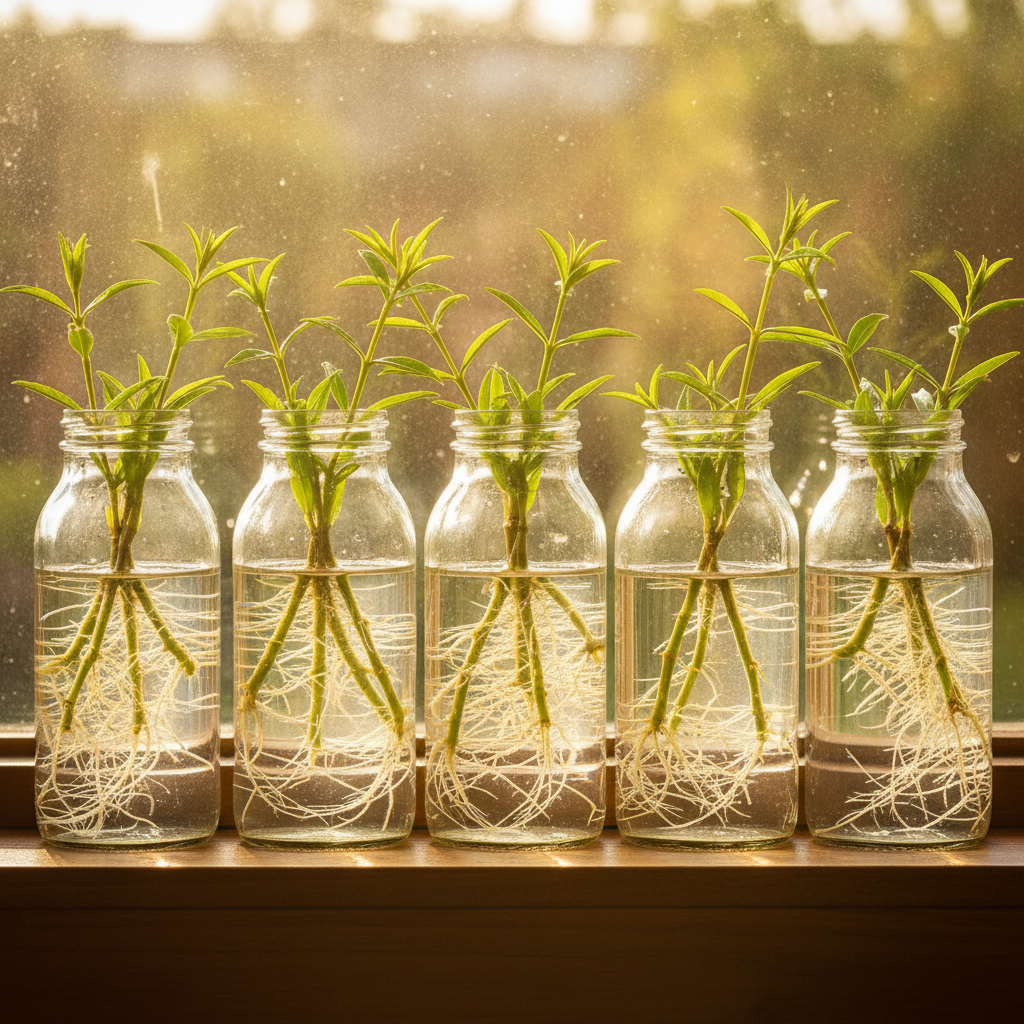
Successful cuttings depend on the node, the slightly thickened point on a stem where leaves emerge. This is where the plant concentrates the dormant cells that can turn into roots. A cutting must include at least one or two nodes below the surface of the water or rooting medium, because roots form there rather than from a bare length of stem. Choose healthy, non-flowering shoots for the best and quickest results, since a stem busy making blooms is slower to make roots.
Stem Cuttings: Step-by-Step
This is the reliable, beginner-friendly route. Spring and early summer, when the plant is growing strongly, give the highest success rate.
- Choose a healthy, non-flowering tip and cut a length of 8 to 10 cm (3 to 4 in) just below a node, using clean, sharp scissors.
- Strip the leaves from the lower half of the cutting, leaving two or three pairs at the top.
- Optionally dip the cut end in rooting hormone to speed things along, though the cigar plant often roots without it.
- Place the cutting in a glass of water, or insert it into a small pot of moist, free-draining mix, with at least one bare node below the surface.
- Keep it in bright, indirect light and warmth, around 20 to 24 degrees C (68 to 75 degrees F), changing the water every few days if rooting in water.
- Roots usually appear within one to two weeks; once they reach 2 to 3 cm (1 in), pot water-rooted cuttings into soil and grow on.
Pro Tip — Take Several at Once: Cuttings are quick and free, so root four or five at a time and pot the strongest two or three together in one container. A small cluster fills out into a fuller, bushier plant far faster than a single cutting on its own.
Growing From Seed: Step-by-Step
Seed is worthwhile if you want many plants or are starting the species from scratch. Sow in late winter or early spring for flowering plants by summer.
- Fill a tray or small pots with moist, fine seed compost and firm the surface lightly.
- Scatter the tiny seeds thinly across the surface and press them in gently; they need light to germinate, so do not bury them.
- Cover the tray with a clear lid or a plastic bag to hold humidity, and keep it warm at around 21 to 24 degrees C (70 to 75 degrees F).
- Place in bright, indirect light and keep the surface consistently moist but not wet.
- Seedlings typically emerge in one to three weeks; once they have a couple of true leaves, prick them out into individual pots.
- Grow on in good light, potting up as they fill out, and pinch the tips to encourage branching.
Troubleshooting Propagation
| Problem | Likely Cause | Solution |
|---|---|---|
| Cutting rots before rooting | Water too stagnant or stem too soft and old | Change water often; take firmer, fresh non-flowering tips |
| No roots after several weeks | Too cold or too little light | Move somewhere warmer and brighter; add gentle bottom heat |
| Cutting wilts and collapses | Too many leaves transpiring before roots form | Remove more of the lower leaves and increase local humidity |
| Seeds fail to germinate | Sown too deep or surface dried out | Surface-sow and keep covered and evenly moist with warmth |
Pests & Diseases
The cigar plant is reasonably robust, but its soft, abundant growth can attract the usual sap-sucking houseplant pests, particularly when it is brought indoors for winter or grown in warm, still air. The good news is that catching trouble early makes it simple to deal with.
The best defence is regular inspection. Make a habit of turning over a few leaves and checking the stem tips and flower buds each time you water, since most infestations are far easier to clear when they are small. A healthy, well-grown plant in good light is also naturally more resistant than a stressed, leggy one.

Common Pests
Aphids (Aphidoidea)
Soft-bodied green, black or pinkish insects that cluster on tender new growth, flower buds and stem tips, sucking sap and leaving sticky honeydew behind. Heavy infestations distort the new shoots and can spoil the flowers, and the cigar plant’s constant supply of soft growth makes it a favourite target.
Treatment: dislodge them with a firm spray of water, then treat with insecticidal soap or a diluted neem oil solution every few days until they are gone. Check the growing tips closely, as that is where they regroup.
Spider Mites (Tetranychus urticae)
Tiny mites that thrive in hot, dry conditions, exactly the bright sunny spots a cigar plant enjoys. They stipple the leaves with fine pale dots, cause a dull bronzing, and in bad cases spin fine webbing between the leaves and stems.
Treatment: raise humidity and improve airflow, rinse the foliage thoroughly including the undersides, and apply insecticidal soap or neem oil. Repeat at weekly intervals to break the rapid breeding cycle.
Whiteflies (Trialeurodes vaporariorum)
Small white moth-like insects that rise in a cloud when the plant is disturbed. They gather on the undersides of leaves, weaken the plant by feeding on sap, and leave honeydew that can turn into sooty mould. They are common on plants that have spent summer outdoors.
Treatment: hang yellow sticky traps to catch the adults, and spray with insecticidal soap or neem oil, paying close attention to the leaf undersides. Persistence over a few weeks is key, since the life cycle overlaps.
Common Diseases
Root Rot (Pythium and Phytophthora)
By far the most serious threat to a cigar plant, and almost always a result of overwatering or poor drainage. The roots suffocate and rot in soggy soil, the lower stems darken and soften, and the plant wilts even though the soil is wet.
Treatment: unpot the plant, cut away all soft, blackened roots with clean tools, and repot into fresh, free-draining mix in a clean pot. Water sparingly until firm new growth shows that the plant has recovered.
Powdery Mildew (Erysiphales)
A dusty white coating on the leaves, most likely when air is stagnant and humid around a dense canopy. It rarely kills the plant but disfigures the foliage and can weaken it over time if left unchecked.
Treatment: improve airflow, thin out crowded growth, and avoid wetting the leaves when watering. Remove badly affected leaves and treat with a suitable fungicide or a dilute solution of potassium bicarbonate if it spreads.
Pest and Disease Summary
| Pest / Disease | Identification | Treatment |
|---|---|---|
| Aphids | Clusters on new tips and buds, sticky honeydew | Rinse off, then insecticidal soap or neem oil |
| Spider mites | Fine stippling, bronzing, webbing in dry heat | Raise humidity, rinse, repeat neem oil treatments |
| Whiteflies | White flies rising when disturbed, leaf undersides | Yellow sticky traps and repeated soap or neem sprays |
| Root rot | Wilting in wet soil, soft dark stem base | Trim rotten roots, repot in fresh dry mix, water less |
| Powdery mildew | Dusty white coating on leaves | Improve airflow, remove affected leaves, fungicide |
Prevention Strategies
Prevention costs far less effort than cure. Keep the plant in good light with decent airflow, avoid overwatering, and do not crowd it tightly against other plants where pests can hop across unseen. Inspect new arrivals and any plant returning from a summer outdoors before it joins the rest of your collection.
Cleanliness helps too. Remove fallen leaves and spent flowers from the soil surface, wipe down the foliage occasionally to clear dust and reveal early pests, and keep your tools clean when you prune or take cuttings. A vigorous, well-fed plant simply shrugs off problems that would overwhelm a weak one.
Pro Tip — Neem as a Routine: A light monthly spray of diluted neem oil during the growing season works as a gentle preventative, deterring the soft-bodied pests that target this plant before they can establish. Apply it in the evening or out of direct sun so the treated leaves do not scorch.
Popular Varieties
While the straight species Cuphea ignea is the most widely grown, the genus Cuphea includes a number of cultivars and closely related cousins that share the same easy nature and flowering enthusiasm. Some have been selected for larger or more abundant flowers, others for variegated foliage or a more compact habit.
The named forms below are the ones you are most likely to find, and all are grown in the same way as the species. Choosing between them comes down to whether you want maximum flower power, decorative leaves, or a neat shape for a small pot.
| Variety | Appearance | Light Needs | Growth Rate | Availability |
|---|---|---|---|---|
| Species (C. ignea) | Slim orange-red tubes with a dark and white tip | High | Fast | Common |
| ‘David Verity’ | Larger, more abundant orange flowers | High | Fast, vigorous | Common |
| ‘Variegata’ | Same flowers, cream-and-green variegated leaves | High | Moderate | Occasional |
| ‘Dynamite’ | Compact habit, bright red-orange flowers | High | Moderate | Occasional |
| Bat-faced cuphea (C. llavea) | Red and purple flowers resembling a small face | High | Fast | Common |
| ‘Vermillionaire’ (hybrid) | Large orange tubes, exceptionally free-flowering | High | Fast, vigorous | Increasingly common |
Featured Varieties
‘David Verity’
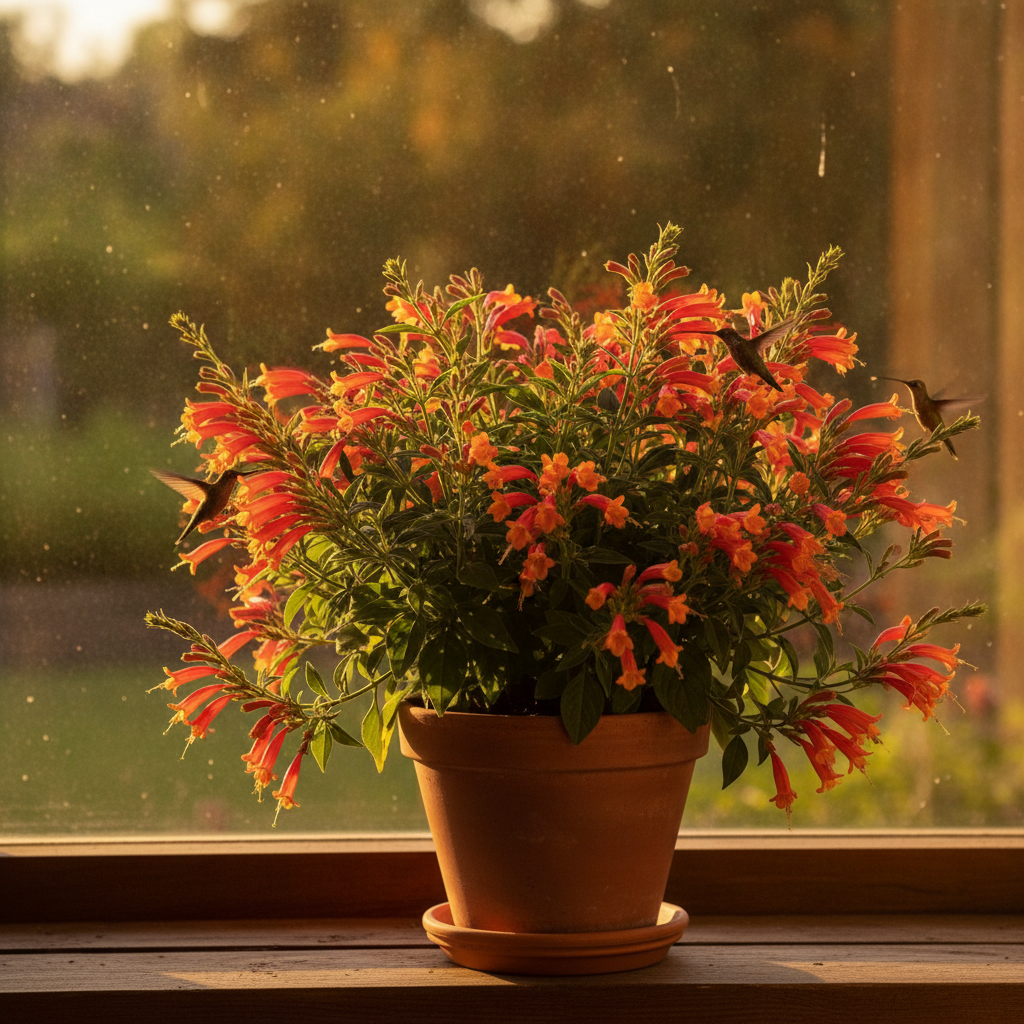
A vigorous, slightly larger-flowered form whose generous orange-red tubes flare to a yellow-tinged mouth. Bushy and exceptionally free-flowering, it is a favourite of bees and hummingbirds and arguably the showiest of the readily available cigar plants.
‘Variegata’
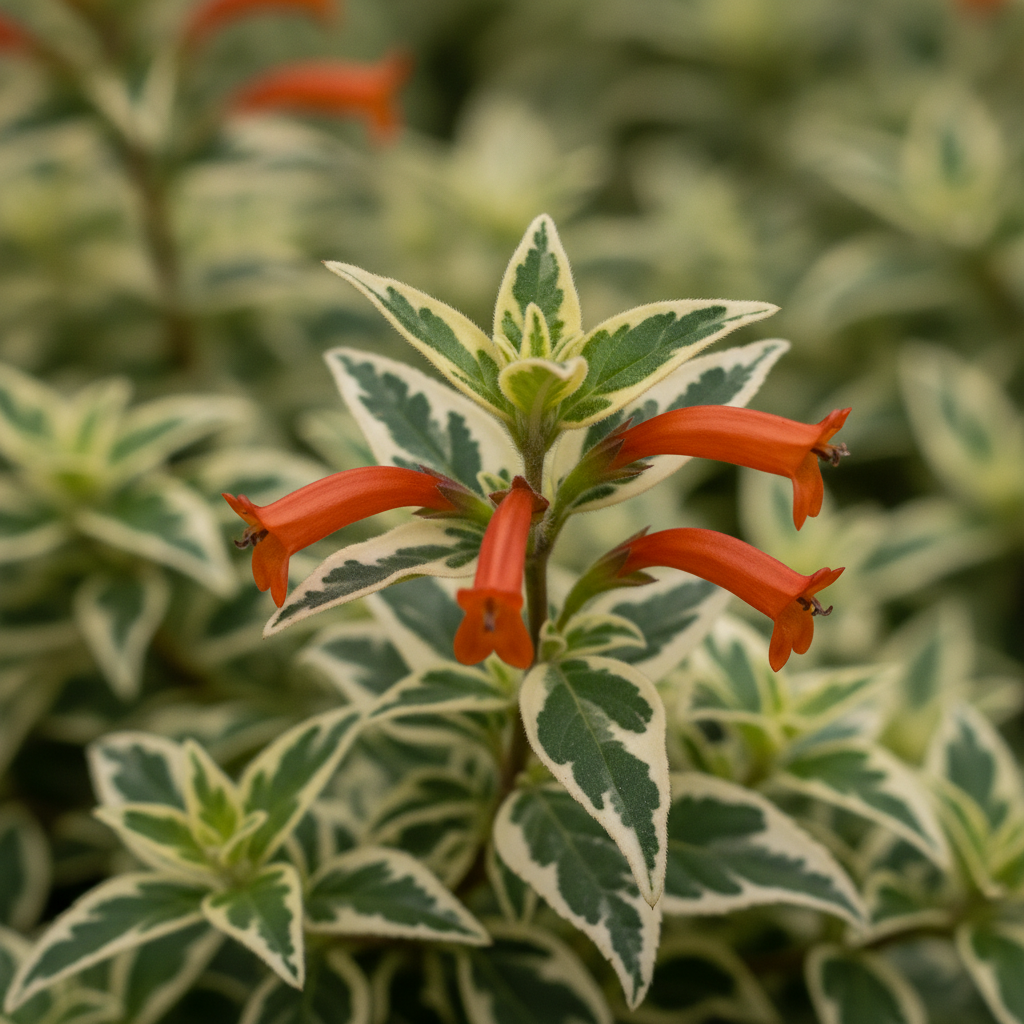
This form pairs the familiar firecracker-orange blooms with cream-and-green variegated leaves, each irregularly margined in pale ivory. It earns its place on foliage alone, but the contrast of variegated leaves and fiery flowers makes it especially striking. It grows a touch slower and wants very bright light to keep the variegation crisp.
Variety Profiles in Detail
Cigar Plant (Cuphea ignea)
The original and most widely grown form. Its compact mound of fine foliage is studded with slim scarlet-orange tubes, each tipped with a dark band and a tiny pale rim that gives the lit-cigar effect. Tough, fast and endlessly flowering, it is the benchmark against which the others are judged.
Bat-Faced Cuphea (Cuphea llavea)
A close relative rather than a cultivar of the cigar plant, but grown identically and often sold alongside it. Its flowers are red with two raised purple petals that look like a tiny bat’s face, a quirk that makes it a conversation piece. It shares the same love of sun and the same long flowering season.
‘Vermillionaire’ (Cuphea hybrid)
A modern hybrid bred for heat tolerance and relentless flowering, with larger orange tubes carried on a robust mounding plant. It is increasingly sold as a patio and container plant and performs superbly in a sunny summer position before coming indoors for winter.
Choosing the Right Variety for Your Space
For the brightest possible windowsill and maximum flower power, ‘David Verity’ or ‘Vermillionaire’ are hard to beat. If you want interest beyond the flowers, the variegated form adds patterned foliage, provided you can give it the strong light it needs to stay well marked. For something a little different and a talking point, the bat-faced cuphea brings the same easy care with a more unusual bloom. Whichever you choose, the care in this guide applies across the board: give it sun, keep the soil evenly moist but never soggy, feed it through the growing season, and it will flower its heart out.
Frequently Asked Questions
Why has my cigar plant stopped flowering?
Insufficient light is the usual culprit. The cigar plant needs several hours of direct sun to bloom freely, so a plant that has stopped flowering has most likely been placed somewhere too dim. Move it to your brightest window, and if natural light is limited, add a grow light. A lack of feeding during the growing season or the natural slowdown in midwinter can also reduce flowering.
Is the cigar plant safe around cats and dogs?
The cigar plant is generally considered non-toxic to cats and dogs and is not listed among the common poisonous houseplants. Even so, eating any plant material can cause mild stomach upset, so it is best to discourage pets from chewing on it.
Can I grow a cigar plant outdoors?
Yes. In frost-free climates it grows happily outdoors year-round as a small perennial shrub. In cooler regions it is grown as a summer patio plant or bedding annual and brought inside, or taken as cuttings, before the first frost, since it is tender and not frost hardy.
How big does a cigar plant get?
Indoors and in containers it usually forms a tidy mound around 30 to 60 cm (12 to 24 in) tall and roughly as wide. In ideal outdoor conditions it can reach a little larger, but it responds well to a light trim that keeps it compact and bushy.
Should I prune my cigar plant?
A light prune does it good. Pinching the growing tips encourages branching and a denser, more flower-laden shape, and a harder cutback in early spring rejuvenates a plant that has grown leggy or woody. The trimmings root easily as cuttings, so nothing need go to waste.
Why are the leaves on my cigar plant turning yellow?
Yellowing lower leaves most often signal overwatering, so check that the soil is draining freely and let the surface dry between waterings. Widespread yellowing can also point to a lack of nutrients during the growing season, while yellowing between the veins suggests a magnesium or iron shortfall that a balanced feed will correct.
How often should I water a cigar plant?
Water when the top 2 to 3 cm (about 1 in) of soil feels dry. In warm, bright summer conditions that can mean every two to four days, while in winter it may be once a week or less. Always check the soil rather than watering to a fixed schedule, and never leave the pot standing in water.
How long does a cigar plant live?
As a perennial it can live for several years, though plants tend to grow woody and flower less freely with age. Because it roots so readily from cuttings, many growers simply propagate a fresh plant every year or two and discard the old one, keeping a young, vigorous specimen always in full bloom.






